Climate for Station: Gavar, Gegharkunik, Armenia
Loading live weather...
Climate Analysis & Overview
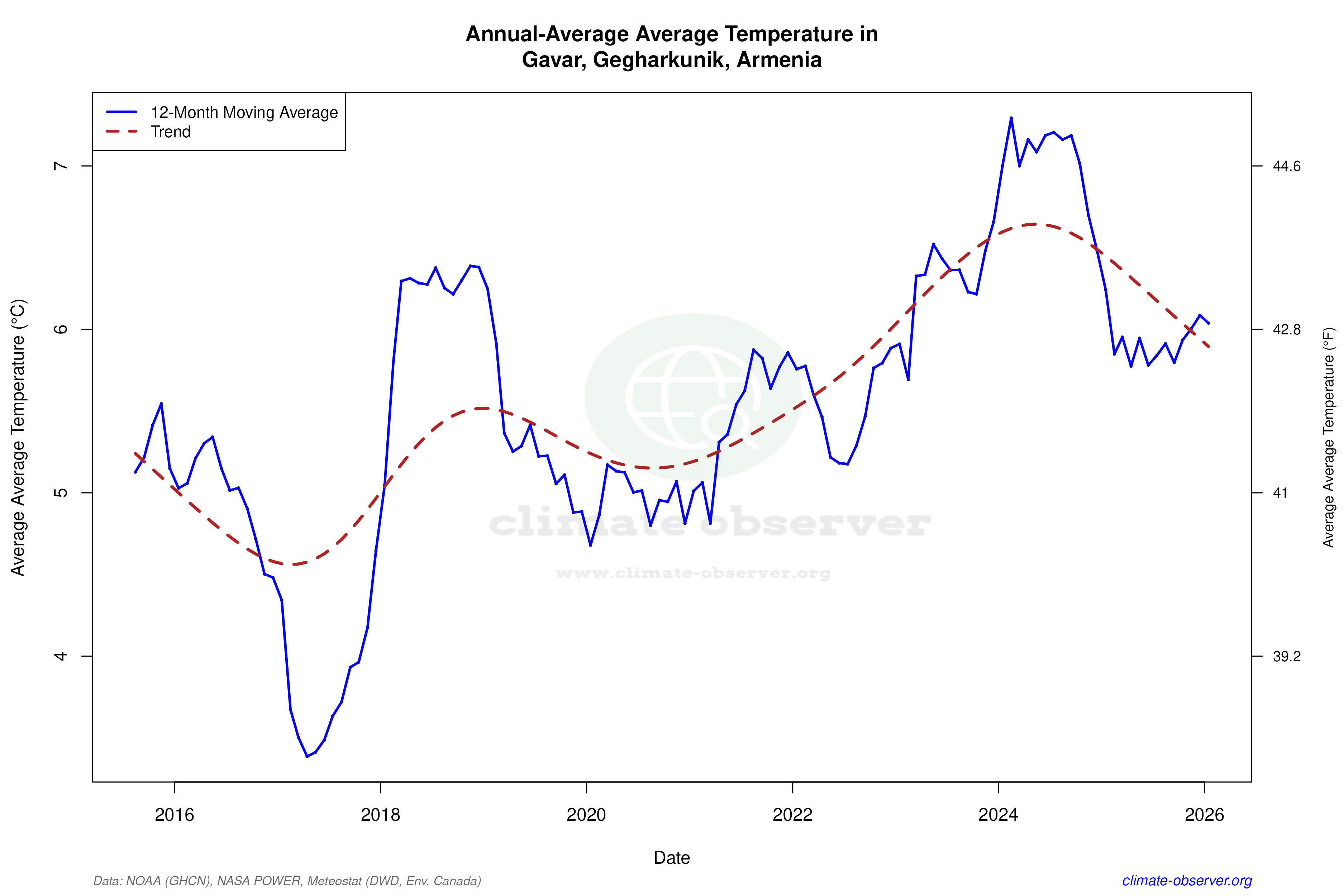
Gavar, nestled in the Armenian highlands, is experiencing a warming trend with notable increases in both high and low temperatures over the past decade. However, a gap in precipitation data leaves some uncertainty about current rainfall patterns.
Highland Temperature Trends
Gavar, Armenia, located at 40.35°N, 45.13°E, is classified under the Köppen climate classification as Dfb, indicating a humid continental climate with warm summers and cold winters. The city is situated in the Gegharkunik Province, surrounded by mountainous terrain that influences its climatic conditions, often leading to colder temperatures and significant seasonal variability.
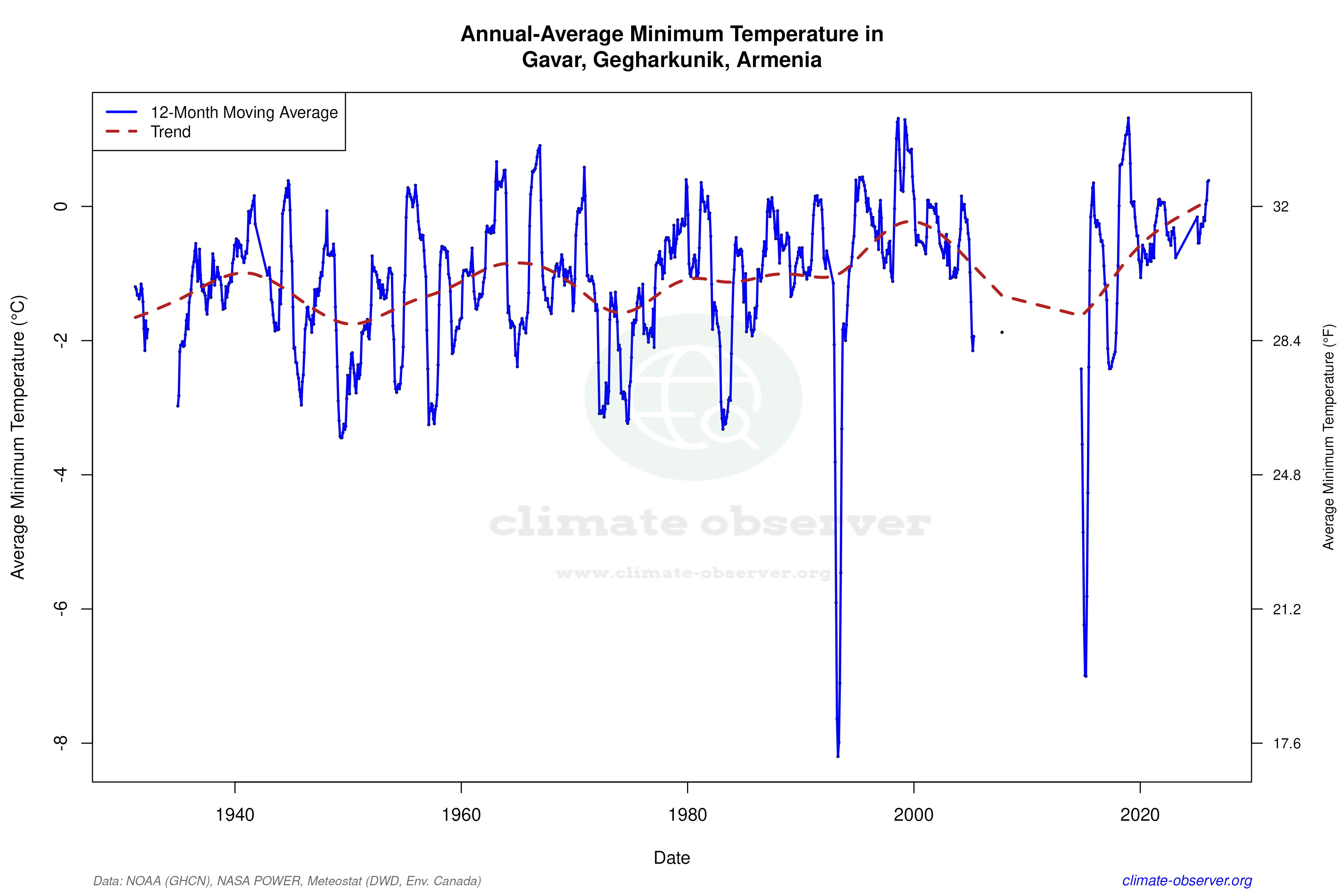
The all-time temperature trends in Gavar reveal a gradual warming, with highs increasing by 0.19°C (0.34°F) and lows rising by 0.10°C (0.18°F). This long-term warming trend suggests a subtle yet consistent rise in temperatures over the years. However, the past decade shows a more pronounced increase, with high temperatures climbing by 0.35°C (0.63°F) and lows by 0.80°C (1.44°F). This recent acceleration in temperature rise could have implications for local ecosystems and agriculture, potentially altering growing seasons and crop viability.
Extremes in Temperature
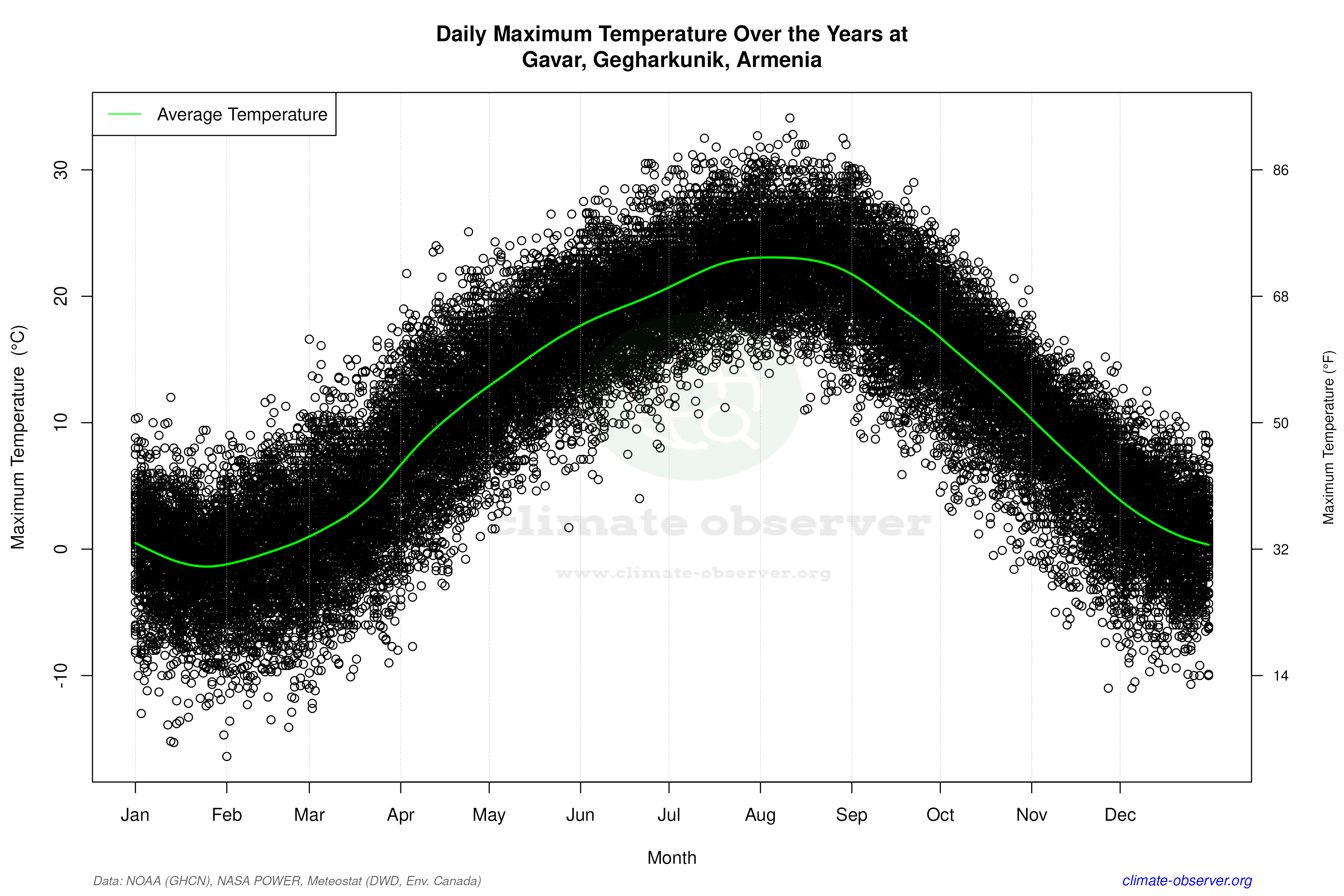
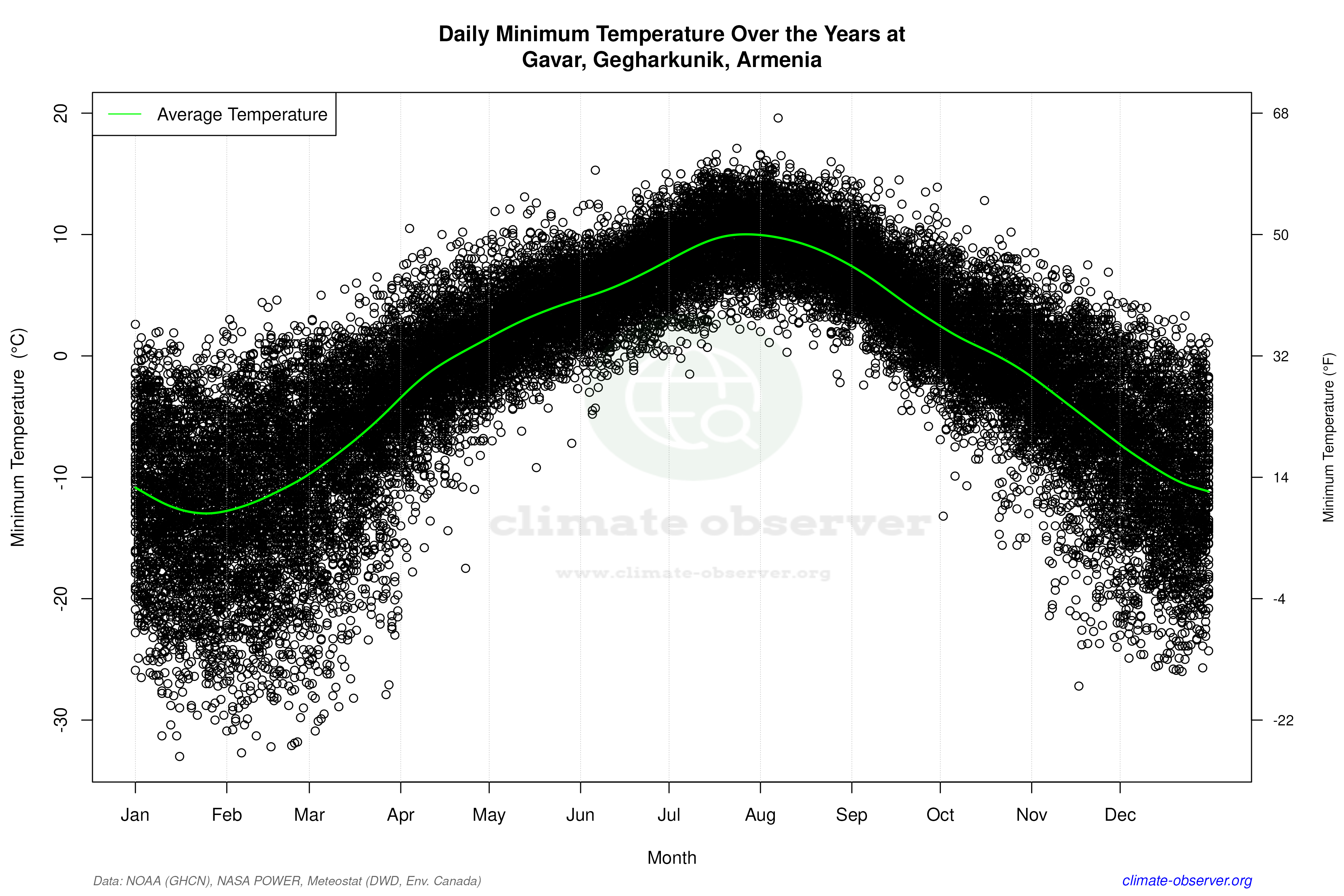
Gavar's record temperatures highlight the city's climatic extremes. The highest recorded temperature is 34.1°C (93.4°F), while the lowest plummets to -33.0°C (-27.4°F). These extremes underscore the significant temperature range that the region experiences, a characteristic feature of its continental climate.
Precipitation Patterns and Gaps
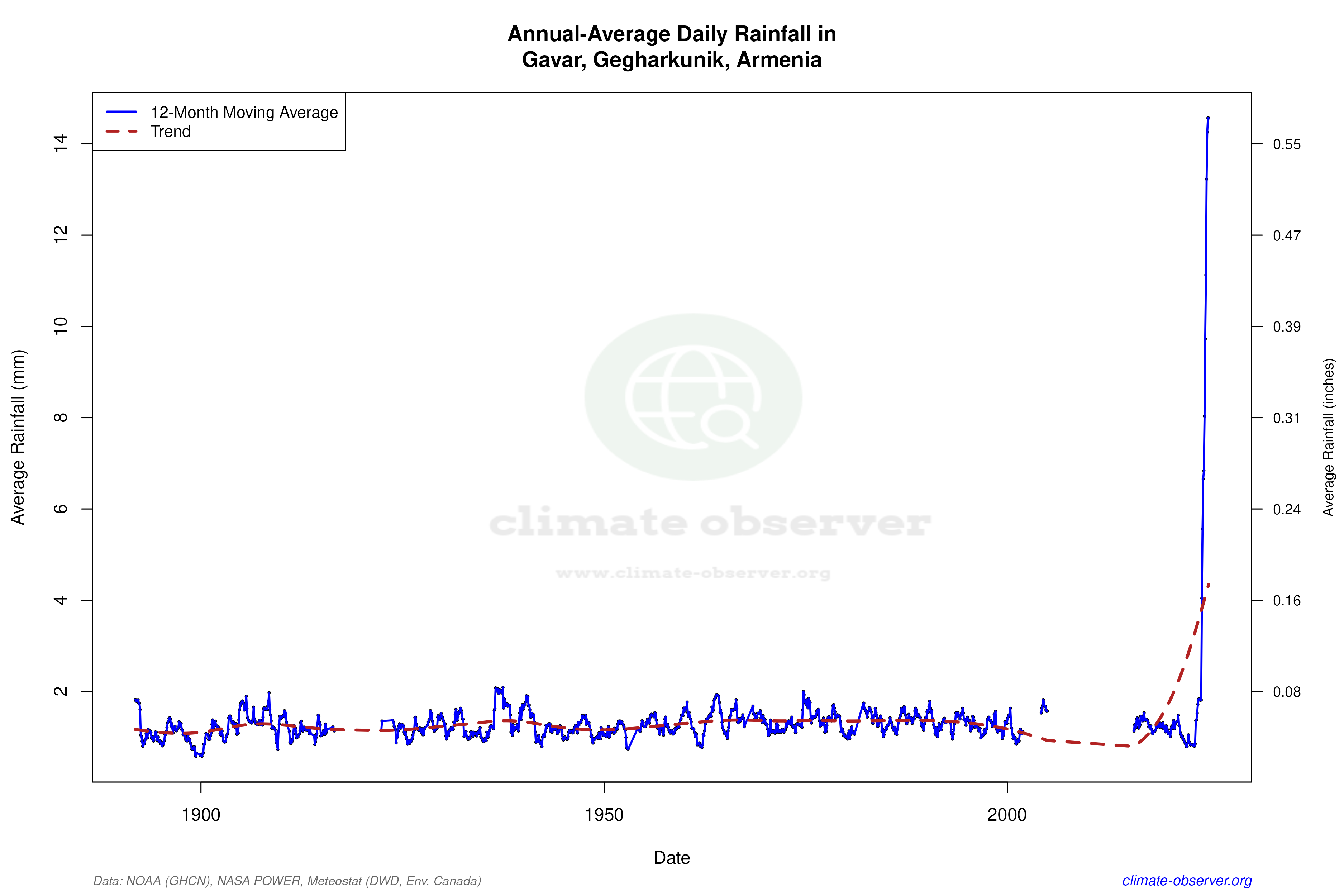
The Precipitation Concentration Index (PCI) is a measure of how precipitation is distributed over time. A baseline PCI of 14.1 suggests a moderate concentration of rainfall events in Gavar. However, the current PCI data is missing, creating a gap in understanding how precipitation patterns may have shifted in recent years. This monitoring gap leaves questions about whether rainfall has become more concentrated or evenly distributed, which could impact water resource management and agricultural planning.
Regional Implications and Goals
Armenia's regional climate goals focus on adapting to climate change impacts, including temperature increases and potential shifts in precipitation patterns. The warming trends observed in Gavar align with broader regional and global patterns of climate change. Understanding these changes is crucial for developing strategies to mitigate adverse effects on agriculture, water resources, and local communities.
The absence of current PCI data is a critical gap that needs addressing to provide a comprehensive understanding of Gavar's climate dynamics. As Armenia continues to pursue sustainable development and climate resilience, filling these data gaps will be essential for informed decision-making and policy development.
Station Statistics
10-Year Trend
High: +0.37 °C/decade
Low: +1.01 °C/decade
Rain: +6.33 mm/decade
25-Year Trend
High: +0.45 °C/decade
Low: +0.19 °C/decade
Rain: +1.34 mm/decade
50-Year Trend
High: +0.34 °C/decade
Low: +0.09 °C/decade
Rain: +0.24 mm/decade
All-Time Trend
High: +0.19 °C/decade
Low: +0.10 °C/decade
Rain: +0.05 mm/decade
Percentage Above-Average Days
Last 12 Months: 54.6%
This Year: 36.5%
Precipitation Concentration Index (PCI) ℹ️
Last 12 Months: N/A
Historical Average: 14.1
Percentile Rank of Last 12 Months ℹ️
High: 63rd percentile
Low: 93rd percentile
Rain: N/A
Change in Variance ℹ️
High: -6.3%
Low: -10.1%
Intraday: -0.1%
Data Coverage
63.1%
First Year of Data
1924
Station Location
Historical Weather Records
| Max High | Avg High | Min High | Max Avg | Avg Avg | Min Avg | Max Low | Avg Low | Min Low | Max Precipitation | Avg Precipitation | Max Snow | Avg Snow | |
|---|---|---|---|---|---|---|---|---|---|---|---|---|---|
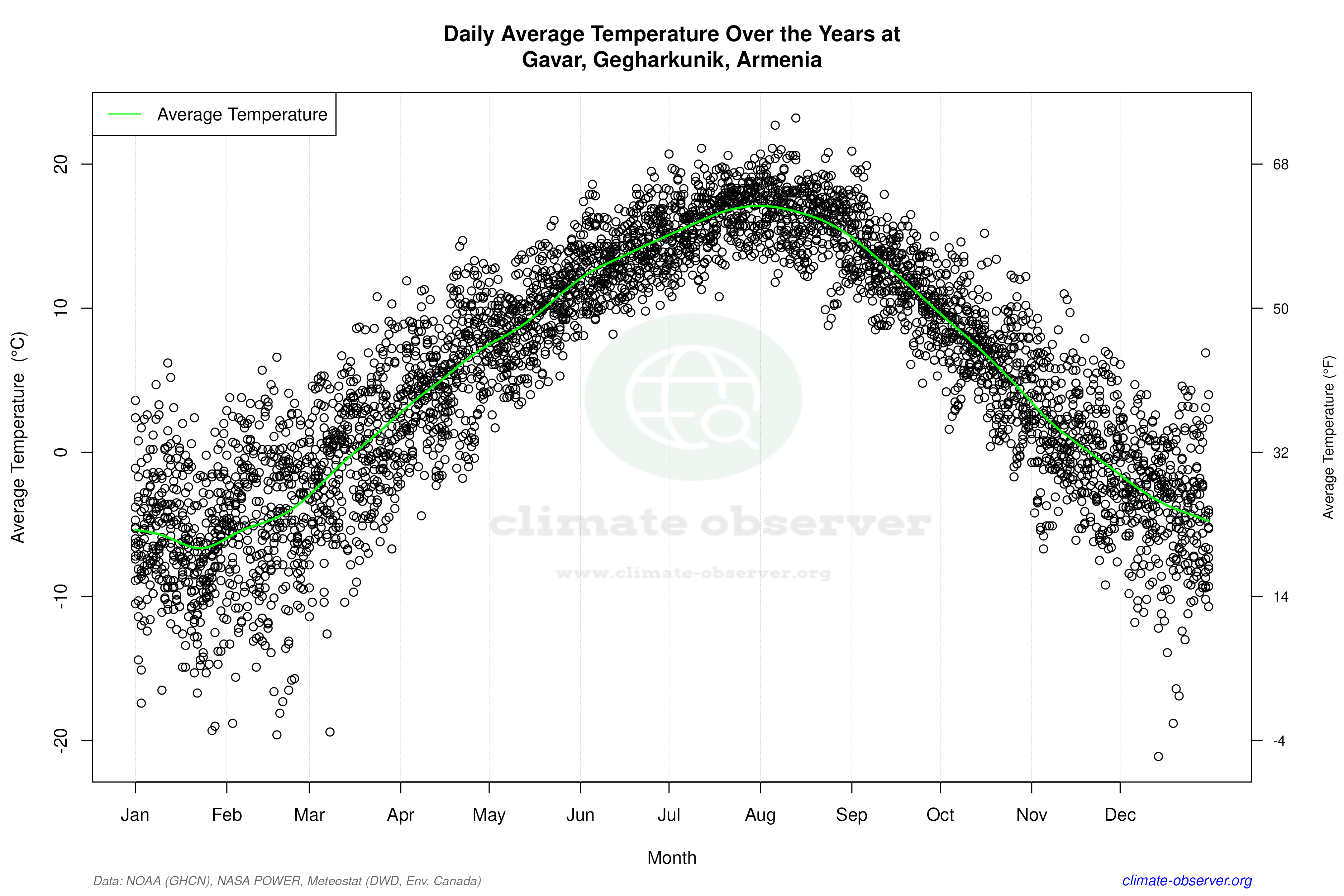
| Record | 34.1 °C | — | -16.4 °C | 23.2 °C | — | -21.1 °C | 19.6 °C | — | -33.0 °C | 99.8 mm | — | — | — |
| January | 12.0 °C | -0.8 °C | -15.3 °C | 6.2 °C | -6.2 °C | -19.3 °C | 2.6 °C | -12.4 °C | -33.0 °C | 40.9 mm | 0.5 mm | — | — |
| February | 11.9 °C | -0.2 °C | -16.4 °C | 6.6 °C | -4.6 °C | -19.6 °C | 4.6 °C | -11.5 °C | -32.7 °C | 99.8 mm | 0.9 mm | — | — |
| March | 17.5 °C | 3.2 °C | -12.6 °C | 10.8 °C | -0.2 °C | -19.4 °C | 6.5 °C | -7.0 °C | -30.9 °C | 99.8 mm | 1.2 mm | — | — |
| April | 25.1 °C | 10.1 °C | -7.7 °C | 14.7 °C | 5.3 °C | -4.4 °C | 10.5 °C | -0.7 °C | -17.8 °C | 99.8 mm | 1.5 mm | — | — |
| May | 26.5 °C | 15.3 °C | 1.6 °C | 16.1 °C | 9.5 °C | 1.7 °C | 13.1 °C | 3.3 °C | -9.2 °C | 99.8 mm | 2.3 mm | — | — |
| June | 30.5 °C | 19.2 °C | 4.0 °C | 19.5 °C | 13.7 °C | 8.1 °C | 15.3 °C | 6.0 °C | -4.8 °C | 99.6 mm | 2.5 mm | — | — |
| July | 32.7 °C | 22.2 °C | 10.7 °C | 21.1 °C | 16.3 °C | 10.8 °C | 17.1 °C | 9.4 °C | -1.5 °C | 99.3 mm | 2.0 mm | — | — |
| August | 34.1 °C | 22.7 °C | 11.0 °C | 23.2 °C | 16.4 °C | 8.8 °C | 19.6 °C | 9.0 °C | -2.2 °C | 99.6 mm | 1.6 mm | — | — |
| September | 30.1 °C | 19.5 °C | 5.9 °C | 20.9 °C | 12.5 °C | 4.8 °C | 14.5 °C | 5.1 °C | -5.8 °C | 99.6 mm | 1.4 mm | — | — |
| October | 25.0 °C | 13.6 °C | -1.6 °C | 15.2 °C | 6.9 °C | -1.7 °C | 12.8 °C | 0.5 °C | -15.6 °C | 99.6 mm | 1.3 mm | — | — |
| November | 18.5 °C | 7.1 °C | -11.0 °C | 11.0 °C | 0.8 °C | -9.2 °C | 8.5 °C | -4.4 °C | -27.2 °C | 99.3 mm | 0.9 mm | — | — |
| December | 12.7 °C | 1.7 °C | -11.0 °C | 6.9 °C | -3.5 °C | -21.1 °C | 4.4 °C | -9.6 °C | -26.0 °C | 20.1 mm | 0.5 mm | — | — |
Data Visualisations
Remove WatermarksCurrent Year Climate Trends vs Historical
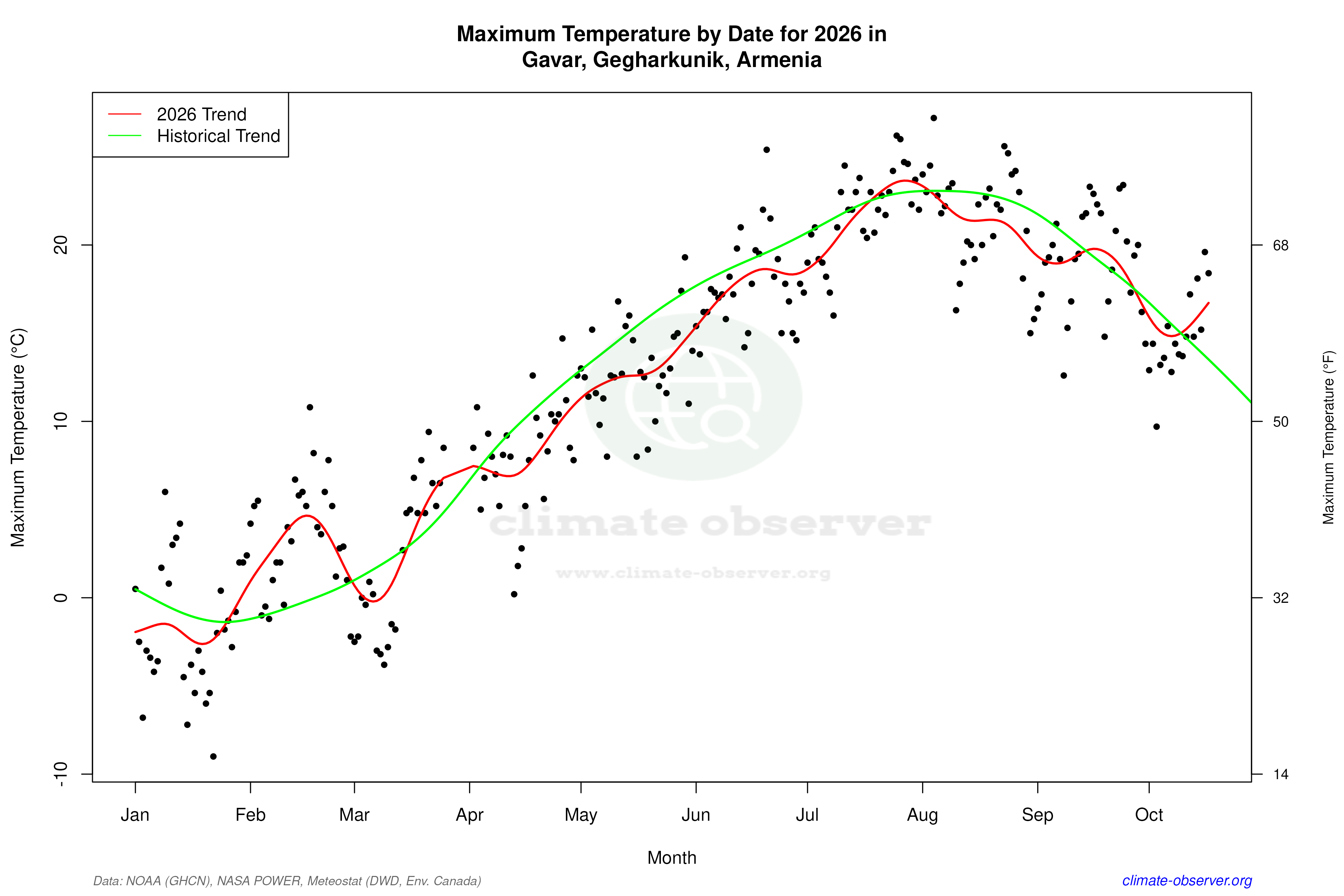
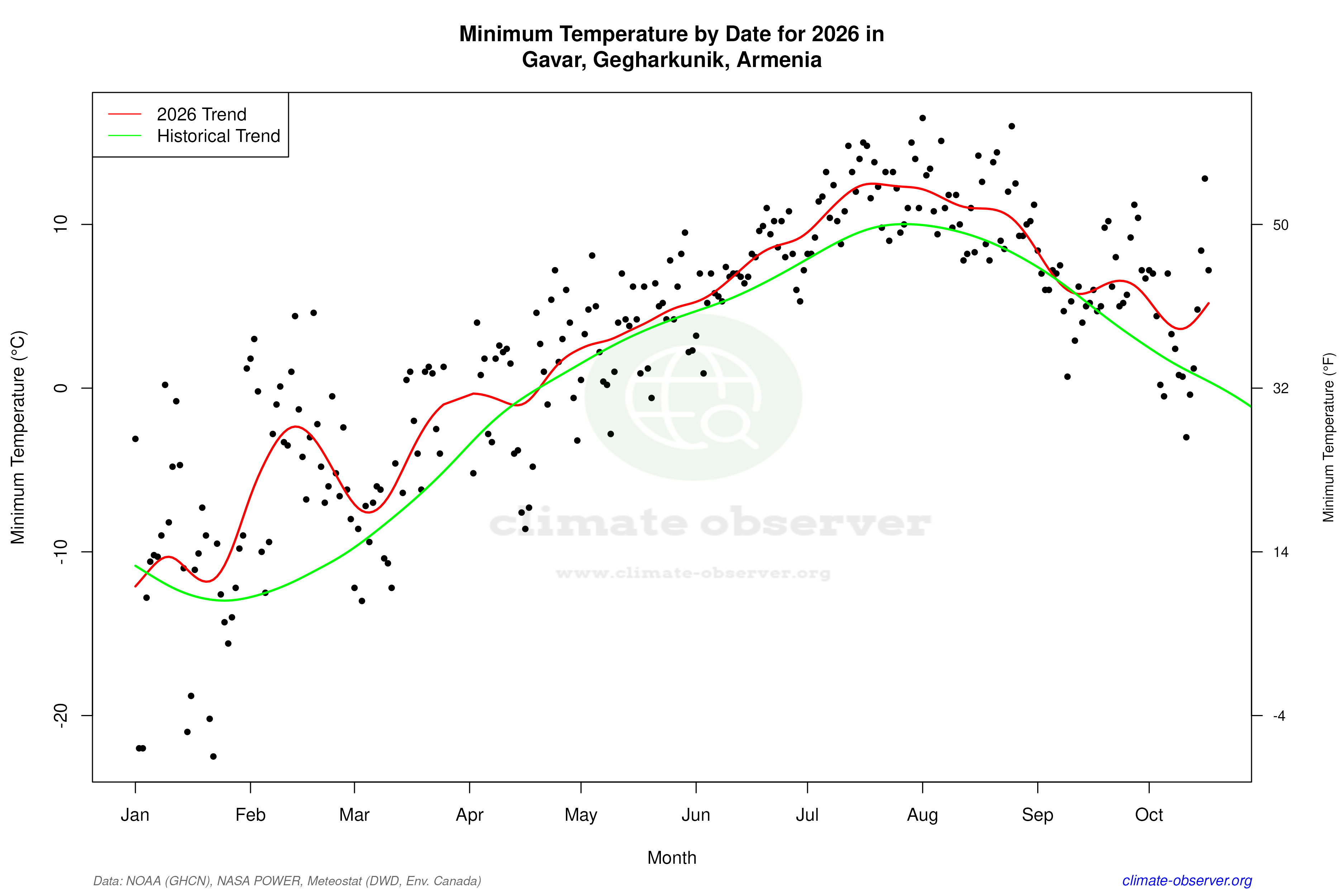
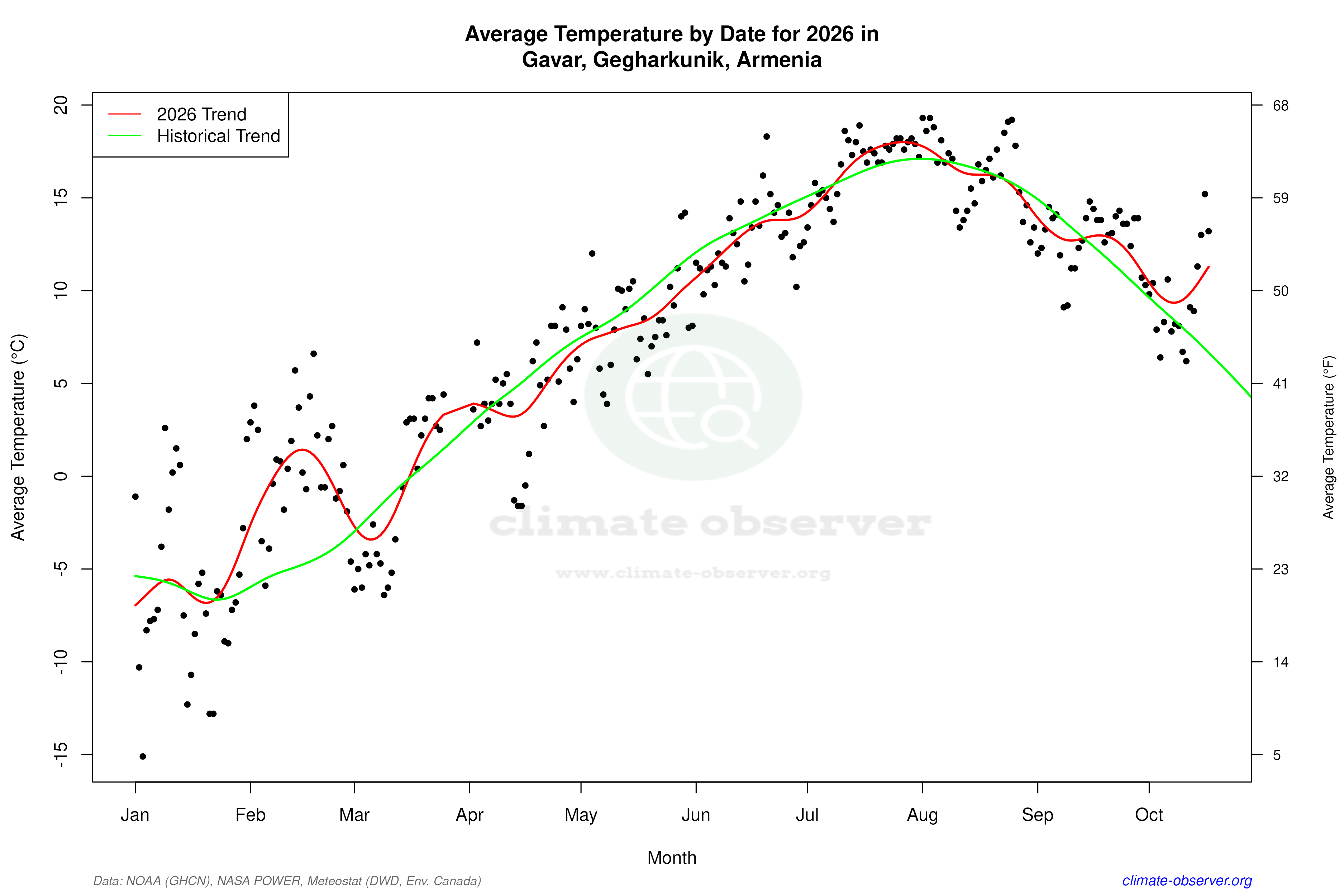



Max Temperature this Year | 1 of 6
Climate 12-Month Moving Averages
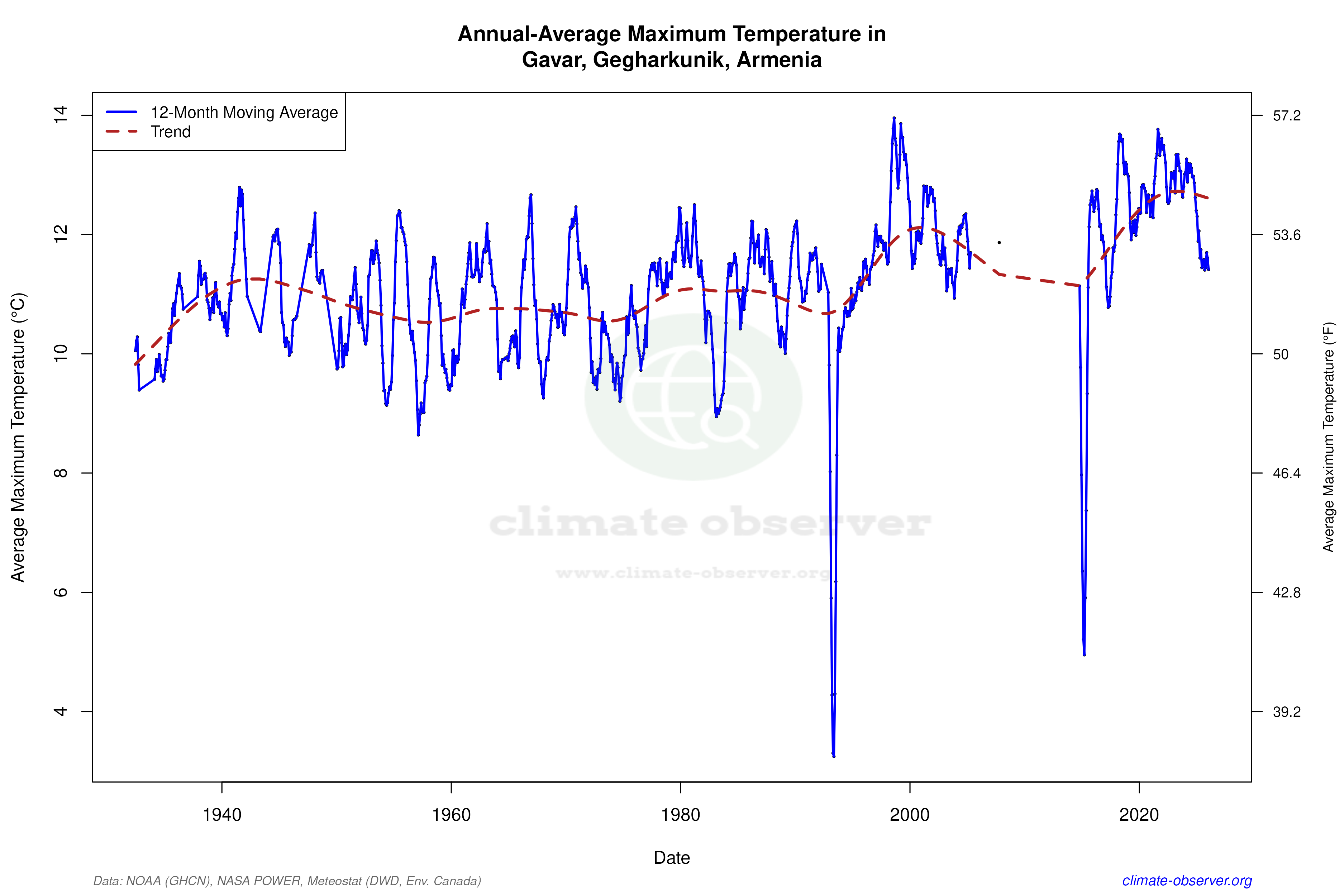


Max Temperature 12-Month MA | 1 of 6
Daily Data Points and Averages Throughout the Year


Average Max Temperature Throughout Year | 1 of 5


