Climate for Station: Alice Springs Airport, Northern Territory, Australia
Loading live weather...
Climate Analysis & Overview
Alice Springs Airport experiences a complex climate narrative marked by contrasting short-term cooling and long-term warming trends. Despite a recent decrease in temperature extremes, the all-time data indicates a warming trajectory, while precipitation patterns have become more evenly distributed.
Desert Climate Dynamics
Alice Springs Airport, located at -23.7951, 133.889, sits in the heart of Australia's arid interior, classified under the Köppen climate system as a hot desert climate (BWh). This classification is characterised by high temperatures and low precipitation, influenced by the surrounding desert landscape. The region's geography contributes to significant temperature variability and sparse rainfall, making it sensitive to climatic shifts.
Temperature Trends: A Tale of Two Timelines
Examining temperature trends reveals an intriguing divergence. Over the past decade, the airport has experienced a cooling trend, with high temperatures decreasing by 0.26°C (0.47°F) and lows by 0.14°C (0.24°F). However, when considering the all-time data, the narrative shifts to a warming trend. Highs have increased by 0.25°C (0.45°F), while lows have risen by a modest 0.03°C (0.05°F). This indicates a longer-term warming pattern, despite recent cooling, which may be influenced by broader climatic factors affecting the region.
Record Extremes: Heat and Cold
Alice Springs Airport has recorded some of the most extreme temperatures in Australia, with a maximum of 46.0°C (114.8°F) and a minimum of -7.5°C (18.5°F). These extremes underscore the volatility of the desert climate, where temperatures can swing dramatically between day and night, and between seasons.
Precipitation Patterns: A More Even Distribution
The Precipitation Concentration Index (PCI) at Alice Springs Airport has decreased from a baseline of 26.07 to a current value of 20.16. This significant change suggests a shift towards more evenly distributed rainfall events, rather than the highly concentrated and sporadic rainfall typically associated with desert climates. A PCI over 20 still indicates a concentration, but the reduction points to less variability in precipitation distribution.
Regional Climate Considerations
Australia's commitment to climate resilience and adaptation is particularly relevant for regions like Alice Springs. Recent weather events, such as prolonged droughts and heatwaves, highlight the importance of understanding and responding to these climatic trends. The cooling observed in the short term may offer some relief, but the overarching warming trend aligns with broader global patterns and necessitates continued monitoring and adaptation strategies.
Station Statistics
10-Year Trend
High: +0.52 °C/decade
Low: +0.50 °C/decade
Rain: +0.15 mm/decade
25-Year Trend
High: +0.48 °C/decade
Low: +0.48 °C/decade
Rain: +0.04 mm/decade
50-Year Trend
High: +0.30 °C/decade
Low: +0.19 °C/decade
Rain: -0.05 mm/decade
All-Time Trend
High: +0.18 °C/decade
Low: +0.00 °C/decade
Rain: -0.01 mm/decade
Percentage Above-Average Days
Last 12 Months: 57.5%
This Year: 56.8%
Precipitation Concentration Index (PCI) ℹ️
Last 12 Months: 30.4
Historical Average: 25.7
Percentile Rank of Last 12 Months ℹ️
High: 57th percentile
Low: 54th percentile
Rain: 74th percentile
Change in Variance ℹ️
High: +1.1%
Low: +10.7%
Intraday: +8.0%
Data Coverage
93.3%
First Year of Data
1972
Station Location
Historical Weather Records
| Max High | Avg High | Min High | Max Avg | Avg Avg | Min Avg | Max Low | Avg Low | Min Low | Max Precipitation | Avg Precipitation | Max Snow | Avg Snow | |
|---|---|---|---|---|---|---|---|---|---|---|---|---|---|
| Record | 46.0 °C | — | 6.1 °C | 38.2 °C | — | 2.0 °C | 32.8 °C | — | -7.5 °C | 170.9 mm | — | — | — |
| January | 46.0 °C | 36.6 °C | 16.2 °C | 37.6 °C | 29.7 °C | 14.6 °C | 32.8 °C | 21.6 °C | 10.0 °C | 84.8 mm | 1.2 mm | — | — |
| February | 44.7 °C | 35.3 °C | 16.7 °C | 36.9 °C | 28.5 °C | 12.2 °C | 31.6 °C | 20.8 °C | 8.5 °C | 93.5 mm | 1.3 mm | — | — |
| March | 44.5 °C | 32.9 °C | 15.3 °C | 35.9 °C | 25.7 °C | 13.3 °C | 29.4 °C | 17.6 °C | 6.1 °C | 100.4 mm | 0.8 mm | — | — |
| April | 39.9 °C | 28.4 °C | 12.5 °C | 32.7 °C | 20.8 °C | 10.7 °C | 25.9 °C | 12.6 °C | 1.4 °C | 53.6 mm | 0.4 mm | — | — |
| May | 35.0 °C | 23.2 °C | 9.6 °C | 28.9 °C | 15.8 °C | 6.5 °C | 21.4 °C | 8.0 °C | -2.7 °C | 50.9 mm | 0.5 mm | — | — |
| June | 31.6 °C | 20.0 °C | 7.7 °C | 25.7 °C | 12.3 °C | 4.3 °C | 21.0 °C | 4.9 °C | -6.0 °C | 70.6 mm | 0.4 mm | — | — |
| July | 31.8 °C | 20.0 °C | 6.1 °C | 24.1 °C | 12.1 °C | 2.0 °C | 18.3 °C | 3.9 °C | -7.5 °C | 54.0 mm | 0.3 mm | — | — |
| August | 36.6 °C | 22.9 °C | 7.0 °C | 27.8 °C | 14.9 °C | 6.1 °C | 22.1 °C | 5.9 °C | -4.1 °C | 63.0 mm | 0.2 mm | — | — |
| September | 38.8 °C | 27.6 °C | 11.9 °C | 32.4 °C | 19.8 °C | 9.0 °C | 27.4 °C | 10.3 °C | -1.0 °C | 29.5 mm | 0.2 mm | — | — |
| October | 42.6 °C | 31.4 °C | 11.7 °C | 35.3 °C | 23.8 °C | 11.3 °C | 30.0 °C | 14.8 °C | 1.3 °C | 170.9 mm | 0.8 mm | — | — |
| November | 44.9 °C | 33.8 °C | 12.8 °C | 36.7 °C | 26.5 °C | 11.0 °C | 31.3 °C | 17.9 °C | 3.5 °C | 53.1 mm | 1.0 mm | — | — |
| December | 45.7 °C | 35.6 °C | 17.1 °C | 38.2 °C | 28.6 °C | 14.3 °C | 31.0 °C | 20.3 °C | 9.3 °C | 135.8 mm | 1.1 mm | — | — |
Data Visualisations
Remove WatermarksCurrent Year Climate Trends vs Historical
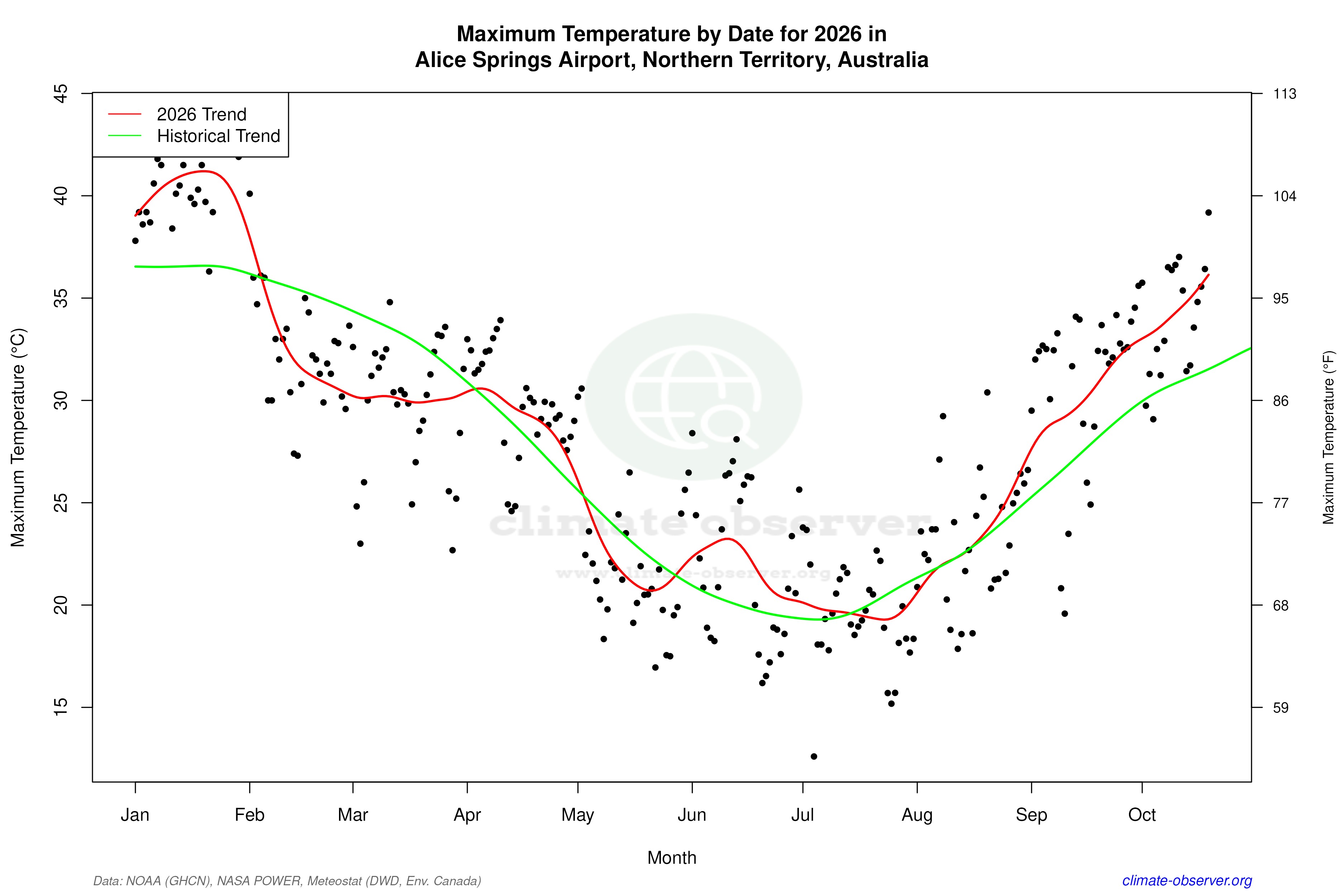
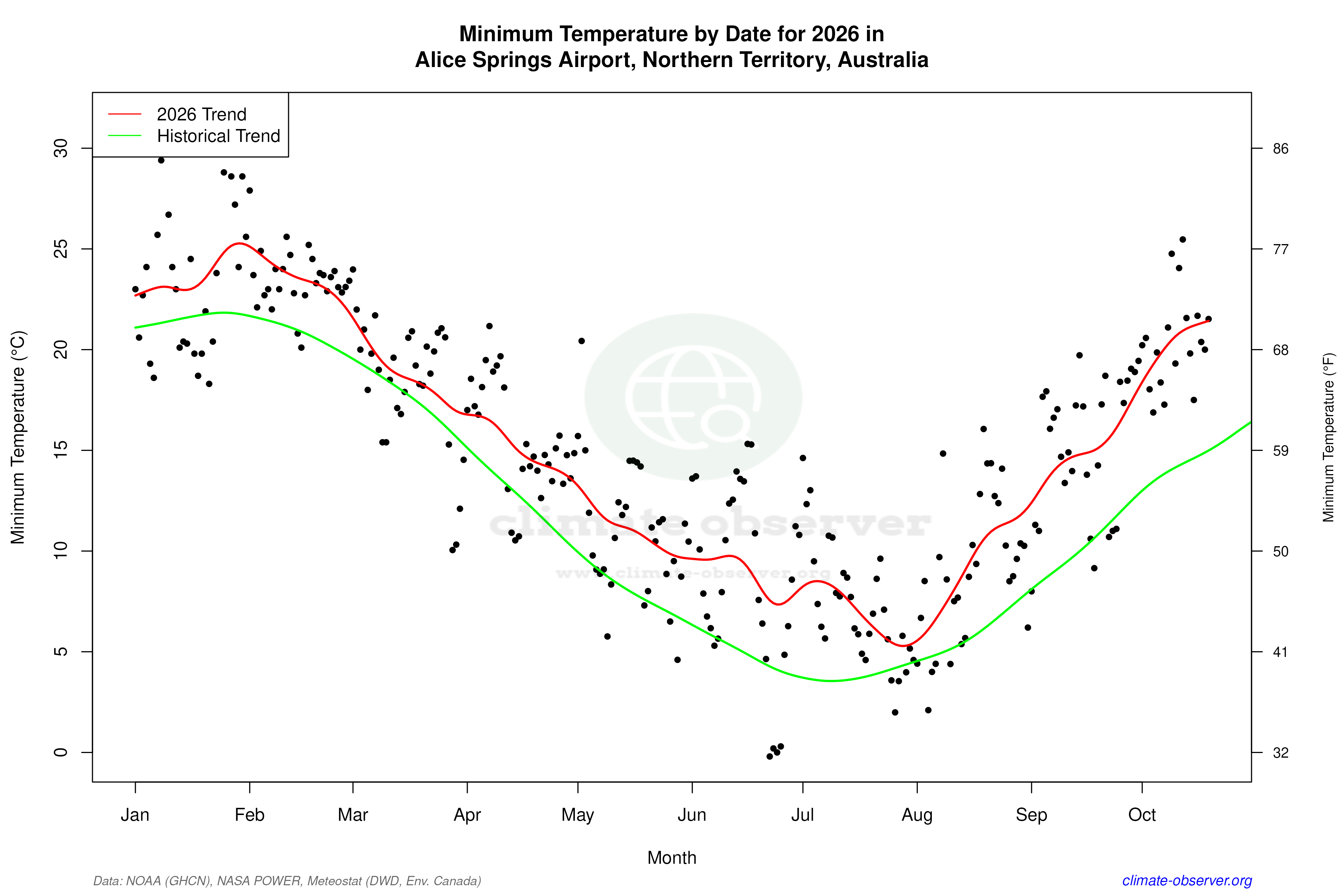
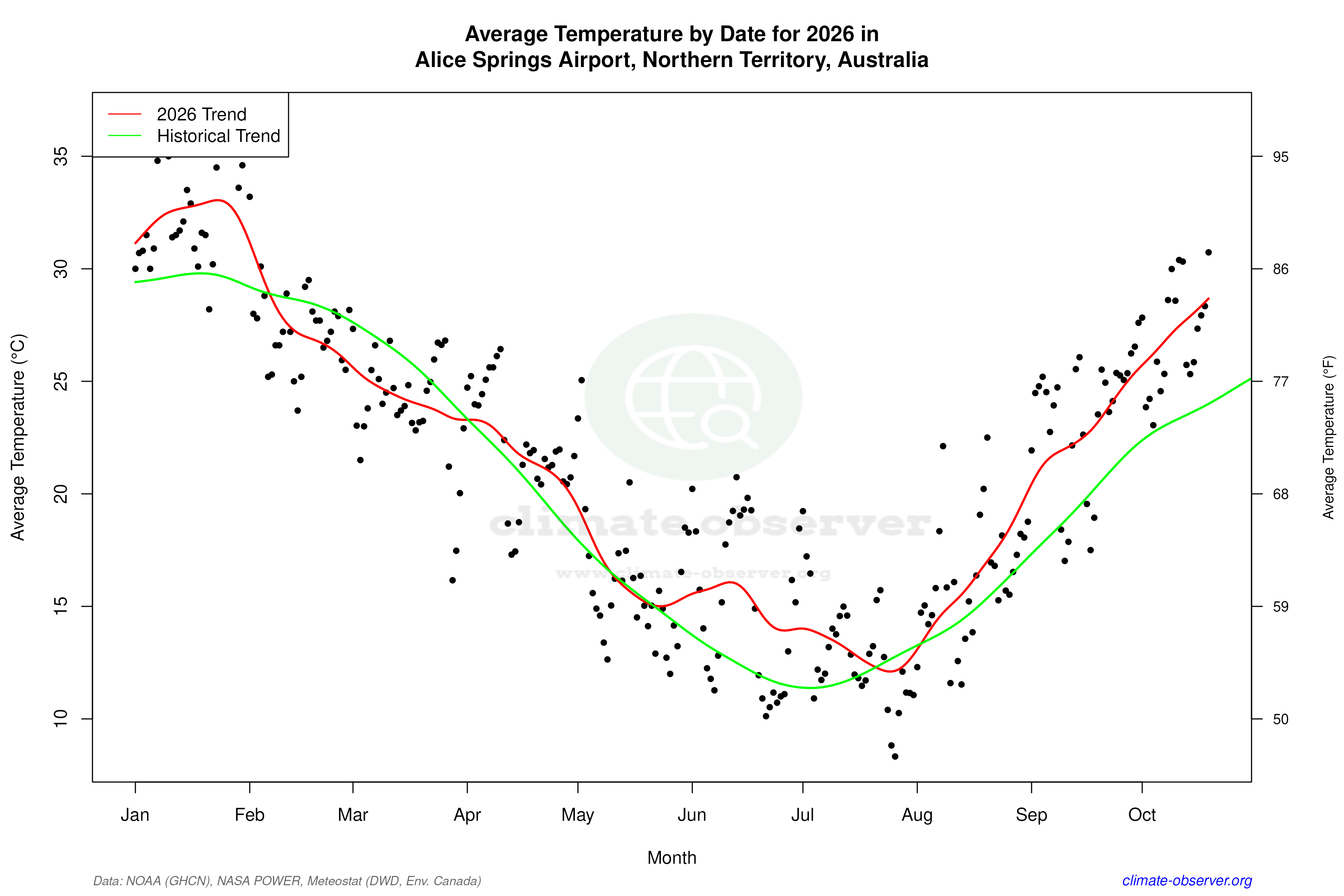
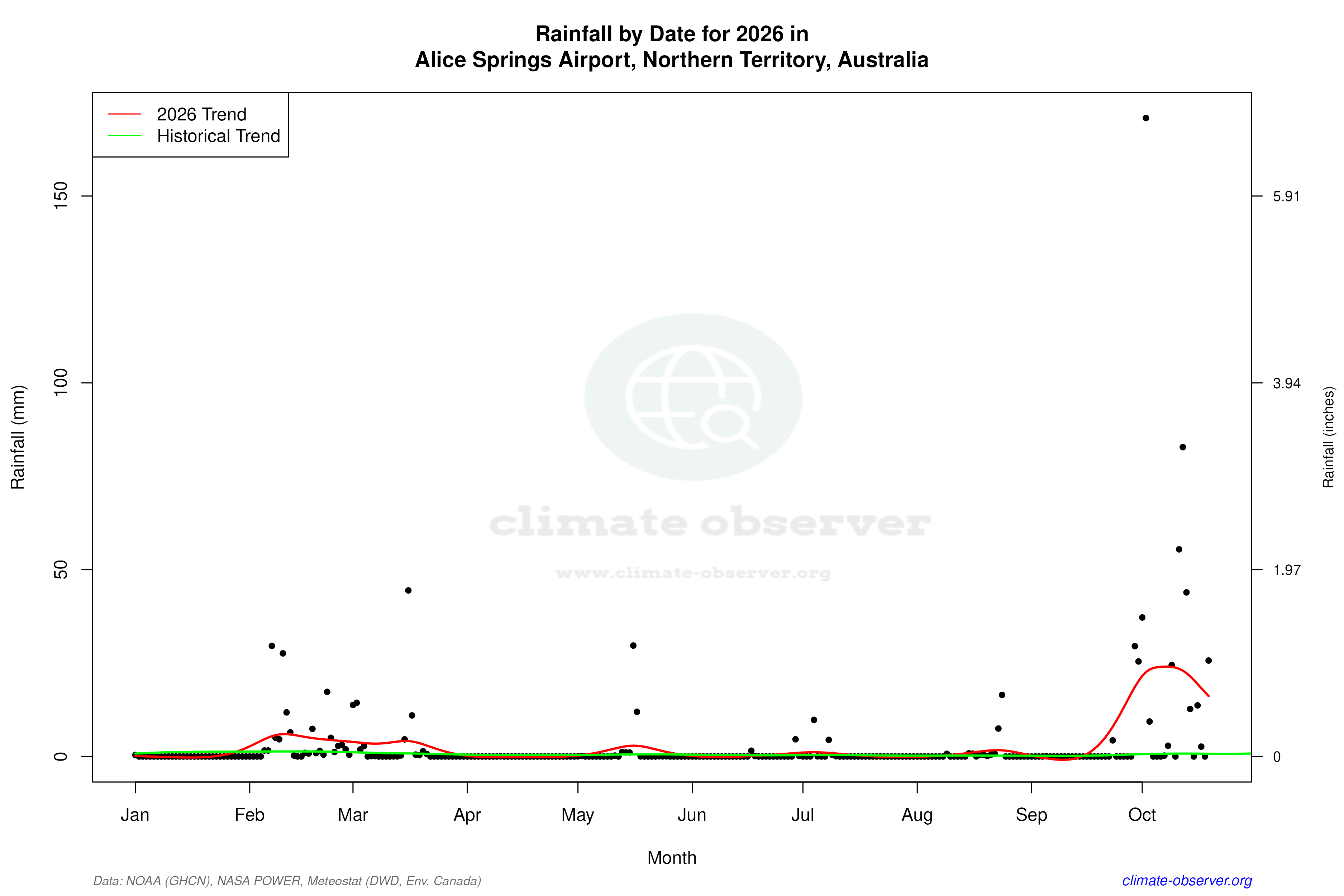
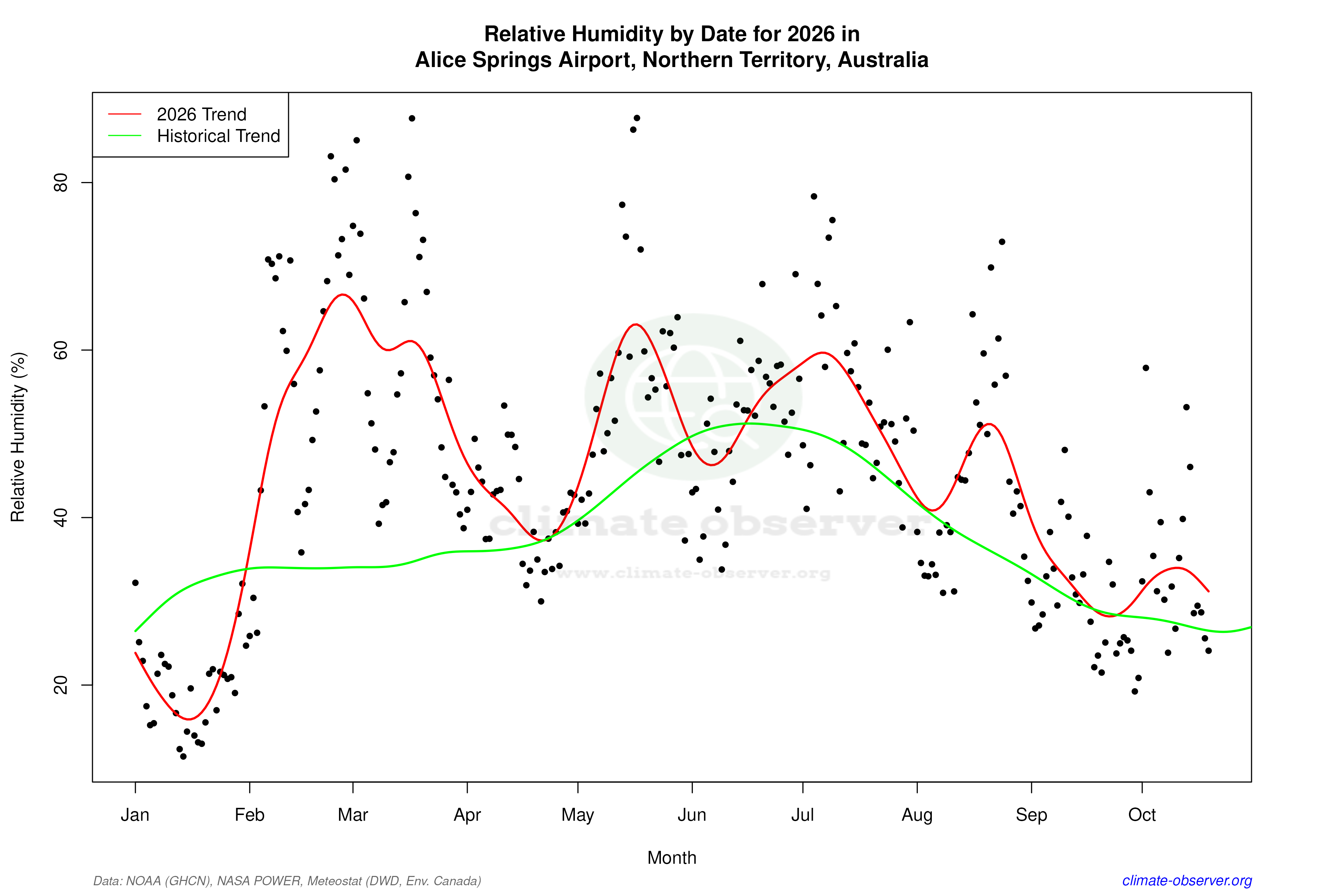

Max Temperature this Year | 1 of 6
Climate 12-Month Moving Averages
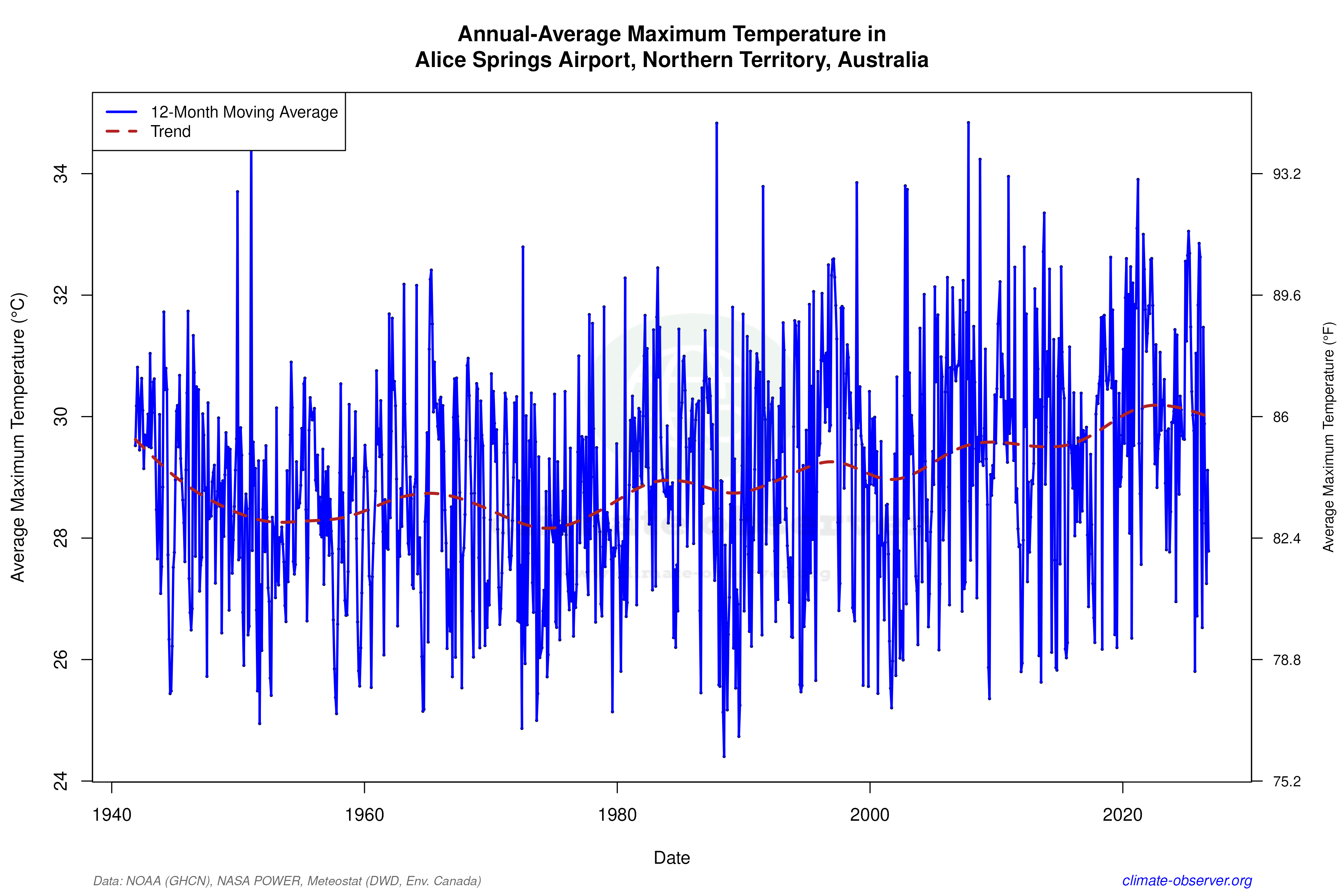
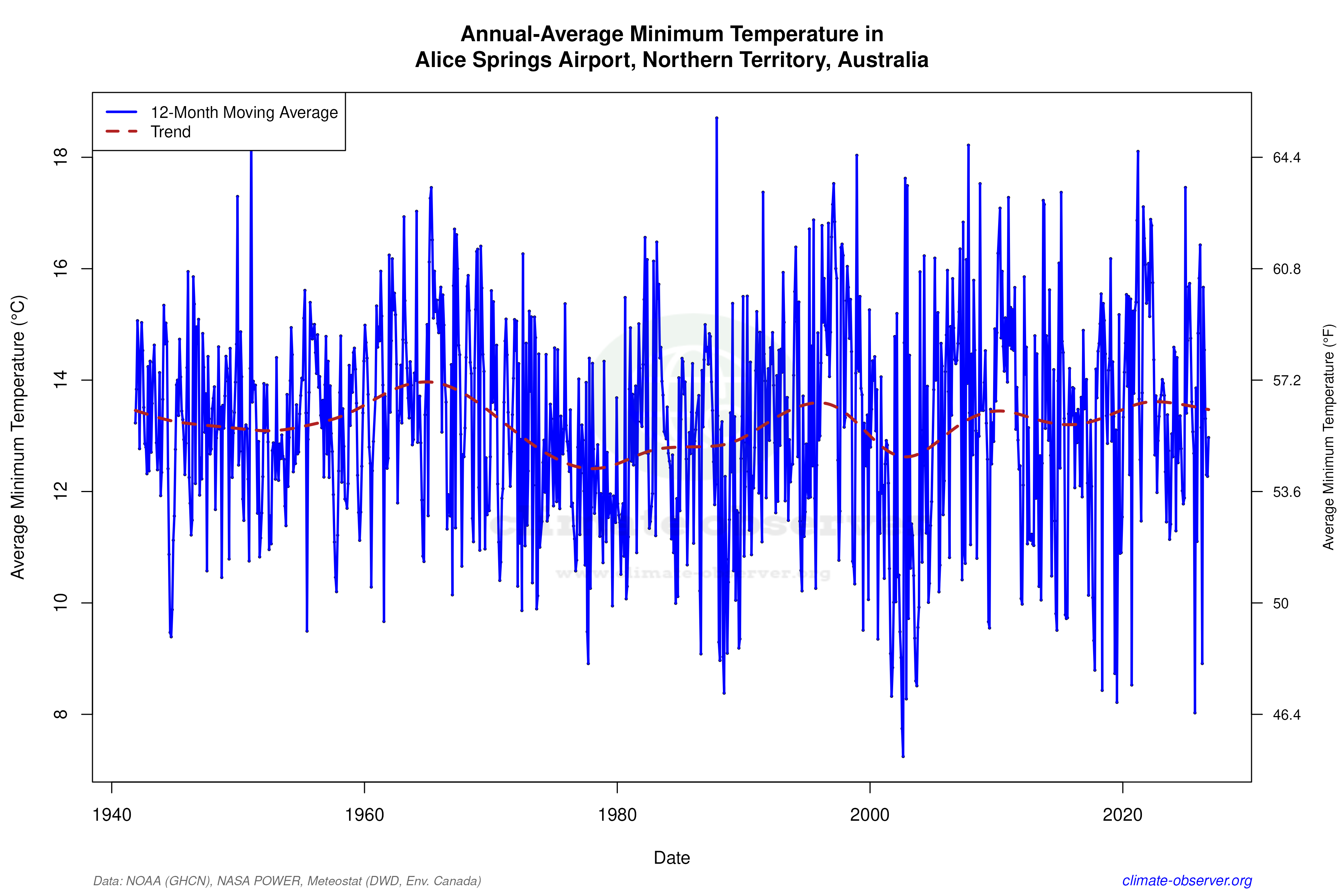
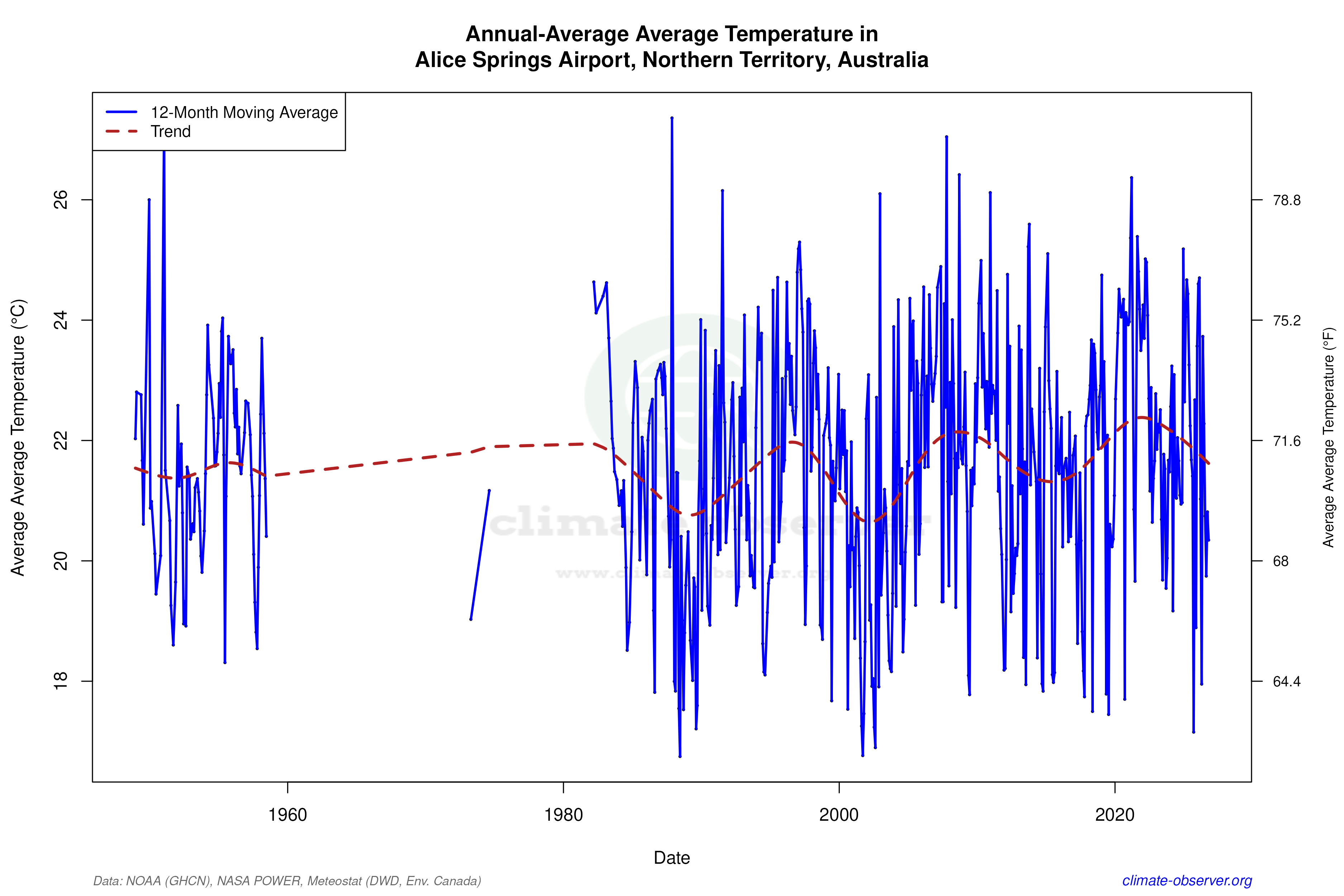
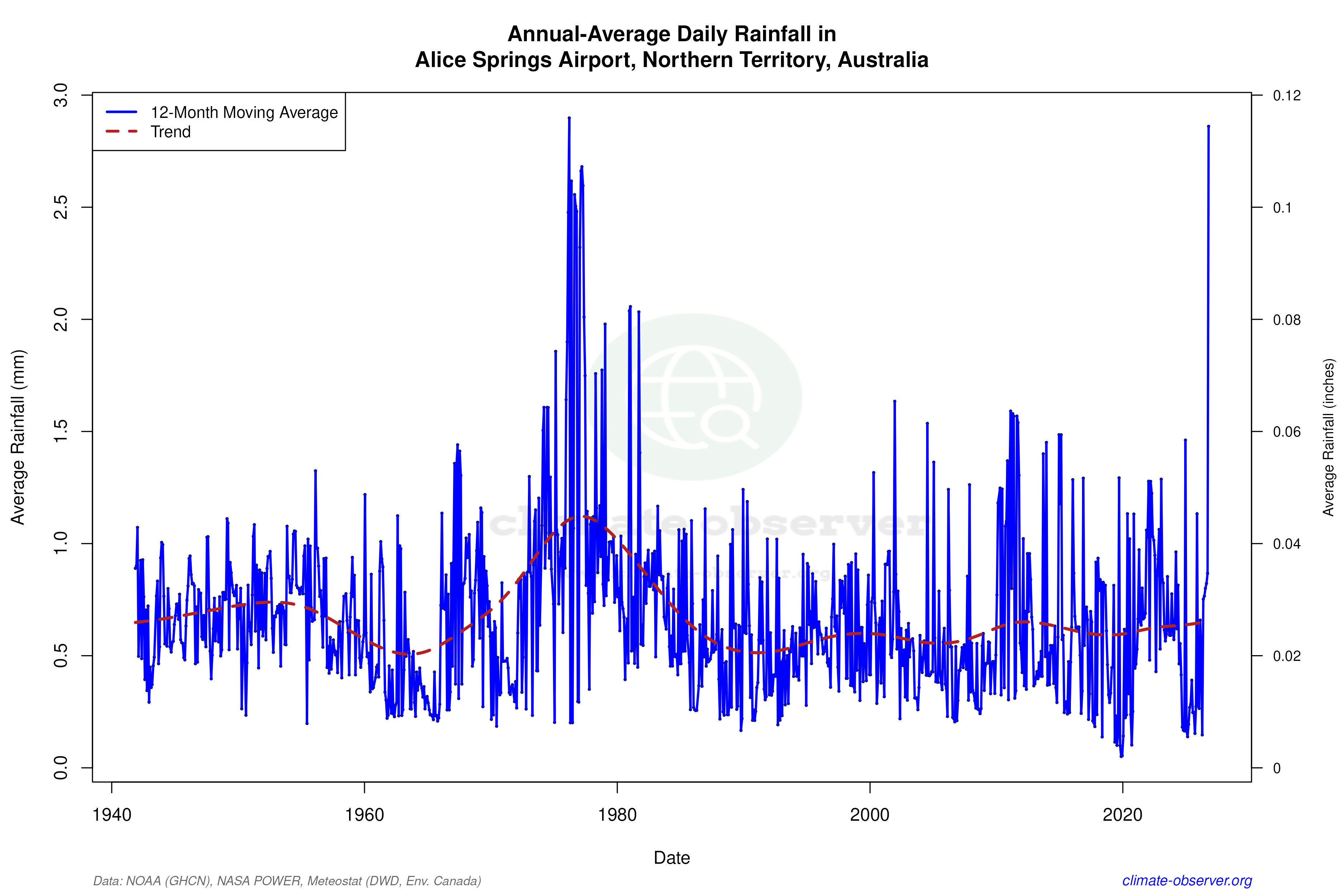
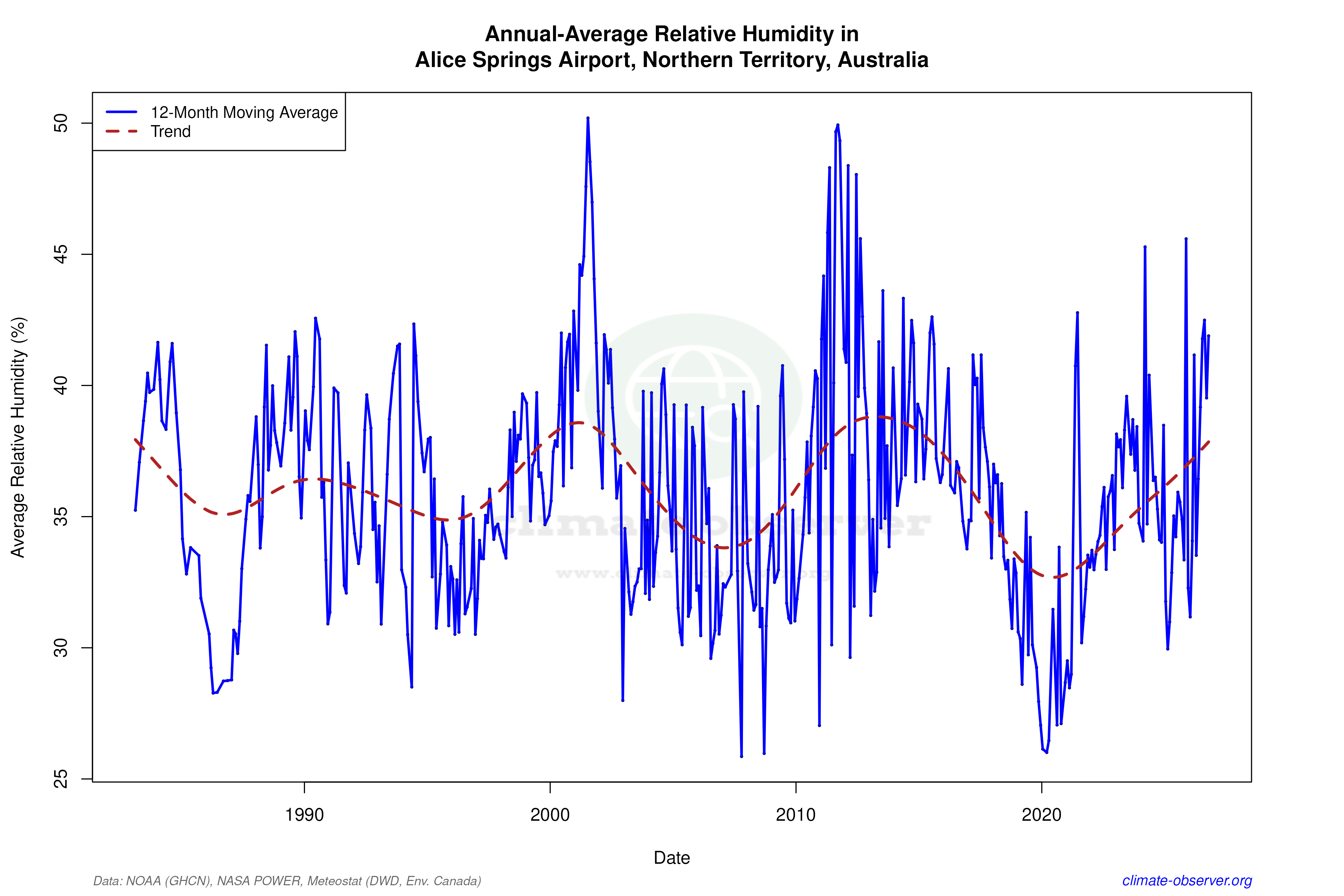

Max Temperature 12-Month MA | 1 of 6
Daily Data Points and Averages Throughout the Year
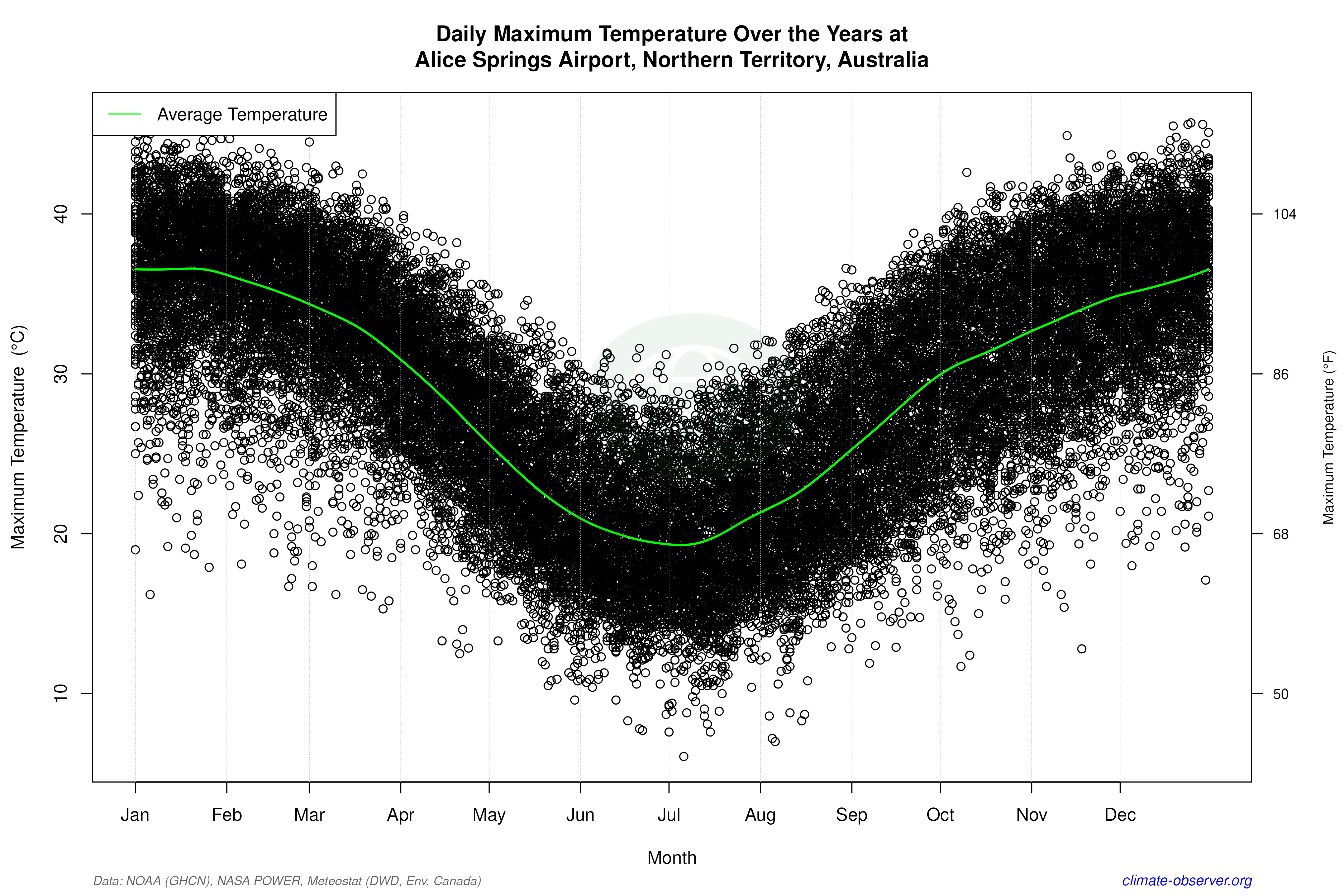
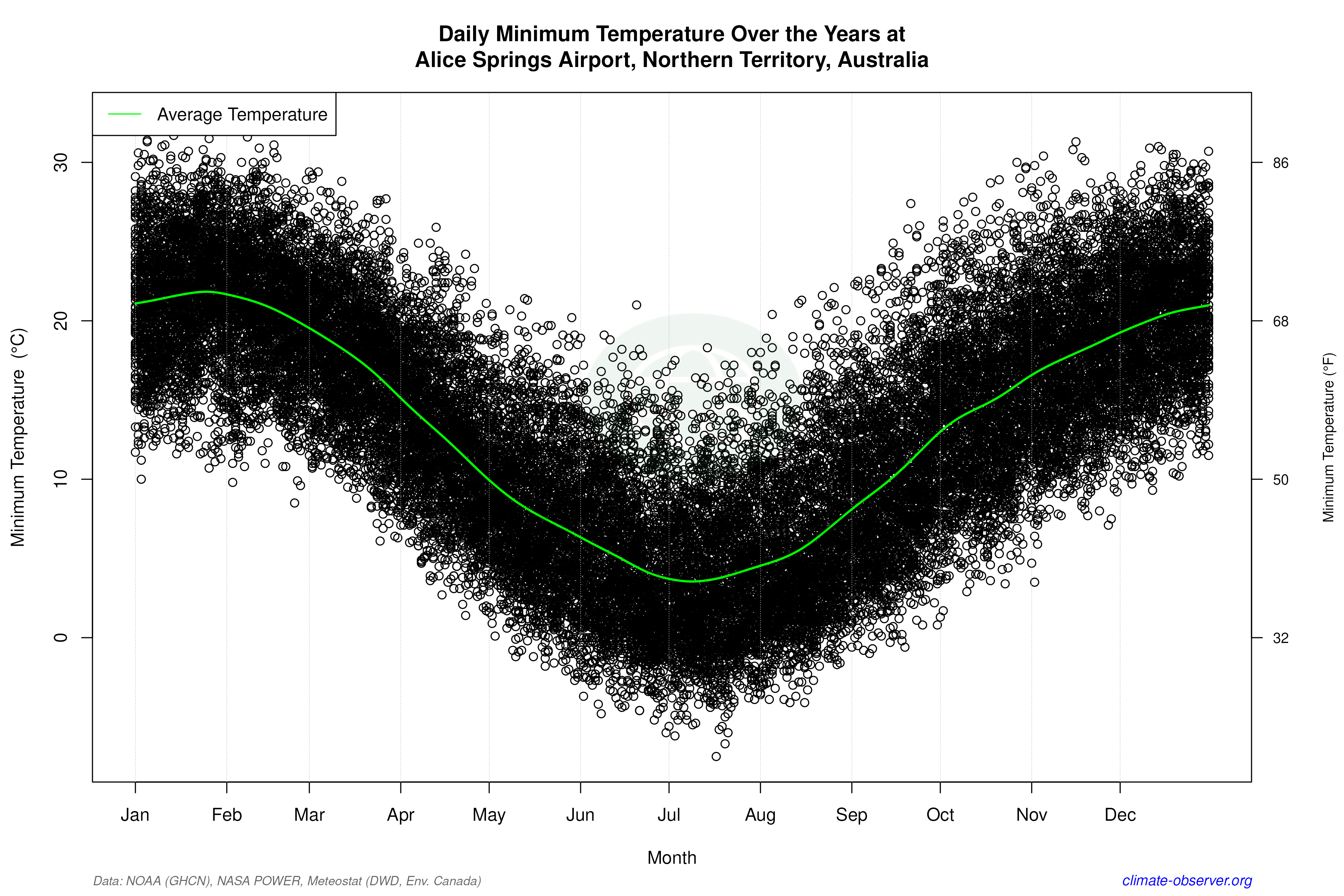
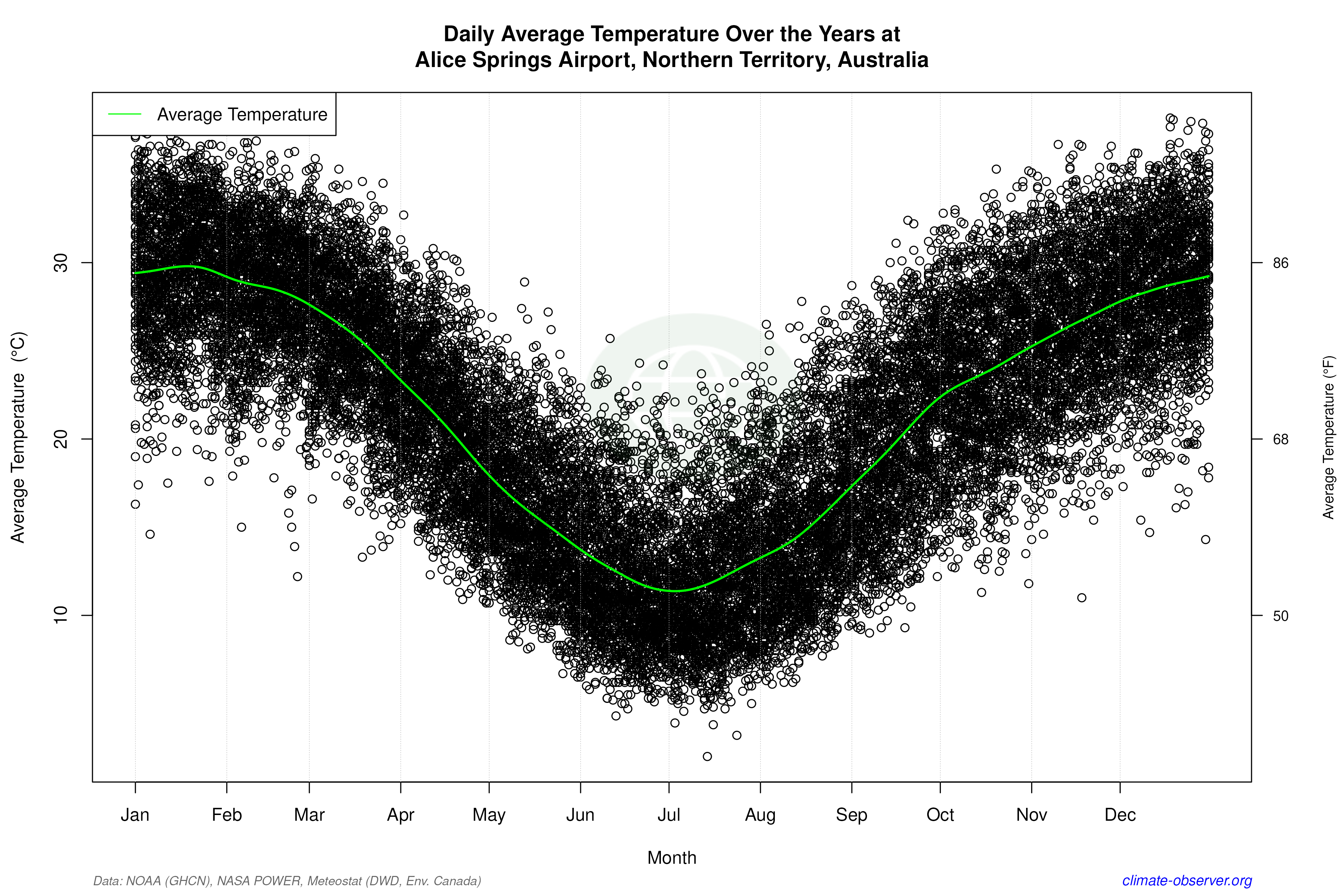
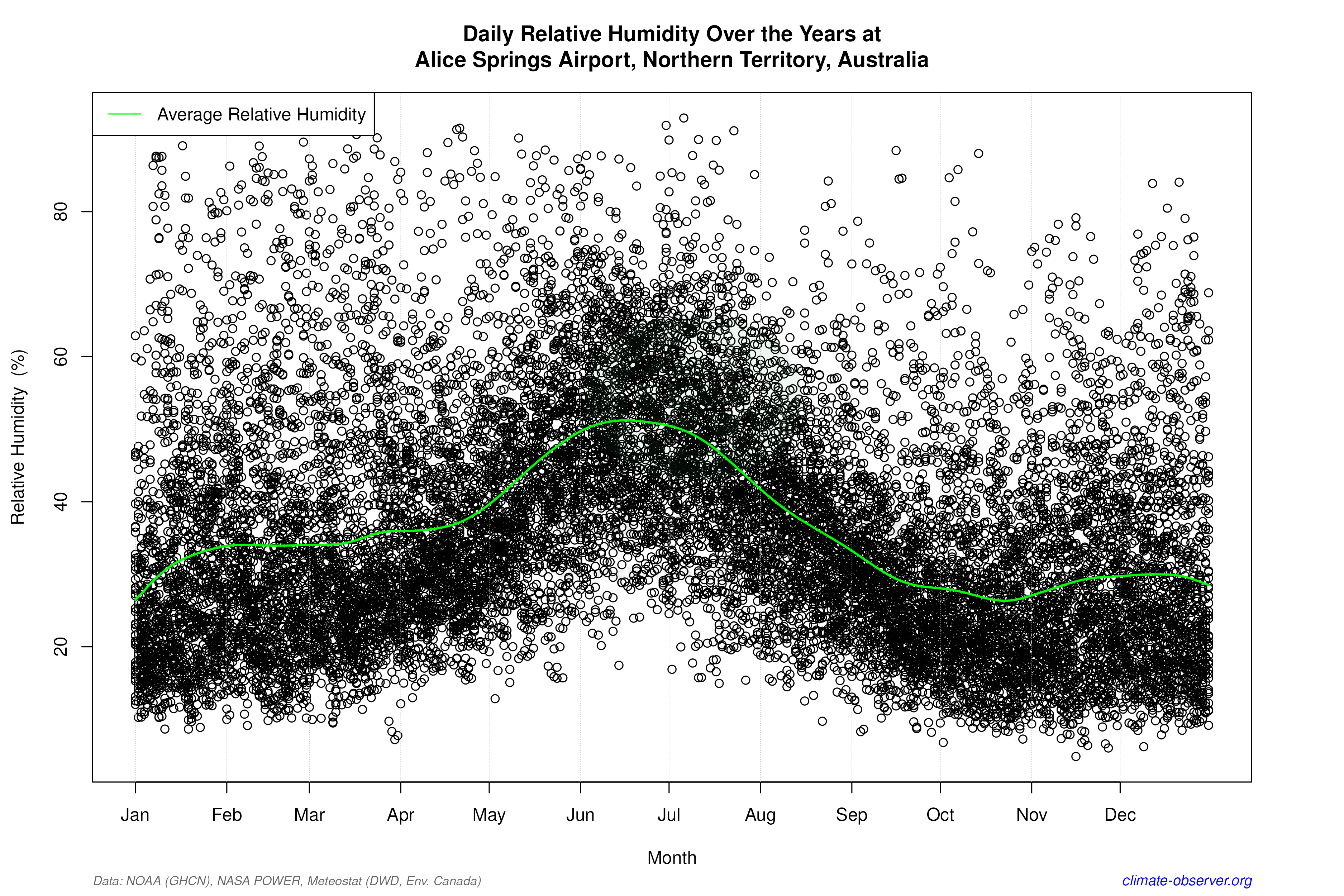

Average Max Temperature Throughout Year | 1 of 5


