Climate for Station: Lockhart River Airport, Queensland, Australia
Loading live weather...
Climate Analysis & Overview
Lockhart River Airport has experienced a notable warming trend over the past decade, with highs increasing by 0.50°C (0.90°F) and lows by 0.46°C (0.83°F). The all-time data also shows a warming trend, albeit at a slower pace. Precipitation is becoming more concentrated, suggesting more intense rainfall events.
Tropical Climate Dynamics
Lockhart River Airport is situated in a tropical rainforest climate, classified as 'Af' according to the Köppen system. This classification is characterised by high temperatures and significant annual rainfall. The airport's proximity to the Coral Sea influences its climate, leading to frequent and intense rainfall, especially during the wet season. The all-time temperature trends indicate a warming pattern, with highs rising by 0.17°C (0.31°F) and lows by 0.23°C (0.42°F). This gradual increase reflects broader regional warming trends observed across northern Australia.
Temperature Trends: A Decade of Change
Over the past ten years, the temperature dynamics at Lockhart River Airport have shown a more pronounced warming trend compared to the all-time data. Highs have increased by 0.50°C (0.90°F), while lows have risen by 0.46°C (0.83°F). This acceleration in warming could be attributed to more frequent and intense heatwaves, a phenomenon that aligns with Australia's recent climate challenges. The record high temperature at this location is 39.8°C (103.6°F), while the record low is 3.3°C (37.9°F), illustrating the range of thermal conditions experienced here.
Precipitation Patterns: Increasing Concentration
The Precipitation Concentration Index (PCI) at Lockhart River Airport has risen from a baseline of 21.46 to a current value of 22.38. The PCI measures how rainfall is distributed over time, with higher values indicating more concentrated precipitation events. This slight increase suggests that rainfall is becoming more intense and less evenly distributed, a pattern that could lead to more frequent flooding events. Such changes are consistent with predictions of climate models that forecast more extreme weather patterns in tropical regions.
Regional Climate Goals and Implications
Australia's commitment to reducing greenhouse gas emissions and adapting to climate change is crucial in the context of these observed trends. The warming trends and increasing precipitation concentration at Lockhart River Airport highlight the need for adaptive strategies to manage water resources and mitigate the impacts of extreme weather. As part of broader regional goals, enhancing infrastructure resilience and improving early warning systems for extreme weather events are vital steps in safeguarding communities in this tropical region.
Station Statistics
10-Year Trend
High: +0.25 °C/decade
Low: +0.24 °C/decade
Rain: +0.59 mm/decade
25-Year Trend
High: +0.19 °C/decade
Low: +0.35 °C/decade
Rain: -0.12 mm/decade
50-Year Trend
High: +0.16 °C/decade
Low: +0.22 °C/decade
Rain: -0.12 mm/decade
All-Time Trend
High: +0.17 °C/decade
Low: +0.22 °C/decade
Rain: -0.01 mm/decade
Percentage Above-Average Days
Last 12 Months: 44.7%
This Year: 34.6%
Precipitation Concentration Index (PCI) ℹ️
Last 12 Months: 16.1
Historical Average: 19.6
Percentile Rank of Last 12 Months ℹ️
High: 87th percentile
Low: 86th percentile
Rain: 58th percentile
Change in Variance ℹ️
High: +5.9%
Low: -24.8%
Intraday: -11.4%
Data Coverage
84.4%
First Year of Data
1979
Station Location
Historical Weather Records
| Max High | Avg High | Min High | Max Avg | Avg Avg | Min Avg | Max Low | Avg Low | Min Low | Max Precipitation | Avg Precipitation | Max Snow | Avg Snow | |
|---|---|---|---|---|---|---|---|---|---|---|---|---|---|
| Record | 39.8 °C | — | 21.9 °C | 31.6 °C | — | 16.3 °C | 28.6 °C | — | 3.3 °C | 462.3 mm | — | — | — |
| January | 38.0 °C | 31.8 °C | 23.2 °C | 30.8 °C | 26.4 °C | 23.7 °C | 28.2 °C | 23.8 °C | 18.9 °C | 227.2 mm | 13.0 mm | — | — |
| February | 37.0 °C | 31.4 °C | 25.5 °C | 29.2 °C | 26.1 °C | 23.9 °C | 27.5 °C | 23.8 °C | 19.5 °C | 247.4 mm | 13.2 mm | — | — |
| March | 36.0 °C | 30.6 °C | 24.7 °C | 28.1 °C | 25.7 °C | 22.5 °C | 27.2 °C | 23.6 °C | 18.2 °C | 302.0 mm | 14.2 mm | — | — |
| April | 34.3 °C | 29.8 °C | 24.9 °C | 27.3 °C | 24.8 °C | 21.7 °C | 27.4 °C | 23.1 °C | 15.4 °C | 462.3 mm | 9.9 mm | — | — |
| May | 33.6 °C | 28.8 °C | 24.2 °C | 26.6 °C | 23.8 °C | 18.4 °C | 26.8 °C | 22.1 °C | 11.5 °C | 144.0 mm | 3.0 mm | — | — |
| June | 31.6 °C | 27.5 °C | 21.9 °C | 26.2 °C | 22.7 °C | 17.9 °C | 25.6 °C | 20.4 °C | 10.6 °C | 65.0 mm | 1.8 mm | — | — |
| July | 31.9 °C | 27.2 °C | 22.0 °C | 25.4 °C | 22.3 °C | 16.3 °C | 25.2 °C | 19.7 °C | 3.3 °C | 53.7 mm | 1.3 mm | — | — |
| August | 32.0 °C | 27.9 °C | 23.0 °C | 27.5 °C | 22.8 °C | 17.3 °C | 25.4 °C | 19.5 °C | 9.5 °C | 23.0 mm | 0.8 mm | — | — |
| September | 34.7 °C | 29.1 °C | 23.9 °C | 28.2 °C | 24.4 °C | 20.6 °C | 26.2 °C | 20.7 °C | 10.6 °C | 52.7 mm | 0.5 mm | — | — |
| October | 39.8 °C | 30.5 °C | 26.4 °C | 31.3 °C | 26.0 °C | 22.1 °C | 27.3 °C | 22.1 °C | 11.1 °C | 75.7 mm | 0.6 mm | — | — |
| November | 38.9 °C | 31.9 °C | 26.8 °C | 31.6 °C | 27.2 °C | 23.8 °C | 27.7 °C | 23.3 °C | 13.4 °C | 72.3 mm | 2.0 mm | — | — |
| December | 39.8 °C | 32.3 °C | 24.7 °C | 31.5 °C | 27.3 °C | 24.4 °C | 28.6 °C | 23.7 °C | 17.7 °C | 182.2 mm | 7.1 mm | — | — |
Data Visualisations
Remove WatermarksCurrent Year Climate Trends vs Historical
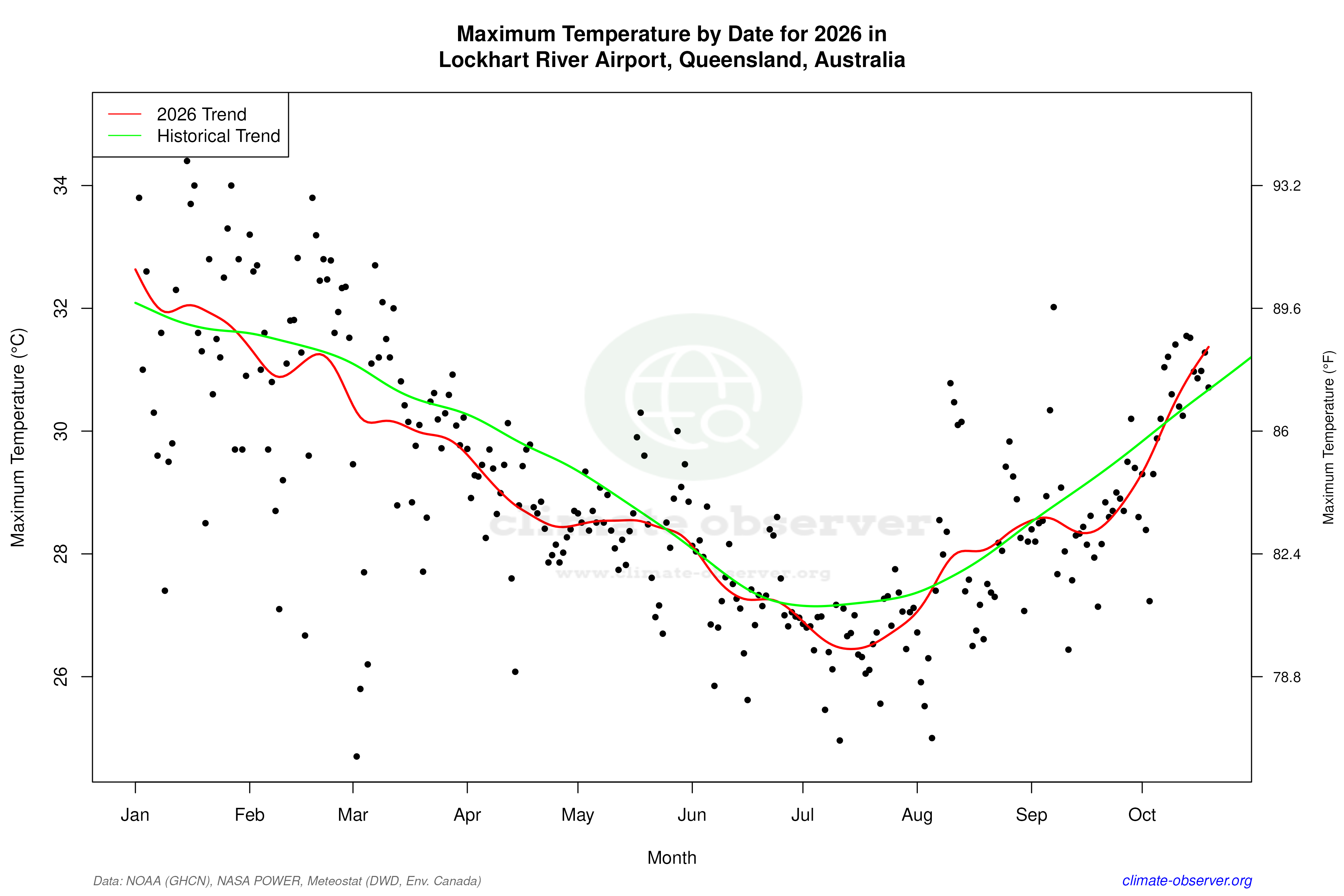
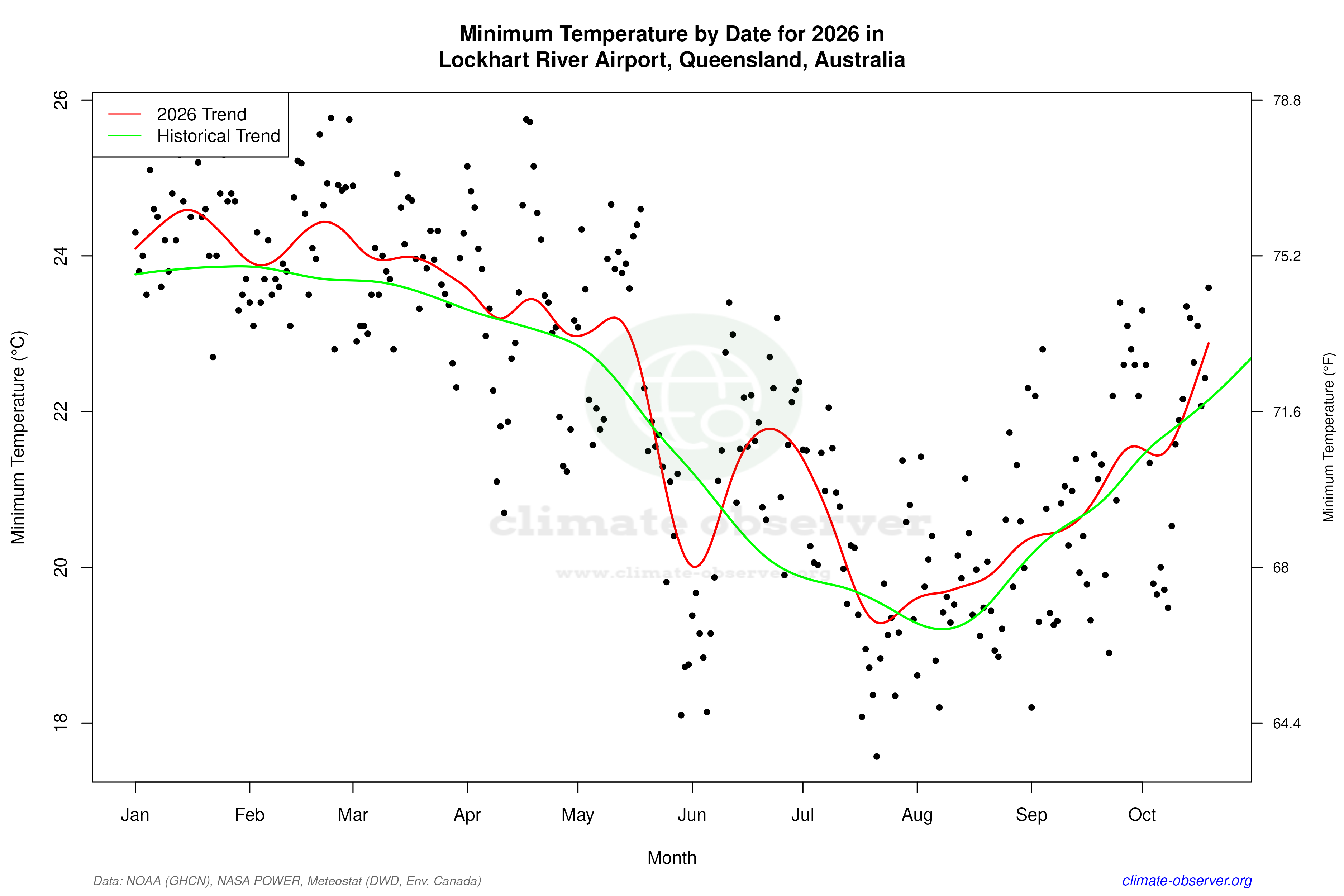
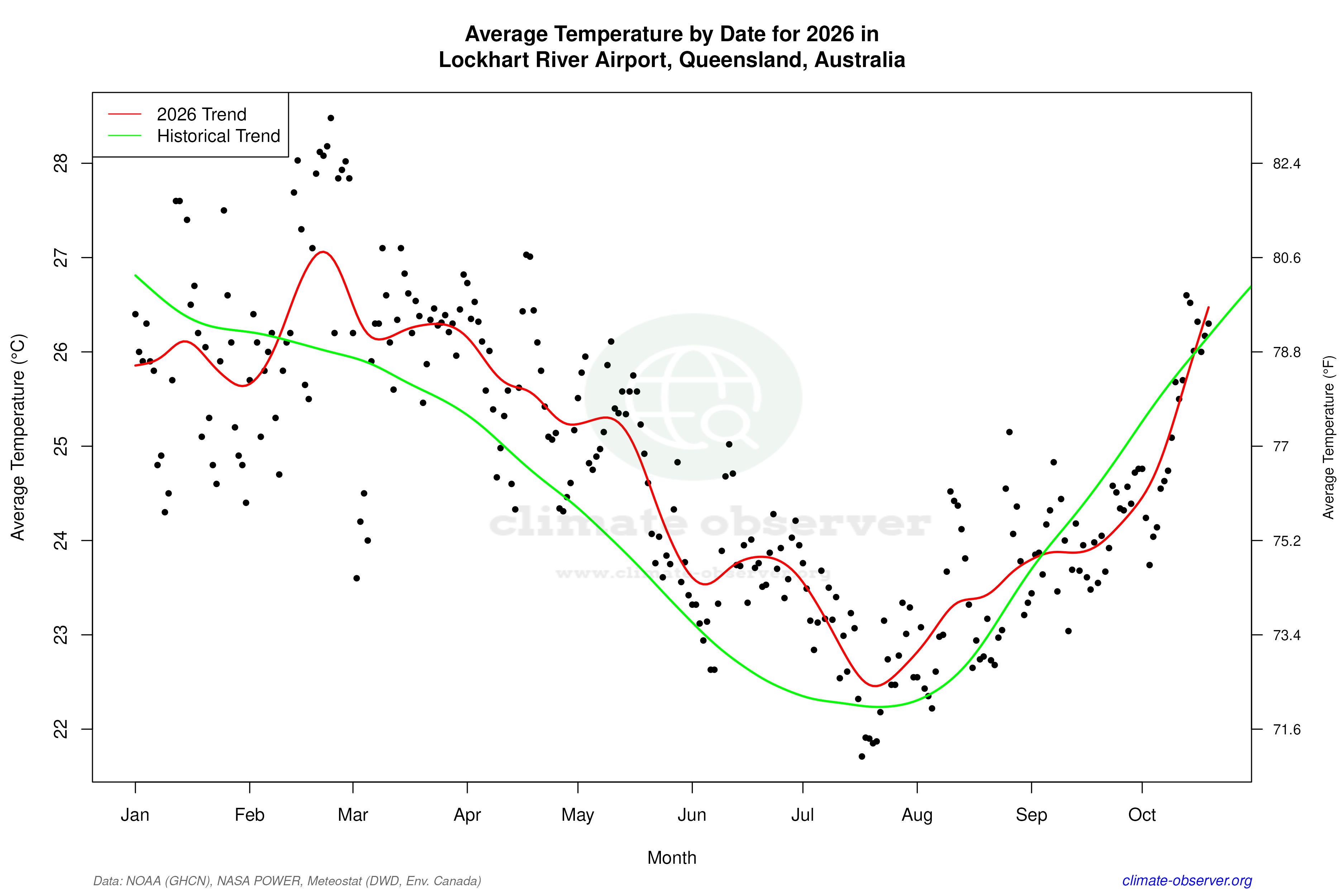
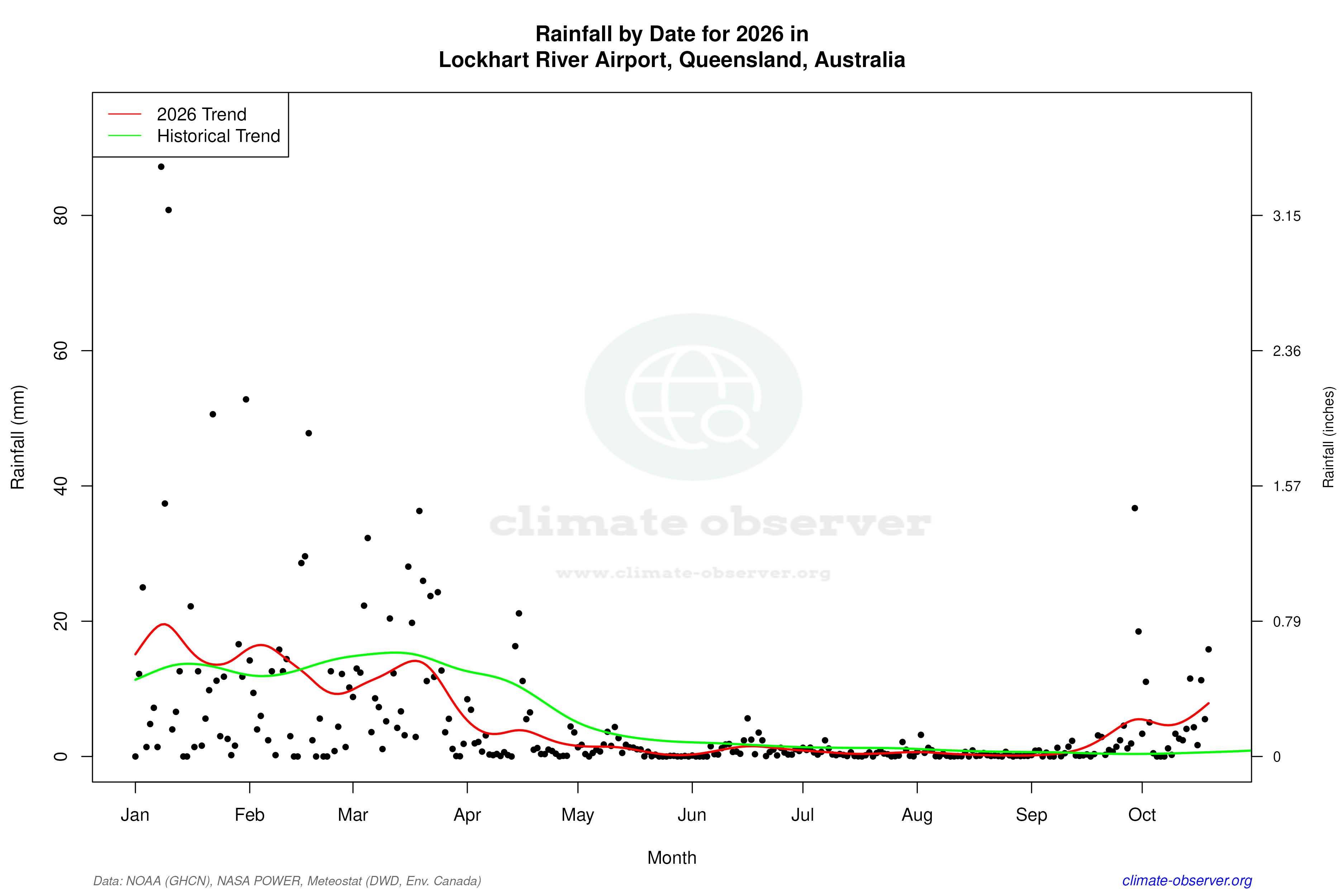
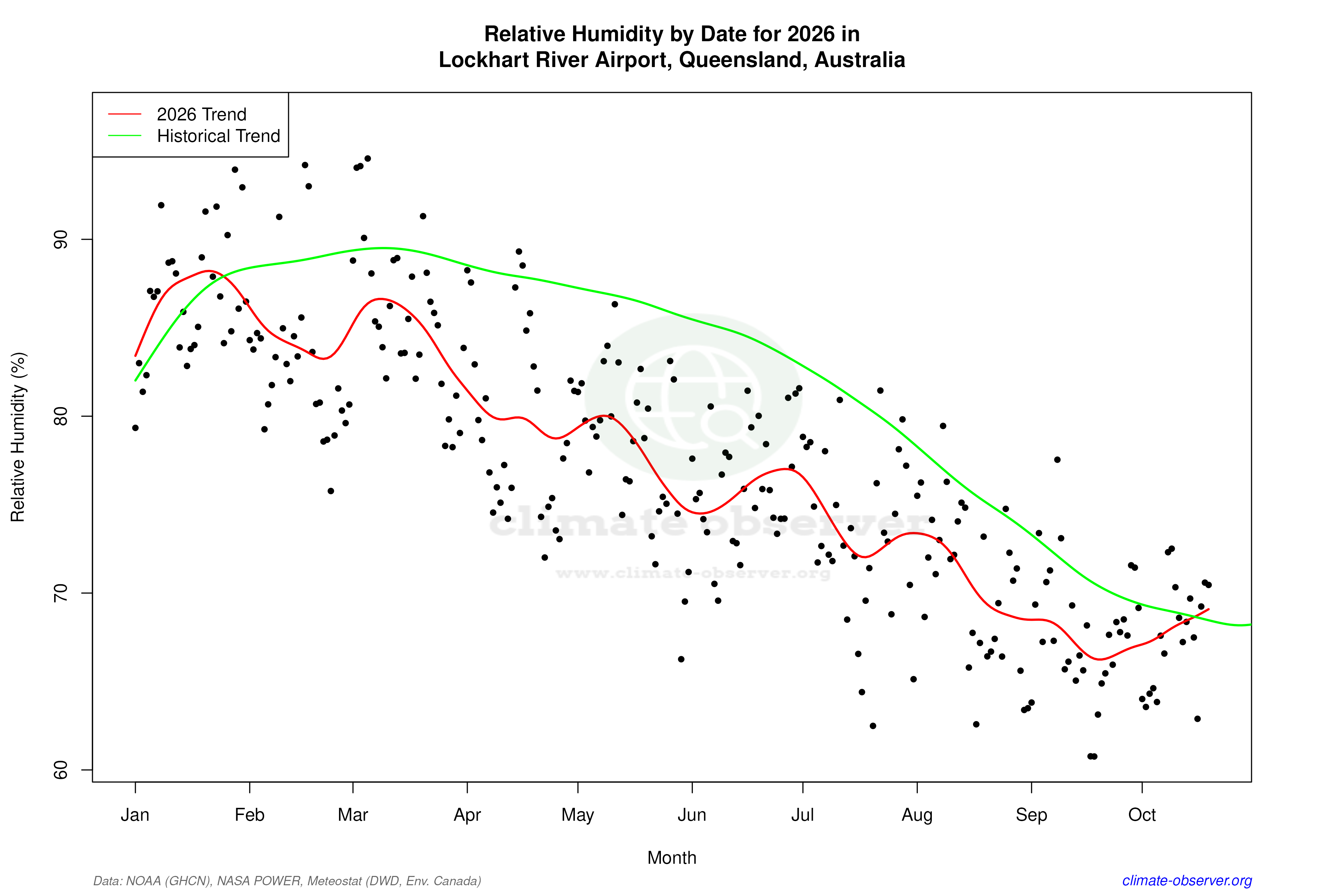

Max Temperature this Year | 1 of 6
Climate 12-Month Moving Averages
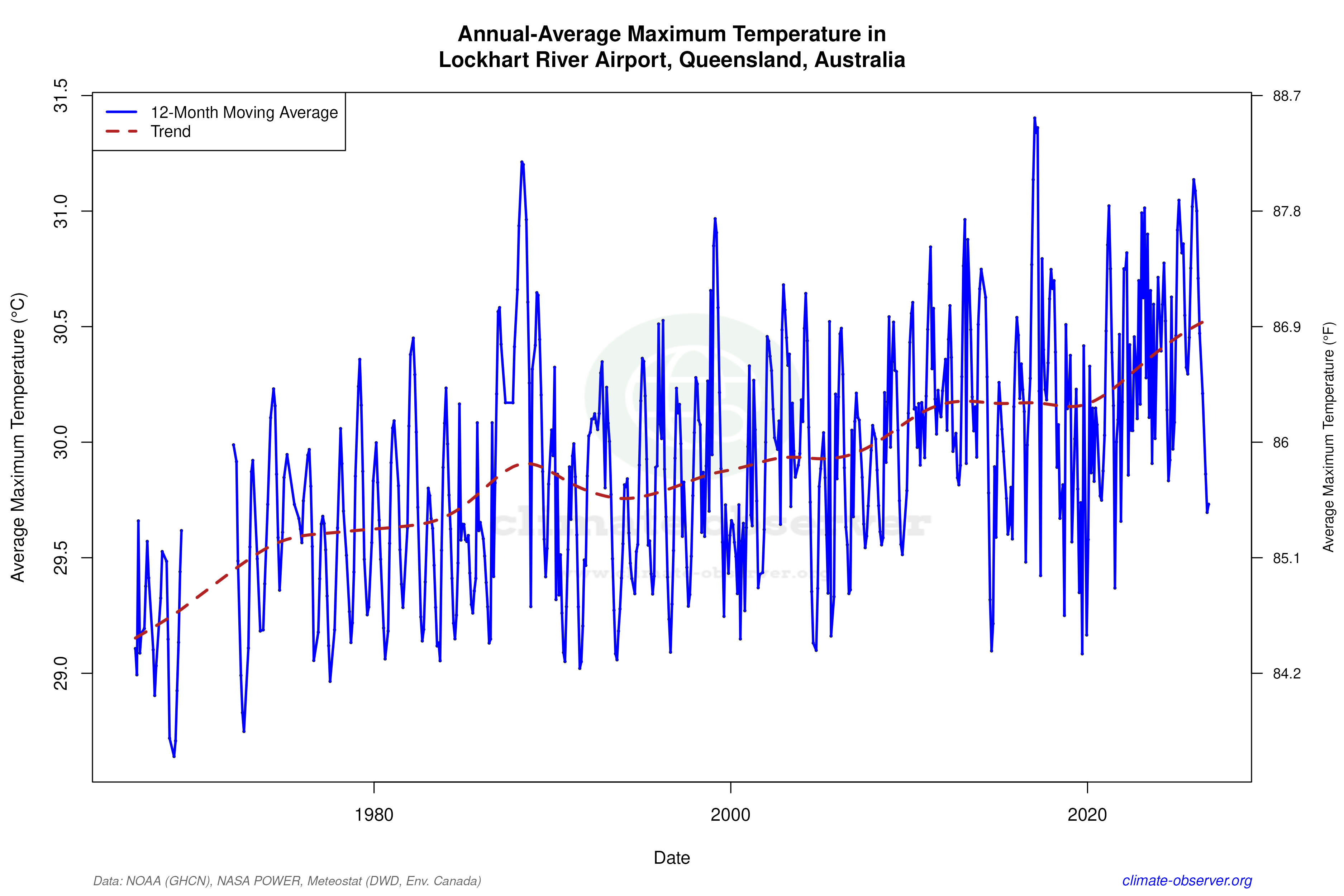
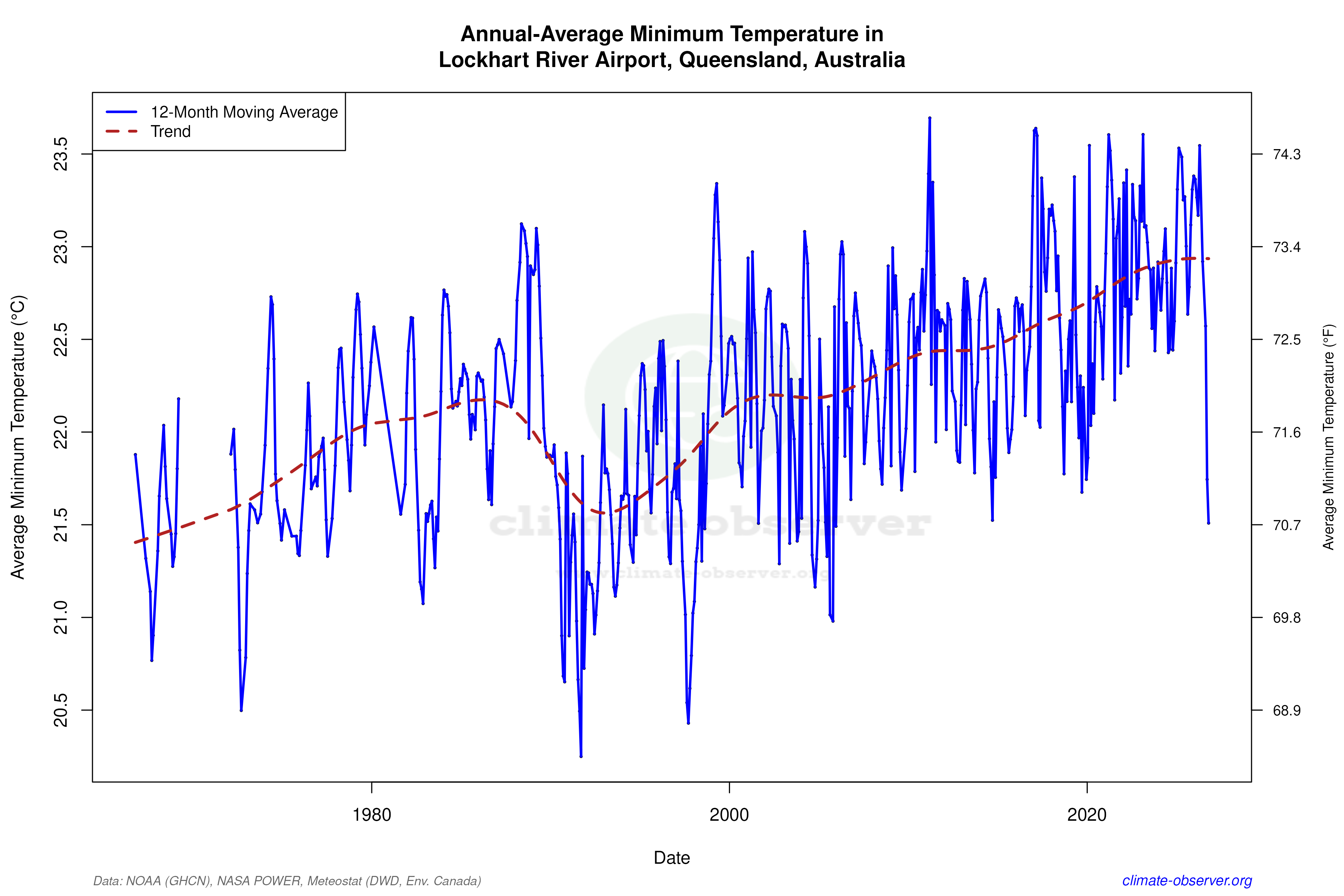
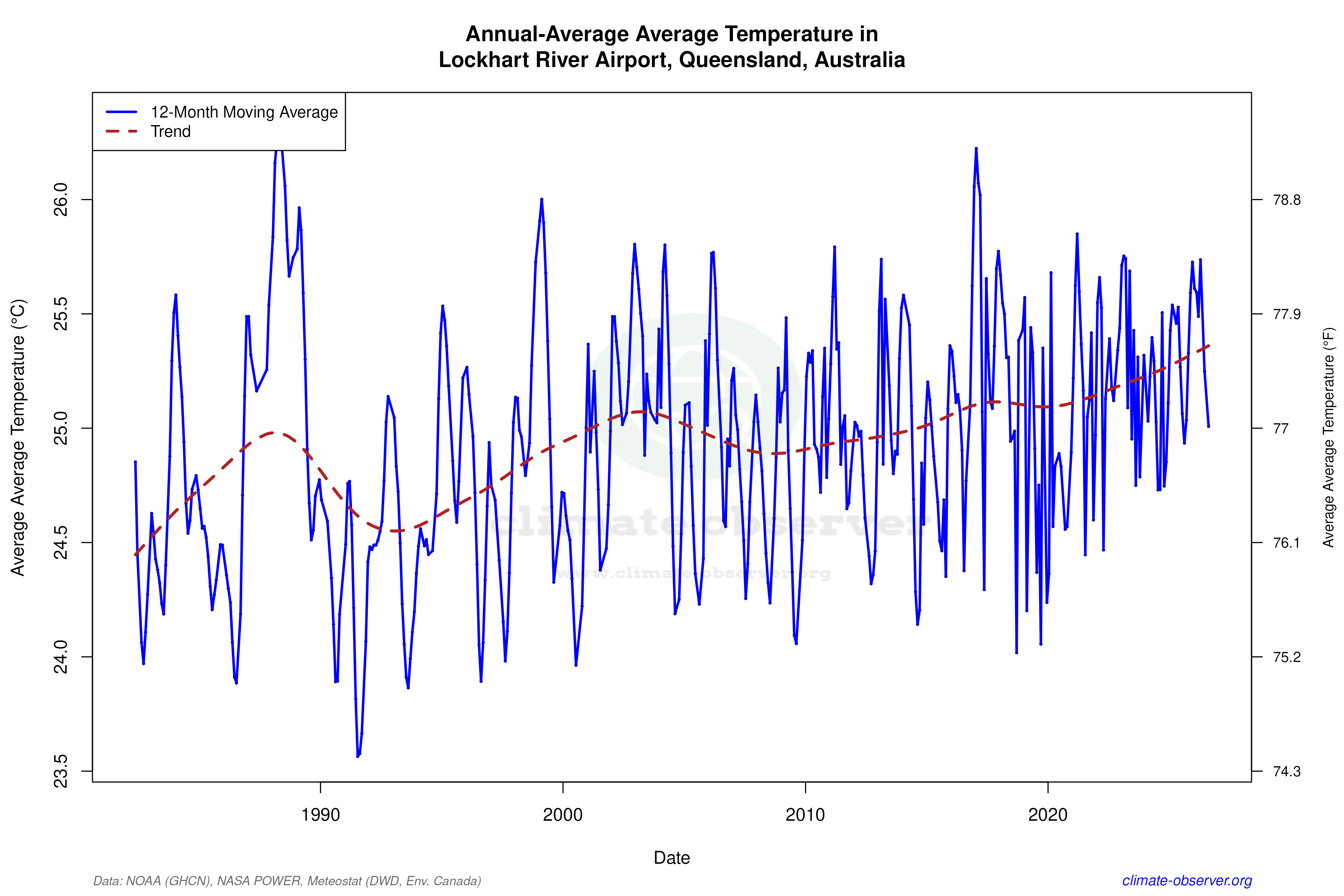
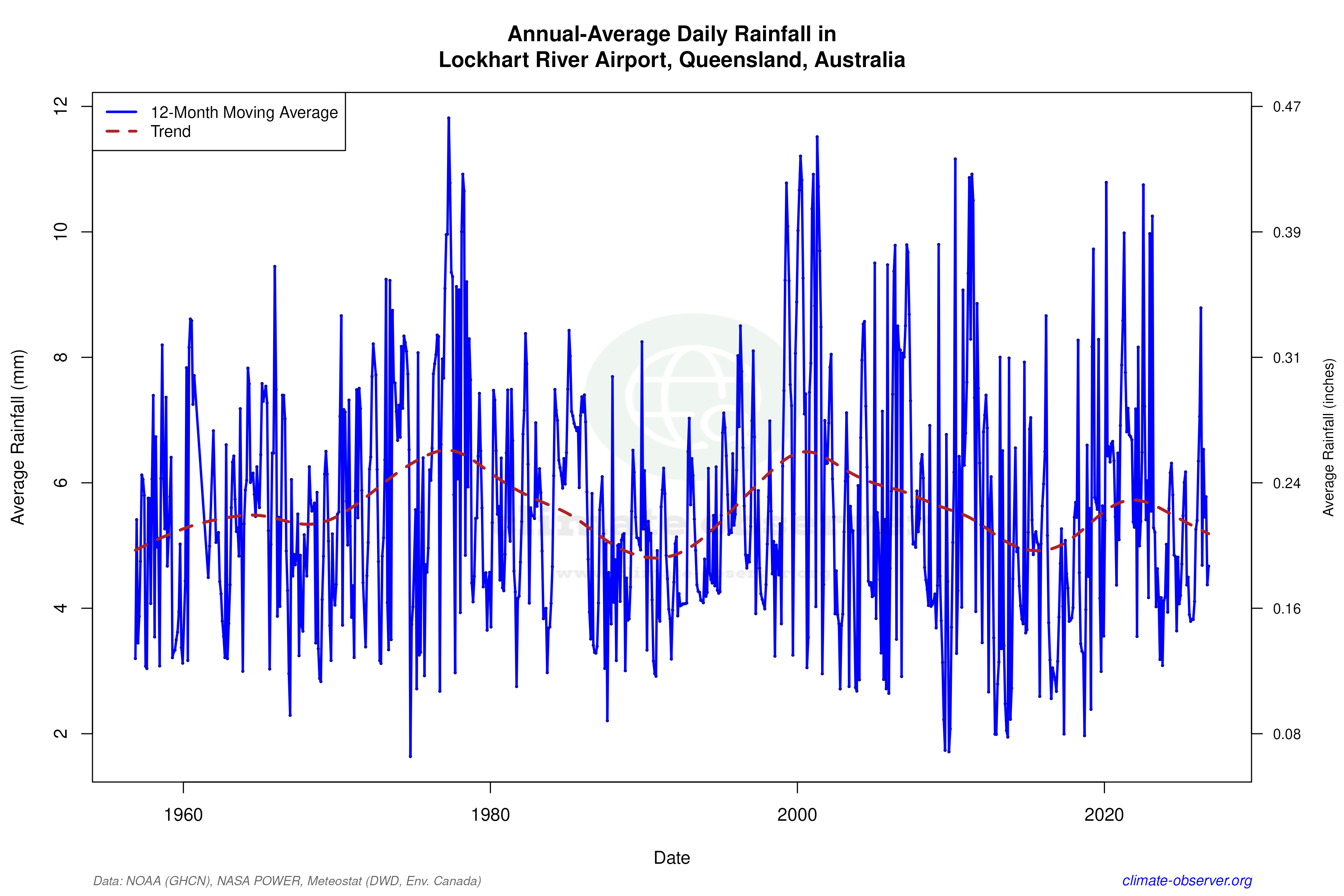
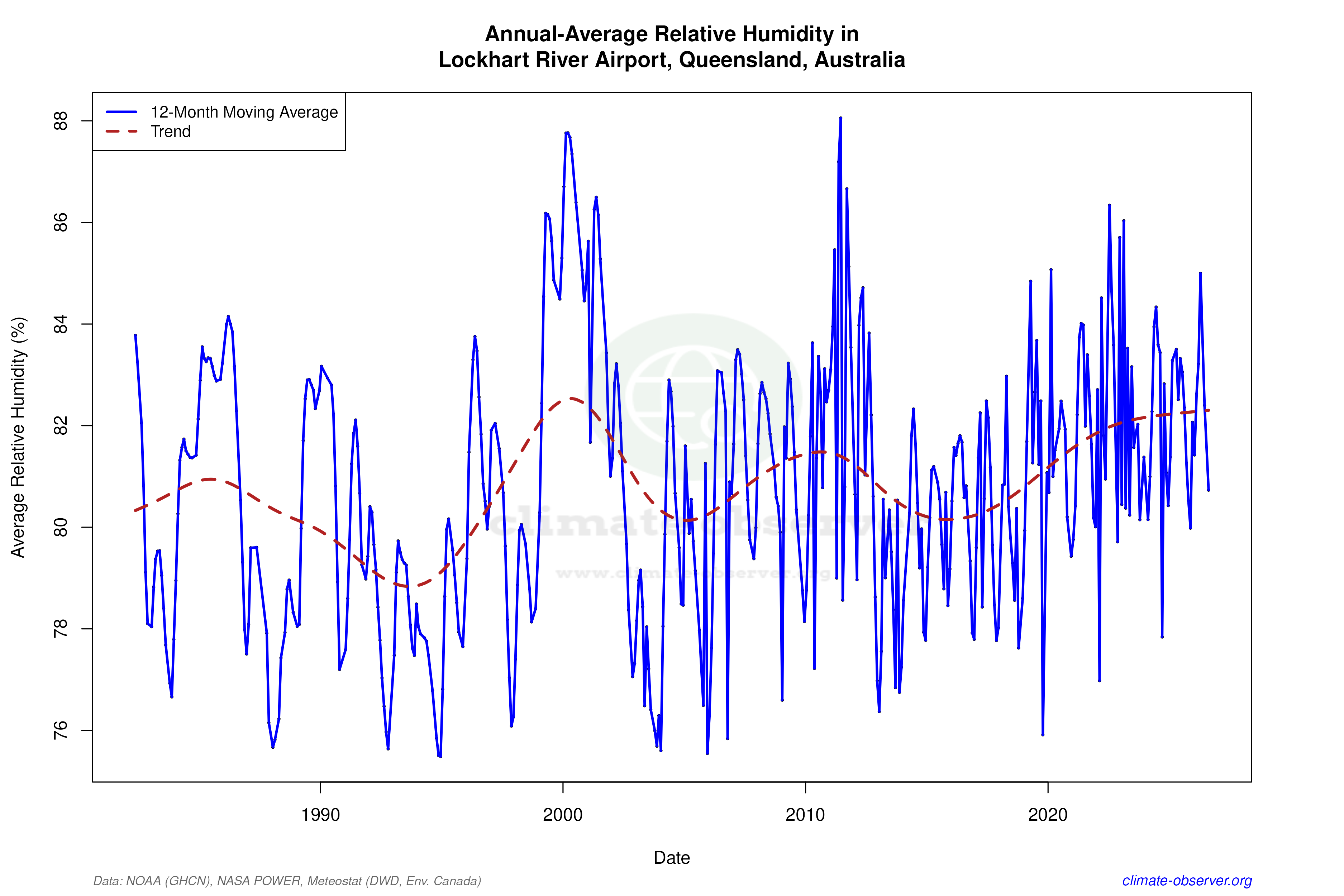

Max Temperature 12-Month MA | 1 of 6
Daily Data Points and Averages Throughout the Year
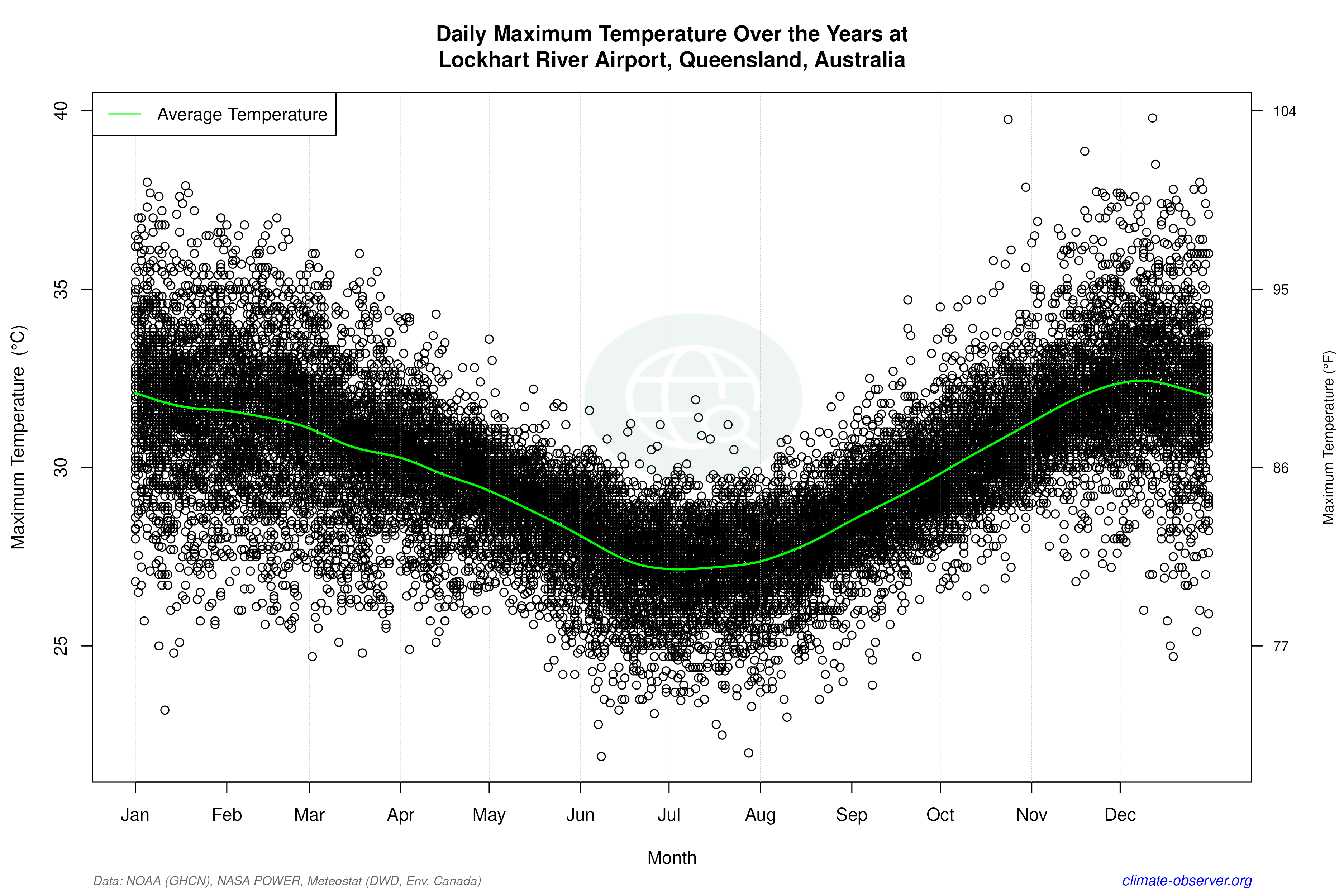
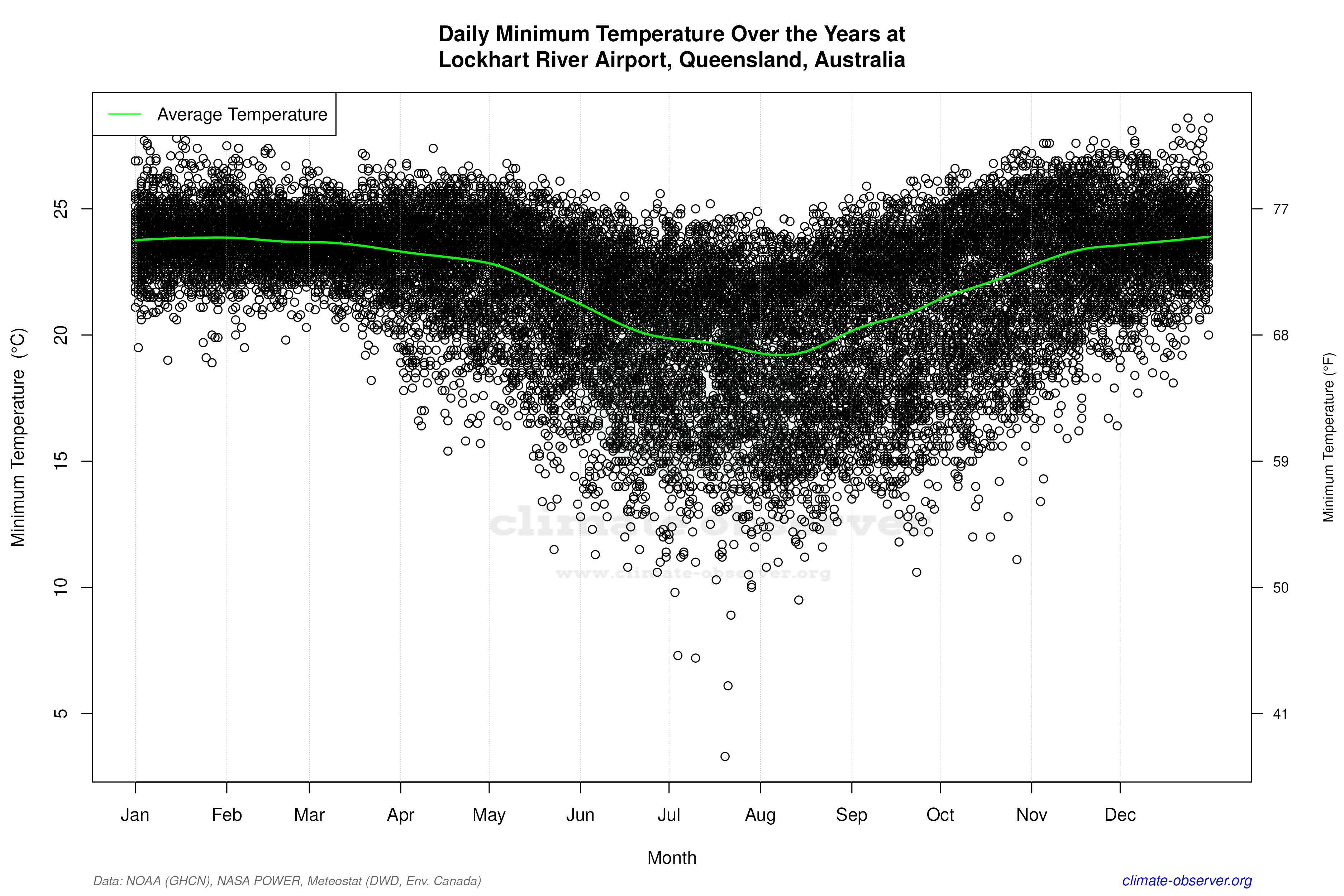
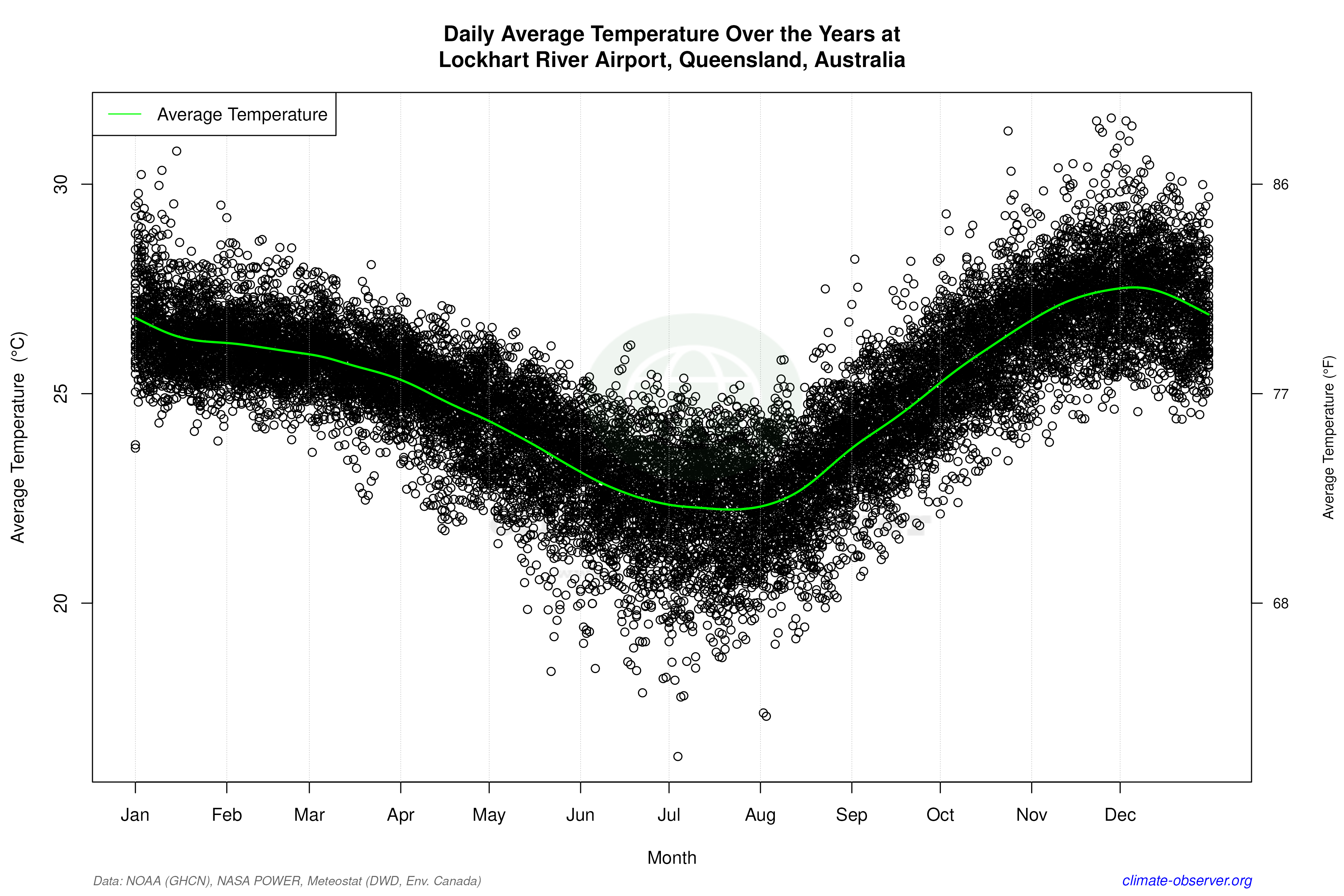
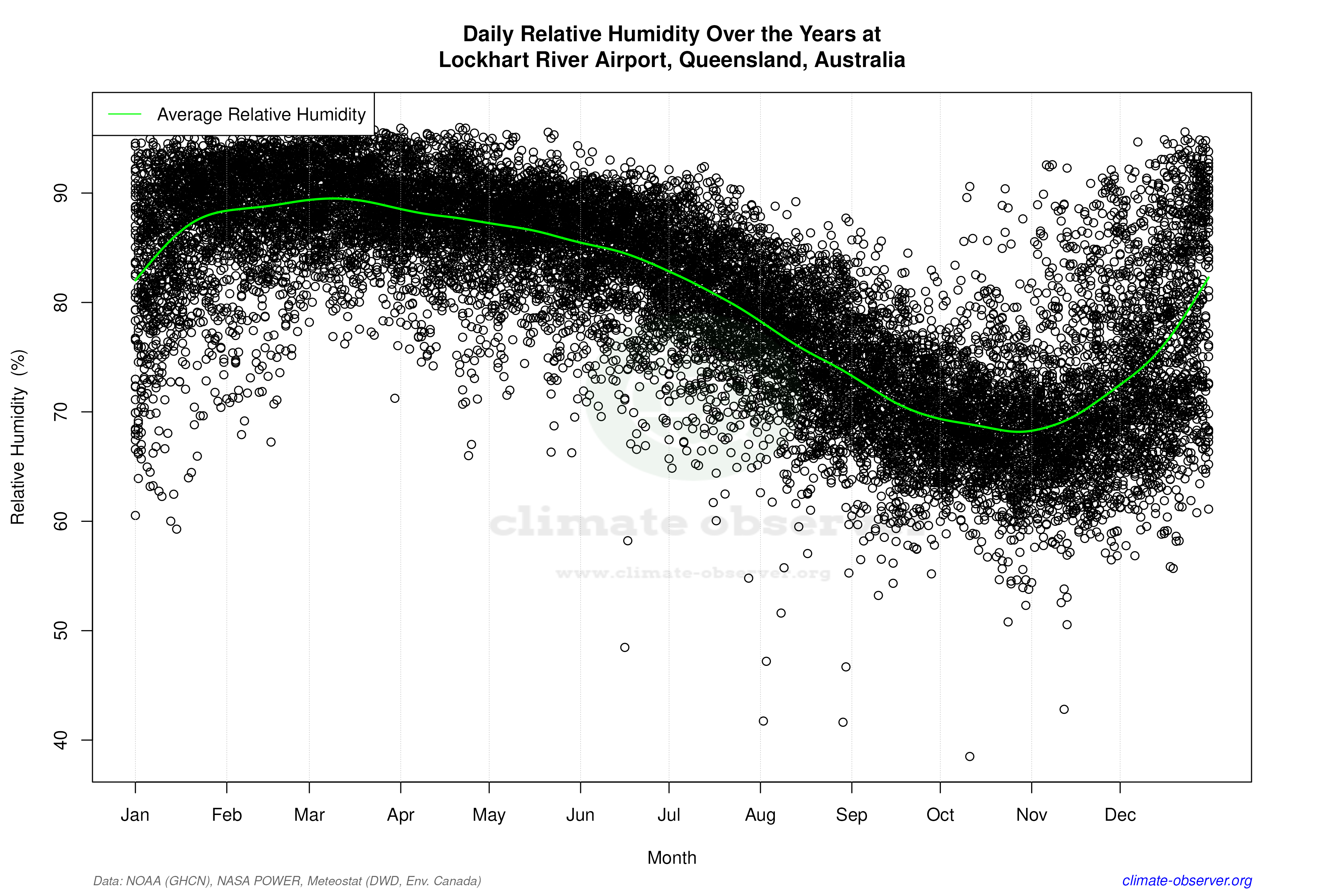

Average Max Temperature Throughout Year | 1 of 5


