Climate for Station: Charleville Aero, Queensland, Australia
Loading live weather...
Climate Analysis & Overview
Charleville Aero's climate profile reveals a complex interplay of cooling short-term trends and long-term warming. The region's precipitation patterns have become significantly more concentrated, indicating a shift in rainfall distribution. These insights are critical as Australia navigates its climate objectives.
Climate Classification and Local Geography
Charleville Aero is situated in Queensland, Australia, and falls under the Köppen climate classification of BSh, indicating a semi-arid or steppe climate. This classification is characterised by low annual rainfall and high temperature variability. The geography of the region, with its flat plains and sparse vegetation, contributes to the extreme temperature records observed: a maximum of 46.4°C (115.5°F) and a minimum of -5.2°C (22.6°F). These extremes highlight the region's susceptibility to both intense heat and cold spells, typical of interior continental climates.
Temperature Trends: A Tale of Two Scales
In examining the temperature trends, a dichotomy emerges between short-term and long-term data. Over the past decade, Charleville Aero has experienced a cooling trend, with high temperatures decreasing by 0.72°C (1.30°F) and low temperatures by 0.72°C (1.29°F). This contrasts with the all-time data, which shows a warming trend: highs have risen by 0.25°C (0.45°F) and lows by 0.18°C (0.32°F). This suggests recent short-term cooling could be a temporary fluctuation within a broader warming pattern, a vital consideration for regional climate adaptation strategies.
Precipitation Patterns: Concentration Intensifies
The Precipitation Concentration Index (PCI) for Charleville Aero has increased from a baseline of 18.8 to a current value of 24.9, indicating a significant shift towards more concentrated rainfall events. A PCI above 20 suggests that rainfall is now occurring in fewer, more intense events, which can lead to challenges such as flash flooding and increased runoff. This change in precipitation distribution is essential for water resource management and agricultural planning in the region.
Implications for Regional Climate Goals
Australia's climate goals focus on mitigating the impacts of climate change and adapting to its effects. The trends observed at Charleville Aero, particularly the long-term warming and increased precipitation concentration, underscore the importance of these objectives. The data suggests a need for strategies that address both temperature extremes and changing rainfall patterns, ensuring resilience in the face of evolving climate dynamics.
Recent Weather Events and Future Considerations
Recent weather events in Australia, such as widespread droughts and intense heatwaves, provide context for the data from Charleville Aero. These events highlight the region's vulnerability and the importance of integrating climate data into planning and response strategies. The observed trends at Charleville Aero offer valuable insights for policymakers and stakeholders as they work towards sustainable climate solutions.
Station Statistics
10-Year Trend
High: +0.20 °C/decade
Low: +0.40 °C/decade
Rain: +0.81 mm/decade
25-Year Trend
High: +0.48 °C/decade
Low: +0.55 °C/decade
Rain: +0.16 mm/decade
50-Year Trend
High: +0.26 °C/decade
Low: +0.22 °C/decade
Rain: +0.05 mm/decade
All-Time Trend
High: +0.23 °C/decade
Low: +0.18 °C/decade
Rain: -0.01 mm/decade
Percentage Above-Average Days
Last 12 Months: 61.9%
This Year: 81.8%
Precipitation Concentration Index (PCI) ℹ️
Last 12 Months: 77.7
Historical Average: 20.0
Percentile Rank of Last 12 Months ℹ️
High: 89th percentile
Low: 87th percentile
Rain: 96th percentile
Change in Variance ℹ️
High: +0.4%
Low: +6.1%
Intraday: -3.5%
Data Coverage
98.9%
First Year of Data
1946
Station Location
Historical Weather Records
| Max High | Avg High | Min High | Max Avg | Avg Avg | Min Avg | Max Low | Avg Low | Min Low | Max Precipitation | Avg Precipitation | Max Snow | Avg Snow | |
|---|---|---|---|---|---|---|---|---|---|---|---|---|---|
| Record | 46.4 °C | — | 8.1 °C | 39.9 °C | — | 3.7 °C | 31.2 °C | — | -5.2 °C | 837.8 mm | — | — | — |
| January | 46.4 °C | 35.4 °C | 20.6 °C | 39.9 °C | 28.8 °C | 18.4 °C | 31.2 °C | 22.0 °C | 11.1 °C | 97.8 mm | 2.3 mm | — | — |
| February | 45.2 °C | 34.1 °C | 19.3 °C | 36.8 °C | 27.7 °C | 17.6 °C | 30.9 °C | 21.4 °C | 9.4 °C | 93.7 mm | 2.2 mm | — | — |
| March | 43.3 °C | 32.3 °C | 19.6 °C | 35.0 °C | 25.6 °C | 15.3 °C | 27.8 °C | 18.9 °C | 6.2 °C | 159.0 mm | 2.0 mm | — | — |
| April | 36.9 °C | 28.3 °C | 13.5 °C | 30.4 °C | 21.2 °C | 10.2 °C | 24.1 °C | 13.9 °C | 0.8 °C | 78.5 mm | 0.8 mm | — | — |
| May | 32.5 °C | 23.5 °C | 12.2 °C | 26.2 °C | 16.2 °C | 5.9 °C | 20.5 °C | 8.9 °C | -3.6 °C | 52.3 mm | 0.8 mm | — | — |
| June | 30.7 °C | 20.1 °C | 9.9 °C | 21.9 °C | 12.7 °C | 4.4 °C | 17.8 °C | 5.6 °C | -4.4 °C | 55.1 mm | 0.7 mm | — | — |
| July | 30.7 °C | 19.8 °C | 8.1 °C | 22.6 °C | 12.1 °C | 3.7 °C | 18.7 °C | 4.3 °C | -5.2 °C | 49.0 mm | 0.7 mm | — | — |
| August | 35.8 °C | 22.3 °C | 11.3 °C | 28.2 °C | 14.4 °C | 5.6 °C | 20.7 °C | 5.9 °C | -4.0 °C | 38.0 mm | 0.5 mm | — | — |
| September | 40.7 °C | 26.5 °C | 11.7 °C | 31.1 °C | 18.7 °C | 7.4 °C | 25.9 °C | 10.0 °C | -0.4 °C | 46.6 mm | 0.7 mm | — | — |
| October | 41.8 °C | 30.2 °C | 14.3 °C | 32.8 °C | 22.8 °C | 11.6 °C | 25.8 °C | 14.5 °C | 0.9 °C | 837.8 mm | 2.1 mm | — | — |
| November | 43.8 °C | 33.0 °C | 16.3 °C | 36.0 °C | 25.8 °C | 14.5 °C | 29.6 °C | 18.0 °C | 6.0 °C | 91.9 mm | 1.4 mm | — | — |
| December | 46.0 °C | 34.9 °C | 19.4 °C | 36.9 °C | 27.9 °C | 16.6 °C | 31.0 °C | 20.5 °C | 6.7 °C | 121.7 mm | 1.8 mm | — | — |
Data Visualisations
Remove WatermarksCurrent Year Climate Trends vs Historical
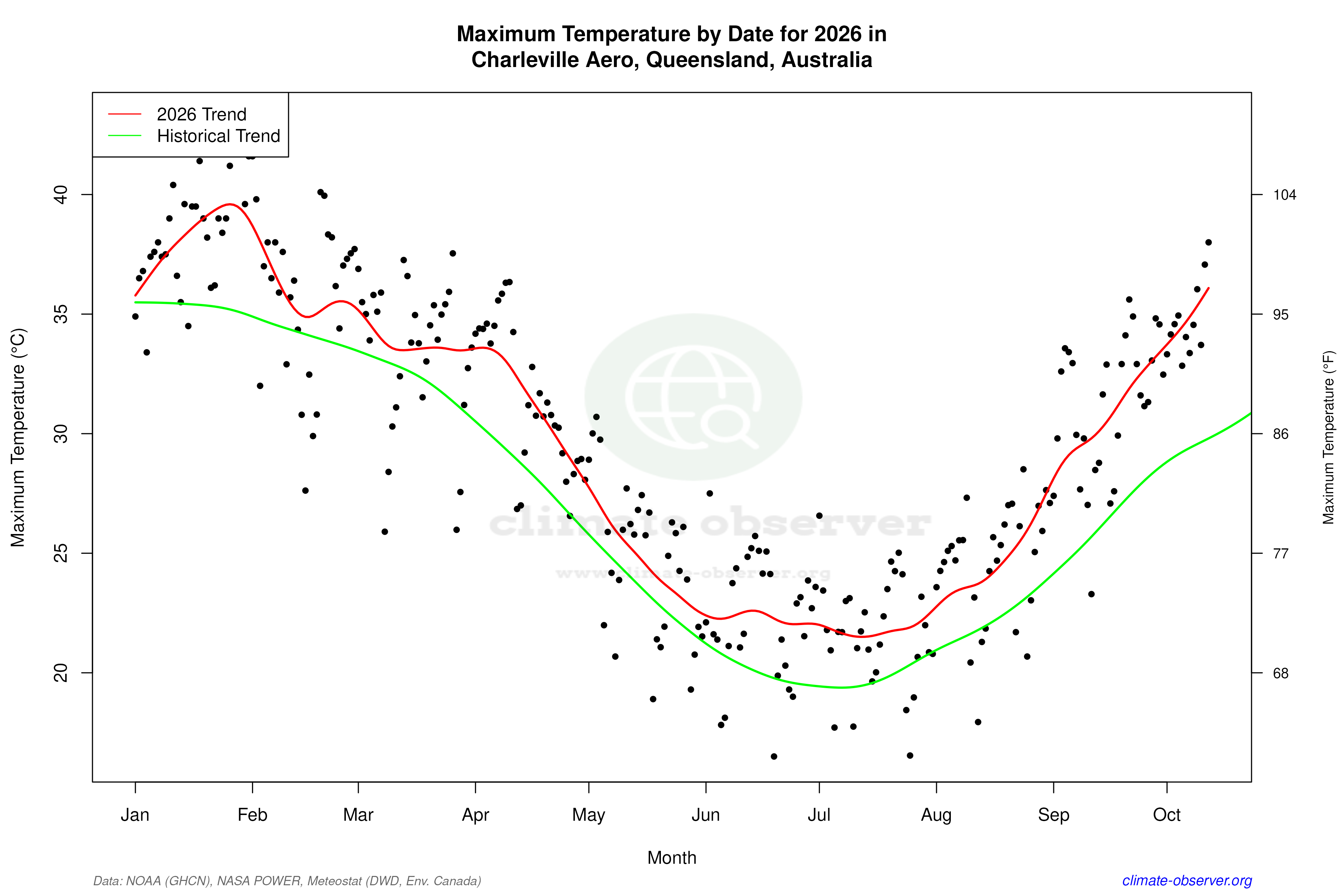
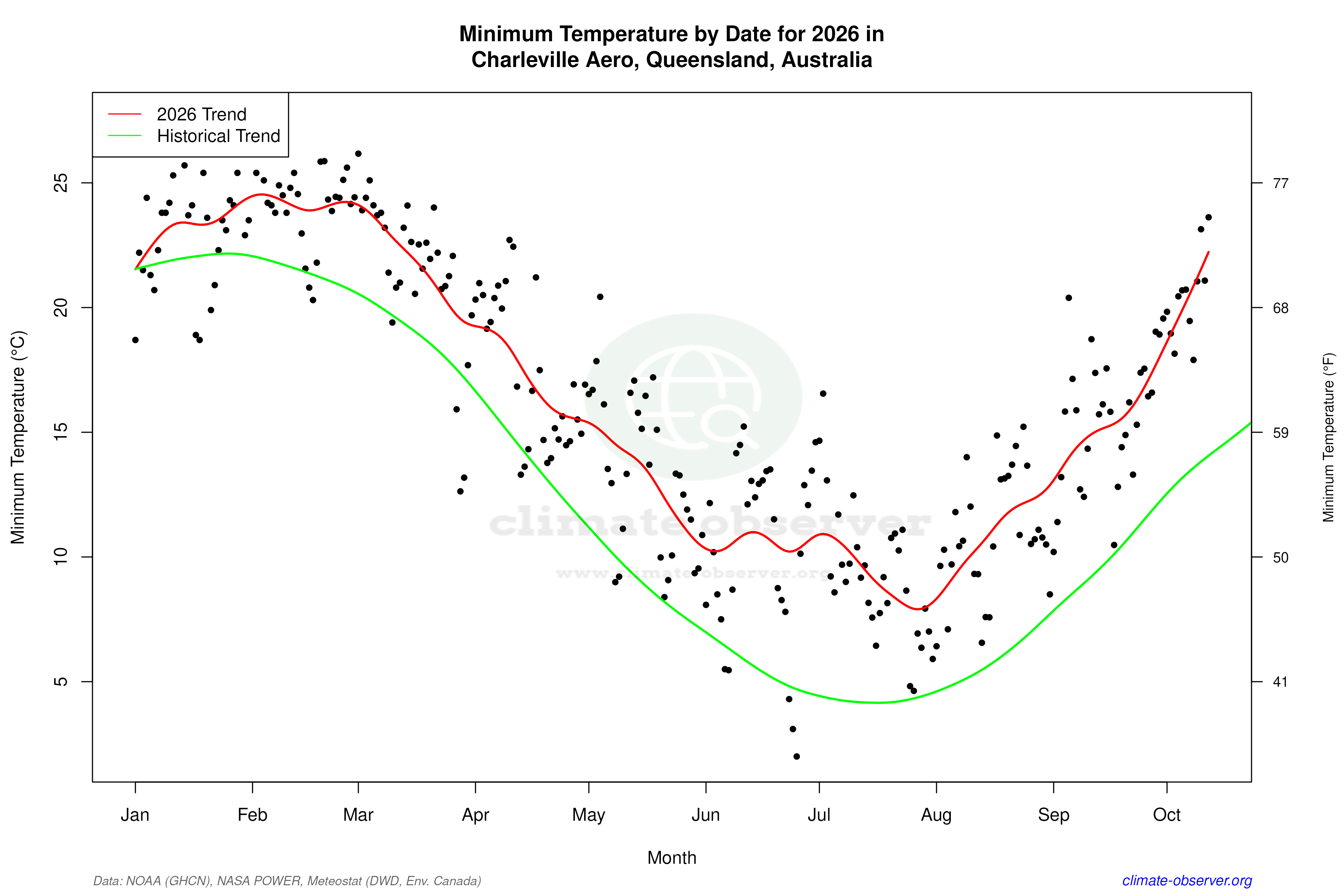
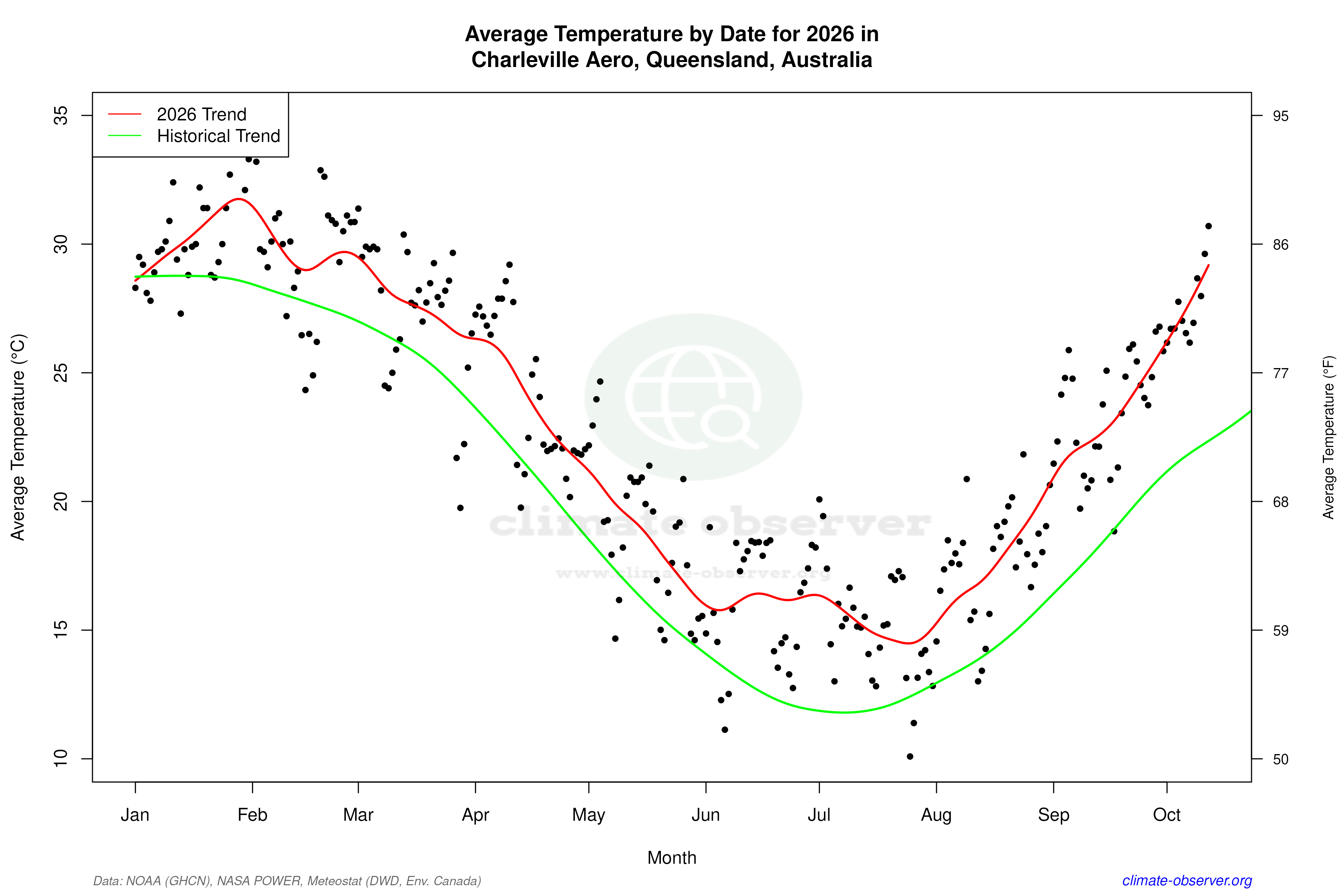
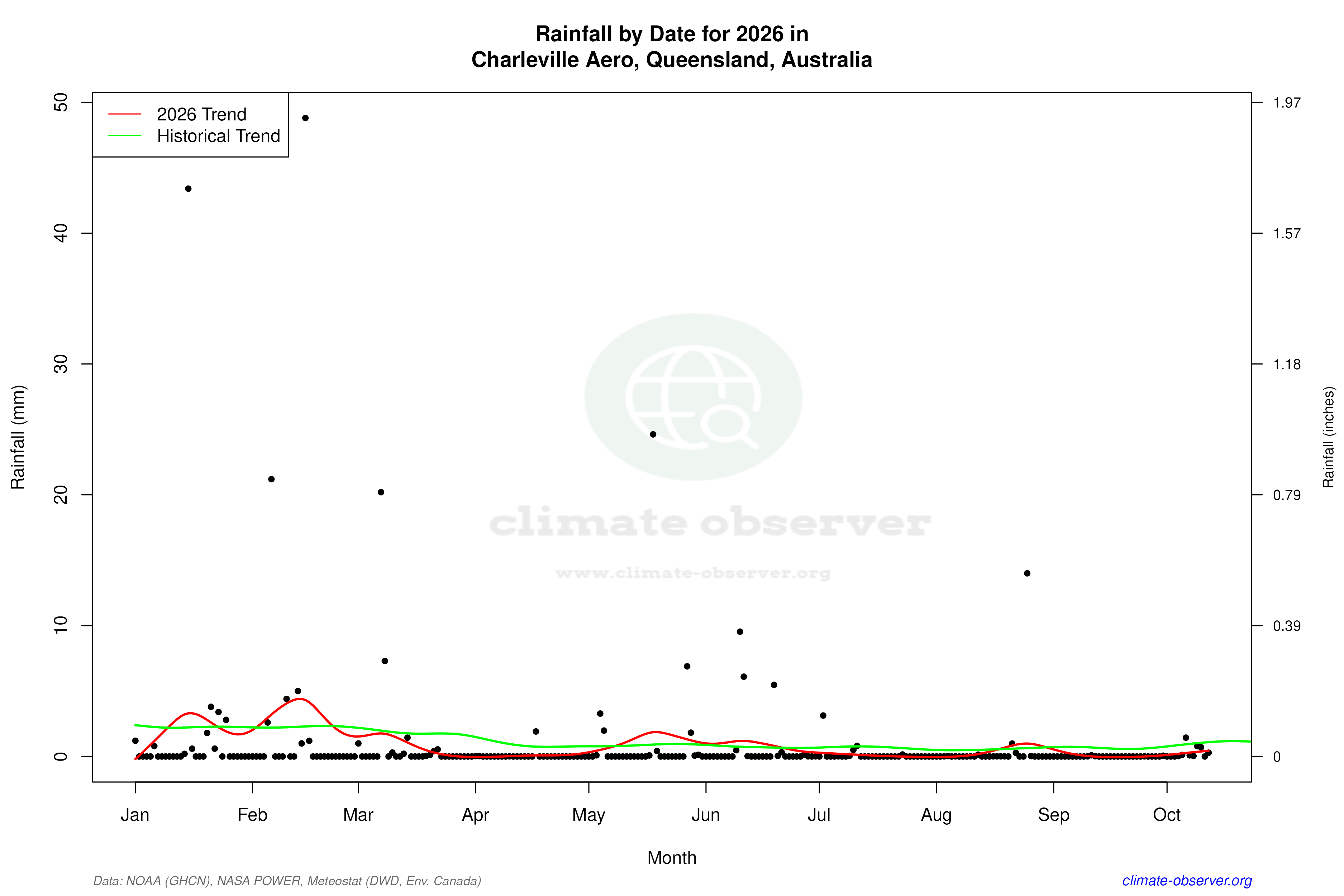
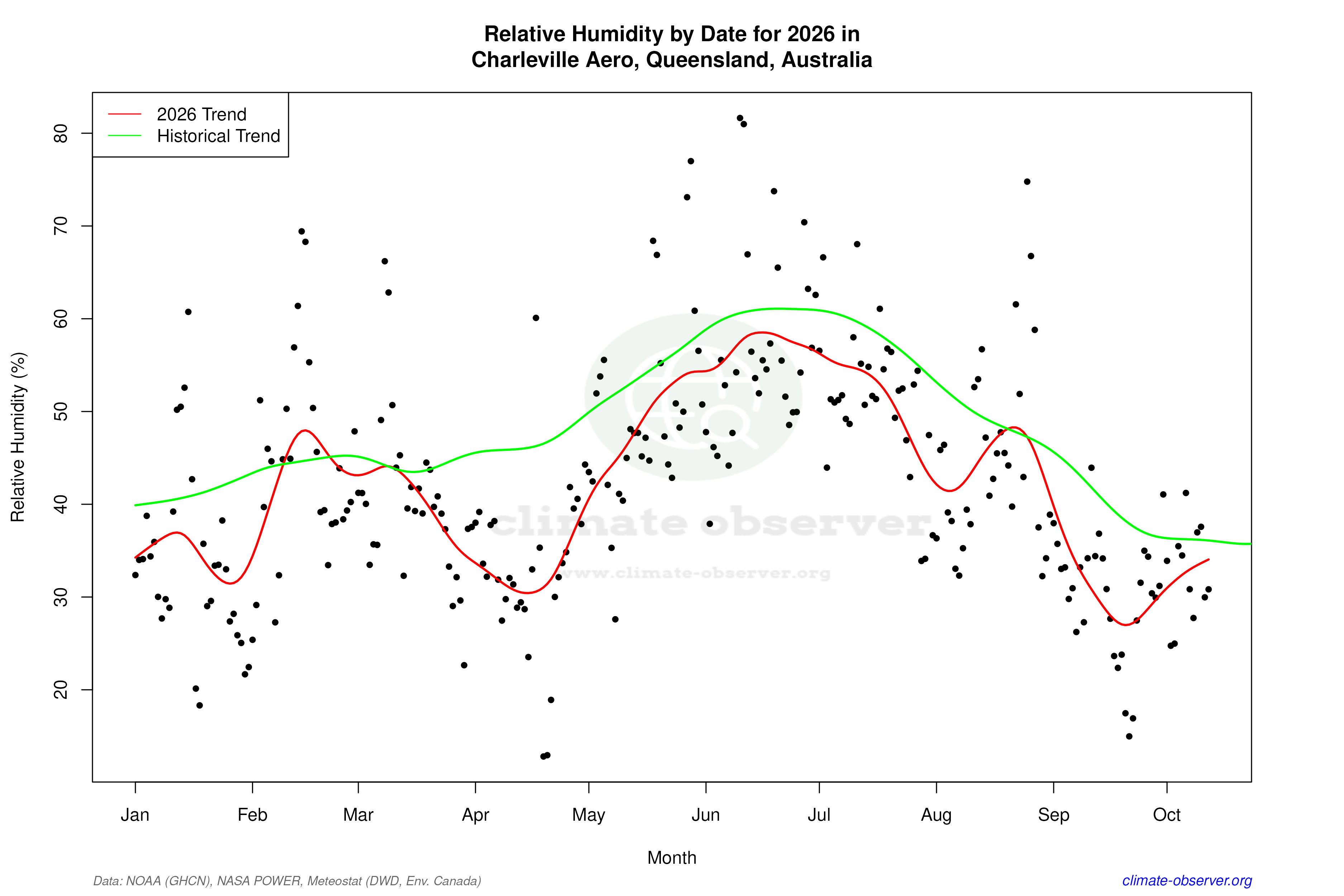

Max Temperature this Year | 1 of 6
Climate 12-Month Moving Averages
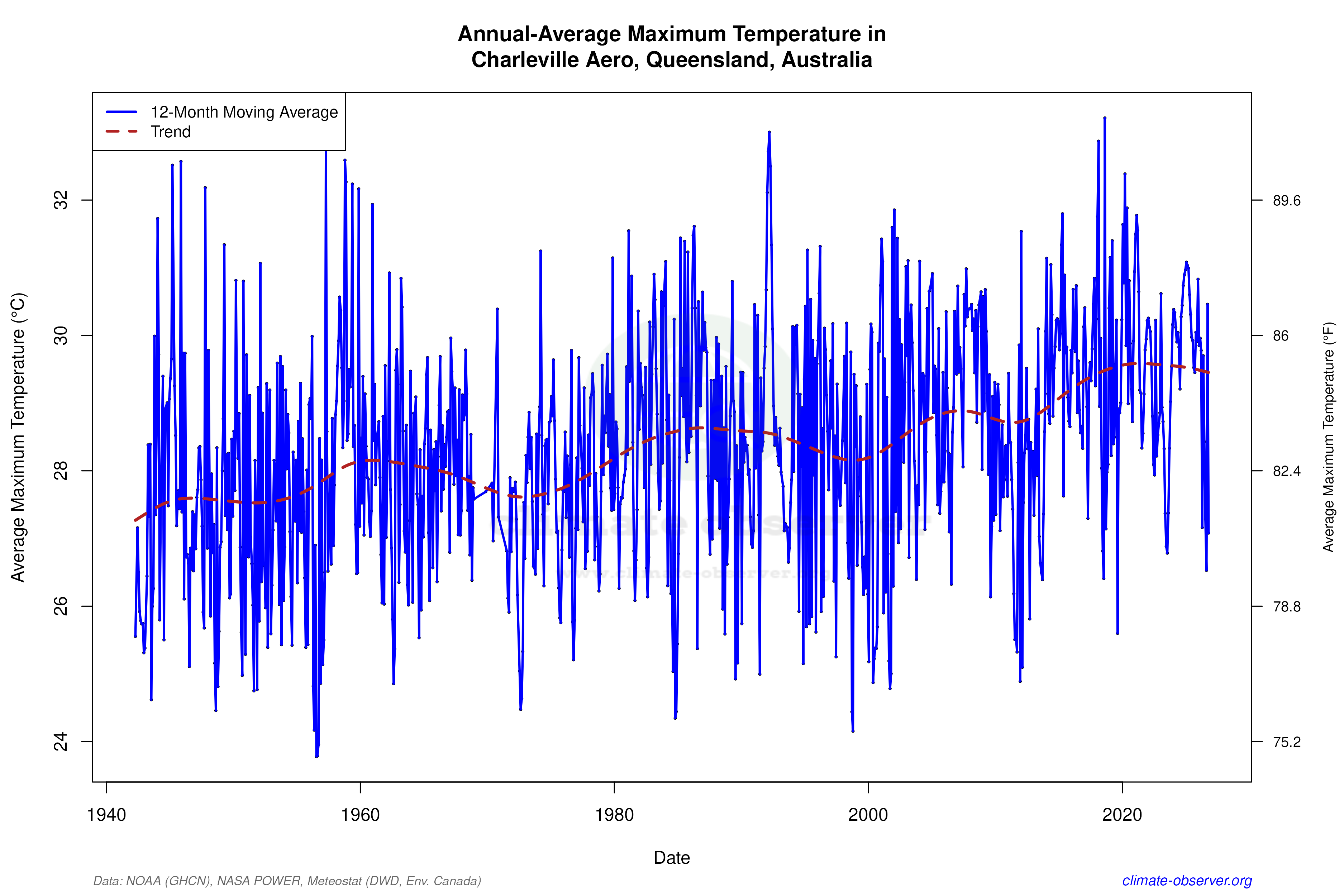
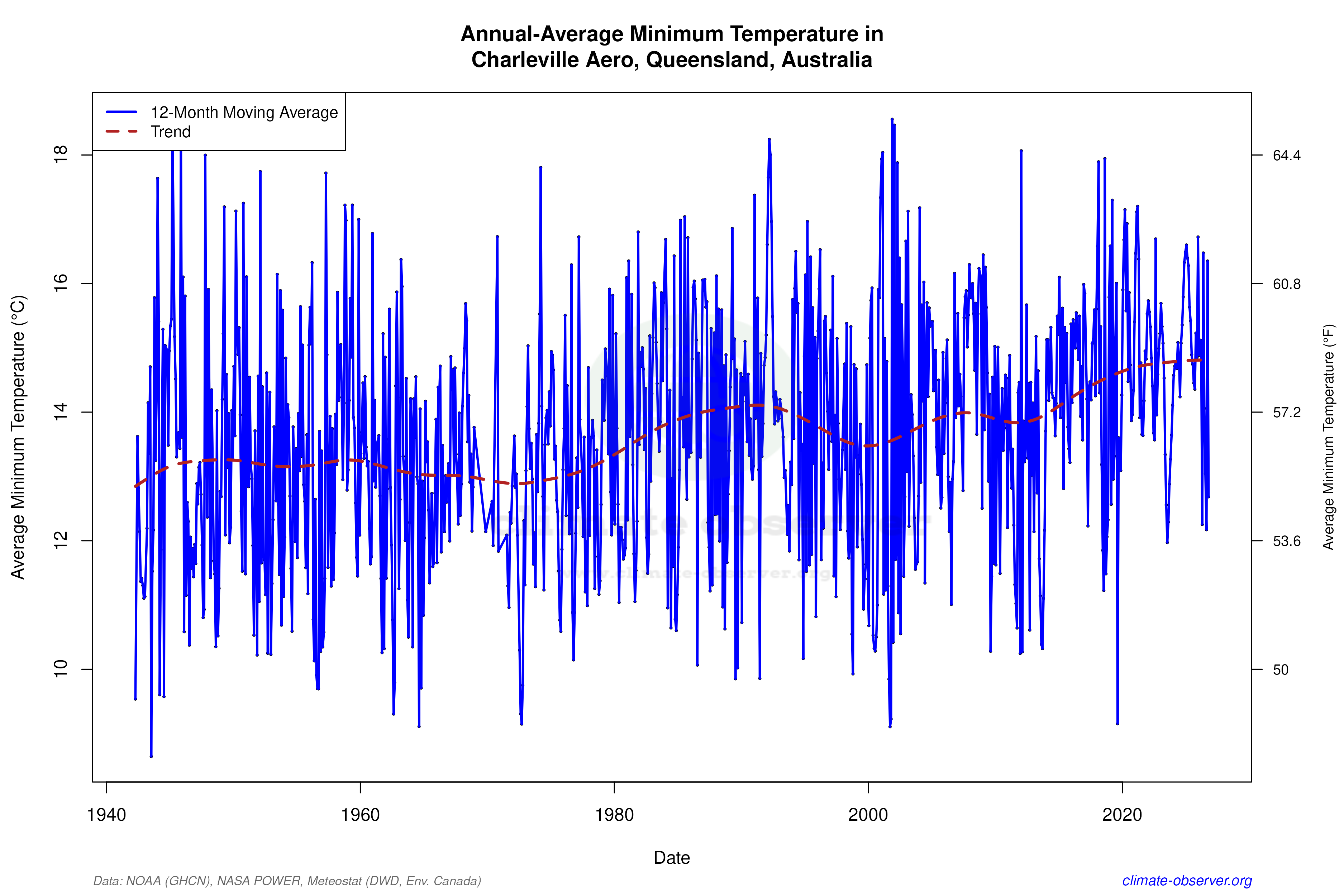
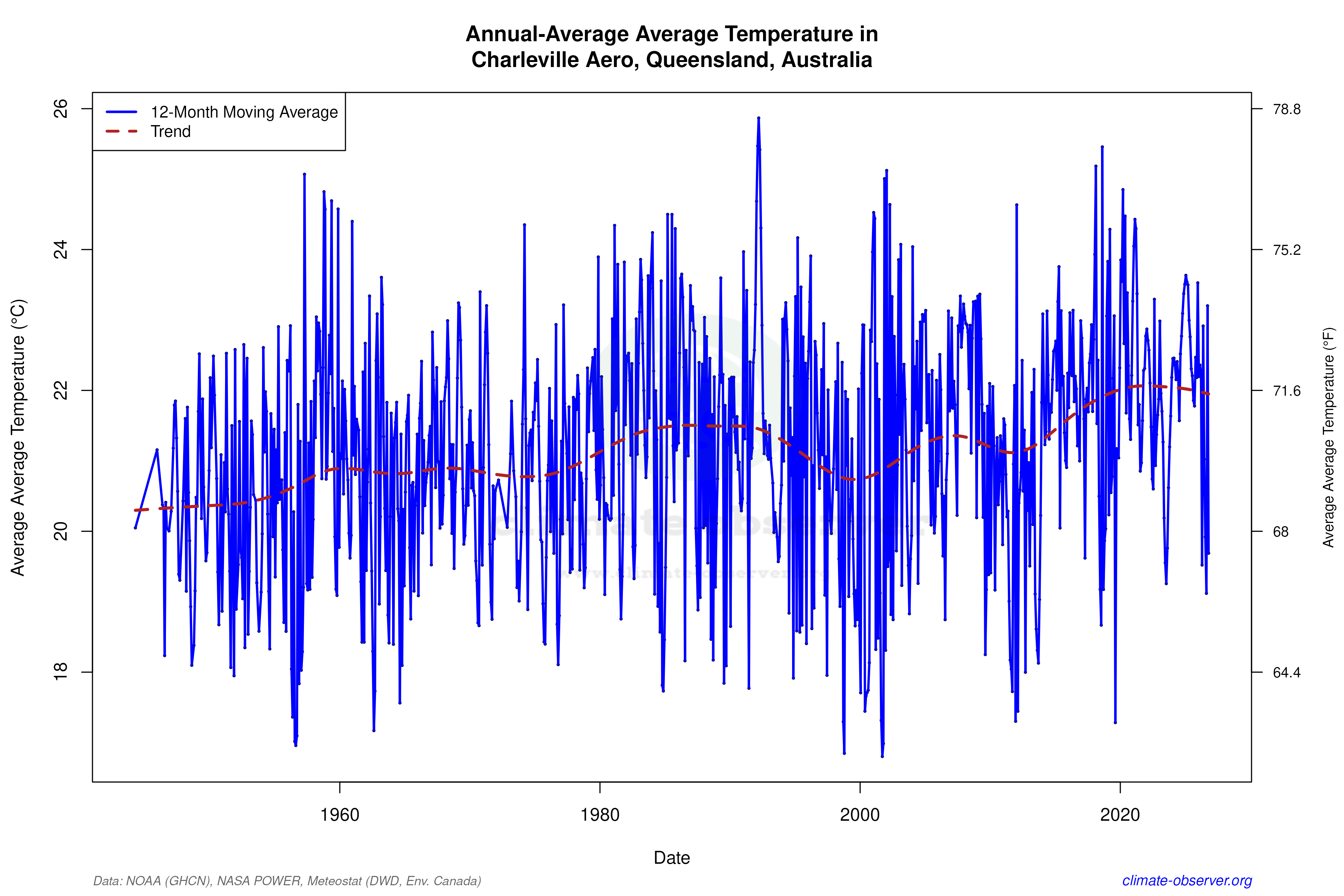
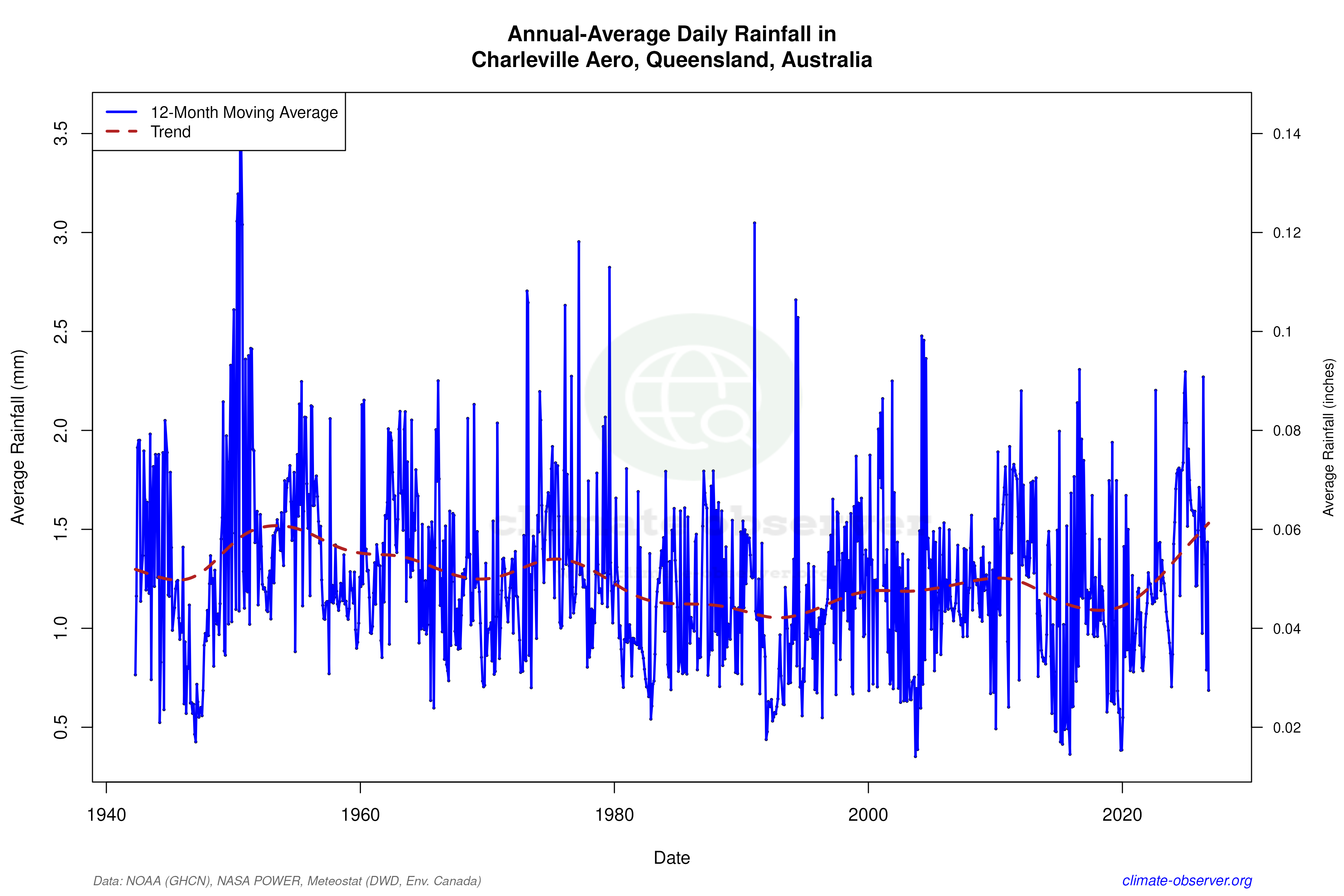
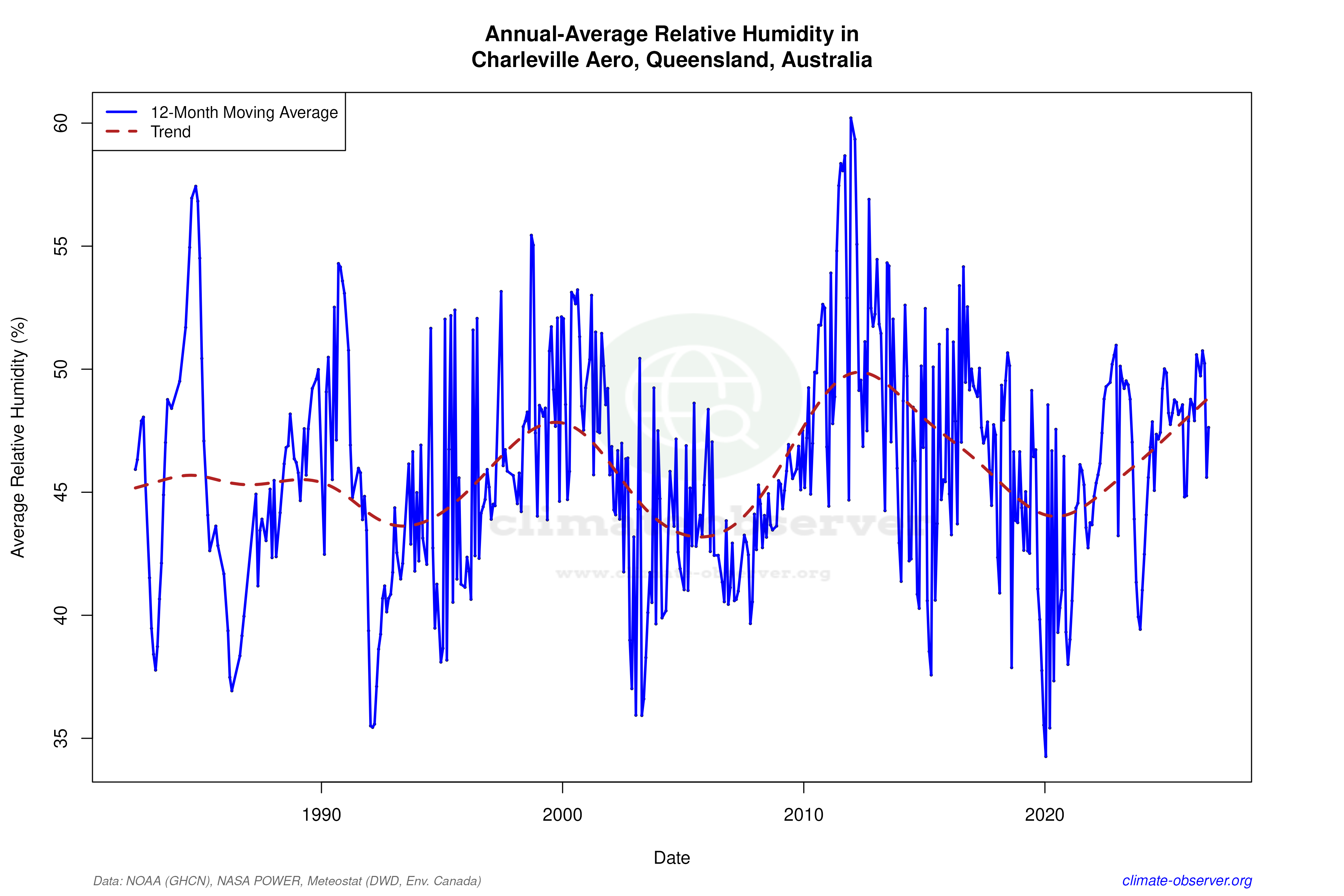

Max Temperature 12-Month MA | 1 of 6
Daily Data Points and Averages Throughout the Year
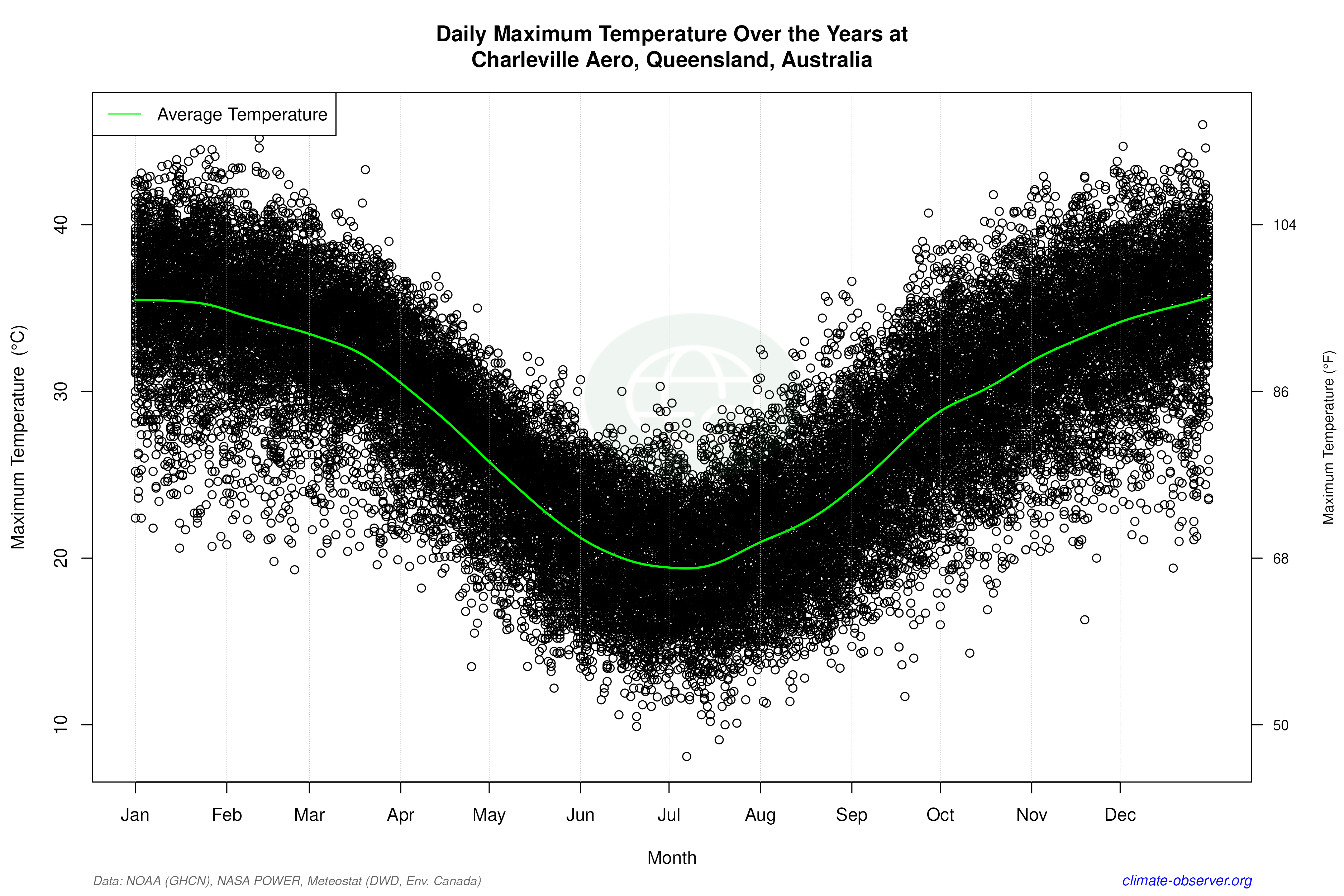
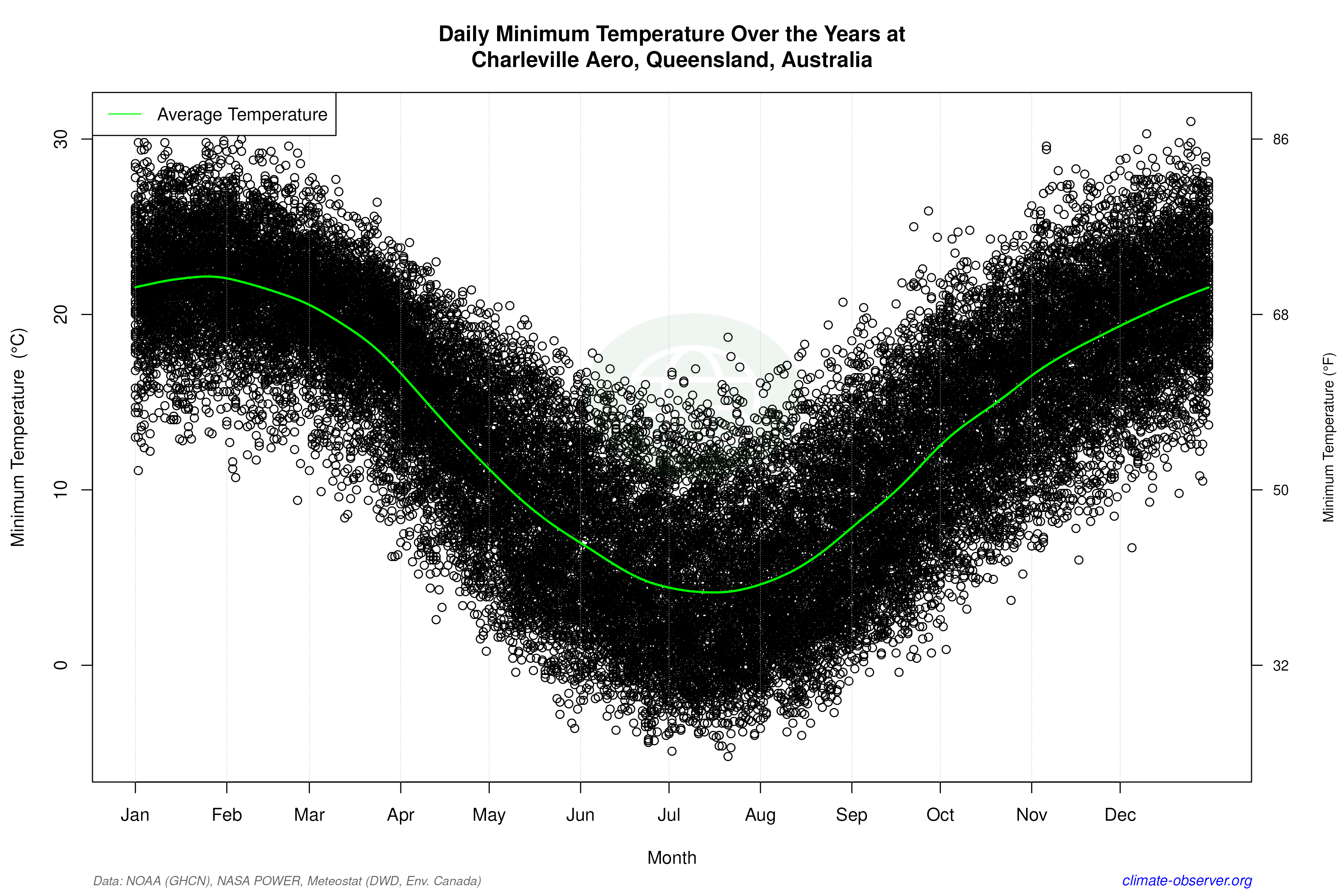
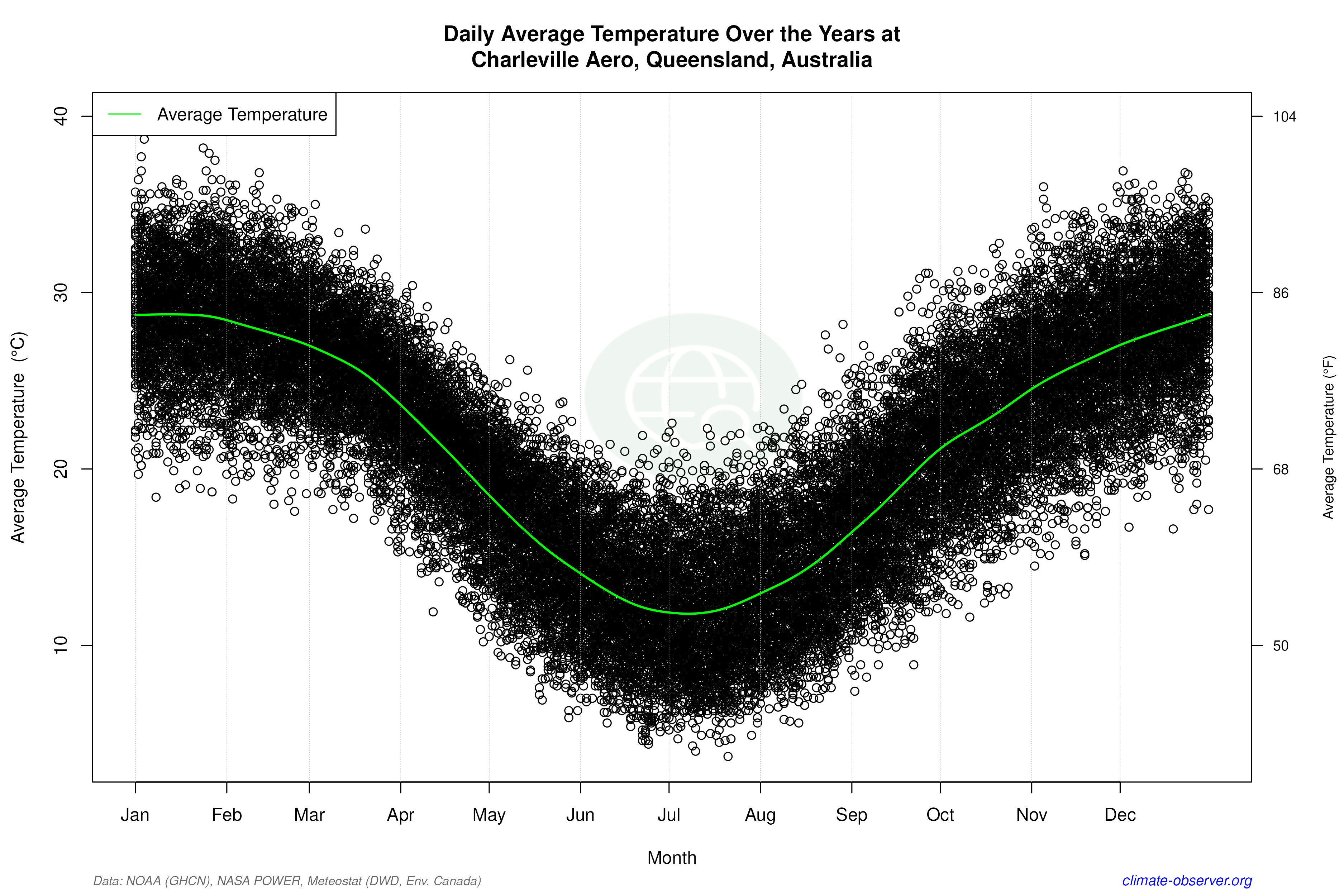
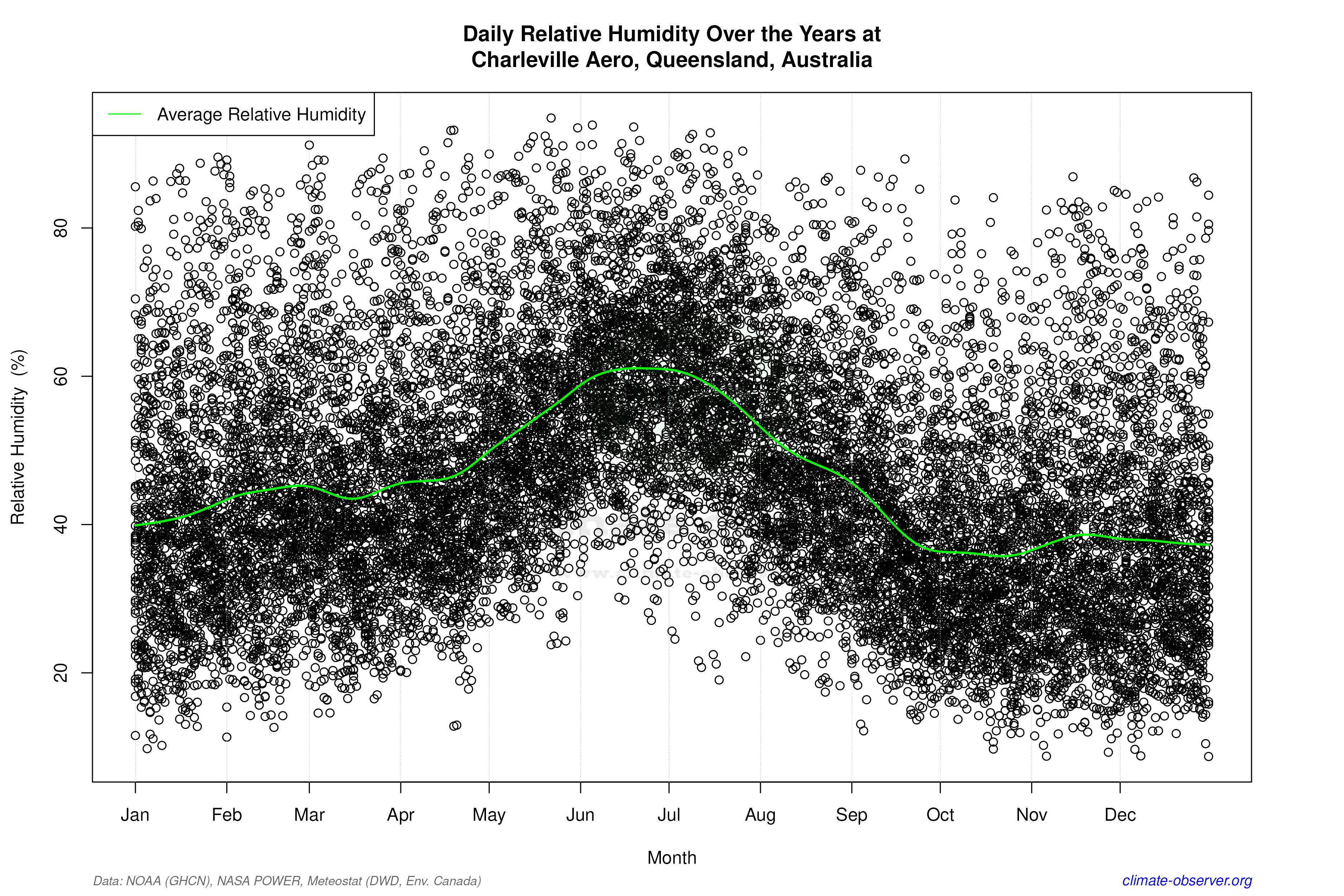

Average Max Temperature Throughout Year | 1 of 5


