Climate for Station: Base Orcadas, Antarctica
Loading live weather...
Climate Analysis & Overview
Base Orcadas, located in the South Orkney Islands, exhibits a complex climate profile with contrasting temperature trends over different time scales. While long-term data indicates a slight warming, recent years have shown a divergence with cooler highs and notably warmer lows. Precipitation patterns have become more evenly distributed, a subtle shift in this icy landscape.
Antarctic Climate Dynamics
Base Orcadas, positioned at -60.733, -44.733, is classified under the polar tundra category of the Köppen climate classification. This remote station experiences extreme weather conditions, influenced by its proximity to the Southern Ocean. The surrounding icy waters and frequent katabatic winds contribute to its unique climate profile. The all-time temperature trends reveal a warming pattern, with highs increasing by 0.18°C (0.32°F) and lows by 0.21°C (0.38°F). This suggests a gradual rise in temperatures over the decades.
Decadal Temperature Divergence
In contrast to the long-term warming, the past decade has witnessed a cooling trend in high temperatures, decreasing by 0.11°C (0.20°F). This cooling could be attributed to specific regional atmospheric patterns or oceanic currents affecting the area. However, the lows have shown a significant warming of 1.08°C (1.94°F) during the same period, indicating a potential shift in the region's thermal dynamics. This divergence highlights the complexity of short-term climate variability in polar regions.
Precipitation Patterns and Distribution
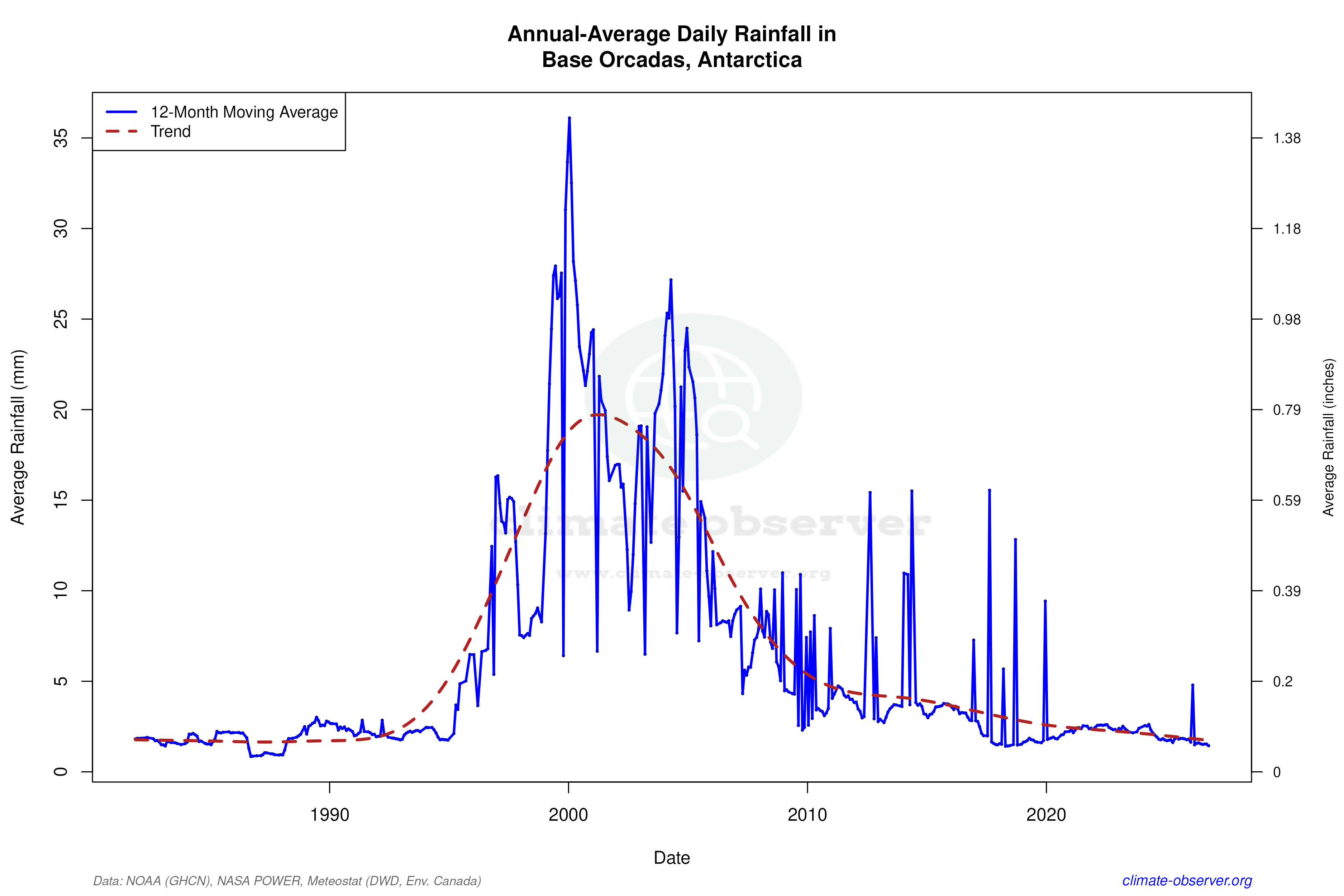
The Precipitation Concentration Index (PCI) at Base Orcadas has decreased from a baseline of 9.88 to a current value of 8.17. This indicates that precipitation events are now more evenly distributed throughout the year, rather than being concentrated in fewer, more intense events. Such a change, although slight, can have implications for local ecosystems and ice dynamics, potentially affecting snow accumulation and melt patterns.
Extreme Temperature Records
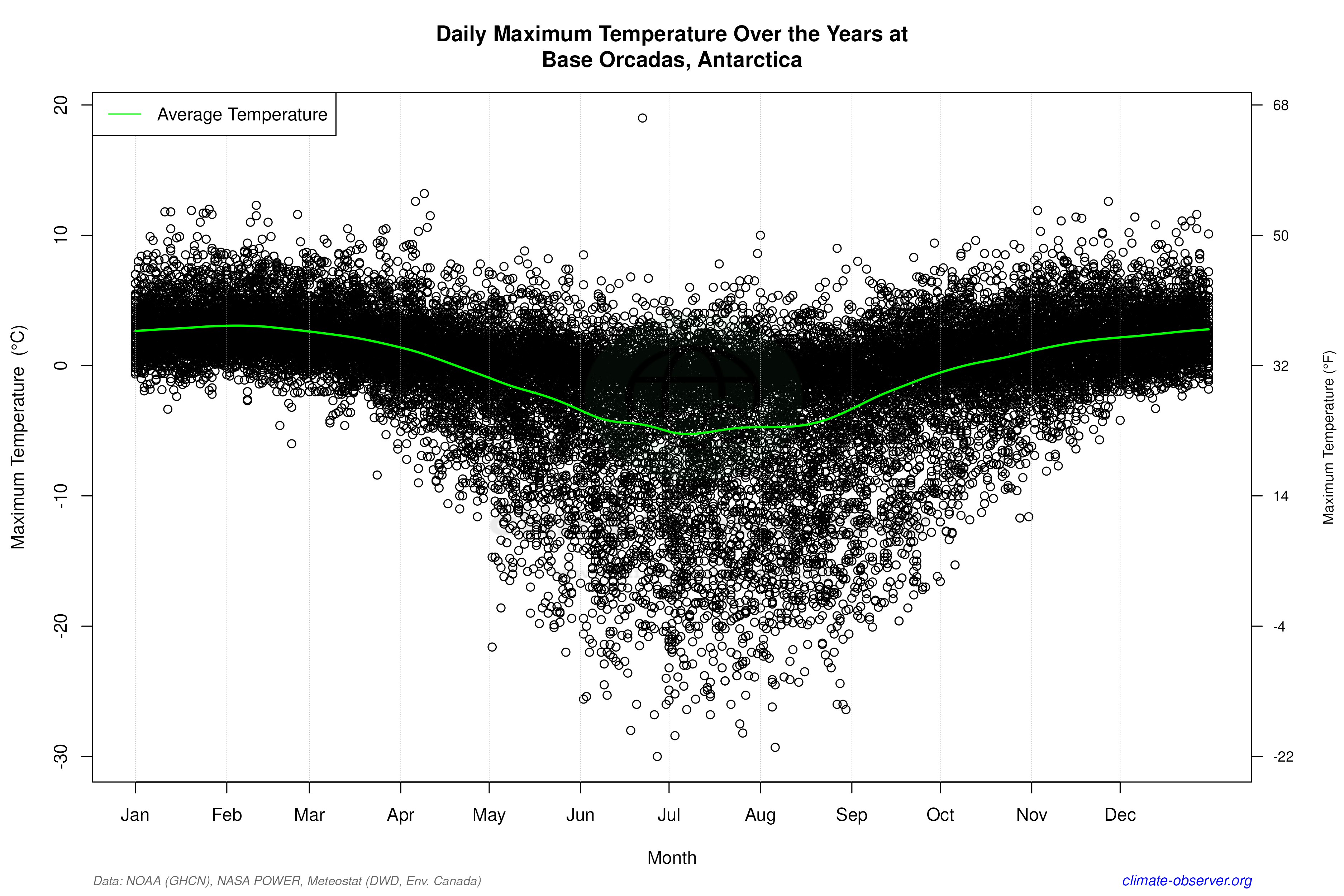
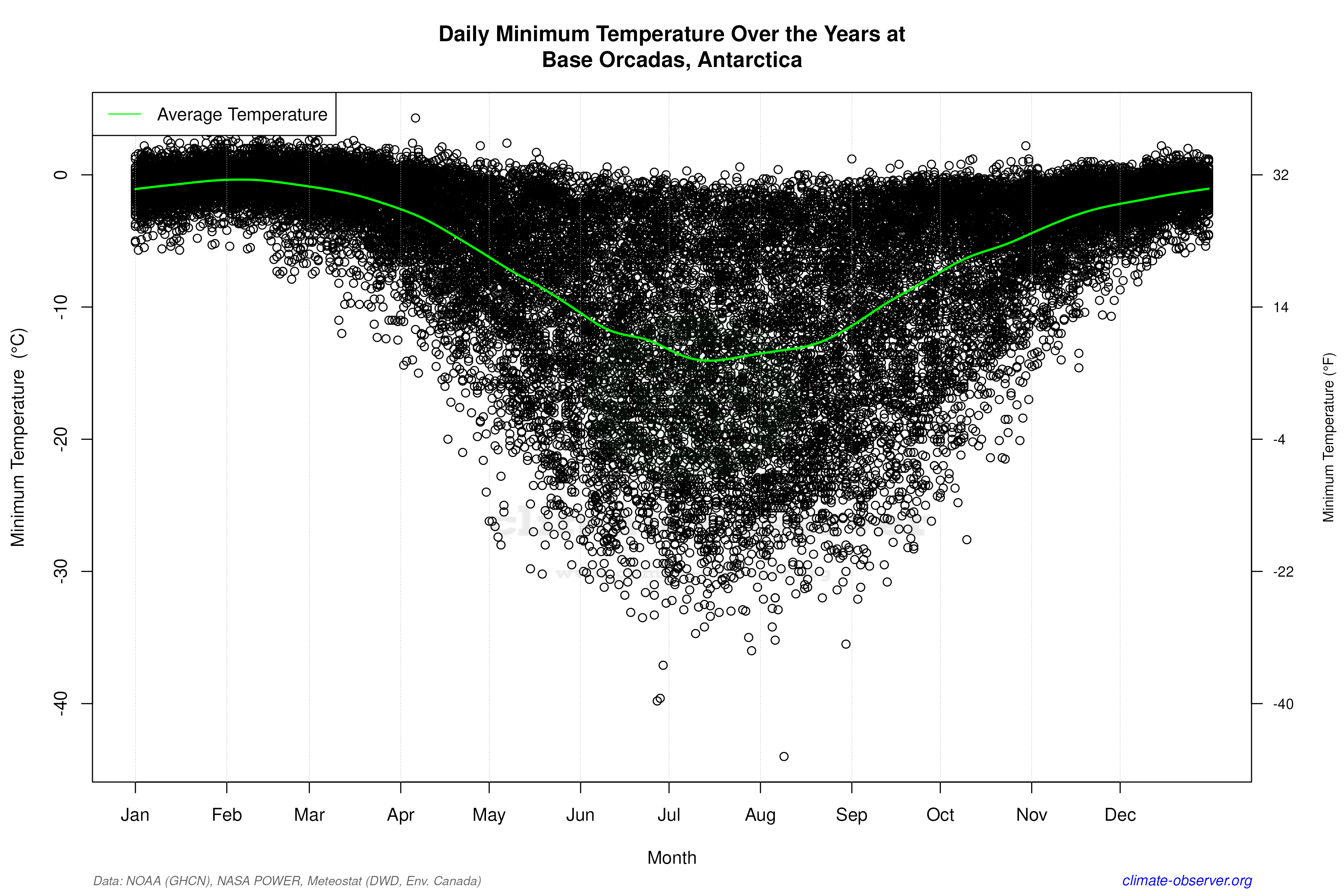
The station has recorded extreme temperatures with a maximum of 19.0°C (66.2°F) and a minimum of -44.0°C (-47.2°F). These records underscore the stark temperature variability that can occur in this polar environment. The ability to reach such highs and lows is indicative of the dynamic atmospheric conditions prevalent in the Antarctic region.
Regional Climate Context and Implications
The climate trends observed at Base Orcadas are part of a broader pattern of change affecting Antarctica. The region's climate goals focus on understanding these shifts to better predict future conditions and their potential impacts. Recent weather events, such as anomalous warm spells or significant ice calving, provide a backdrop to the data collected at this station. Understanding these trends is crucial for developing strategies to mitigate and adapt to the changing polar climate.
Station Statistics
10-Year Trend
High: -0.45 °C/decade
Low: +0.83 °C/decade
Rain: -1.47 mm/decade
25-Year Trend
High: +0.15 °C/decade
Low: +0.27 °C/decade
Rain: -5.85 mm/decade
50-Year Trend
High: +0.13 °C/decade
Low: +0.15 °C/decade
Rain: -0.36 mm/decade
All-Time Trend
High: +0.17 °C/decade
Low: +0.24 °C/decade
Rain: -0.36 mm/decade
Percentage Above-Average Days
Last 12 Months: 58.6%
This Year: 39.4%
Precipitation Concentration Index (PCI) ℹ️
Last 12 Months: 9.8
Historical Average: 12.0
Percentile Rank of Last 12 Months ℹ️
High: 39th percentile
Low: 87th percentile
Rain: 23rd percentile
Change in Variance ℹ️
High: -21.5%
Low: -11.3%
Intraday: +5.4%
Data Coverage
84.4%
First Year of Data
1957
Station Location
Historical Weather Records
| Max High | Avg High | Min High | Max Avg | Avg Avg | Min Avg | Max Low | Avg Low | Min Low | Max Precipitation | Avg Precipitation | Max Snow | Avg Snow | |
|---|---|---|---|---|---|---|---|---|---|---|---|---|---|
| Record | 19.0 °C | — | -30.0 °C | 8.0 °C | — | -33.4 °C | 4.3 °C | — | -44.0 °C | 150.9 mm | — | — | — |
| January | 12.0 °C | 2.9 °C | -3.4 °C | 5.9 °C | 1.1 °C | -4.3 °C | 4.0 °C | -0.7 °C | -5.7 °C | 104.9 mm | 7.6 mm | — | — |
| February | 12.3 °C | 2.9 °C | -6.0 °C | 8.0 °C | 1.3 °C | -4.5 °C | 3.1 °C | -0.5 °C | -7.9 °C | 137.9 mm | 6.0 mm | — | — |
| March | 10.5 °C | 2.1 °C | -8.4 °C | 5.4 °C | 0.4 °C | -7.2 °C | 2.8 °C | -1.6 °C | -12.5 °C | 111.0 mm | 4.7 mm | — | — |
| April | 13.2 °C | 0.4 °C | -11.6 °C | 5.7 °C | -1.7 °C | -16.0 °C | 4.3 °C | -4.2 °C | -24.0 °C | 120.9 mm | 6.8 mm | — | — |
| May | 8.8 °C | -2.1 °C | -22.0 °C | 5.3 °C | -4.8 °C | -25.0 °C | 2.4 °C | -8.2 °C | -30.2 °C | 104.9 mm | 6.2 mm | — | — |
| June | 19.0 °C | -4.2 °C | -30.0 °C | 4.9 °C | -7.5 °C | -29.0 °C | 0.6 °C | -11.8 °C | -39.8 °C | 108.0 mm | 5.4 mm | — | — |
| July | 8.6 °C | -5.1 °C | -28.4 °C | 3.3 °C | -9.2 °C | -33.4 °C | 0.6 °C | -13.9 °C | -36.0 °C | 100.1 mm | 3.5 mm | — | — |
| August | 10.0 °C | -4.5 °C | -29.3 °C | 2.6 °C | -8.0 °C | -30.8 °C | 0.4 °C | -12.9 °C | -44.0 °C | 80.0 mm | 2.9 mm | — | — |
| September | 9.4 °C | -1.8 °C | -20.1 °C | 4.2 °C | -5.6 °C | -29.2 °C | 1.2 °C | -9.4 °C | -32.1 °C | 102.1 mm | 4.9 mm | — | — |
| October | 9.6 °C | 0.3 °C | -16.6 °C | 3.7 °C | -2.8 °C | -18.4 °C | 2.2 °C | -5.8 °C | -27.6 °C | 104.9 mm | 7.1 mm | — | — |
| November | 12.6 °C | 1.8 °C | -8.1 °C | 5.5 °C | -0.7 °C | -10.3 °C | 1.0 °C | -3.1 °C | -14.6 °C | 104.9 mm | 6.8 mm | — | — |
| December | 11.6 °C | 2.5 °C | -4.2 °C | 6.4 °C | 0.4 °C | -6.0 °C | 2.2 °C | -1.6 °C | -8.7 °C | 150.9 mm | 8.9 mm | — | — |
Data Visualisations
Remove WatermarksCurrent Year Climate Trends vs Historical
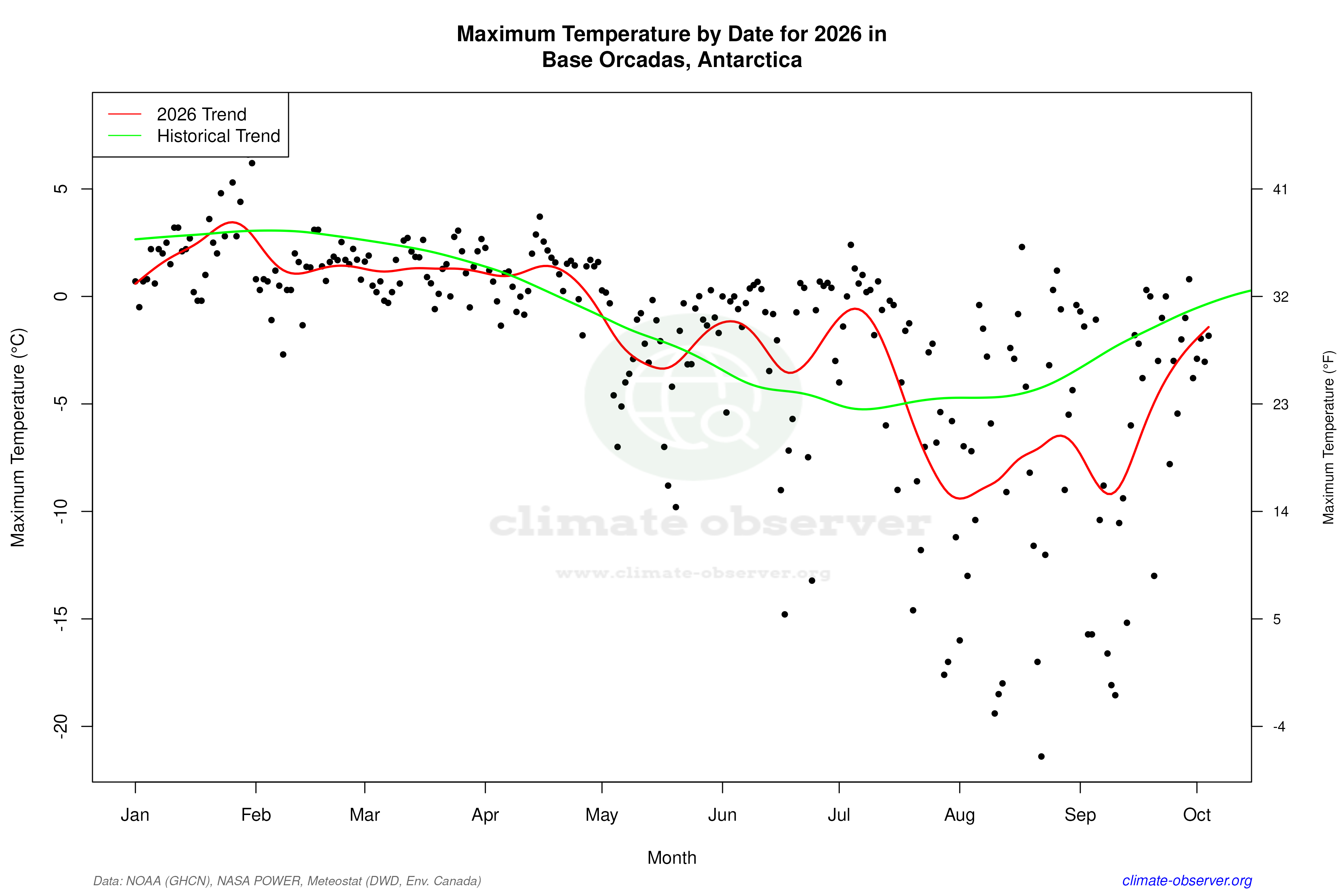
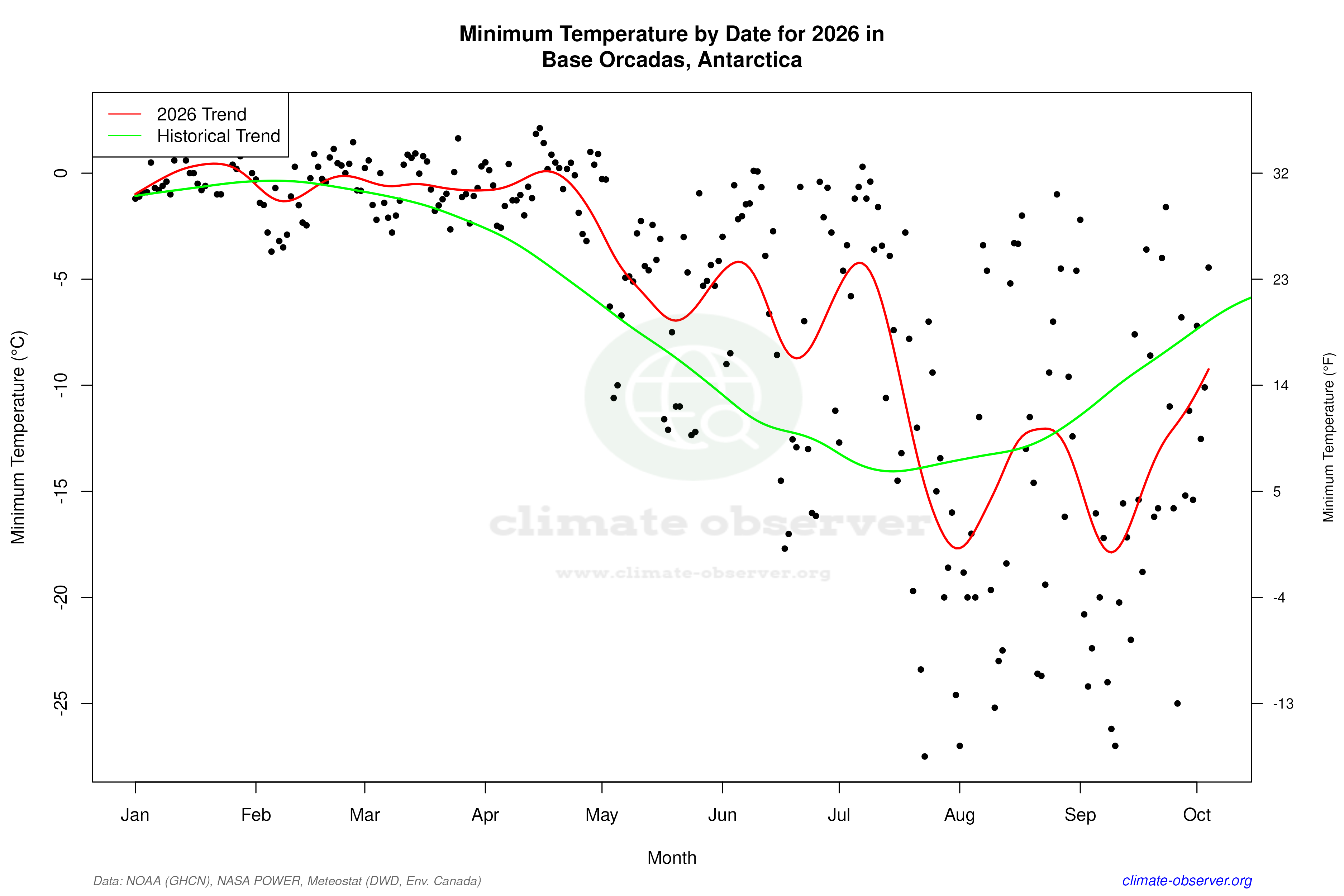
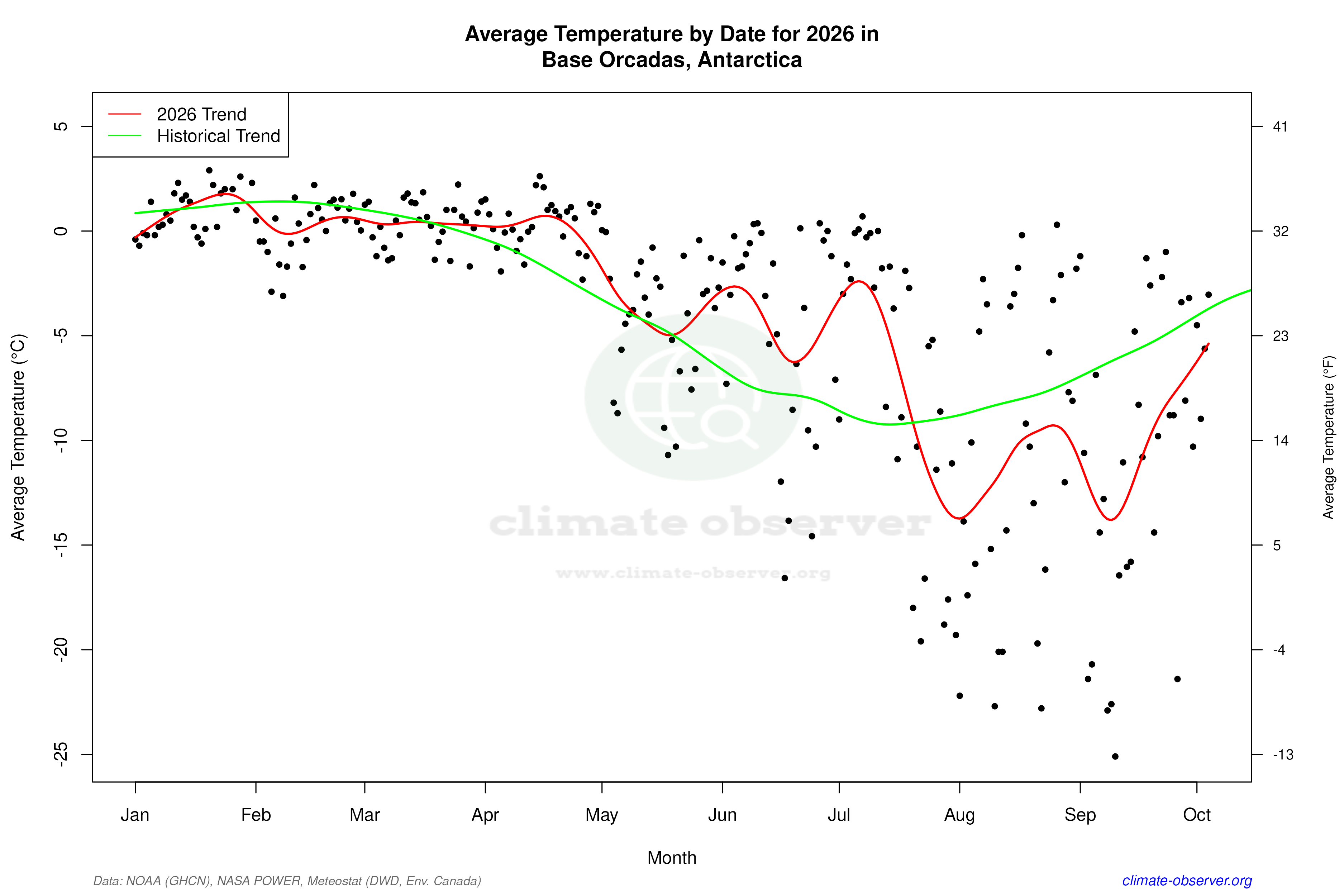
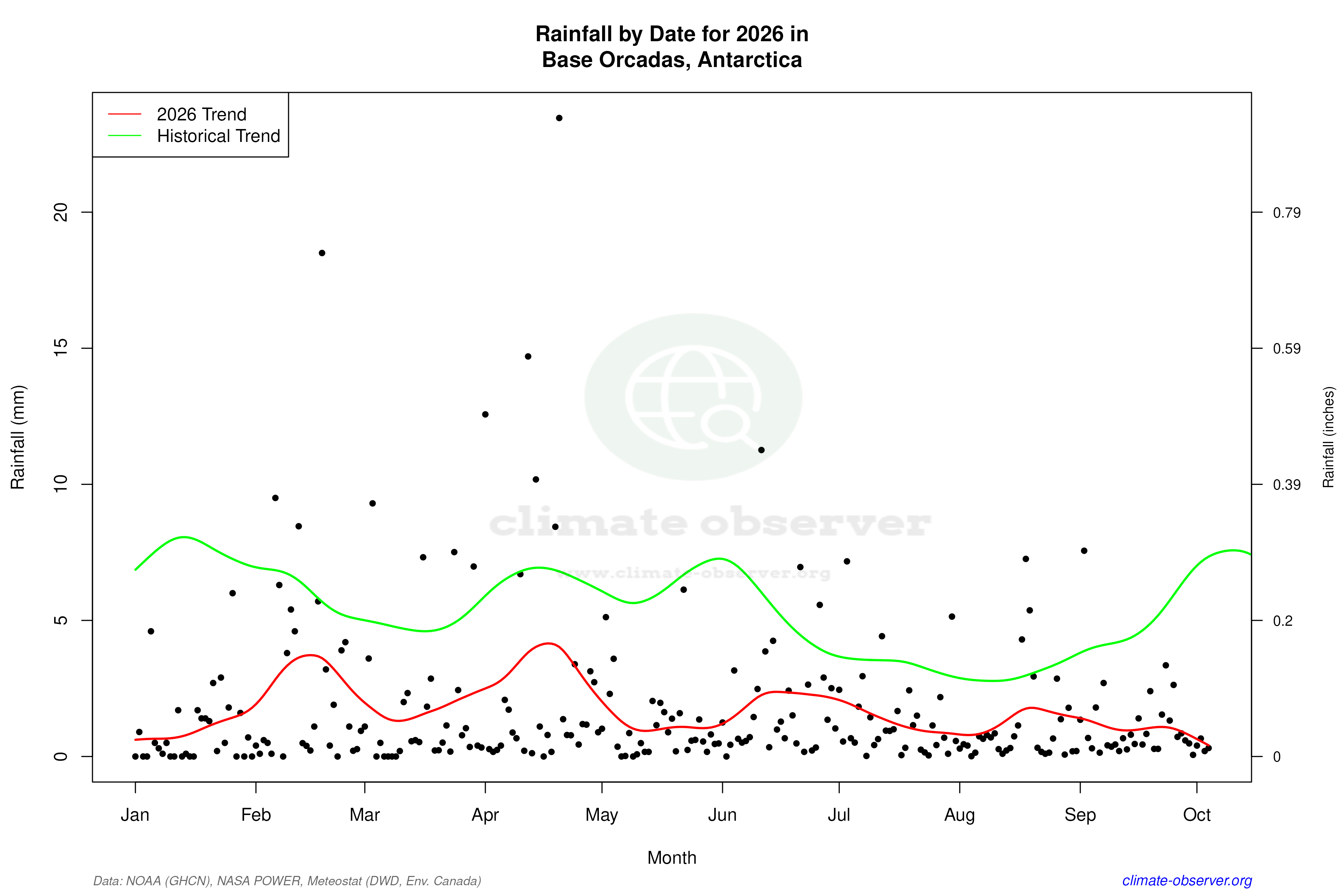
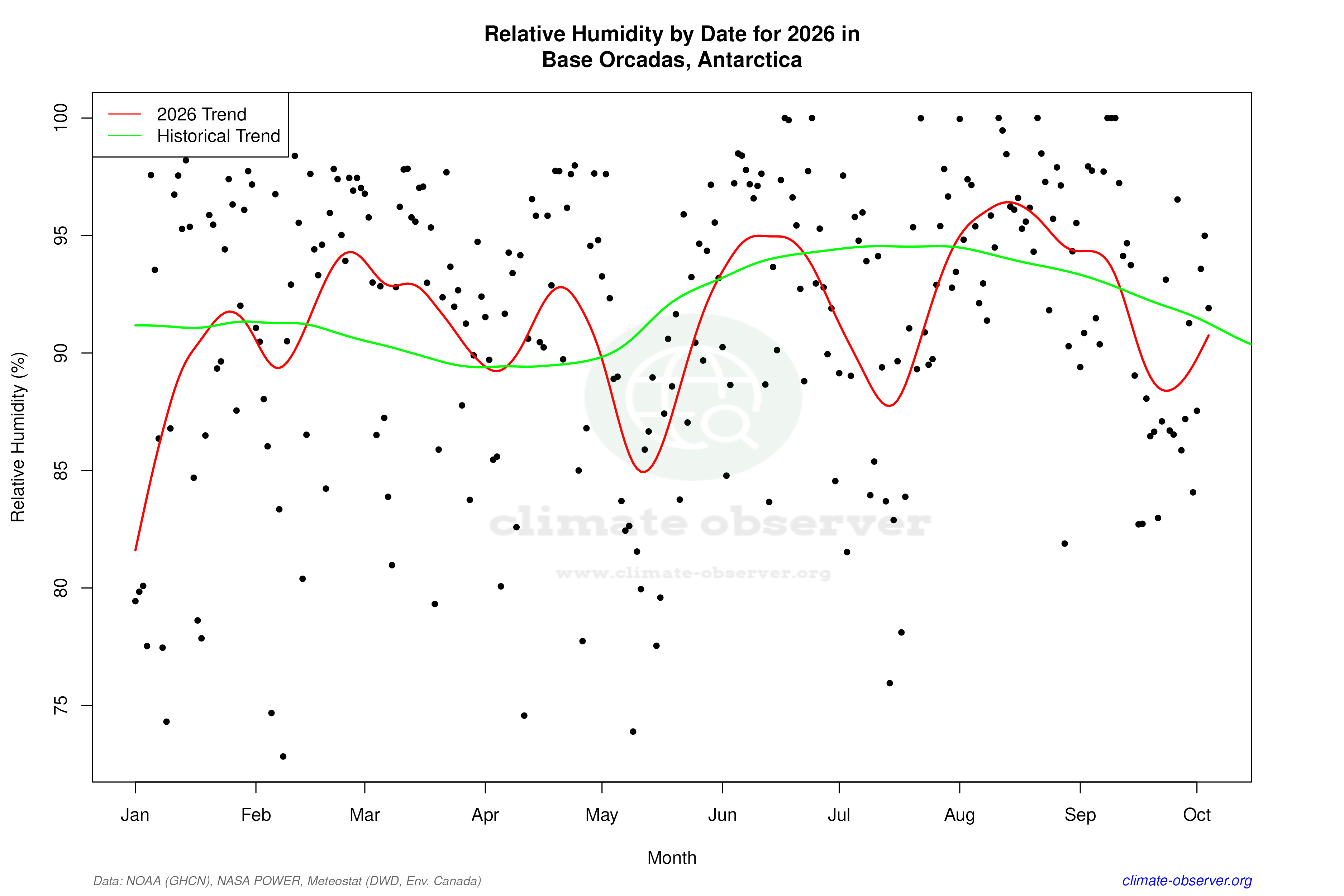

Max Temperature this Year | 1 of 6
Climate 12-Month Moving Averages
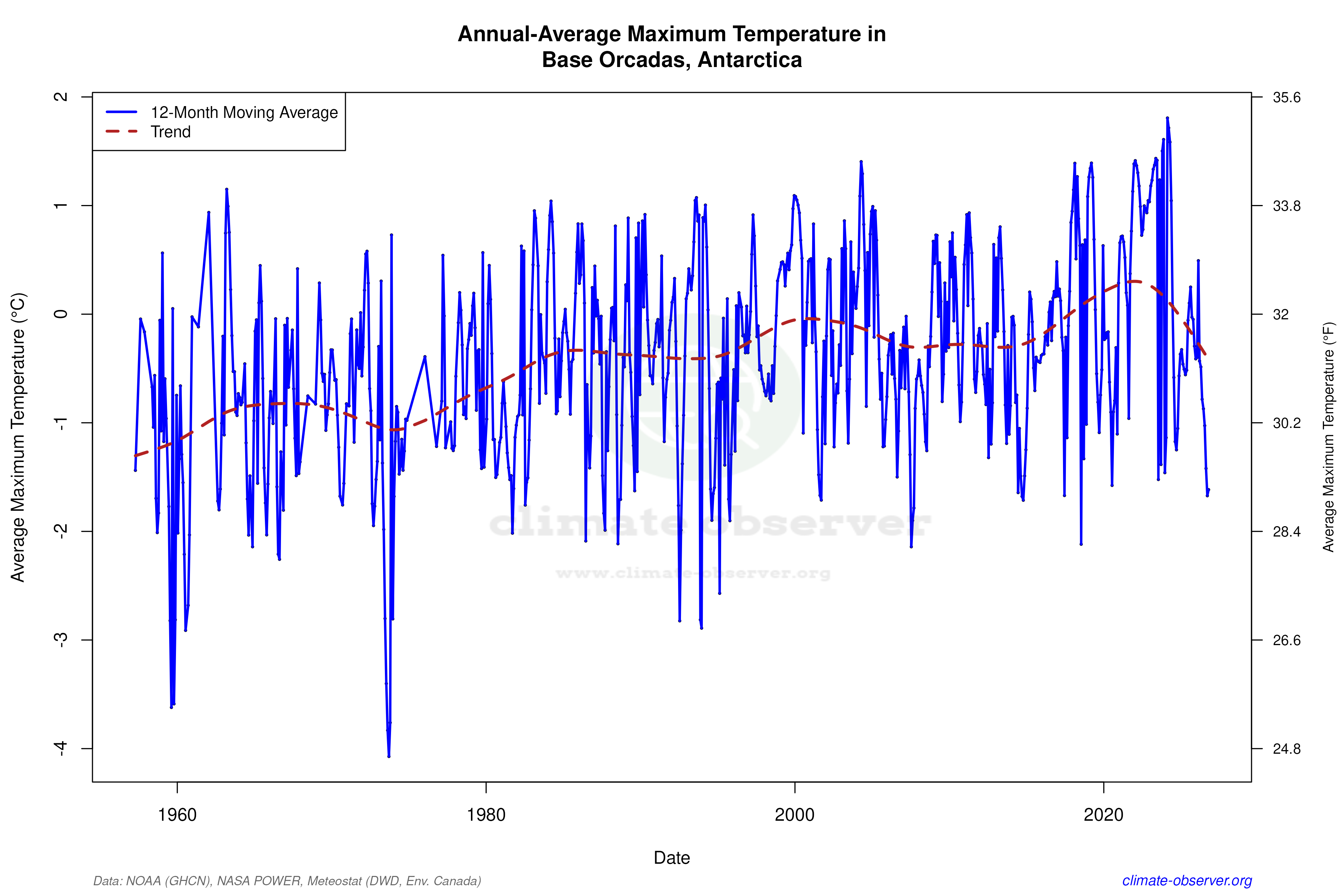
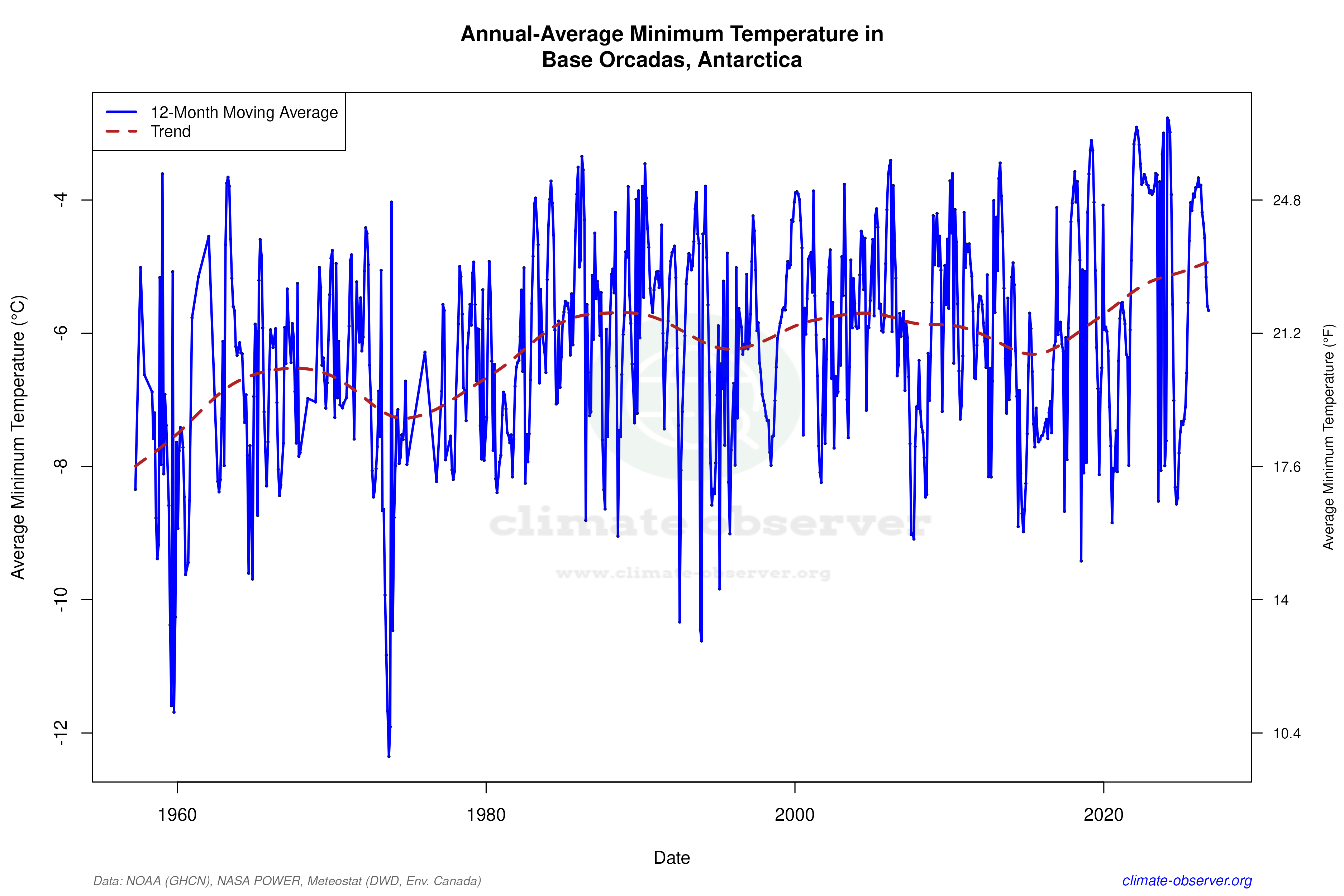
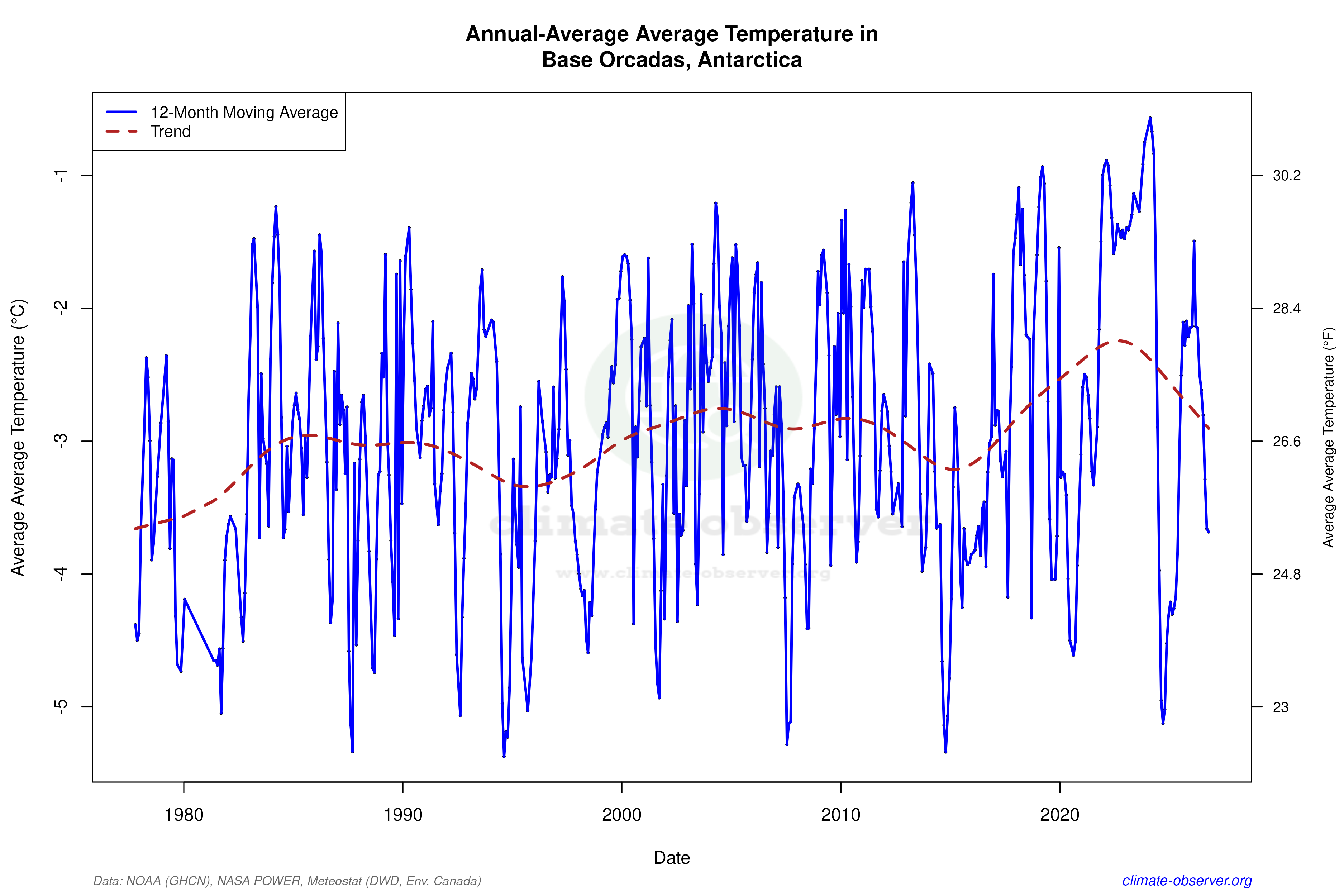
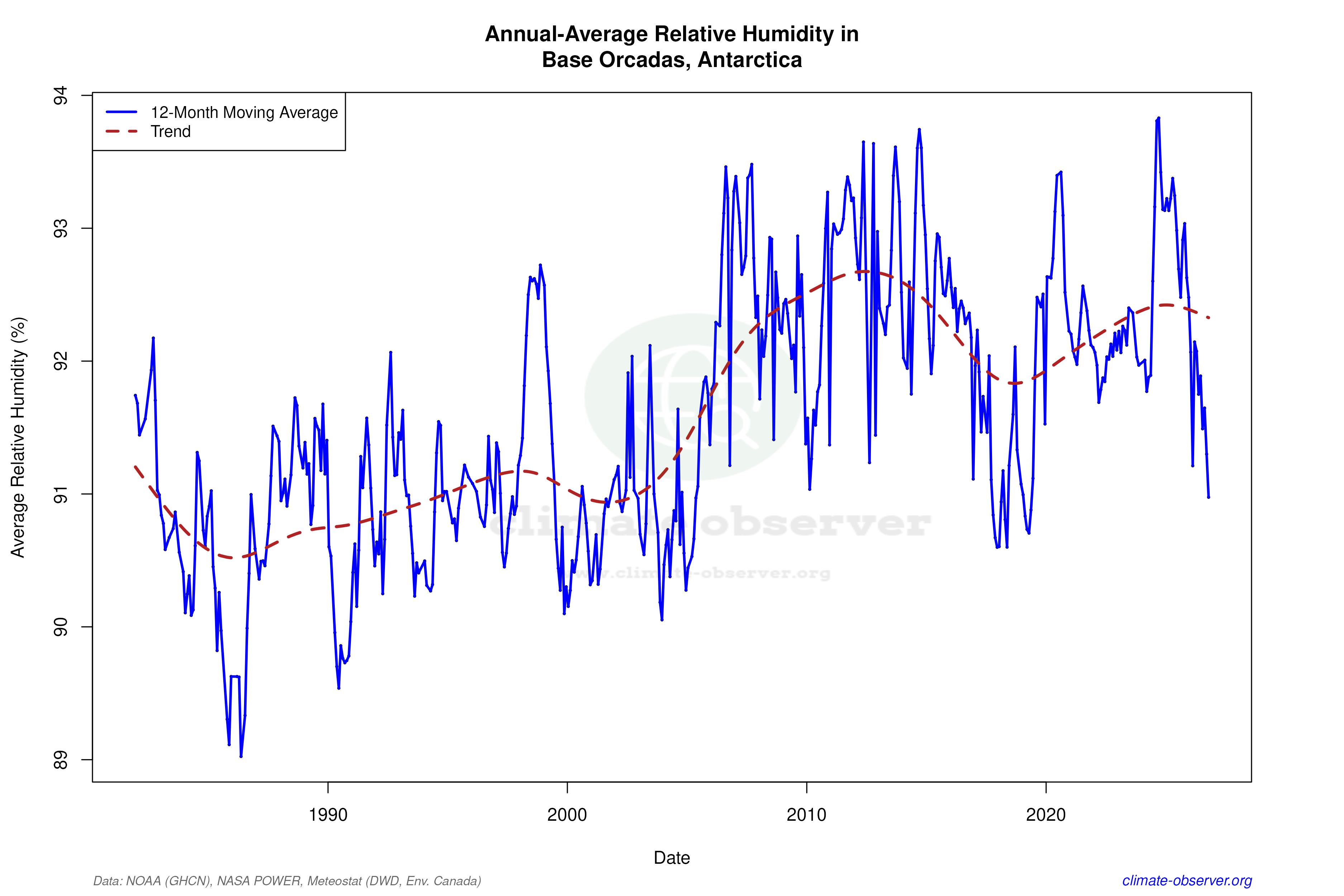

Max Temperature 12-Month MA | 1 of 6
Daily Data Points and Averages Throughout the Year
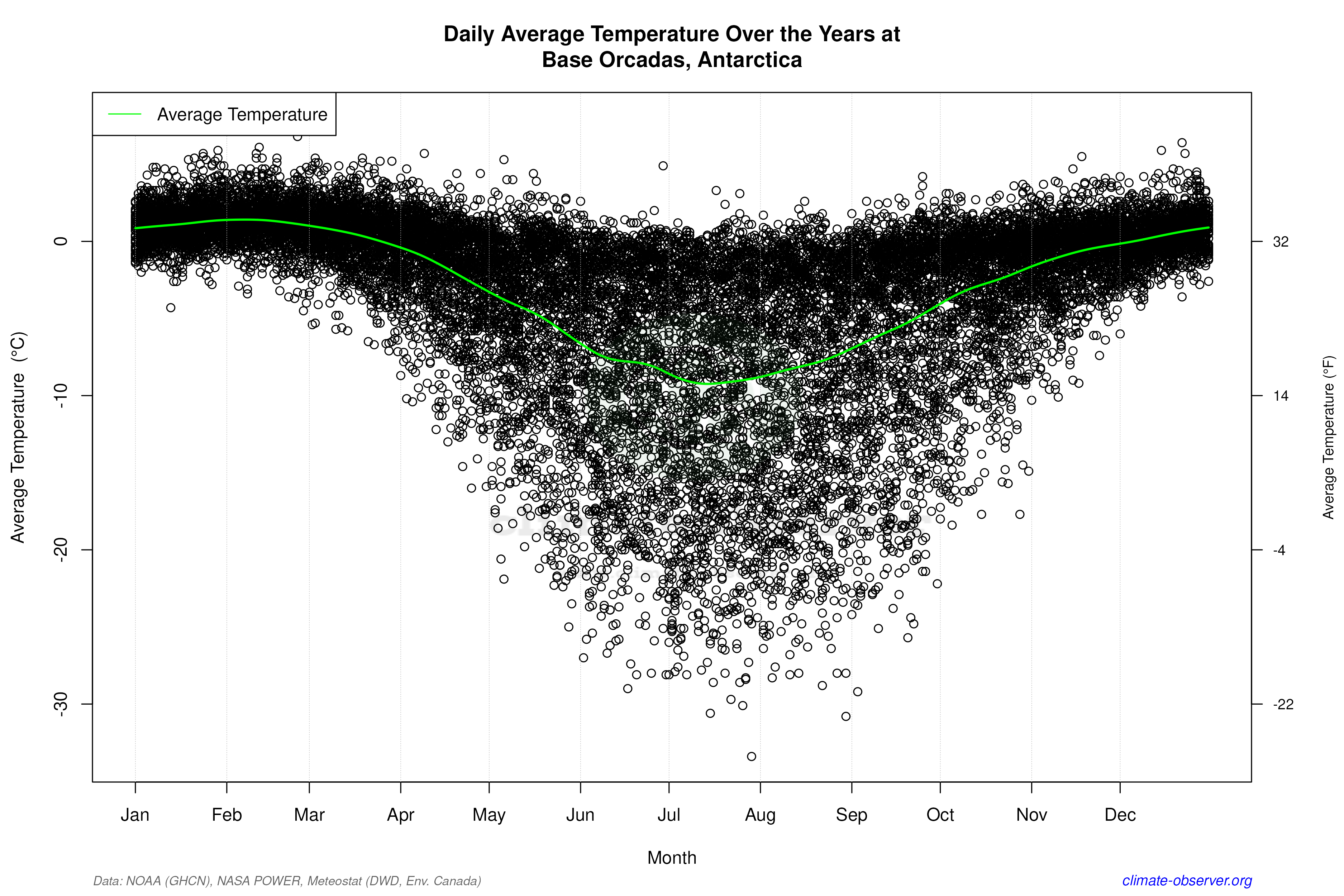
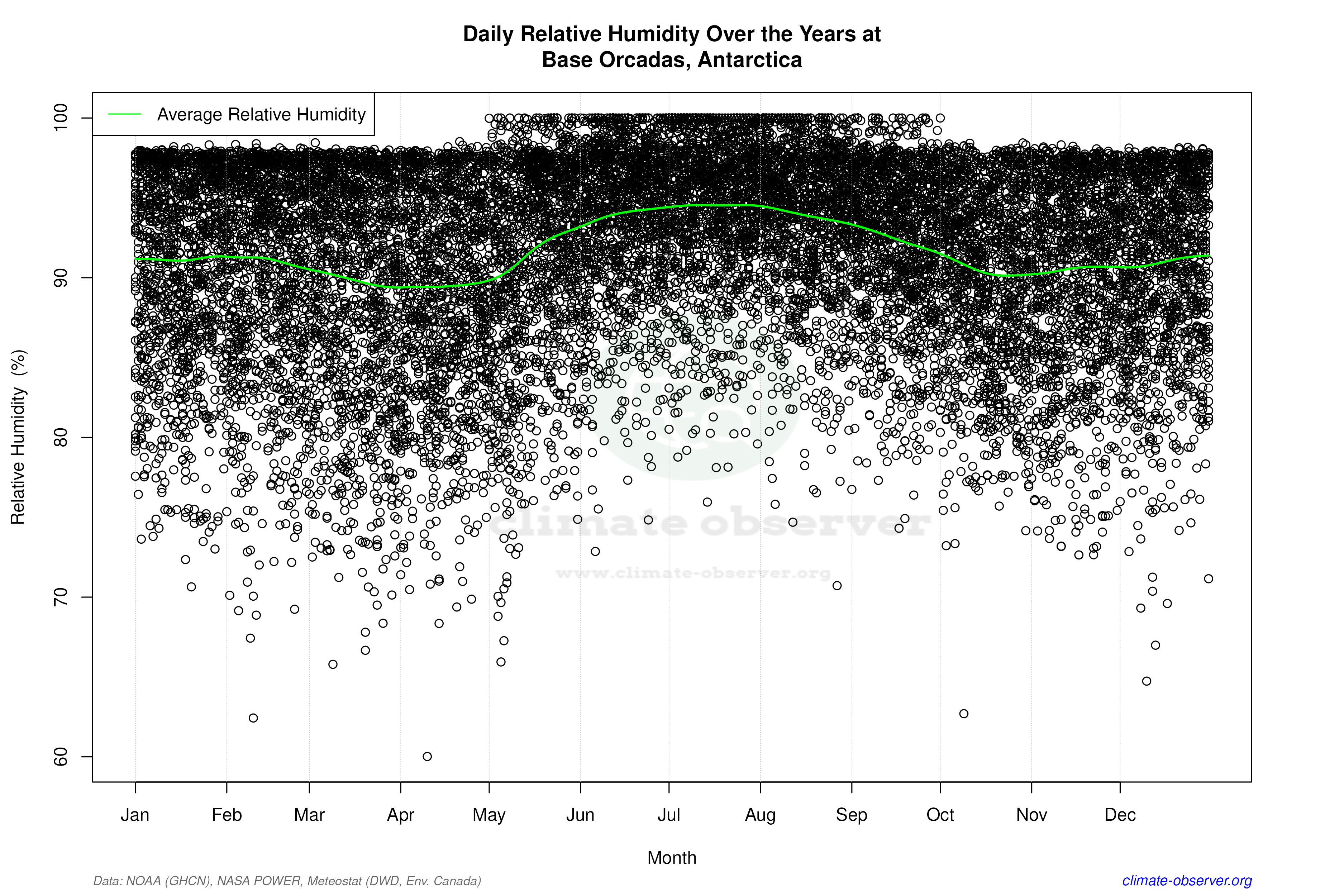

Average Max Temperature Throughout Year | 1 of 5