Climate for Station: Estevan Point, British Columbia, Canada
Loading live weather...
Climate Analysis & Overview
Estevan Point, located in British Columbia, is experiencing a subtle warming trend over the long term, with a more recent cooling phase over the past decade. This coastal region, influenced by the Pacific Ocean, shows a notable shift towards more evenly distributed precipitation patterns.
Coastal Climate Dynamics
Estevan Point, situated at 49.3833°N, -126.55°W, falls under the Köppen climate classification of Cfb, or Oceanic climate. This classification is characterized by mild temperatures and significant precipitation throughout the year. The Pacific Ocean plays a crucial role in moderating temperatures, preventing extreme highs and lows. The area's geography, marked by proximity to the ocean and the presence of coastal mountains, contributes to its unique climate profile.
Long-term Warming Trends
Over the all-time scale, Estevan Point has experienced a slight warming trend. The average high temperatures have increased by 0.08°C (0.14°F), while the lows have risen by 0.16°C (0.29°F). This indicates a gradual rise in baseline temperatures, consistent with broader regional climate patterns observed across Canada. Such trends align with national goals to monitor and mitigate climate change impacts, particularly in coastal areas where ecosystems are sensitive to temperature changes.
Decadal Cooling Phenomenon
Contrasting the long-term warming, the past decade has seen a cooling trend. High temperatures have decreased by 0.73°C (1.31°F), and lows by 0.53°C (0.96°F). This recent cooling could be attributed to short-term climatic variations or oceanic cycles affecting the region. It highlights the complexity of climate dynamics where localised short-term changes can diverge from longer-term trends.
Precipitation Patterns and Distribution
The Precipitation Concentration Index (PCI) at Estevan Point reflects a shift towards more evenly distributed rainfall. The baseline PCI of 13.30 has decreased to 11.85, indicating a marginal change towards less concentrated precipitation events. This suggests that rainfall is becoming more evenly spread throughout the year, reducing the intensity of individual rain events. Such a shift can have significant implications for water management and ecosystem health, providing more stable water availability.
Temperature Extremes
Estevan Point has recorded a maximum temperature of 36.48°C (97.66°F) and a minimum of -13.90°C (7.02°F). These extremes illustrate the range of temperatures that can occur even in a generally mild climate. The record high underscores the potential for heatwaves, while the record low reflects the region's capacity for cold snaps, influenced by cold air masses descending from the north.
The climate profile of Estevan Point provides valuable insights into the interplay between long-term warming trends and recent cooling phases, alongside evolving precipitation patterns.
Station Statistics
10-Year Trend
High: +0.43 °C/decade
Low: +0.70 °C/decade
Rain: -0.90 mm/decade
25-Year Trend
High: +0.13 °C/decade
Low: +0.12 °C/decade
Rain: -0.61 mm/decade
50-Year Trend
High: +0.17 °C/decade
Low: +0.19 °C/decade
Rain: +0.12 mm/decade
All-Time Trend
High: +0.08 °C/decade
Low: +0.15 °C/decade
Rain: -0.06 mm/decade
Percentage Above-Average Days
Last 12 Months: 50.7%
This Year: 56.8%
Precipitation Concentration Index (PCI) ℹ️
Last 12 Months: 11.7
Historical Average: 12.8
Percentile Rank of Last 12 Months ℹ️
High: 66th percentile
Low: 89th percentile
Rain: 39th percentile
Change in Variance ℹ️
High: +23.3%
Low: +4.9%
Intraday: -6.3%
Data Coverage
86.6%
First Year of Data
1926
Station Location
Historical Weather Records
| Max High | Avg High | Min High | Max Avg | Avg Avg | Min Avg | Max Low | Avg Low | Min Low | Max Precipitation | Avg Precipitation | Max Snow | Avg Snow | |
|---|---|---|---|---|---|---|---|---|---|---|---|---|---|
| Record | 36.5 °C | — | -6.7 °C | 29.5 °C | — | -9.1 °C | 18.7 °C | — | -13.9 °C | 218.9 mm | — | 518.0 mm | — |
| January | 17.2 °C | 7.6 °C | -4.4 °C | 11.9 °C | 5.6 °C | -9.1 °C | 10.5 °C | 2.6 °C | -13.9 °C | 218.9 mm | 11.8 mm | 259.0 mm | 2.6 mm |
| February | 17.2 °C | 8.3 °C | -2.7 °C | 11.6 °C | 5.5 °C | -7.8 °C | 10.5 °C | 2.7 °C | -10.6 °C | 145.6 mm | 10.0 mm | 518.0 mm | 1.8 mm |
| March | 19.7 °C | 9.1 °C | -0.6 °C | 12.8 °C | 6.5 °C | -3.4 °C | 10.6 °C | 3.1 °C | -7.8 °C | 137.4 mm | 9.2 mm | 314.0 mm | 1.5 mm |
| April | 21.0 °C | 11.0 °C | 4.1 °C | 16.0 °C | 8.1 °C | -1.5 °C | 14.5 °C | 4.7 °C | -3.3 °C | 102.6 mm | 6.9 mm | 140.0 mm | 0.4 mm |
| May | 25.9 °C | 13.4 °C | 7.2 °C | 19.8 °C | 10.7 °C | 2.6 °C | 13.6 °C | 7.3 °C | 0.0 °C | 83.0 mm | 4.2 mm | 10.0 mm | 0.0 mm |
| June | 36.5 °C | 15.2 °C | 8.9 °C | 29.5 °C | 12.7 °C | 7.8 °C | 17.4 °C | 9.7 °C | 2.8 °C | 93.5 mm | 3.4 mm | 0.0 mm | 0.0 mm |
| July | 30.8 °C | 16.8 °C | 11.1 °C | 23.2 °C | 14.3 °C | 9.8 °C | 18.7 °C | 11.2 °C | 4.4 °C | 95.3 mm | 2.5 mm | 0.0 mm | 0.0 mm |
| August | 28.9 °C | 17.3 °C | 9.4 °C | 23.6 °C | 14.7 °C | 10.3 °C | 17.5 °C | 11.6 °C | 5.0 °C | 75.1 mm | 2.6 mm | 0.0 mm | 0.0 mm |
| September | 26.5 °C | 16.1 °C | 10.0 °C | 20.9 °C | 13.5 °C | 8.4 °C | 16.5 °C | 10.1 °C | 2.2 °C | 120.7 mm | 5.0 mm | 0.0 mm | 0.0 mm |
| October | 22.0 °C | 13.1 °C | 5.0 °C | 15.8 °C | 10.4 °C | 0.0 °C | 15.0 °C | 7.5 °C | -4.4 °C | 131.8 mm | 10.3 mm | 5.0 mm | 0.0 mm |
| November | 18.5 °C | 10.0 °C | -6.7 °C | 16.0 °C | 7.3 °C | -8.8 °C | 12.0 °C | 4.7 °C | -9.5 °C | 190.8 mm | 13.1 mm | 157.0 mm | 0.6 mm |
| December | 15.0 °C | 8.1 °C | -3.9 °C | 21.0 °C | 5.5 °C | -6.1 °C | 10.6 °C | 3.1 °C | -11.7 °C | 145.8 mm | 12.5 mm | 259.0 mm | 1.8 mm |
Data Visualisations
Remove WatermarksCurrent Year Climate Trends vs Historical
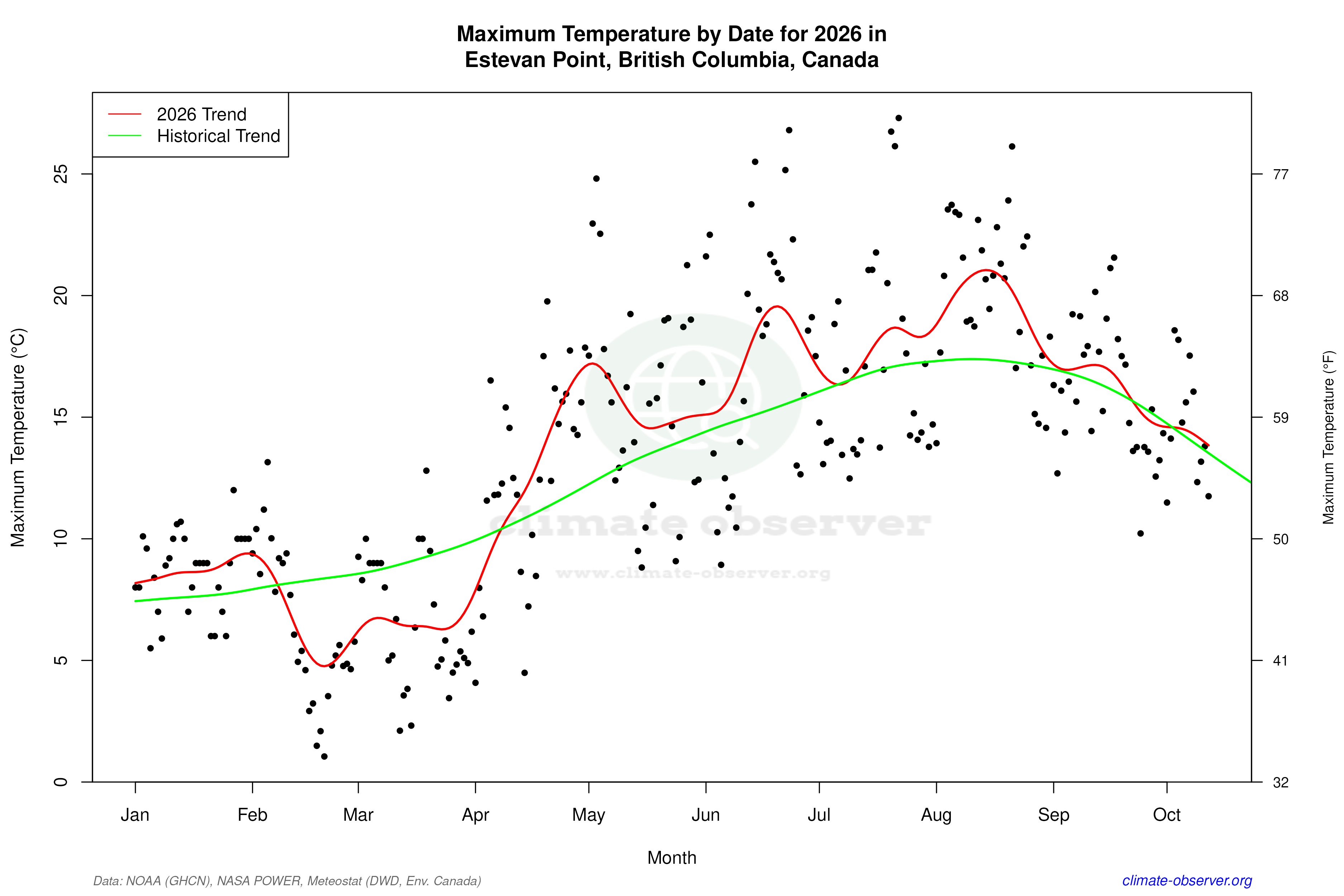
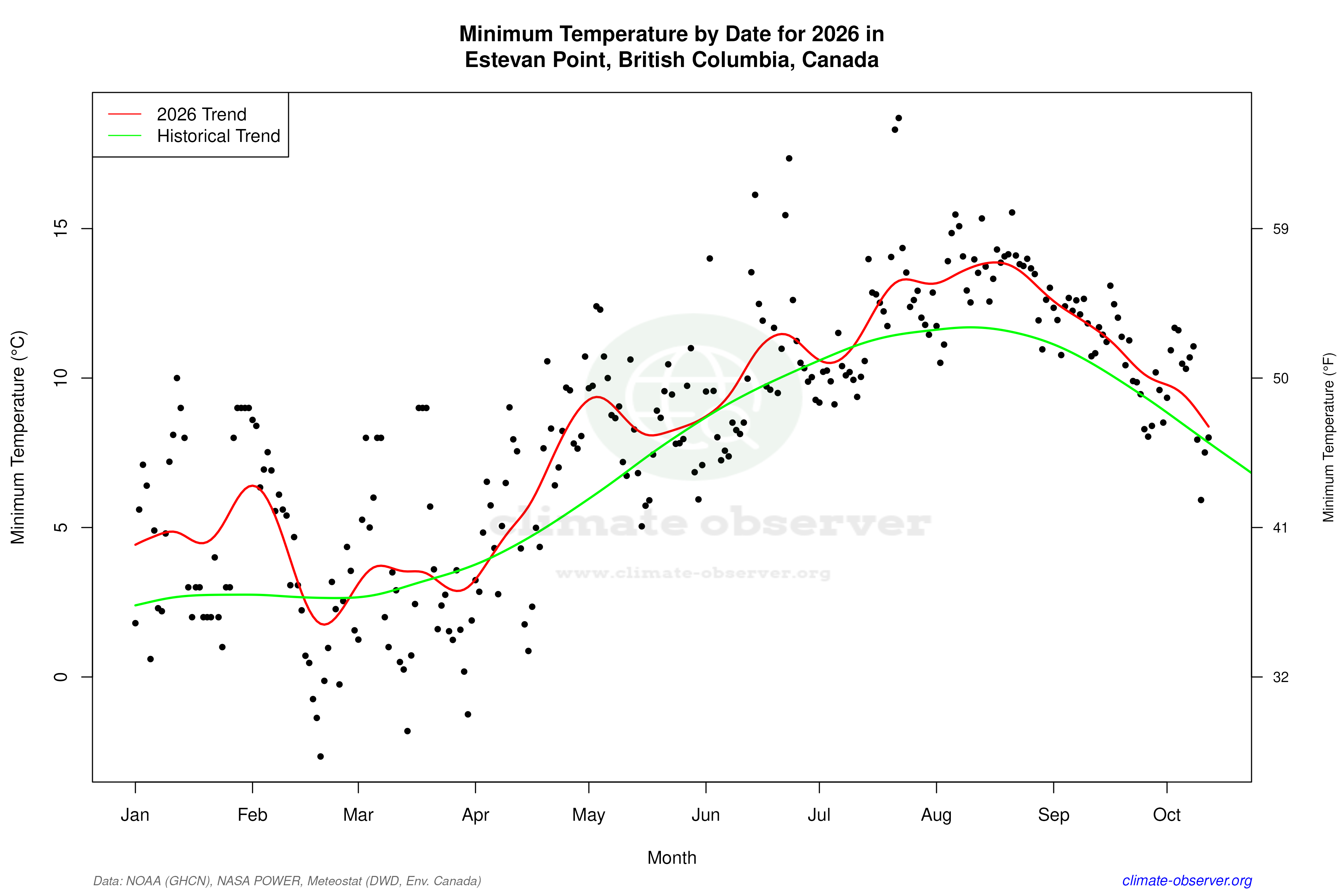
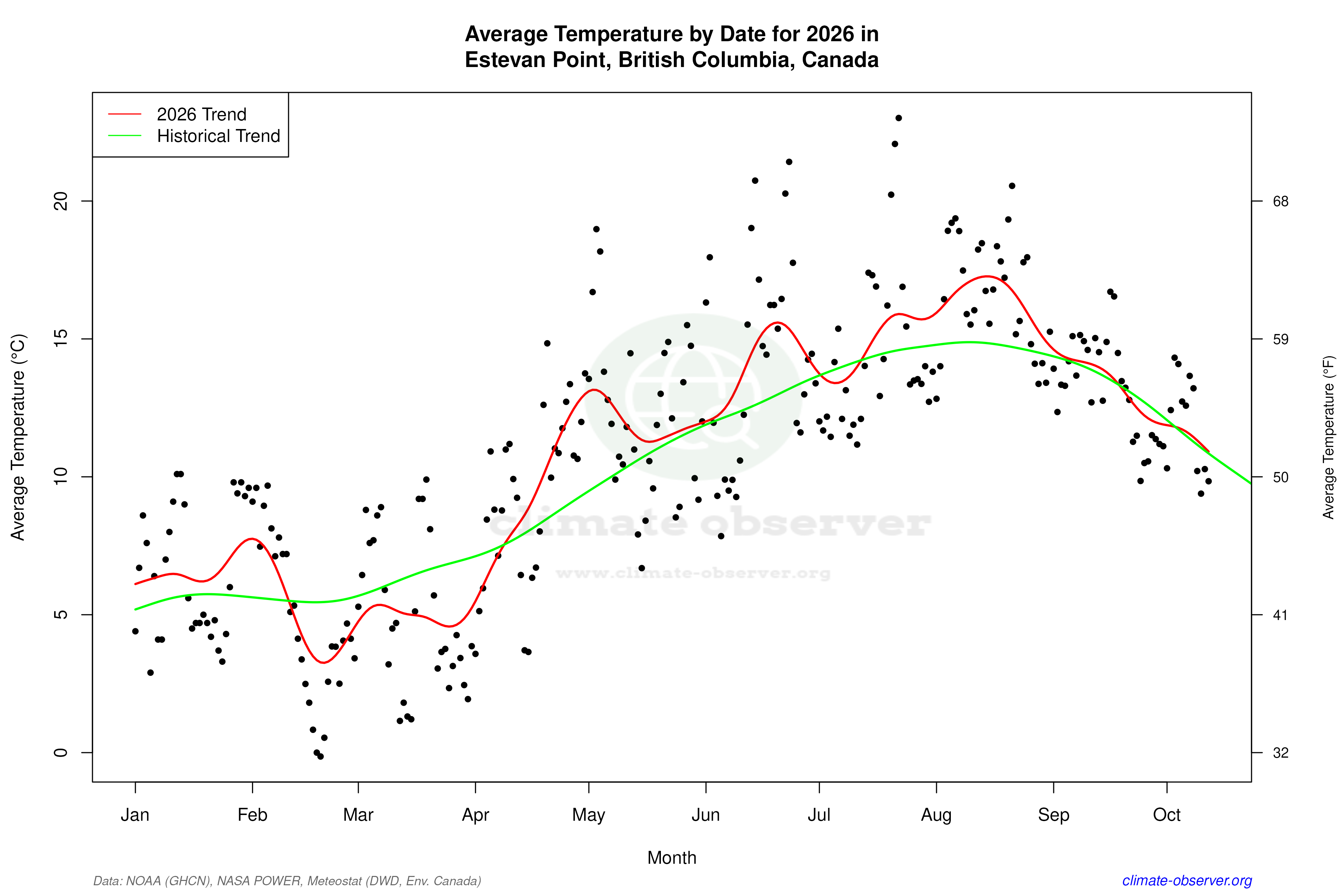
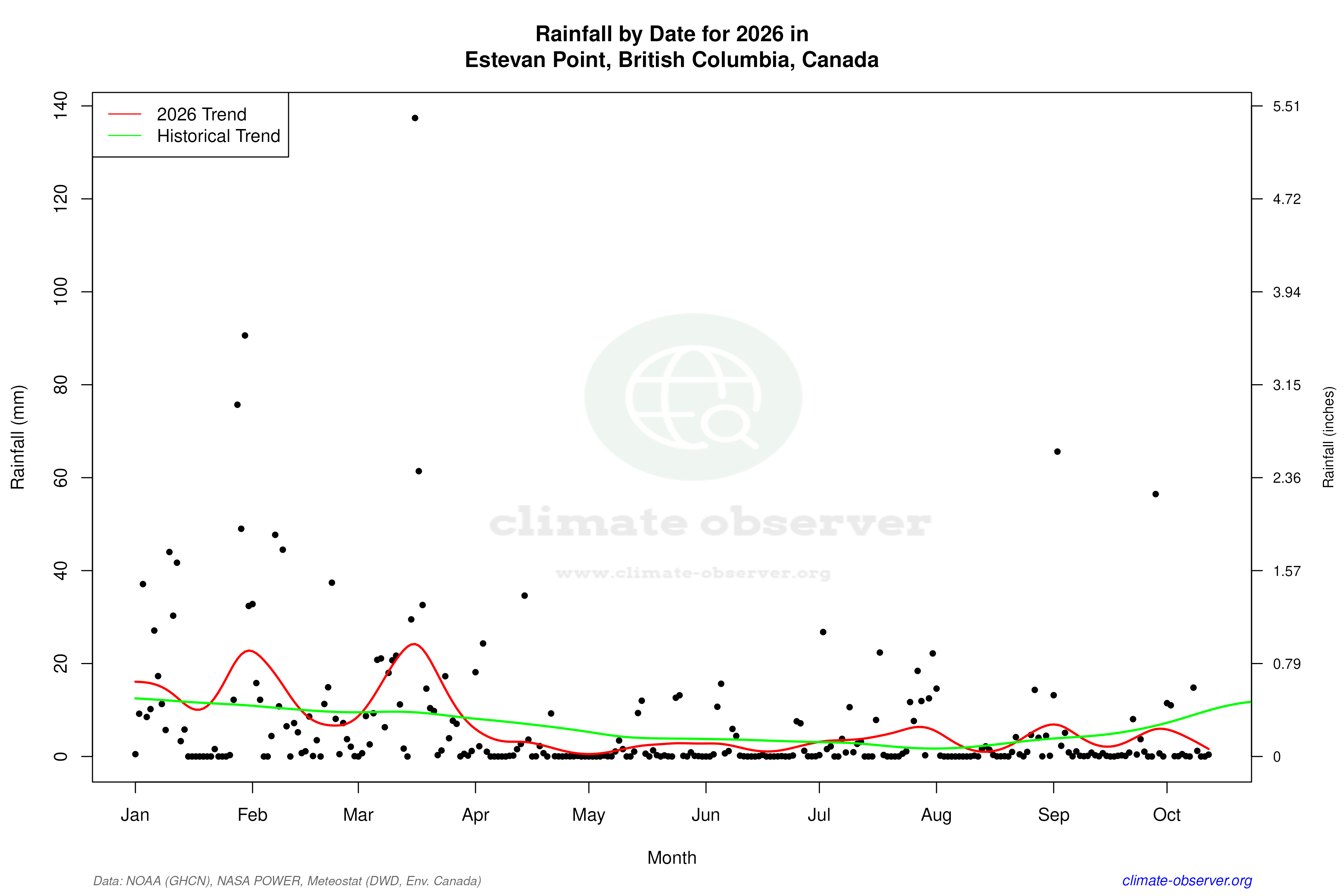
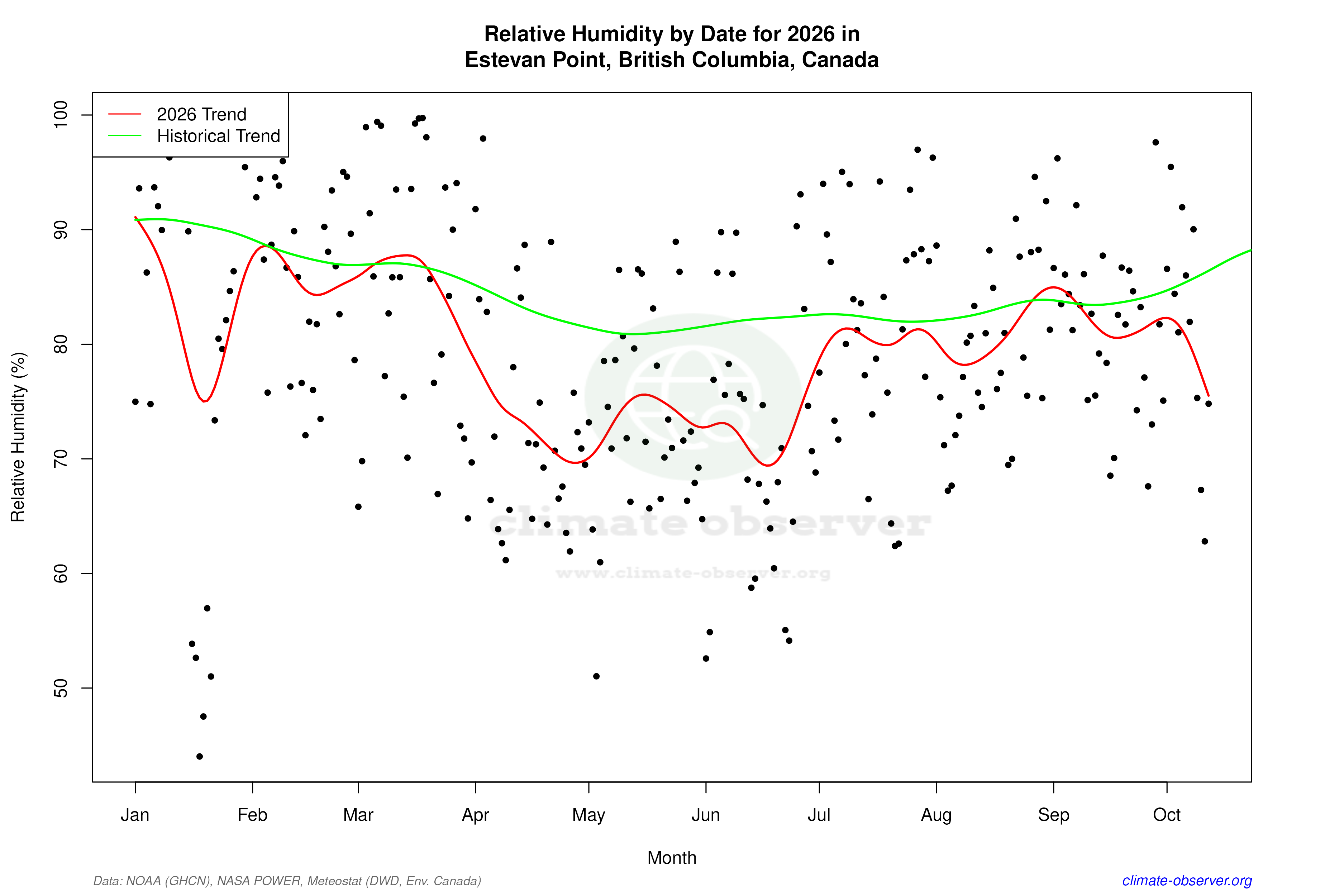

Max Temperature this Year | 1 of 6
Climate 12-Month Moving Averages
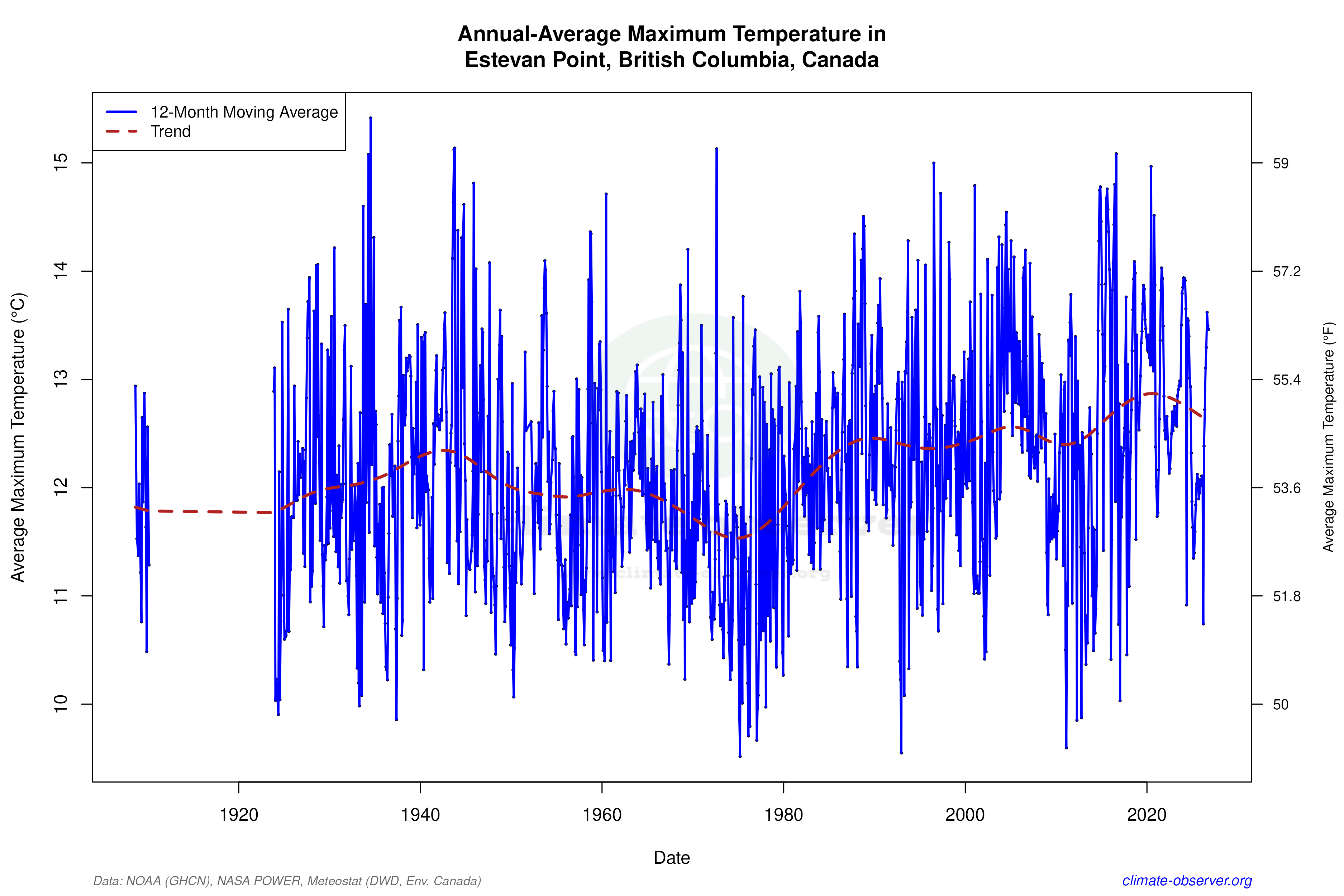
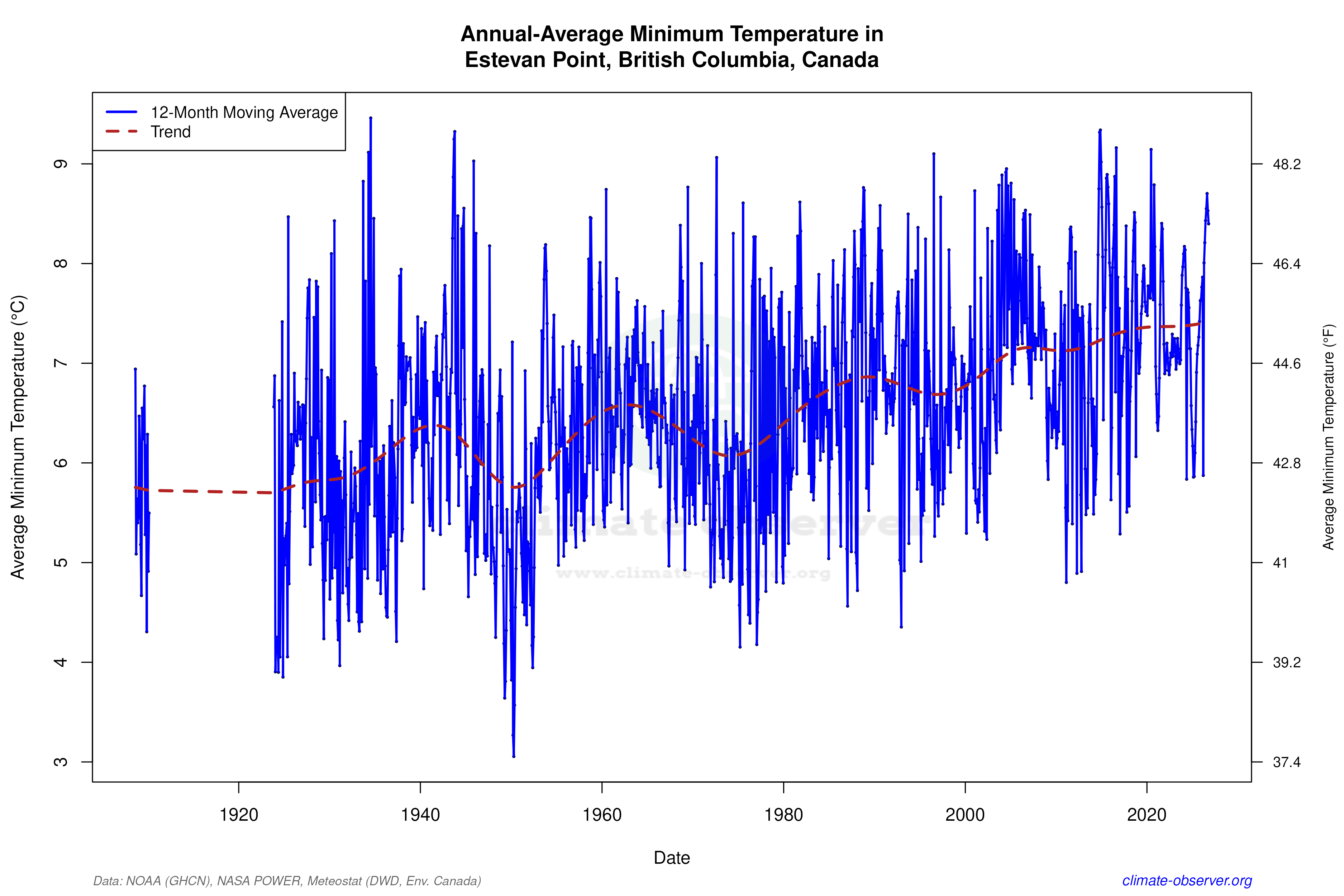
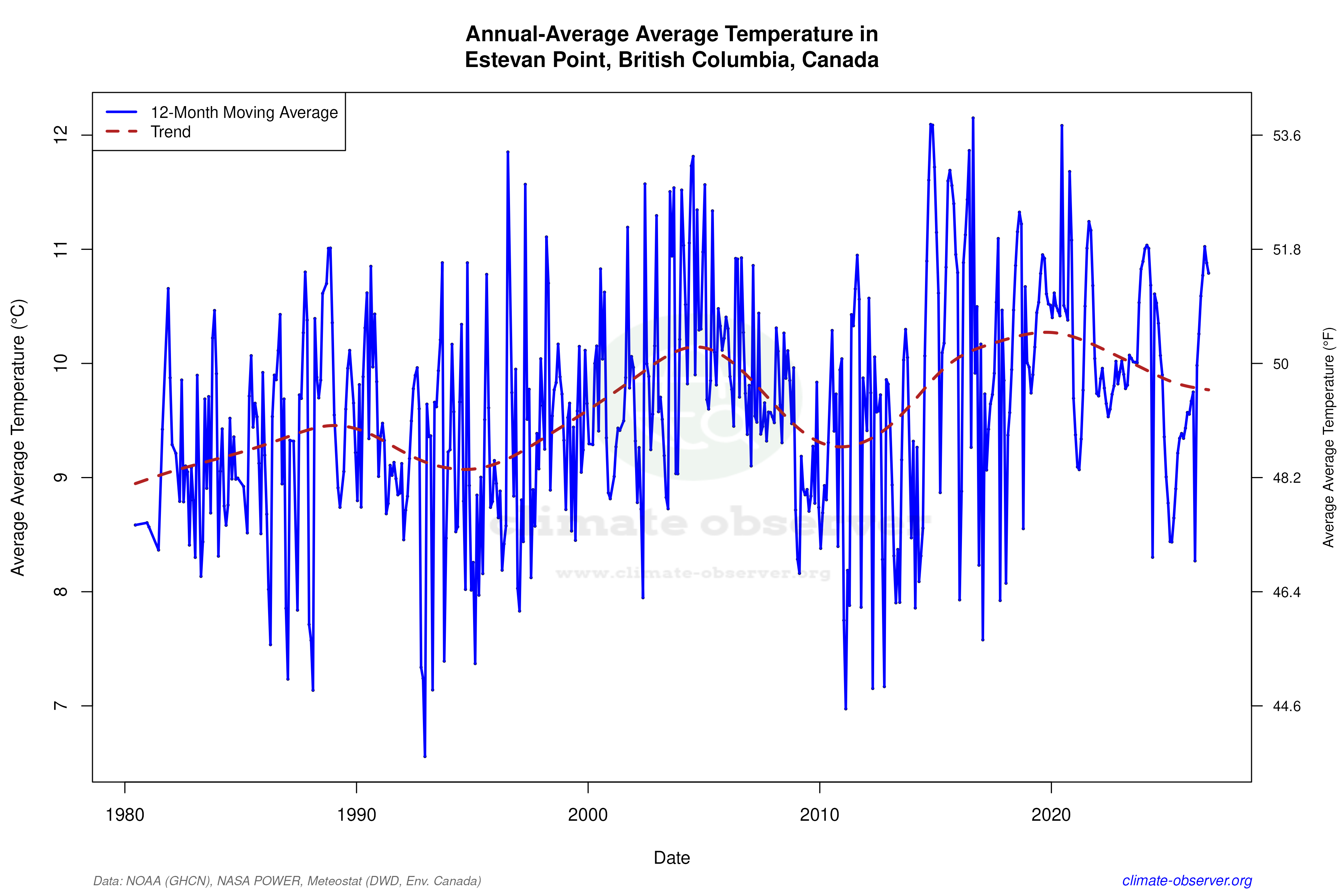
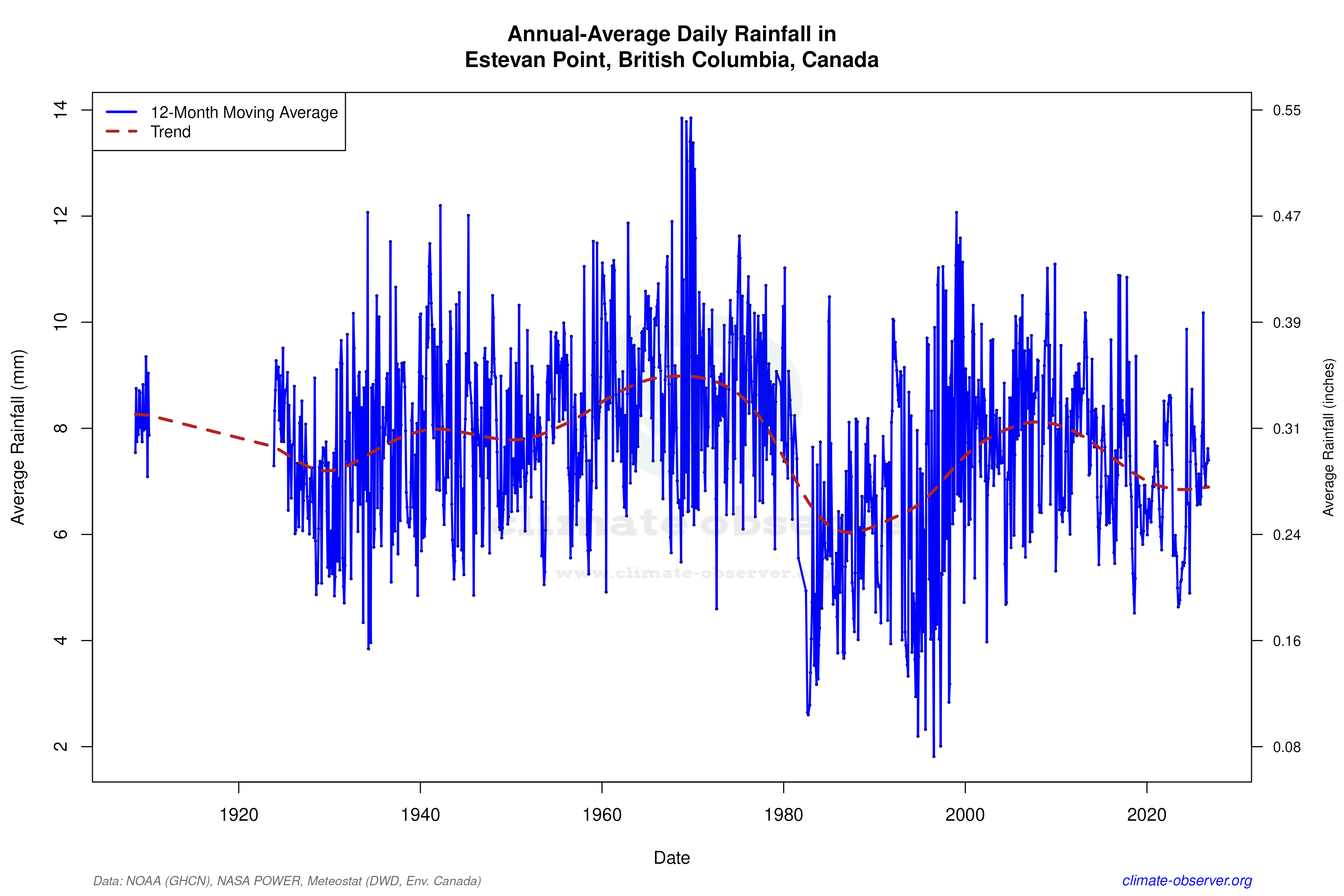
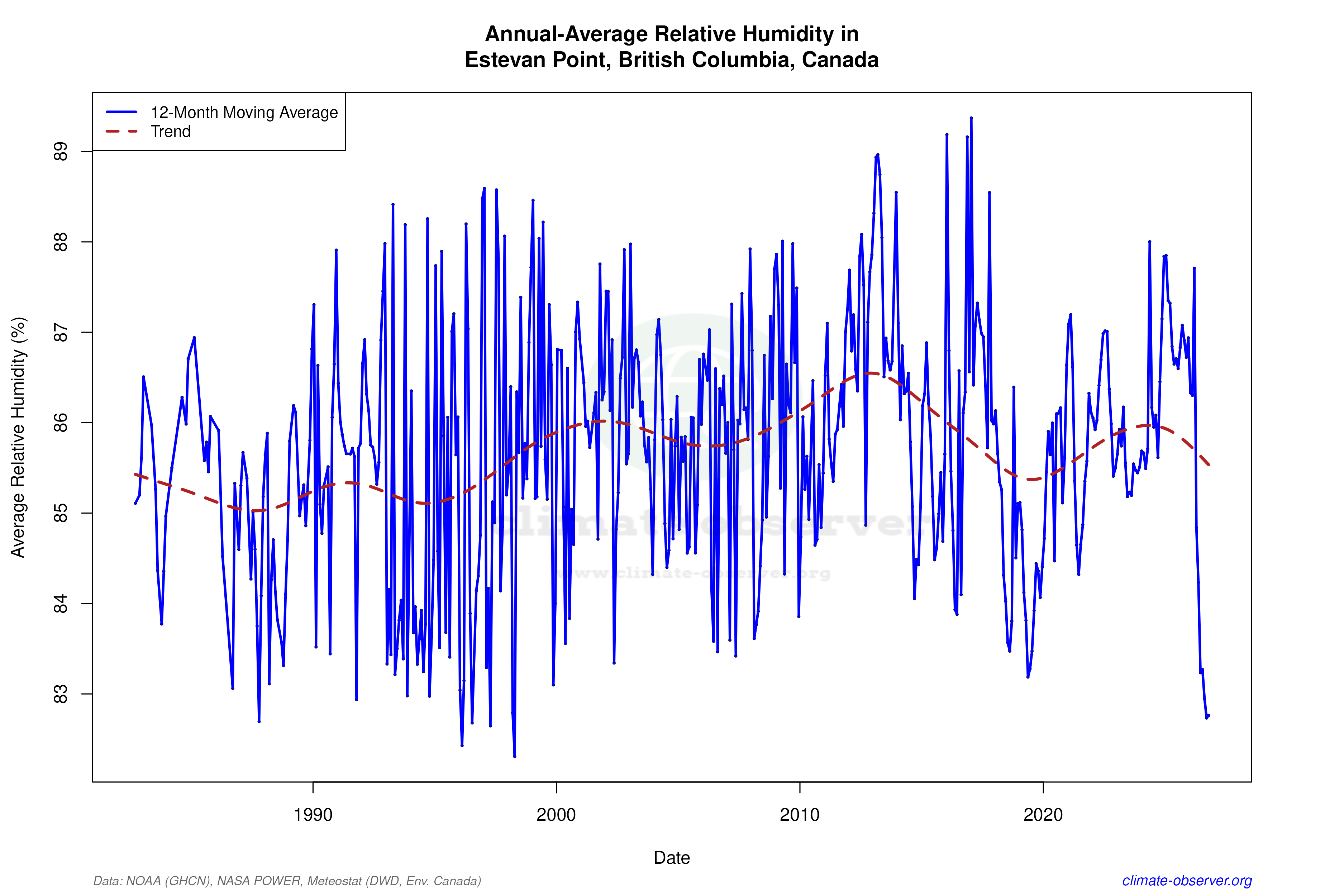

Max Temperature 12-Month MA | 1 of 6
Daily Data Points and Averages Throughout the Year
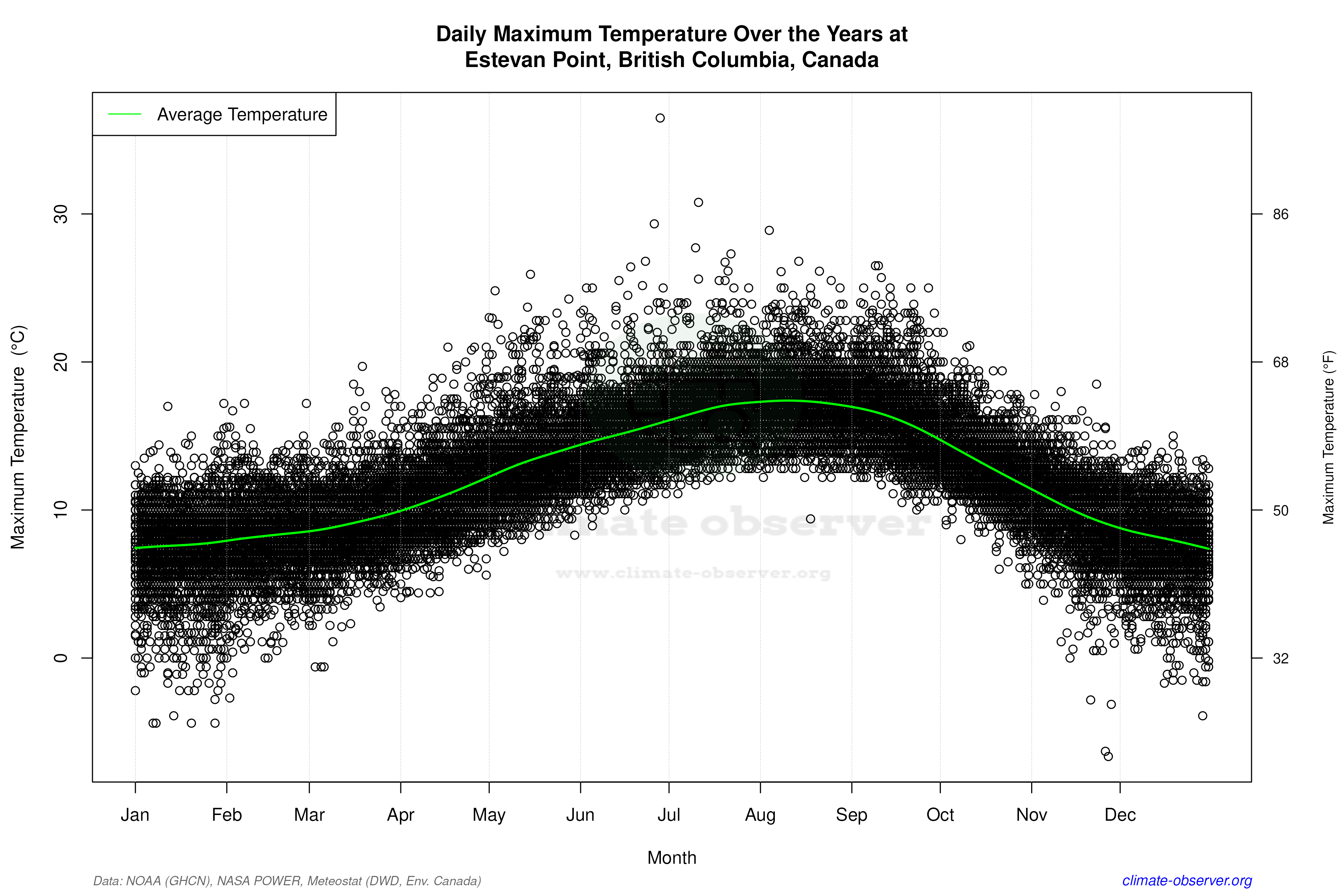
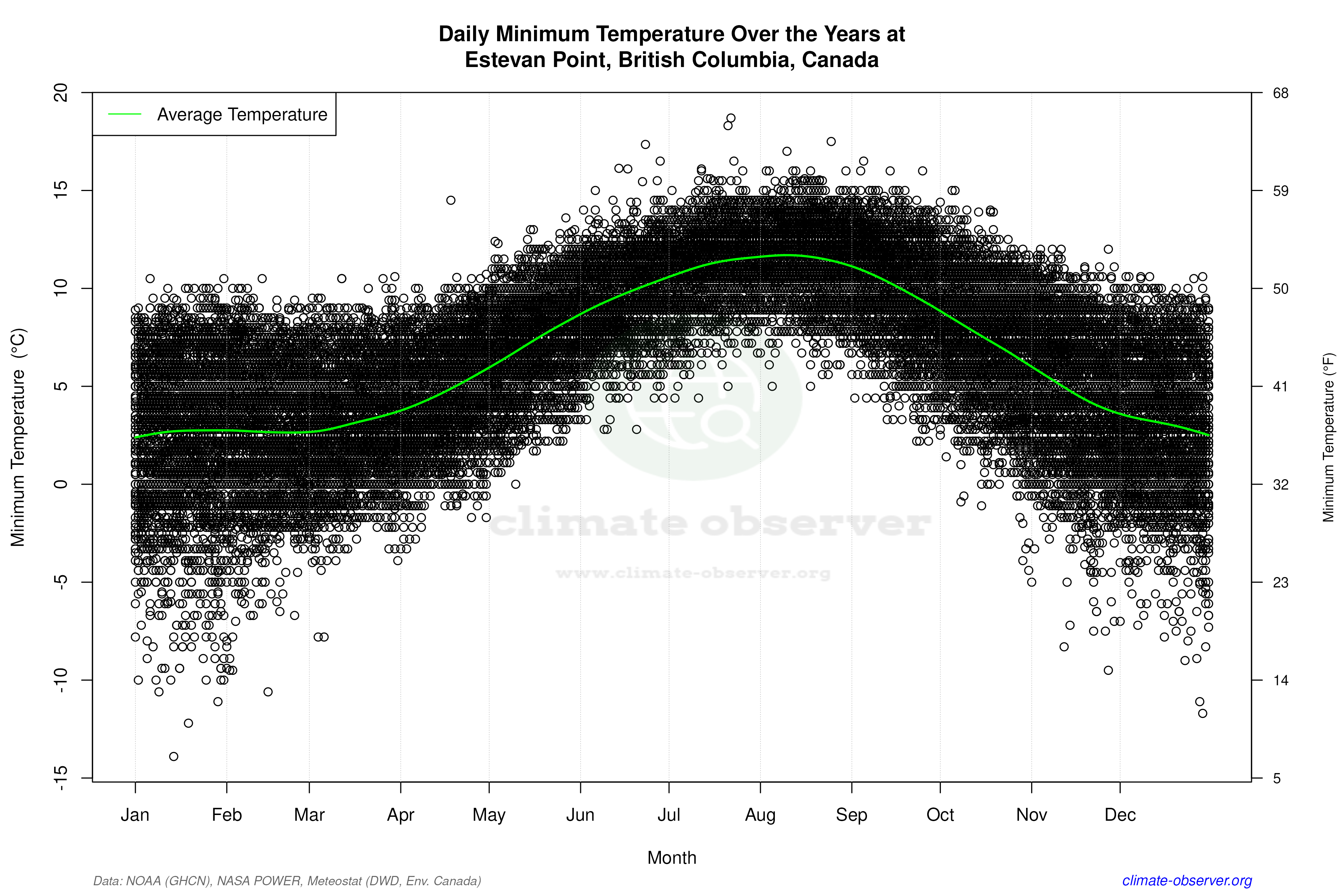
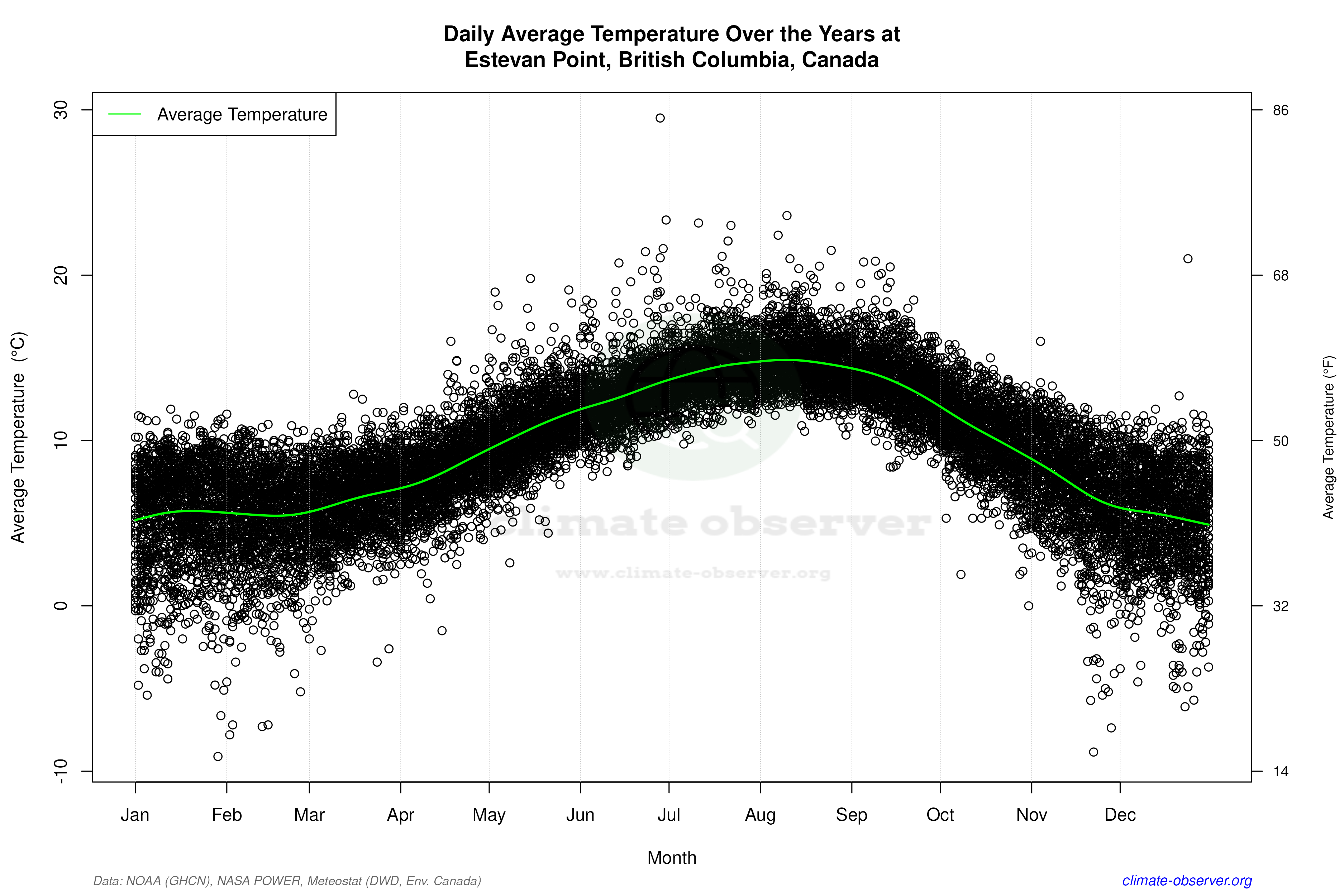
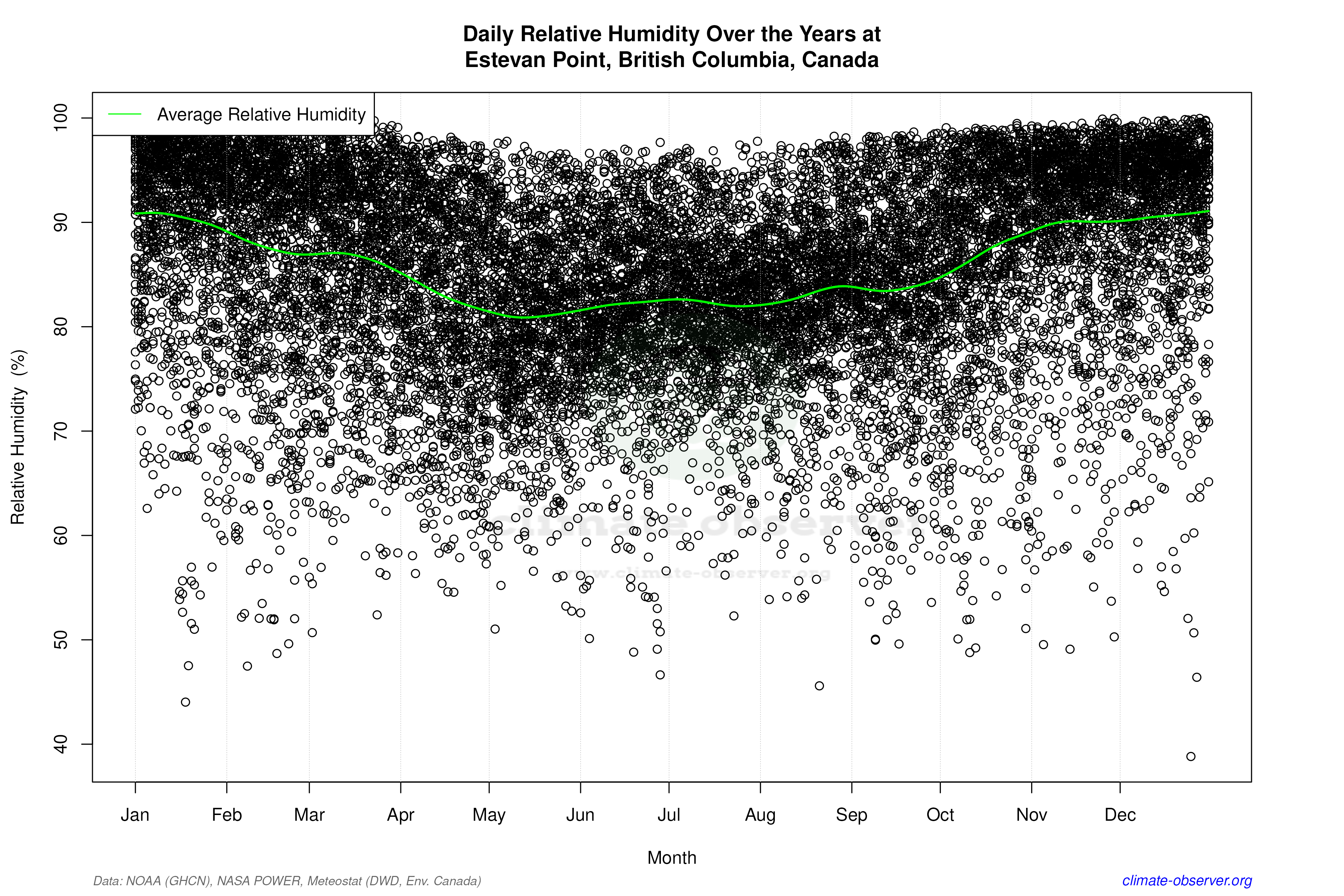

Average Max Temperature Throughout Year | 1 of 5


