Climate for Station: Wu Lu Mu Qi, Xinjiang Uygur, China
Loading live weather...
Climate Analysis & Overview
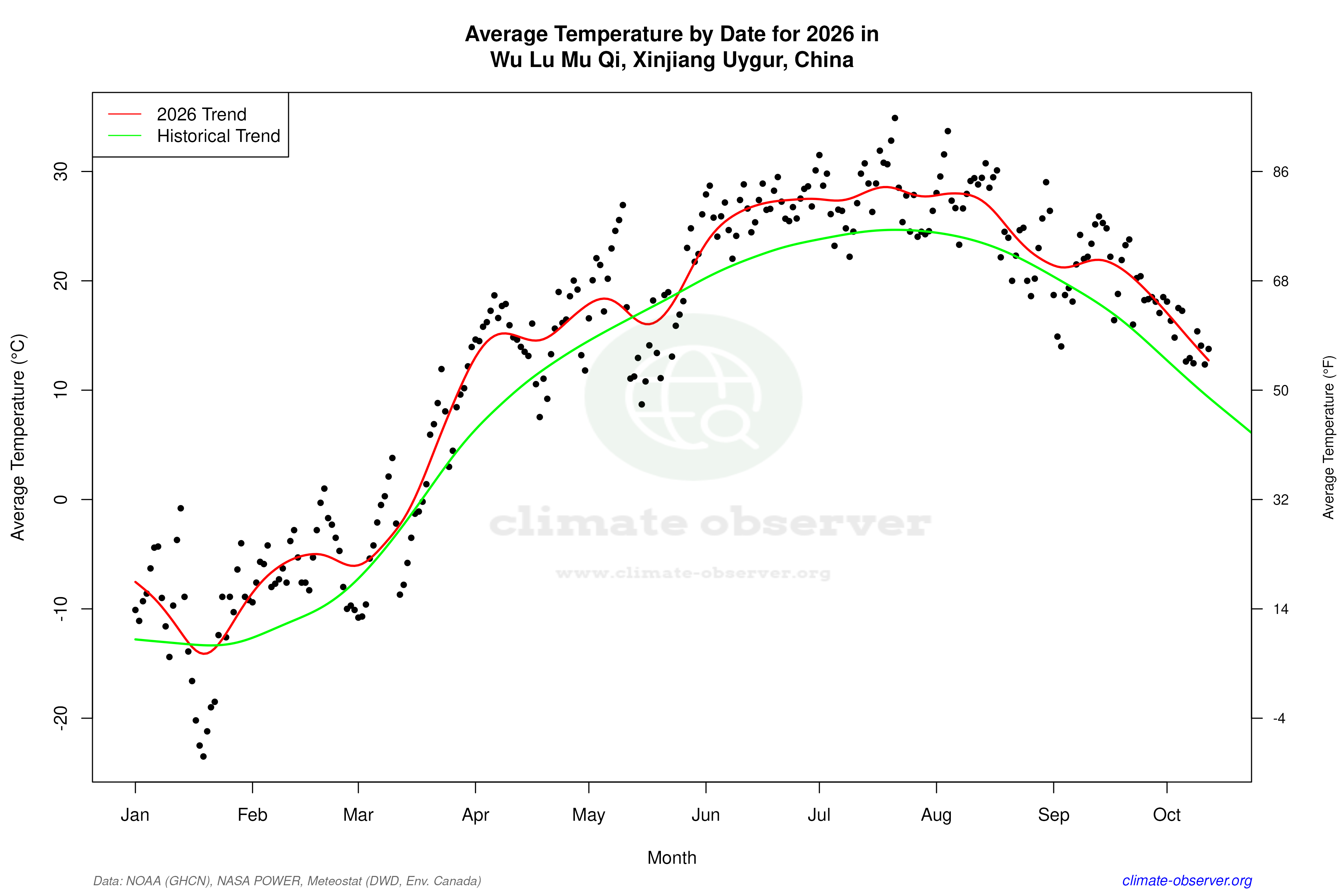
Wu Lu Mu Qi, located in the heart of Xinjiang, China, is experiencing a complex climate narrative marked by a warming trend in high temperatures and a slight cooling in lows over the past decade. The region's precipitation pattern has become more evenly distributed, reflecting a shift towards a more balanced hydrological cycle.
A Warming Highs Trend
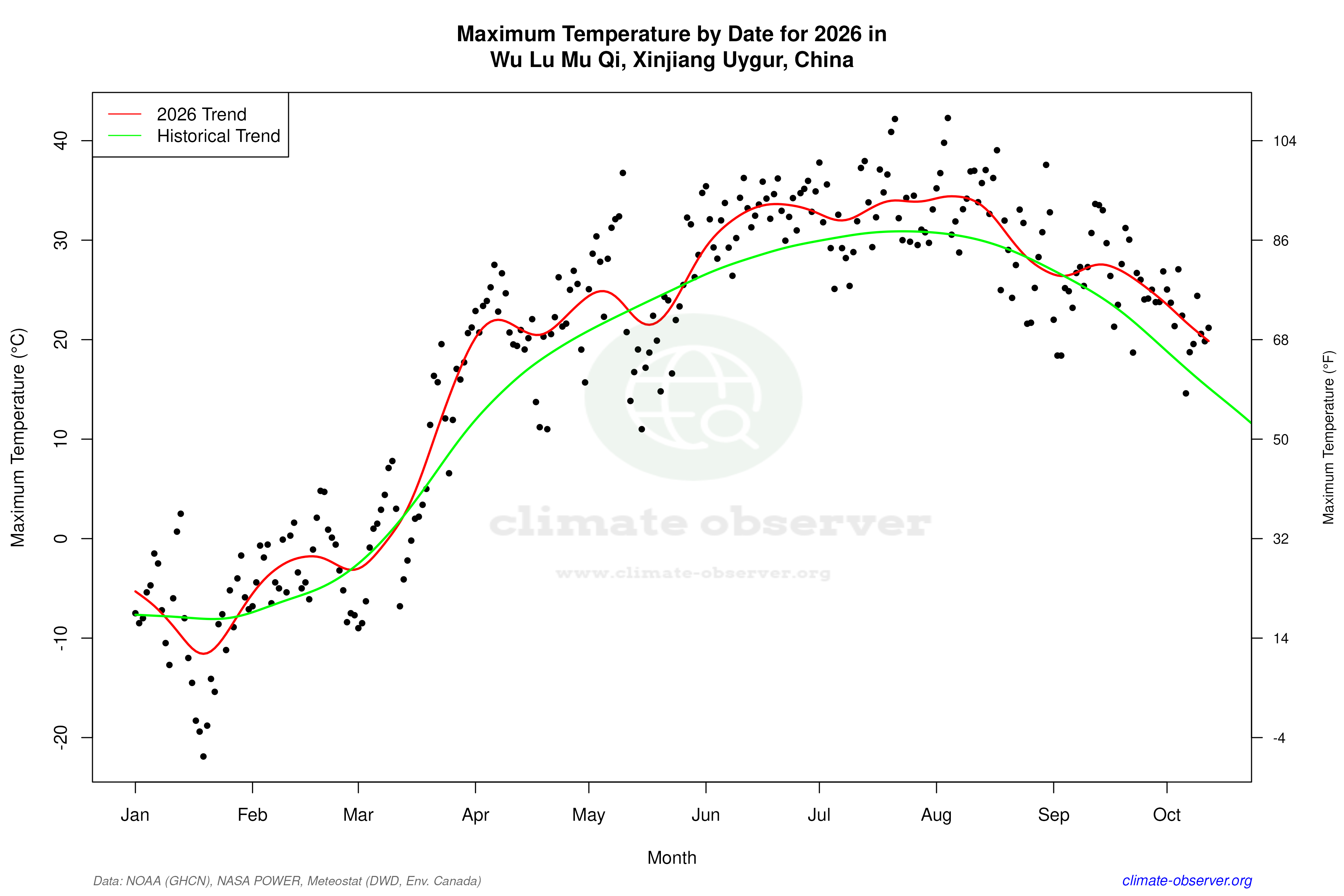
Wu Lu Mu Qi, situated at 43.8°N, 87.65°E, falls under the cold semi-arid climate classification (BSk) according to the Köppen system. The city is nestled in the foothills of the Tianshan Mountains, which significantly influence its climate by blocking moist air masses and contributing to its arid conditions. Over the past decade, high temperatures have shown a warming trend of 0.28°C (0.50°F). This is consistent with the all-time warming trend of 0.31°C (0.56°F) in high temperatures, indicating a persistent rise in heat levels in the region.
Cooling Lows Amidst Warming Highs
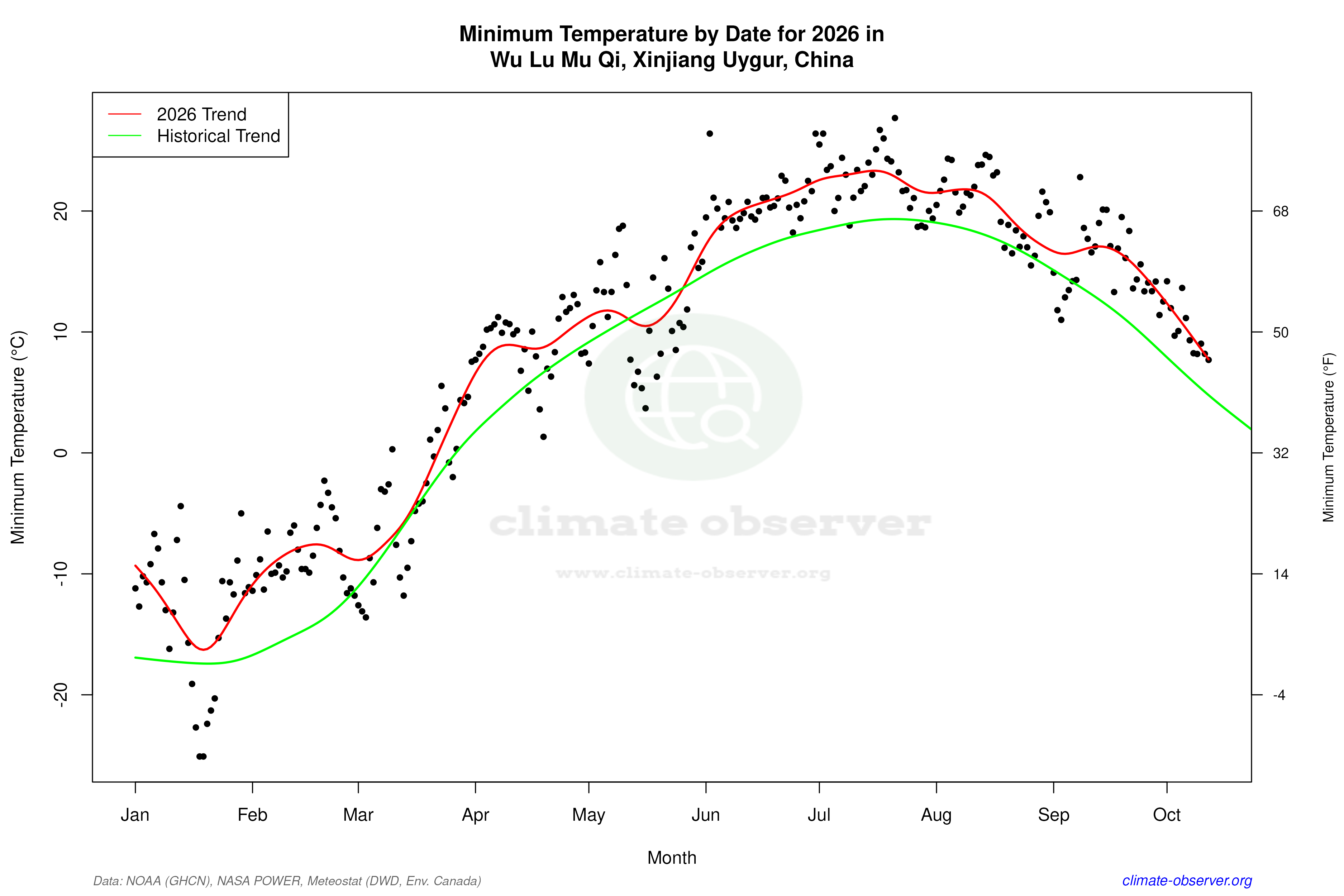
Interestingly, while high temperatures have warmed, low temperatures have experienced a slight cooling over the past decade, with a decrease of 0.06°C (0.11°F). This contrasts with the all-time trend, where lows have actually warmed by 0.49°C (0.88°F). This divergence suggests a complex interplay of local climatic factors, possibly influenced by the mountainous terrain and urban heat effects, which may be moderating nighttime temperatures.
Extremes of Temperature
The region is no stranger to temperature extremes, with recorded highs reaching 42.1°C (107.8°F) and lows plummeting to -41.5°C (-42.7°F). These extremes highlight the significant thermal oscillations characteristic of Wu Lu Mu Qi's climate, driven by its geographic location and topographical influences.
Precipitation Patterns: A More Even Distribution
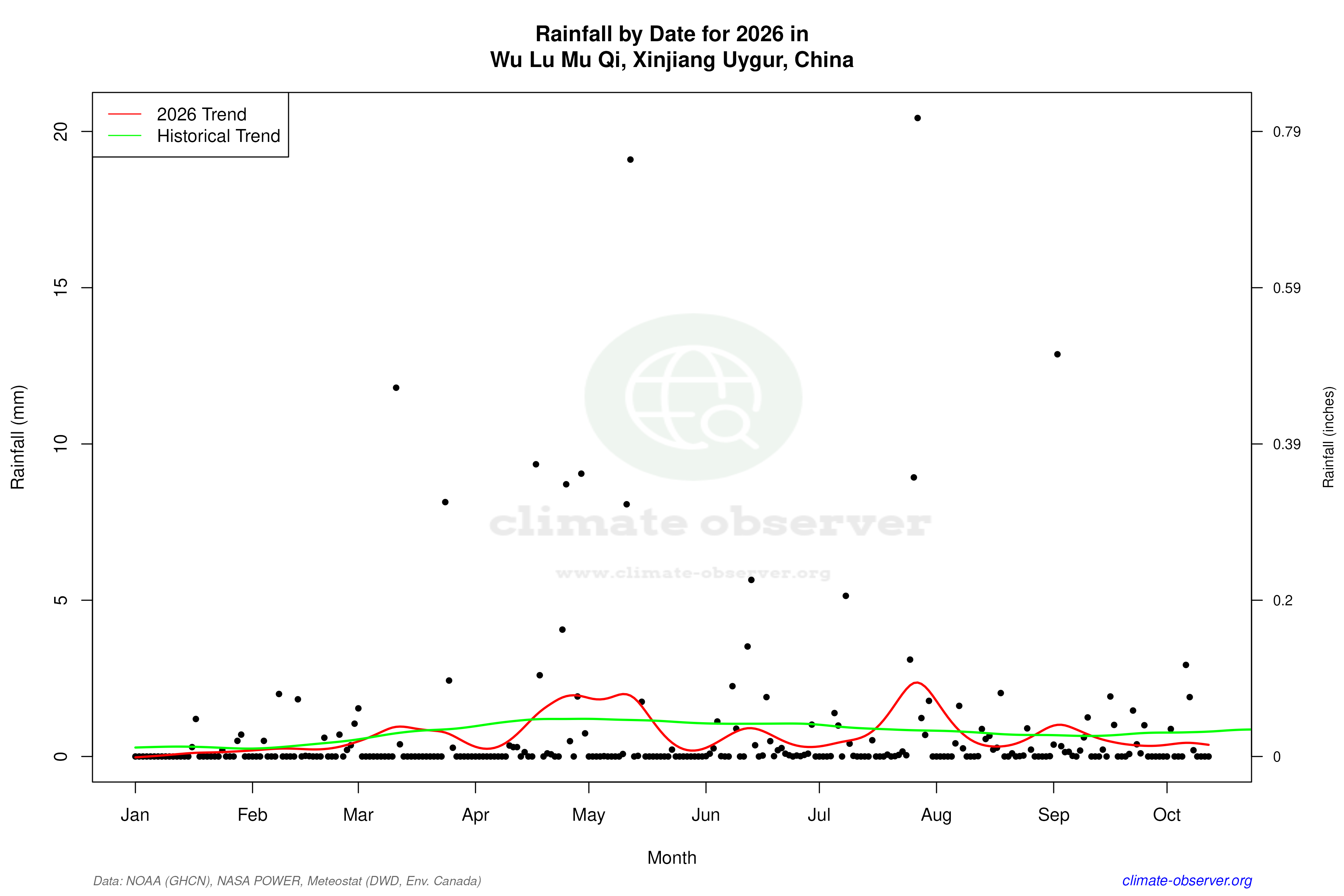
The Precipitation Concentration Index (PCI), which measures how precipitation is distributed over time, has decreased from a baseline of 13.4 to a current value of 11.4. This indicates a more even distribution of rainfall events, suggesting a shift towards less concentrated and more frequent precipitation. Such a change could be beneficial for agriculture and water management in the region, aligning with China's broader climate goals of enhancing water resource sustainability.
Regional Implications and Climate Goals
These climatic shifts in Wu Lu Mu Qi occur against the backdrop of China's regional climate strategies, which aim to mitigate the impacts of climate change while promoting sustainable development. The warming trend in high temperatures and the more evenly distributed precipitation patterns could influence local agricultural practices and urban planning, necessitating adaptive measures to ensure resilience in the face of ongoing climatic changes.
Station Statistics
10-Year Trend
High: +1.25 °C/decade
Low: +1.26 °C/decade
Rain: -0.57 mm/decade
25-Year Trend
High: +0.87 °C/decade
Low: +0.48 °C/decade
Rain: +0.12 mm/decade
50-Year Trend
High: +0.39 °C/decade
Low: +0.55 °C/decade
Rain: +0.07 mm/decade
All-Time Trend
High: +0.16 °C/decade
Low: +0.34 °C/decade
Rain: +0.04 mm/decade
Percentage Above-Average Days
Last 12 Months: 55.6%
This Year: 63.5%
Precipitation Concentration Index (PCI) ℹ️
Last 12 Months: 11.1
Historical Average: 12.6
Percentile Rank of Last 12 Months ℹ️
High: 58th percentile
Low: 81st percentile
Rain: 87th percentile
Change in Variance ℹ️
High: -5.8%
Low: -7.4%
Intraday: +19.7%
Data Coverage
100.0%
First Year of Data
1951
Station Location
Historical Weather Records
| Max High | Avg High | Min High | Max Avg | Avg Avg | Min Avg | Max Low | Avg Low | Min Low | Max Precipitation | Avg Precipitation | Max Snow | Avg Snow | |
|---|---|---|---|---|---|---|---|---|---|---|---|---|---|
| Record | 42.3 °C | — | -27.0 °C | 34.9 °C | — | -35.3 °C | 31.0 °C | — | -41.5 °C | 57.7 mm | — | — | — |
| January | 9.9 °C | -8.0 °C | -26.1 °C | 3.9 °C | -13.2 °C | -30.1 °C | -2.0 °C | -17.3 °C | -34.1 °C | 13.7 mm | 0.3 mm | — | — |
| February | 13.5 °C | -5.3 °C | -27.0 °C | 6.9 °C | -10.4 °C | -35.3 °C | -0.1 °C | -14.4 °C | -41.5 °C | 17.1 mm | 0.4 mm | — | — |
| March | 27.0 °C | 4.1 °C | -19.8 °C | 19.2 °C | -0.7 °C | -28.0 °C | 15.4 °C | -4.5 °C | -33.4 °C | 30.0 mm | 0.8 mm | — | — |
| April | 34.0 °C | 16.9 °C | -5.8 °C | 26.7 °C | 10.7 °C | -10.2 °C | 21.6 °C | 5.6 °C | -14.9 °C | 38.4 mm | 1.2 mm | — | — |
| May | 38.0 °C | 23.6 °C | 3.9 °C | 30.5 °C | 17.2 °C | 0.1 °C | 27.0 °C | 11.8 °C | -2.4 °C | 39.1 mm | 1.1 mm | — | — |
| June | 41.0 °C | 28.5 °C | 12.9 °C | 32.3 °C | 22.3 °C | 7.8 °C | 27.0 °C | 16.9 °C | 4.6 °C | 57.7 mm | 1.1 mm | — | — |
| July | 42.2 °C | 30.6 °C | 13.9 °C | 34.9 °C | 24.4 °C | 12.7 °C | 31.0 °C | 19.1 °C | 8.8 °C | 35.6 mm | 0.9 mm | — | — |
| August | 42.3 °C | 29.4 °C | 14.4 °C | 33.9 °C | 22.9 °C | 10.0 °C | 30.7 °C | 17.6 °C | 5.0 °C | 37.9 mm | 0.7 mm | — | — |
| September | 37.0 °C | 23.5 °C | 6.6 °C | 29.7 °C | 17.1 °C | 0.8 °C | 27.1 °C | 12.0 °C | -5.0 °C | 39.6 mm | 0.7 mm | — | — |
| October | 31.0 °C | 13.9 °C | -5.6 °C | 22.0 °C | 8.2 °C | -7.3 °C | 17.9 °C | 3.7 °C | -12.4 °C | 30.0 mm | 0.8 mm | — | — |
| November | 21.4 °C | 2.5 °C | -25.1 °C | 15.6 °C | -2.1 °C | -31.2 °C | 7.9 °C | -5.5 °C | -33.8 °C | 30.0 mm | 0.8 mm | — | — |
| December | 15.6 °C | -5.5 °C | -25.0 °C | 5.4 °C | -10.3 °C | -33.1 °C | 0.9 °C | -14.0 °C | -38.3 °C | 21.3 mm | 0.5 mm | — | — |
Data Visualisations
Remove WatermarksCurrent Year Climate Trends vs Historical
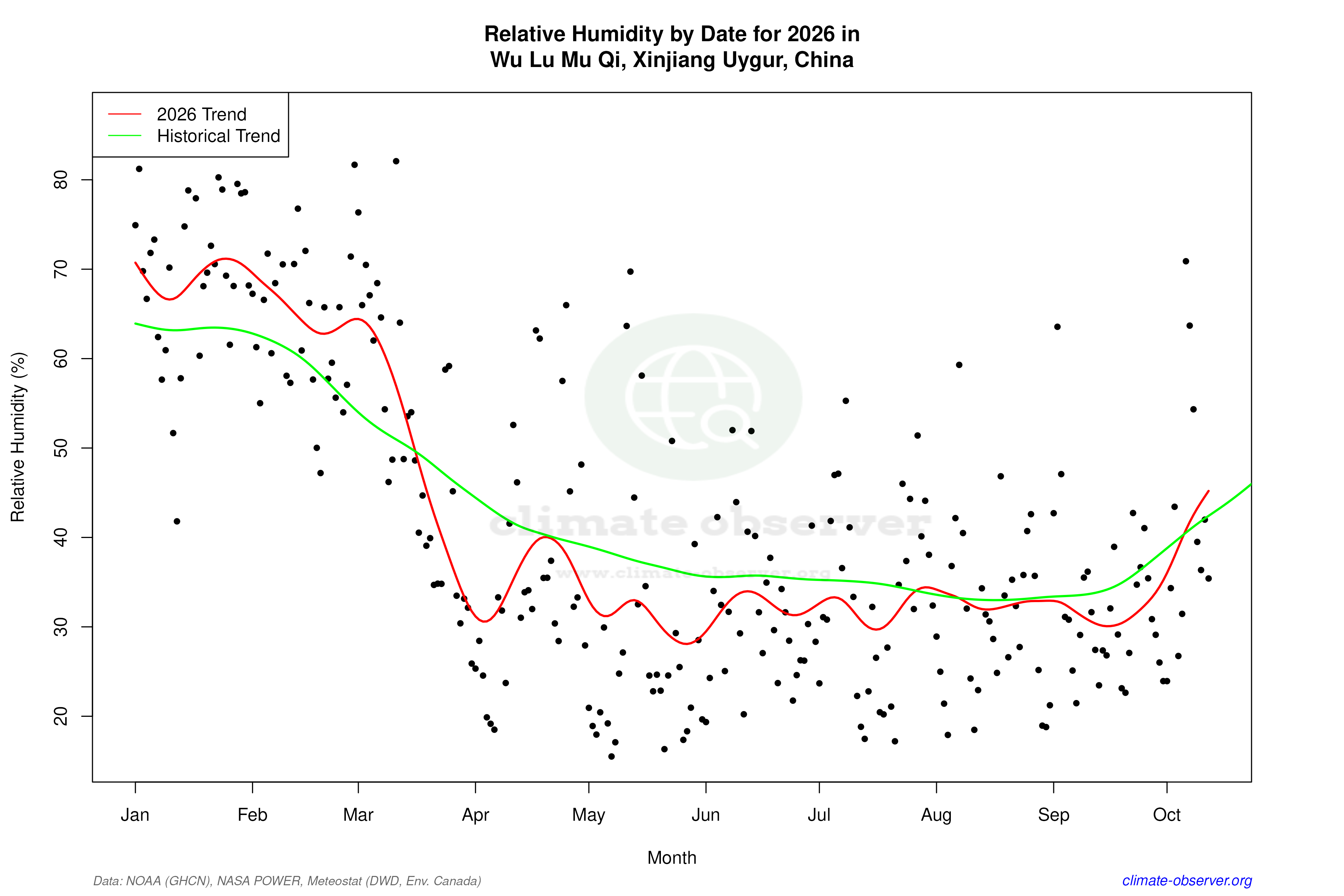

Max Temperature this Year | 1 of 6
Climate 12-Month Moving Averages
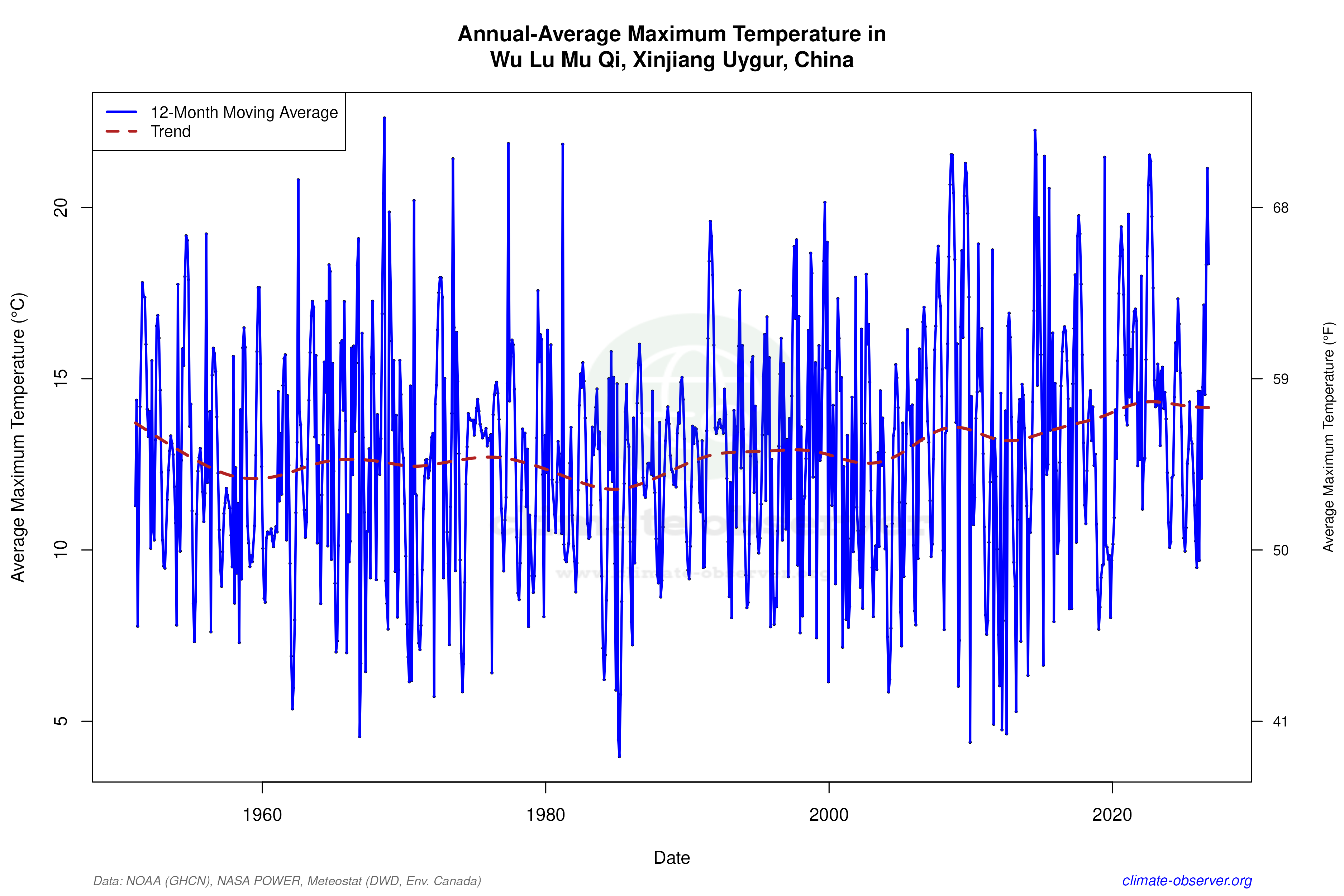
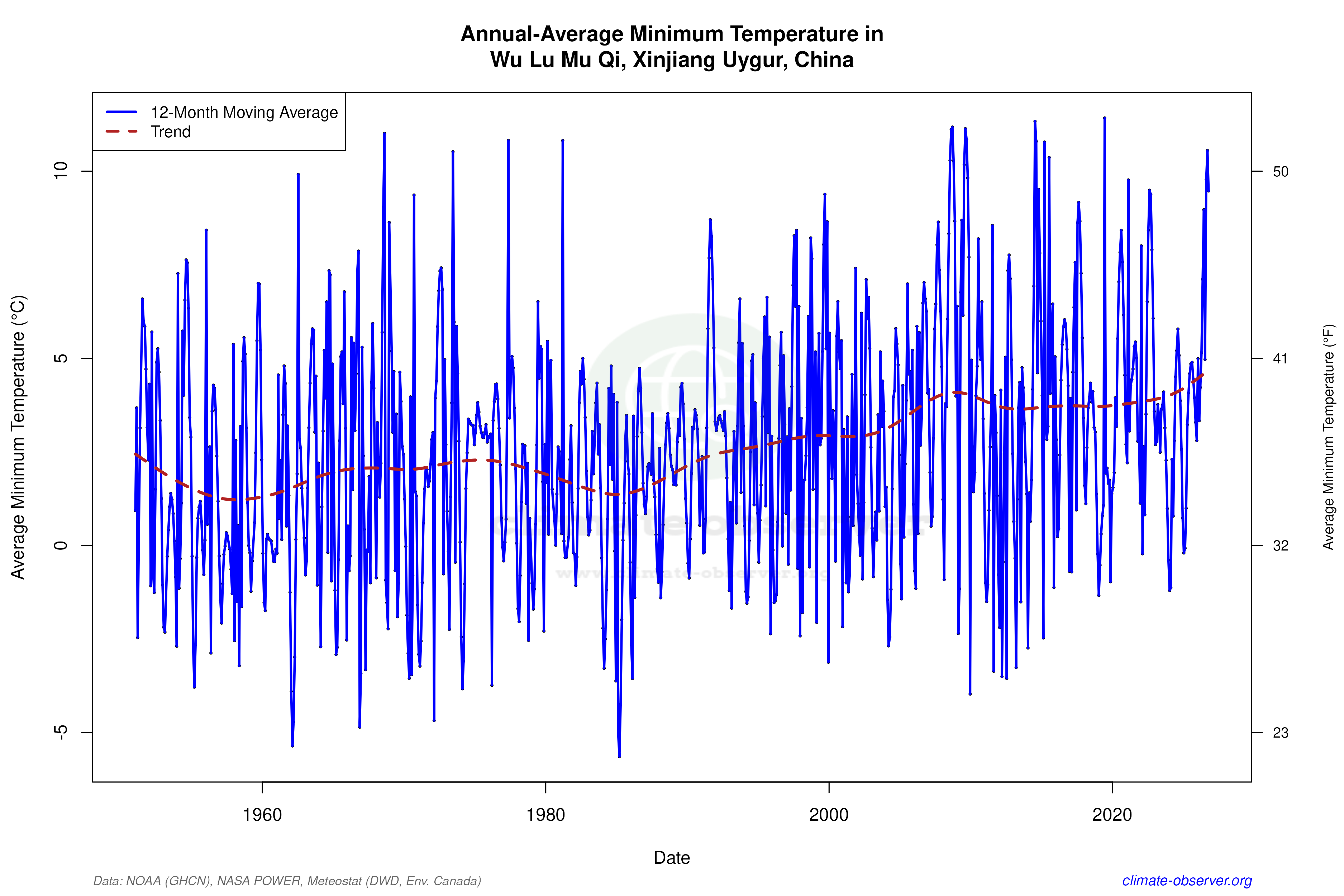
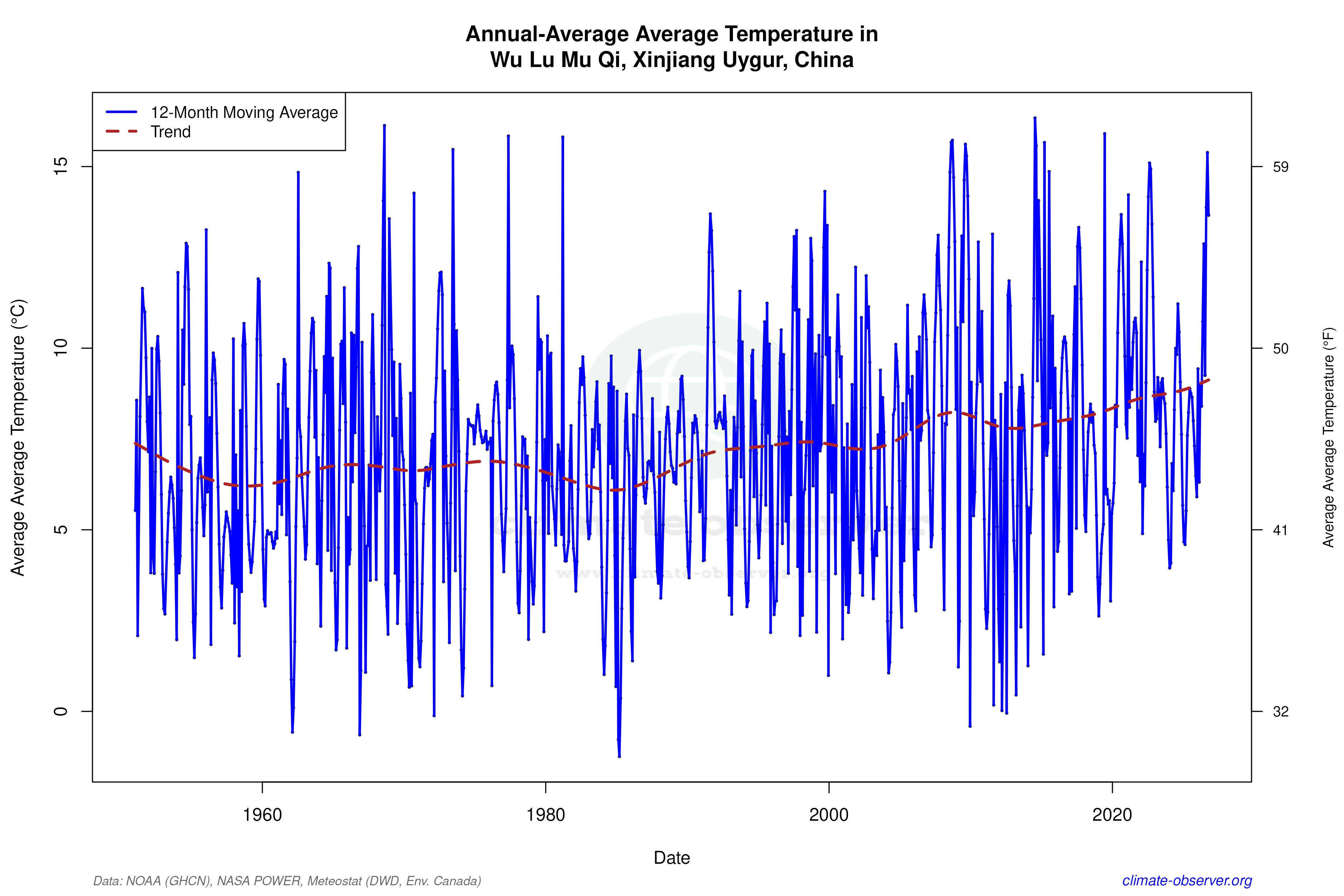
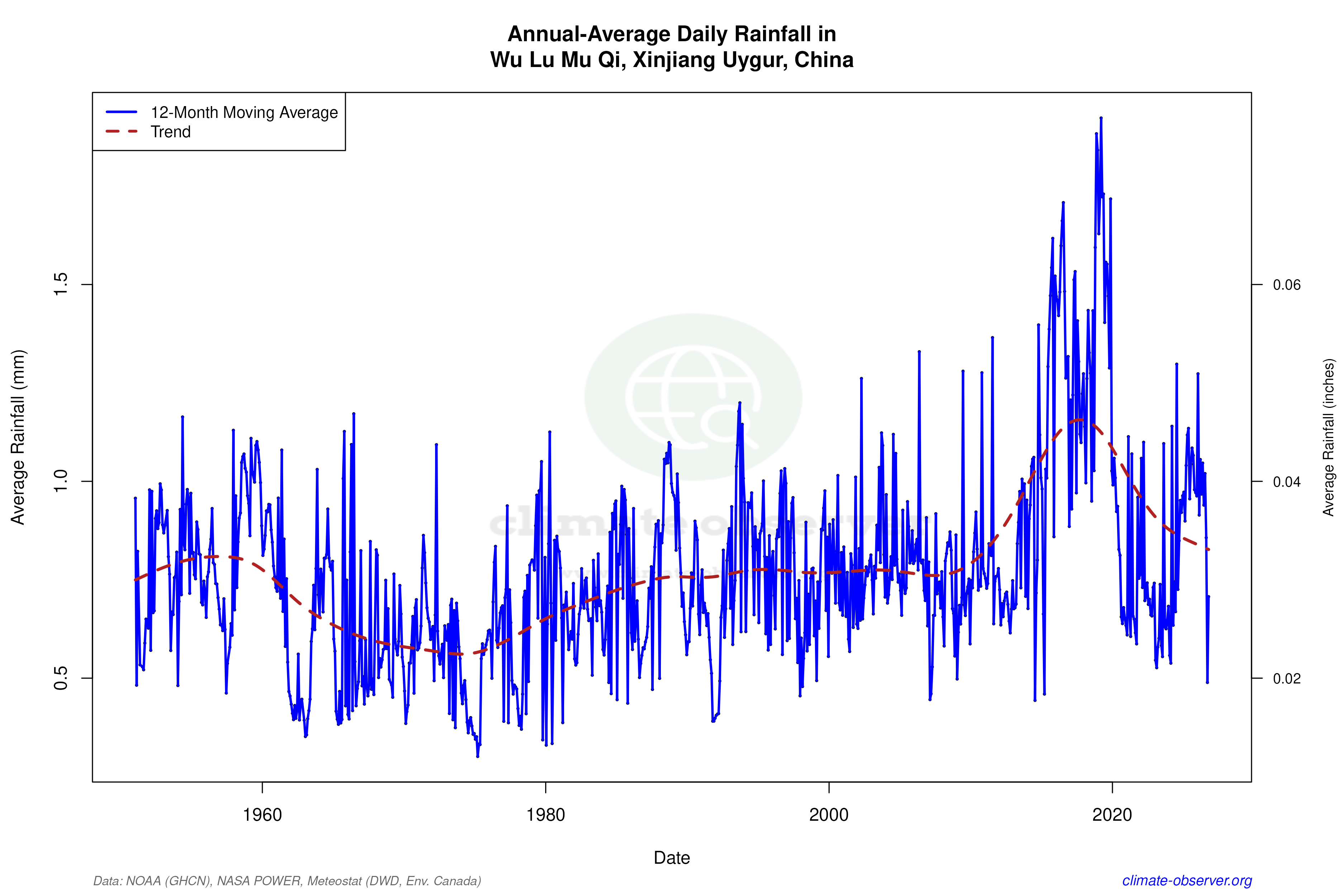
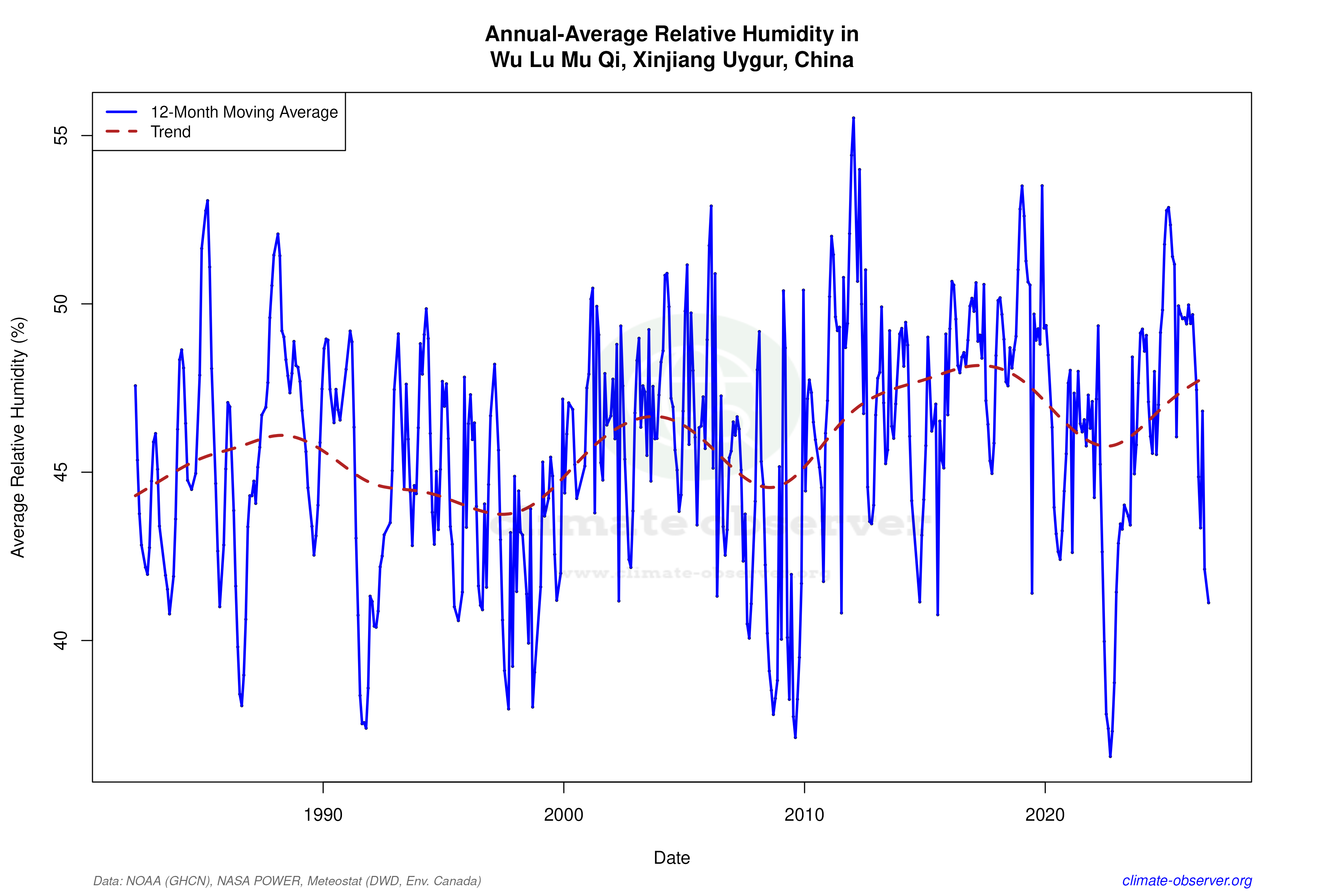

Max Temperature 12-Month MA | 1 of 6
Daily Data Points and Averages Throughout the Year
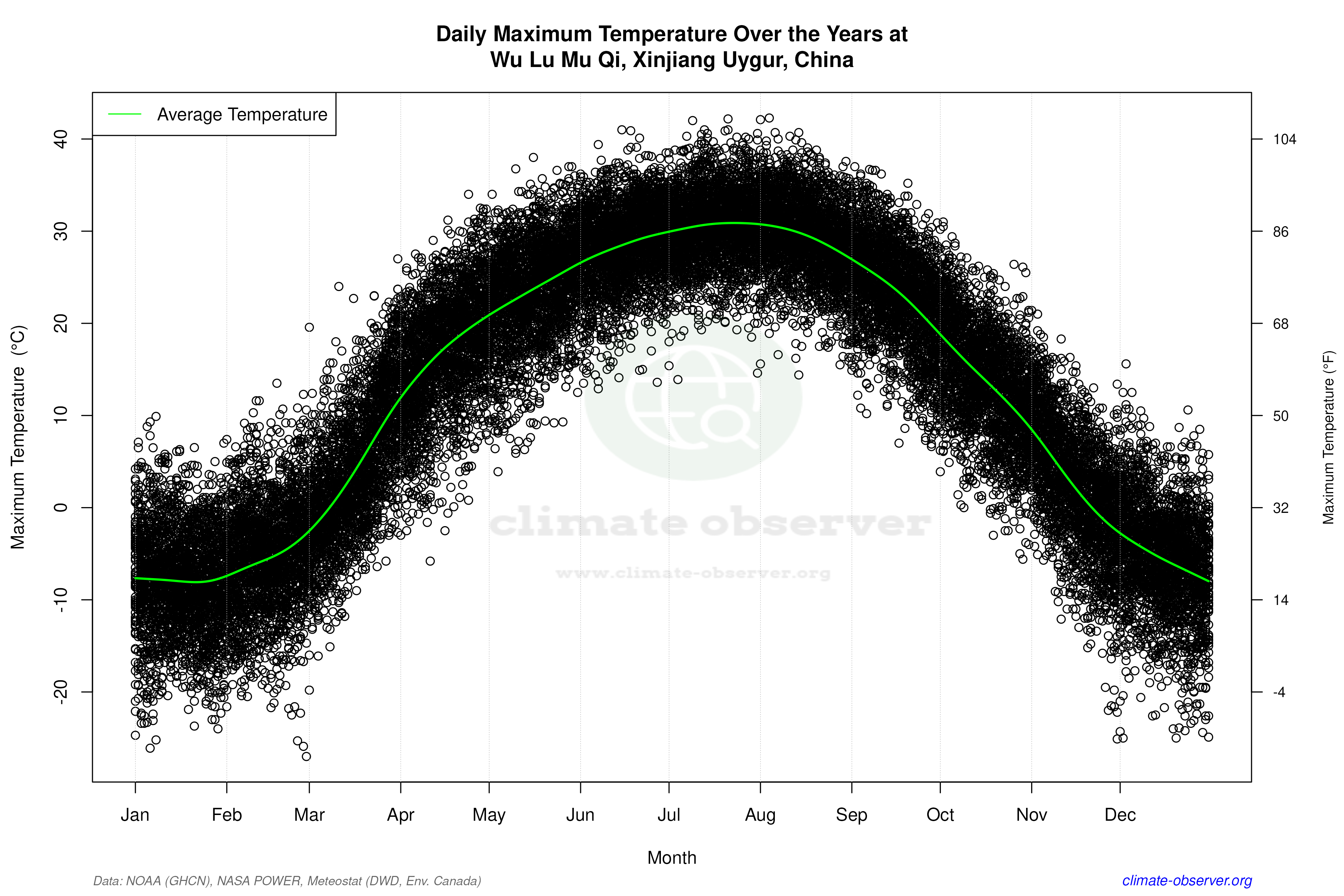
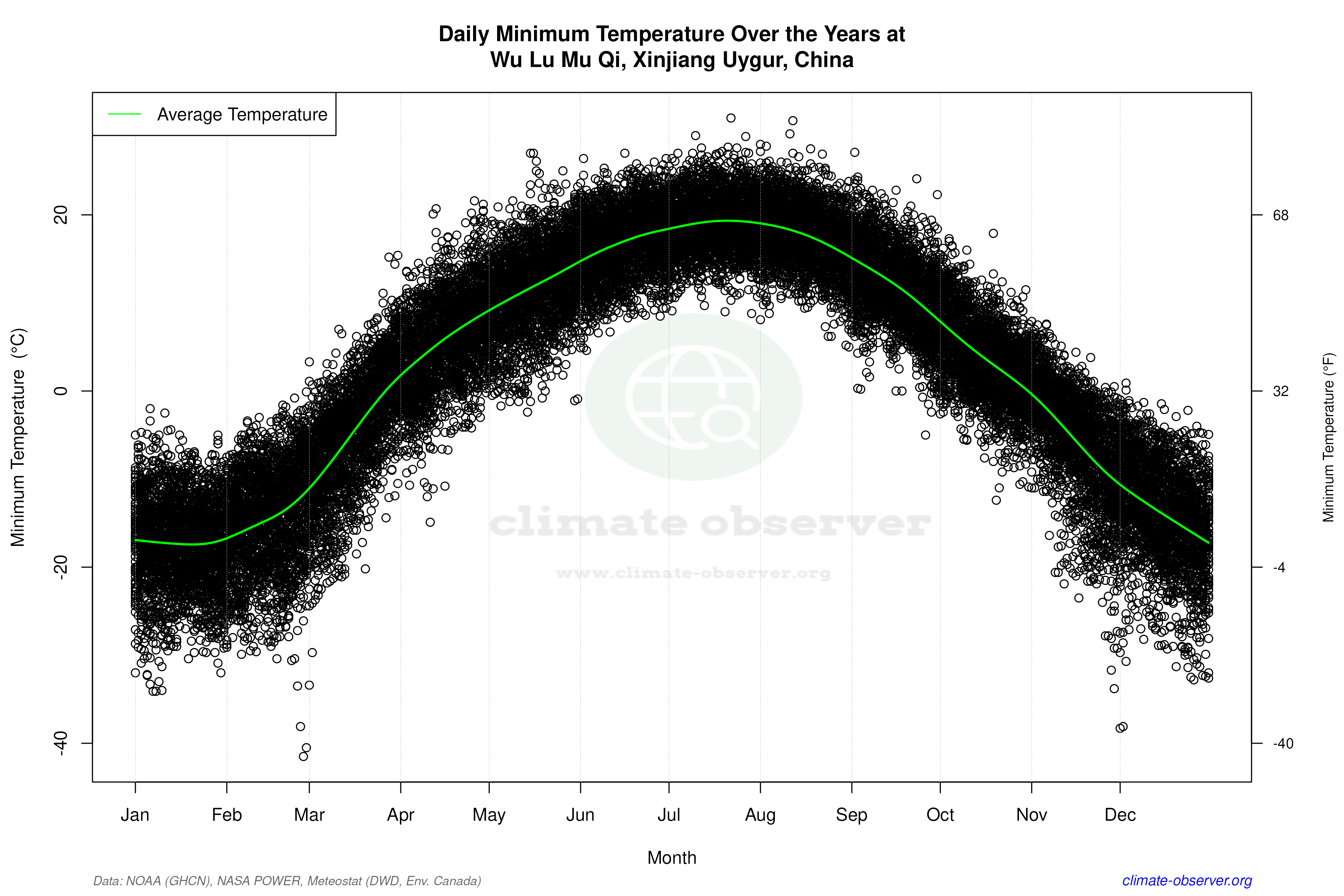
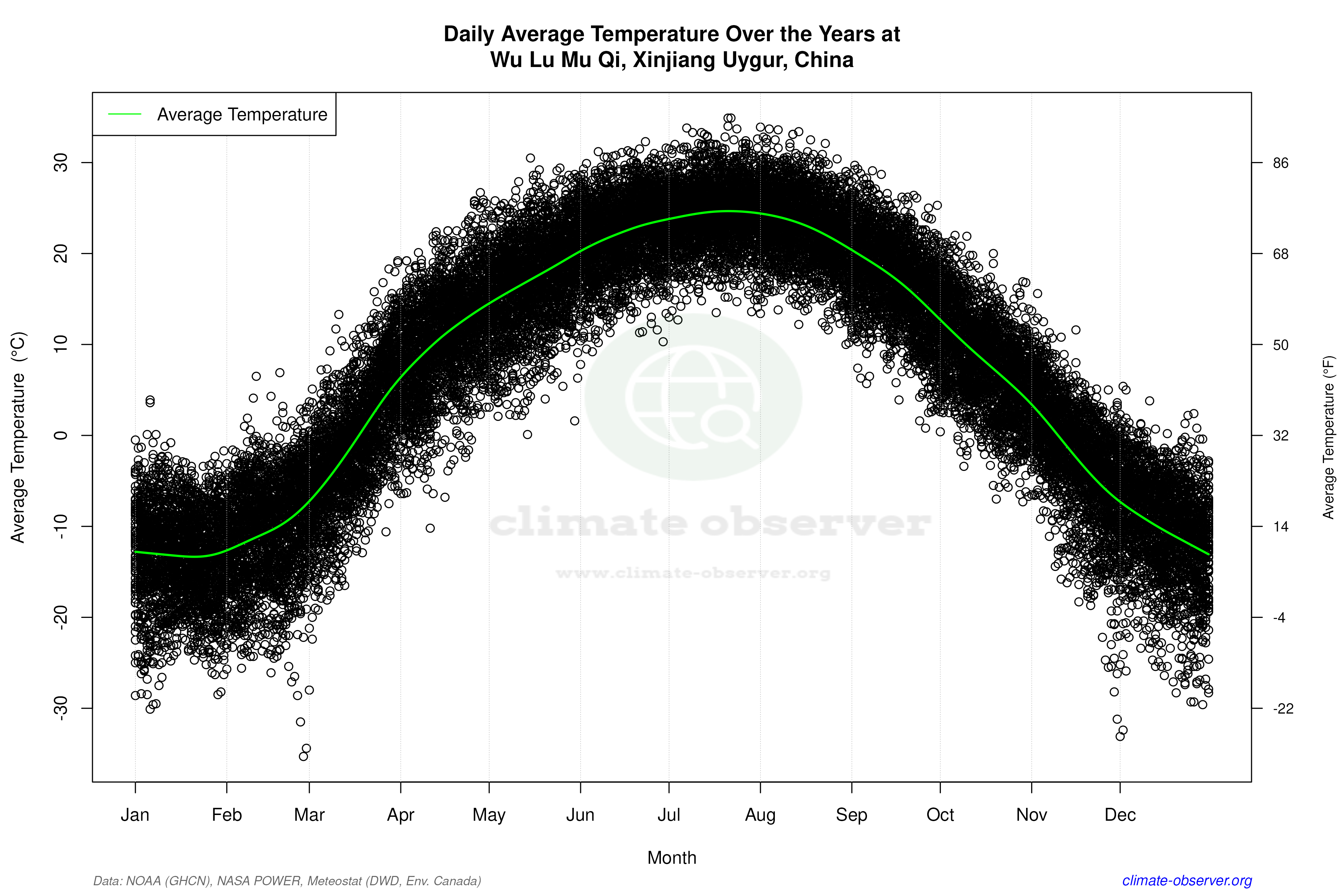
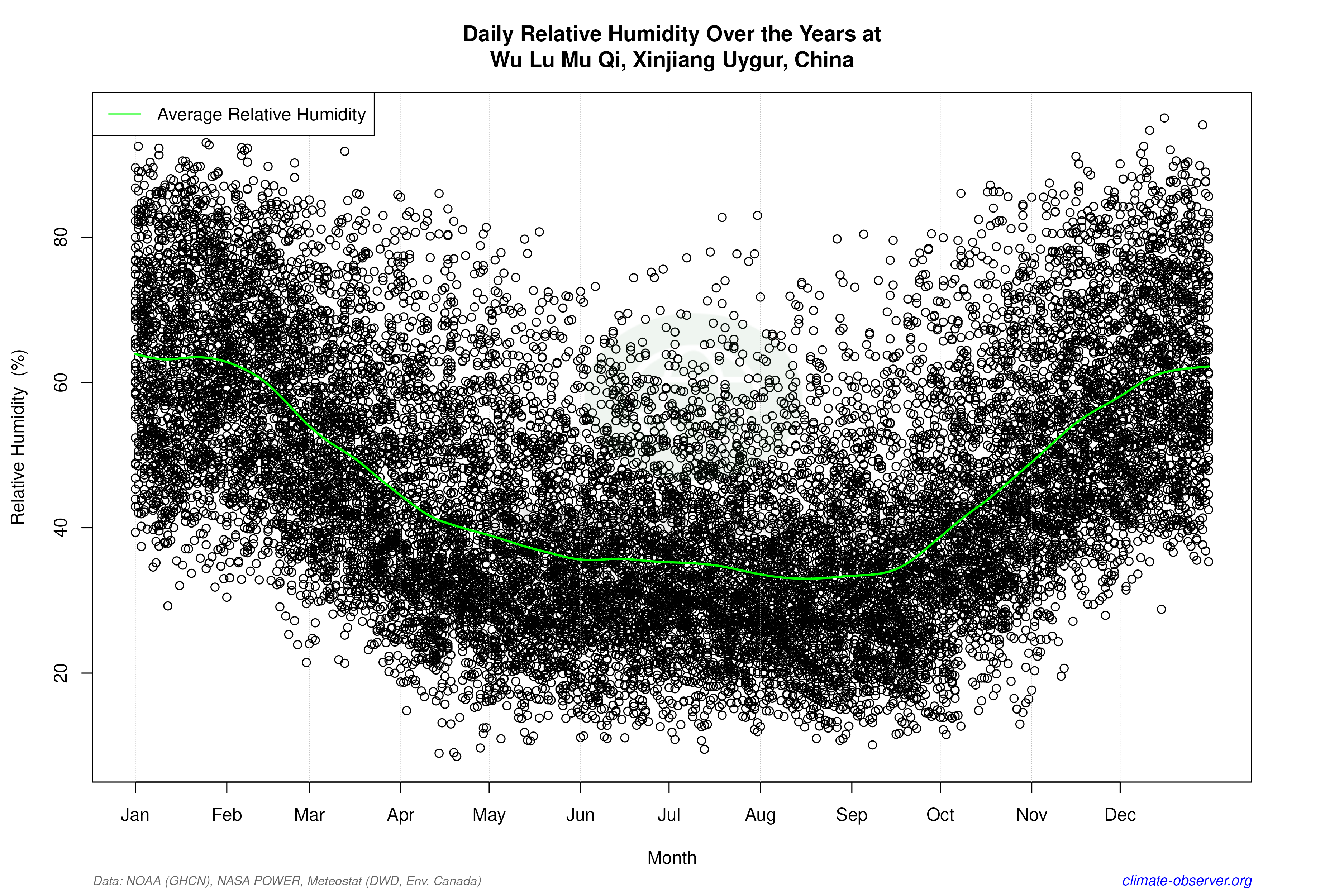

Average Max Temperature Throughout Year | 1 of 5


