Climate for Station: Kashi, Xinjiang Uygur, China
Loading live weather...
Climate Analysis & Overview
Kashi is experiencing a notable warming trend, especially in high temperatures, with a 2.17°C (3.91°F) rise over the past decade. A slight decrease in the Precipitation Concentration Index suggests a more even distribution of rainfall, which could influence local agriculture and water management strategies.
Köppen Climate and Geographical Influence
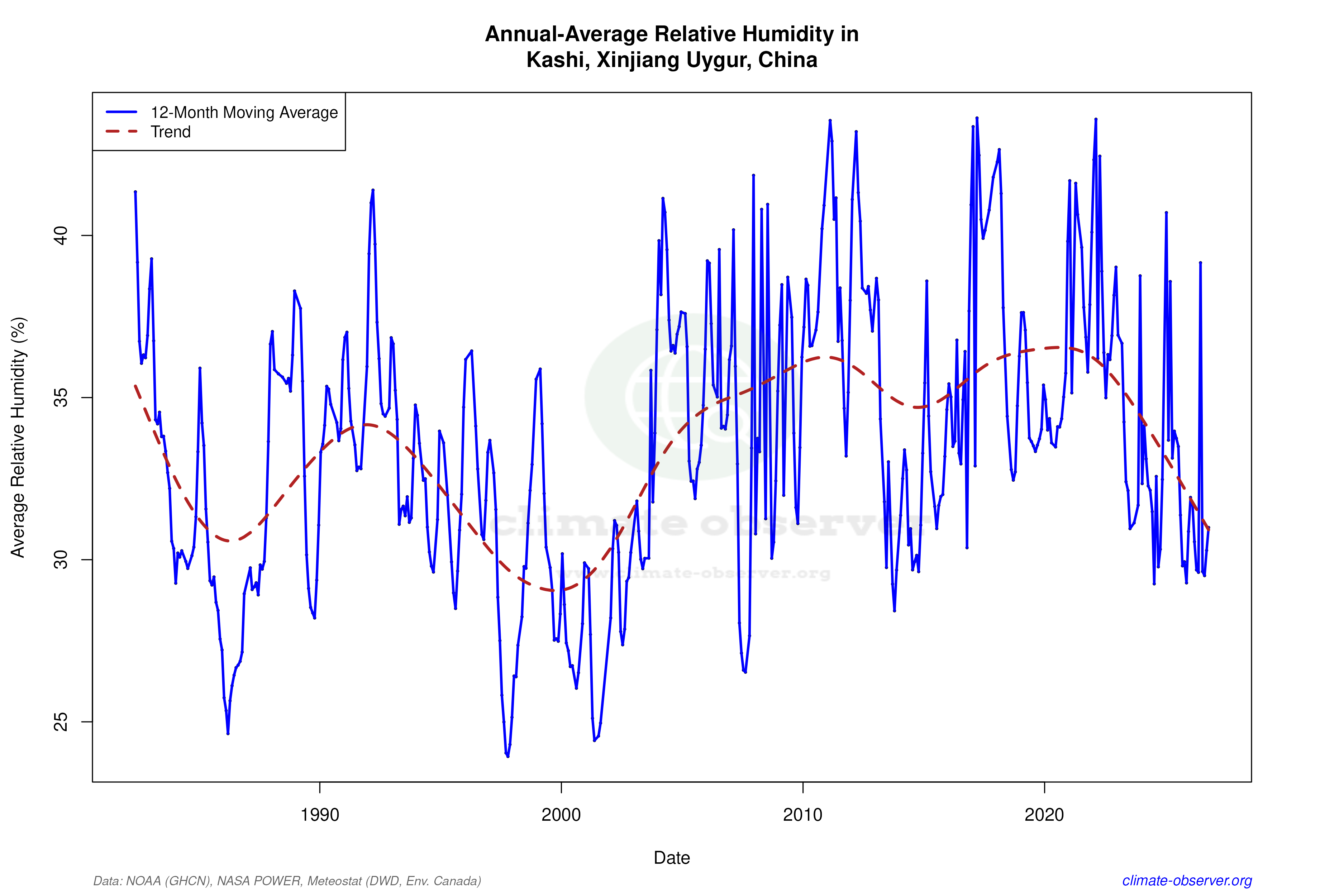
Kashi, located in the Xinjiang Uyghur Autonomous Region of China, is classified under the Köppen climate classification as BWk, indicating a cold desert climate. The region's climate is heavily influenced by its geographical setting, nestled between the Taklamakan Desert to the east and the towering Pamir Mountains to the west. This unique positioning results in minimal precipitation and significant temperature variations between day and night.
Temperature Trends: A Decade of Warming
In recent years, Kashi has experienced a marked warming trend, particularly in high temperatures. Over the past decade, high temperatures have increased by 2.17°C (3.91°F), while low temperatures have shown a minimal rise of 0.03°C (0.05°F). This suggests a more pronounced warming during the day, possibly due to increased solar radiation absorption in the region's arid environment. When examining the all-time trends, both high and low temperatures have risen, with highs increasing by 0.18°C (0.32°F) and lows by 0.29°C (0.52°F), indicating a consistent warming pattern over a more extended period.
Extreme Temperatures and Records
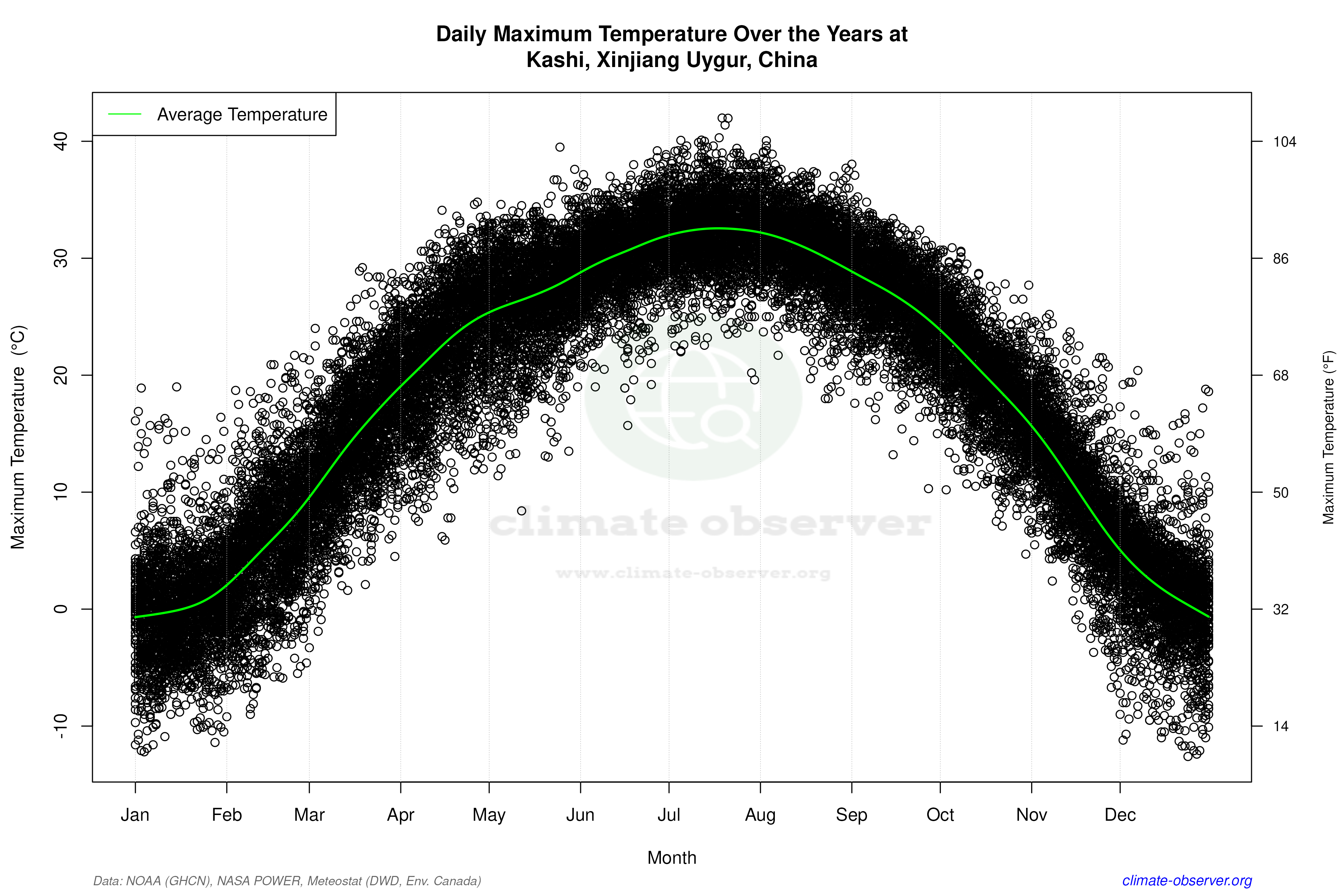
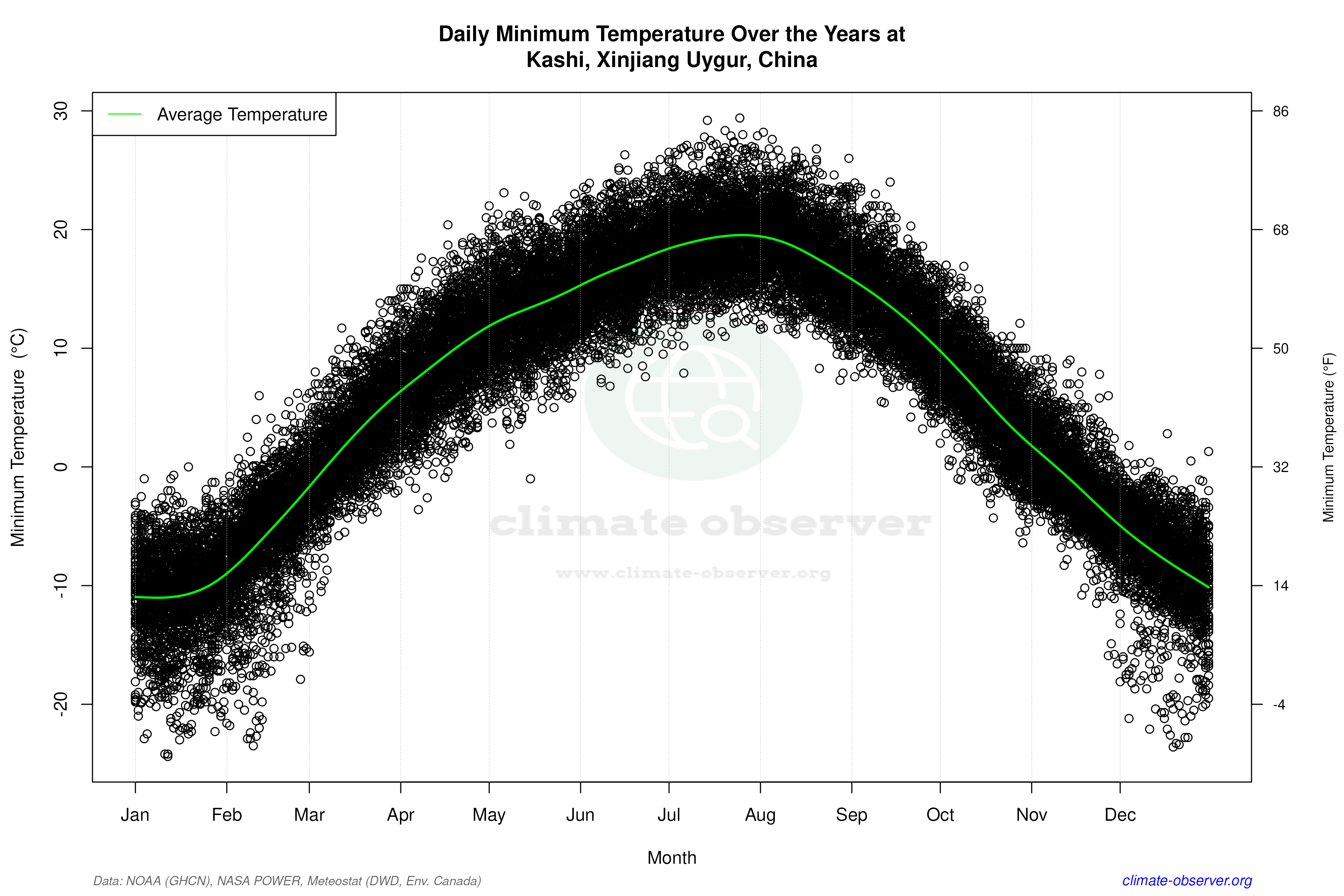
Kashi's climate is characterised by extreme temperatures, with record highs reaching 40.1°C (104.2°F) and lows plummeting to -24.4°C (-11.9°F). These extremes highlight the harsh conditions of the desert climate, where temperature fluctuations can be severe. Such variability poses challenges for local inhabitants and ecosystems, requiring adaptive strategies to cope with the intense heat and cold.
Precipitation Patterns and Changes
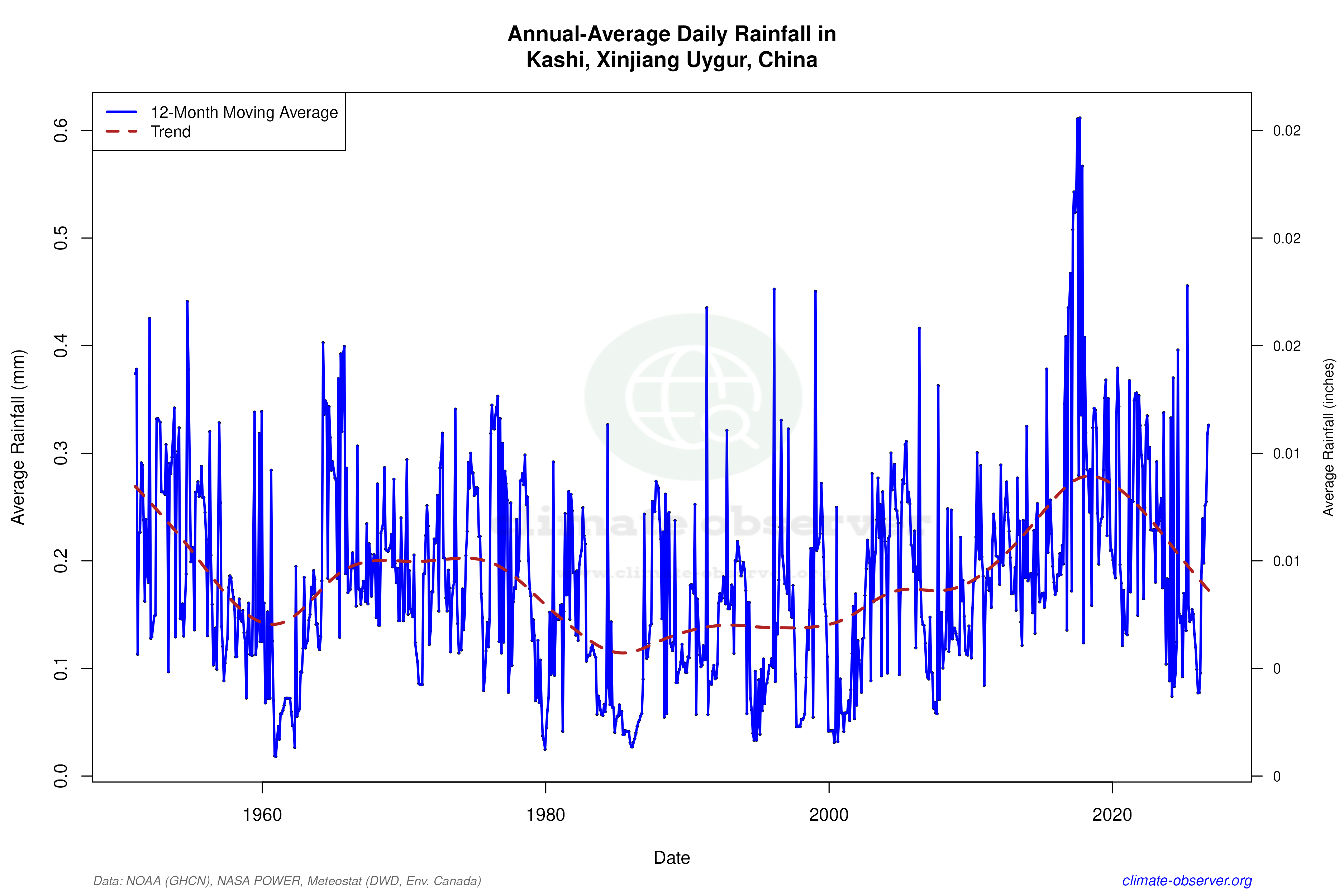
The Precipitation Concentration Index (PCI), a measure of how rainfall is distributed over time, has shown a slight decrease from a baseline of 18.83 to a current value of 18.01. This indicates a more even distribution of precipitation events, which could be beneficial for agriculture by reducing the risk of droughts and improving water availability throughout the year. However, the overall low PCI values reflect the region's arid nature, where precipitation remains sparse.
Regional Climate Goals and Implications
China's commitment to addressing climate change includes efforts to manage water resources effectively, especially in arid regions like Xinjiang. The observed warming trends and changes in precipitation patterns in Kashi are crucial data points for regional climate strategies. As temperatures continue to rise, understanding these shifts will be vital for developing sustainable practices that support both the environment and the local economy.
Station Statistics
10-Year Trend
High: +3.73 °C/decade
Low: +2.99 °C/decade
Rain: -0.21 mm/decade
25-Year Trend
High: +0.53 °C/decade
Low: +0.26 °C/decade
Rain: +0.03 mm/decade
50-Year Trend
High: +0.31 °C/decade
Low: +0.55 °C/decade
Rain: +0.03 mm/decade
All-Time Trend
High: +0.15 °C/decade
Low: +0.26 °C/decade
Rain: +0.00 mm/decade
Percentage Above-Average Days
Last 12 Months: 59.5%
This Year: 80.9%
Precipitation Concentration Index (PCI) ℹ️
Last 12 Months: 17.3
Historical Average: 22.4
Percentile Rank of Last 12 Months ℹ️
High: 77th percentile
Low: 91st percentile
Rain: 50th percentile
Change in Variance ℹ️
High: +0.5%
Low: +5.5%
Intraday: -24.5%
Data Coverage
99.9%
First Year of Data
1952
Station Location
Historical Weather Records
| Max High | Avg High | Min High | Max Avg | Avg Avg | Min Avg | Max Low | Avg Low | Min Low | Max Precipitation | Avg Precipitation | Max Snow | Avg Snow | |
|---|---|---|---|---|---|---|---|---|---|---|---|---|---|
| Record | 42.0 °C | — | -12.6 °C | 34.7 °C | — | -18.2 °C | 29.4 °C | — | -24.4 °C | 41.9 mm | — | — | — |
| January | 19.0 °C | 0.1 °C | -12.2 °C | 8.1 °C | -5.6 °C | -17.9 °C | 0.0 °C | -10.6 °C | -24.4 °C | 7.6 mm | 0.1 mm | — | — |
| February | 21.7 °C | 5.5 °C | -9.2 °C | 12.9 °C | -0.3 °C | -16.6 °C | 6.2 °C | -5.6 °C | -23.5 °C | 25.8 mm | 0.2 mm | — | — |
| March | 29.2 °C | 14.5 °C | -3.3 °C | 21.7 °C | 8.5 °C | -8.0 °C | 14.1 °C | 2.5 °C | -15.6 °C | 17.8 mm | 0.1 mm | — | — |
| April | 34.8 °C | 22.5 °C | 5.9 °C | 27.8 °C | 15.9 °C | 2.3 °C | 21.0 °C | 9.1 °C | -3.6 °C | 22.5 mm | 0.2 mm | — | — |
| May | 39.5 °C | 26.8 °C | 8.4 °C | 30.1 °C | 20.3 °C | 6.1 °C | 23.1 °C | 13.5 °C | -1.0 °C | 31.9 mm | 0.4 mm | — | — |
| June | 39.2 °C | 30.5 °C | 15.7 °C | 32.1 °C | 24.1 °C | 13.1 °C | 26.3 °C | 16.9 °C | 6.8 °C | 23.8 mm | 0.2 mm | — | — |
| July | 42.0 °C | 32.4 °C | 19.6 °C | 34.7 °C | 26.1 °C | 15.2 °C | 29.4 °C | 19.2 °C | 7.9 °C | 41.9 mm | 0.3 mm | — | — |
| August | 40.0 °C | 30.9 °C | 18.0 °C | 33.7 °C | 24.6 °C | 14.2 °C | 28.2 °C | 18.0 °C | 7.3 °C | 23.0 mm | 0.3 mm | — | — |
| September | 38.0 °C | 26.7 °C | 10.3 °C | 30.1 °C | 20.1 °C | 8.5 °C | 24.0 °C | 13.2 °C | 3.2 °C | 22.4 mm | 0.2 mm | — | — |
| October | 30.9 °C | 20.0 °C | 4.7 °C | 25.1 °C | 12.8 °C | 0.9 °C | 17.0 °C | 5.8 °C | -6.4 °C | 15.0 mm | 0.1 mm | — | — |
| November | 25.2 °C | 10.6 °C | -6.7 °C | 16.9 °C | 4.2 °C | -12.4 °C | 9.1 °C | -1.4 °C | -16.6 °C | 9.5 mm | 0.1 mm | — | — |
| December | 20.4 °C | 1.8 °C | -12.6 °C | 11.9 °C | -3.4 °C | -18.2 °C | 2.8 °C | -7.7 °C | -23.6 °C | 11.0 mm | 0.1 mm | — | — |
Data Visualisations
Remove WatermarksCurrent Year Climate Trends vs Historical
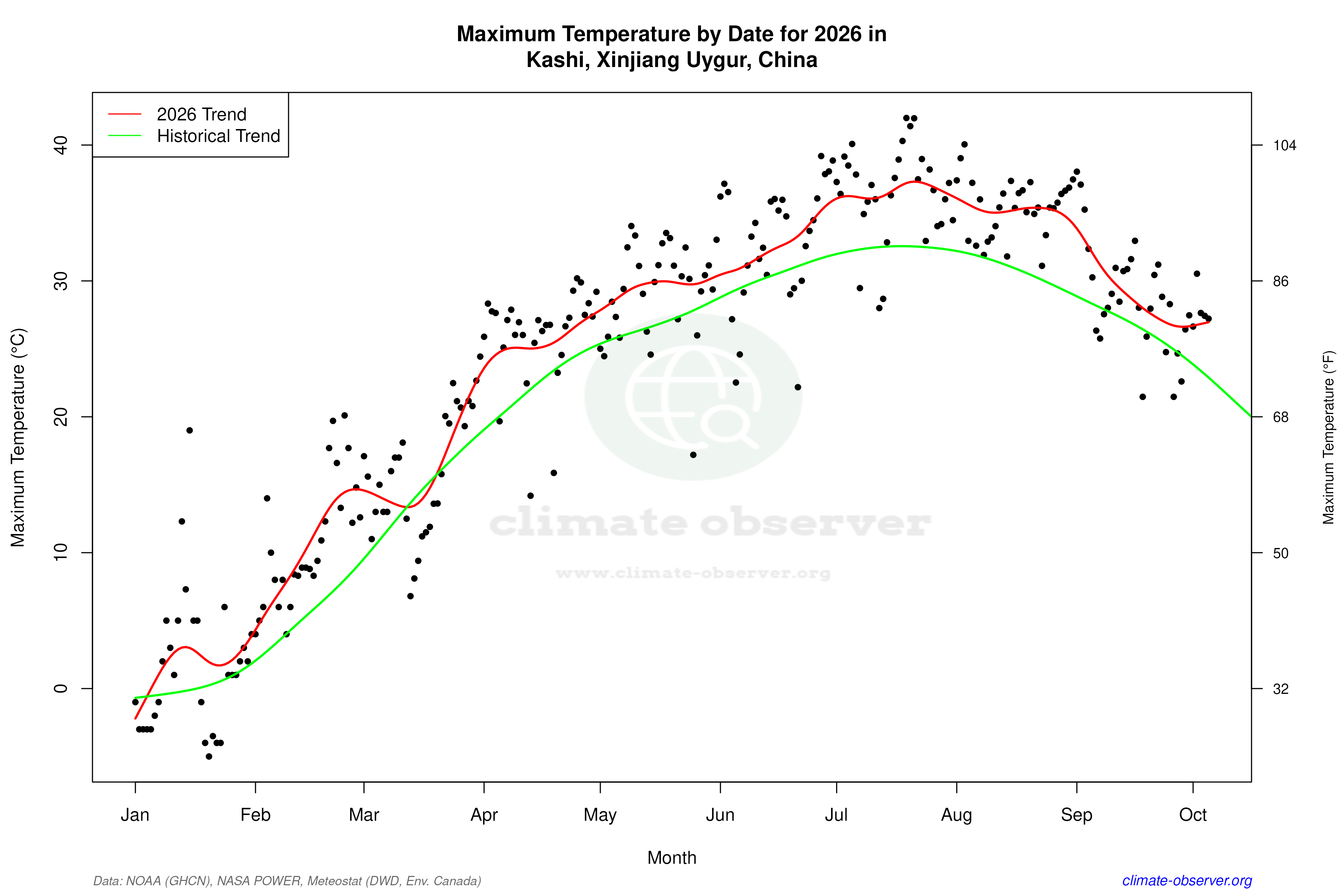
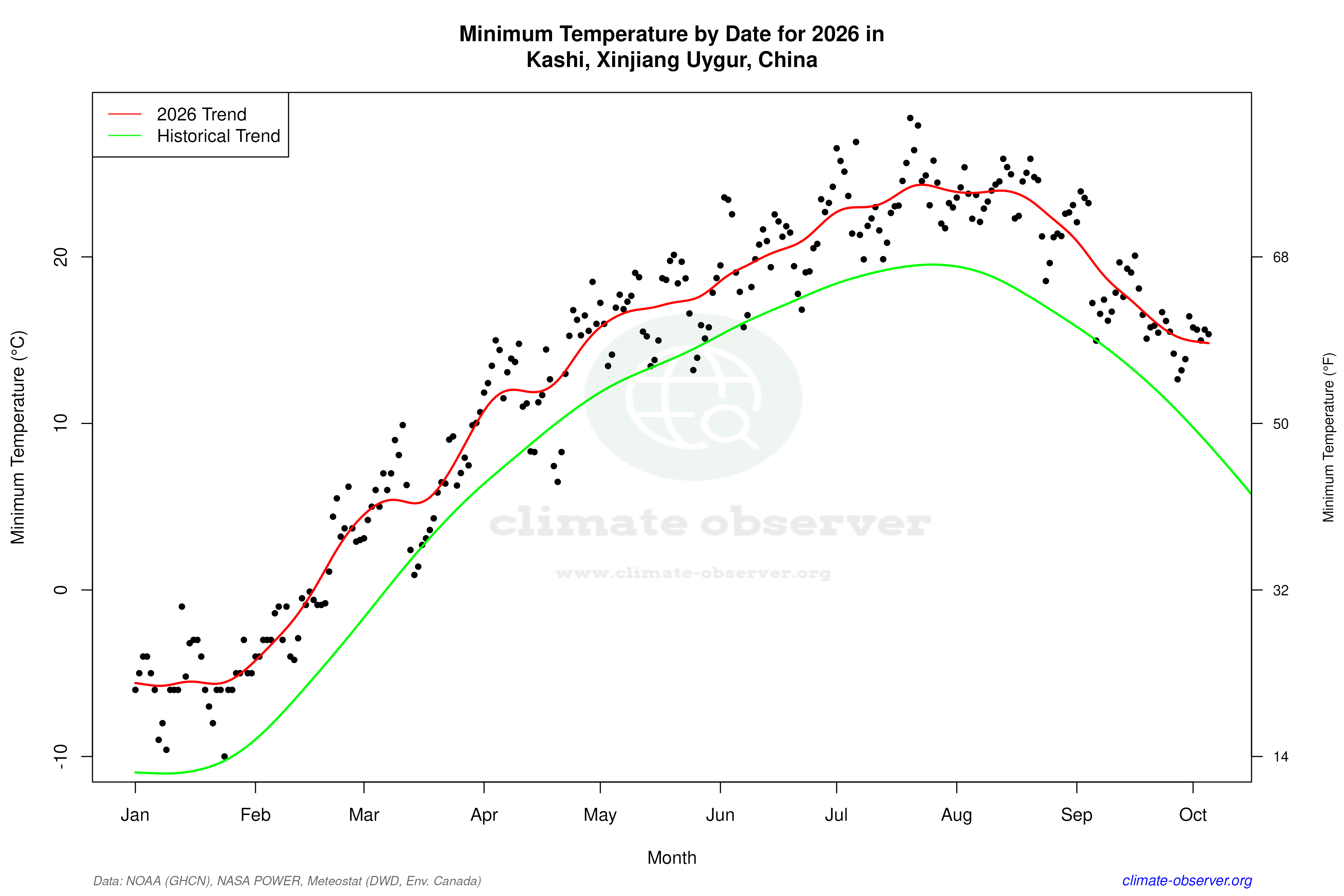
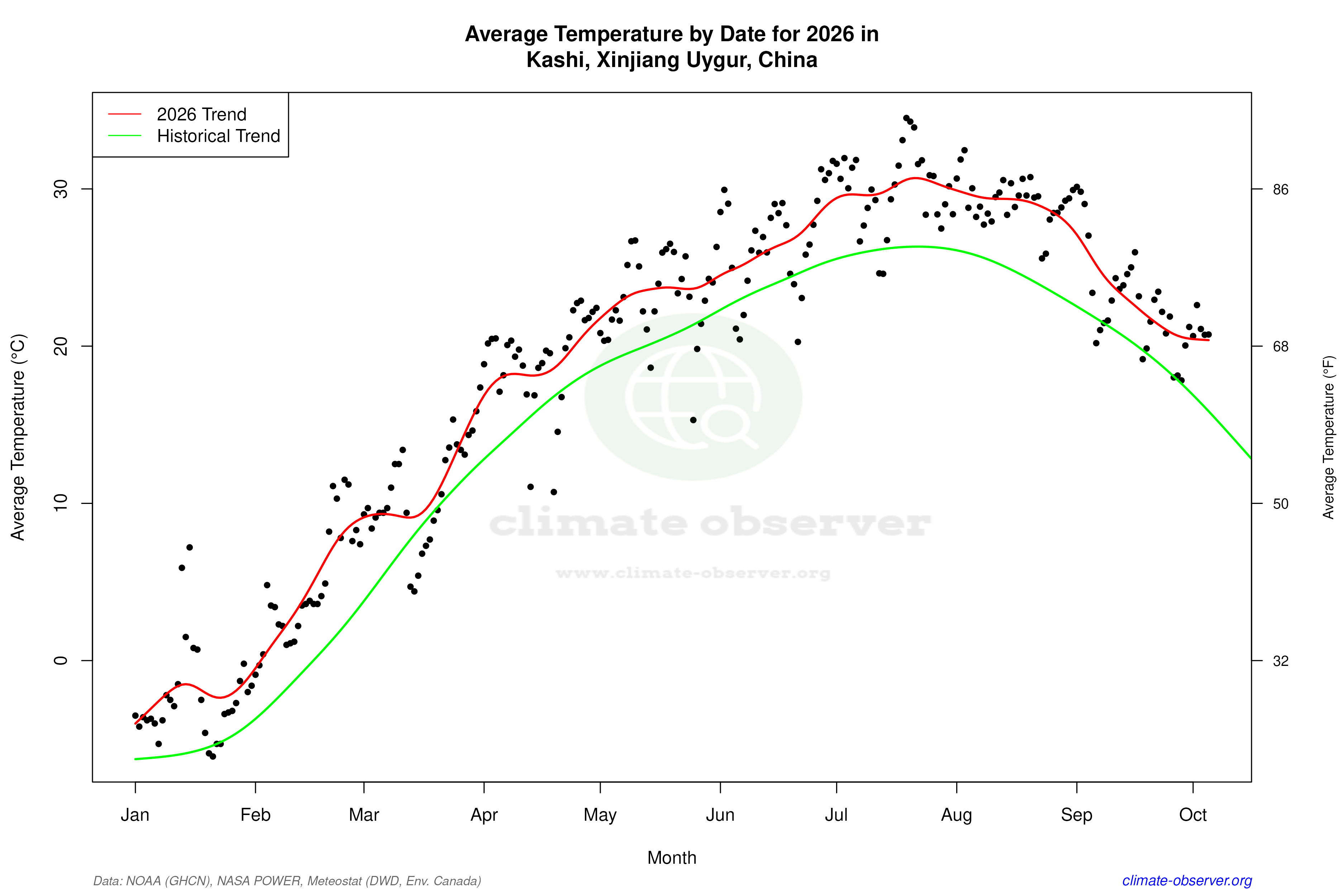
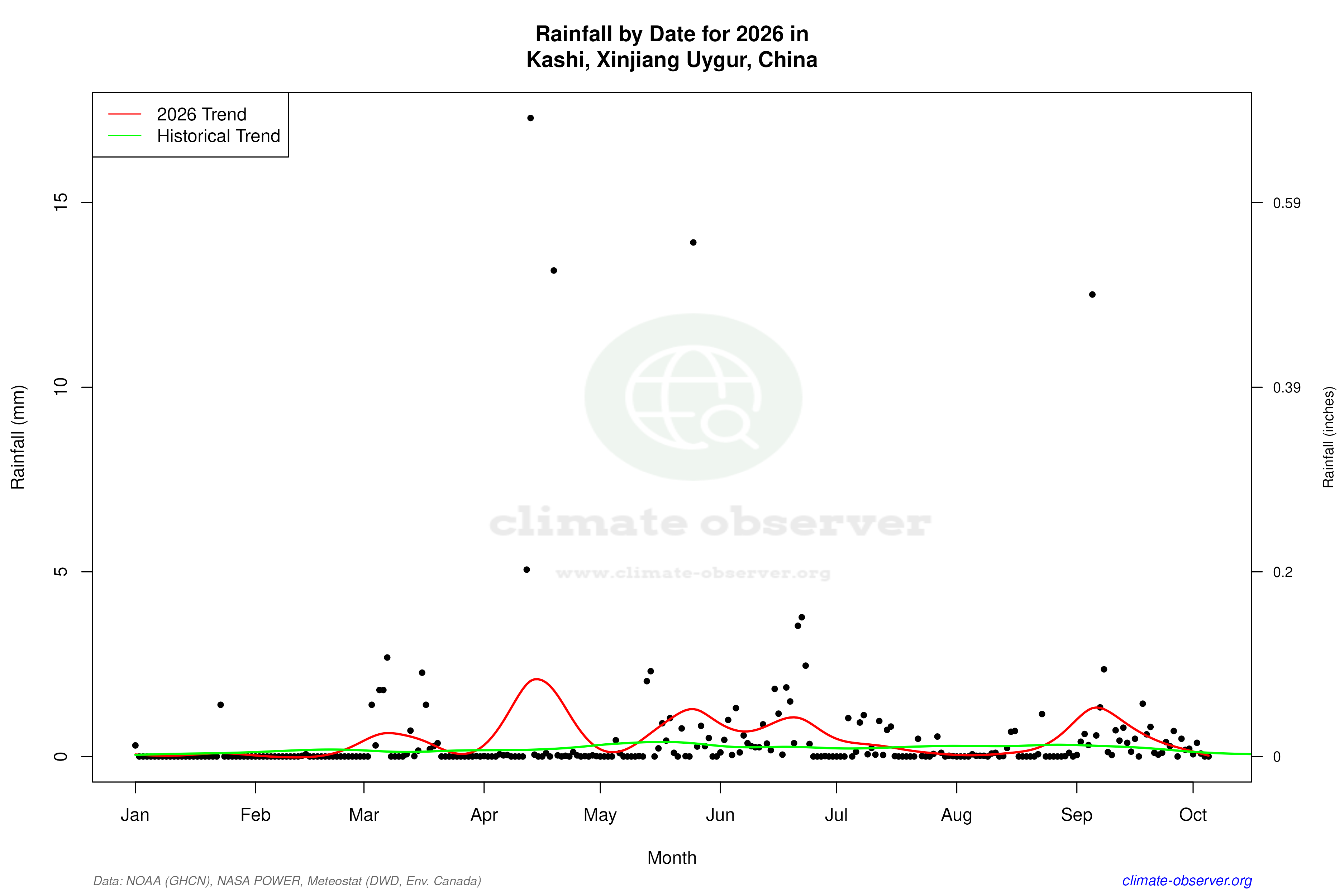
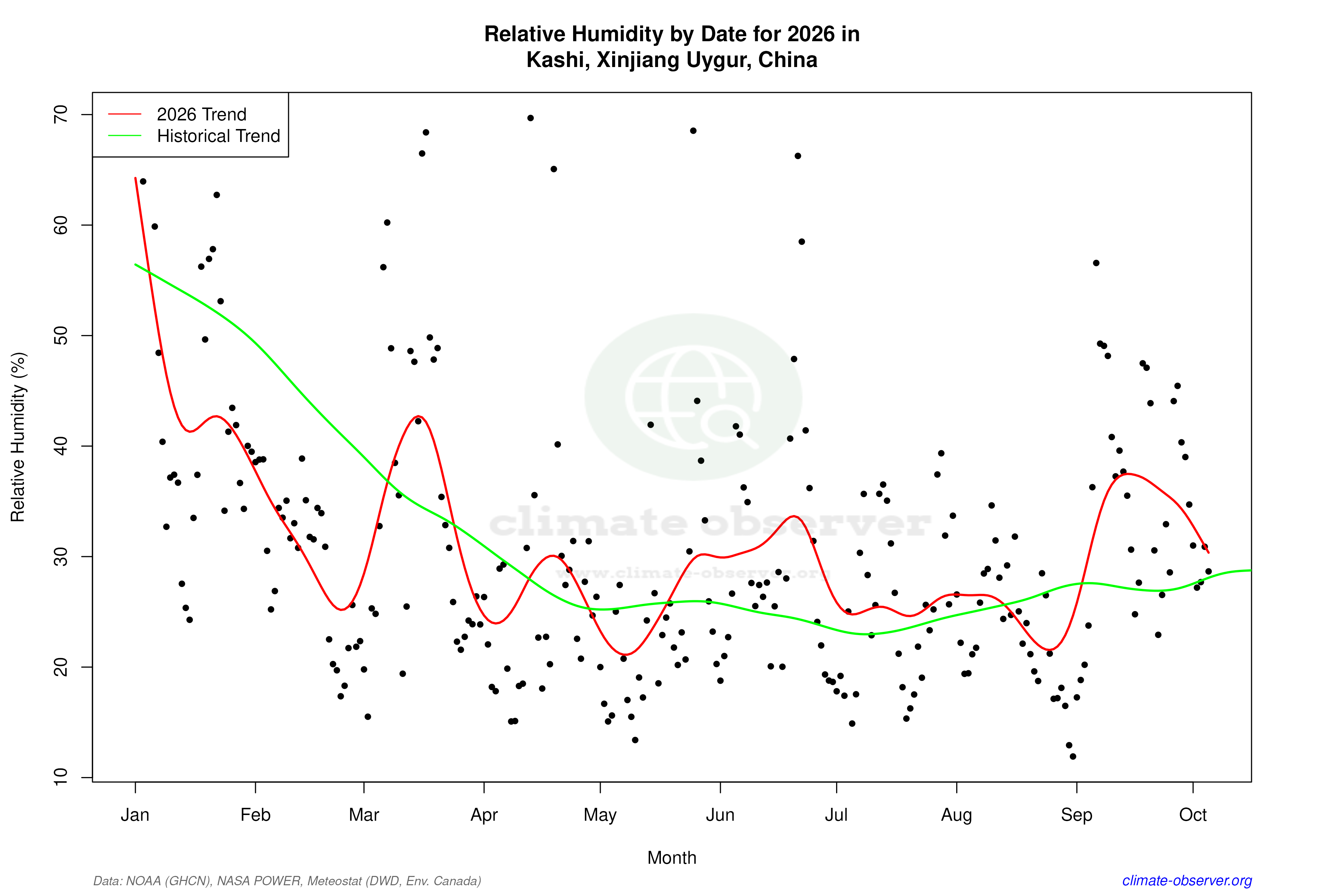

Max Temperature this Year | 1 of 6
Climate 12-Month Moving Averages
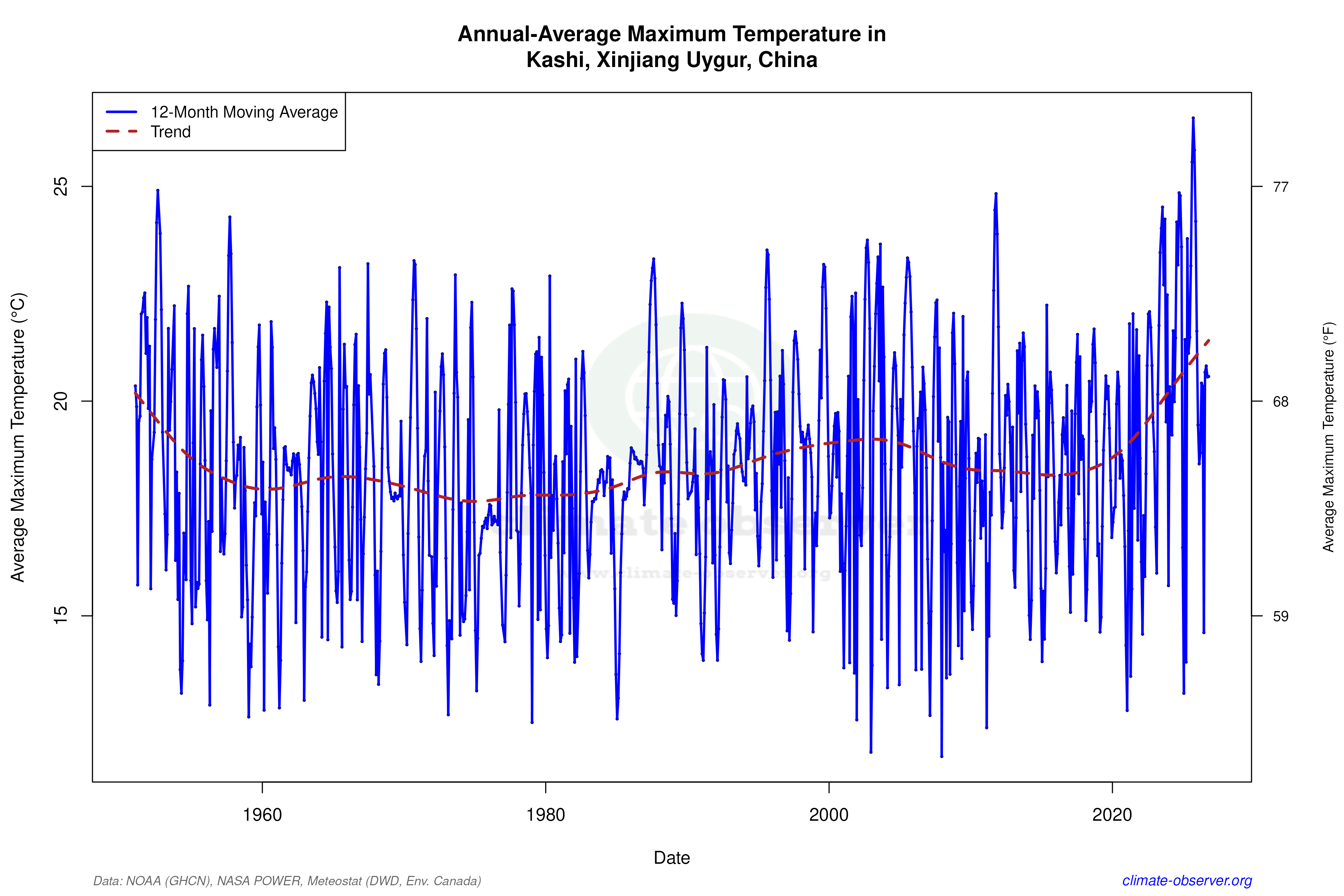
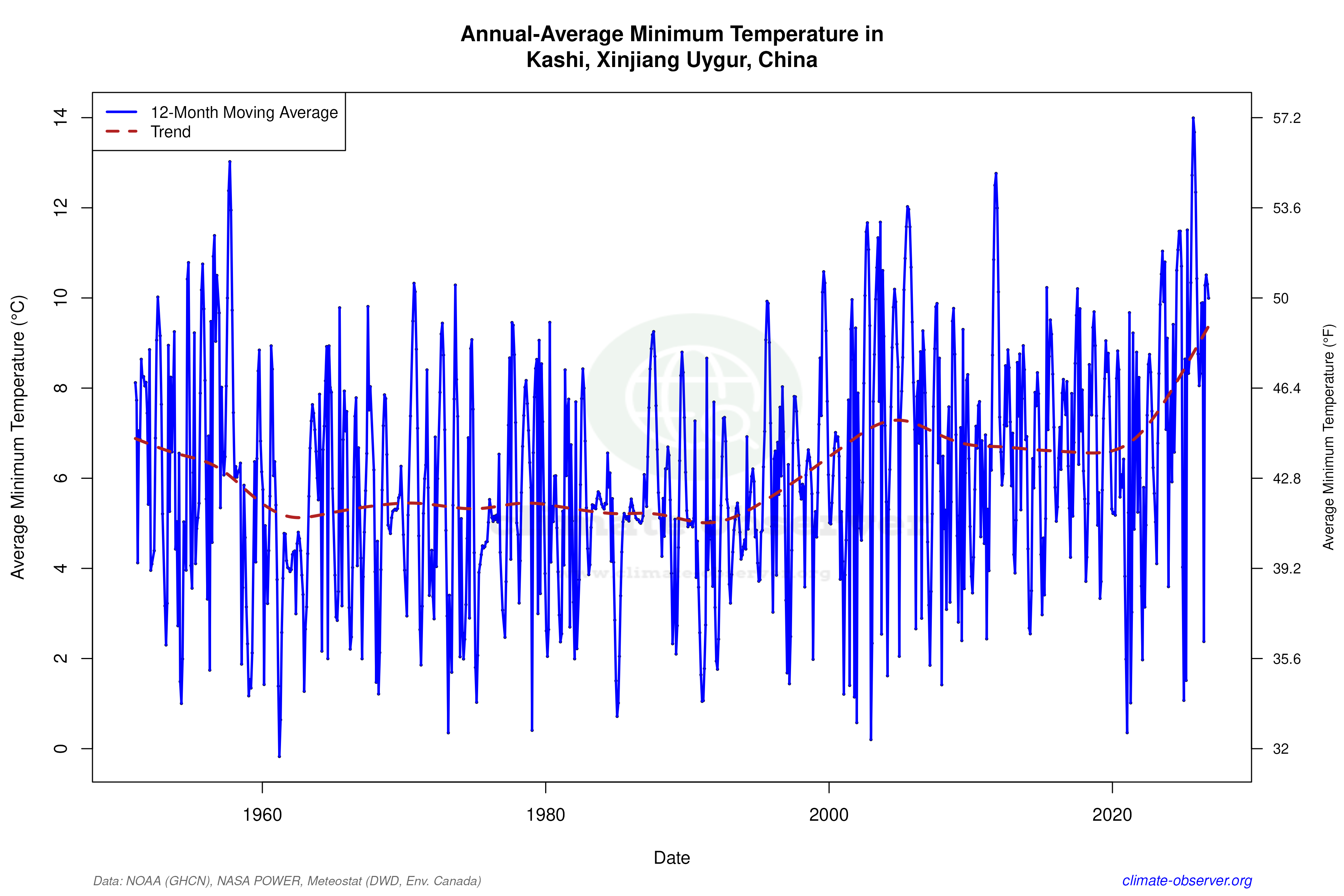
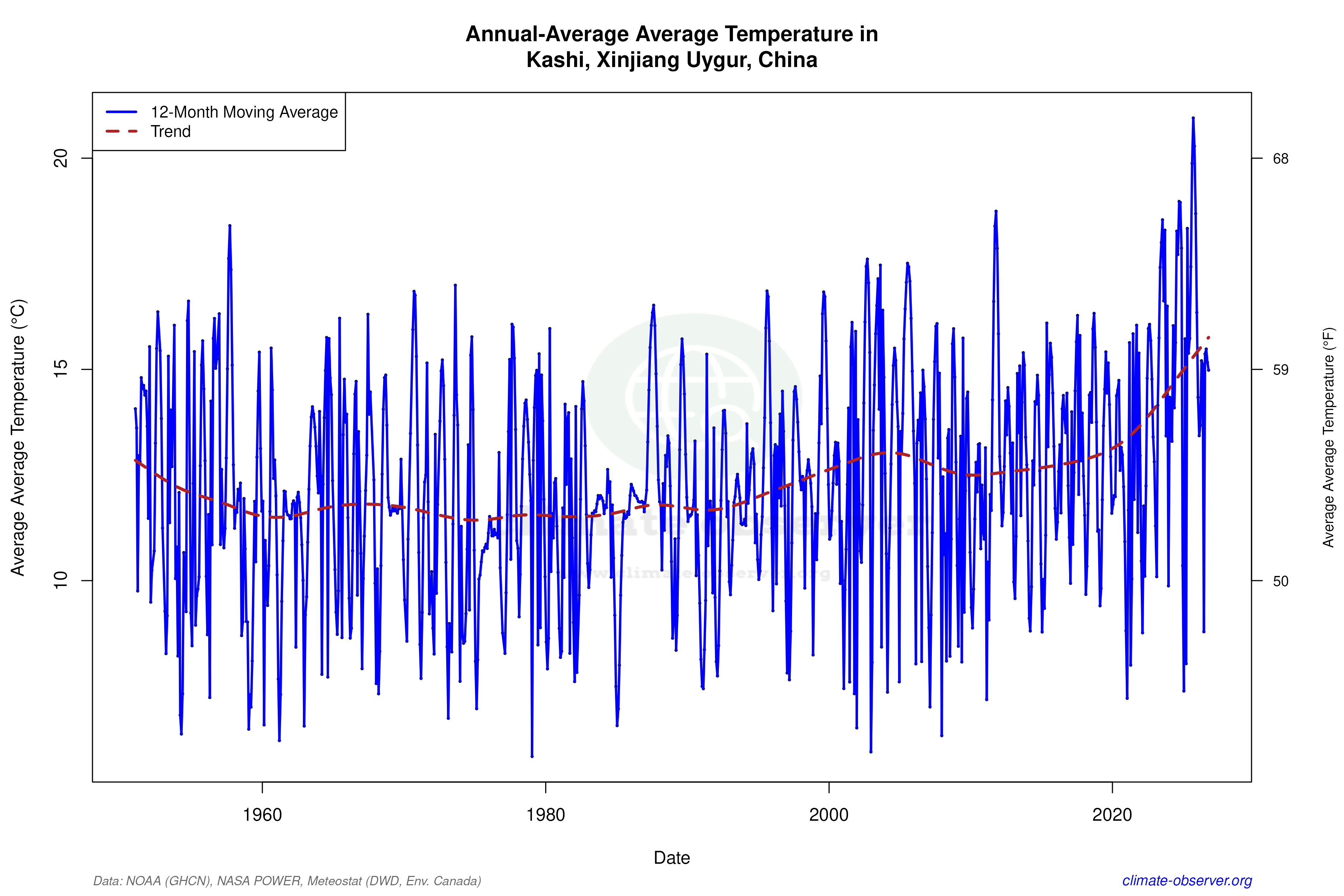

Max Temperature 12-Month MA | 1 of 6
Daily Data Points and Averages Throughout the Year
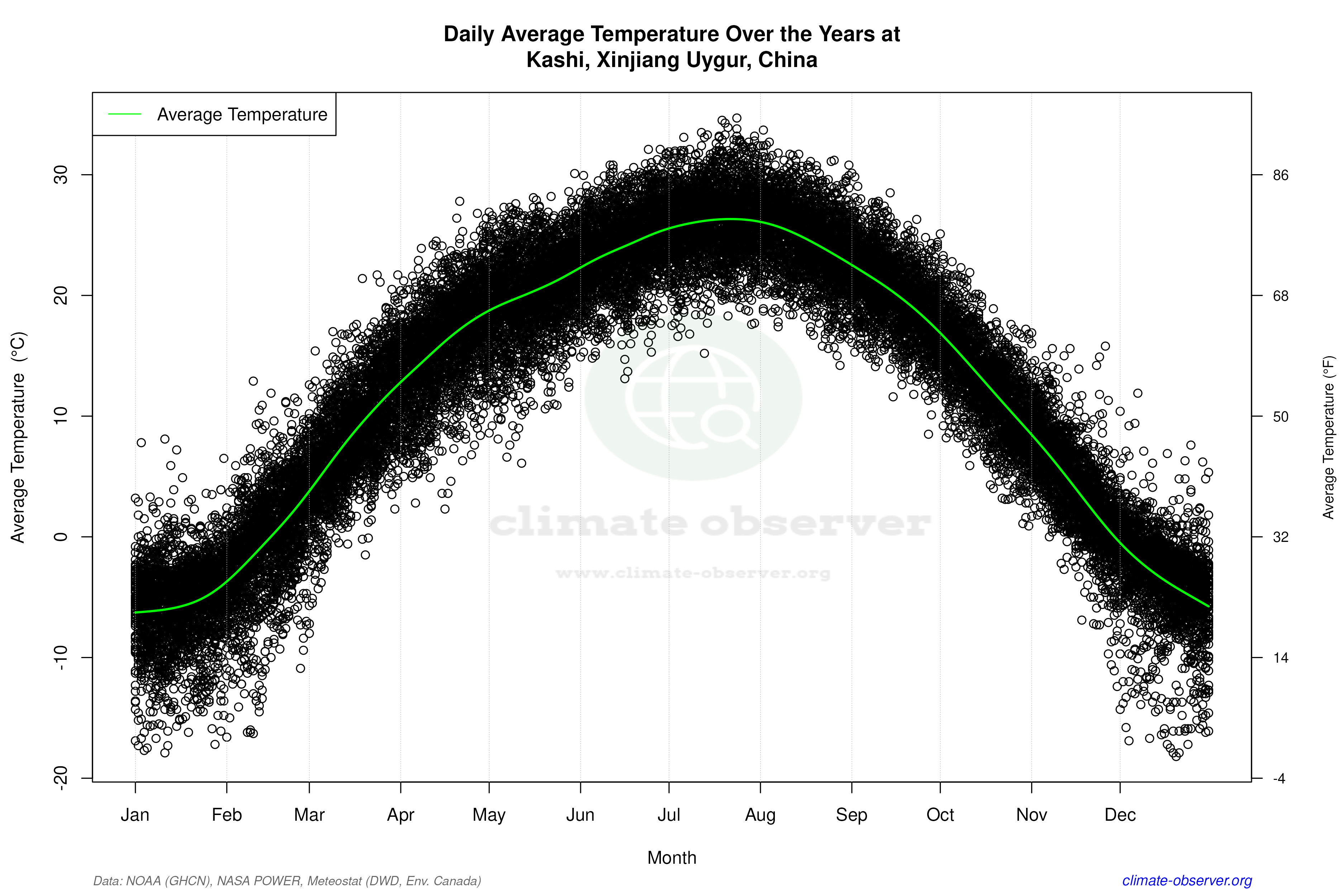
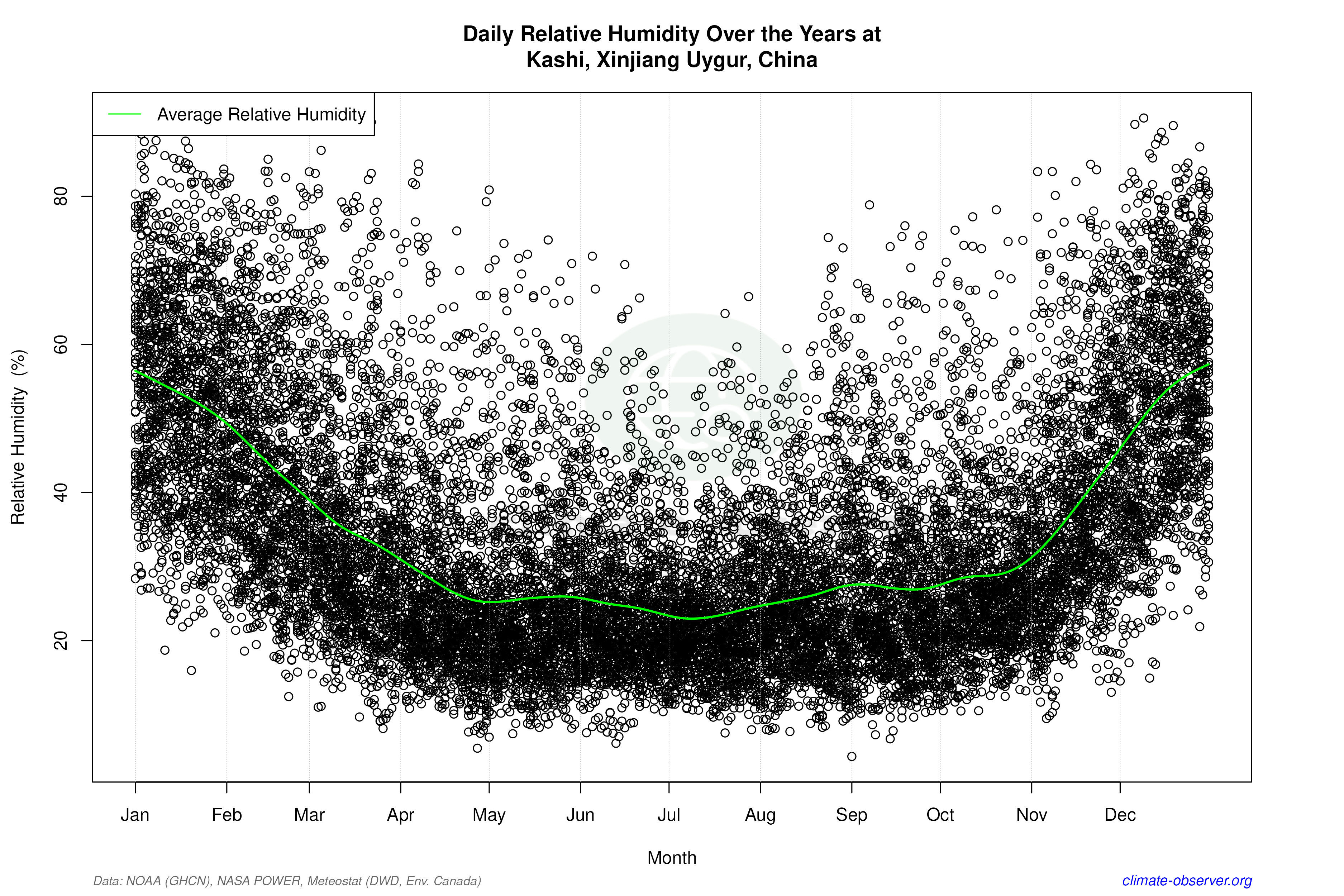

Average Max Temperature Throughout Year | 1 of 5


