Climate for Station: Lhasa, Xizang, China
Loading live weather...
Climate Analysis & Overview
Lhasa, set against the backdrop of the Tibetan Plateau, is experiencing a notable warming trend, particularly in nighttime temperatures. This warming is accompanied by a shift towards more evenly distributed precipitation, suggesting nuanced climate dynamics in this high-altitude city.
Warming Trends in the Roof of the World
Lhasa, classified under the Köppen climate as a cold semi-arid climate (BSk), is witnessing a significant rise in temperatures. Over the past decade, the city's high temperatures have increased by 7.95°C (14.31°F), while the lows have risen by 1.93°C (3.47°F). This recent warming is more pronounced than the all-time trend, which indicates a rise of 0.25°C (0.45°F) for highs and 0.52°C (0.94°F) for lows. This suggests that the last decade has seen accelerated warming, particularly in nighttime temperatures, which may affect local ecosystems and human activities.
Precipitation Patterns: A Shift Towards Even Distribution
The Precipitation Concentration Index (PCI) for Lhasa has decreased from a baseline of 25.06 to a current value of 17.32. This significant change indicates that precipitation is now more evenly distributed throughout the year, compared to the past when it was more concentrated in fewer events. Such a shift can influence water resource management and agricultural practices, as it reduces the risk of droughts and floods associated with highly concentrated rainfall.
Temperature Extremes: A City of Contrasts
Lhasa's geographical position on the Tibetan Plateau results in stark temperature extremes. The city has recorded an all-time high of 38.8°C (101.8°F) and a low of -19.98°C (-4.0°F). These extremes reflect the city's unique climate, influenced by its high altitude and continental location, which leads to large diurnal temperature variations. Understanding these extremes is crucial for infrastructure planning and public health strategies in the region.
Implications for Regional Climate Goals
China's regional climate goals, which include reducing carbon emissions and enhancing climate resilience, are particularly relevant in the context of Lhasa's warming trends. The significant rise in temperatures, especially over the past decade, underscores the importance of integrating climate adaptation strategies into local policies. As Lhasa continues to warm, efforts to mitigate the impacts of climate change will be vital for maintaining the ecological and social balance in this high-altitude city.
Station Statistics
10-Year Trend
High: +5.54 °C/decade
Low: +1.53 °C/decade
Rain: -0.43 mm/decade
25-Year Trend
High: +0.28 °C/decade
Low: +0.18 °C/decade
Rain: -0.08 mm/decade
50-Year Trend
High: +0.20 °C/decade
Low: +0.47 °C/decade
Rain: +0.02 mm/decade
All-Time Trend
High: +0.28 °C/decade
Low: +0.49 °C/decade
Rain: +0.01 mm/decade
Percentage Above-Average Days
Last 12 Months: 40.8%
This Year: 29.8%
Precipitation Concentration Index (PCI) ℹ️
Last 12 Months: 27.4
Historical Average: 24.8
Percentile Rank of Last 12 Months ℹ️
High: 81st percentile
Low: 80th percentile
Rain: 73rd percentile
Change in Variance ℹ️
High: +8.8%
Low: -12.4%
Intraday: -16.8%
Data Coverage
99.9%
First Year of Data
1969
Station Location
Historical Weather Records
| Max High | Avg High | Min High | Max Avg | Avg Avg | Min Avg | Max Low | Avg Low | Min Low | Max Precipitation | Avg Precipitation | Max Snow | Avg Snow | |
|---|---|---|---|---|---|---|---|---|---|---|---|---|---|
| Record | 38.8 °C | — | -5.2 °C | 31.2 °C | — | -10.5 °C | 23.8 °C | — | -20.0 °C | 140.9 mm | — | — | — |
| January | 20.5 °C | 7.5 °C | -5.2 °C | 10.0 °C | -1.0 °C | -10.5 °C | 3.9 °C | -8.6 °C | -16.9 °C | 3.2 mm | 0.0 mm | — | — |
| February | 21.0 °C | 9.5 °C | -2.0 °C | 13.6 °C | 1.9 °C | -7.6 °C | 5.8 °C | -5.6 °C | -15.4 °C | 5.5 mm | 0.0 mm | — | — |
| March | 25.1 °C | 12.5 °C | 0.4 °C | 16.1 °C | 5.4 °C | -5.6 °C | 9.3 °C | -1.8 °C | -13.6 °C | 6.7 mm | 0.1 mm | — | — |
| April | 25.9 °C | 15.8 °C | 4.2 °C | 18.2 °C | 8.8 °C | -0.5 °C | 10.7 °C | 1.8 °C | -8.1 °C | 12.7 mm | 0.2 mm | — | — |
| May | 29.4 °C | 19.8 °C | 6.0 °C | 21.3 °C | 12.7 °C | 2.1 °C | 15.3 °C | 5.9 °C | -3.5 °C | 24.0 mm | 1.0 mm | — | — |
| June | 38.8 °C | 23.3 °C | 13.4 °C | 31.2 °C | 16.4 °C | 8.0 °C | 23.8 °C | 10.2 °C | 2.0 °C | 49.5 mm | 2.6 mm | — | — |
| July | 36.9 °C | 22.6 °C | 12.1 °C | 27.7 °C | 16.1 °C | 10.2 °C | 20.7 °C | 10.7 °C | 1.5 °C | 41.6 mm | 4.1 mm | — | — |
| August | 33.1 °C | 21.6 °C | 9.4 °C | 26.2 °C | 15.3 °C | 5.8 °C | 19.4 °C | 10.1 °C | 1.3 °C | 96.5 mm | 4.1 mm | — | — |
| September | 29.8 °C | 20.2 °C | 10.2 °C | 24.5 °C | 13.7 °C | 6.6 °C | 20.0 °C | 8.3 °C | -1.1 °C | 121.2 mm | 2.2 mm | — | — |
| October | 27.9 °C | 17.0 °C | 3.6 °C | 19.9 °C | 9.2 °C | 0.3 °C | 16.8 °C | 2.6 °C | -7.2 °C | 140.9 mm | 0.4 mm | — | — |
| November | 22.8 °C | 12.3 °C | 1.0 °C | 13.7 °C | 3.3 °C | -4.8 °C | 8.6 °C | -3.7 °C | -10.5 °C | 15.2 mm | 0.0 mm | — | — |
| December | 20.1 °C | 8.6 °C | -3.8 °C | 11.1 °C | -0.6 °C | -10.3 °C | 6.8 °C | -7.7 °C | -20.0 °C | 13.5 mm | 0.0 mm | — | — |
Data Visualisations
Remove WatermarksCurrent Year Climate Trends vs Historical
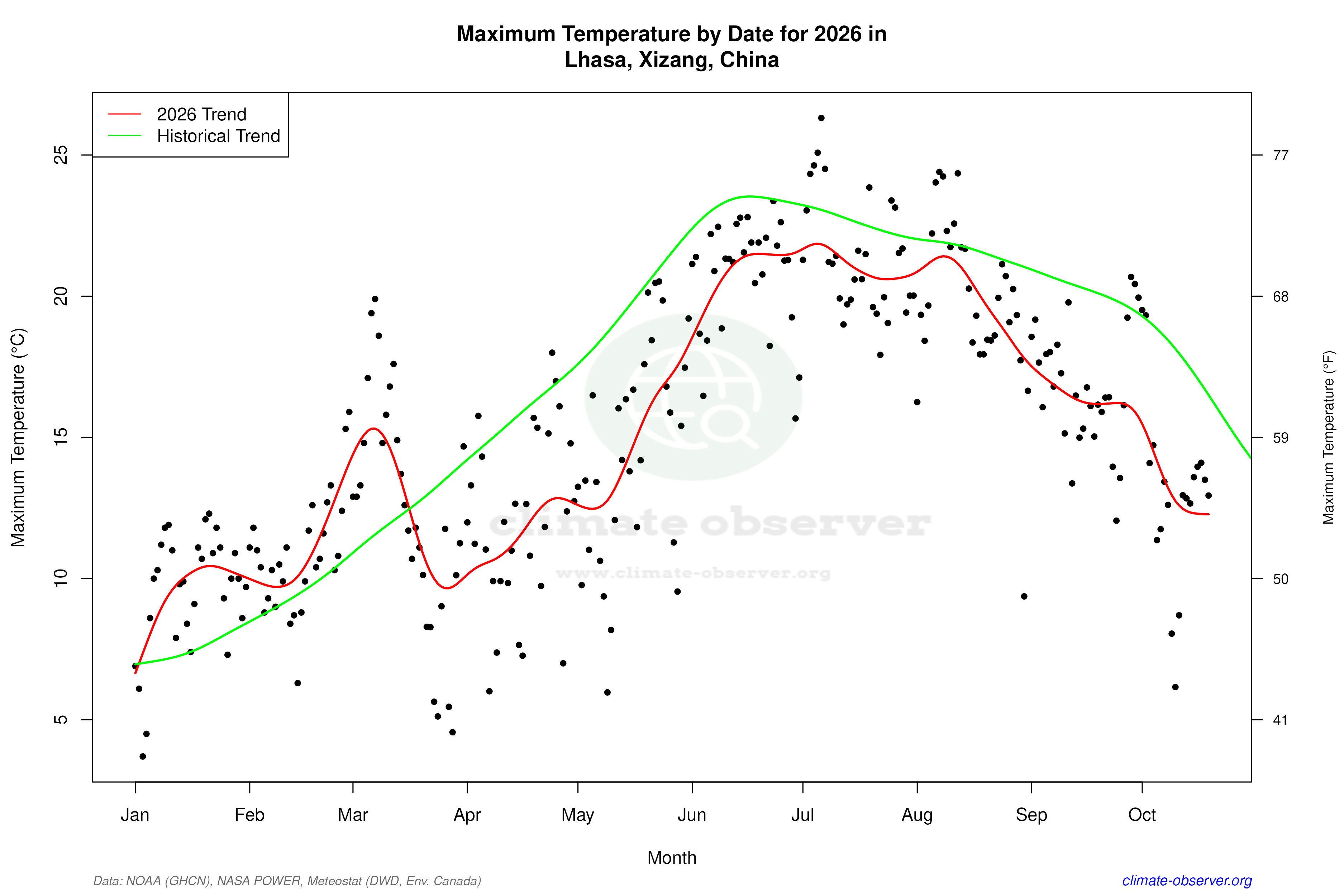
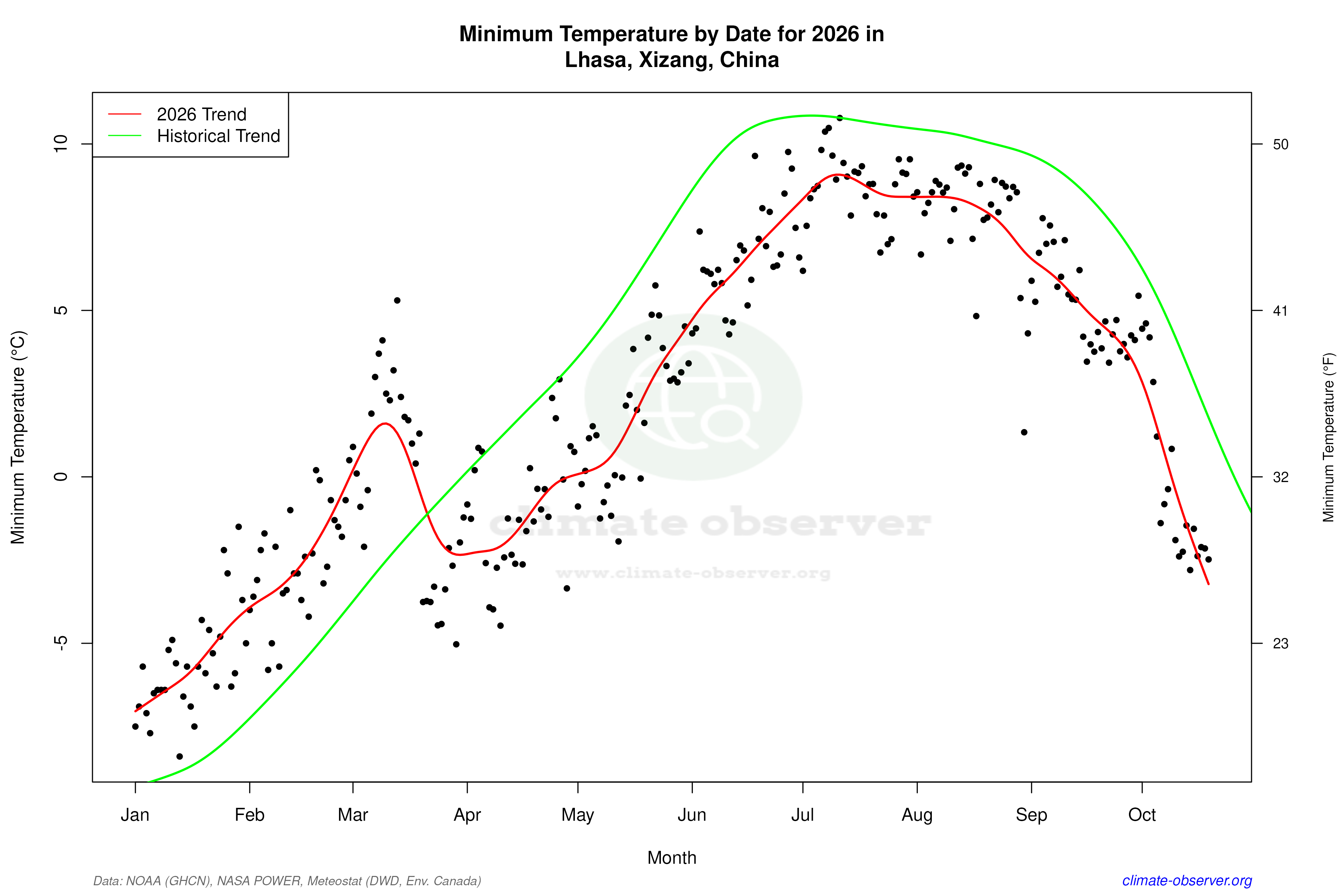
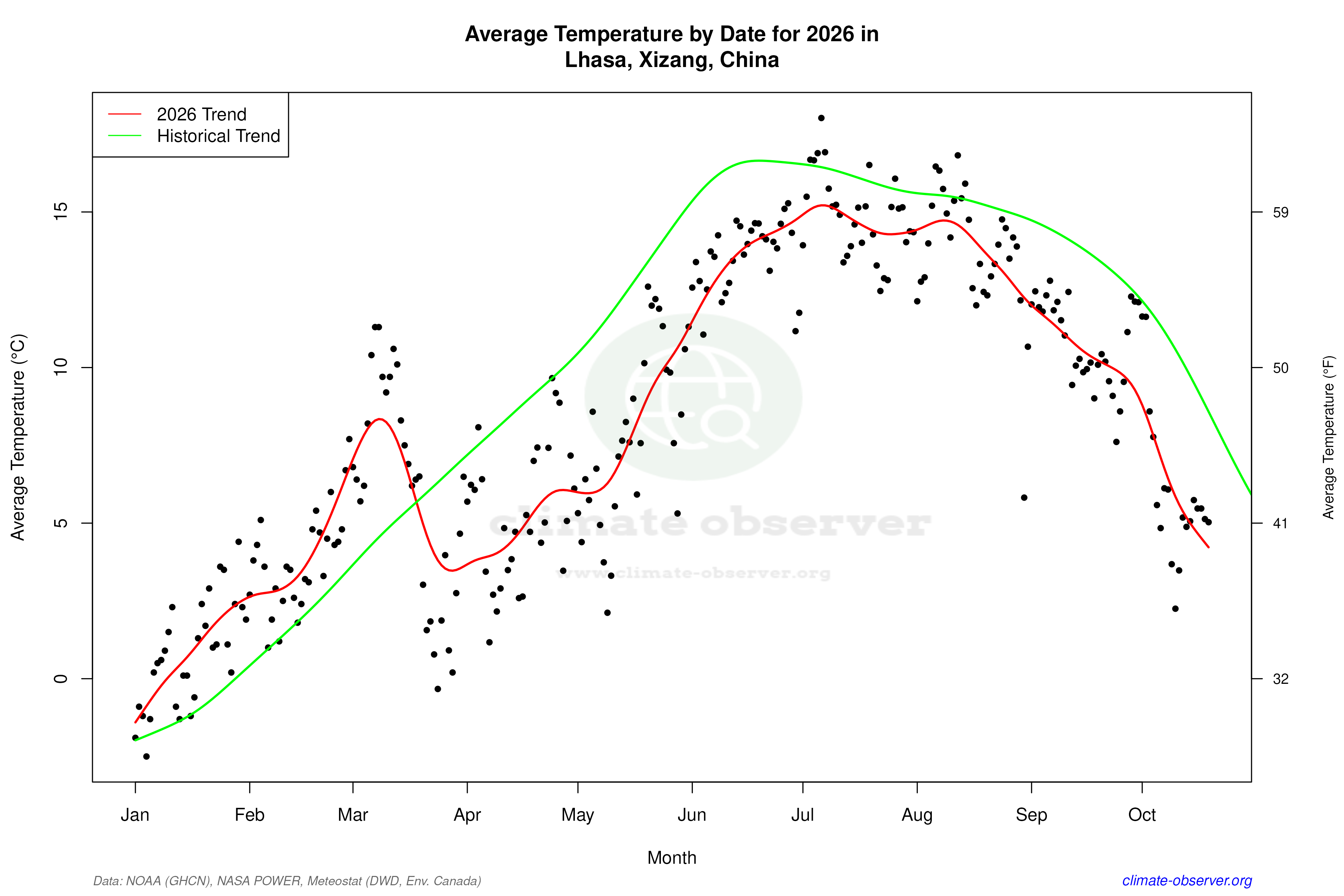
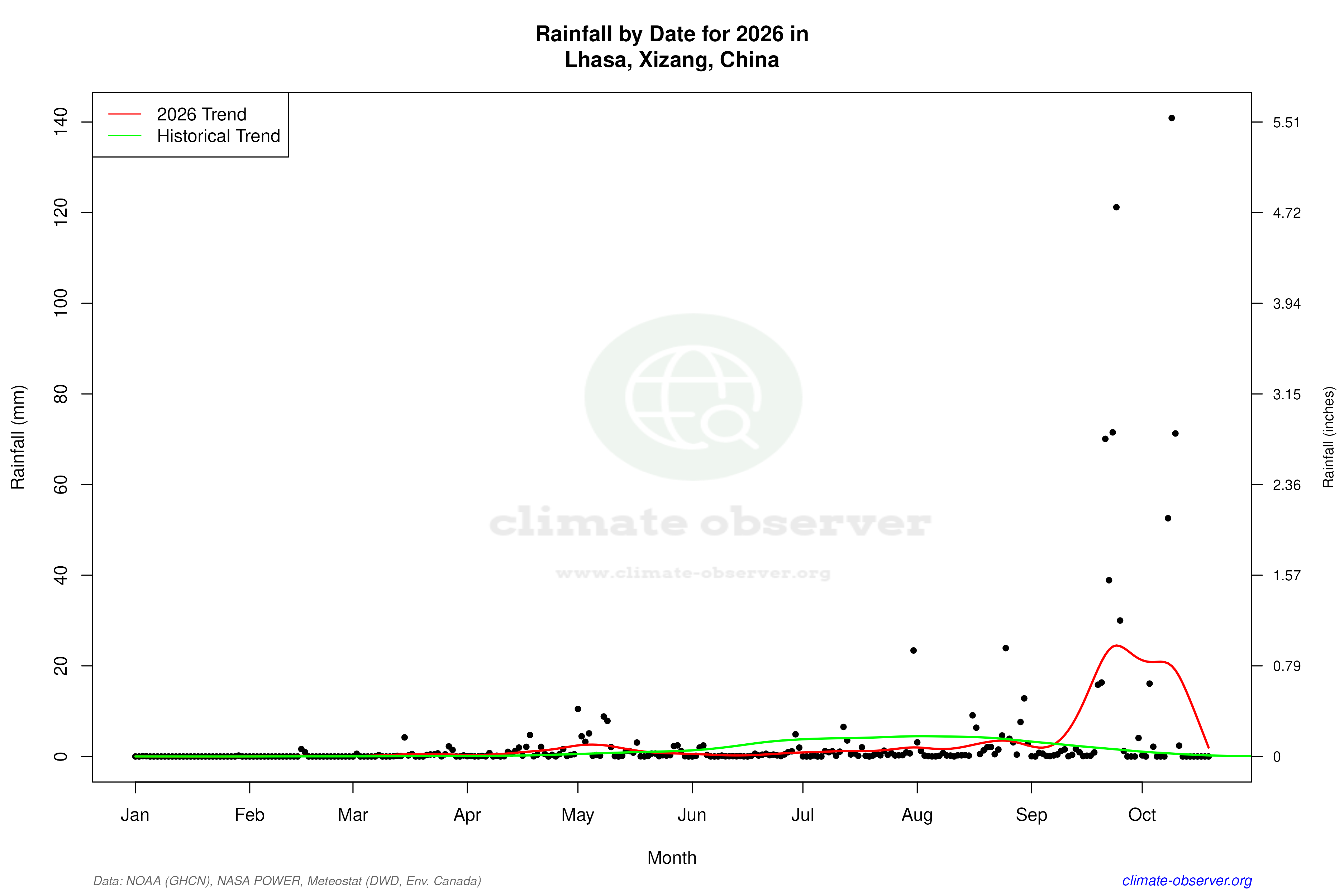
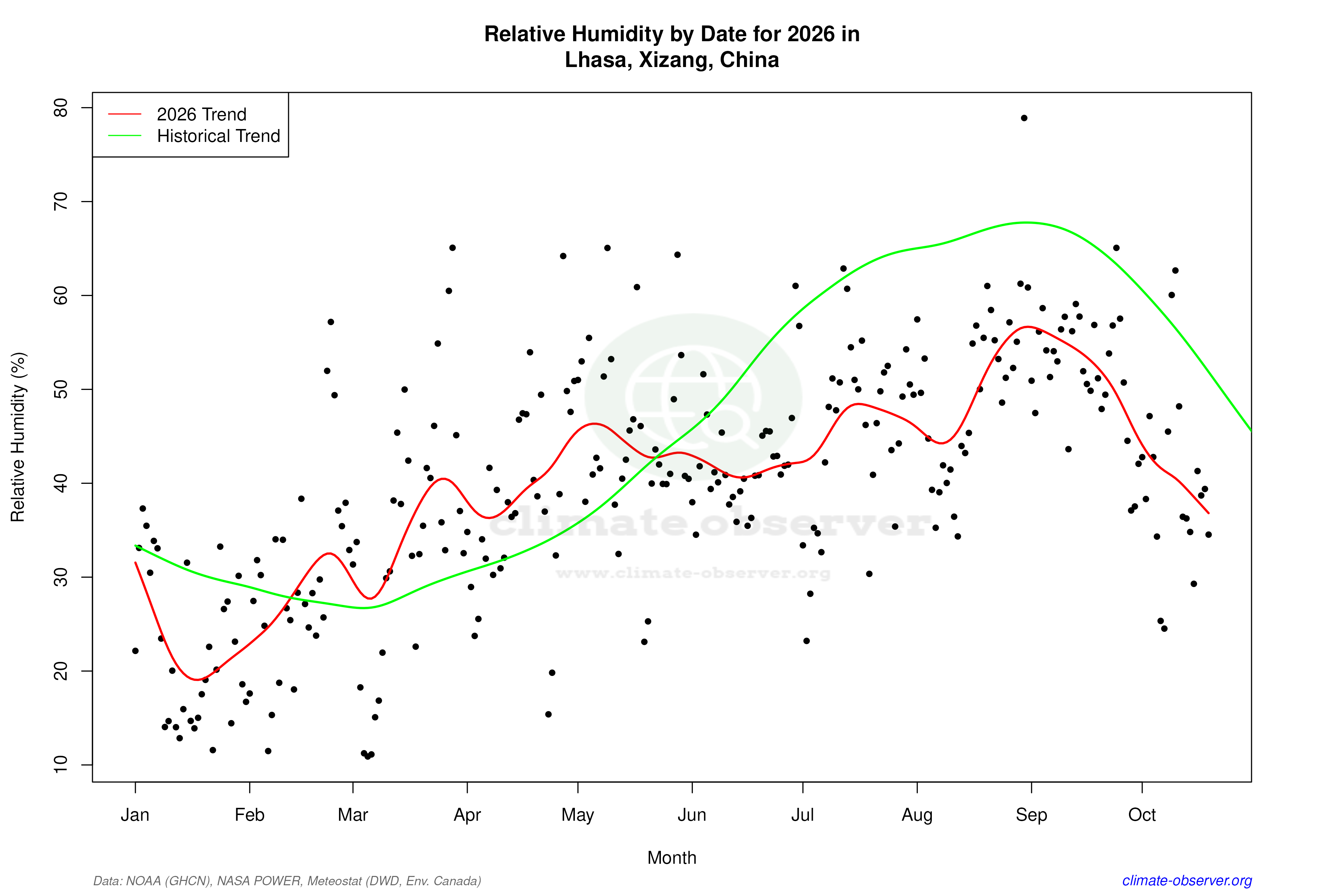

Max Temperature this Year | 1 of 6
Climate 12-Month Moving Averages
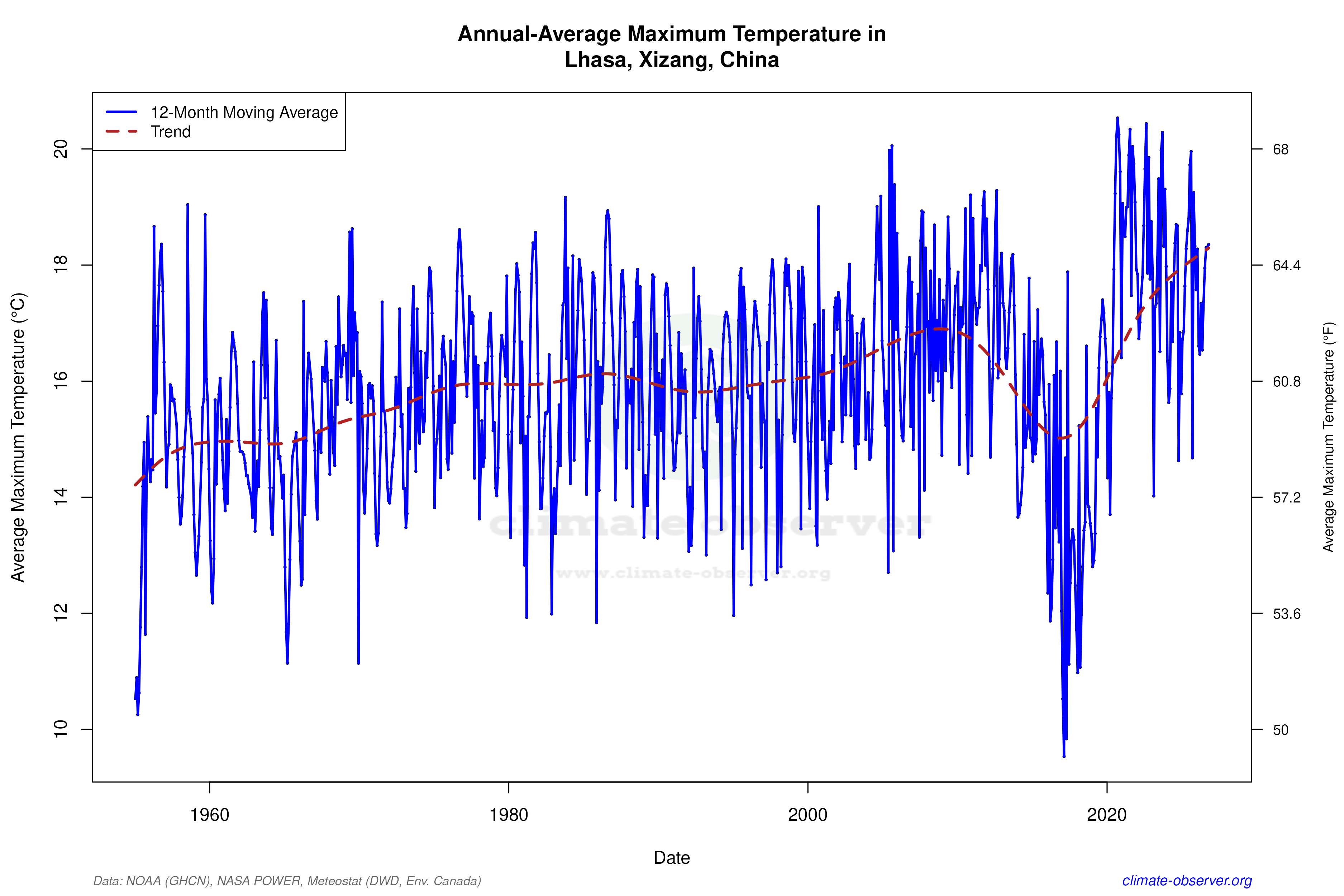
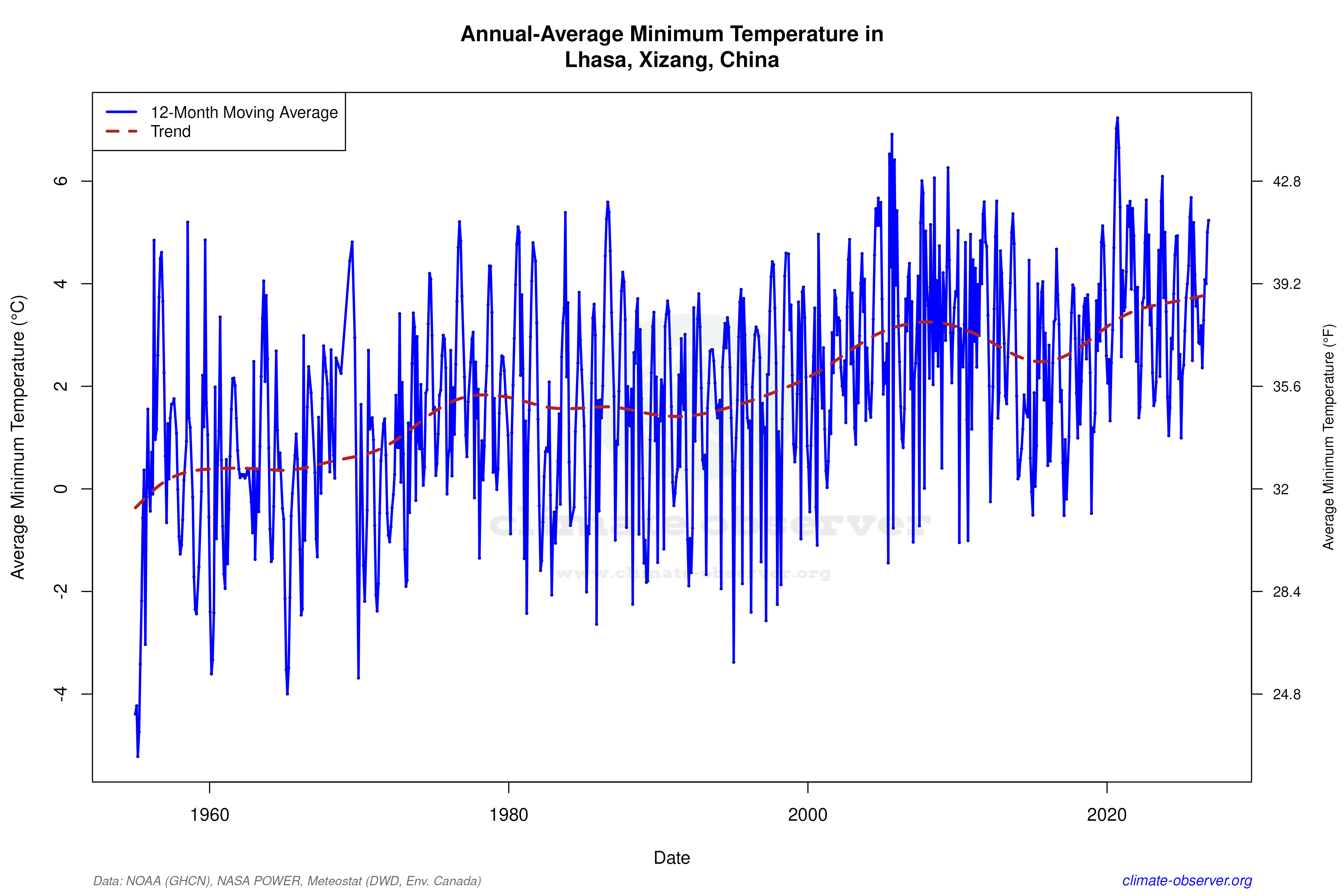
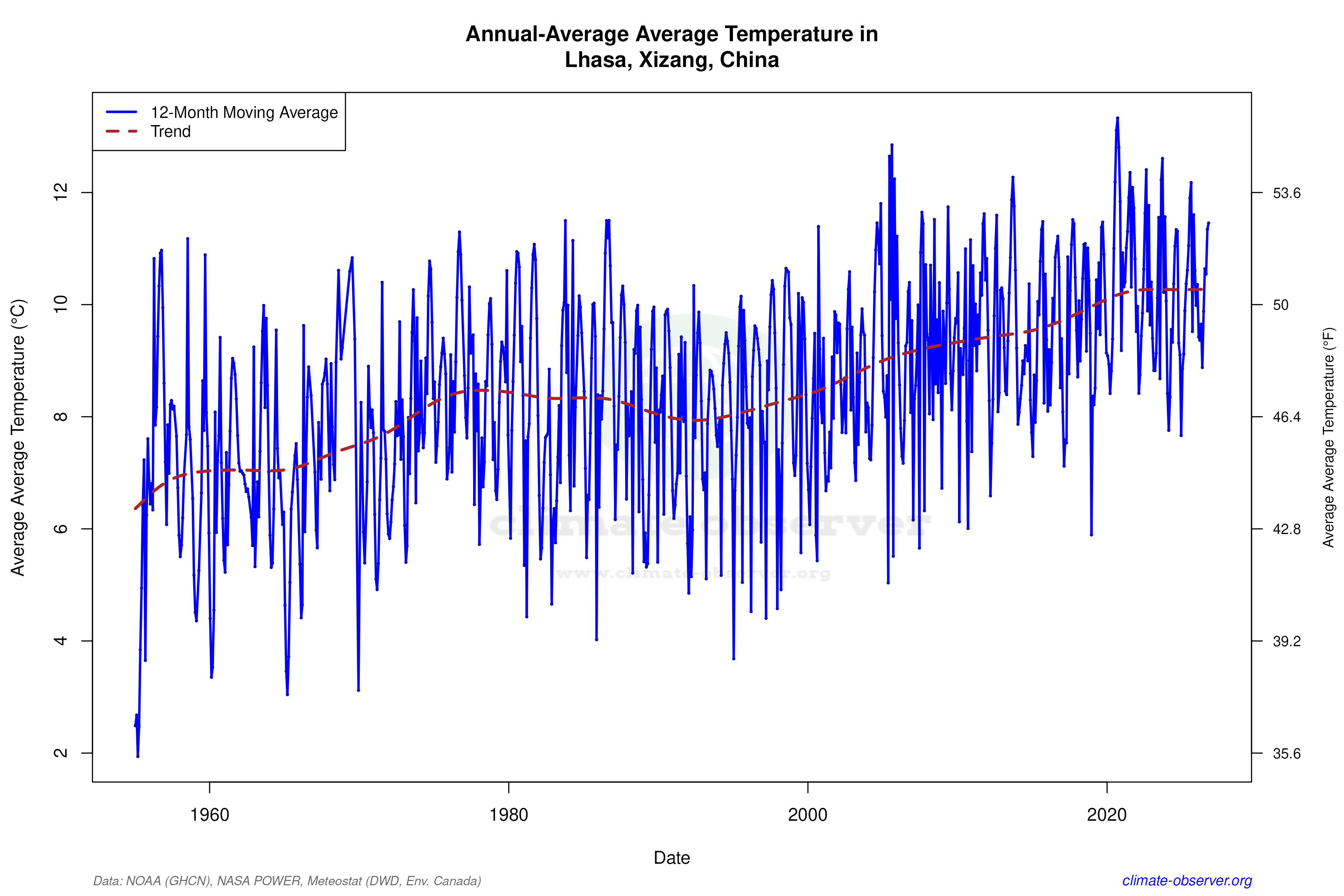
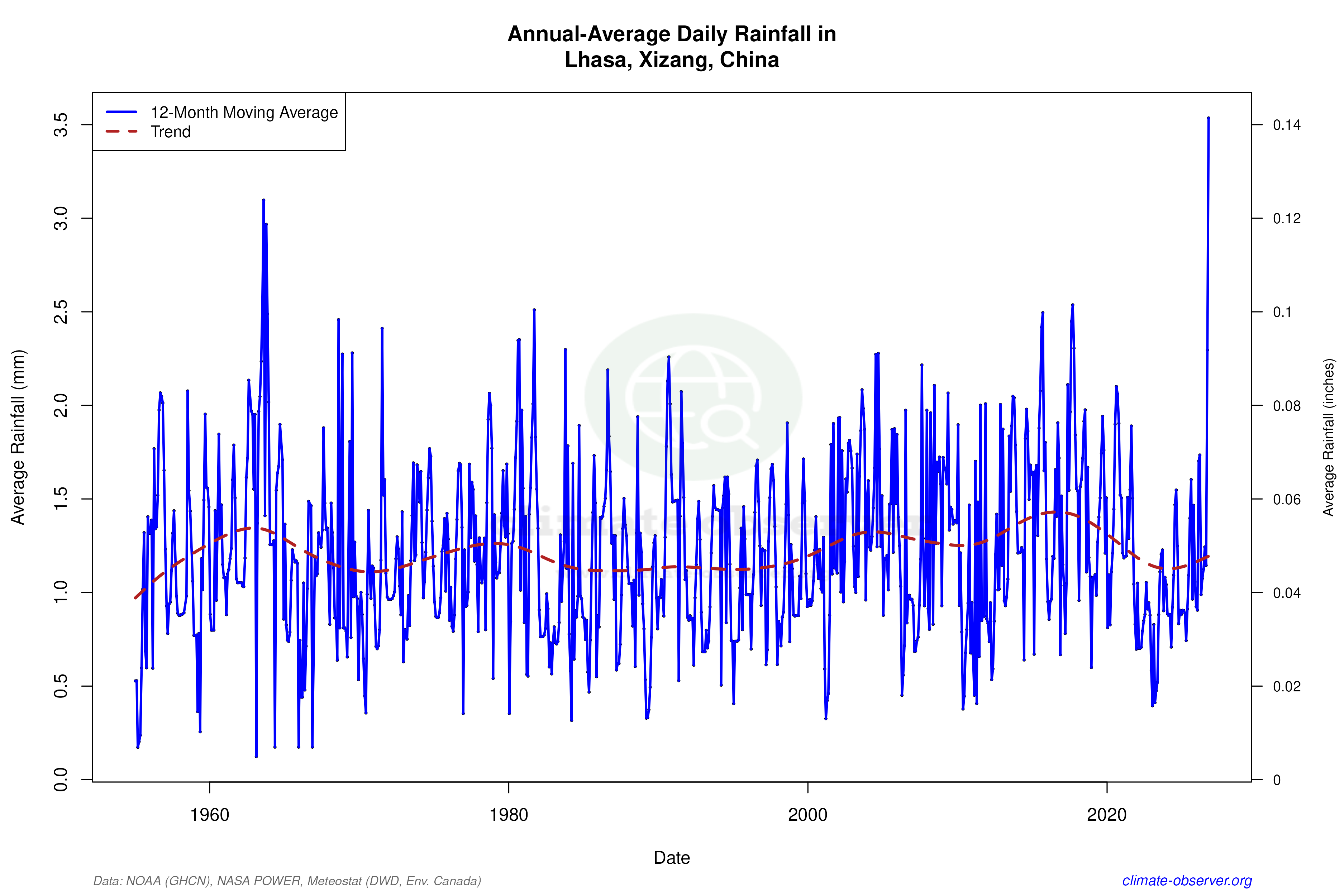
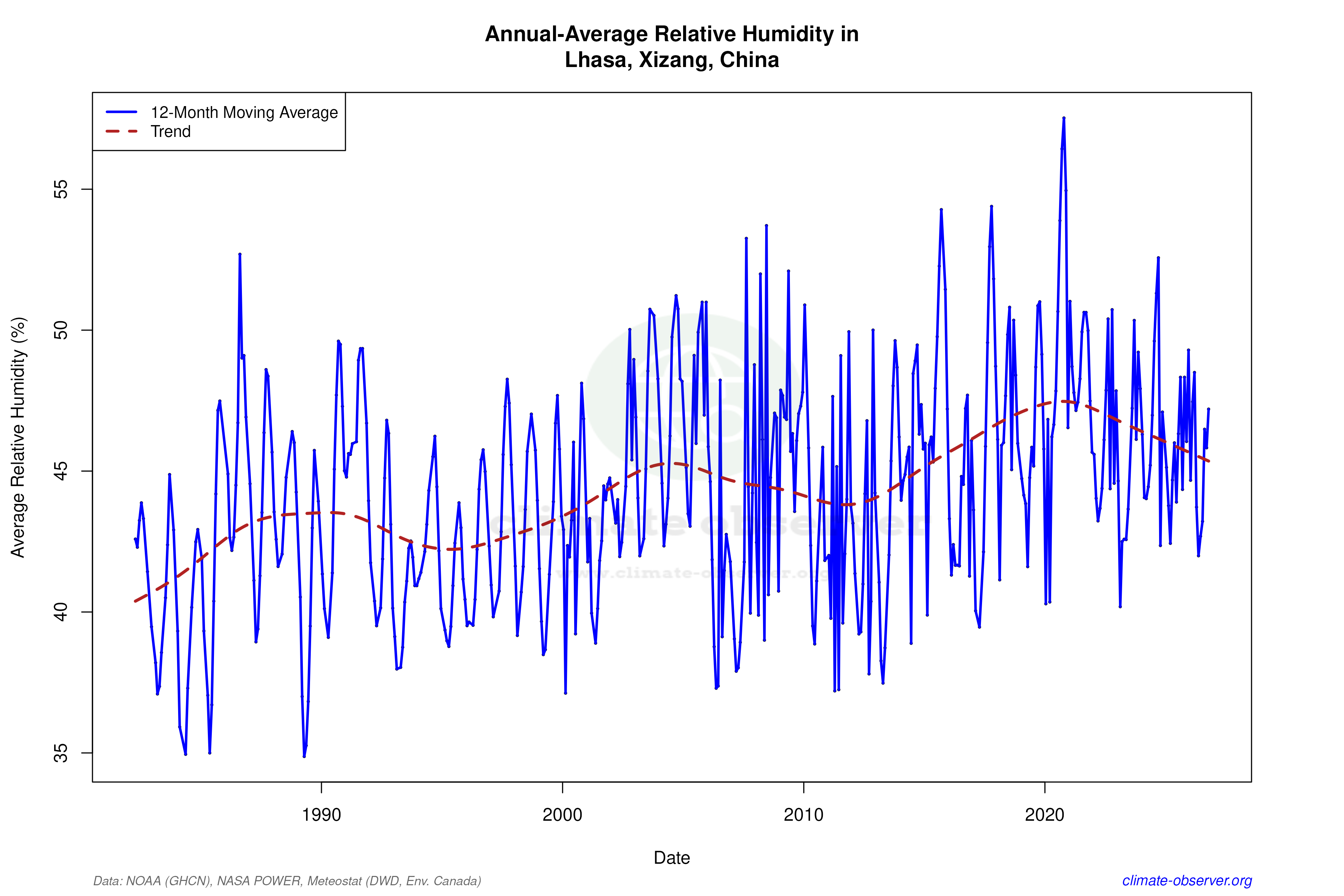

Max Temperature 12-Month MA | 1 of 6
Daily Data Points and Averages Throughout the Year
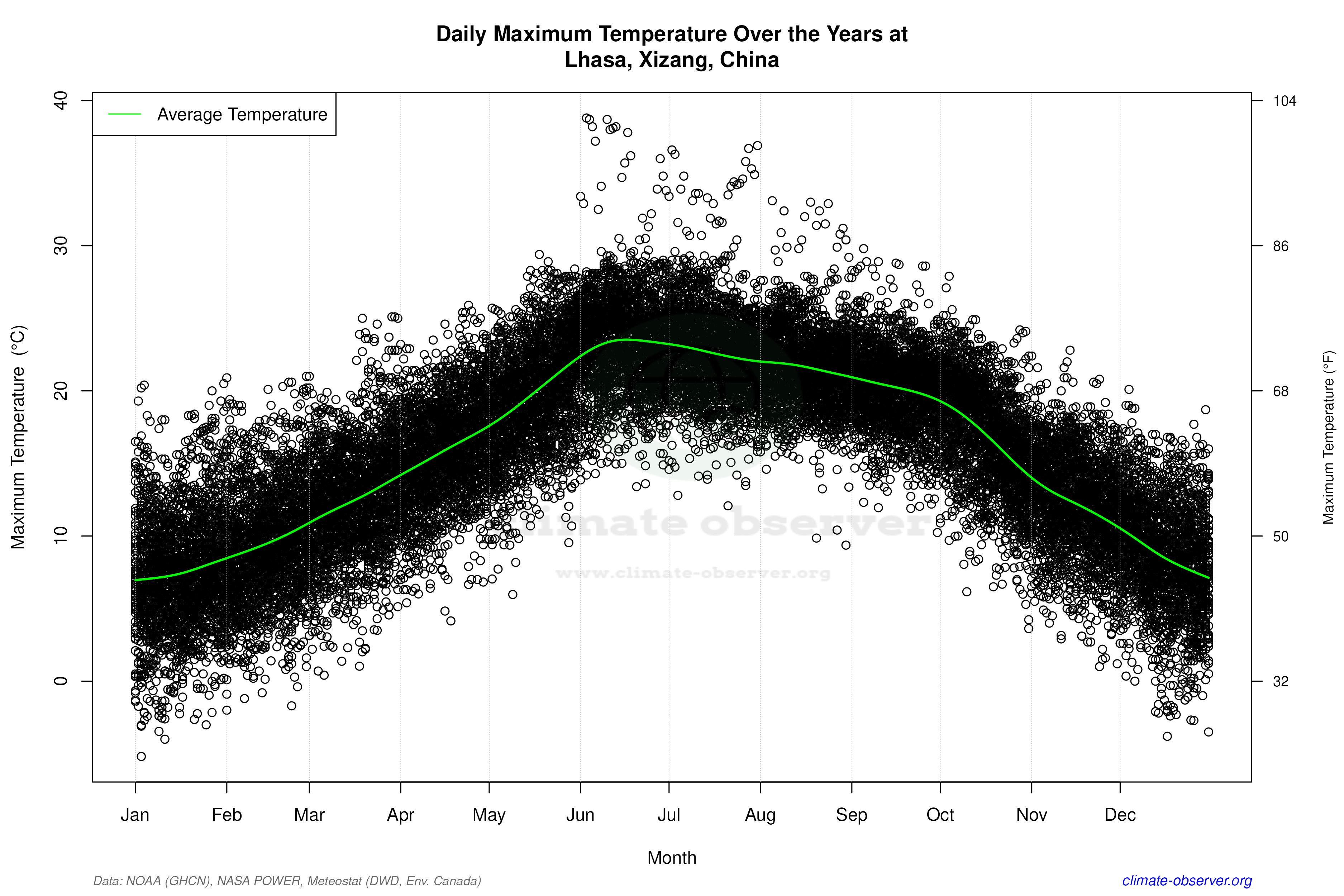
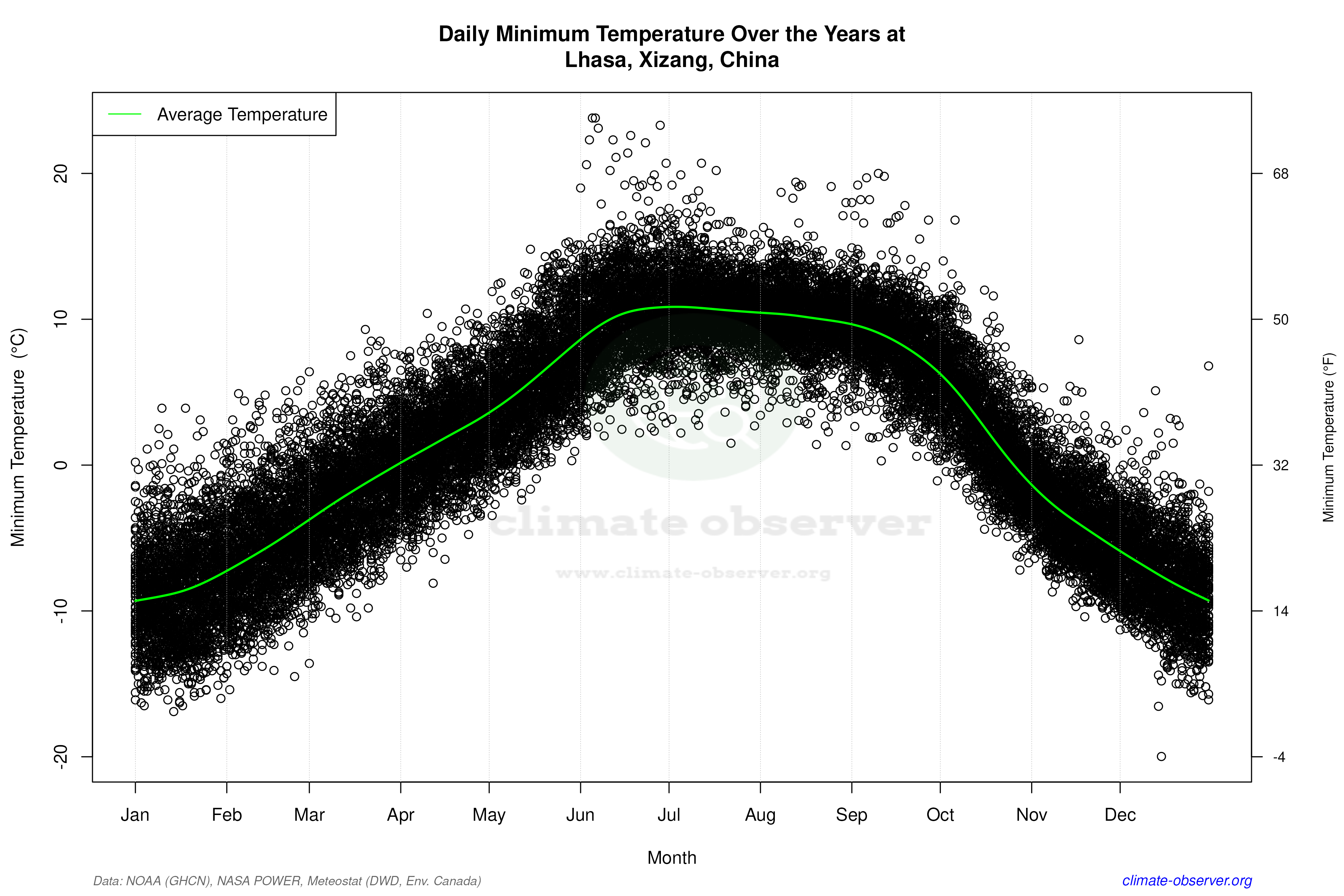
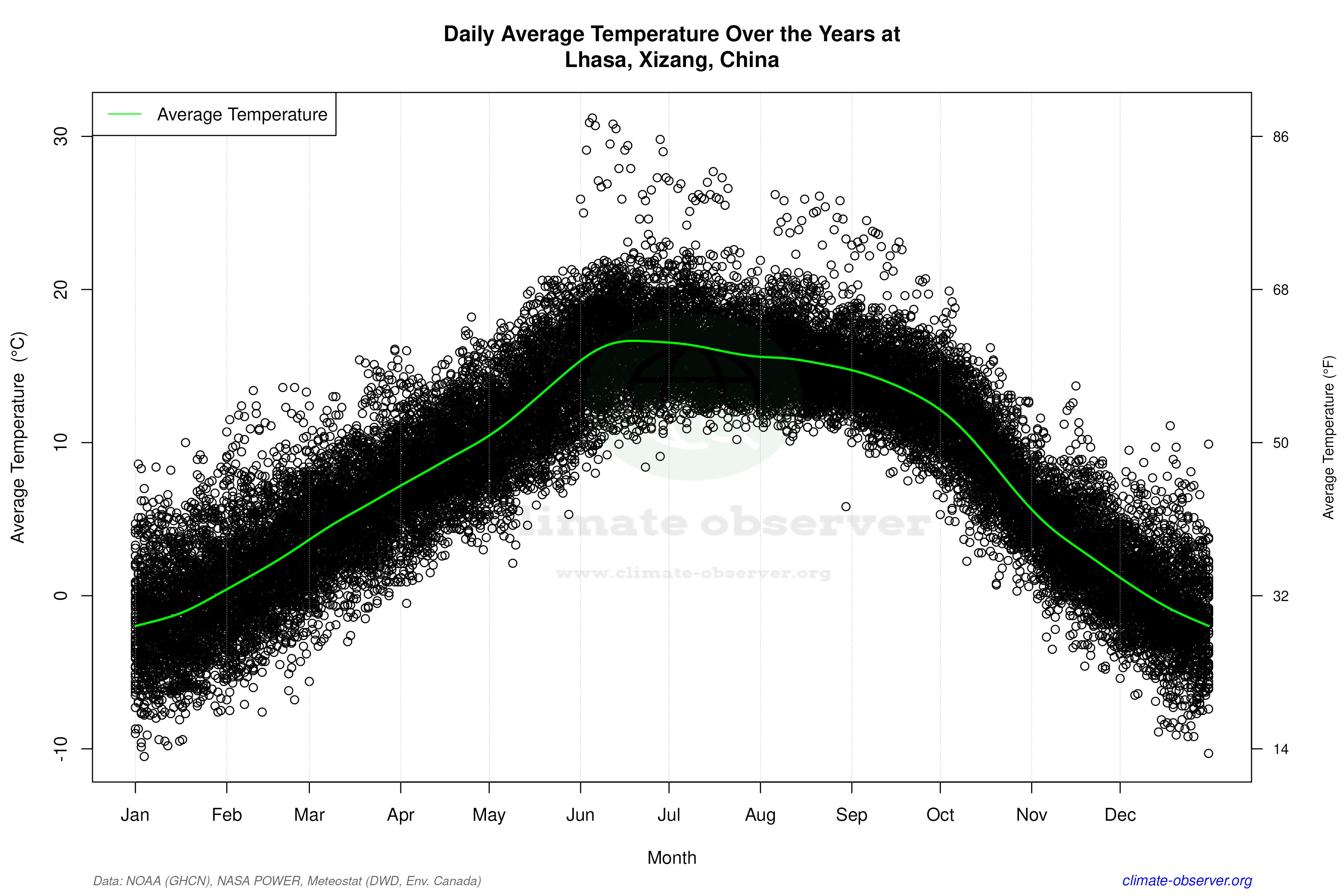
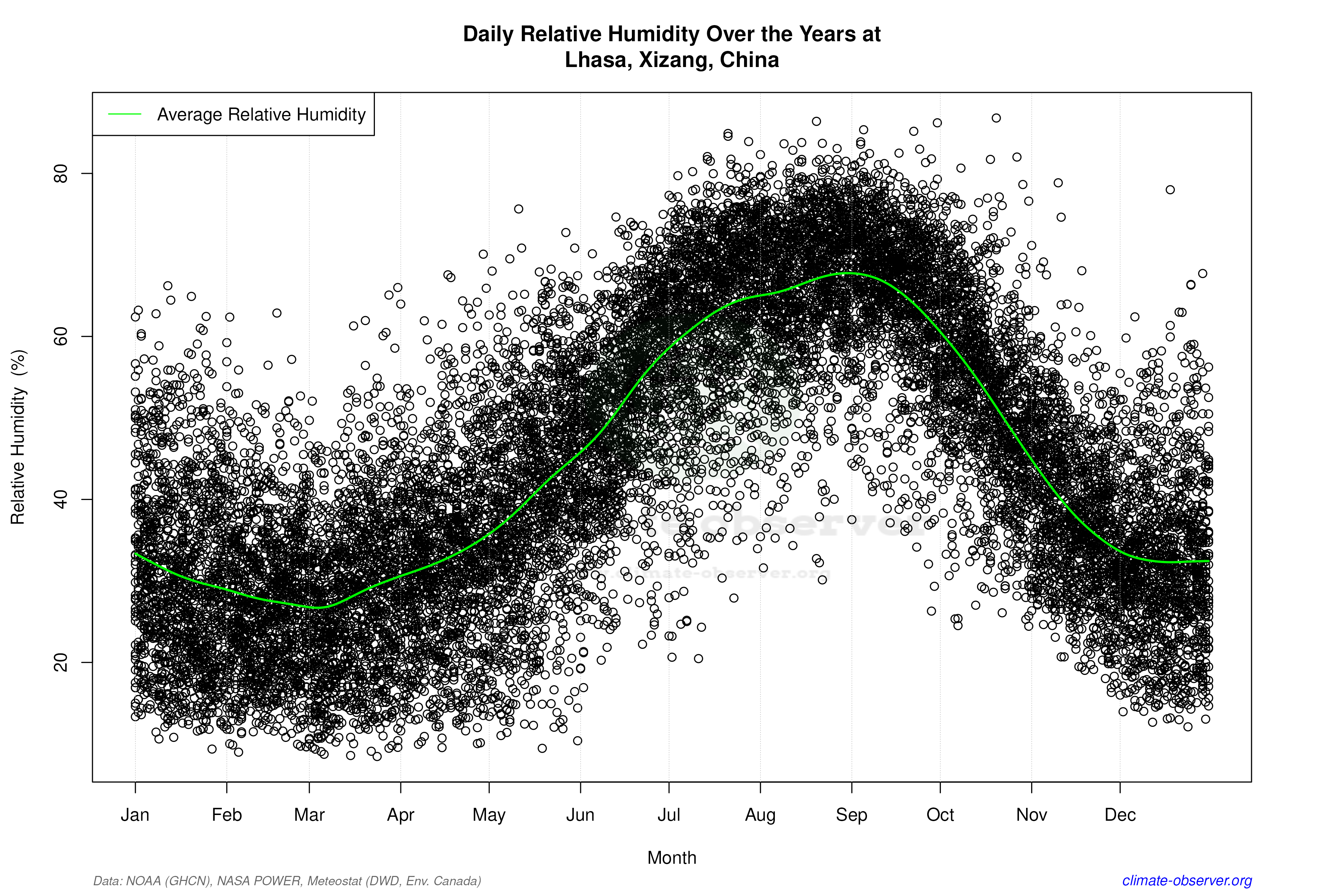

Average Max Temperature Throughout Year | 1 of 5


