Climate for Station: Isla De Pascua, Region of Valparaiso, Chile
Loading live weather...
Climate Analysis & Overview
Isla De Pascua, known for its enigmatic moai statues, is experiencing nuanced climate shifts. While the island's all-time temperature trends indicate a warming of 0.35°C (0.63°F) in highs, recent years show a contrasting cooling in lows by 0.60°C (1.08°F). Precipitation patterns have become more evenly distributed, reflecting a shift in the island's hydrological balance.
Oceanic Climate Dynamics
Isla De Pascua, or Easter Island, is classified under the Köppen climate system as having a tropical rainforest climate (Af), influenced heavily by its isolated position in the Pacific Ocean. The surrounding waters moderate the island's climate, resulting in relatively stable temperatures year-round. However, the all-time data reveals a warming trend in high temperatures by 0.35°C (0.63°F). This gradual rise is consistent with broader regional patterns linked to global climate change and oceanic warming.
Contrasting Temperature Trends
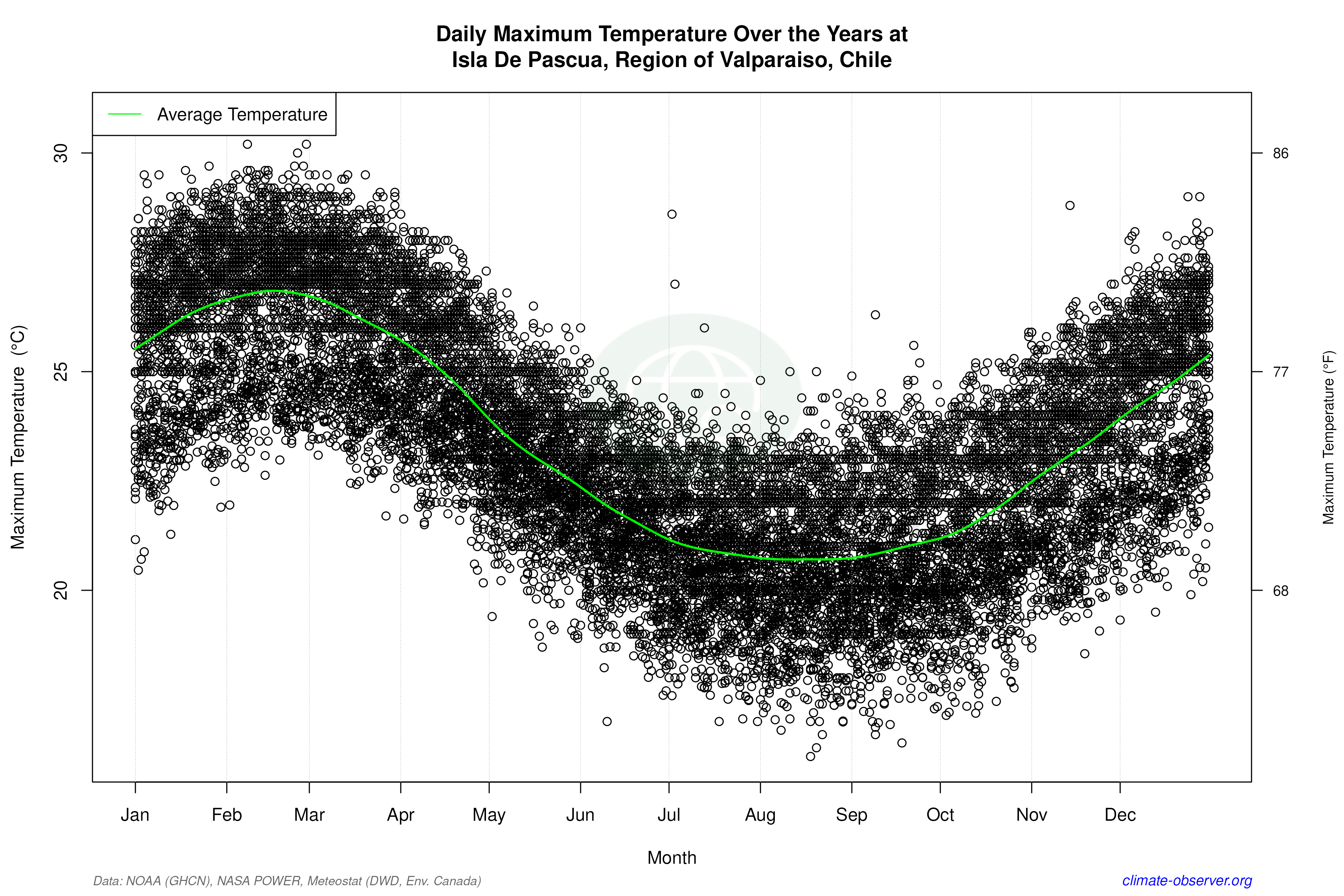
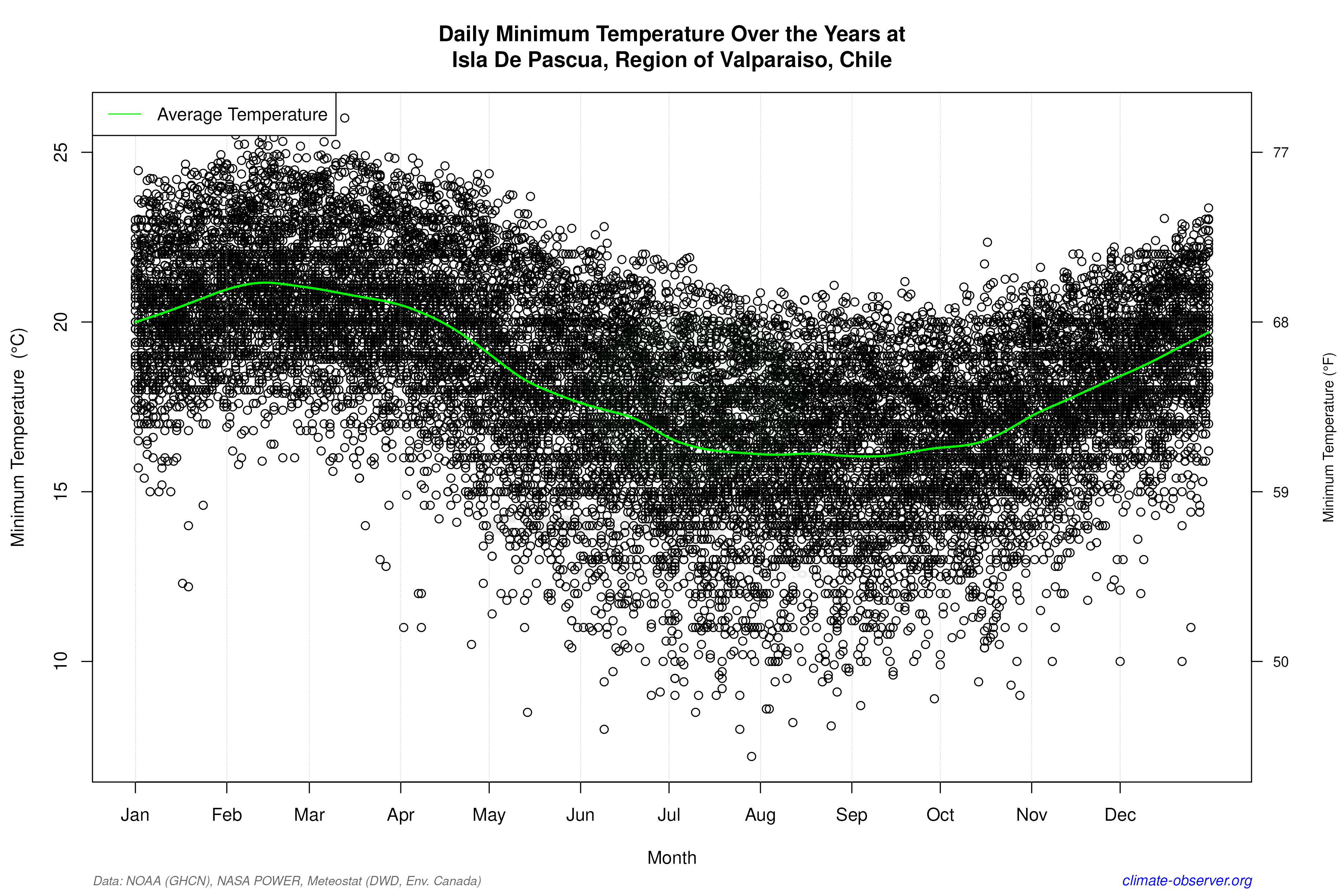
Over the past decade, Isla De Pascua has experienced a cooling trend in low temperatures, with a notable drop of 0.60°C (1.08°F). This is in stark contrast to the all-time warming trend in highs. Such a divergence may be influenced by localised factors, including ocean currents and wind patterns, which can create microclimates within the island's unique geography. The island's record temperatures remain stable, with a maximum of 30.8°C (87.4°F) and a minimum of 7.2°C (45.0°F), indicating that while trends fluctuate, extremes have not yet shifted significantly.
Precipitation Patterns and PCI Insights
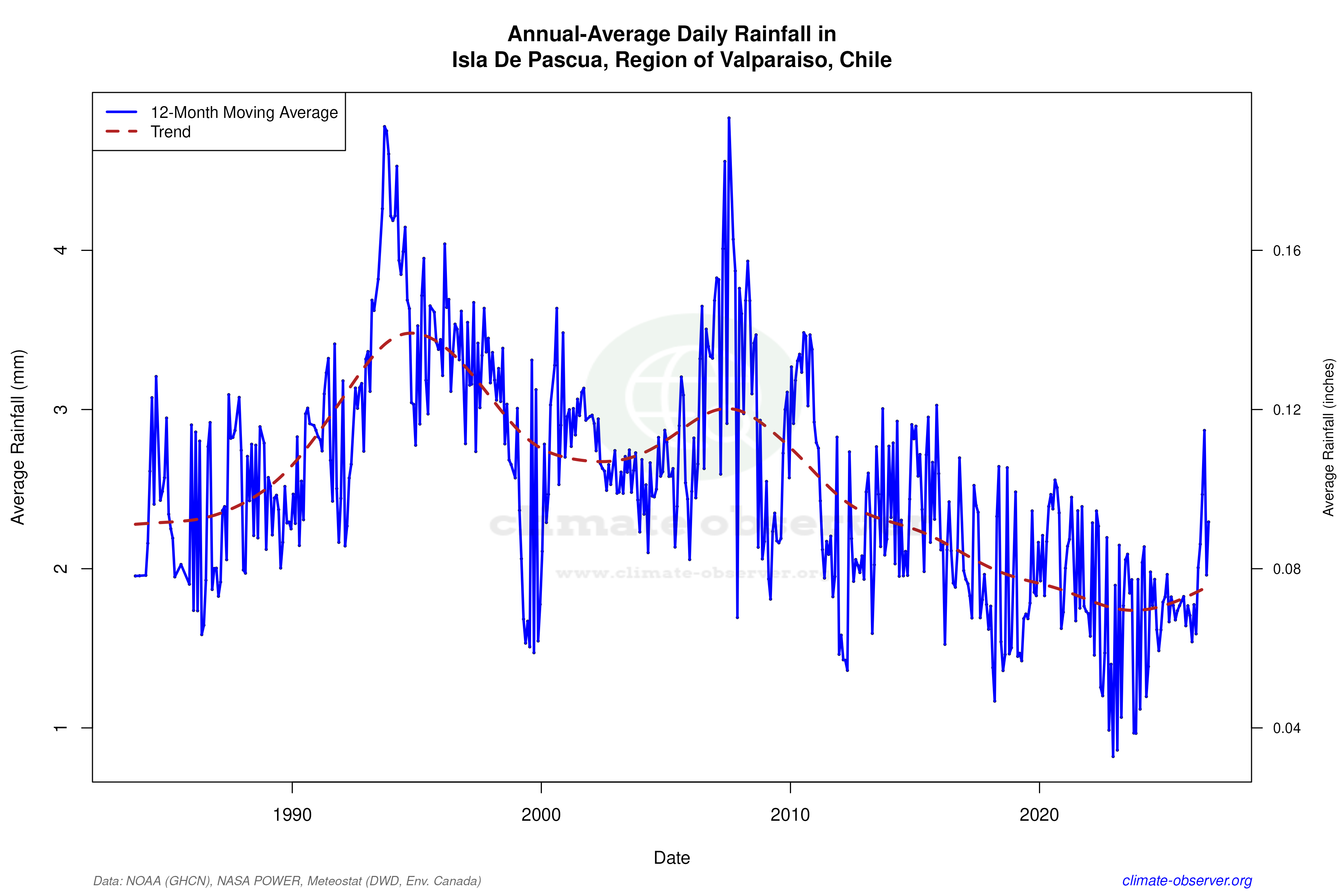
The Precipitation Concentration Index (PCI) for Isla De Pascua has decreased from a baseline of 14.16 to a current value of 10.04. This indicates that rainfall is now more evenly distributed throughout the year, rather than concentrated in fewer, intense events. Such a shift could be beneficial for local agriculture and water resources, providing a more consistent supply of moisture. The PCI value under 10 suggests a very even distribution, which is a significant change from historical patterns.
Regional Climate Considerations
Chile has been proactive in addressing climate change, with national goals targeting carbon neutrality by 2050. Isla De Pascua's climate data aligns with these efforts, as the island's shifts in temperature and precipitation patterns reflect broader trends observed across the Pacific region. Recent weather events, such as increased storm activity, may further influence these patterns, necessitating adaptive strategies for the island's communities and ecosystems.
Implications of Climate Variability
The variability in Isla De Pascua's climate, characterised by warming highs and cooling lows, underscores the complexity of climate dynamics in isolated regions. The island's unique position makes it a valuable case study for understanding the interplay between oceanic influences and terrestrial climate changes. As global temperatures continue to rise, monitoring these trends will be crucial in predicting future impacts on the island's environment and cultural heritage.
Station Statistics
10-Year Trend
High: +0.16 °C/decade
Low: -0.10 °C/decade
Rain: -0.20 mm/decade
25-Year Trend
High: -0.03 °C/decade
Low: -0.41 °C/decade
Rain: -0.56 mm/decade
50-Year Trend
High: +0.27 °C/decade
Low: -0.27 °C/decade
Rain: -0.26 mm/decade
All-Time Trend
High: +0.27 °C/decade
Low: -0.27 °C/decade
Rain: -0.26 mm/decade
Percentage Above-Average Days
Last 12 Months: 52.1%
This Year: 46.6%
Precipitation Concentration Index (PCI) ℹ️
Last 12 Months: 11.1
Historical Average: 12.0
Percentile Rank of Last 12 Months ℹ️
High: 50th percentile
Low: 44th percentile
Rain: 22nd percentile
Change in Variance ℹ️
High: -9.8%
Low: +0.9%
Intraday: -12.5%
Data Coverage
79.1%
First Year of Data
1967
Station Location
Historical Weather Records
| Max High | Avg High | Min High | Max Avg | Avg Avg | Min Avg | Max Low | Avg Low | Min Low | Max Precipitation | Avg Precipitation | Max Snow | Avg Snow | |
|---|---|---|---|---|---|---|---|---|---|---|---|---|---|
| Record | 30.8 °C | — | 16.2 °C | 27.3 °C | — | 13.1 °C | 26.0 °C | — | 7.2 °C | 107.2 mm | — | — | — |
| January | 30.6 °C | 26.1 °C | 20.5 °C | 27.1 °C | 23.5 °C | 18.7 °C | 24.9 °C | 20.5 °C | 12.2 °C | 61.0 mm | 1.9 mm | — | — |
| February | 30.8 °C | 26.8 °C | 21.9 °C | 27.3 °C | 24.0 °C | 20.7 °C | 25.9 °C | 21.1 °C | 15.8 °C | 55.1 mm | 1.9 mm | — | — |
| March | 29.5 °C | 26.3 °C | 21.7 °C | 26.7 °C | 23.6 °C | 18.9 °C | 26.0 °C | 20.8 °C | 12.8 °C | 82.0 mm | 2.4 mm | — | — |
| April | 28.6 °C | 24.9 °C | 20.2 °C | 26.7 °C | 22.4 °C | 18.2 °C | 24.8 °C | 19.9 °C | 10.5 °C | 94.2 mm | 3.2 mm | — | — |
| May | 26.8 °C | 23.1 °C | 18.7 °C | 24.8 °C | 20.6 °C | 15.7 °C | 24.4 °C | 18.2 °C | 8.5 °C | 107.2 mm | 3.5 mm | — | — |
| June | 26.0 °C | 21.7 °C | 17.0 °C | 23.0 °C | 19.4 °C | 14.1 °C | 22.8 °C | 17.2 °C | 8.0 °C | 103.1 mm | 3.0 mm | — | — |
| July | 28.6 °C | 20.9 °C | 17.0 °C | 22.3 °C | 18.5 °C | 13.6 °C | 21.9 °C | 16.2 °C | 7.2 °C | 96.0 mm | 3.1 mm | — | — |
| August | 25.0 °C | 20.7 °C | 16.2 °C | 22.4 °C | 18.3 °C | 13.1 °C | 21.1 °C | 16.1 °C | 8.1 °C | 70.5 mm | 2.7 mm | — | — |
| September | 26.3 °C | 21.0 °C | 16.5 °C | 22.1 °C | 18.6 °C | 14.1 °C | 21.2 °C | 16.1 °C | 8.7 °C | 82.0 mm | 2.9 mm | — | — |
| October | 25.9 °C | 21.7 °C | 17.1 °C | 22.8 °C | 19.2 °C | 14.3 °C | 22.4 °C | 16.6 °C | 9.0 °C | 67.1 mm | 2.1 mm | — | — |
| November | 28.8 °C | 23.2 °C | 18.6 °C | 24.4 °C | 20.6 °C | 16.7 °C | 22.2 °C | 17.9 °C | 10.0 °C | 51.1 mm | 1.8 mm | — | — |
| December | 29.0 °C | 24.6 °C | 19.3 °C | 25.5 °C | 22.0 °C | 17.9 °C | 23.4 °C | 19.0 °C | 10.0 °C | 49.0 mm | 1.8 mm | — | — |
Data Visualisations
Remove WatermarksCurrent Year Climate Trends vs Historical
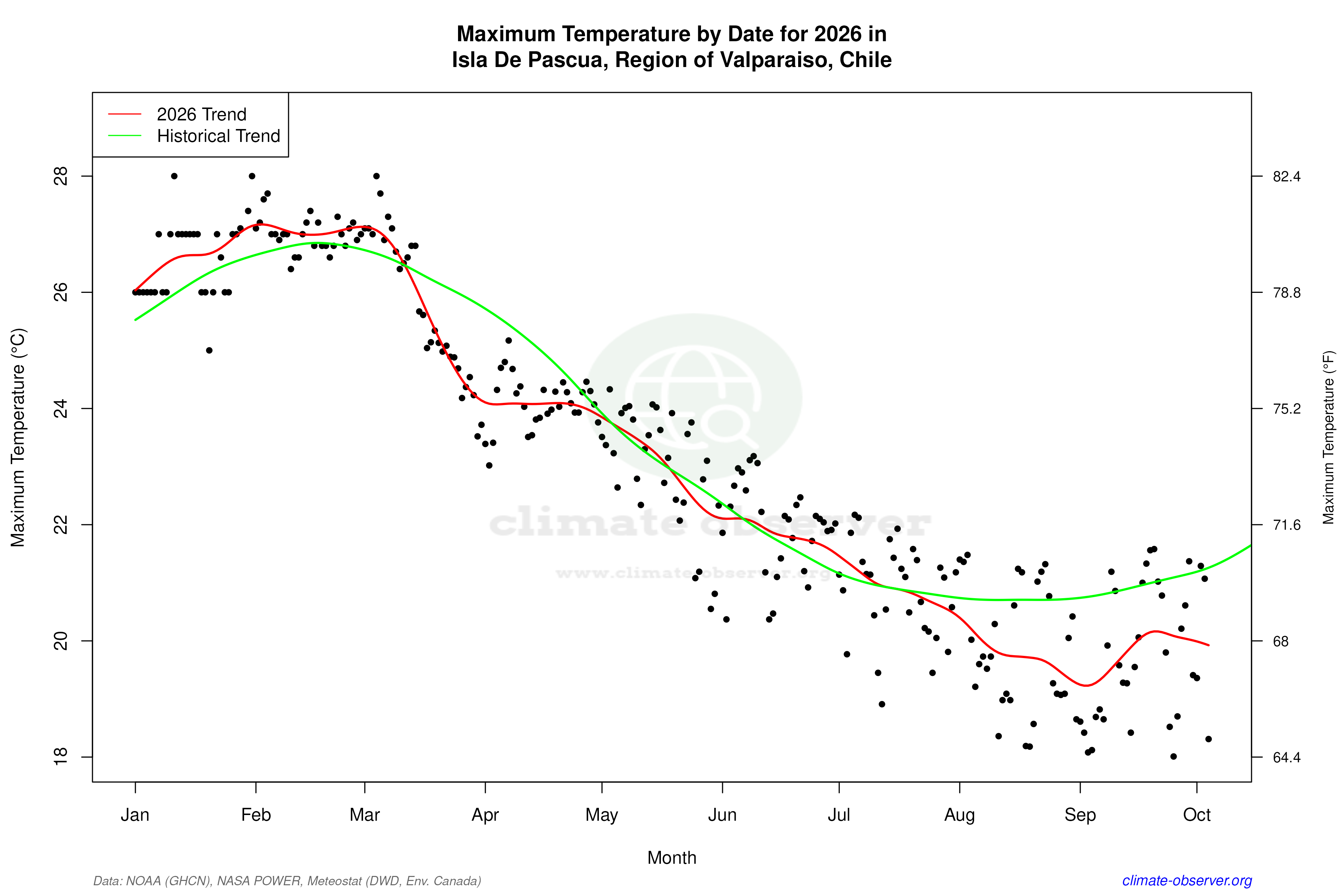
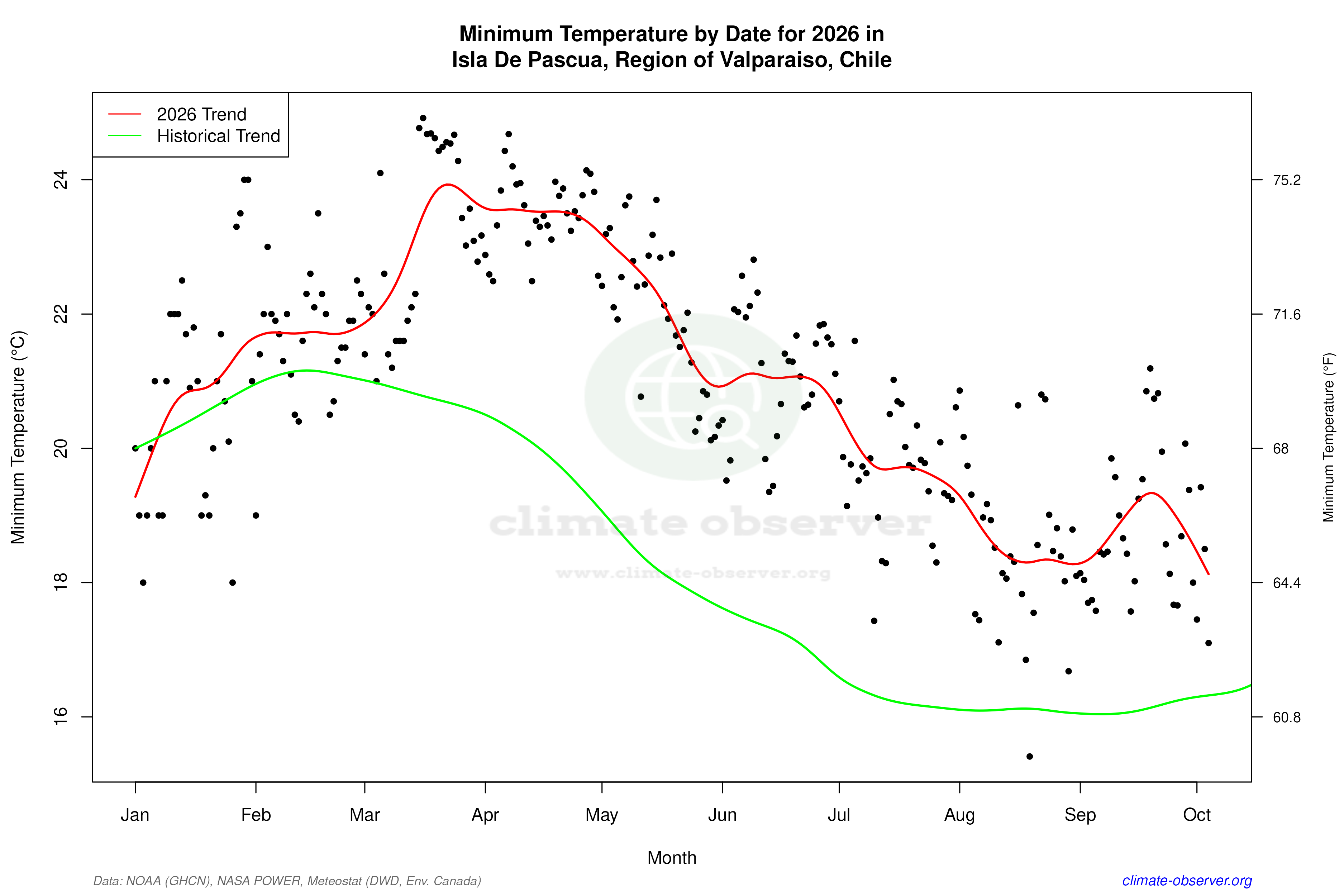
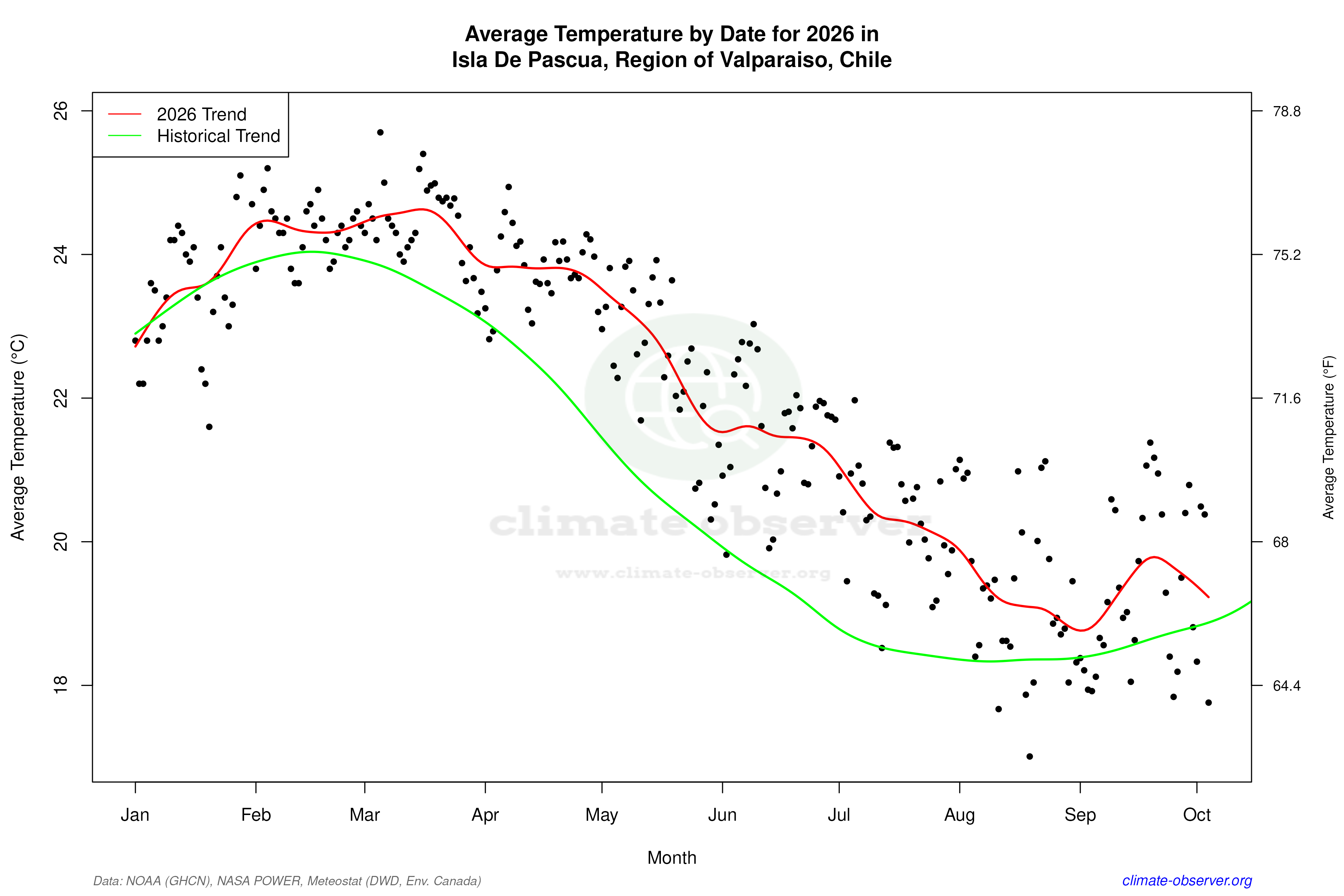
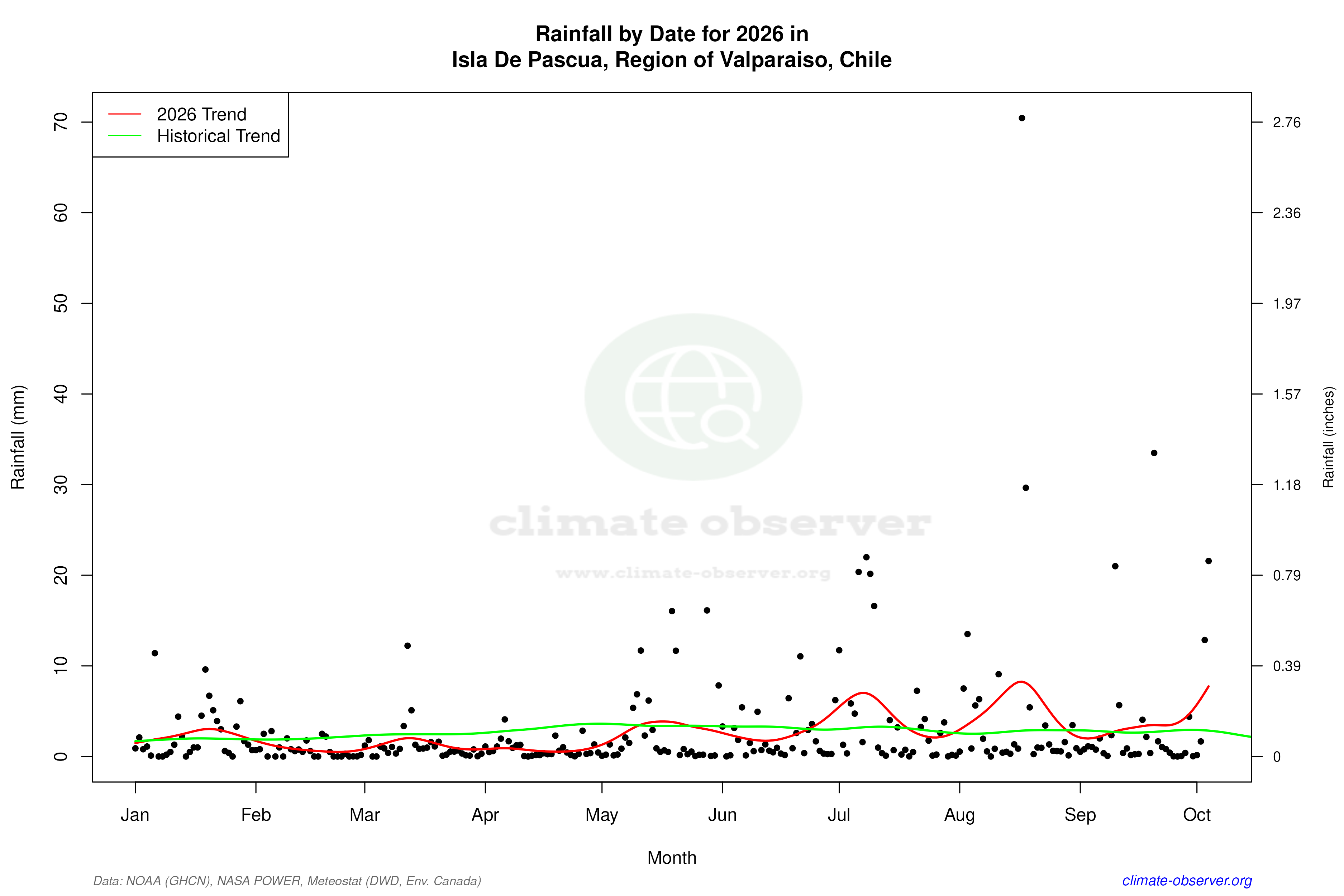
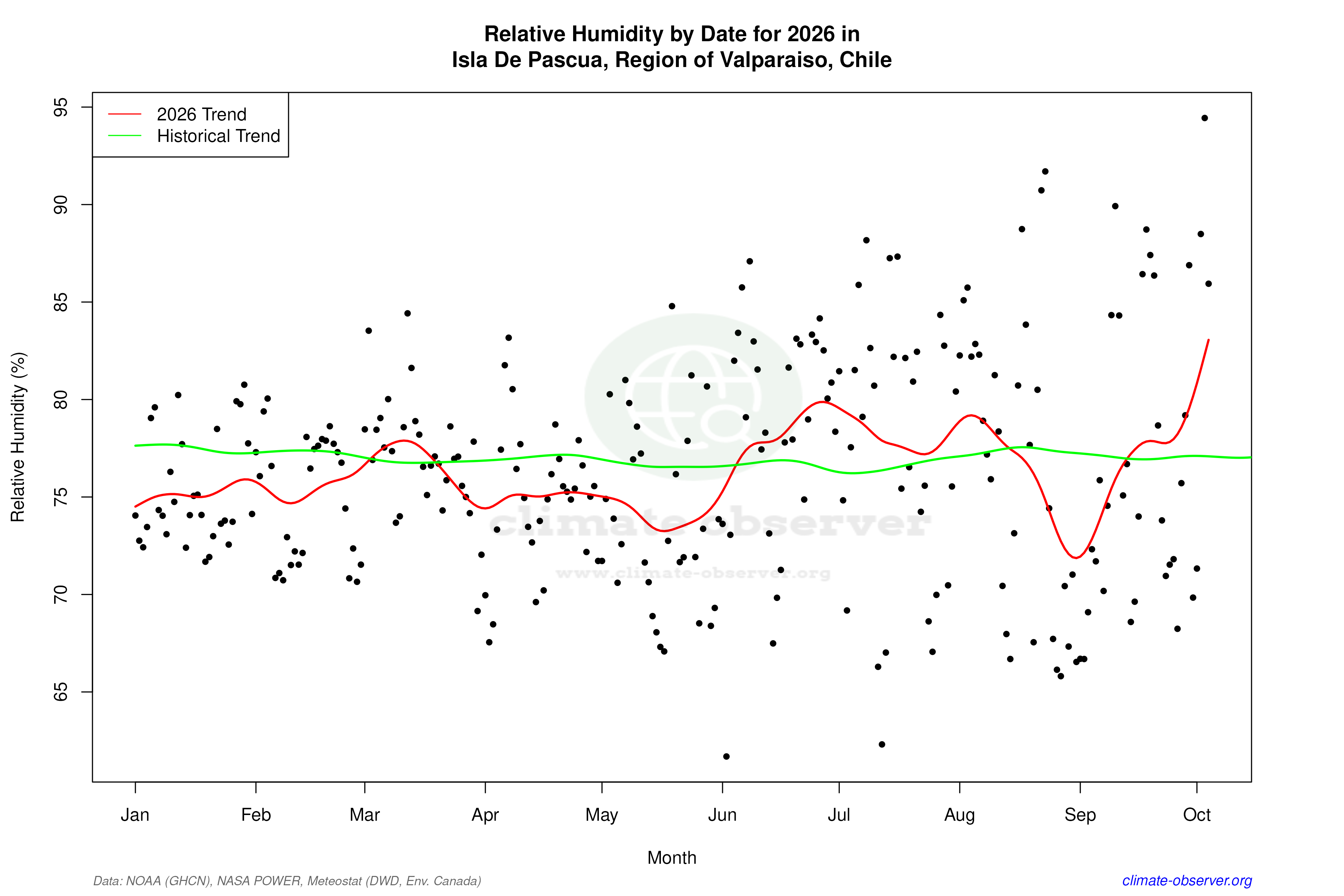

Max Temperature this Year | 1 of 6
Climate 12-Month Moving Averages
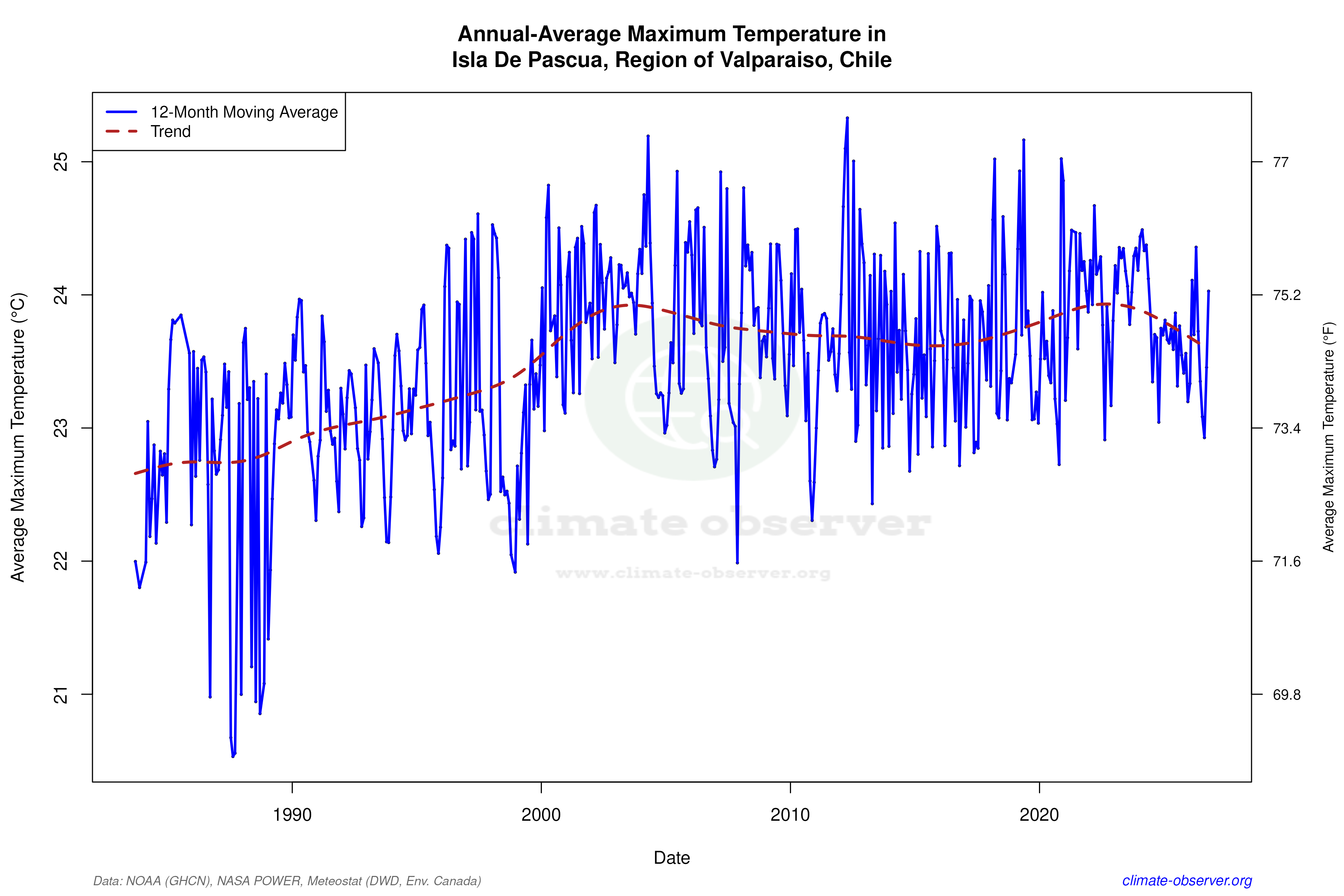
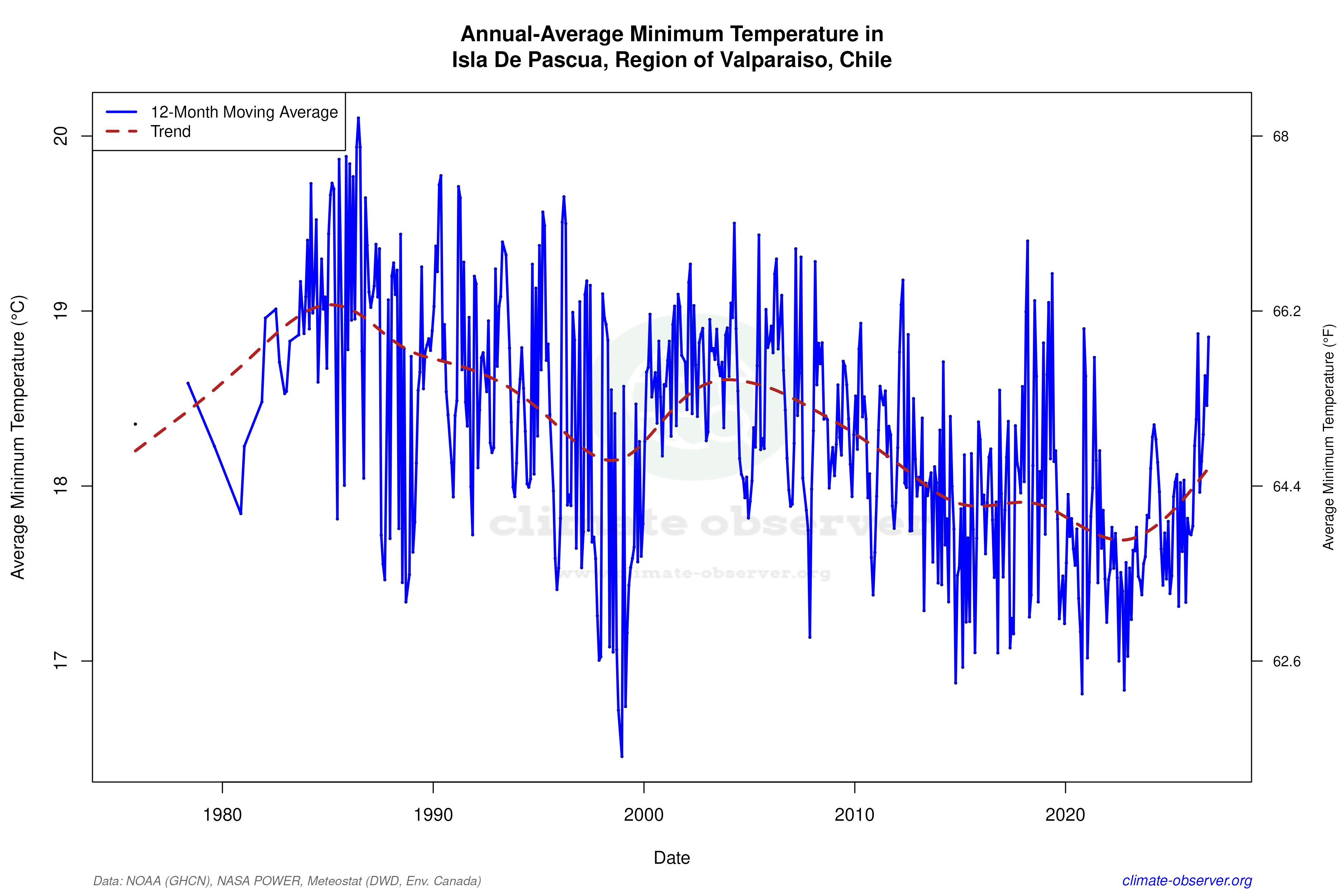
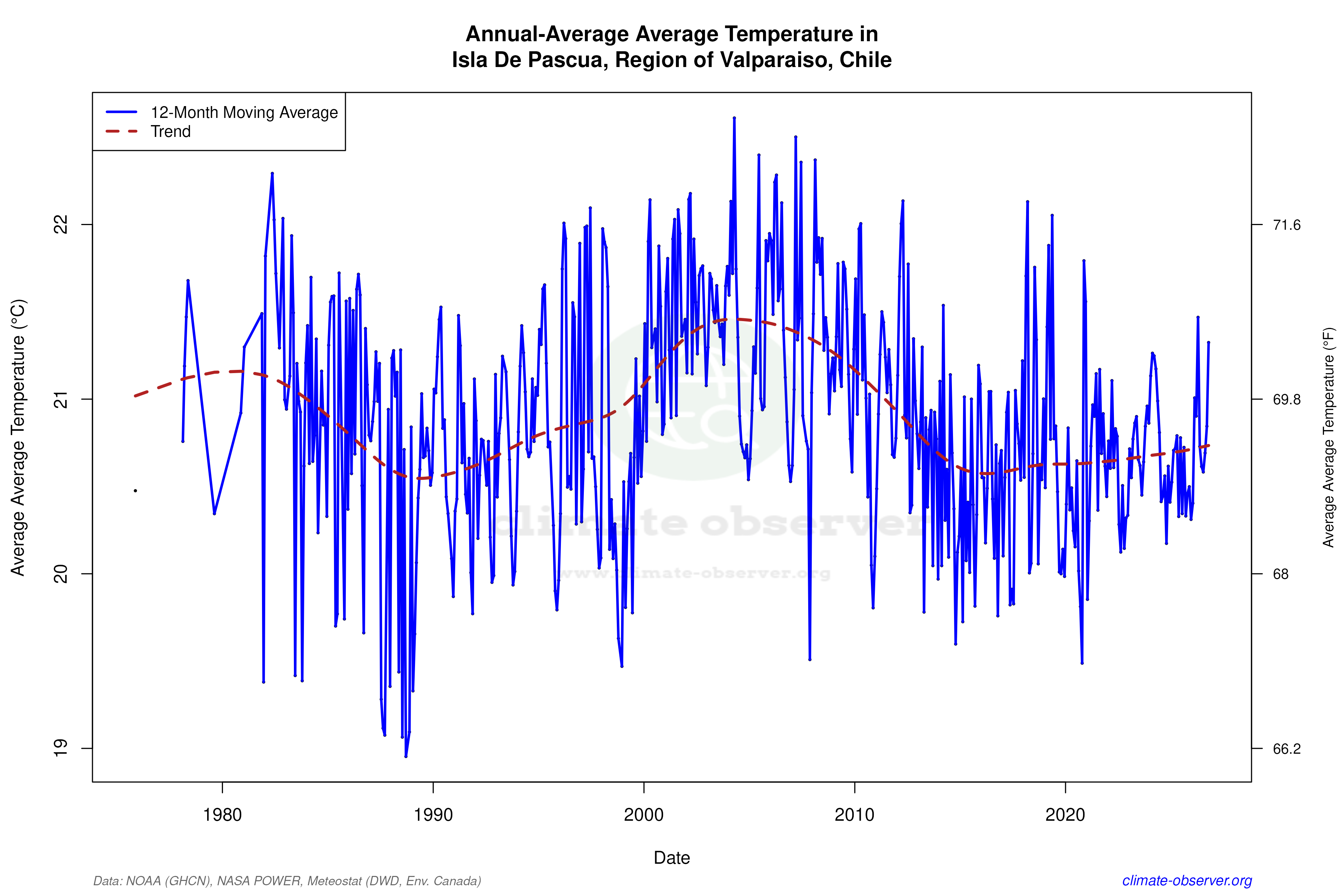

Max Temperature 12-Month MA | 1 of 6
Daily Data Points and Averages Throughout the Year
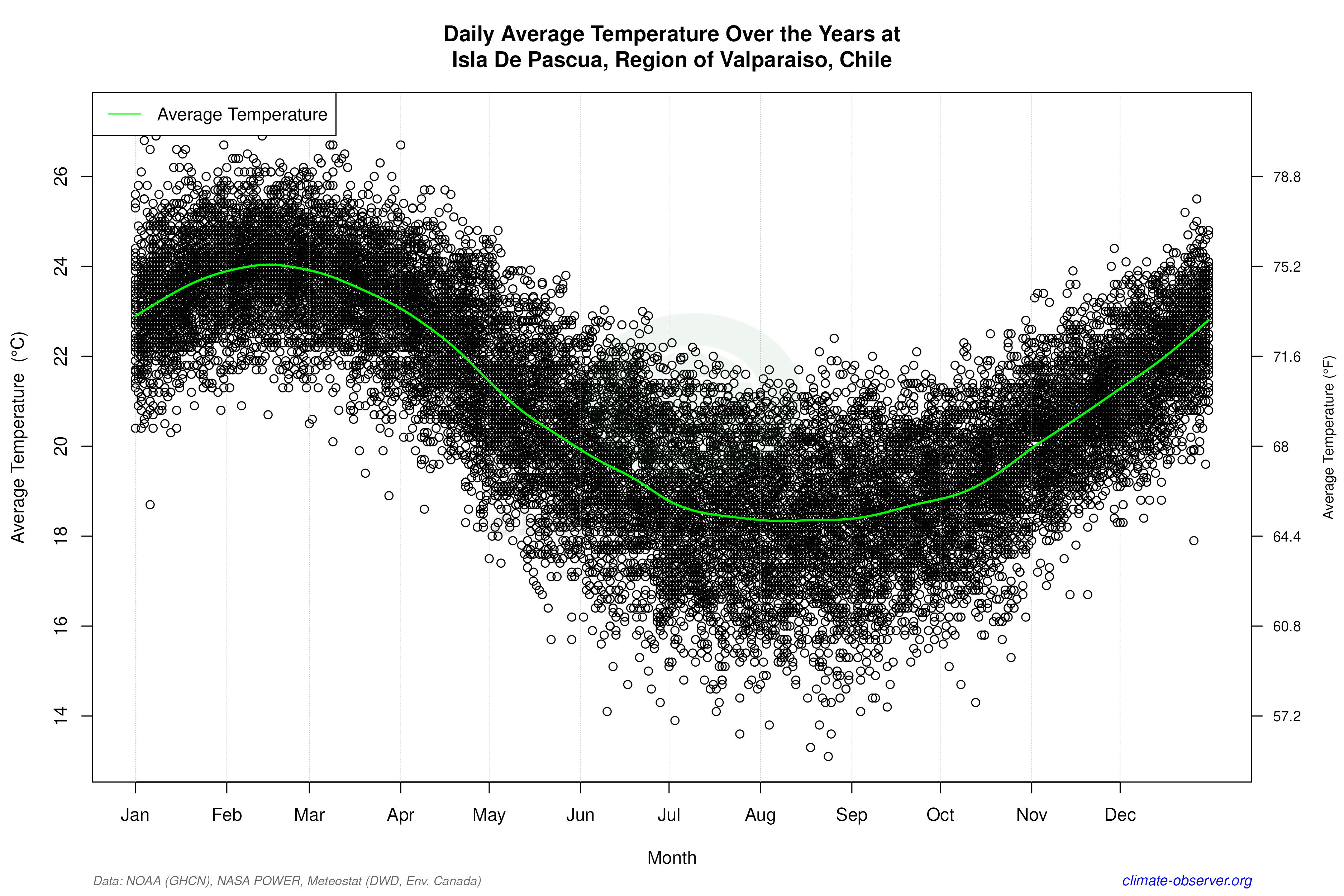
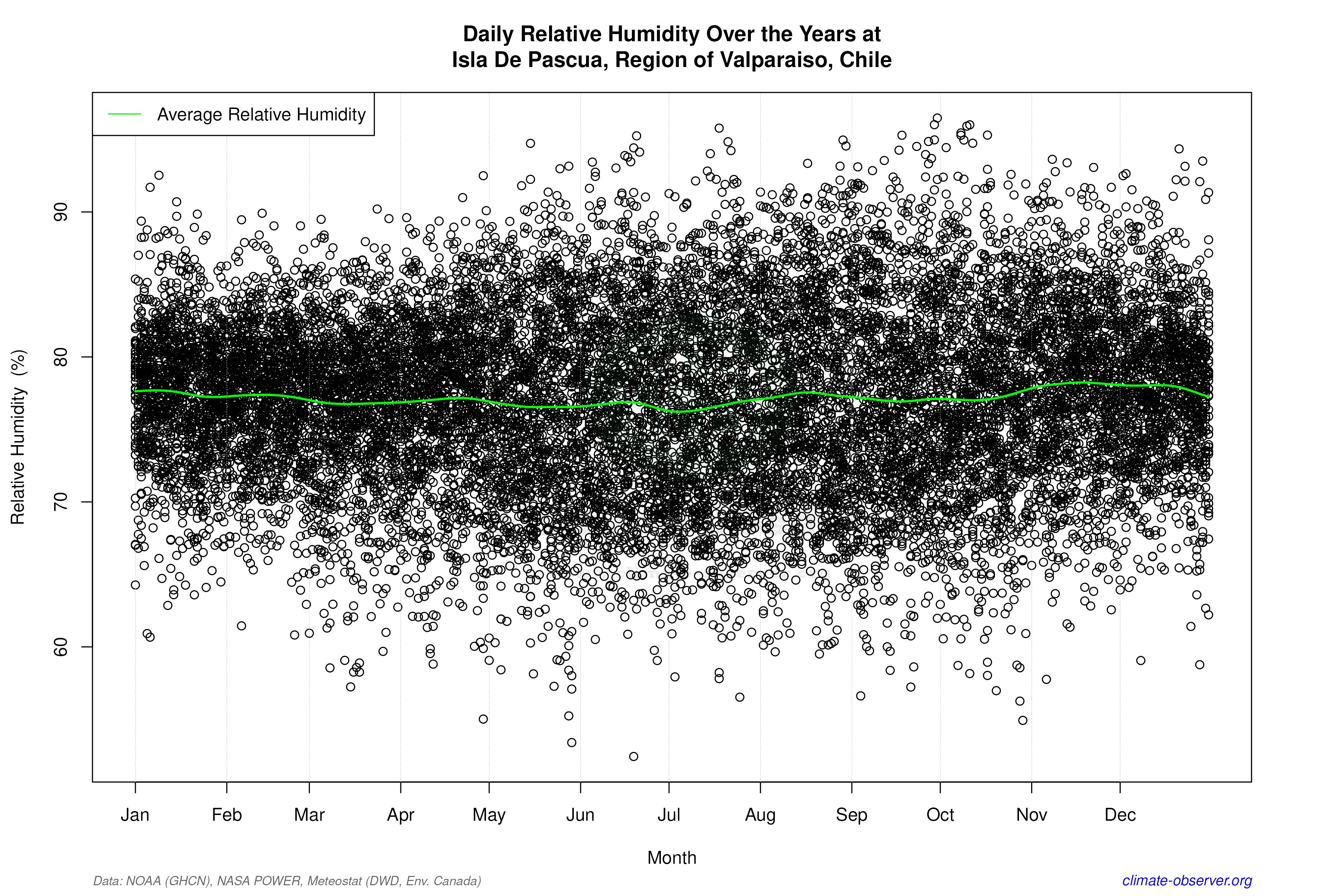

Average Max Temperature Throughout Year | 1 of 5


