Climate for Station: Juan Santamaria Intl, Alajuela, Costa Rica
Loading live weather...
Climate Analysis & Overview
Juan Santamaria International Airport, located in Costa Rica's Alajuela province, exhibits a nuanced climate profile with a warming trend in low temperatures and a cooling trend in highs over the past decade. The all-time data indicates a slight warming for both highs and lows, while precipitation has become more evenly distributed.
Costa Rica's Climatic Context
Situated at 9.994°N, -84.209°W, Juan Santamaria International Airport is nestled in a region characterised by a tropical savanna climate, classified as Aw under the Köppen system. This climate type is influenced by the Central Valley's geography, where the surrounding mountains moderate temperatures and affect precipitation patterns. The airport's location in the valley means it experiences less extreme weather than coastal areas, with temperature and precipitation moderated by the elevation and topography.
Temperature Trends: A Mixed Bag
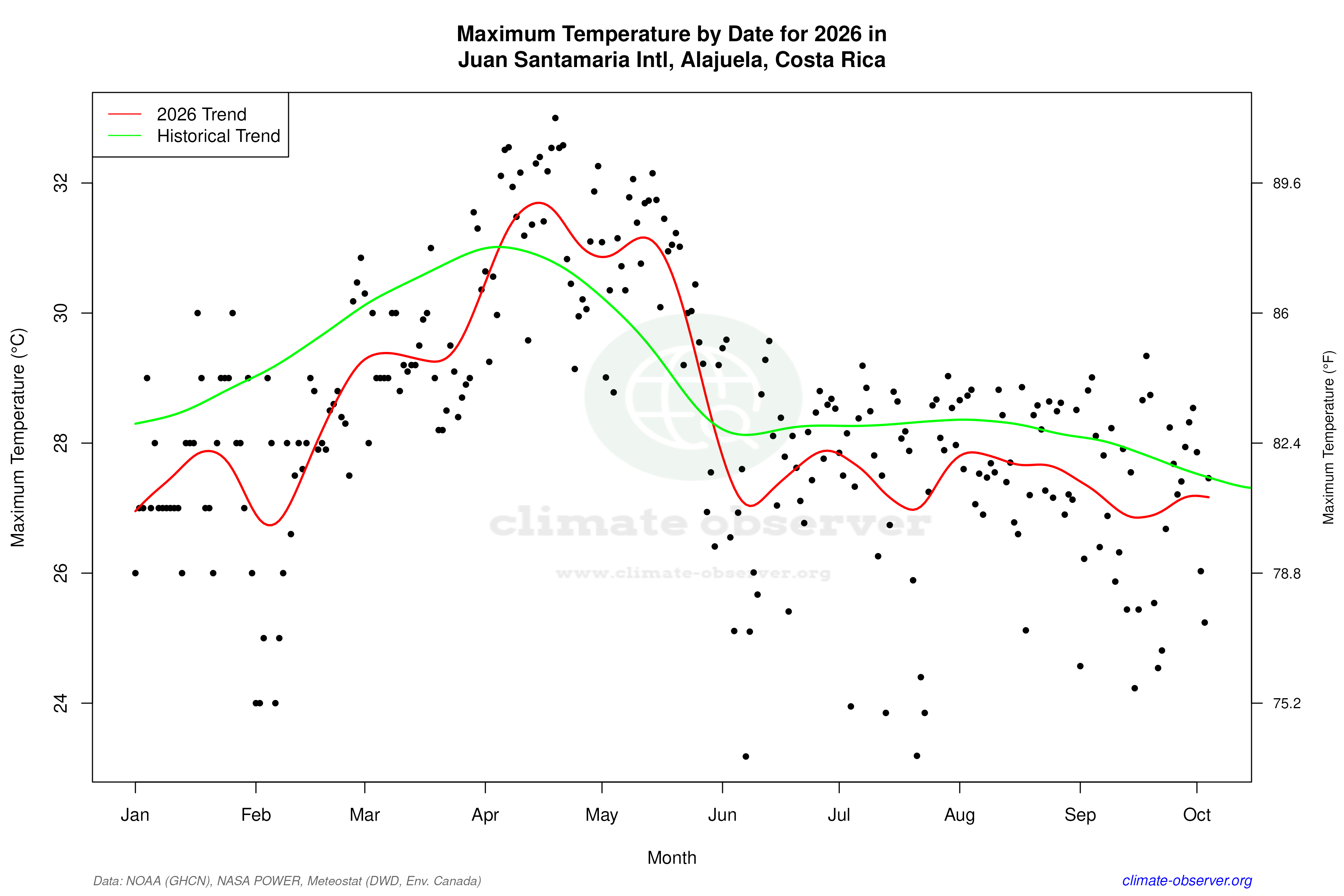
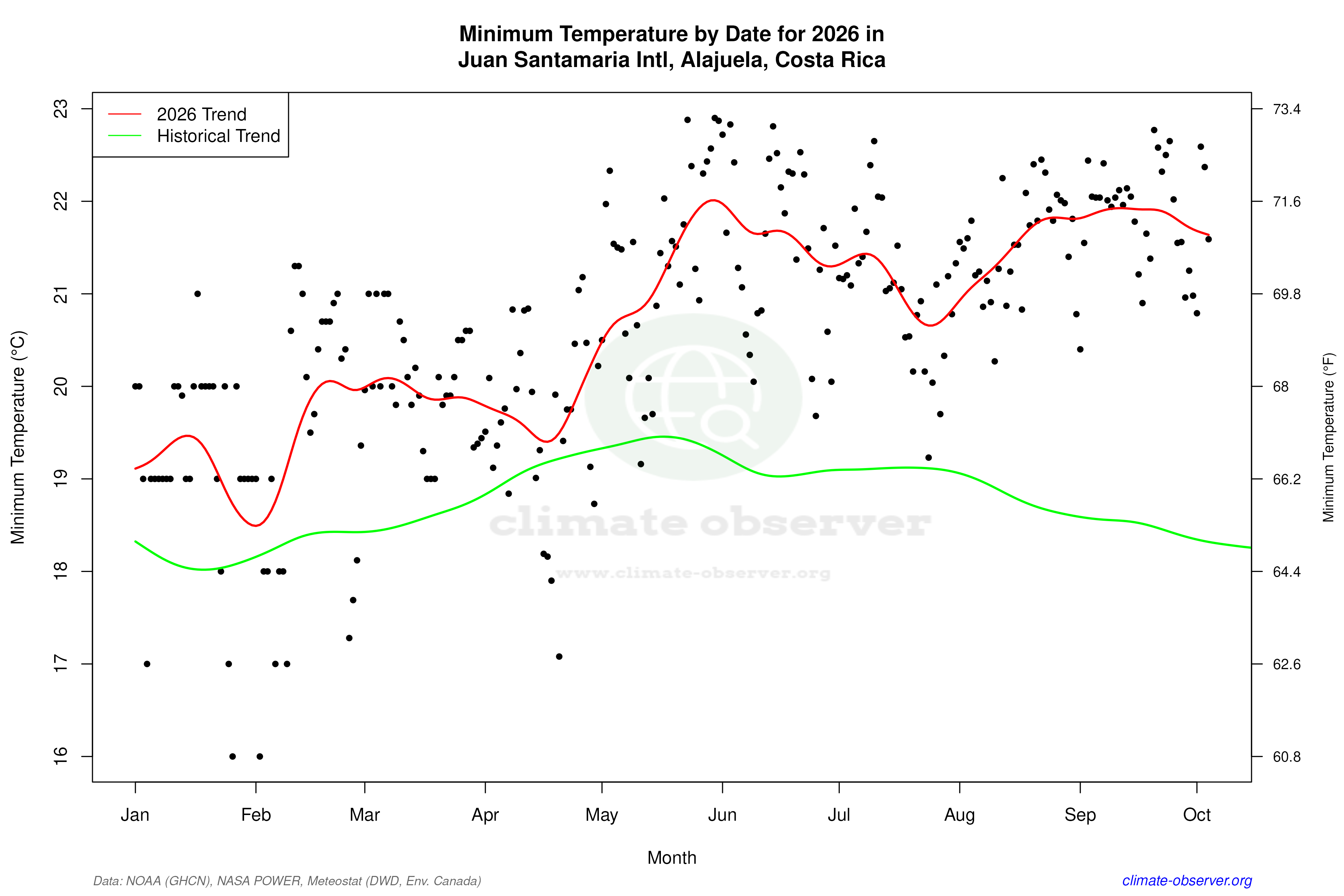
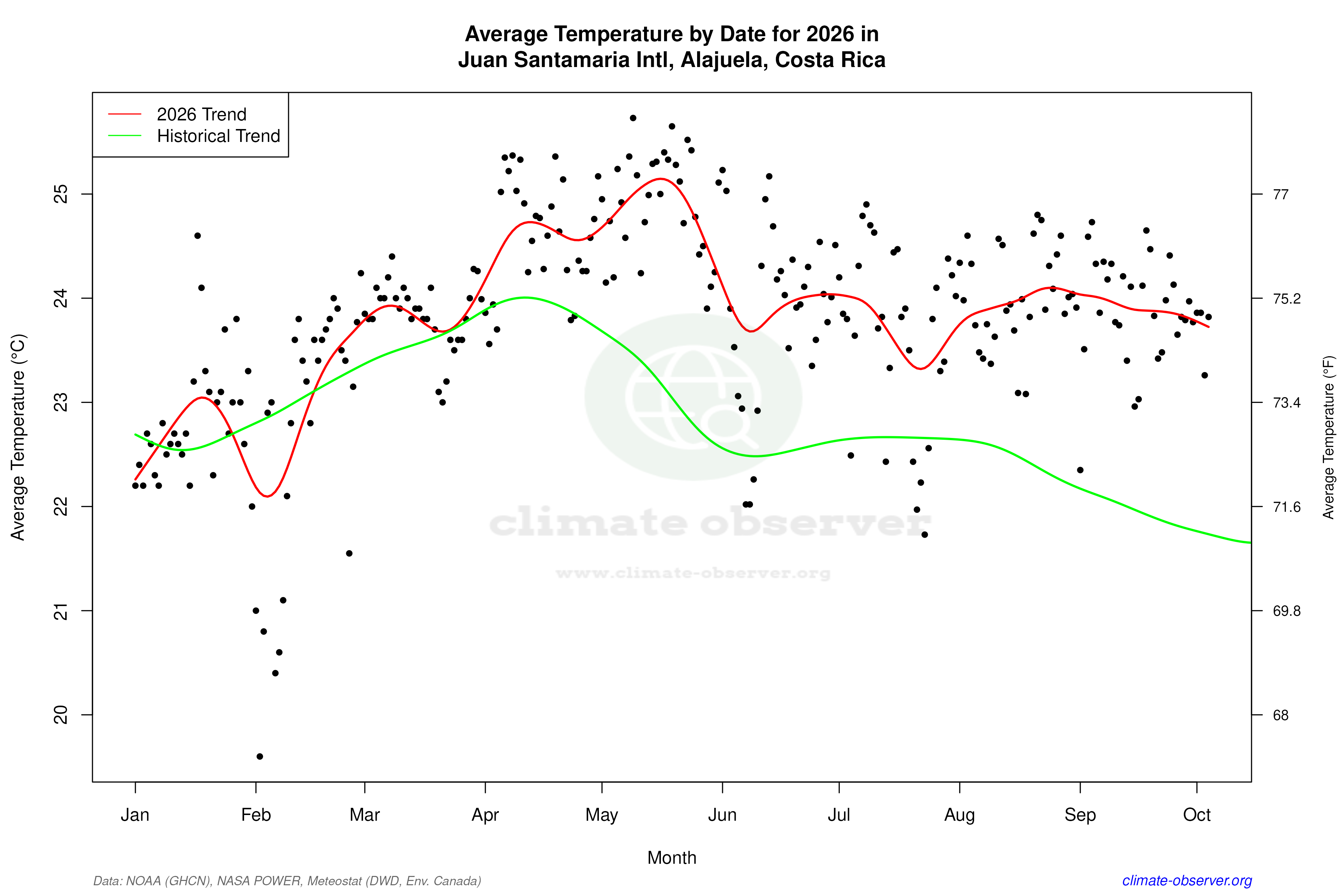
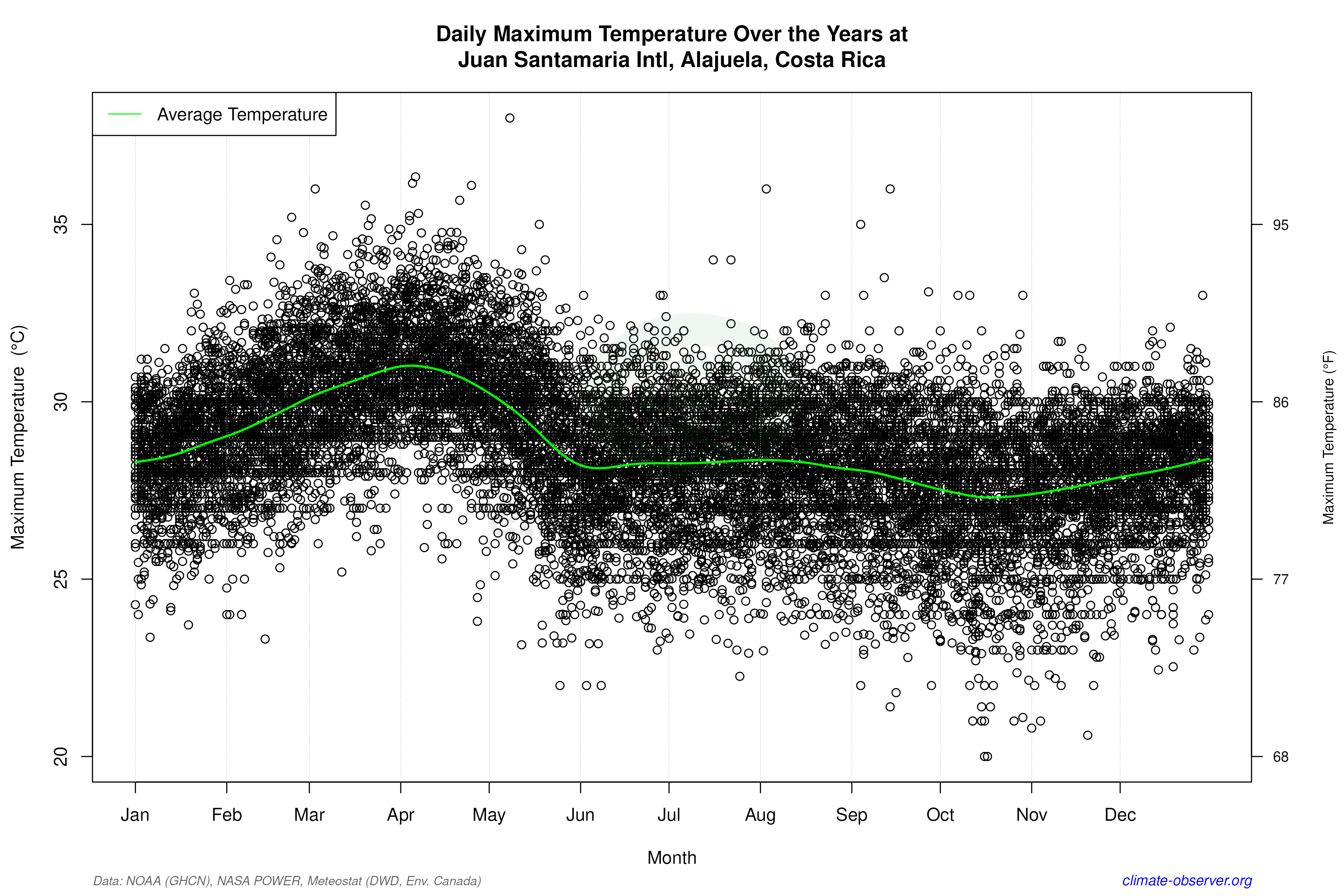
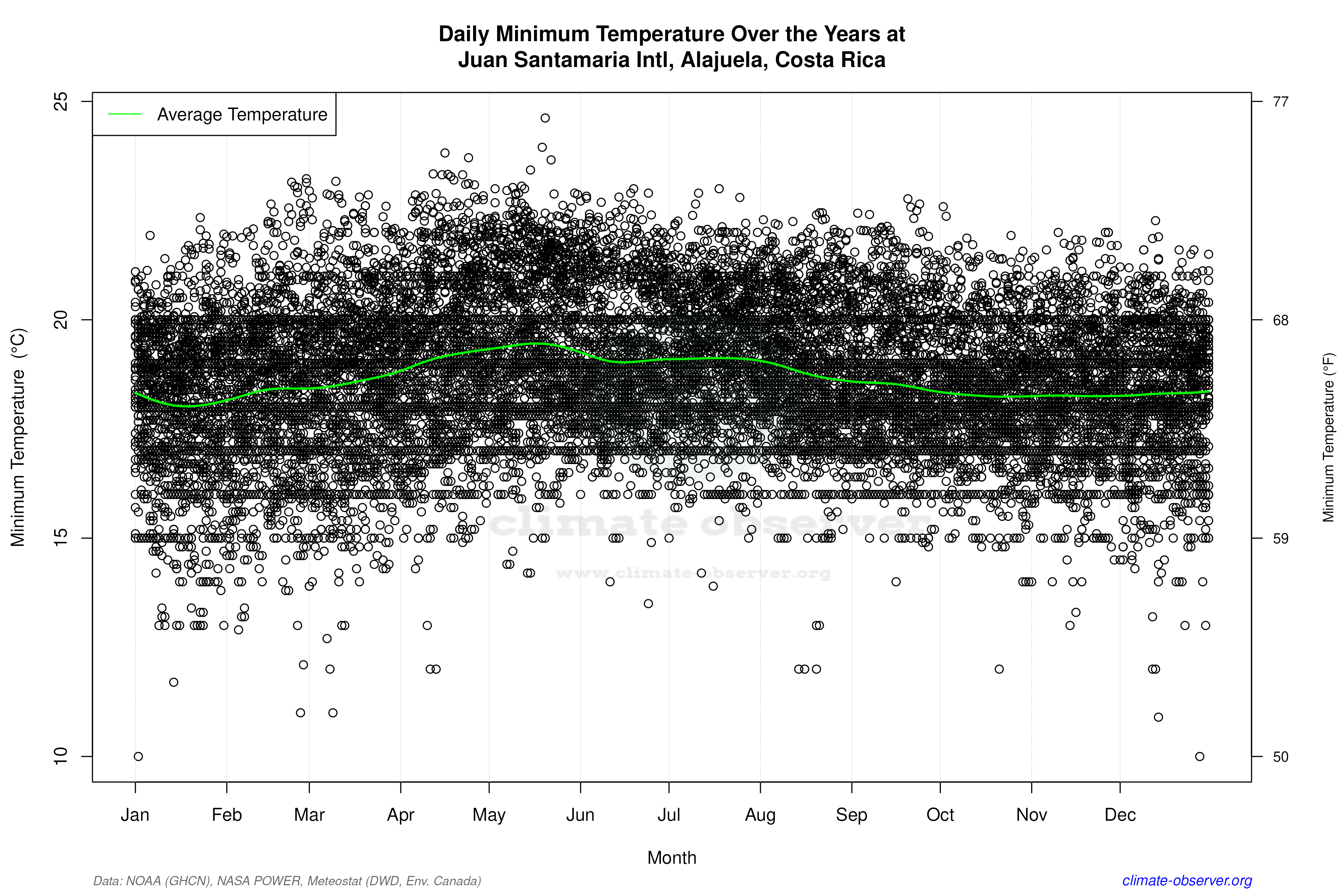
Over the past decade, the airport has experienced a cooling trend in high temperatures, with a decrease of 0.28°C (0.50°F). Conversely, low temperatures have risen by 0.34°C (0.61°F), suggesting a narrowing of the daily temperature range. When examining the all-time data, both high and low temperatures show a slight warming trend, with highs increasing by 0.13°C (0.23°F) and lows by 0.04°C (0.07°F). This subtle warming aligns with broader regional patterns, where climate change is gradually altering temperature norms.
Precipitation Patterns: A Shift Towards Even Distribution
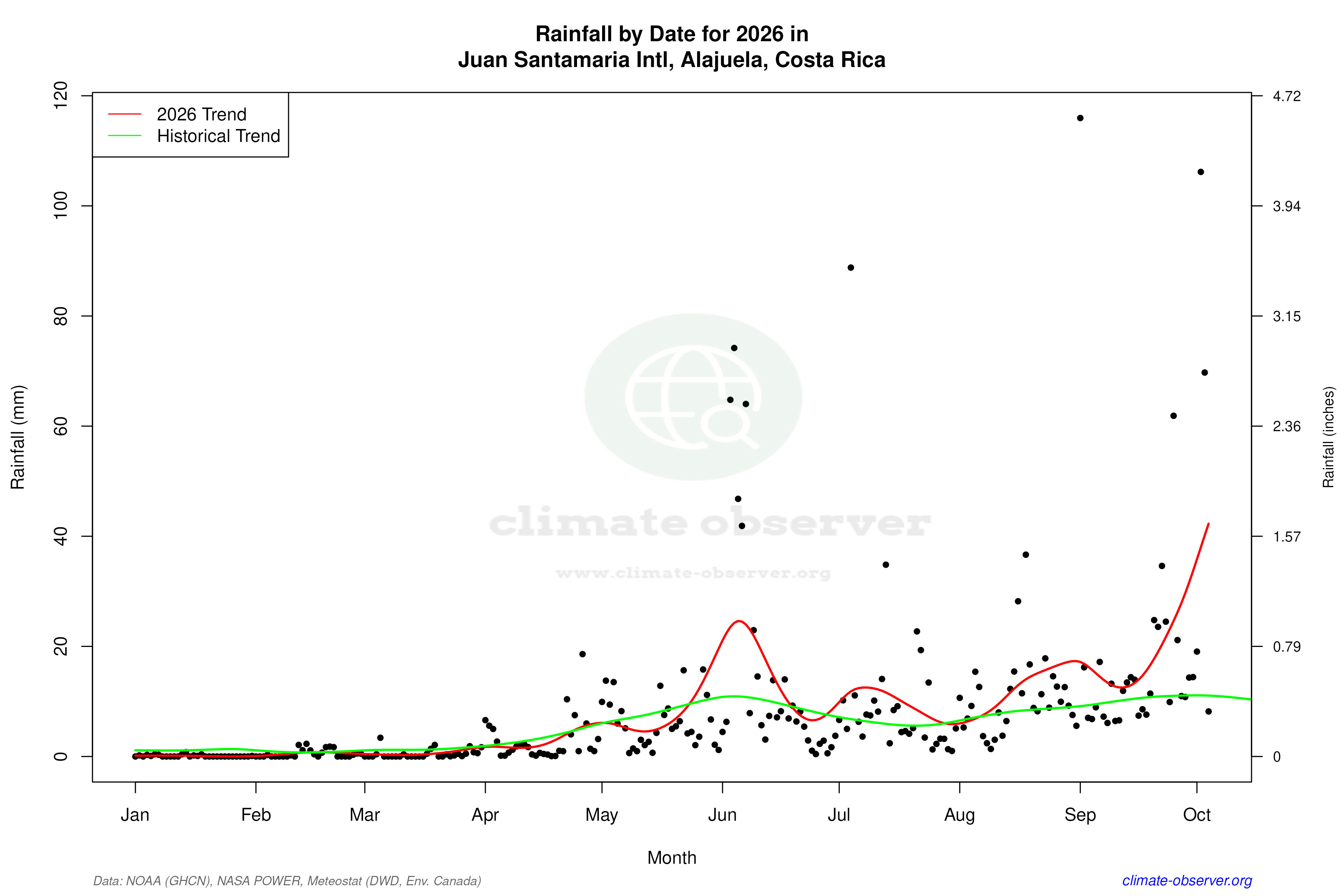
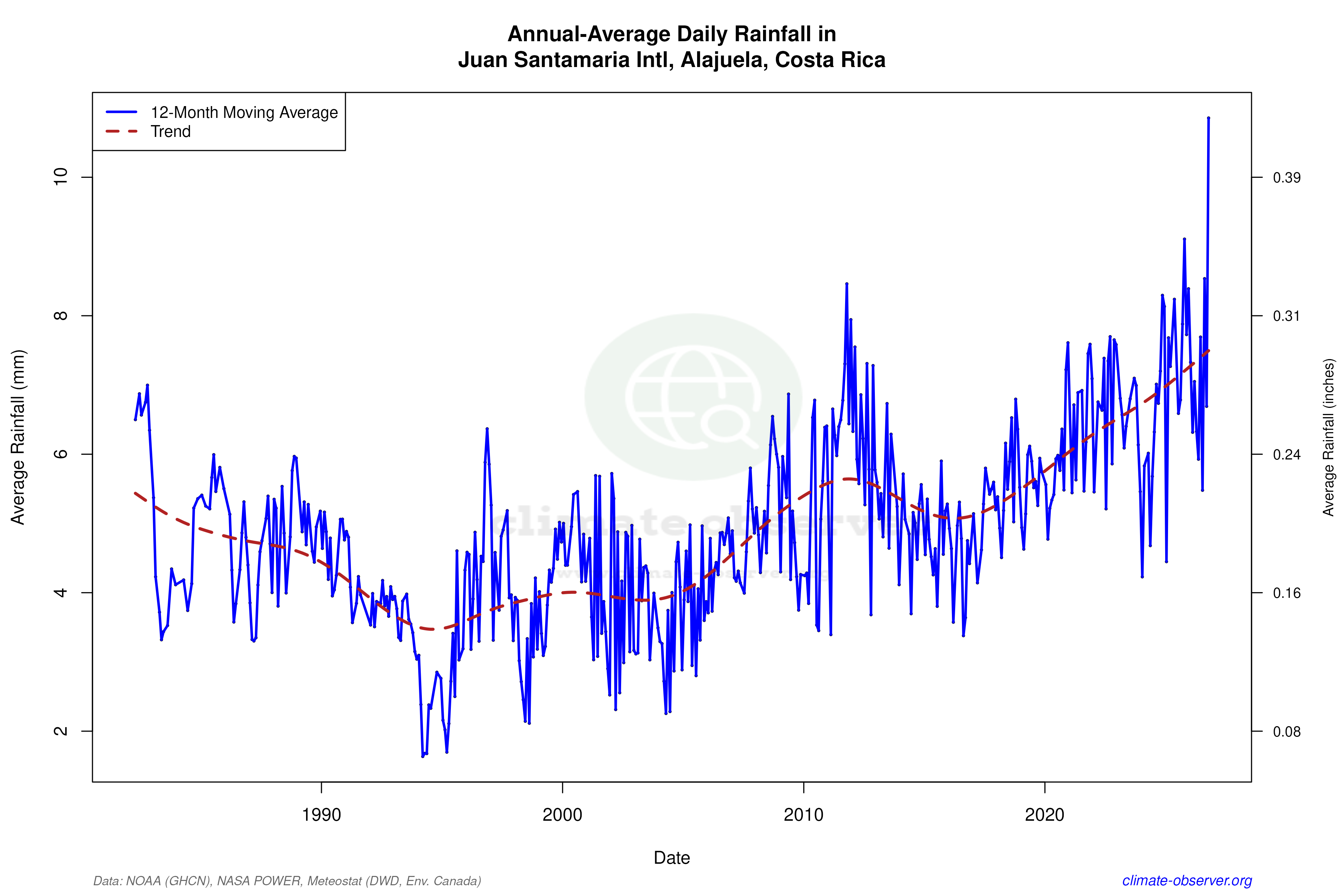
The Precipitation Concentration Index (PCI) at Juan Santamaria International Airport has decreased from a baseline of 13.76 to a current value of 12.55. This indicates a more even distribution of rainfall throughout the year, moving away from concentrated downpours. Such a shift can have implications for water management and agricultural planning, as more evenly distributed rainfall reduces the risk of flooding and drought.
Temperature Extremes: Record Highs and Lows
The airport has recorded an absolute maximum temperature of 38.0°C (100.4°F) and a minimum of 10.0°C (50.0°F). These extremes highlight the range of temperatures experienced in the region, despite its generally moderate climate. The record high underscores the potential for heatwaves, while the record low reflects the cooling effects of the surrounding highlands.
Regional Climate Goals and Implications
Costa Rica has been at the forefront of climate action, aiming for carbon neutrality and sustainable development. The trends observed at Juan Santamaria International Airport provide valuable insights into the broader climatic shifts occurring in the region. Understanding these patterns is crucial for informing policy decisions and adapting to future climate scenarios, ensuring that Costa Rica continues to lead in environmental stewardship.
Station Statistics
10-Year Trend
High: -0.50 °C/decade
Low: +0.43 °C/decade
Rain: +2.43 mm/decade
25-Year Trend
High: +0.18 °C/decade
Low: -0.13 °C/decade
Rain: +1.27 mm/decade
50-Year Trend
High: +0.09 °C/decade
Low: +0.04 °C/decade
Rain: +0.58 mm/decade
All-Time Trend
High: +0.09 °C/decade
Low: +0.04 °C/decade
Rain: +0.58 mm/decade
Percentage Above-Average Days
Last 12 Months: 33.2%
This Year: 37.5%
Precipitation Concentration Index (PCI) ℹ️
Last 12 Months: 12.4
Historical Average: 13.7
Percentile Rank of Last 12 Months ℹ️
High: 42nd percentile
Low: 82nd percentile
Rain: 94th percentile
Change in Variance ℹ️
High: -23.9%
Low: -34.8%
Intraday: -27.9%
Data Coverage
71.5%
First Year of Data
1955
Station Location
Historical Weather Records
| Max High | Avg High | Min High | Max Avg | Avg Avg | Min Avg | Max Low | Avg Low | Min Low | Max Precipitation | Avg Precipitation | Max Snow | Avg Snow | |
|---|---|---|---|---|---|---|---|---|---|---|---|---|---|
| Record | 38.0 °C | — | 20.0 °C | 29.8 °C | — | 17.5 °C | 24.6 °C | — | 10.0 °C | 491.0 mm | — | — | — |
| January | 33.1 °C | 28.6 °C | 23.4 °C | 27.8 °C | 22.6 °C | 17.8 °C | 22.3 °C | 18.1 °C | 10.0 °C | 486.9 mm | 1.3 mm | — | — |
| February | 35.2 °C | 29.5 °C | 23.3 °C | 28.4 °C | 23.1 °C | 18.0 °C | 23.2 °C | 18.4 °C | 11.0 °C | 80.0 mm | 0.6 mm | — | — |
| March | 36.0 °C | 30.6 °C | 25.2 °C | 28.6 °C | 23.6 °C | 18.3 °C | 23.2 °C | 18.6 °C | 11.0 °C | 335.0 mm | 1.4 mm | — | — |
| April | 36.3 °C | 30.8 °C | 23.8 °C | 29.8 °C | 23.9 °C | 19.7 °C | 23.8 °C | 19.1 °C | 12.0 °C | 335.0 mm | 3.5 mm | — | — |
| May | 38.0 °C | 29.2 °C | 22.0 °C | 29.1 °C | 23.1 °C | 18.0 °C | 24.6 °C | 19.4 °C | 14.2 °C | 335.0 mm | 8.3 mm | — | — |
| June | 33.0 °C | 28.2 °C | 22.0 °C | 27.6 °C | 22.5 °C | 18.3 °C | 23.0 °C | 19.1 °C | 13.5 °C | 487.9 mm | 9.5 mm | — | — |
| July | 34.0 °C | 28.3 °C | 22.3 °C | 27.8 °C | 22.7 °C | 18.8 °C | 23.0 °C | 19.1 °C | 13.9 °C | 231.9 mm | 5.9 mm | — | — |
| August | 36.0 °C | 28.2 °C | 23.0 °C | 26.8 °C | 22.5 °C | 18.7 °C | 22.4 °C | 18.8 °C | 12.0 °C | 491.0 mm | 8.3 mm | — | — |
| September | 36.0 °C | 27.9 °C | 21.4 °C | 25.3 °C | 22.0 °C | 18.1 °C | 22.8 °C | 18.5 °C | 14.0 °C | 294.9 mm | 10.4 mm | — | — |
| October | 33.0 °C | 27.4 °C | 20.0 °C | 26.5 °C | 21.7 °C | 17.9 °C | 22.6 °C | 18.3 °C | 12.0 °C | 364.0 mm | 10.2 mm | — | — |
| November | 31.7 °C | 27.6 °C | 20.6 °C | 27.0 °C | 22.0 °C | 17.5 °C | 22.0 °C | 18.3 °C | 13.0 °C | 336.0 mm | 7.0 mm | — | — |
| December | 33.0 °C | 28.1 °C | 22.4 °C | 27.3 °C | 22.5 °C | 18.6 °C | 22.3 °C | 18.3 °C | 10.0 °C | 257.0 mm | 2.2 mm | — | — |
Data Visualisations
Remove WatermarksCurrent Year Climate Trends vs Historical
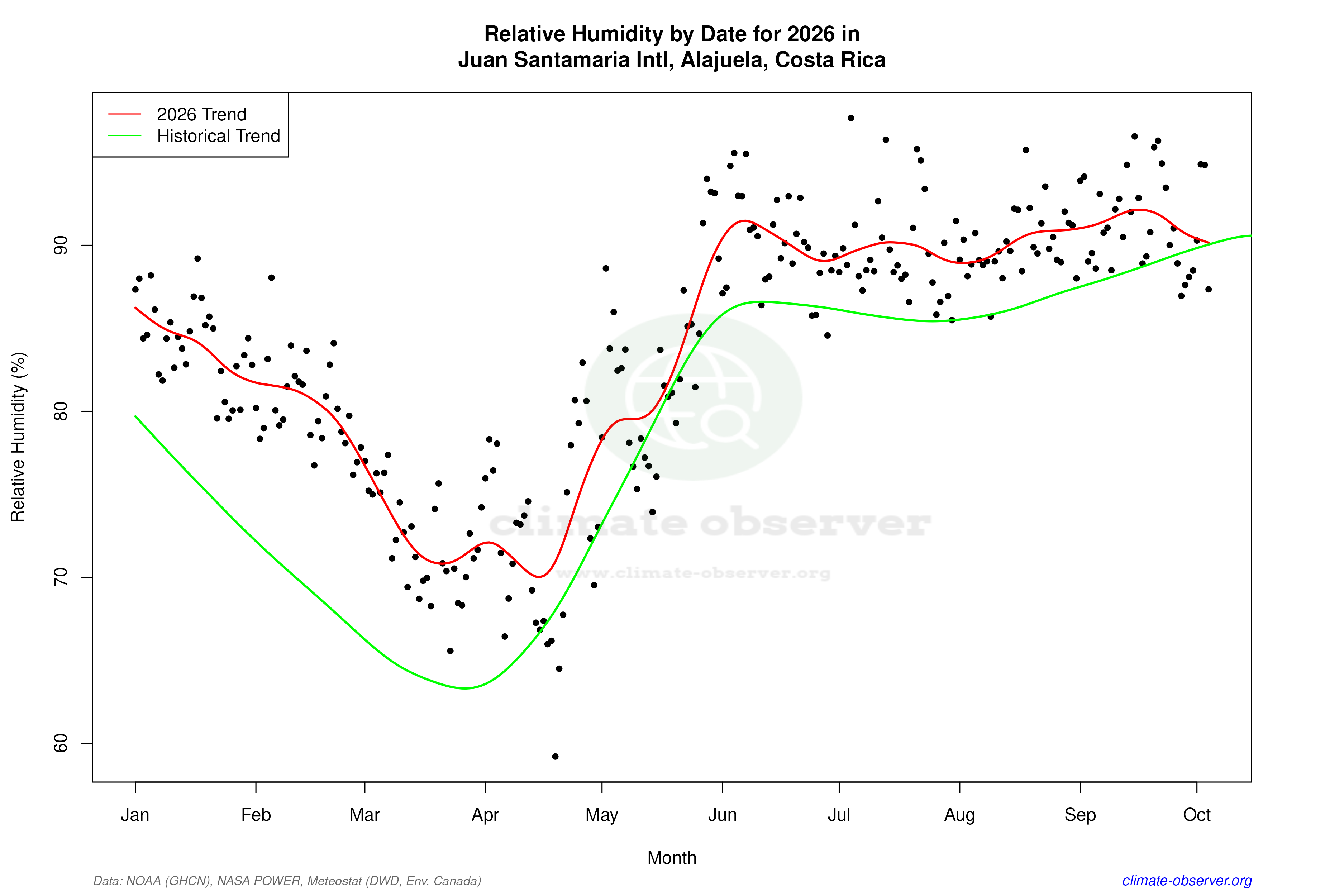

Max Temperature this Year | 1 of 6
Climate 12-Month Moving Averages
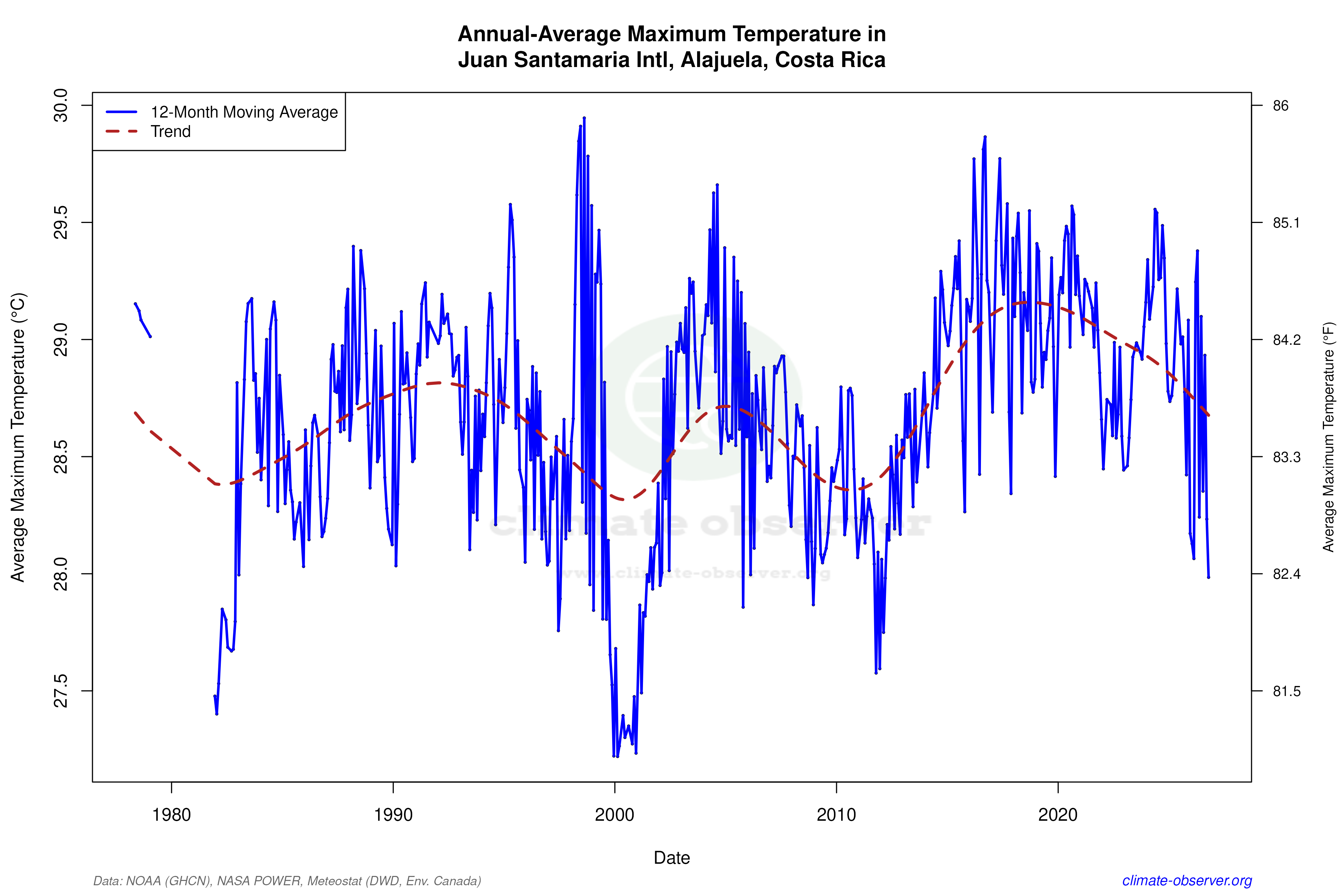
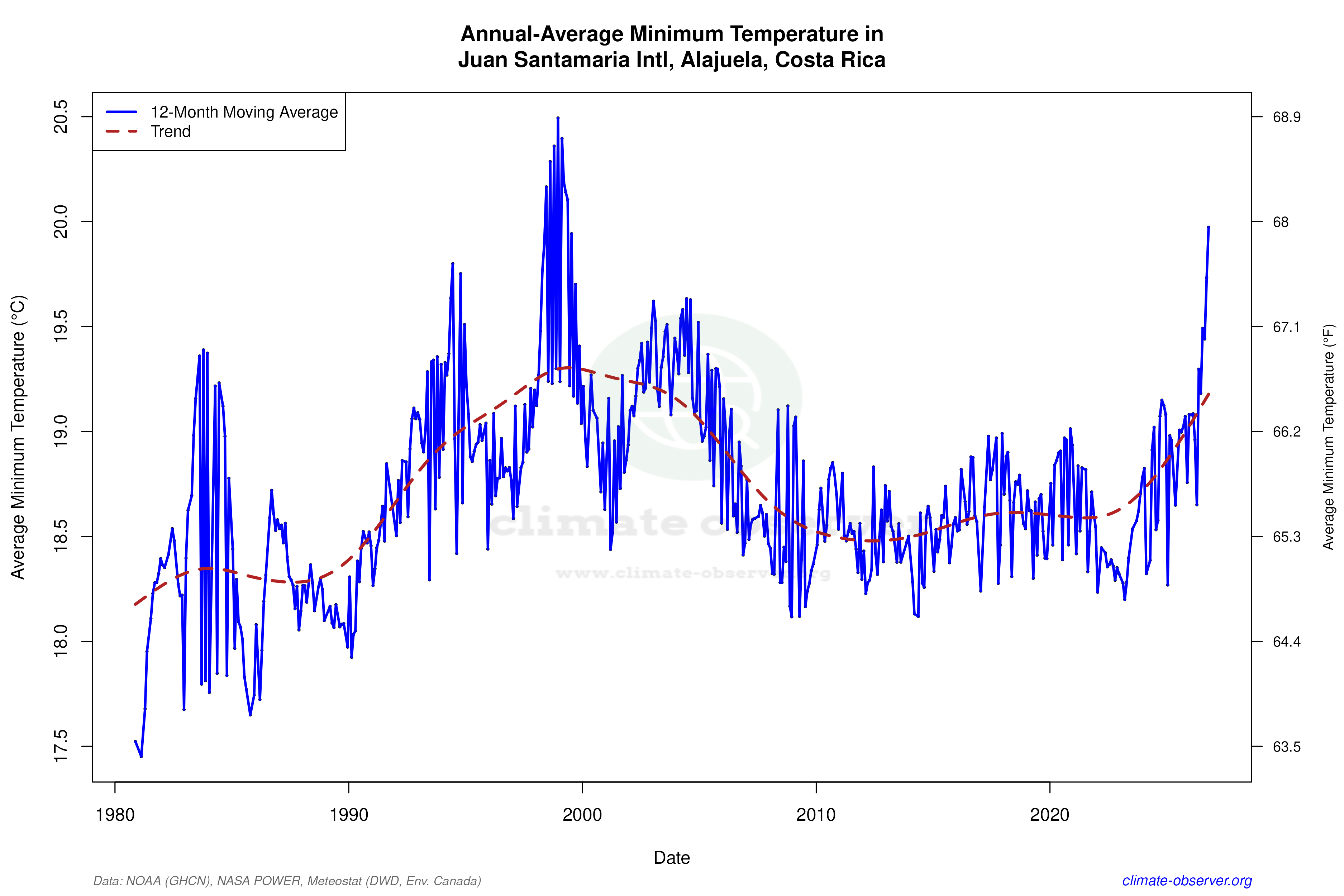
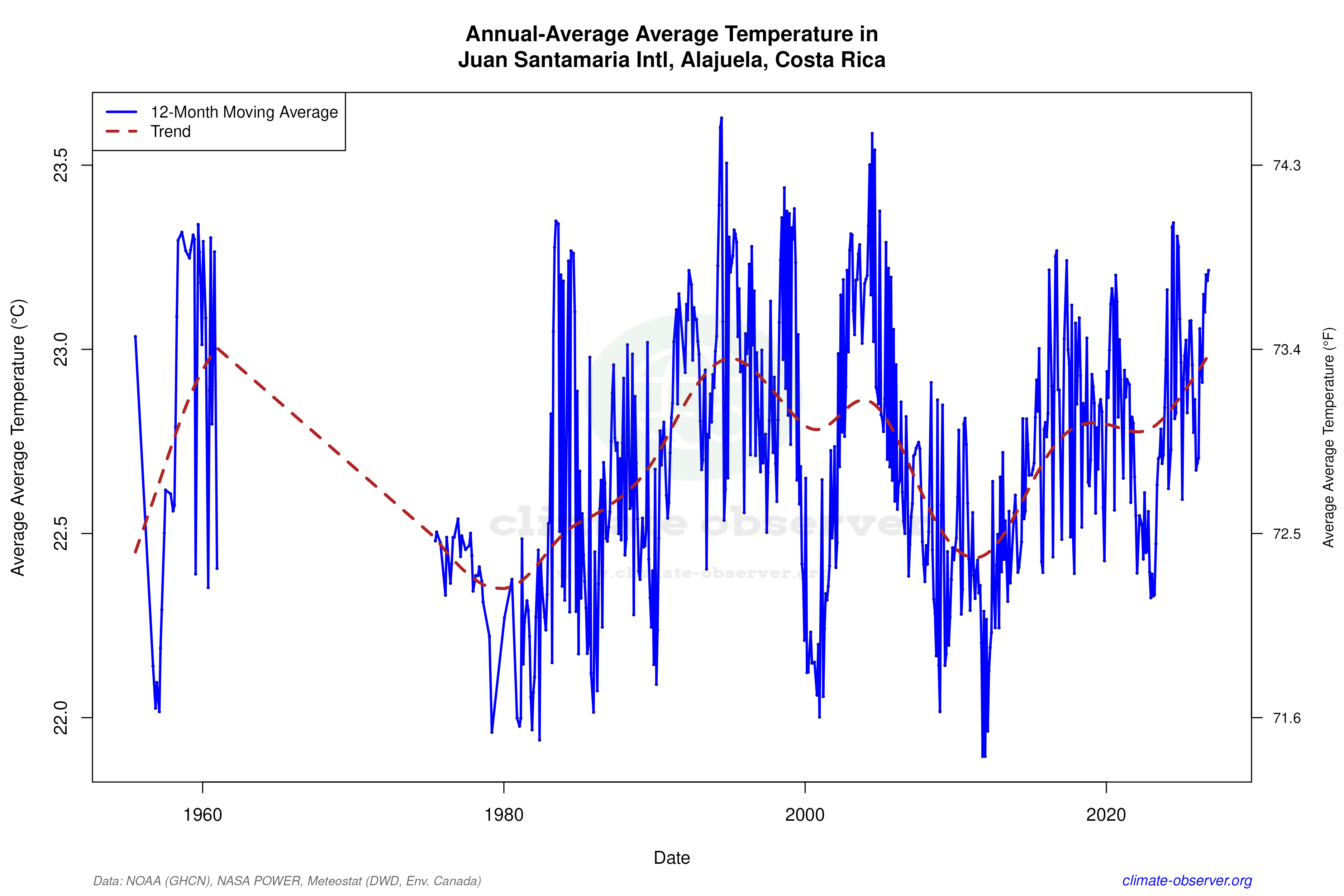

Max Temperature 12-Month MA | 1 of 6
Daily Data Points and Averages Throughout the Year
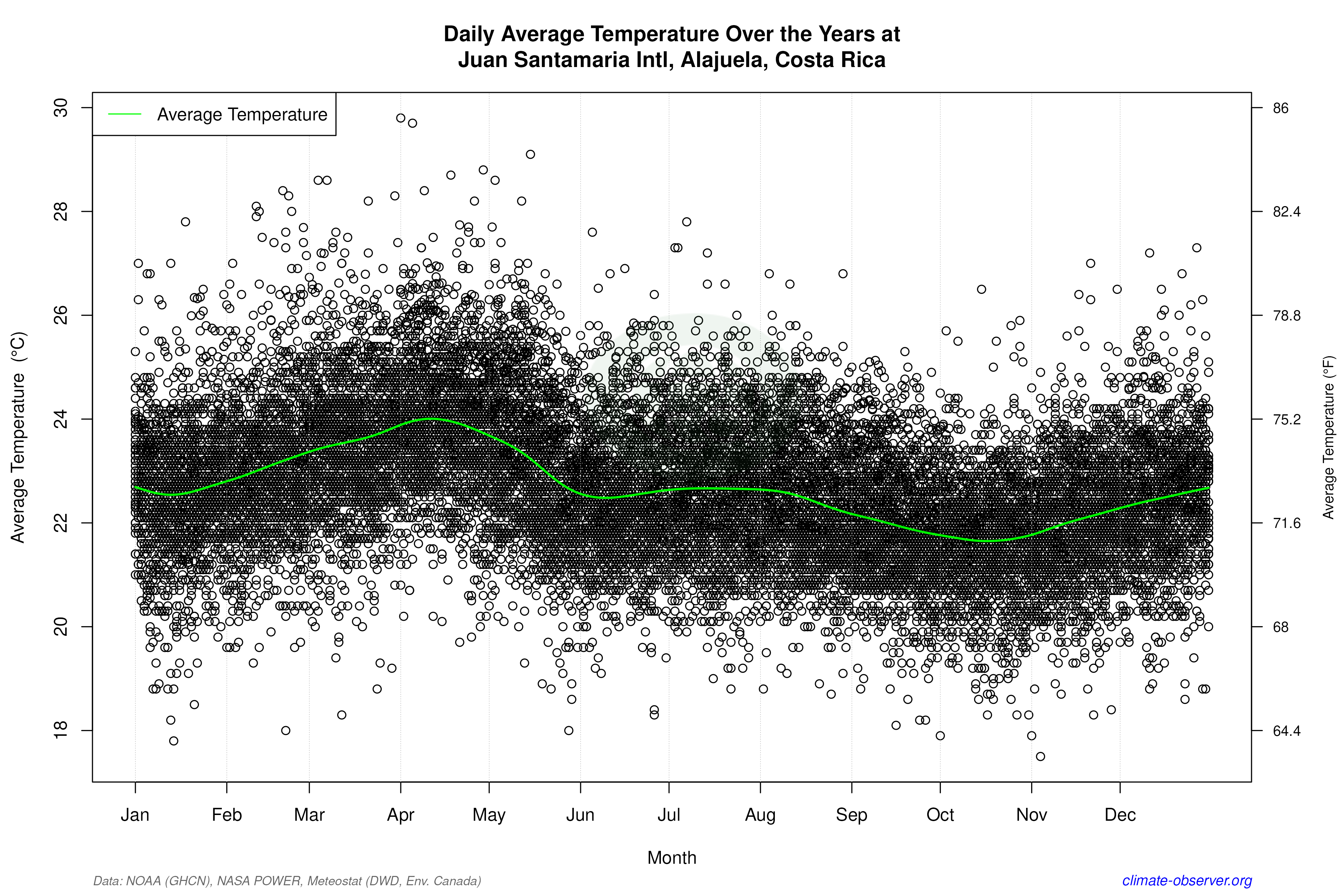
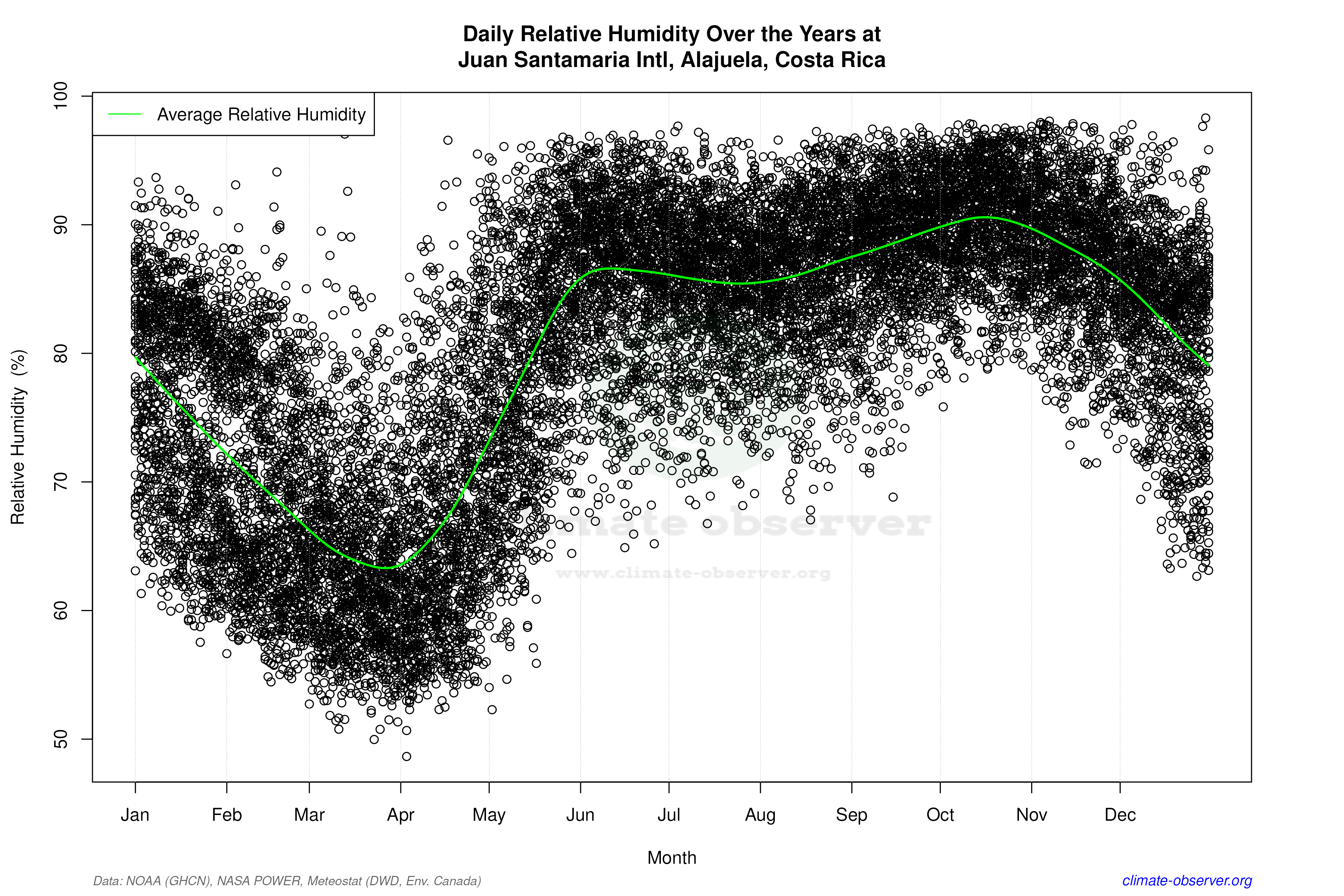

Average Max Temperature Throughout Year | 1 of 5


