Climate for Station: Asswan, Aswan, Egypt
Loading live weather...
Climate Analysis & Overview
Asswan, Egypt, is experiencing a notable warming trend, with both high and low temperatures rising over the past decade and all-time records. The concentration of rainfall events has significantly increased, indicating more intense but less frequent precipitation. These changes are critical for understanding the region's evolving climate dynamics.
Desert Climate Dynamics
Asswan, located at 23.97°N, 32.78°E, sits within the arid zone of the Sahara Desert, characterised by its hot desert climate under the Köppen classification. The Nile River, flowing through the region, provides a critical water source amidst the otherwise dry landscape. Over the past decade, Asswan has seen its high temperatures rise by 0.45°C (0.81°F) and low temperatures by 0.50°C (0.90°F). These trends are consistent with the broader warming patterns observed across North Africa, driven by global climate change.
Long-term Temperature Trends
Examining the all-time data, Asswan's high temperatures have increased by 0.20°C (0.36°F), while low temperatures have risen more significantly by 0.57°C (1.03°F). This warming trend is more pronounced in the lower temperature range, suggesting that nights are warming faster than days. The record high in Asswan is a scorching 51.0°C (123.8°F), with a record low of -2.4°C (27.7°F), highlighting the extreme temperature variability possible in desert climates.
Precipitation Patterns and Changes
The Precipitation Concentration Index (PCI) in Asswan has increased from a baseline of 57.9 to a current value of 67.4. This significant rise indicates that rainfall is becoming more concentrated in fewer, more intense events. For a region where water is already scarce, such a shift could have profound implications for water management and agriculture. The PCI, which measures how evenly precipitation is distributed over time, suggests that Asswan is experiencing less frequent but heavier rainfall events.
Regional Climate Implications
These climatic changes in Asswan are occurring against the backdrop of Egypt's national climate goals, which include adapting to water scarcity and enhancing agricultural resilience. The warming trends and increased precipitation concentration could challenge these objectives, necessitating adaptive strategies to mitigate potential impacts. Recent weather events, such as unexpected heavy rains, underscore the urgency of these adaptations.
Future Considerations
The data from Asswan provides crucial insights into the broader climate dynamics of the Sahara Desert region. As temperatures continue to rise and precipitation becomes more erratic, understanding these patterns will be vital for developing effective climate adaptation strategies. The trends observed in Asswan are indicative of larger regional shifts that could have significant socio-economic impacts.
Station Statistics
10-Year Trend
High: -1.81 °C/decade
Low: -1.76 °C/decade
Rain: -0.00 mm/decade
25-Year Trend
High: +0.13 °C/decade
Low: +0.45 °C/decade
Rain: +0.00 mm/decade
50-Year Trend
High: +0.47 °C/decade
Low: +0.55 °C/decade
Rain: +0.00 mm/decade
All-Time Trend
High: +0.13 °C/decade
Low: +0.40 °C/decade
Rain: +0.00 mm/decade
Percentage Above-Average Days
Last 12 Months: 55.3%
This Year: 40.7%
Precipitation Concentration Index (PCI) ℹ️
Last 12 Months: 40.4
Historical Average: 69.8
Percentile Rank of Last 12 Months ℹ️
High: 38th percentile
Low: 45th percentile
Rain: 42nd percentile
Change in Variance ℹ️
High: +0.8%
Low: +6.3%
Intraday: -26.3%
Data Coverage
82.3%
First Year of Data
1957
Station Location
Historical Weather Records
| Max High | Avg High | Min High | Max Avg | Avg Avg | Min Avg | Max Low | Avg Low | Min Low | Max Precipitation | Avg Precipitation | Max Snow | Avg Snow | |
|---|---|---|---|---|---|---|---|---|---|---|---|---|---|
| Record | 51.0 °C | — | 12.8 °C | 42.3 °C | — | 7.6 °C | 34.6 °C | — | -2.4 °C | 4.5 mm | — | — | — |
| January | 35.3 °C | 23.2 °C | 12.8 °C | 26.1 °C | 16.2 °C | 7.6 °C | 20.0 °C | 9.4 °C | -2.4 °C | 2.3 mm | 0.0 mm | — | — |
| February | 38.5 °C | 25.4 °C | 13.4 °C | 32.8 °C | 18.3 °C | 9.1 °C | 23.0 °C | 10.8 °C | 2.3 °C | 4.5 mm | 0.0 mm | — | — |
| March | 44.0 °C | 30.0 °C | 15.6 °C | 33.9 °C | 22.6 °C | 12.2 °C | 26.5 °C | 14.6 °C | 5.0 °C | 0.7 mm | 0.0 mm | — | — |
| April | 46.1 °C | 35.3 °C | 22.2 °C | 37.0 °C | 27.8 °C | 15.9 °C | 31.0 °C | 19.4 °C | 7.8 °C | 1.1 mm | 0.0 mm | — | — |
| May | 47.8 °C | 39.1 °C | 27.7 °C | 42.2 °C | 31.8 °C | 21.4 °C | 32.3 °C | 23.5 °C | 13.4 °C | 2.0 mm | 0.0 mm | — | — |
| June | 51.0 °C | 41.5 °C | 33.1 °C | 42.3 °C | 34.2 °C | 25.4 °C | 34.0 °C | 25.9 °C | 18.9 °C | 0.8 mm | 0.0 mm | — | — |
| July | 48.1 °C | 41.6 °C | 35.0 °C | 40.5 °C | 34.7 °C | 28.7 °C | 34.6 °C | 26.9 °C | 16.0 °C | 0.0 mm | 0.0 mm | — | — |
| August | 48.6 °C | 41.6 °C | 35.1 °C | 41.1 °C | 34.6 °C | 27.5 °C | 34.3 °C | 27.0 °C | 18.7 °C | 2.0 mm | 0.0 mm | — | — |
| September | 47.8 °C | 39.8 °C | 29.3 °C | 39.9 °C | 32.5 °C | 22.4 °C | 33.4 °C | 24.7 °C | 16.1 °C | 0.1 mm | 0.0 mm | — | — |
| October | 45.0 °C | 36.2 °C | 25.6 °C | 36.0 °C | 28.8 °C | 18.3 °C | 30.0 °C | 21.5 °C | 12.0 °C | 1.7 mm | 0.0 mm | — | — |
| November | 42.2 °C | 29.7 °C | 19.0 °C | 31.6 °C | 22.7 °C | 13.3 °C | 26.0 °C | 15.8 °C | 6.1 °C | 1.4 mm | 0.0 mm | — | — |
| December | 37.2 °C | 24.7 °C | 15.4 °C | 28.4 °C | 17.9 °C | 8.7 °C | 21.9 °C | 11.2 °C | 1.0 °C | 1.0 mm | 0.0 mm | — | — |
Data Visualisations
Remove WatermarksCurrent Year Climate Trends vs Historical
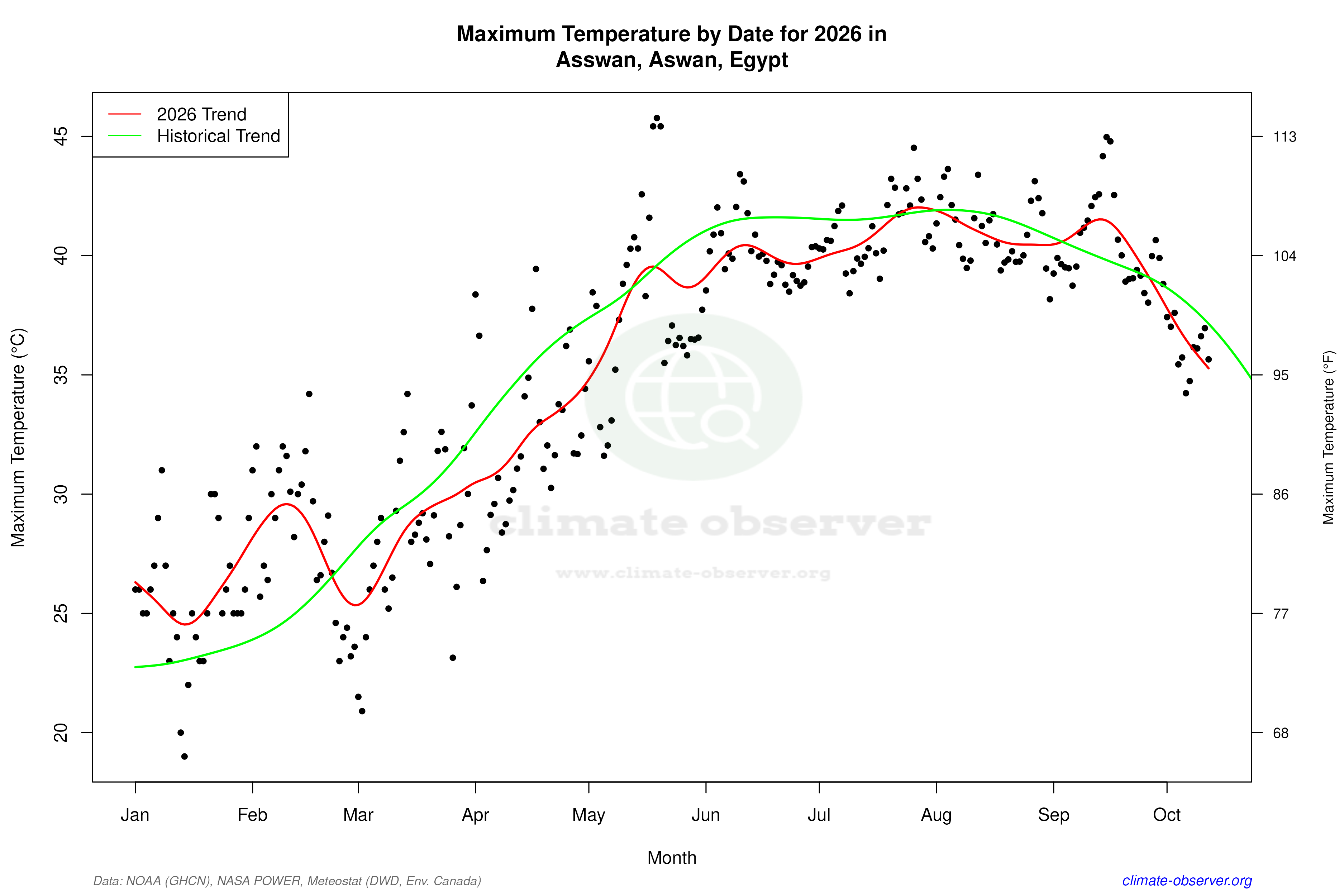
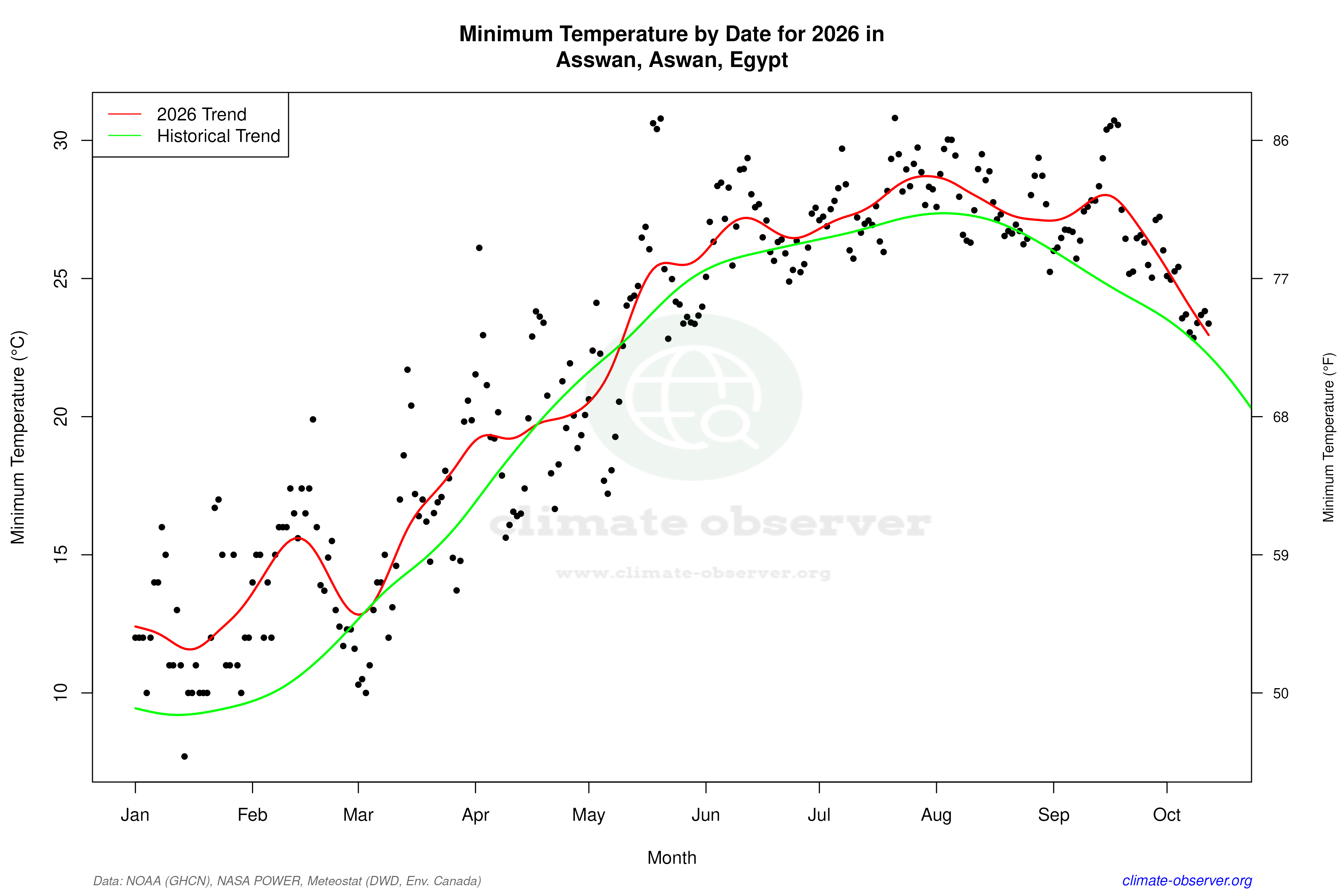
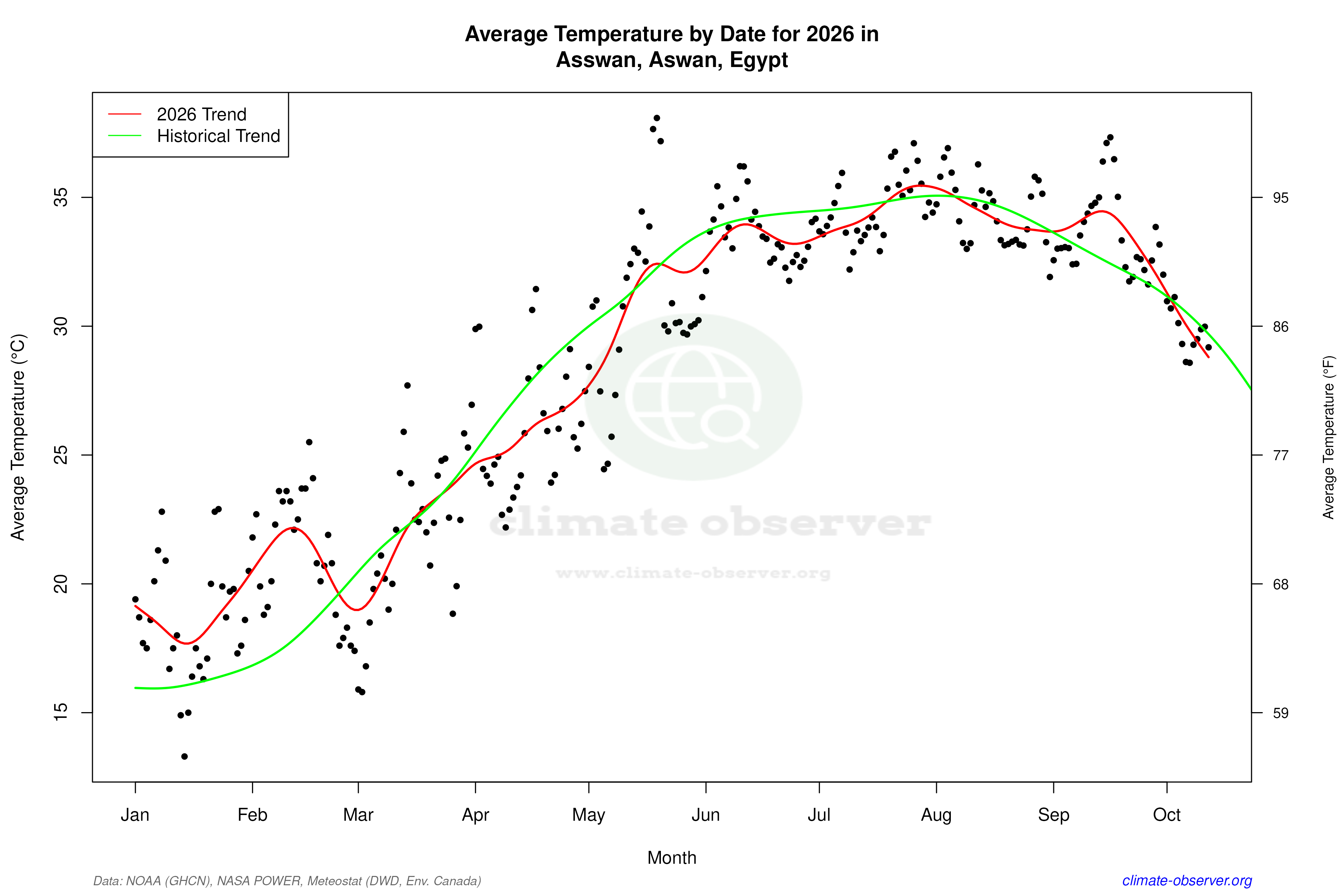
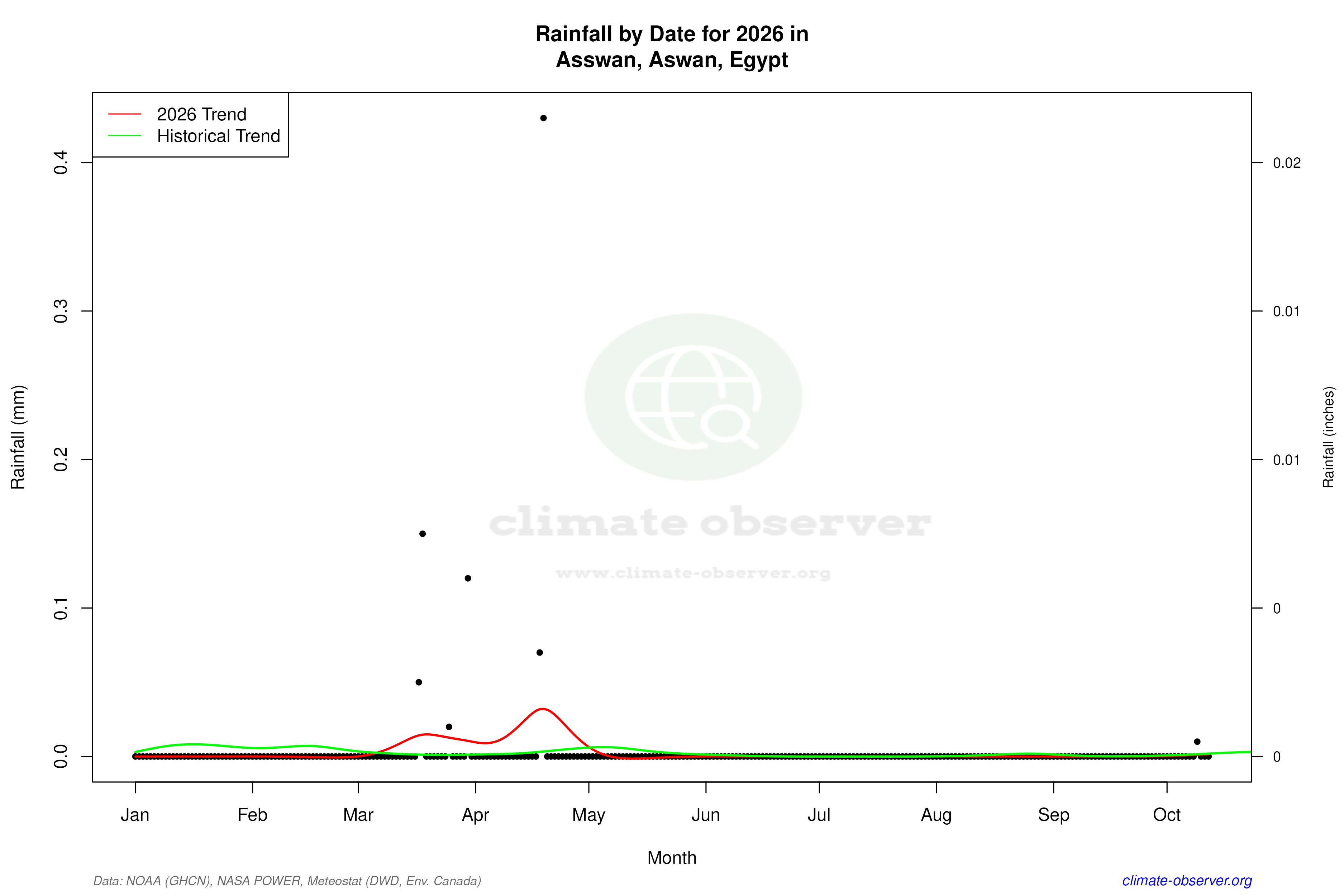
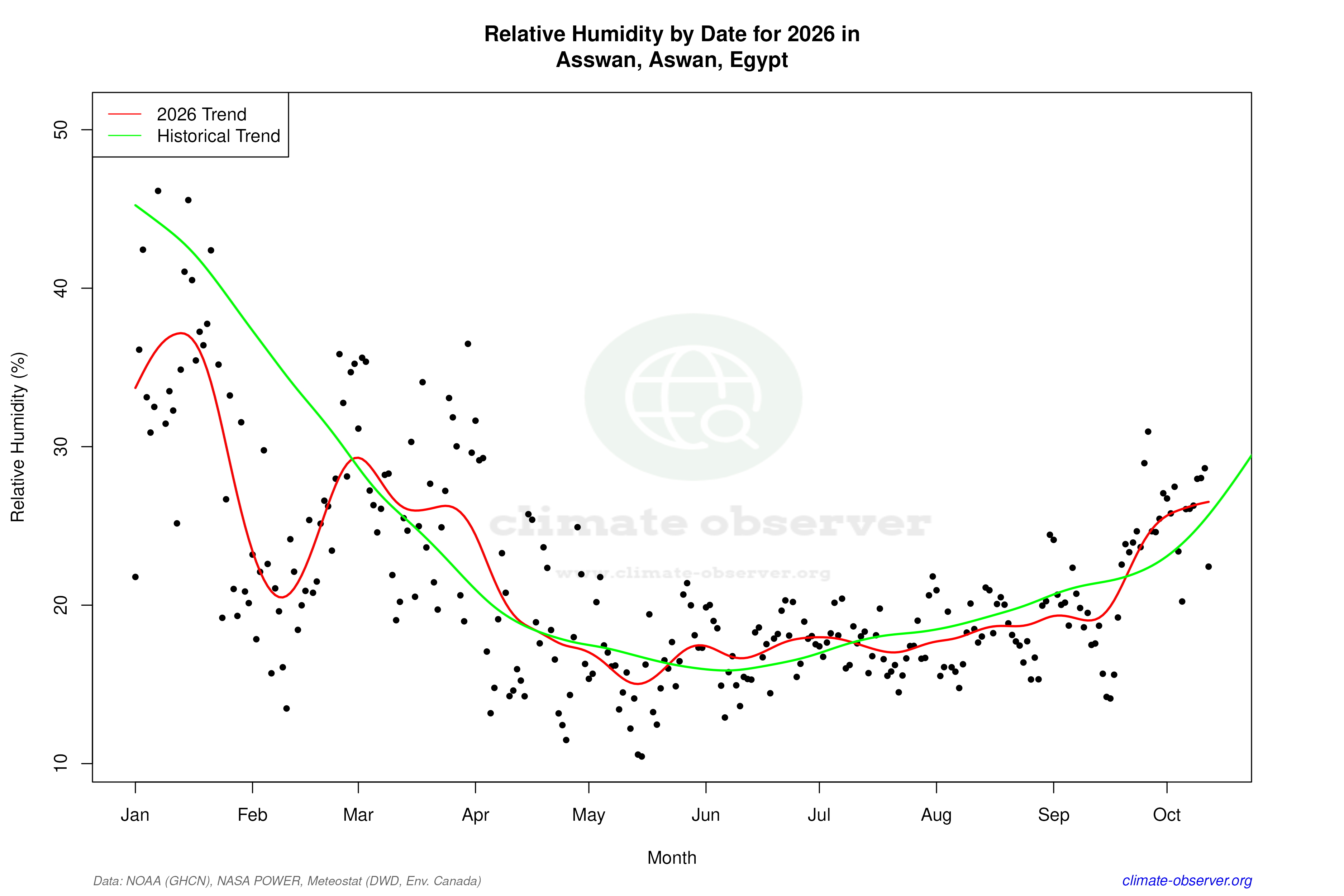

Max Temperature this Year | 1 of 6
Climate 12-Month Moving Averages
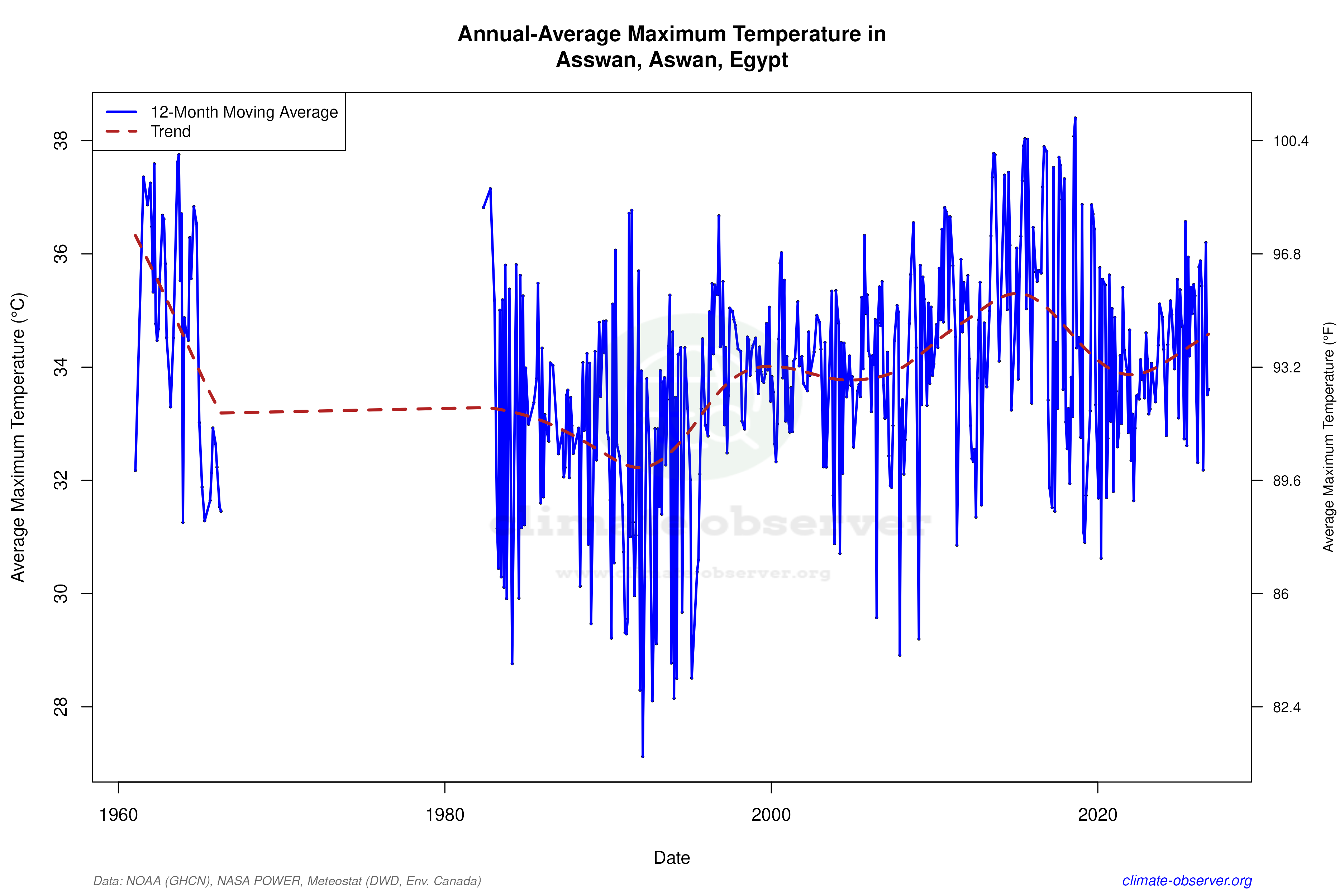
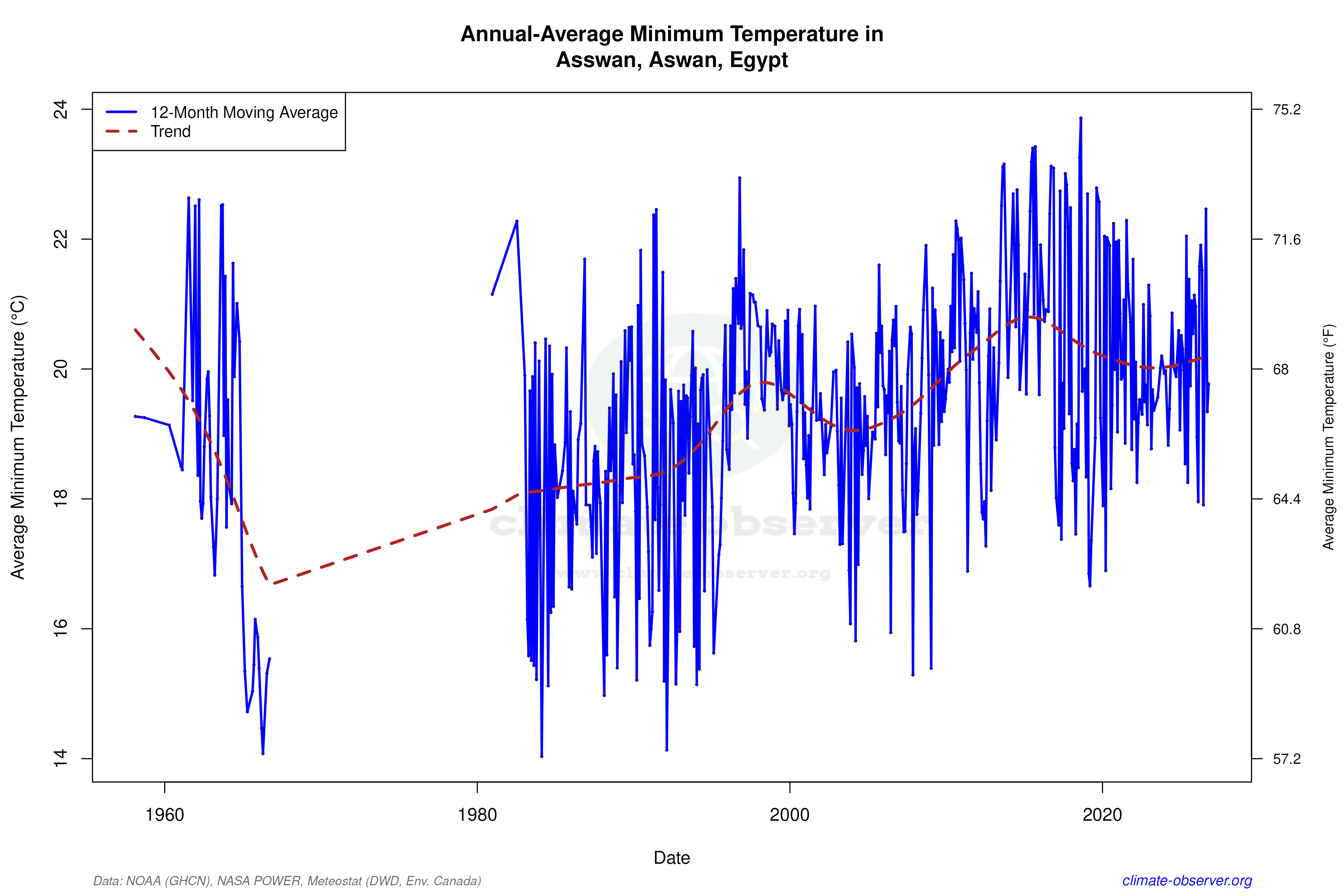
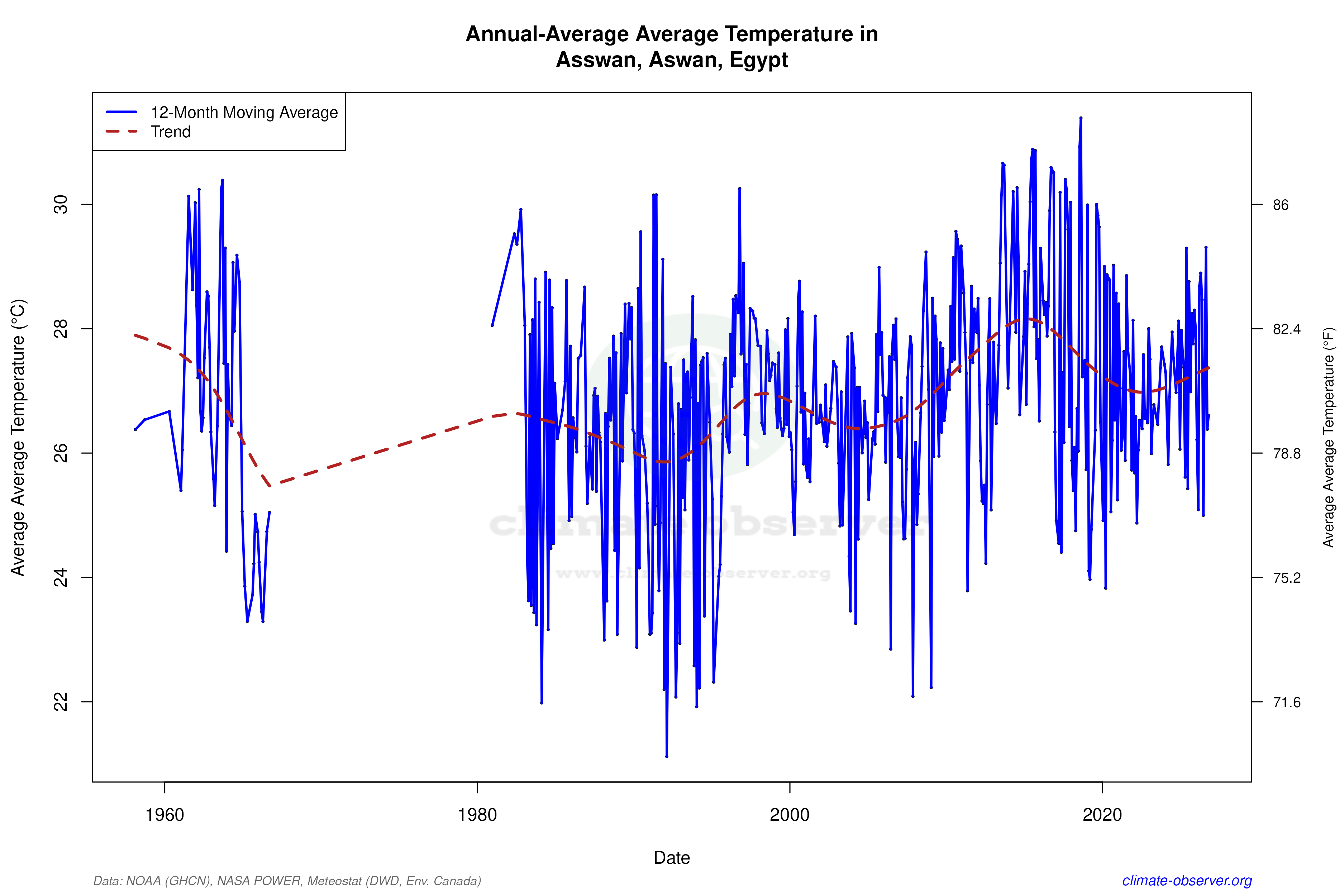
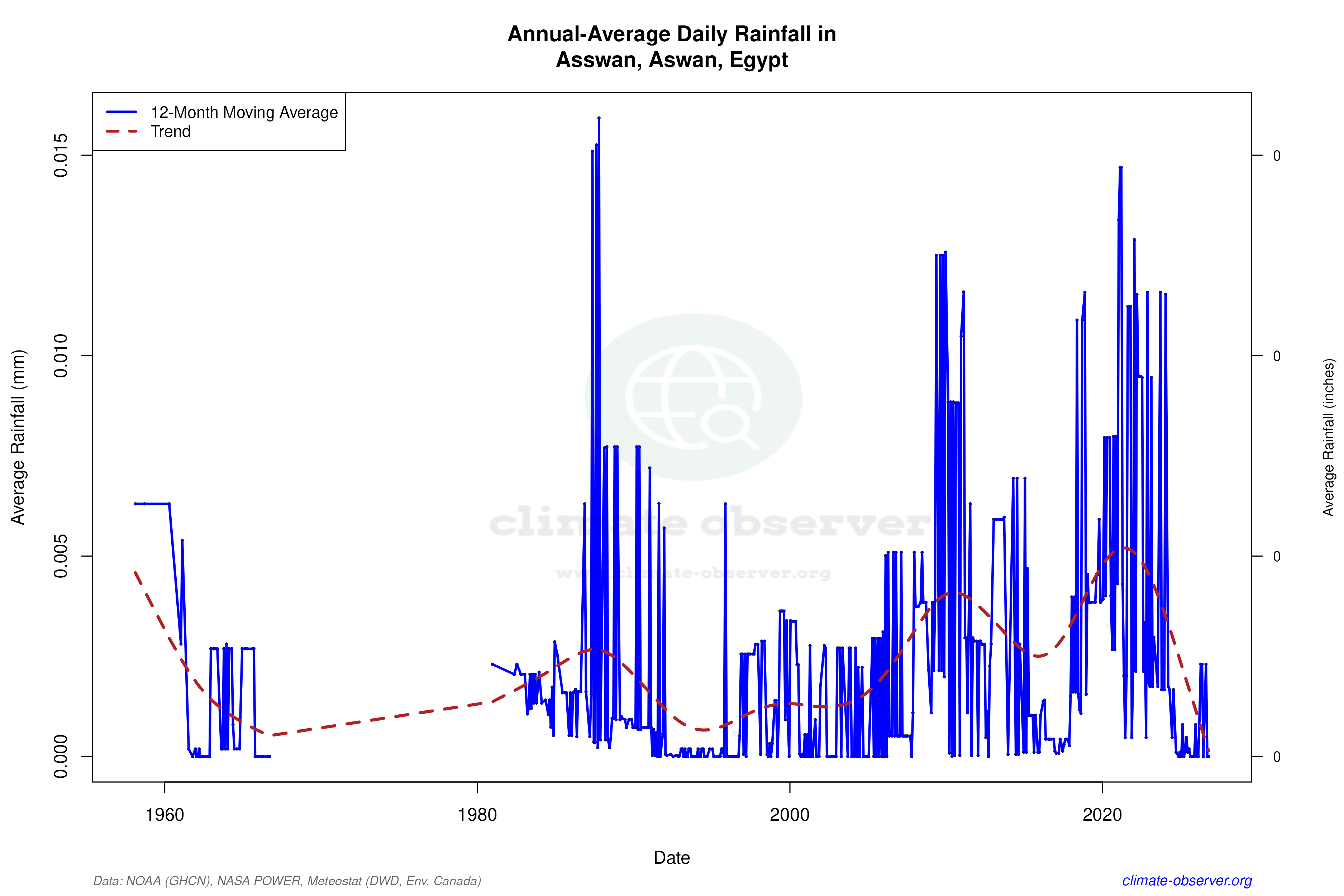
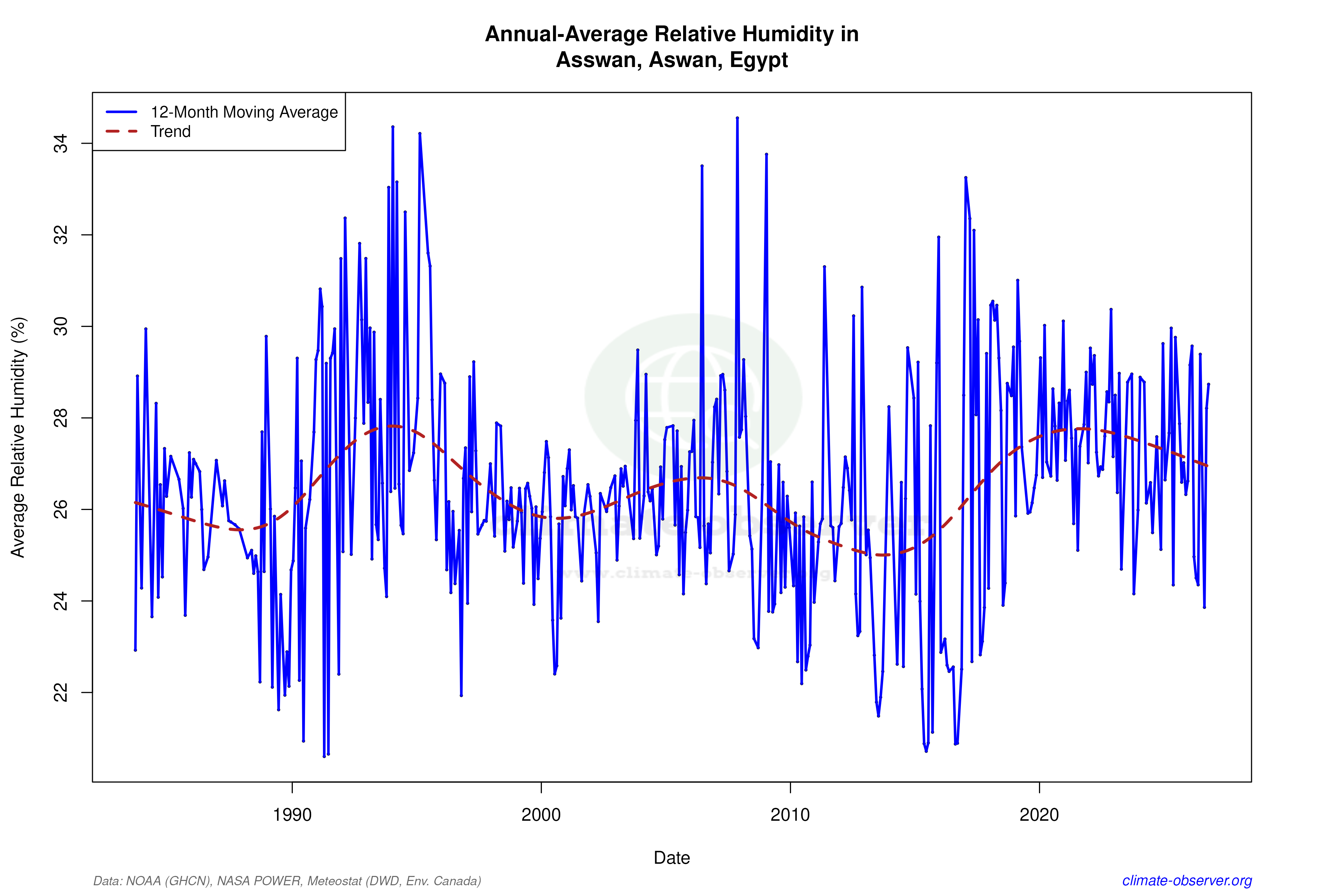

Max Temperature 12-Month MA | 1 of 6
Daily Data Points and Averages Throughout the Year
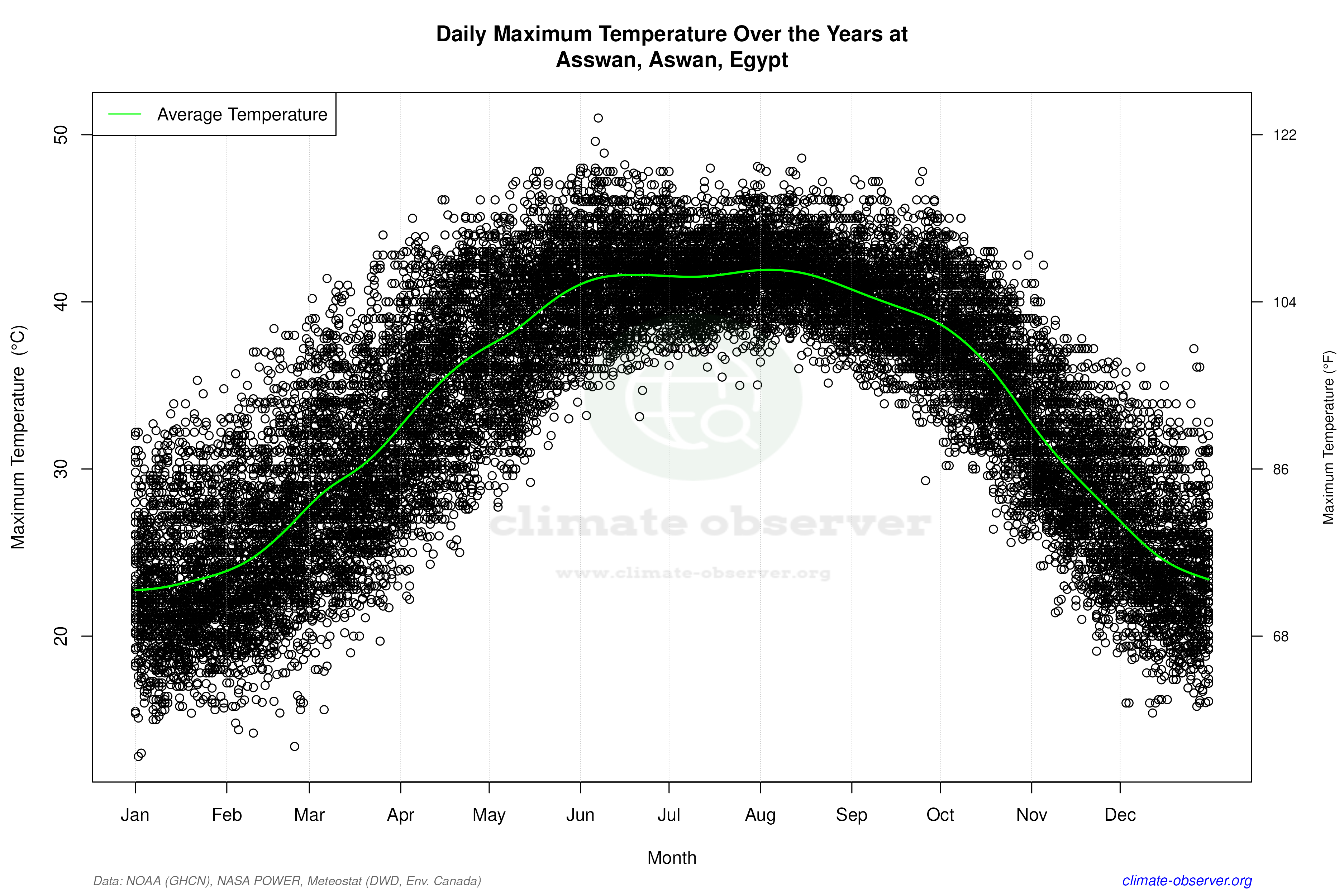
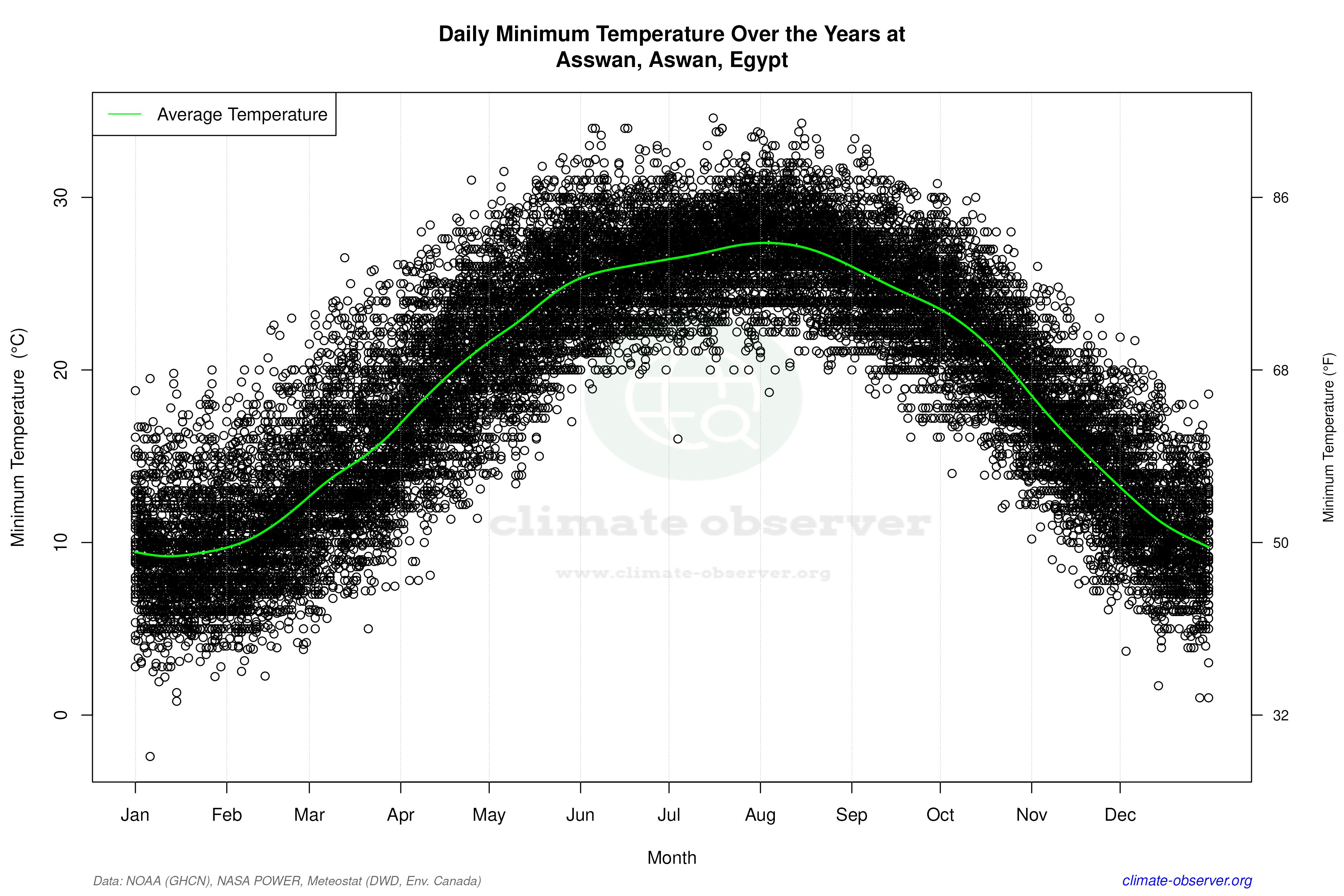
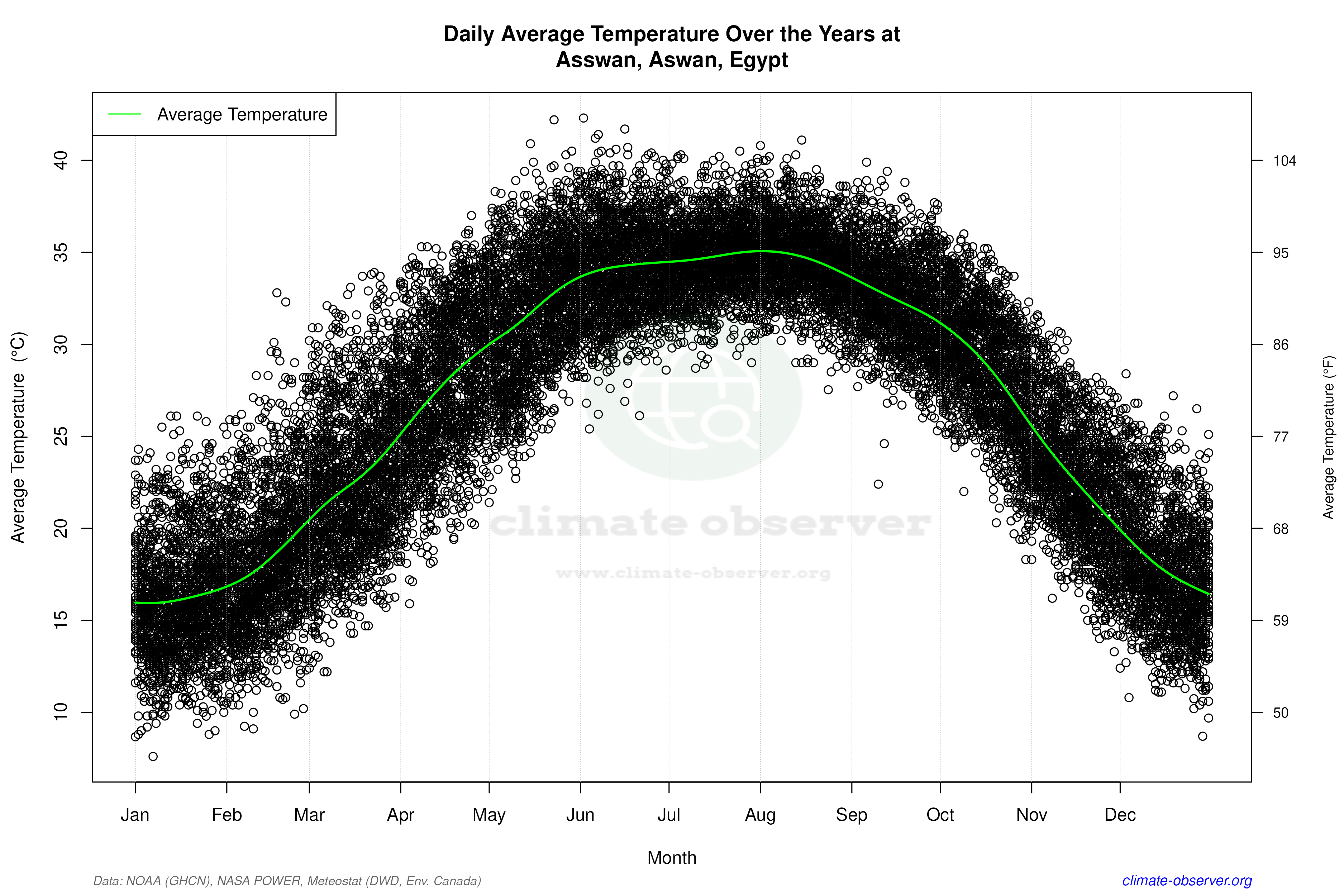
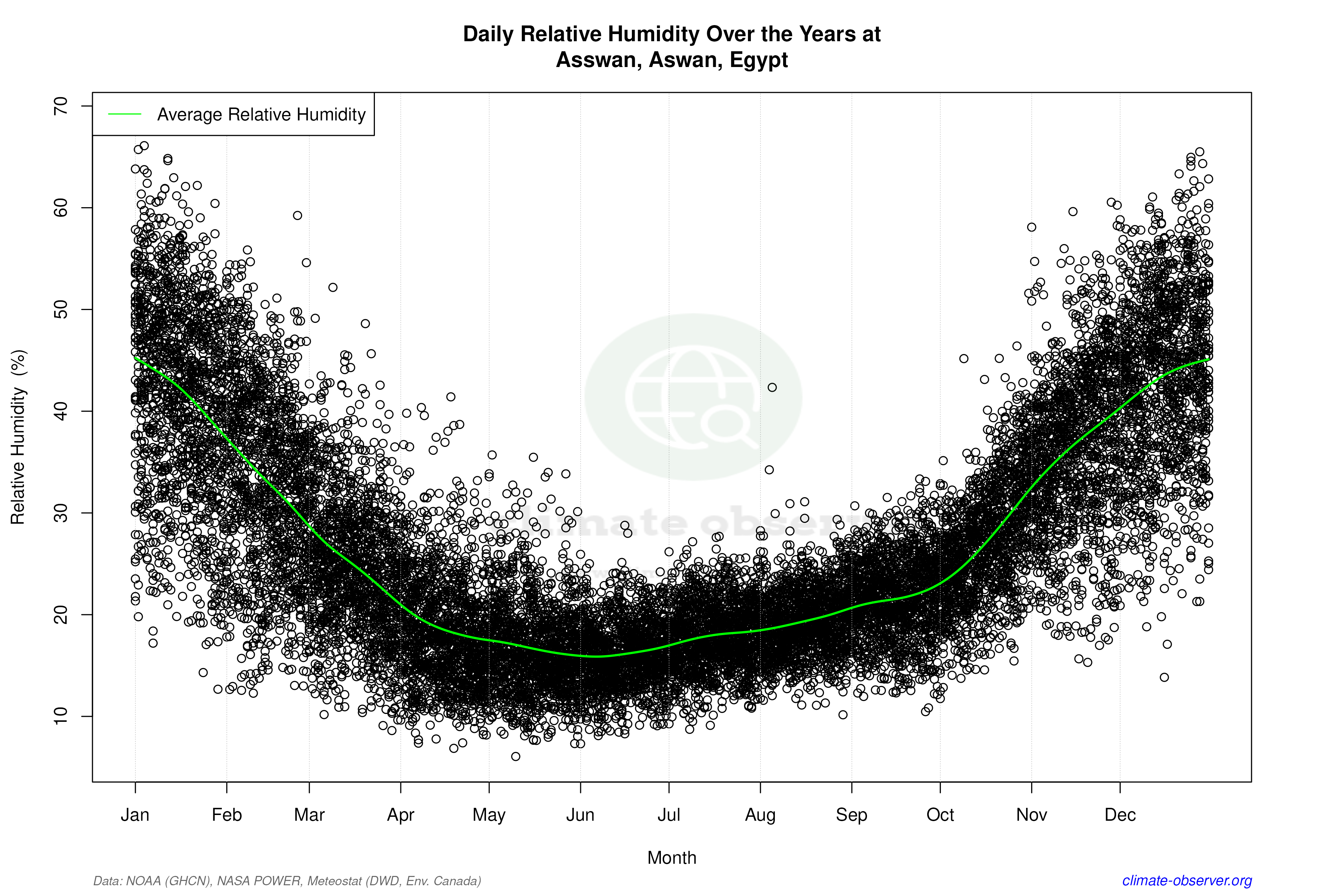

Average Max Temperature Throughout Year | 1 of 5


