Climate for Station: Tallinn, Estonia
Loading live weather...
Climate Analysis & Overview
Tallinn's climate is experiencing a noticeable warming trend, with a significant rise in both high and low temperatures over the past decade. Precipitation patterns have become more evenly distributed, indicating a shift in weather dynamics.
Baltic Warming Trends
Tallinn, situated on the northern coast of Estonia, experiences a humid continental climate, classified as Dfb under the Köppen system. This climate is characterized by cold, snowy winters and mild, humid summers. Over the past decade, the city has seen a warming trend, with average high temperatures increasing by 1.18°C (2.12°F) and lows by 0.81°C (1.46°F). These changes are more pronounced than the all-time trends, where highs have risen by 0.35°C (0.63°F) and lows by 0.14°C (0.25°F). The recent decade's accelerated warming suggests a shift in seasonal dynamics, potentially influenced by regional climate policies aimed at mitigating climate change impacts.
Temperature Extremes and Records
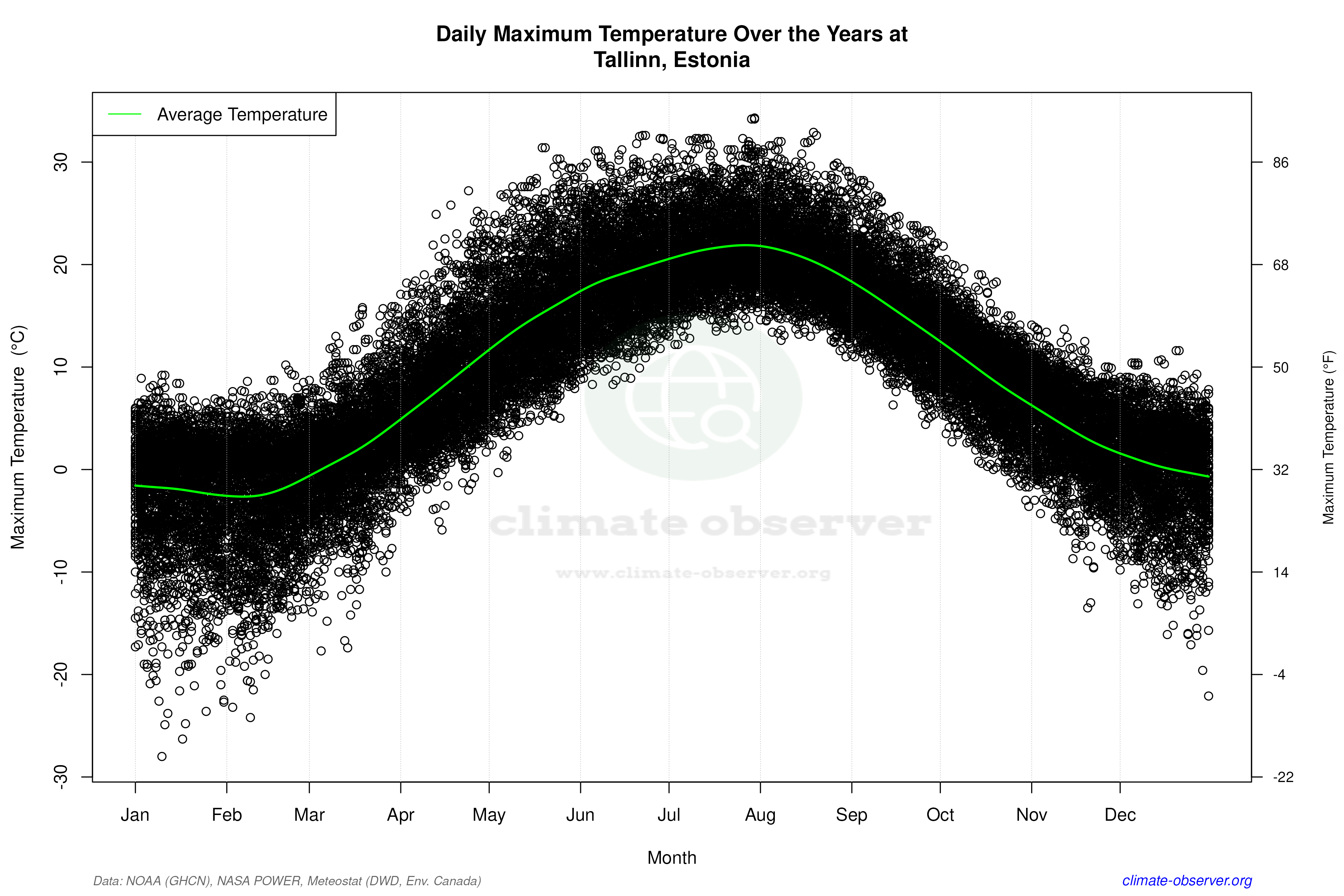
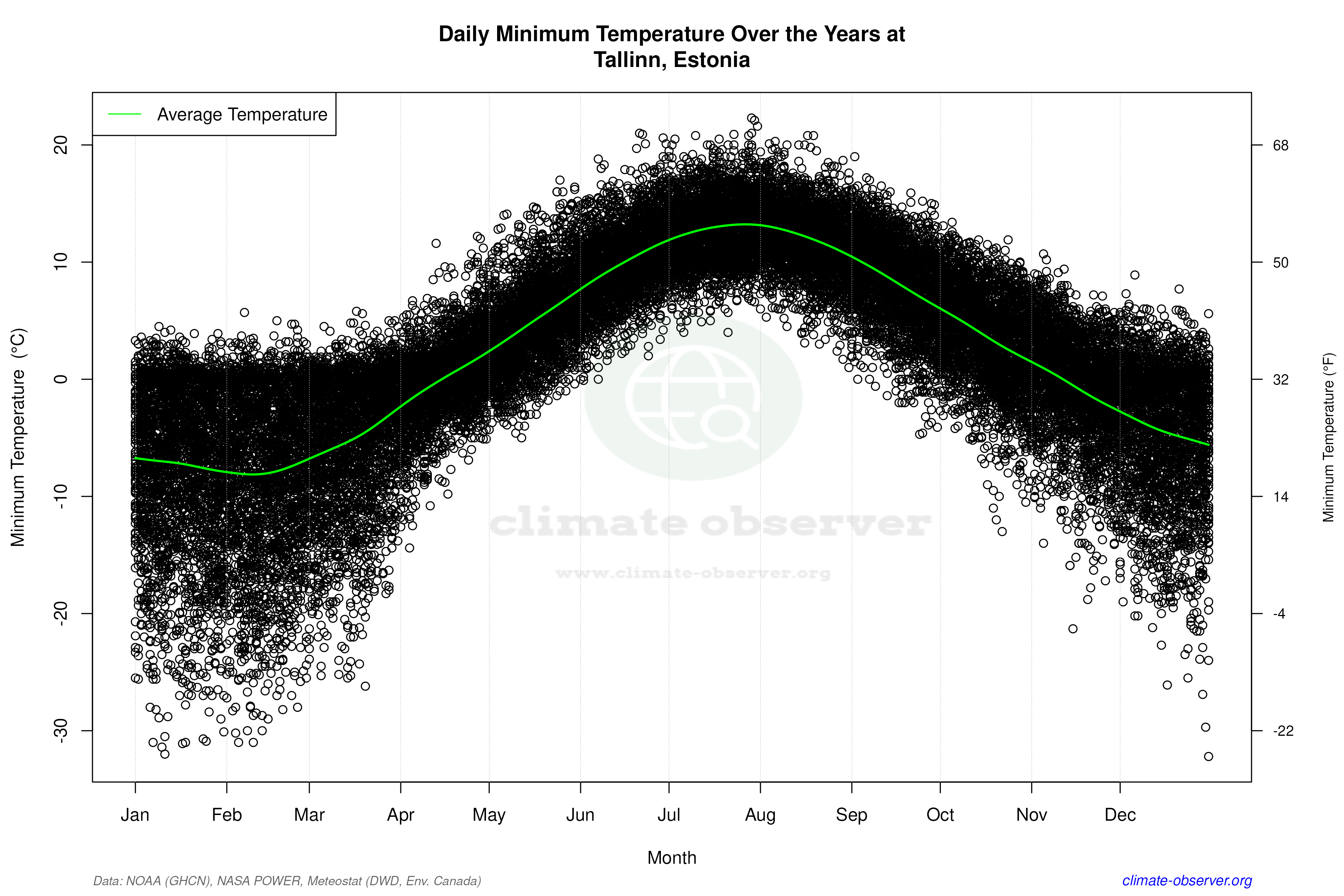
Tallinn's temperature extremes highlight the city's climatic variability. The record high stands at 34.3°C (93.7°F), while the record low plunges to -32.2°C (-26.0°F). These extremes underscore the broad thermal range typical of continental climates, influenced by the Baltic Sea's moderating effects. The sea acts as a buffer, reducing temperature extremes, yet the warming trends suggest a gradual shift in the thermal regime.
Precipitation Patterns and Distribution
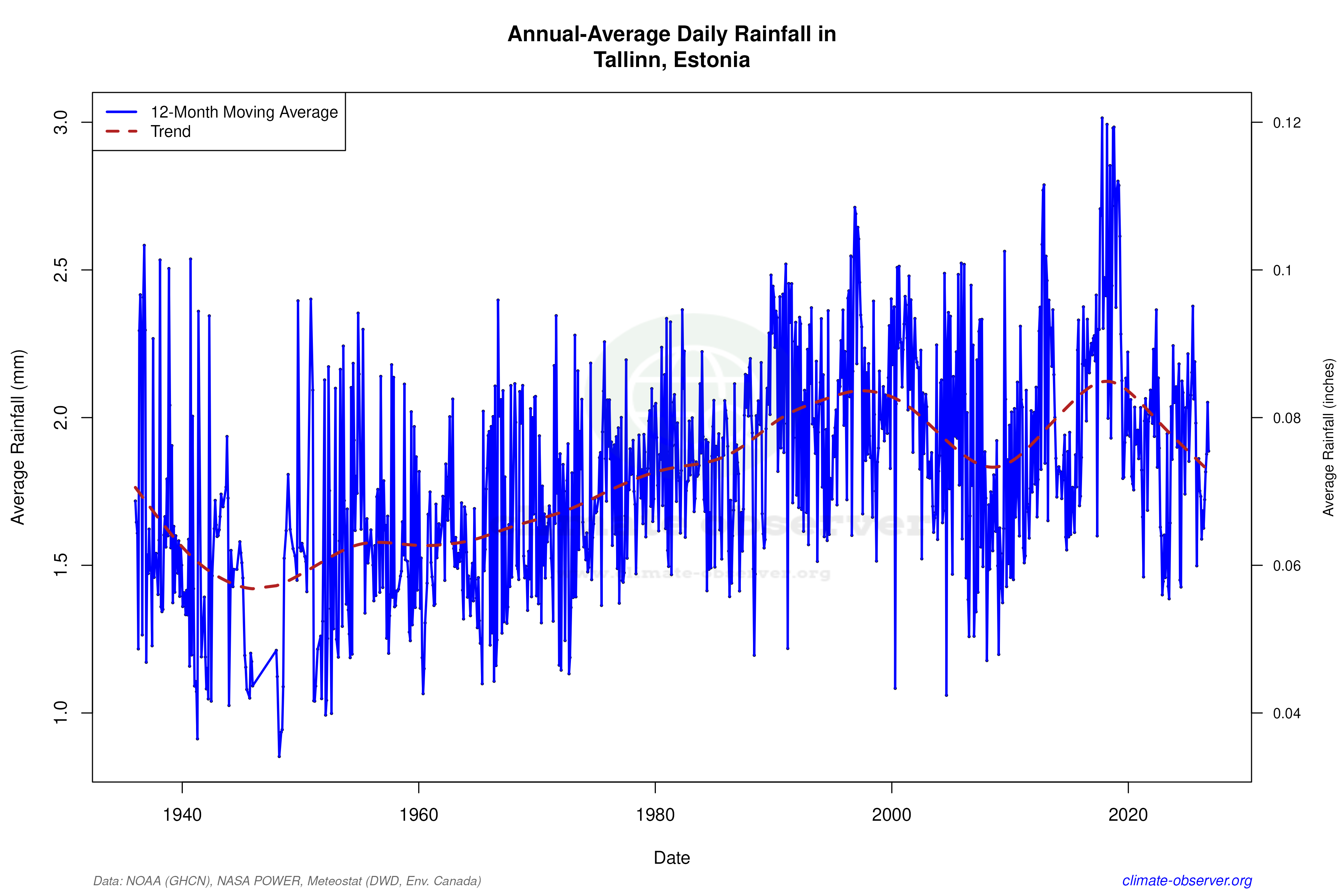
The Precipitation Concentration Index (PCI) for Tallinn has decreased from a baseline of 11.71 to a current value of 9.84. This indicates a more even distribution of rainfall throughout the year, as a PCI under 10 is considered very even. Such a shift can lead to fewer instances of intense rainfall events, potentially reducing the risk of flooding and soil erosion. This change in precipitation dynamics might be attributed to broader climatic shifts and localised weather patterns.
Regional Climate Context
Estonia's commitment to reducing greenhouse gas emissions and enhancing renewable energy usage aligns with the observed climatic trends in Tallinn. The warming trends and changes in precipitation distribution may reflect the broader regional efforts to adapt to and mitigate climate change. Recent weather events, such as milder winters and extended warm periods, provide a backdrop to these statistics, illustrating the tangible impacts of climate change on local weather patterns.
Implications for Future Climate
The data from Tallinn's weather station suggest ongoing climatic changes that could have significant implications for the region's ecosystem and infrastructure. The warming trends, both recent and all-time, coupled with changes in precipitation distribution, highlight the need for adaptive strategies to manage potential impacts on agriculture, water resources, and urban planning. As Estonia continues to pursue its climate goals, understanding these localised trends will be crucial for informed decision-making and policy development.
Station Statistics
10-Year Trend
High: +2.24 °C/decade
Low: +2.17 °C/decade
Rain: -0.66 mm/decade
25-Year Trend
High: +1.21 °C/decade
Low: +1.08 °C/decade
Rain: +0.05 mm/decade
50-Year Trend
High: +0.65 °C/decade
Low: +0.39 °C/decade
Rain: +0.03 mm/decade
All-Time Trend
High: +0.32 °C/decade
Low: +0.17 °C/decade
Rain: +0.07 mm/decade
Percentage Above-Average Days
Last 12 Months: 49.0%
This Year: 52.5%
Precipitation Concentration Index (PCI) ℹ️
Last 12 Months: 10.7
Historical Average: 10.9
Percentile Rank of Last 12 Months ℹ️
High: 82nd percentile
Low: 87th percentile
Rain: 48th percentile
Change in Variance ℹ️
High: -5.7%
Low: -19.8%
Intraday: +8.0%
Data Coverage
99.1%
First Year of Data
1970
Station Location
Historical Weather Records
| Max High | Avg High | Min High | Max Avg | Avg Avg | Min Avg | Max Low | Avg Low | Min Low | Max Precipitation | Avg Precipitation | Max Snow | Avg Snow | |
|---|---|---|---|---|---|---|---|---|---|---|---|---|---|
| Record | 34.3 °C | — | -28.0 °C | 27.2 °C | — | -29.7 °C | 22.3 °C | — | -32.2 °C | 66.8 mm | — | — | — |
| January | 9.2 °C | -2.0 °C | -28.0 °C | 6.9 °C | -4.6 °C | -29.7 °C | 4.5 °C | -7.3 °C | -32.0 °C | 27.9 mm | 1.6 mm | — | — |
| February | 10.2 °C | -2.1 °C | -24.2 °C | 7.9 °C | -4.9 °C | -26.2 °C | 5.7 °C | -7.8 °C | -31.0 °C | 30.0 mm | 1.2 mm | — | — |
| March | 15.9 °C | 1.9 °C | -17.7 °C | 9.7 °C | -1.7 °C | -22.0 °C | 5.8 °C | -4.9 °C | -26.2 °C | 22.9 mm | 1.0 mm | — | — |
| April | 27.2 °C | 8.2 °C | -5.9 °C | 17.8 °C | 3.8 °C | -9.1 °C | 12.2 °C | 0.1 °C | -14.4 °C | 33.6 mm | 1.2 mm | — | — |
| May | 31.4 °C | 14.6 °C | -0.3 °C | 23.8 °C | 9.7 °C | -1.7 °C | 17.0 °C | 4.9 °C | -5.0 °C | 44.0 mm | 1.2 mm | — | — |
| June | 32.6 °C | 19.1 °C | 8.3 °C | 27.1 °C | 14.6 °C | 6.2 °C | 21.0 °C | 9.9 °C | -0.1 °C | 50.1 mm | 1.9 mm | — | — |
| July | 34.3 °C | 21.5 °C | 12.2 °C | 27.2 °C | 17.1 °C | 10.2 °C | 22.3 °C | 12.8 °C | 4.0 °C | 66.8 mm | 2.4 mm | — | — |
| August | 32.9 °C | 20.5 °C | 11.0 °C | 25.5 °C | 16.1 °C | 8.7 °C | 20.8 °C | 12.1 °C | 1.0 °C | 56.4 mm | 2.5 mm | — | — |
| September | 28.5 °C | 15.6 °C | 4.4 °C | 22.5 °C | 11.6 °C | 1.2 °C | 19.0 °C | 8.3 °C | -4.7 °C | 47.4 mm | 2.3 mm | — | — |
| October | 21.8 °C | 9.4 °C | -3.6 °C | 15.6 °C | 6.4 °C | -7.4 °C | 13.4 °C | 3.8 °C | -13.0 °C | 39.7 mm | 2.3 mm | — | — |
| November | 14.1 °C | 3.8 °C | -13.5 °C | 11.8 °C | 1.6 °C | -16.0 °C | 10.7 °C | -0.6 °C | -21.3 °C | 31.1 mm | 2.1 mm | — | — |
| December | 11.6 °C | 0.3 °C | -22.1 °C | 9.6 °C | -2.0 °C | -26.9 °C | 8.9 °C | -4.3 °C | -32.2 °C | 28.1 mm | 1.7 mm | — | — |
Data Visualisations
Remove WatermarksCurrent Year Climate Trends vs Historical
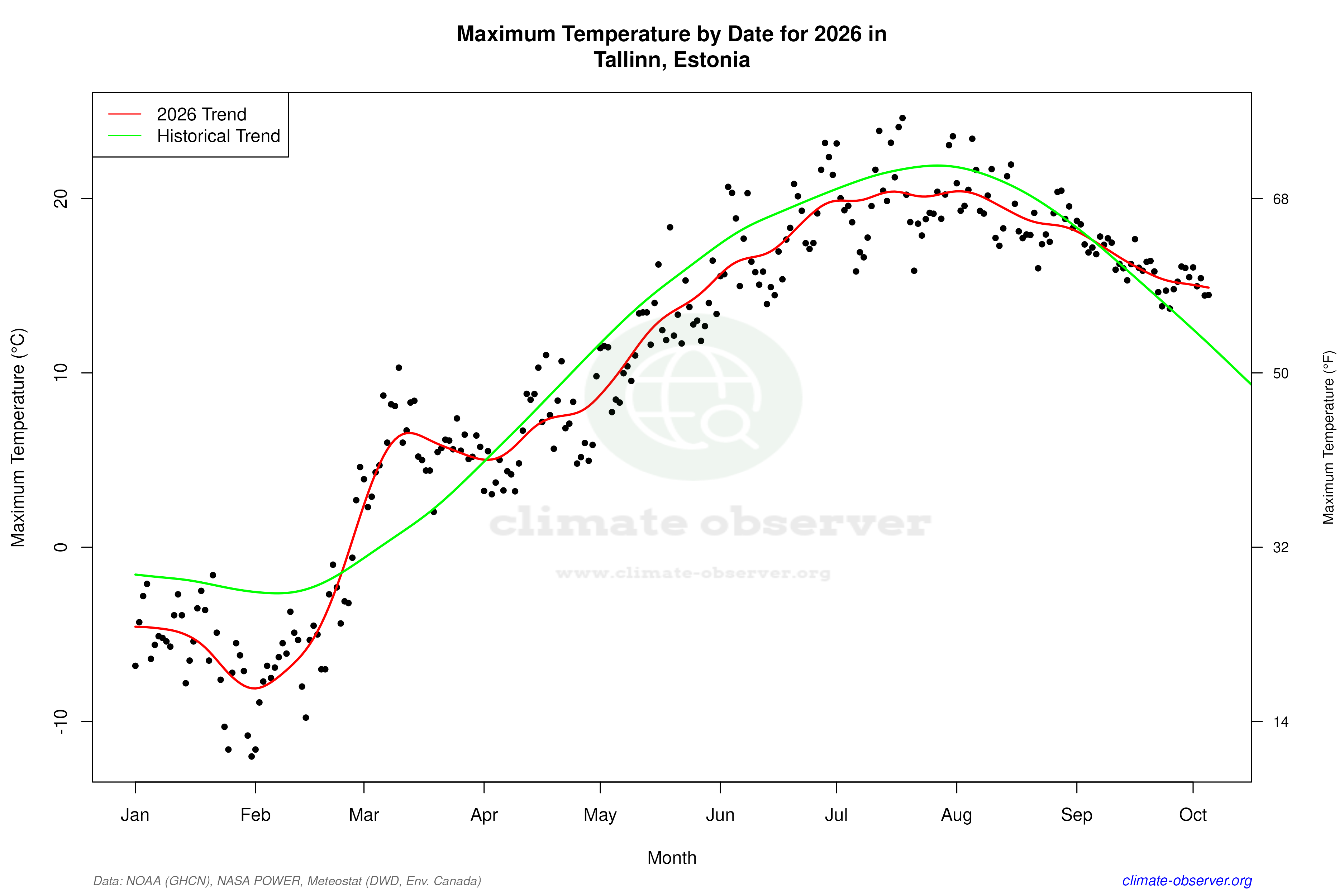
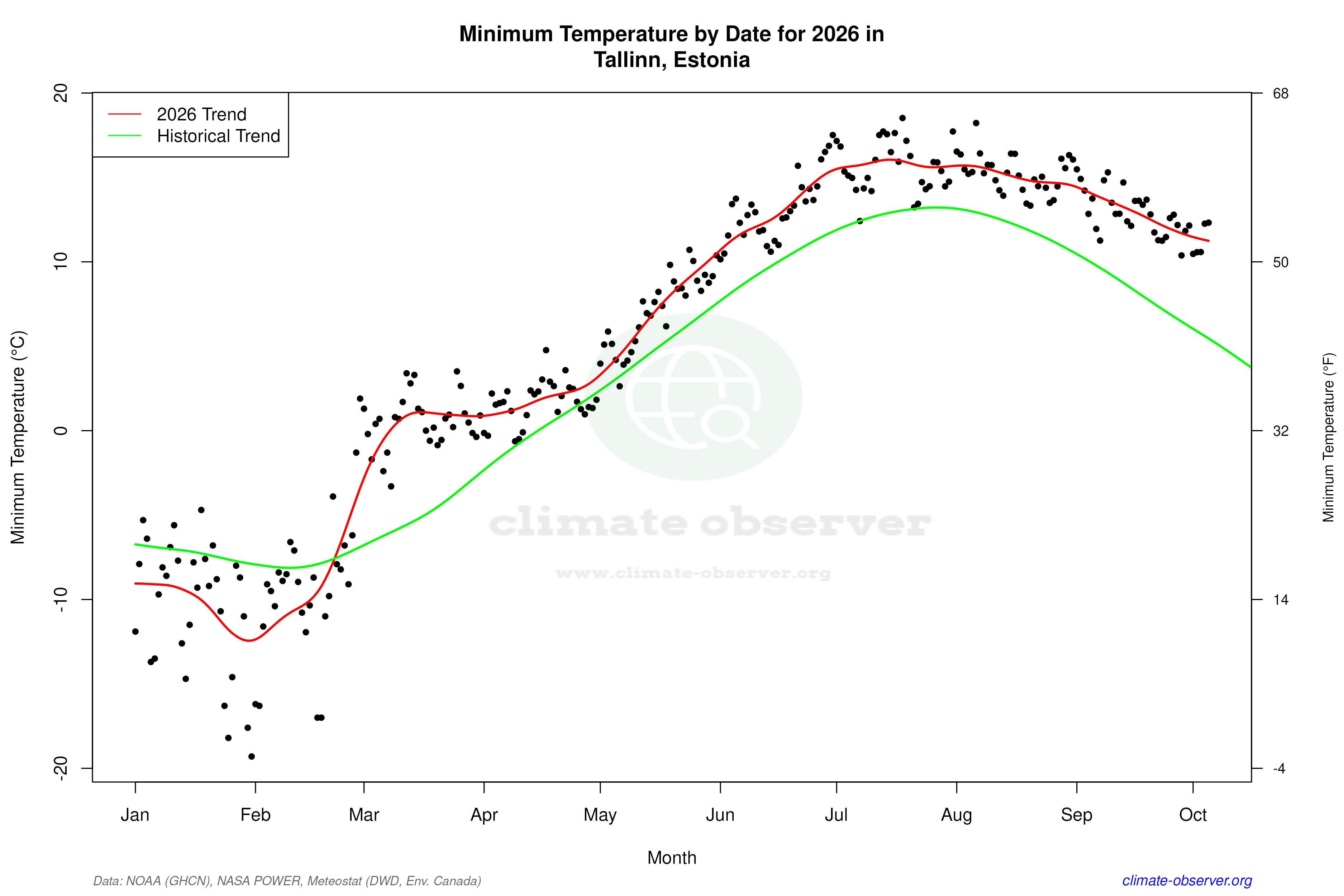
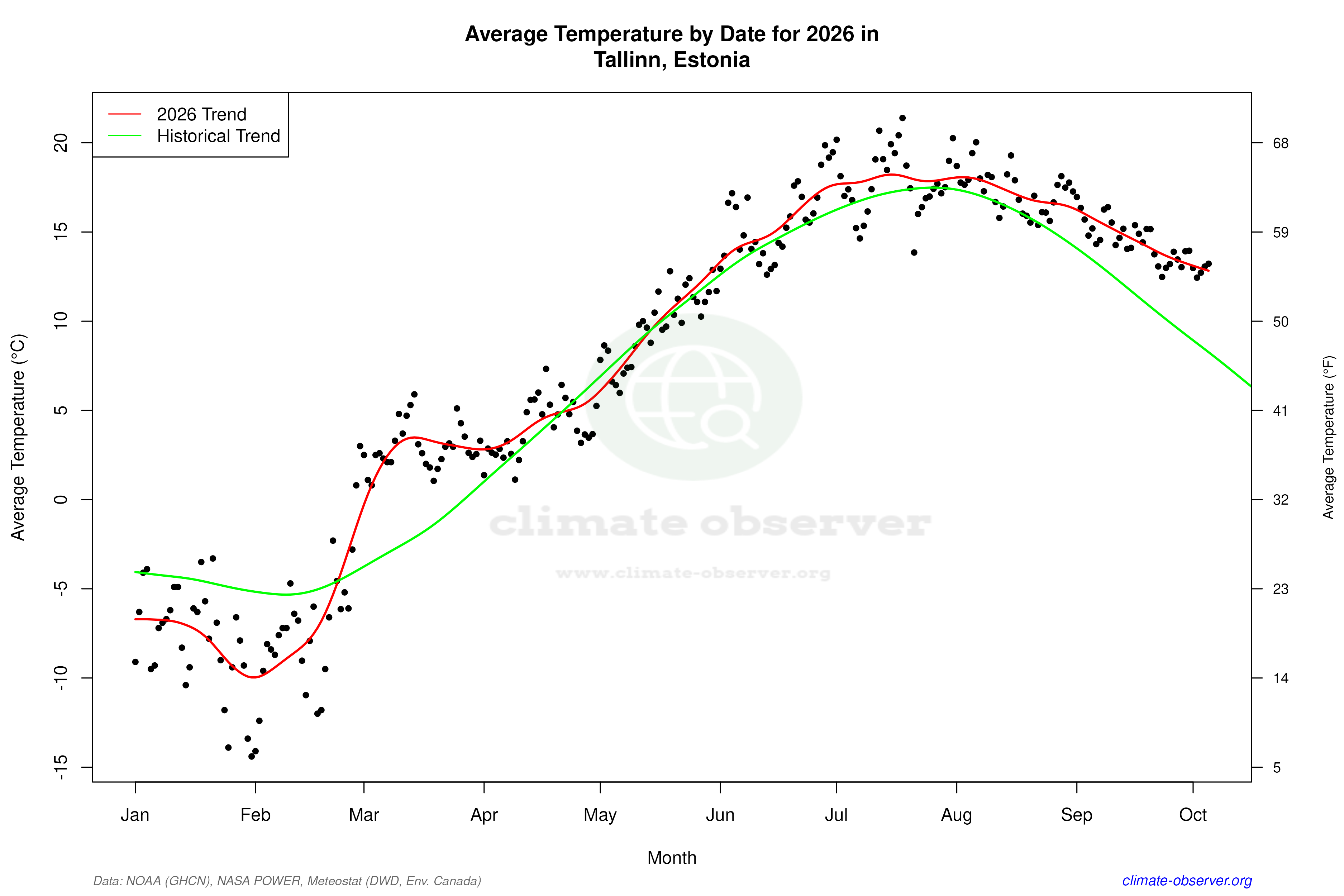
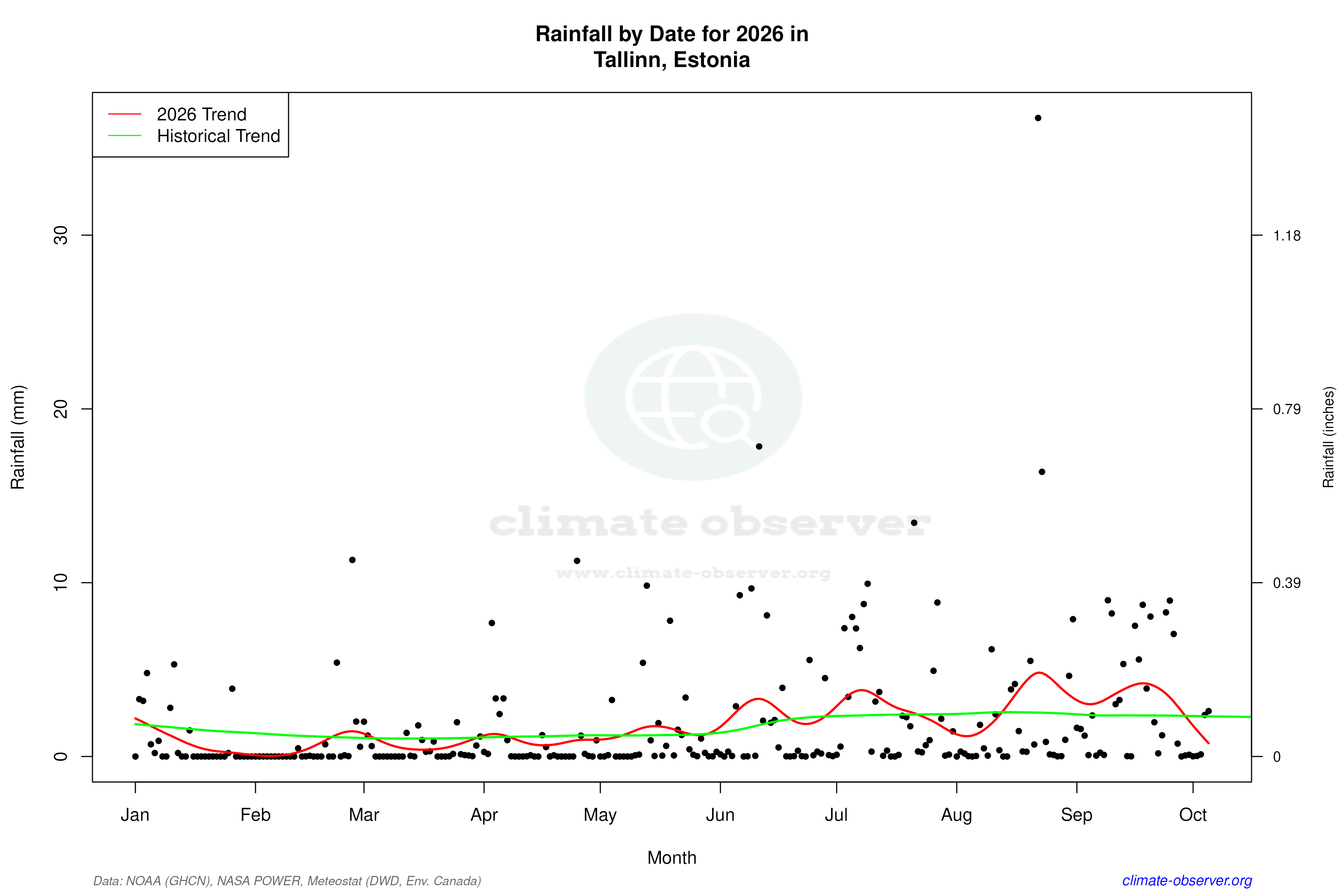
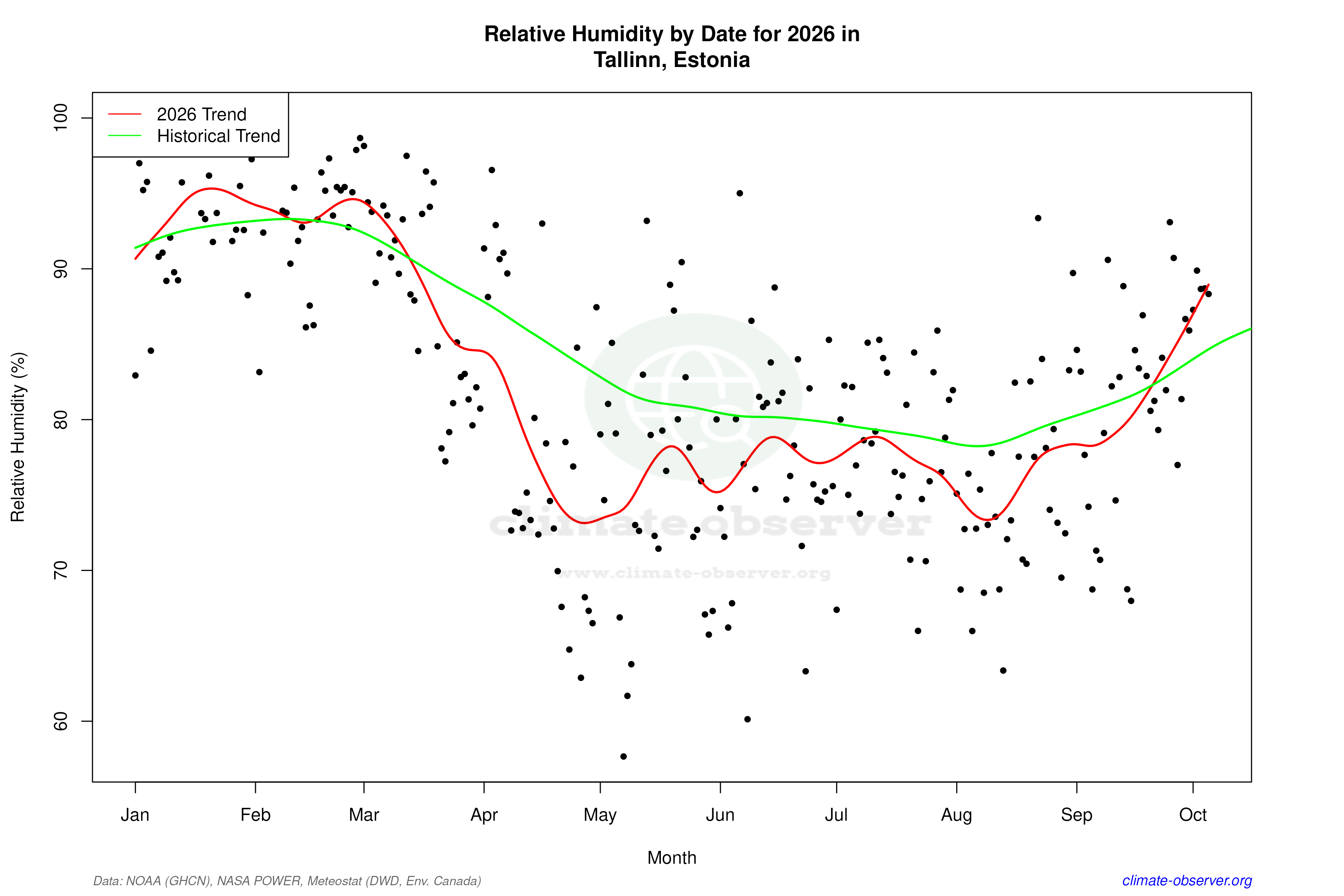

Max Temperature this Year | 1 of 6
Climate 12-Month Moving Averages
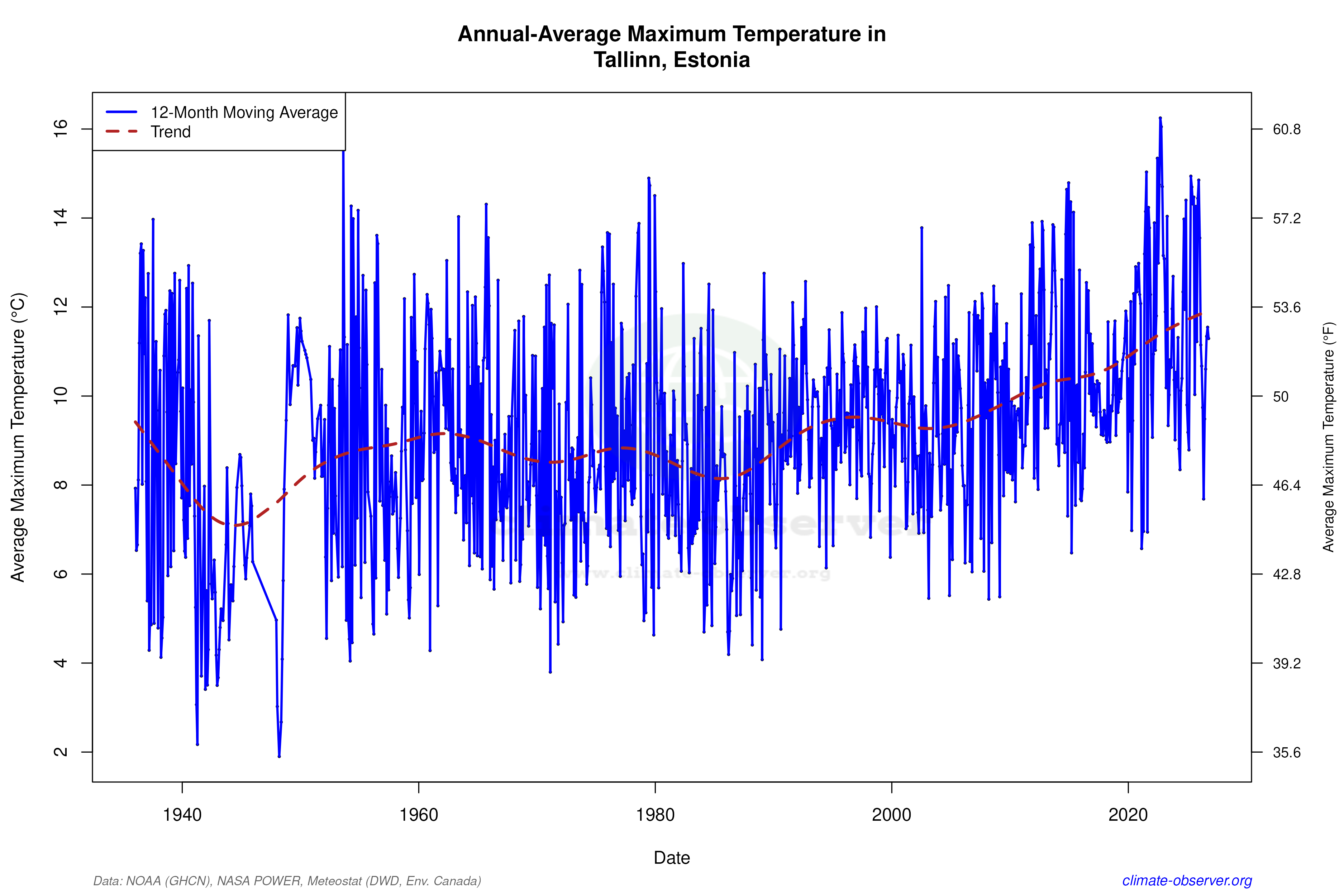
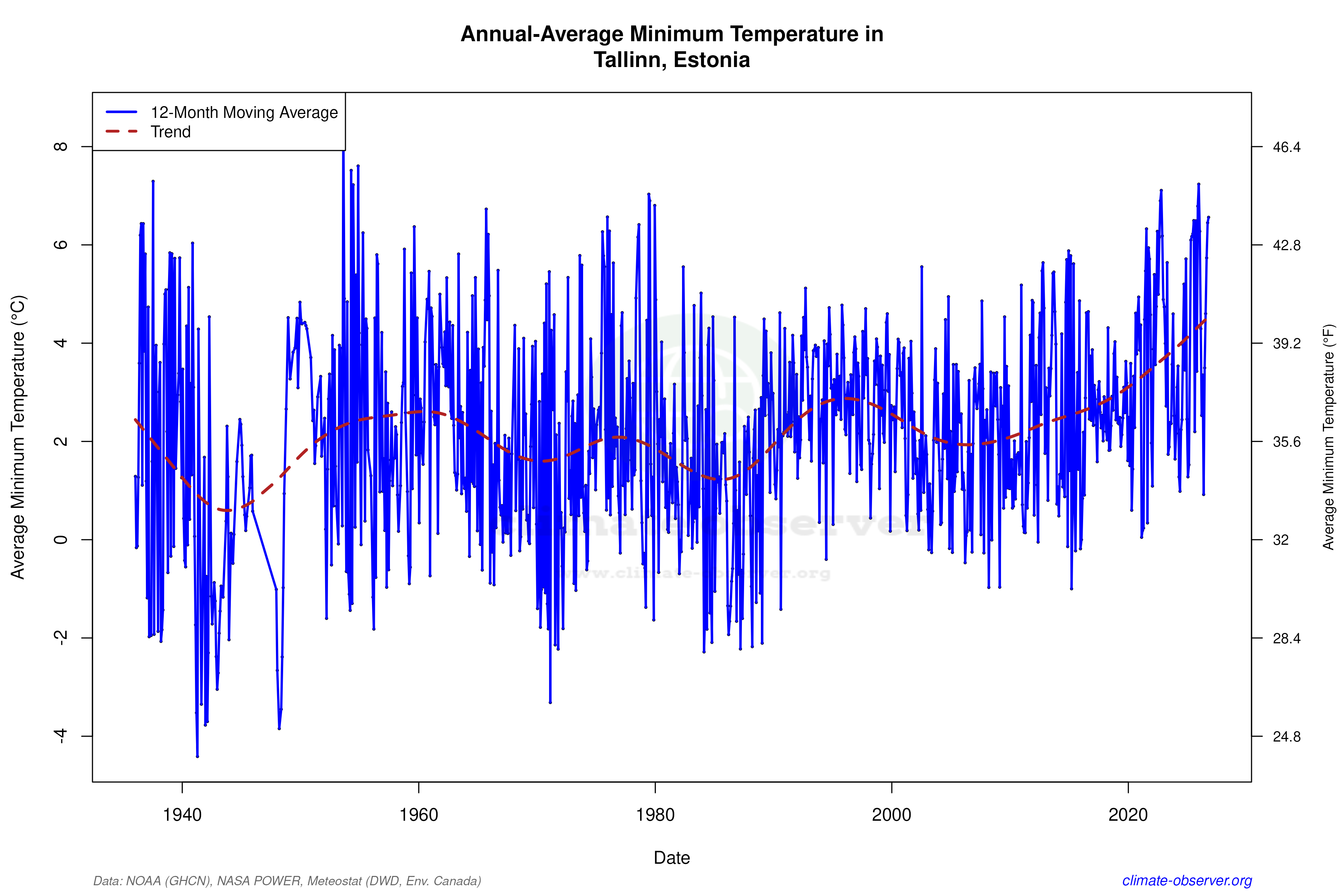
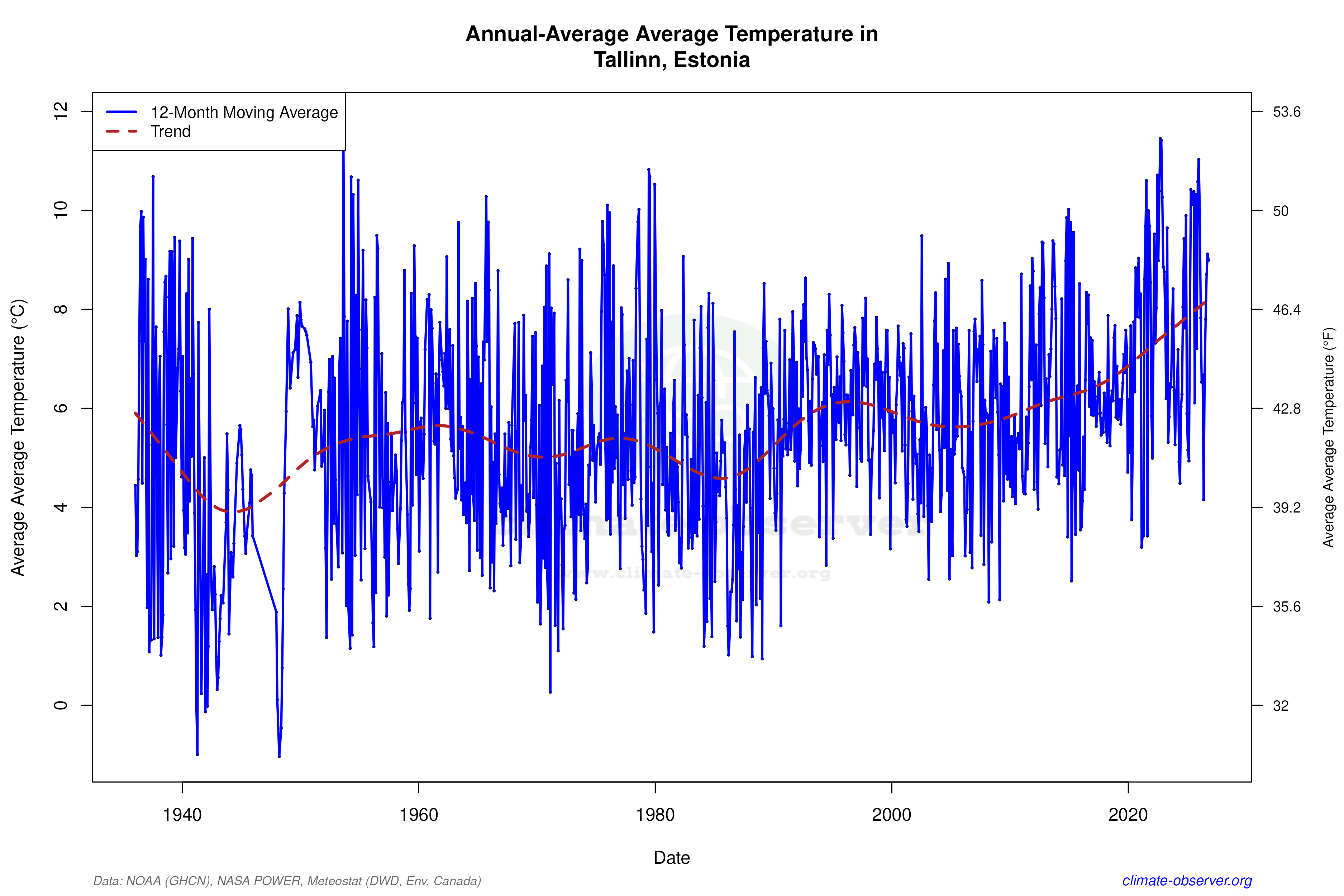

Max Temperature 12-Month MA | 1 of 6
Daily Data Points and Averages Throughout the Year
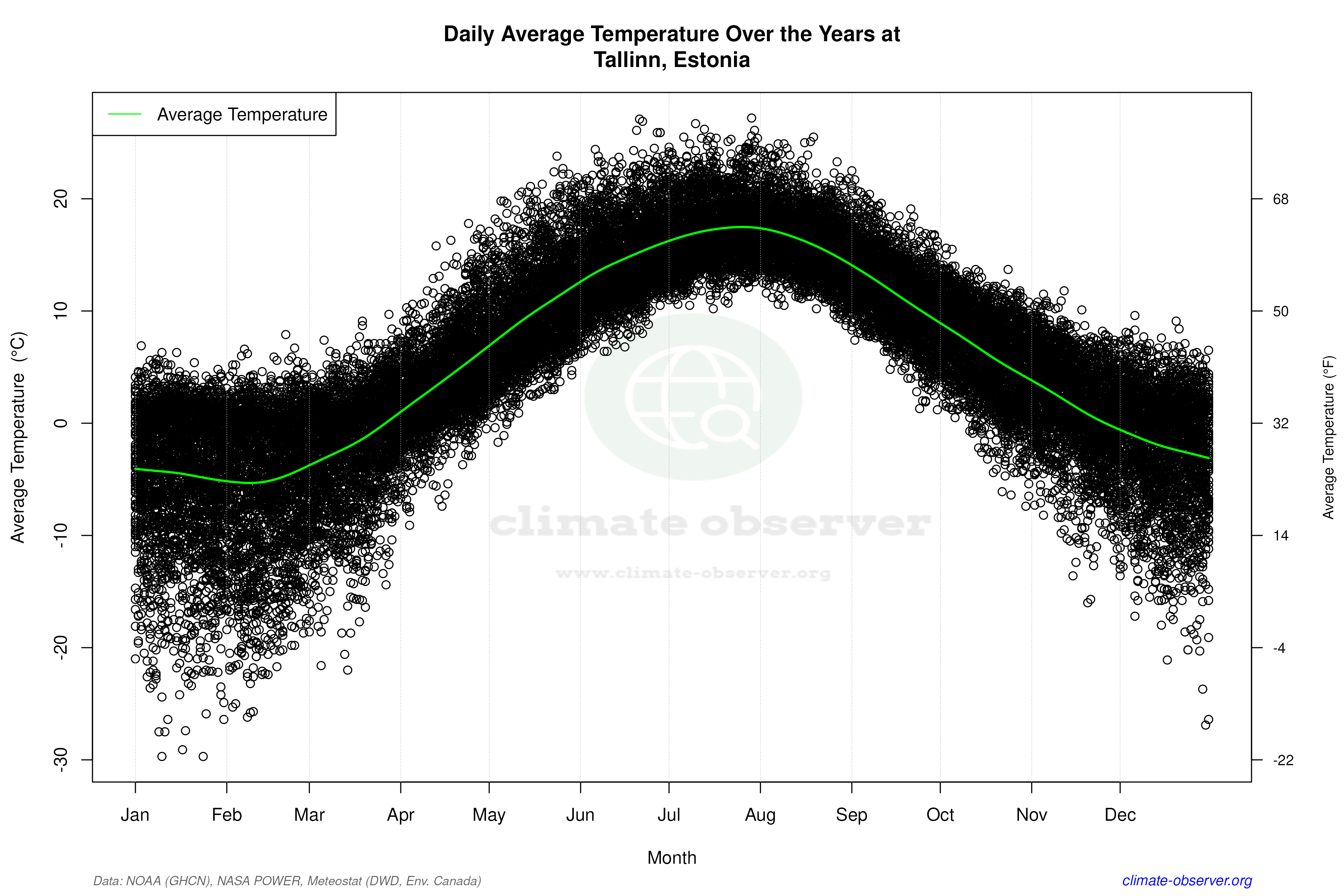
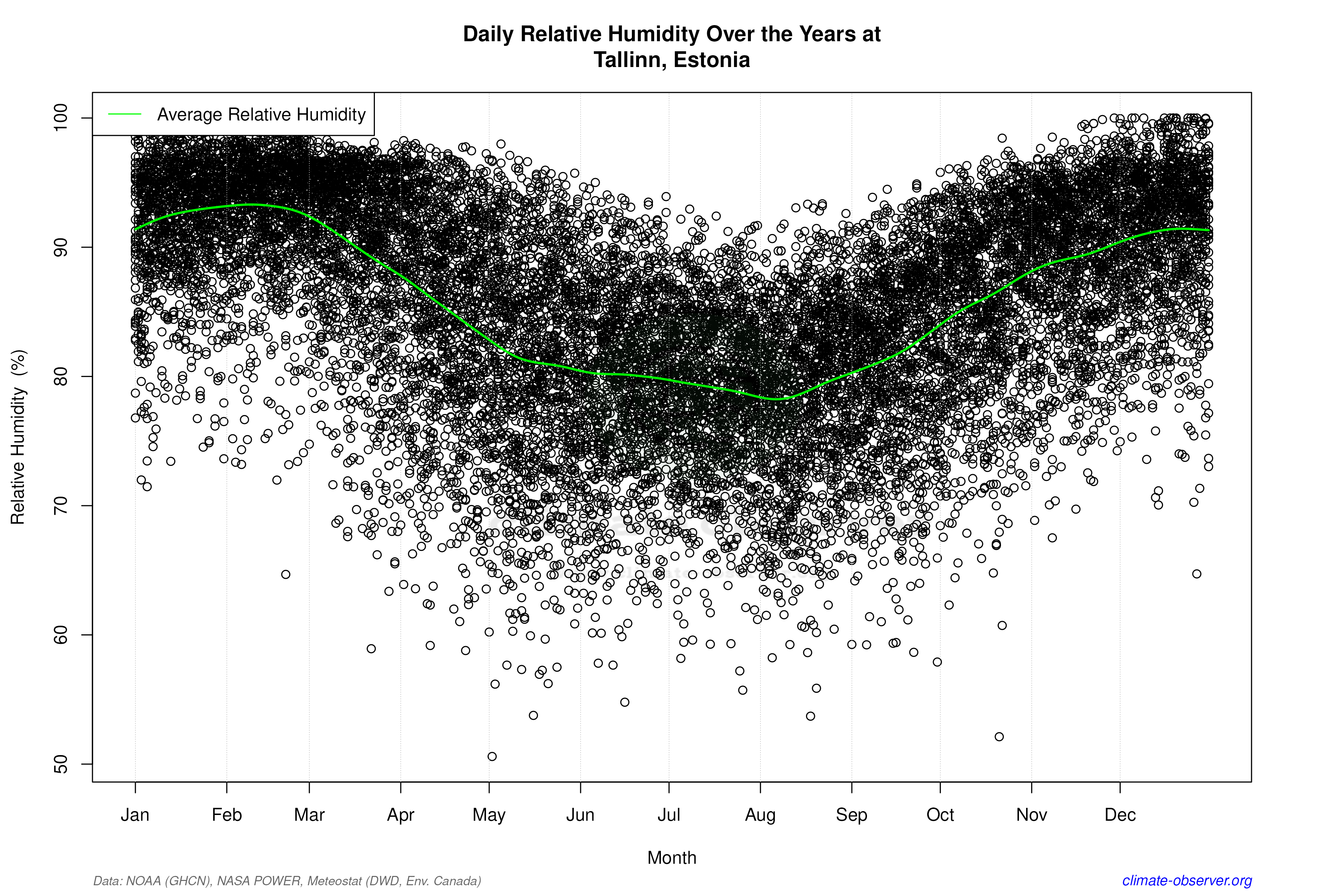

Average Max Temperature Throughout Year | 1 of 5


