Climate for Station: Chuuk Wso Ap, Chuuk, Federated States of Micronesia
Loading live weather...
Climate Analysis & Overview
Chuuk Wso Ap, located in the Federated States of Micronesia, is experiencing a complex interplay of warming trends and more evenly distributed precipitation. While the all-time temperature trends indicate a warming climate, recent decade-long data suggest a divergence, with highs cooling slightly. This nuanced climate profile aligns with regional climate goals aimed at understanding and mitigating climate impacts.
Tropical Climate Dynamics
Chuuk Wso Ap is situated in a tropical rainforest climate zone, classified as Af under the Köppen system. This classification is characterised by consistent high temperatures and significant rainfall throughout the year. The island's geography, surrounded by the Pacific Ocean, plays a crucial role in moderating temperatures and contributing to high humidity levels. The all-time temperature trends reveal a warming pattern, with highs increasing by 0.11°C (0.20°F) and lows rising by 0.17°C (0.31°F). However, over the past decade, a slight cooling trend of -0.11°C (-0.20°F) for highs contrasts with a warming of 0.18°C (0.32°F) for lows, indicating a complex thermal dynamic.
Thermal Extremes and Records
Chuuk Wso Ap has recorded a maximum temperature of 35.6°C (96.1°F) and a minimum of 18.9°C (66.0°F). These extremes highlight the station's capacity for significant temperature variability despite its tropical location. The warming trends, particularly in the lows, suggest that nights are becoming warmer, a common indicator of climate change impacts in tropical regions.
Precipitation Patterns and Distribution
The Precipitation Concentration Index (PCI) for Chuuk Wso Ap has decreased from a baseline of 10.60 to a current value of 8.45. This indicates a more even distribution of rainfall events, a shift that could influence local agriculture and water resource management. A PCI under 10 suggests that rainfall is spread more uniformly throughout the year, reducing the risk of extreme weather events such as floods or droughts.
Regional Climate Goals and Implications
The Federated States of Micronesia, including Chuuk, are actively engaged in regional climate initiatives aimed at enhancing resilience against climate change impacts. The observed trends at Chuuk Wso Ap provide valuable insights into these efforts. The warming all-time trends align with global patterns, while the recent decade's cooling highs may offer a temporary reprieve or indicate localised climatic shifts. Understanding these patterns is crucial for developing adaptive strategies that align with regional climate goals.
Future Considerations
As Chuuk continues to monitor its climate, the interplay between warming trends and precipitation distribution will be critical. The station's data provide a foundation for ongoing research and policy development, contributing to broader efforts to mitigate climate change impacts across the Pacific region.
Station Statistics
10-Year Trend
High: -0.22 °C/decade
Low: +0.36 °C/decade
Rain: +0.61 mm/decade
25-Year Trend
High: +0.20 °C/decade
Low: +0.63 °C/decade
Rain: +0.08 mm/decade
50-Year Trend
High: +0.00 °C/decade
Low: +0.26 °C/decade
Rain: +0.28 mm/decade
All-Time Trend
High: +0.10 °C/decade
Low: +0.17 °C/decade
Rain: -0.01 mm/decade
Percentage Above-Average Days
Last 12 Months: 61.6%
This Year: 59.7%
Precipitation Concentration Index (PCI) ℹ️
Last 12 Months: 9.6
Historical Average: 9.8
Percentile Rank of Last 12 Months ℹ️
High: 77th percentile
Low: 96th percentile
Rain: 72nd percentile
Change in Variance ℹ️
High: +6.5%
Low: -24.7%
Intraday: -19.7%
Data Coverage
85.9%
First Year of Data
1958
Station Location
Historical Weather Records
| Max High | Avg High | Min High | Max Avg | Avg Avg | Min Avg | Max Low | Avg Low | Min Low | Max Precipitation | Avg Precipitation | Max Snow | Avg Snow | |
|---|---|---|---|---|---|---|---|---|---|---|---|---|---|
| Record | 35.6 °C | — | 25.6 °C | 30.8 °C | — | 24.3 °C | 29.5 °C | — | 18.9 °C | 378.5 mm | — | 0.0 mm | — |
| January | 34.4 °C | 30.0 °C | 26.1 °C | 29.6 °C | 27.9 °C | 25.0 °C | 28.3 °C | 25.1 °C | 20.0 °C | 188.5 mm | 7.5 mm | 0.0 mm | 0.0 mm |
| February | 33.9 °C | 30.0 °C | 25.6 °C | 29.5 °C | 27.8 °C | 24.6 °C | 28.3 °C | 25.1 °C | 19.4 °C | 164.3 mm | 7.0 mm | 0.0 mm | 0.0 mm |
| March | 35.6 °C | 30.3 °C | 26.1 °C | 29.8 °C | 27.9 °C | 24.3 °C | 28.9 °C | 25.2 °C | 20.0 °C | 208.5 mm | 7.7 mm | 0.0 mm | 0.0 mm |
| April | 34.4 °C | 30.5 °C | 26.7 °C | 30.8 °C | 28.1 °C | 24.8 °C | 28.8 °C | 25.2 °C | 20.0 °C | 174.5 mm | 10.2 mm | 0.0 mm | 0.0 mm |
| May | 34.4 °C | 30.7 °C | 26.1 °C | 30.2 °C | 28.1 °C | 25.2 °C | 28.7 °C | 25.1 °C | 19.4 °C | 221.0 mm | 11.2 mm | 0.0 mm | 0.0 mm |
| June | 33.9 °C | 30.7 °C | 26.1 °C | 30.3 °C | 28.0 °C | 24.8 °C | 29.0 °C | 24.8 °C | 20.0 °C | 158.8 mm | 10.6 mm | 0.0 mm | 0.0 mm |
| July | 33.7 °C | 30.7 °C | 25.6 °C | 30.2 °C | 27.8 °C | 24.8 °C | 29.5 °C | 24.5 °C | 20.6 °C | 226.6 mm | 11.0 mm | 0.0 mm | 0.0 mm |
| August | 35.6 °C | 30.7 °C | 26.7 °C | 30.6 °C | 27.9 °C | 25.1 °C | 28.8 °C | 24.4 °C | 20.6 °C | 148.5 mm | 11.3 mm | 0.0 mm | 0.0 mm |
| September | 34.1 °C | 30.7 °C | 26.1 °C | 29.7 °C | 27.9 °C | 24.8 °C | 28.7 °C | 24.5 °C | 20.6 °C | 155.4 mm | 11.4 mm | 0.0 mm | 0.0 mm |
| October | 33.3 °C | 30.8 °C | 26.3 °C | 30.2 °C | 27.9 °C | 24.9 °C | 28.3 °C | 24.5 °C | 20.6 °C | 135.6 mm | 10.4 mm | 0.0 mm | 0.0 mm |
| November | 33.3 °C | 30.7 °C | 26.1 °C | 29.9 °C | 28.1 °C | 25.0 °C | 28.9 °C | 24.8 °C | 18.9 °C | 204.7 mm | 9.8 mm | 0.0 mm | 0.0 mm |
| December | 33.9 °C | 30.3 °C | 26.2 °C | 29.7 °C | 28.0 °C | 25.2 °C | 28.3 °C | 25.1 °C | 20.6 °C | 378.5 mm | 9.9 mm | 0.0 mm | 0.0 mm |
Data Visualisations
Remove WatermarksCurrent Year Climate Trends vs Historical
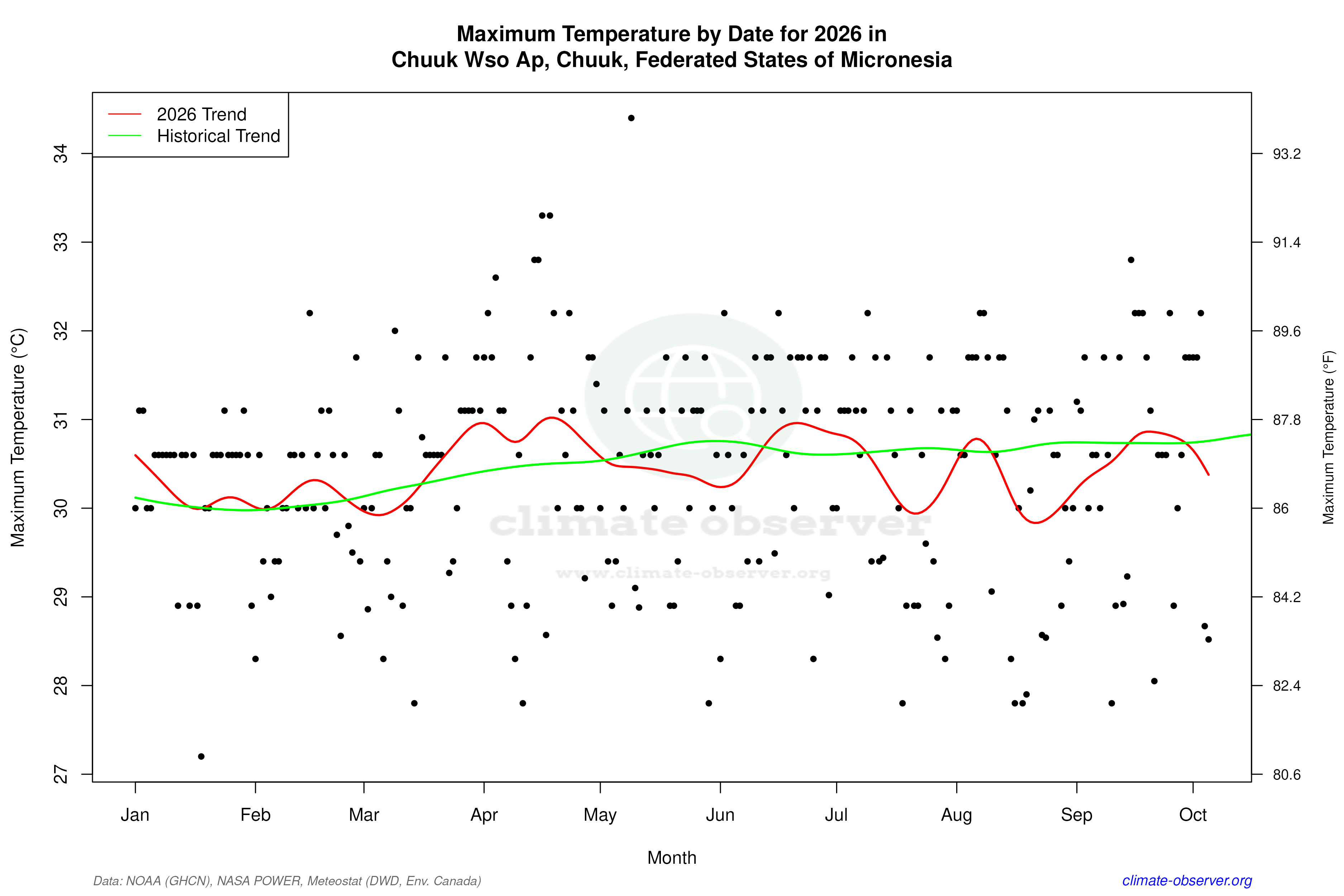
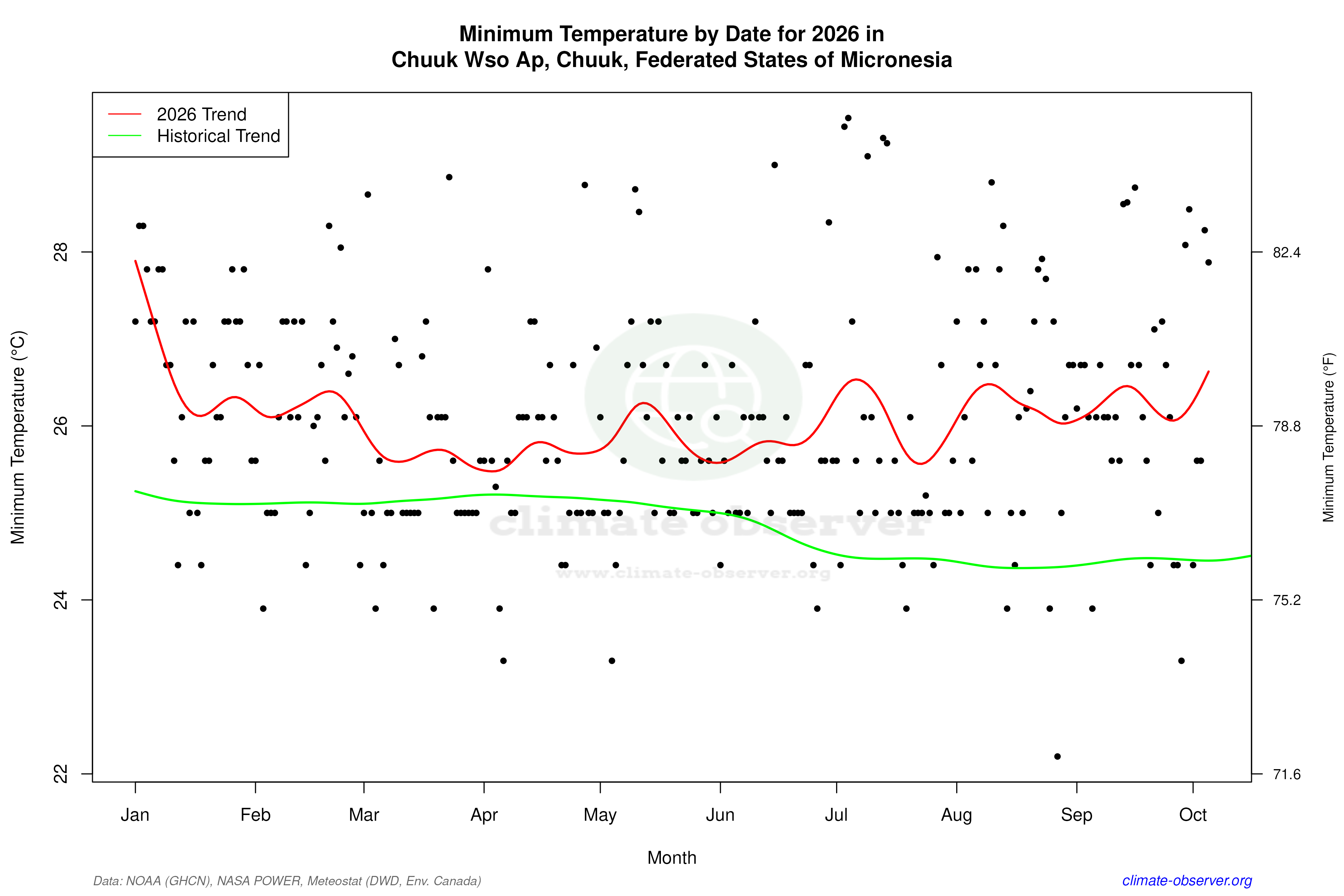
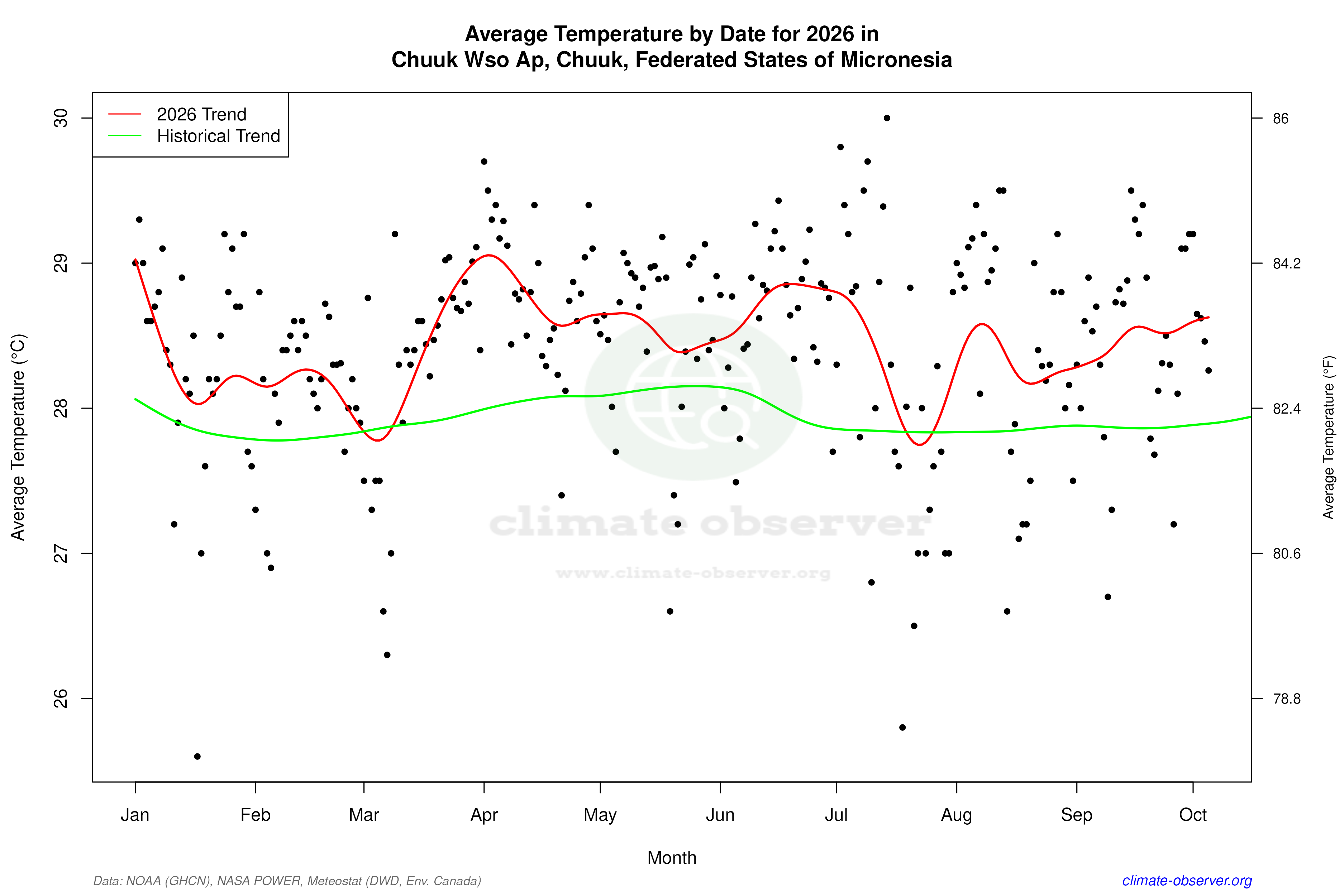
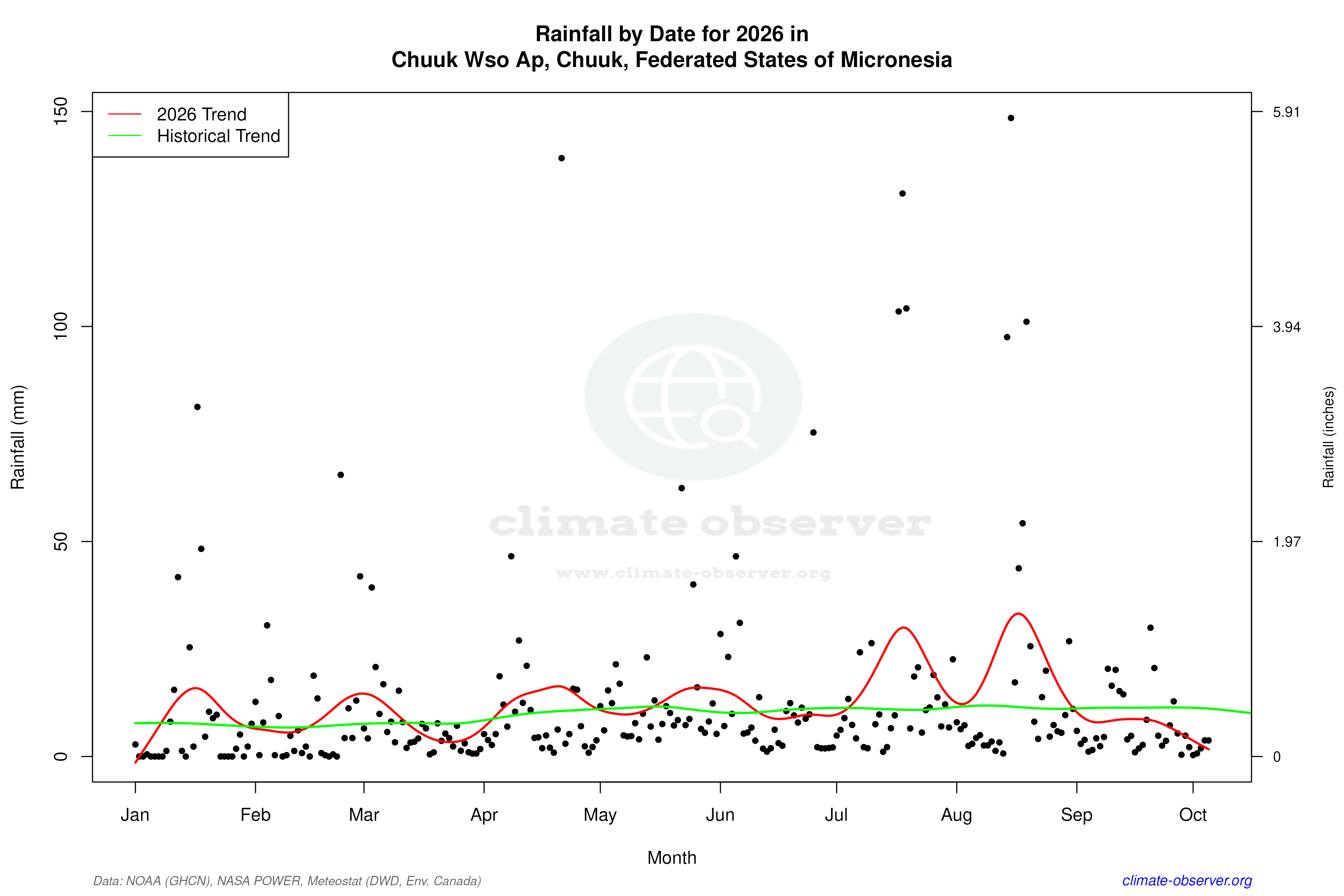
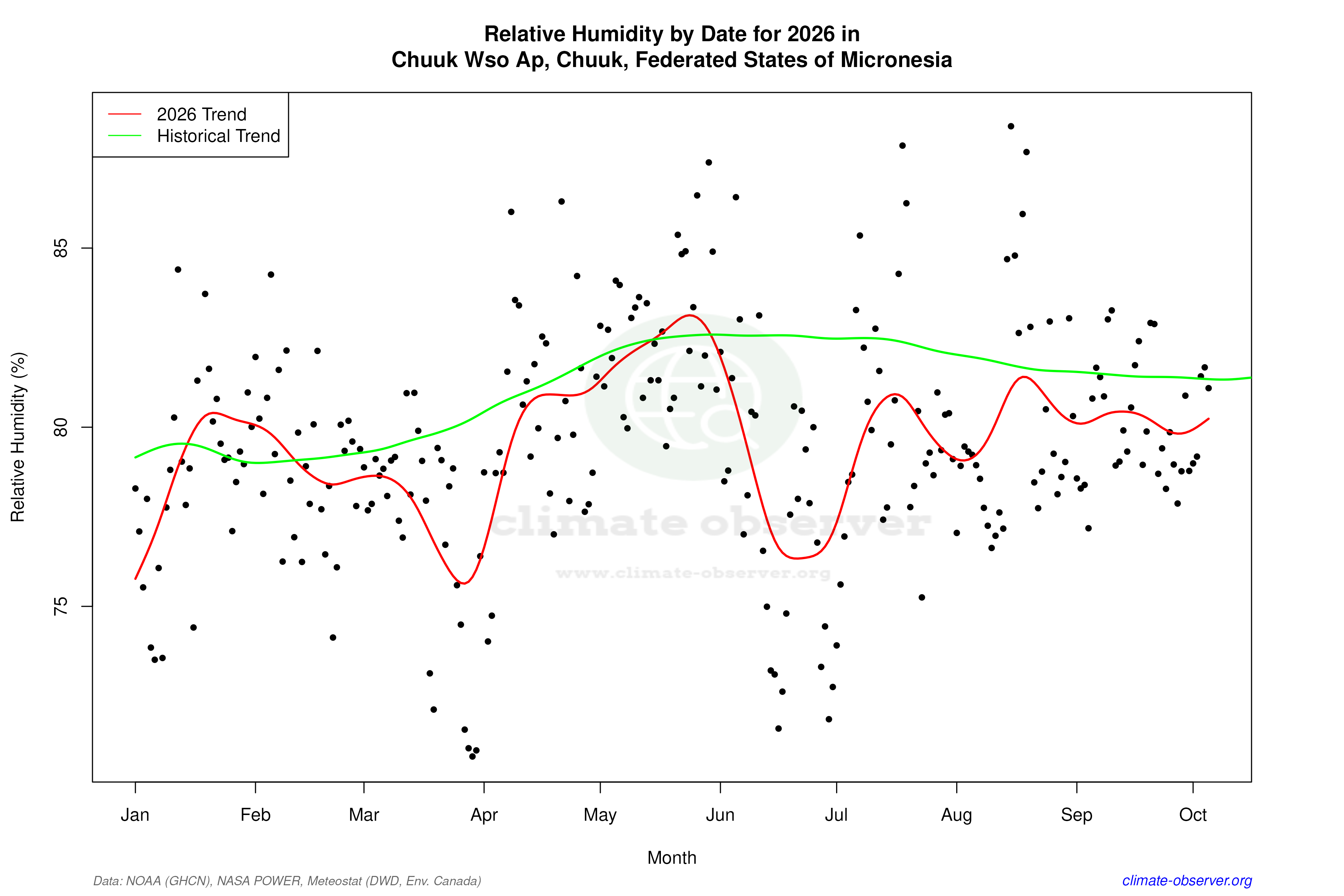

Max Temperature this Year | 1 of 6
Climate 12-Month Moving Averages
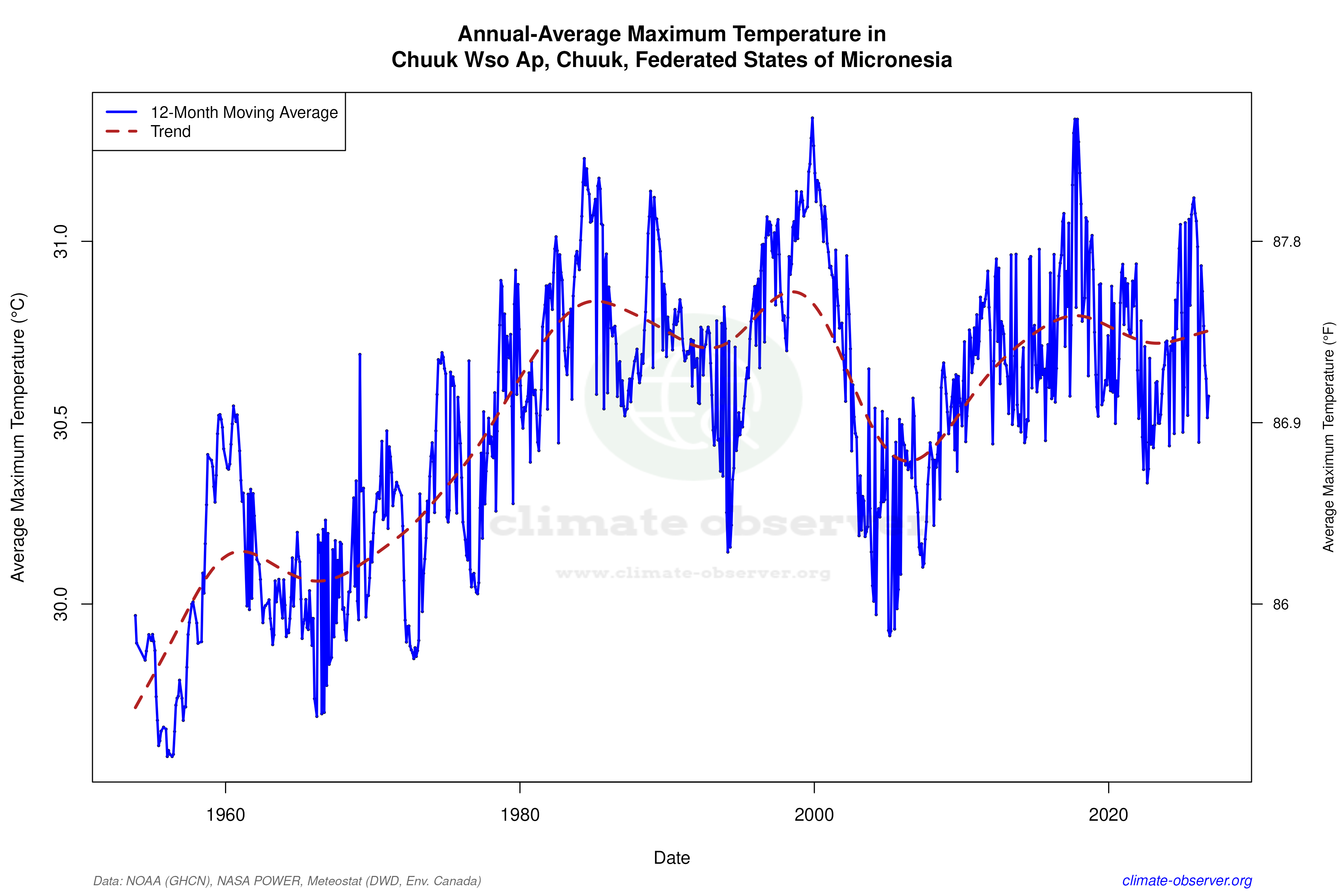
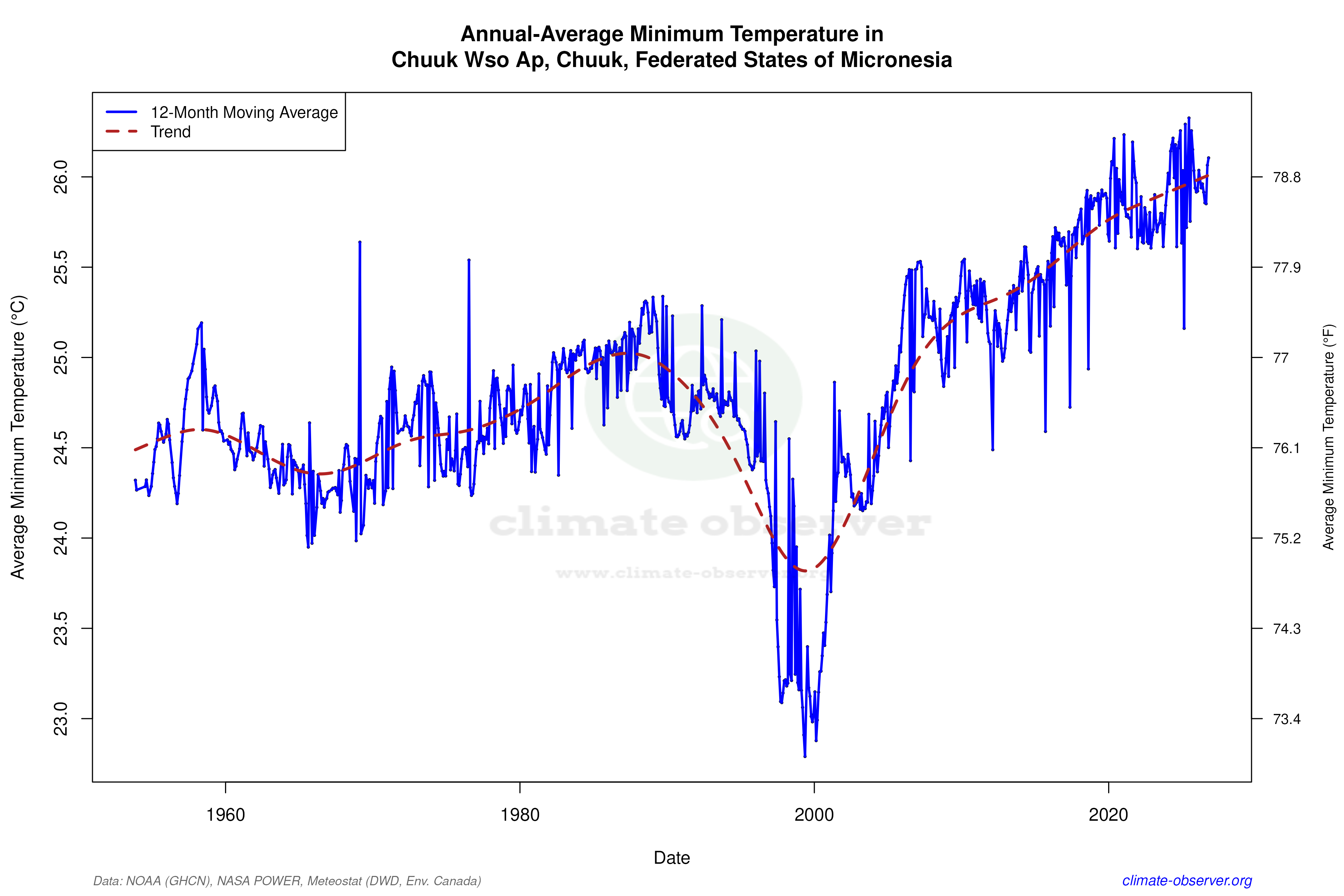
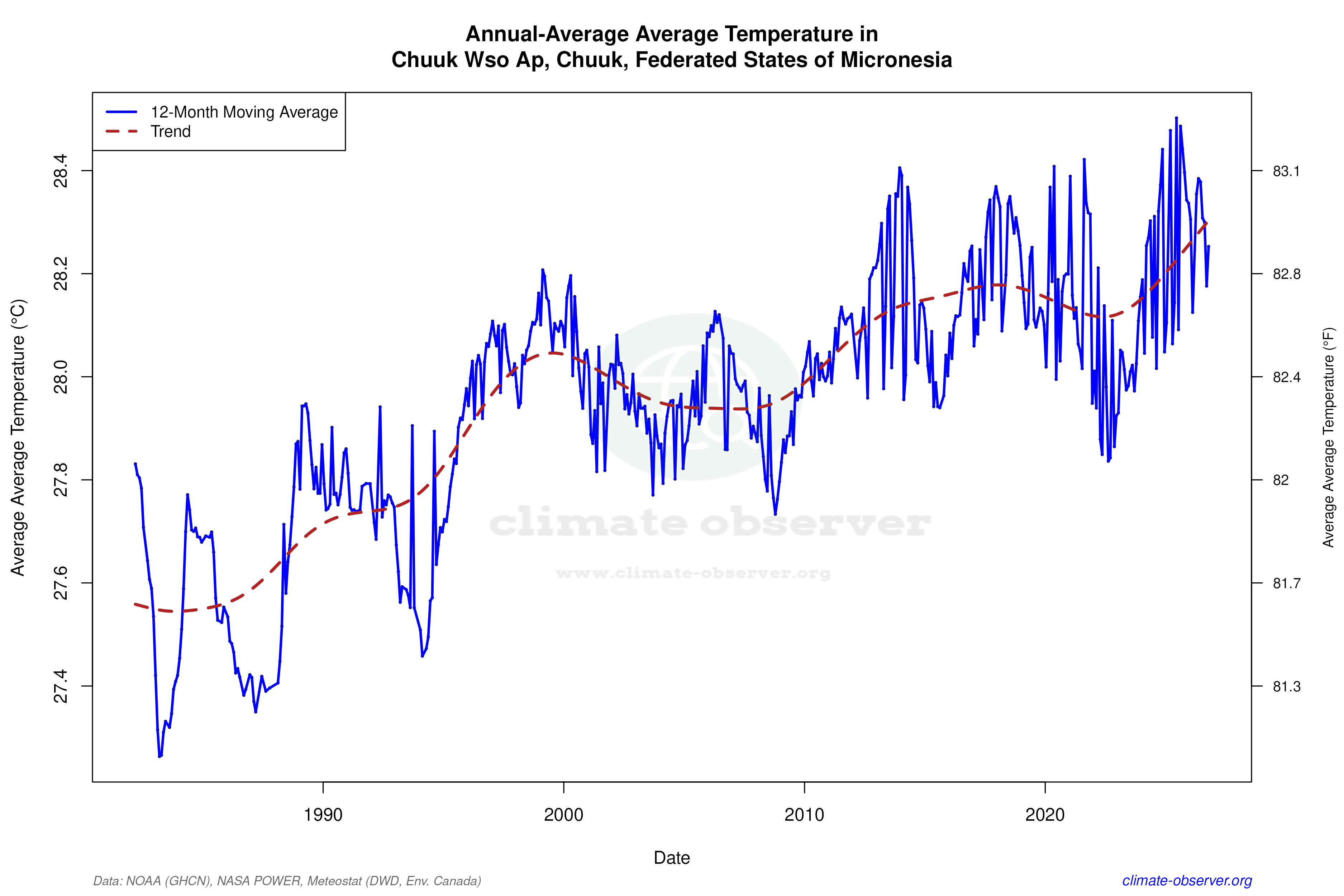
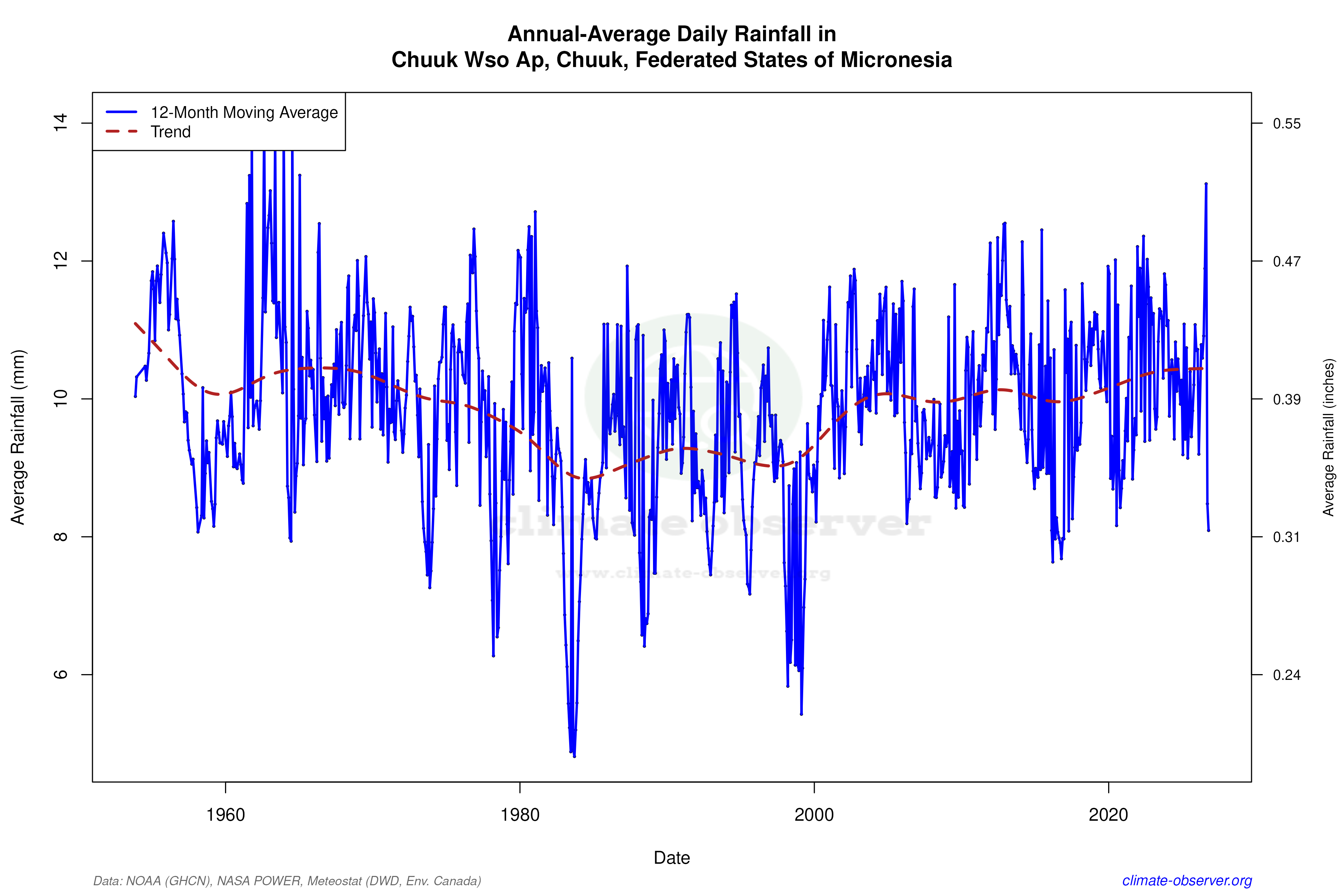
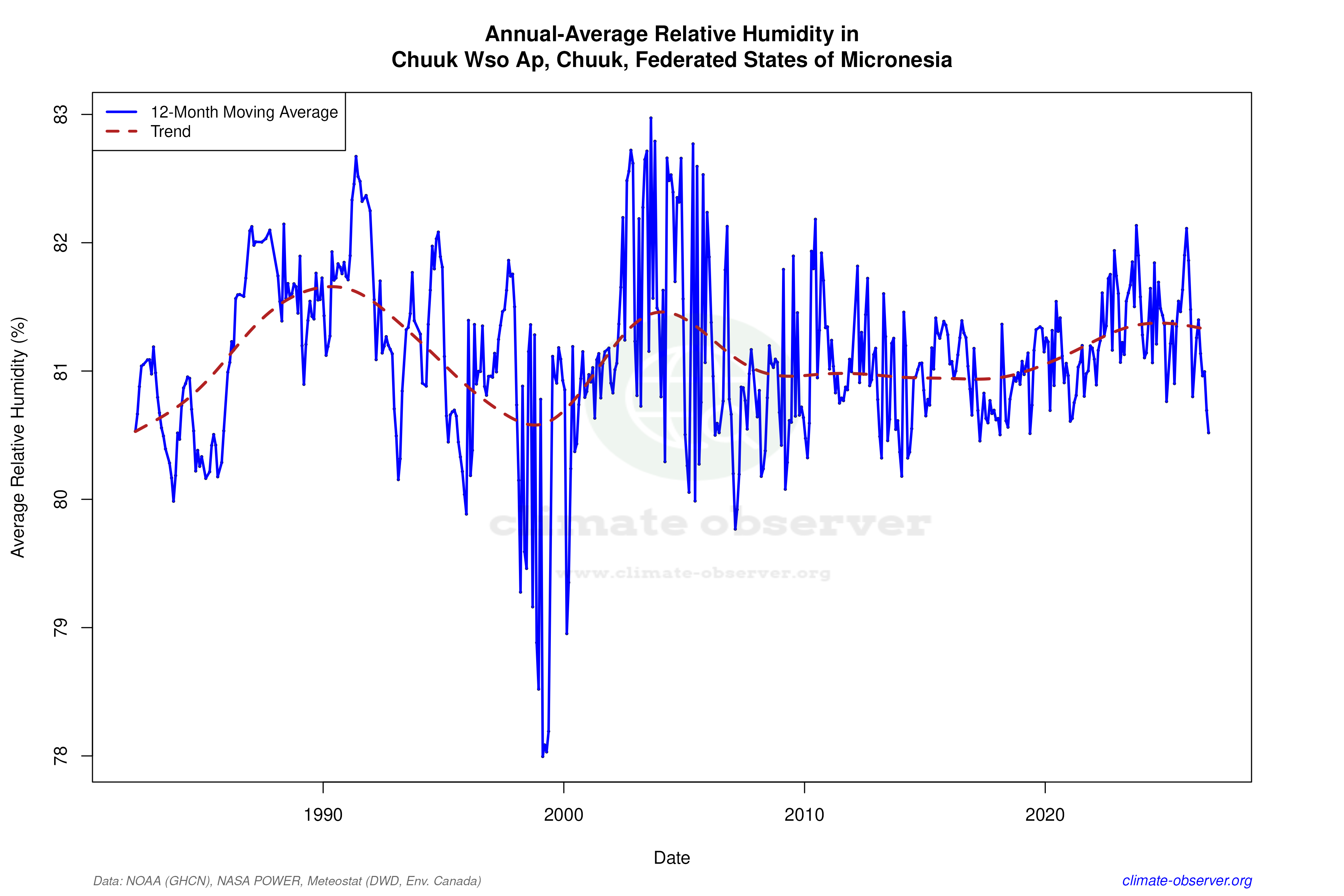

Max Temperature 12-Month MA | 1 of 6
Daily Data Points and Averages Throughout the Year
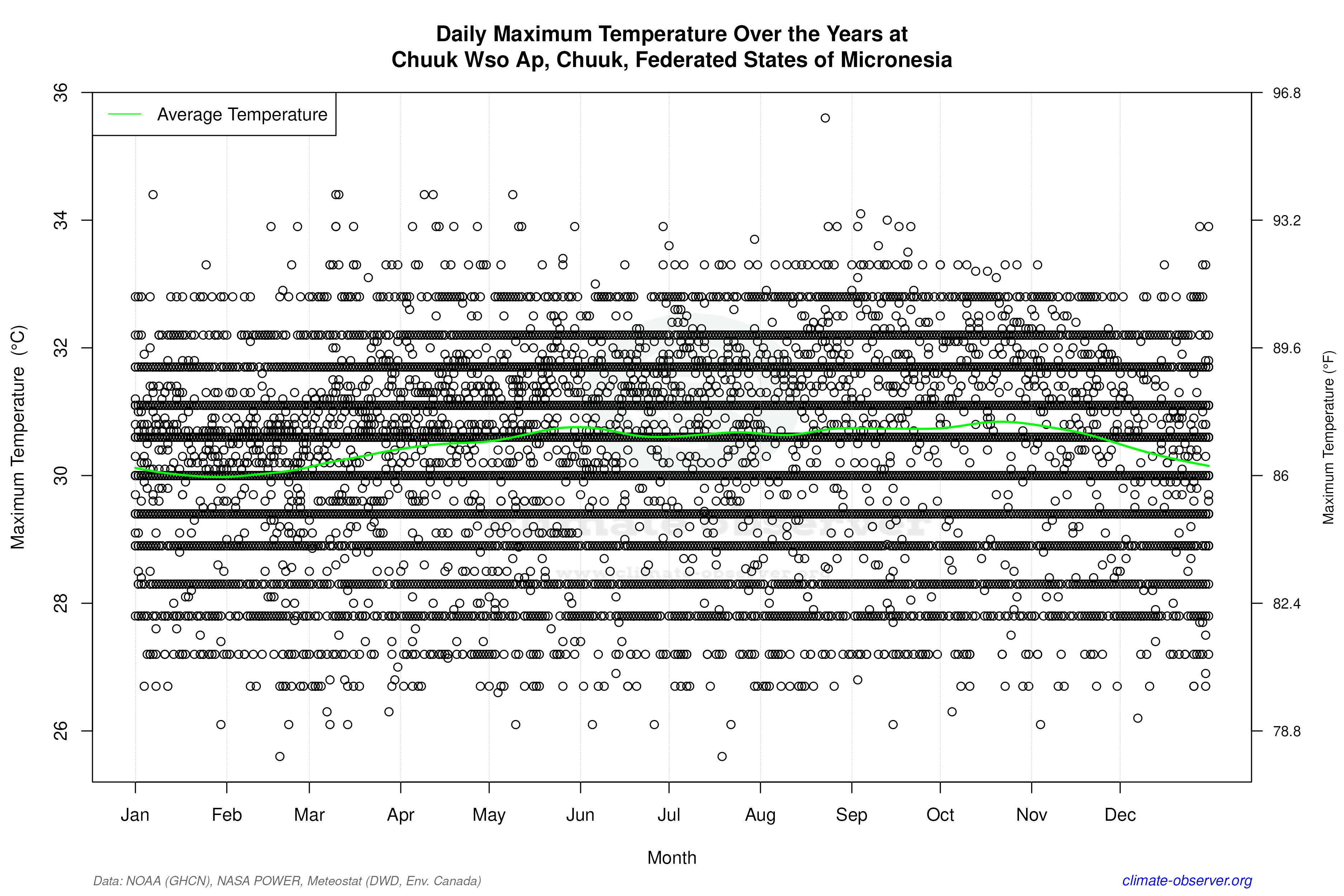
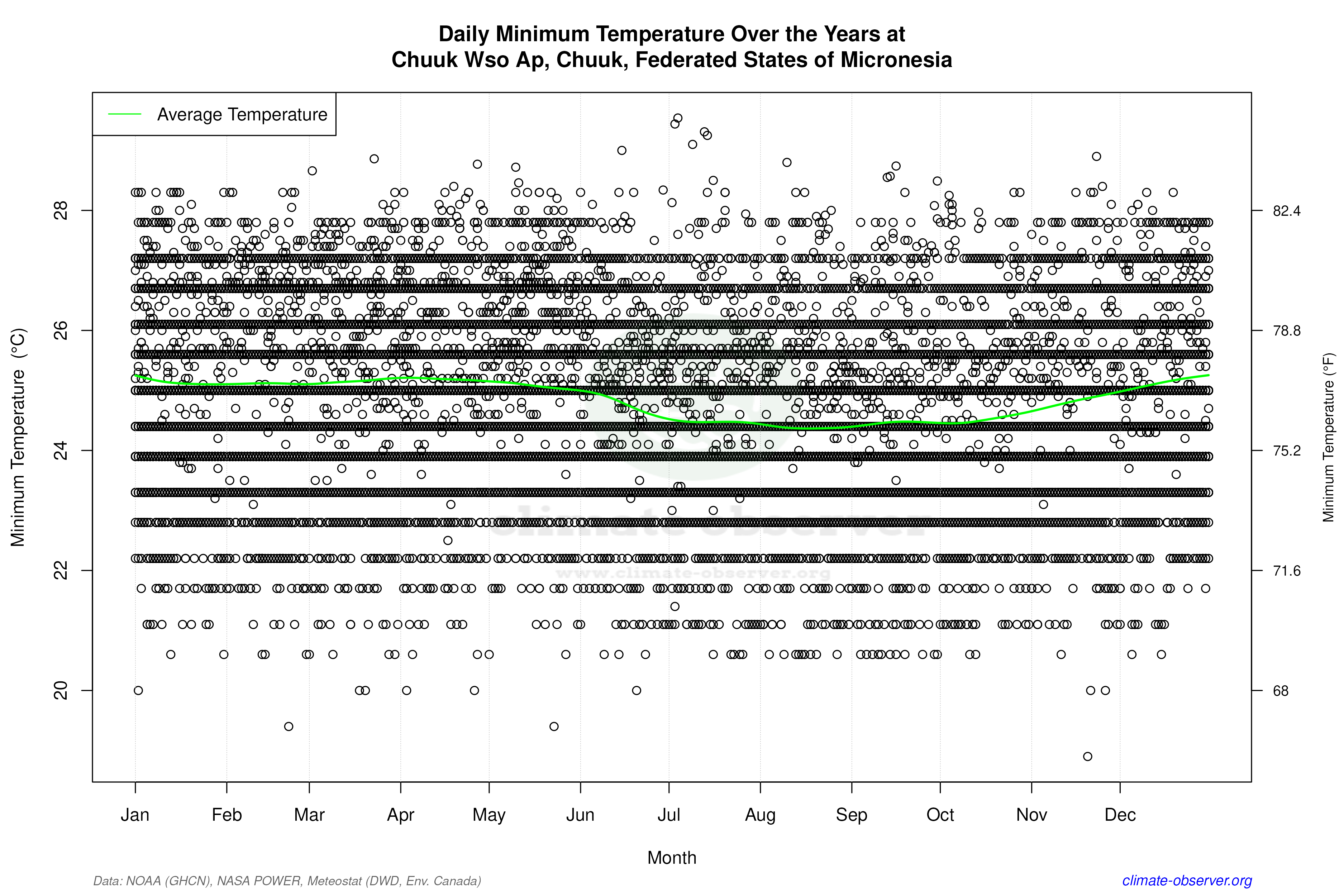
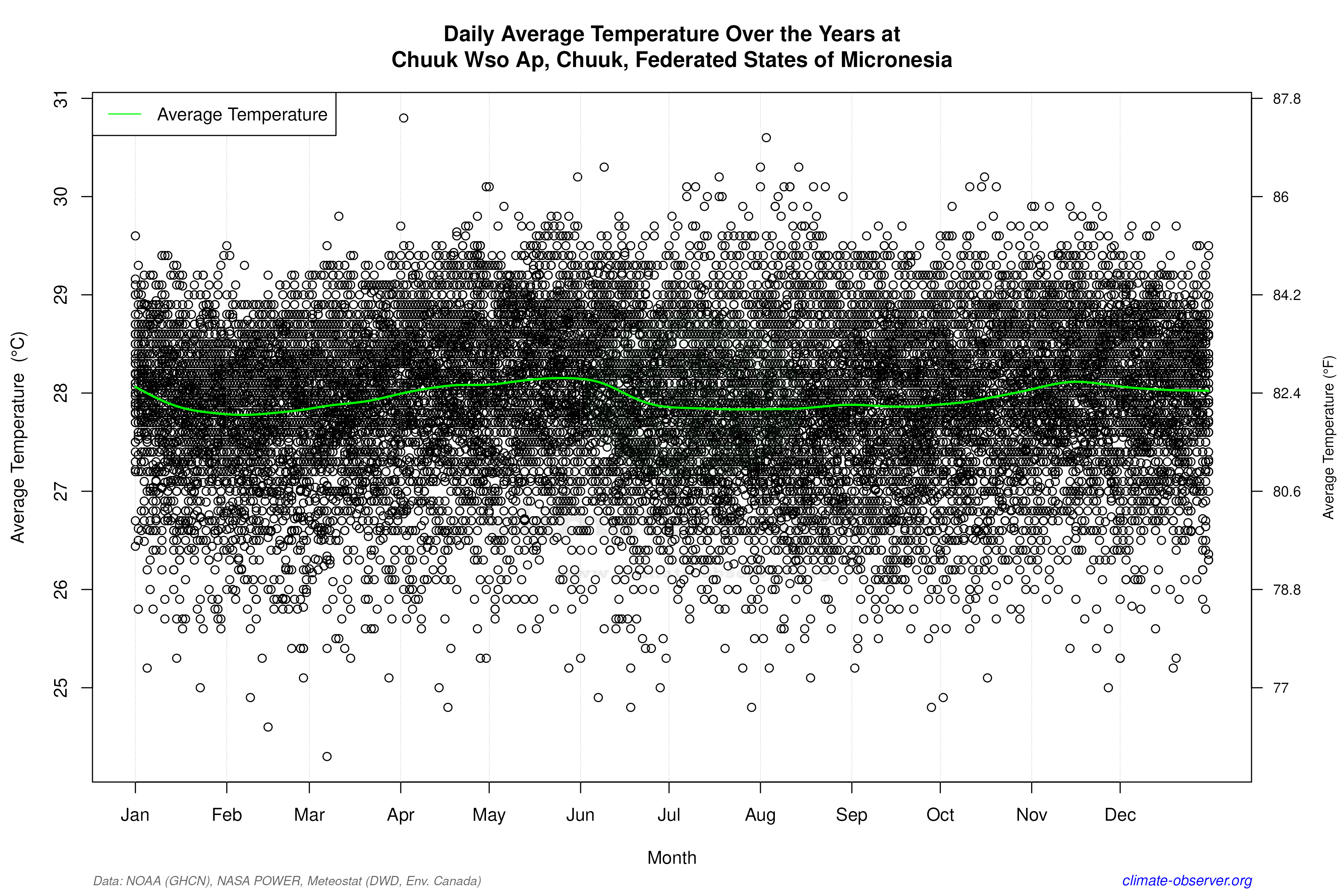
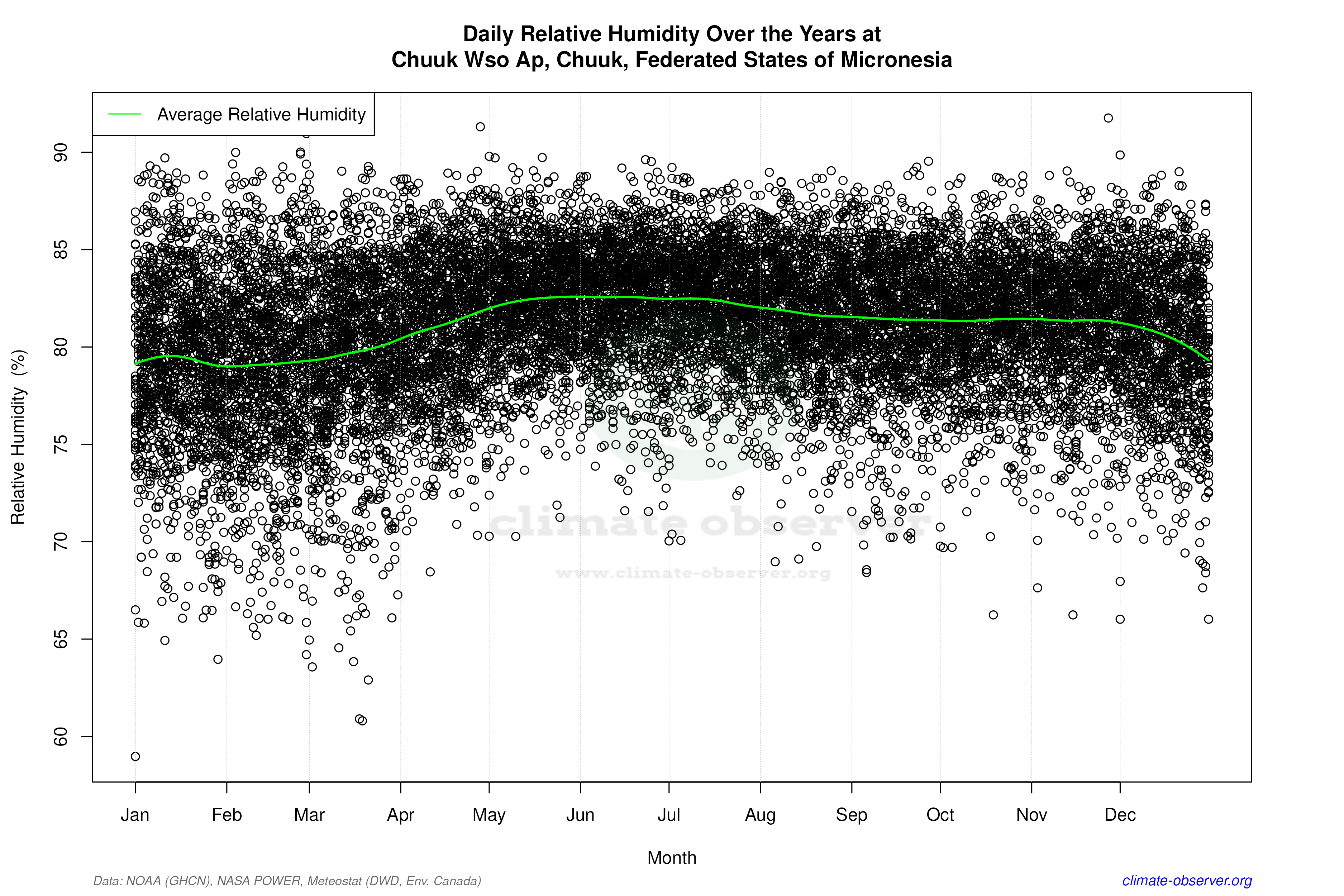

Average Max Temperature Throughout Year | 1 of 5


