Climate for Station: Bordeaux-Merignac, New Aquitaine, France
Loading live weather...
Climate Analysis & Overview
Bordeaux-Merignac is experiencing a warming trend, with both high and low temperatures rising over the past decade and historically. The region's precipitation patterns are becoming more concentrated, indicating fewer but heavier rain events. These changes align with France's broader climate goals to mitigate extreme weather impacts.
Mild Maritime Influence
Bordeaux-Merignac, situated in Nouvelle-Aquitaine, France, enjoys a temperate oceanic climate, classified as Cfb in the Köppen system. This classification is characterised by mild temperatures and moderate rainfall, influenced significantly by the Atlantic Ocean. The proximity to the coast ensures relatively stable temperatures, with less seasonal variation compared to continental climates. However, recent data indicates a shift in these patterns.
Decadal Warming Trends
Over the past decade, Bordeaux-Merignac has experienced a noticeable warming trend. High temperatures have risen by 1.10°C (1.98°F), while low temperatures have increased by 1.24°C (2.23°F). This trend suggests a general warming of the region, which could impact local agriculture and ecosystems. The increase in lows is particularly significant, as it points to warmer nights, which can affect plant growth cycles and energy consumption patterns.
Historical Temperature Rise
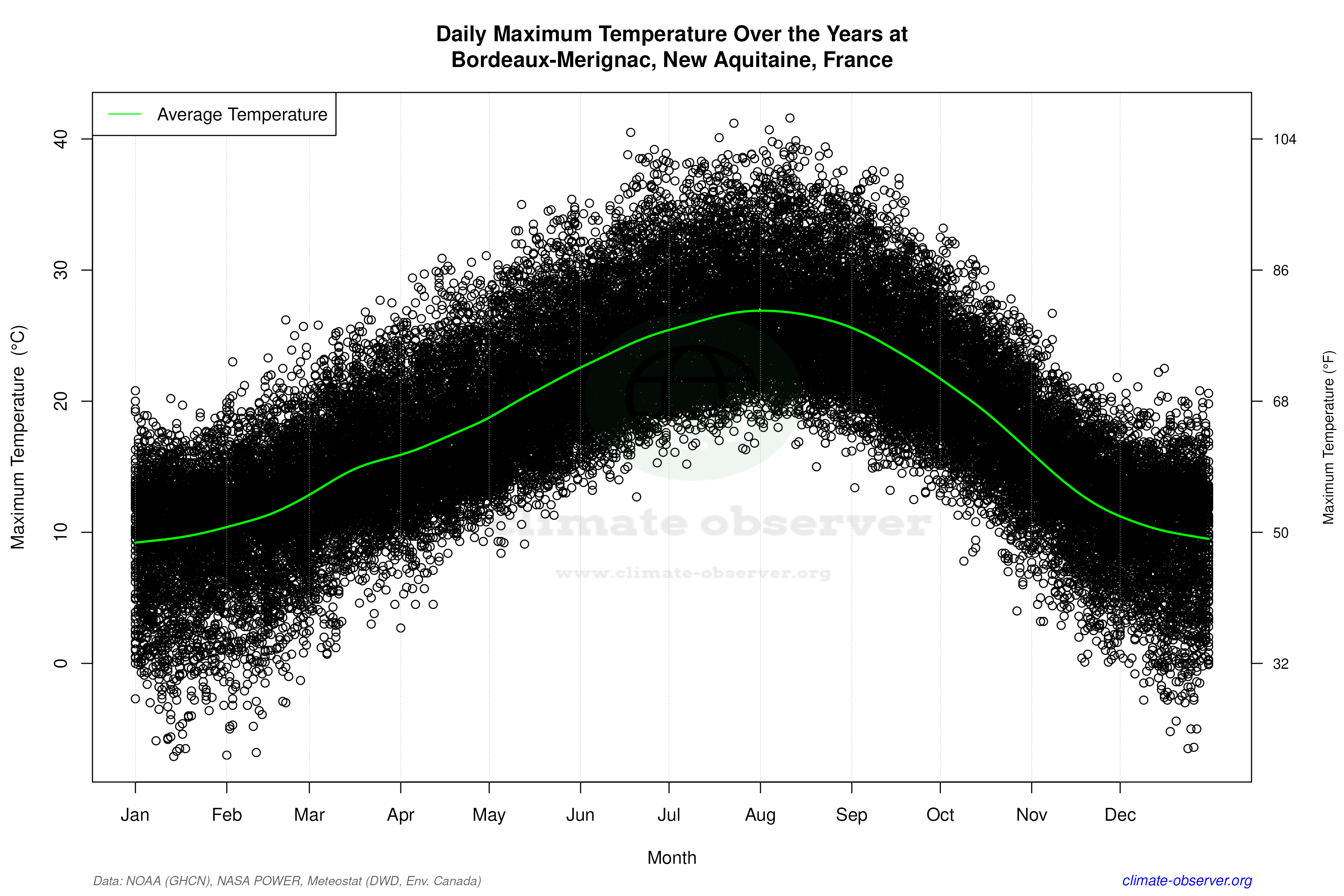
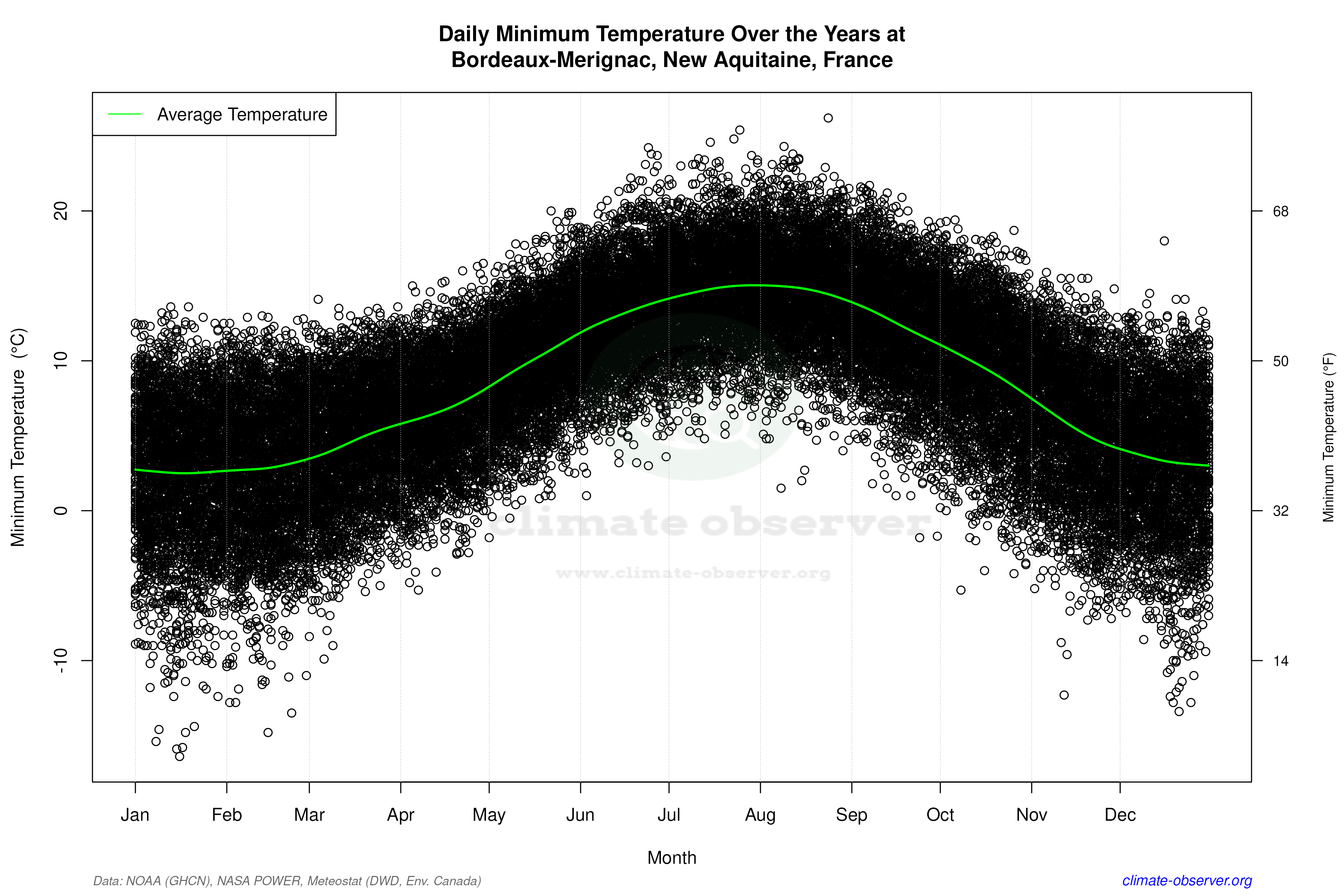
When examining all-time trends, the data reveals a consistent warming pattern. High temperatures have increased by 0.16°C (0.29°F), and low temperatures have risen by 0.25°C (0.45°F). These figures, though smaller than the decadal changes, confirm a long-term warming trend. The record high of 41.6°C (106.9°F) and the record low of -16.4°C (2.5°F) illustrate the range of temperatures experienced historically, with recent years pushing the upper limits.
Shifting Precipitation Patterns
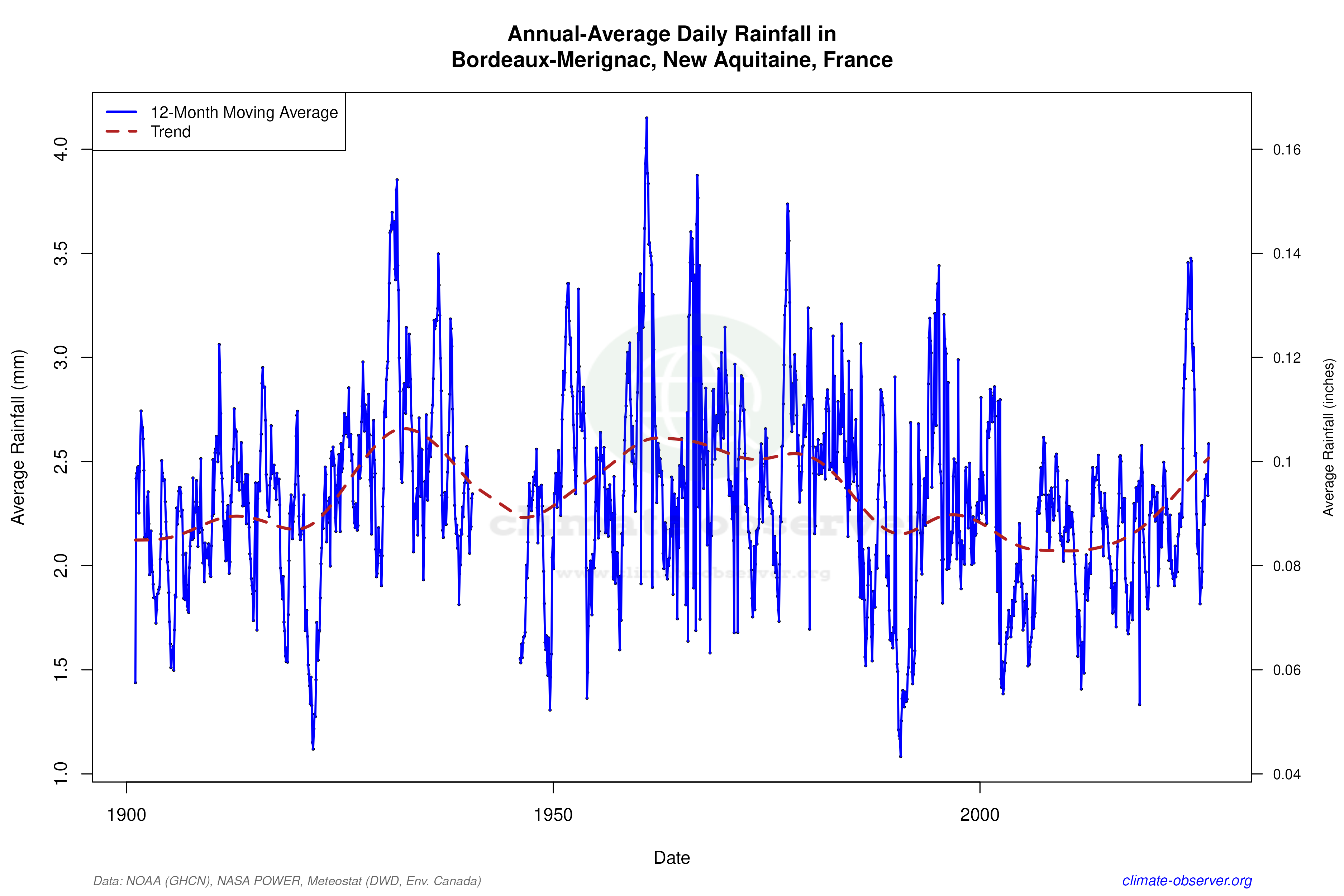
The Precipitation Concentration Index (PCI) for Bordeaux-Merignac has risen from a baseline of 11.52 to a current value of 14.01. This increase indicates that rainfall is becoming more concentrated into fewer, heavier events. While the PCI is not yet at a level considered highly concentrated, this shift could lead to increased flooding risk and challenges for water management. Understanding these changes is crucial for adapting to potential future climate scenarios.
Regional Climate Goals and Adaptation
France has been proactive in addressing climate change, with goals to reduce greenhouse gas emissions and adapt to changing weather patterns. The trends observed in Bordeaux-Merignac are consistent with broader regional efforts to understand and mitigate the impacts of climate change. Recent weather events, such as heatwaves and intense rainfall, underscore the importance of these initiatives in safeguarding communities and ecosystems.
Station Statistics
10-Year Trend
High: +1.16 °C/decade
Low: +1.19 °C/decade
Rain: +0.61 mm/decade
25-Year Trend
High: +0.73 °C/decade
Low: +0.50 °C/decade
Rain: +0.23 mm/decade
50-Year Trend
High: +0.52 °C/decade
Low: +0.48 °C/decade
Rain: -0.07 mm/decade
All-Time Trend
High: +0.18 °C/decade
Low: +0.26 °C/decade
Rain: -0.01 mm/decade
Percentage Above-Average Days
Last 12 Months: 56.4%
This Year: 76.1%
Precipitation Concentration Index (PCI) ℹ️
Last 12 Months: 10.6
Historical Average: 10.8
Percentile Rank of Last 12 Months ℹ️
High: 93rd percentile
Low: 92nd percentile
Rain: 40th percentile
Change in Variance ℹ️
High: +9.2%
Low: +3.7%
Intraday: -8.2%
Data Coverage
83.2%
First Year of Data
1923
Station Location
Historical Weather Records
| Max High | Avg High | Min High | Max Avg | Avg Avg | Min Avg | Max Low | Avg Low | Min Low | Max Precipitation | Avg Precipitation | Max Snow | Avg Snow | |
|---|---|---|---|---|---|---|---|---|---|---|---|---|---|
| Record | 41.6 °C | — | -7.1 °C | 32.2 °C | — | -11.4 °C | 26.2 °C | — | -16.4 °C | 67.0 mm | — | — | — |
| January | 20.8 °C | 9.7 °C | -7.1 °C | 14.7 °C | 6.0 °C | -11.4 °C | 13.6 °C | 2.6 °C | -16.4 °C | 48.1 mm | 2.5 mm | — | — |
| February | 26.2 °C | 11.4 °C | -7.0 °C | 15.5 °C | 7.2 °C | -8.9 °C | 13.0 °C | 3.0 °C | -14.8 °C | 60.5 mm | 2.4 mm | — | — |
| March | 27.7 °C | 14.7 °C | 0.7 °C | 18.9 °C | 9.8 °C | -2.1 °C | 14.1 °C | 4.6 °C | -9.9 °C | 51.0 mm | 2.2 mm | — | — |
| April | 31.1 °C | 17.1 °C | 2.7 °C | 22.8 °C | 12.2 °C | 2.2 °C | 16.5 °C | 6.8 °C | -5.3 °C | 49.0 mm | 2.2 mm | — | — |
| May | 35.4 °C | 20.7 °C | 8.4 °C | 26.3 °C | 15.6 °C | 4.7 °C | 20.0 °C | 10.1 °C | -1.8 °C | 59.0 mm | 2.3 mm | — | — |
| June | 40.5 °C | 24.1 °C | 12.7 °C | 31.5 °C | 19.0 °C | 10.8 °C | 24.2 °C | 13.1 °C | 1.0 °C | 56.0 mm | 2.1 mm | — | — |
| July | 41.2 °C | 26.3 °C | 15.2 °C | 31.9 °C | 21.0 °C | 12.9 °C | 25.4 °C | 14.7 °C | 4.8 °C | 50.0 mm | 1.6 mm | — | — |
| August | 41.6 °C | 26.5 °C | 15.0 °C | 32.2 °C | 20.9 °C | 12.8 °C | 26.2 °C | 14.7 °C | 1.5 °C | 55.0 mm | 1.8 mm | — | — |
| September | 37.6 °C | 23.9 °C | 12.5 °C | 27.9 °C | 18.1 °C | 7.7 °C | 21.7 °C | 12.5 °C | -1.8 °C | 58.2 mm | 2.2 mm | — | — |
| October | 33.2 °C | 19.1 °C | 4.0 °C | 24.4 °C | 14.1 °C | 2.4 °C | 19.4 °C | 9.5 °C | -5.3 °C | 67.0 mm | 2.5 mm | — | — |
| November | 26.7 °C | 13.4 °C | 0.1 °C | 19.2 °C | 9.4 °C | -2.6 °C | 15.9 °C | 5.6 °C | -12.3 °C | 47.0 mm | 3.1 mm | — | — |
| December | 22.5 °C | 10.2 °C | -6.5 °C | 19.9 °C | 7.0 °C | -6.4 °C | 18.0 °C | 3.5 °C | -13.4 °C | 38.1 mm | 3.0 mm | — | — |
Data Visualisations
Remove WatermarksCurrent Year Climate Trends vs Historical
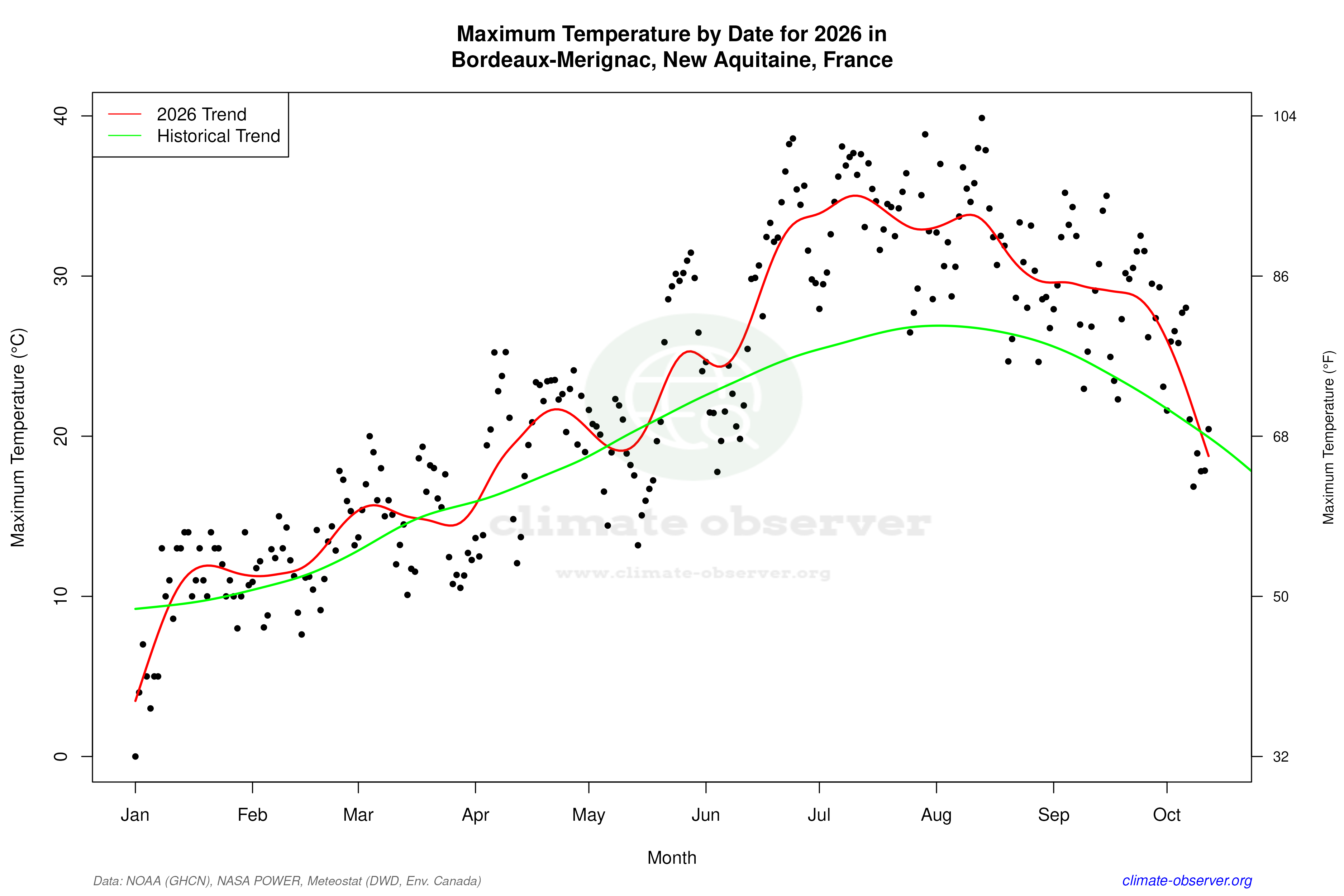
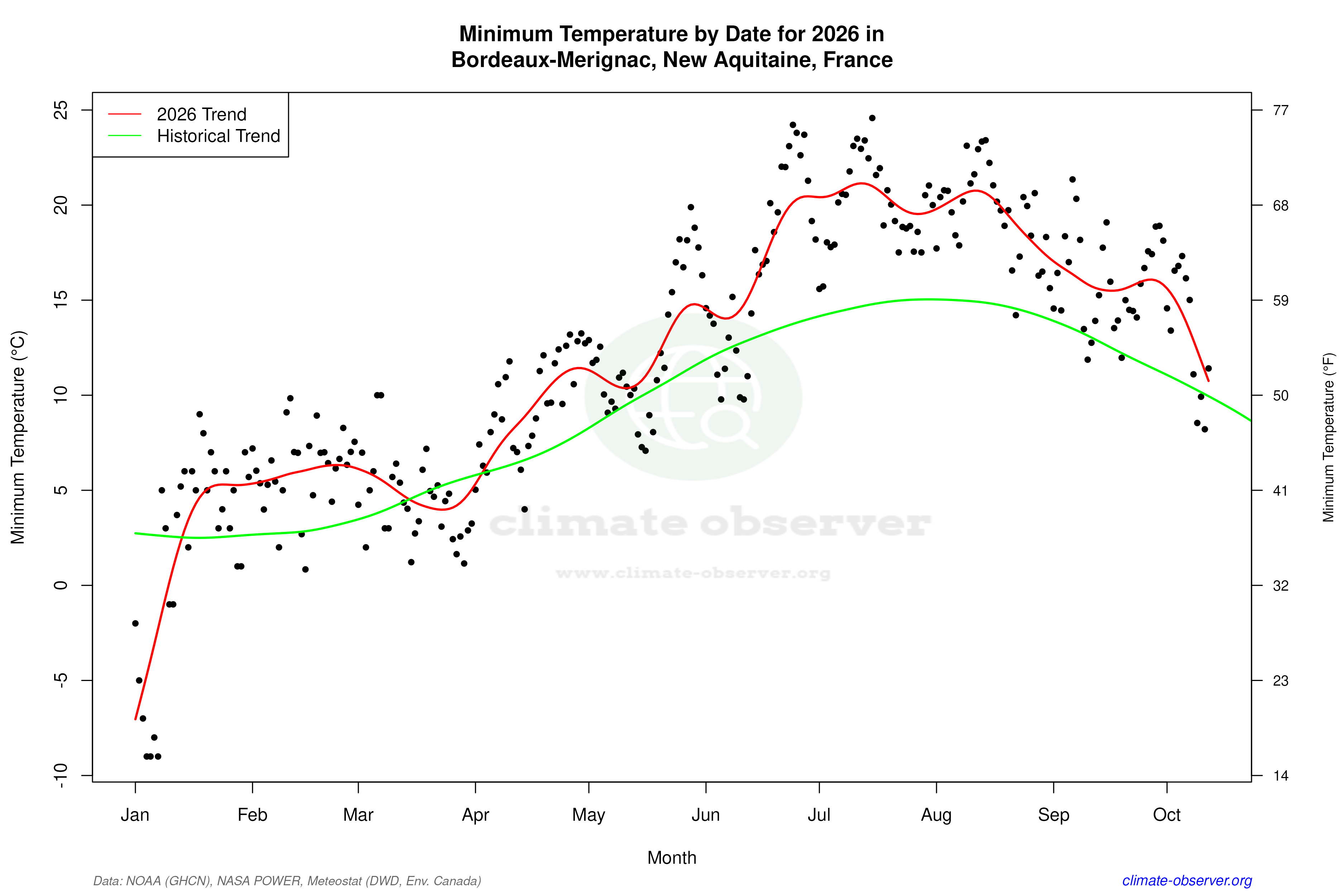
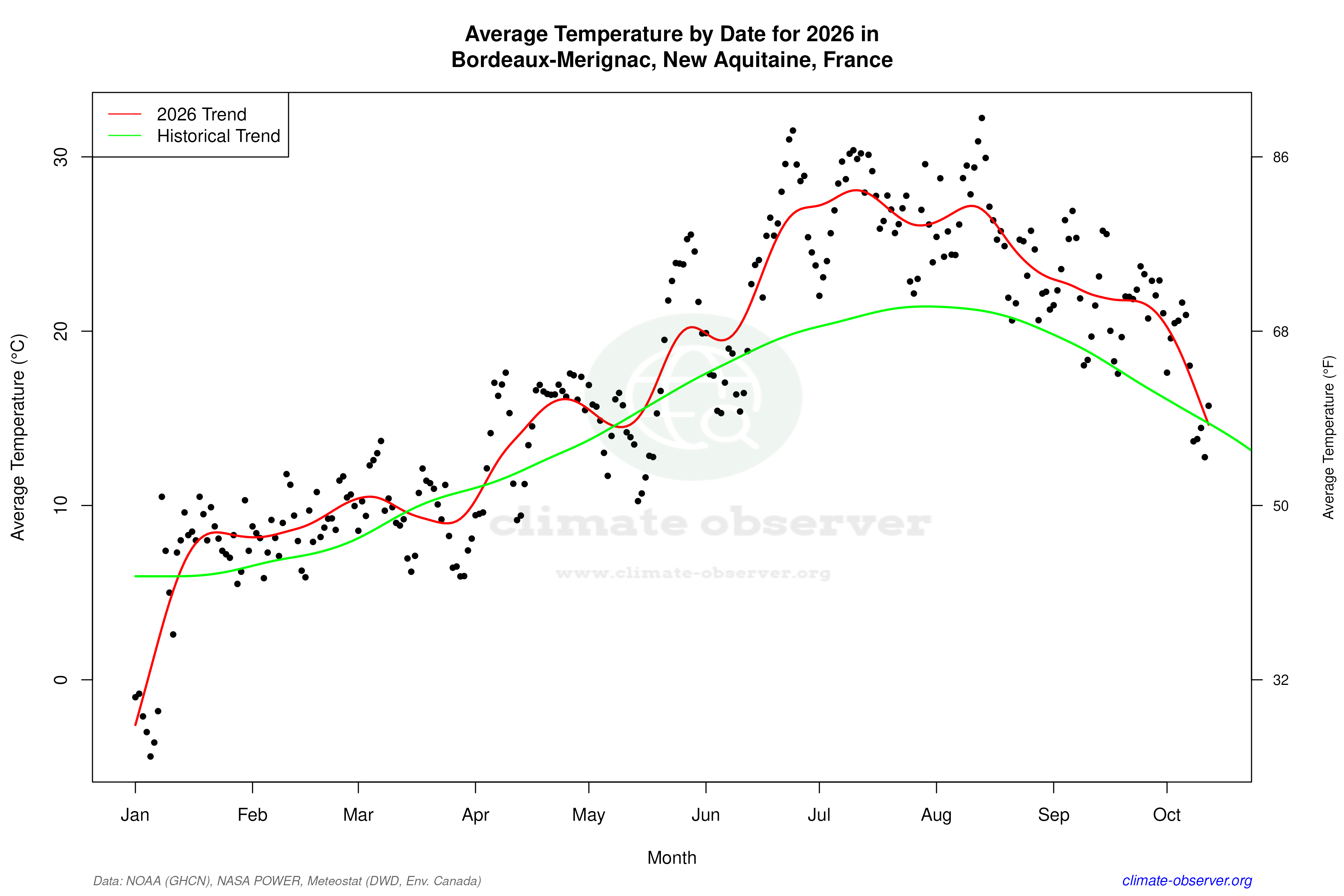
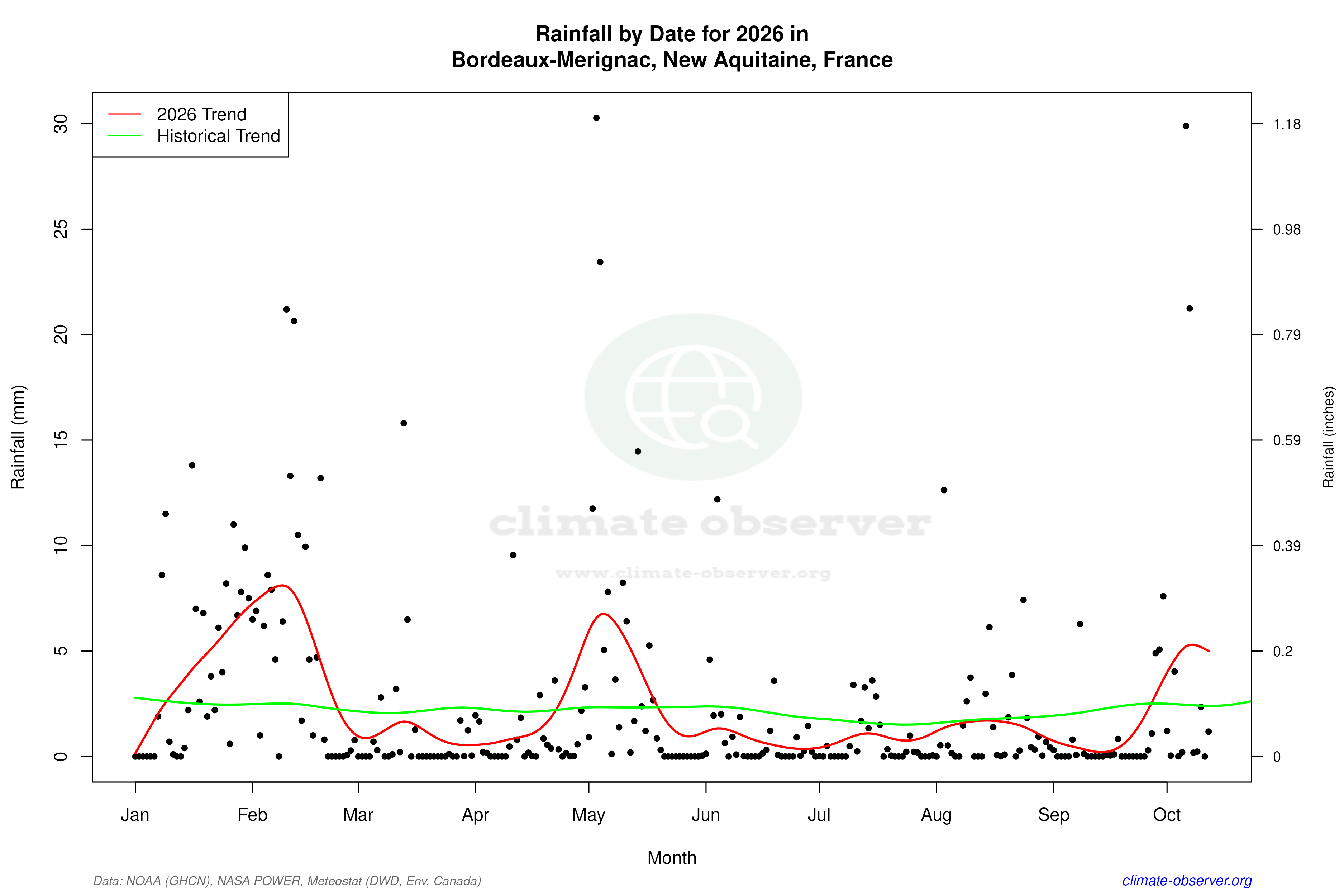
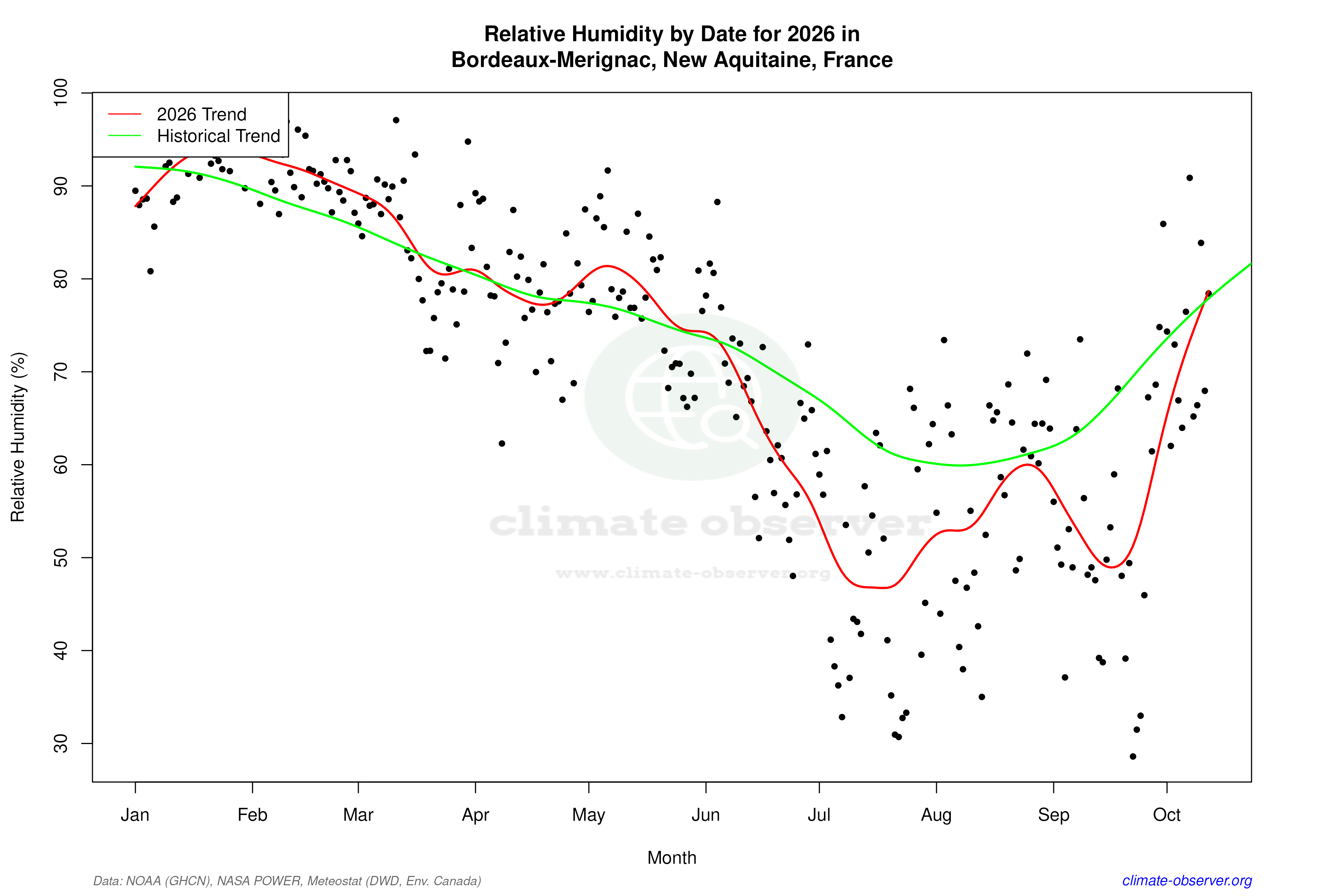

Max Temperature this Year | 1 of 6
Climate 12-Month Moving Averages
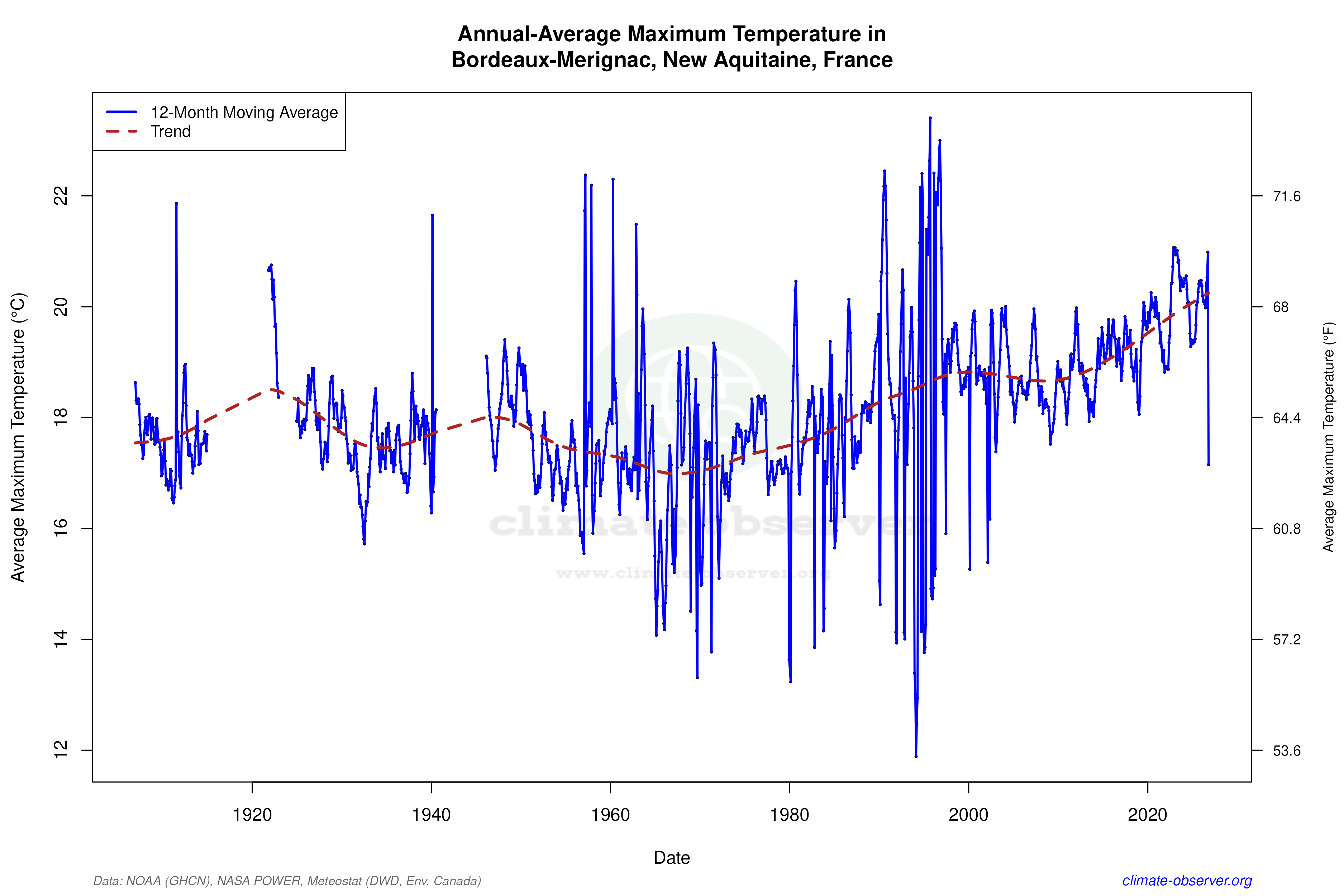
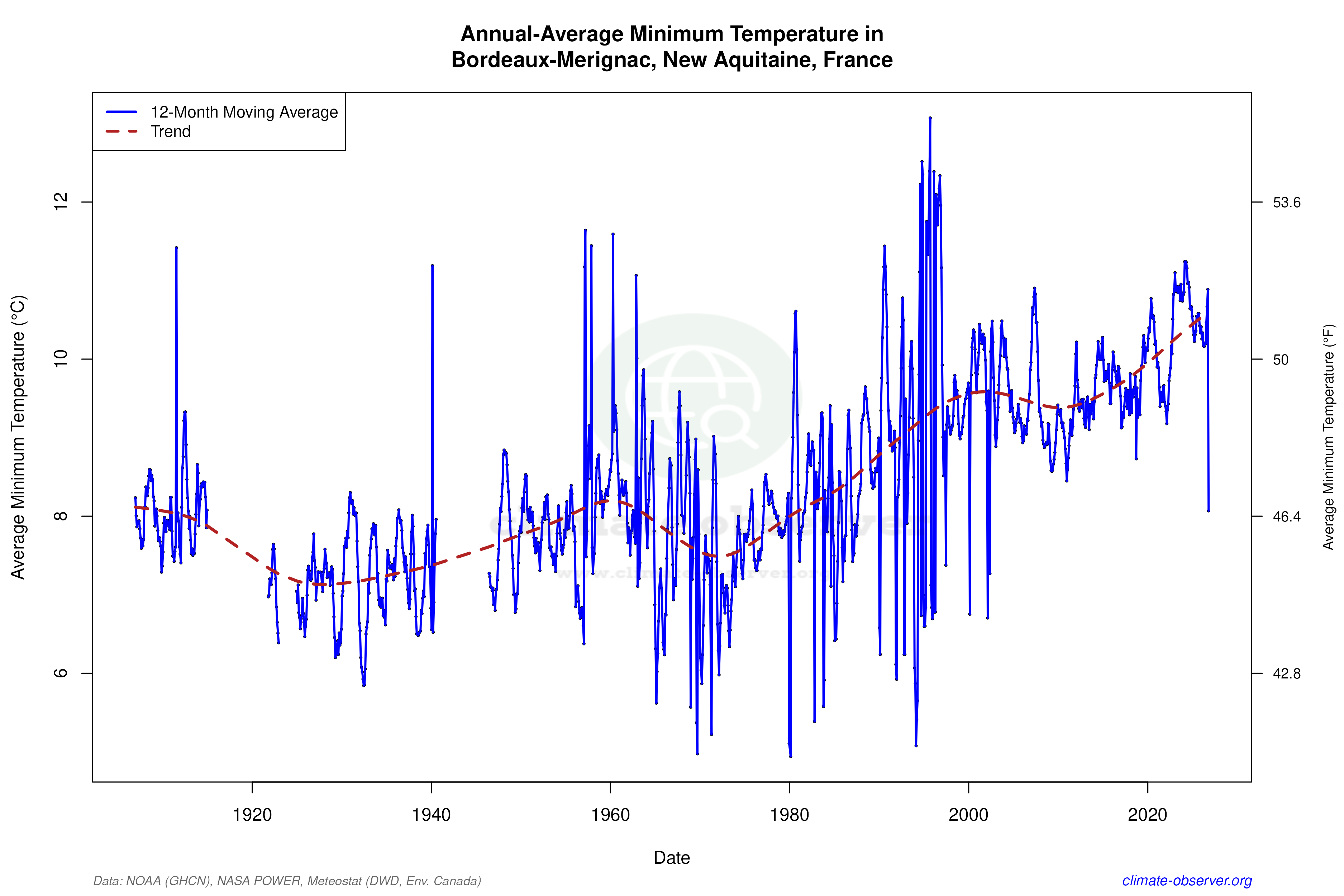
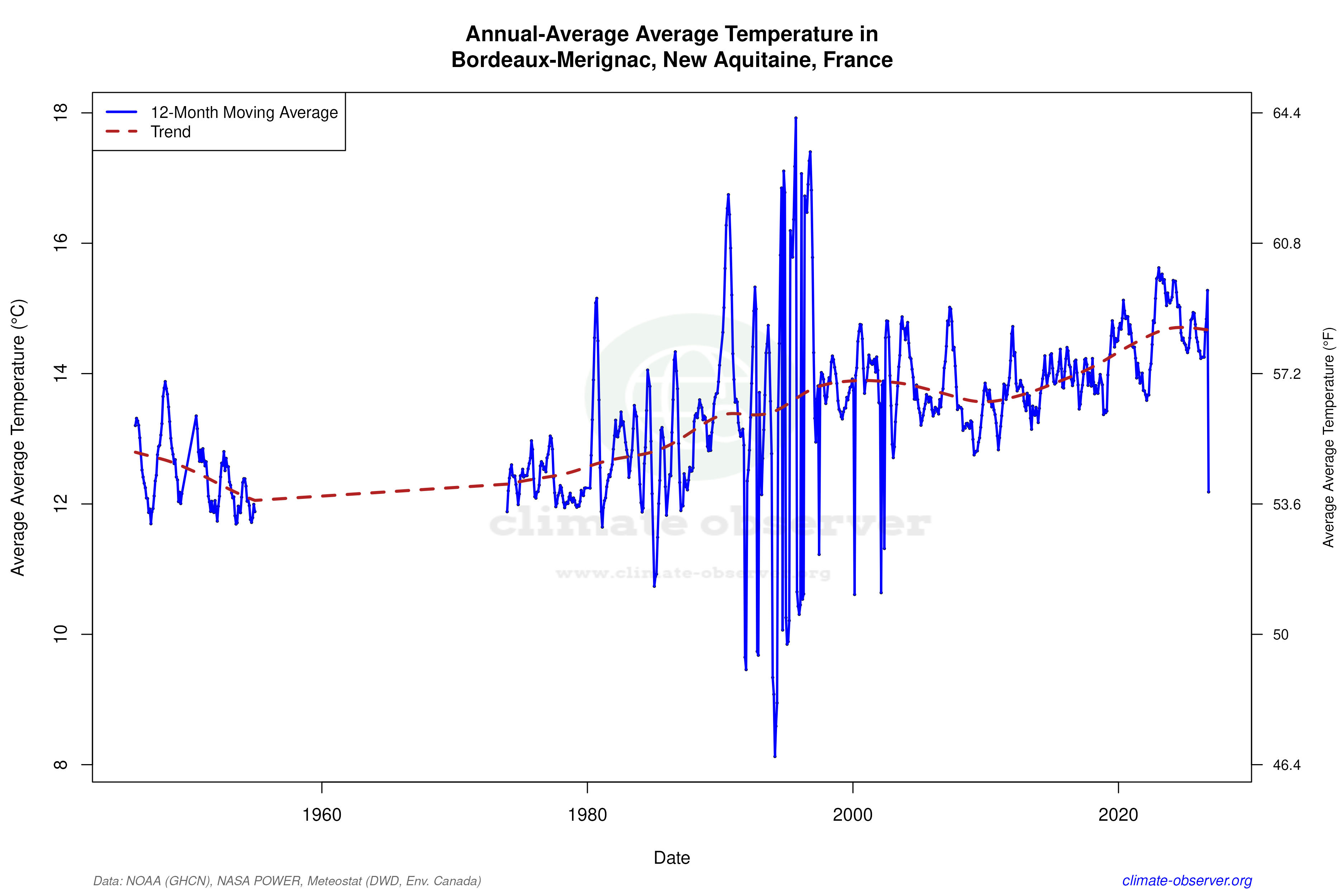

Max Temperature 12-Month MA | 1 of 6
Daily Data Points and Averages Throughout the Year
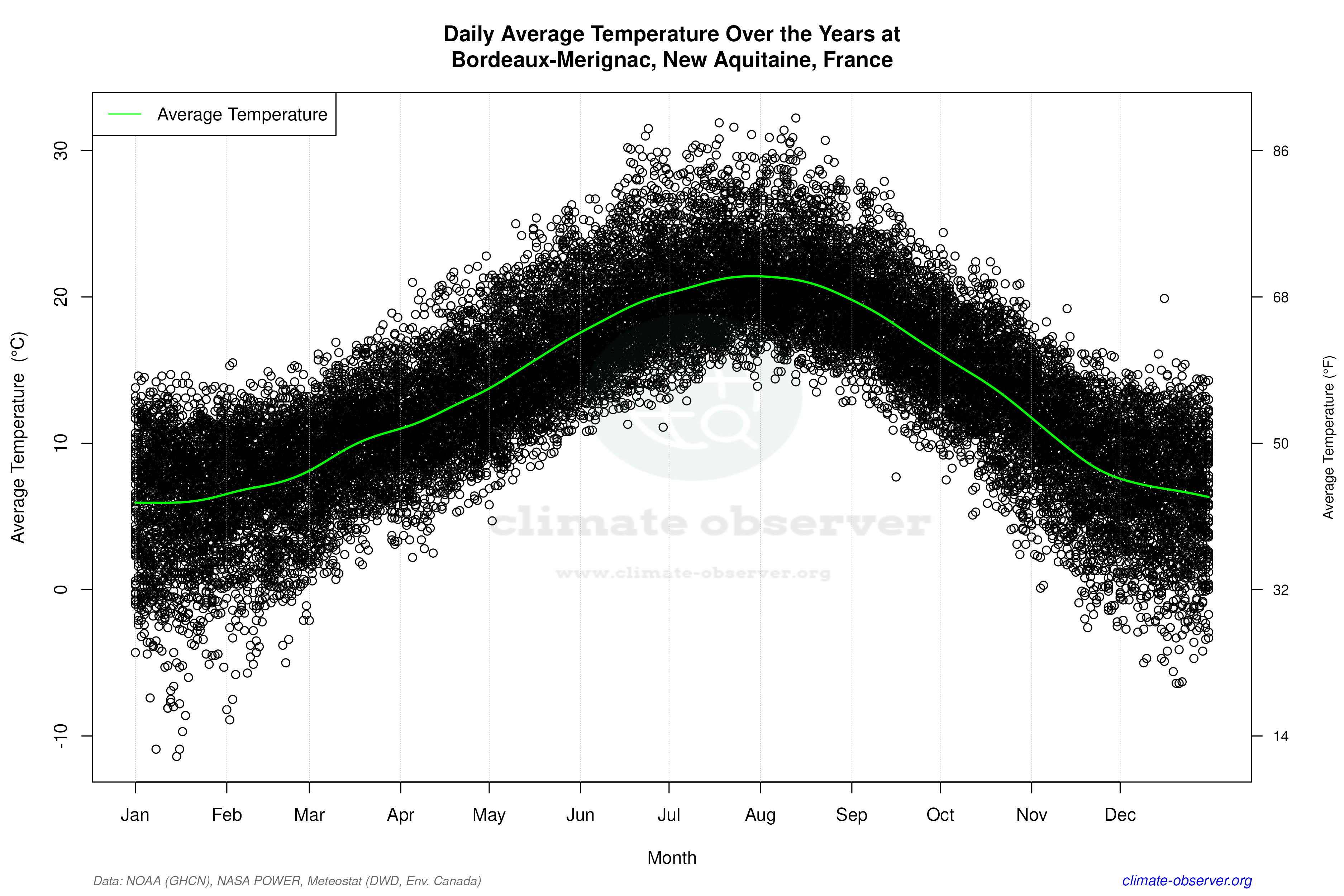
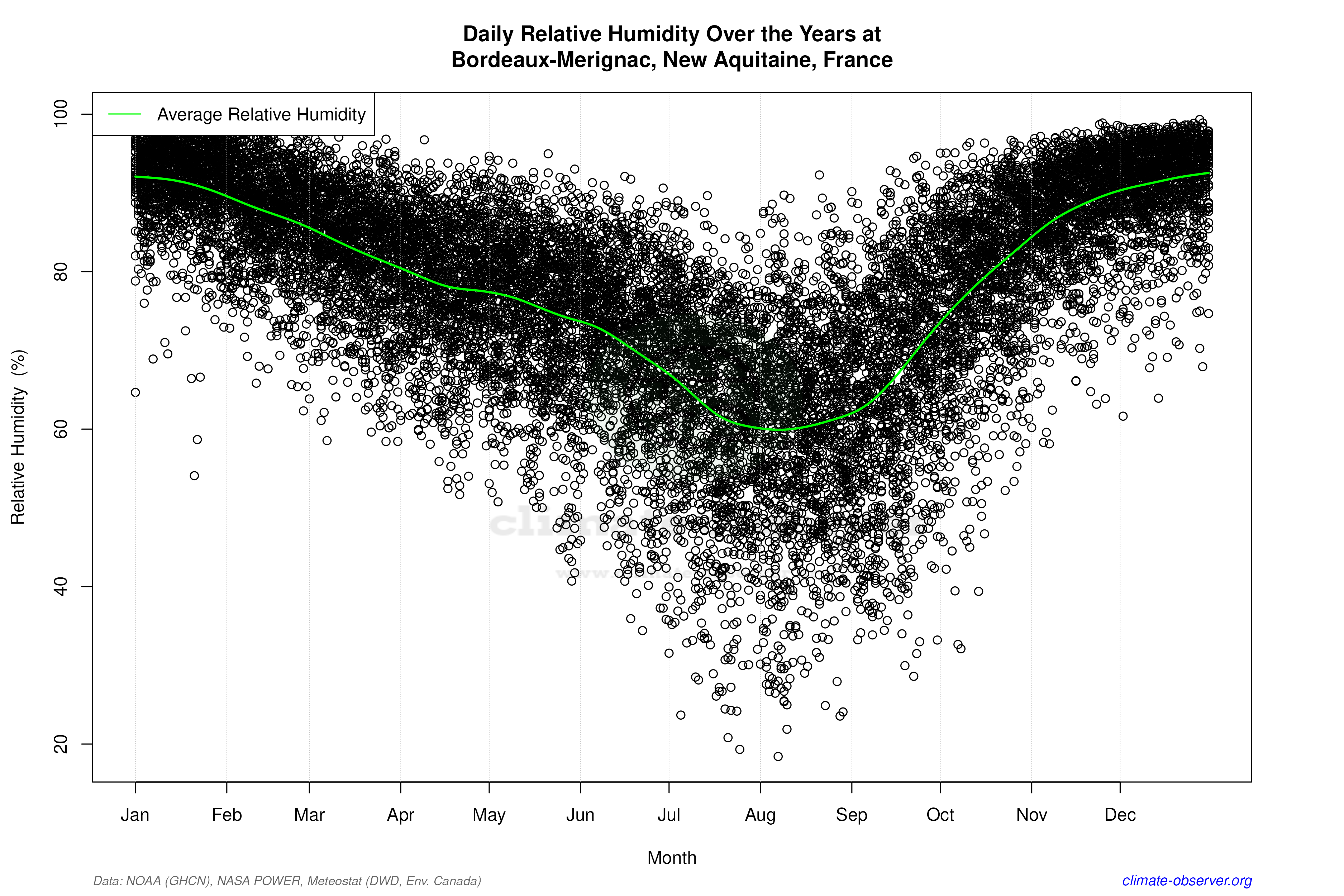

Average Max Temperature Throughout Year | 1 of 5


