Climate for Station: Tours, Centre-Val de Loire, France
Loading live weather...
Climate Analysis & Overview
Tours, located in the heart of France's Centre-Val de Loire region, is experiencing a warming trend. Over the past decade, temperature highs have increased by 0.73°C (1.31°F) and lows by 1.08°C (1.94°F), indicating a sharper rise in nighttime temperatures. The Precipitation Concentration Index shows a shift towards more concentrated rainfall events, with a current value of 13.7, up from a baseline of 11.4.
A Warming Landscape
Tours, nestled in the Centre-Val de Loire region, is classified under the Köppen climate system as Cfb, indicating a temperate oceanic climate. This classification is influenced by its proximity to the Loire River, which moderates temperatures and contributes to the region's lush vineyards. However, the all-time temperature trends reveal a warming pattern, with highs rising by 0.56°C (1.01°F) and lows by 0.45°C (0.81°F). This gradual increase aligns with broader European warming trends and France's commitment to reducing greenhouse gas emissions under the Paris Agreement.
Nighttime Temperatures on the Rise
The past decade has seen a more pronounced increase in low temperatures, with a rise of 1.08°C (1.94°F). This suggests that while days are getting warmer, nights are warming at an even faster rate. Such changes can affect local agriculture, potentially altering the growing seasons for the region's renowned vineyards. The increase in nighttime temperatures may also impact energy demands, as warmer nights could lead to higher cooling needs during summer months.
Precipitation Patterns Shifting
The Precipitation Concentration Index (PCI) has risen from a baseline of 11.4 to a current value of 13.7. This indicates a shift towards more concentrated rainfall events, meaning that precipitation is occurring in fewer, heavier events rather than being evenly distributed throughout the year. Such changes can lead to increased risks of flooding and soil erosion, impacting both urban and rural areas. This shift in precipitation patterns is a critical factor for local water management strategies.
Record Extremes and Climate Resilience
Tours has recorded an absolute maximum temperature of 40.8°C (105.4°F) and a minimum of -18.5°C (-1.3°F). These extremes highlight the variability within the region's climate. As France continues to adapt to climate change, understanding and preparing for such extremes will be crucial for building resilience in infrastructure and agriculture. The region's ability to adapt will be tested by these temperature extremes, which are becoming more frequent and intense globally.
The Broader Climate Context
The climate data from Tours reflects broader climate trends observed across France and Europe. With the country striving to meet its climate goals, such as reducing carbon emissions and enhancing renewable energy usage, understanding local climate dynamics becomes essential. Recent weather events, such as heatwaves and heavy rainfall, underscore the importance of integrating climate data into planning and policy-making to mitigate future risks and enhance regional resilience.
Station Statistics
10-Year Trend
High: +0.92 °C/decade
Low: +1.35 °C/decade
Rain: +0.64 mm/decade
25-Year Trend
High: +0.77 °C/decade
Low: +0.67 °C/decade
Rain: +0.03 mm/decade
50-Year Trend
High: +0.53 °C/decade
Low: +0.43 °C/decade
Rain: -0.08 mm/decade
All-Time Trend
High: +0.56 °C/decade
Low: +0.46 °C/decade
Rain: -0.03 mm/decade
Percentage Above-Average Days
Last 12 Months: 57.8%
This Year: 78.1%
Precipitation Concentration Index (PCI) ℹ️
Last 12 Months: 11.9
Historical Average: 11.0
Percentile Rank of Last 12 Months ℹ️
High: 97th percentile
Low: 97th percentile
Rain: 45th percentile
Change in Variance ℹ️
High: +10.1%
Low: +4.2%
Intraday: +8.2%
Data Coverage
95.4%
First Year of Data
1959
Station Location
Historical Weather Records
| Max High | Avg High | Min High | Max Avg | Avg Avg | Min Avg | Max Low | Avg Low | Min Low | Max Precipitation | Avg Precipitation | Max Snow | Avg Snow | |
|---|---|---|---|---|---|---|---|---|---|---|---|---|---|
| Record | 40.8 °C | — | -10.7 °C | 32.2 °C | — | -12.4 °C | 25.4 °C | — | -18.5 °C | 58.0 mm | — | — | — |
| January | 16.9 °C | 7.2 °C | -10.7 °C | 13.6 °C | 4.6 °C | -12.4 °C | 12.7 °C | 1.9 °C | -17.4 °C | 39.9 mm | 2.2 mm | — | — |
| February | 22.1 °C | 8.8 °C | -5.3 °C | 14.1 °C | 5.4 °C | -9.2 °C | 12.8 °C | 2.2 °C | -14.2 °C | 30.5 mm | 2.0 mm | — | — |
| March | 25.3 °C | 12.2 °C | -1.0 °C | 17.2 °C | 8.0 °C | -3.6 °C | 15.2 °C | 3.9 °C | -10.3 °C | 28.9 mm | 1.7 mm | — | — |
| April | 29.2 °C | 15.4 °C | 3.6 °C | 21.1 °C | 10.5 °C | 1.2 °C | 14.6 °C | 5.7 °C | -3.4 °C | 34.0 mm | 1.7 mm | — | — |
| May | 32.2 °C | 19.0 °C | 7.1 °C | 25.7 °C | 14.2 °C | 4.3 °C | 20.0 °C | 9.0 °C | -0.6 °C | 35.1 mm | 2.0 mm | — | — |
| June | 39.6 °C | 23.0 °C | 13.0 °C | 31.8 °C | 17.9 °C | 6.6 °C | 25.4 °C | 12.3 °C | 2.6 °C | 58.0 mm | 1.7 mm | — | — |
| July | 40.8 °C | 25.5 °C | 13.5 °C | 32.2 °C | 20.0 °C | 11.8 °C | 24.0 °C | 14.0 °C | 4.3 °C | 39.3 mm | 1.6 mm | — | — |
| August | 40.4 °C | 25.4 °C | 15.7 °C | 31.4 °C | 19.8 °C | 11.5 °C | 23.6 °C | 13.9 °C | 4.8 °C | 35.5 mm | 1.3 mm | — | — |
| September | 35.5 °C | 21.9 °C | 10.3 °C | 27.0 °C | 16.5 °C | 8.7 °C | 20.5 °C | 11.3 °C | 0.9 °C | 48.0 mm | 1.8 mm | — | — |
| October | 31.1 °C | 16.9 °C | 3.2 °C | 21.8 °C | 12.5 °C | 2.1 °C | 17.4 °C | 8.5 °C | -2.3 °C | 53.1 mm | 2.1 mm | — | — |
| November | 22.3 °C | 11.0 °C | -1.8 °C | 16.8 °C | 7.7 °C | -4.2 °C | 15.2 °C | 4.7 °C | -7.1 °C | 38.6 mm | 2.2 mm | — | — |
| December | 18.5 °C | 7.8 °C | -6.7 °C | 14.7 °C | 5.3 °C | -8.6 °C | 13.3 °C | 2.6 °C | -18.5 °C | 32.5 mm | 2.2 mm | — | — |
Data Visualisations
Remove WatermarksCurrent Year Climate Trends vs Historical
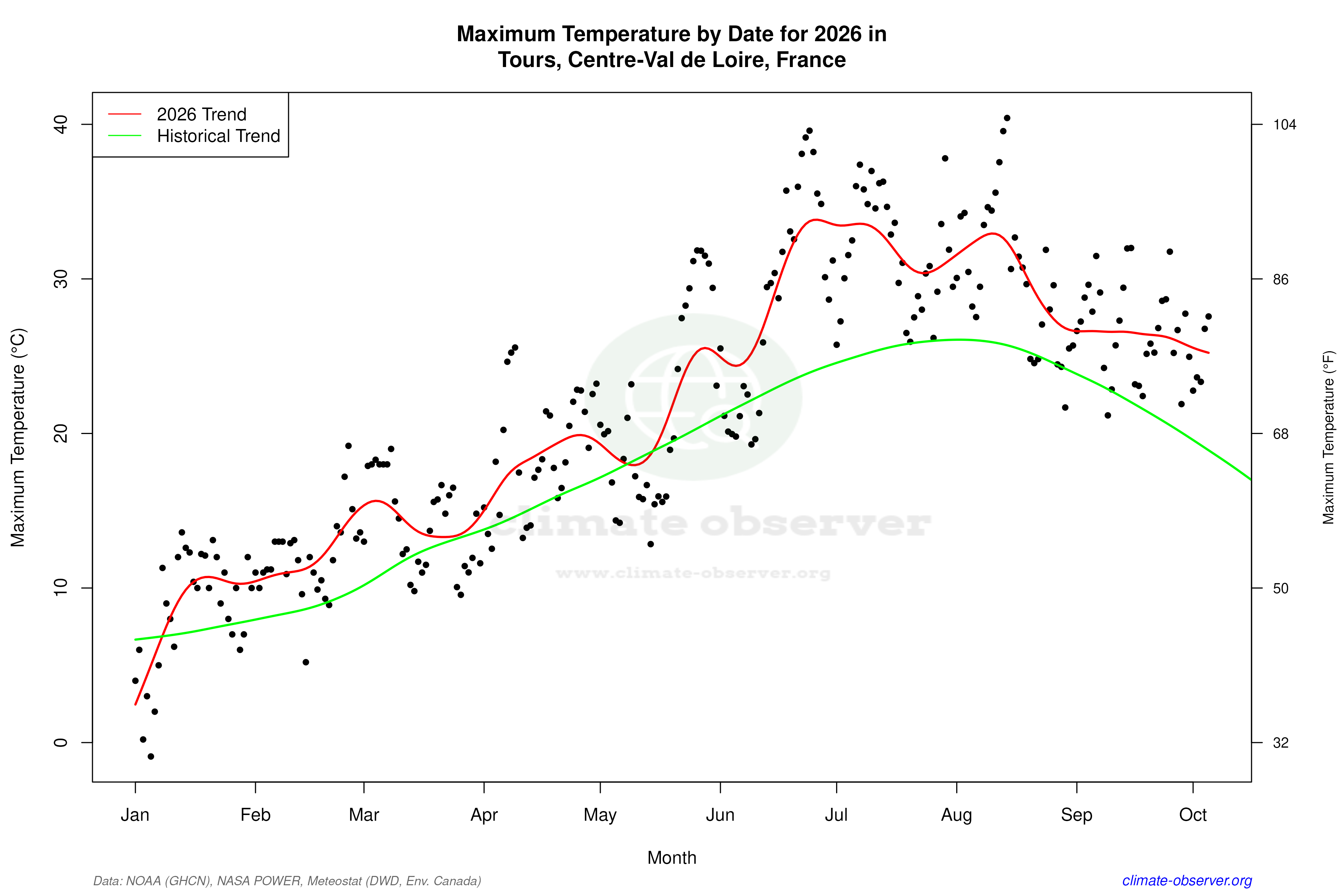
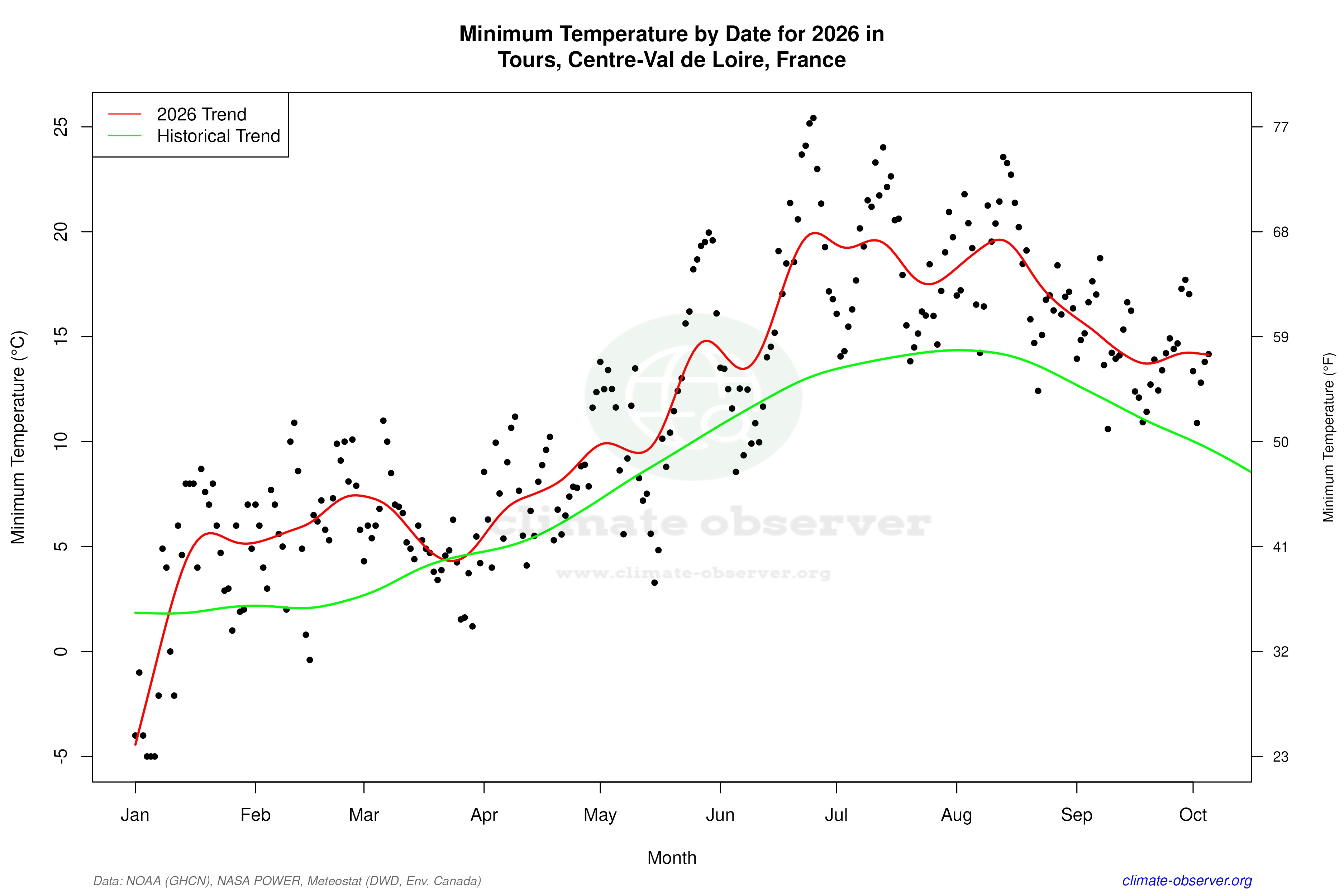
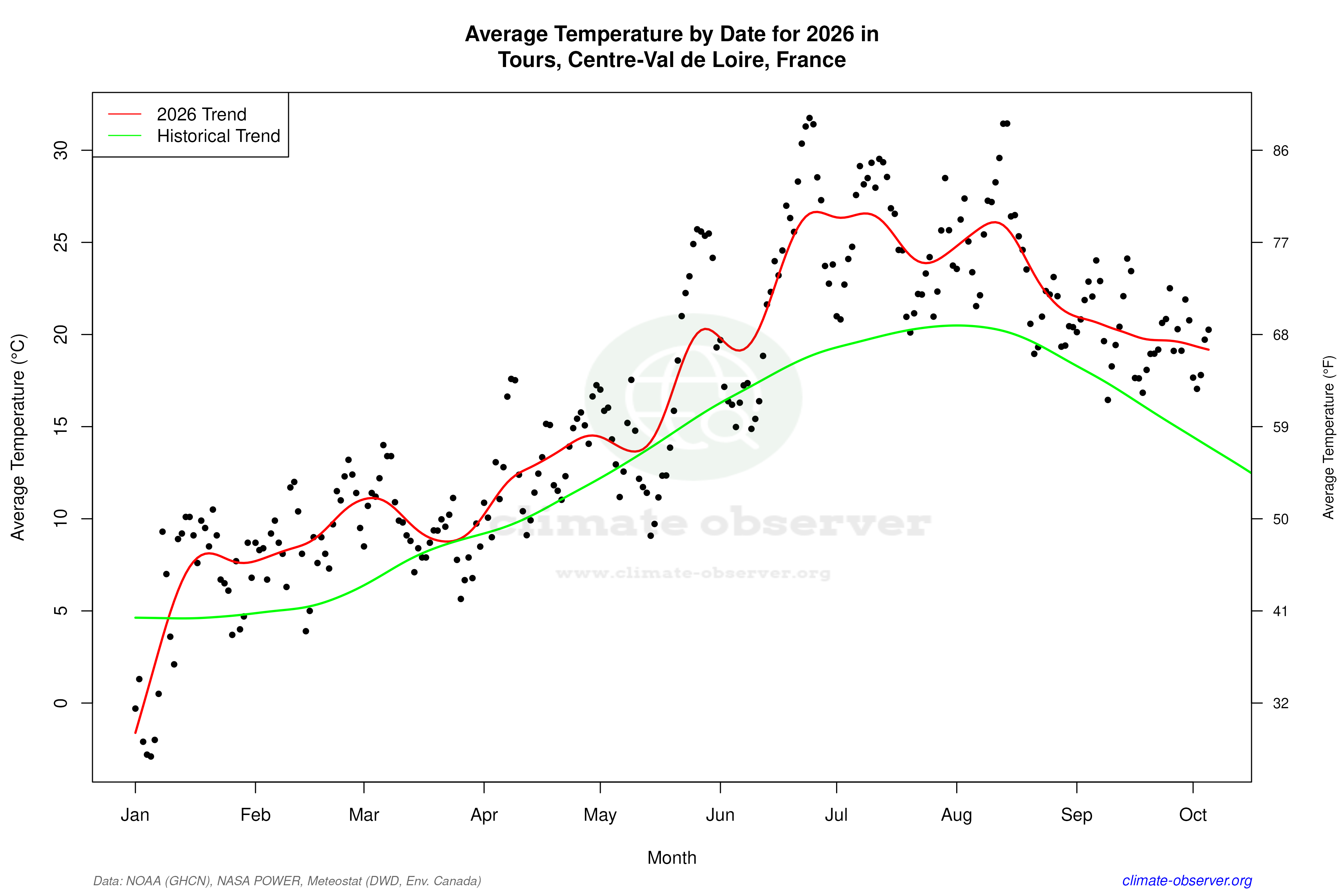
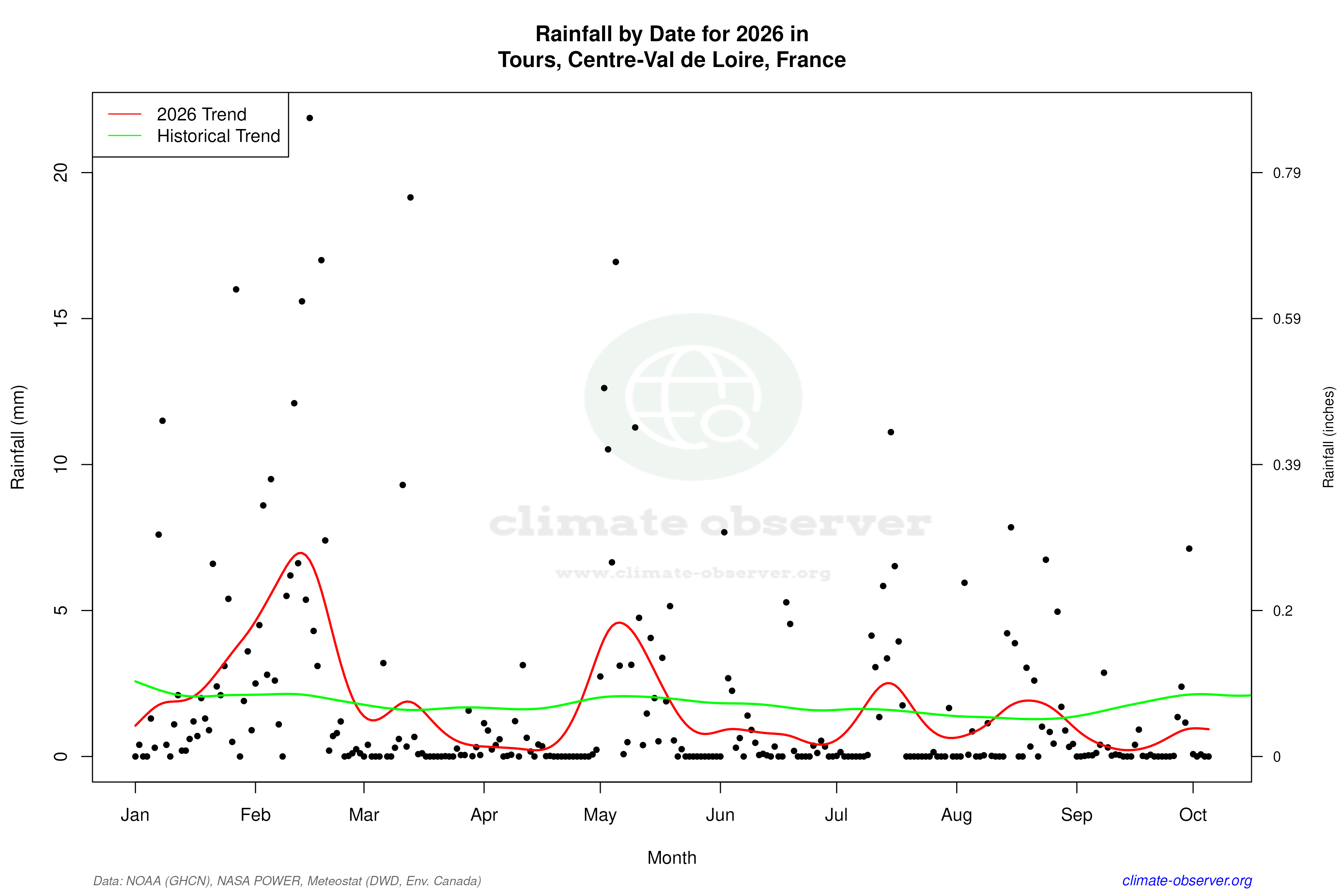
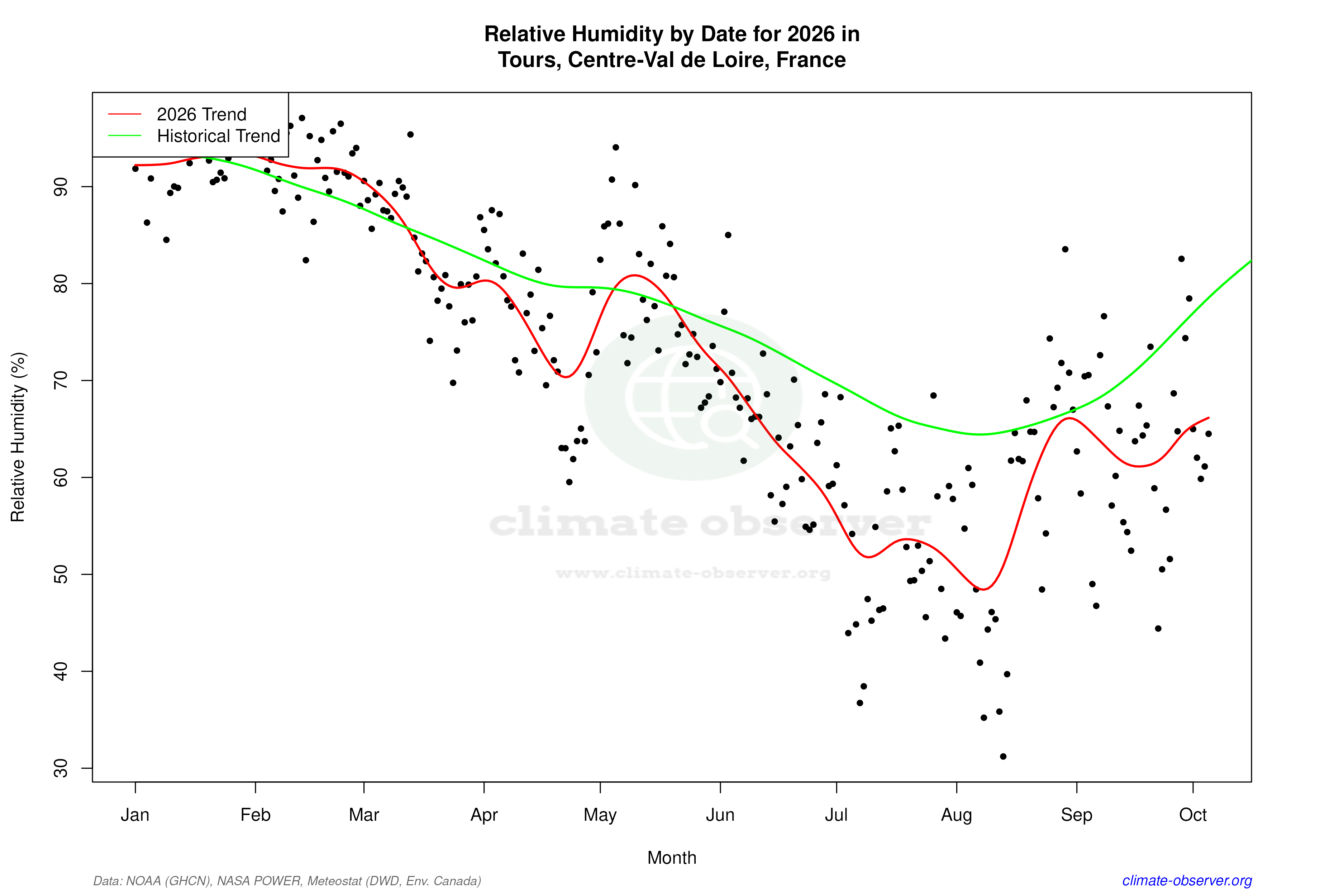

Max Temperature this Year | 1 of 6
Climate 12-Month Moving Averages
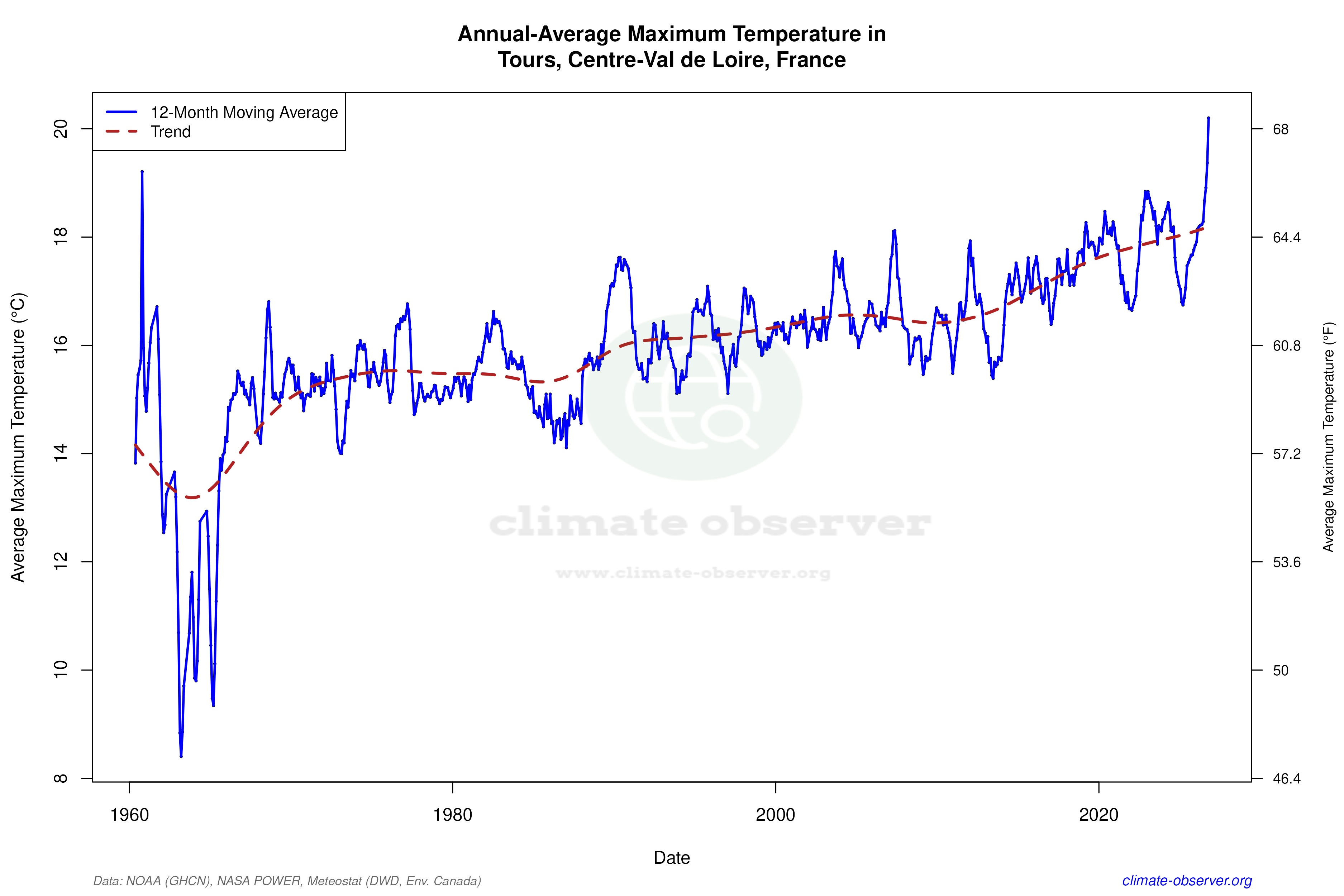
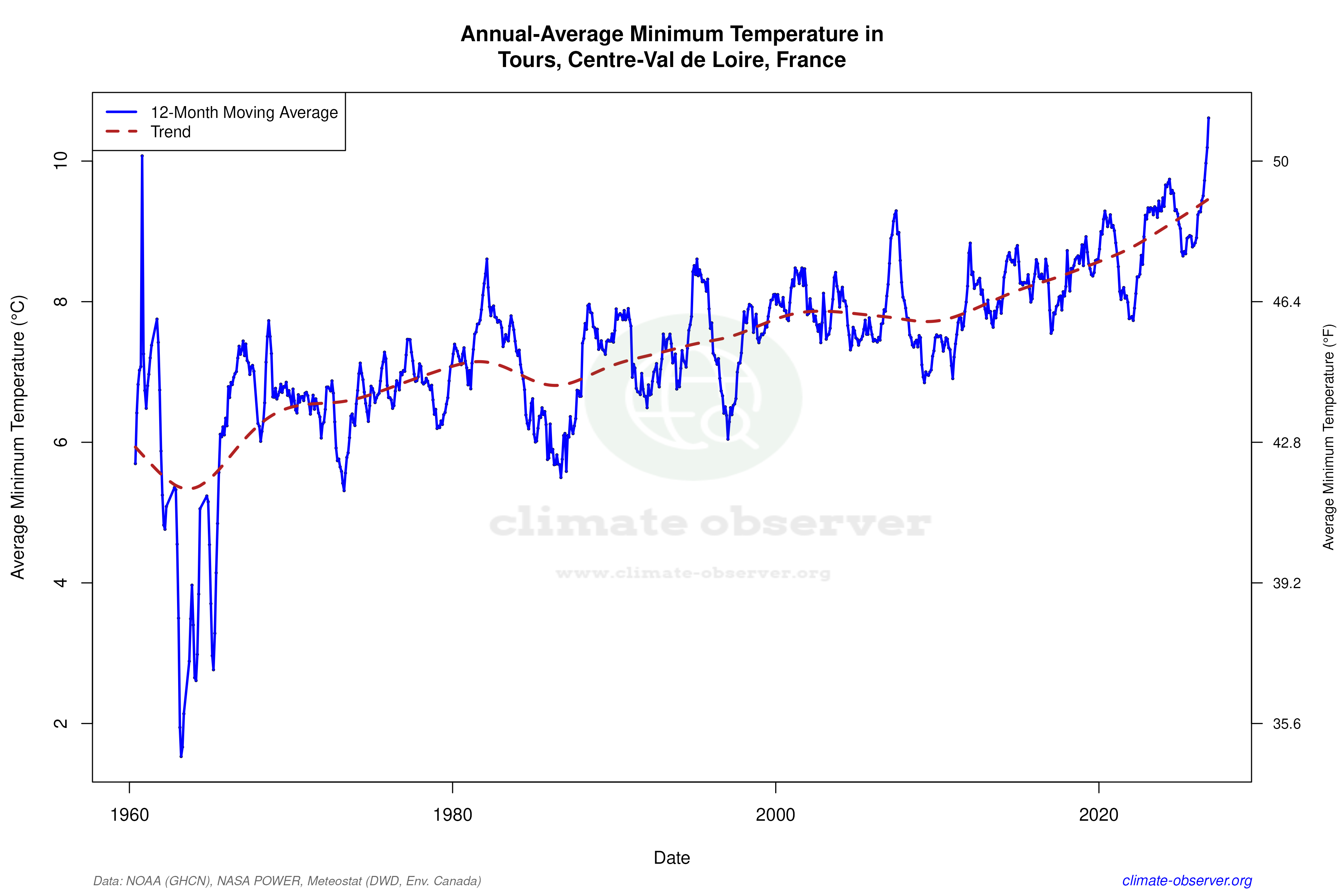
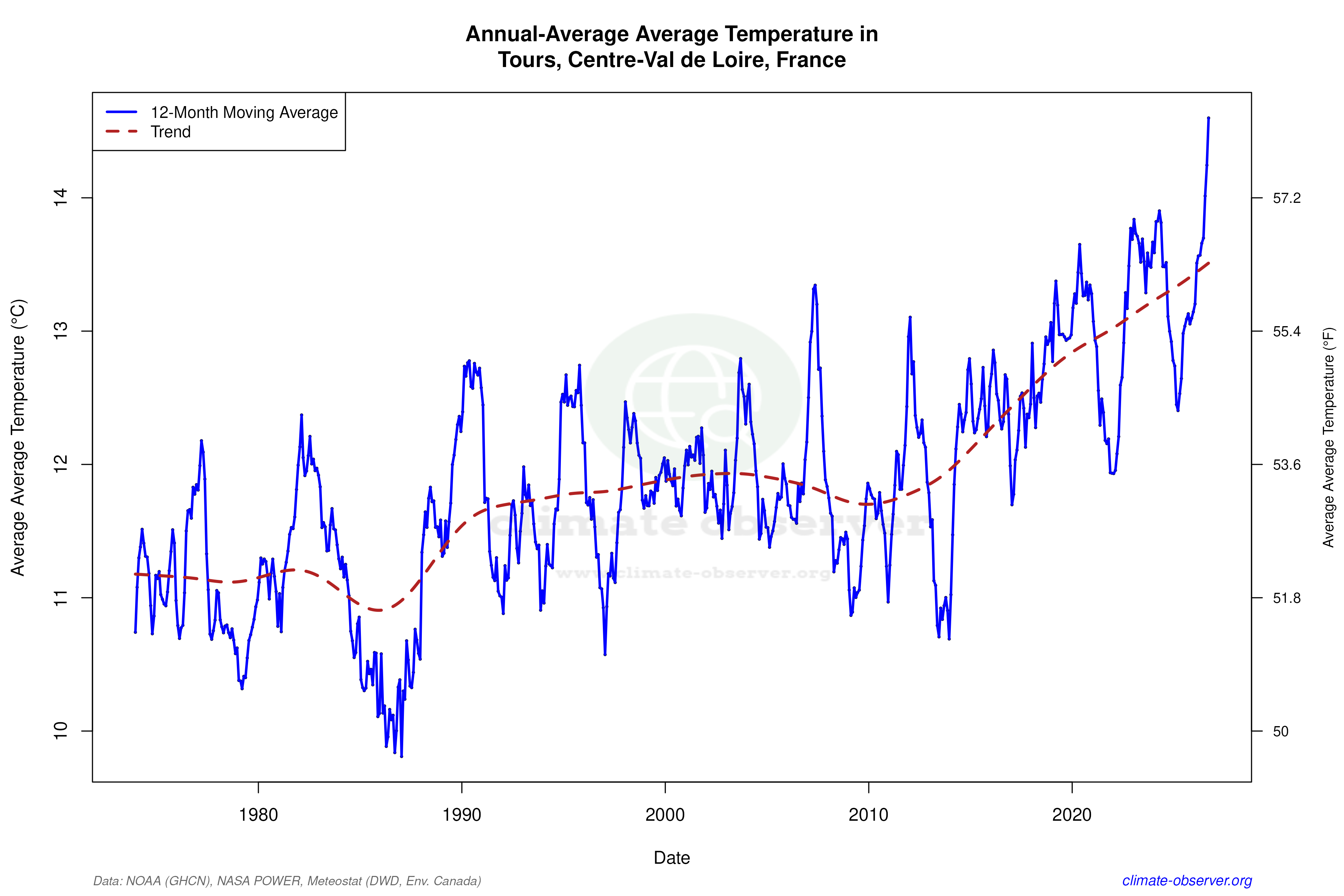
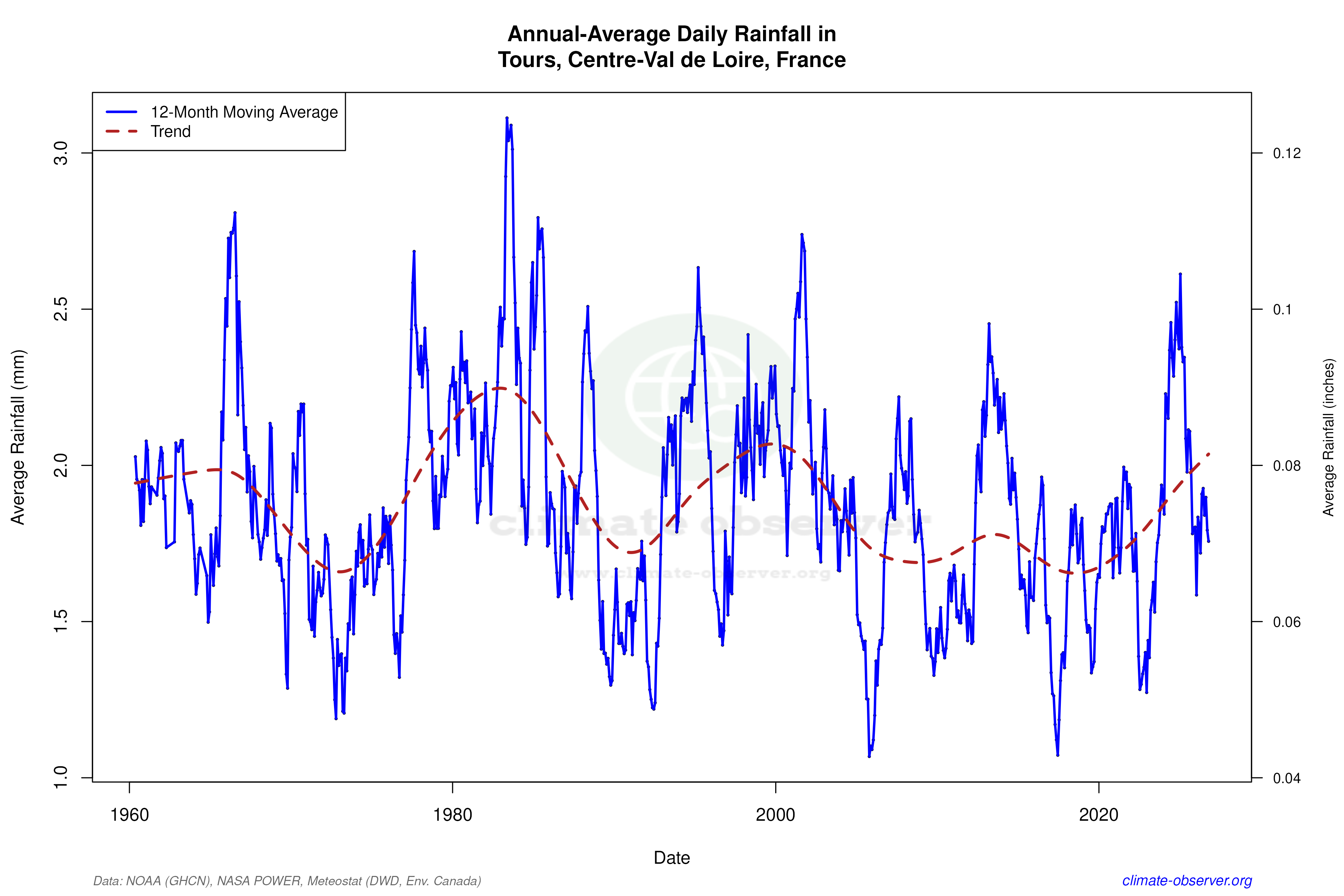
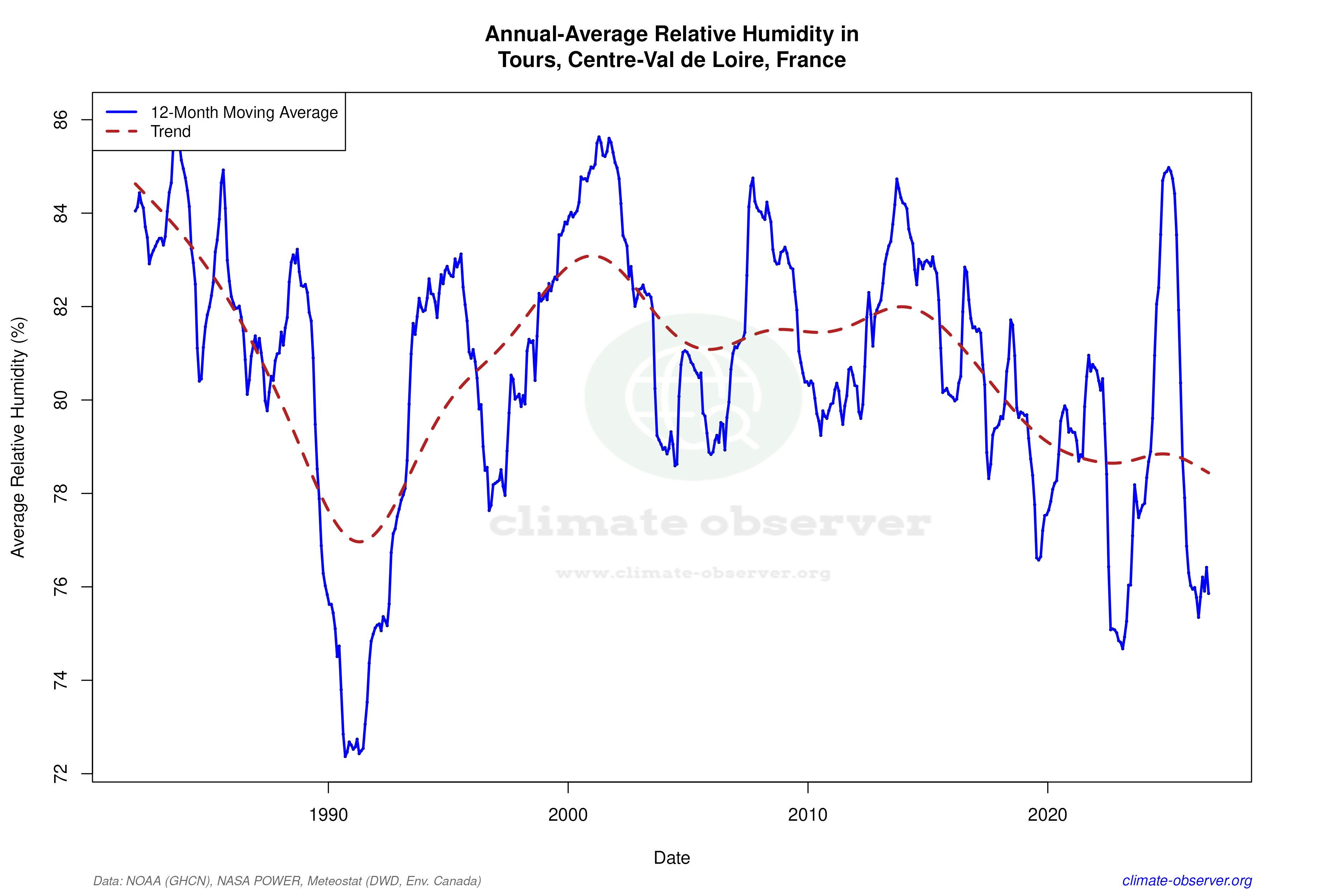

Max Temperature 12-Month MA | 1 of 6
Daily Data Points and Averages Throughout the Year
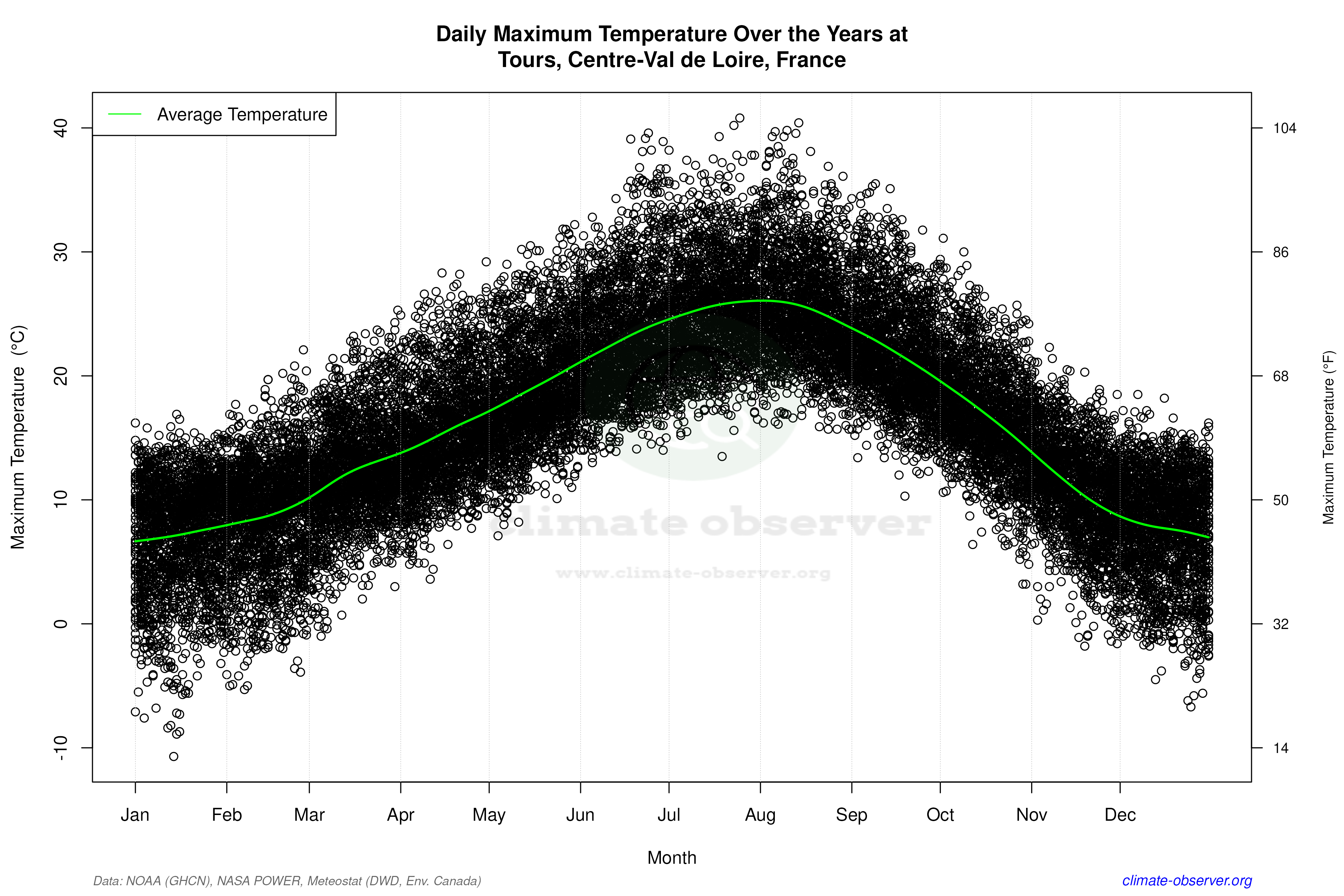
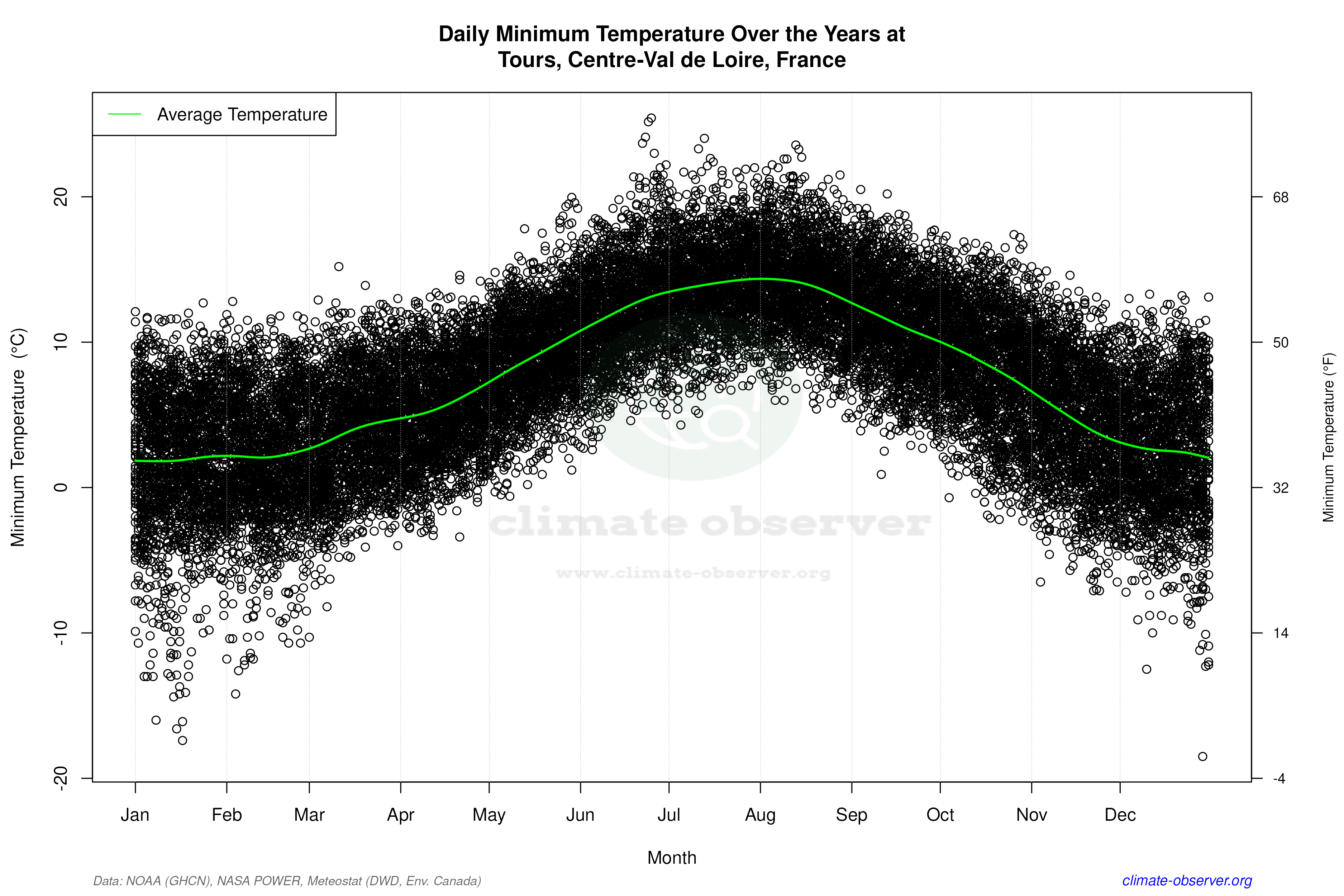
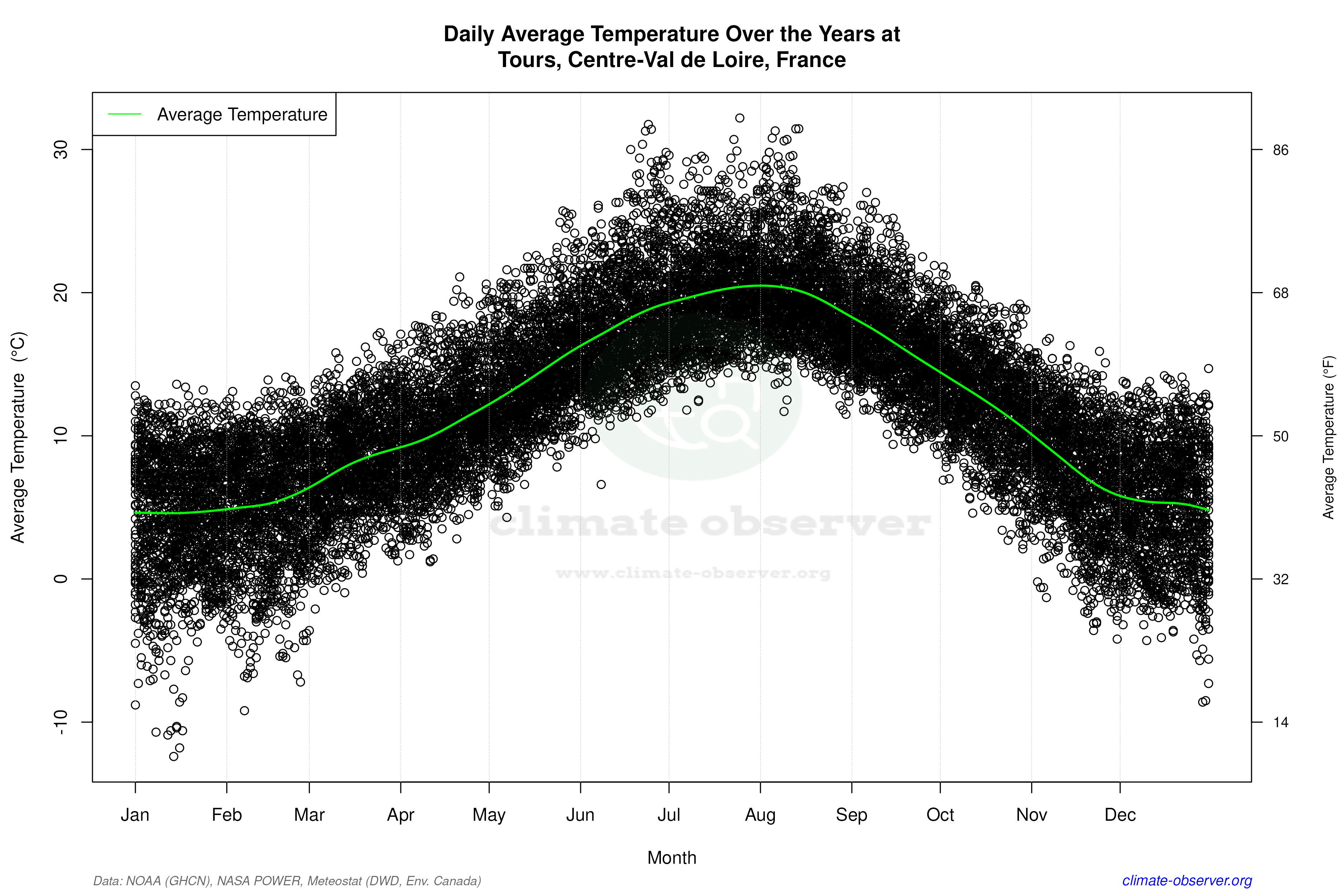
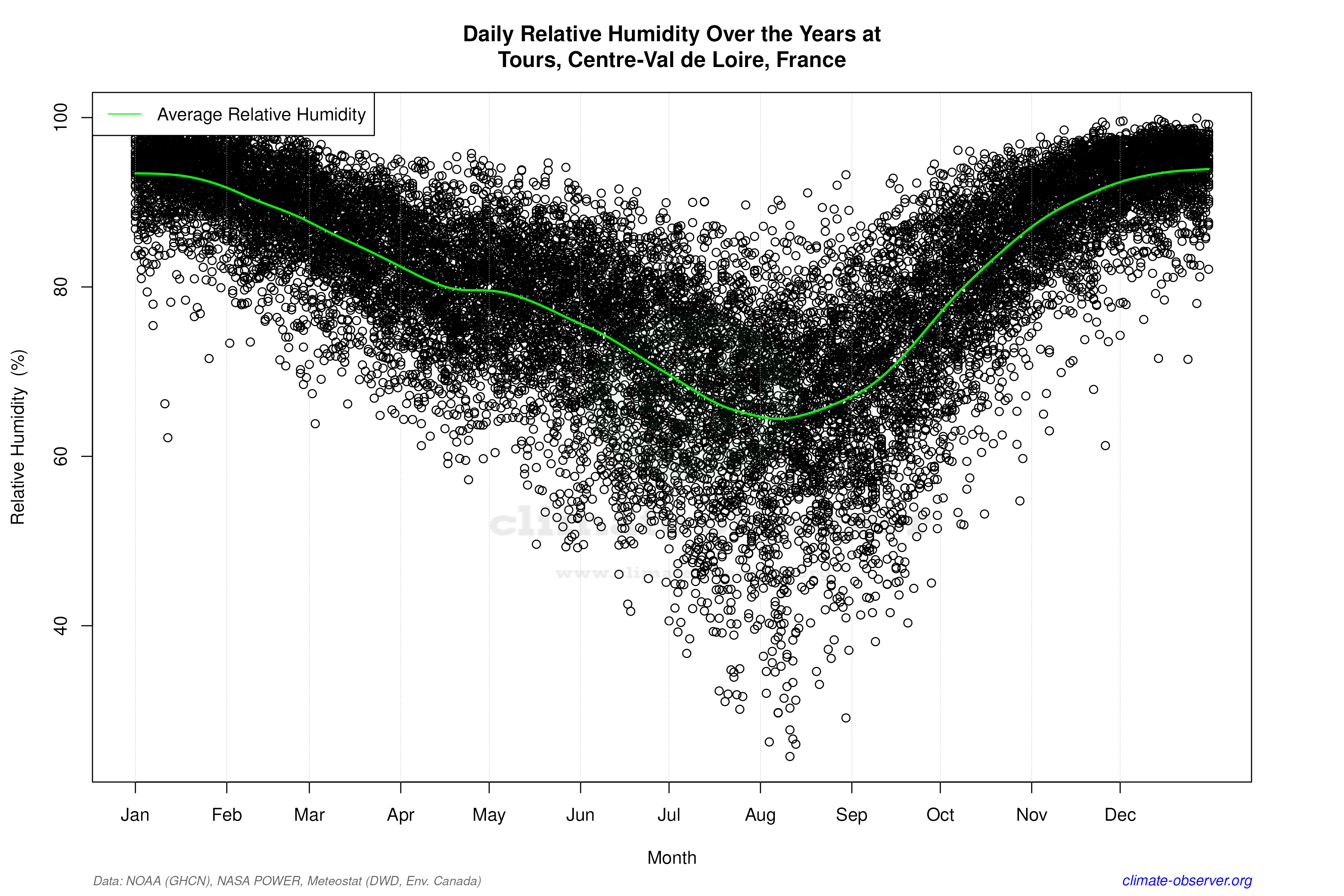

Average Max Temperature Throughout Year | 1 of 5


