Climate for Station: Montpellier-Aeroport, Occitanie, France
Loading live weather...
Climate Analysis & Overview
Montpellier-Aeroport has experienced a notable warming trend over the past decade, with high temperatures rising by 0.83°C (1.49°F) and low temperatures by 0.60°C (1.08°F). The Precipitation Concentration Index has significantly increased, suggesting more intense rainfall events. These changes reflect broader regional climate shifts in France.
Mediterranean Climate Dynamics
Montpellier-Aeroport, located in the Occitanie region of southern France, experiences a Mediterranean climate characterised by hot, dry summers and mild, wet winters. This climate is classified as Csa according to the Köppen climate classification. The proximity to the Mediterranean Sea moderates temperature extremes, but the area is also influenced by the nearby Cévennes mountains, which can affect local weather patterns, particularly precipitation.
Warming Trends and Temperature Records
Over the past decade, Montpellier-Aeroport has seen a significant warming trend. High temperatures have increased by 0.83°C (1.49°F), while low temperatures have risen by 0.60°C (1.08°F). This recent trend is more pronounced than the all-time warming, which shows an increase of 0.29°C (0.52°F) for highs and 0.39°C (0.70°F) for lows. The station's record high of 43.5°C (110.3°F) and record low of -17.8°C (-0.04°F) highlight the potential for temperature extremes in this region.
Precipitation Patterns: A Shift Towards Intensity
The Precipitation Concentration Index (PCI) at Montpellier-Aeroport has risen from a baseline of 13.5 to a current value of 24.8. This indicates a significant shift towards more concentrated precipitation events, meaning rainfall is occurring in fewer, more intense bursts rather than being evenly distributed throughout the year. Such changes can lead to increased risks of flooding and soil erosion, impacting agriculture and infrastructure.
Regional Climate Goals and Challenges
France has set ambitious climate goals, aiming to reduce greenhouse gas emissions and adapt to the impacts of climate change. The trends observed at Montpellier-Aeroport underscore the urgency of these efforts. The increased frequency of intense rainfall events and rising temperatures pose challenges for water management and urban planning in the region. Recent weather events, including heatwaves and heavy storms, have highlighted the need for resilient infrastructure and adaptive strategies.
Implications for the Future
The warming trends and changes in precipitation patterns at Montpellier-Aeroport reflect broader climatic shifts affecting the Mediterranean region. As temperatures continue to rise and precipitation becomes more concentrated, there will be implications for biodiversity, agriculture, and human health. Understanding these trends is crucial for developing effective climate adaptation and mitigation strategies in line with France's national and regional objectives.
Station Statistics
10-Year Trend
High: +0.77 °C/decade
Low: +1.20 °C/decade
Rain: +0.65 mm/decade
25-Year Trend
High: +0.78 °C/decade
Low: +0.52 °C/decade
Rain: +0.04 mm/decade
50-Year Trend
High: +0.48 °C/decade
Low: +0.45 °C/decade
Rain: -0.08 mm/decade
All-Time Trend
High: +0.26 °C/decade
Low: +0.37 °C/decade
Rain: -0.08 mm/decade
Percentage Above-Average Days
Last 12 Months: 50.7%
This Year: 71.9%
Precipitation Concentration Index (PCI) ℹ️
Last 12 Months: 11.6
Historical Average: 14.3
Percentile Rank of Last 12 Months ℹ️
High: 94th percentile
Low: 99th percentile
Rain: 90th percentile
Change in Variance ℹ️
High: +4.3%
Low: +10.0%
Intraday: -7.6%
Data Coverage
91.6%
First Year of Data
1950
Station Location
Historical Weather Records
| Max High | Avg High | Min High | Max Avg | Avg Avg | Min Avg | Max Low | Avg Low | Min Low | Max Precipitation | Avg Precipitation | Max Snow | Avg Snow | |
|---|---|---|---|---|---|---|---|---|---|---|---|---|---|
| Record | 43.5 °C | — | -3.4 °C | 32.3 °C | — | -7.6 °C | 26.1 °C | — | -17.8 °C | 177.2 mm | — | — | — |
| January | 22.1 °C | 11.4 °C | -3.4 °C | 17.3 °C | 7.1 °C | -7.6 °C | 14.5 °C | 2.5 °C | -15.0 °C | 73.6 mm | 1.9 mm | — | — |
| February | 23.6 °C | 12.8 °C | -1.8 °C | 18.7 °C | 8.2 °C | -3.9 °C | 15.3 °C | 3.2 °C | -17.8 °C | 55.4 mm | 1.6 mm | — | — |
| March | 27.4 °C | 15.5 °C | 1.4 °C | 20.1 °C | 10.9 °C | 0.5 °C | 15.1 °C | 5.6 °C | -9.6 °C | 120.2 mm | 1.8 mm | — | — |
| April | 30.4 °C | 18.1 °C | 6.0 °C | 21.3 °C | 13.5 °C | 3.5 °C | 17.3 °C | 8.3 °C | -1.7 °C | 68.4 mm | 1.7 mm | — | — |
| May | 35.1 °C | 21.8 °C | 11.1 °C | 26.9 °C | 17.4 °C | 8.6 °C | 21.6 °C | 12.0 °C | 0.6 °C | 120.1 mm | 1.5 mm | — | — |
| June | 43.5 °C | 26.1 °C | 15.0 °C | 32.3 °C | 21.7 °C | 11.9 °C | 25.1 °C | 15.6 °C | 5.4 °C | 150.2 mm | 0.9 mm | — | — |
| July | 38.3 °C | 29.1 °C | 18.9 °C | 31.5 °C | 24.3 °C | 16.4 °C | 25.7 °C | 18.1 °C | 8.4 °C | 39.1 mm | 0.5 mm | — | — |
| August | 40.3 °C | 28.5 °C | 18.0 °C | 31.9 °C | 23.8 °C | 16.8 °C | 26.1 °C | 17.8 °C | 8.2 °C | 101.0 mm | 1.0 mm | — | — |
| September | 36.3 °C | 25.0 °C | 13.6 °C | 29.4 °C | 20.1 °C | 11.2 °C | 23.9 °C | 14.7 °C | 1.0 °C | 177.2 mm | 2.0 mm | — | — |
| October | 31.8 °C | 20.5 °C | 7.5 °C | 24.3 °C | 16.0 °C | 5.6 °C | 21.0 °C | 11.2 °C | -0.7 °C | 148.1 mm | 3.0 mm | — | — |
| November | 27.1 °C | 15.3 °C | 3.9 °C | 19.9 °C | 10.9 °C | 0.6 °C | 18.5 °C | 6.4 °C | -5.0 °C | 143.4 mm | 2.1 mm | — | — |
| December | 22.0 °C | 12.1 °C | -2.6 °C | 17.6 °C | 7.9 °C | -2.1 °C | 15.9 °C | 3.4 °C | -12.4 °C | 103.5 mm | 2.0 mm | — | — |
Data Visualisations
Remove WatermarksCurrent Year Climate Trends vs Historical
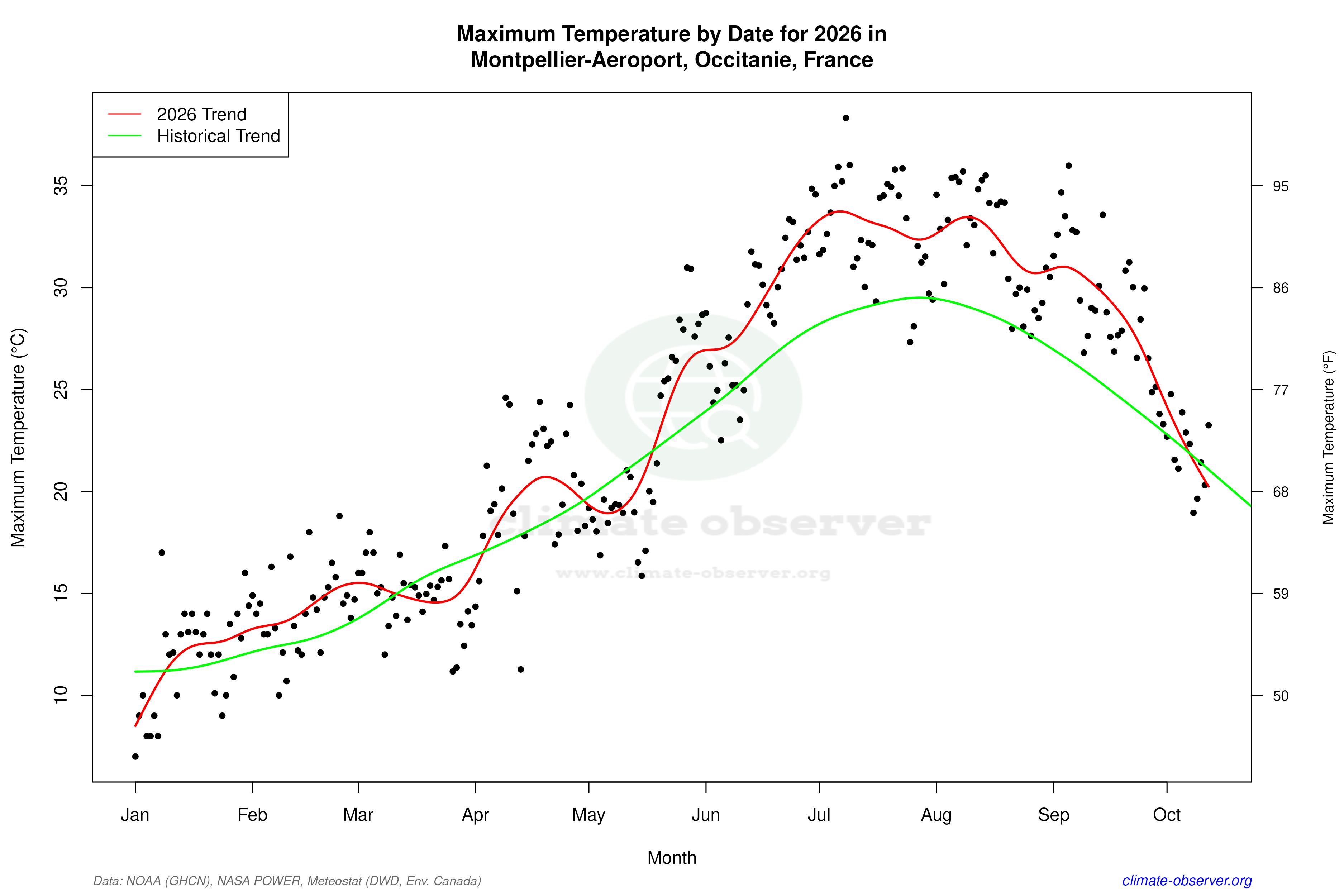
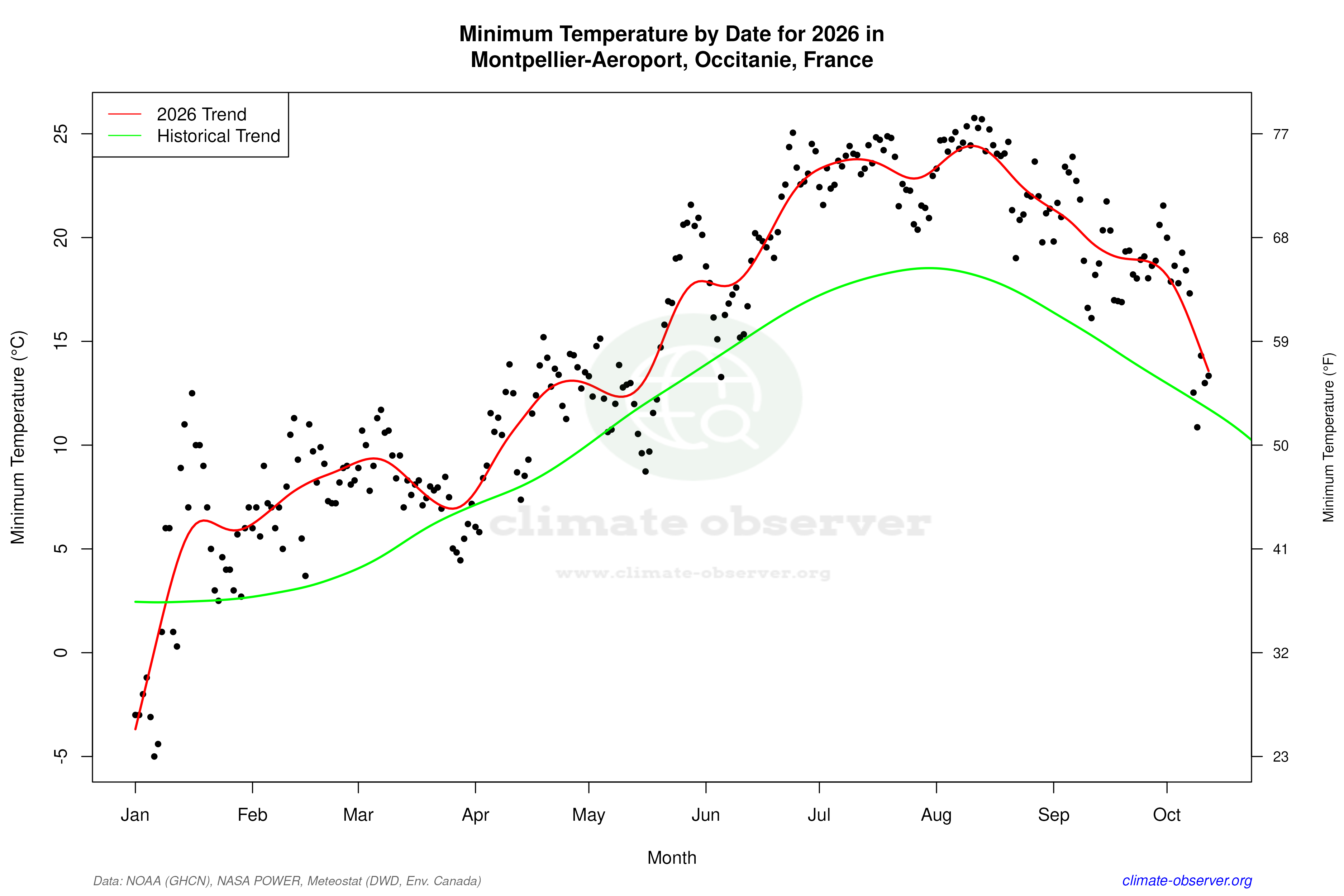
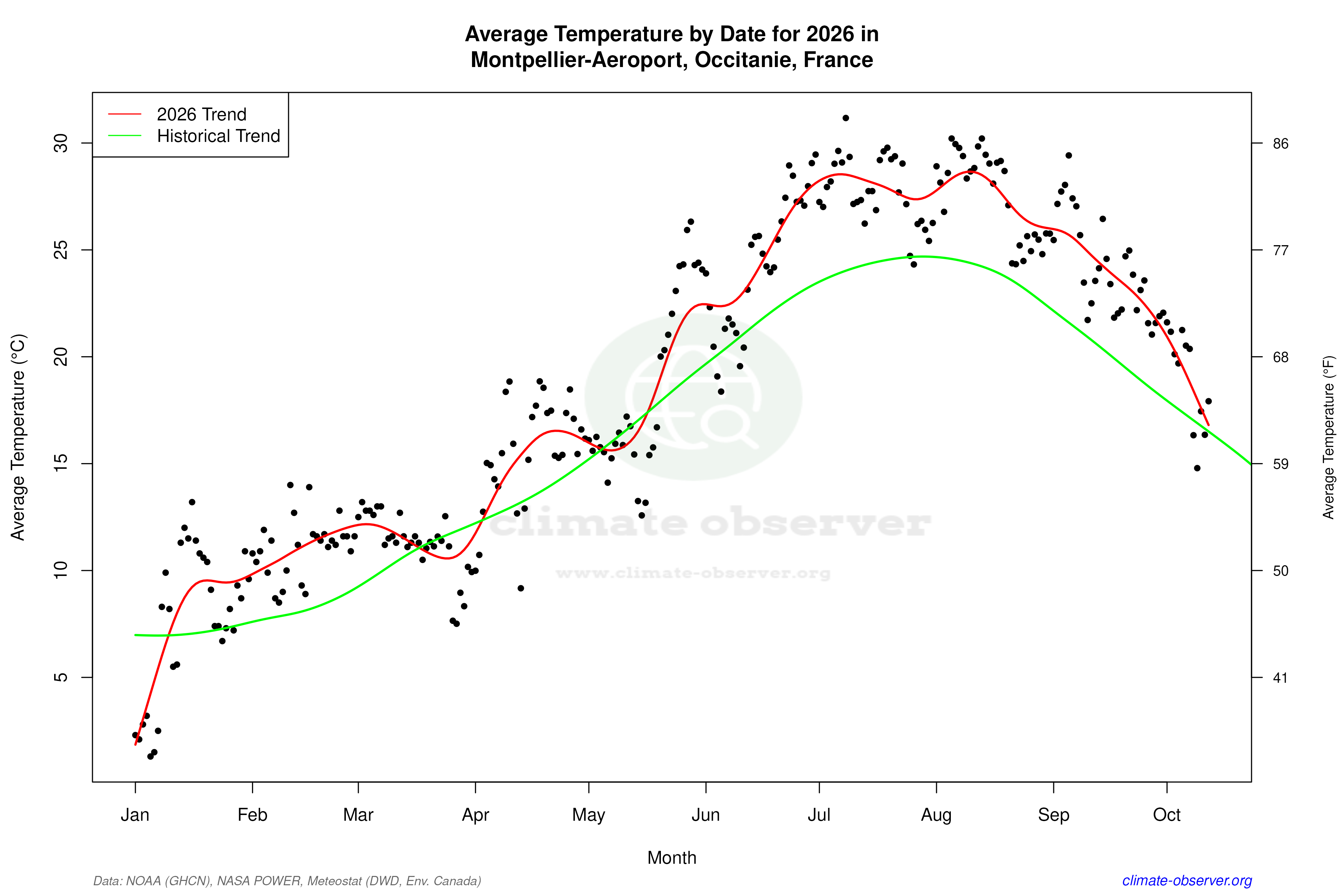
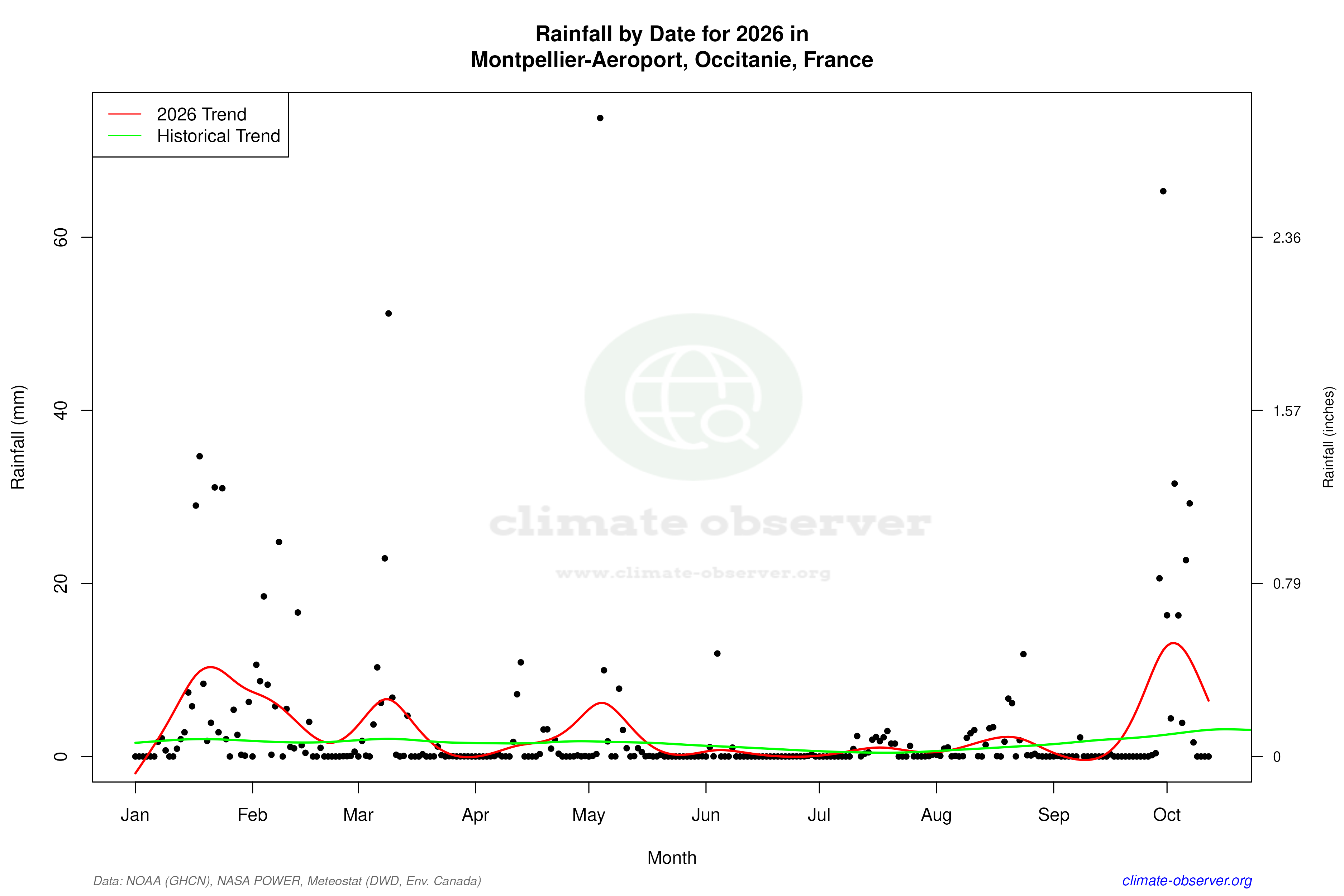
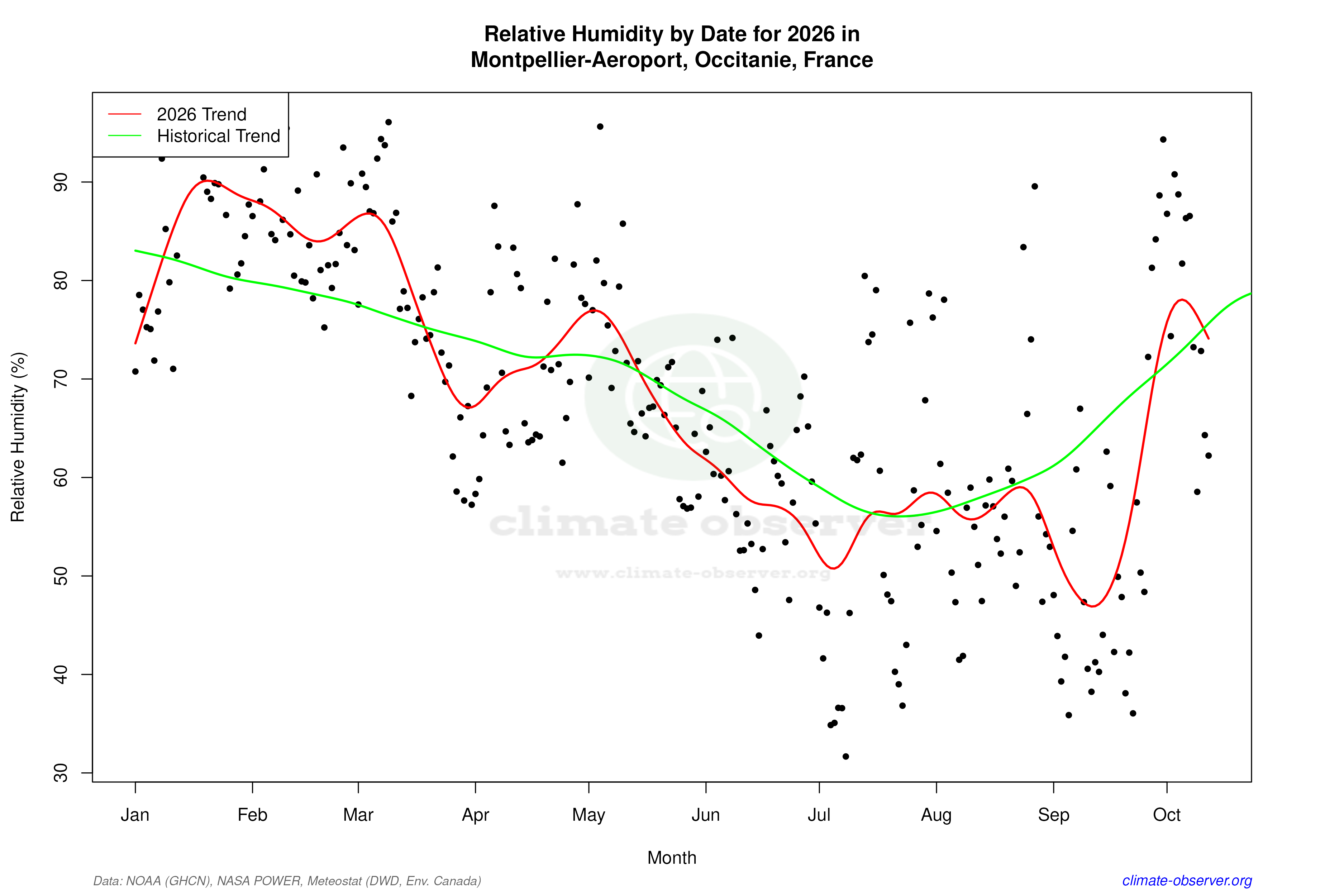

Max Temperature this Year | 1 of 6
Climate 12-Month Moving Averages
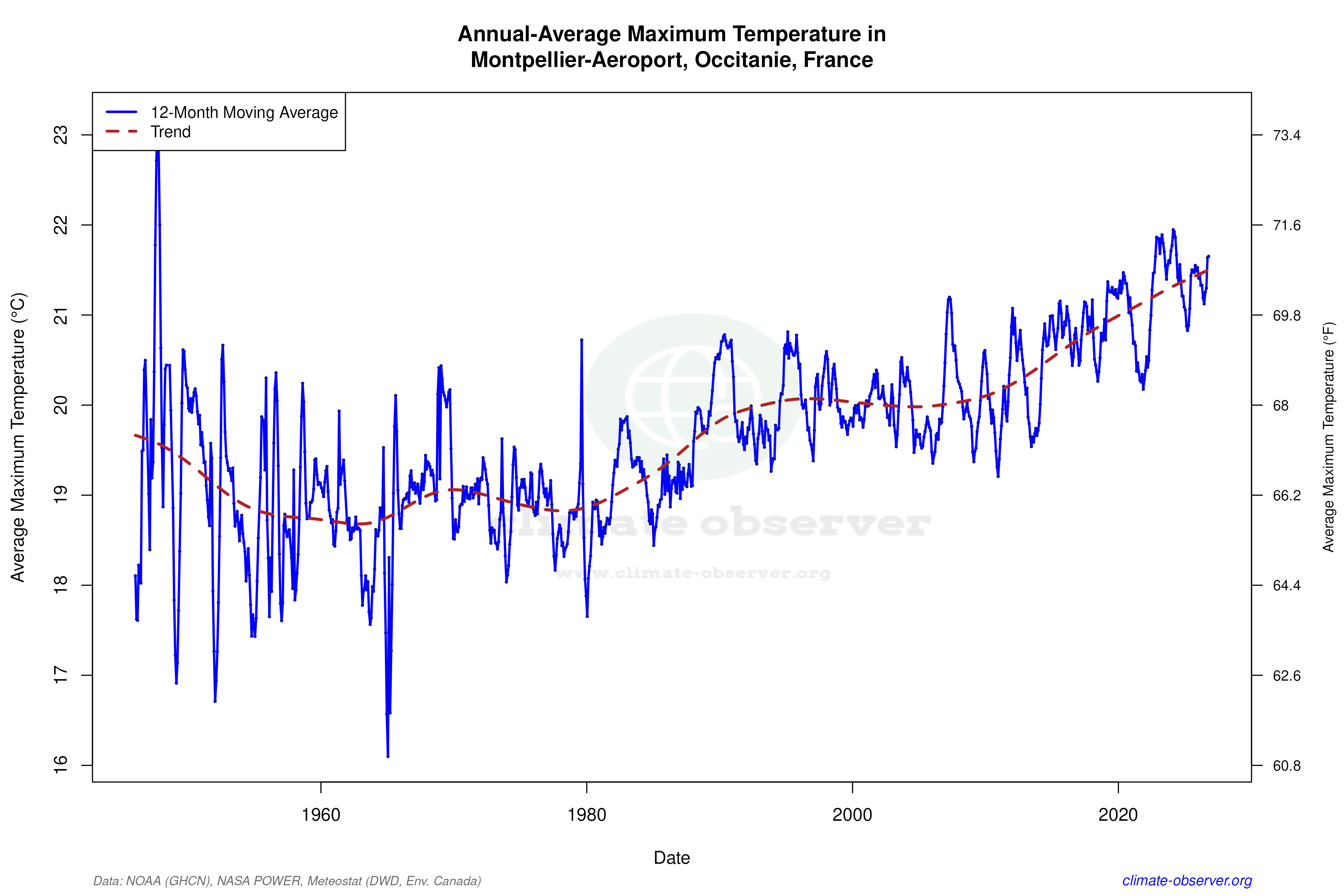
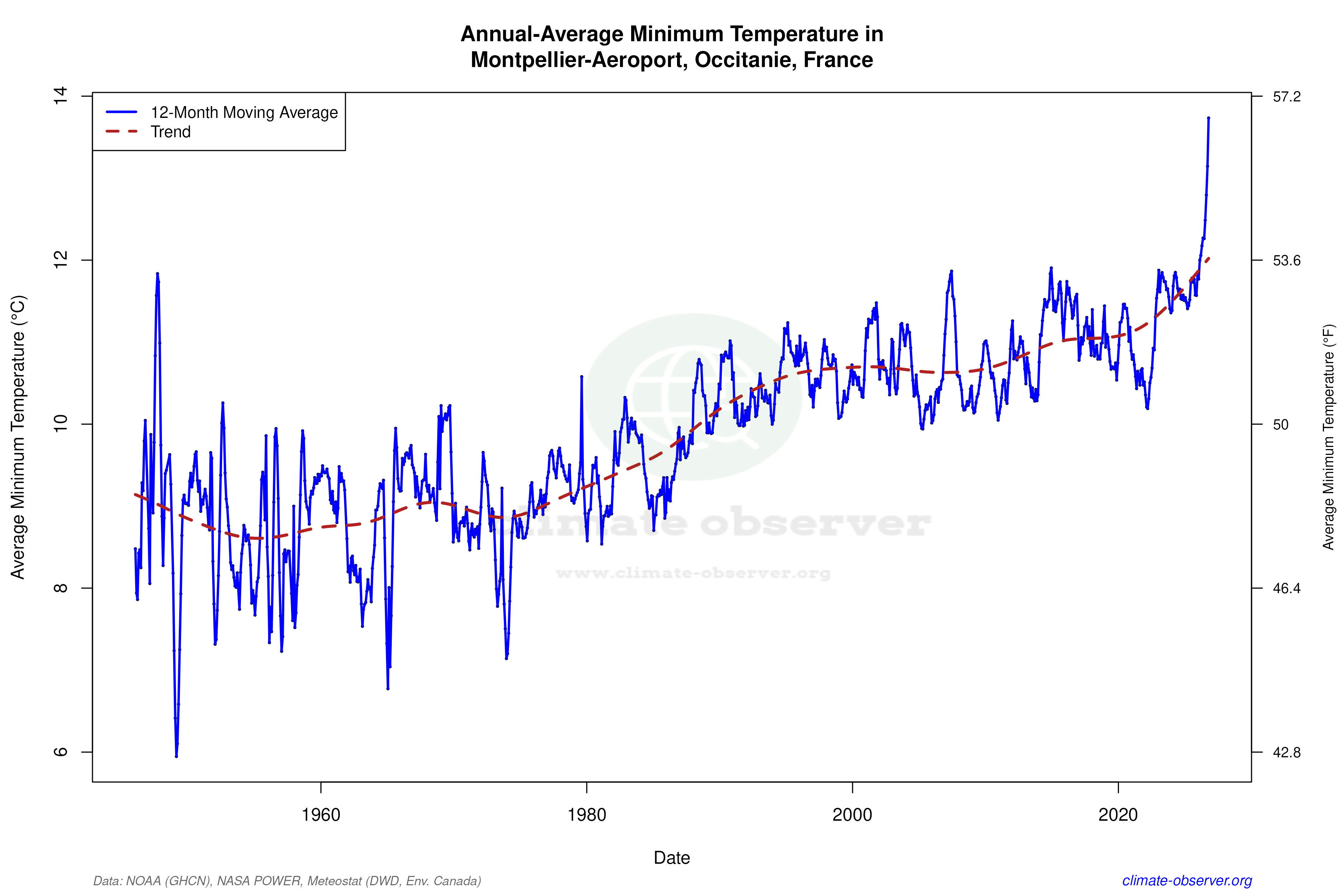
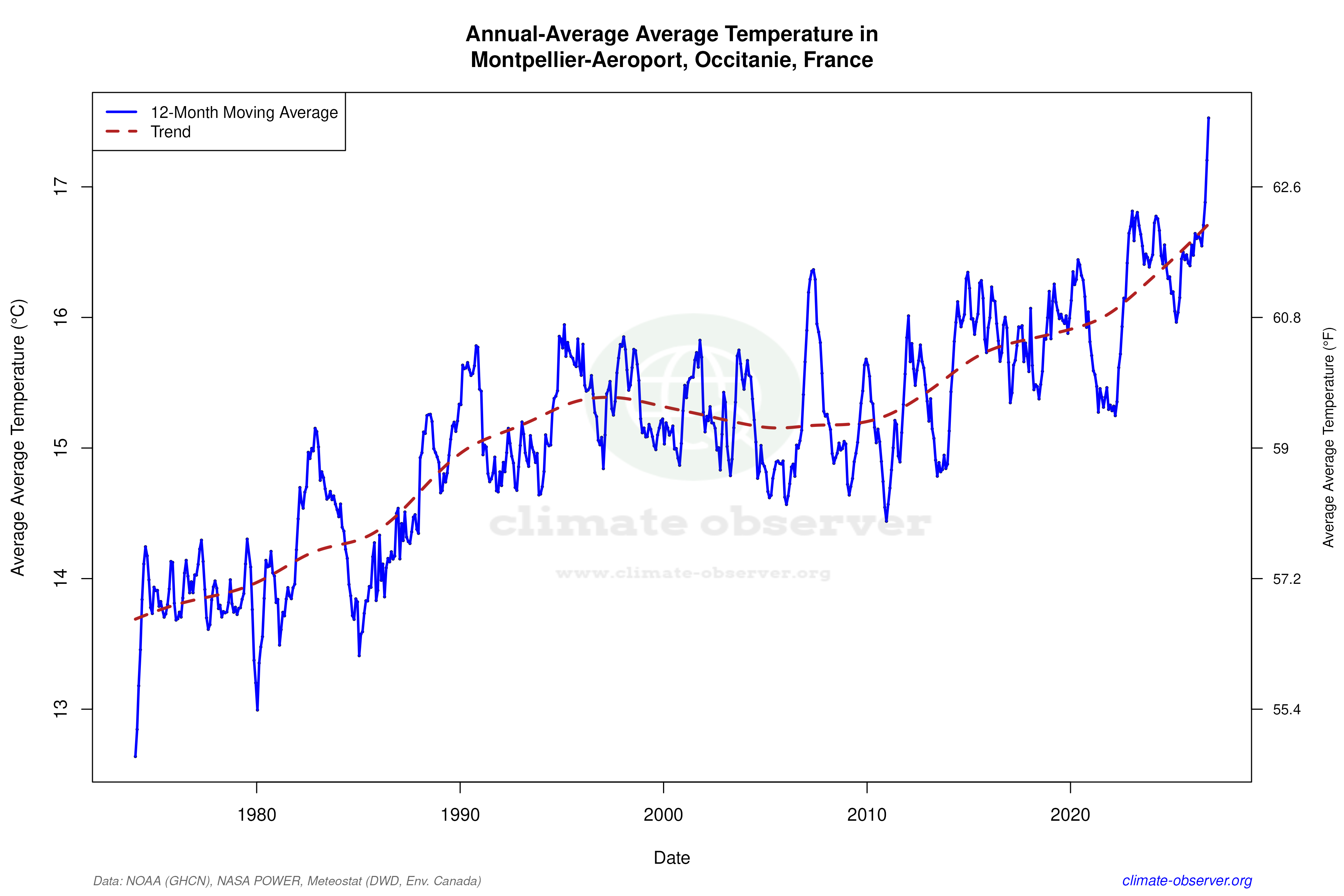
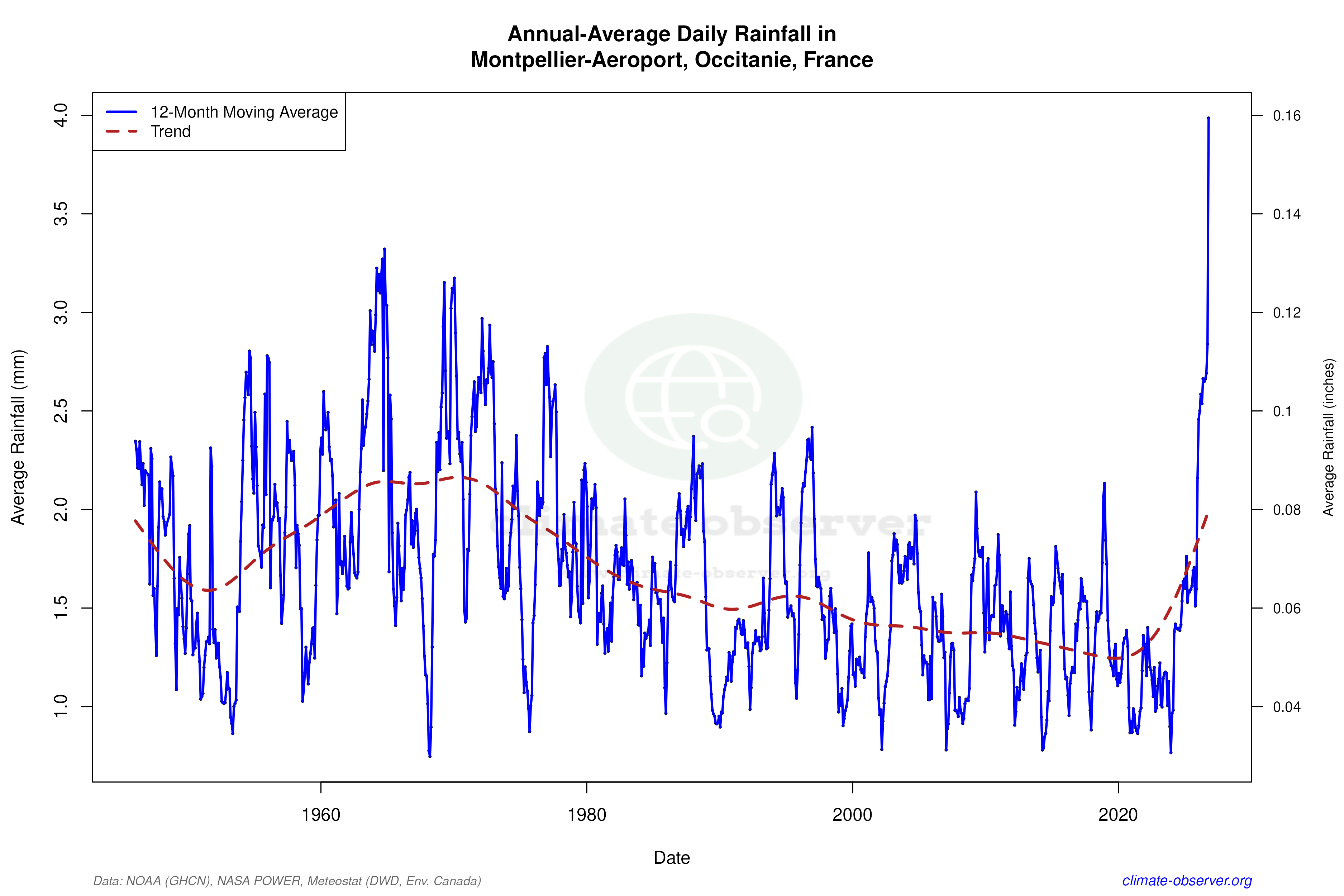
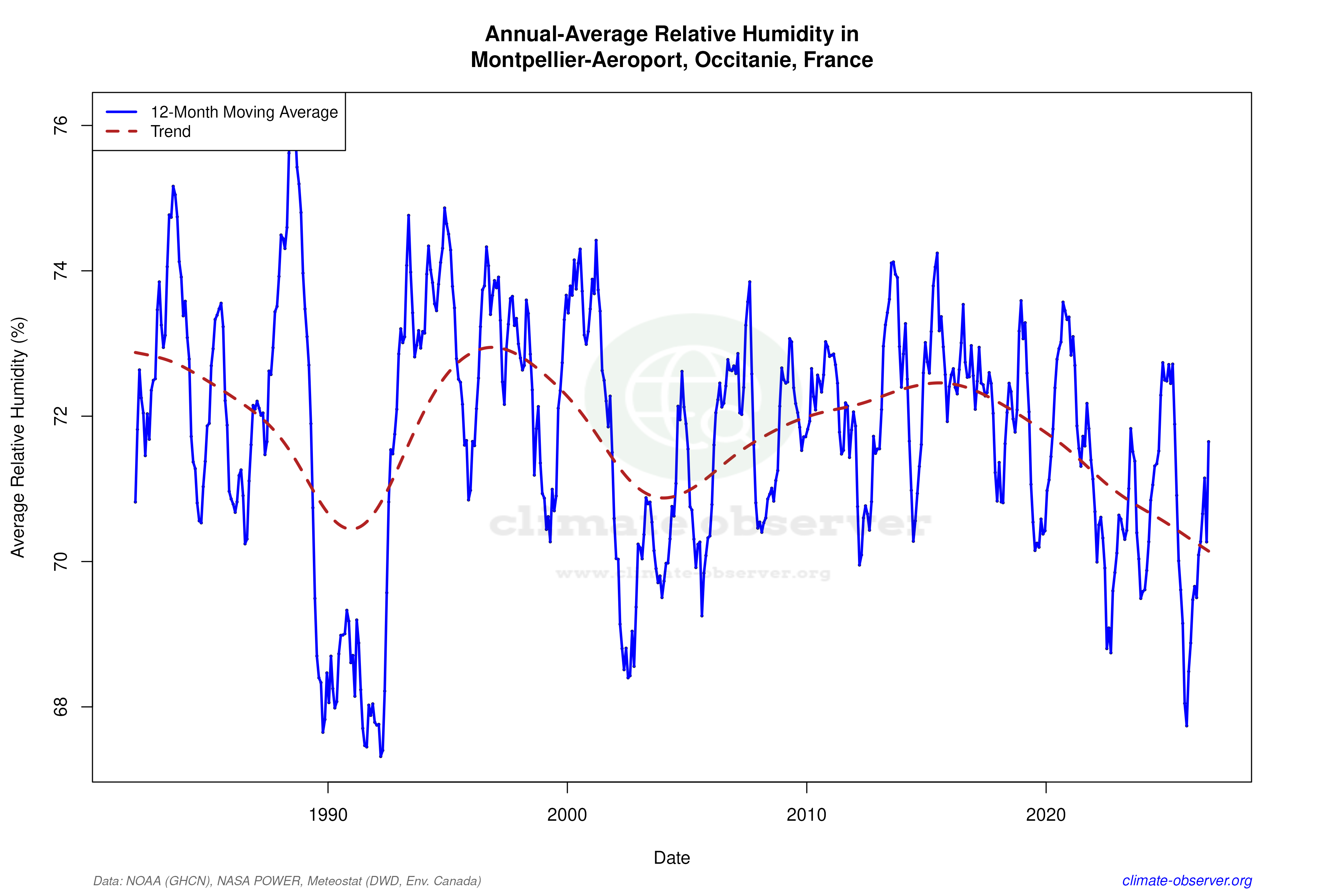

Max Temperature 12-Month MA | 1 of 6
Daily Data Points and Averages Throughout the Year
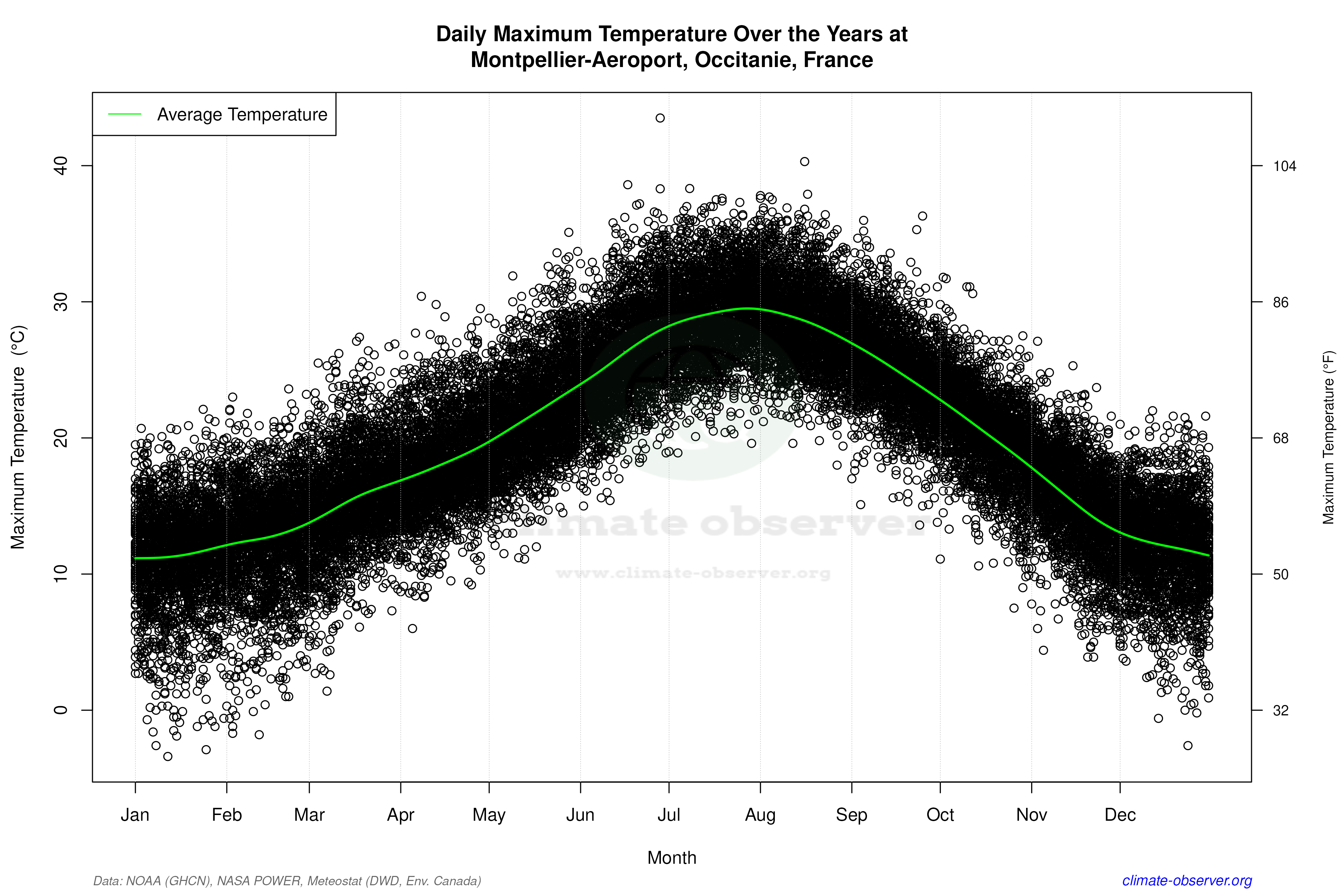
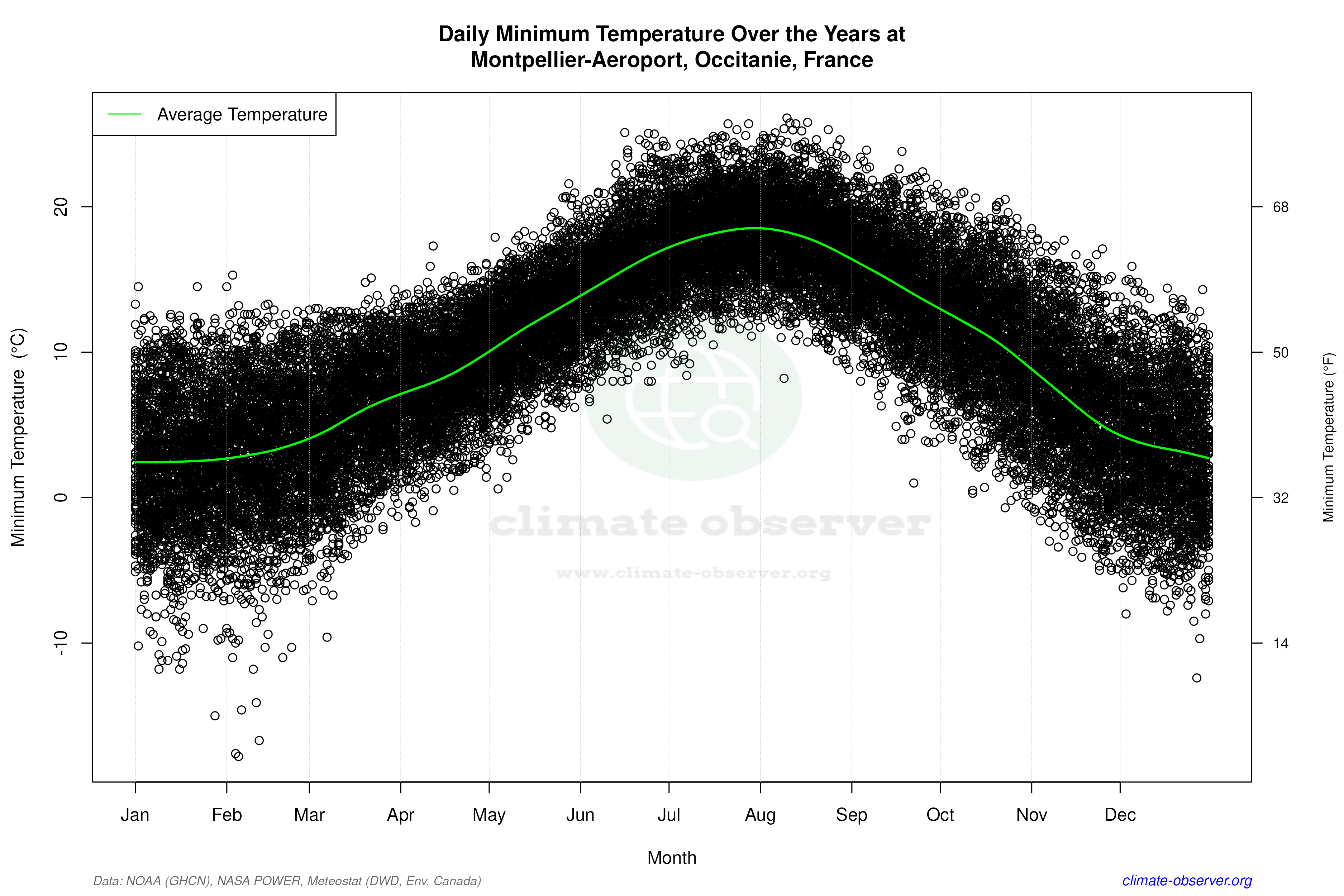
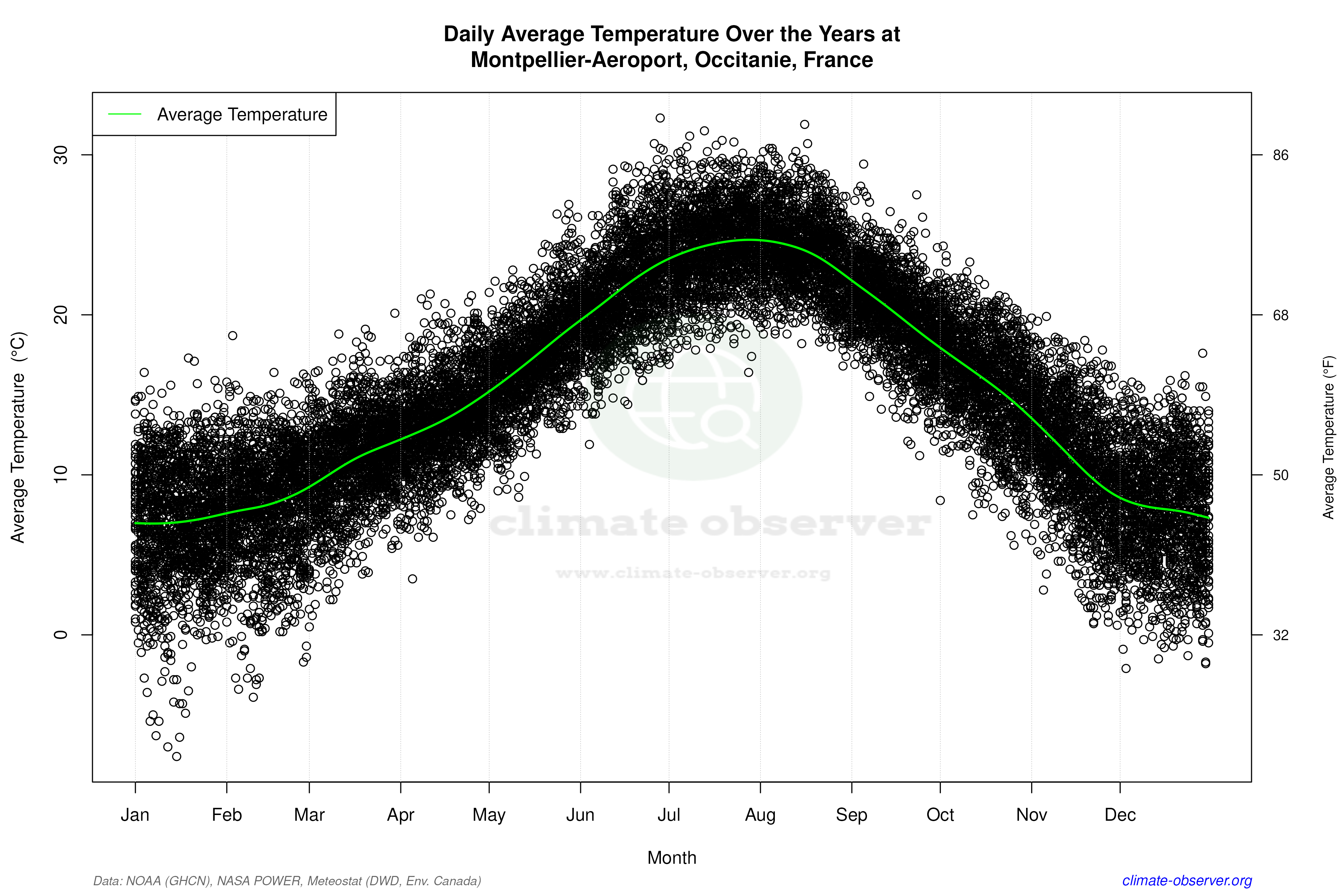
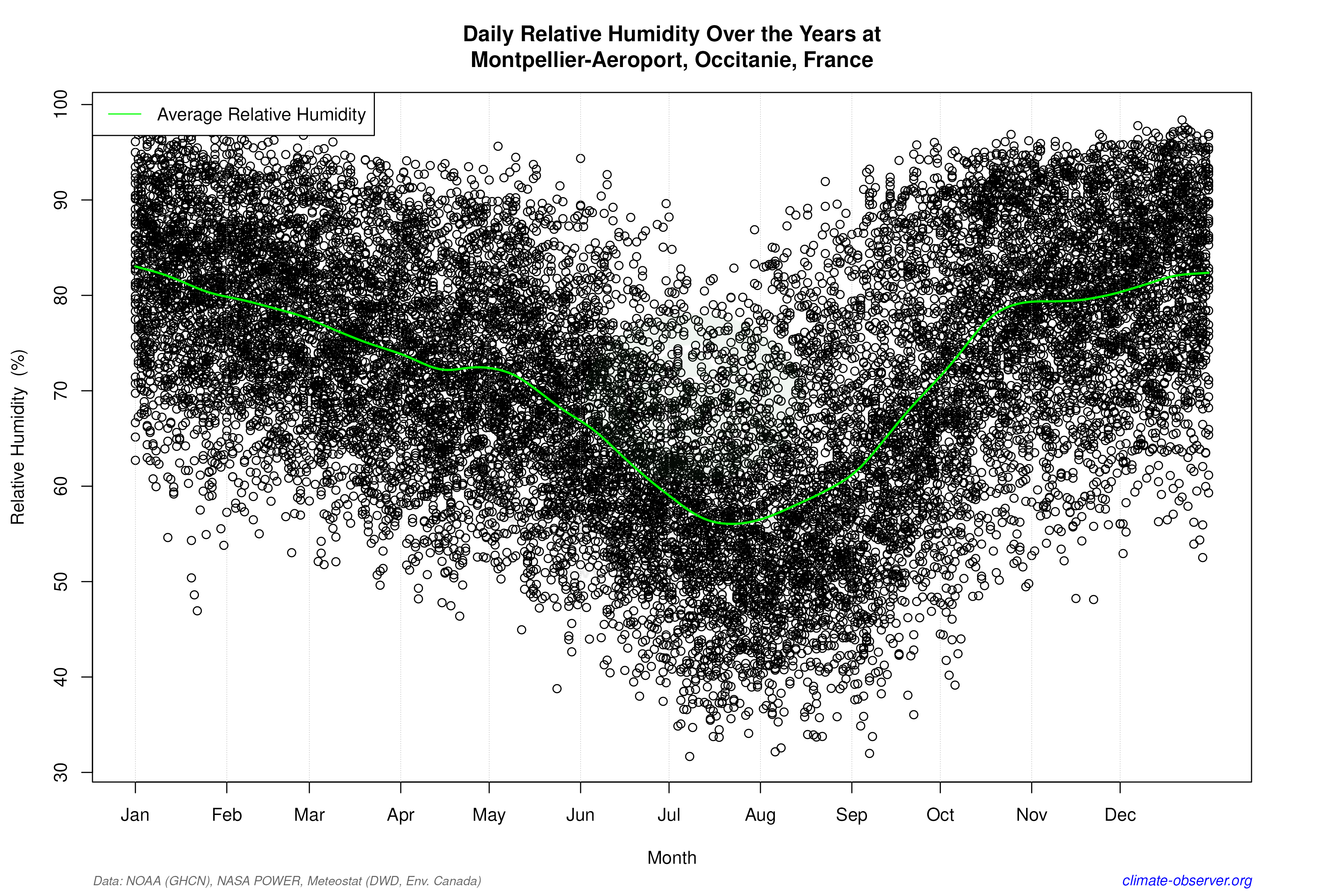

Average Max Temperature Throughout Year | 1 of 5


