Climate for Station: Nuuk, Greenland, Greenland [Denmark]
Loading live weather...
Climate Analysis & Overview
Nuuk, Greenland, is experiencing a complex climate narrative with a recent warming trend in both high and low temperatures over the past decade, contrasting with a long-term cooling in high temperatures. The precipitation pattern has become more evenly distributed, reflecting a shift in the local climate dynamics.
Arctic Climate Dynamics
Nuuk, situated at 64.17°N, 51.75°W, falls under the Köppen climate classification of ET, or tundra climate. This classification is characterised by long, cold winters and short, cool summers. The local geography, dominated by the Greenland Ice Sheet and the North Atlantic Ocean, plays a significant role in shaping Nuuk's climate. The oceanic influence moderates temperatures, while the ice sheet contributes to cooler conditions.
Temperature Trends: A Tale of Two Timeframes
Over the past decade, Nuuk has seen a warming trend in both high and low temperatures. Highs have increased by 0.66°C (1.19°F), and lows by 0.96°C (1.72°F). This recent warming contrasts with the all-time trends, where high temperatures have experienced a slight cooling of 0.01°C (0.02°F), while low temperatures have risen by 0.19°C (0.34°F). This dichotomy suggests a complex interplay of regional climate influences, possibly linked to broader Arctic warming patterns and localised atmospheric conditions.
Precipitation Patterns: A More Even Distribution
The Precipitation Concentration Index (PCI) for Nuuk has decreased from a baseline of 12.17 to a current value of 10.24. This indicates that precipitation events have become more evenly distributed throughout the year, rather than being concentrated in fewer, more intense events. This shift towards a more even distribution may reduce the risk of flooding and other extreme weather impacts, aligning with Greenland's regional climate goals of adapting to changing precipitation patterns.
Record Extremes: A Snapshot of Variability
Nuuk's climate is marked by significant temperature variability, with record highs reaching 24.0°C (75.2°F) and lows plummeting to -36.2°C (-33.2°F). These extremes underscore the challenges of living in an Arctic environment, where weather conditions can change rapidly and dramatically.
Regional Implications and Future Outlook
As Greenland continues to navigate the impacts of climate change, Nuuk's evolving climate profile provides valuable insights. The warming trends in recent years, coupled with more evenly distributed precipitation, suggest potential shifts in local ecosystems and human activities. These changes are critical for informing climate adaptation strategies and ensuring the resilience of Nuuk's communities in the face of ongoing environmental transformations.
Station Statistics
10-Year Trend
High: +0.84 °C/decade
Low: +1.12 °C/decade
Rain: +0.06 mm/decade
25-Year Trend
High: -0.19 °C/decade
Low: -0.05 °C/decade
Rain: -0.03 mm/decade
50-Year Trend
High: +0.20 °C/decade
Low: +0.32 °C/decade
Rain: -0.04 mm/decade
All-Time Trend
High: +0.02 °C/decade
Low: +0.19 °C/decade
Rain: +0.07 mm/decade
Percentage Above-Average Days
Last 12 Months: 58.1%
This Year: 32.6%
Precipitation Concentration Index (PCI) ℹ️
Last 12 Months: 26.0
Historical Average: 12.6
Percentile Rank of Last 12 Months ℹ️
High: 76th percentile
Low: 89th percentile
Rain: 45th percentile
Change in Variance ℹ️
High: -15.5%
Low: -19.9%
Intraday: -15.9%
Data Coverage
94.3%
First Year of Data
1972
Station Location
Historical Weather Records
| Max High | Avg High | Min High | Max Avg | Avg Avg | Min Avg | Max Low | Avg Low | Min Low | Max Precipitation | Avg Precipitation | Max Snow | Avg Snow | |
|---|---|---|---|---|---|---|---|---|---|---|---|---|---|
| Record | 24.0 °C | — | -26.6 °C | 18.2 °C | — | -27.8 °C | 11.4 °C | — | -36.2 °C | 171.4 mm | — | — | — |
| January | 13.5 °C | -4.5 °C | -26.6 °C | 7.8 °C | -7.5 °C | -27.8 °C | 4.4 °C | -9.5 °C | -29.5 °C | 77.5 mm | 2.5 mm | — | — |
| February | 13.0 °C | -5.3 °C | -23.9 °C | 8.2 °C | -8.7 °C | -26.4 °C | 6.1 °C | -10.6 °C | -36.2 °C | 59.0 mm | 2.4 mm | — | — |
| March | 15.2 °C | -4.9 °C | -25.1 °C | 8.6 °C | -7.7 °C | -25.9 °C | 4.2 °C | -10.0 °C | -27.3 °C | 171.4 mm | 2.3 mm | — | — |
| April | 16.9 °C | -0.7 °C | -14.0 °C | 10.2 °C | -3.2 °C | -17.4 °C | 4.0 °C | -5.4 °C | -19.6 °C | 54.6 mm | 2.1 mm | — | — |
| May | 18.3 °C | 3.6 °C | -11.2 °C | 13.2 °C | 1.0 °C | -12.1 °C | 10.5 °C | -1.2 °C | -13.1 °C | 58.9 mm | 2.2 mm | — | — |
| June | 19.9 °C | 7.9 °C | -0.6 °C | 18.2 °C | 4.8 °C | -1.3 °C | 11.4 °C | 1.8 °C | -4.5 °C | 140.3 mm | 2.7 mm | — | — |
| July | 24.0 °C | 10.9 °C | 2.0 °C | 16.6 °C | 7.5 °C | 1.6 °C | 11.3 °C | 4.2 °C | -2.6 °C | 81.0 mm | 3.0 mm | — | — |
| August | 22.0 °C | 10.0 °C | 2.5 °C | 15.4 °C | 6.9 °C | 1.4 °C | 10.6 °C | 4.3 °C | -1.5 °C | 95.0 mm | 3.6 mm | — | — |
| September | 18.8 °C | 6.4 °C | -0.9 °C | 12.3 °C | 4.0 °C | -2.7 °C | 9.2 °C | 2.0 °C | -4.8 °C | 126.3 mm | 4.0 mm | — | — |
| October | 18.9 °C | 2.1 °C | -8.6 °C | 12.5 °C | -0.1 °C | -10.0 °C | 9.8 °C | -1.9 °C | -12.3 °C | 168.0 mm | 3.3 mm | — | — |
| November | 16.3 °C | -1.1 °C | -14.0 °C | 12.4 °C | -3.4 °C | -13.9 °C | 9.8 °C | -5.3 °C | -17.0 °C | 92.0 mm | 3.6 mm | — | — |
| December | 13.3 °C | -3.2 °C | -21.0 °C | 9.5 °C | -5.7 °C | -21.8 °C | 7.3 °C | -8.0 °C | -23.6 °C | 87.8 mm | 2.8 mm | — | — |
Data Visualisations
Remove WatermarksCurrent Year Climate Trends vs Historical
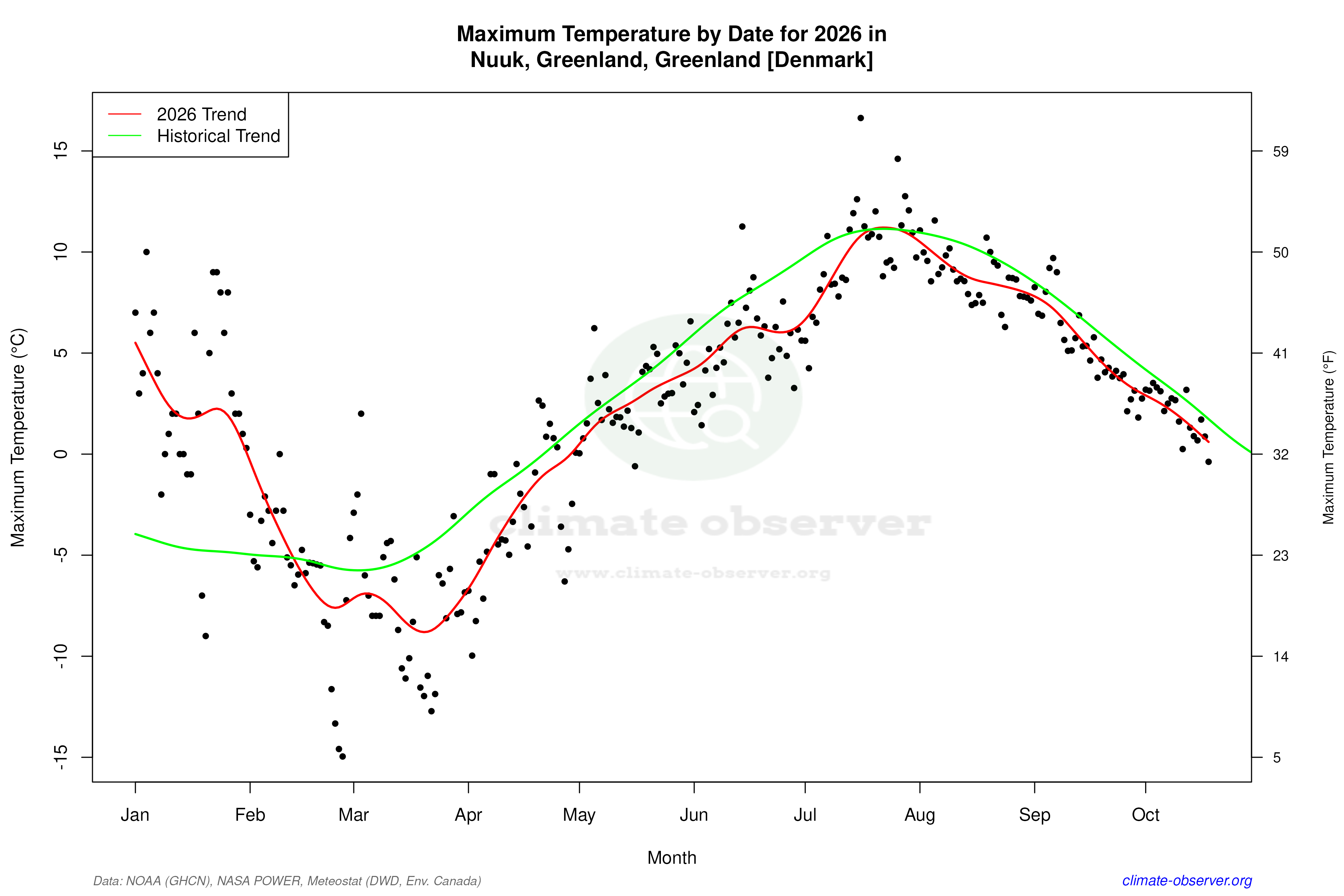
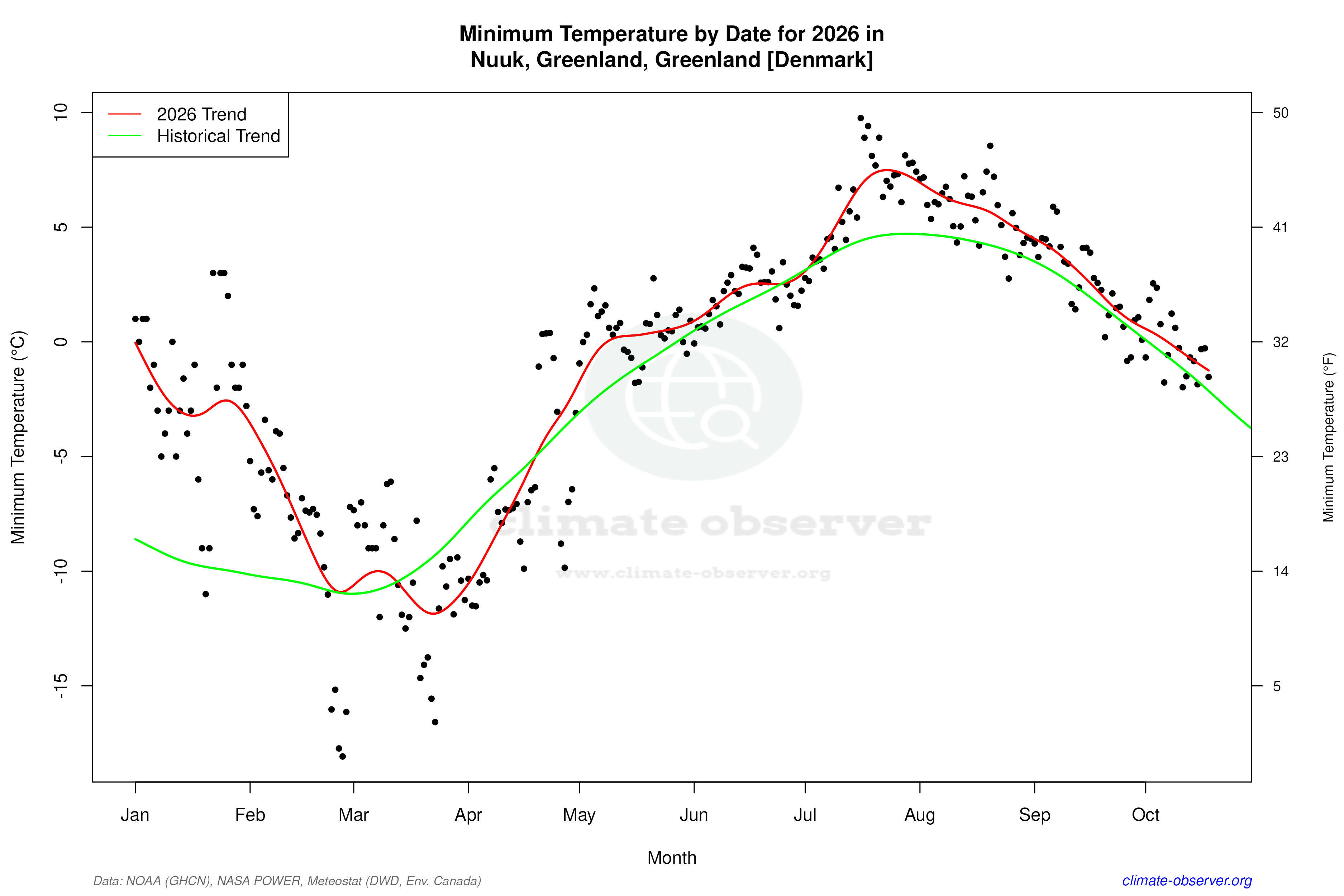
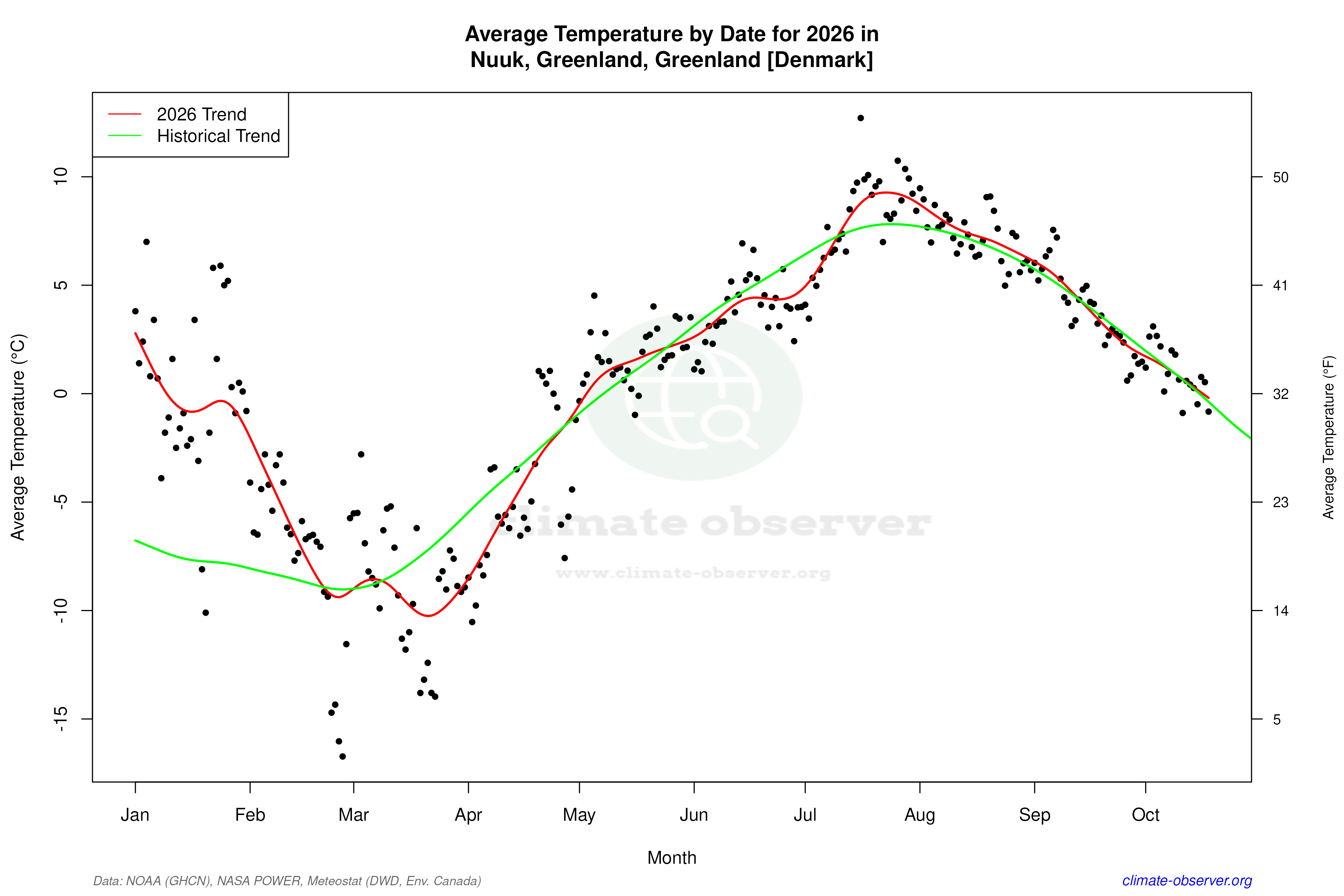
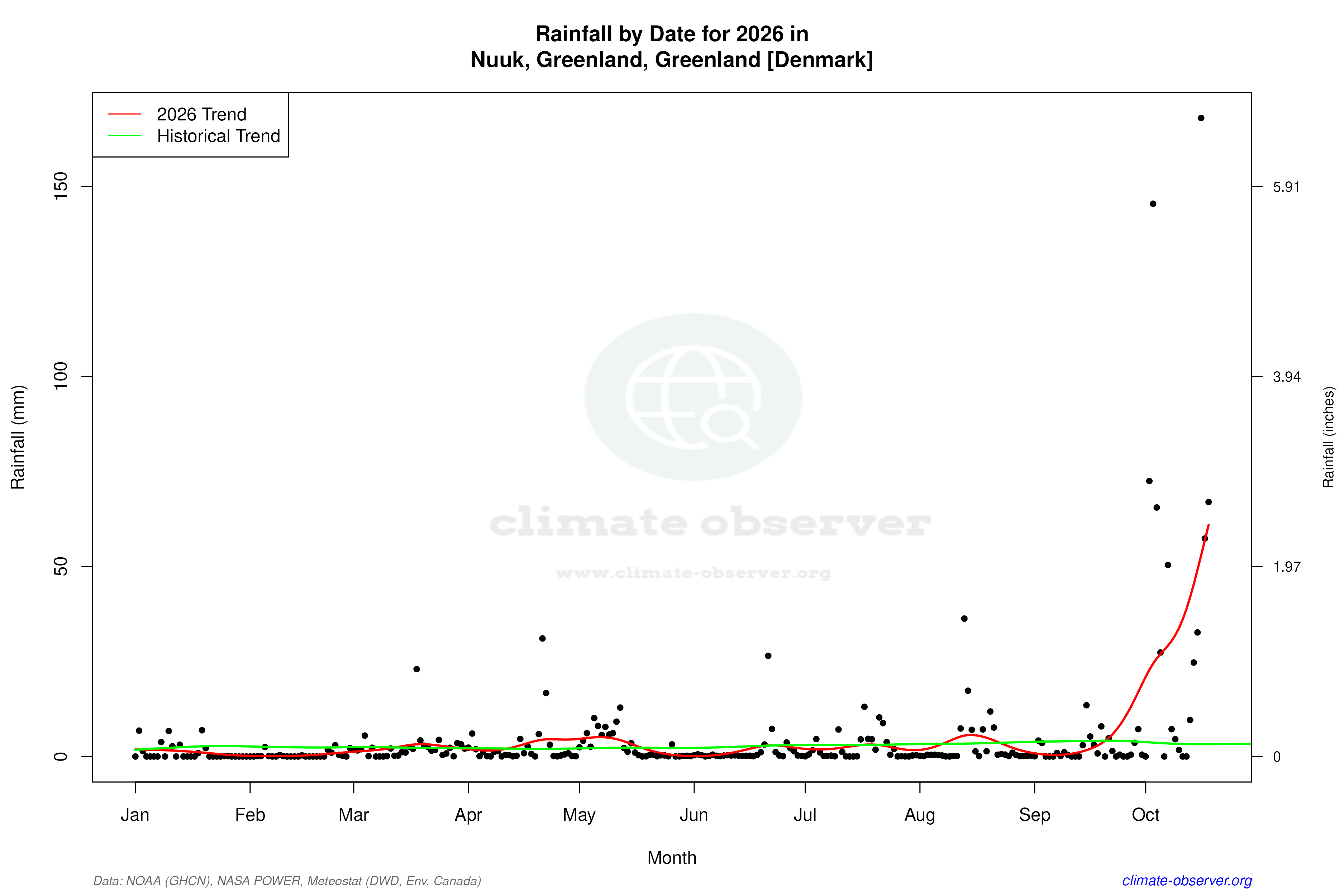
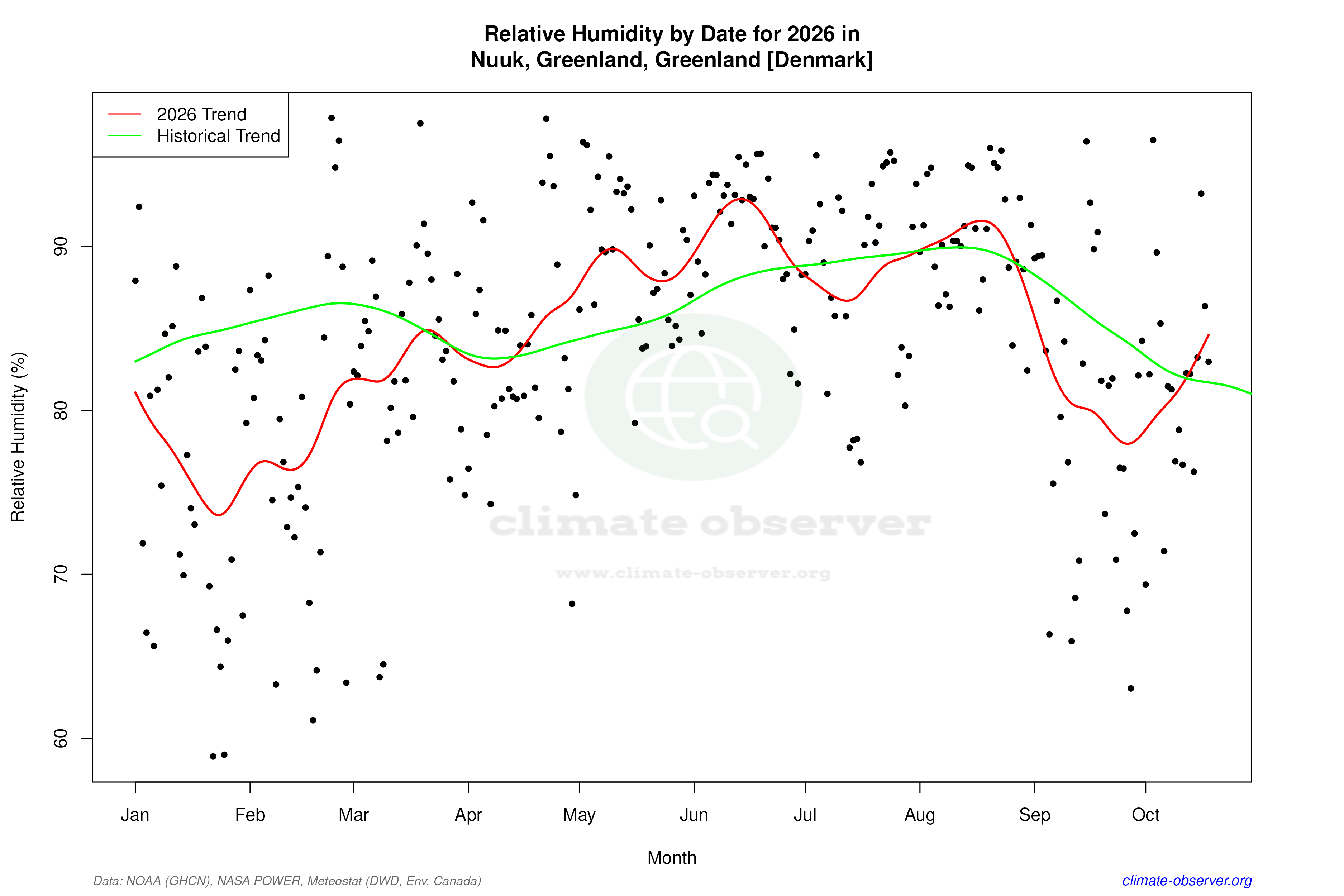

Max Temperature this Year | 1 of 6
Climate 12-Month Moving Averages
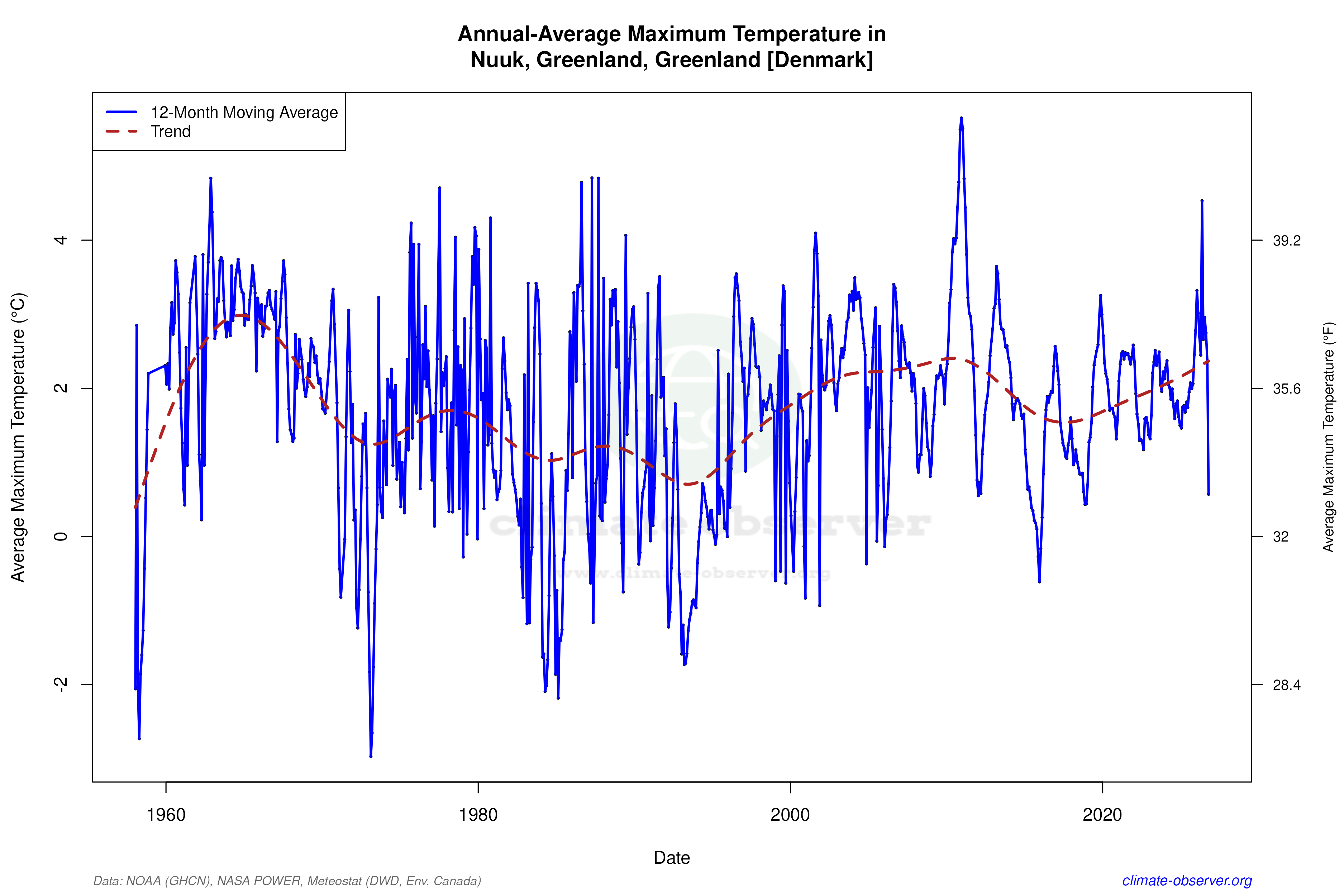
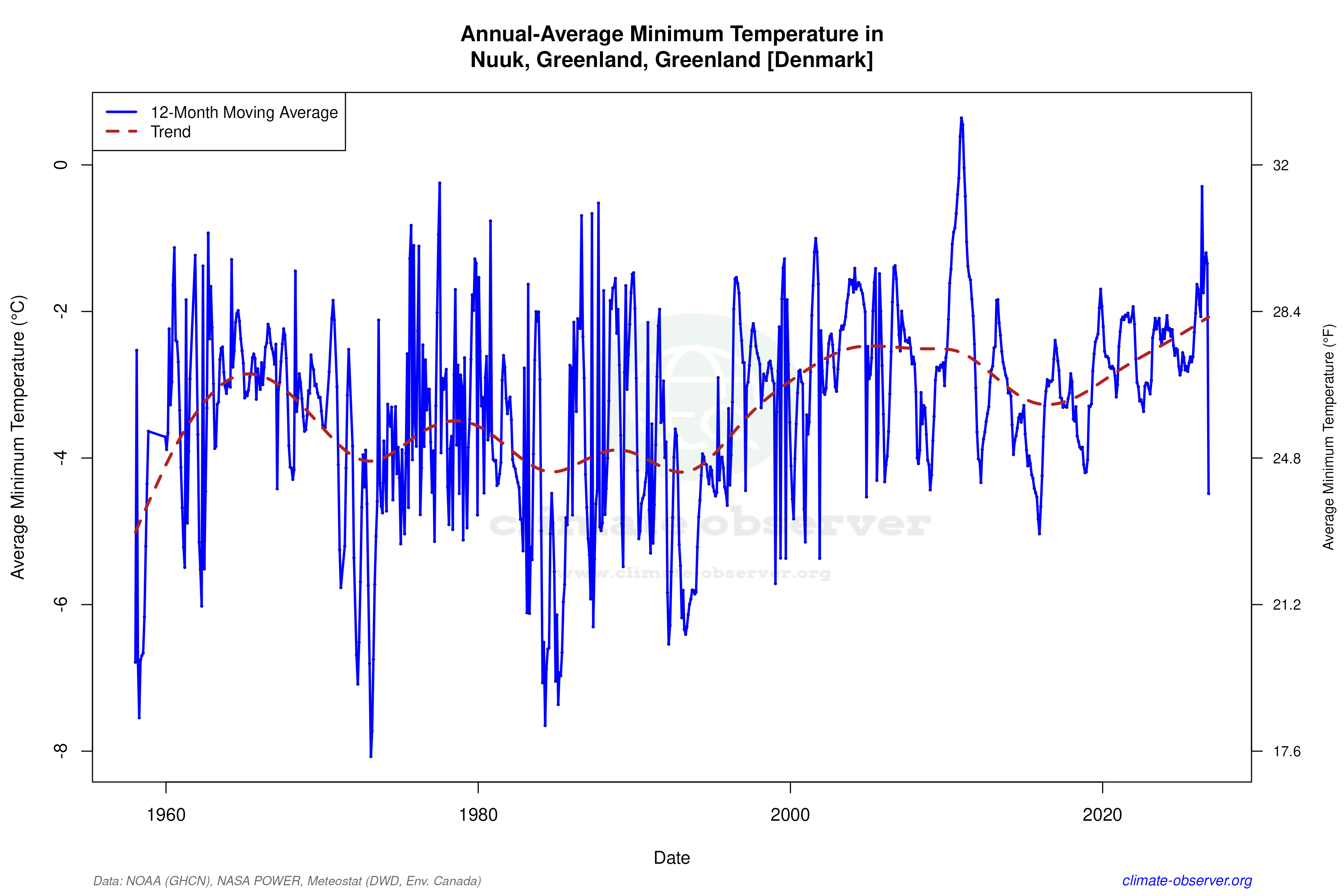
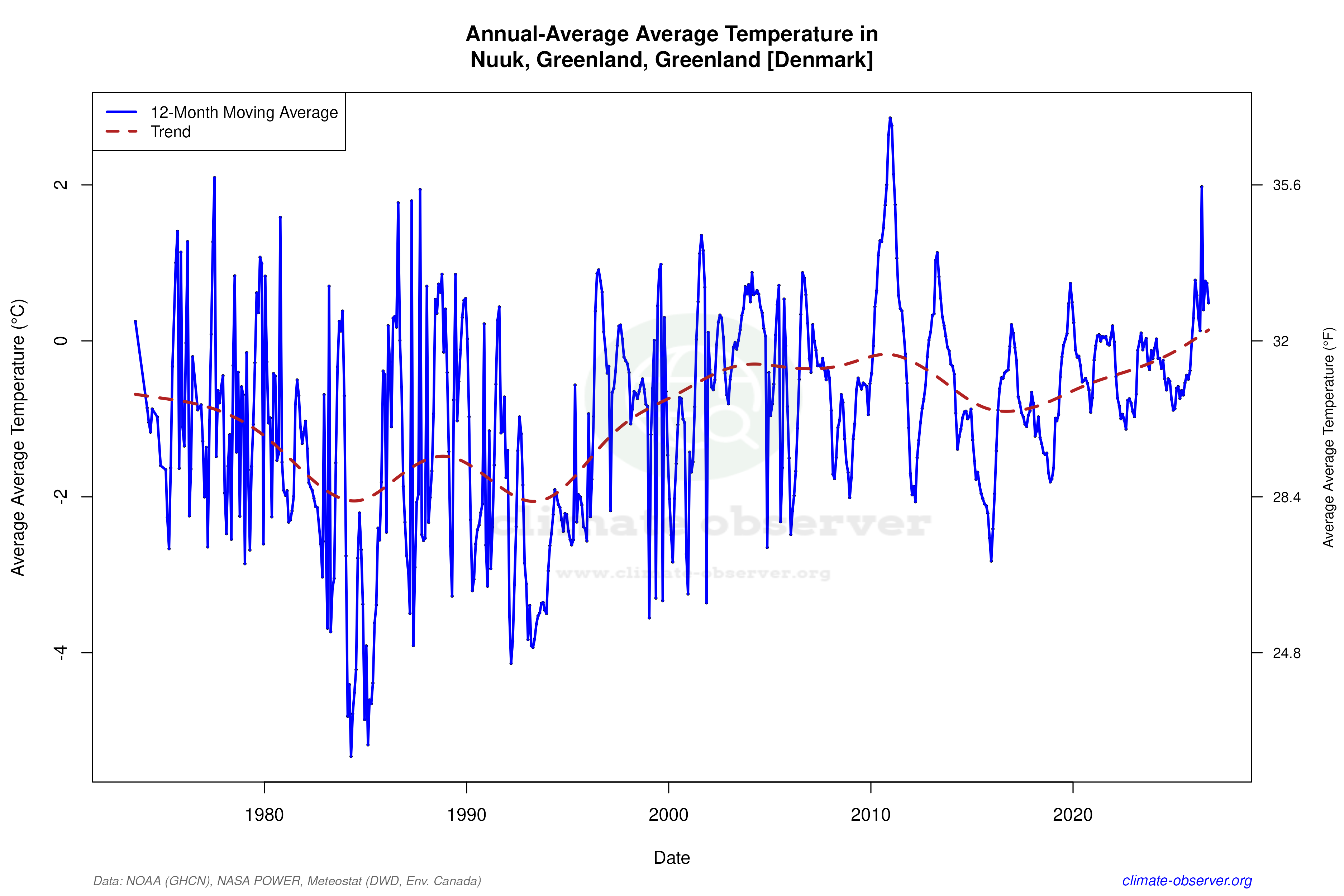
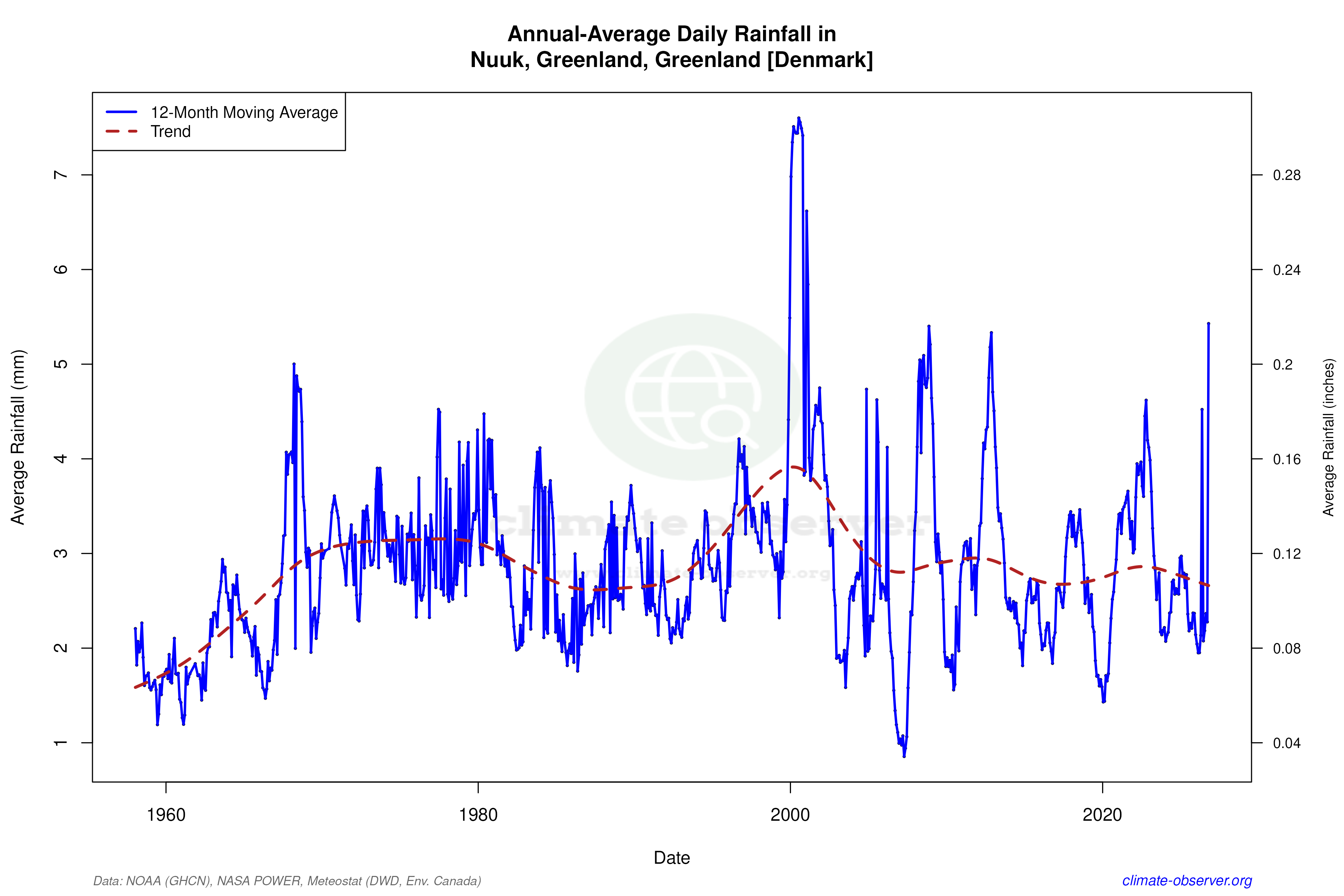
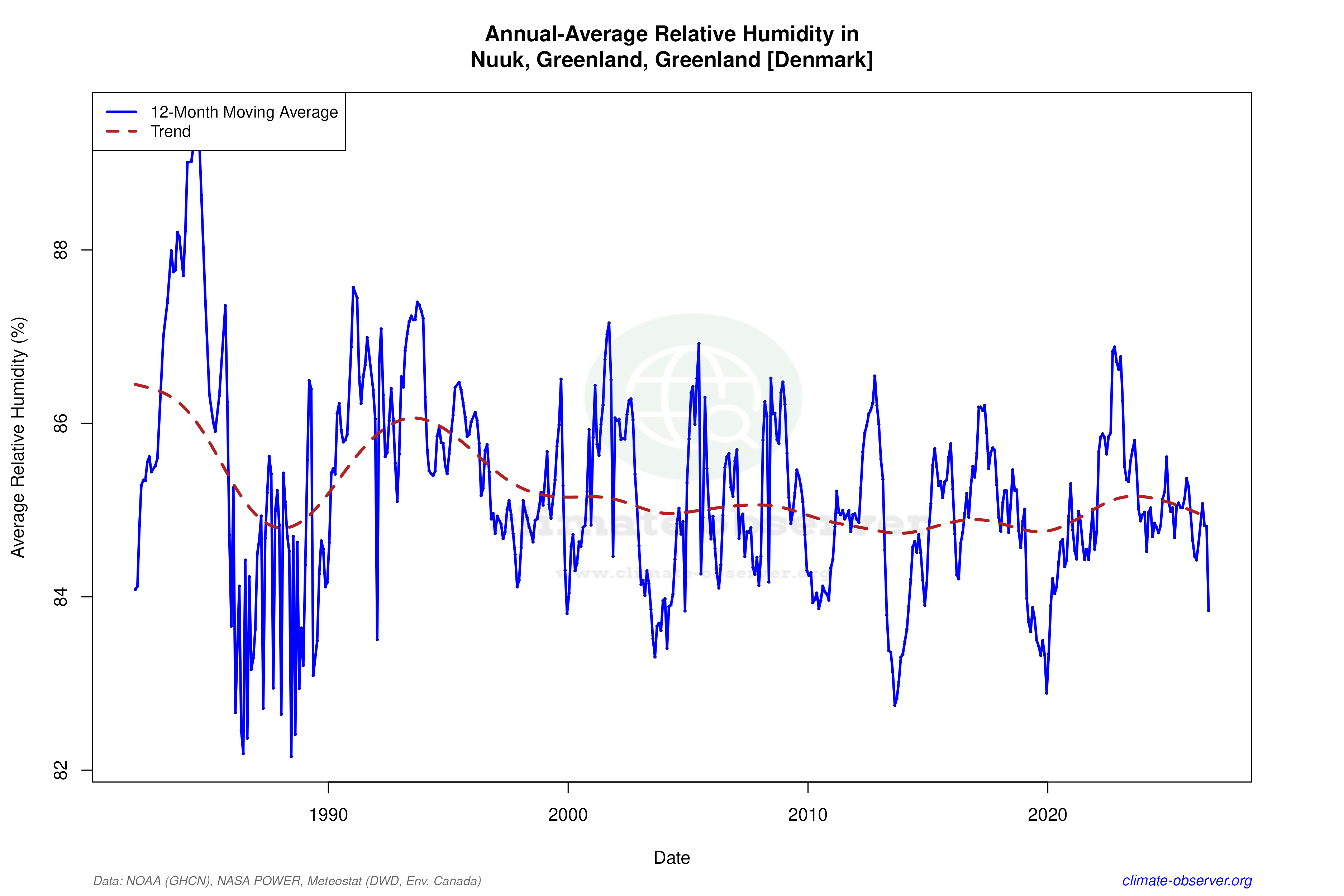

Max Temperature 12-Month MA | 1 of 6
Daily Data Points and Averages Throughout the Year
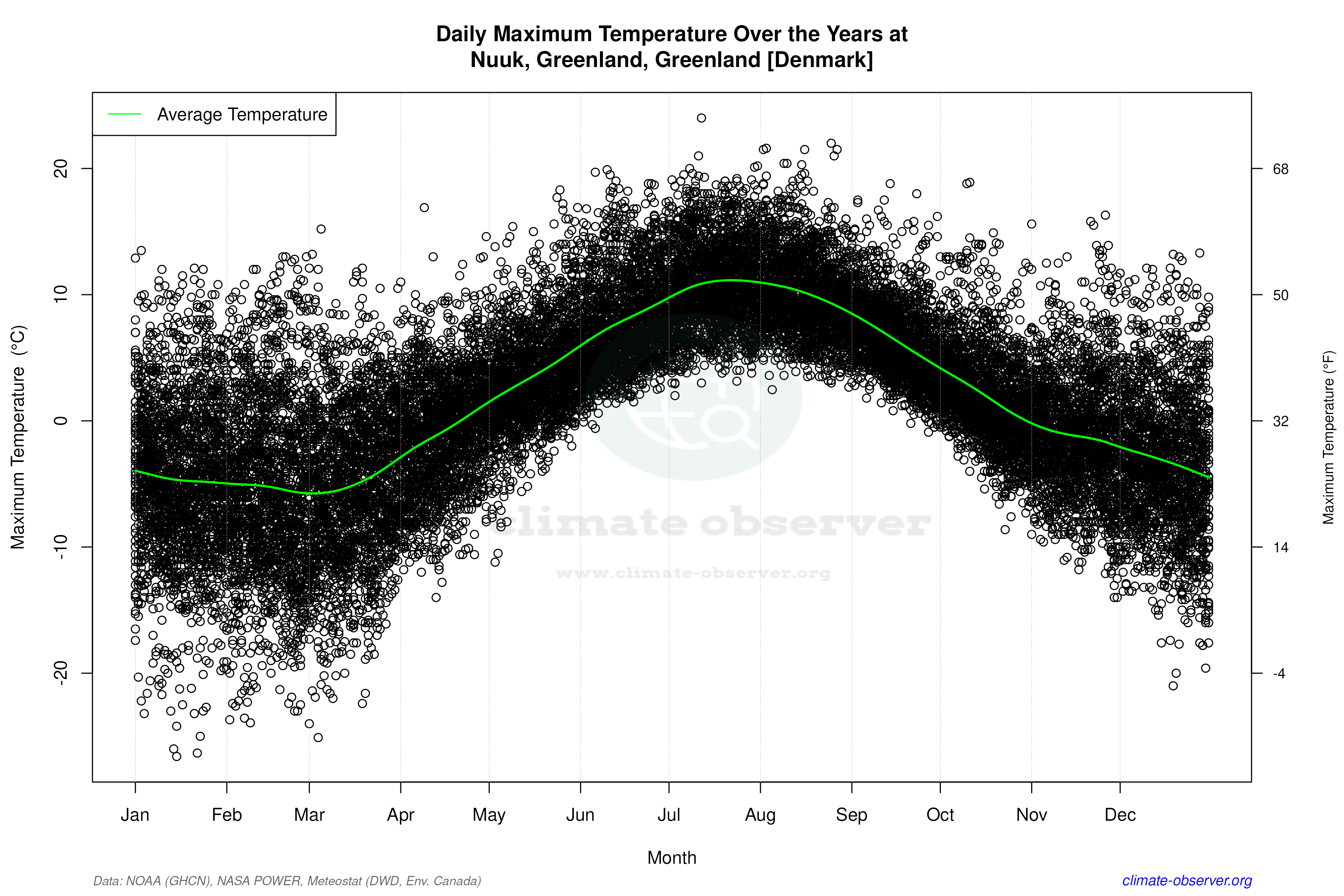
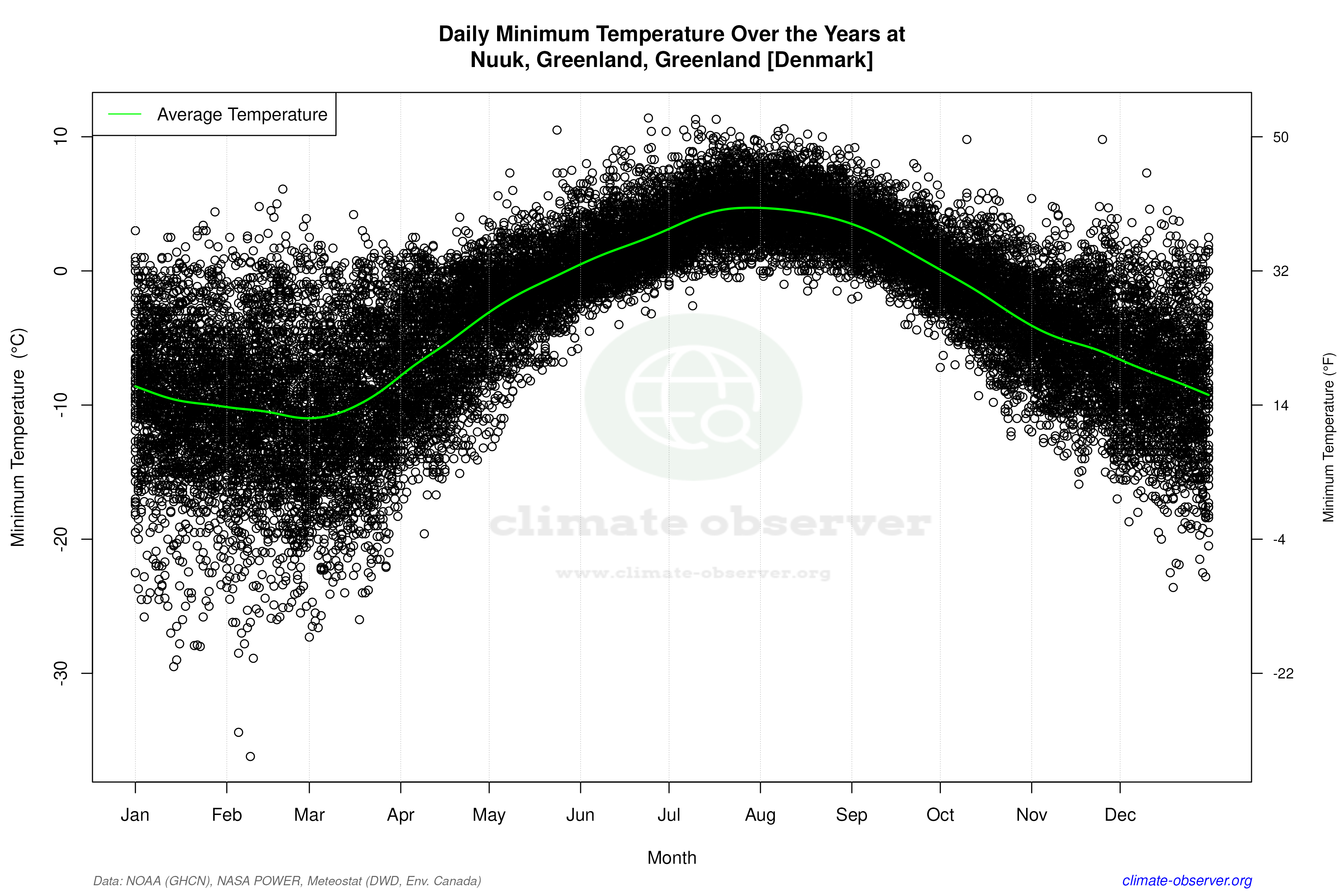
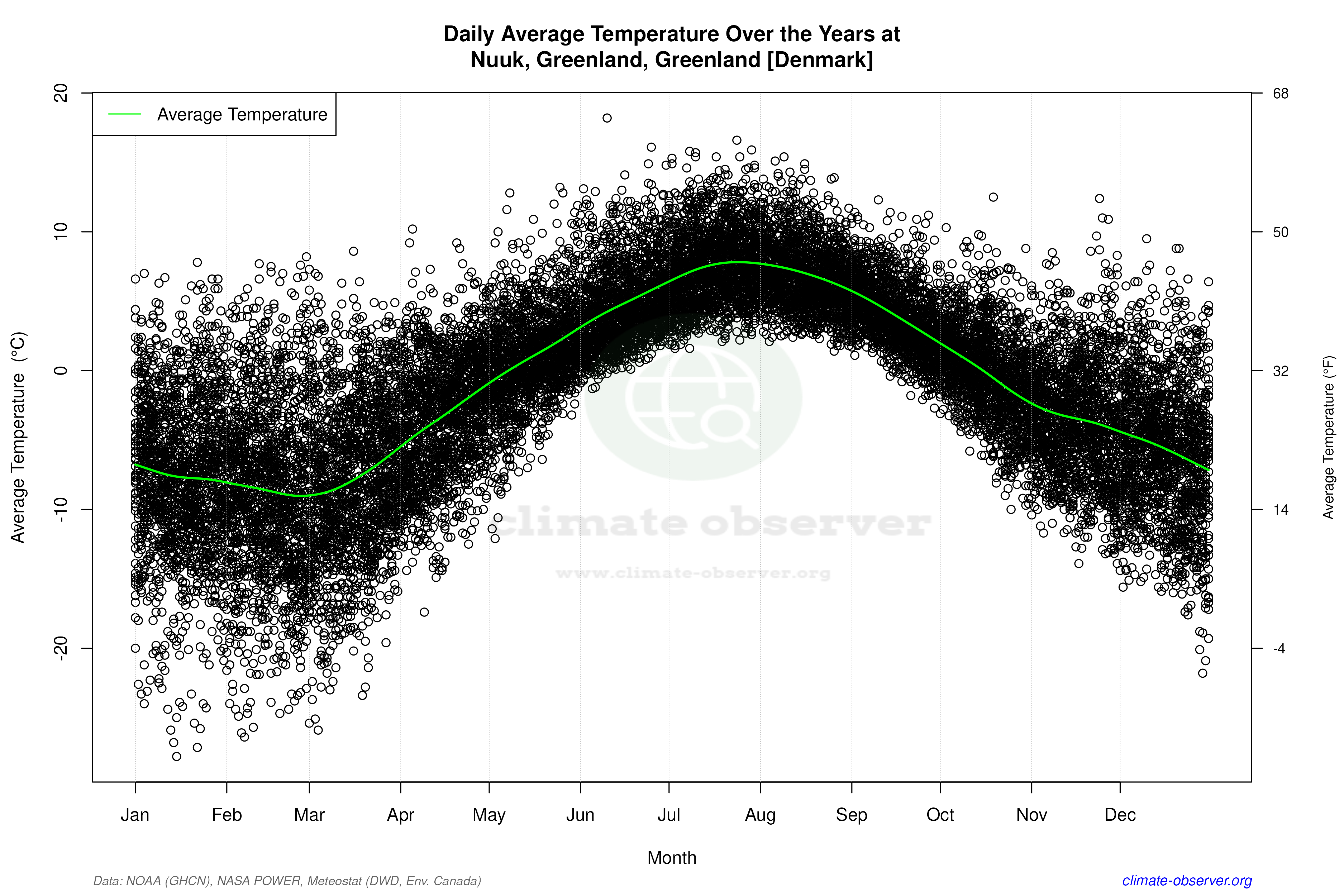
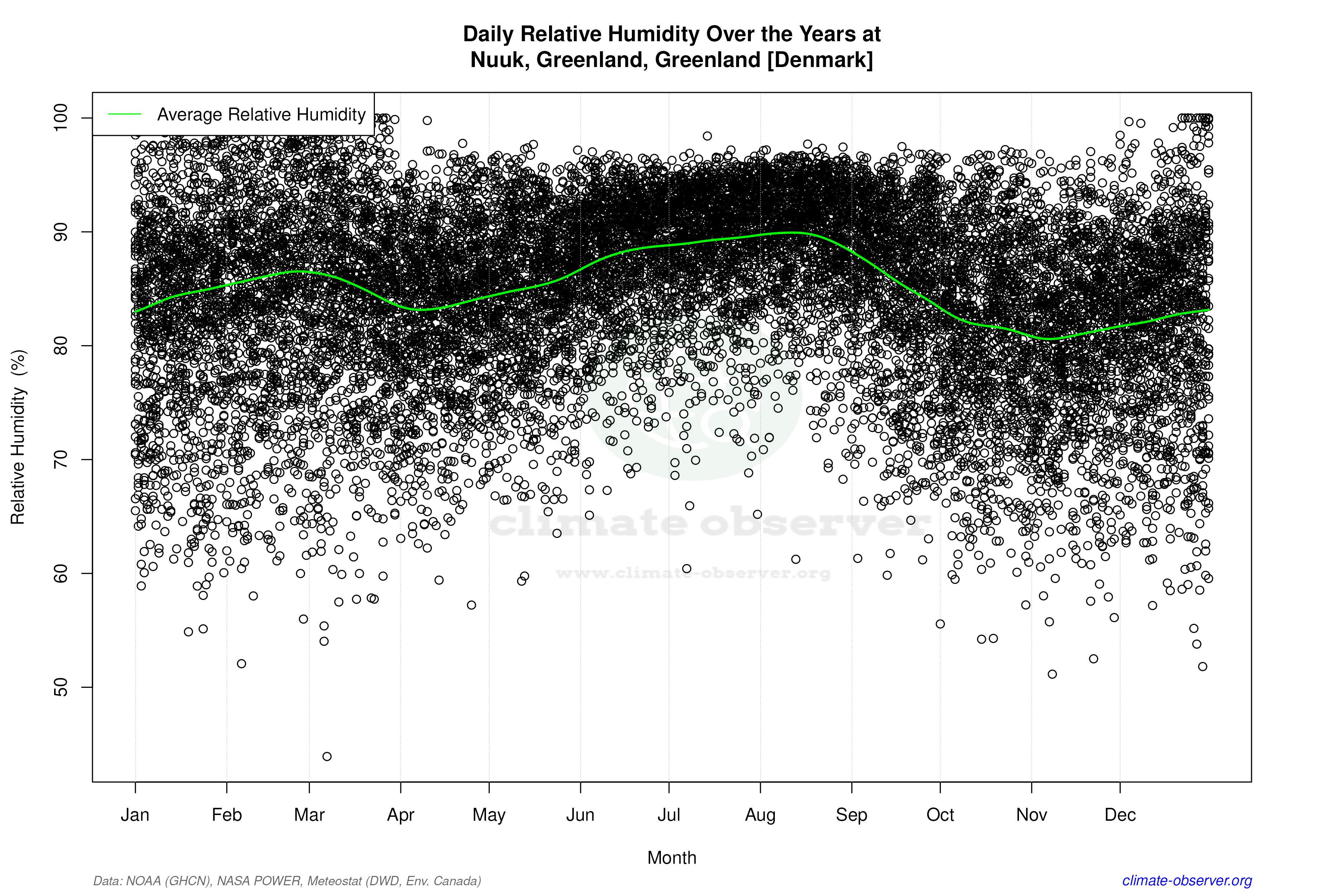

Average Max Temperature Throughout Year | 1 of 5


