Climate for Station: Wutoschingen-Ofteringen, Baden-Wurttemberg, Germany
Loading live weather...
Climate Analysis & Overview
The climate profile of Wutoschingen-Ofteringen reveals a warming trend, with significant increases in both high and low temperatures over the past decade. Precipitation patterns have become slightly more even, reflecting a subtle shift in local weather dynamics.
A Warming Landscape
Wutoschingen-Ofteringen, nestled in the picturesque region of Baden-Württemberg, Germany, experiences a temperate oceanic climate (Cfb) according to the Köppen classification. This climate is characterised by mild summers and cool winters, influenced by its proximity to the Black Forest and the Rhine River. Over the past decade, the area has experienced a notable warming trend, with high temperatures rising by 0.85°C (1.53°F) and low temperatures by 0.93°C (1.67°F). This recent trend is more pronounced than the all-time warming, where highs increased by 0.44°C (0.79°F) and lows by a modest 0.09°C (0.16°F). These changes suggest a shift towards warmer conditions, which aligns with broader regional climate goals to monitor and adapt to climate change.
Temperature Extremes and Records
Wutoschingen-Ofteringen has recorded temperature extremes that underscore its climatic variability. The highest temperature ever recorded was 38.2°C (100.8°F), while the lowest plummeted to -23.5°C (-10.3°F). These records highlight the range of thermal conditions the area can experience, from sweltering summer days to frigid winter nights. The warming trend observed over the past decade suggests that such extremes might become more frequent or intense, a concern echoed in Germany's national climate adaptation strategies.
Precipitation Patterns: A Subtle Shift
The Precipitation Concentration Index (PCI) offers insights into how rainfall is distributed throughout the year. A decrease in PCI from a baseline of 10.88 to a current value of 9.82 indicates a slight shift towards more evenly distributed precipitation events. This suggests that while the overall amount of rainfall may not have changed significantly, it is now spread more evenly across the year. Such changes can impact local agriculture and water management practices, necessitating adjustments to accommodate these evolving patterns.
Regional Climate Dynamics
The local geography of Wutoschingen-Ofteringen, with its rolling hills and proximity to significant water bodies, plays a crucial role in shaping its climate. The Black Forest acts as a barrier, influencing wind patterns and precipitation distribution. The Rhine River, meanwhile, moderates temperatures, preventing extreme cold. These geographical features, combined with the observed climatic trends, paint a picture of a region in transition, adapting to the broader impacts of climate change. As Germany continues to pursue its climate goals, understanding these local dynamics becomes increasingly important for effective policy-making and community resilience.
Station Statistics
10-Year Trend
High: +0.47 °C/decade
Low: +1.25 °C/decade
Rain: +0.59 mm/decade
25-Year Trend
High: +0.81 °C/decade
Low: +0.47 °C/decade
Rain: +0.01 mm/decade
50-Year Trend
High: +0.56 °C/decade
Low: +0.02 °C/decade
Rain: -0.04 mm/decade
All-Time Trend
High: +0.43 °C/decade
Low: +0.10 °C/decade
Rain: +0.01 mm/decade
Percentage Above-Average Days
Last 12 Months: 54.0%
This Year: 59.7%
Precipitation Concentration Index (PCI) ℹ️
Last 12 Months: 10.8
Historical Average: 11.0
Percentile Rank of Last 12 Months ℹ️
High: 83rd percentile
Low: 82nd percentile
Rain: 58th percentile
Change in Variance ℹ️
High: +2.9%
Low: -1.7%
Intraday: +14.1%
Data Coverage
100.0%
First Year of Data
1963
Station Location
Historical Weather Records
| Max High | Avg High | Min High | Max Avg | Avg Avg | Min Avg | Max Low | Avg Low | Min Low | Max Precipitation | Avg Precipitation | Max Snow | Avg Snow | |
|---|---|---|---|---|---|---|---|---|---|---|---|---|---|
| Record | 38.2 °C | — | -13.0 °C | 27.9 °C | — | -18.2 °C | 23.4 °C | — | -23.5 °C | 88.0 mm | — | — | — |
| January | 17.1 °C | 3.1 °C | -13.0 °C | 12.4 °C | -0.1 °C | -18.2 °C | 11.1 °C | -2.9 °C | -23.5 °C | 52.2 mm | 3.1 mm | — | — |
| February | 19.3 °C | 5.7 °C | -8.9 °C | 12.7 °C | 1.3 °C | -13.6 °C | 10.0 °C | -2.4 °C | -19.5 °C | 51.7 mm | 2.8 mm | — | — |
| March | 24.5 °C | 10.6 °C | -6.4 °C | 16.6 °C | 4.8 °C | -9.7 °C | 11.8 °C | 0.1 °C | -16.5 °C | 41.4 mm | 2.4 mm | — | — |
| April | 30.2 °C | 15.1 °C | 1.5 °C | 19.4 °C | 8.8 °C | -1.0 °C | 11.5 °C | 3.2 °C | -5.9 °C | 52.9 mm | 2.3 mm | — | — |
| May | 32.8 °C | 19.5 °C | 5.7 °C | 23.0 °C | 13.2 °C | 2.8 °C | 17.7 °C | 7.4 °C | -3.7 °C | 52.9 mm | 2.7 mm | — | — |
| June | 36.8 °C | 23.3 °C | 9.0 °C | 27.9 °C | 16.9 °C | 4.4 °C | 23.4 °C | 10.9 °C | 0.0 °C | 75.7 mm | 3.0 mm | — | — |
| July | 37.6 °C | 25.4 °C | 12.6 °C | 27.4 °C | 18.7 °C | 10.0 °C | 21.4 °C | 12.6 °C | 3.6 °C | 88.0 mm | 2.8 mm | — | — |
| August | 38.2 °C | 24.9 °C | 12.6 °C | 26.8 °C | 18.0 °C | 8.8 °C | 21.0 °C | 12.5 °C | 3.8 °C | 58.6 mm | 2.8 mm | — | — |
| September | 32.4 °C | 20.7 °C | 6.9 °C | 22.8 °C | 14.2 °C | 4.8 °C | 17.6 °C | 9.2 °C | -1.2 °C | 65.2 mm | 2.2 mm | — | — |
| October | 27.8 °C | 14.7 °C | 1.7 °C | 18.9 °C | 9.4 °C | -2.5 °C | 15.1 °C | 5.4 °C | -8.1 °C | 56.3 mm | 2.4 mm | — | — |
| November | 21.8 °C | 7.7 °C | -4.1 °C | 15.1 °C | 4.1 °C | -9.7 °C | 11.5 °C | 1.0 °C | -16.1 °C | 67.8 mm | 3.0 mm | — | — |
| December | 16.8 °C | 3.7 °C | -10.0 °C | 14.8 °C | 0.9 °C | -12.7 °C | 10.0 °C | -1.8 °C | -19.3 °C | 46.3 mm | 3.3 mm | — | — |
Data Visualisations
Remove WatermarksCurrent Year Climate Trends vs Historical
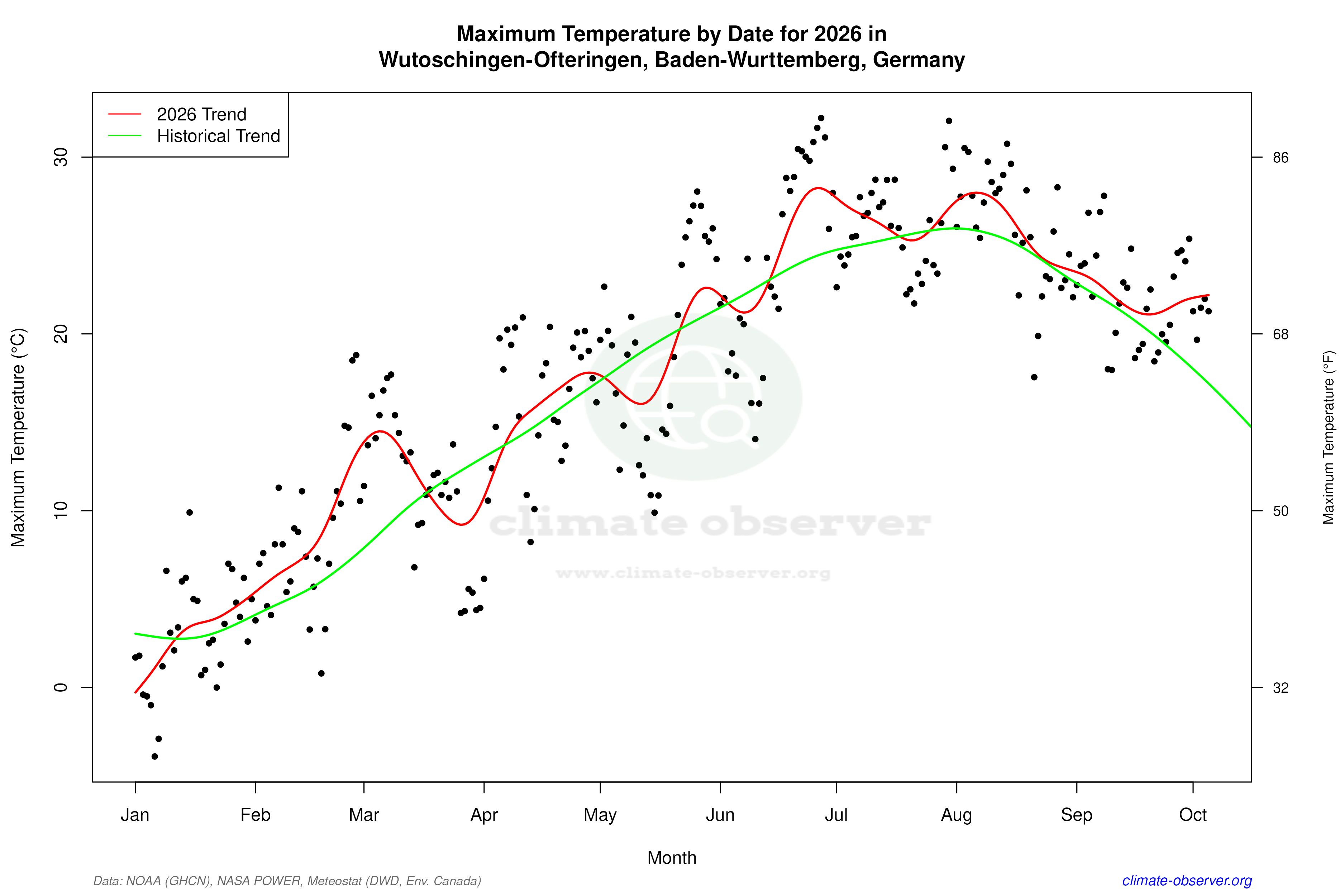
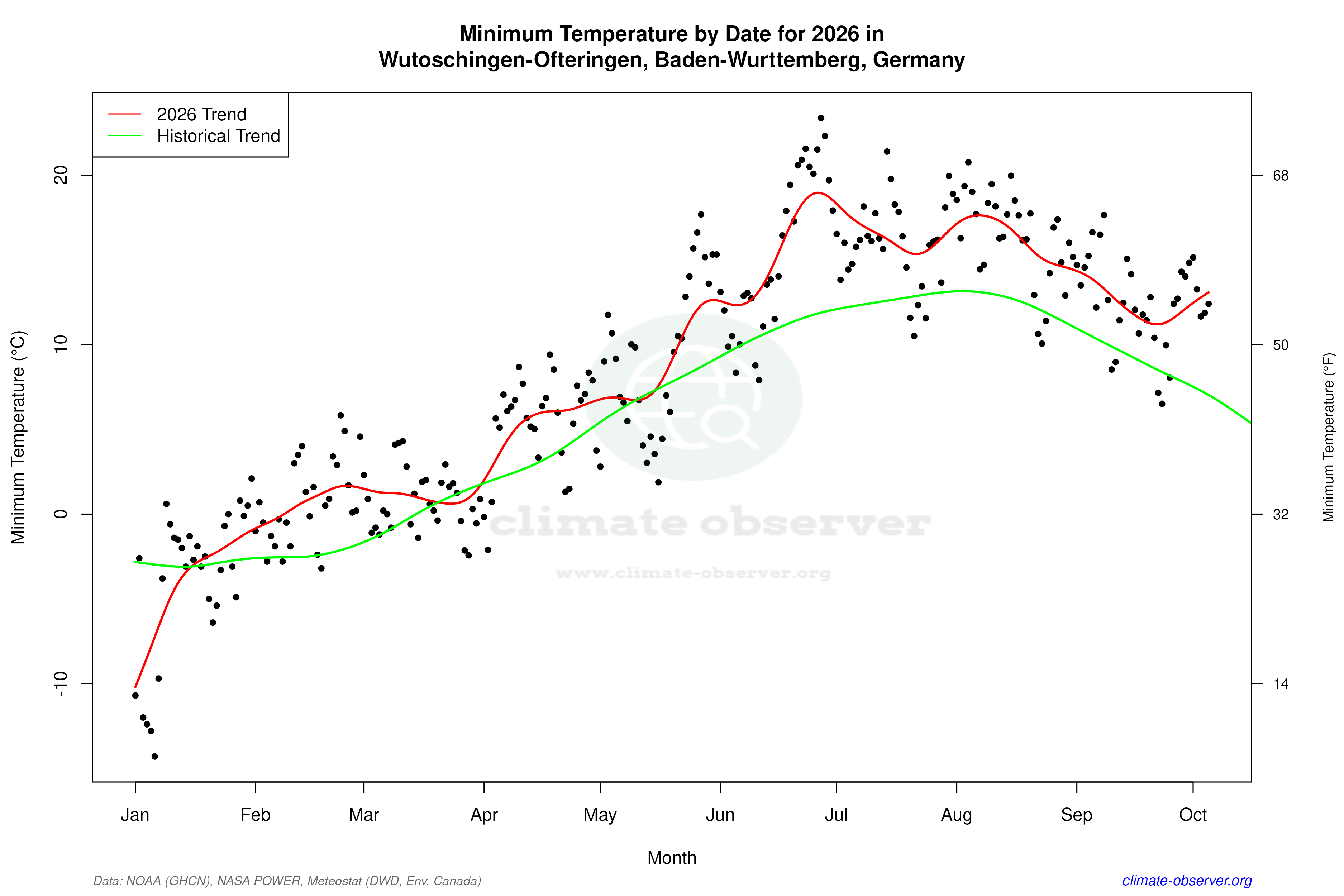
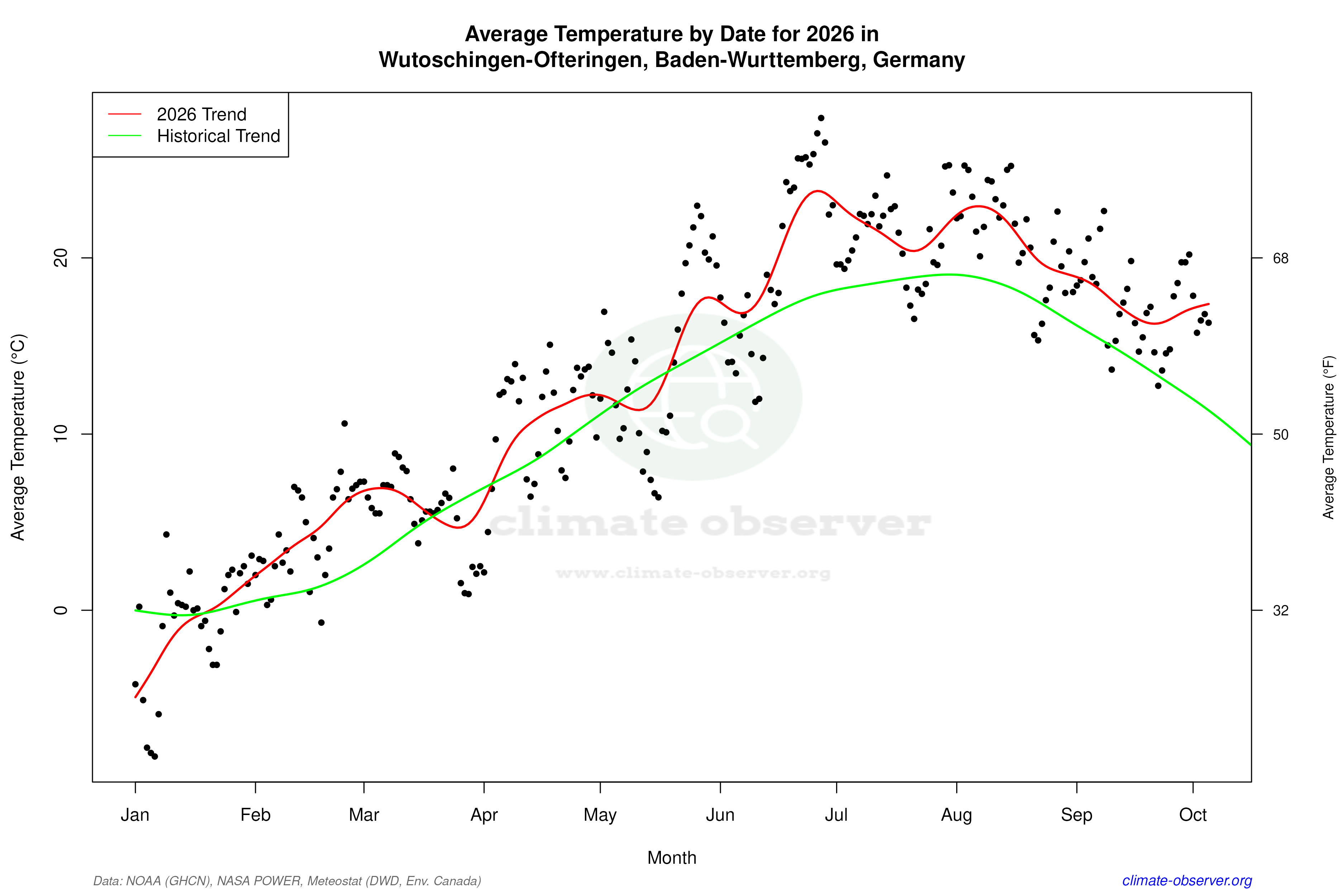
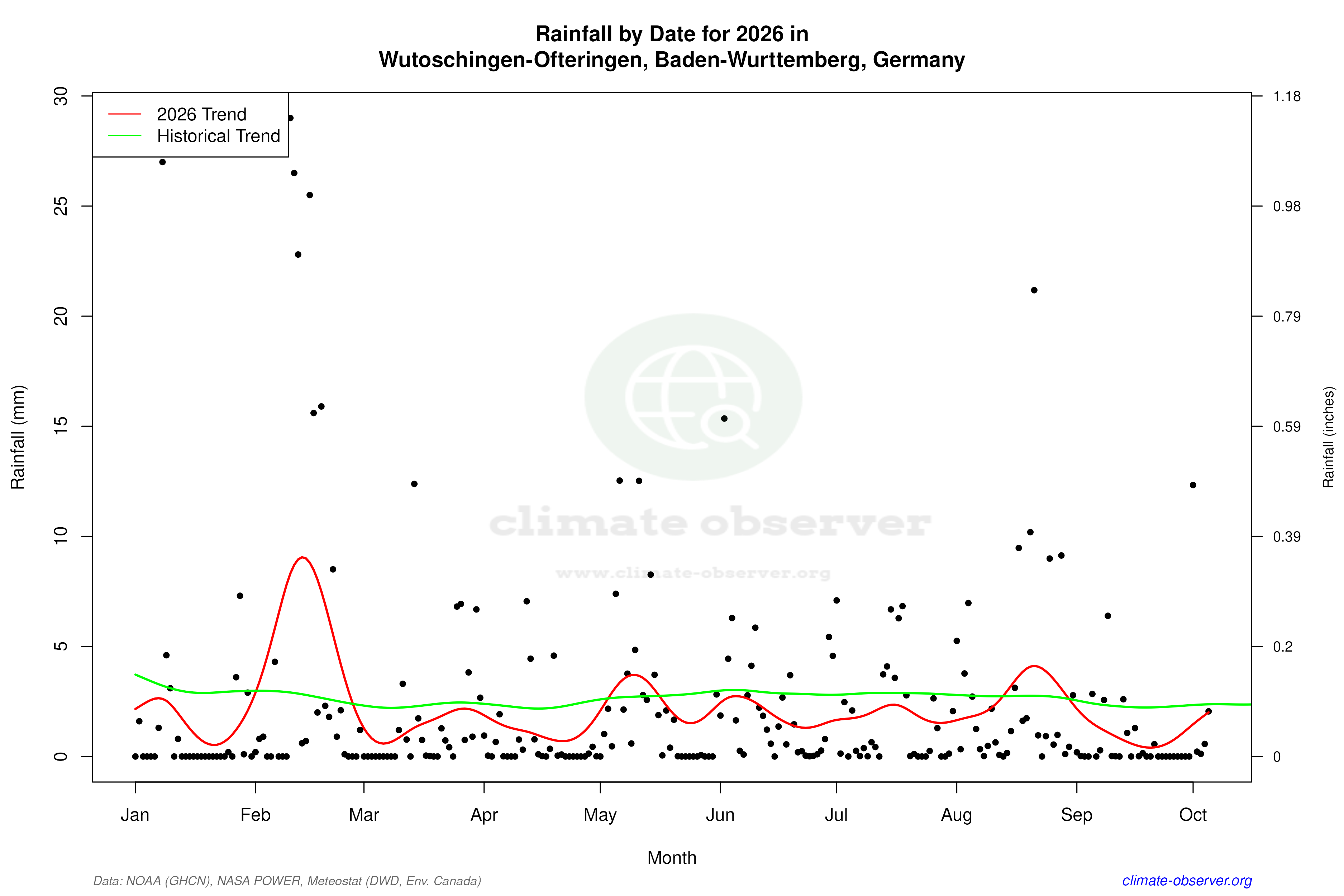
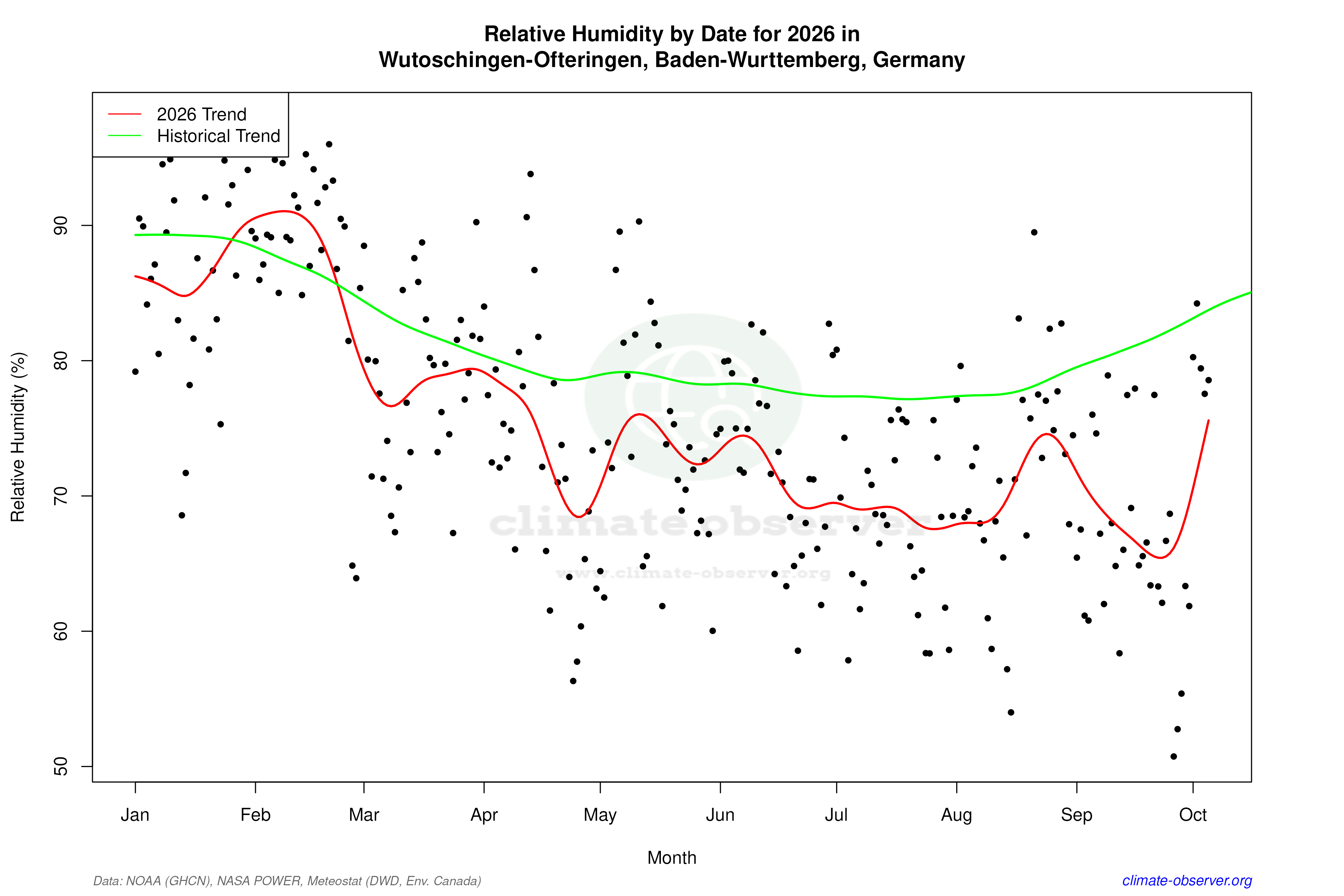

Max Temperature this Year | 1 of 6
Climate 12-Month Moving Averages
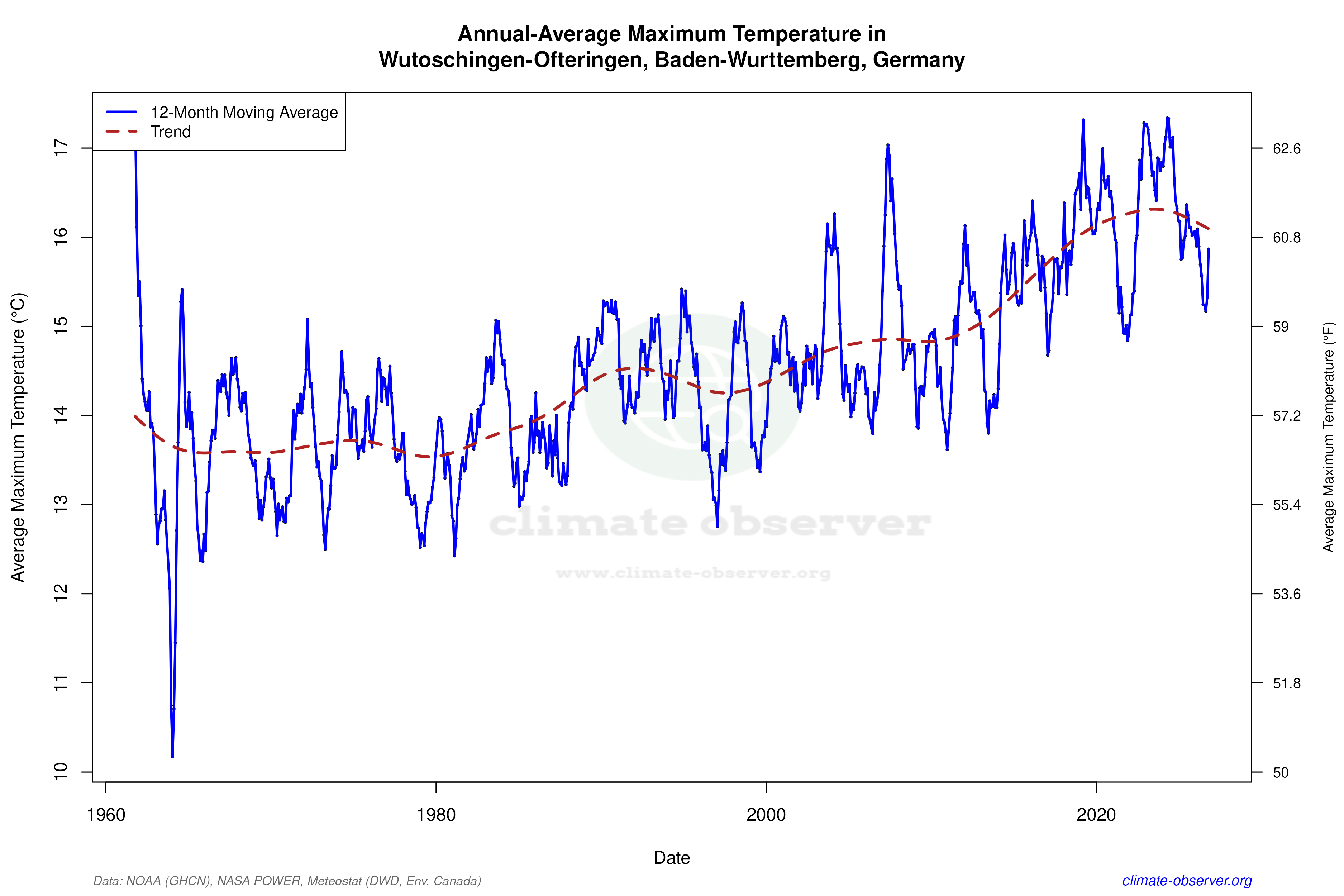
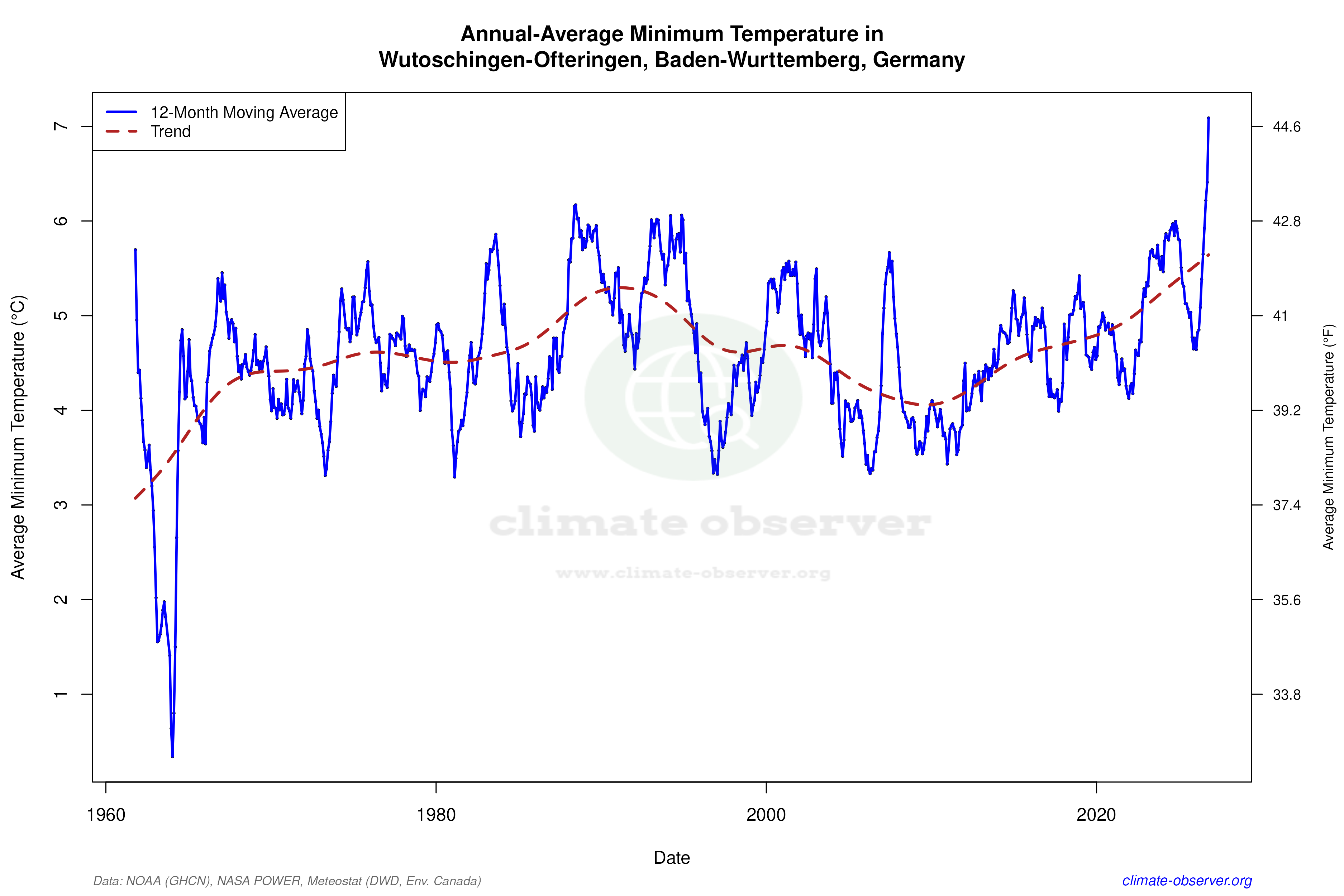
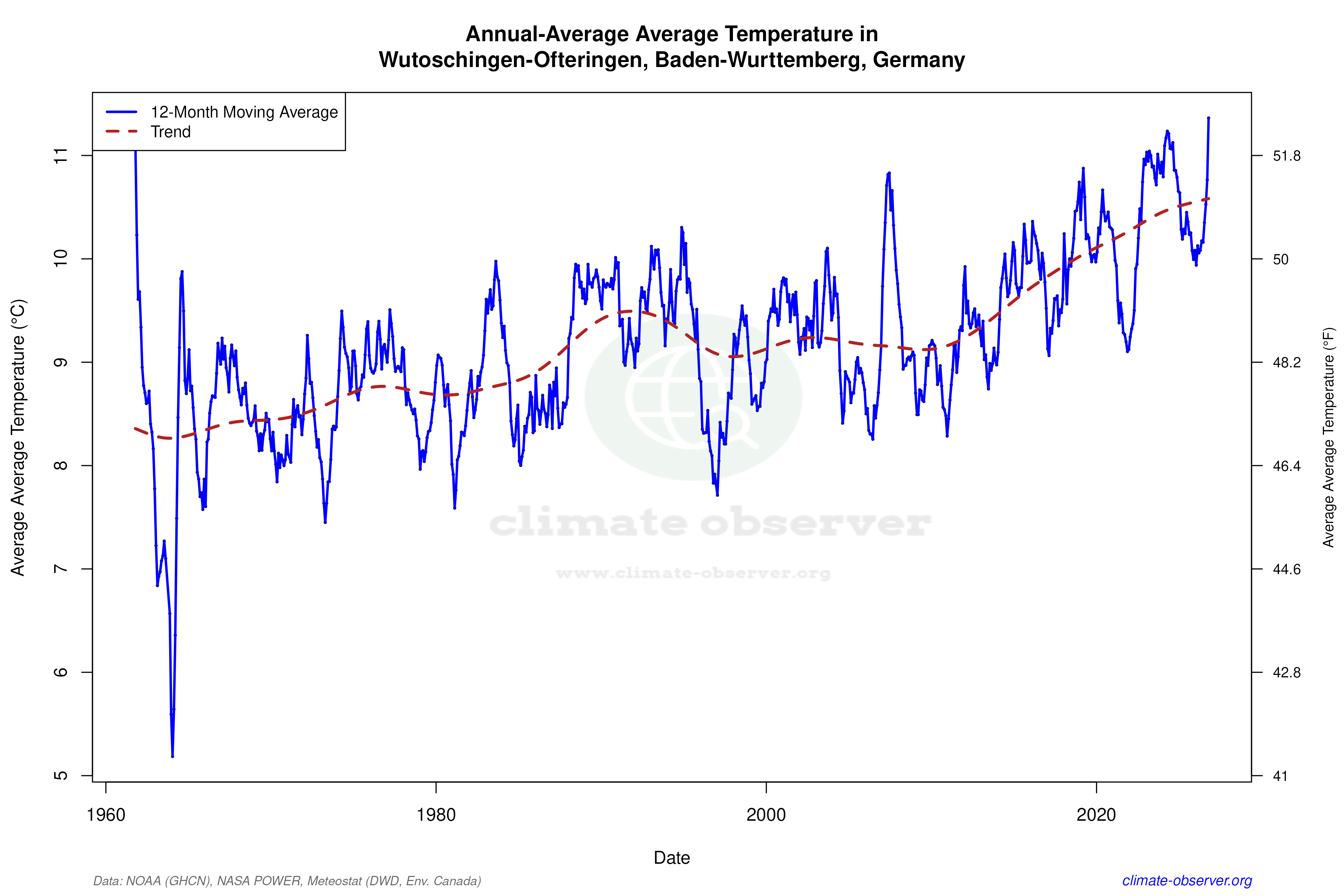
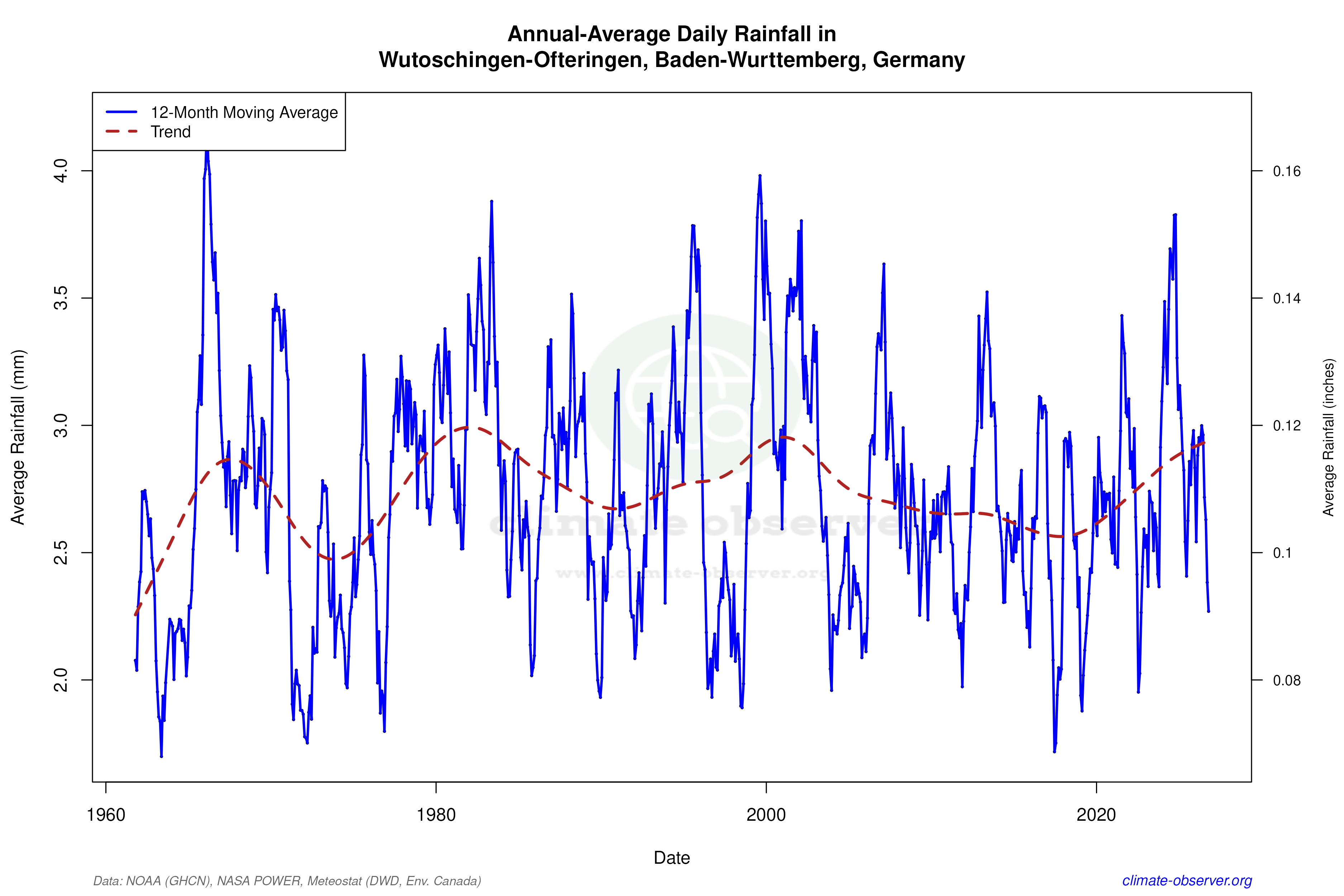
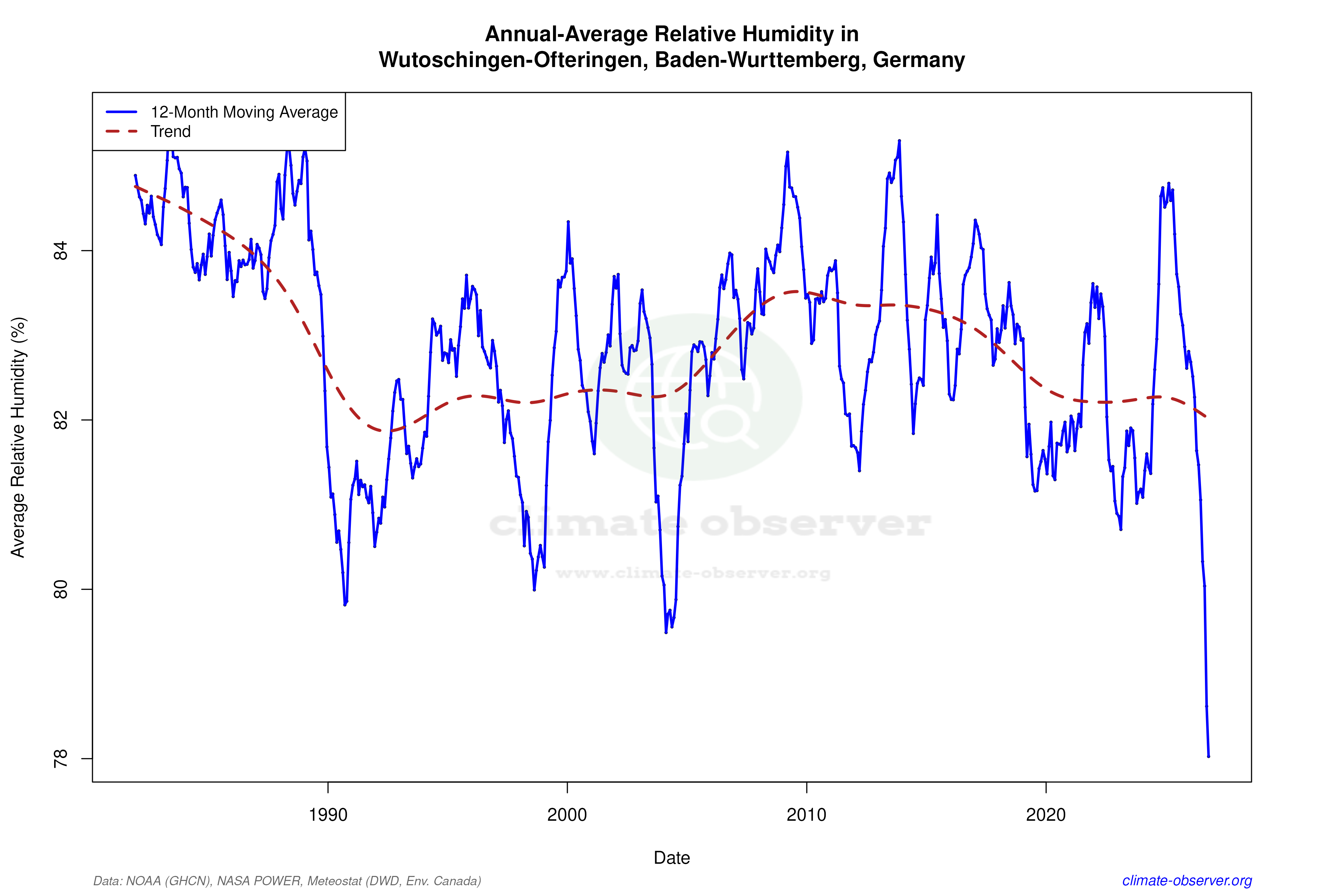

Max Temperature 12-Month MA | 1 of 6
Daily Data Points and Averages Throughout the Year
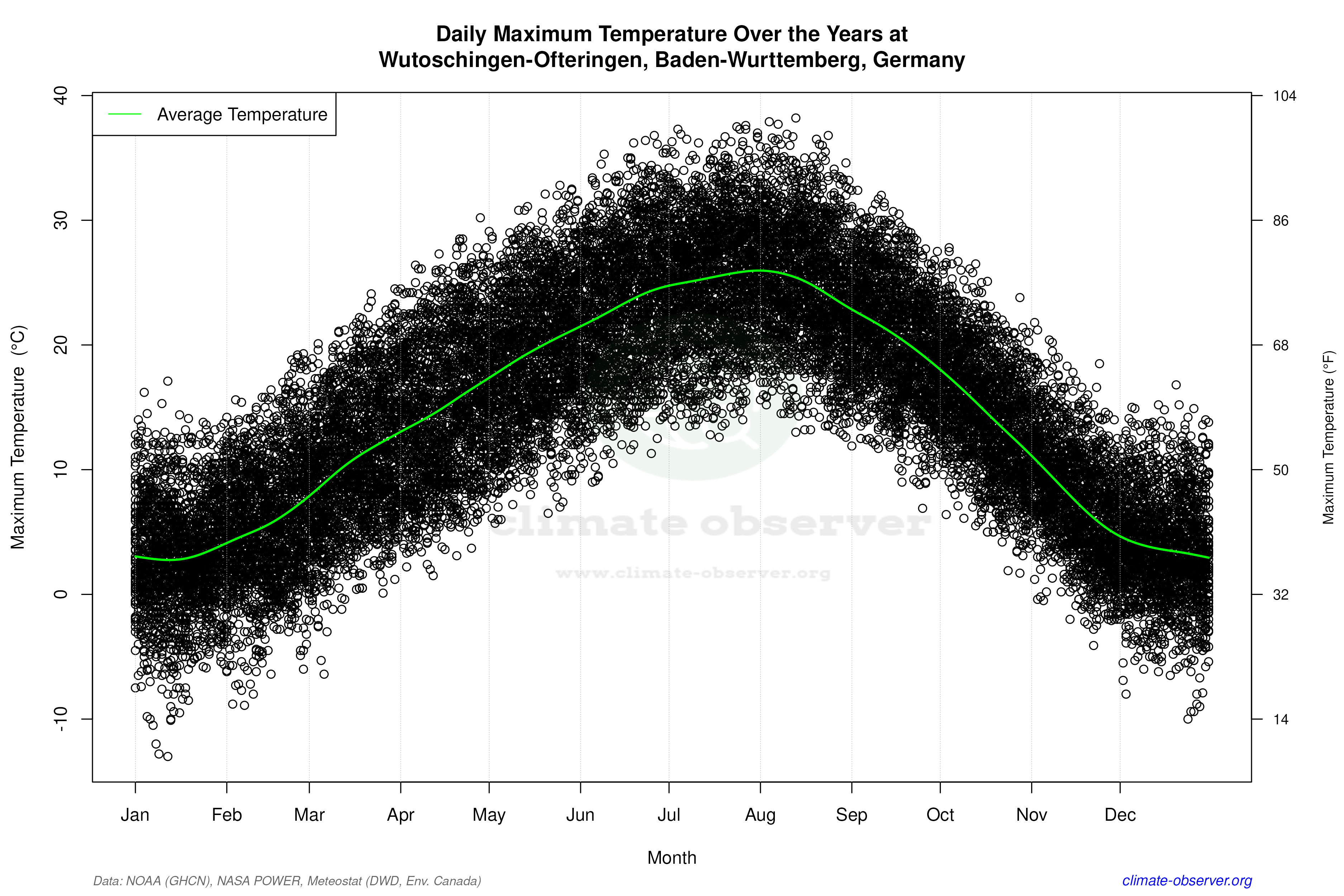
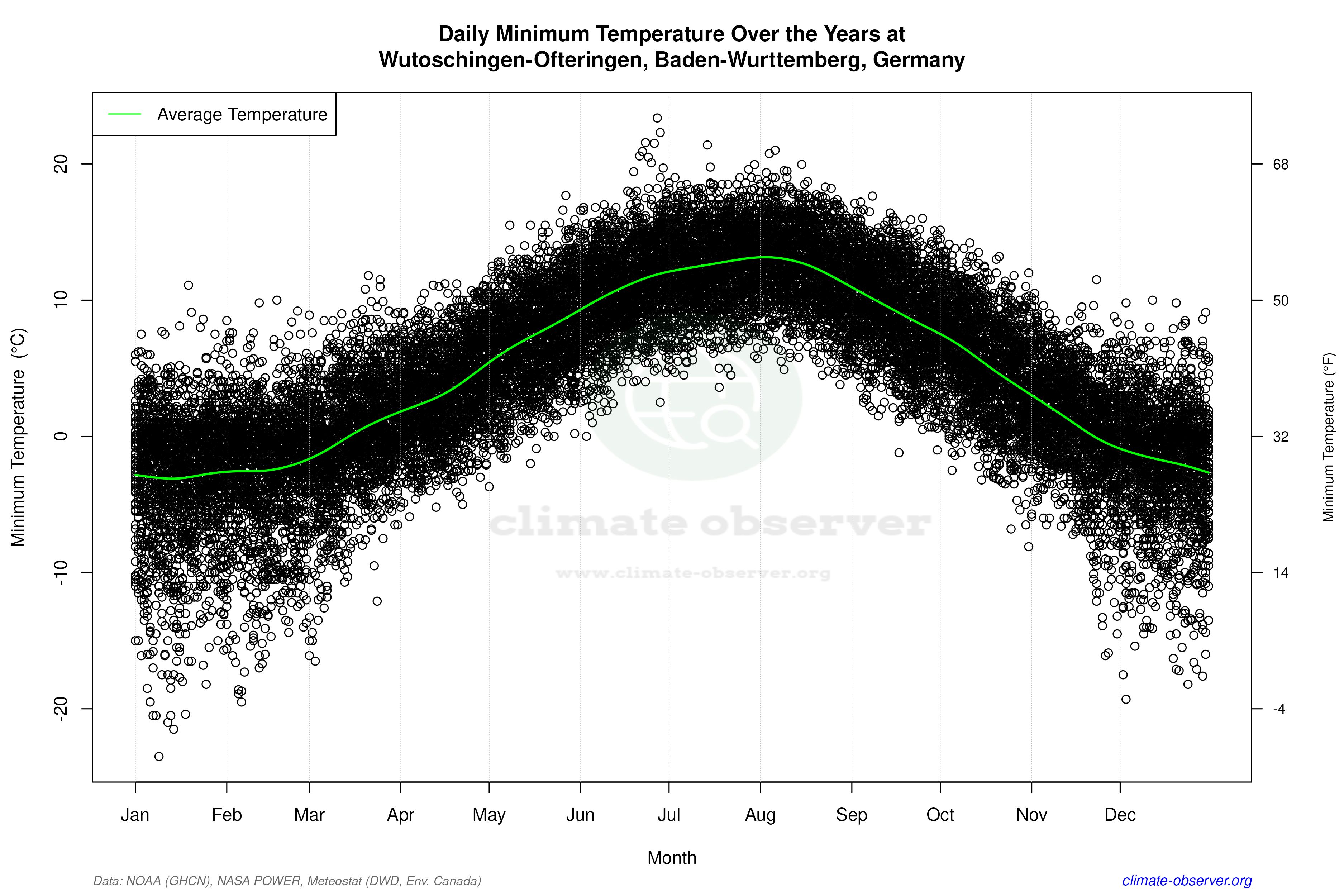
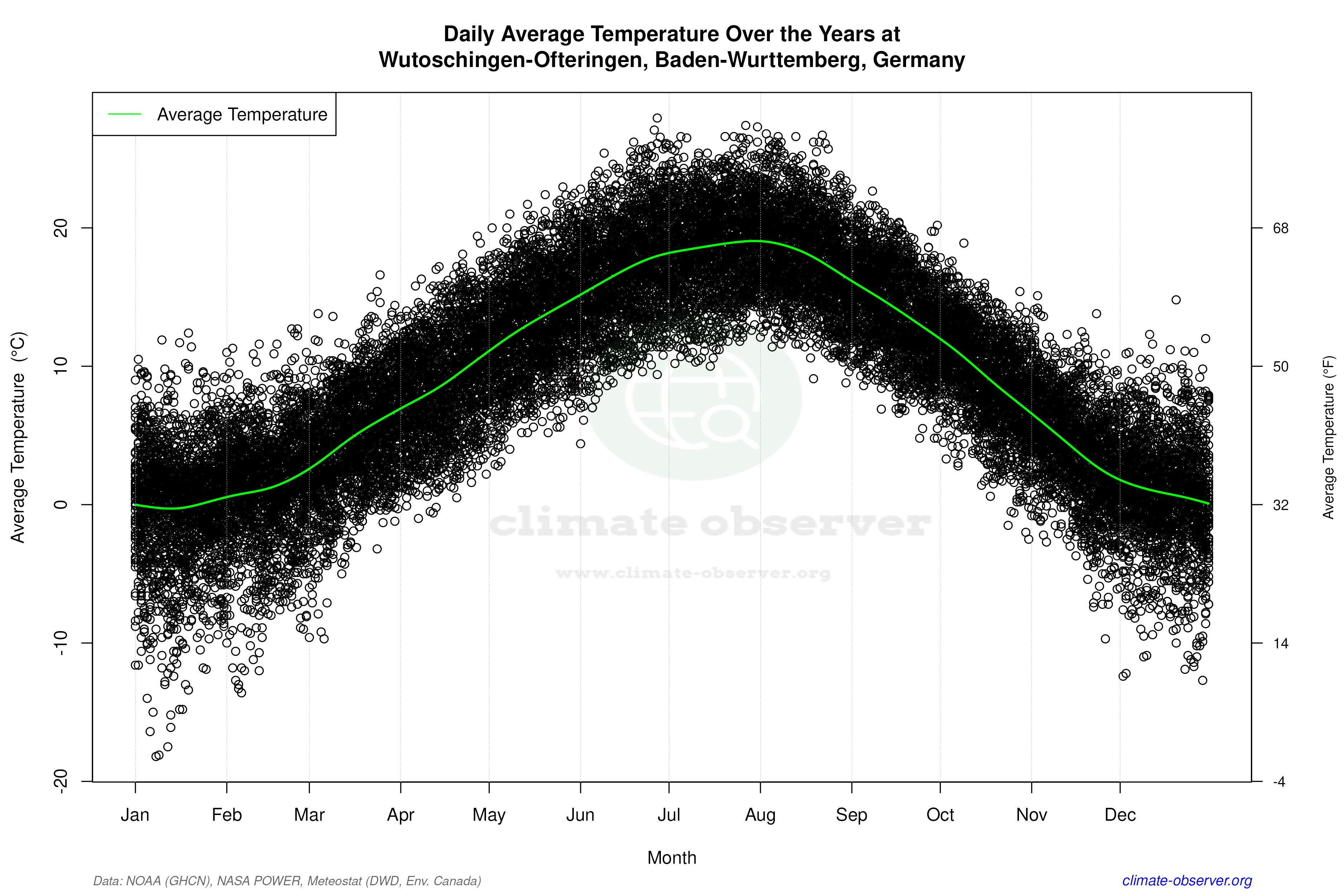
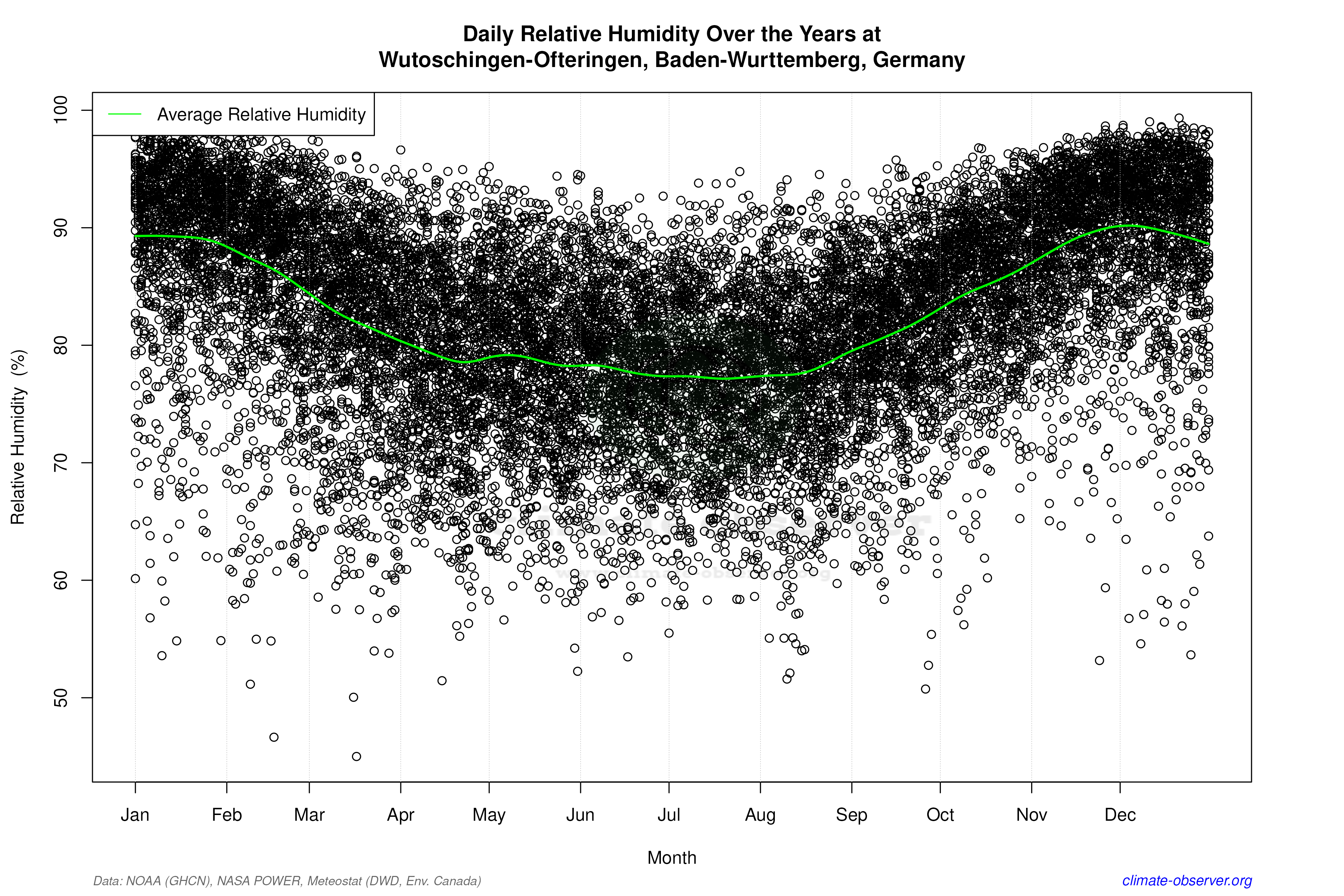

Average Max Temperature Throughout Year | 1 of 5


