Climate for Station: Tabou, Bas-Sassandra, Cote D'Ivoire
Loading live weather...
Climate Analysis & Overview
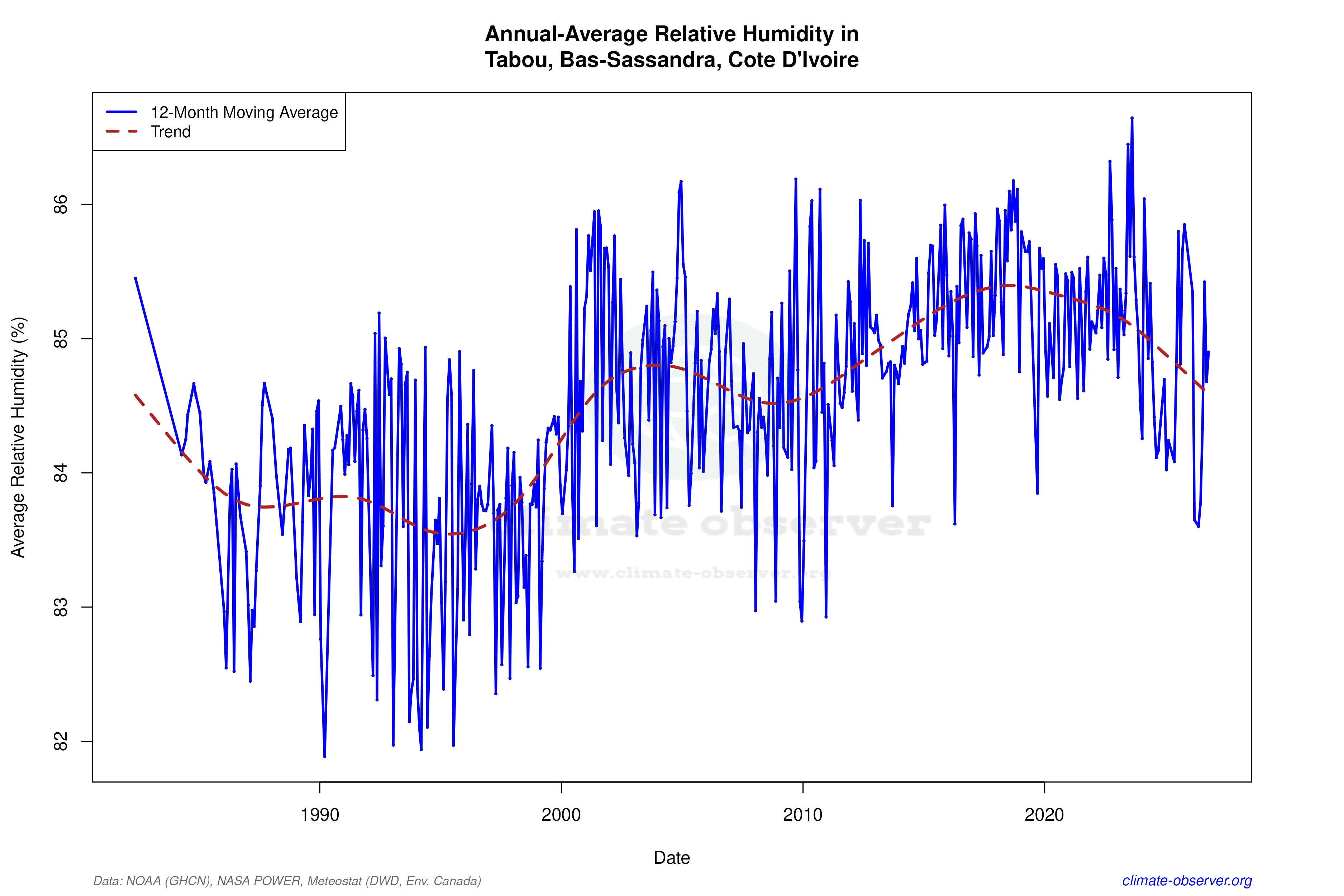
Tabou experiences a complex climate narrative with a notable divergence between recent and all-time temperature trends. While the past decade shows a significant warming of 1.99°C (3.58°F) in high temperatures, long-term data reveals only a modest rise of 0.20°C (0.36°F). Meanwhile, the Precipitation Concentration Index indicates a slight shift towards more even rainfall distribution.
Tropical Climate Dynamics
Tabou, located in the southwestern region of Côte d’Ivoire, falls under the Köppen climate classification of 'Aw'—a tropical savanna climate with a distinct wet and dry season. Its proximity to the Atlantic Ocean moderates temperatures, yet the local geography, characterised by coastal plains and lush vegetation, influences microclimatic conditions. The area's climate is crucial for agriculture, a key economic sector, making any shifts in temperature or precipitation patterns significant for local livelihoods.
Temperature Trends: Short vs Long Term
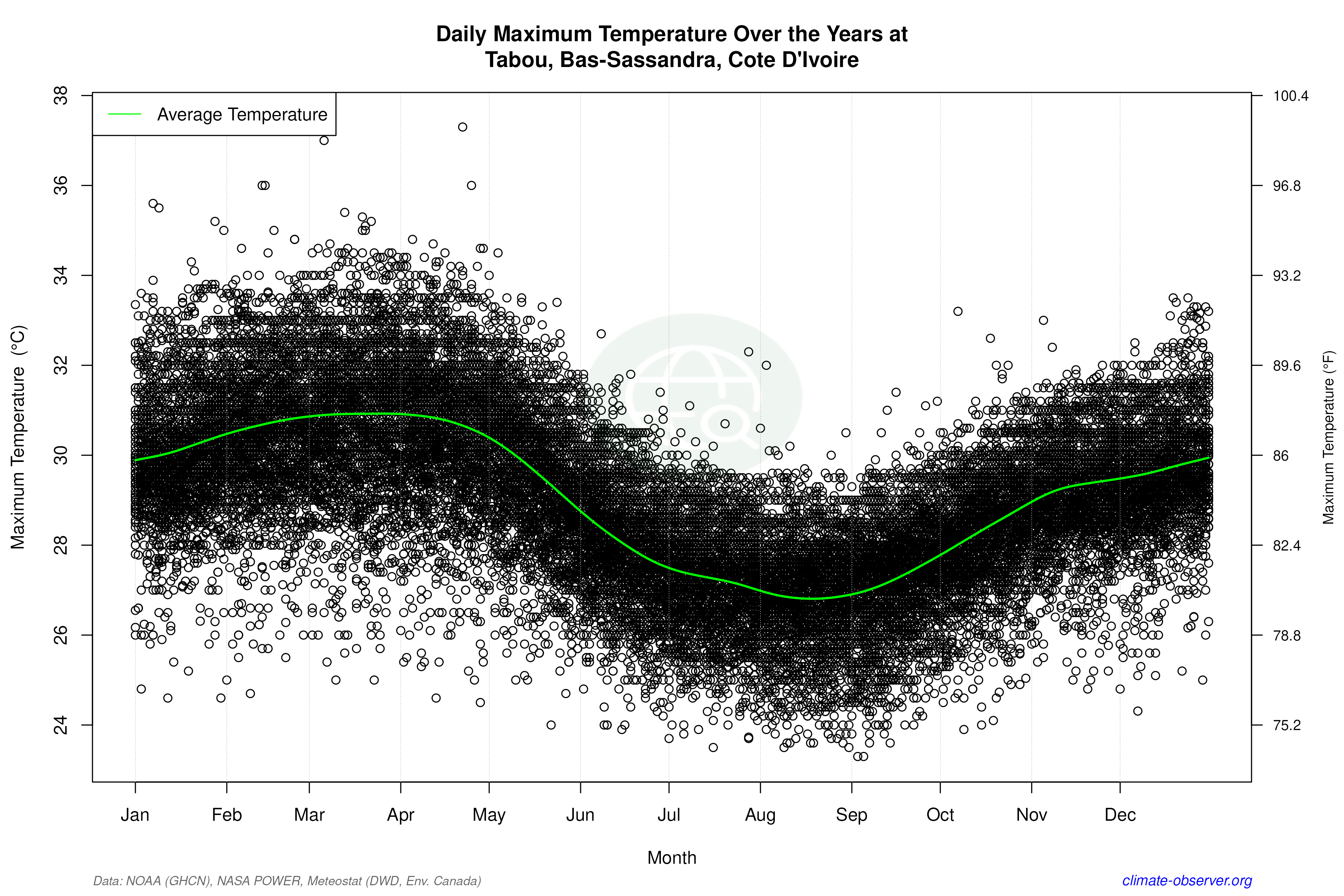
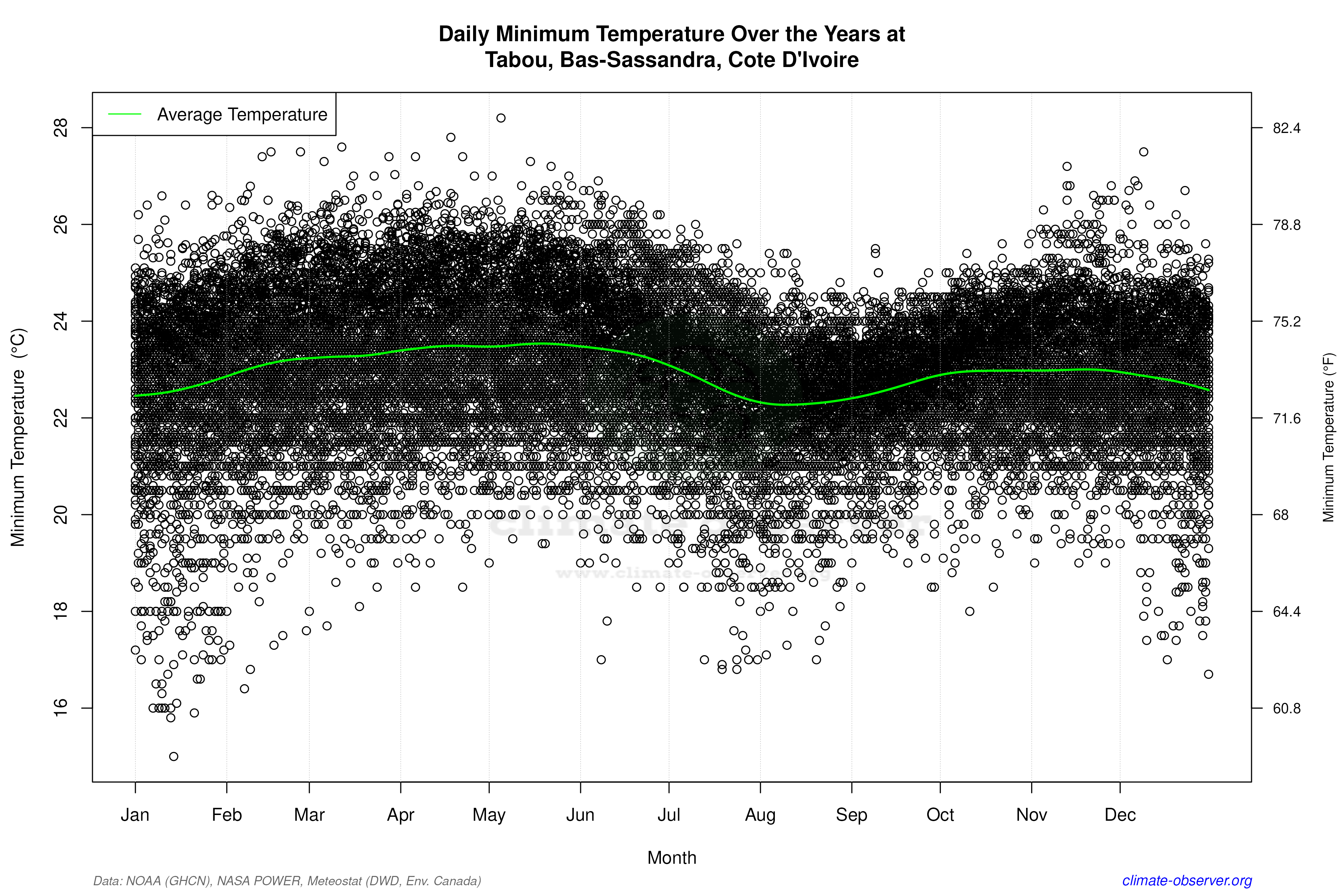
In the past decade, Tabou has experienced a pronounced warming trend in high temperatures, with an increase of 1.99°C (3.58°F). This recent warming is stark compared to the all-time trend, which shows a modest rise of only 0.20°C (0.36°F). Such a discrepancy suggests recent climatic shifts possibly linked to broader regional changes or anthropogenic influences. Conversely, low temperatures have shown a cooling trend over the last ten years, with a decrease of 0.57°C (1.03°F), contrasting with a slight long-term rise of 0.02°C (0.04°F).
Precipitation Patterns: A Subtle Shift
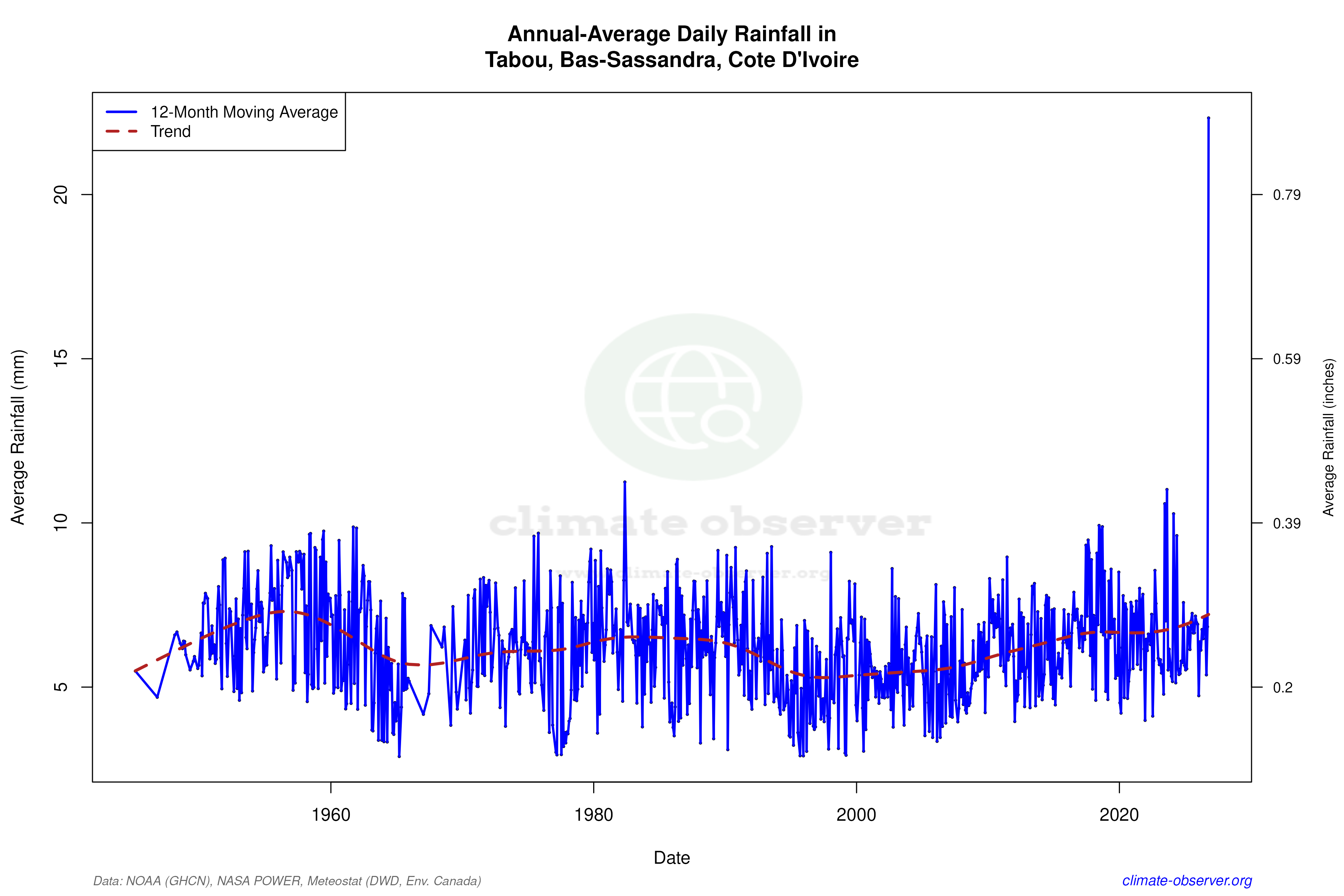
The Precipitation Concentration Index (PCI) for Tabou has decreased slightly from a baseline of 14.22 to a current value of 13.87. This marginal change implies a more even distribution of rainfall events over time, which could benefit agricultural practices by reducing the risk of flood events and improving water availability throughout the year. The PCI remains within a moderate range, indicating that while rainfall is not highly concentrated, it is not uniformly distributed either.
Records and Extremes
Tabou has recorded extreme temperatures with a maximum of 37.5°C (99.5°F) and a minimum of 15.0°C (59.0°F). These records highlight the potential for significant temperature variability within the region. Such extremes, although infrequent, can have profound impacts on both human health and the ecosystem.
Regional Context and Implications
Côte d’Ivoire has been actively pursuing climate resilience strategies, focusing on sustainable agriculture and forest conservation to mitigate climate impacts. The observed trends in Tabou align with regional efforts to understand and adapt to climate variability. The slight decrease in PCI and the warming trends in high temperatures underscore the need for continued monitoring and adaptive strategies to ensure the resilience of local communities and ecosystems.
Station Statistics
10-Year Trend
High: +0.85 °C/decade
Low: -0.27 °C/decade
Rain: -0.05 mm/decade
25-Year Trend
High: -0.01 °C/decade
Low: +0.12 °C/decade
Rain: +0.72 mm/decade
50-Year Trend
High: +0.22 °C/decade
Low: +0.20 °C/decade
Rain: +0.11 mm/decade
All-Time Trend
High: +0.17 °C/decade
Low: +0.01 °C/decade
Rain: -0.05 mm/decade
Percentage Above-Average Days
Last 12 Months: 43.6%
This Year: 43.2%
Precipitation Concentration Index (PCI) ℹ️
Last 12 Months: 49.8
Historical Average: 14.4
Percentile Rank of Last 12 Months ℹ️
High: 72nd percentile
Low: 76th percentile
Rain: 84th percentile
Change in Variance ℹ️
High: -8.7%
Low: -15.0%
Intraday: +3.9%
Data Coverage
89.2%
First Year of Data
1943
Station Location
Historical Weather Records
| Max High | Avg High | Min High | Max Avg | Avg Avg | Min Avg | Max Low | Avg Low | Min Low | Max Precipitation | Avg Precipitation | Max Snow | Avg Snow | |
|---|---|---|---|---|---|---|---|---|---|---|---|---|---|
| Record | 37.5 °C | — | 23.3 °C | 31.2 °C | — | 21.1 °C | 28.2 °C | — | 15.0 °C | 600.2 mm | — | — | — |
| January | 35.6 °C | 30.1 °C | 24.6 °C | 29.7 °C | 26.4 °C | 21.1 °C | 26.6 °C | 22.6 °C | 15.0 °C | 109.9 mm | 2.0 mm | — | — |
| February | 37.5 °C | 30.7 °C | 24.7 °C | 30.8 °C | 26.9 °C | 22.5 °C | 27.5 °C | 23.1 °C | 16.4 °C | 86.7 mm | 2.4 mm | — | — |
| March | 37.0 °C | 30.9 °C | 25.0 °C | 30.6 °C | 27.2 °C | 23.3 °C | 27.6 °C | 23.3 °C | 17.7 °C | 138.6 mm | 3.6 mm | — | — |
| April | 37.3 °C | 30.7 °C | 24.5 °C | 31.2 °C | 27.3 °C | 23.0 °C | 27.8 °C | 23.5 °C | 18.5 °C | 105.9 mm | 4.9 mm | — | — |
| May | 34.5 °C | 29.7 °C | 24.0 °C | 30.7 °C | 26.8 °C | 22.8 °C | 28.2 °C | 23.5 °C | 19.0 °C | 345.7 mm | 11.7 mm | — | — |
| June | 32.7 °C | 28.1 °C | 23.9 °C | 28.9 °C | 25.9 °C | 22.8 °C | 26.9 °C | 23.3 °C | 17.0 °C | 309.9 mm | 16.4 mm | — | — |
| July | 32.3 °C | 27.3 °C | 23.5 °C | 27.9 °C | 25.1 °C | 22.4 °C | 26.0 °C | 22.7 °C | 16.8 °C | 224.3 mm | 6.1 mm | — | — |
| August | 32.0 °C | 26.8 °C | 23.5 °C | 27.4 °C | 24.7 °C | 22.3 °C | 25.4 °C | 22.3 °C | 17.0 °C | 143.8 mm | 4.5 mm | — | — |
| September | 31.4 °C | 27.3 °C | 23.3 °C | 27.6 °C | 25.0 °C | 22.8 °C | 25.5 °C | 22.6 °C | 18.5 °C | 145.9 mm | 7.3 mm | — | — |
| October | 33.2 °C | 28.3 °C | 23.9 °C | 28.9 °C | 25.8 °C | 22.8 °C | 25.6 °C | 23.0 °C | 18.0 °C | 600.2 mm | 8.0 mm | — | — |
| November | 33.0 °C | 29.3 °C | 24.8 °C | 29.6 °C | 26.4 °C | 23.0 °C | 27.2 °C | 23.0 °C | 19.0 °C | 209.9 mm | 5.5 mm | — | — |
| December | 33.5 °C | 29.7 °C | 24.3 °C | 30.0 °C | 26.4 °C | 22.4 °C | 27.5 °C | 22.8 °C | 16.7 °C | 231.0 mm | 4.0 mm | — | — |
Data Visualisations
Remove WatermarksCurrent Year Climate Trends vs Historical
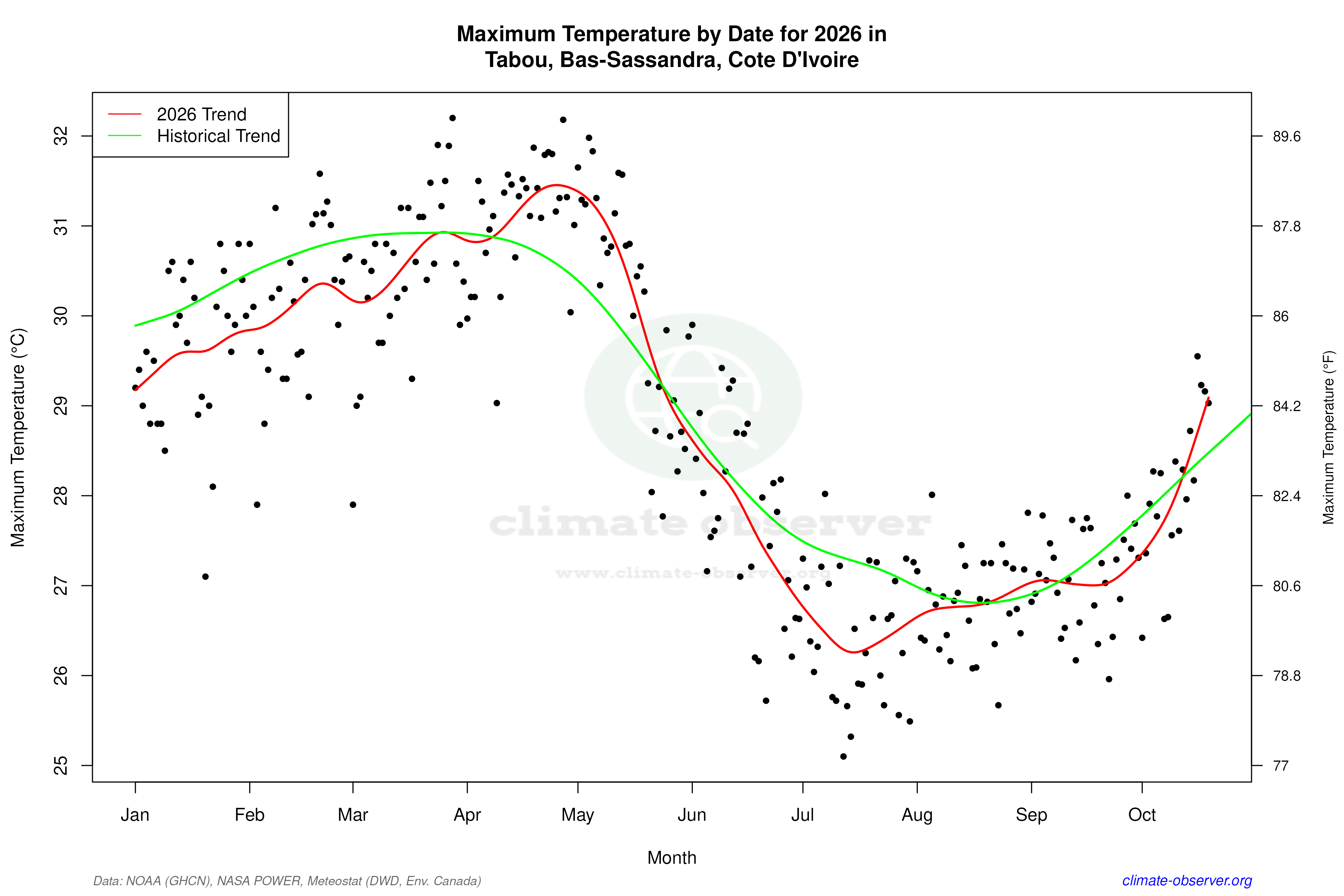
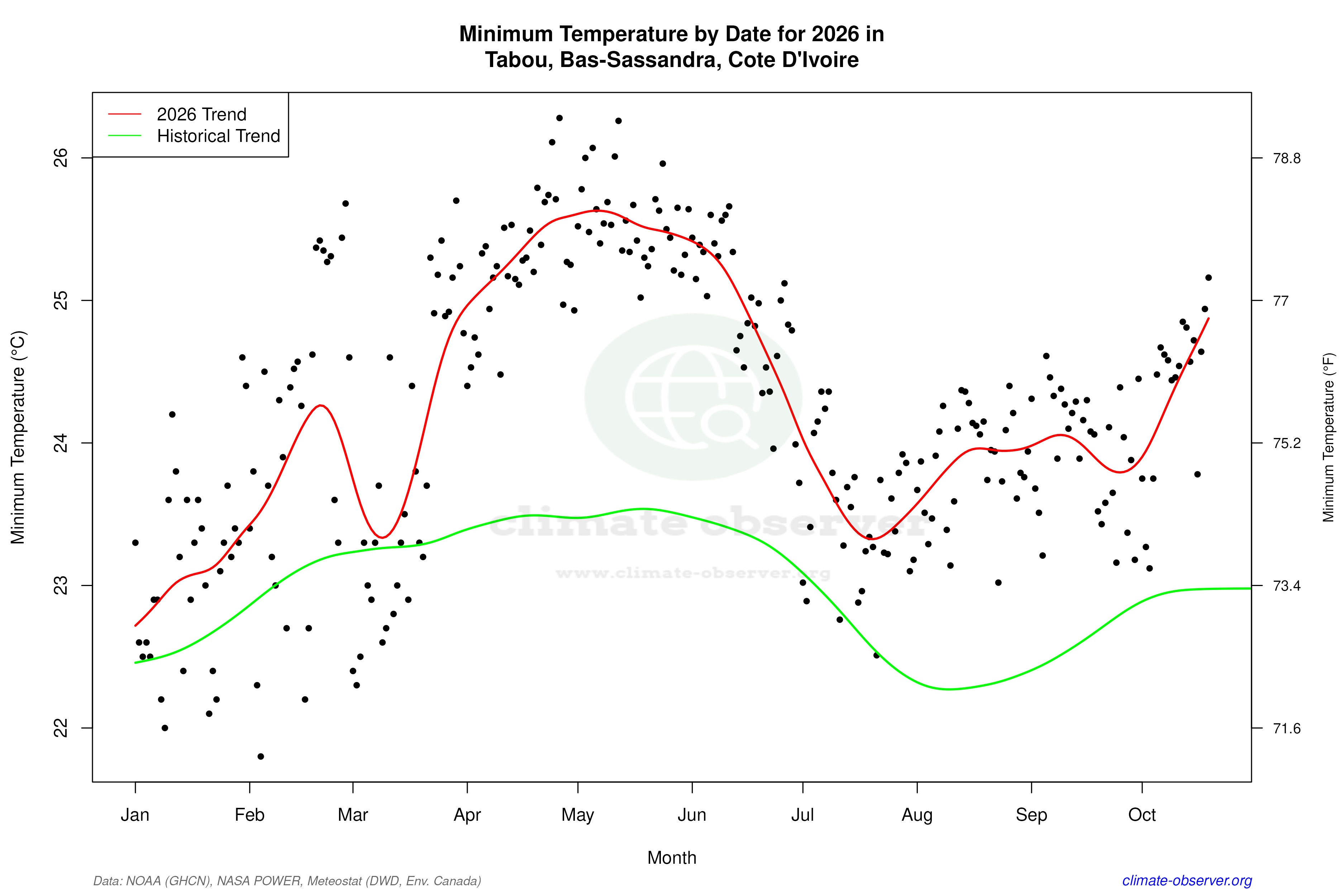
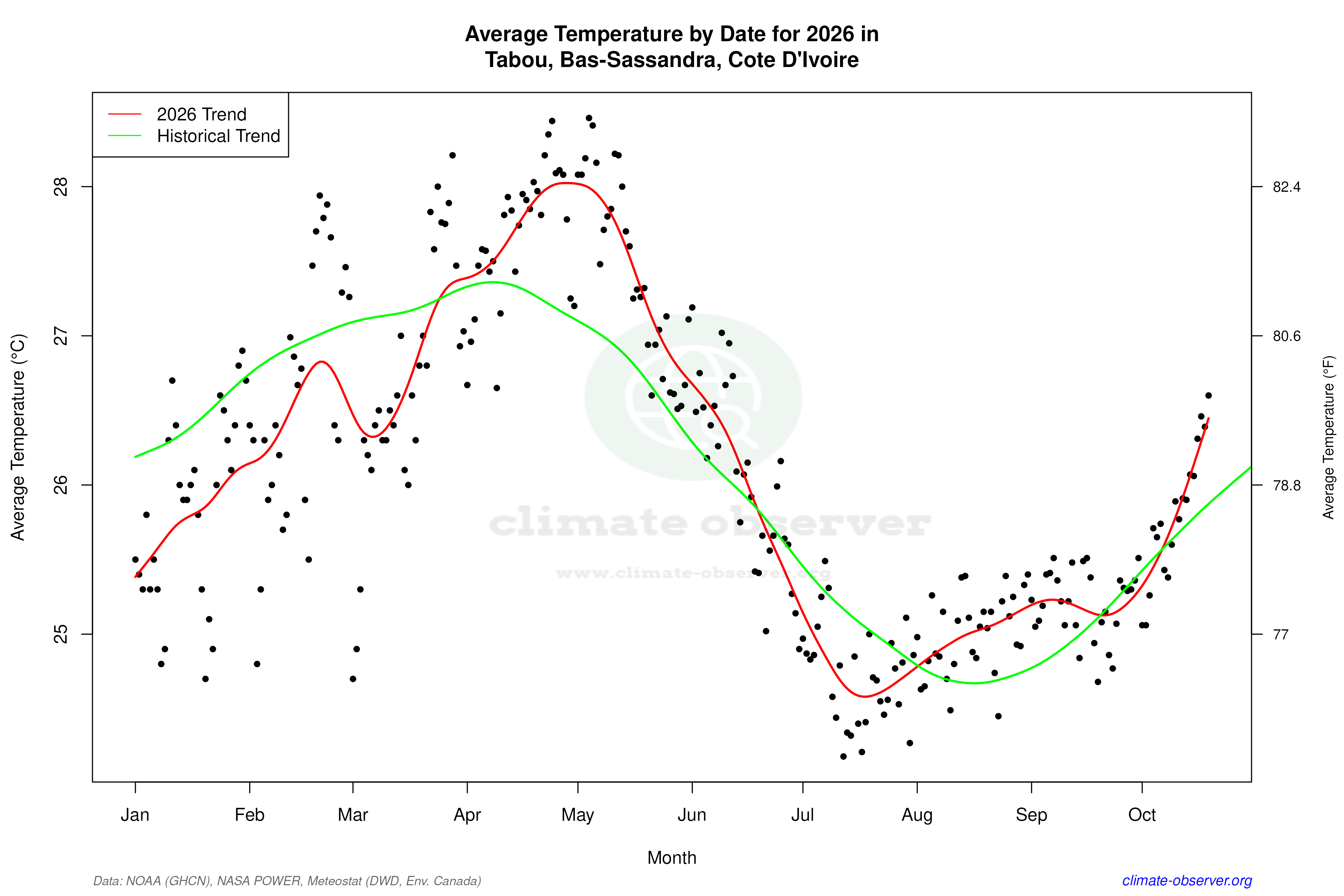
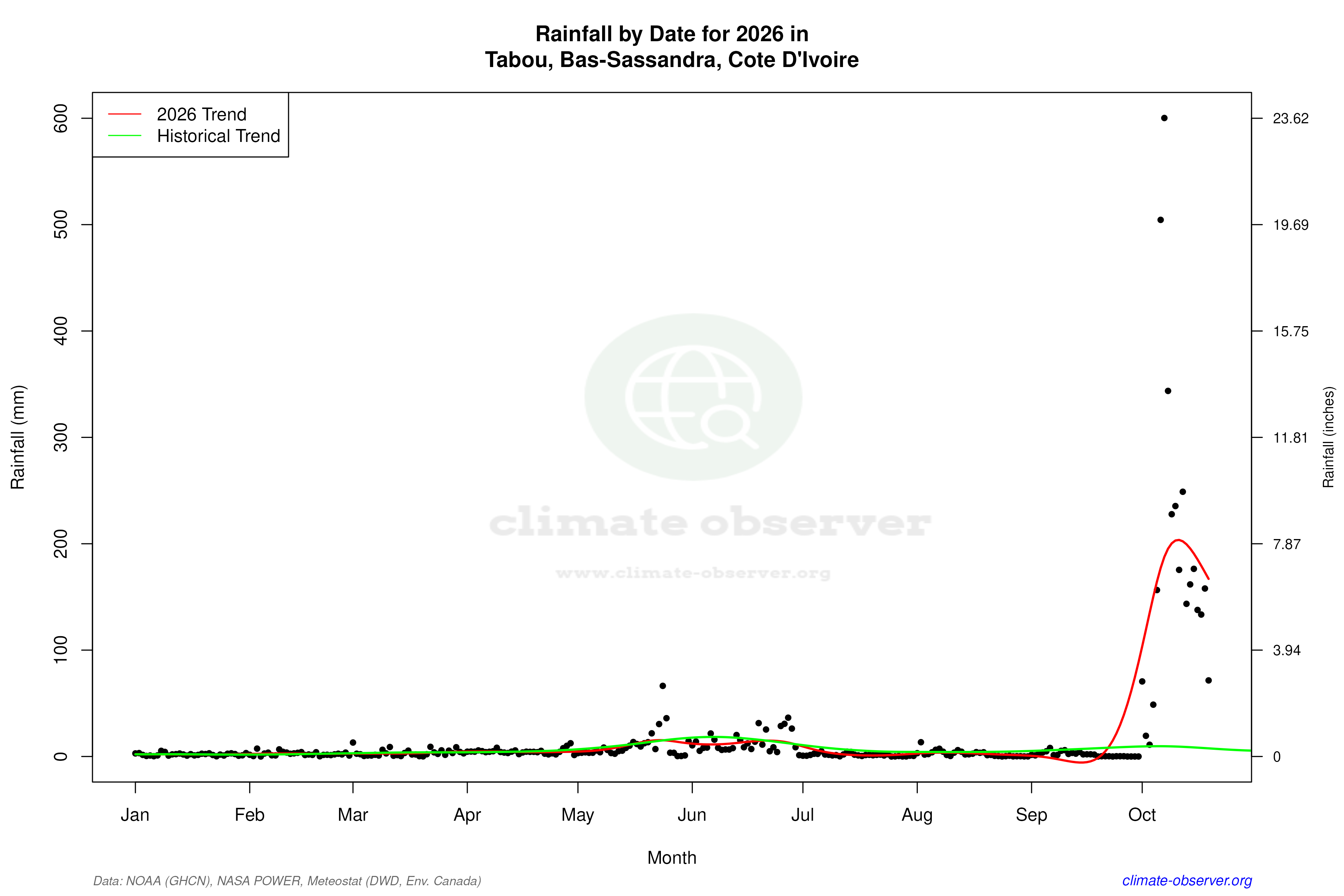
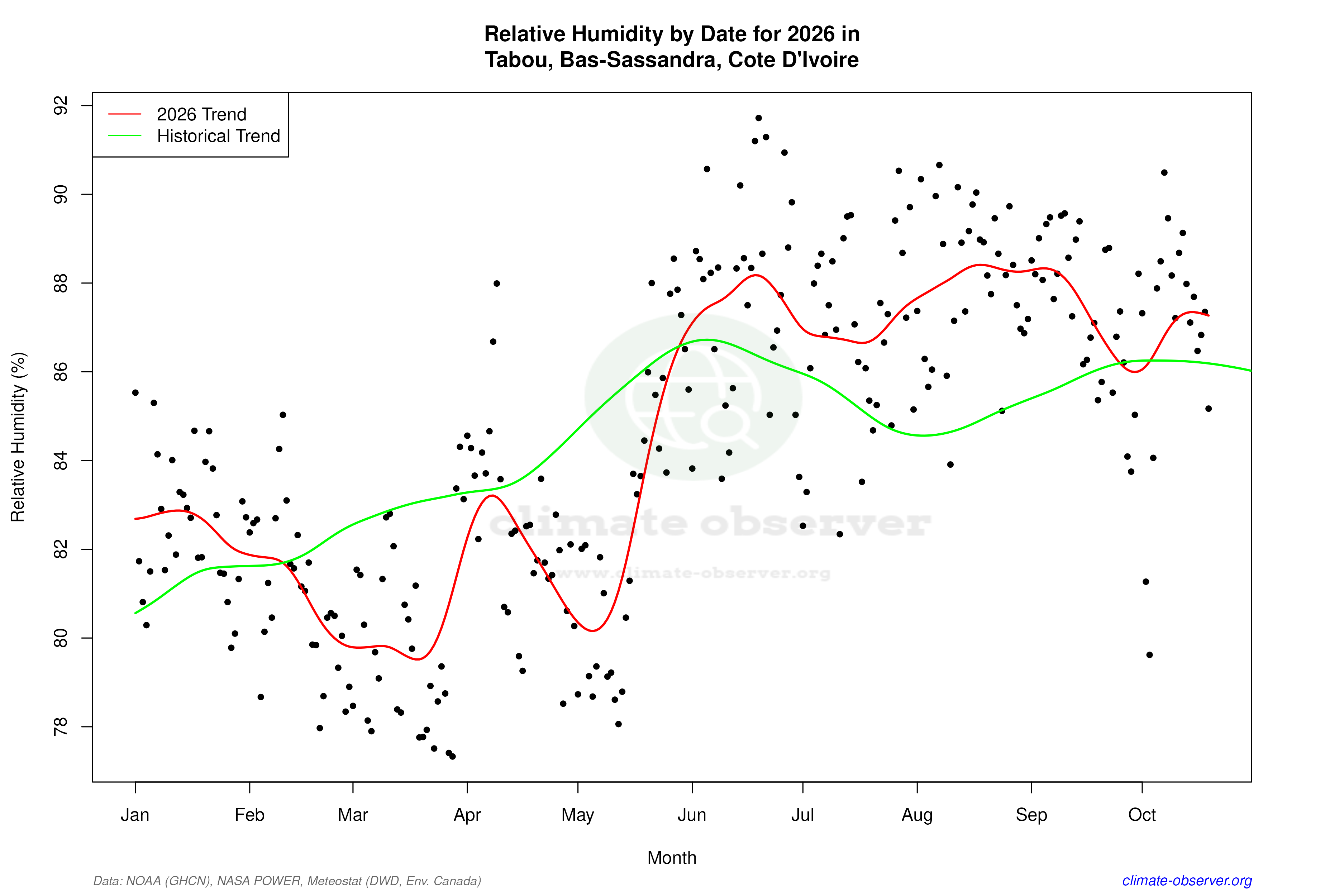

Max Temperature this Year | 1 of 6
Climate 12-Month Moving Averages
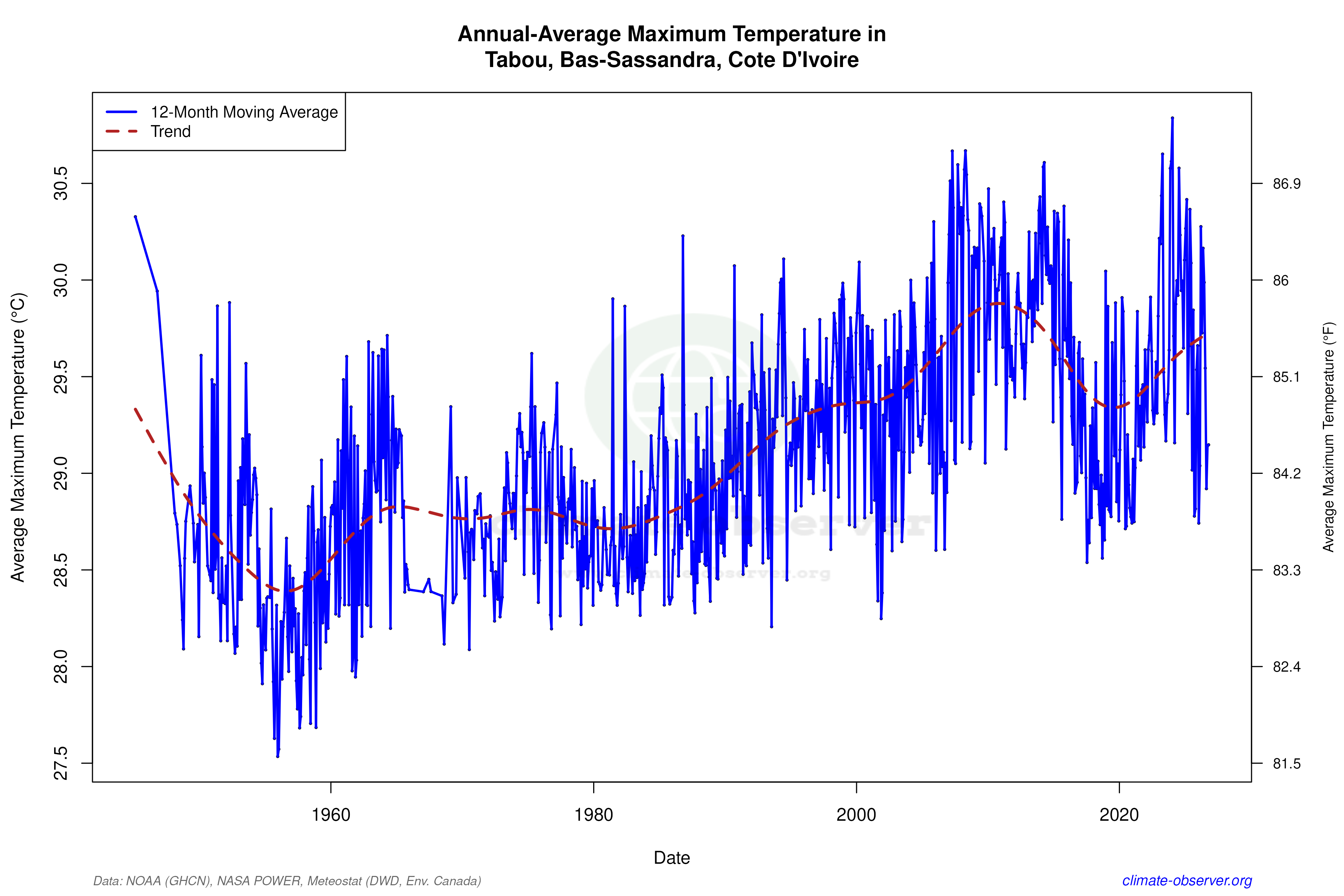
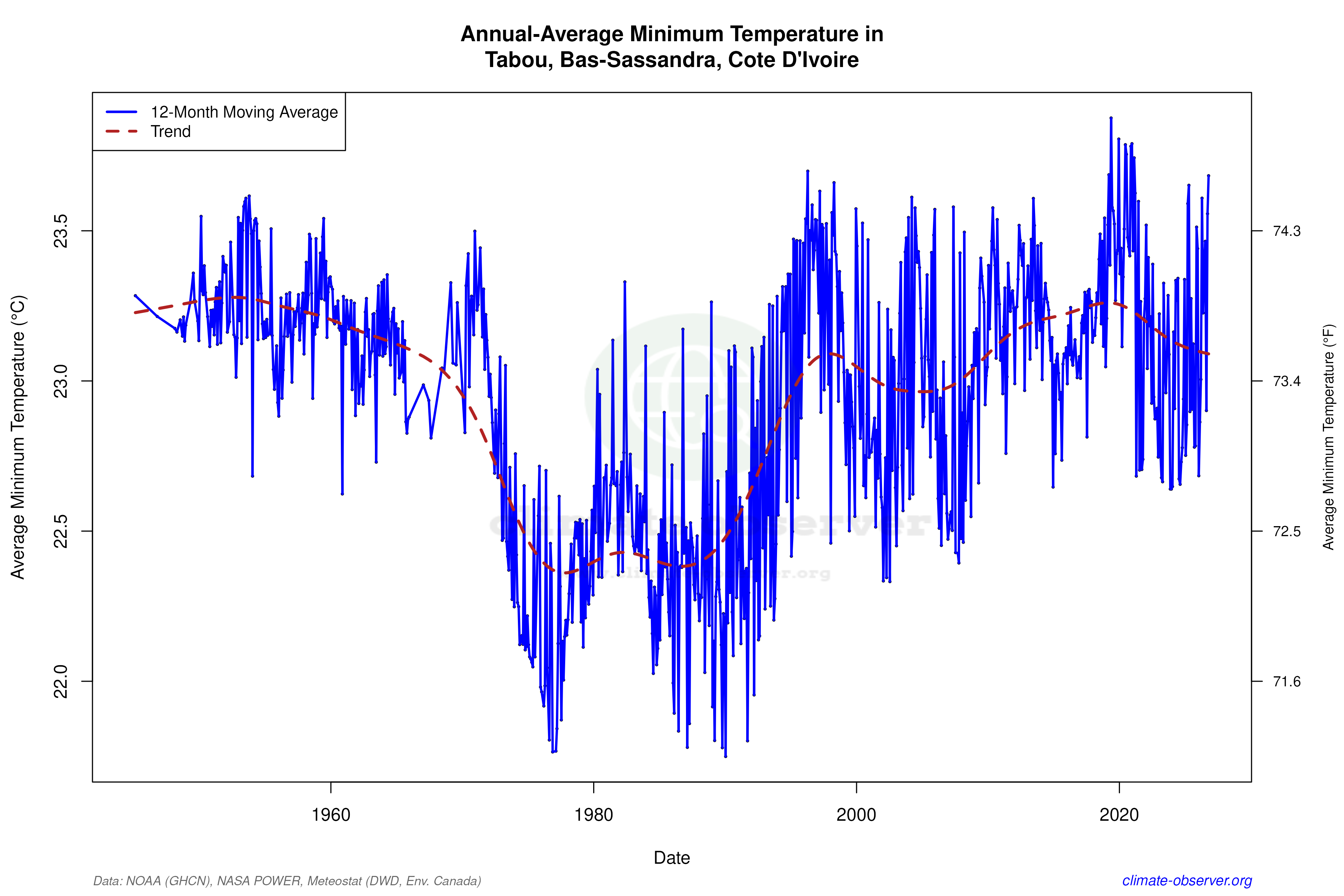
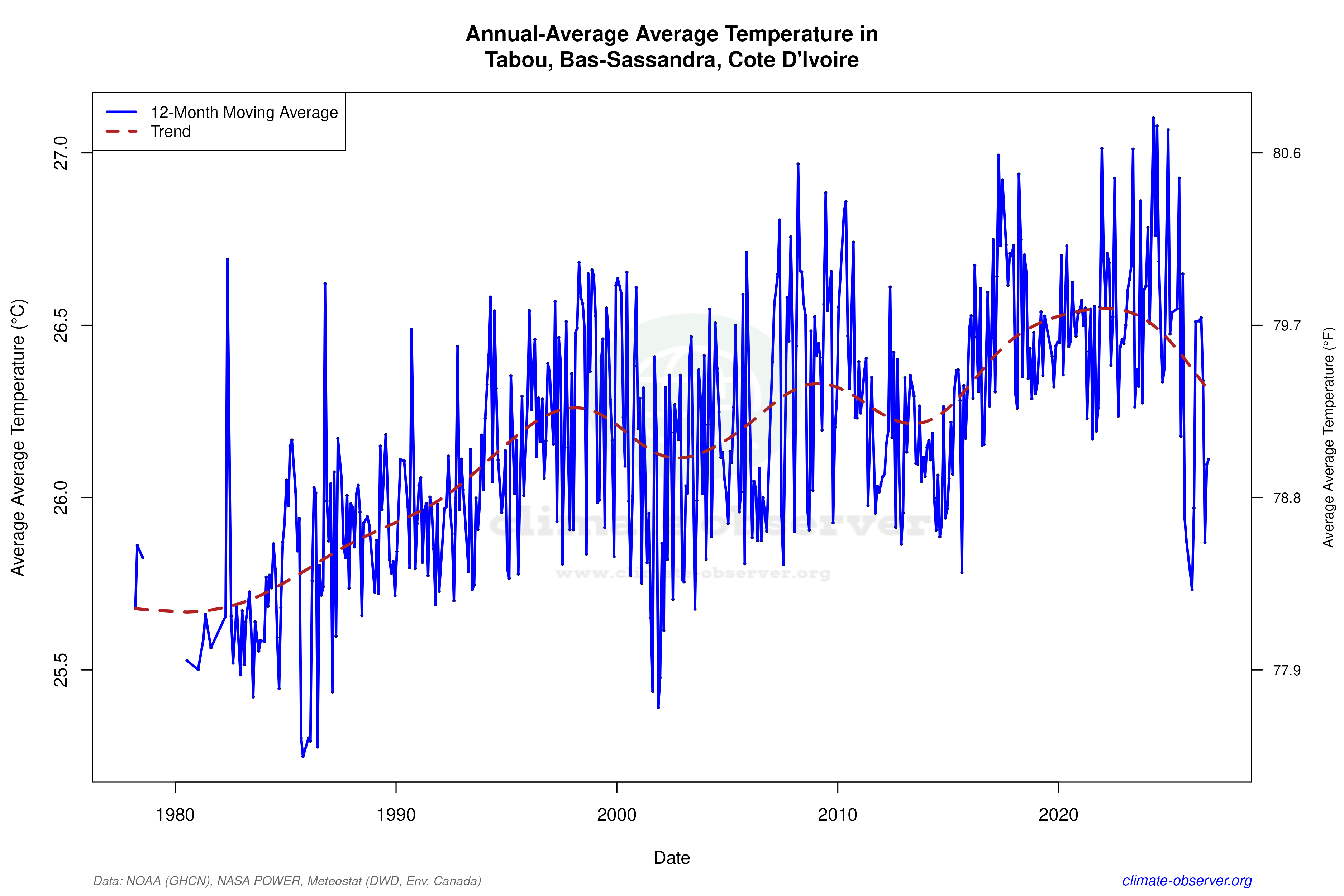

Max Temperature 12-Month MA | 1 of 6
Daily Data Points and Averages Throughout the Year
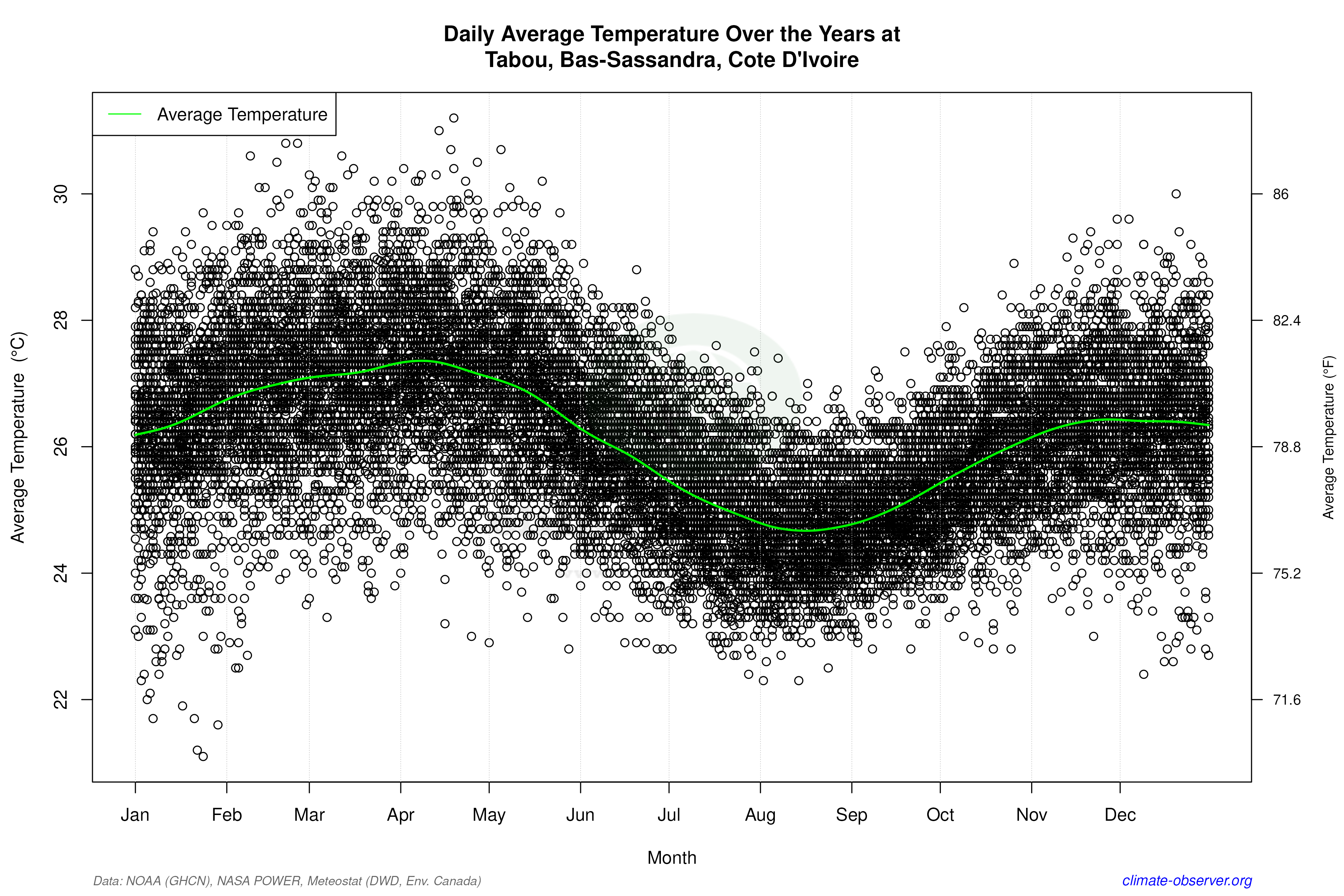
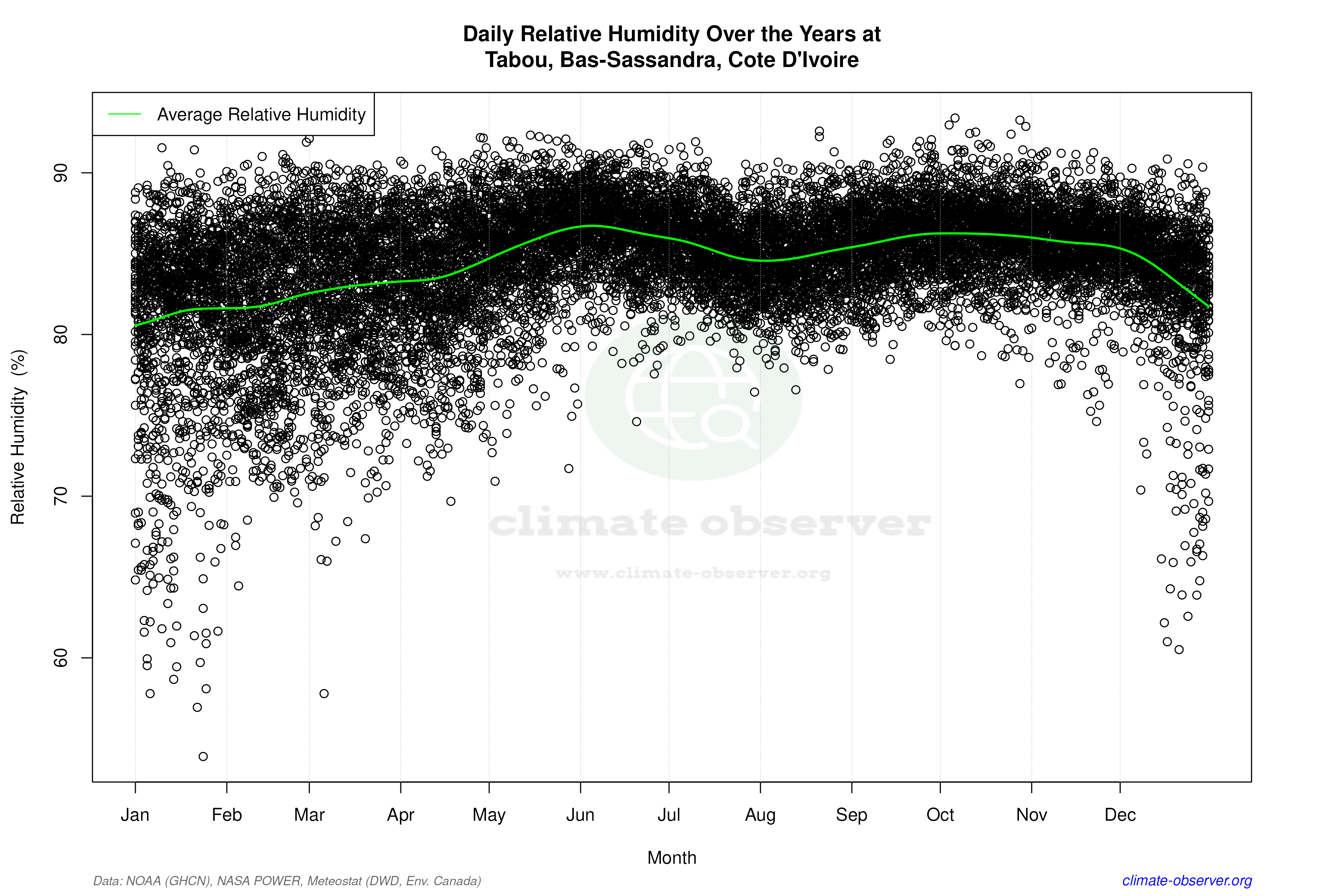

Average Max Temperature Throughout Year | 1 of 5

