Climate for Station: Odienne, Denguele, Cote D'Ivoire
Loading live weather...
Climate Analysis & Overview
Odienné, located in Côte d'Ivoire, is experiencing a nuanced climate evolution with a warming trend in high temperatures and a cooling trend in lows over the past decade. The region's precipitation is becoming more evenly distributed, offering a different dynamic in rainfall patterns.
Warming Highs and Cooling Lows
Odienné, nestled in the northwestern part of Côte d'Ivoire, falls under the tropical savanna climate (Aw) according to the Köppen classification. This region is characterised by distinct wet and dry seasons, influenced by its proximity to the Guinea Highlands. Over the past decade, Odienné has witnessed a warming trend in high temperatures, with an increase of 0.67°C (1.21°F). Conversely, the low temperatures have shown a slight cooling trend, decreasing by 0.09°C (0.16°F). This divergence highlights a complex thermal pattern, where daytime temperatures are rising while nighttime temperatures marginally fall.
Long-term Temperature Trends
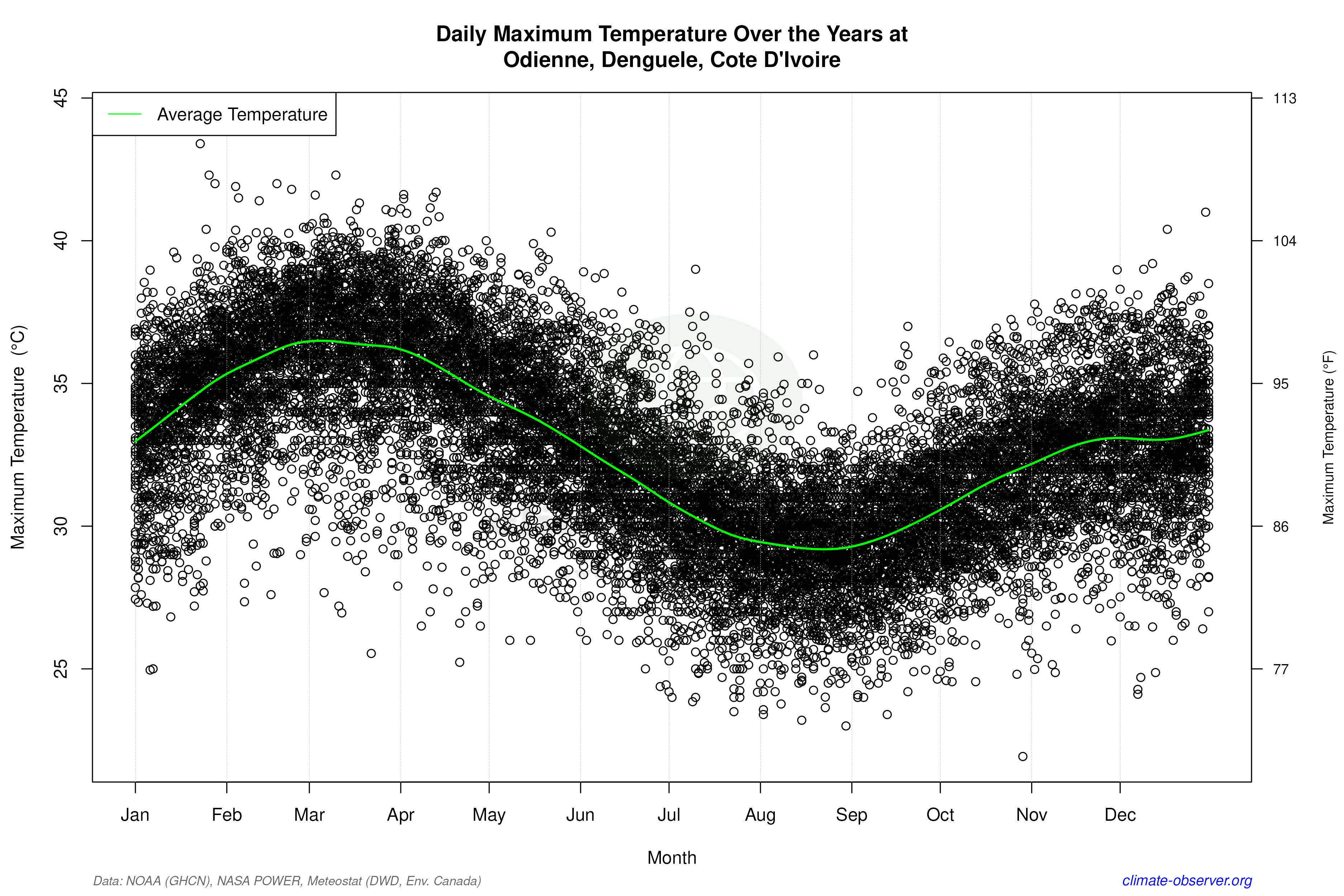
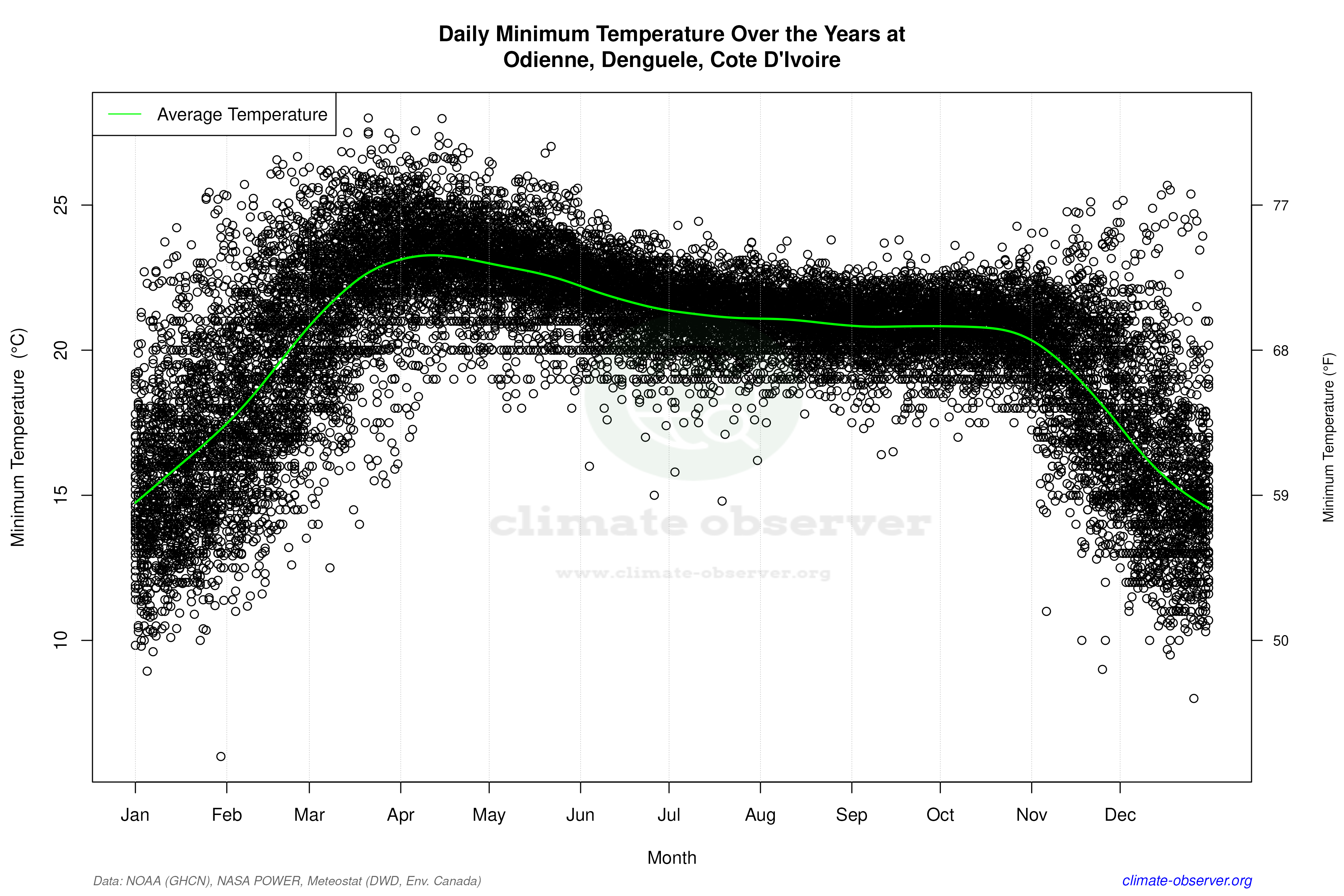
When examining the all-time temperature trends, Odienné presents a consistent warming pattern. High temperatures have risen by 0.25°C (0.45°F), while low temperatures have increased by 0.23°C (0.41°F). This suggests a general warming trend over the longer term, contrasting with the recent cooling in lows observed over the last decade. The record high for the region stands at 44.3°C (111.7°F), while the record low is 6.0°C (42.8°F), indicating significant temperature variability.
Precipitation Dynamics
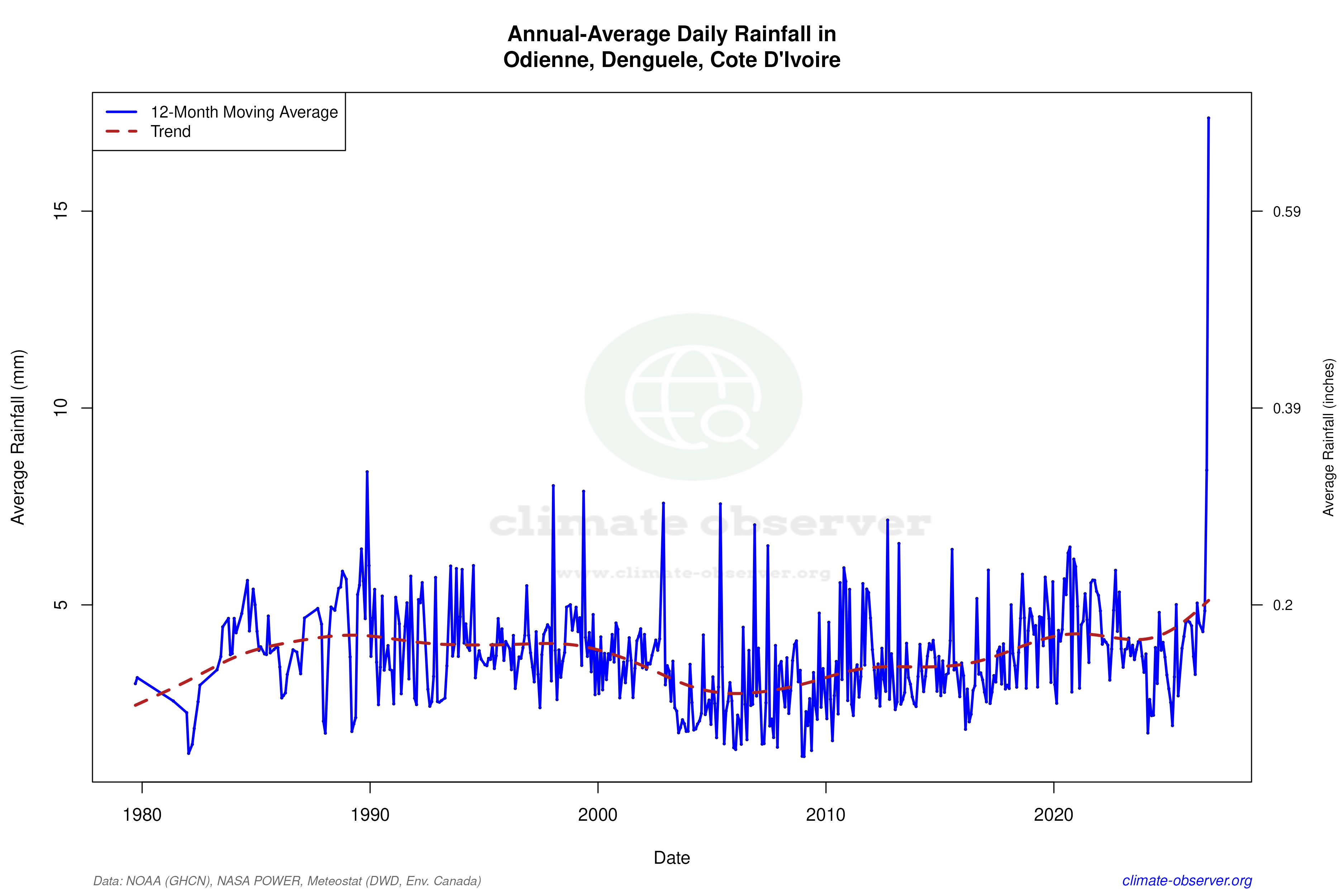
The Precipitation Concentration Index (PCI) for Odienné has decreased from a baseline of 16.6 to a current value of 12.7. This shift signifies that precipitation is becoming more evenly distributed throughout the year, reducing the concentration of rainfall in fewer events. Such a change can impact agricultural practices and water resource management, providing a more stable environment for crop growth and reducing the risk of flooding.
Regional Climate Context
Côte d'Ivoire has been actively pursuing regional climate goals, focusing on sustainable agriculture and water management. The observed changes in Odienné's climate align with these objectives, as more evenly distributed rainfall can support agricultural resilience. Recent weather events, such as prolonged dry spells, have underscored the importance of understanding these climatic shifts to mitigate their impacts effectively.
Implications for Local Climate Strategy
The evolving climate patterns in Odienné, with warming highs and a more even distribution of precipitation, present both challenges and opportunities. As the region adapts to these changes, integrating these insights into local climate strategies will be crucial for sustainable development. The nuanced temperature trends and precipitation dynamics offer a complex yet informative backdrop for future planning and policy-making in the region.
Station Statistics
10-Year Trend
High: +0.30 °C/decade
Low: -0.11 °C/decade
Rain: +0.89 mm/decade
25-Year Trend
High: -0.29 °C/decade
Low: -0.22 °C/decade
Rain: +0.74 mm/decade
50-Year Trend
High: +0.20 °C/decade
Low: +0.26 °C/decade
Rain: +0.04 mm/decade
All-Time Trend
High: +0.20 °C/decade
Low: +0.26 °C/decade
Rain: +0.04 mm/decade
Percentage Above-Average Days
Last 12 Months: 53.7%
This Year: 66.1%
Precipitation Concentration Index (PCI) ℹ️
Last 12 Months: 41.4
Historical Average: 16.4
Percentile Rank of Last 12 Months ℹ️
High: 40th percentile
Low: 70th percentile
Rain: 95th percentile
Change in Variance ℹ️
High: -11.3%
Low: +1.8%
Intraday: +11.7%
Data Coverage
94.5%
First Year of Data
1973
Station Location
Historical Weather Records
| Max High | Avg High | Min High | Max Avg | Avg Avg | Min Avg | Max Low | Avg Low | Min Low | Max Precipitation | Avg Precipitation | Max Snow | Avg Snow | |
|---|---|---|---|---|---|---|---|---|---|---|---|---|---|
| Record | 44.3 °C | — | 21.9 °C | 35.2 °C | — | 16.2 °C | 28.0 °C | — | 6.0 °C | 544.8 mm | — | — | — |
| January | 43.4 °C | 34.2 °C | 25.0 °C | 34.3 °C | 25.1 °C | 16.2 °C | 25.4 °C | 16.0 °C | 6.0 °C | 37.8 mm | 0.2 mm | — | — |
| February | 42.0 °C | 36.0 °C | 27.4 °C | 33.8 °C | 27.5 °C | 20.4 °C | 26.7 °C | 19.0 °C | 11.0 °C | 47.0 mm | 0.4 mm | — | — |
| March | 44.3 °C | 36.4 °C | 25.5 °C | 35.2 °C | 29.1 °C | 21.6 °C | 28.0 °C | 22.2 °C | 12.5 °C | 116.6 mm | 1.6 mm | — | — |
| April | 41.7 °C | 35.4 °C | 25.2 °C | 34.7 °C | 28.9 °C | 23.3 °C | 28.0 °C | 23.2 °C | 17.0 °C | 72.9 mm | 2.7 mm | — | — |
| May | 40.3 °C | 33.8 °C | 26.0 °C | 33.0 °C | 27.9 °C | 23.2 °C | 27.0 °C | 22.7 °C | 18.0 °C | 82.0 mm | 3.6 mm | — | — |
| June | 38.9 °C | 31.9 °C | 24.4 °C | 31.8 °C | 26.5 °C | 20.8 °C | 24.7 °C | 21.7 °C | 15.0 °C | 93.0 mm | 4.9 mm | — | — |
| July | 39.0 °C | 30.0 °C | 23.5 °C | 30.2 °C | 25.3 °C | 20.5 °C | 24.4 °C | 21.2 °C | 14.8 °C | 131.1 mm | 7.6 mm | — | — |
| August | 36.0 °C | 29.3 °C | 23.0 °C | 28.8 °C | 24.7 °C | 20.5 °C | 23.8 °C | 21.0 °C | 17.5 °C | 199.9 mm | 9.9 mm | — | — |
| September | 37.0 °C | 29.8 °C | 23.4 °C | 30.1 °C | 24.9 °C | 20.4 °C | 23.8 °C | 20.8 °C | 16.4 °C | 227.5 mm | 8.0 mm | — | — |
| October | 37.2 °C | 31.4 °C | 21.9 °C | 29.9 °C | 25.7 °C | 19.8 °C | 24.3 °C | 20.7 °C | 17.0 °C | 544.8 mm | 6.0 mm | — | — |
| November | 39.0 °C | 32.8 °C | 24.9 °C | 31.6 °C | 25.7 °C | 20.3 °C | 25.1 °C | 19.1 °C | 9.0 °C | 59.9 mm | 1.1 mm | — | — |
| December | 41.0 °C | 33.1 °C | 24.1 °C | 32.2 °C | 24.2 °C | 17.2 °C | 25.7 °C | 15.7 °C | 8.0 °C | 320.0 mm | 0.3 mm | — | — |
Data Visualisations
Remove WatermarksCurrent Year Climate Trends vs Historical
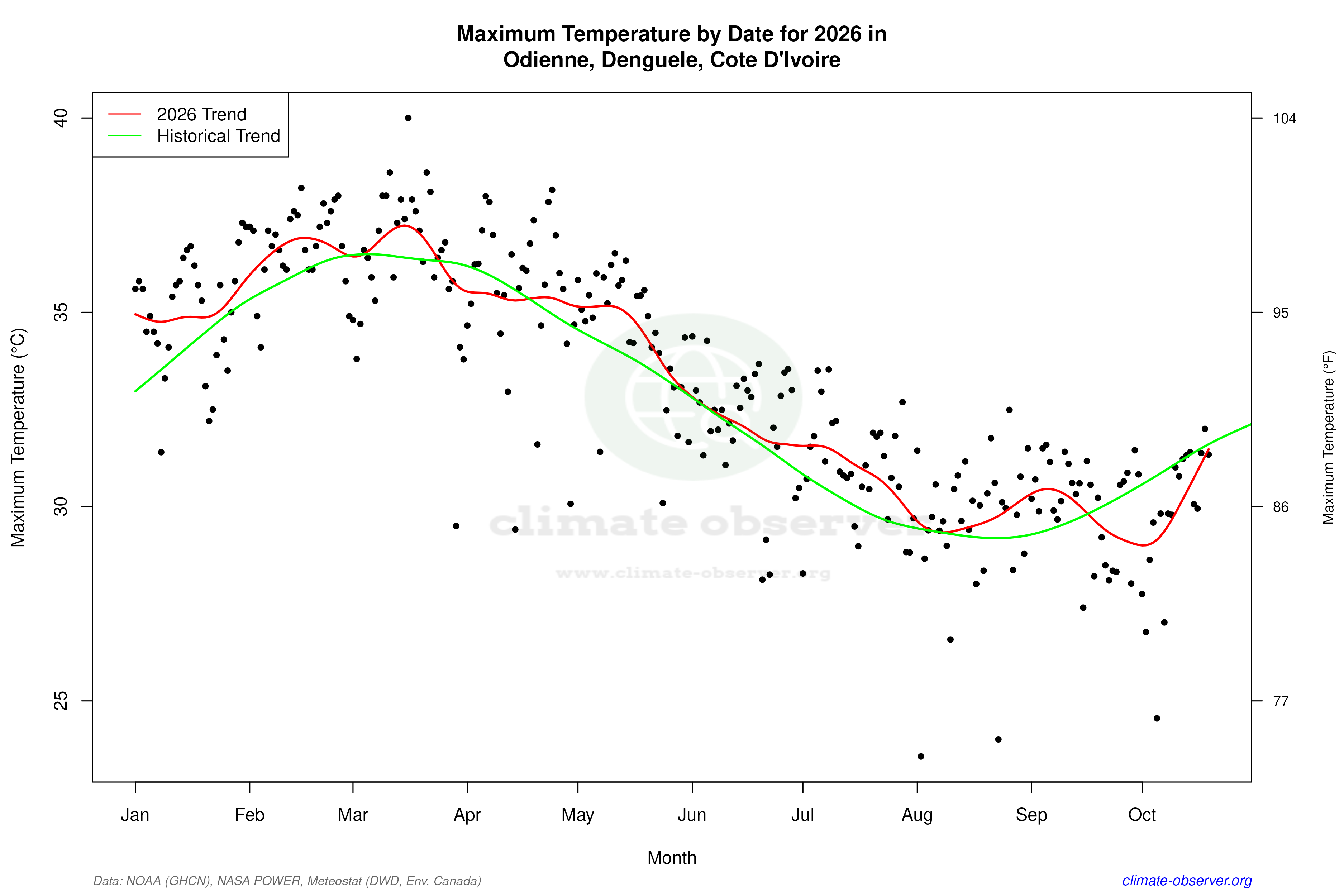
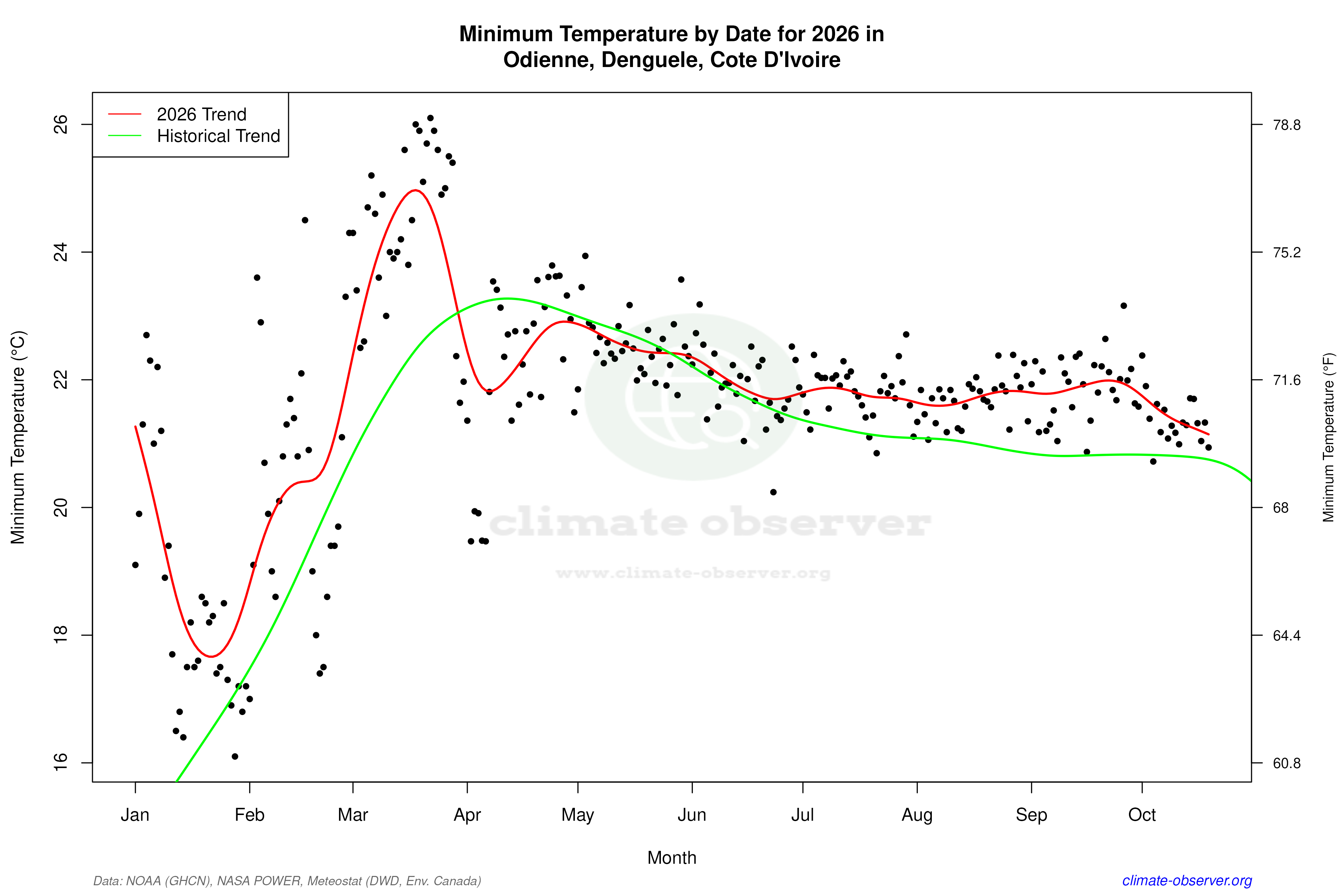
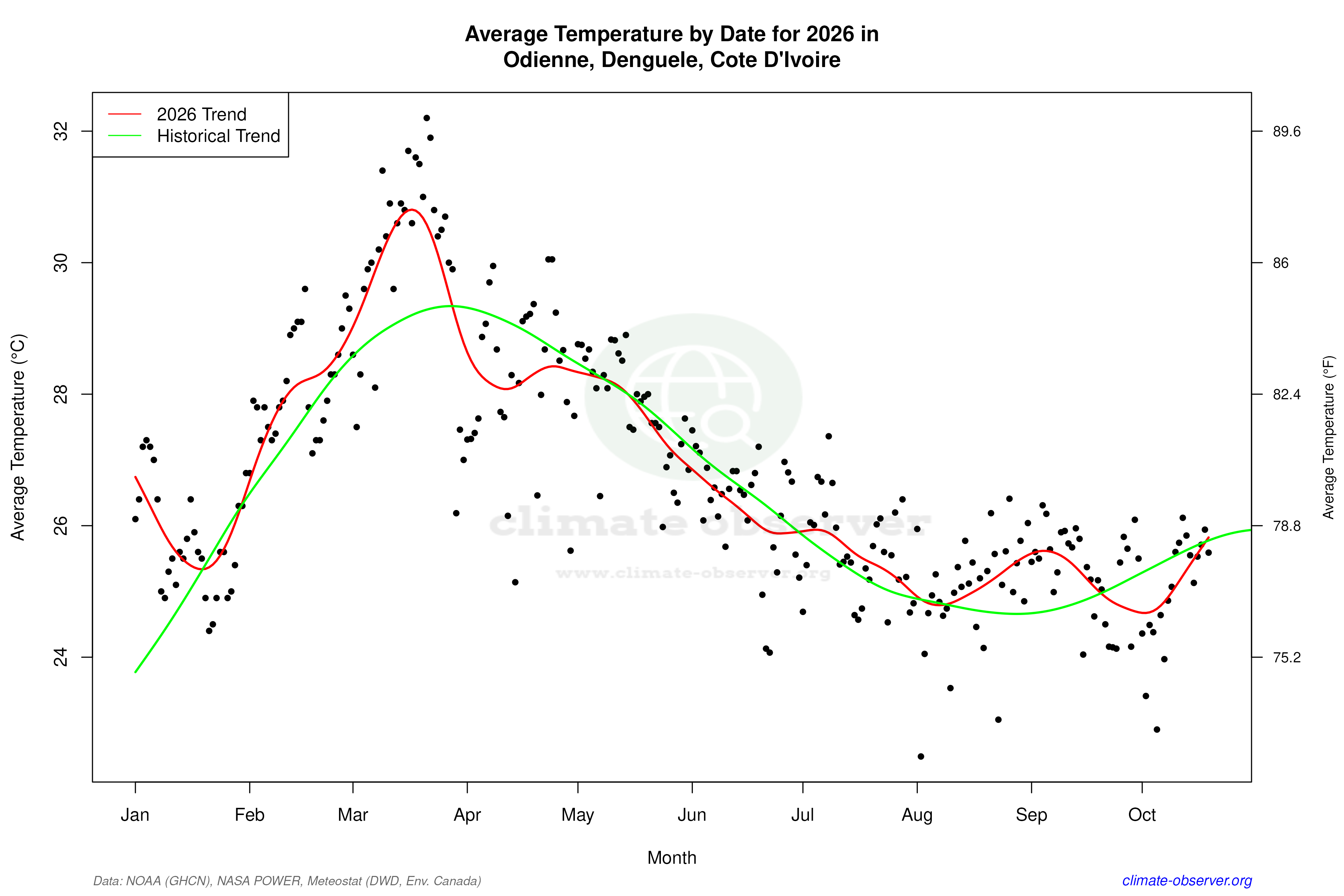
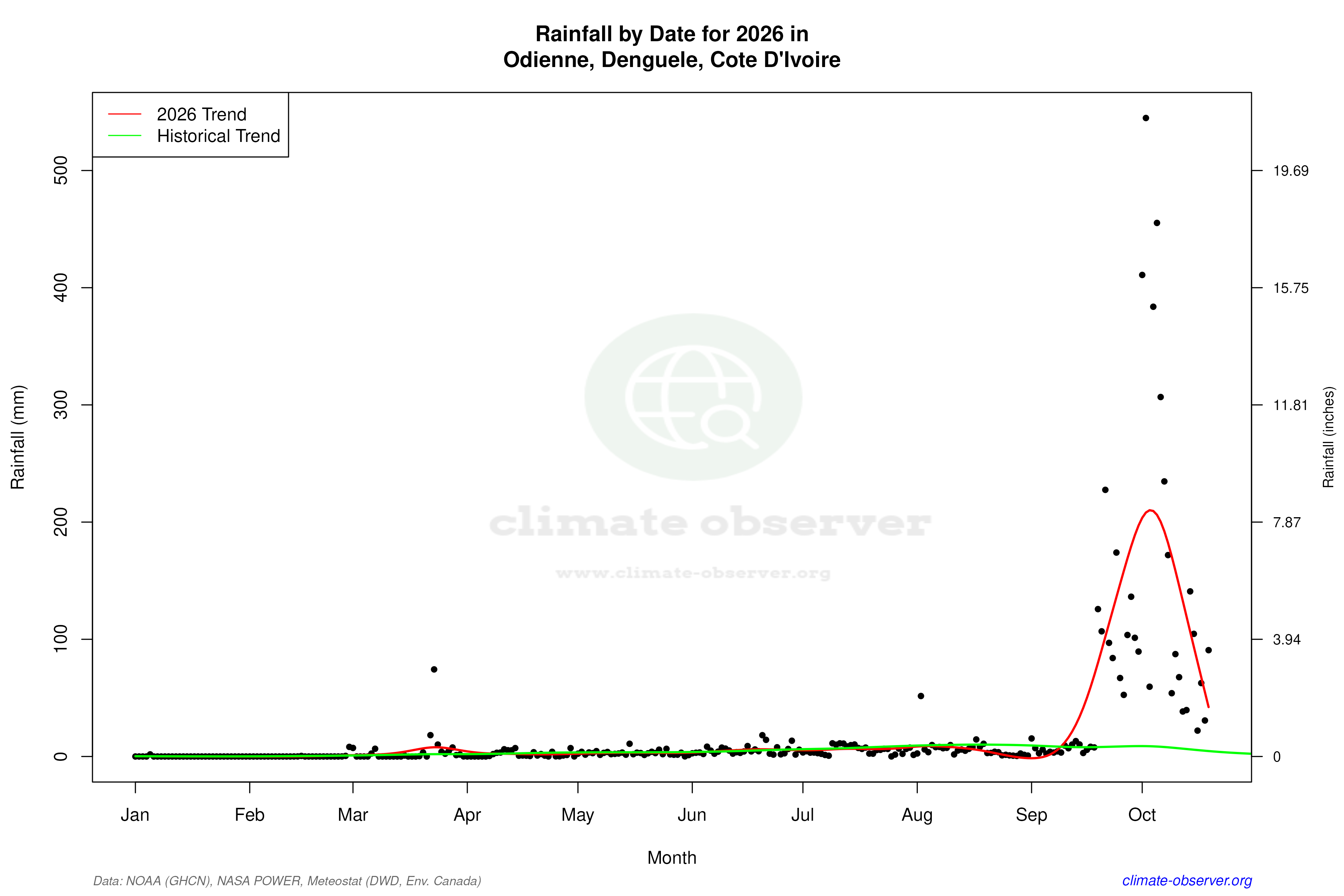
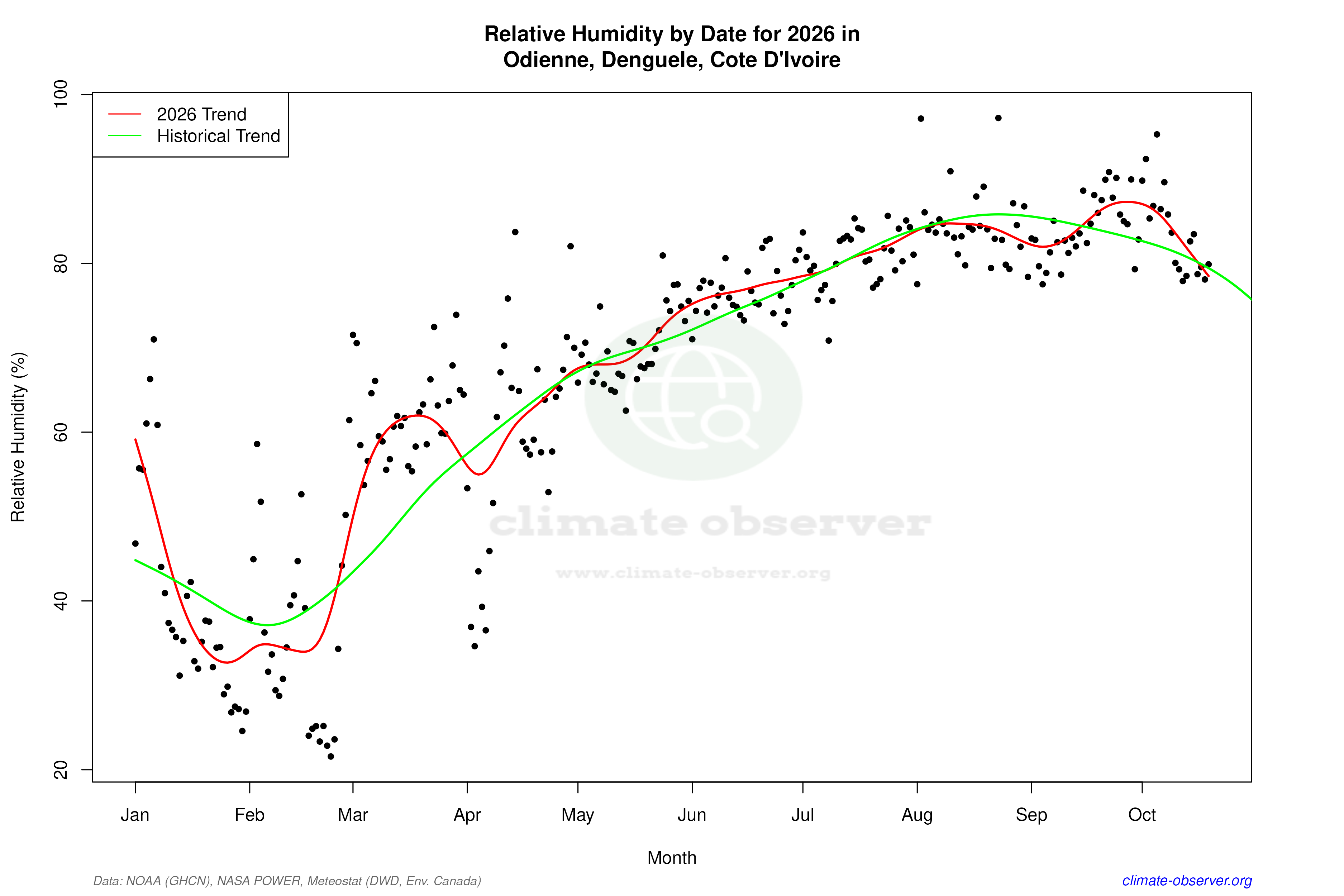

Max Temperature this Year | 1 of 6
Climate 12-Month Moving Averages
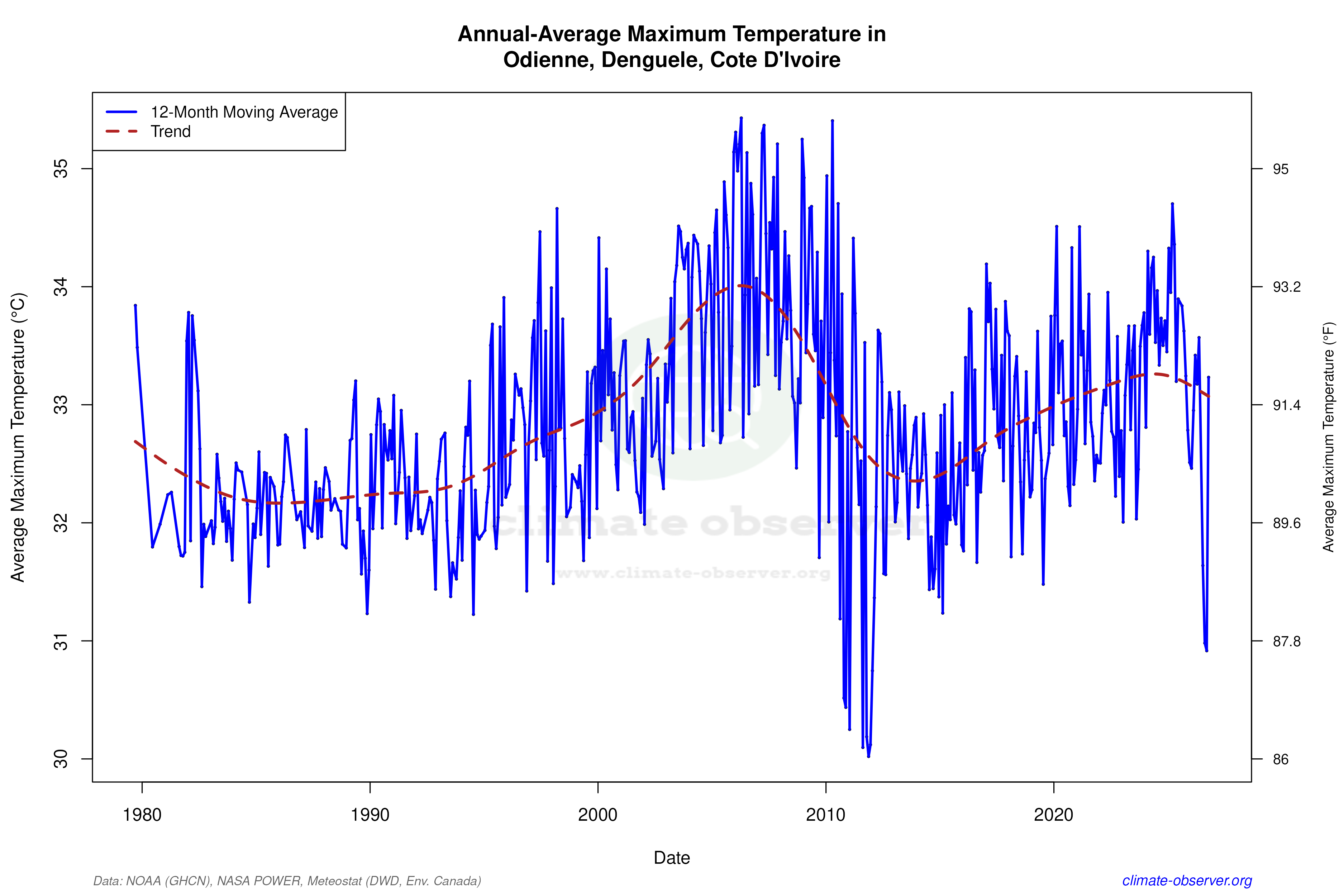
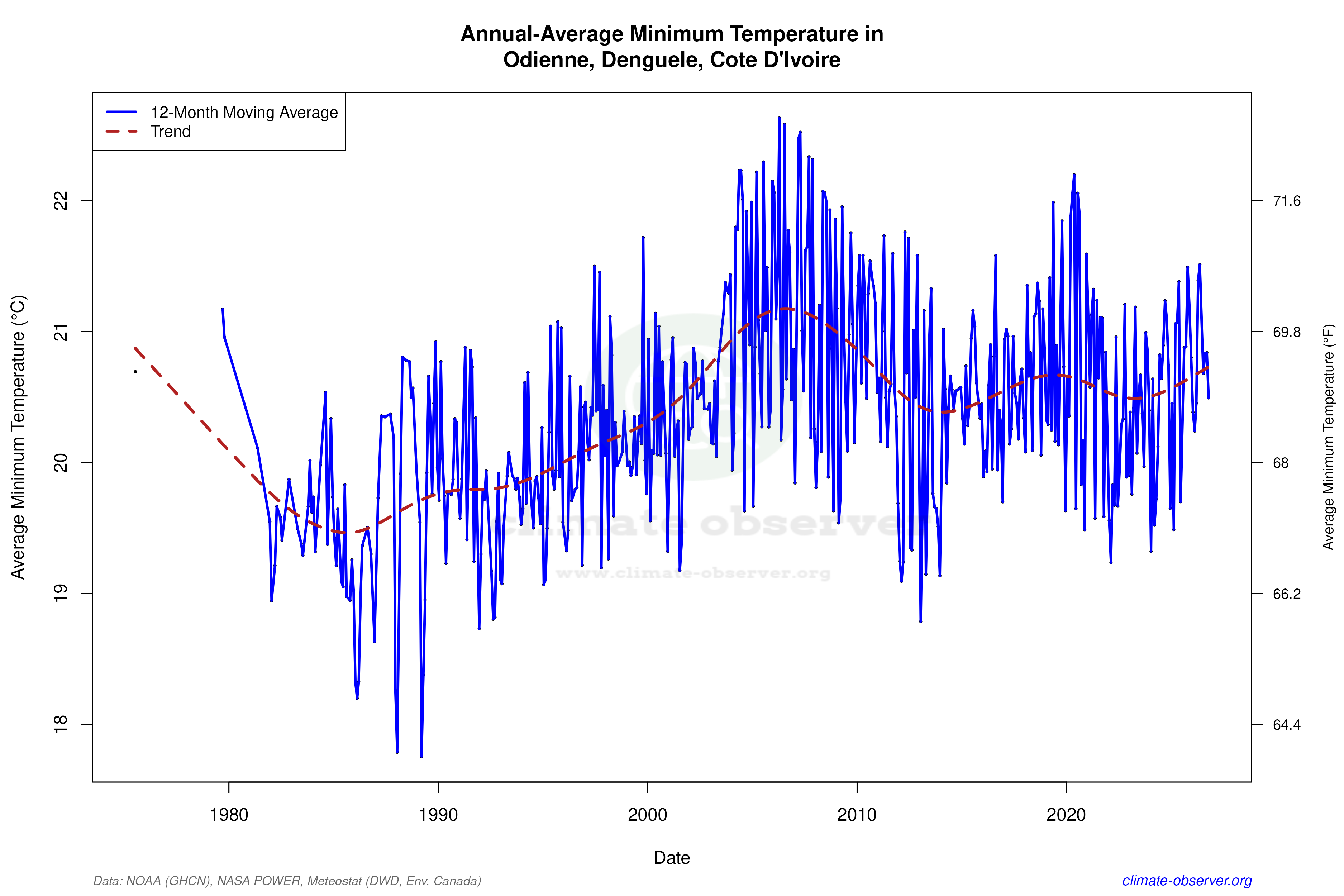
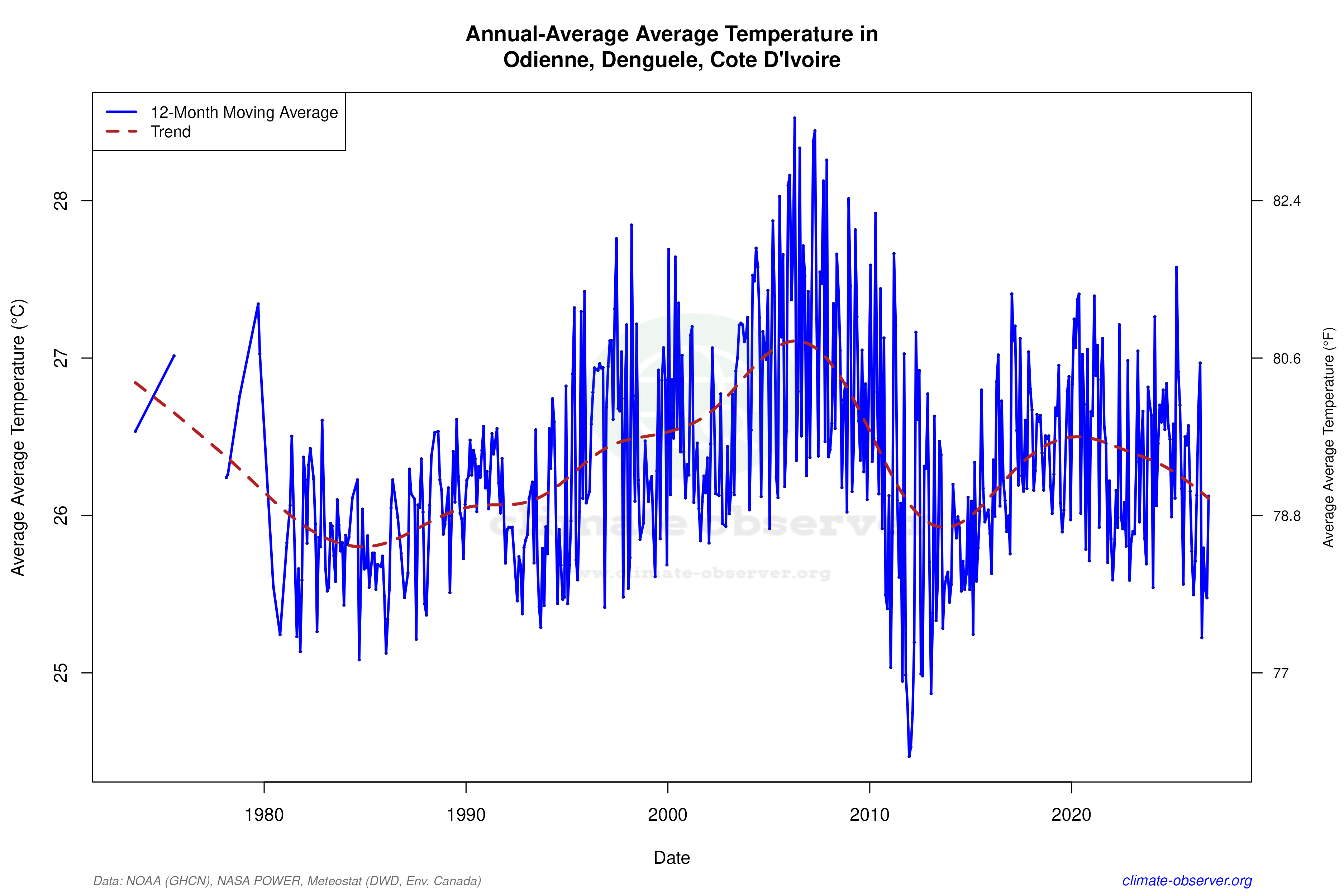
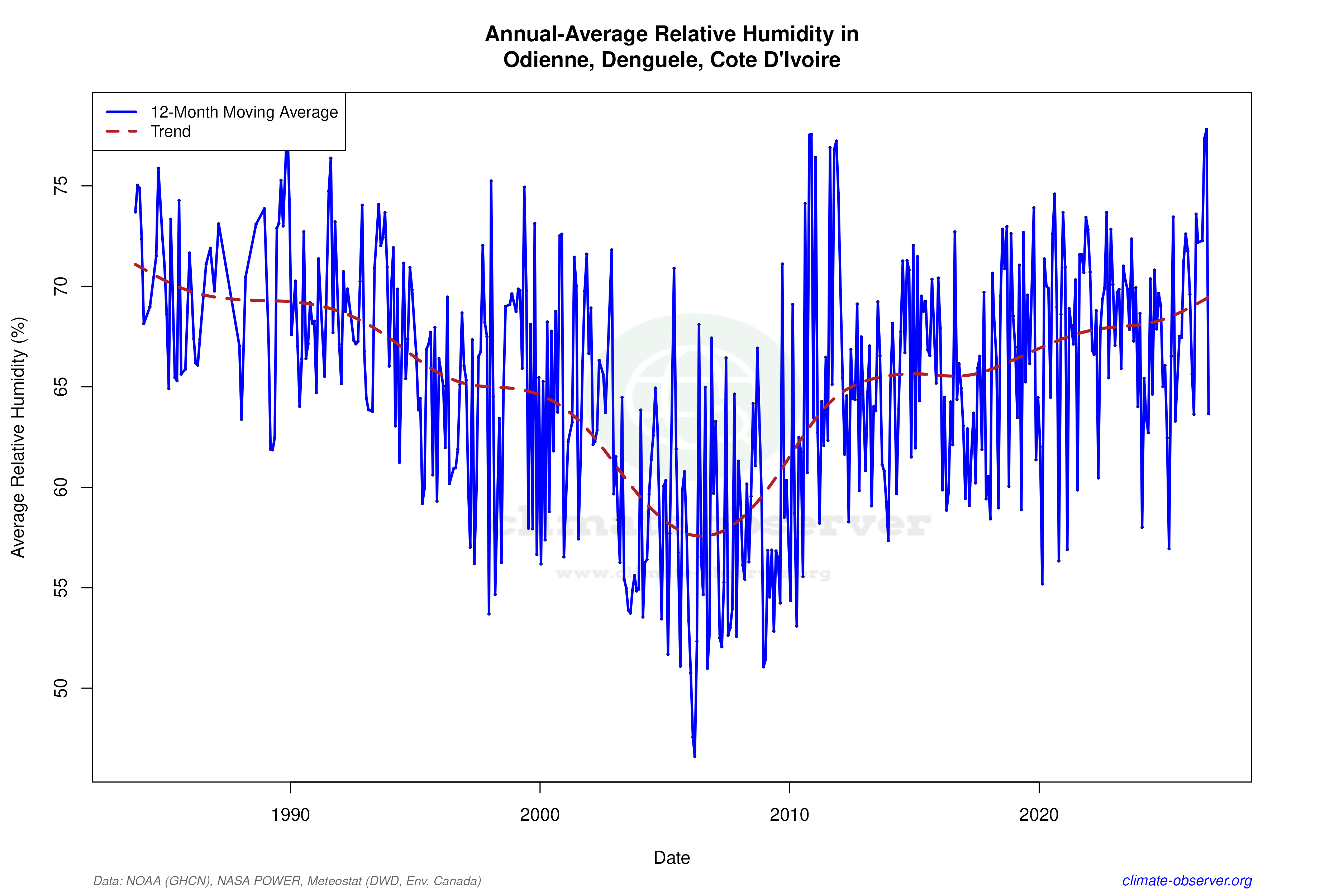

Max Temperature 12-Month MA | 1 of 6
Daily Data Points and Averages Throughout the Year
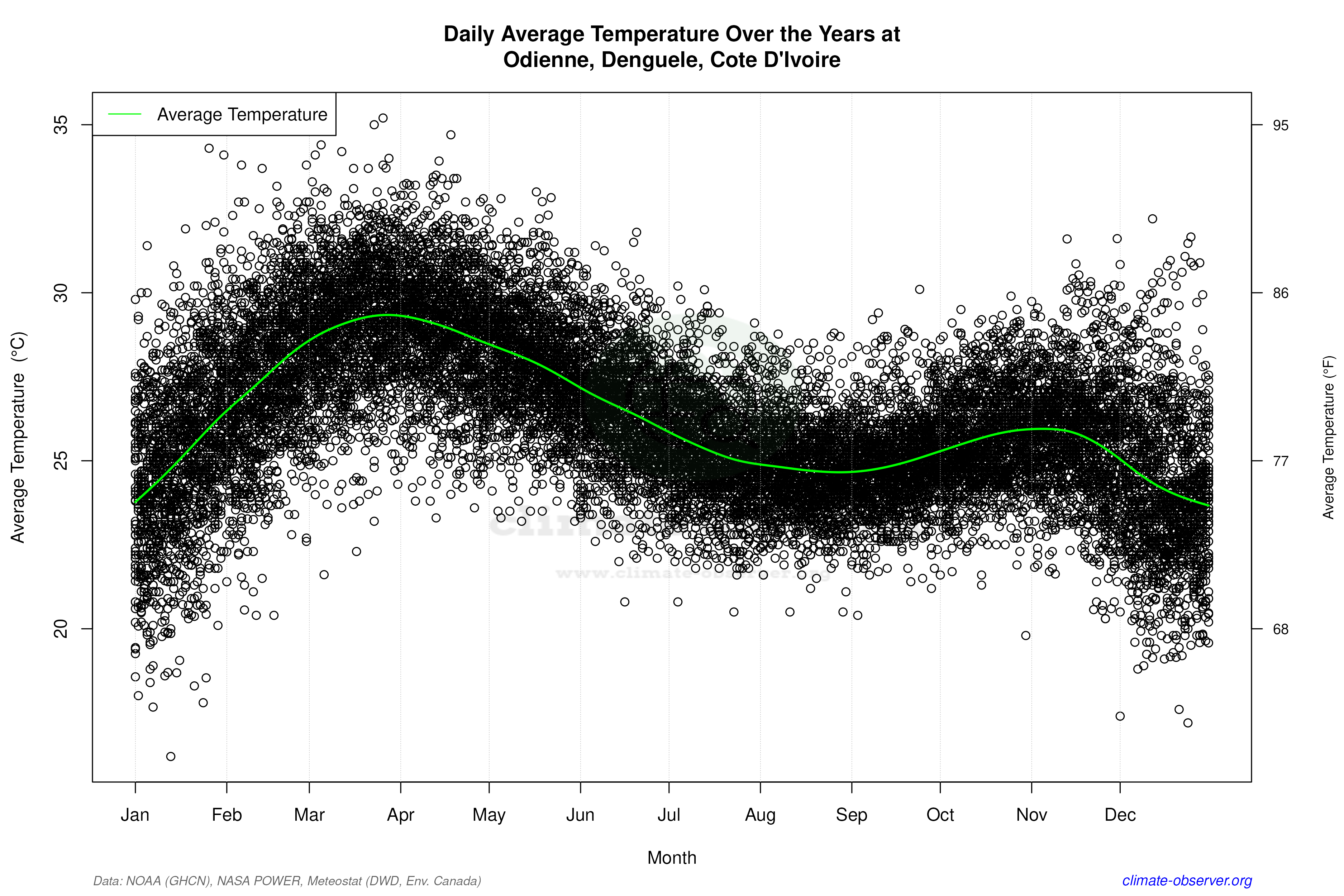
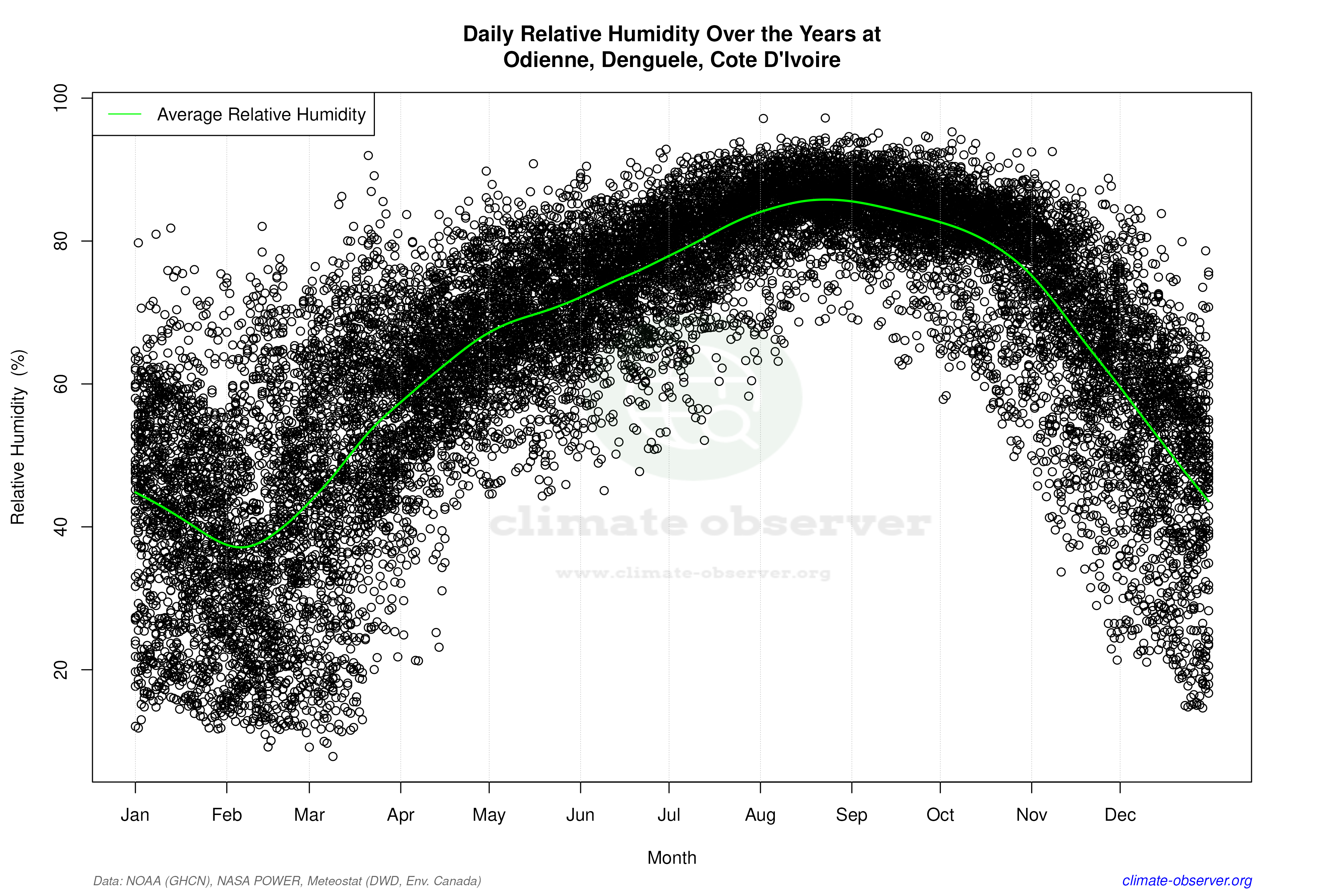

Average Max Temperature Throughout Year | 1 of 5


