Climate for Station: Gangneung, Gangwon, Korea, South
Loading live weather...
Climate Analysis & Overview
Gangneung's climate reflects a warming trend with an all-time increase in high temperatures of 0.20°C (0.36°F), while recent data gaps leave some precipitation patterns less clear. The city's coastal location contributes to its unique climate dynamics, marked by extreme temperature records and a baseline Precipitation Concentration Index of 18.0, indicating moderately concentrated rainfall events.
Coastal Climate Dynamics
Gangneung, located at 37.771°N, 128.868°E, is nestled along South Korea's eastern coastline. This geographical positioning subjects it to a humid subtropical climate (Cfa) according to the Köppen classification, characterised by hot, humid summers and mild winters. The East Sea's proximity moderates temperature extremes, yet the city has recorded a scorching maximum of 39.3°C (102.7°F) and a chilling minimum of -16.0°C (3.2°F). These extremes underscore the region's susceptibility to both heatwaves and cold snaps, influenced by oceanic and atmospheric interactions.
Warming Trends and Temperature Extremes
The all-time data reveals a warming trend in high temperatures, with an increase of 0.20°C (0.36°F). This rise aligns with broader regional climate patterns, as South Korea intensifies its efforts towards carbon neutrality by 2050. Although the 10-year trend data for highs and lows is unavailable, the all-time warming trend suggests a persistent increase in temperature extremes. This could exacerbate heat-related challenges, particularly during the peak summer months.
Precipitation Patterns and Data Gaps
Precipitation in Gangneung is moderately concentrated, as indicated by a baseline Precipitation Concentration Index (PCI) of 18.0. This value suggests that rainfall events are somewhat clustered, leading to periods of heavy rainfall followed by drier spells. However, current PCI data is missing, creating a monitoring gap that complicates the assessment of recent changes in precipitation distribution. Understanding these patterns is crucial, especially as the region experiences more frequent and intense weather events due to climate change.
Implications for Regional Climate Goals
Gangneung's climate profile, characterised by warming trends and concentrated precipitation, presents both challenges and opportunities for South Korea's climate strategy. The city's data underscores the importance of adaptive measures to mitigate the impacts of extreme weather, such as improved infrastructure and emergency preparedness. As the nation strives towards its climate goals, Gangneung serves as a microcosm of the broader climatic shifts occurring across the Korean Peninsula.
Station Statistics
10-Year Trend
High: N/A
Low: N/A
Rain: N/A
25-Year Trend
High: +0.73 °C/decade
Low: N/A
Rain: N/A
50-Year Trend
High: +0.26 °C/decade
Low: N/A
Rain: N/A
All-Time Trend
High: +0.26 °C/decade
Low: N/A
Rain: N/A
Percentage Above-Average Days
Last 12 Months: 54.9%
This Year: 58.1%
Precipitation Concentration Index (PCI) ℹ️
Last 12 Months: 51.1
Historical Average: 18.7
Percentile Rank of Last 12 Months ℹ️
High: 99th percentile
Low: 55th percentile
Rain: N/A
Change in Variance ℹ️
High: +4.4%
Low: +12.0%
Intraday: -14.7%
Data Coverage
68.1%
First Year of Data
2013
Station Location
Historical Weather Records
| Max High | Avg High | Min High | Max Avg | Avg Avg | Min Avg | Max Low | Avg Low | Min Low | Max Precipitation | Avg Precipitation | Max Snow | Avg Snow | |
|---|---|---|---|---|---|---|---|---|---|---|---|---|---|
| Record | 39.3 °C | — | -7.9 °C | 33.6 °C | — | -12.2 °C | 31.0 °C | — | -16.0 °C | 347.0 mm | — | — | — |
| January | 16.0 °C | 4.9 °C | -7.9 °C | 13.1 °C | 0.6 °C | -12.2 °C | 8.6 °C | -3.6 °C | -15.6 °C | 82.0 mm | 4.5 mm | — | — |
| February | 21.4 °C | 6.5 °C | -7.0 °C | 15.6 °C | 2.3 °C | -10.1 °C | 10.0 °C | -2.2 °C | -16.0 °C | 55.9 mm | 4.9 mm | — | — |
| March | 27.1 °C | 11.1 °C | -4.0 °C | 21.6 °C | 6.8 °C | -7.9 °C | 17.1 °C | 2.1 °C | -11.0 °C | 112.0 mm | 5.1 mm | — | — |
| April | 33.6 °C | 18.0 °C | 5.8 °C | 26.6 °C | 13.1 °C | 2.5 °C | 22.6 °C | 7.6 °C | -6.9 °C | 124.5 mm | 5.8 mm | — | — |
| May | 35.1 °C | 22.8 °C | 9.0 °C | 30.3 °C | 18.1 °C | 6.8 °C | 25.1 °C | 12.8 °C | 3.1 °C | 146.1 mm | 5.9 mm | — | — |
| June | 36.9 °C | 25.2 °C | 12.0 °C | 32.2 °C | 21.2 °C | 10.1 °C | 29.8 °C | 17.0 °C | 6.0 °C | 151.9 mm | 7.0 mm | — | — |
| July | 39.3 °C | 28.2 °C | 16.0 °C | 33.5 °C | 24.7 °C | 15.3 °C | 31.0 °C | 21.3 °C | 5.5 °C | 311.9 mm | 14.1 mm | — | — |
| August | 38.9 °C | 28.7 °C | 18.4 °C | 33.6 °C | 25.0 °C | 17.1 °C | 30.9 °C | 21.6 °C | 6.0 °C | 342.9 mm | 16.8 mm | — | — |
| September | 35.8 °C | 24.8 °C | 15.9 °C | 29.7 °C | 20.5 °C | 12.4 °C | 25.8 °C | 16.5 °C | 3.0 °C | 347.0 mm | 14.7 mm | — | — |
| October | 31.2 °C | 20.3 °C | 7.0 °C | 26.1 °C | 15.5 °C | 4.3 °C | 21.0 °C | 10.9 °C | -3.5 °C | 301.5 mm | 9.0 mm | — | — |
| November | 26.5 °C | 13.9 °C | 1.0 °C | 24.7 °C | 9.4 °C | -3.9 °C | 20.0 °C | 5.0 °C | -7.0 °C | 75.9 mm | 6.7 mm | — | — |
| December | 21.1 °C | 7.7 °C | -6.0 °C | 16.1 °C | 3.2 °C | -12.0 °C | 11.0 °C | -0.9 °C | -15.0 °C | 88.9 mm | 4.0 mm | — | — |
Data Visualisations
Remove WatermarksCurrent Year Climate Trends vs Historical
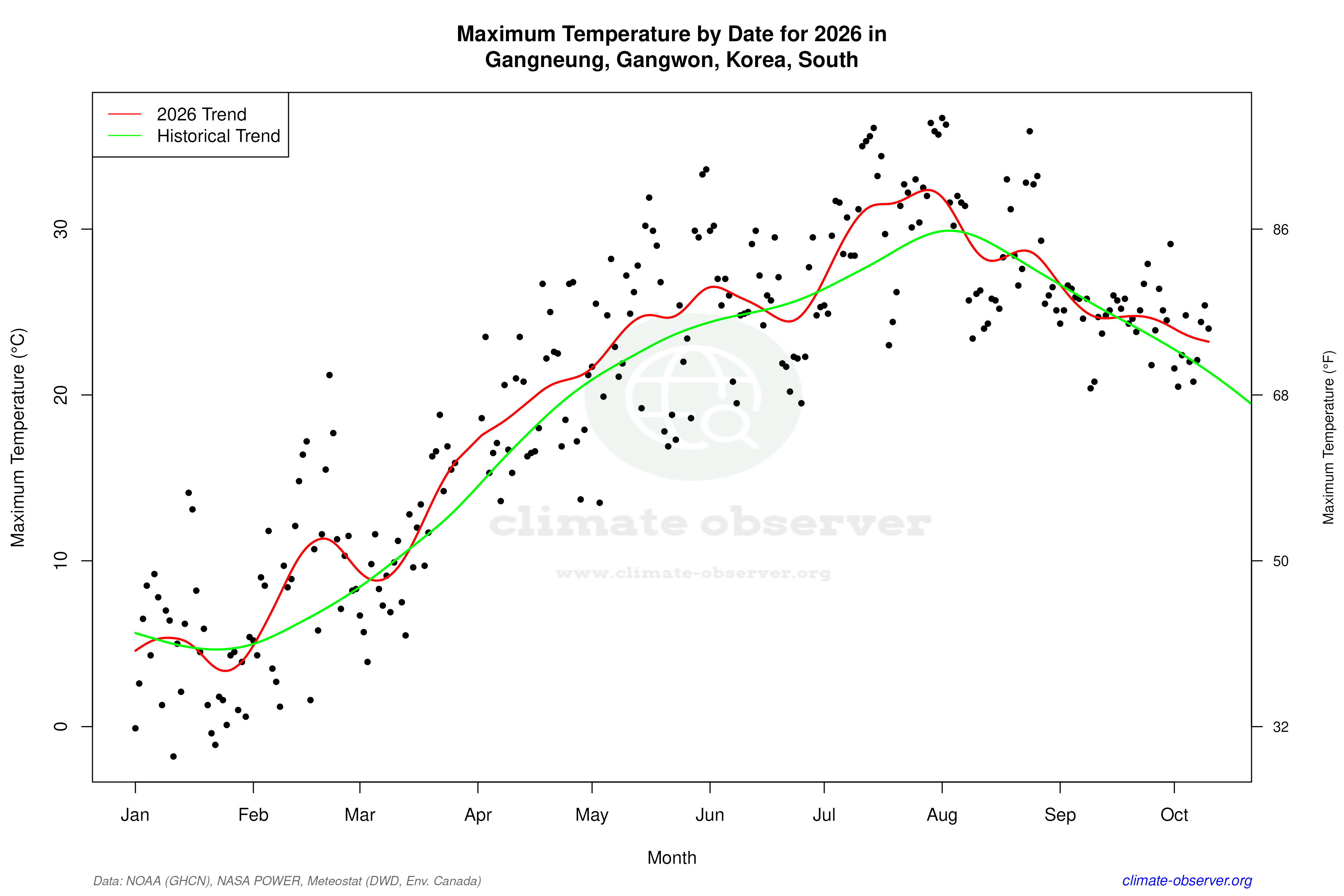
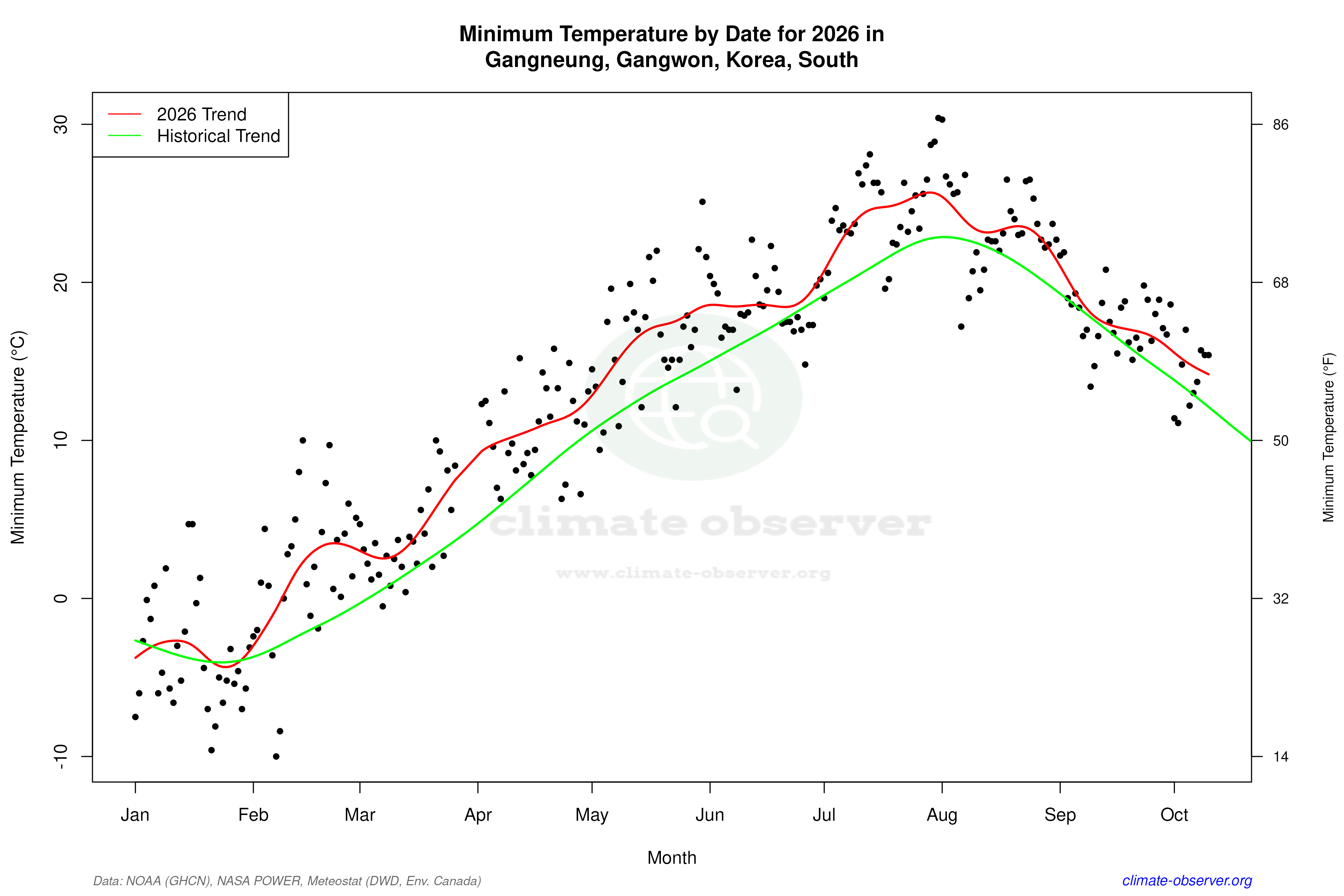
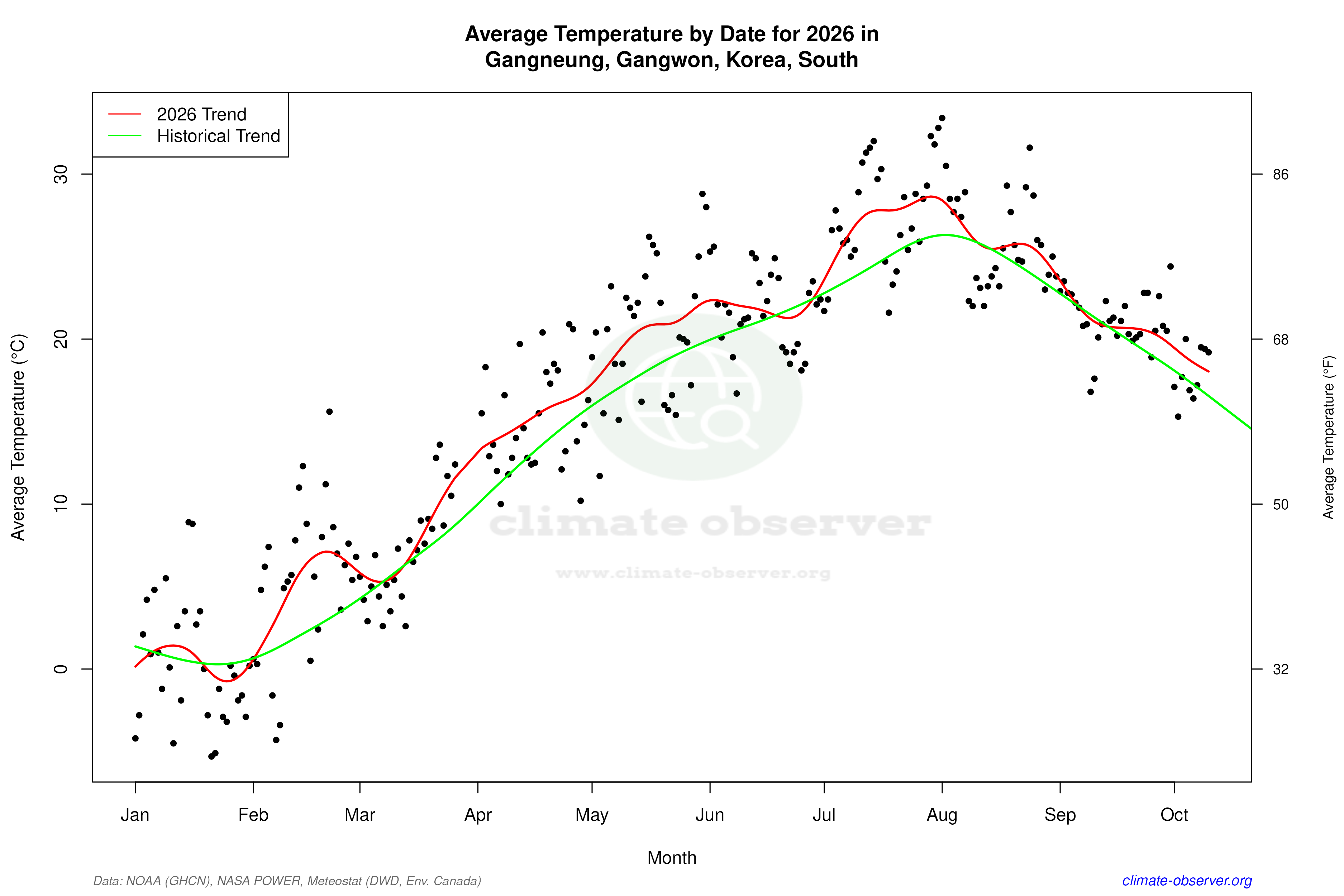
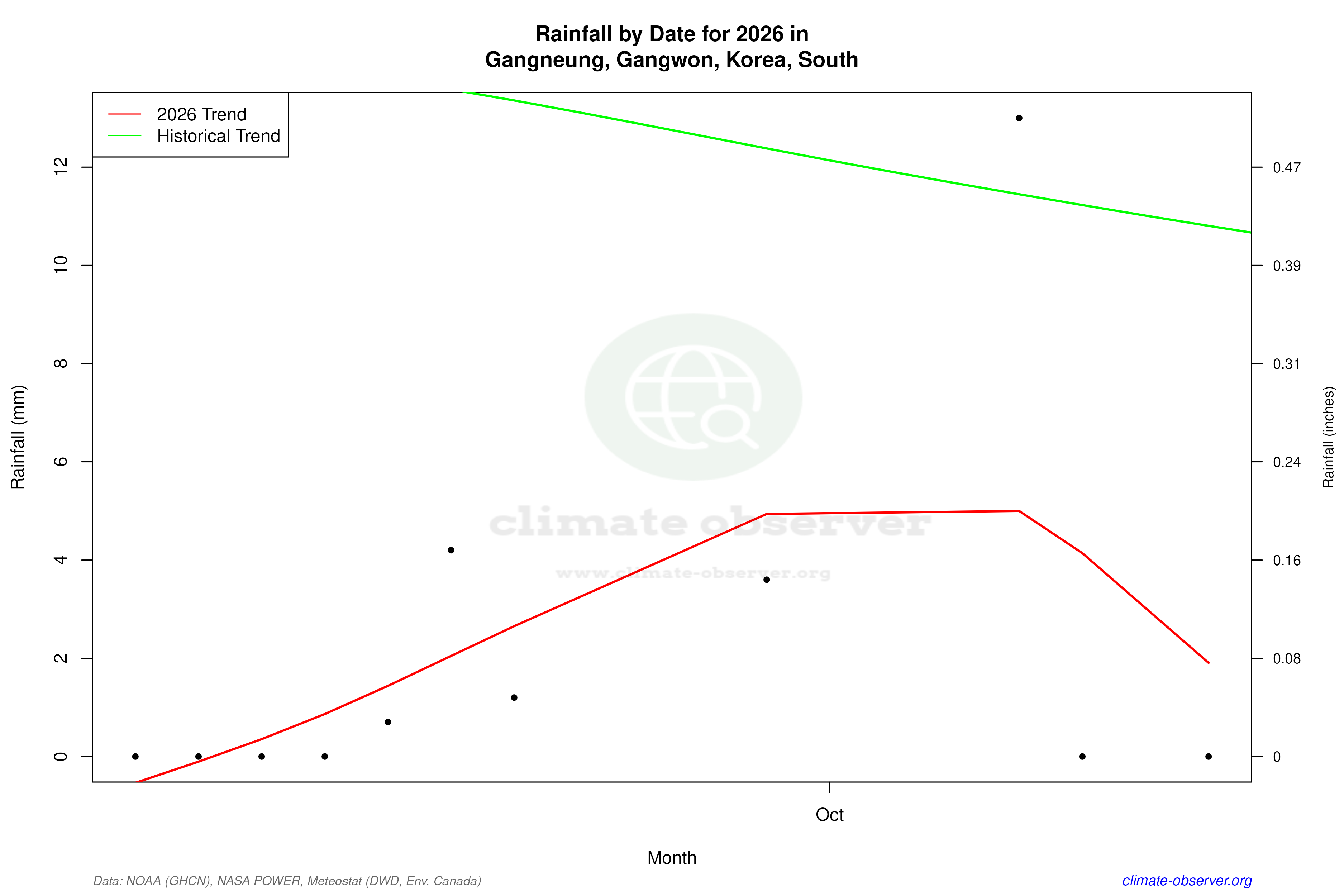


Max Temperature this Year | 1 of 6
Climate 12-Month Moving Averages
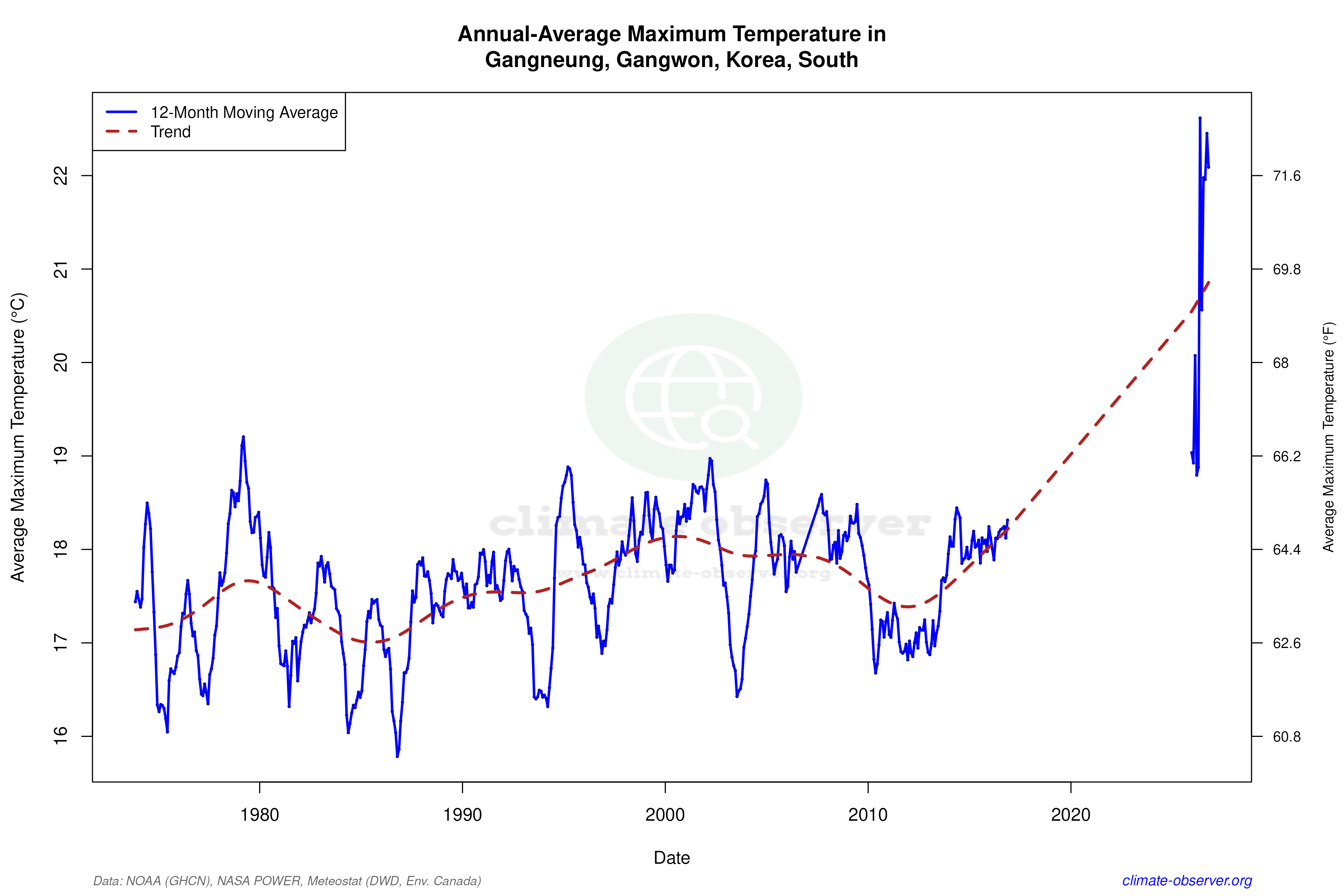
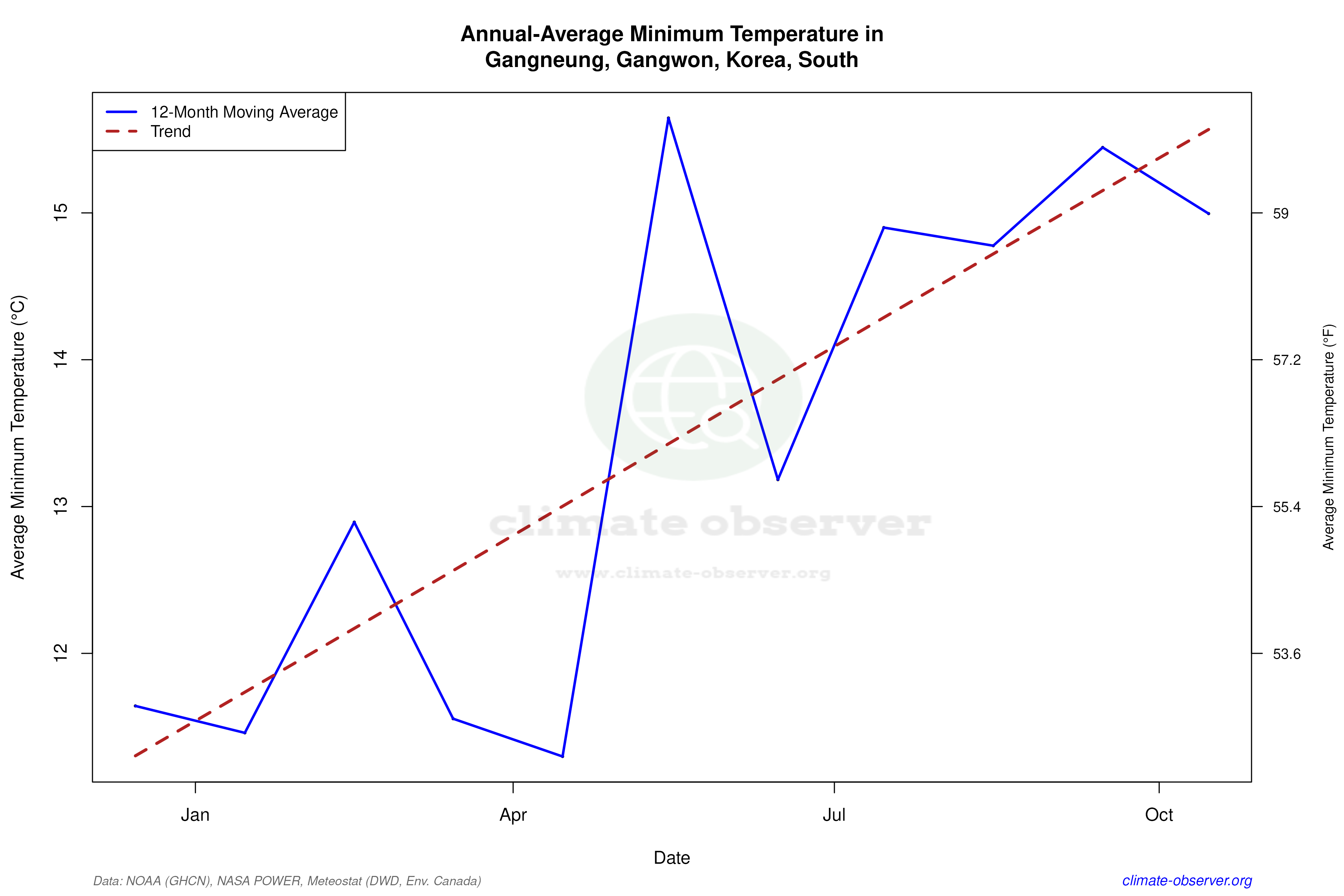
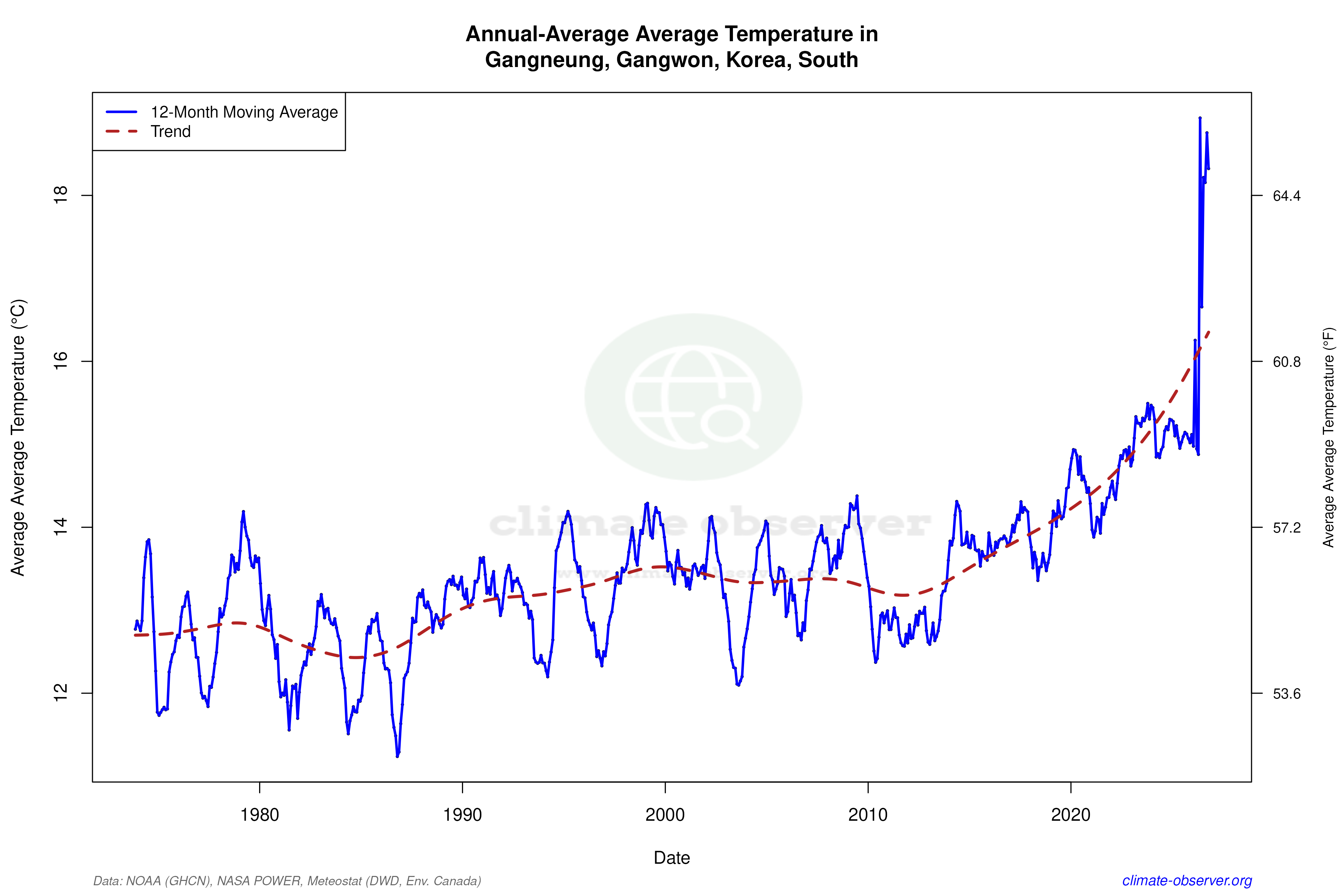



Max Temperature 12-Month MA | 1 of 6
Daily Data Points and Averages Throughout the Year
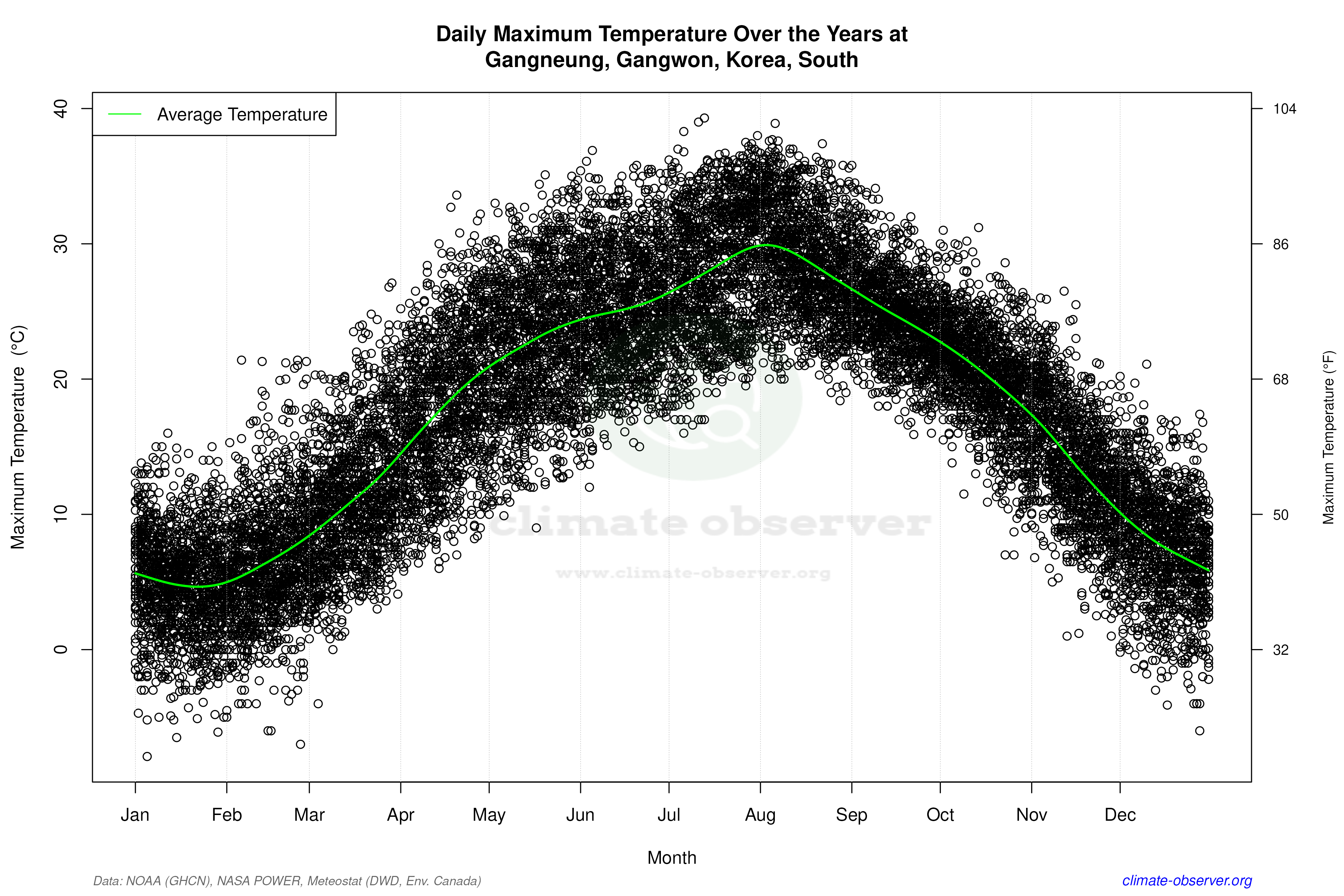
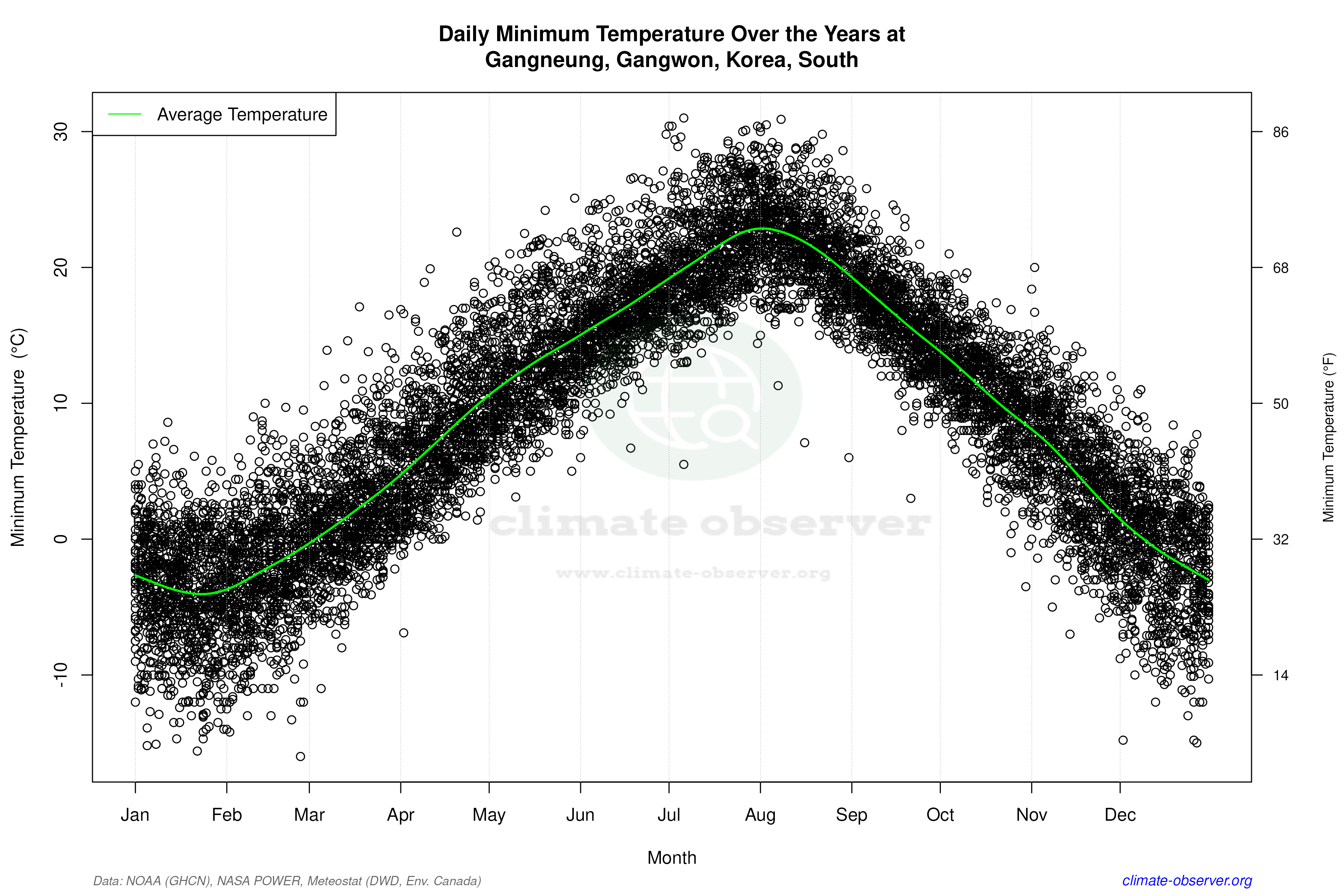
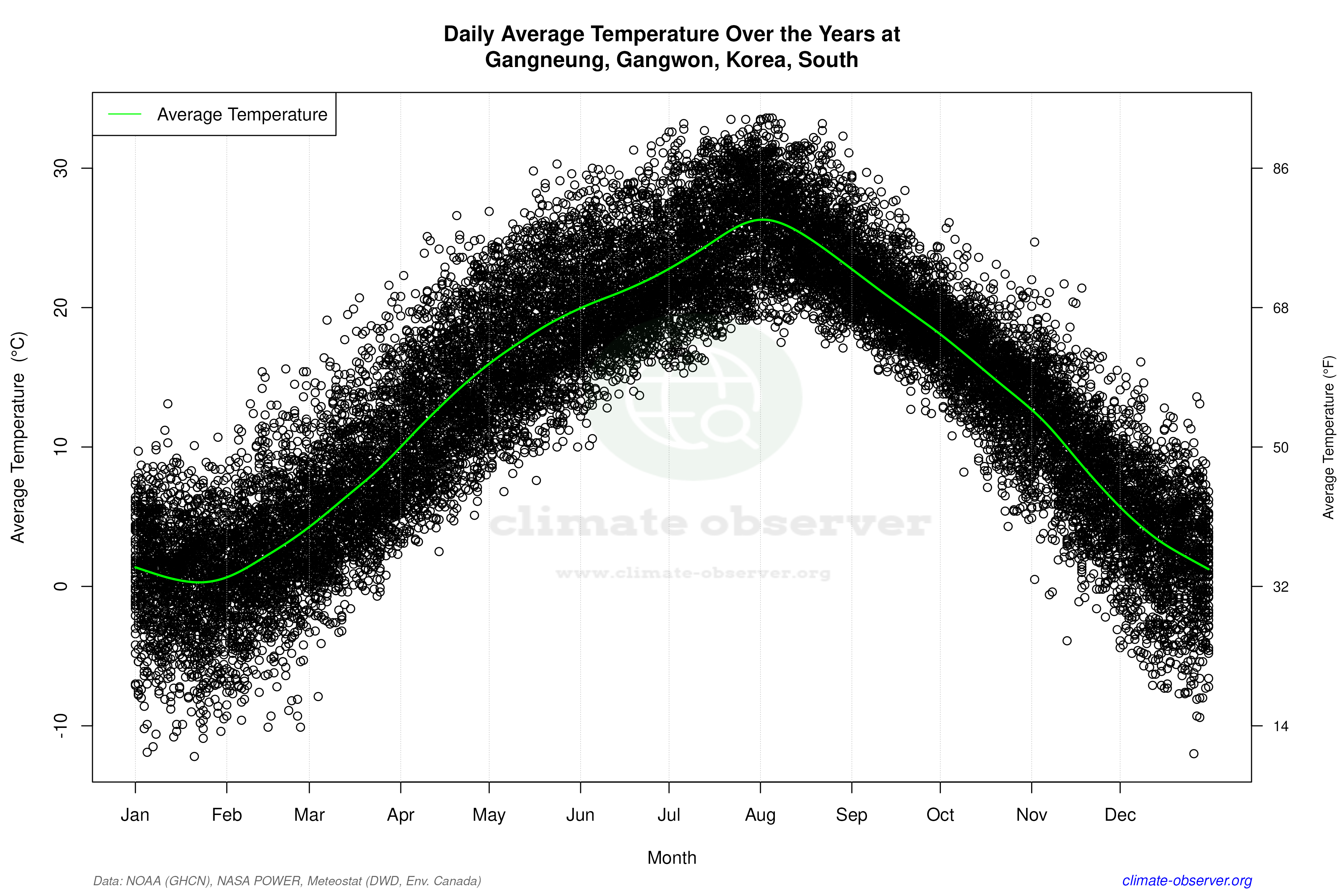


Average Max Temperature Throughout Year | 1 of 5


