Climate for Station: Turgaj, Kostanay Region, Kazakhstan
Loading live weather...
Climate Analysis & Overview
Turgaj is experiencing a significant warming trend, particularly in its nighttime temperatures, with a marked increase in precipitation concentration. These changes suggest a shift towards more extreme weather patterns, challenging the region's resilience against climate variability.
Köppen Classification and Local Geography
Turgaj, located in the Kostanay Region of Kazakhstan, is classified under the Köppen climate classification as a cold semi-arid climate (BSk). This classification is characterized by low annual precipitation and large temperature variations between seasons. The region's flat steppe landscape contributes to its climatic conditions, allowing for unhindered air movement and significant temperature fluctuations. The absence of large water bodies or mountain ranges nearby means that Turgaj is particularly susceptible to continental climate influences.
Temperature Trends: A Warming Landscape
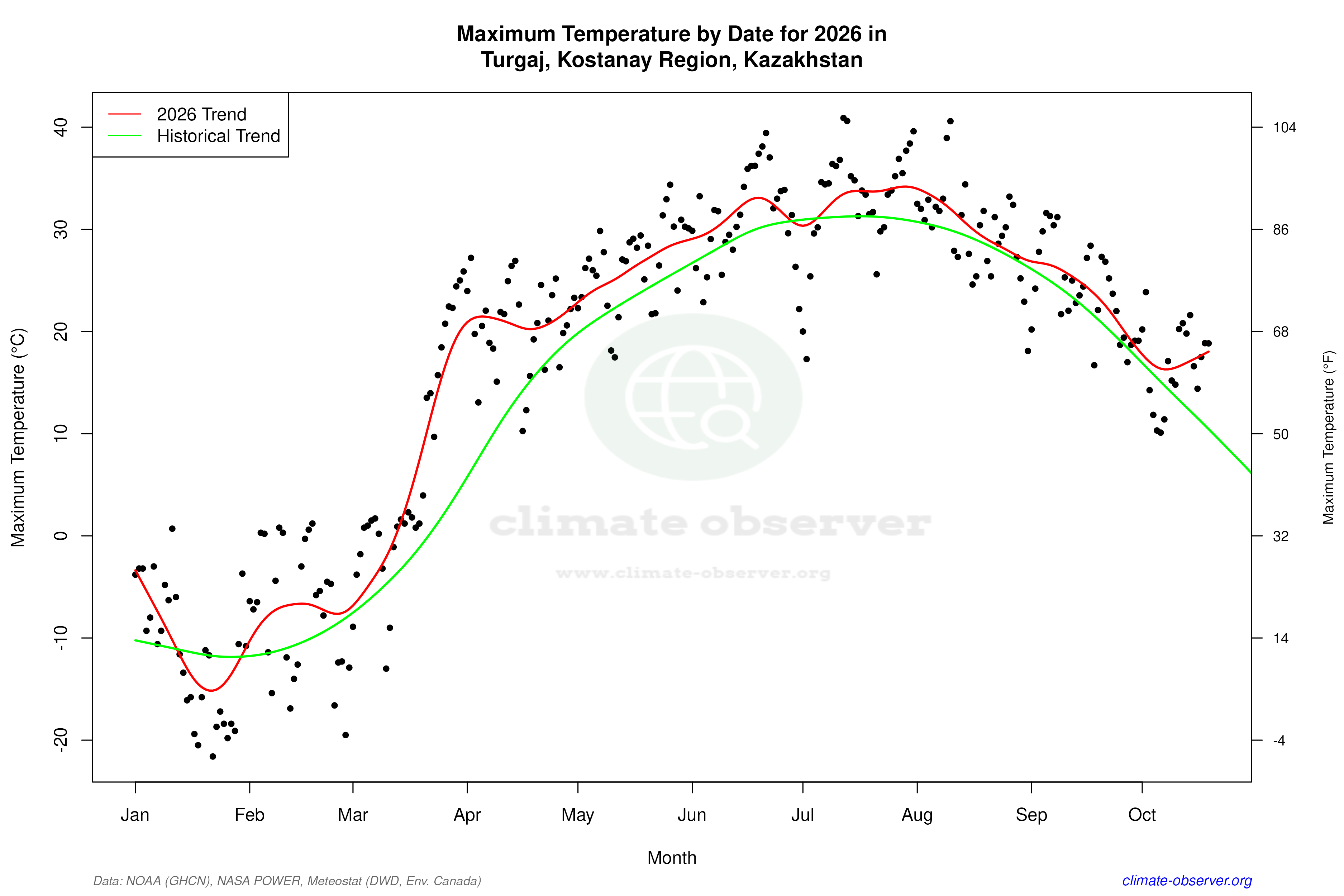
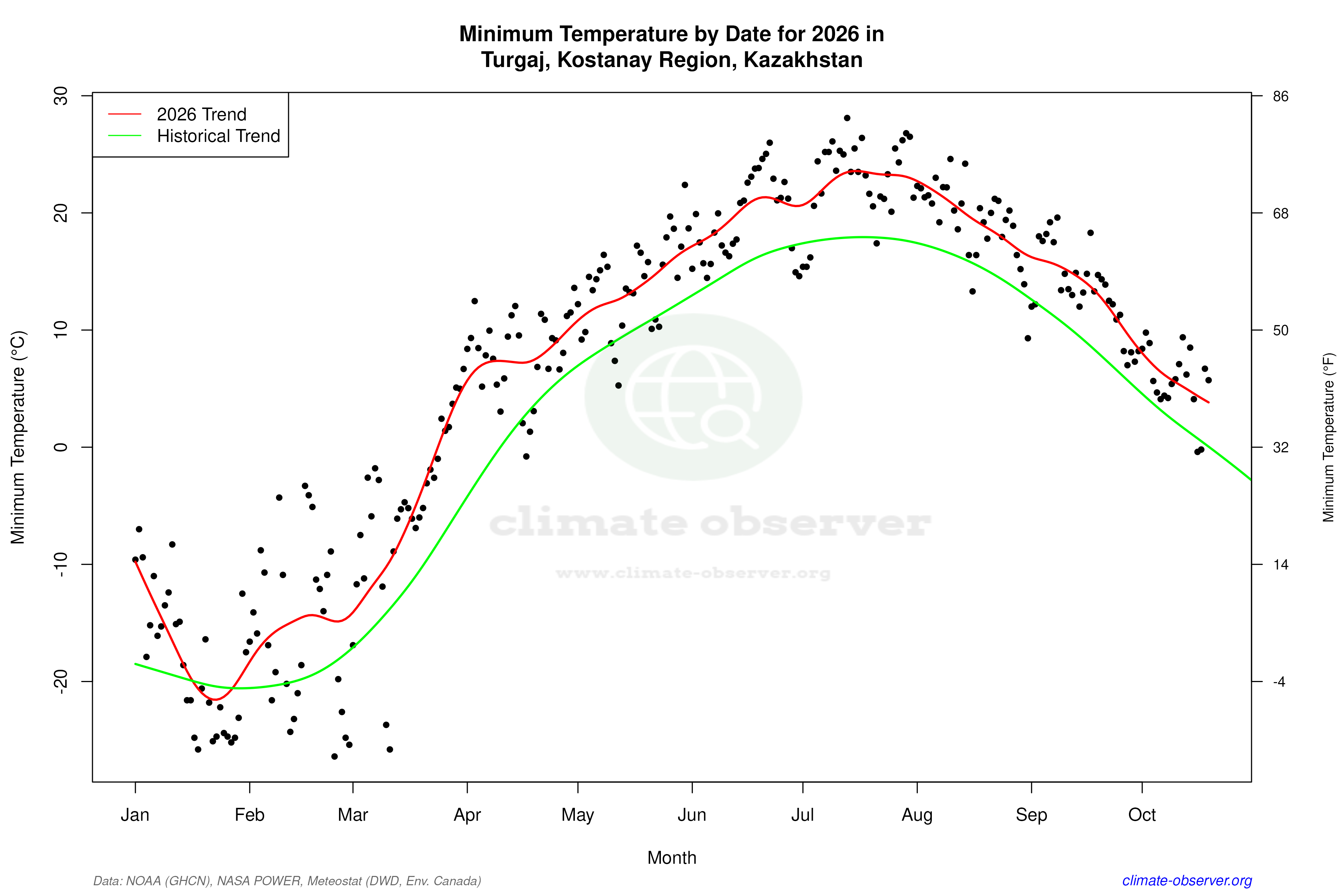
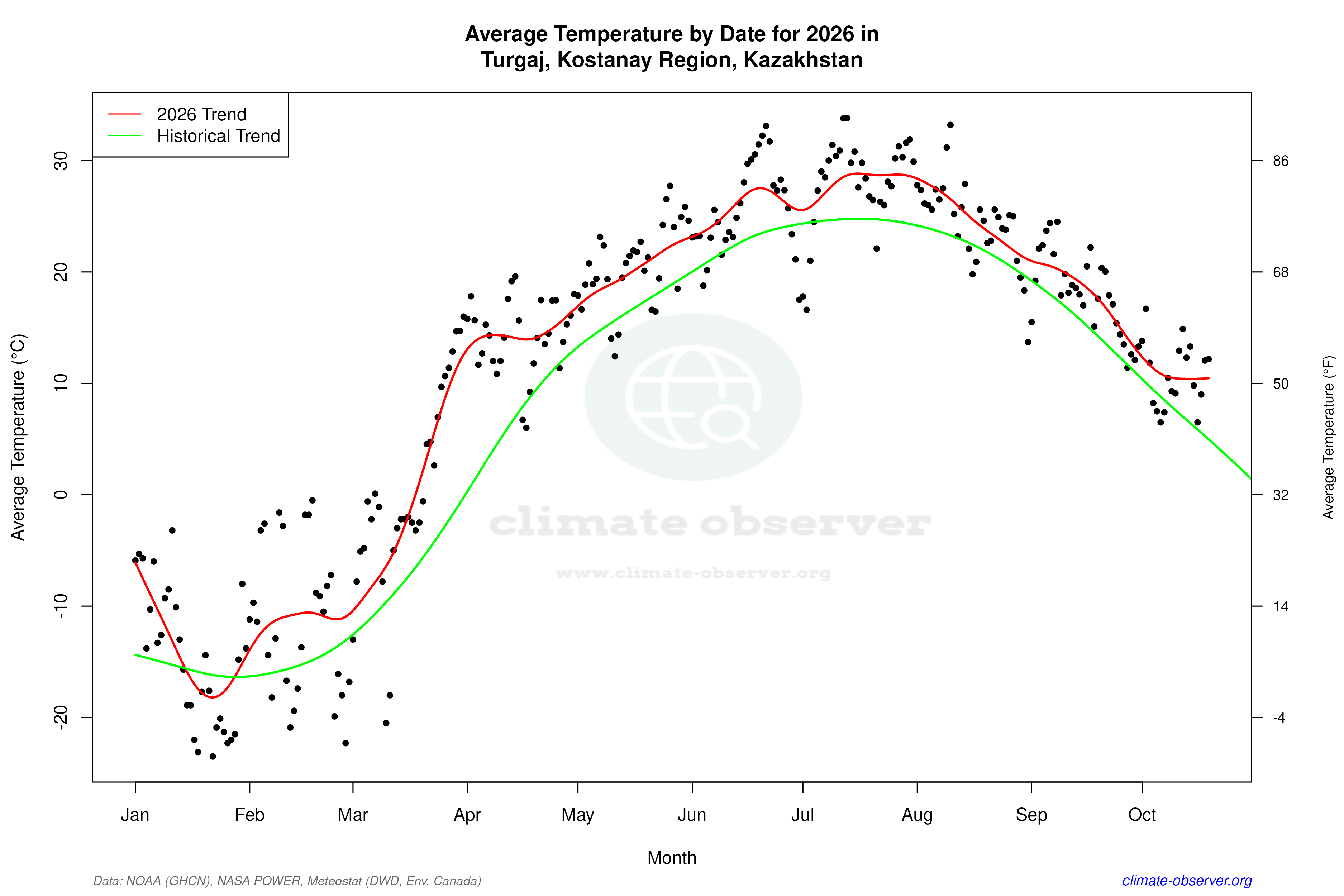
Over the past decade, Turgaj has experienced a notable warming trend, with high temperatures increasing by 1.89°C (3.40°F) and low temperatures rising even more significantly by 2.39°C (4.30°F). This trend is more pronounced than the all-time warming trends, where high temperatures have increased by 0.18°C (0.32°F) and low temperatures by 0.26°C (0.47°F). The greater rise in nighttime temperatures suggests a reduction in the diurnal temperature range, which could impact local agriculture and ecosystems by altering growing seasons and increasing heat stress.
Extreme Temperature Records
The temperature extremes in Turgaj are stark, with a record high of 48.7°C (119.7°F) and a record low of -40.5°C (-40.9°F). These extremes highlight the region's vulnerability to both heatwaves and cold snaps, which can have severe implications for infrastructure and health. The increasing frequency of such extremes may be indicative of broader climatic shifts, necessitating adaptive measures to protect the community and environment.
Precipitation Patterns: Concentration Intensifies
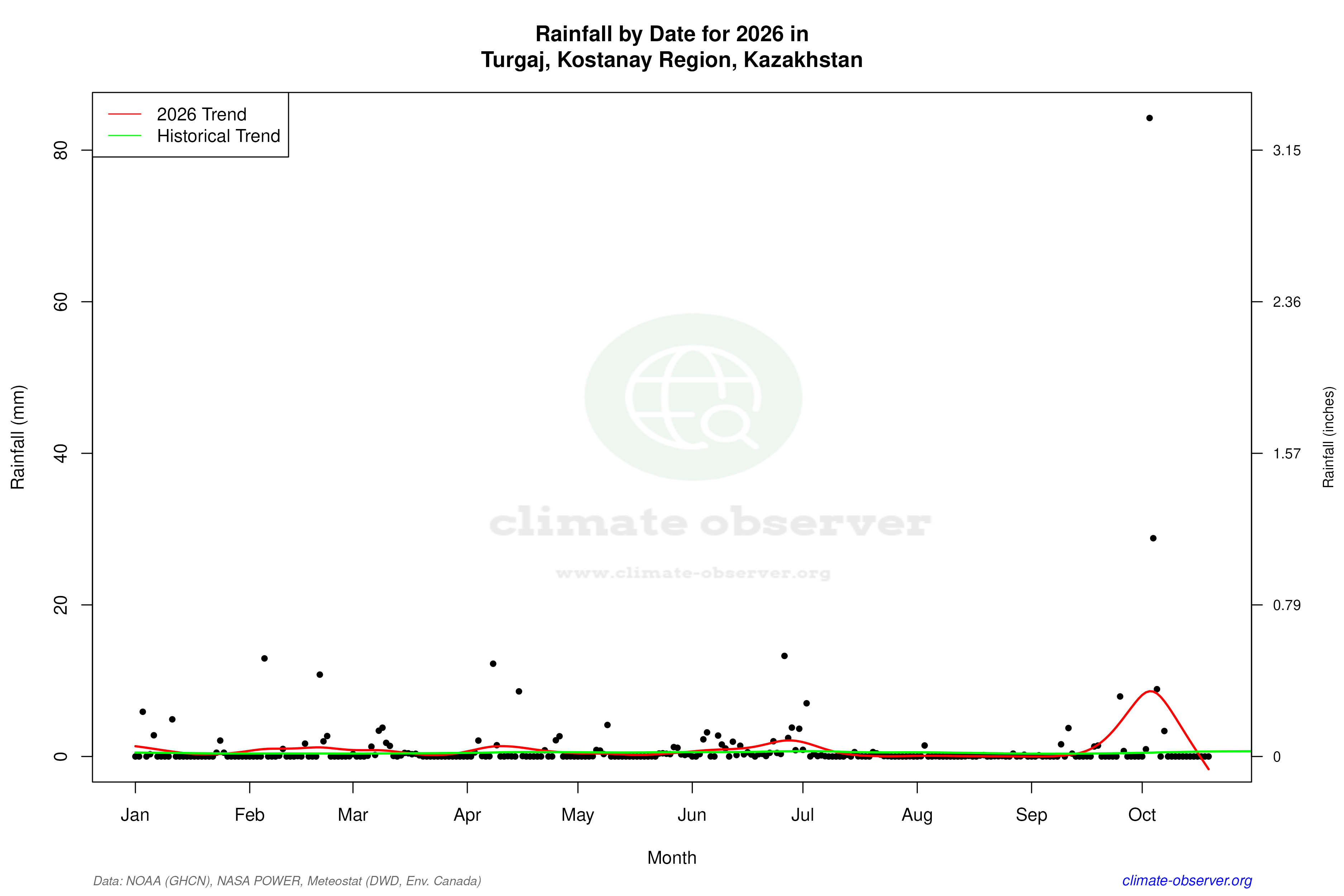
The Precipitation Concentration Index (PCI) for Turgaj has seen a dramatic increase from a baseline of 13.5 to a current value of 51.3. This indicates a significant shift towards more concentrated precipitation events, where rainfall occurs in fewer, more intense episodes. Such changes can lead to increased risks of flooding and soil erosion, while also affecting water availability during drier periods. The heightened concentration of precipitation events underscores the need for improved water management strategies to mitigate potential adverse impacts.
Regional Implications and Climate Goals
Kazakhstan's regional climate goals aim to enhance resilience against climate change impacts, focusing on sustainable agricultural practices and infrastructure improvements. The trends observed in Turgaj, with its warming temperatures and intensified precipitation concentration, align with these national priorities. Addressing these climatic challenges will be crucial for maintaining the region's socio-economic stability and environmental health.
Station Statistics
10-Year Trend
High: +1.85 °C/decade
Low: +2.22 °C/decade
Rain: +0.24 mm/decade
25-Year Trend
High: +0.19 °C/decade
Low: +0.42 °C/decade
Rain: +0.10 mm/decade
50-Year Trend
High: +0.35 °C/decade
Low: +0.38 °C/decade
Rain: +0.02 mm/decade
All-Time Trend
High: +0.25 °C/decade
Low: +0.17 °C/decade
Rain: +0.00 mm/decade
Percentage Above-Average Days
Last 12 Months: 60.5%
This Year: 64.4%
Precipitation Concentration Index (PCI) ℹ️
Last 12 Months: 18.3
Historical Average: 13.0
Percentile Rank of Last 12 Months ℹ️
High: 61st percentile
Low: 70th percentile
Rain: 81st percentile
Change in Variance ℹ️
High: -5.9%
Low: -6.6%
Intraday: -11.4%
Data Coverage
84.2%
First Year of Data
1939
Station Location
Historical Weather Records
| Max High | Avg High | Min High | Max Avg | Avg Avg | Min Avg | Max Low | Avg Low | Min Low | Max Precipitation | Avg Precipitation | Max Snow | Avg Snow | |
|---|---|---|---|---|---|---|---|---|---|---|---|---|---|
| Record | 48.7 °C | — | -36.5 °C | 35.8 °C | — | -38.9 °C | 29.2 °C | — | -40.5 °C | 93.2 mm | — | — | — |
| January | 16.4 °C | -11.2 °C | -36.5 °C | 1.4 °C | -15.6 °C | -38.9 °C | 0.5 °C | -19.8 °C | -40.5 °C | 22.7 mm | 0.4 mm | — | — |
| February | 7.4 °C | -10.3 °C | -32.3 °C | 2.6 °C | -15.1 °C | -35.7 °C | 0.0 °C | -19.5 °C | -39.9 °C | 15.3 mm | 0.4 mm | — | — |
| March | 25.9 °C | -2.1 °C | -25.7 °C | 16.2 °C | -7.1 °C | -30.1 °C | 13.1 °C | -11.5 °C | -35.0 °C | 37.9 mm | 0.4 mm | — | — |
| April | 31.8 °C | 13.6 °C | -13.7 °C | 23.5 °C | 7.4 °C | -18.1 °C | 17.8 °C | 2.0 °C | -23.7 °C | 30.6 mm | 0.6 mm | — | — |
| May | 41.0 °C | 23.3 °C | 3.6 °C | 30.2 °C | 16.6 °C | -1.5 °C | 22.9 °C | 9.9 °C | -6.4 °C | 23.1 mm | 0.5 mm | — | — |
| June | 48.7 °C | 29.3 °C | 8.9 °C | 34.1 °C | 22.6 °C | 6.2 °C | 29.2 °C | 15.5 °C | -0.4 °C | 38.2 mm | 0.6 mm | — | — |
| July | 45.0 °C | 31.1 °C | 14.9 °C | 35.8 °C | 24.6 °C | 11.7 °C | 28.5 °C | 17.8 °C | 6.0 °C | 93.2 mm | 0.6 mm | — | — |
| August | 43.3 °C | 28.9 °C | 13.6 °C | 35.2 °C | 22.2 °C | 7.5 °C | 27.0 °C | 15.5 °C | 0.0 °C | 59.3 mm | 0.5 mm | — | — |
| September | 40.5 °C | 22.1 °C | 3.5 °C | 29.9 °C | 15.2 °C | -1.1 °C | 22.4 °C | 8.9 °C | -6.0 °C | 28.2 mm | 0.4 mm | — | — |
| October | 32.9 °C | 11.5 °C | -15.4 °C | 21.9 °C | 5.8 °C | -18.0 °C | 16.1 °C | 0.8 °C | -21.7 °C | 84.2 mm | 0.6 mm | — | — |
| November | 19.8 °C | 0.5 °C | -24.3 °C | 12.8 °C | -3.6 °C | -27.4 °C | 6.9 °C | -7.3 °C | -32.6 °C | 26.7 mm | 0.6 mm | — | — |
| December | 8.6 °C | -7.6 °C | -34.5 °C | 4.3 °C | -11.8 °C | -36.9 °C | 2.5 °C | -15.8 °C | -39.6 °C | 14.7 mm | 0.5 mm | — | — |
Data Visualisations
Remove WatermarksCurrent Year Climate Trends vs Historical
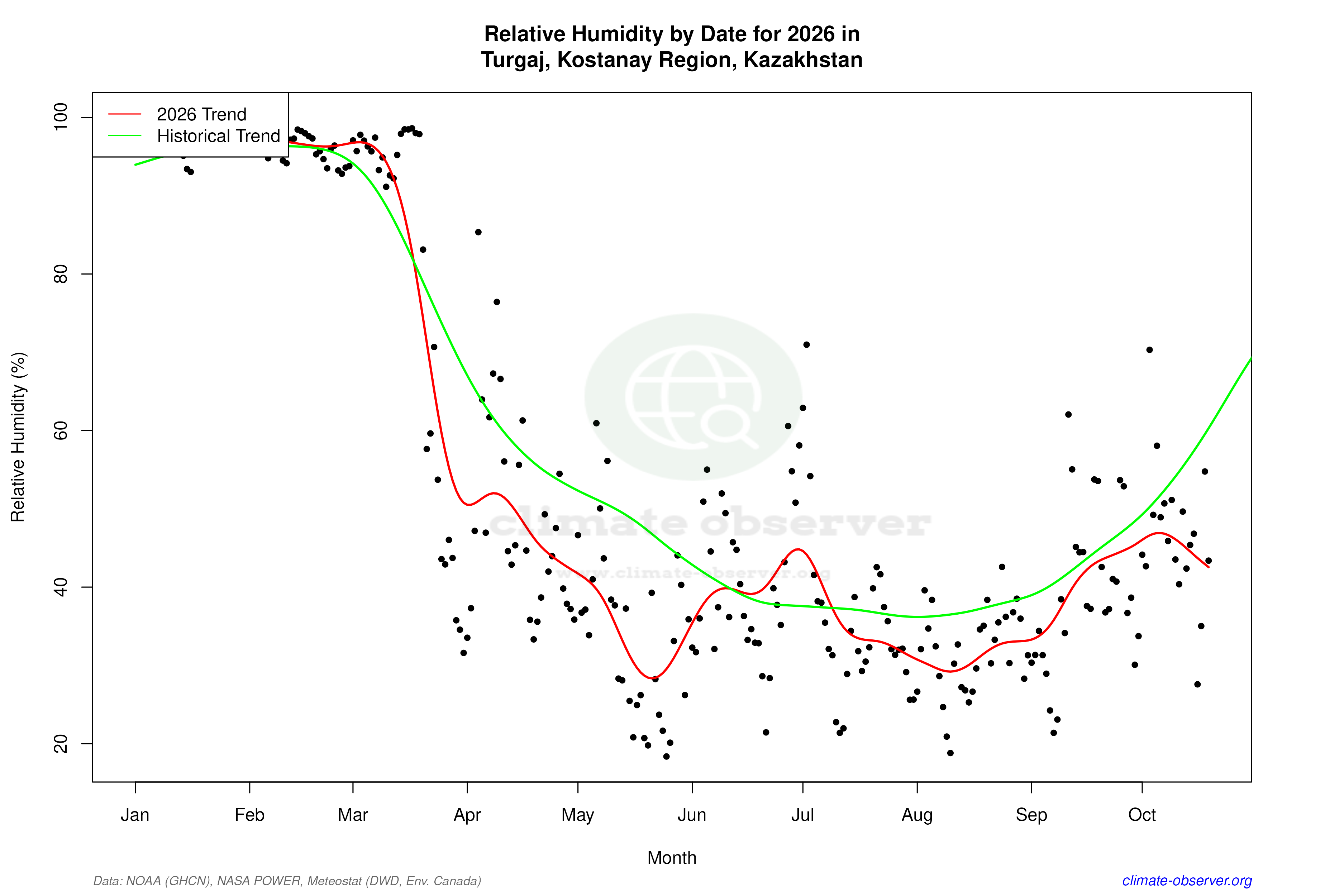

Max Temperature this Year | 1 of 6
Climate 12-Month Moving Averages
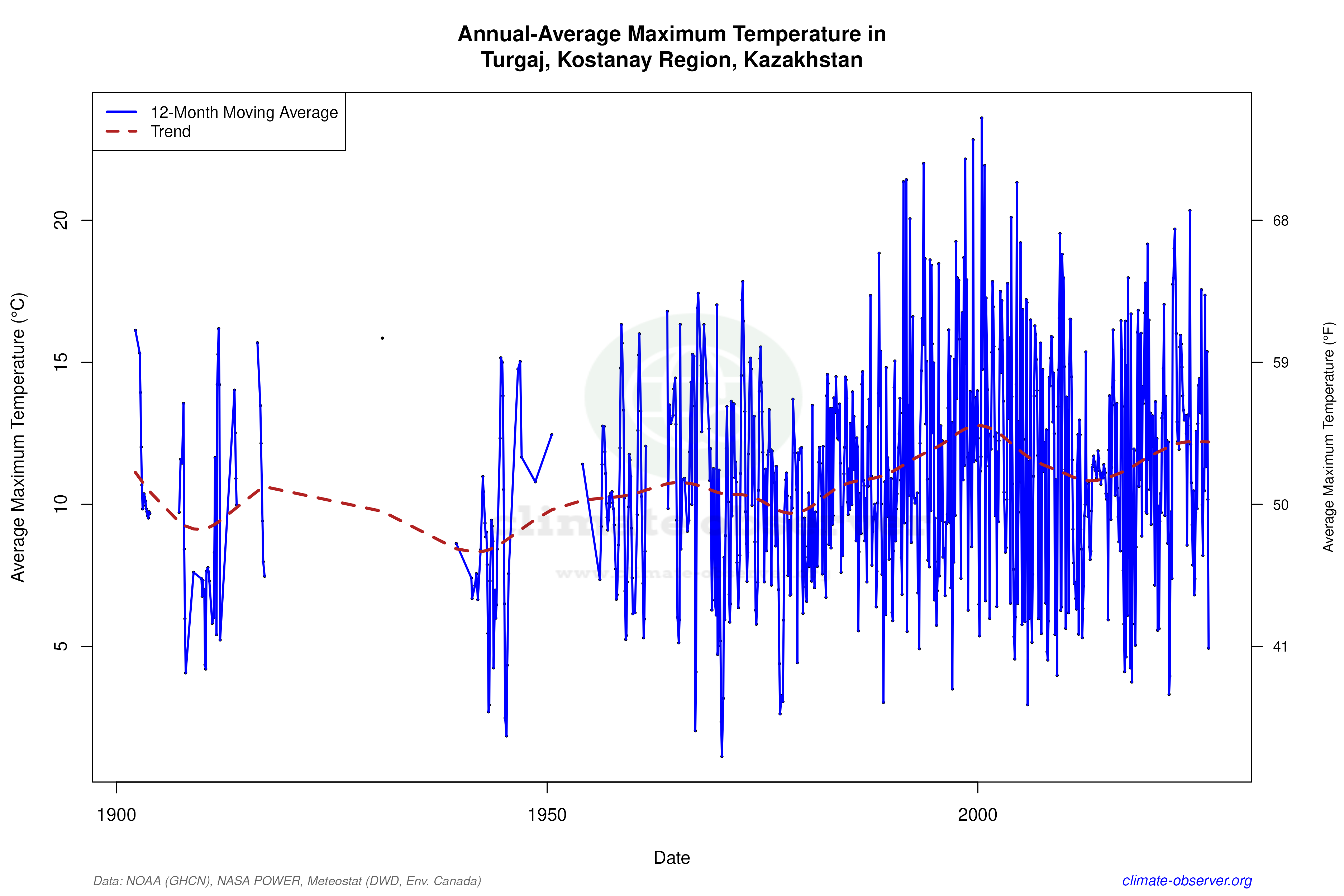
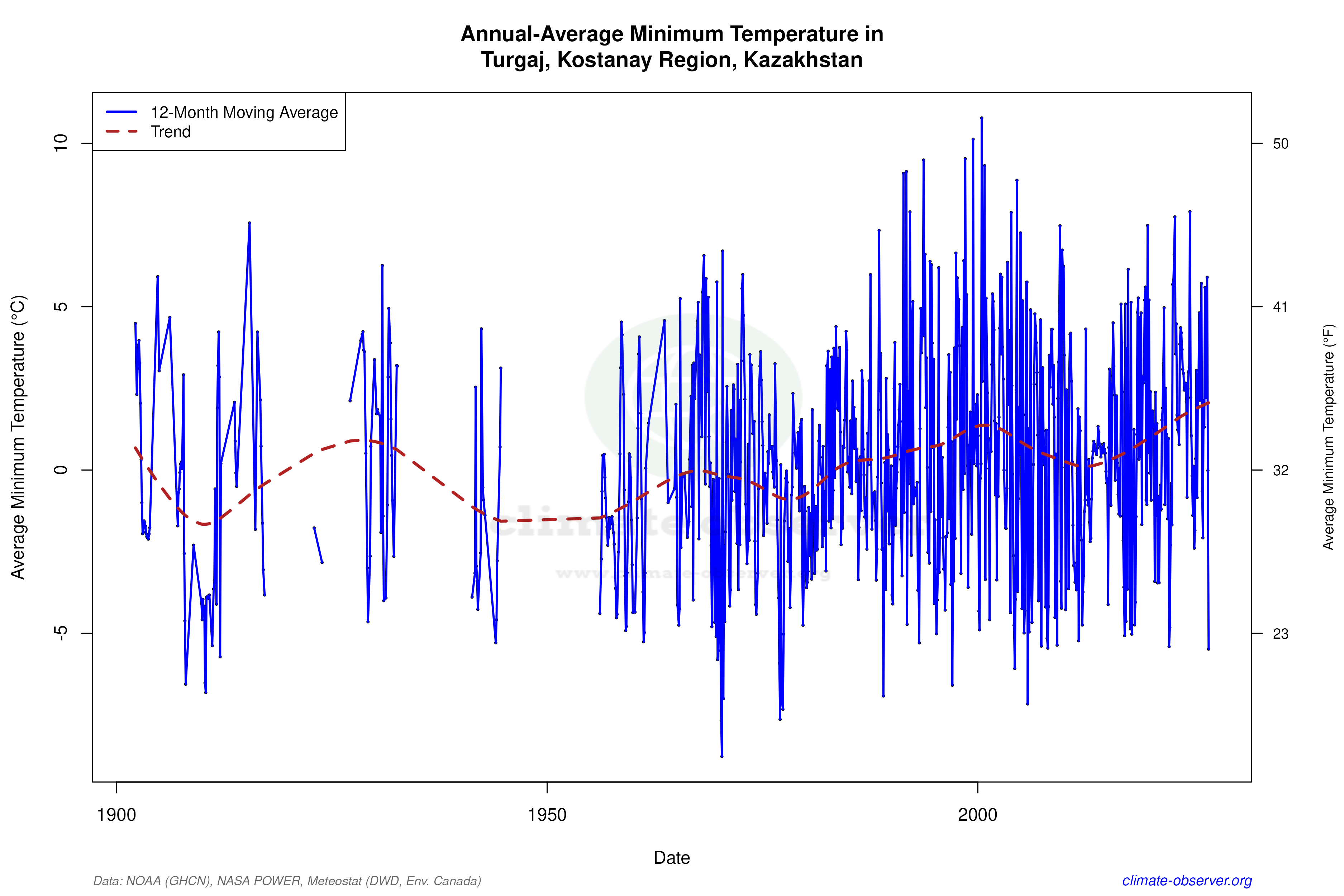
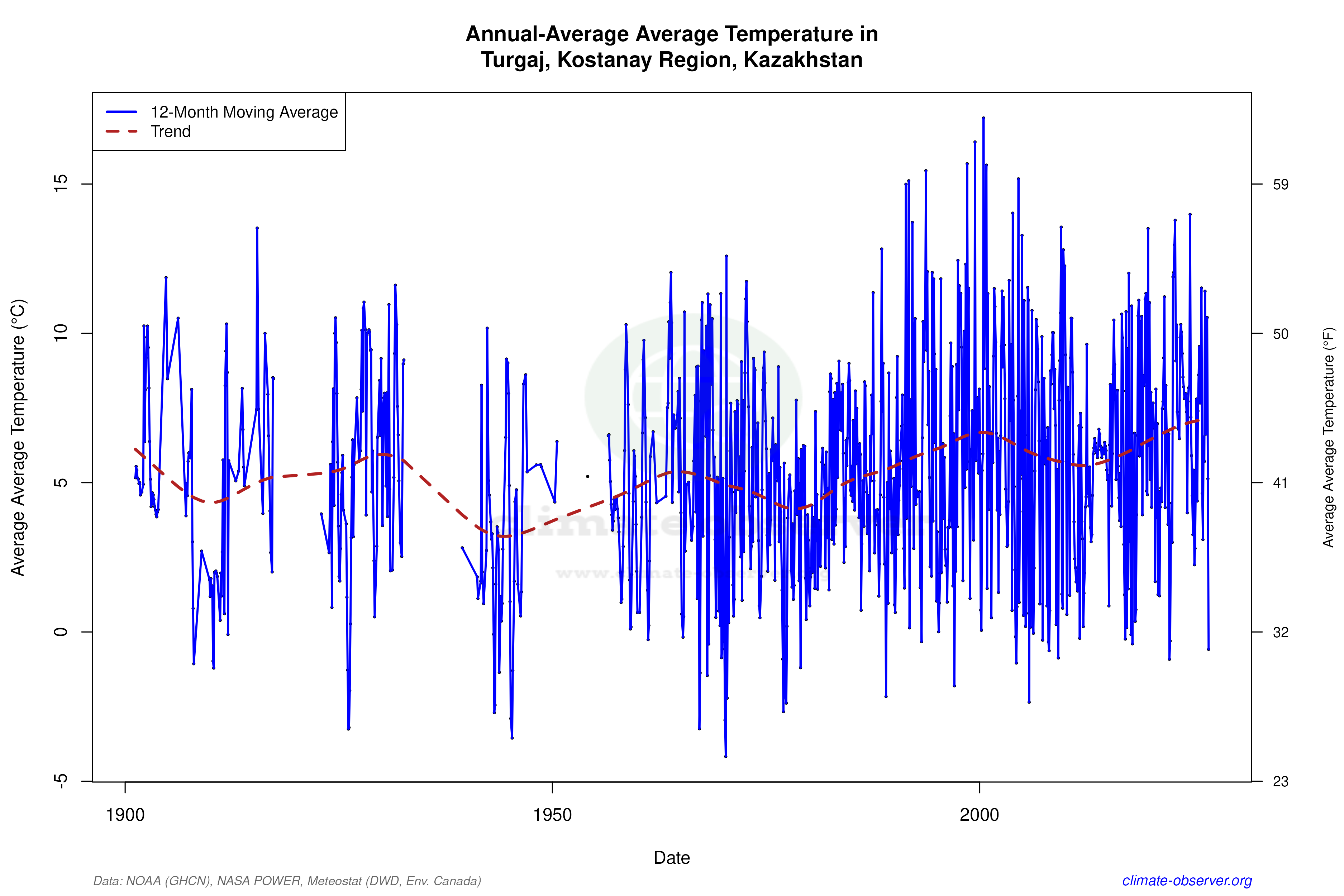
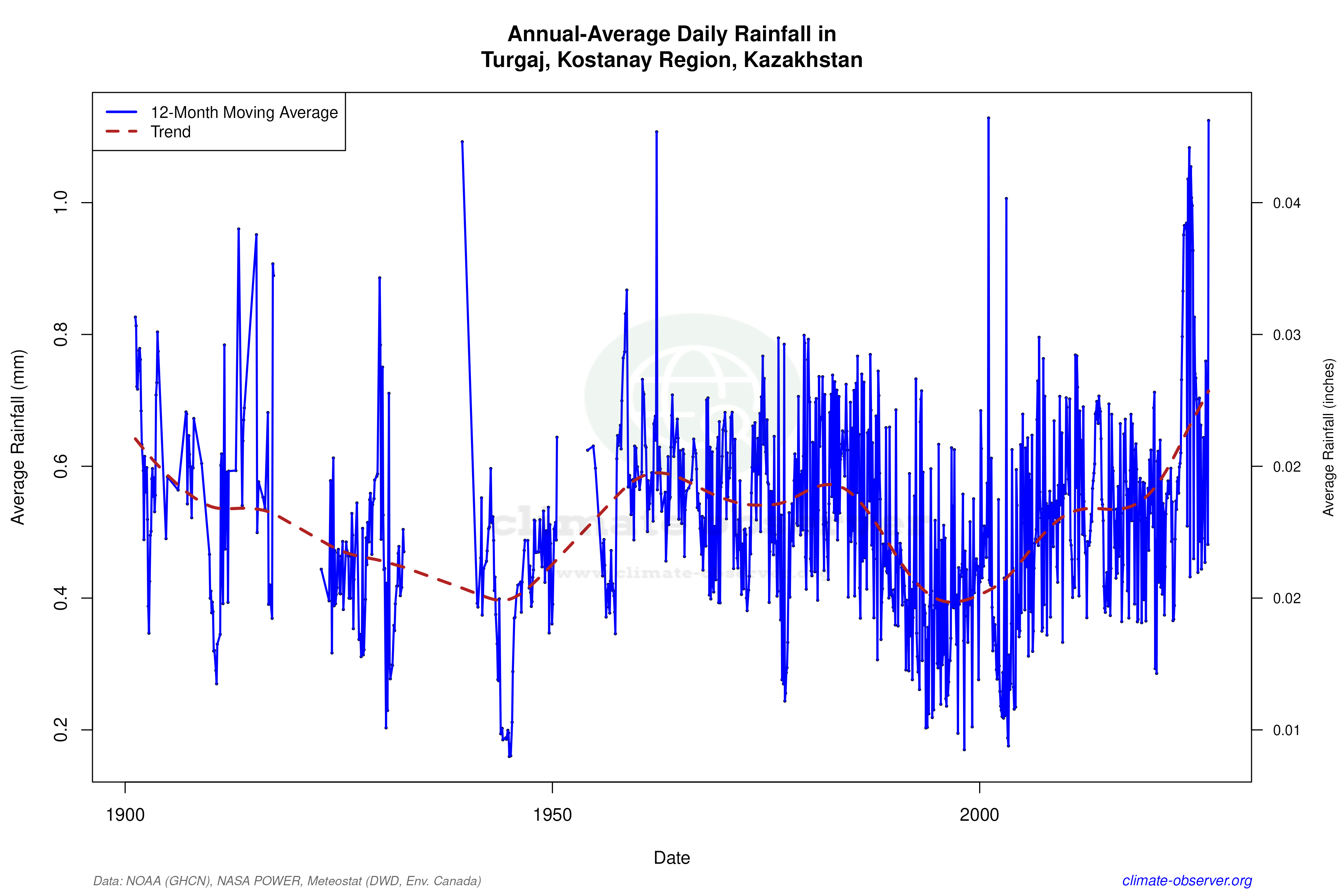
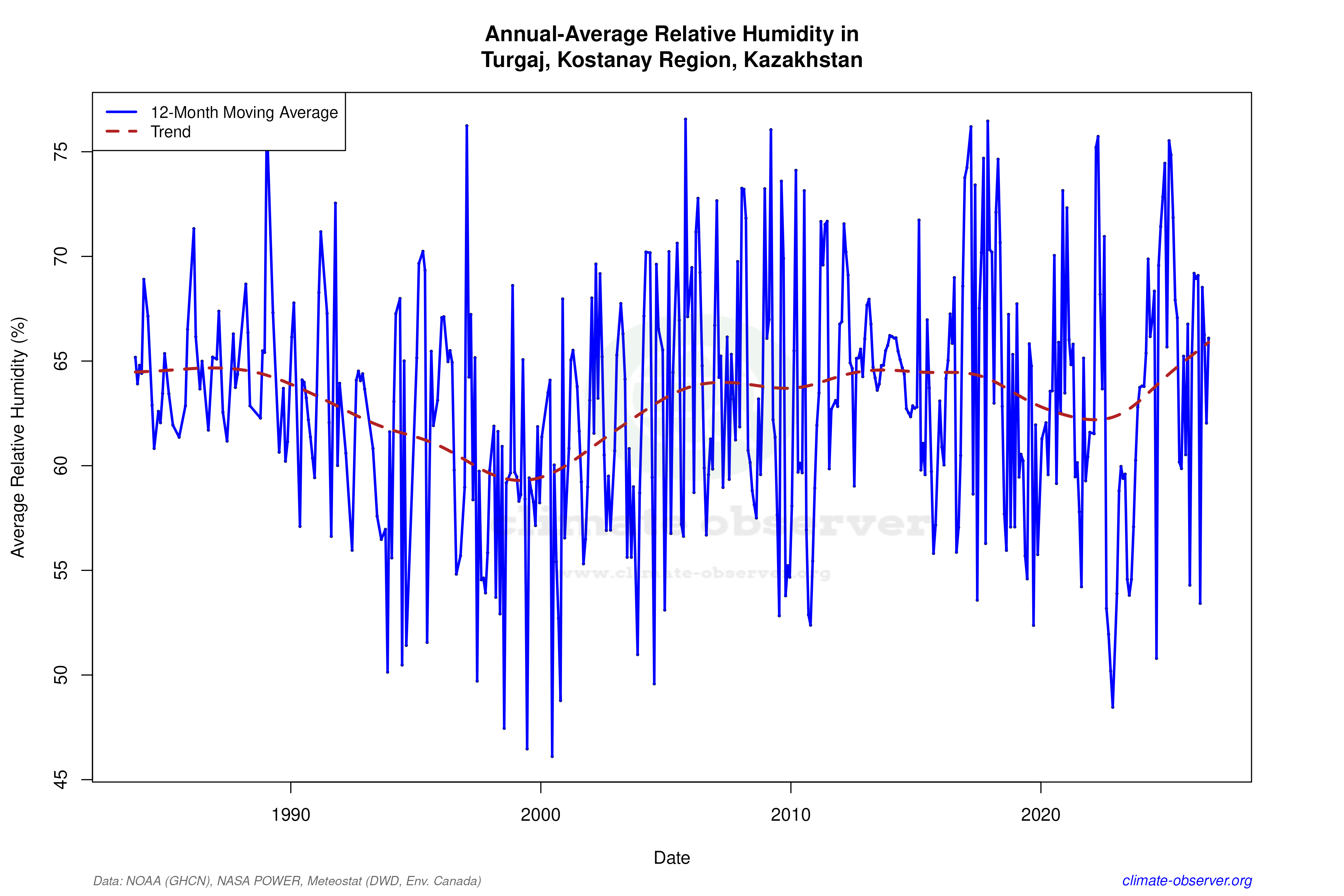

Max Temperature 12-Month MA | 1 of 6
Daily Data Points and Averages Throughout the Year
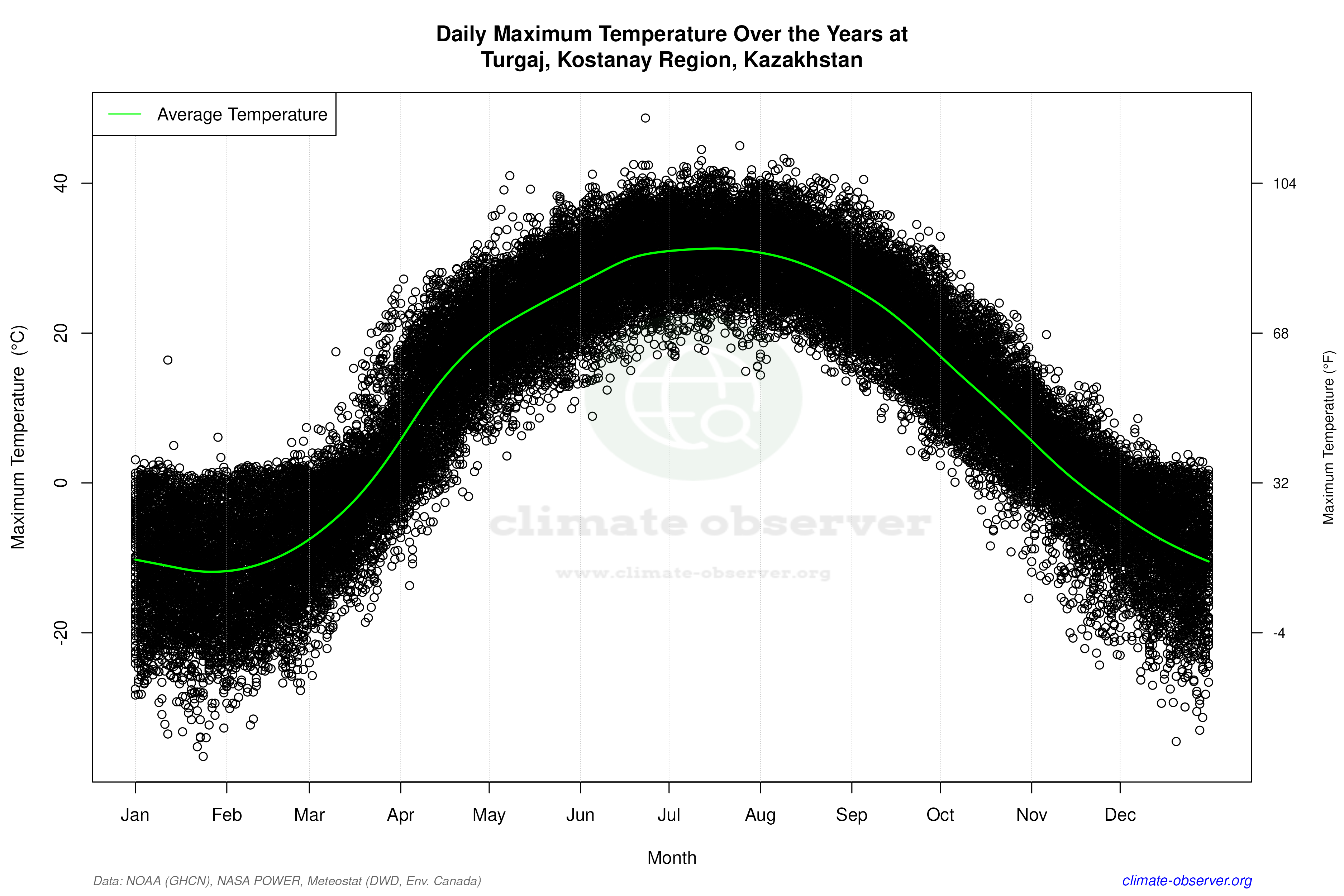
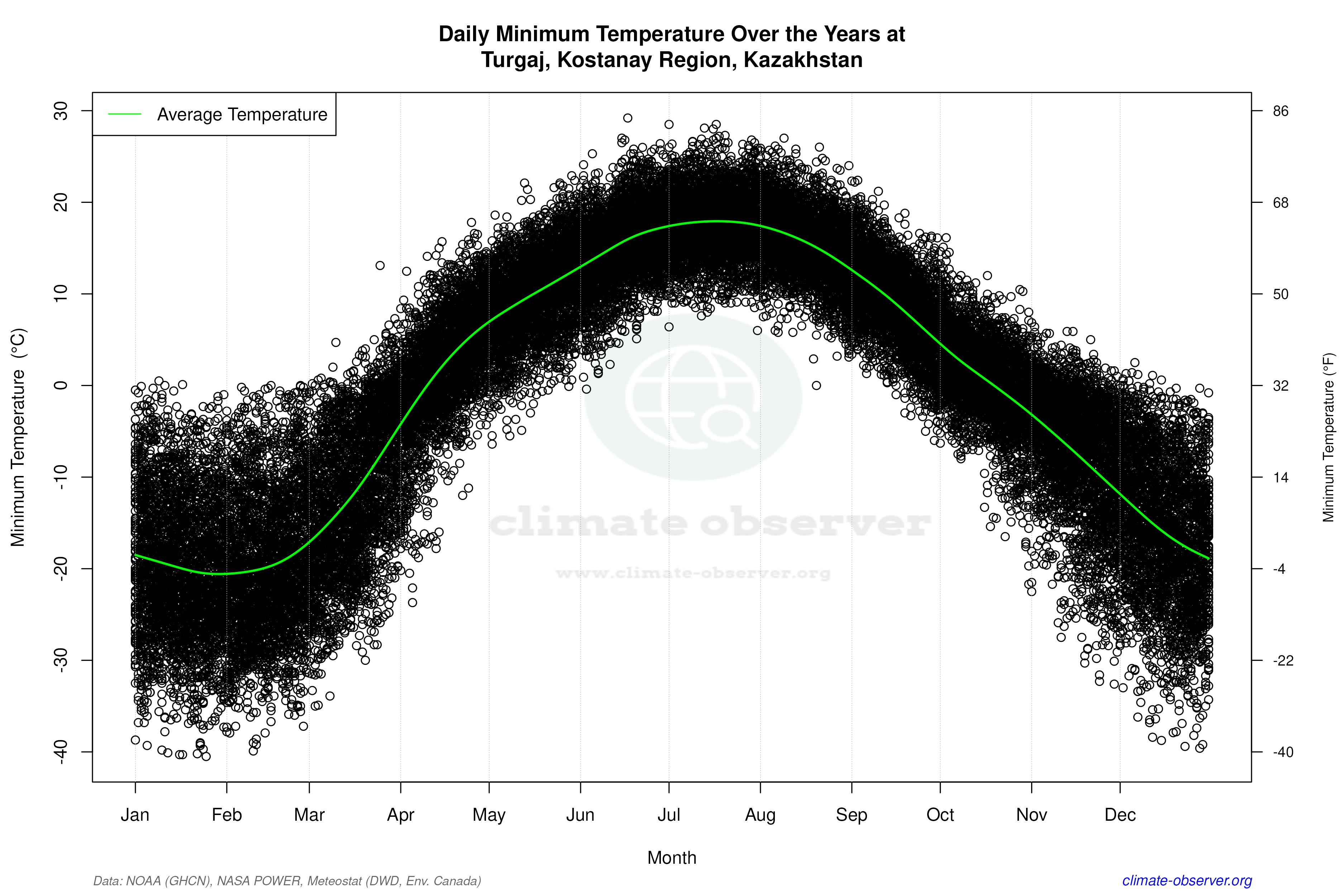
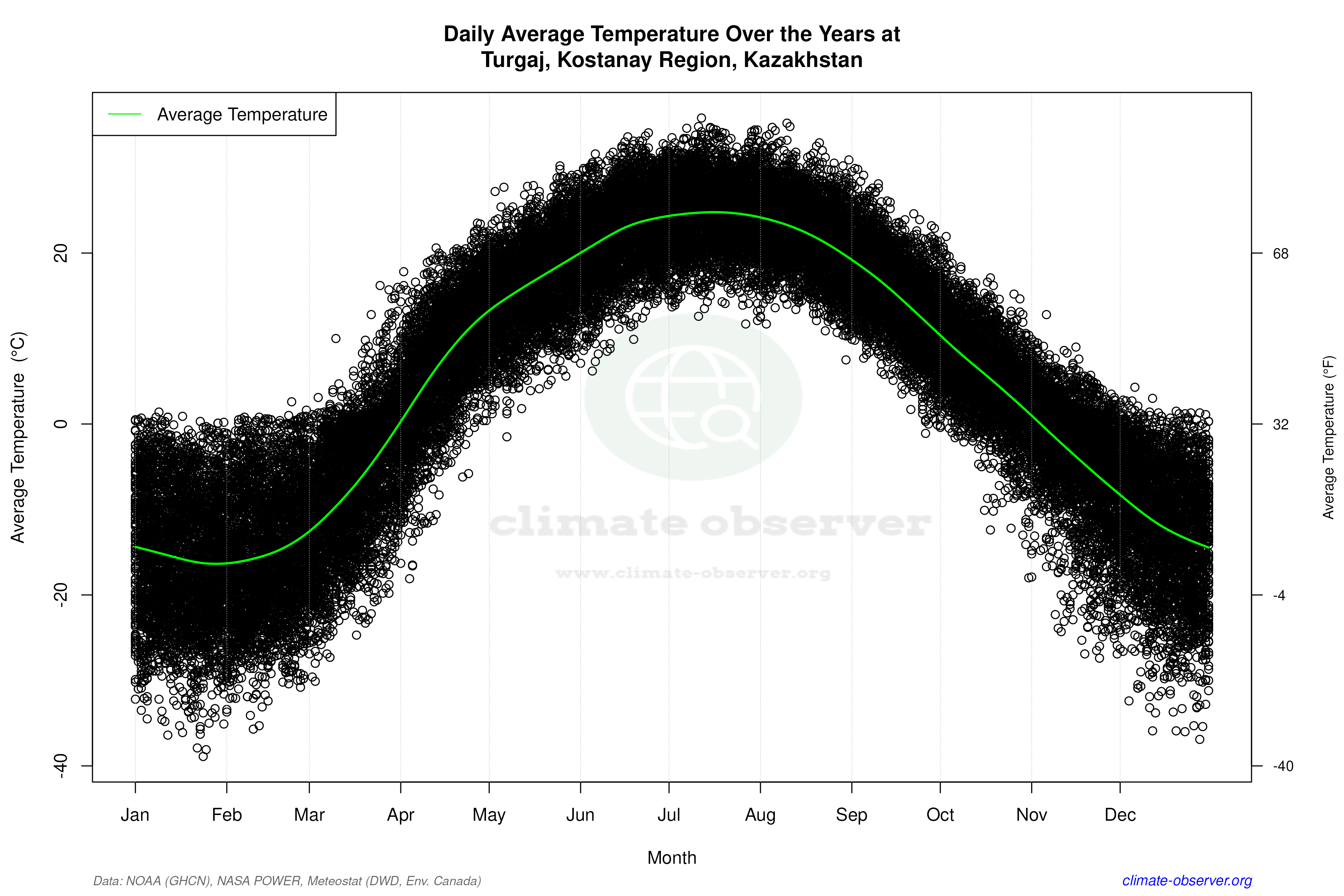
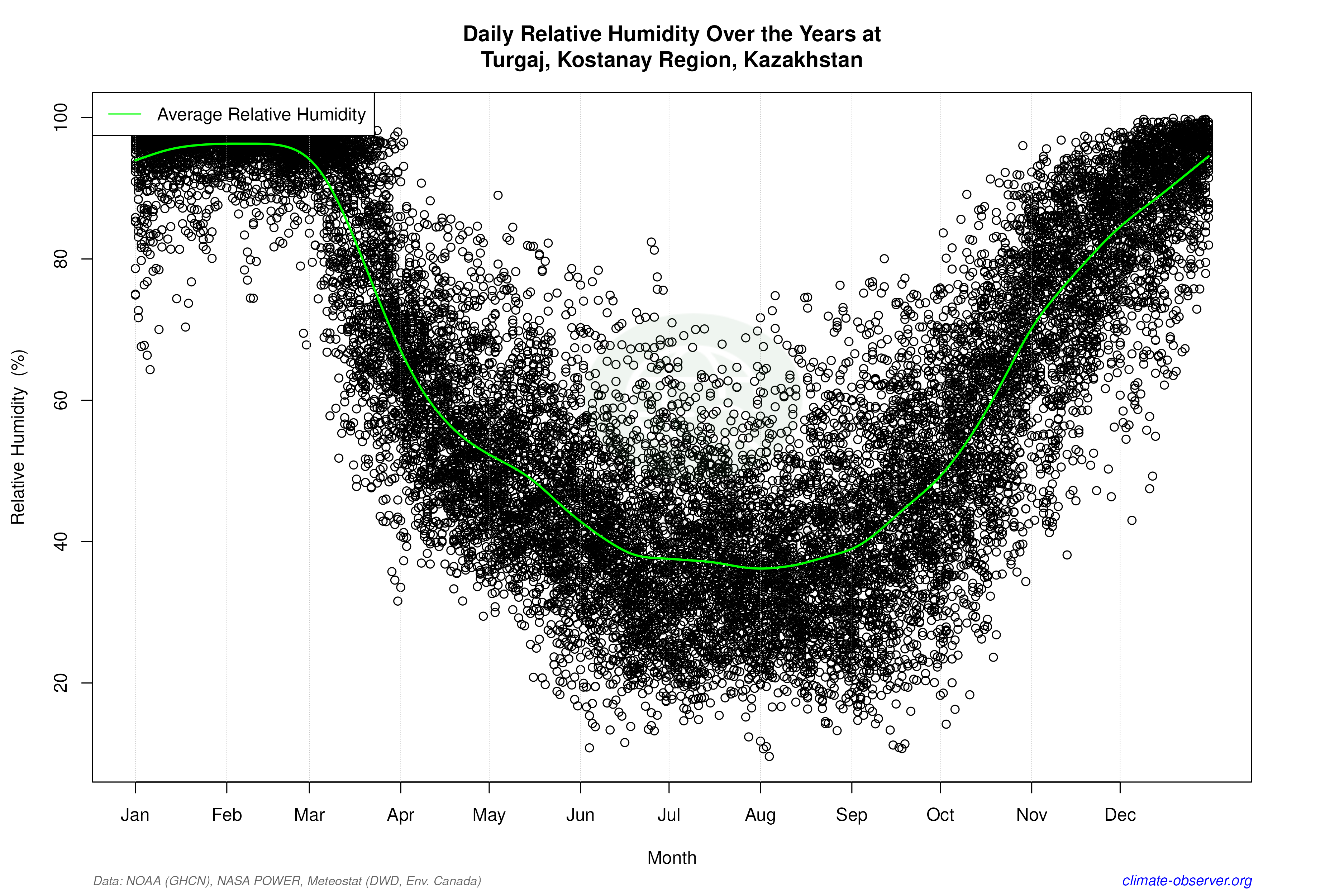

Average Max Temperature Throughout Year | 1 of 5

