Climate for Station: Zharkent, Zhetysu Region, Kazakhstan
Loading live weather...
Climate Analysis & Overview
Zharkent's climate is experiencing a notable warming trend, with a more even distribution of precipitation events. The region's temperature extremes highlight its continental climate, while recent trends suggest a shift towards milder conditions.
Continental Extremes in Zharkent
Zharkent, located in Kazakhstan's Jetisu region, is characterised by a continental climate, classified under the Köppen system as Dfa. This type of climate is marked by significant temperature variations between summer and winter. The geographical setting, nestled near the Tian Shan mountains, influences these extremes. The recorded maximum temperature reaches a scorching 42.1°C (107.8°F), while the minimum plunges to a frigid -42.3°C (-44.1°F). These extremes are a testament to the region's continental nature, where summers are hot and winters are severely cold.
Warming Trends: A Decade and Beyond
In the past decade, Zharkent has experienced a pronounced warming trend. High temperatures have risen by 1.39°C (2.50°F), while low temperatures have increased by 0.50°C (0.90°F). When looking at the all-time data, the warming is more modest, with highs rising by 0.22°C (0.40°F) and lows by 0.42°C (0.76°F). This indicates a consistent warming pattern, though the recent decade shows a more accelerated increase. This warming trend aligns with Kazakhstan's broader climate goals to adapt and mitigate the impacts of climate change.
Precipitation Patterns: A Shift Towards Evenness
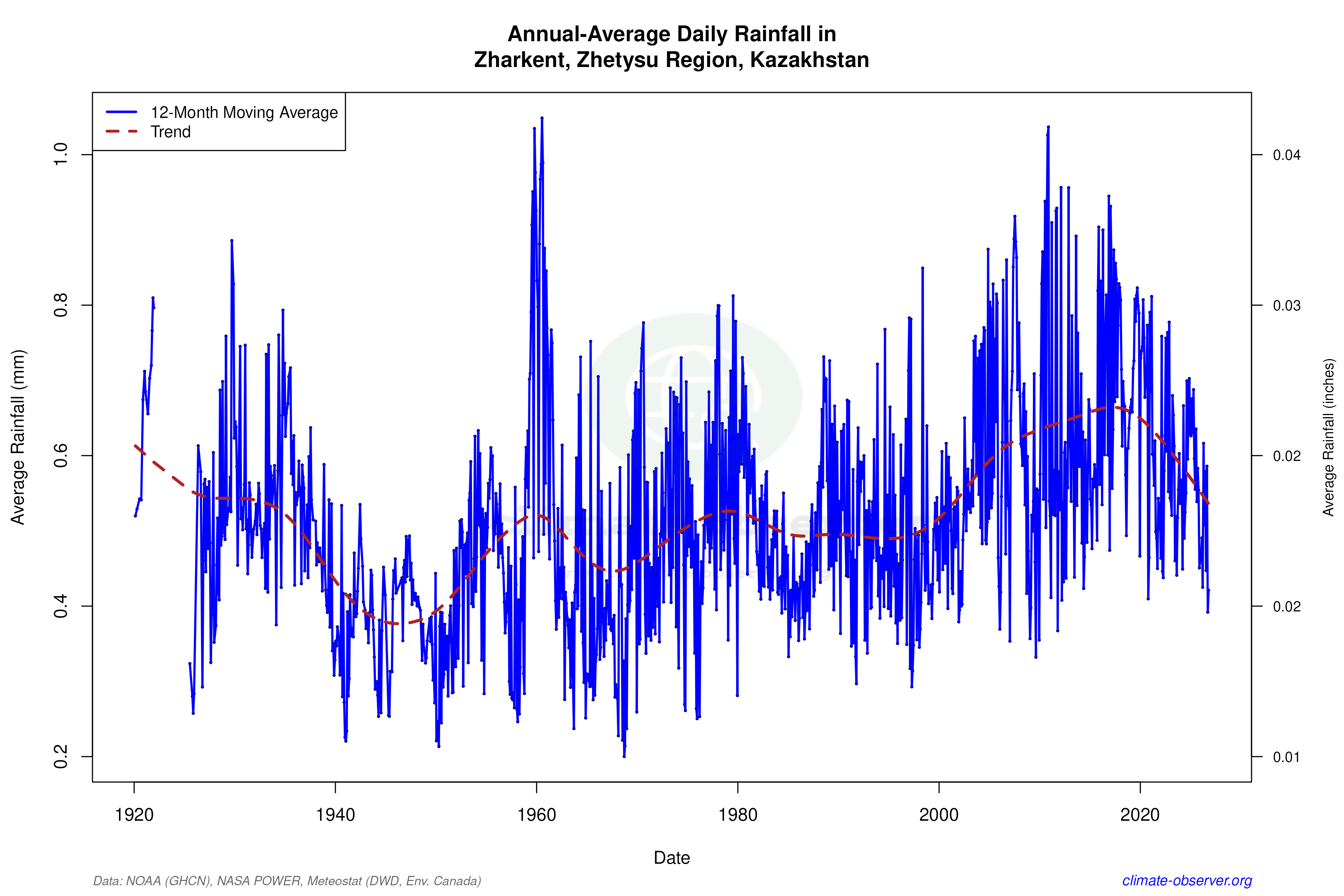
Zharkent's Precipitation Concentration Index (PCI) has shown a decrease from a baseline of 12.37 to a current value of 9.97. This indicates a more even distribution of rainfall events, moving away from concentrated, intense downpours. A PCI under 10 suggests that precipitation is more evenly spread throughout the year, reducing the risk of extreme flooding events and providing a more stable water supply for agriculture and local ecosystems.
A Tale of Two Trends: Short-term Acceleration vs Long-term Stability
The juxtaposition of the 10-year and all-time trends in Zharkent offers a compelling narrative. While the long-term data shows a steady warming, the recent decade reveals an accelerated rise in temperatures. This could be attributed to regional climatic shifts or anthropogenic influences, such as urbanisation and land-use changes. Understanding these dynamics is crucial for local policymakers and stakeholders as they plan for sustainable development and climate resilience.
Regional Implications and Future Prospects
Zharkent's climate data provides valuable insights into the broader regional climate patterns in Kazakhstan. The warming trends and changes in precipitation distribution are critical for informing agricultural practices, water resource management, and infrastructure planning. As the country continues to pursue its climate adaptation goals, monitoring these trends will be essential for ensuring a balanced and sustainable future.
Station Statistics
10-Year Trend
High: +1.61 °C/decade
Low: +0.79 °C/decade
Rain: -0.24 mm/decade
25-Year Trend
High: +0.17 °C/decade
Low: +0.28 °C/decade
Rain: -0.00 mm/decade
50-Year Trend
High: +0.02 °C/decade
Low: +0.33 °C/decade
Rain: +0.03 mm/decade
All-Time Trend
High: +0.20 °C/decade
Low: +0.45 °C/decade
Rain: +0.02 mm/decade
Percentage Above-Average Days
Last 12 Months: 60.5%
This Year: 69.1%
Precipitation Concentration Index (PCI) ℹ️
Last 12 Months: 13.7
Historical Average: 12.4
Percentile Rank of Last 12 Months ℹ️
High: 61st percentile
Low: 76th percentile
Rain: 49th percentile
Change in Variance ℹ️
High: -5.4%
Low: -12.7%
Intraday: -6.9%
Data Coverage
79.0%
First Year of Data
1915
Station Location
Historical Weather Records
| Max High | Avg High | Min High | Max Avg | Avg Avg | Min Avg | Max Low | Avg Low | Min Low | Max Precipitation | Avg Precipitation | Max Snow | Avg Snow | |
|---|---|---|---|---|---|---|---|---|---|---|---|---|---|
| Record | 43.4 °C | — | -24.3 °C | 35.8 °C | — | -36.7 °C | 27.6 °C | — | -42.3 °C | 40.0 mm | — | — | — |
| January | 14.0 °C | -1.4 °C | -24.3 °C | 4.6 °C | -8.4 °C | -31.9 °C | 1.8 °C | -13.6 °C | -40.6 °C | 40.0 mm | 0.4 mm | — | — |
| February | 20.0 °C | 1.6 °C | -24.2 °C | 10.9 °C | -5.0 °C | -36.7 °C | 5.7 °C | -10.4 °C | -42.3 °C | 13.5 mm | 0.4 mm | — | — |
| March | 29.6 °C | 10.8 °C | -10.9 °C | 19.9 °C | 4.2 °C | -19.3 °C | 12.3 °C | -1.6 °C | -24.6 °C | 17.6 mm | 0.4 mm | — | — |
| April | 35.5 °C | 20.4 °C | -0.4 °C | 26.2 °C | 13.1 °C | -4.8 °C | 21.0 °C | 5.7 °C | -9.7 °C | 25.2 mm | 0.6 mm | — | — |
| May | 39.6 °C | 25.8 °C | 6.3 °C | 30.5 °C | 18.6 °C | 0.9 °C | 23.0 °C | 10.9 °C | -9.0 °C | 27.7 mm | 0.7 mm | — | — |
| June | 40.9 °C | 29.8 °C | 13.3 °C | 31.1 °C | 22.6 °C | 8.4 °C | 25.3 °C | 15.1 °C | 2.1 °C | 37.6 mm | 0.8 mm | — | — |
| July | 43.4 °C | 31.9 °C | 16.3 °C | 35.8 °C | 24.5 °C | 14.0 °C | 27.2 °C | 16.8 °C | 6.1 °C | 38.6 mm | 0.7 mm | — | — |
| August | 41.4 °C | 31.1 °C | 15.6 °C | 31.8 °C | 23.1 °C | 11.7 °C | 27.6 °C | 15.1 °C | 3.4 °C | 21.2 mm | 0.4 mm | — | — |
| September | 39.0 °C | 26.1 °C | 6.0 °C | 28.2 °C | 17.6 °C | 3.9 °C | 22.5 °C | 9.8 °C | -3.3 °C | 24.0 mm | 0.4 mm | — | — |
| October | 32.3 °C | 18.4 °C | -3.9 °C | 22.1 °C | 10.1 °C | -4.9 °C | 15.7 °C | 3.3 °C | -15.5 °C | 27.4 mm | 0.5 mm | — | — |
| November | 25.2 °C | 8.2 °C | -23.9 °C | 16.1 °C | 1.4 °C | -19.7 °C | 10.3 °C | -3.7 °C | -27.9 °C | 26.3 mm | 0.6 mm | — | — |
| December | 16.6 °C | 0.9 °C | -23.2 °C | 7.3 °C | -5.6 °C | -29.8 °C | 4.2 °C | -10.1 °C | -35.8 °C | 15.1 mm | 0.4 mm | — | — |
Data Visualisations
Remove WatermarksCurrent Year Climate Trends vs Historical
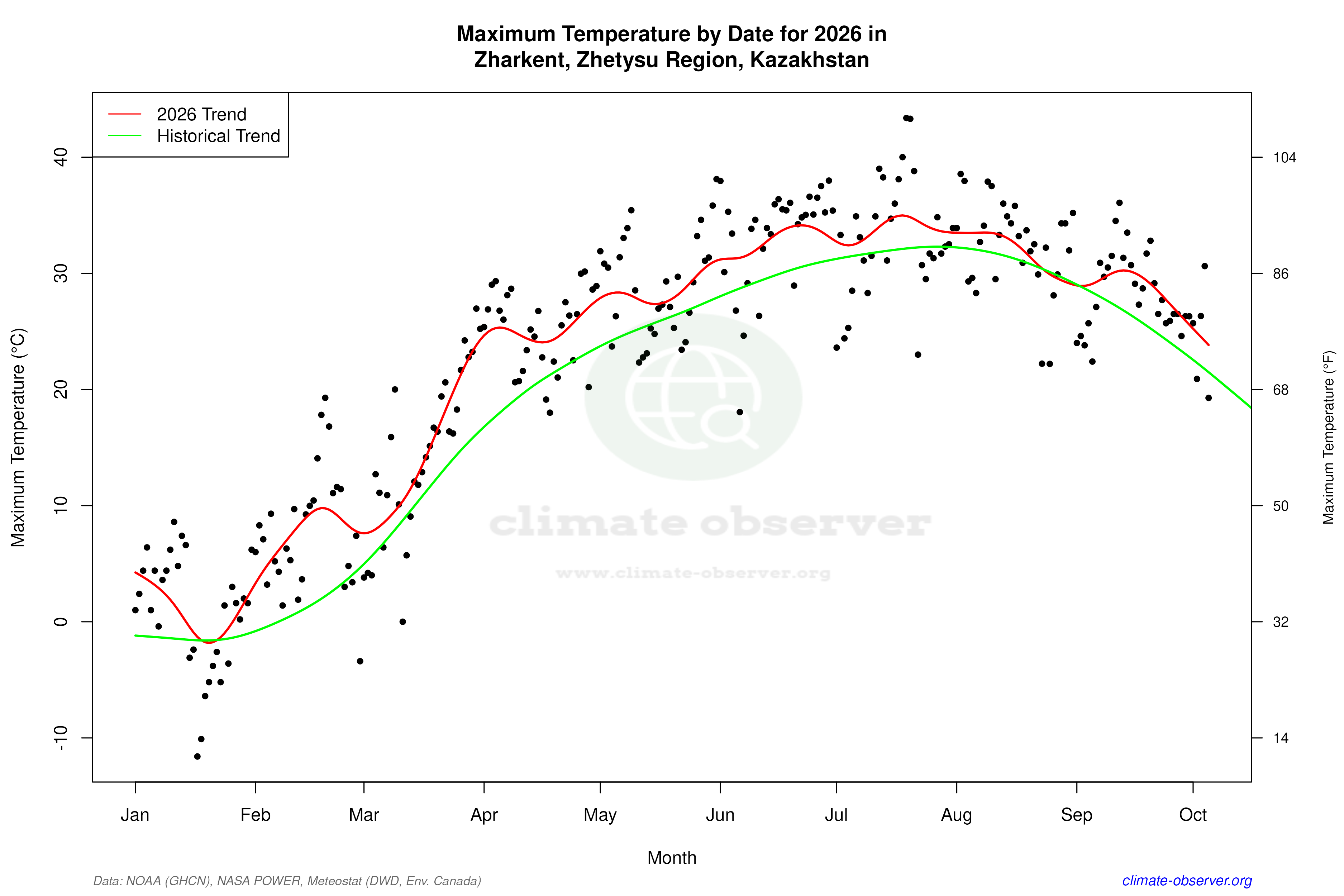
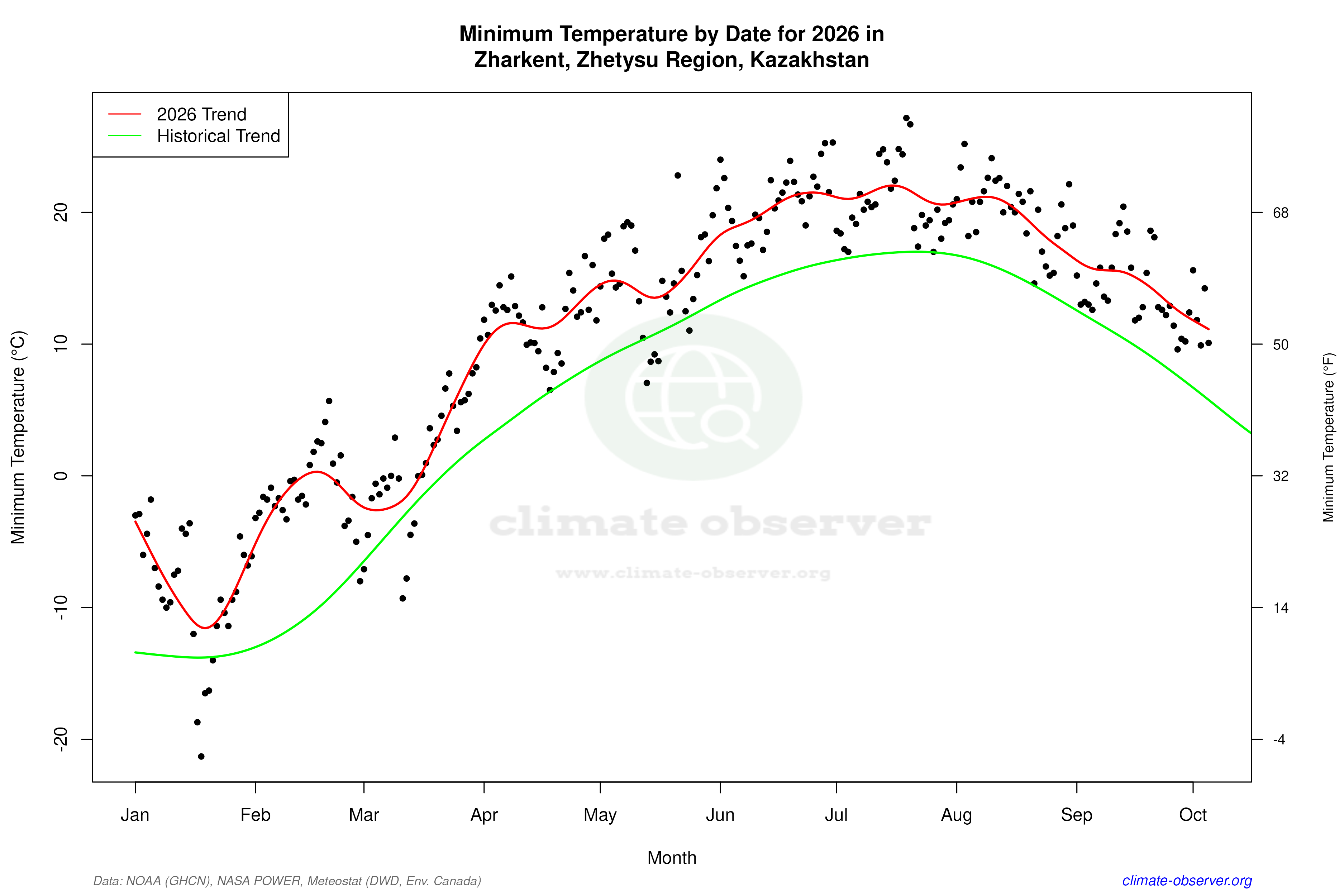
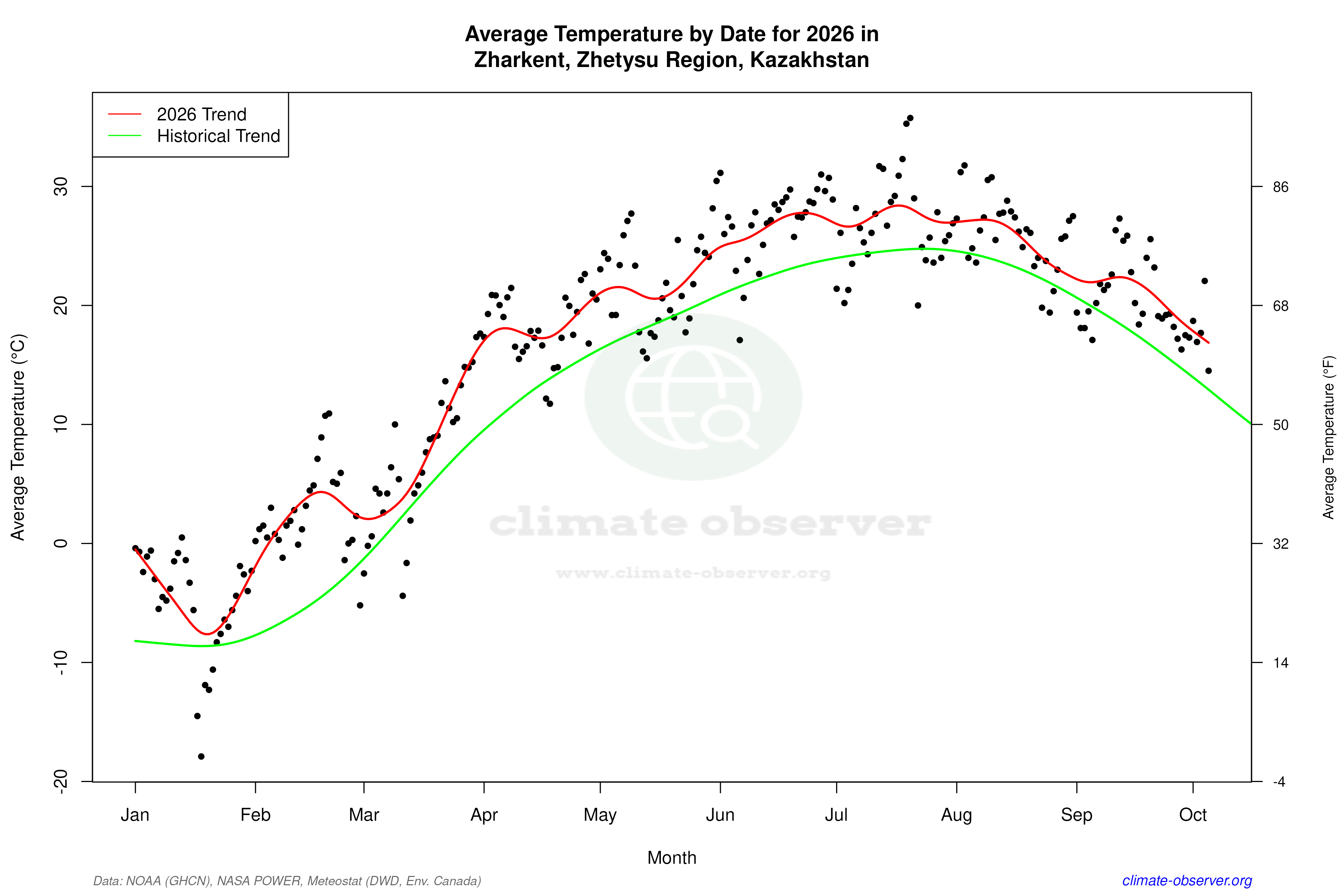
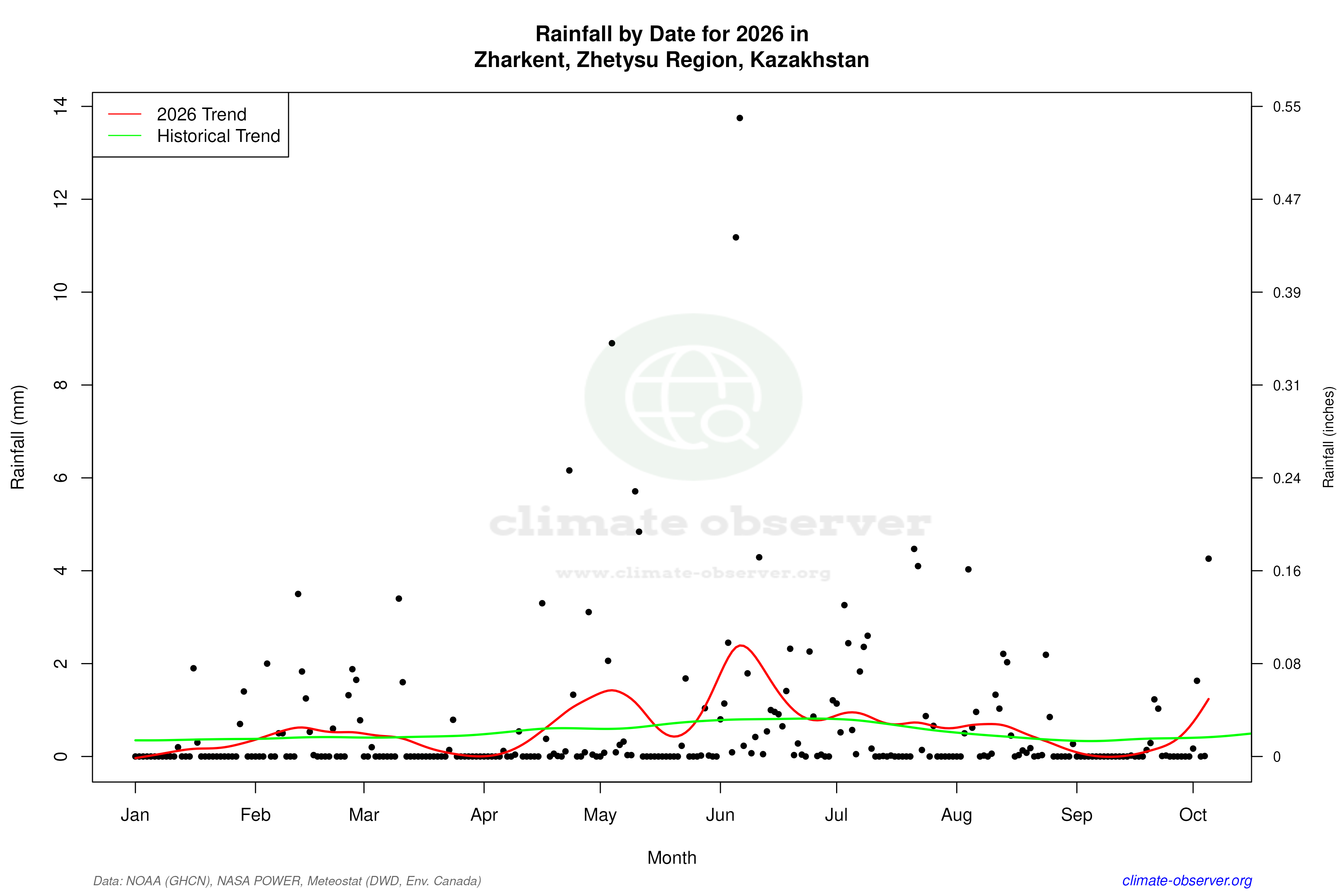
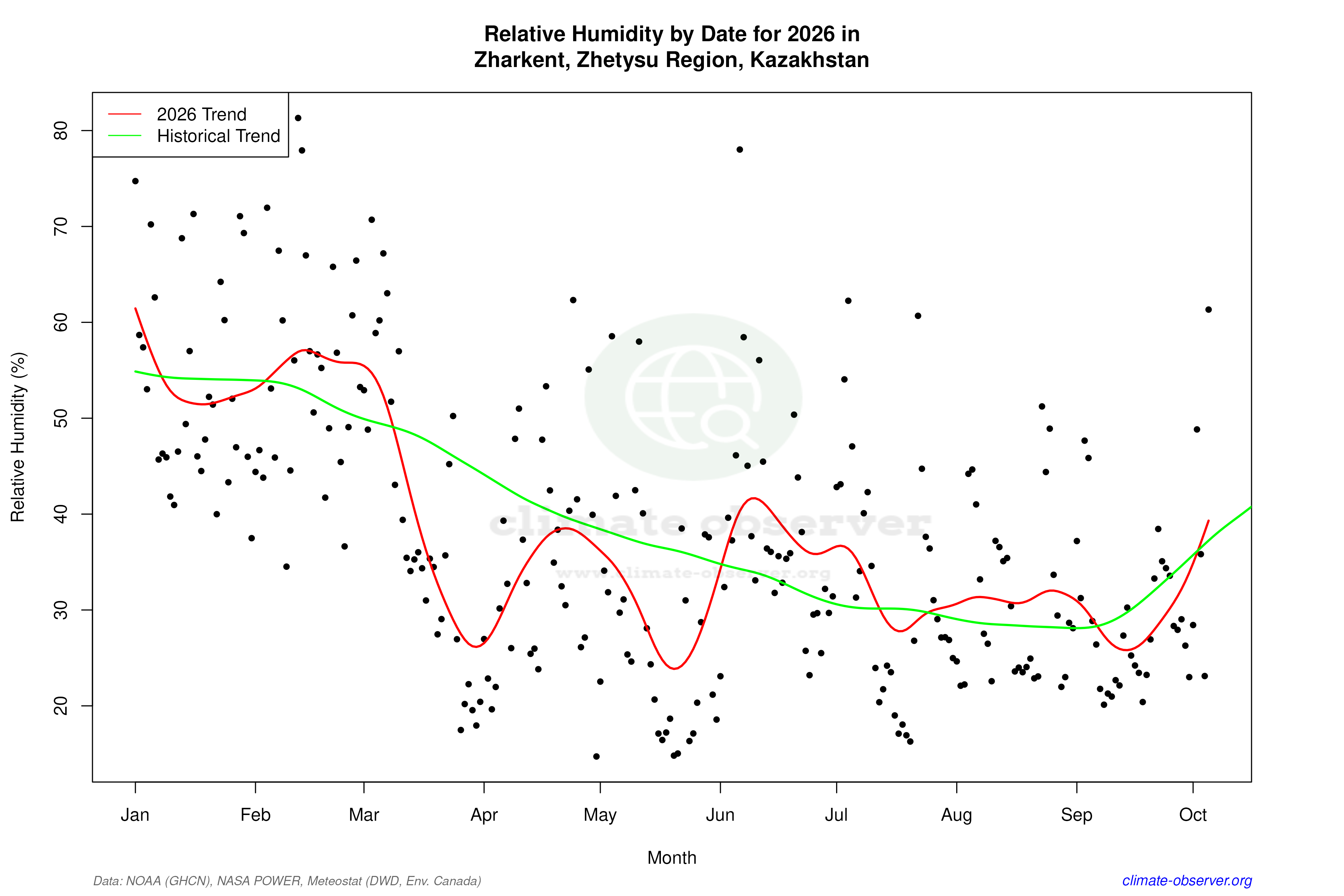

Max Temperature this Year | 1 of 6
Climate 12-Month Moving Averages
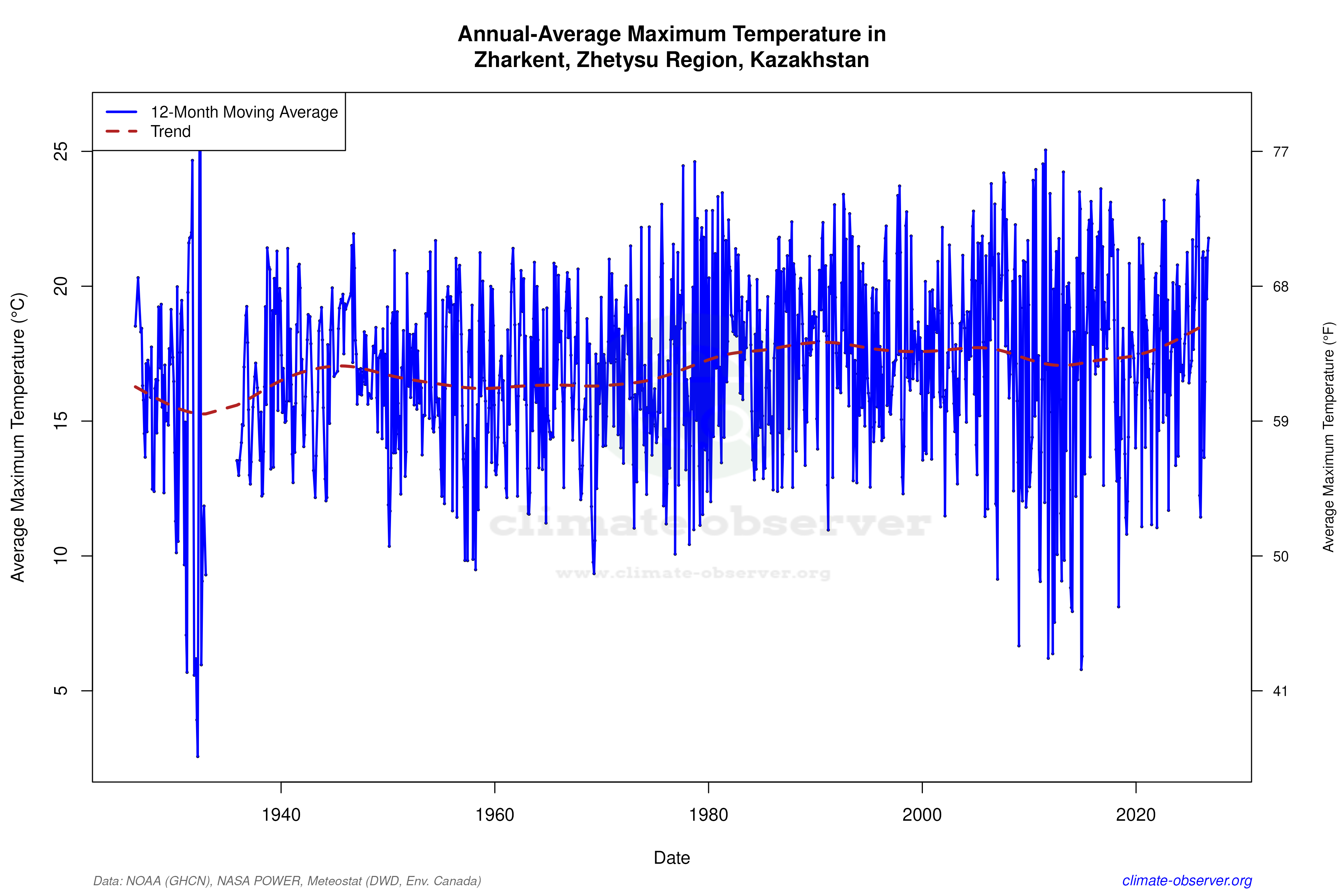
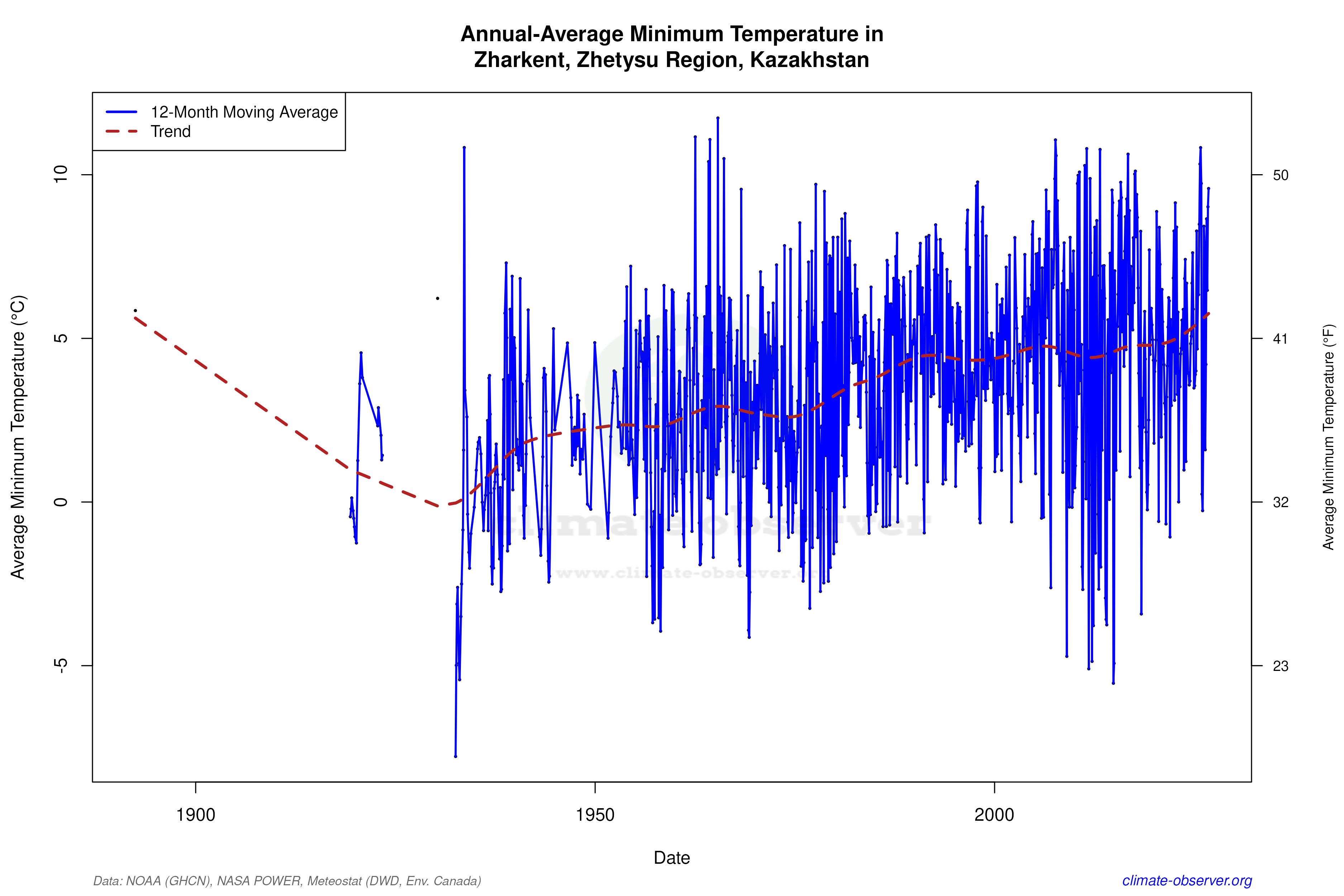
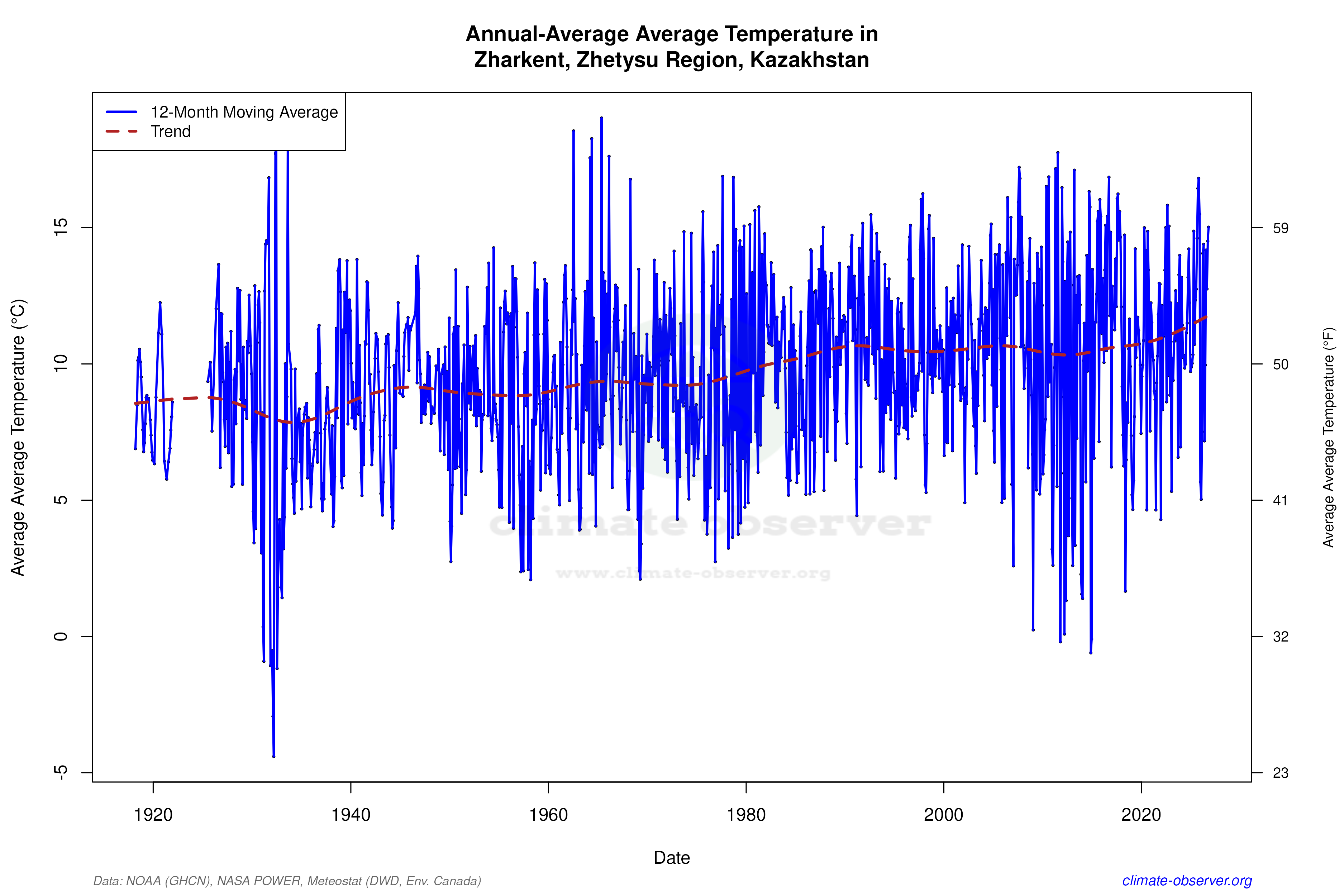
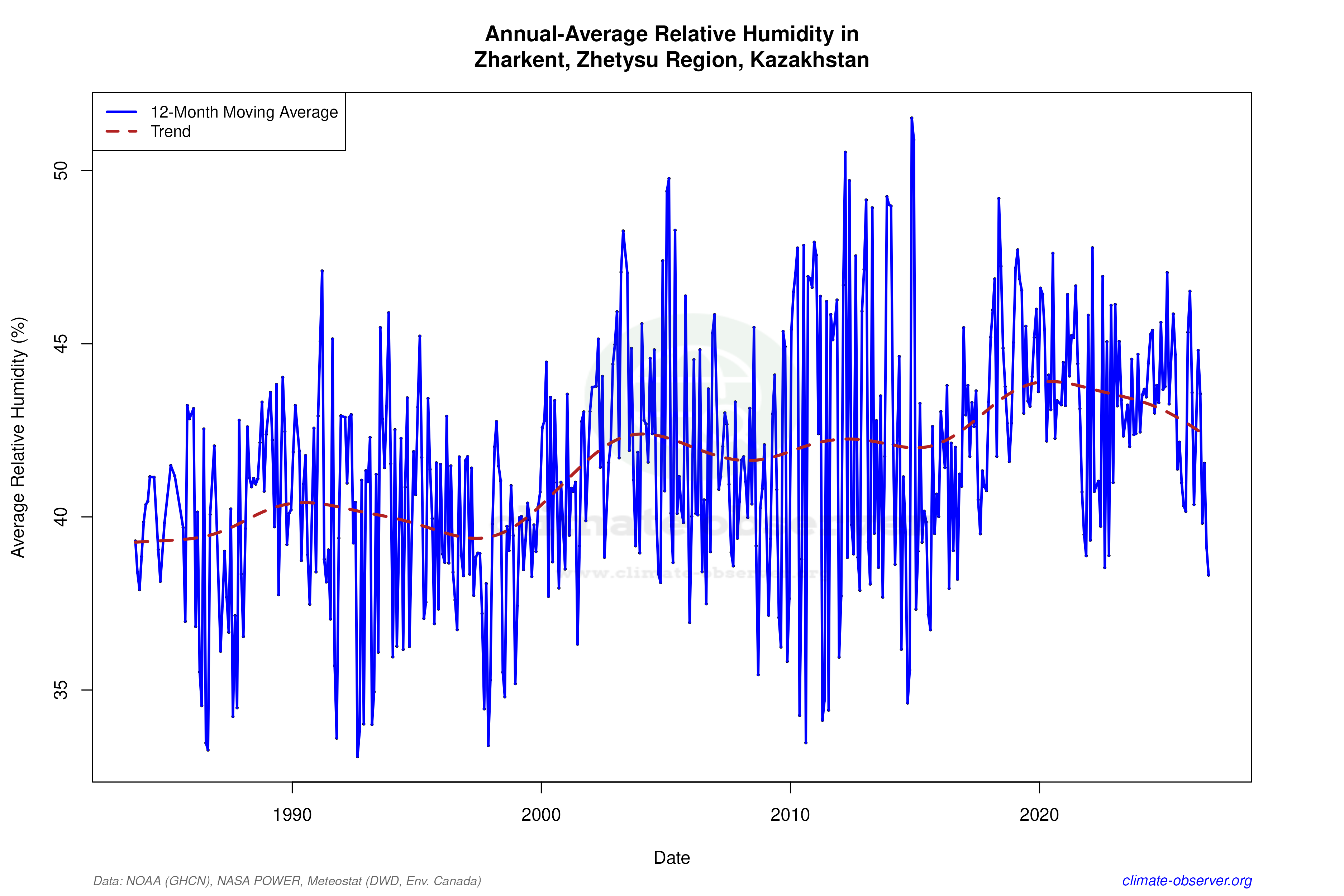

Max Temperature 12-Month MA | 1 of 6
Daily Data Points and Averages Throughout the Year
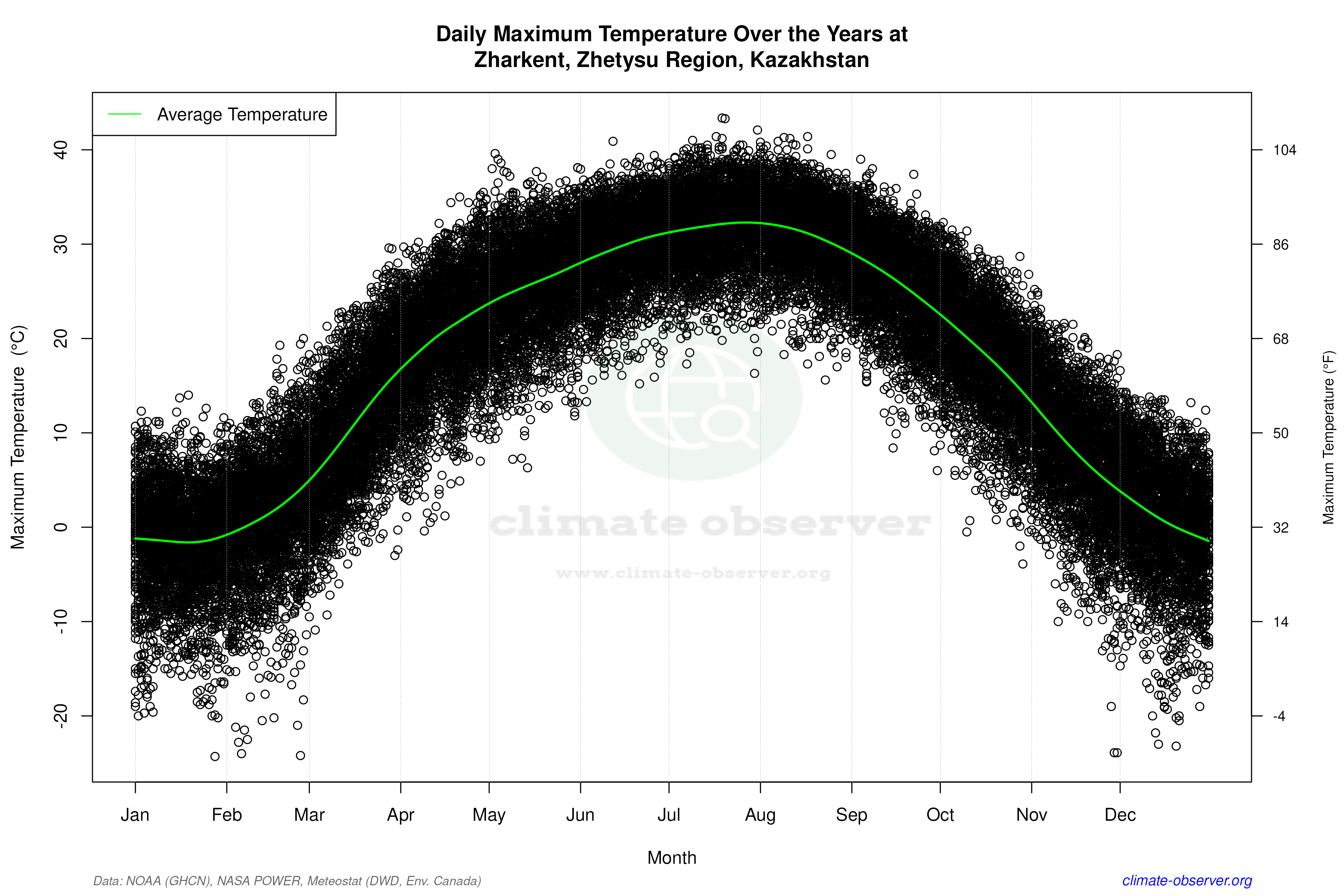
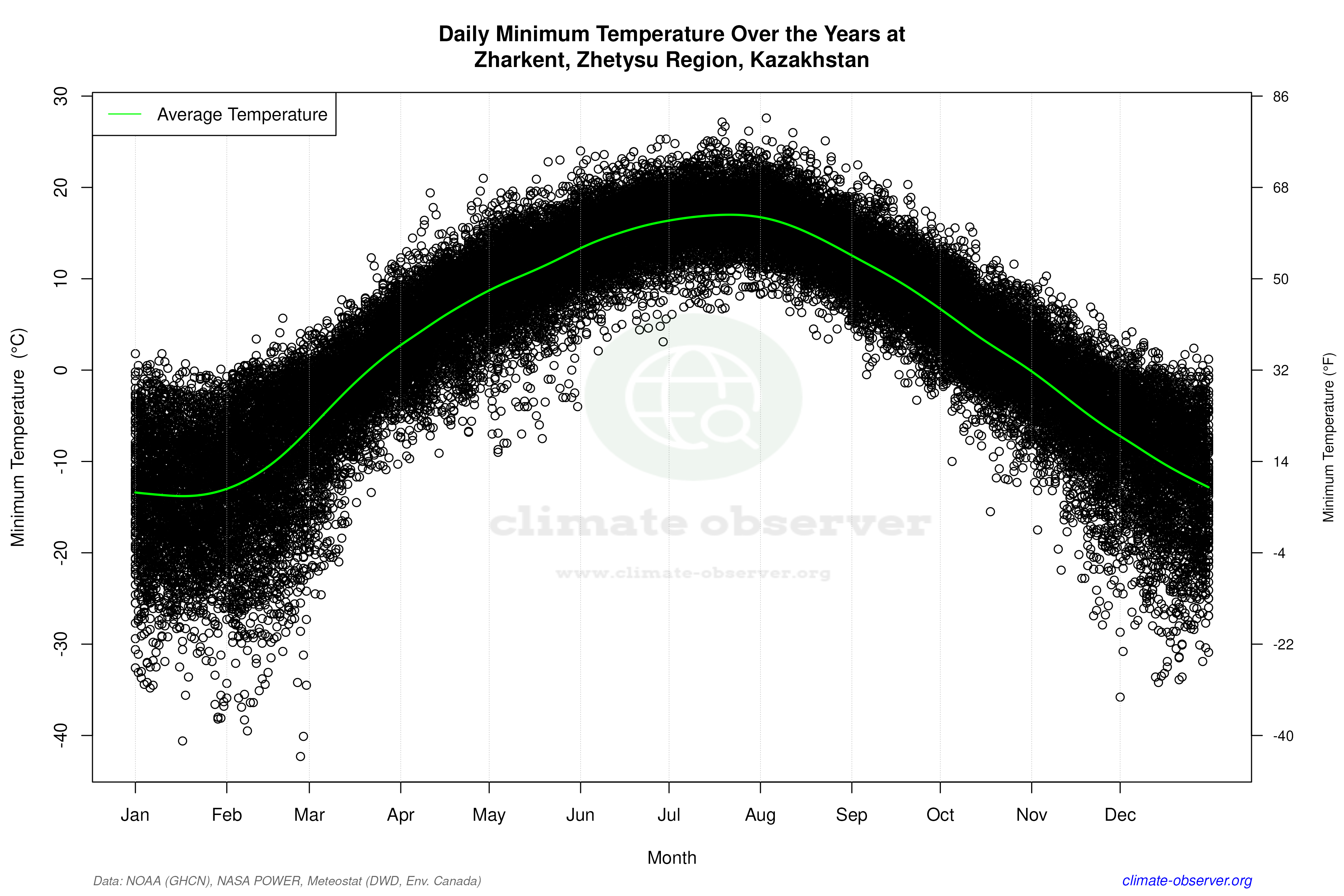
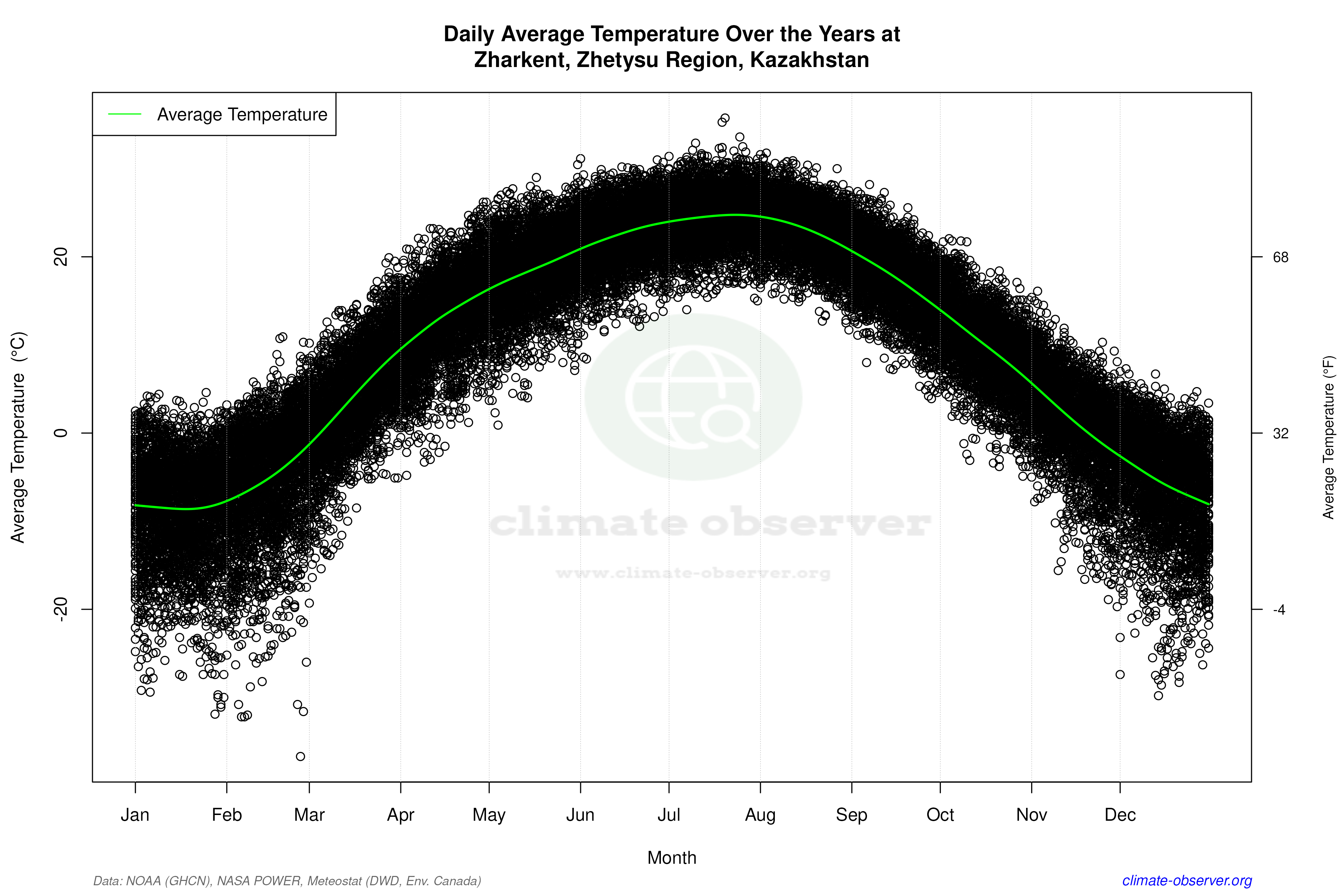
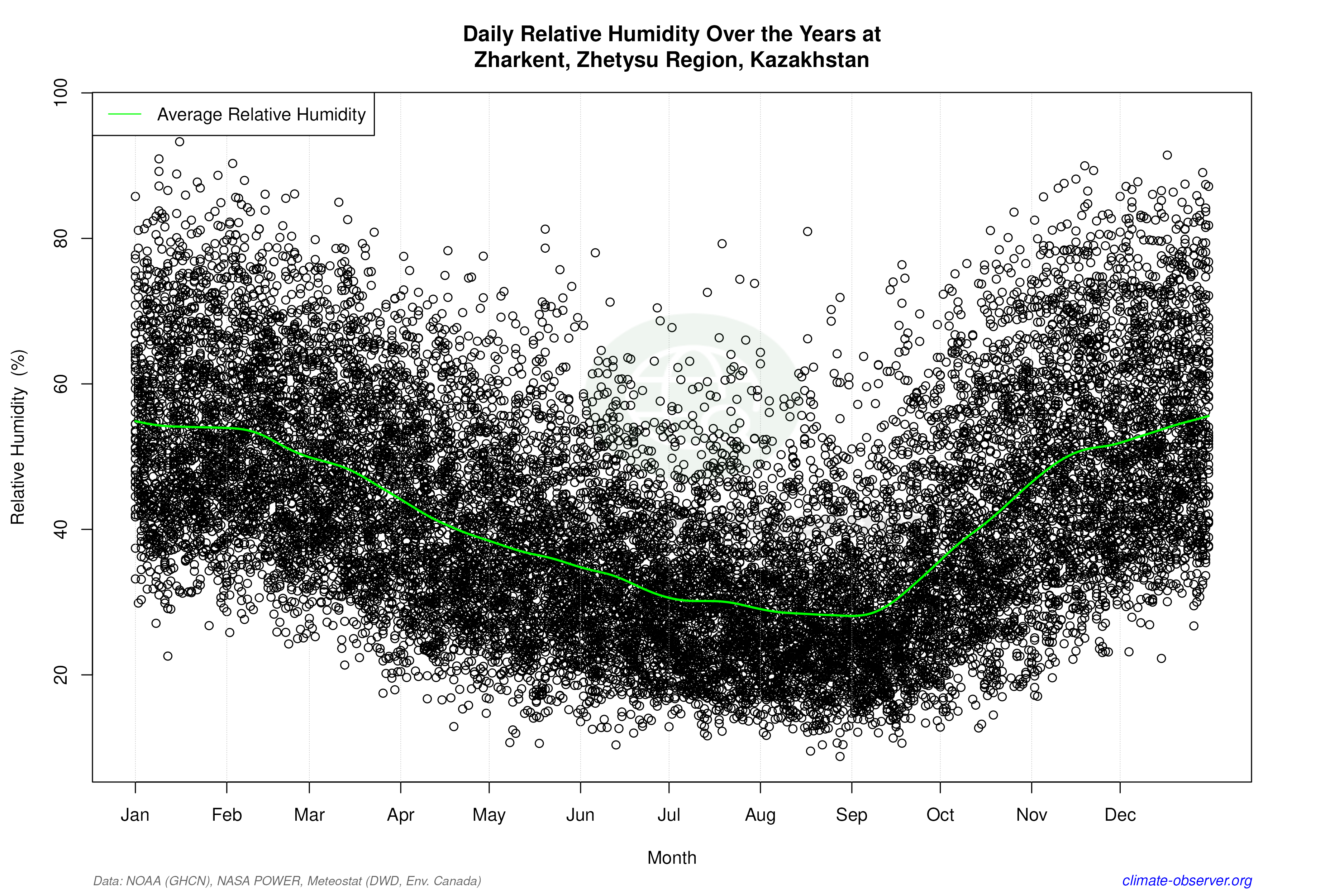

Average Max Temperature Throughout Year | 1 of 5

