Climate for Station: Toamasina, Atsinanana, Madagascar
Loading live weather...
Climate Analysis & Overview
Toamasina, Madagascar, is experiencing a complex climate narrative, marked by a warming trend in high temperatures and a cooling trend in lows over the last decade. The precipitation pattern has become more evenly distributed, suggesting a shift in rainfall dynamics.
Tropical Maritime Climate Dynamics
Toamasina, located on Madagascar's eastern coast, experiences a tropical rainforest climate (Af) according to the Köppen classification. This region is heavily influenced by the Indian Ocean, which moderates temperatures and contributes to high humidity levels. The all-time temperature trends reveal a warming of 0.54°C (0.97°F) in high temperatures, reflecting a broader regional warming pattern. Interestingly, the low temperatures show a modest increase of 0.11°C (0.20°F) over the same period, indicating a less pronounced warming effect during cooler periods.
Decadal Temperature Divergence
The last decade presents an intriguing divergence in temperature trends. Highs have increased by 0.08°C (0.14°F), while lows have decreased by 0.11°C (0.20°F). This suggests a growing disparity between day and night temperatures, which could impact local ecosystems and agriculture. The cooling trend in nighttime temperatures is particularly noteworthy against the backdrop of global warming, highlighting the complexity of localised climate dynamics.
Precipitation Patterns and PCI Insights
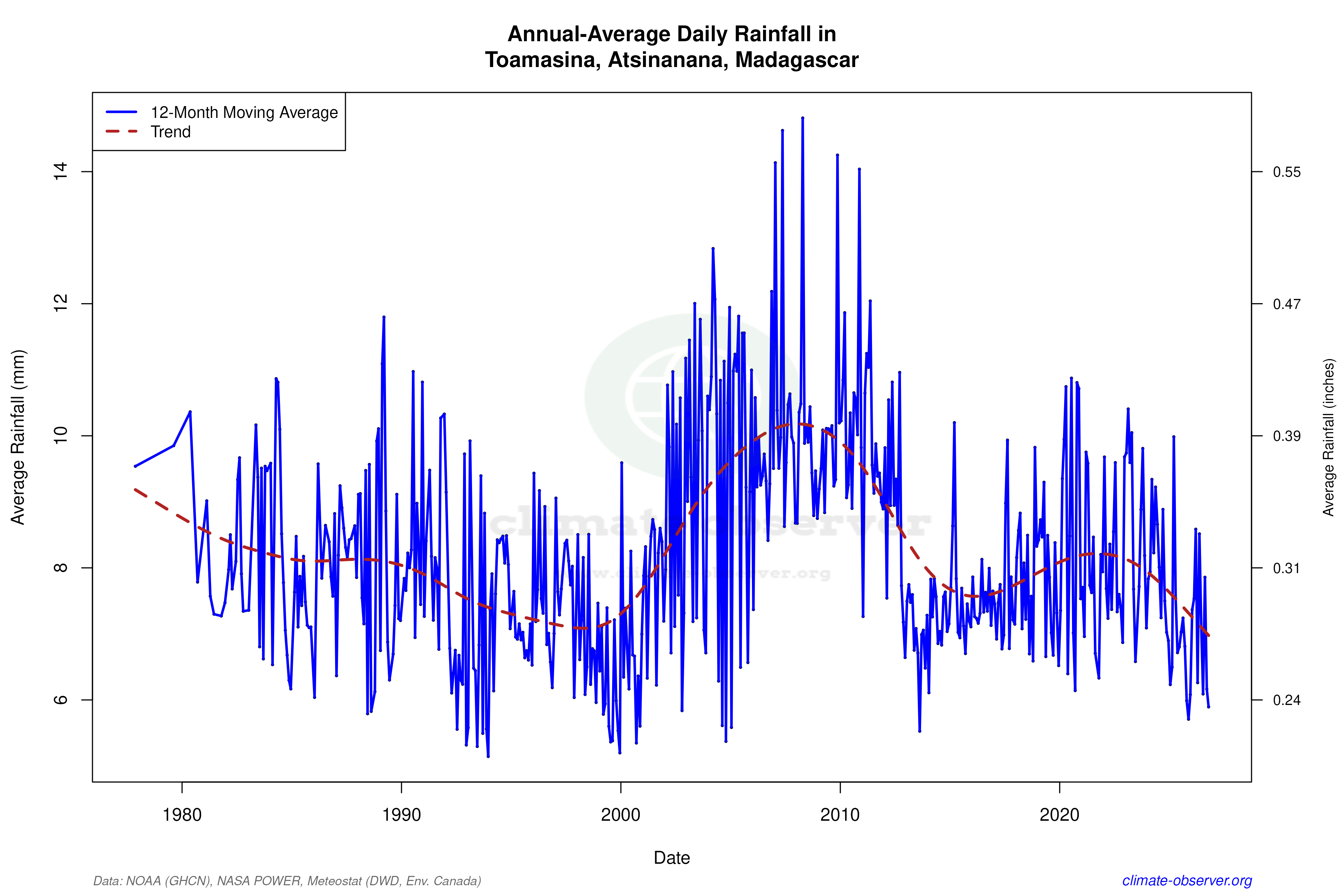
The Precipitation Concentration Index (PCI) for Toamasina has decreased from a baseline of 13.28 to 10.22, indicating a more even distribution of rainfall throughout the year. This change suggests a shift away from concentrated heavy rainfall events towards more consistent precipitation, which could benefit water management and reduce the risk of flooding. The PCI is a valuable metric for understanding how rainfall is spread over time, with lower values indicating more uniform distribution.
Temperature Extremes and Records
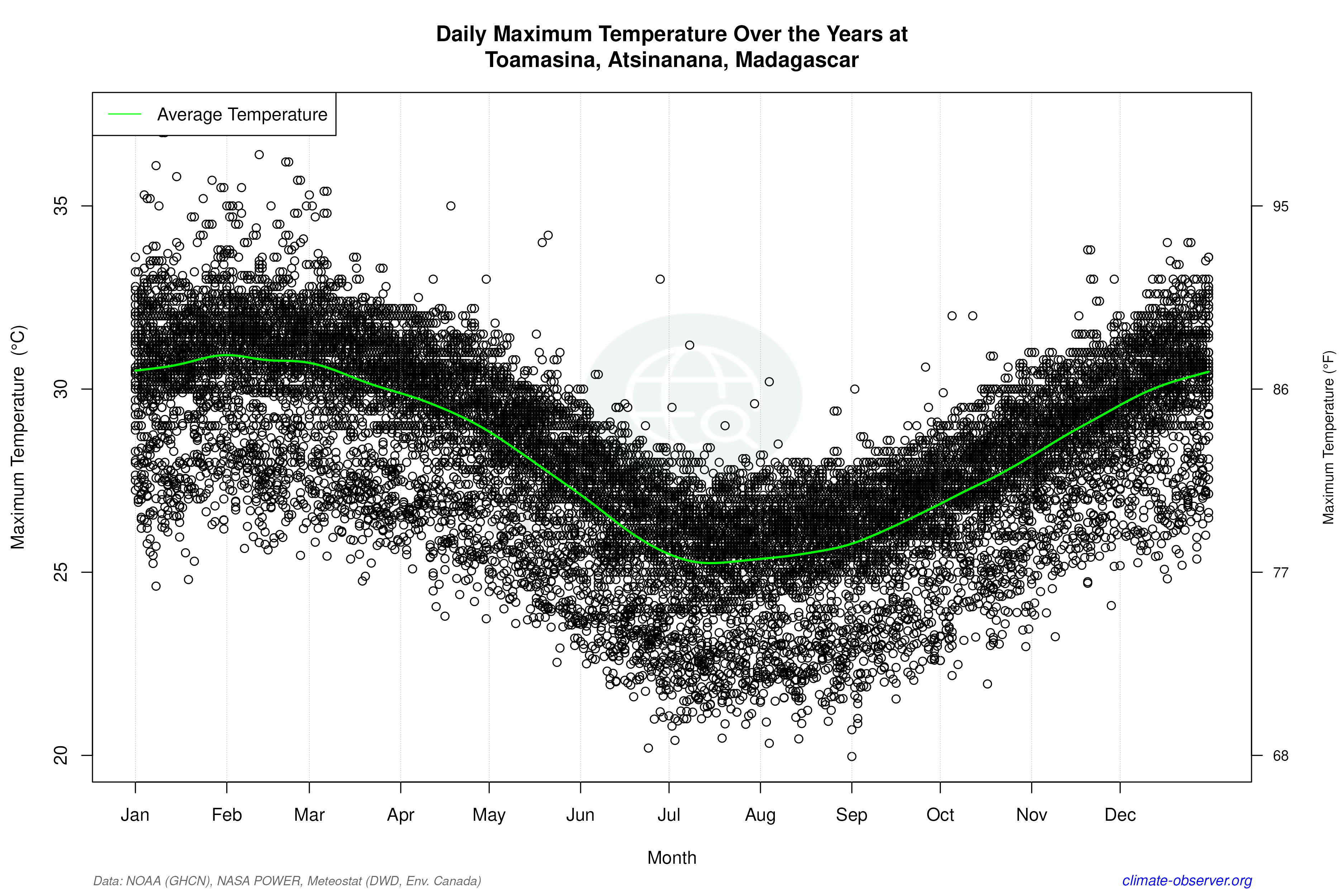
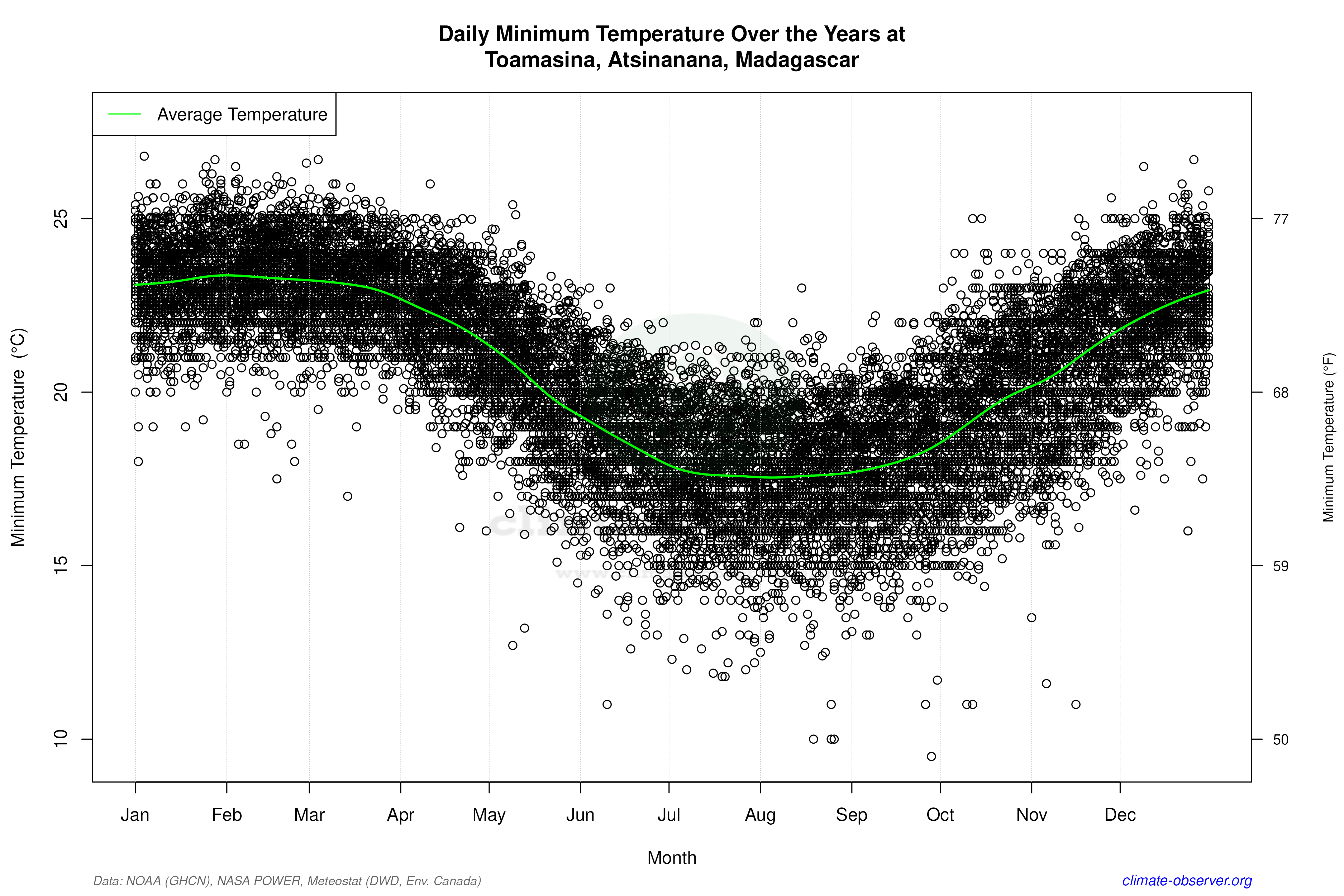
Toamasina has recorded an absolute maximum temperature of 37.4°C (99.3°F) and a minimum of 9.5°C (49.1°F). These extremes highlight the range of temperatures the region can experience, despite its generally stable tropical climate. Such variations can be critical for planning in sectors like agriculture and infrastructure, where temperature extremes can have significant impacts.
Regional Context and Climate Goals
Madagascar has been actively pursuing climate resilience strategies, focusing on sustainable development and adaptation to changing weather patterns. Recent weather events, such as cyclones, have underscored the importance of these efforts. The observed trends in Toamasina align with national objectives to enhance understanding of local climate changes and inform policy decisions. As the region continues to adapt, monitoring these trends will be crucial for future planning and sustainability.
Station Statistics
10-Year Trend
High: -0.36 °C/decade
Low: -0.10 °C/decade
Rain: -0.60 mm/decade
25-Year Trend
High: +0.43 °C/decade
Low: +0.36 °C/decade
Rain: -1.06 mm/decade
50-Year Trend
High: +0.55 °C/decade
Low: +0.19 °C/decade
Rain: +0.04 mm/decade
All-Time Trend
High: +0.55 °C/decade
Low: +0.19 °C/decade
Rain: +0.04 mm/decade
Percentage Above-Average Days
Last 12 Months: 33.7%
This Year: 13.7%
Precipitation Concentration Index (PCI) ℹ️
Last 12 Months: 13.6
Historical Average: 11.7
Percentile Rank of Last 12 Months ℹ️
High: 67th percentile
Low: 59th percentile
Rain: 22nd percentile
Change in Variance ℹ️
High: -15.1%
Low: -12.1%
Intraday: -36.3%
Data Coverage
91.5%
First Year of Data
1976
Station Location
Historical Weather Records
| Max High | Avg High | Min High | Max Avg | Avg Avg | Min Avg | Max Low | Avg Low | Min Low | Max Precipitation | Avg Precipitation | Max Snow | Avg Snow | |
|---|---|---|---|---|---|---|---|---|---|---|---|---|---|
| Record | 37.4 °C | — | 20.0 °C | 31.2 °C | — | 16.3 °C | 27.9 °C | — | 9.5 °C | 340.1 mm | — | — | — |
| January | 37.4 °C | 30.7 °C | 24.6 °C | 30.8 °C | 26.8 °C | 22.7 °C | 27.9 °C | 23.2 °C | 18.0 °C | 177.0 mm | 11.9 mm | — | — |
| February | 36.4 °C | 30.8 °C | 25.5 °C | 31.2 °C | 26.8 °C | 22.4 °C | 26.6 °C | 23.3 °C | 17.5 °C | 274.1 mm | 14.1 mm | — | — |
| March | 35.4 °C | 30.3 °C | 24.8 °C | 30.4 °C | 26.4 °C | 22.2 °C | 26.7 °C | 23.1 °C | 17.0 °C | 243.1 mm | 13.7 mm | — | — |
| April | 35.0 °C | 29.5 °C | 23.7 °C | 28.8 °C | 25.4 °C | 19.8 °C | 26.0 °C | 22.1 °C | 16.0 °C | 221.0 mm | 10.2 mm | — | — |
| May | 34.2 °C | 28.0 °C | 22.5 °C | 27.5 °C | 23.7 °C | 19.0 °C | 25.4 °C | 20.3 °C | 12.7 °C | 143.0 mm | 7.5 mm | — | — |
| June | 33.0 °C | 26.3 °C | 20.2 °C | 25.8 °C | 21.9 °C | 16.3 °C | 23.0 °C | 18.6 °C | 11.0 °C | 340.1 mm | 7.9 mm | — | — |
| July | 31.2 °C | 25.3 °C | 20.4 °C | 25.6 °C | 21.0 °C | 17.7 °C | 22.0 °C | 17.6 °C | 11.8 °C | 320.0 mm | 7.5 mm | — | — |
| August | 30.2 °C | 25.5 °C | 20.3 °C | 25.2 °C | 21.3 °C | 17.2 °C | 23.0 °C | 17.6 °C | 10.0 °C | 95.0 mm | 5.7 mm | — | — |
| September | 30.6 °C | 26.3 °C | 20.0 °C | 25.2 °C | 22.1 °C | 17.2 °C | 22.2 °C | 18.0 °C | 9.5 °C | 93.0 mm | 3.8 mm | — | — |
| October | 32.0 °C | 27.5 °C | 21.9 °C | 27.0 °C | 23.5 °C | 17.0 °C | 25.0 °C | 19.5 °C | 11.0 °C | 86.1 mm | 3.4 mm | — | — |
| November | 33.8 °C | 28.9 °C | 23.2 °C | 28.7 °C | 25.0 °C | 20.8 °C | 25.6 °C | 20.9 °C | 11.0 °C | 115.1 mm | 4.2 mm | — | — |
| December | 34.0 °C | 30.1 °C | 24.8 °C | 30.4 °C | 26.3 °C | 22.4 °C | 26.7 °C | 22.4 °C | 16.0 °C | 202.9 mm | 8.0 mm | — | — |
Data Visualisations
Remove WatermarksCurrent Year Climate Trends vs Historical
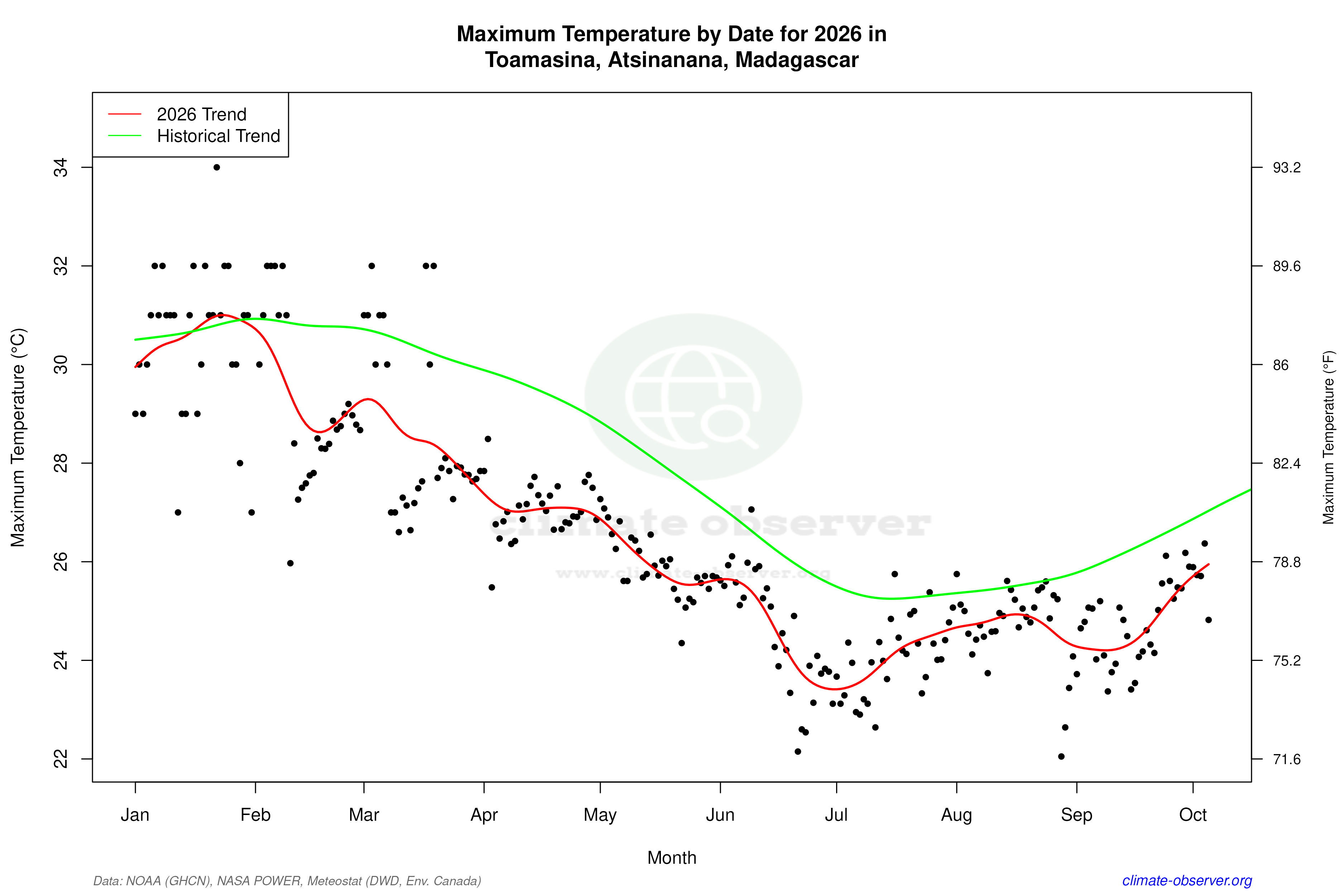
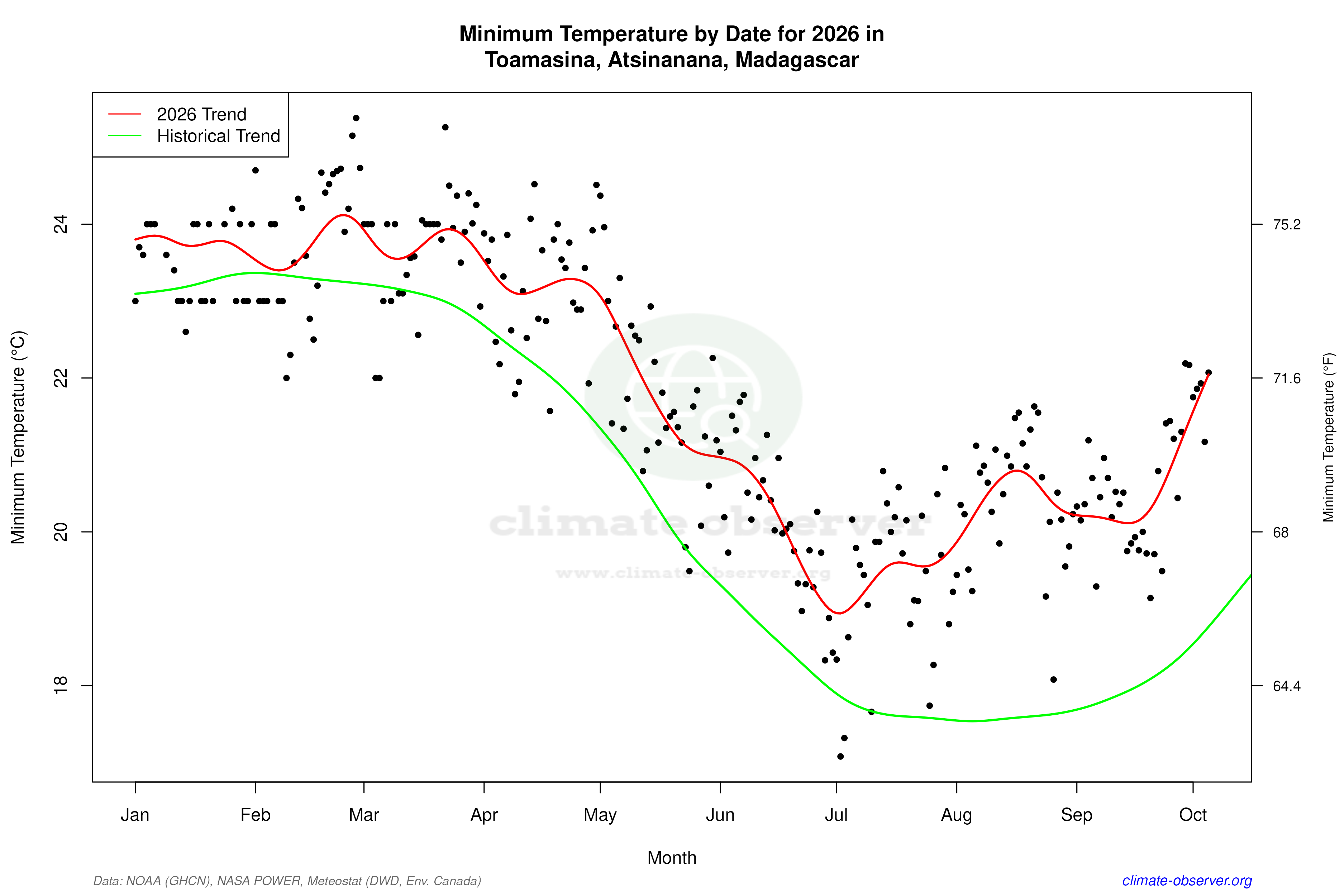
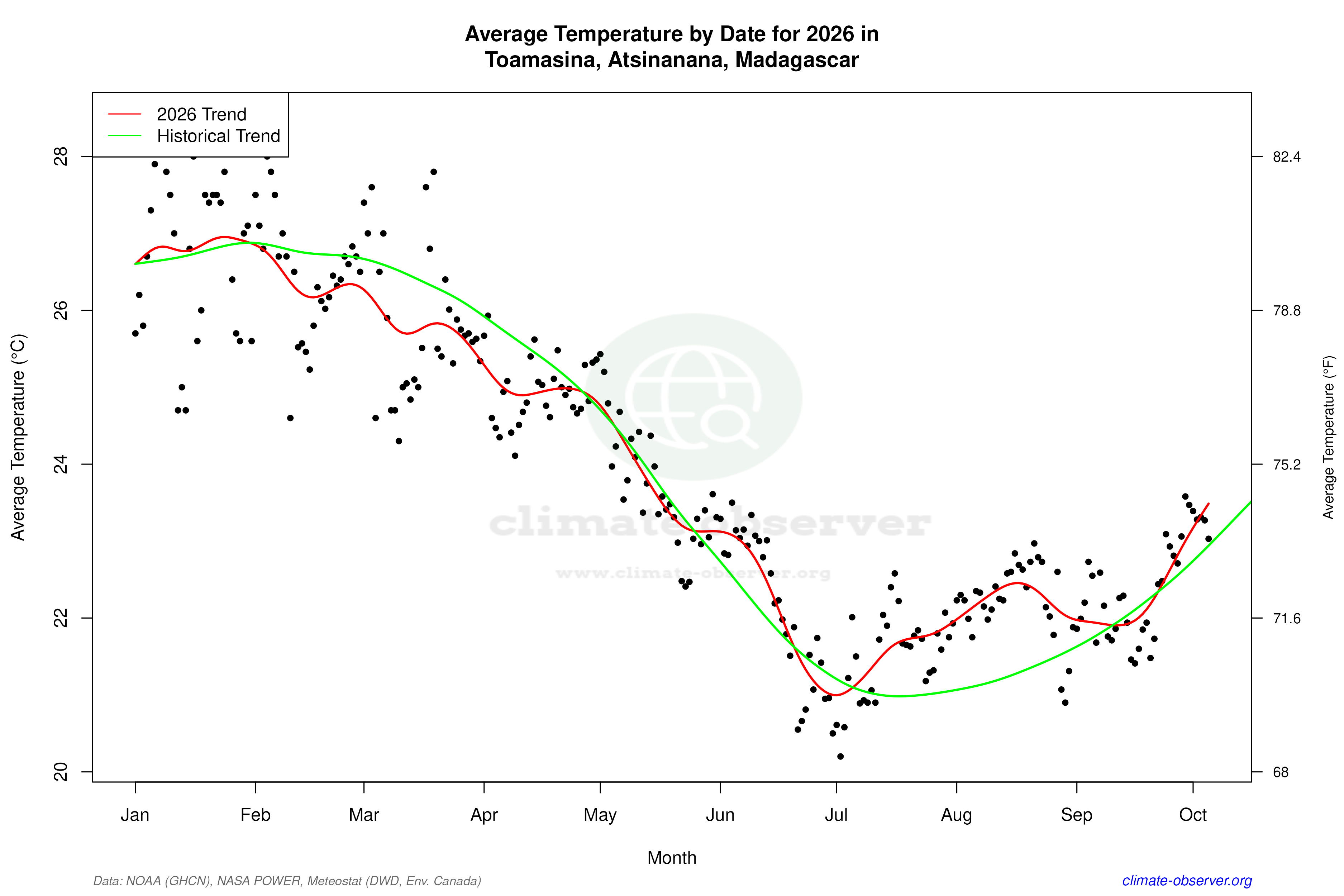
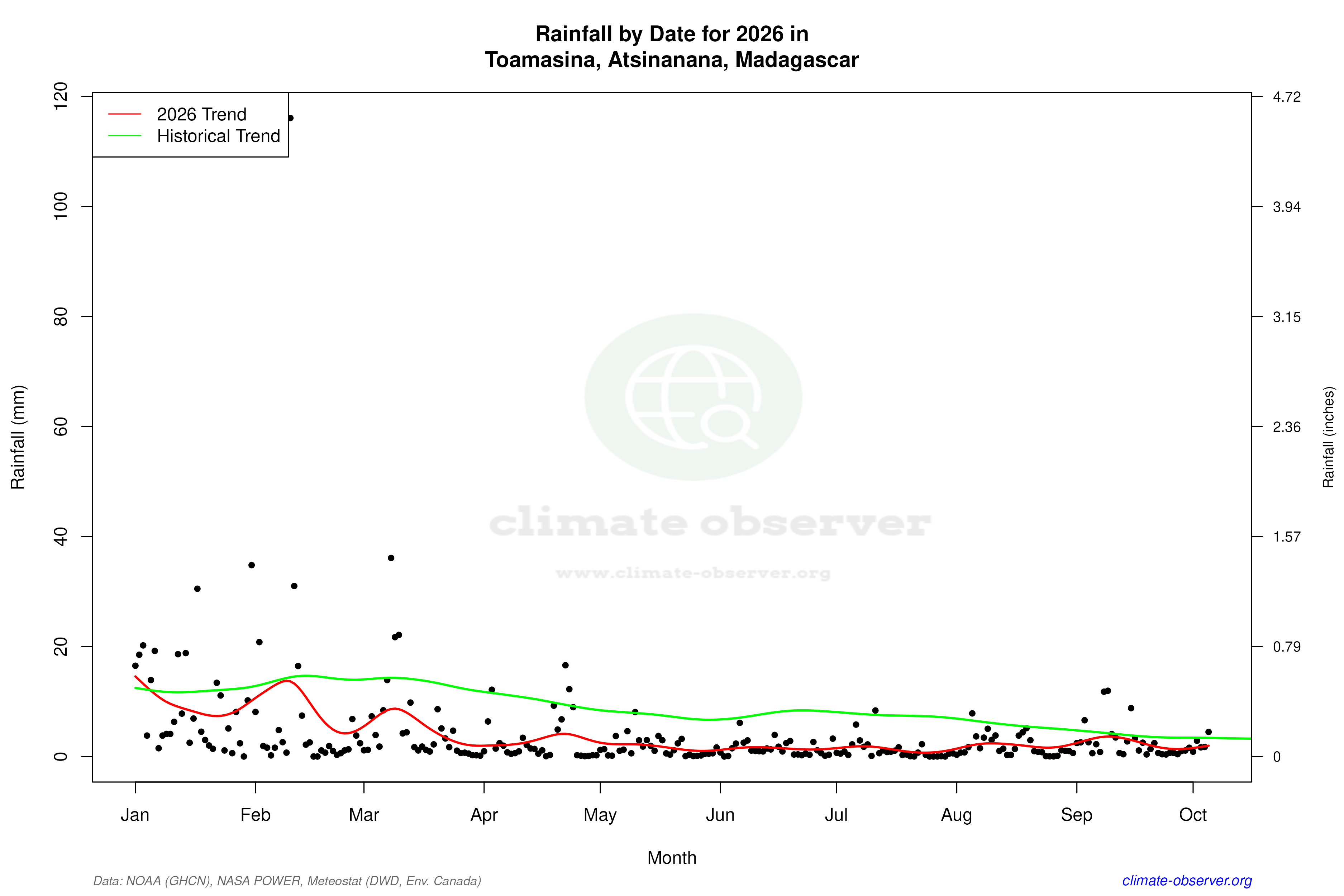
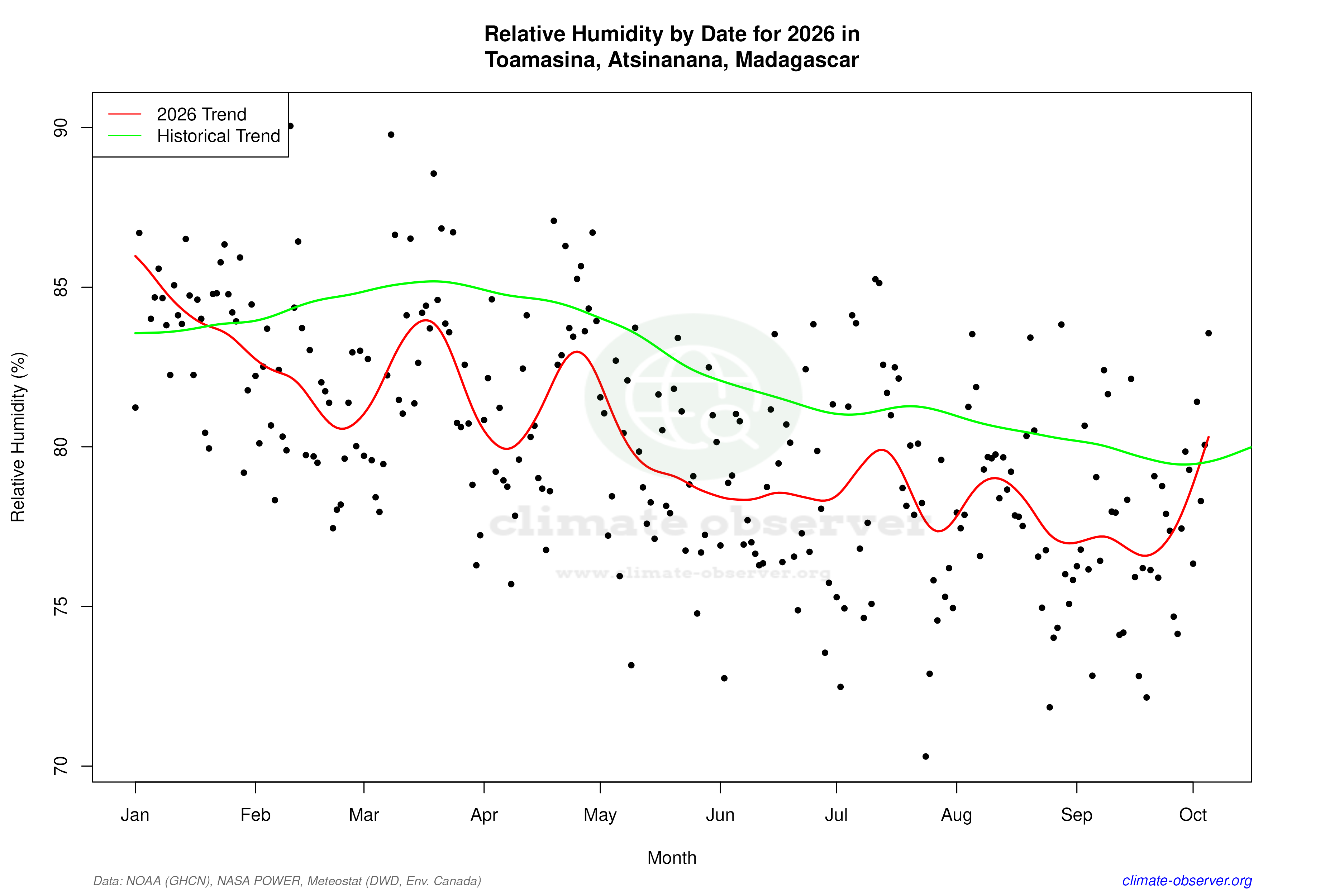

Max Temperature this Year | 1 of 6
Climate 12-Month Moving Averages
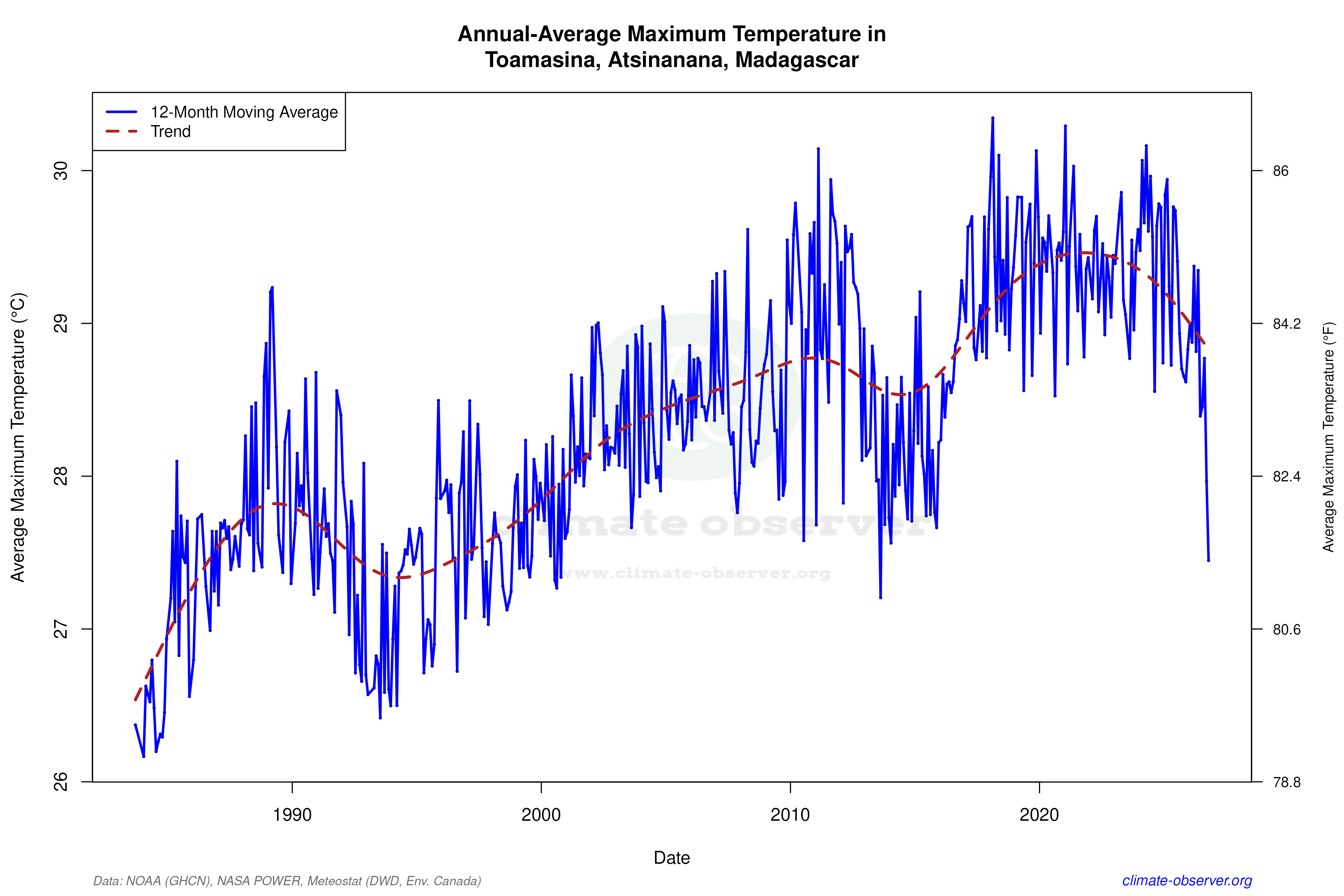
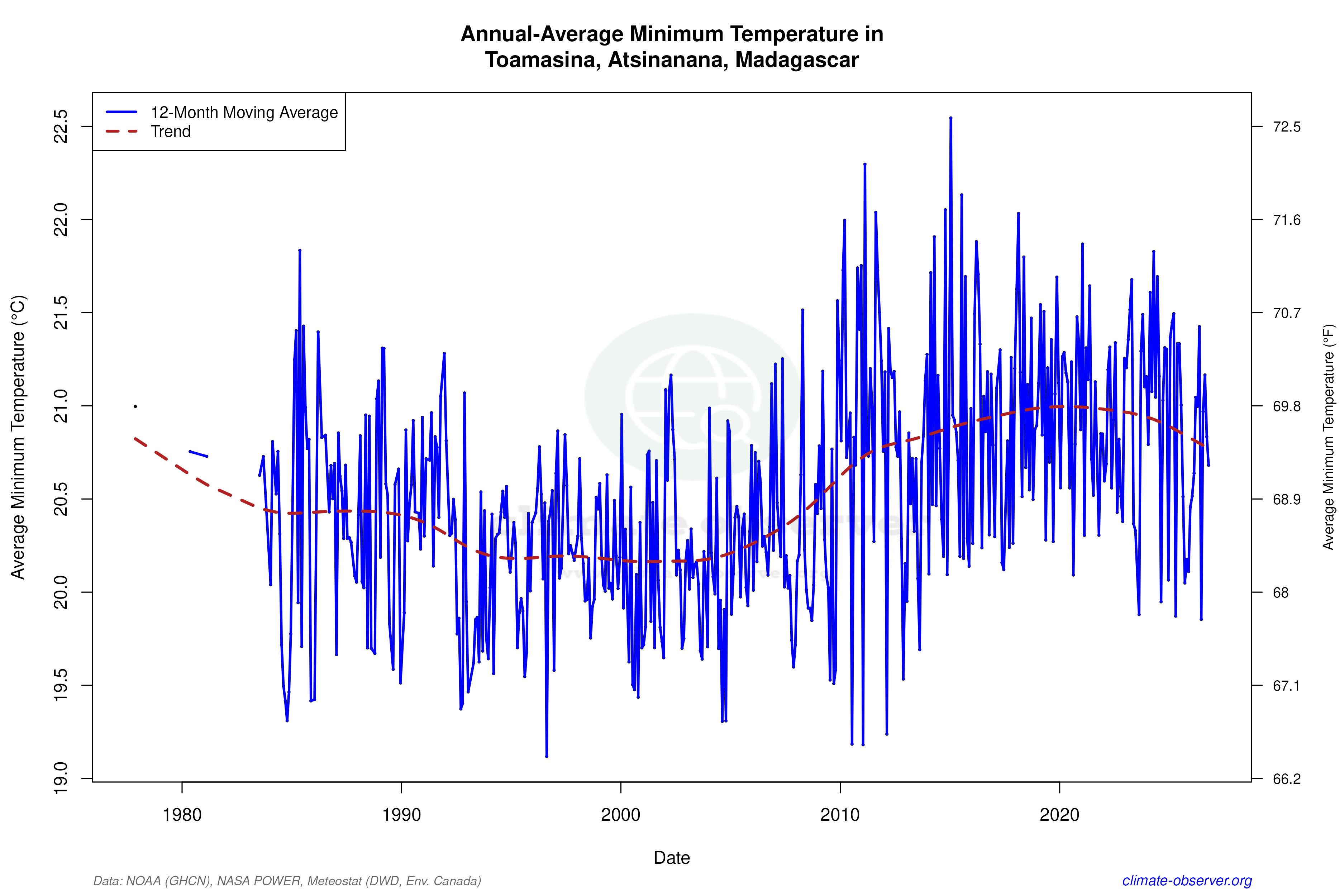
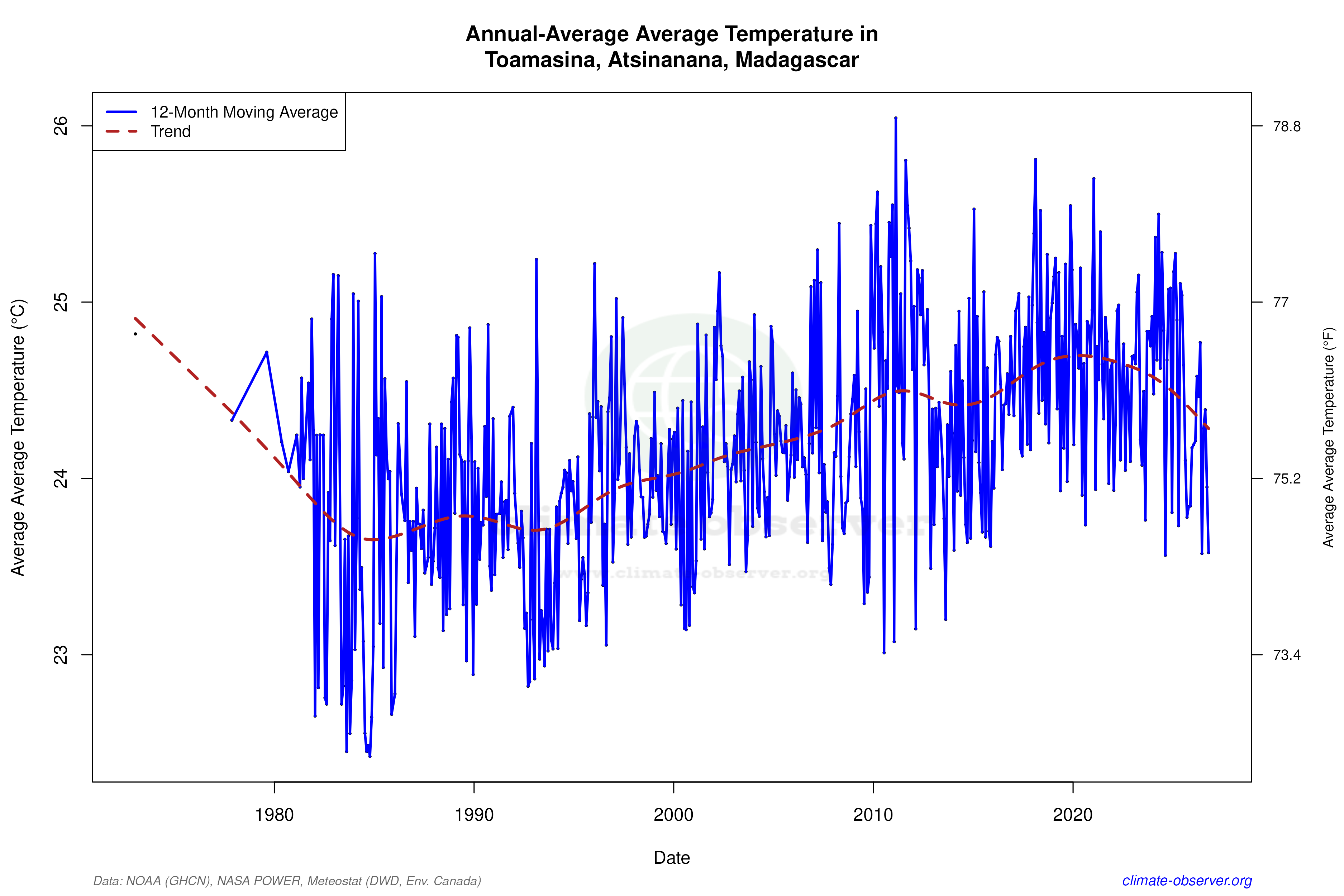

Max Temperature 12-Month MA | 1 of 6
Daily Data Points and Averages Throughout the Year
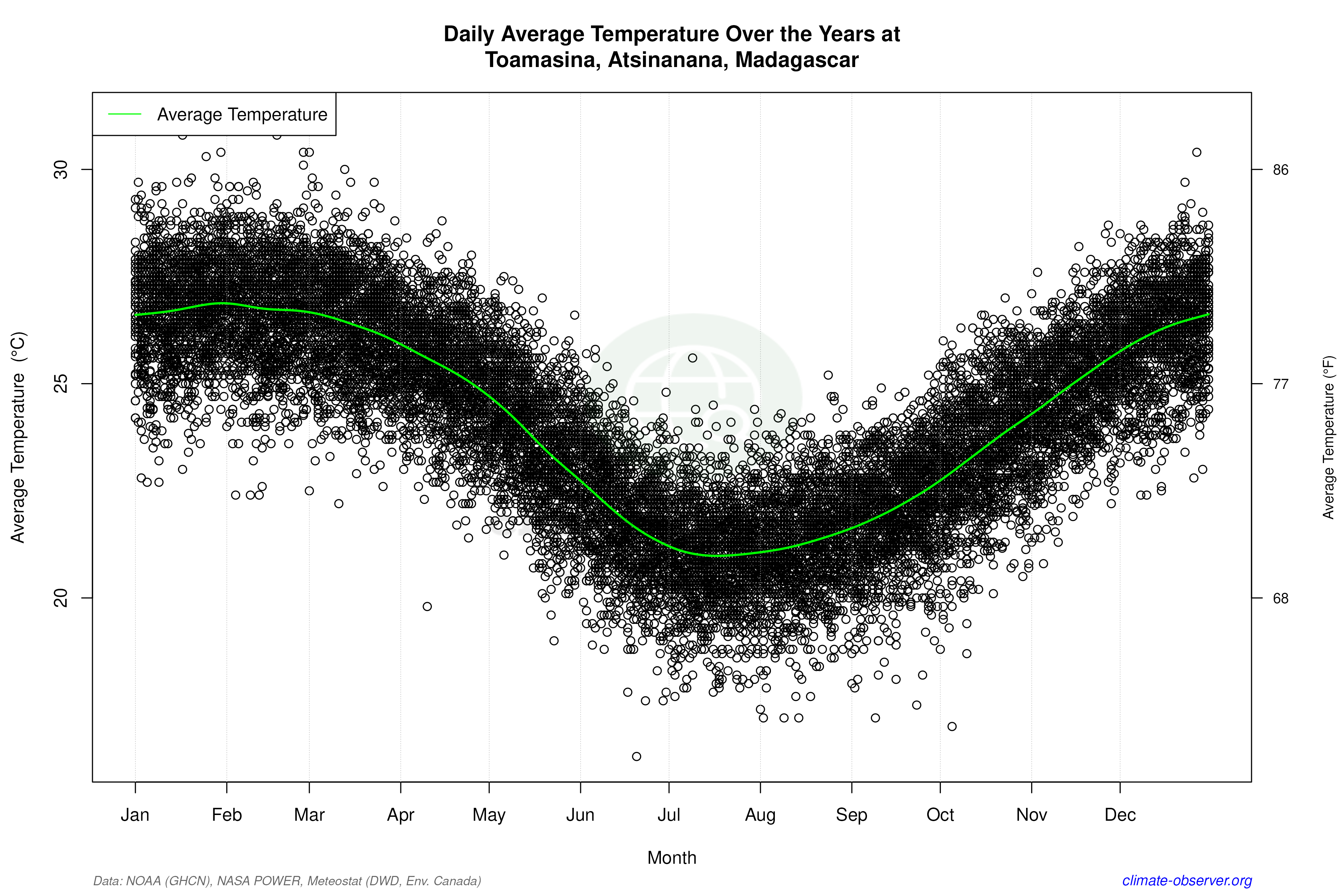
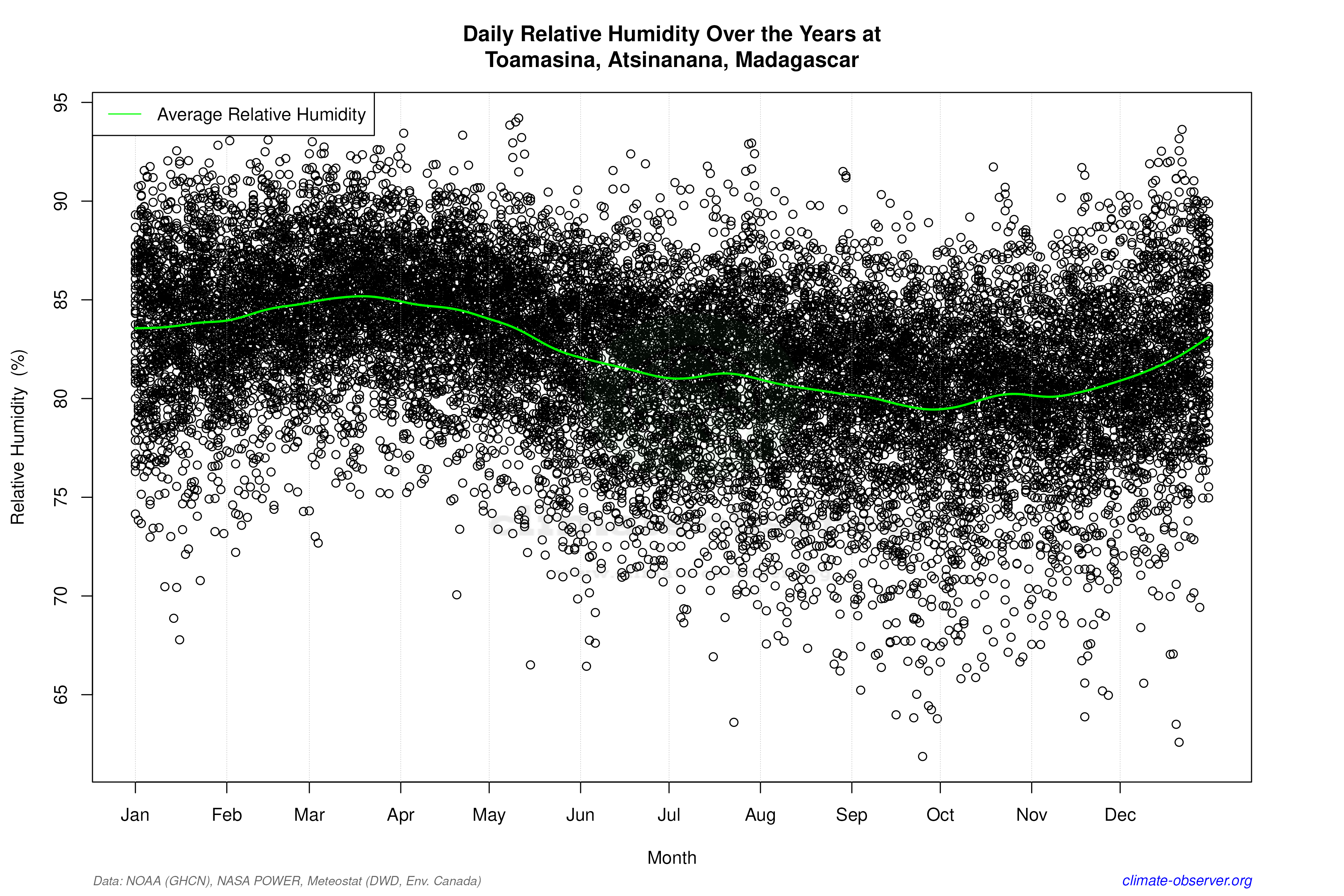

Average Max Temperature Throughout Year | 1 of 5

