Climate for Station: Taolagnaro, Anosy, Madagascar
Loading live weather...
Climate Analysis & Overview
Taolagnaro is experiencing a warming trend, with all-time highs rising by 0.46°C (0.83°F) and lows by 0.32°C (0.57°F). The precipitation pattern is becoming more evenly distributed, as indicated by a decrease in the Precipitation Concentration Index from 14.67 to 11.37.
Tropical Climate Dynamics
Taolagnaro, located in the Anosy region of Madagascar, is characterised by a tropical rainforest climate (Af) according to the Köppen classification. This coastal city, influenced by the Indian Ocean, experiences high humidity and significant rainfall throughout the year. The geographical positioning near the coast moderates temperature extremes, contributing to a relatively stable thermal environment. However, recent data indicates a warming trend, with all-time high temperatures increasing by 0.46°C (0.83°F) and lows by 0.32°C (0.57°F). This warming trend aligns with broader regional climate patterns observed across Madagascar, where efforts are underway to mitigate the impacts of climate change through sustainable practices and conservation initiatives.
Temperature Trends: A Decade in Review
Over the past decade, Taolagnaro has seen a modest warming of high temperatures by 0.31°C (0.56°F) and lows by 0.08°C (0.14°F). While these figures are less pronounced than the all-time trends, they underscore a persistent warming pattern. The highest recorded temperature in the area stands at 39.3°C (102.7°F), while the lowest is 9.0°C (48.2°F). These extremes highlight the potential for variability within the overarching climate stability, influenced by both local geographical features and broader atmospheric conditions.
Precipitation Patterns: A Shift Towards Even Distribution
The Precipitation Concentration Index (PCI) for Taolagnaro has decreased from a baseline of 14.67 to a current value of 11.37. This shift suggests that rainfall is becoming more evenly distributed across the year, reducing the likelihood of intense, concentrated rainfall events. Such a change can have significant implications for agriculture and water management, as more consistent rainfall can support crop growth and reduce flood risks. The PCI is a crucial indicator of how precipitation is distributed over time, with lower values indicating a more even spread.
Regional Climate Context
Madagascar's climate goals focus on resilience and adaptation, given the island's vulnerability to climate change impacts such as rising sea levels and extreme weather events. Taolagnaro, with its warming trends and evolving precipitation patterns, serves as a microcosm of these broader challenges. The city's climate data provides valuable insights into the effectiveness of regional strategies aimed at enhancing sustainability and protecting biodiversity. As Madagascar continues to navigate its climate future, understanding localised changes like those in Taolagnaro is essential for informed decision-making and policy development.
Station Statistics
10-Year Trend
High: +0.09 °C/decade
Low: +0.27 °C/decade
Rain: -0.48 mm/decade
25-Year Trend
High: +0.07 °C/decade
Low: +0.40 °C/decade
Rain: +0.02 mm/decade
50-Year Trend
High: +0.45 °C/decade
Low: +0.36 °C/decade
Rain: +0.24 mm/decade
All-Time Trend
High: +0.45 °C/decade
Low: +0.36 °C/decade
Rain: +0.24 mm/decade
Percentage Above-Average Days
Last 12 Months: 51.2%
This Year: 47.8%
Precipitation Concentration Index (PCI) ℹ️
Last 12 Months: 11.3
Historical Average: 12.9
Percentile Rank of Last 12 Months ℹ️
High: 66th percentile
Low: 86th percentile
Rain: 18th percentile
Change in Variance ℹ️
High: -10.6%
Low: -5.0%
Intraday: -12.8%
Data Coverage
90.8%
First Year of Data
1973
Station Location
Historical Weather Records
| Max High | Avg High | Min High | Max Avg | Avg Avg | Min Avg | Max Low | Avg Low | Min Low | Max Precipitation | Avg Precipitation | Max Snow | Avg Snow | |
|---|---|---|---|---|---|---|---|---|---|---|---|---|---|
| Record | 39.3 °C | — | 17.0 °C | 31.0 °C | — | 15.4 °C | 27.0 °C | — | 9.0 °C | 185.9 mm | — | — | — |
| January | 38.0 °C | 30.7 °C | 23.8 °C | 31.0 °C | 26.7 °C | 21.0 °C | 27.0 °C | 23.5 °C | 18.0 °C | 130.0 mm | 6.2 mm | — | — |
| February | 36.5 °C | 30.3 °C | 22.5 °C | 30.3 °C | 26.6 °C | 19.8 °C | 26.8 °C | 23.5 °C | 18.2 °C | 185.9 mm | 7.0 mm | — | — |
| March | 39.3 °C | 29.9 °C | 22.8 °C | 30.6 °C | 26.1 °C | 18.5 °C | 26.0 °C | 22.9 °C | 16.2 °C | 181.1 mm | 5.7 mm | — | — |
| April | 34.0 °C | 28.4 °C | 21.6 °C | 29.0 °C | 24.6 °C | 18.5 °C | 25.6 °C | 21.4 °C | 13.0 °C | 130.0 mm | 4.9 mm | — | — |
| May | 35.0 °C | 26.9 °C | 20.0 °C | 26.8 °C | 22.8 °C | 17.3 °C | 23.4 °C | 19.1 °C | 11.9 °C | 150.1 mm | 4.3 mm | — | — |
| June | 32.1 °C | 25.3 °C | 17.9 °C | 25.4 °C | 21.2 °C | 16.5 °C | 22.0 °C | 17.4 °C | 9.7 °C | 101.1 mm | 3.3 mm | — | — |
| July | 34.0 °C | 24.6 °C | 17.7 °C | 24.7 °C | 20.6 °C | 15.4 °C | 22.0 °C | 16.8 °C | 9.4 °C | 106.9 mm | 3.7 mm | — | — |
| August | 32.8 °C | 25.4 °C | 17.0 °C | 25.3 °C | 21.2 °C | 15.6 °C | 22.0 °C | 17.2 °C | 9.0 °C | 93.0 mm | 2.4 mm | — | — |
| September | 35.8 °C | 26.8 °C | 18.3 °C | 26.4 °C | 22.3 °C | 16.1 °C | 22.0 °C | 18.2 °C | 11.0 °C | 106.8 mm | 2.0 mm | — | — |
| October | 33.7 °C | 27.9 °C | 19.0 °C | 28.2 °C | 23.4 °C | 16.6 °C | 24.0 °C | 19.6 °C | 11.0 °C | 87.9 mm | 2.6 mm | — | — |
| November | 38.7 °C | 29.0 °C | 21.1 °C | 29.8 °C | 24.7 °C | 18.7 °C | 25.0 °C | 21.0 °C | 14.7 °C | 101.1 mm | 3.6 mm | — | — |
| December | 37.5 °C | 30.2 °C | 22.0 °C | 30.2 °C | 26.0 °C | 19.6 °C | 26.0 °C | 22.5 °C | 14.7 °C | 141.0 mm | 4.9 mm | — | — |
Data Visualisations
Remove WatermarksCurrent Year Climate Trends vs Historical
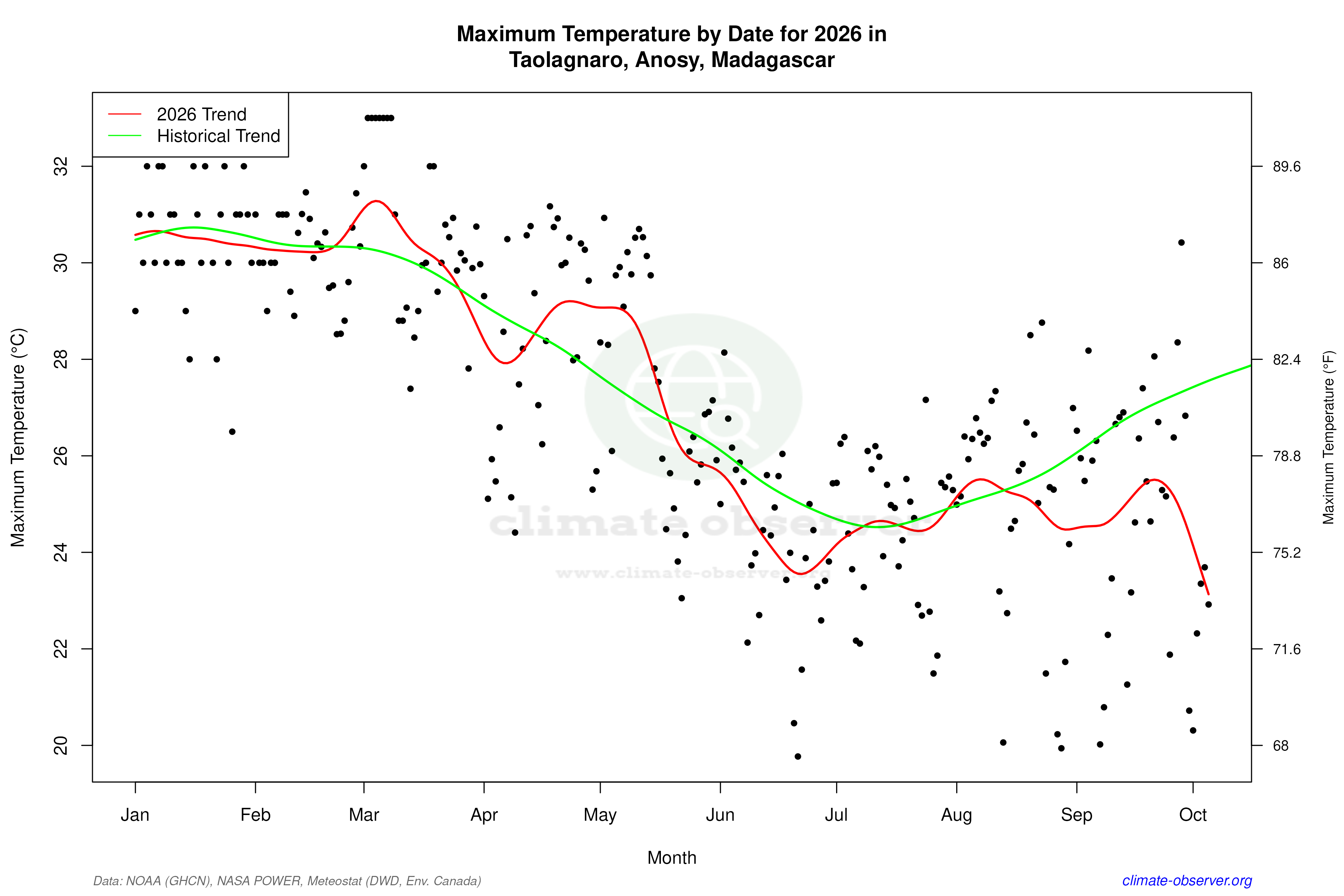
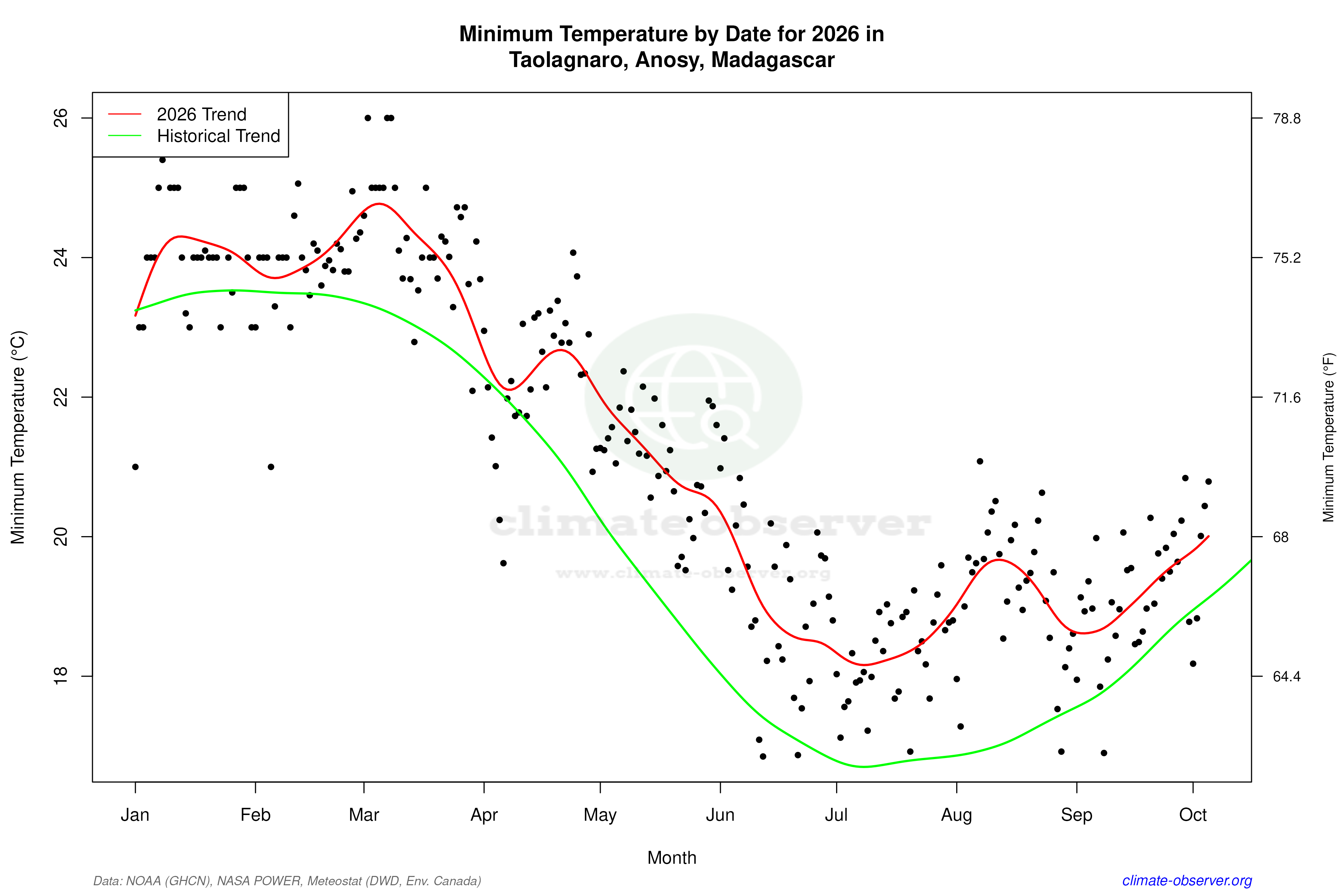
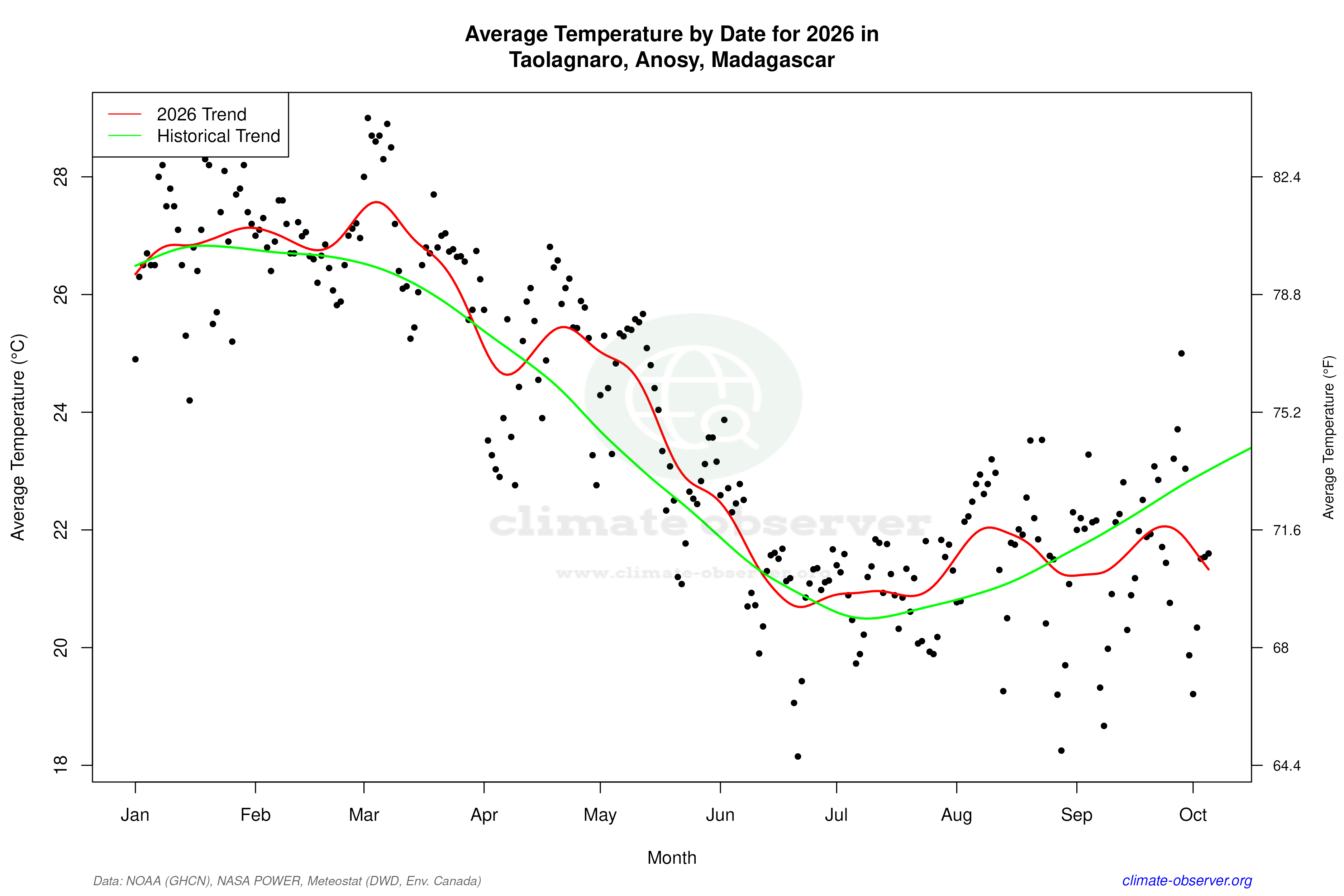
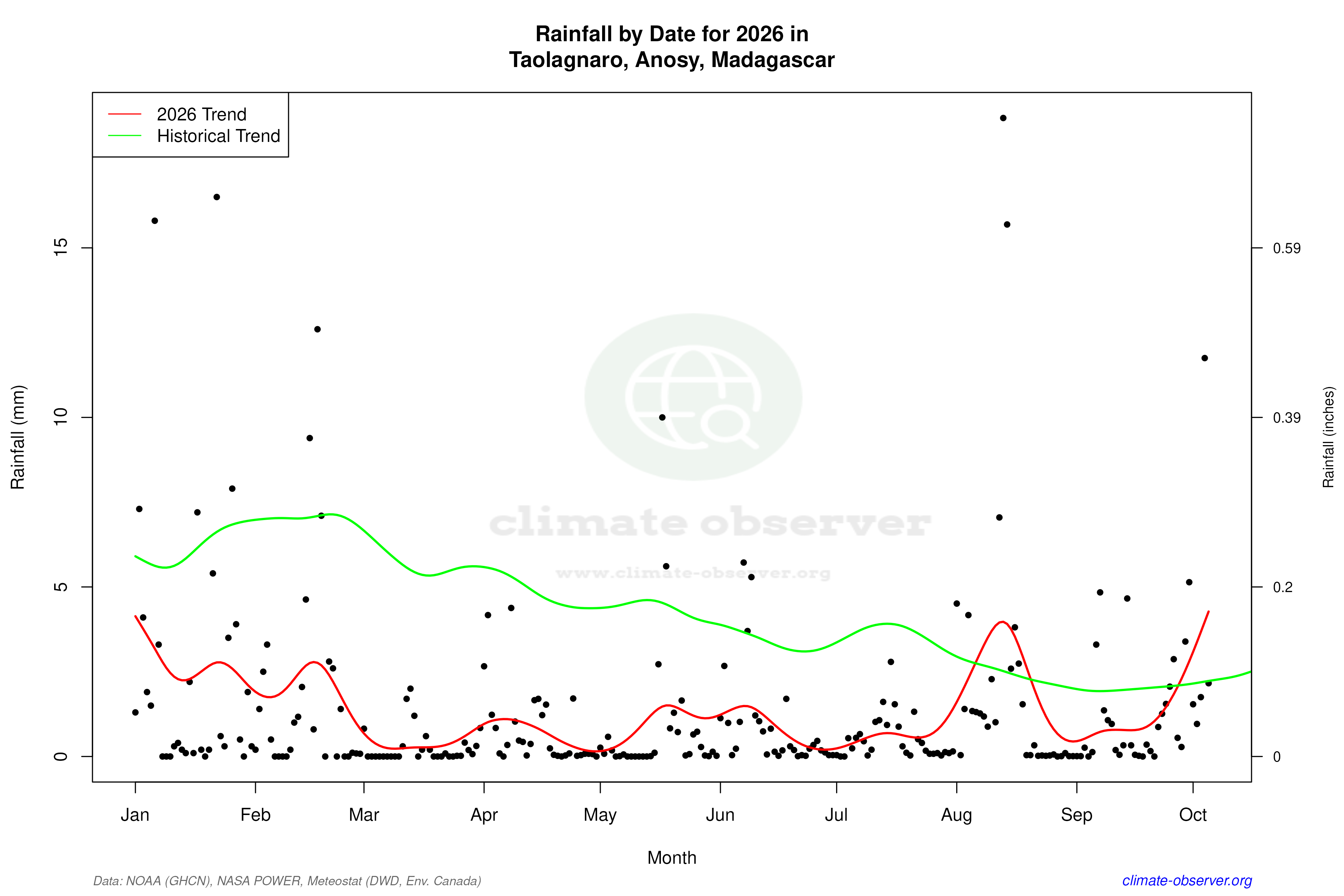
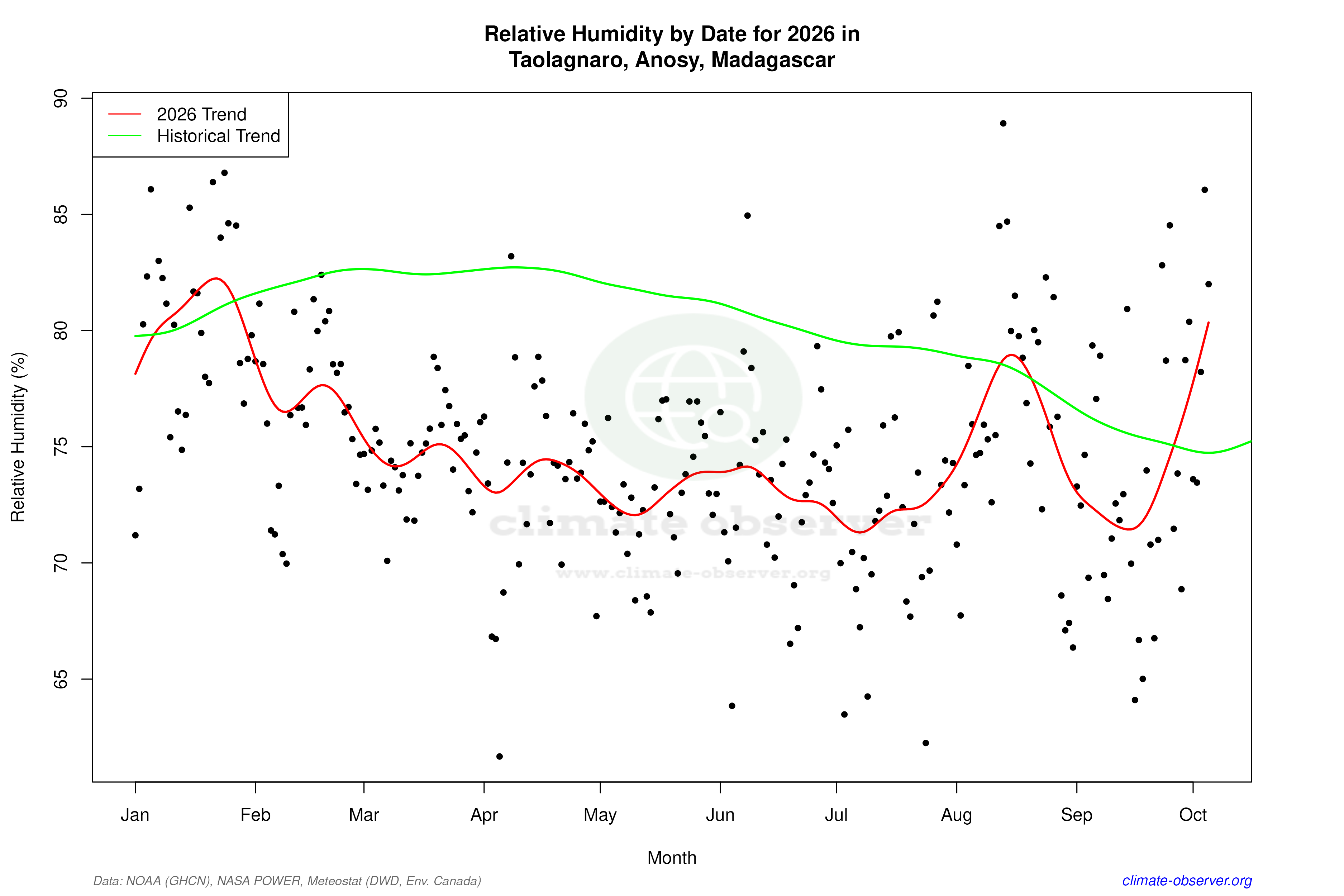

Max Temperature this Year | 1 of 6
Climate 12-Month Moving Averages
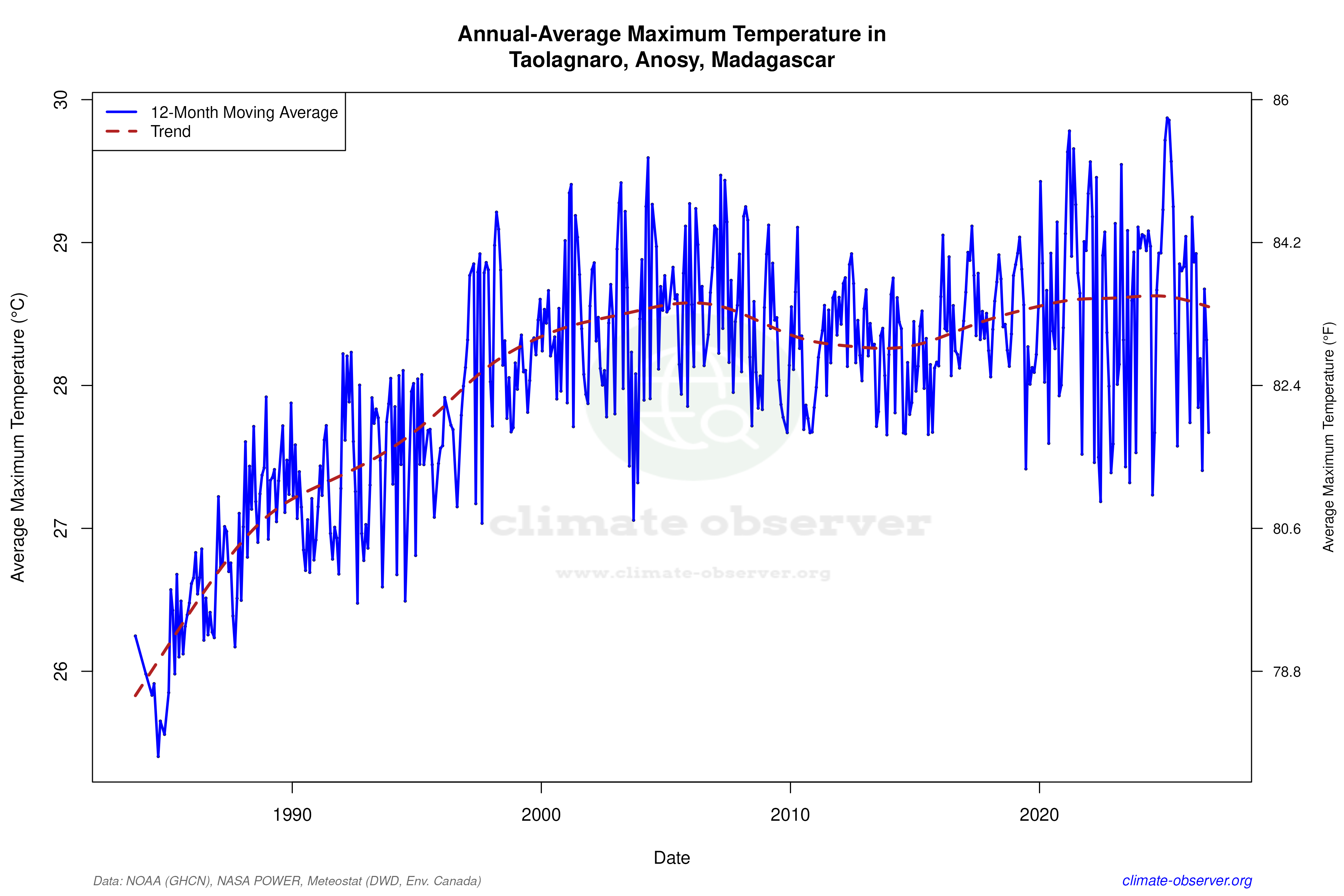
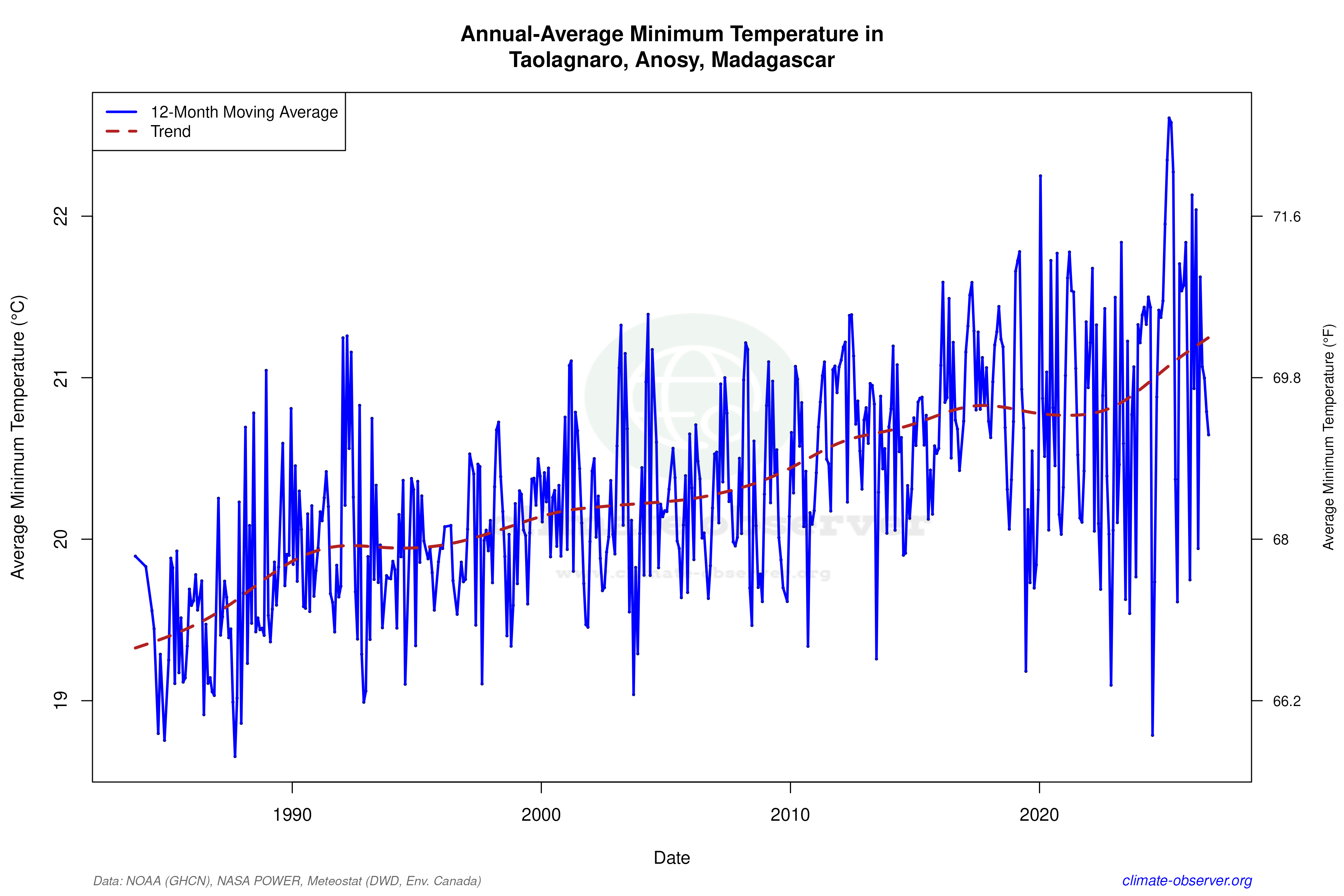
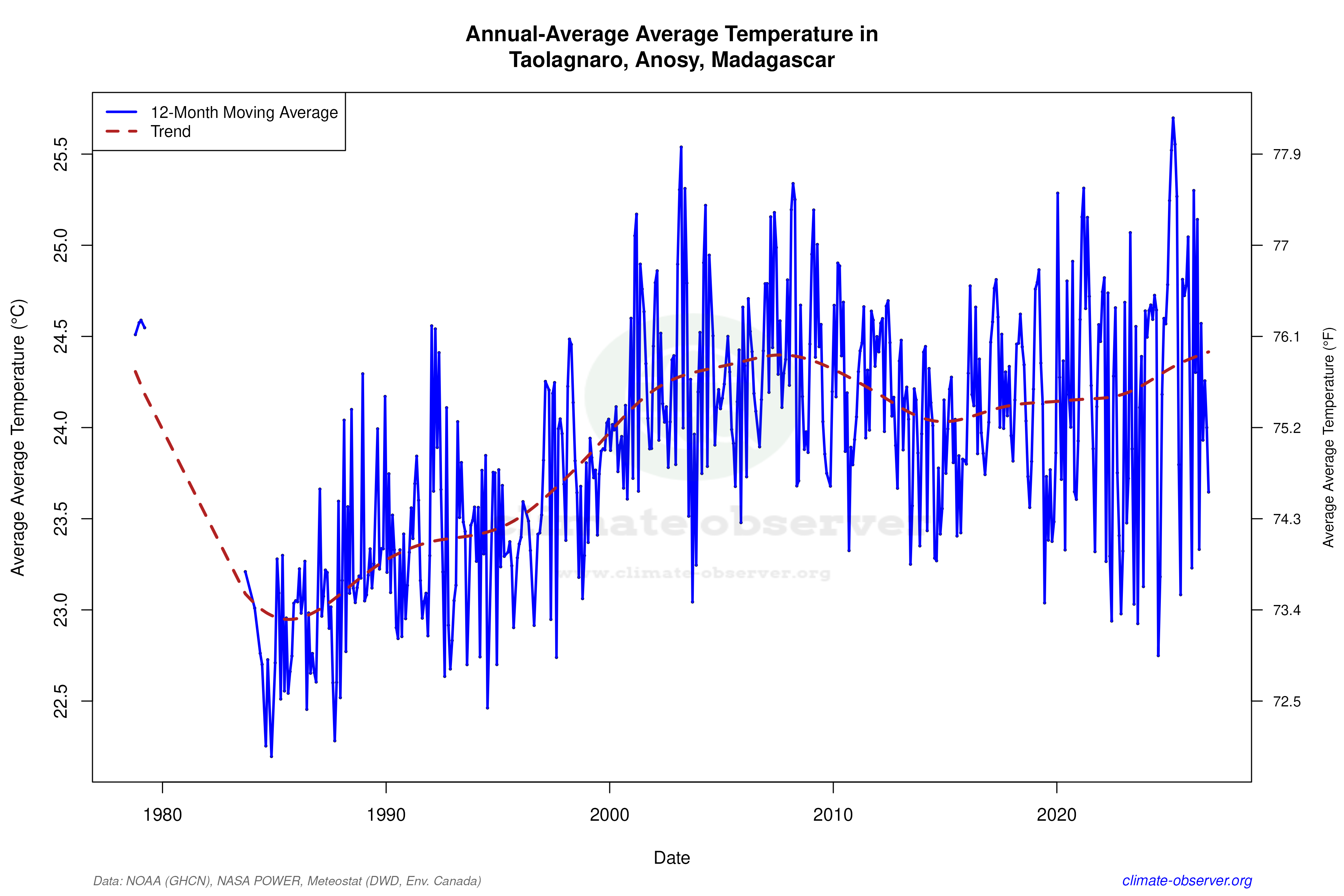
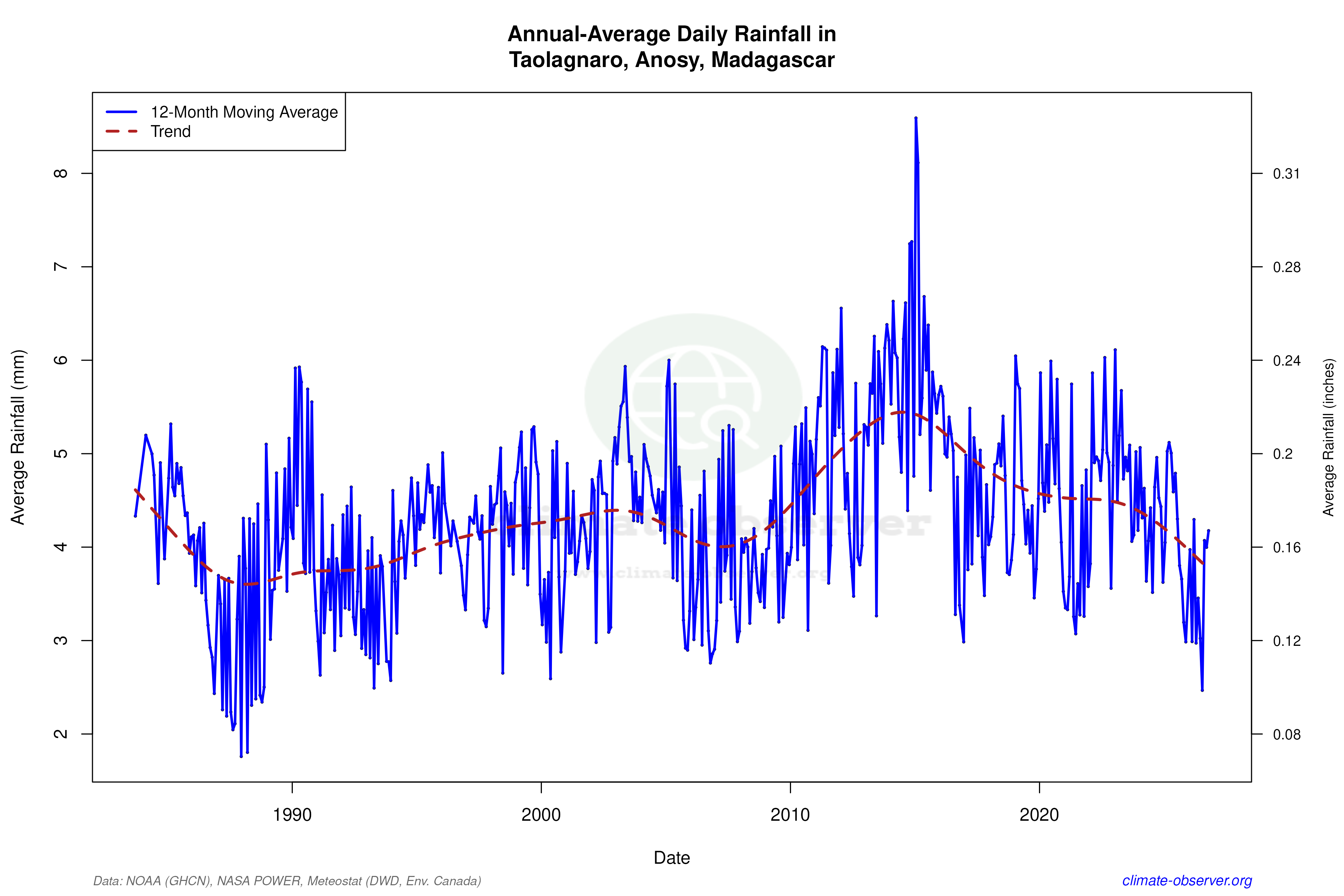
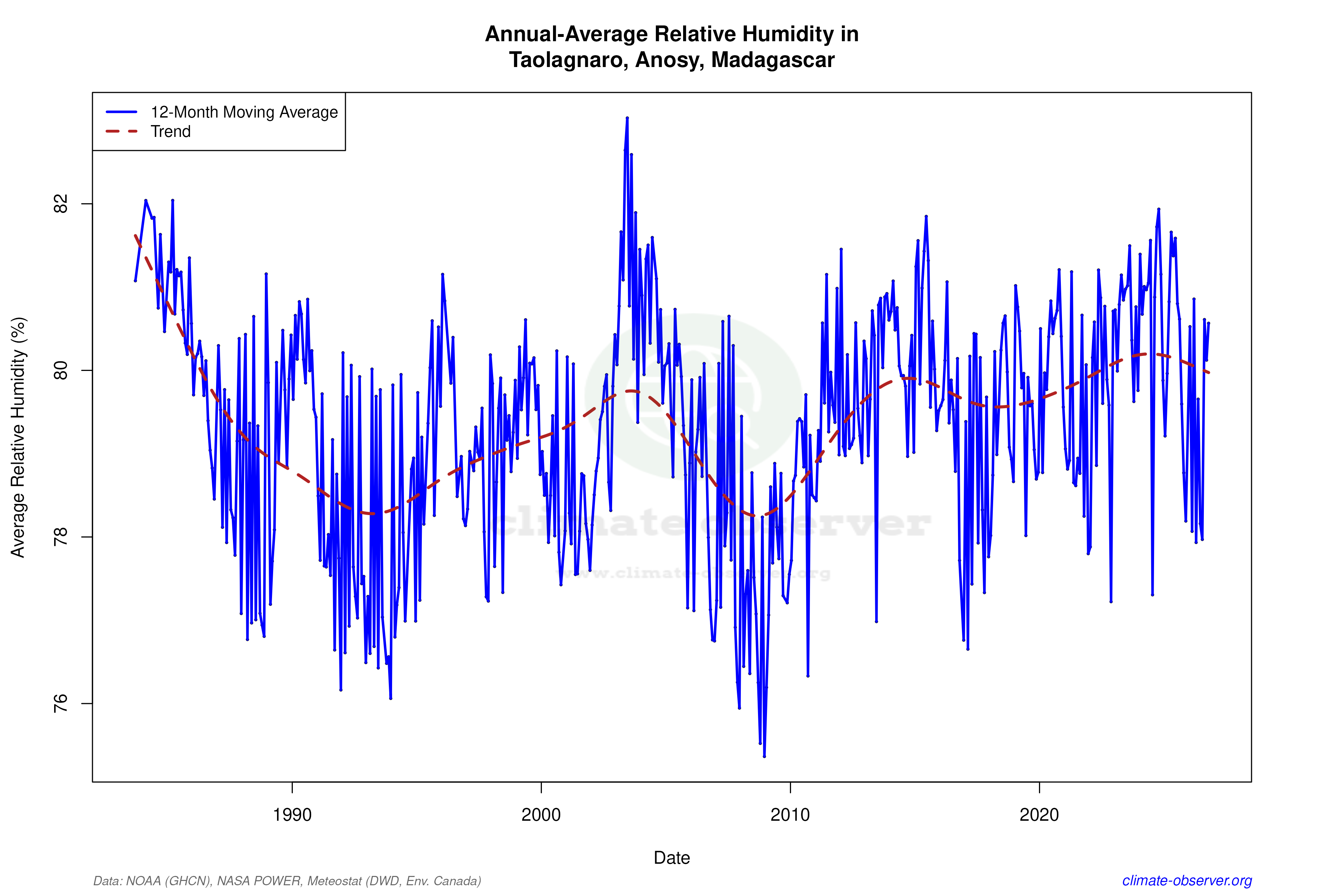

Max Temperature 12-Month MA | 1 of 6
Daily Data Points and Averages Throughout the Year
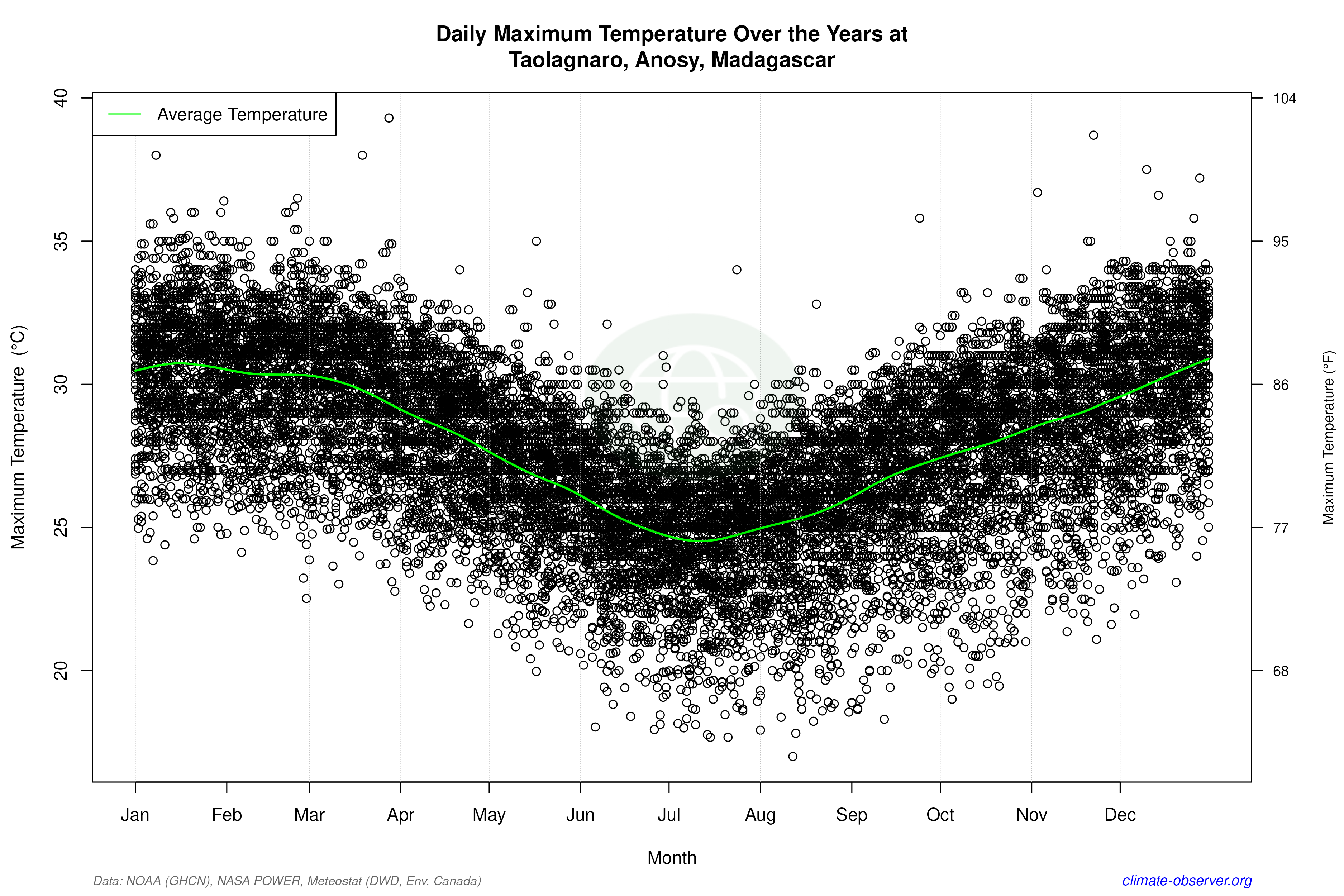
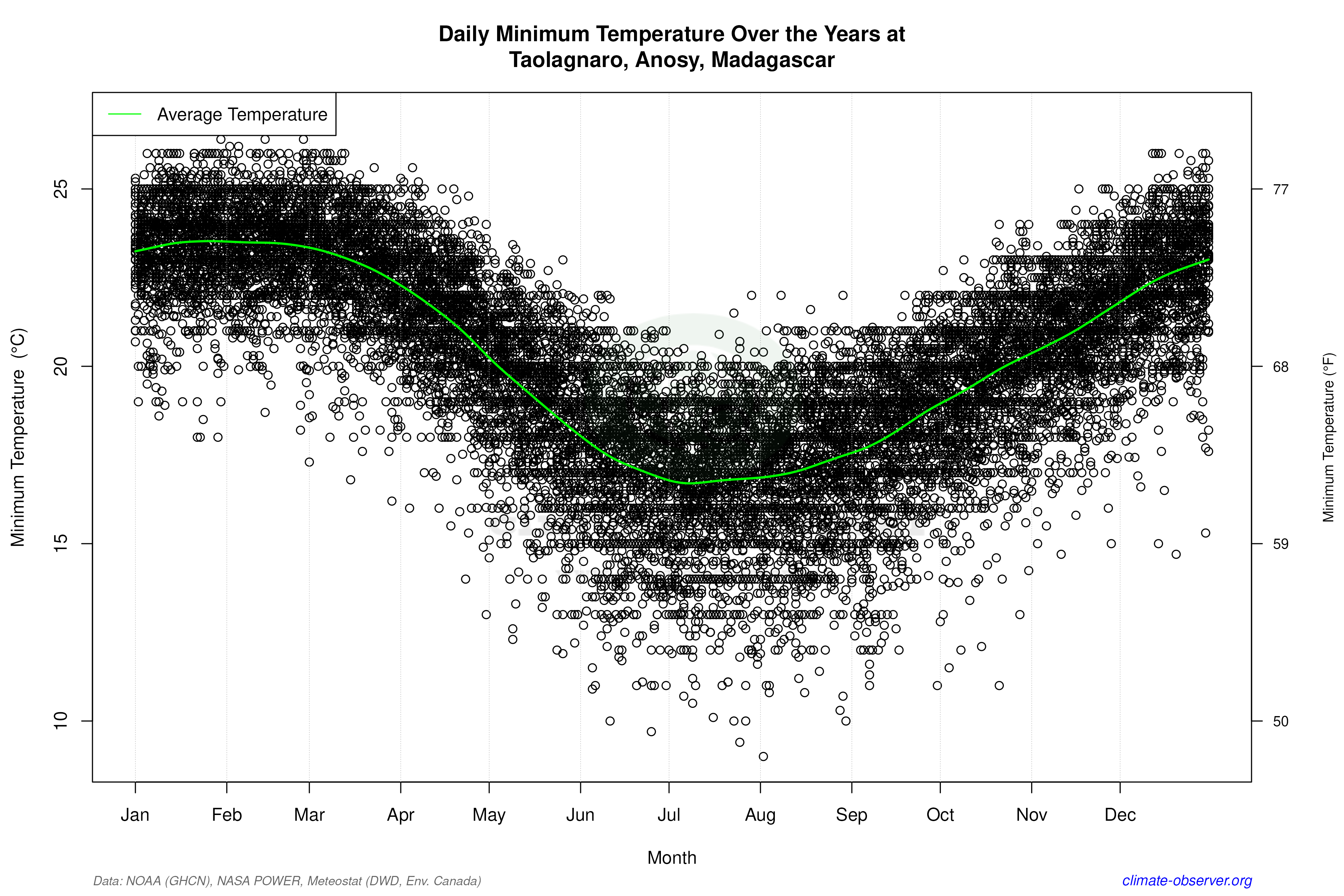
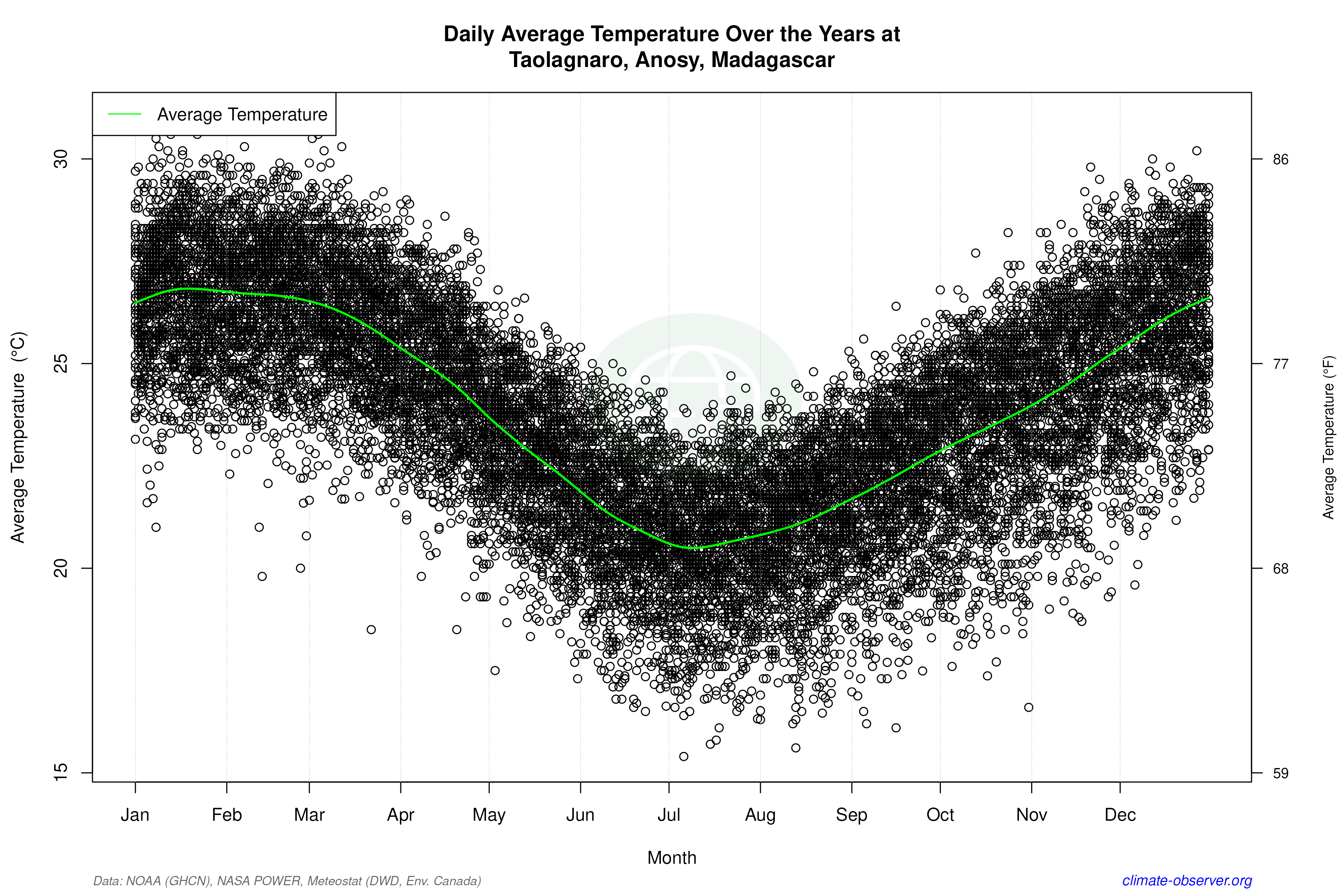
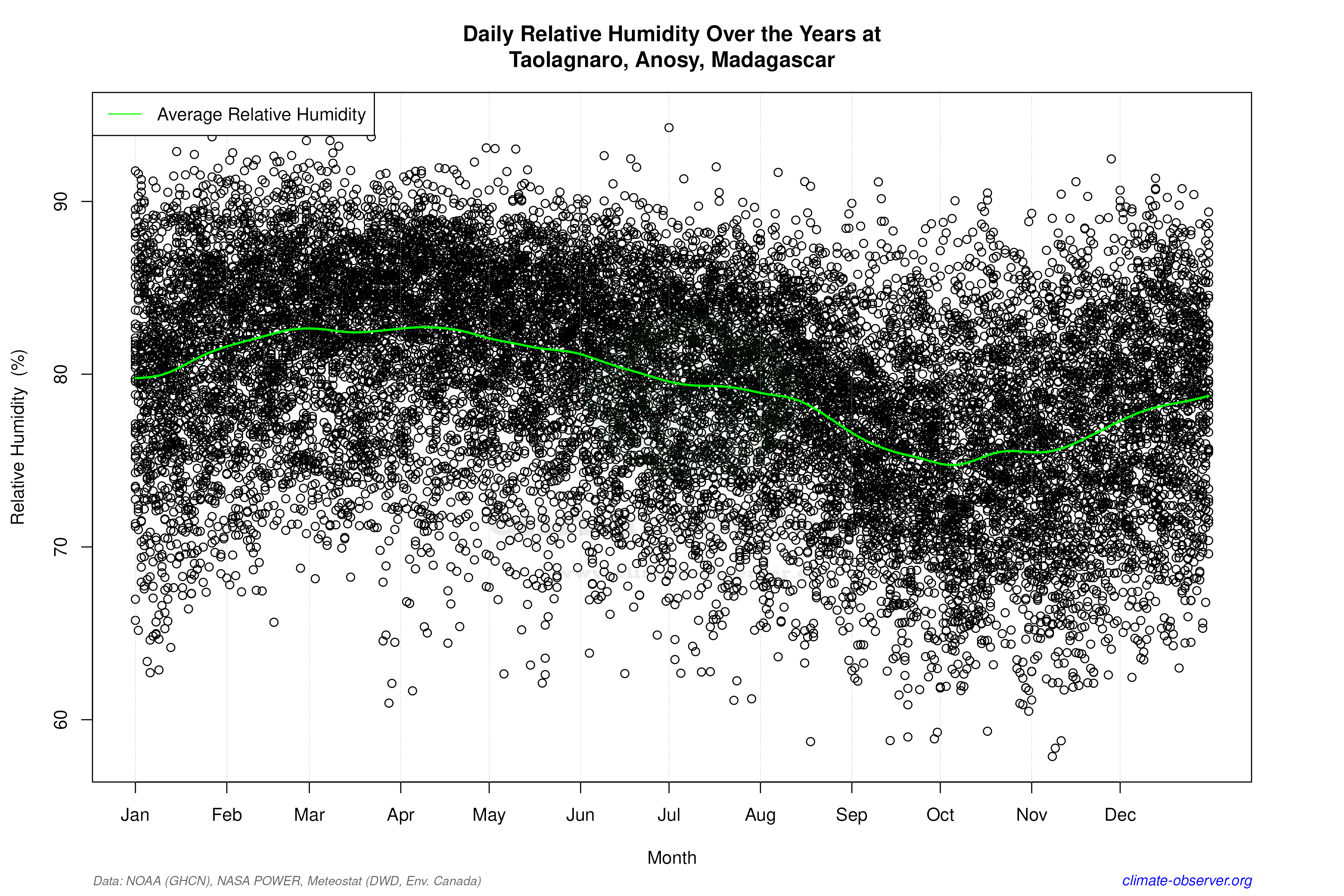

Average Max Temperature Throughout Year | 1 of 5

