Climate for Station: Uliastai, Zavkhan Province, Mongolia
Loading live weather...
Climate Analysis & Overview
Uliastai's climate reveals a warming trend, particularly in nighttime temperatures, with a notable shift towards more evenly distributed precipitation. These changes are set against Mongolia's broader climate goals of adapting to and mitigating climate change impacts.
Continental Climate Dynamics
Uliastai, located in Zavkhan province, Mongolia, sits within a cold semi-arid climate zone (Köppen classification BSk). It is characterised by long, cold winters and short, warm summers. The region's geography, surrounded by mountains, plays a critical role in its climatic patterns, acting as a barrier to moist air masses and contributing to its arid conditions. Over the past decade, Uliastai has experienced a significant warming trend in its low temperatures, with a rise of 2.33°C (4.20°F), suggesting milder nights. This is a stark contrast to the all-time trend, where lows have increased by only 0.10°C (0.18°F), indicating a long-term stability but recent acceleration in warming.
Thermal Extremes and Trends
The absolute temperature records for Uliastai highlight its extreme climate variability, with a maximum of 35.8°C (96.4°F) and a minimum of -43.9°C (-47.0°F). The 10-year trend shows a notable increase in high temperatures by 0.30°C (0.54°F), reflecting a warming trend that aligns with Mongolia's national focus on addressing climate change. However, the all-time high temperature trend is a more modest increase of 0.20°C (0.36°F), suggesting a gradual warming over the longer term. This warming is consistent with global patterns of rising temperatures, but the pronounced increase in low temperatures could have significant implications for local ecosystems and agriculture.
Precipitation Patterns and Implications
The Precipitation Concentration Index (PCI) for Uliastai has decreased from a baseline of 18.1 to 14.0, indicating a shift towards more evenly distributed rainfall throughout the year. This change can mitigate the risk of droughts and floods, which are often exacerbated by concentrated precipitation events. The PCI's decline suggests a significant adjustment in precipitation patterns, which could benefit local agriculture by providing more reliable water availability. This trend is crucial for Mongolia's climate adaptation strategies, as it may enhance resilience against extreme weather events.
Regional Climate Goals and Adaptation
Mongolia has been proactive in setting regional climate goals, focusing on both mitigation and adaptation strategies. Uliastai's warming trends, particularly the rise in low temperatures, underscore the urgency of these efforts. The country's commitment to reducing greenhouse gas emissions and enhancing climate resilience is crucial in the face of these climatic shifts. Recent weather events, such as unseasonal warm spells, highlight the need for adaptive measures to protect vulnerable communities and ecosystems. As Uliastai continues to experience these changes, understanding and integrating climate data will be vital for sustainable development and environmental stewardship in the region.
Station Statistics
10-Year Trend
High: -1.82 °C/decade
Low: +0.38 °C/decade
Rain: -0.13 mm/decade
25-Year Trend
High: +0.06 °C/decade
Low: +0.37 °C/decade
Rain: +0.10 mm/decade
50-Year Trend
High: +0.01 °C/decade
Low: -0.07 °C/decade
Rain: +0.07 mm/decade
All-Time Trend
High: +0.08 °C/decade
Low: +0.00 °C/decade
Rain: +0.05 mm/decade
Percentage Above-Average Days
Last 12 Months: 47.4%
This Year: 42.5%
Precipitation Concentration Index (PCI) ℹ️
Last 12 Months: 40.0
Historical Average: 20.2
Percentile Rank of Last 12 Months ℹ️
High: 3rd percentile
Low: 20th percentile
Rain: 72nd percentile
Change in Variance ℹ️
High: +5.2%
Low: -3.1%
Intraday: +10.9%
Data Coverage
92.4%
First Year of Data
1975
Station Location
Historical Weather Records
| Max High | Avg High | Min High | Max Avg | Avg Avg | Min Avg | Max Low | Avg Low | Min Low | Max Precipitation | Avg Precipitation | Max Snow | Avg Snow | |
|---|---|---|---|---|---|---|---|---|---|---|---|---|---|
| Record | 35.8 °C | — | -31.5 °C | 28.4 °C | — | -38.3 °C | 19.9 °C | — | -43.9 °C | 296.2 mm | — | — | — |
| January | 1.1 °C | -15.4 °C | -31.5 °C | -6.7 °C | -22.6 °C | -38.3 °C | -13.0 °C | -28.2 °C | -43.9 °C | 3.1 mm | 0.1 mm | — | — |
| February | 10.2 °C | -10.8 °C | -29.6 °C | -0.9 °C | -18.8 °C | -36.4 °C | -4.9 °C | -26.1 °C | -42.3 °C | 6.4 mm | 0.1 mm | — | — |
| March | 15.5 °C | -1.5 °C | -20.9 °C | 9.3 °C | -9.5 °C | -29.3 °C | 1.9 °C | -17.4 °C | -37.1 °C | 12.0 mm | 0.2 mm | — | — |
| April | 24.9 °C | 8.5 °C | -12.0 °C | 16.1 °C | 1.7 °C | -16.1 °C | 10.3 °C | -6.0 °C | -25.2 °C | 18.0 mm | 0.3 mm | — | — |
| May | 29.6 °C | 16.0 °C | -2.1 °C | 22.4 °C | 8.8 °C | -6.2 °C | 17.8 °C | 0.3 °C | -13.0 °C | 18.0 mm | 0.6 mm | — | — |
| June | 32.7 °C | 21.7 °C | 5.5 °C | 25.5 °C | 14.6 °C | 2.2 °C | 18.0 °C | 6.4 °C | -4.8 °C | 40.0 mm | 1.2 mm | — | — |
| July | 35.8 °C | 23.1 °C | 10.3 °C | 28.4 °C | 16.5 °C | 7.0 °C | 19.2 °C | 9.0 °C | -1.9 °C | 37.0 mm | 1.9 mm | — | — |
| August | 34.2 °C | 21.1 °C | 6.7 °C | 25.9 °C | 14.3 °C | 2.9 °C | 19.9 °C | 6.7 °C | -4.8 °C | 46.0 mm | 1.5 mm | — | — |
| September | 27.8 °C | 15.3 °C | -4.8 °C | 20.0 °C | 7.8 °C | -8.5 °C | 13.1 °C | 0.1 °C | -14.3 °C | 53.0 mm | 0.8 mm | — | — |
| October | 21.1 °C | 6.8 °C | -15.2 °C | 14.4 °C | -0.8 °C | -22.6 °C | 11.6 °C | -7.9 °C | -29.5 °C | 296.2 mm | 0.6 mm | — | — |
| November | 13.2 °C | -5.3 °C | -25.8 °C | 4.7 °C | -12.4 °C | -31.9 °C | -0.6 °C | -18.5 °C | -36.7 °C | 9.0 mm | 0.2 mm | — | — |
| December | 4.0 °C | -13.5 °C | -30.4 °C | -1.9 °C | -20.0 °C | -35.7 °C | -6.0 °C | -25.4 °C | -40.6 °C | 4.1 mm | 0.1 mm | — | — |
Data Visualisations
Remove WatermarksCurrent Year Climate Trends vs Historical
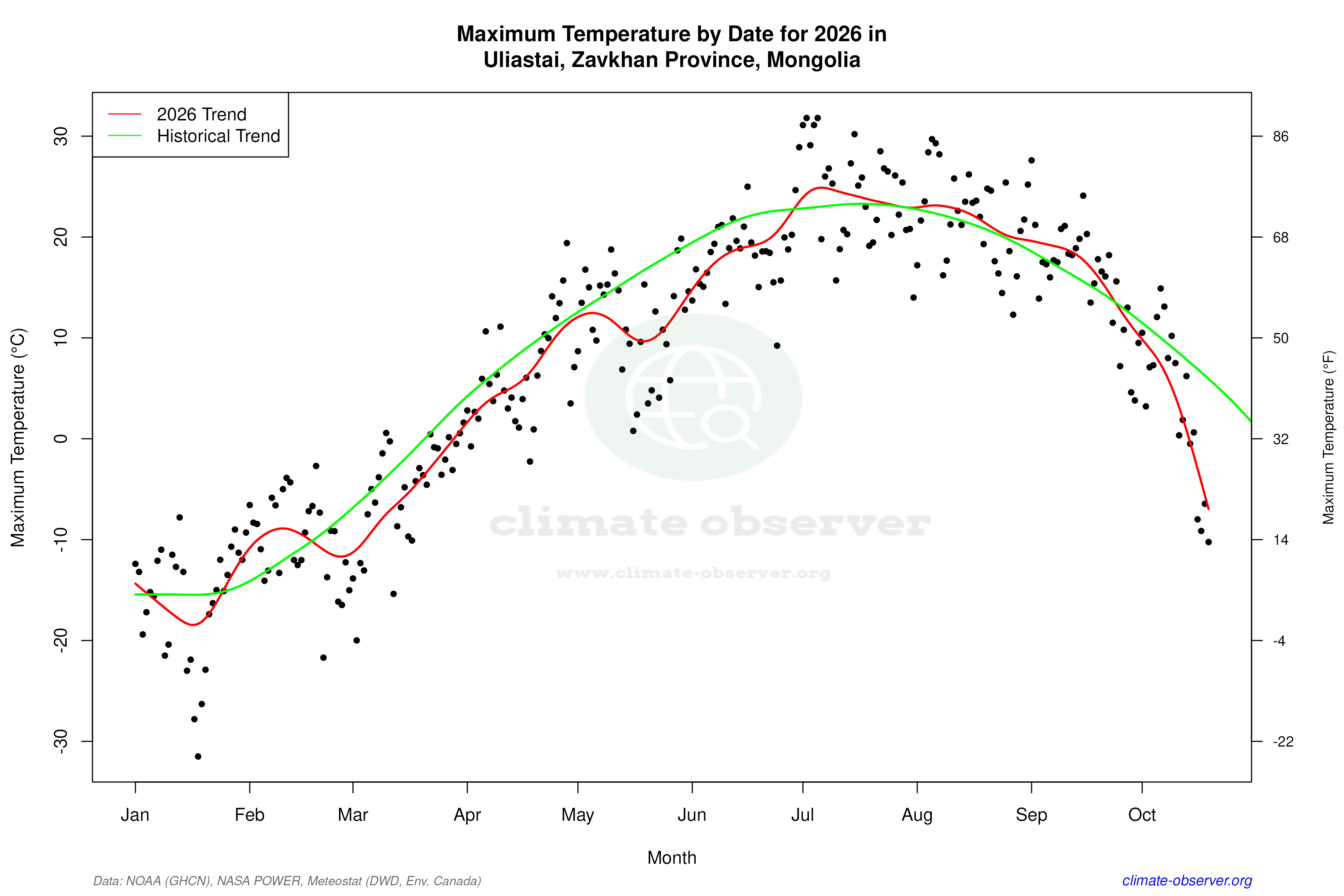
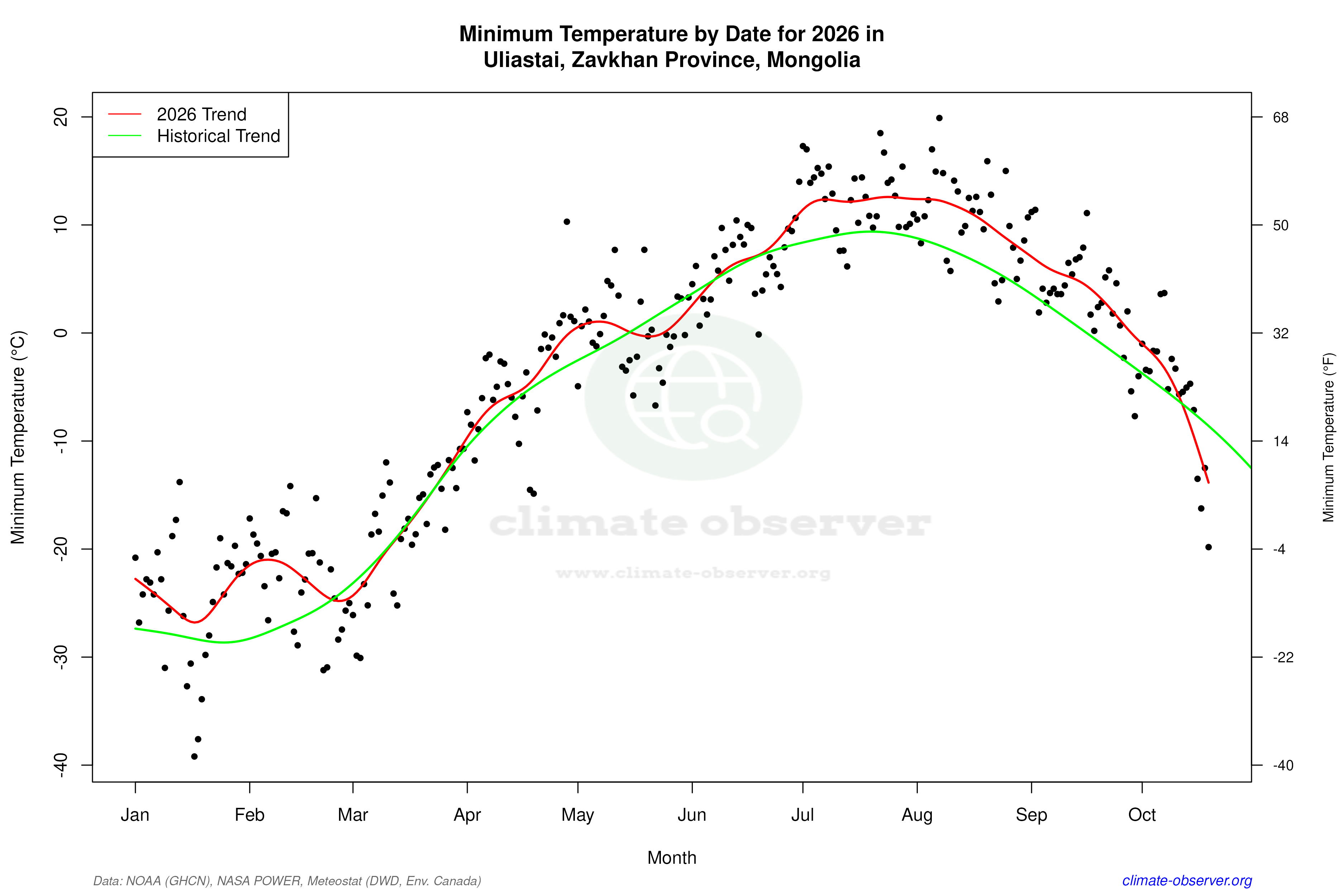
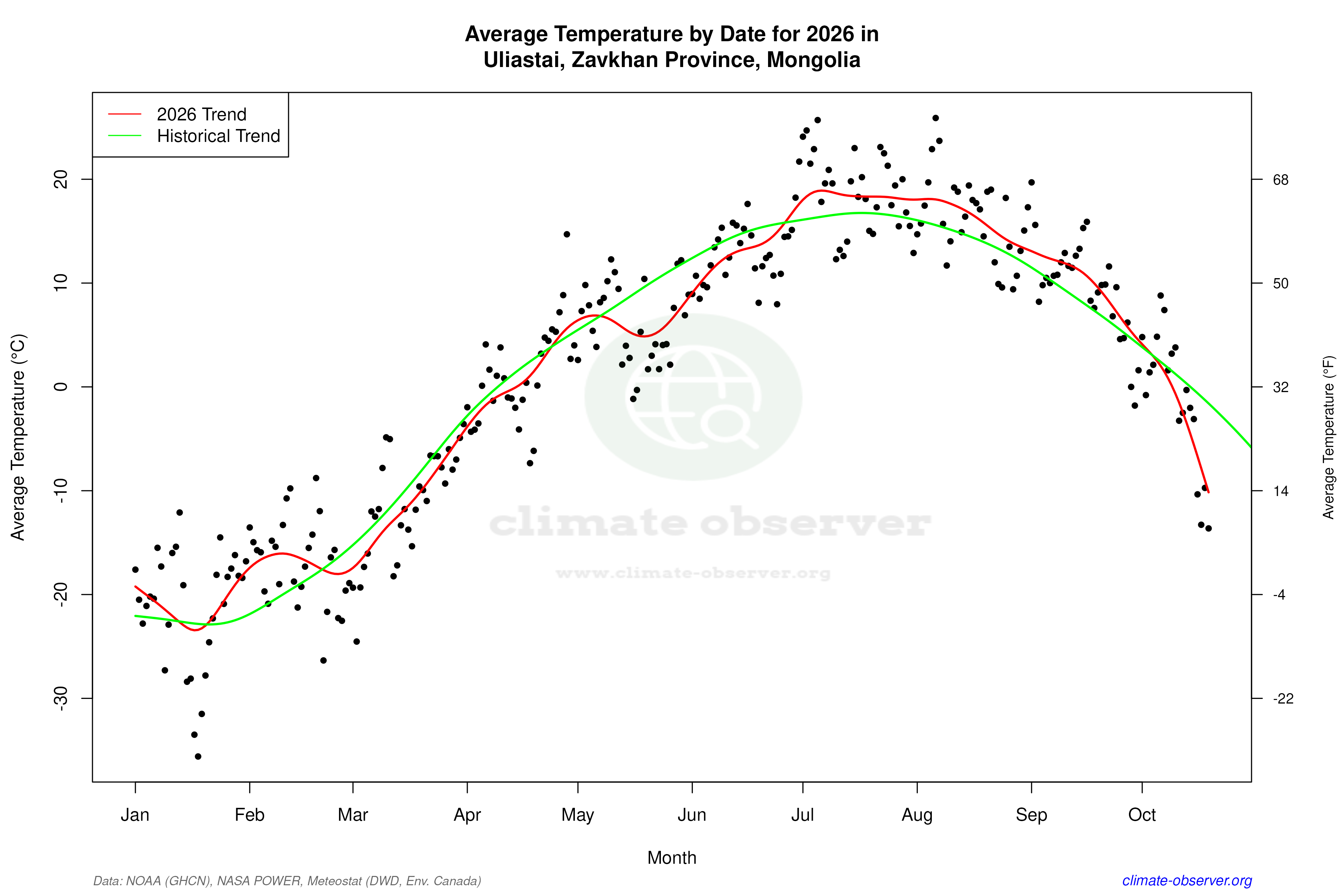
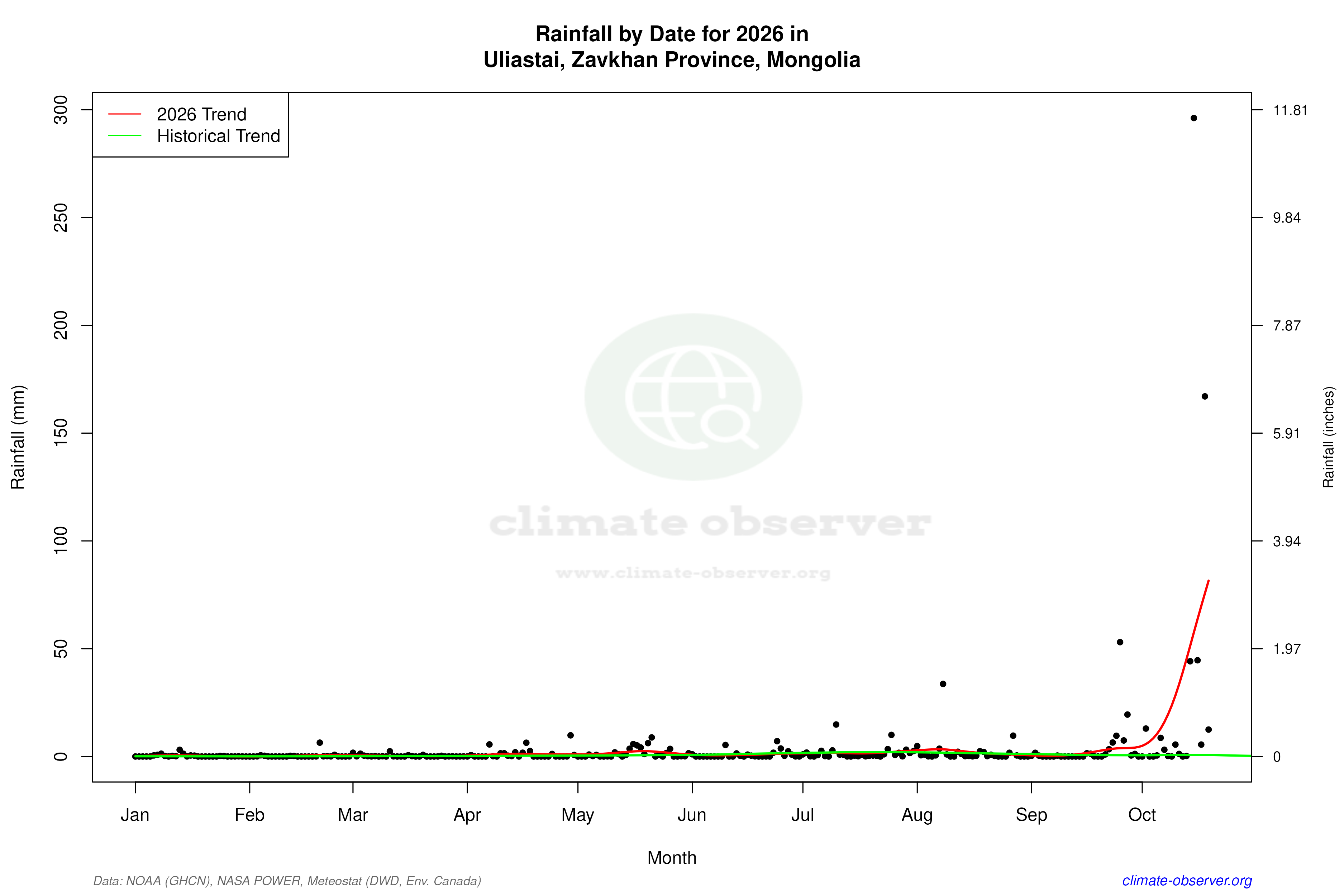
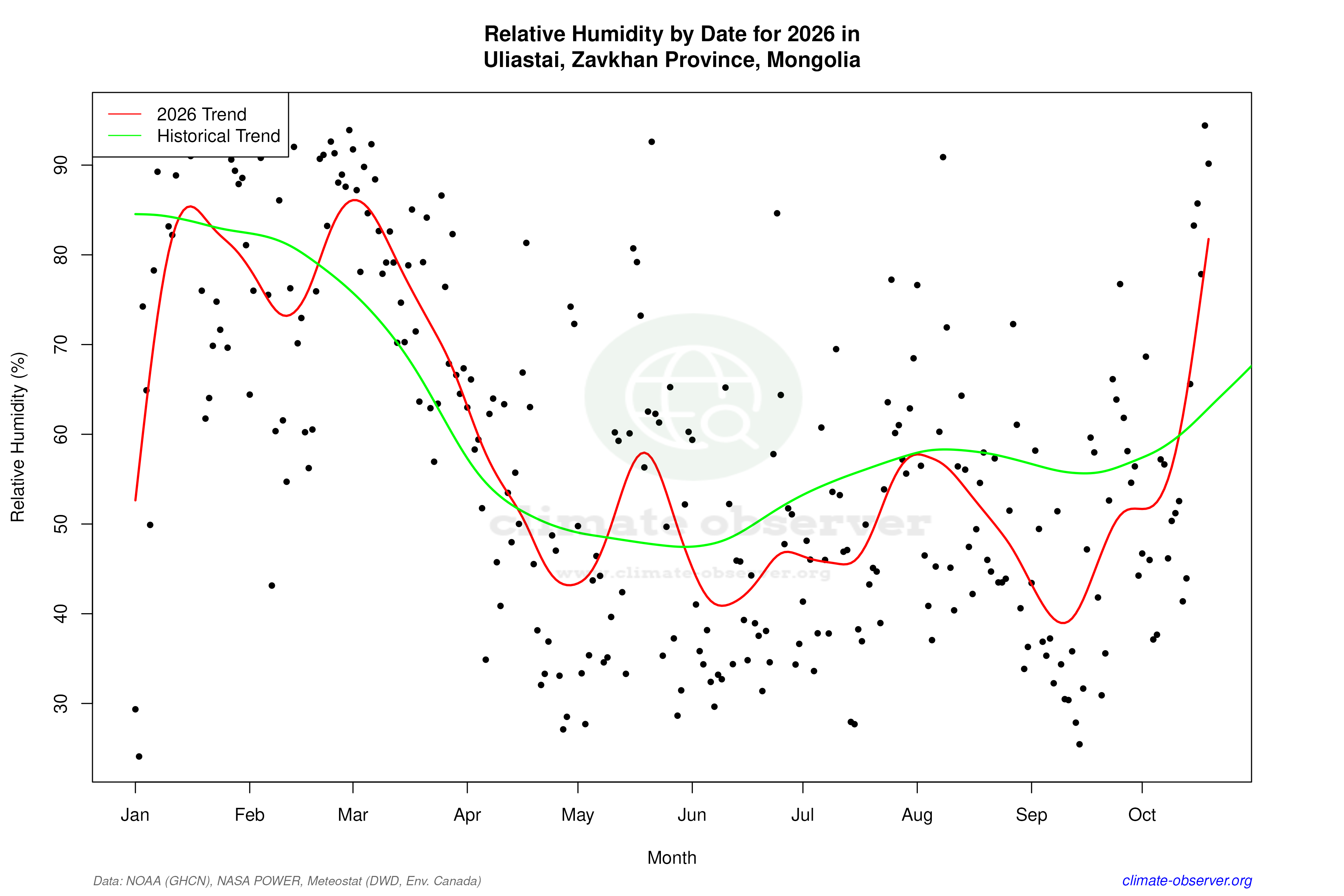

Max Temperature this Year | 1 of 6
Climate 12-Month Moving Averages
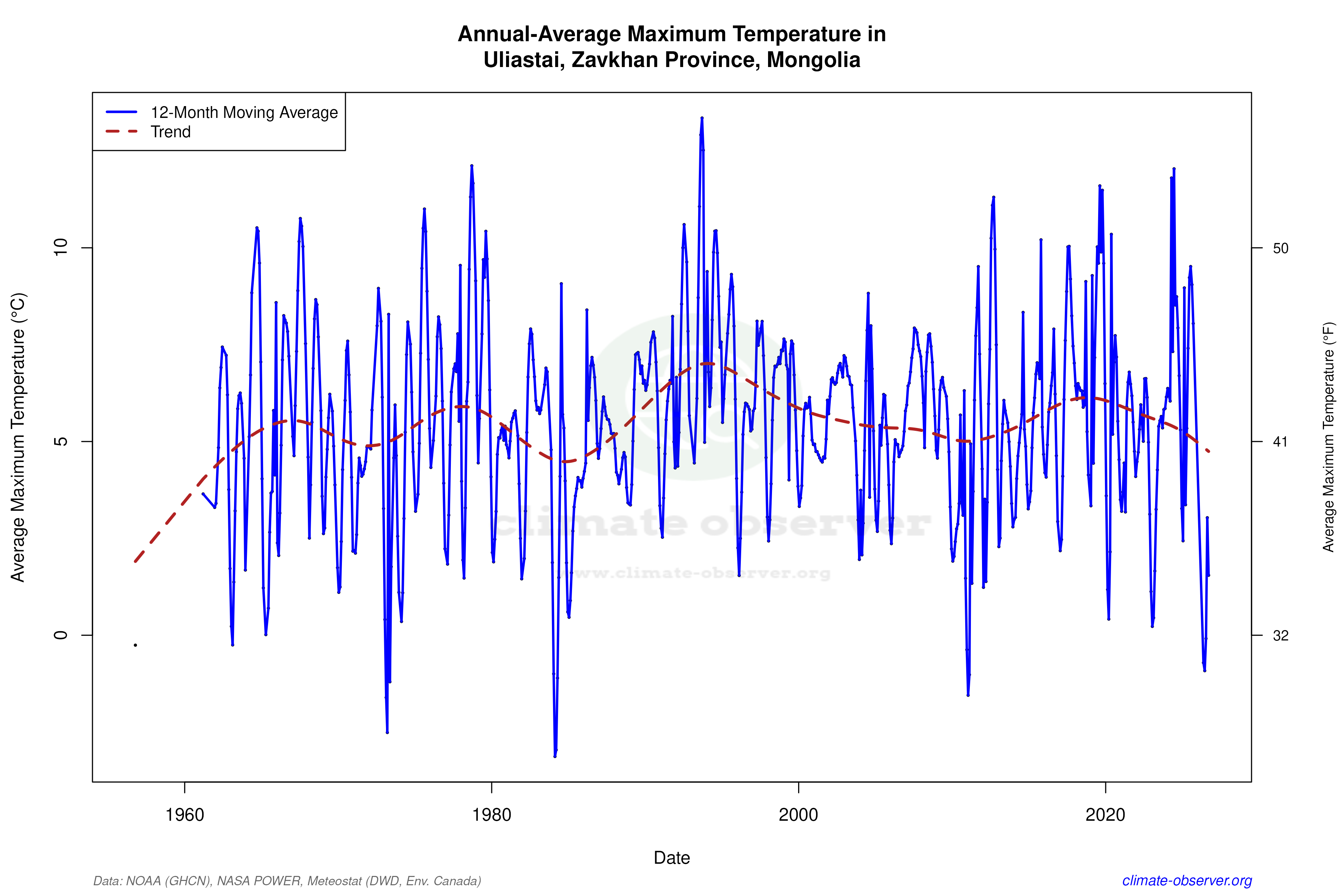
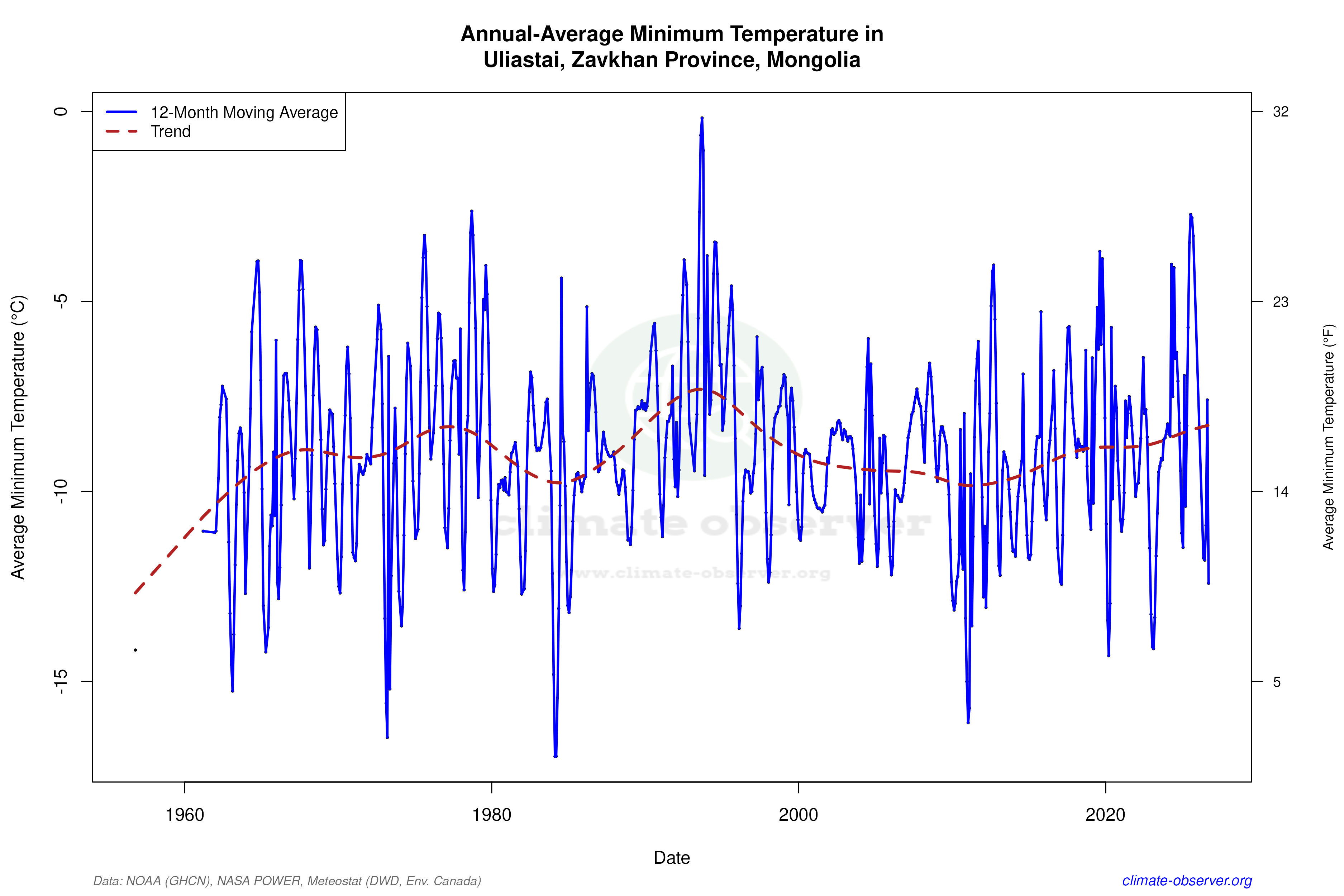
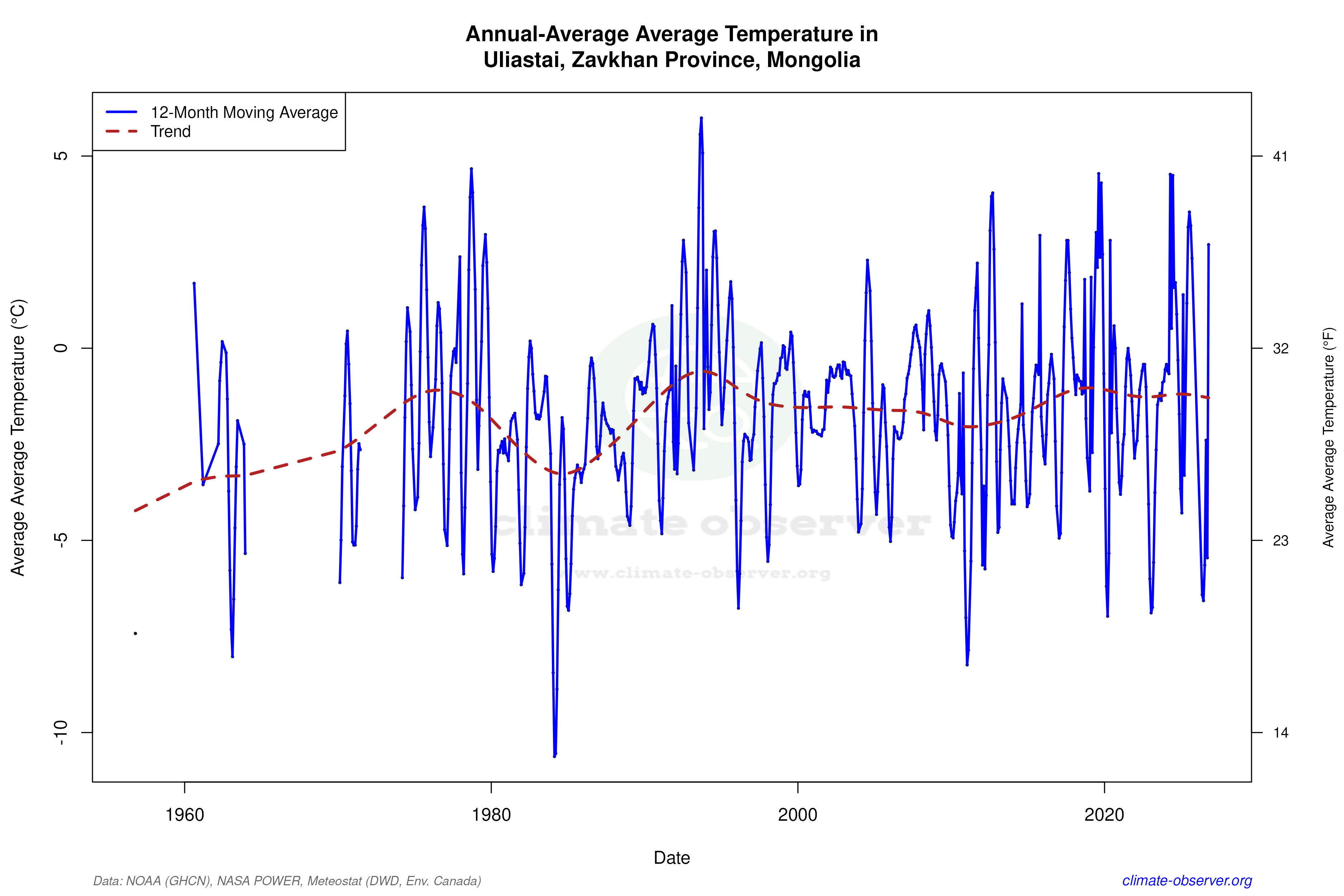
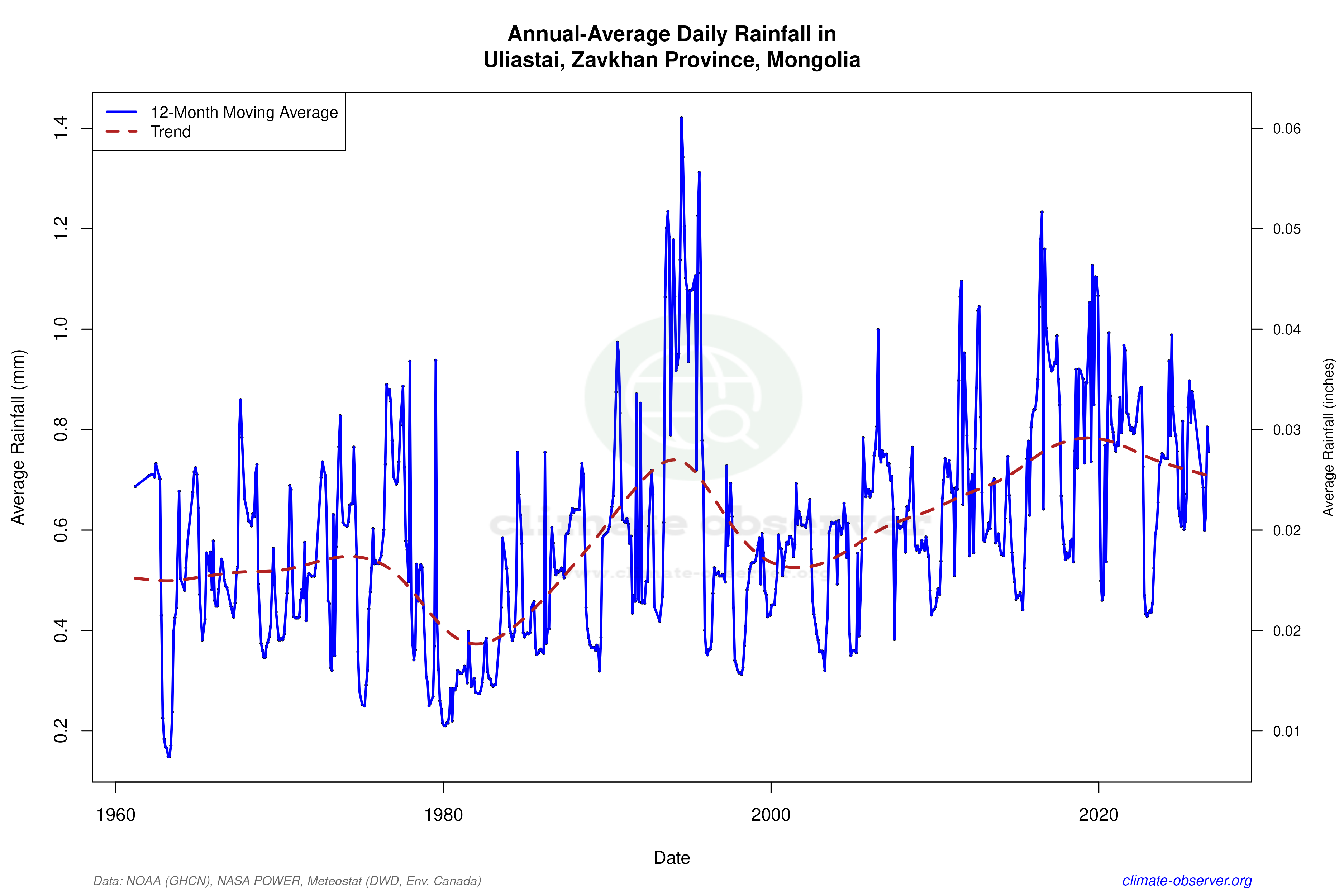
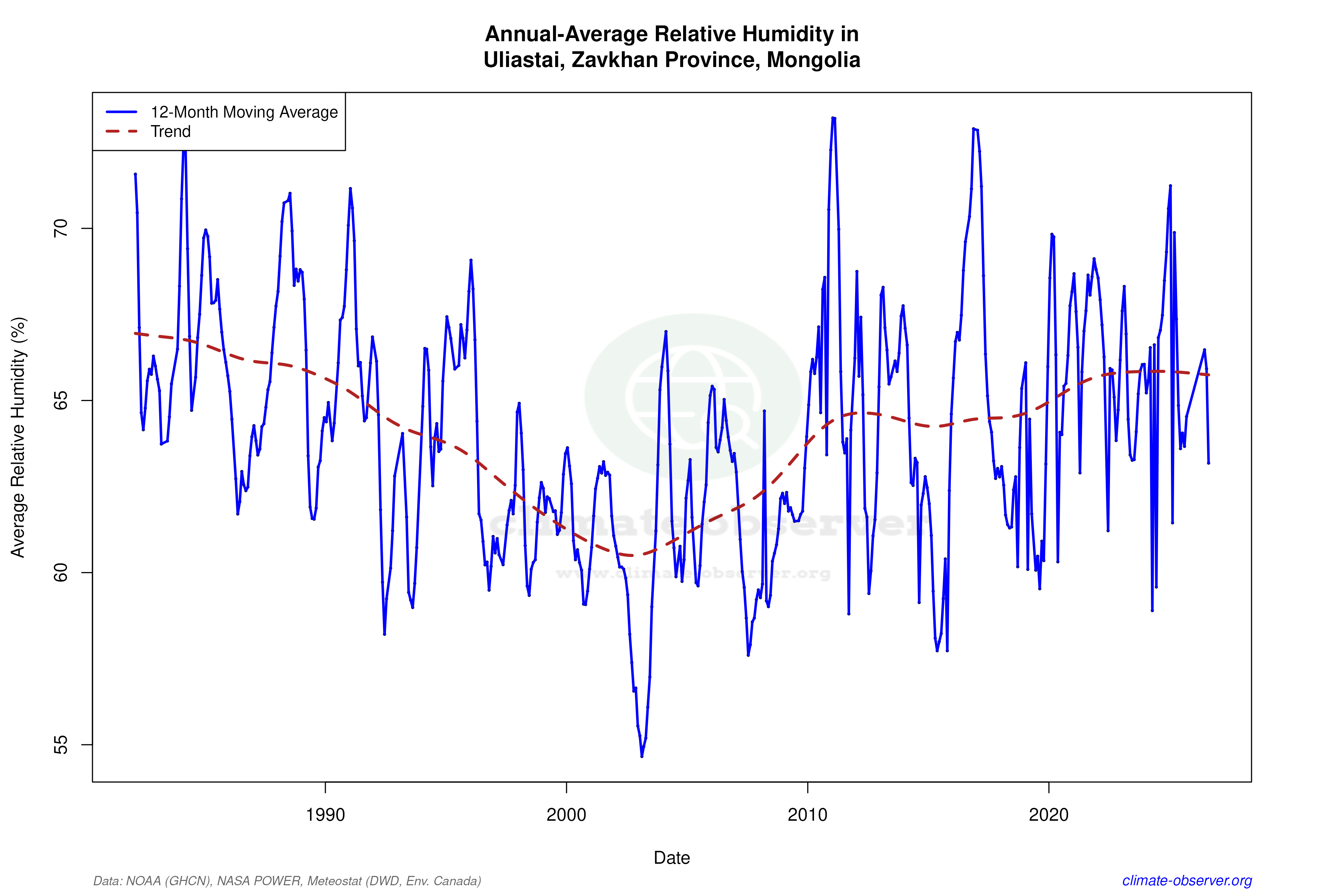

Max Temperature 12-Month MA | 1 of 6
Daily Data Points and Averages Throughout the Year
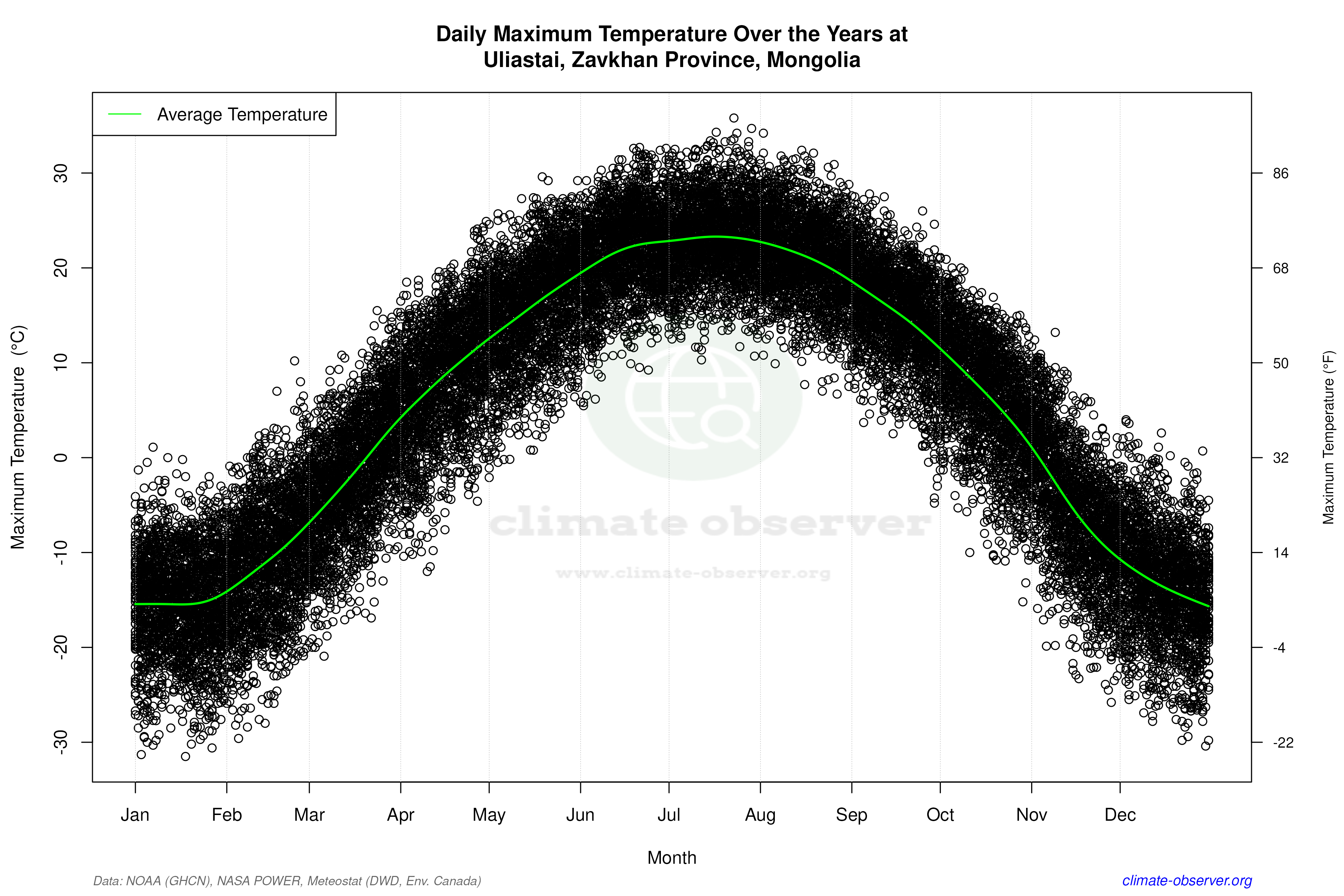
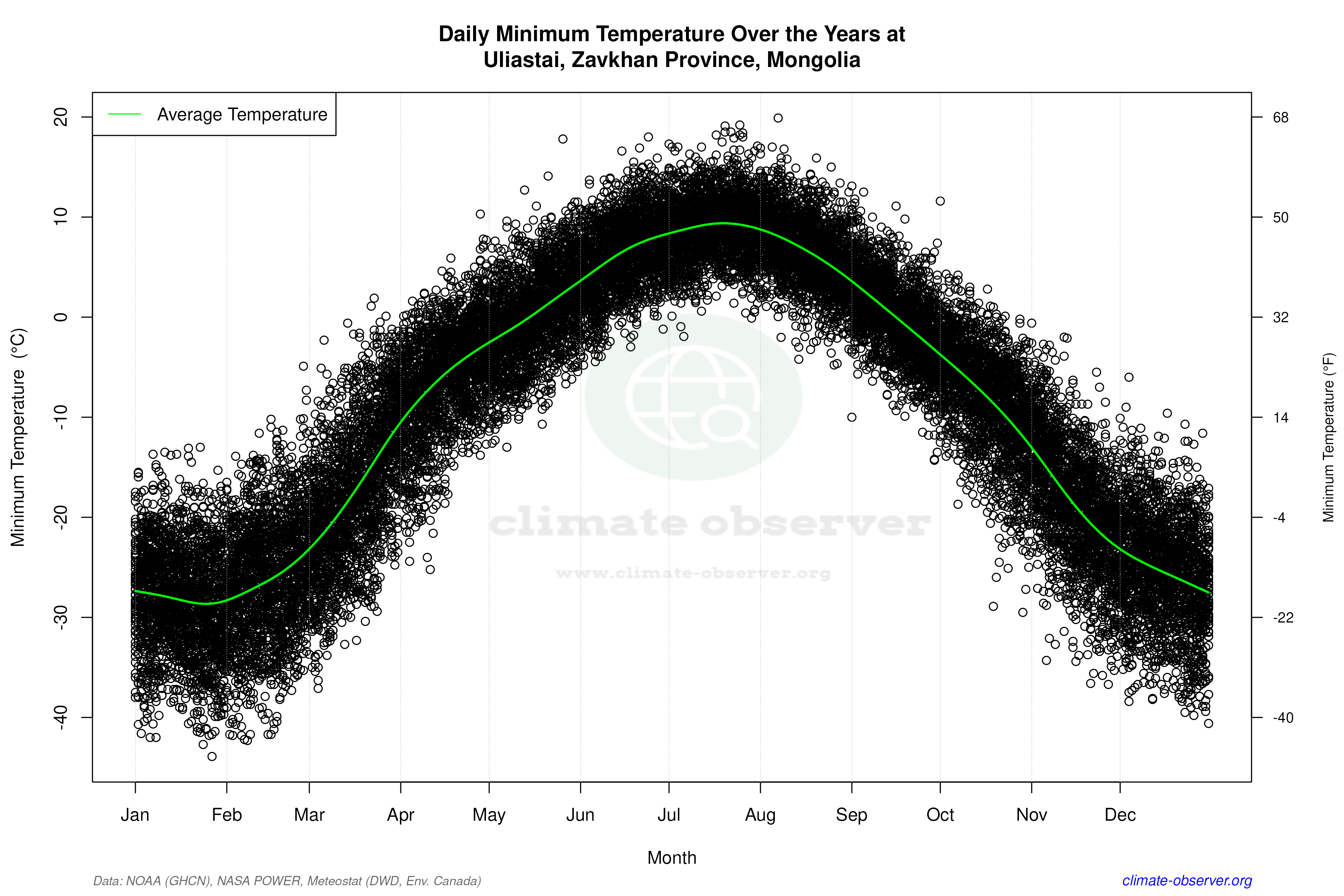
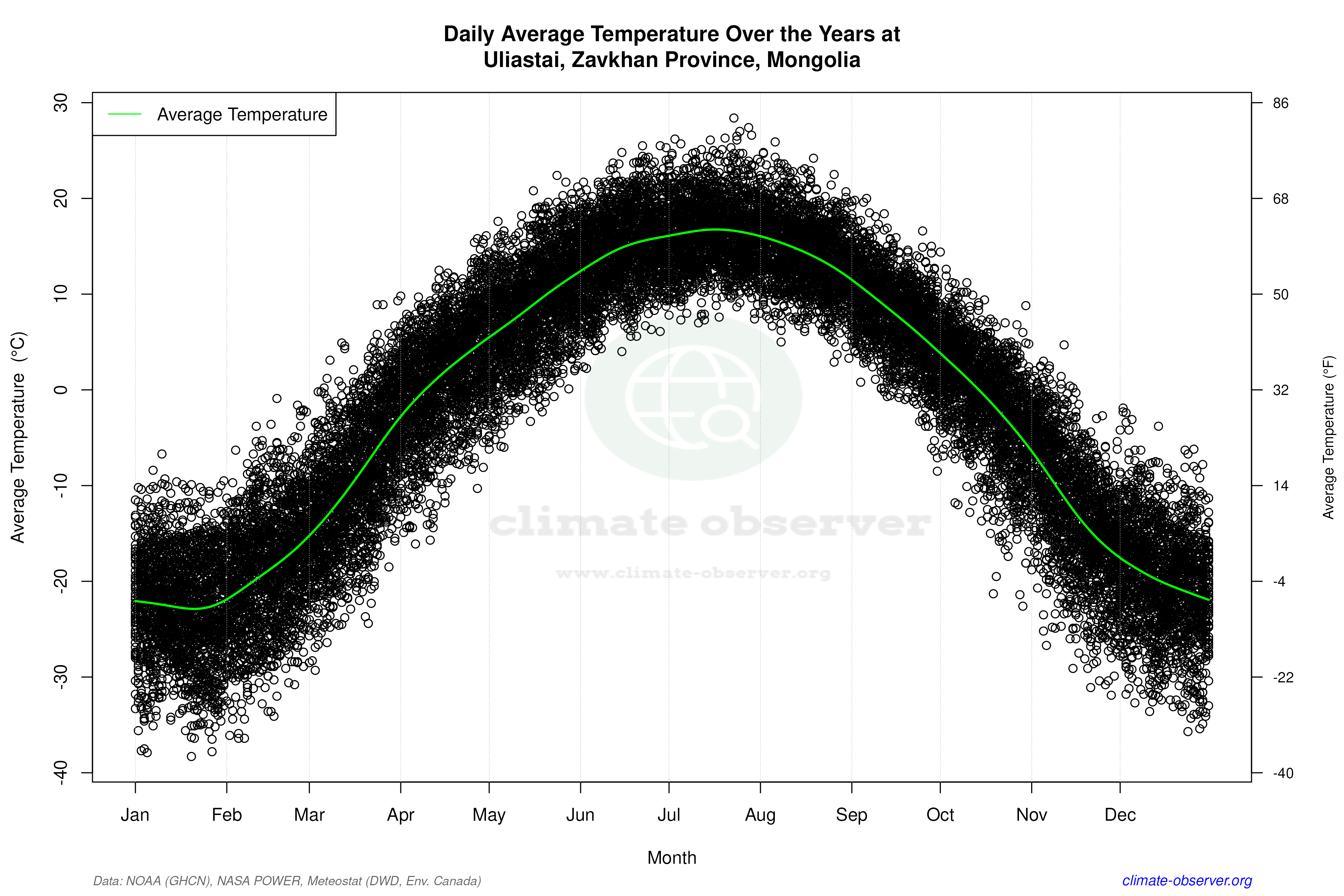
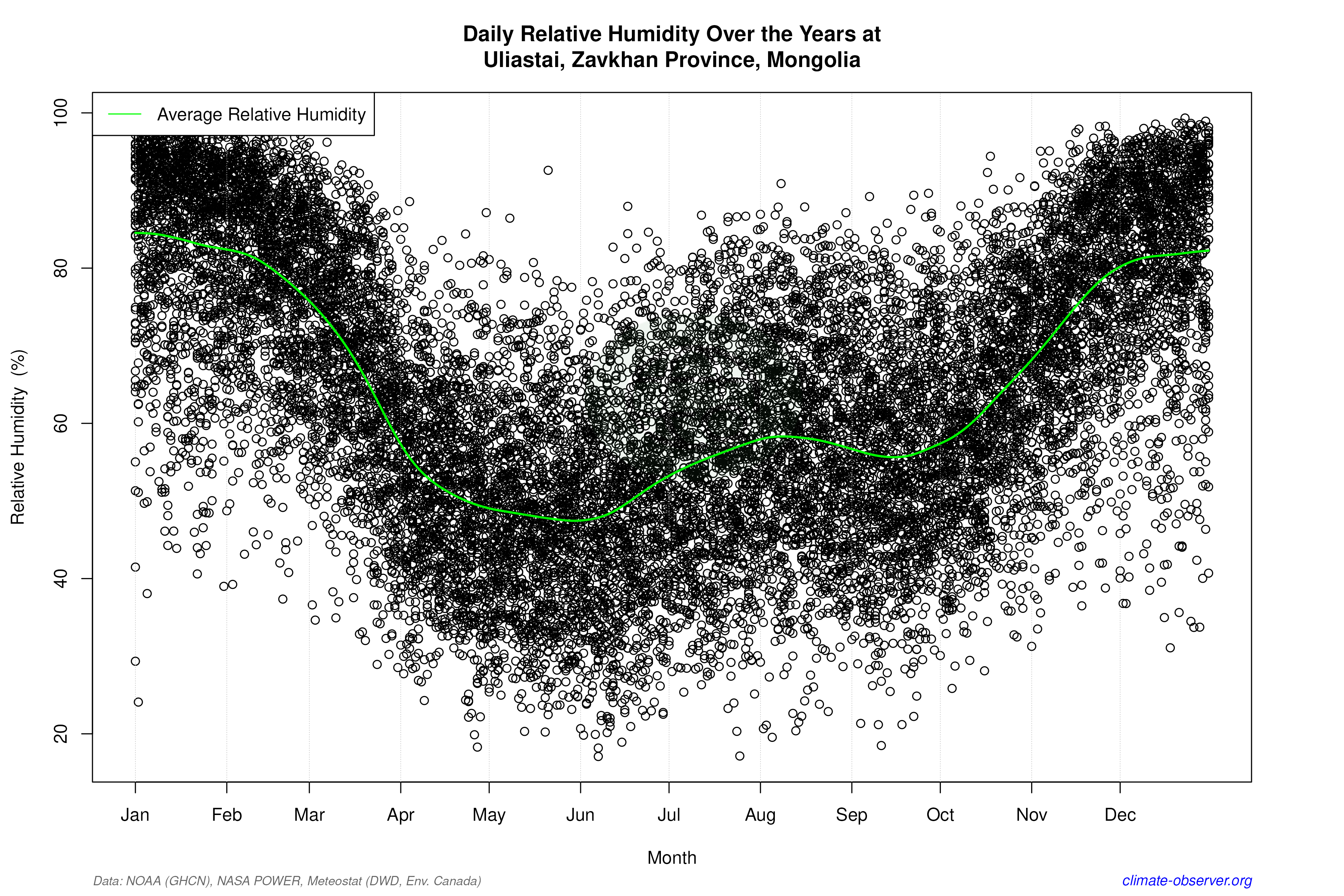

Average Max Temperature Throughout Year | 1 of 5


