Climate for Station: Agalega, Agalega Islands, Mauritius
Loading live weather...
Climate Analysis & Overview
Agalega, a remote island in the Indian Ocean, is experiencing a warming trend, particularly in its low temperatures, which have increased by 0.18°C (0.32°F) over the long term. Meanwhile, precipitation has become slightly more evenly distributed, as indicated by a decrease in the Precipitation Concentration Index (PCI) from 14.79 to 13.42.
Tropical Maritime Climate Dynamics
Agalega, located at -10.433, 56.75, is characterised by a tropical maritime climate, typical of many Indian Ocean islands. The island's proximity to the equator ensures a warm climate year-round, with minimal seasonal temperature variation. The island's low elevation and surrounding ocean waters play a crucial role in moderating temperatures and influencing weather patterns. The all-time temperature trends indicate a warming of 0.15°C (0.27°F) in high temperatures and a more pronounced rise of 0.18°C (0.32°F) in low temperatures. This suggests that nighttime temperatures are rising faster than daytime highs, potentially impacting local ecosystems and human comfort.
Recent Decadal Warming Trends
Over the past decade, Agalega has experienced a distinct warming trend in its low temperatures, with an increase of 0.89°C (1.60°F). This is significantly higher than the long-term trend, indicating an acceleration in warming. High temperatures, however, have shown a much smaller increase of 0.00°C (0.01°F) over the same period, suggesting a stabilisation of daytime temperatures. This divergence between day and night temperature trends may have implications for the island's flora and fauna, which are adapted to specific thermal conditions.
Precipitation Patterns and Changes
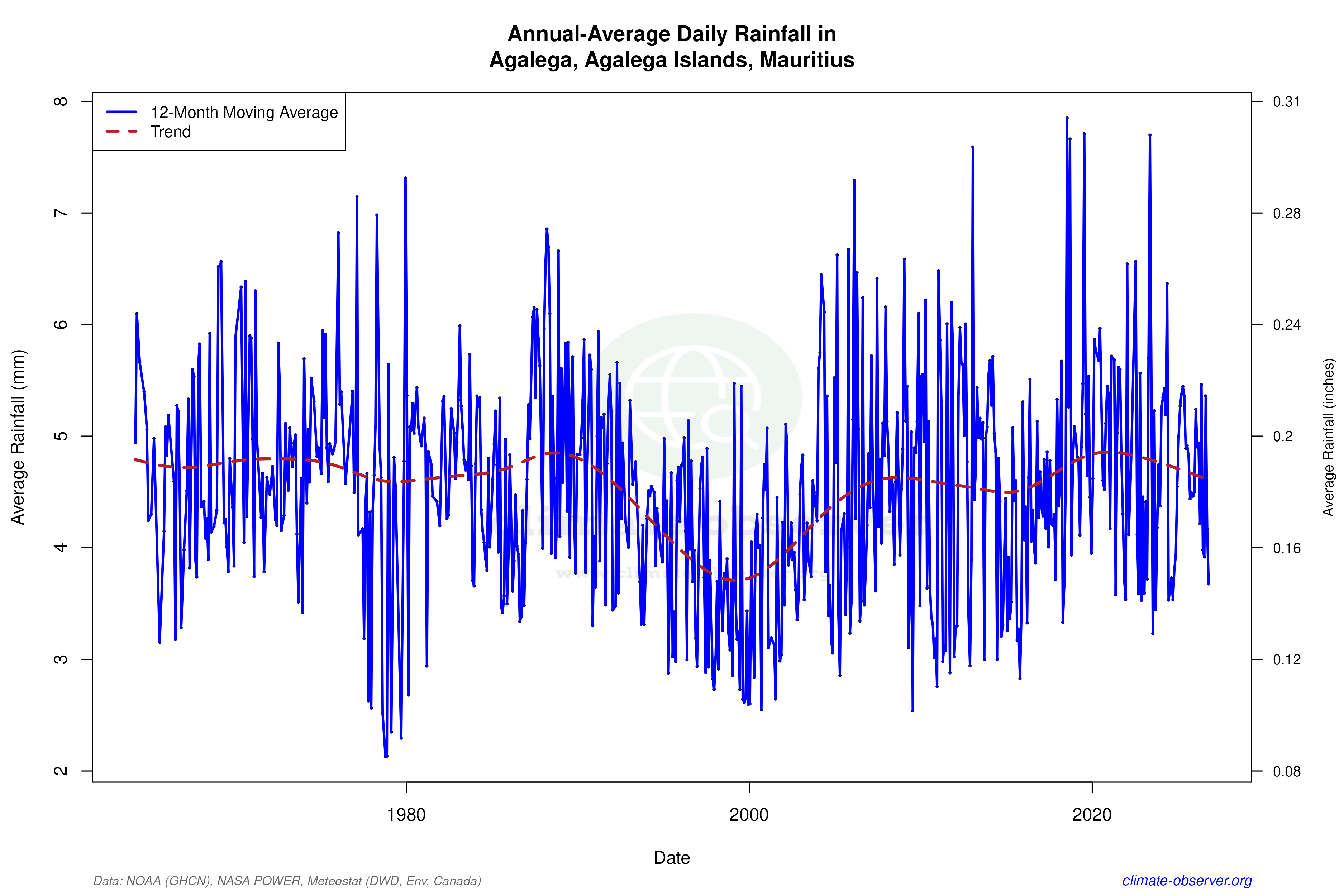
The PCI, which measures how concentrated precipitation is over time, has decreased from a baseline of 14.79 to 13.42, indicating that rainfall is now more evenly distributed throughout the year. This slight change suggests a shift towards more consistent rainfall events, which could benefit agricultural activities and water resource management on the island. However, the PCI remains above the threshold for highly even distribution, indicating that some variability in rainfall patterns persists.
Temperature Extremes and Records
Agalega's climate records reveal a maximum temperature of 35.8°C (96.4°F) and a minimum of 16.9°C (62.4°F). These extremes highlight the island's capacity for both intense heat and cooler conditions, albeit infrequently. The combination of rising low temperatures and stable high temperatures suggests a narrowing of the diurnal temperature range, which could influence local climate resilience and energy demands.
Regional Climate Context
Mauritius, including Agalega, is actively engaged in regional climate adaptation and mitigation efforts, focusing on sustainable development and resilience building. The observed warming trends and changes in precipitation distribution on Agalega align with broader regional patterns of climate change, underscoring the importance of continued monitoring and adaptive strategies to safeguard the island's environmental and socio-economic well-being.
Station Statistics
10-Year Trend
High: -0.50 °C/decade
Low: +1.14 °C/decade
Rain: -0.23 mm/decade
25-Year Trend
High: -0.23 °C/decade
Low: +0.60 °C/decade
Rain: +0.18 mm/decade
50-Year Trend
High: +0.08 °C/decade
Low: +0.28 °C/decade
Rain: +0.04 mm/decade
All-Time Trend
High: +0.10 °C/decade
Low: +0.10 °C/decade
Rain: -0.02 mm/decade
Percentage Above-Average Days
Last 12 Months: 44.1%
This Year: 33.1%
Precipitation Concentration Index (PCI) ℹ️
Last 12 Months: 13.6
Historical Average: 13.0
Percentile Rank of Last 12 Months ℹ️
High: 74th percentile
Low: 98th percentile
Rain: 54th percentile
Change in Variance ℹ️
High: +137.0%
Low: +2.3%
Intraday: +192.1%
Data Coverage
88.4%
First Year of Data
1955
Station Location
Historical Weather Records
| Max High | Avg High | Min High | Max Avg | Avg Avg | Min Avg | Max Low | Avg Low | Min Low | Max Precipitation | Avg Precipitation | Max Snow | Avg Snow | |
|---|---|---|---|---|---|---|---|---|---|---|---|---|---|
| Record | 35.8 °C | — | 24.0 °C | 31.2 °C | — | 22.1 °C | 29.2 °C | — | 16.9 °C | 205.2 mm | — | — | — |
| January | 35.2 °C | 30.7 °C | 25.5 °C | 30.8 °C | 27.7 °C | 23.3 °C | 28.9 °C | 24.4 °C | 20.1 °C | 205.2 mm | 8.7 mm | — | — |
| February | 34.5 °C | 30.6 °C | 26.0 °C | 30.9 °C | 27.8 °C | 24.2 °C | 28.7 °C | 24.5 °C | 21.0 °C | 158.2 mm | 8.9 mm | — | — |
| March | 35.2 °C | 30.9 °C | 25.5 °C | 30.7 °C | 28.0 °C | 24.6 °C | 29.2 °C | 24.6 °C | 20.5 °C | 141.3 mm | 6.0 mm | — | — |
| April | 35.8 °C | 30.9 °C | 25.8 °C | 31.2 °C | 28.1 °C | 24.7 °C | 29.0 °C | 25.0 °C | 18.7 °C | 127.1 mm | 4.8 mm | — | — |
| May | 34.8 °C | 30.1 °C | 25.5 °C | 30.7 °C | 27.5 °C | 24.3 °C | 28.7 °C | 24.7 °C | 18.5 °C | 113.8 mm | 3.7 mm | — | — |
| June | 33.4 °C | 28.8 °C | 25.3 °C | 29.3 °C | 26.4 °C | 23.5 °C | 27.8 °C | 23.8 °C | 18.8 °C | 87.8 mm | 3.1 mm | — | — |
| July | 32.0 °C | 28.1 °C | 24.0 °C | 28.6 °C | 25.7 °C | 22.1 °C | 27.5 °C | 23.0 °C | 18.4 °C | 88.3 mm | 2.9 mm | — | — |
| August | 32.2 °C | 28.1 °C | 24.0 °C | 28.3 °C | 25.6 °C | 22.4 °C | 26.3 °C | 22.8 °C | 16.9 °C | 94.4 mm | 1.9 mm | — | — |
| September | 33.7 °C | 28.7 °C | 24.7 °C | 29.0 °C | 26.0 °C | 22.8 °C | 26.4 °C | 23.3 °C | 17.9 °C | 48.4 mm | 1.8 mm | — | — |
| October | 34.7 °C | 29.3 °C | 24.7 °C | 30.2 °C | 26.7 °C | 23.8 °C | 27.3 °C | 23.8 °C | 18.7 °C | 85.5 mm | 2.5 mm | — | — |
| November | 35.1 °C | 30.1 °C | 25.0 °C | 30.2 °C | 27.3 °C | 24.1 °C | 28.1 °C | 24.2 °C | 17.8 °C | 113.0 mm | 3.8 mm | — | — |
| December | 35.7 °C | 30.7 °C | 25.6 °C | 31.1 °C | 27.8 °C | 23.1 °C | 28.7 °C | 24.3 °C | 18.0 °C | 150.9 mm | 6.0 mm | — | — |
Data Visualisations
Remove WatermarksCurrent Year Climate Trends vs Historical
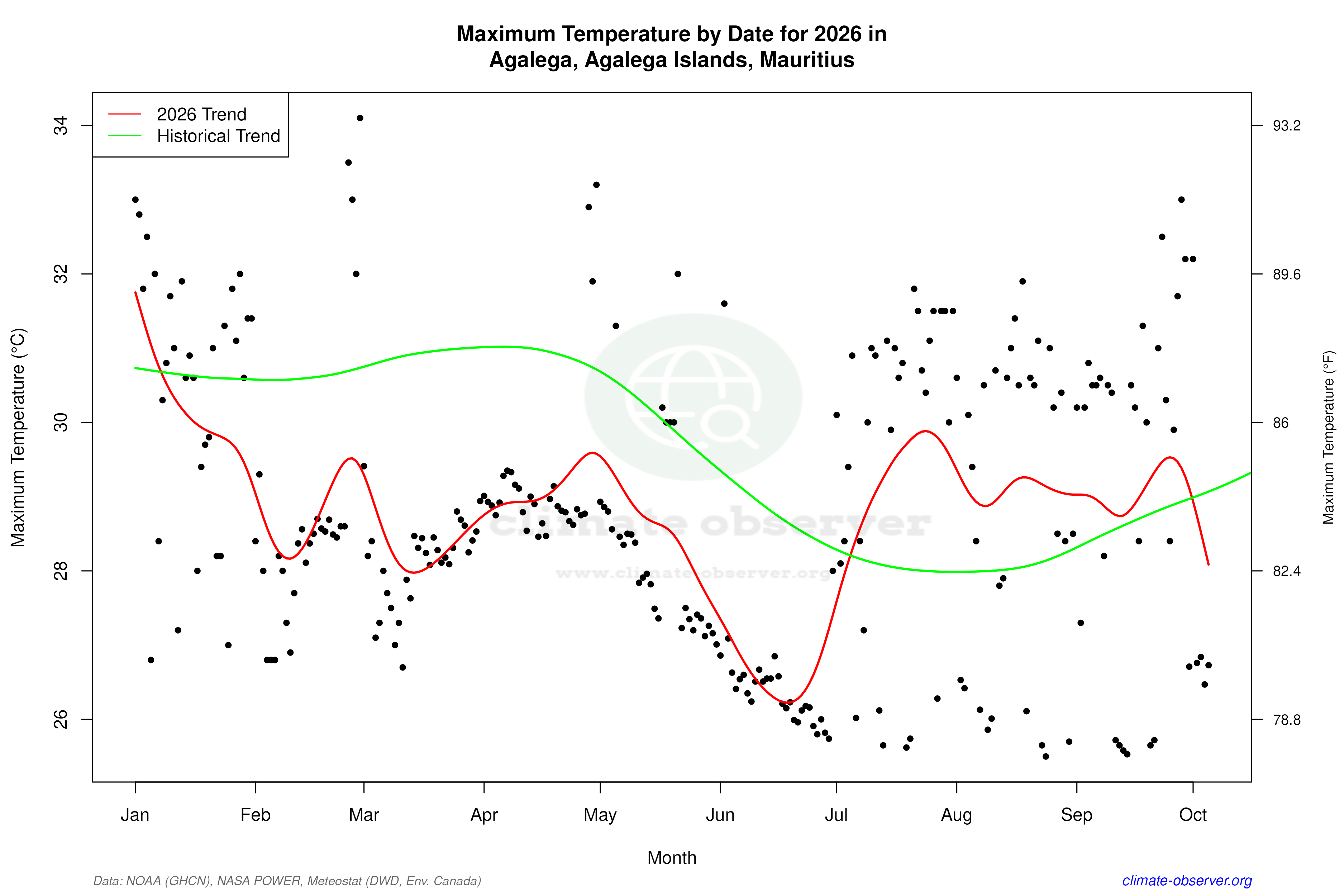
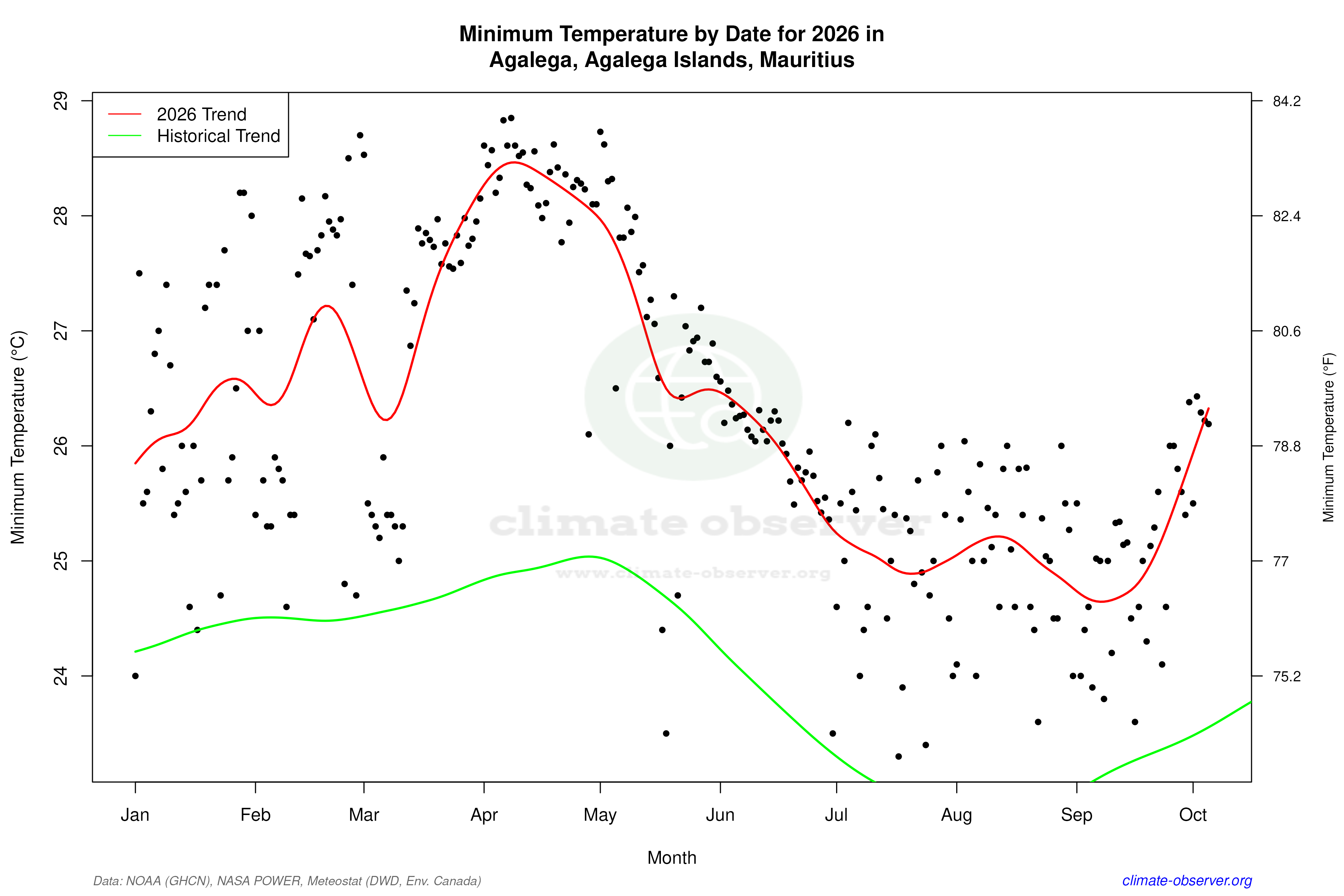
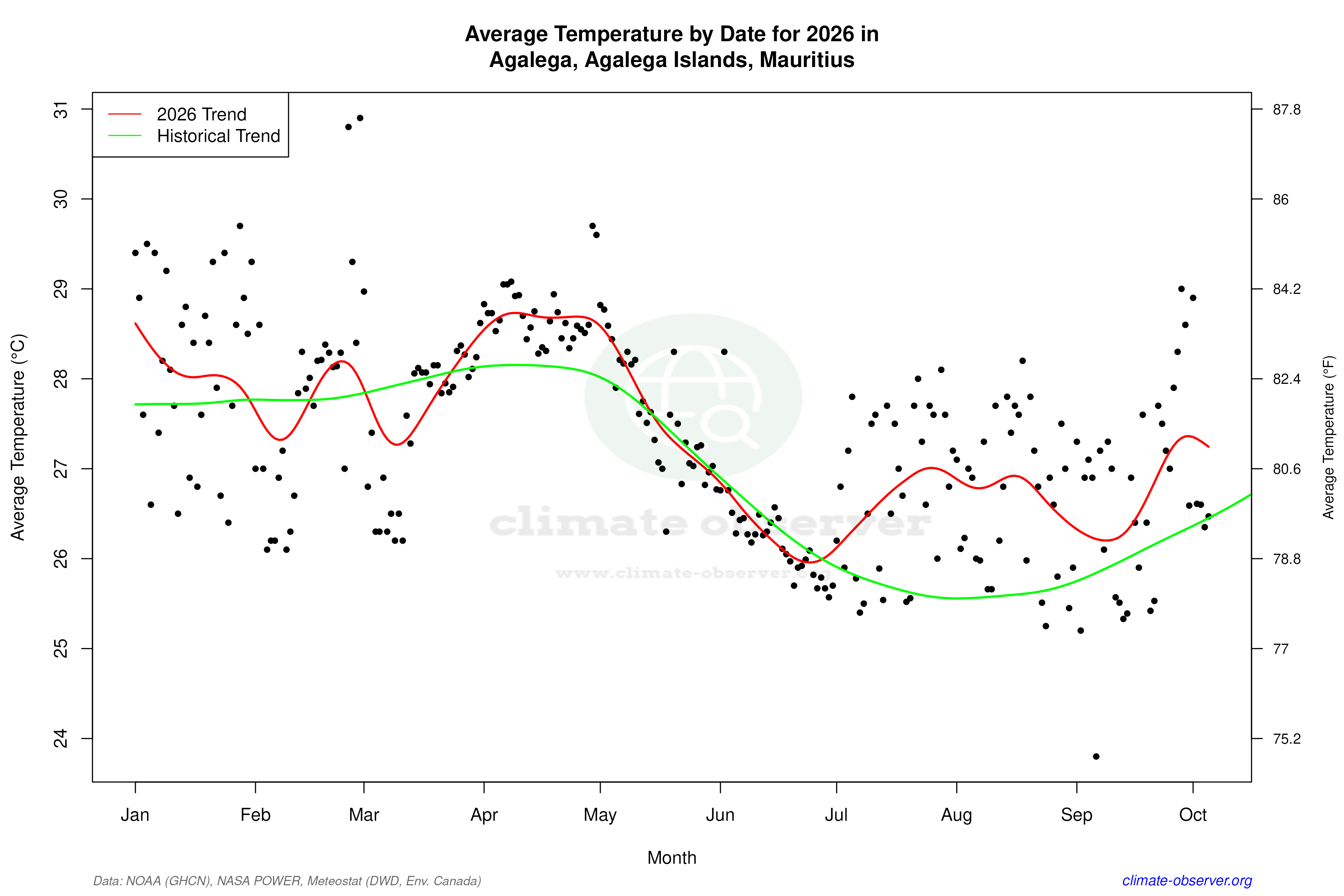
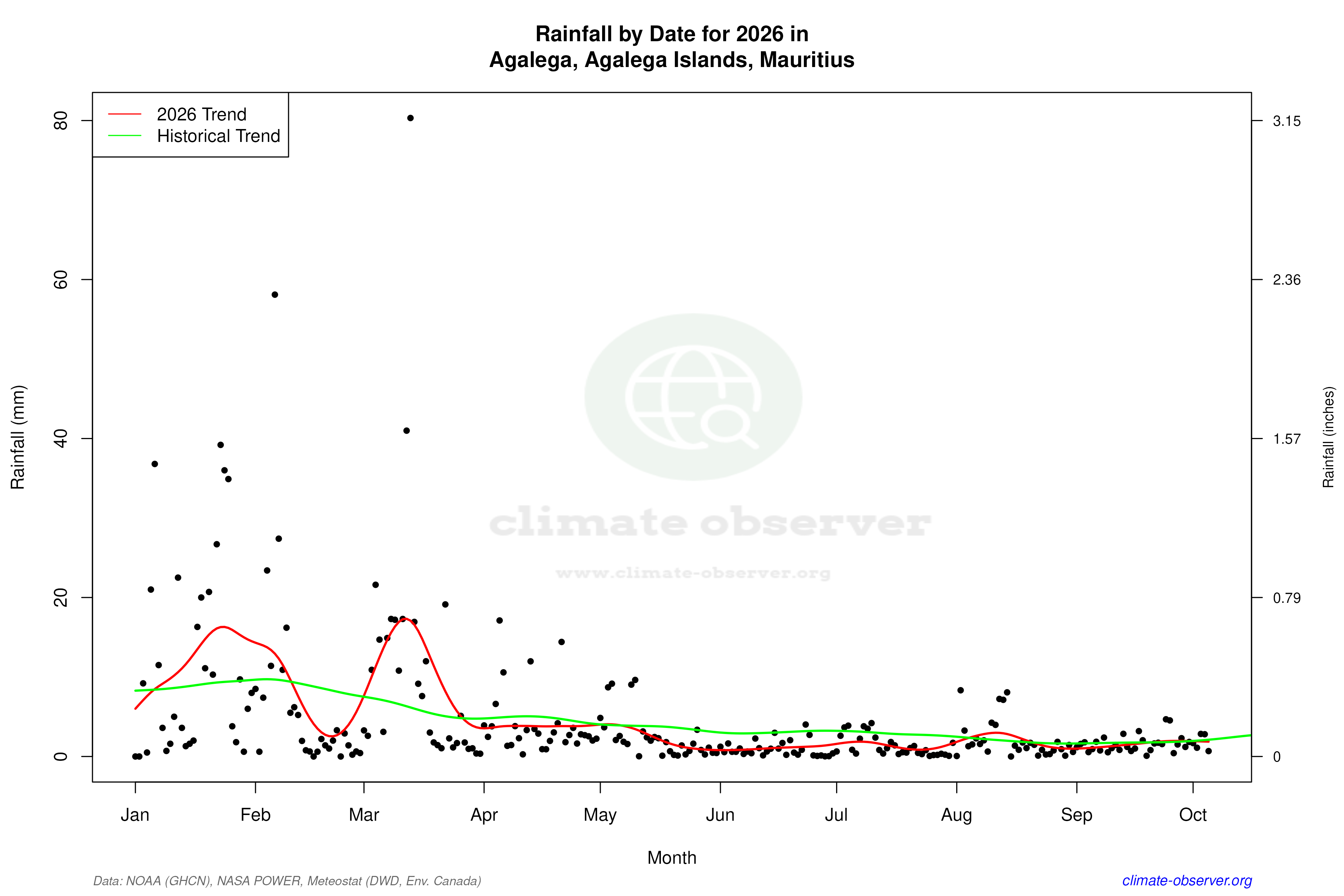
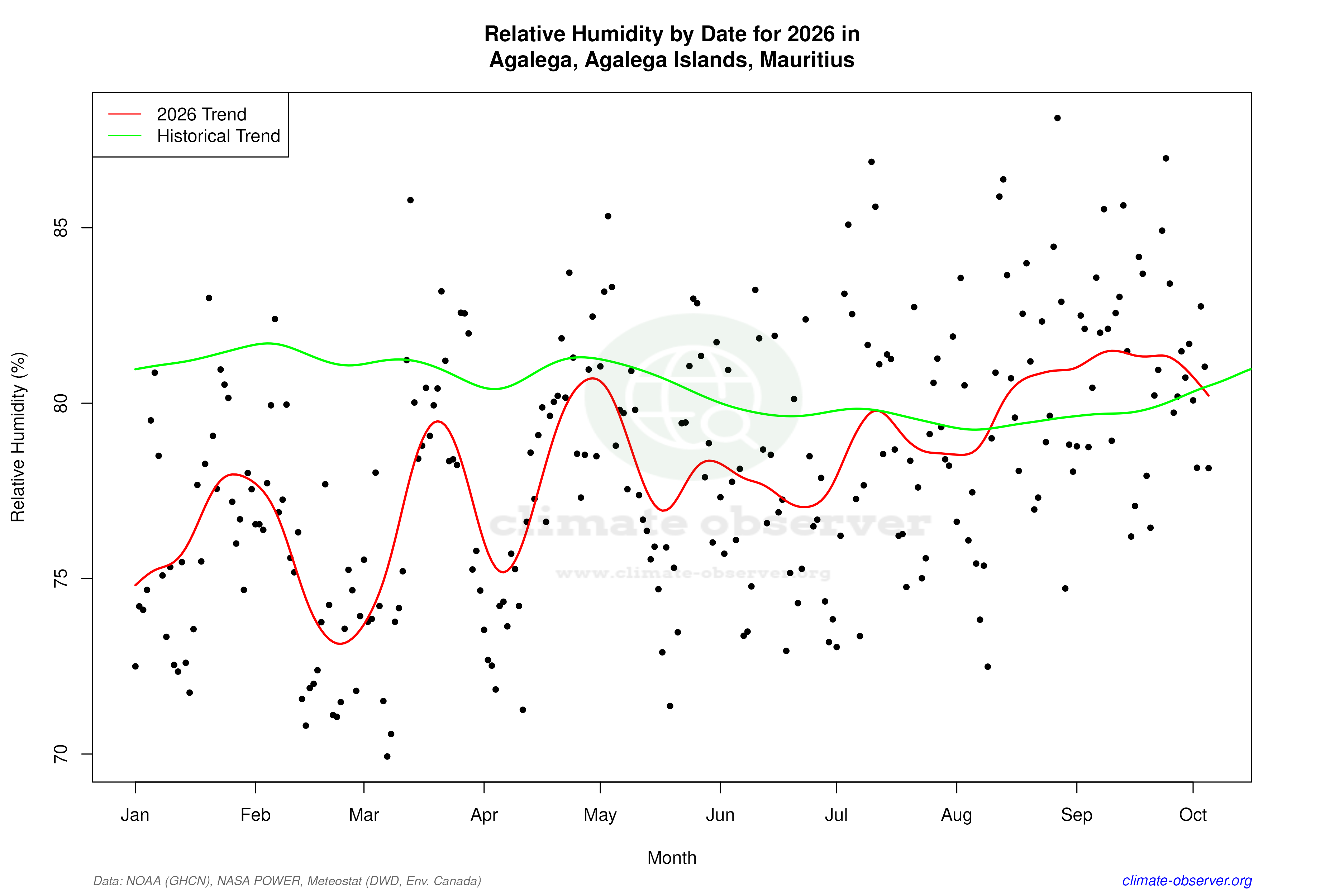

Max Temperature this Year | 1 of 6
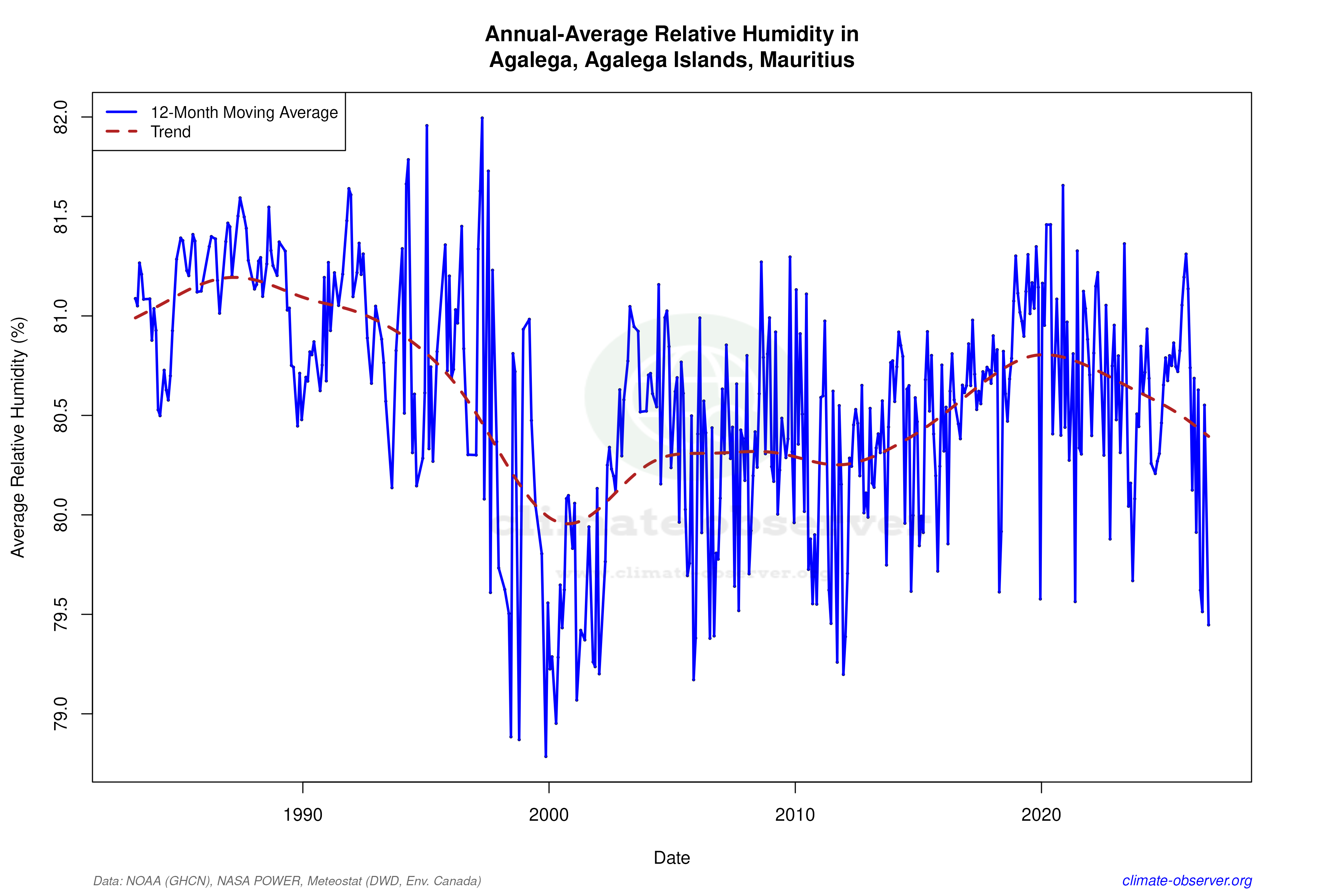
Climate 12-Month Moving Averages
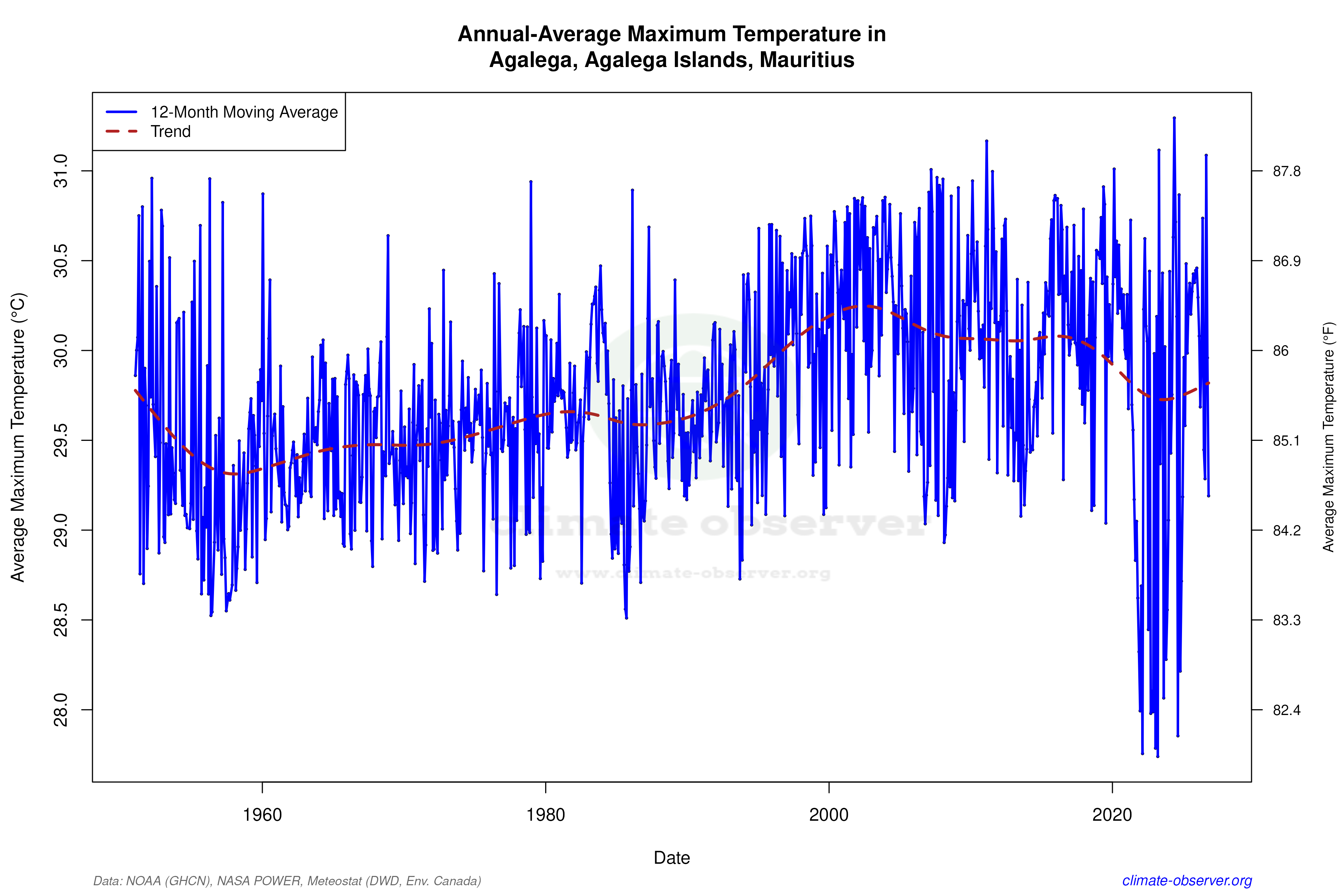
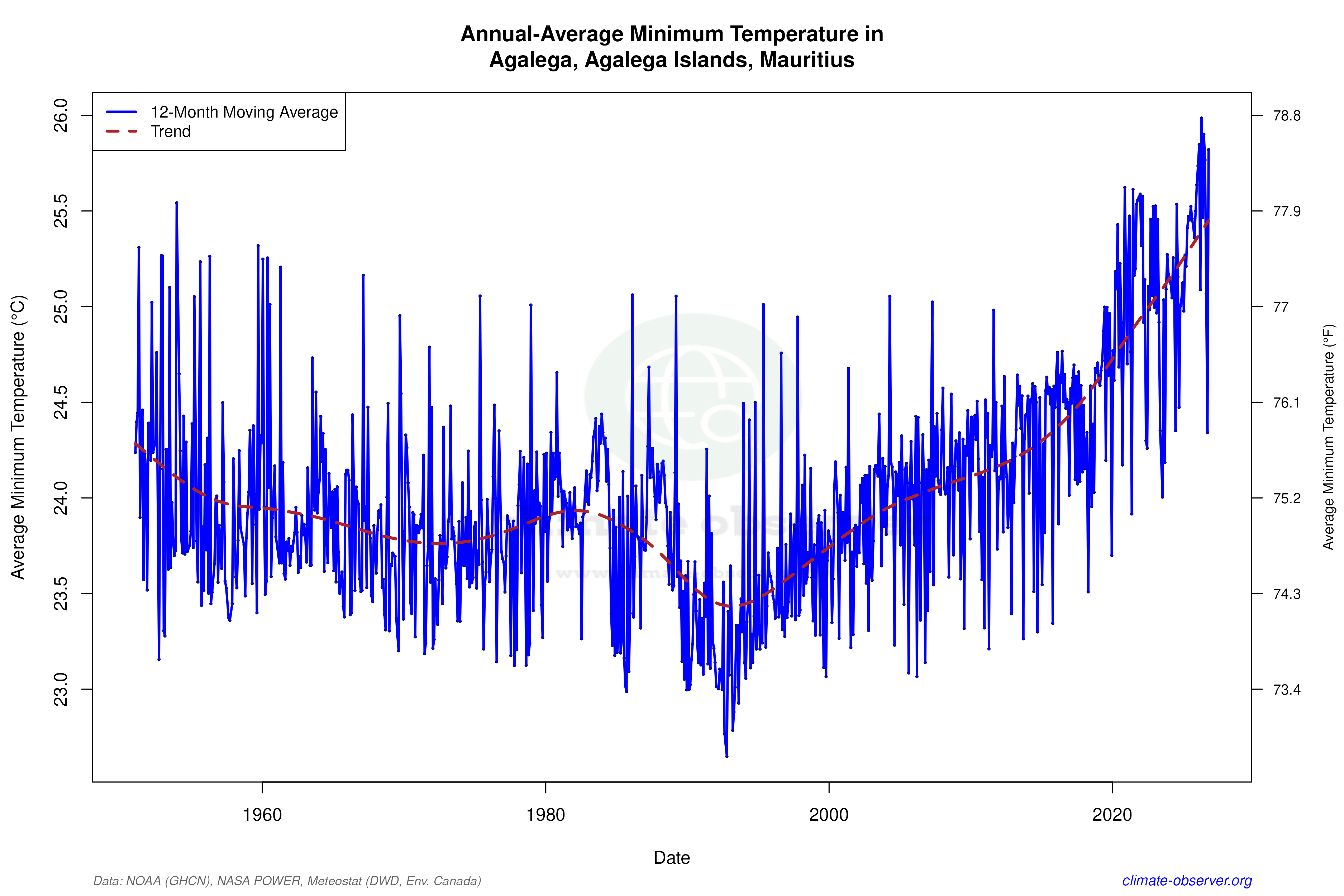
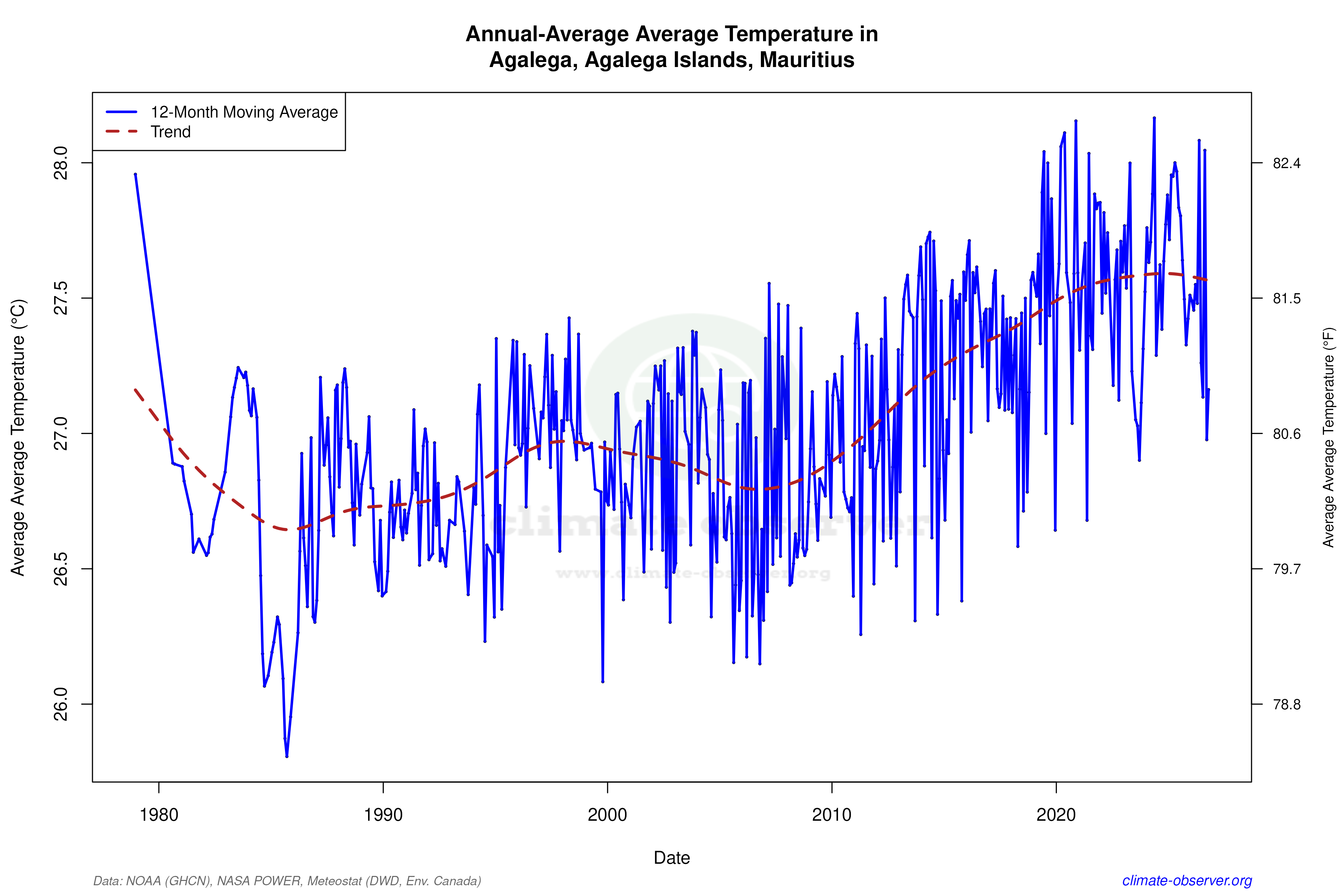

Max Temperature 12-Month MA | 1 of 6
Daily Data Points and Averages Throughout the Year
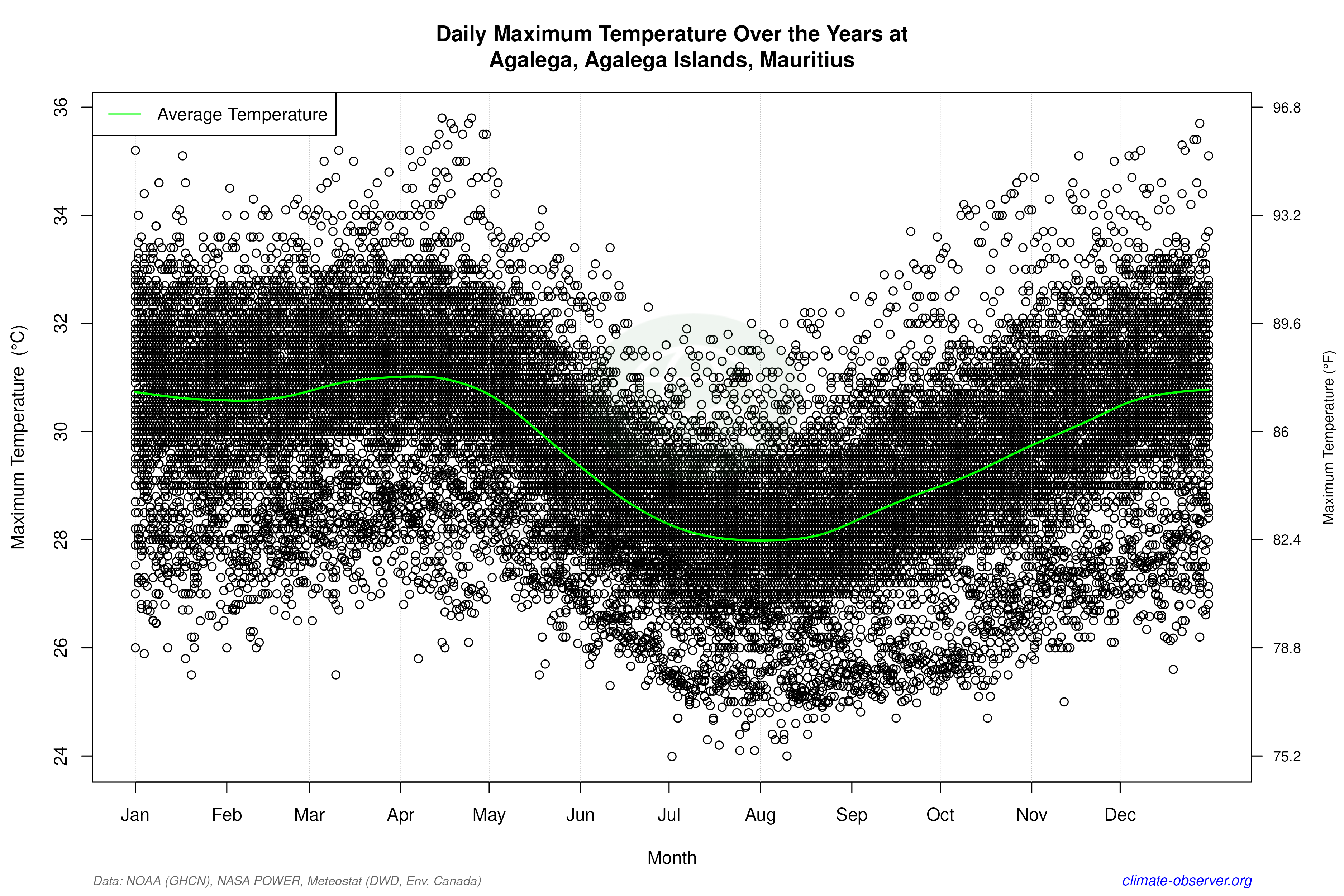
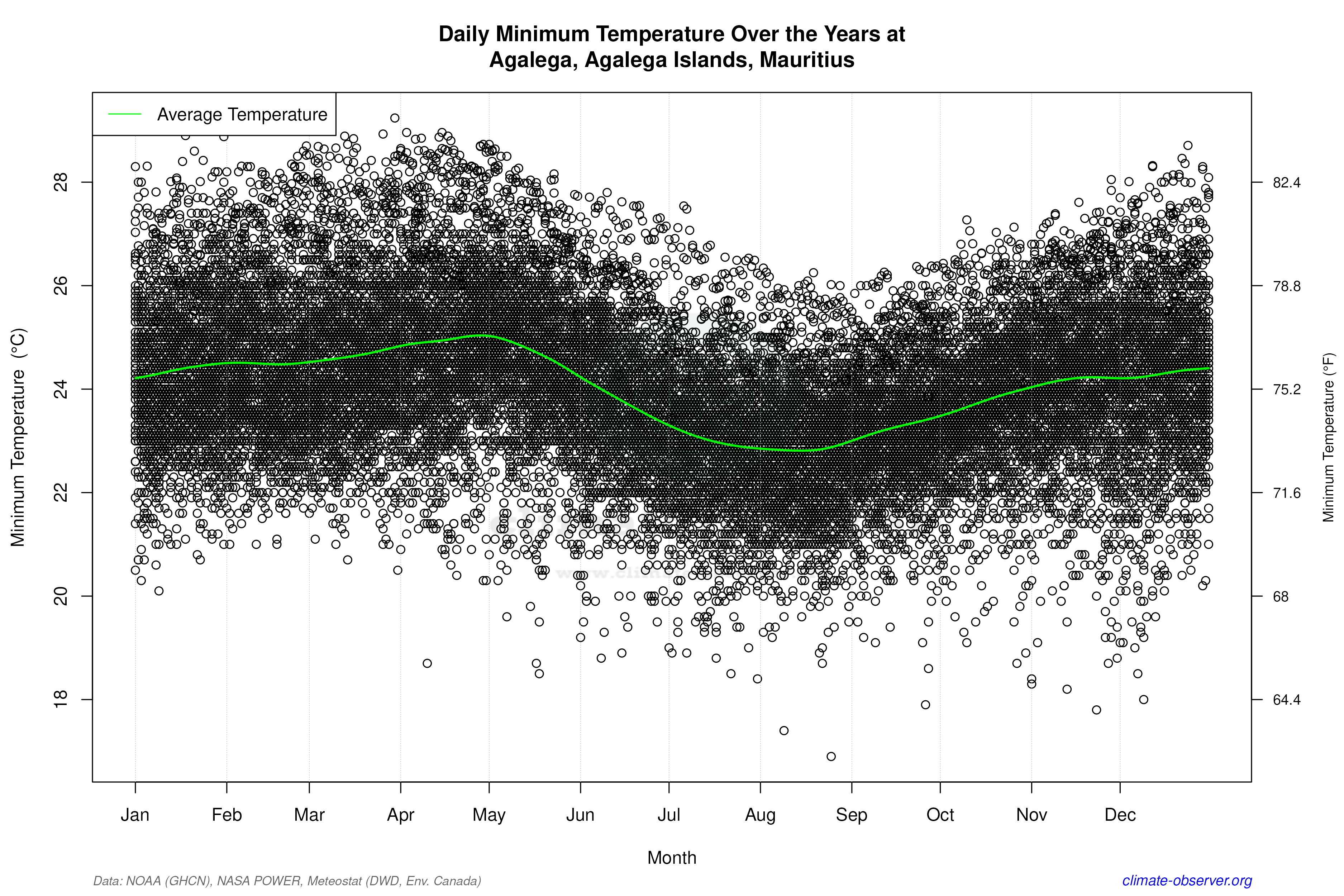
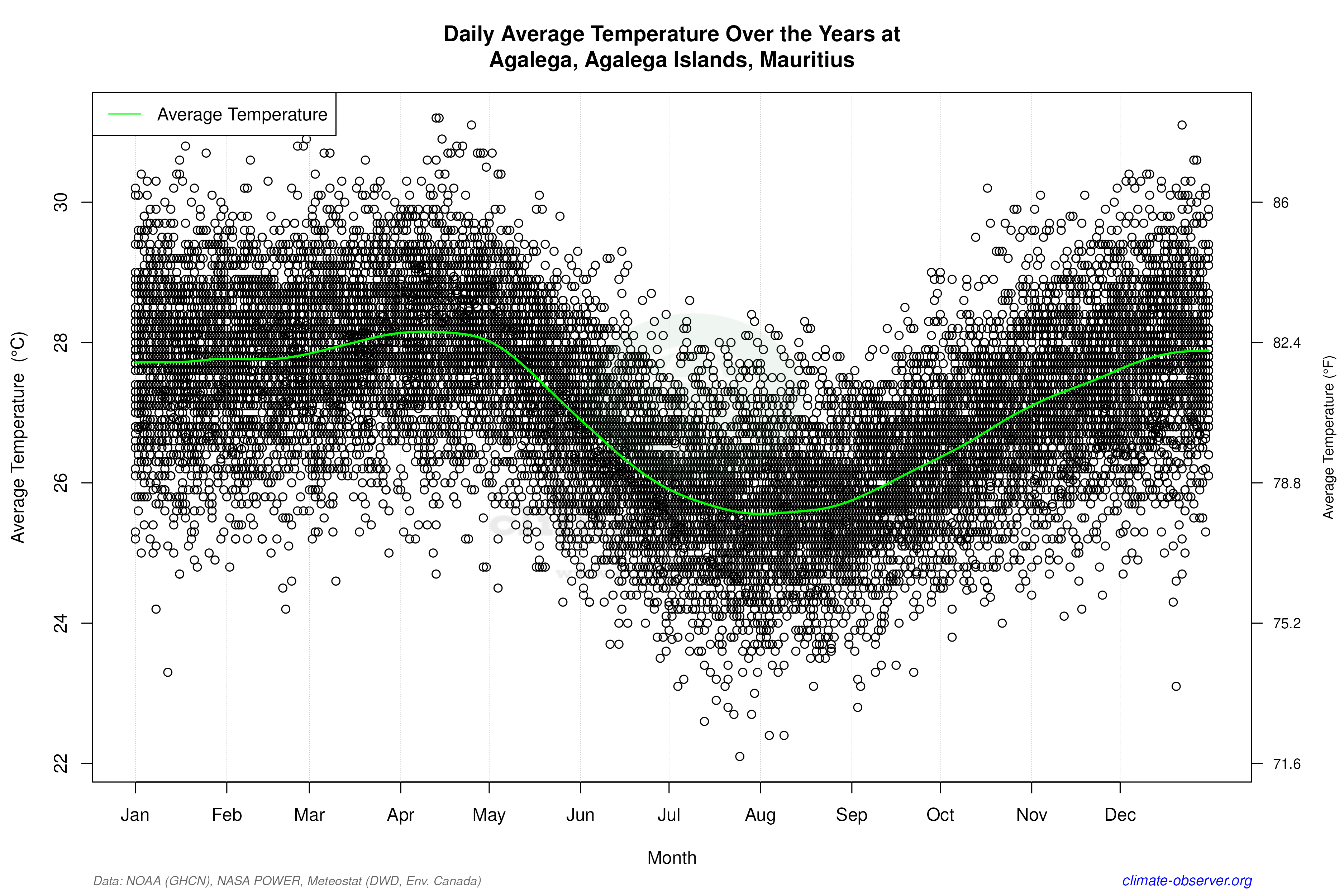
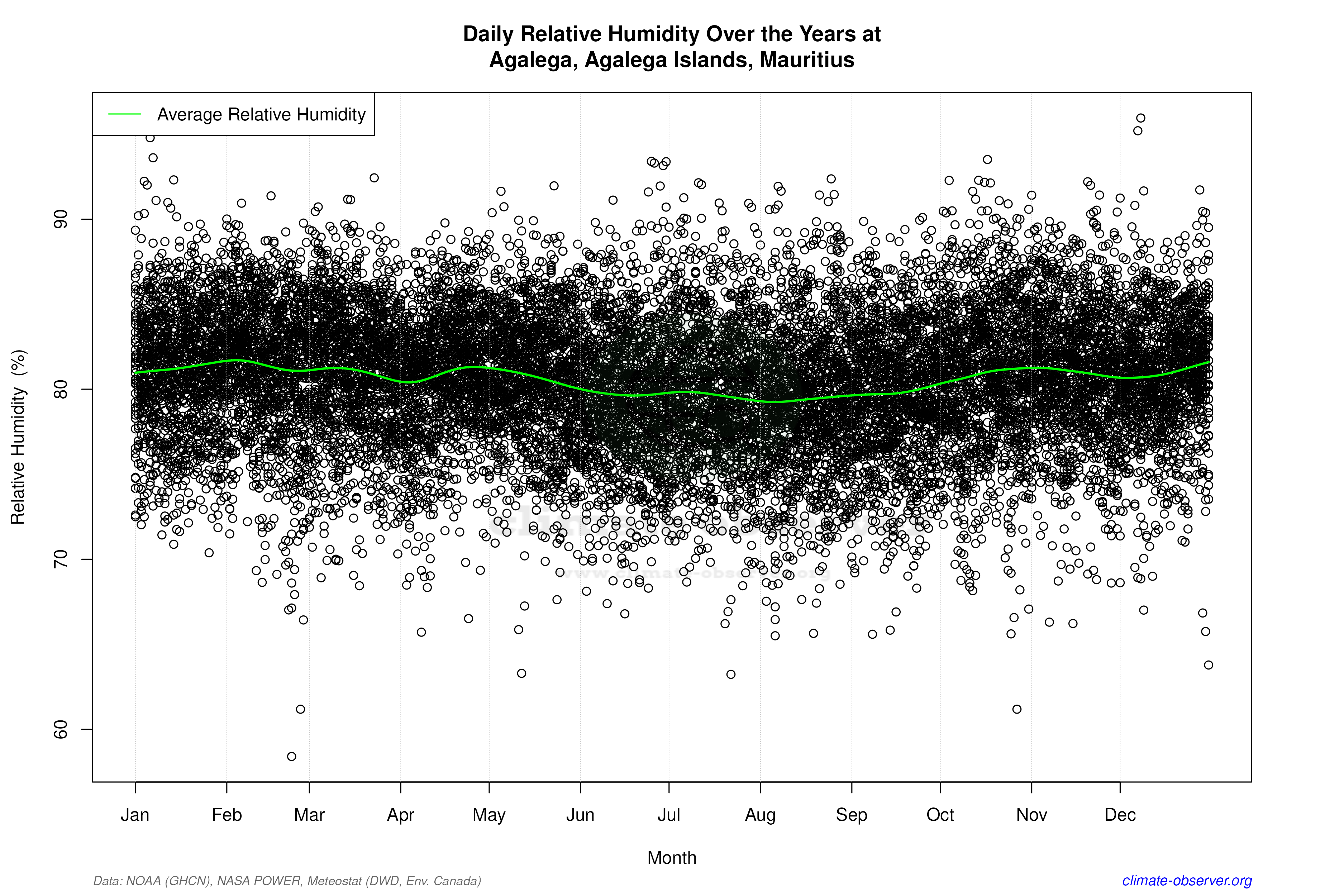

Average Max Temperature Throughout Year | 1 of 5

