Climate for Station: Saltillo, Coahuila, Mexico
Loading live weather...
Climate Analysis & Overview
Saltillo's climate profile reveals a complex interplay of cooling and warming trends, set against a backdrop of increasingly concentrated precipitation events. While the all-time data suggests a slight warming of highs, the recent decade shows a cooling trend, highlighting the region's dynamic climate variability.
Desert Climate Dynamics
Saltillo, nestled in the semi-arid region of northeastern Mexico, is classified under the Köppen climate system as BSh—a hot semi-arid climate. This classification is influenced by its geographical positioning within the Chihuahuan Desert and the Sierra Madre Oriental mountains, which modulate temperature and precipitation patterns. Over the long term, Saltillo has experienced a slight warming trend in high temperatures, with an all-time increase of 0.29°C (0.52°F). However, contrastingly, the past decade has witnessed a cooling trend in high temperatures, with a decrease of 0.86°C (1.55°F), suggesting a recent shift in thermal dynamics.
Nocturnal Temperature Shifts
The low temperatures in Saltillo present an intriguing narrative. While the all-time trend shows a marginal cooling of 0.03°C (0.05°F), the past decade has recorded a warming trend of 0.65°C (1.17°F). This dichotomy between historical and recent data may reflect changes in local atmospheric conditions or broader climatic shifts. The warming of lows in the recent decade could indicate milder nights, which may impact local agriculture and energy consumption patterns.
Precipitation Patterns and Concentration
The Precipitation Concentration Index (PCI) for Saltillo has seen a notable increase from a baseline of 19.4 to a current value of 20.7. This rise indicates a more concentrated precipitation pattern, where rainfall is increasingly occurring in fewer, more intense events. Such a shift can lead to challenges in water management and agriculture, as the region may experience longer dry spells punctuated by heavy rainfall, potentially exacerbating drought and flood risks.
Temperature Extremes
Saltillo's temperature records highlight the region's climatic extremes. The highest recorded temperature is 40.5°C (104.9°F), while the lowest is a frigid -14.5°C (5.9°F). These extremes underscore the variability inherent in a desert climate, where temperatures can swing dramatically between seasons and even within a single day.
Regional Climate Context
Mexico's broader climate goals aim to mitigate the impacts of climate change through sustainable practices and emissions reductions. Saltillo's climate data provides valuable insights into regional trends, informing strategies to adapt to changing precipitation patterns and temperature fluctuations. Understanding these dynamics is crucial for developing resilient infrastructure and agricultural practices in the face of evolving climatic conditions.
Station Statistics
10-Year Trend
High: -0.26 °C/decade
Low: +0.51 °C/decade
Rain: +0.52 mm/decade
25-Year Trend
High: +0.21 °C/decade
Low: +0.04 °C/decade
Rain: +0.16 mm/decade
50-Year Trend
High: +0.57 °C/decade
Low: +0.03 °C/decade
Rain: +0.02 mm/decade
All-Time Trend
High: +0.27 °C/decade
Low: -0.04 °C/decade
Rain: +0.02 mm/decade
Percentage Above-Average Days
Last 12 Months: 66.0%
This Year: 73.5%
Precipitation Concentration Index (PCI) ℹ️
Last 12 Months: 50.7
Historical Average: 18.5
Percentile Rank of Last 12 Months ℹ️
High: 86th percentile
Low: 76th percentile
Rain: 99th percentile
Change in Variance ℹ️
High: -18.5%
Low: -7.5%
Intraday: -21.7%
Data Coverage
87.8%
First Year of Data
1971
Station Location
Historical Weather Records
| Max High | Avg High | Min High | Max Avg | Avg Avg | Min Avg | Max Low | Avg Low | Min Low | Max Precipitation | Avg Precipitation | Max Snow | Avg Snow | |
|---|---|---|---|---|---|---|---|---|---|---|---|---|---|
| Record | 40.5 °C | — | -9.5 °C | 34.6 °C | — | -5.5 °C | 26.0 °C | — | -14.5 °C | 724.1 mm | — | — | — |
| January | 36.5 °C | 20.1 °C | -9.5 °C | 23.7 °C | 12.3 °C | -4.3 °C | 21.0 °C | 4.5 °C | -14.5 °C | 45.2 mm | 0.4 mm | — | — |
| February | 33.0 °C | 22.3 °C | -1.0 °C | 26.8 °C | 14.5 °C | -5.5 °C | 18.0 °C | 6.0 °C | -10.5 °C | 29.5 mm | 0.4 mm | — | — |
| March | 37.7 °C | 25.3 °C | 2.0 °C | 29.3 °C | 17.2 °C | -0.5 °C | 20.6 °C | 8.7 °C | -6.0 °C | 29.9 mm | 0.3 mm | — | — |
| April | 39.0 °C | 28.4 °C | 7.0 °C | 30.6 °C | 20.7 °C | 5.3 °C | 24.0 °C | 12.0 °C | 0.6 °C | 25.8 mm | 0.5 mm | — | — |
| May | 40.5 °C | 30.5 °C | 12.0 °C | 32.7 °C | 23.0 °C | 11.2 °C | 26.0 °C | 14.8 °C | 1.0 °C | 52.7 mm | 0.9 mm | — | — |
| June | 40.5 °C | 30.7 °C | 17.5 °C | 34.6 °C | 23.8 °C | 14.9 °C | 25.4 °C | 16.1 °C | 6.5 °C | 70.0 mm | 1.5 mm | — | — |
| July | 39.5 °C | 30.1 °C | 18.0 °C | 34.4 °C | 23.4 °C | 15.0 °C | 23.0 °C | 16.3 °C | 8.6 °C | 94.7 mm | 2.0 mm | — | — |
| August | 38.5 °C | 29.7 °C | 18.0 °C | 34.4 °C | 23.2 °C | 16.2 °C | 22.8 °C | 16.0 °C | 8.0 °C | 84.0 mm | 1.7 mm | — | — |
| September | 39.8 °C | 27.3 °C | 9.5 °C | 32.1 °C | 20.8 °C | 11.6 °C | 22.6 °C | 14.2 °C | 2.5 °C | 590.2 mm | 2.4 mm | — | — |
| October | 36.5 °C | 25.5 °C | 3.5 °C | 27.7 °C | 18.6 °C | 3.3 °C | 22.0 °C | 11.2 °C | -2.5 °C | 724.1 mm | 1.9 mm | — | — |
| November | 34.5 °C | 23.1 °C | 2.0 °C | 25.2 °C | 15.4 °C | 1.4 °C | 23.0 °C | 7.8 °C | -5.2 °C | 42.0 mm | 0.5 mm | — | — |
| December | 32.6 °C | 20.7 °C | -1.5 °C | 24.7 °C | 13.3 °C | -3.3 °C | 18.0 °C | 5.6 °C | -11.0 °C | 25.0 mm | 0.4 mm | — | — |
Data Visualisations
Remove WatermarksCurrent Year Climate Trends vs Historical
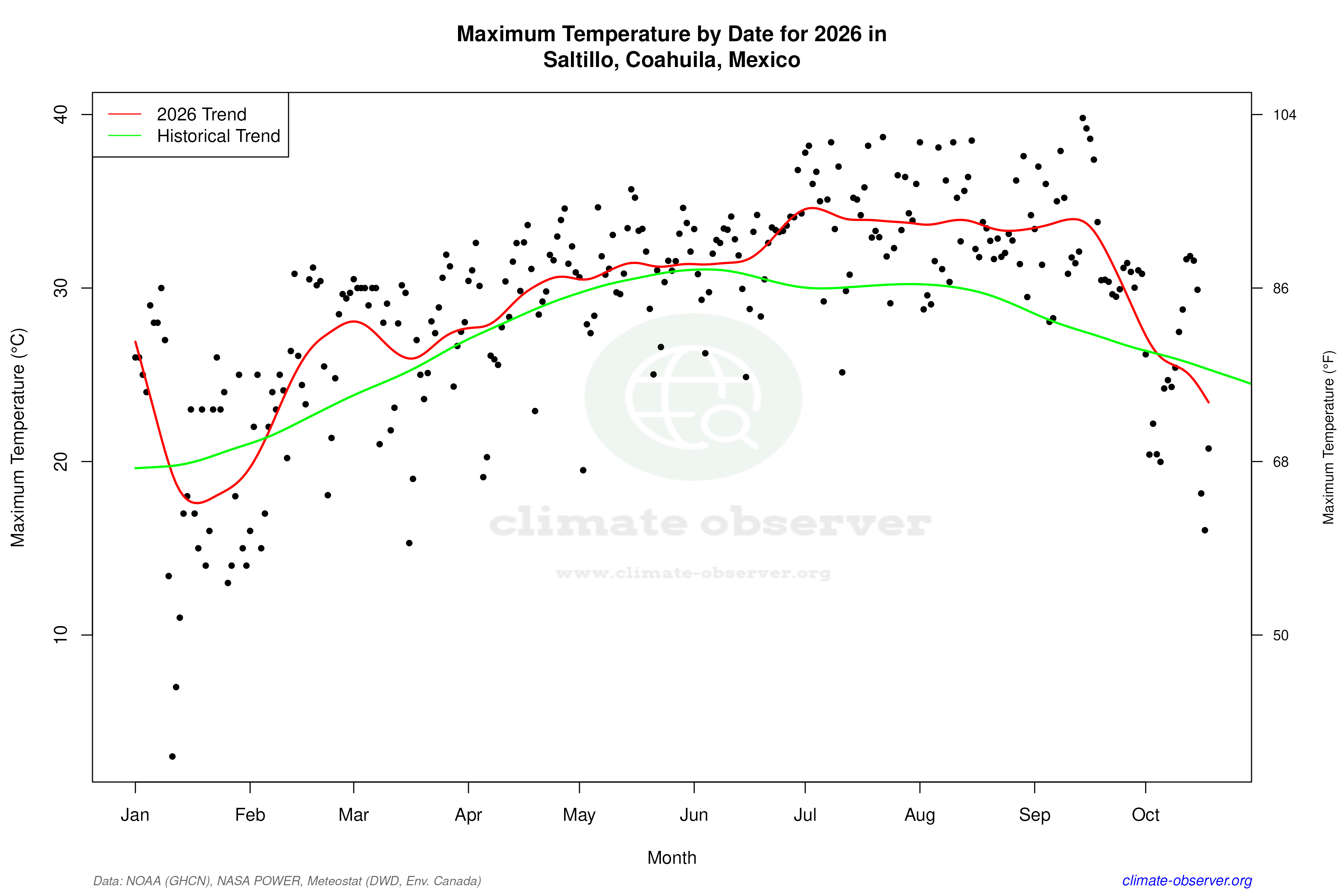
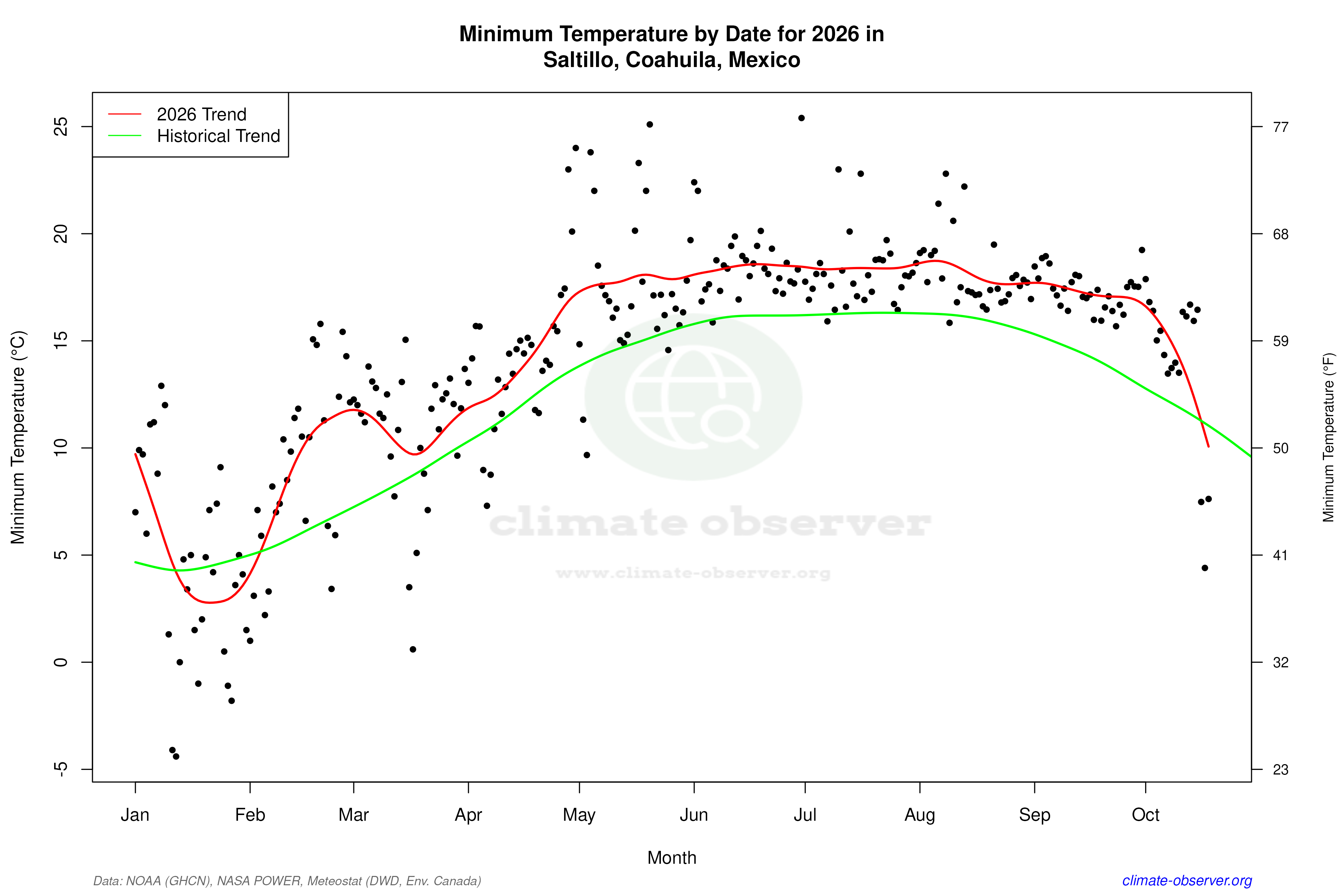
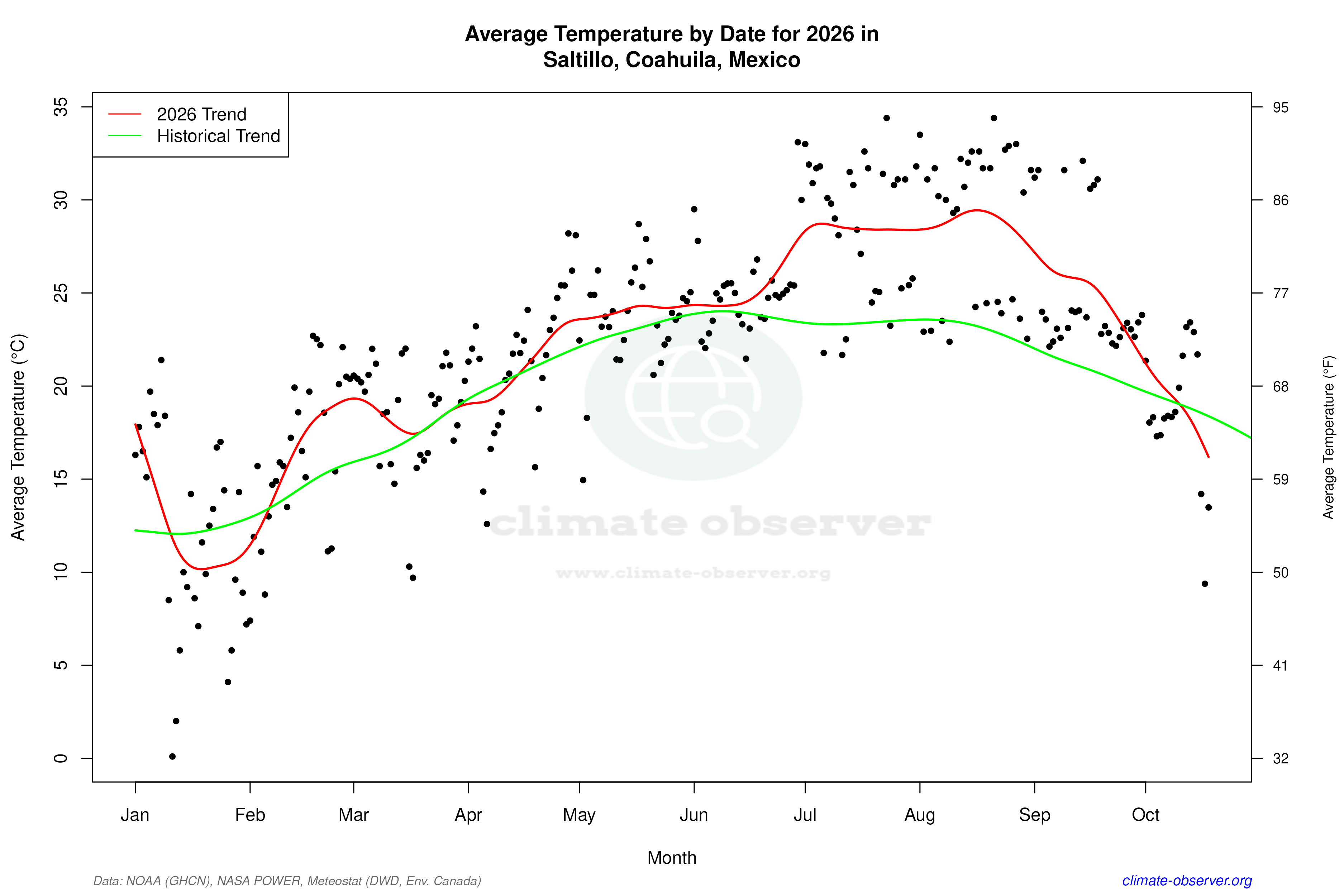
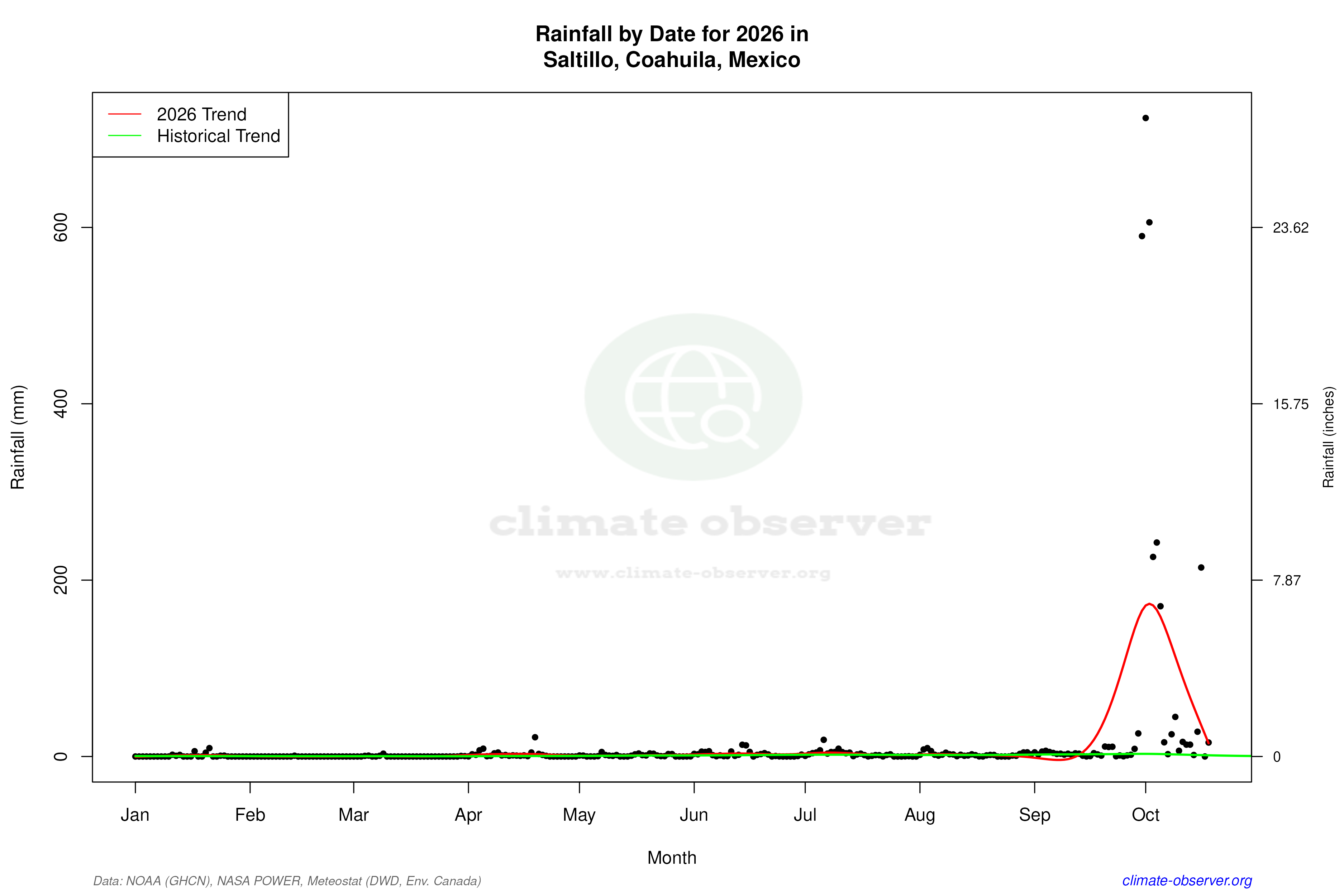
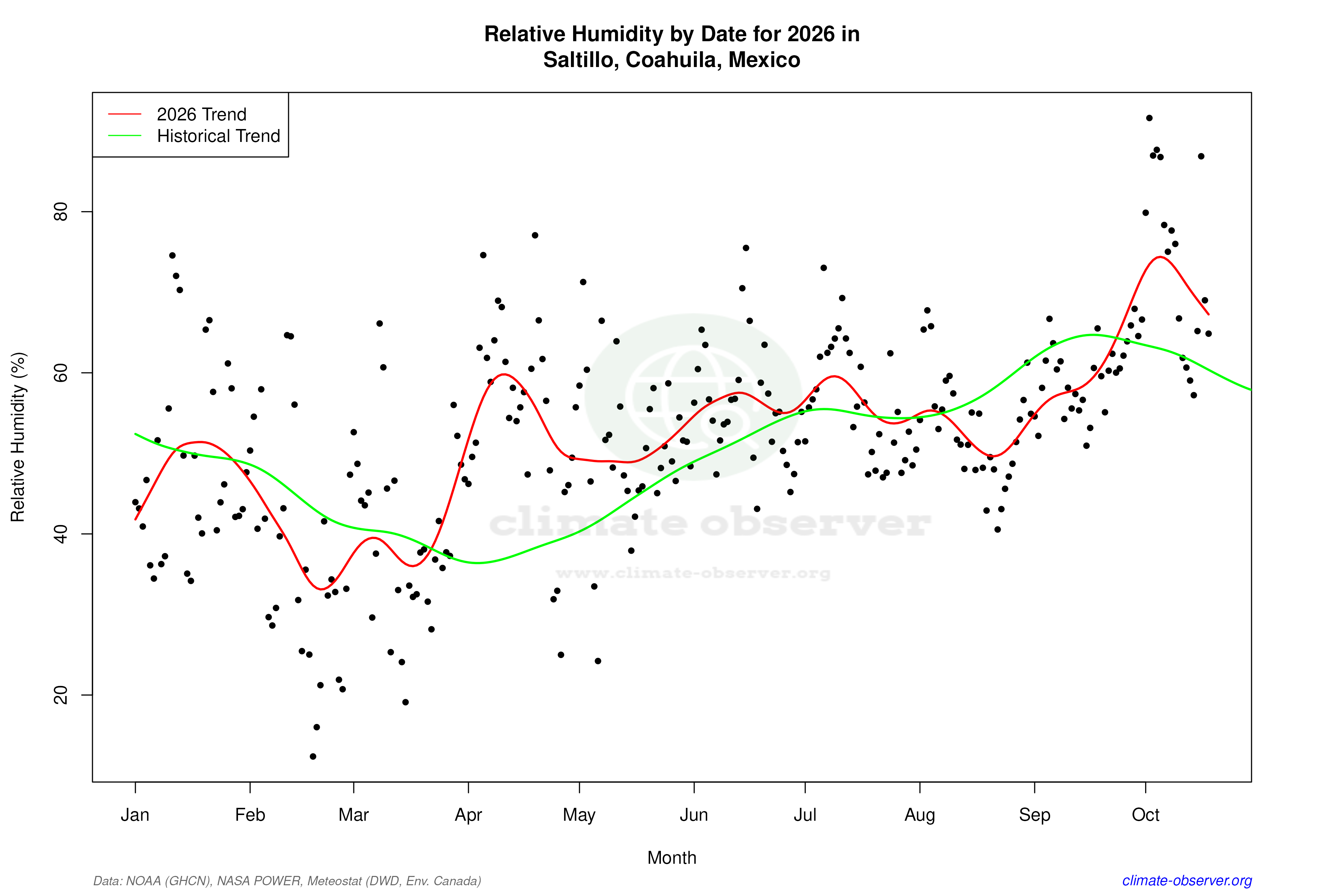

Max Temperature this Year | 1 of 6
Climate 12-Month Moving Averages
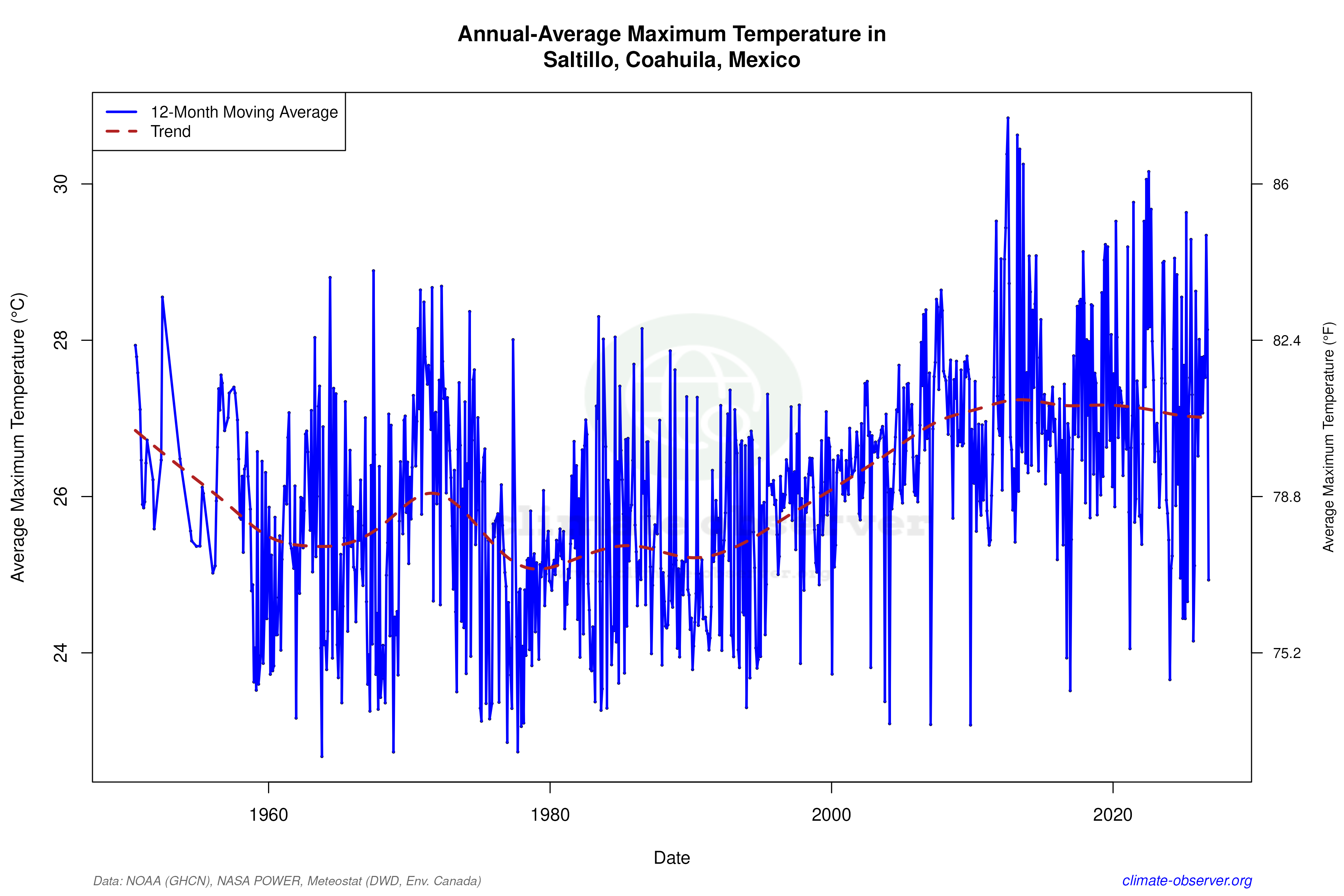
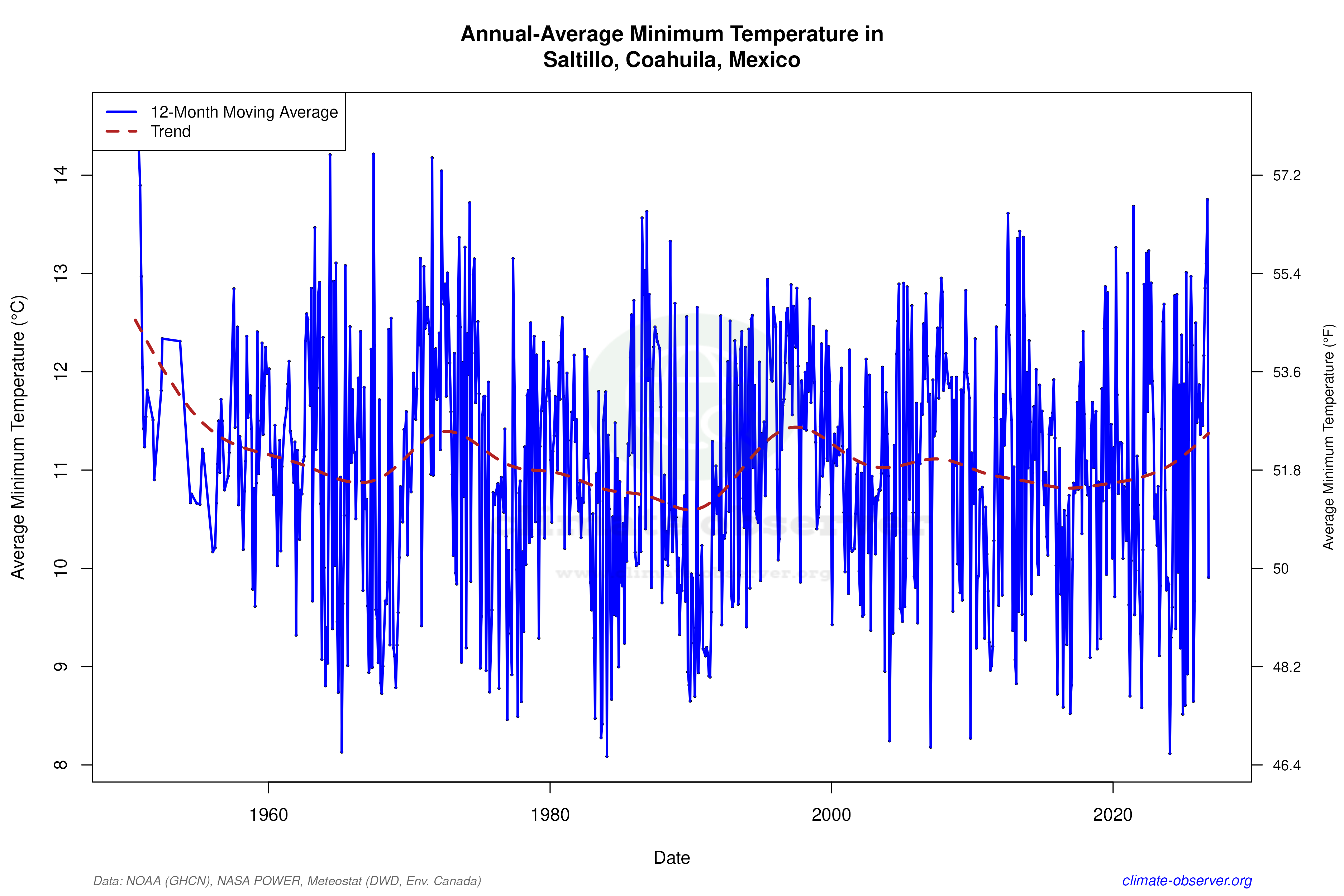
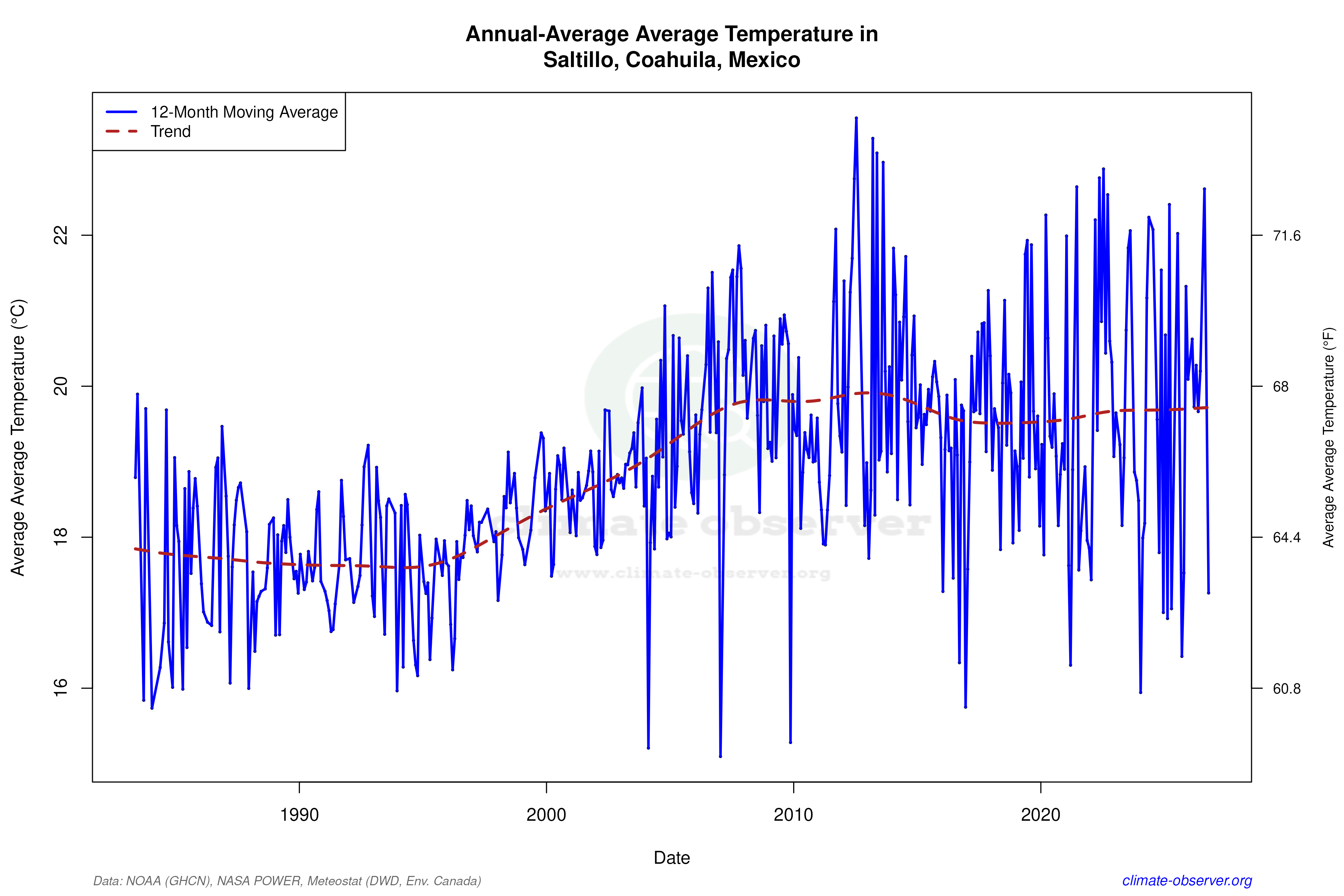
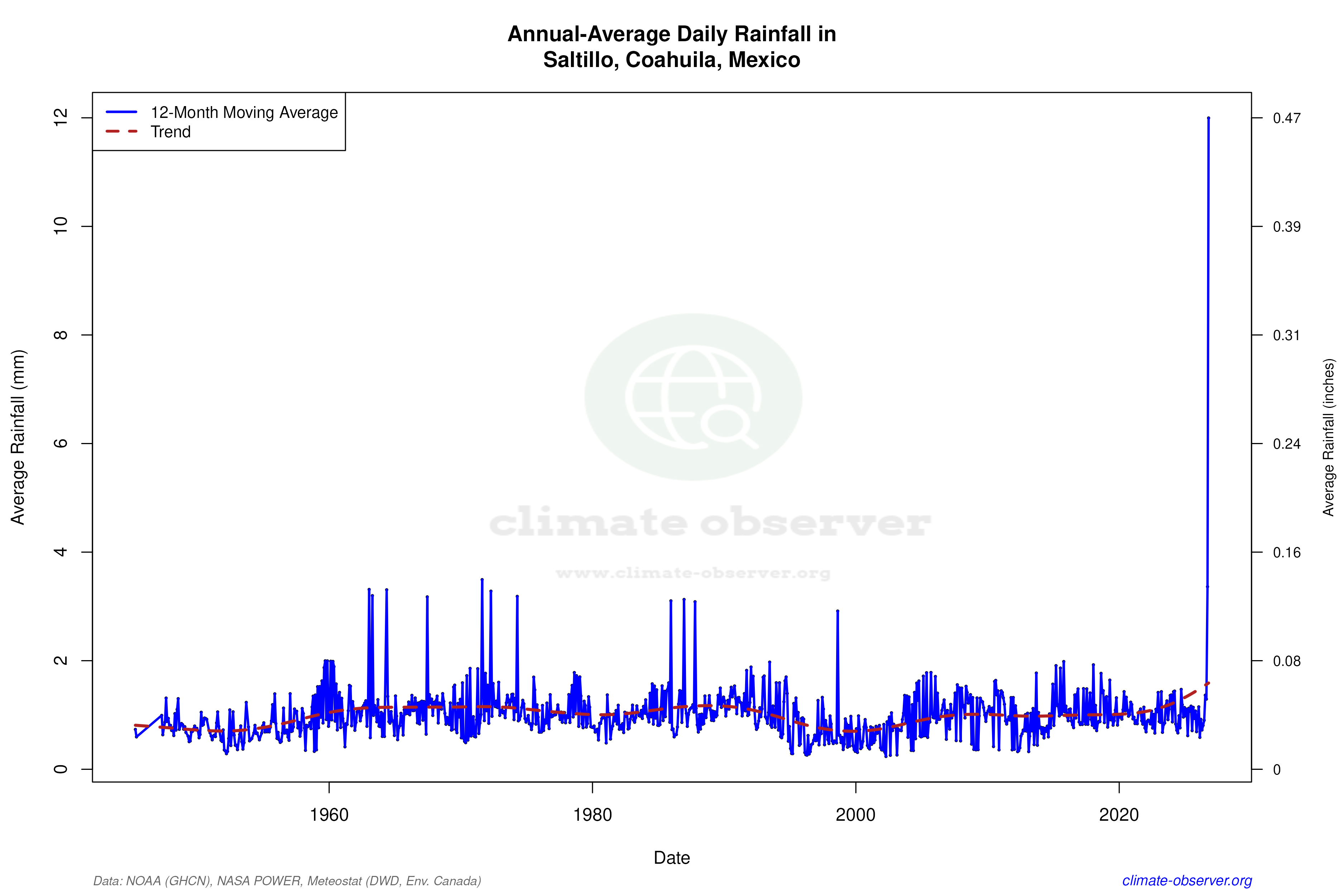
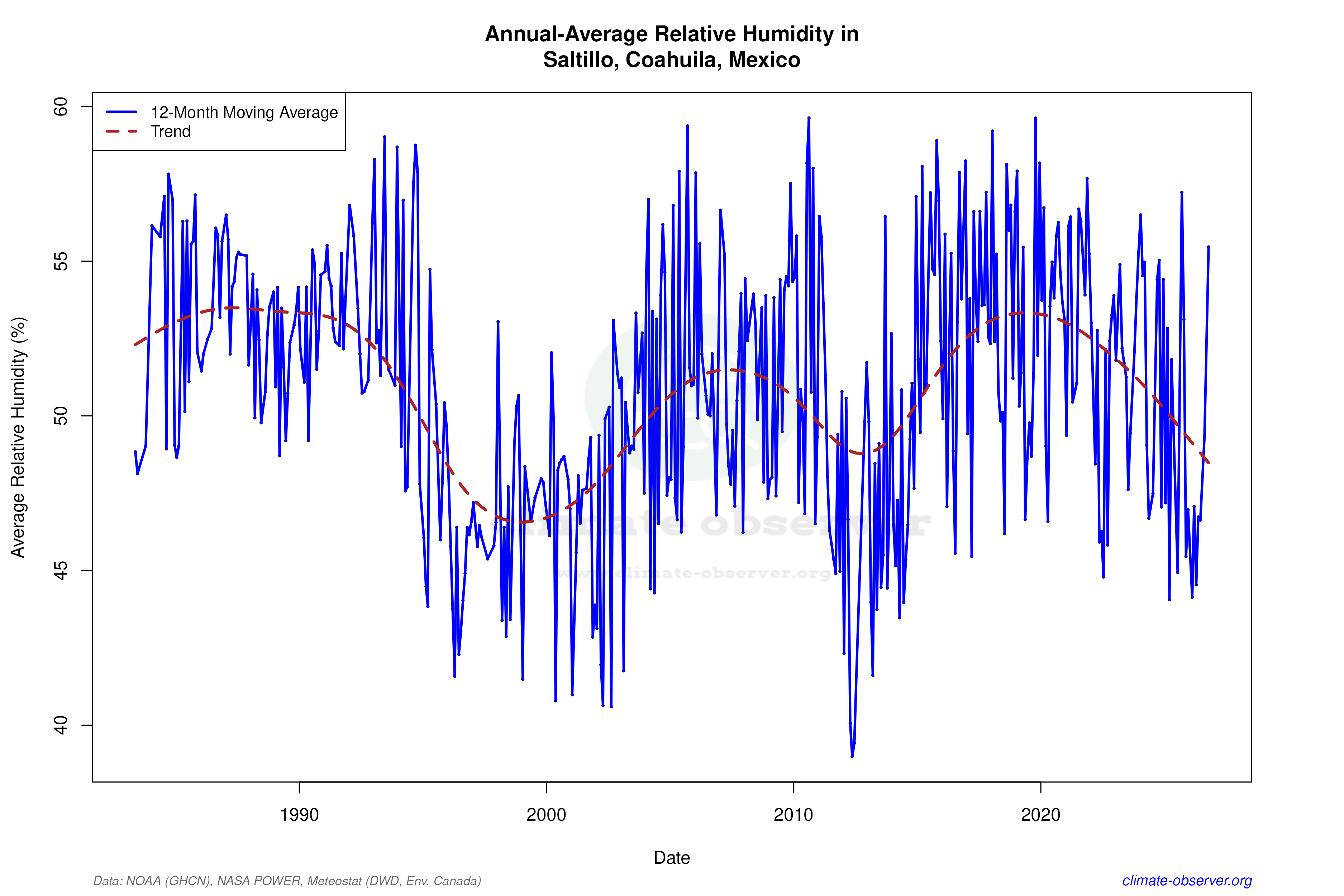

Max Temperature 12-Month MA | 1 of 6
Daily Data Points and Averages Throughout the Year
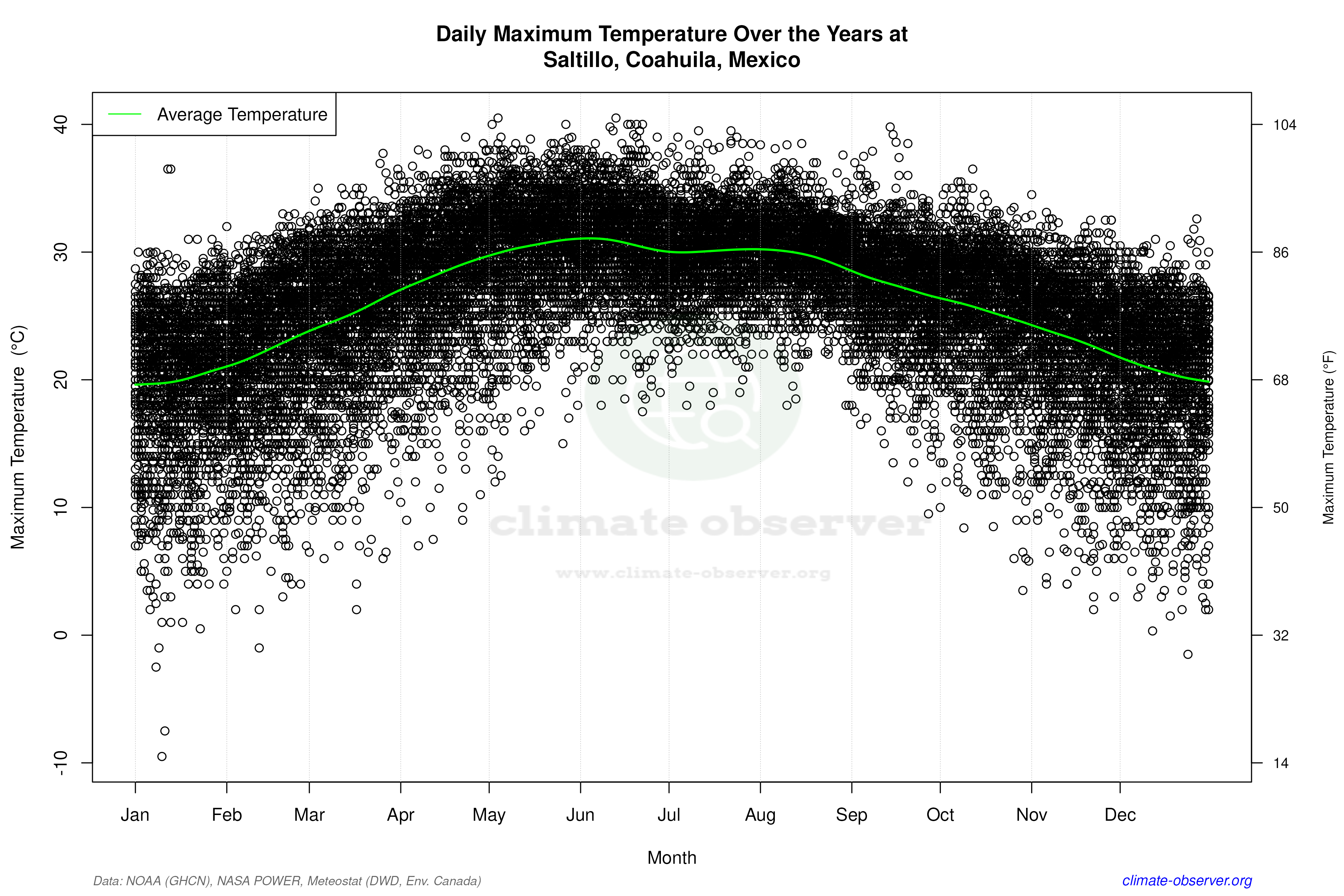
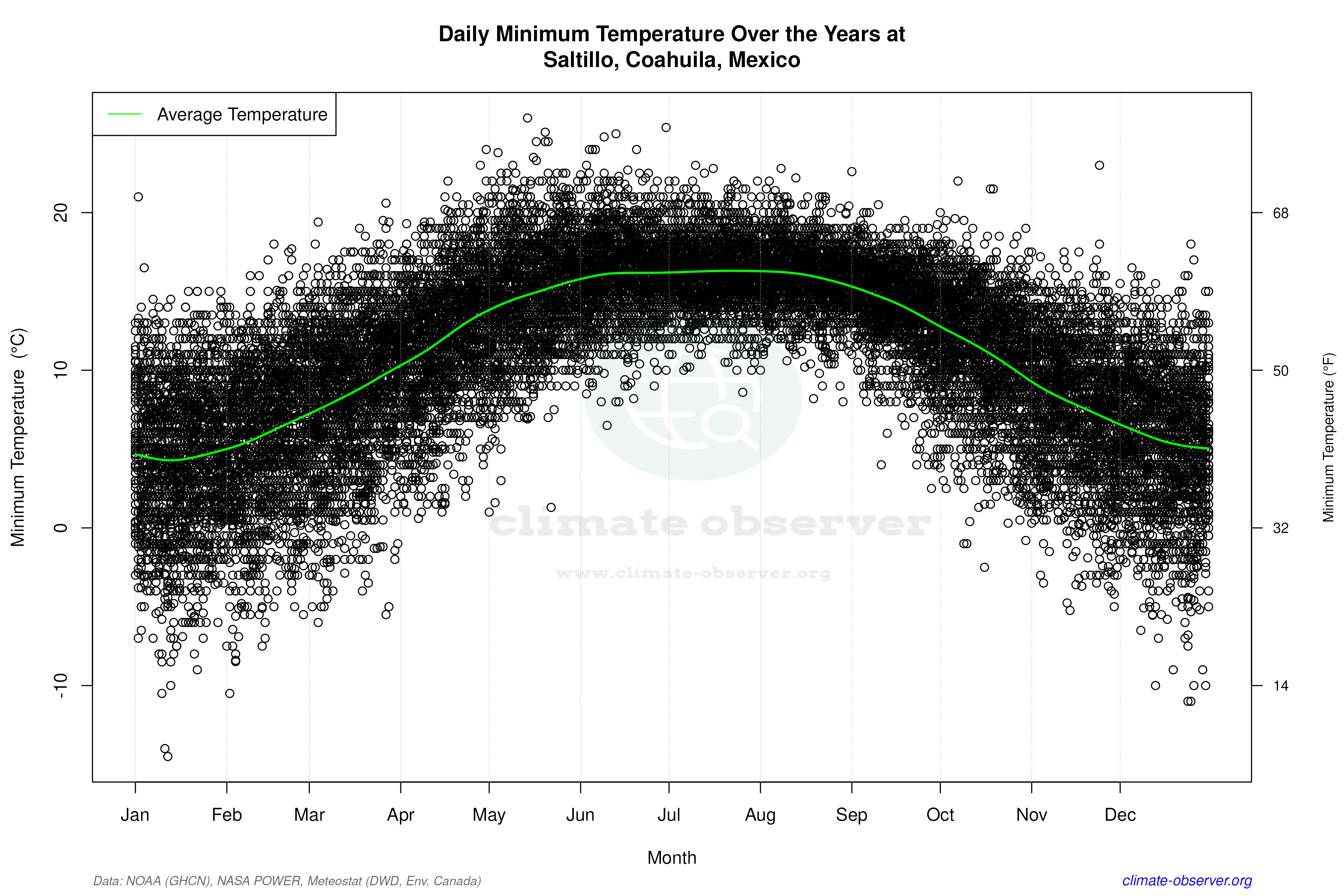
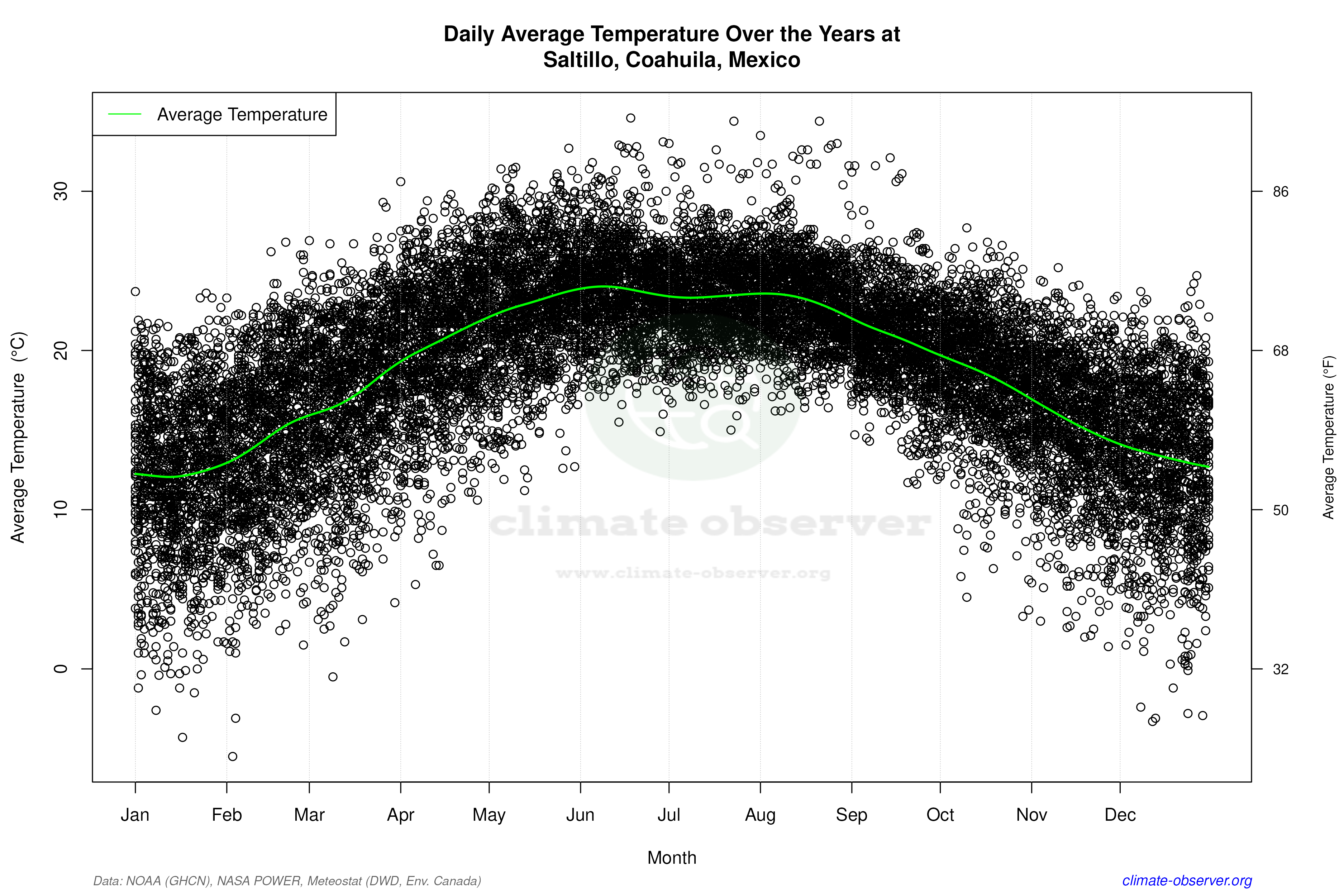
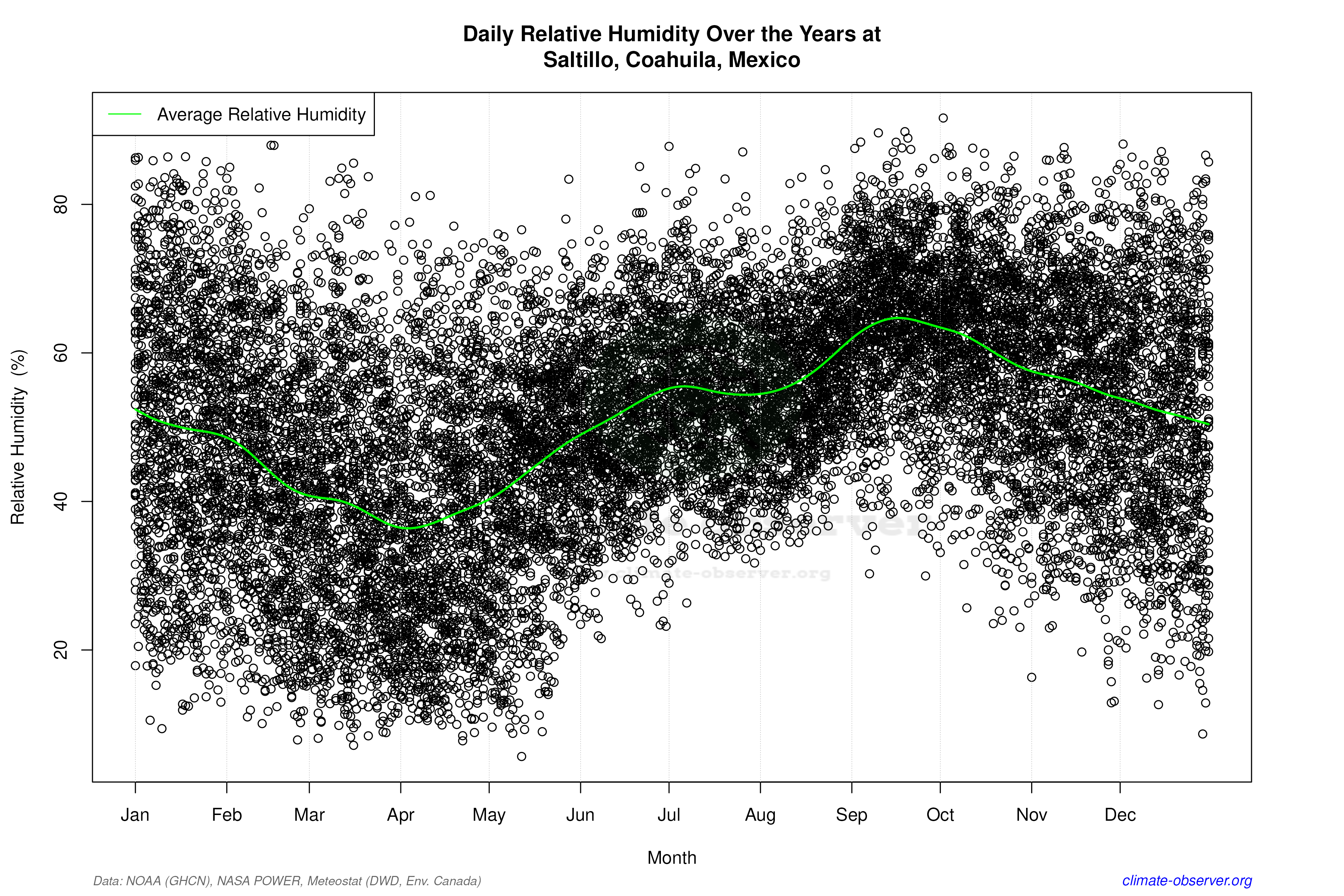

Average Max Temperature Throughout Year | 1 of 5


