Climate for Station: Kuching, Sarawak, Malaysia
Loading live weather...
Climate Analysis & Overview
Kuching, a city known for its tropical rainforest climate, experiences a nuanced climate profile with slight warming trends in lows and a decrease in precipitation concentration, suggesting more evenly distributed rainfall. However, the highs show a cooling trend over the past decade, contrasting with the long-term warming trend.
Tropical Climate Dynamics
Kuching, located at 1.483°N, 110.333°E, is classified under the tropical rainforest climate (Af) in the Köppen climate classification. This region is characterised by high humidity and significant rainfall throughout the year, influenced by its proximity to the equator and the South China Sea. The local geography, including the surrounding lush rainforests and nearby river systems, plays a crucial role in moderating temperatures and distributing precipitation.
Temperature Trends: A Tale of Two Scales
Over the past decade, Kuching has experienced a cooling trend in high temperatures, with a decrease of 0.33°C (0.59°F). This contrasts with the long-term trend, which shows a warming of 0.10°C (0.18°F) in highs. The lows, however, tell a different story, with a slight warming of 0.08°C (0.14°F) over the past decade and a more pronounced long-term rise of 0.23°C (0.41°F). This duality in temperature trends suggests a complex interplay of climatic factors, possibly influenced by regional climate initiatives aimed at mitigating urban heat effects.
Precipitation Patterns: A More Even Spread
The Precipitation Concentration Index (PCI) for Kuching has decreased from a baseline of 11.1 to a current value of 9.8. This indicates a more even distribution of rainfall events over time, a positive shift for managing water resources and reducing the risk of flooding. A PCI under 10 signifies a very even distribution of precipitation, which is beneficial for both agriculture and urban planning.
Record Extremes: The Temperature Bookends
Kuching's climate extremes are marked by a record high of 37.0°C (98.6°F) and a record low of 18.9°C (66.0°F). These records highlight the potential for significant temperature variability, despite the generally stable tropical climate. Such extremes can have implications for energy consumption and public health, particularly during heatwaves.
Regional Climate Context and Implications
The climate trends observed in Kuching align with Malaysia's broader climate goals, which focus on sustainable development and climate resilience. Recent regional weather events, such as intense monsoons, underscore the importance of understanding local climate dynamics. The slight warming in lows and more evenly distributed precipitation may aid in achieving these goals, provided that urban planning and infrastructure development continue to adapt to these changing patterns.
Station Statistics
10-Year Trend
High: -0.44 °C/decade
Low: +0.25 °C/decade
Rain: -4.58 mm/decade
25-Year Trend
High: +0.20 °C/decade
Low: +0.27 °C/decade
Rain: -0.92 mm/decade
50-Year Trend
High: +0.01 °C/decade
Low: +0.21 °C/decade
Rain: -0.19 mm/decade
All-Time Trend
High: +0.09 °C/decade
Low: +0.21 °C/decade
Rain: +0.33 mm/decade
Percentage Above-Average Days
Last 12 Months: 18.6%
This Year: 11.5%
Precipitation Concentration Index (PCI) ℹ️
Last 12 Months: 9.0
Historical Average: 10.6
Percentile Rank of Last 12 Months ℹ️
High: 46th percentile
Low: 97th percentile
Rain: 14th percentile
Change in Variance ℹ️
High: -2.9%
Low: -7.7%
Intraday: +4.1%
Data Coverage
93.4%
First Year of Data
1975
Station Location
Historical Weather Records
| Max High | Avg High | Min High | Max Avg | Avg Avg | Min Avg | Max Low | Avg Low | Min Low | Max Precipitation | Avg Precipitation | Max Snow | Avg Snow | |
|---|---|---|---|---|---|---|---|---|---|---|---|---|---|
| Record | 37.0 °C | — | 23.3 °C | 31.4 °C | — | 21.8 °C | 27.2 °C | — | 18.9 °C | 414.0 mm | — | — | — |
| January | 34.6 °C | 29.8 °C | 23.3 °C | 28.8 °C | 25.7 °C | 21.8 °C | 26.0 °C | 23.0 °C | 18.9 °C | 302.5 mm | 20.4 mm | — | — |
| February | 34.7 °C | 30.1 °C | 23.3 °C | 29.2 °C | 26.0 °C | 22.3 °C | 26.0 °C | 23.1 °C | 18.9 °C | 414.0 mm | 16.2 mm | — | — |
| March | 35.2 °C | 31.1 °C | 24.5 °C | 29.9 °C | 26.4 °C | 22.8 °C | 26.0 °C | 23.3 °C | 18.9 °C | 147.0 mm | 10.4 mm | — | — |
| April | 36.1 °C | 32.1 °C | 26.0 °C | 30.3 °C | 26.8 °C | 22.9 °C | 26.7 °C | 23.5 °C | 20.0 °C | 135.0 mm | 9.1 mm | — | — |
| May | 36.3 °C | 32.6 °C | 26.0 °C | 31.4 °C | 27.1 °C | 23.3 °C | 27.0 °C | 23.7 °C | 20.6 °C | 108.0 mm | 7.7 mm | — | — |
| June | 36.4 °C | 32.4 °C | 25.6 °C | 30.0 °C | 27.0 °C | 21.9 °C | 27.2 °C | 23.4 °C | 18.9 °C | 126.2 mm | 7.1 mm | — | — |
| July | 37.0 °C | 32.3 °C | 25.0 °C | 31.3 °C | 26.9 °C | 23.3 °C | 27.0 °C | 23.2 °C | 19.4 °C | 181.1 mm | 6.3 mm | — | — |
| August | 37.0 °C | 32.3 °C | 24.4 °C | 30.7 °C | 26.8 °C | 22.5 °C | 27.1 °C | 23.1 °C | 19.4 °C | 136.0 mm | 7.2 mm | — | — |
| September | 36.6 °C | 32.0 °C | 23.9 °C | 30.6 °C | 26.5 °C | 22.1 °C | 27.1 °C | 23.1 °C | 19.3 °C | 105.0 mm | 8.2 mm | — | — |
| October | 36.2 °C | 31.8 °C | 26.1 °C | 30.1 °C | 26.3 °C | 23.0 °C | 26.5 °C | 23.1 °C | 20.5 °C | 148.1 mm | 9.6 mm | — | — |
| November | 35.0 °C | 31.5 °C | 25.1 °C | 28.7 °C | 26.1 °C | 22.9 °C | 25.8 °C | 23.0 °C | 20.0 °C | 195.3 mm | 10.7 mm | — | — |
| December | 35.0 °C | 30.7 °C | 23.7 °C | 29.6 °C | 25.9 °C | 22.6 °C | 25.6 °C | 23.1 °C | 18.9 °C | 283.0 mm | 14.3 mm | — | — |
Data Visualisations
Remove WatermarksCurrent Year Climate Trends vs Historical
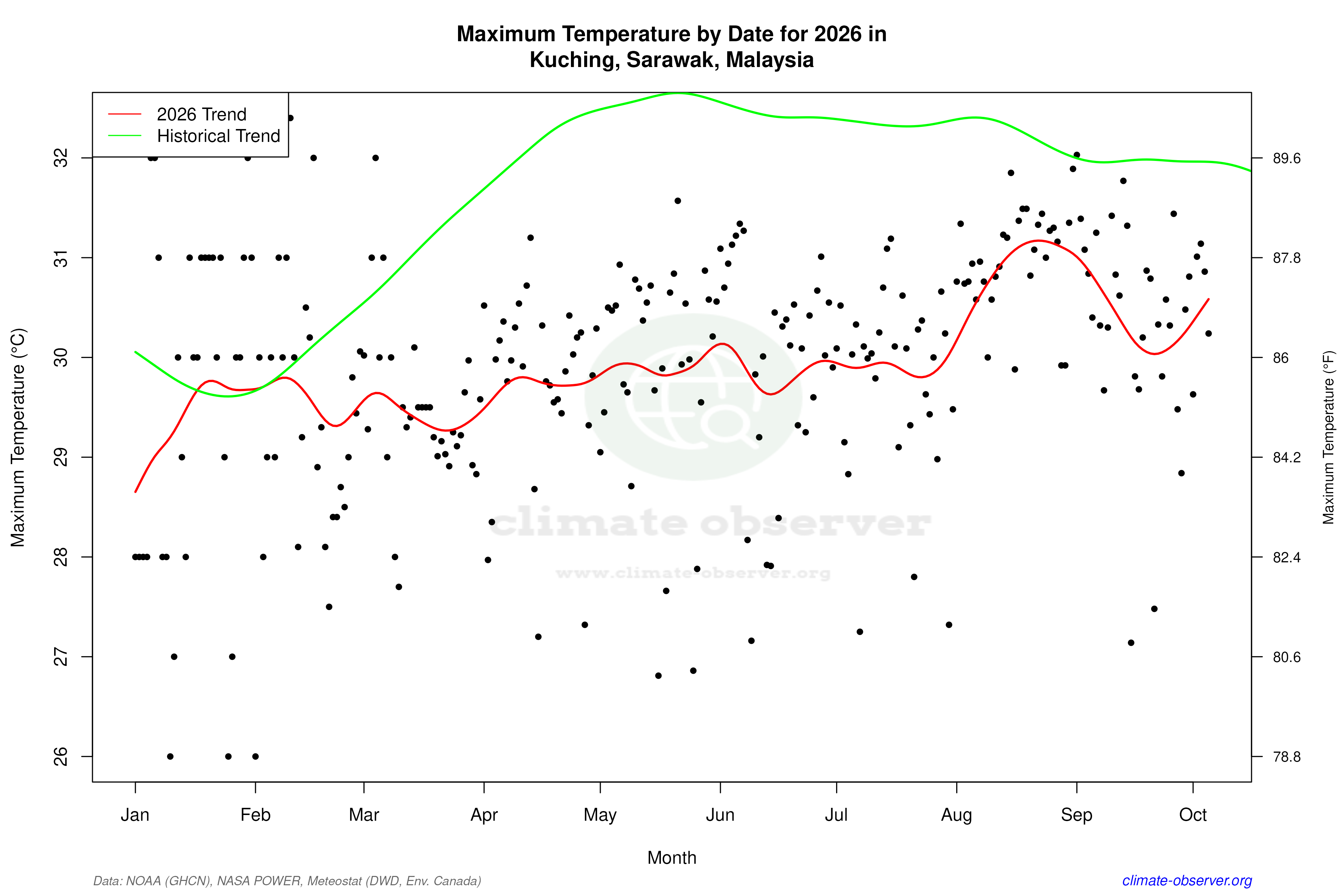
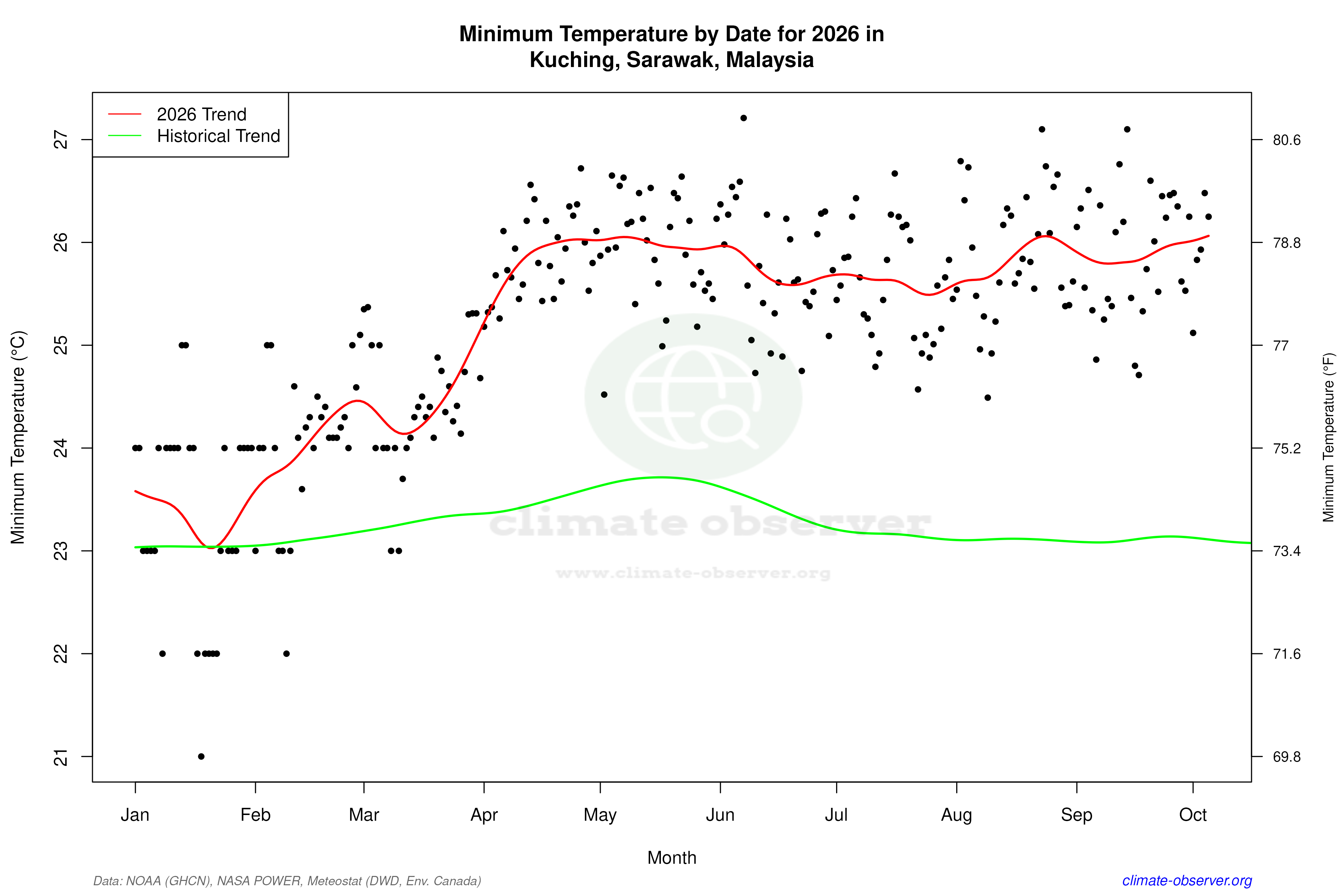
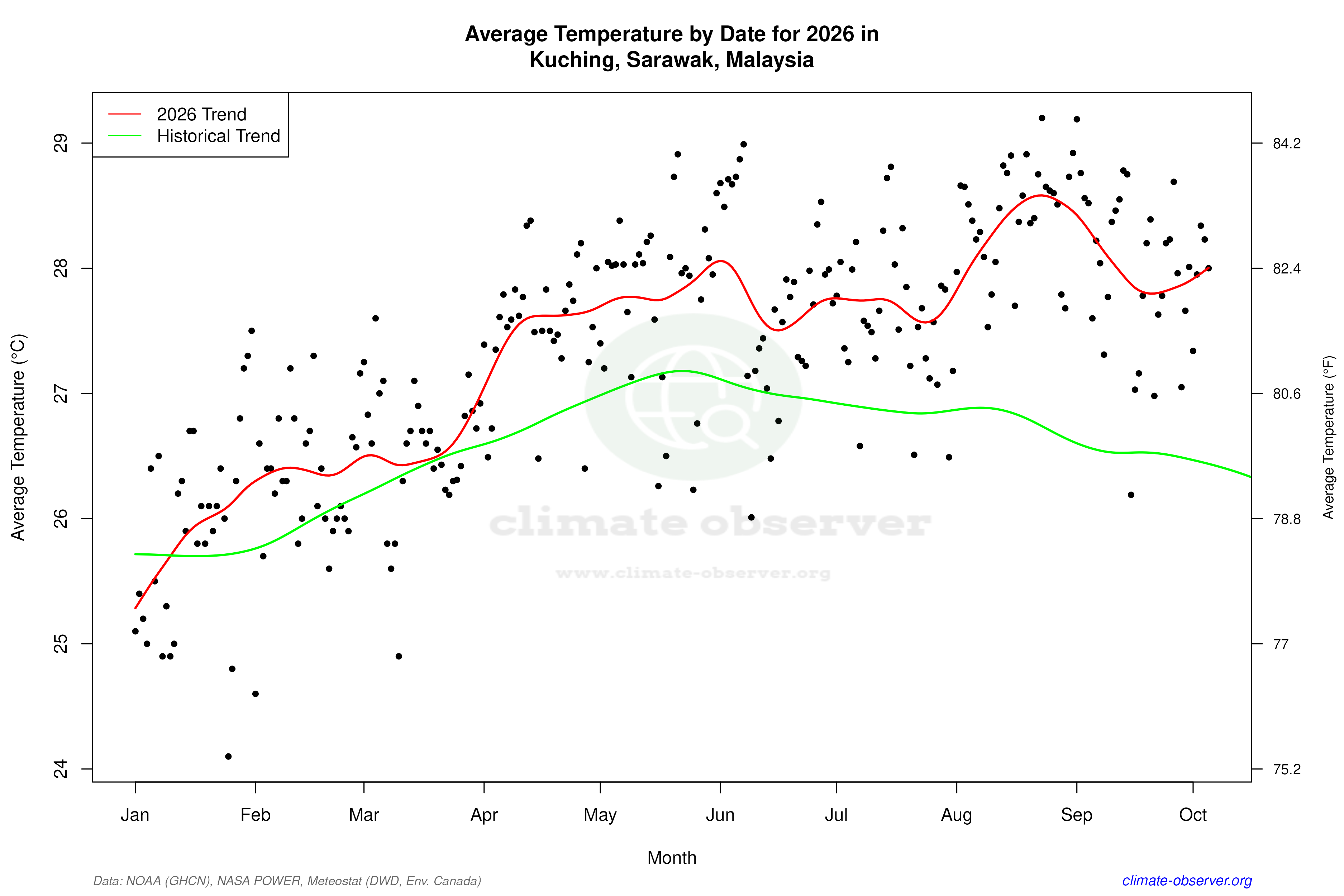
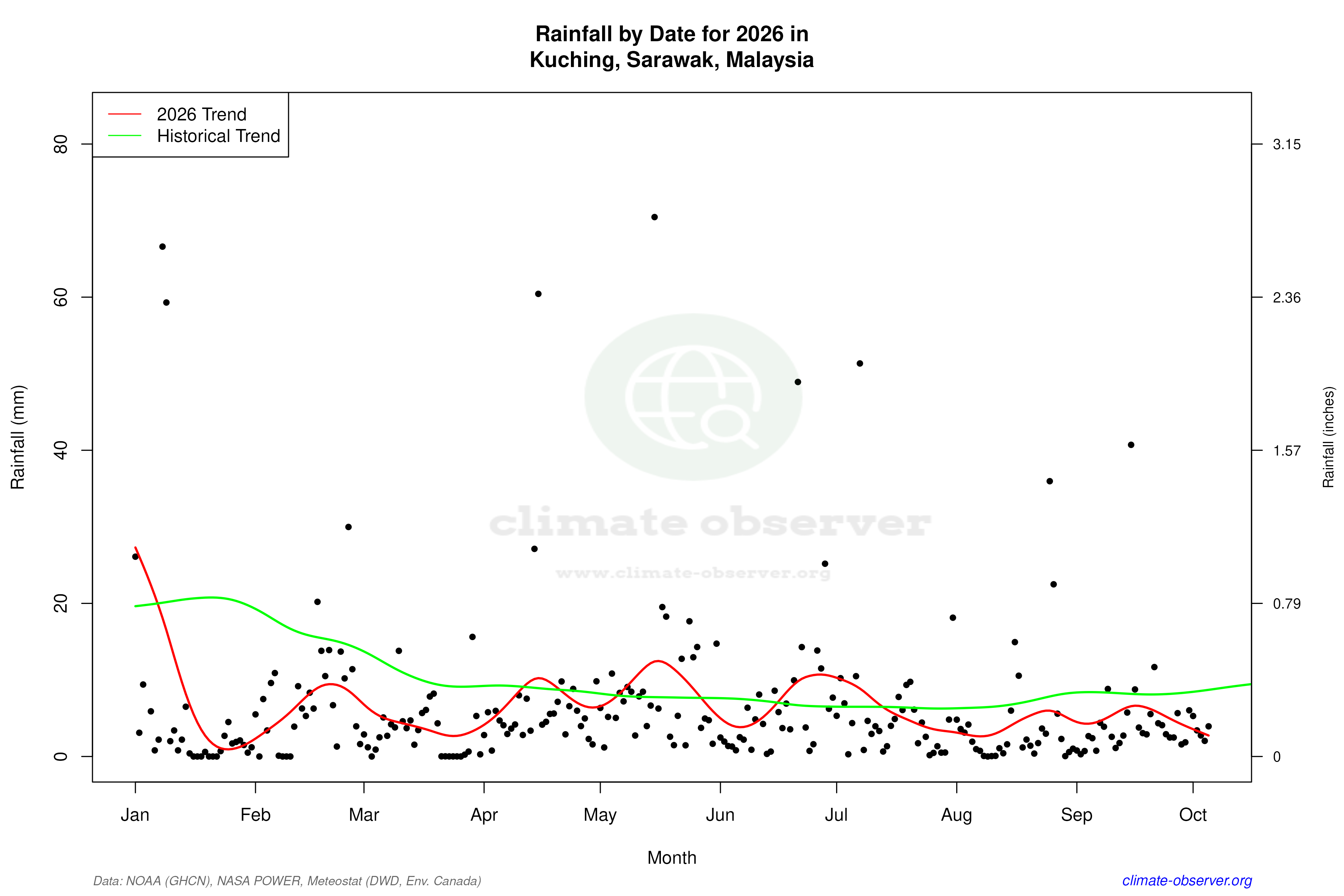
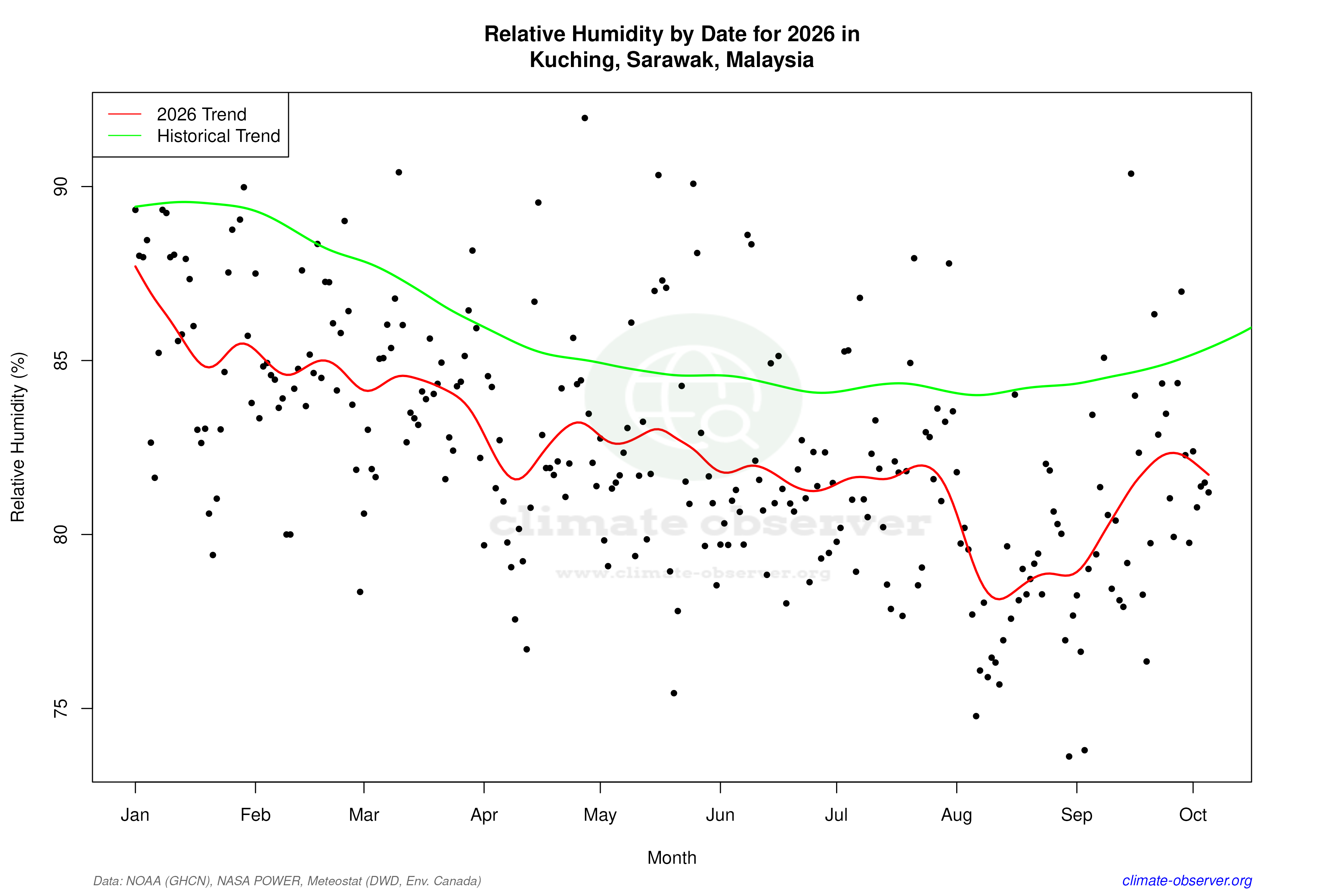

Max Temperature this Year | 1 of 6
Climate 12-Month Moving Averages
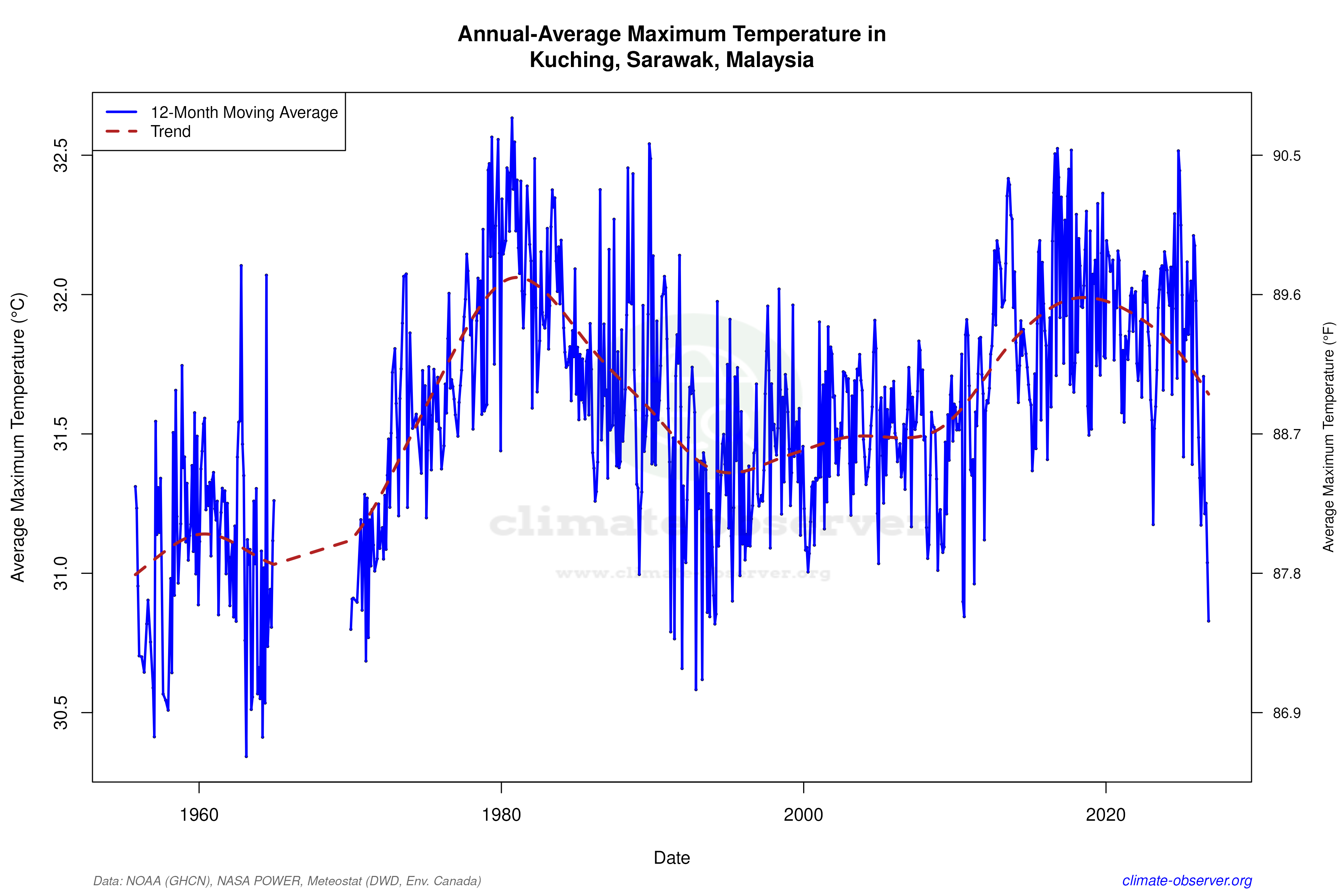
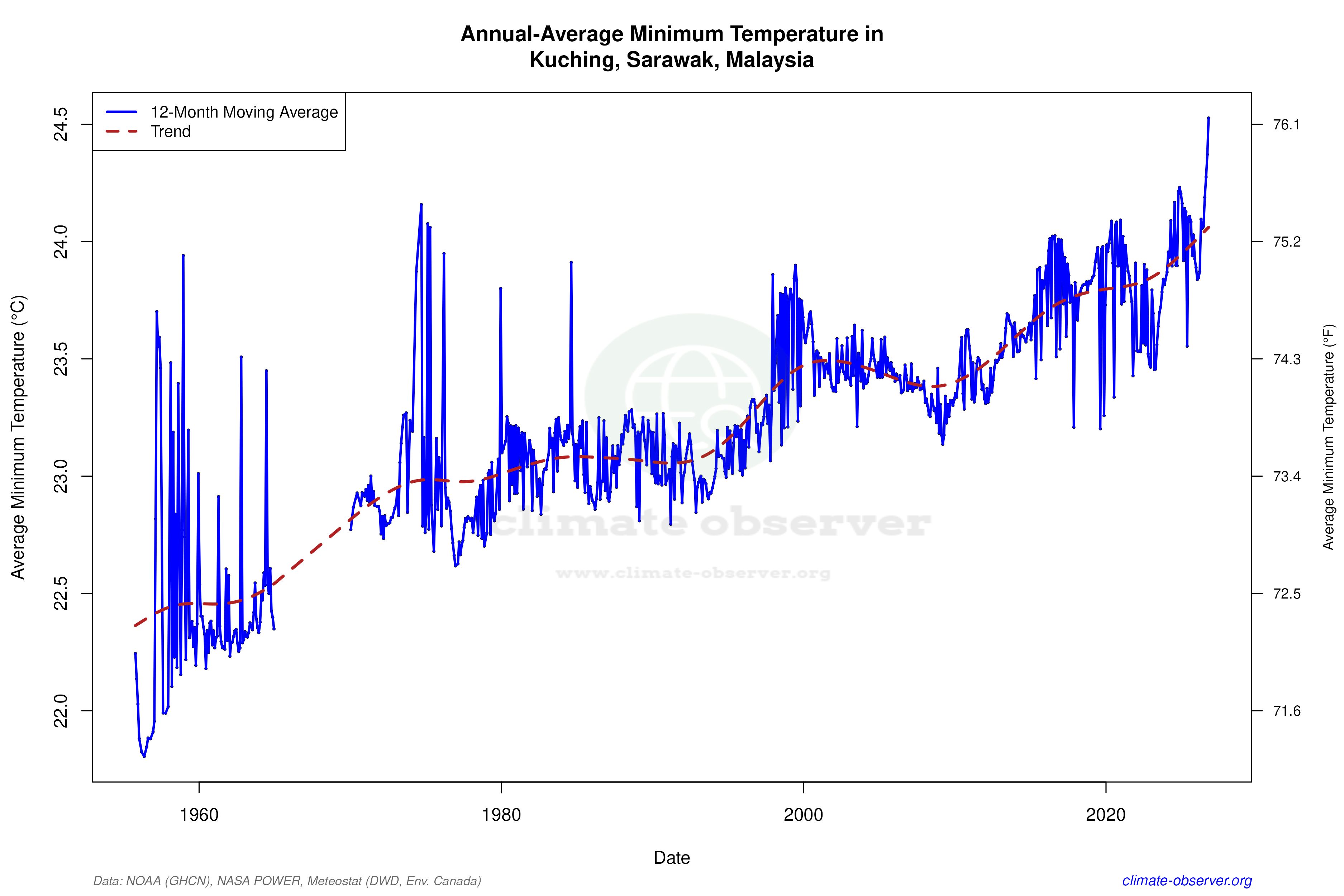
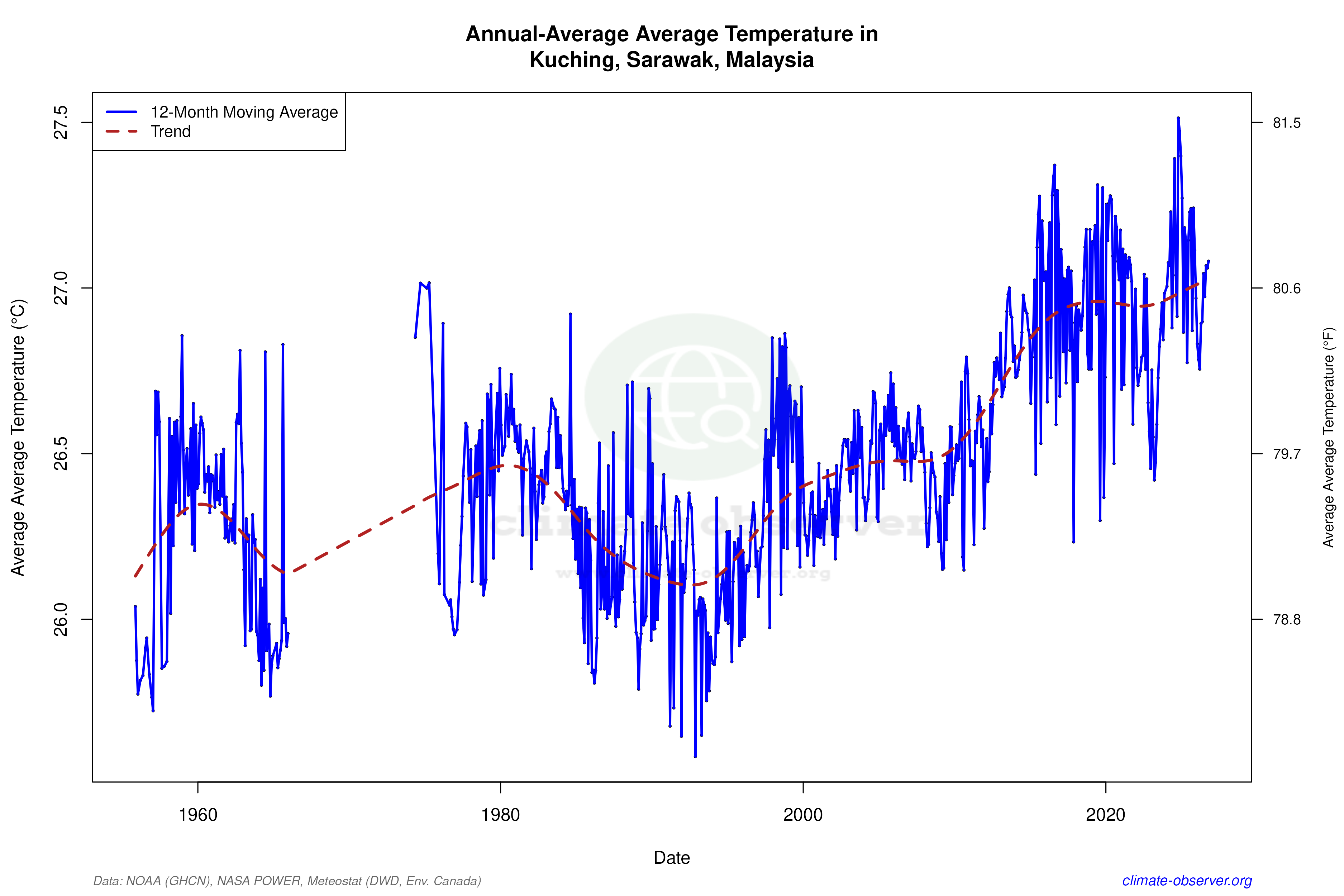
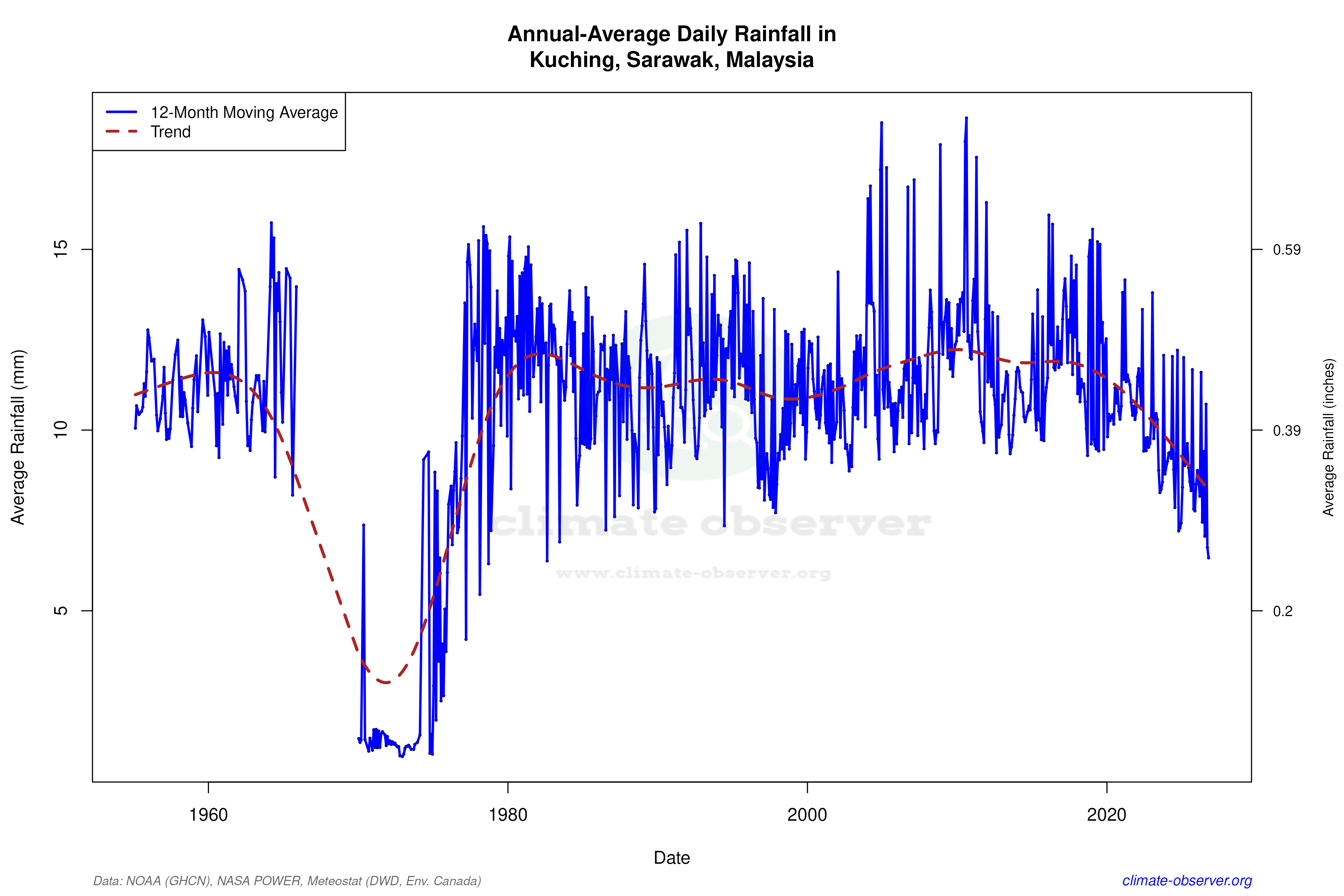
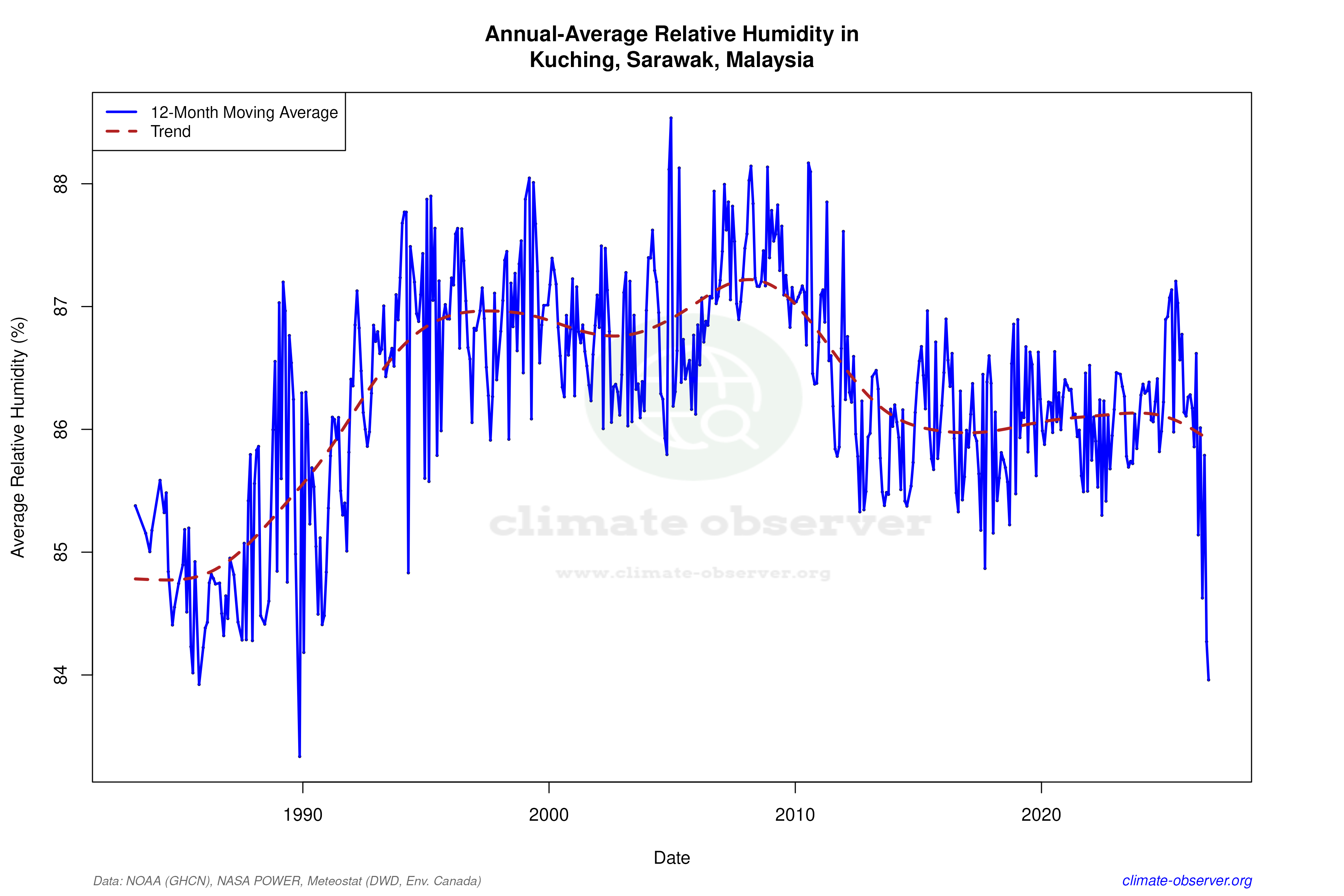

Max Temperature 12-Month MA | 1 of 6
Daily Data Points and Averages Throughout the Year
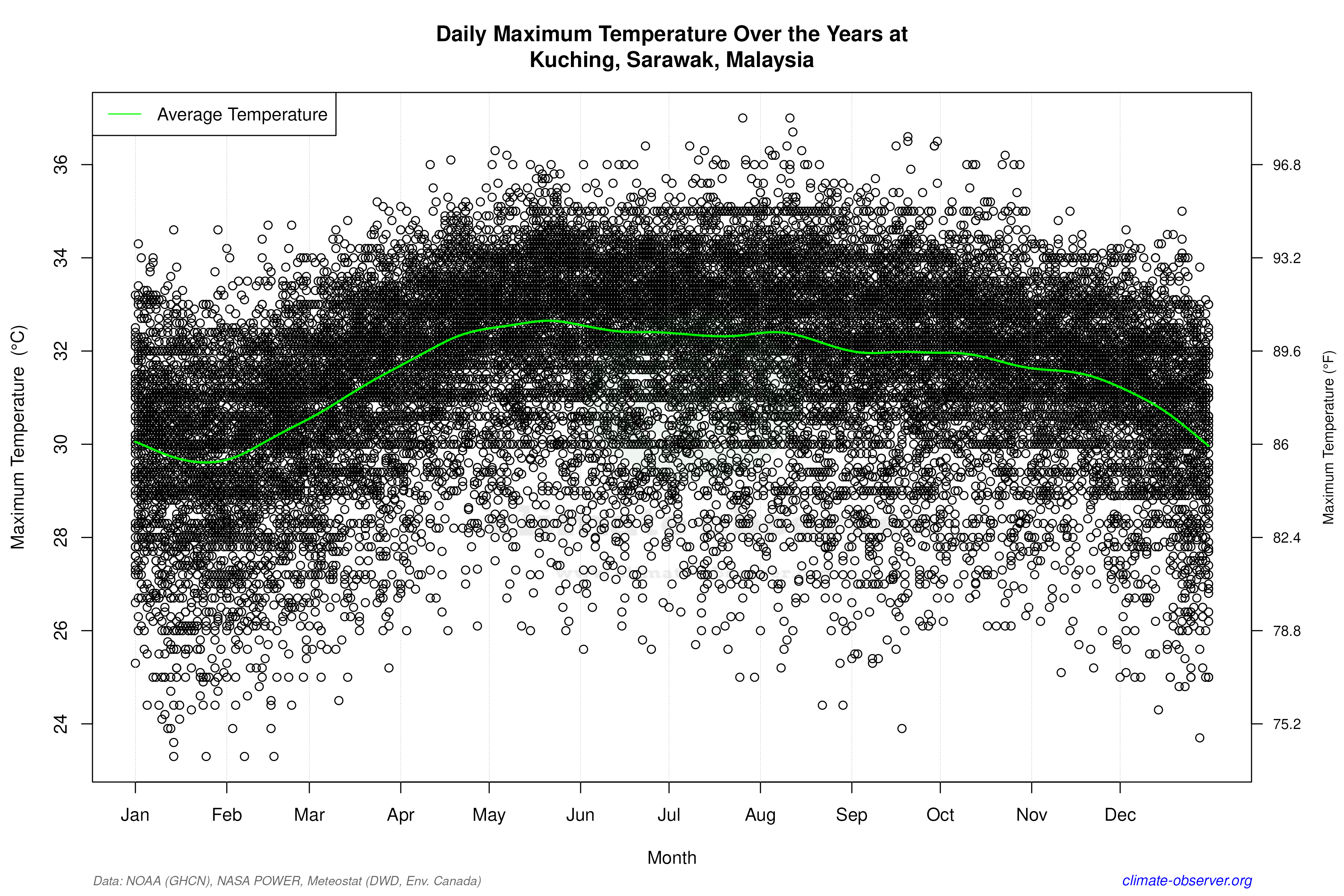
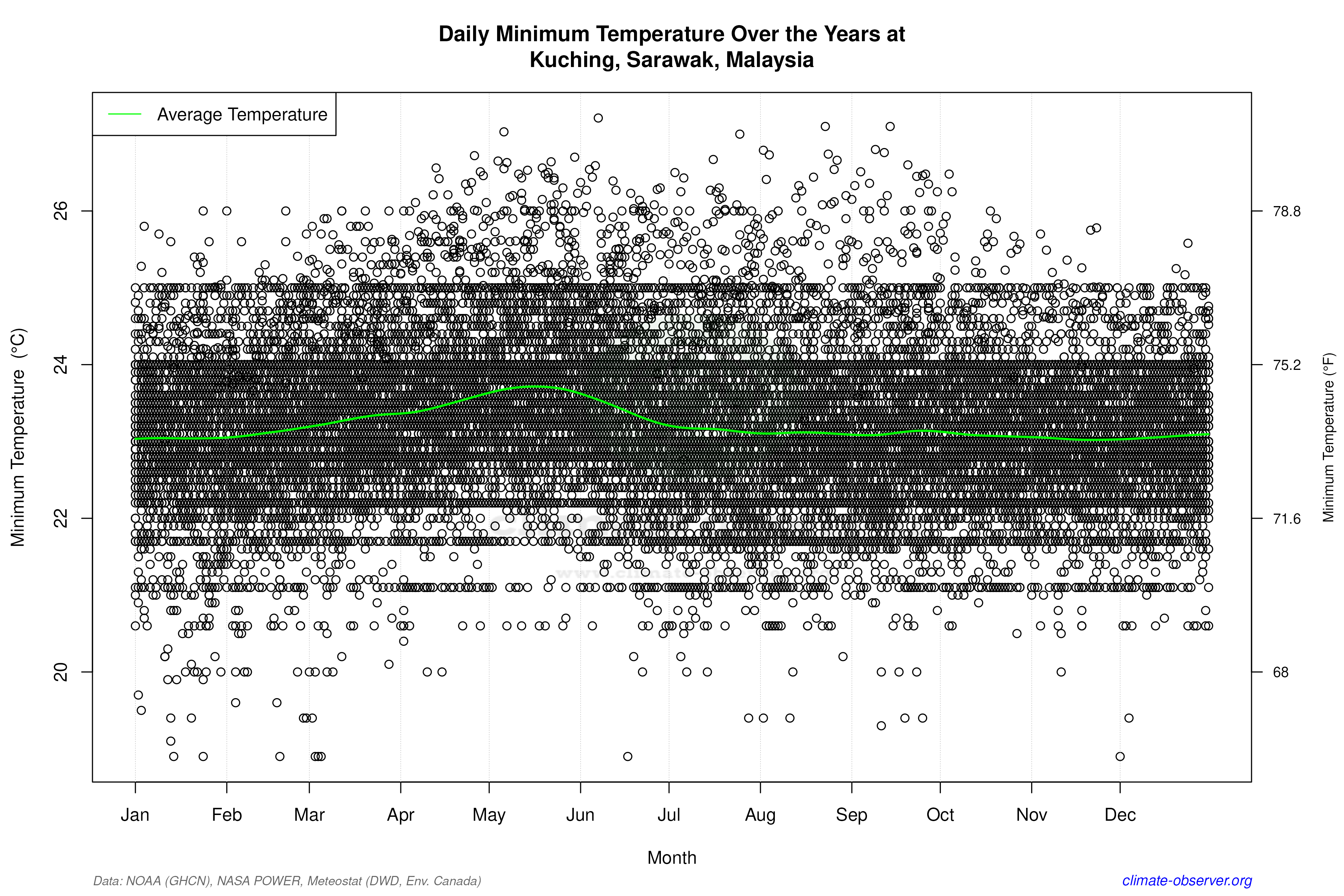
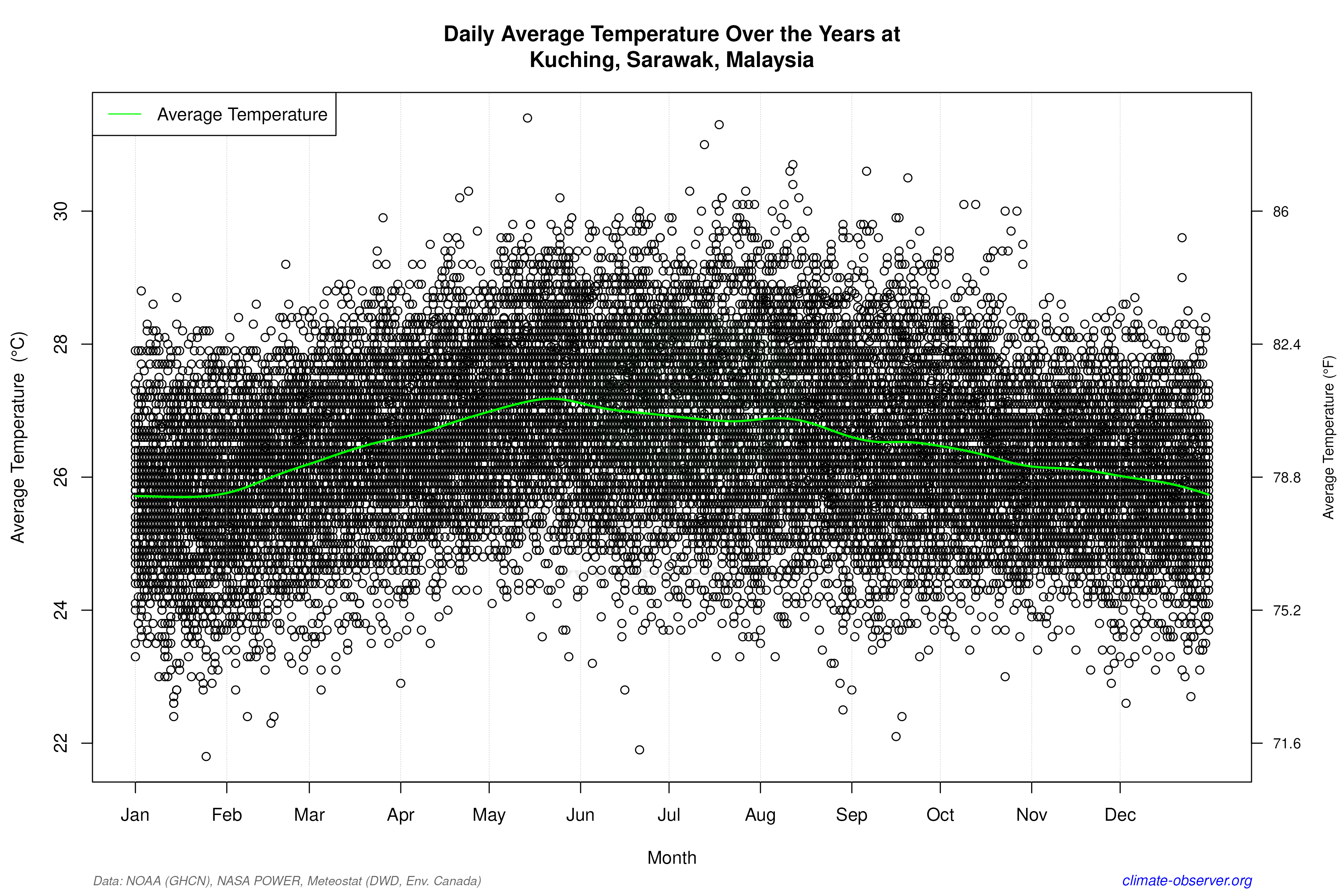
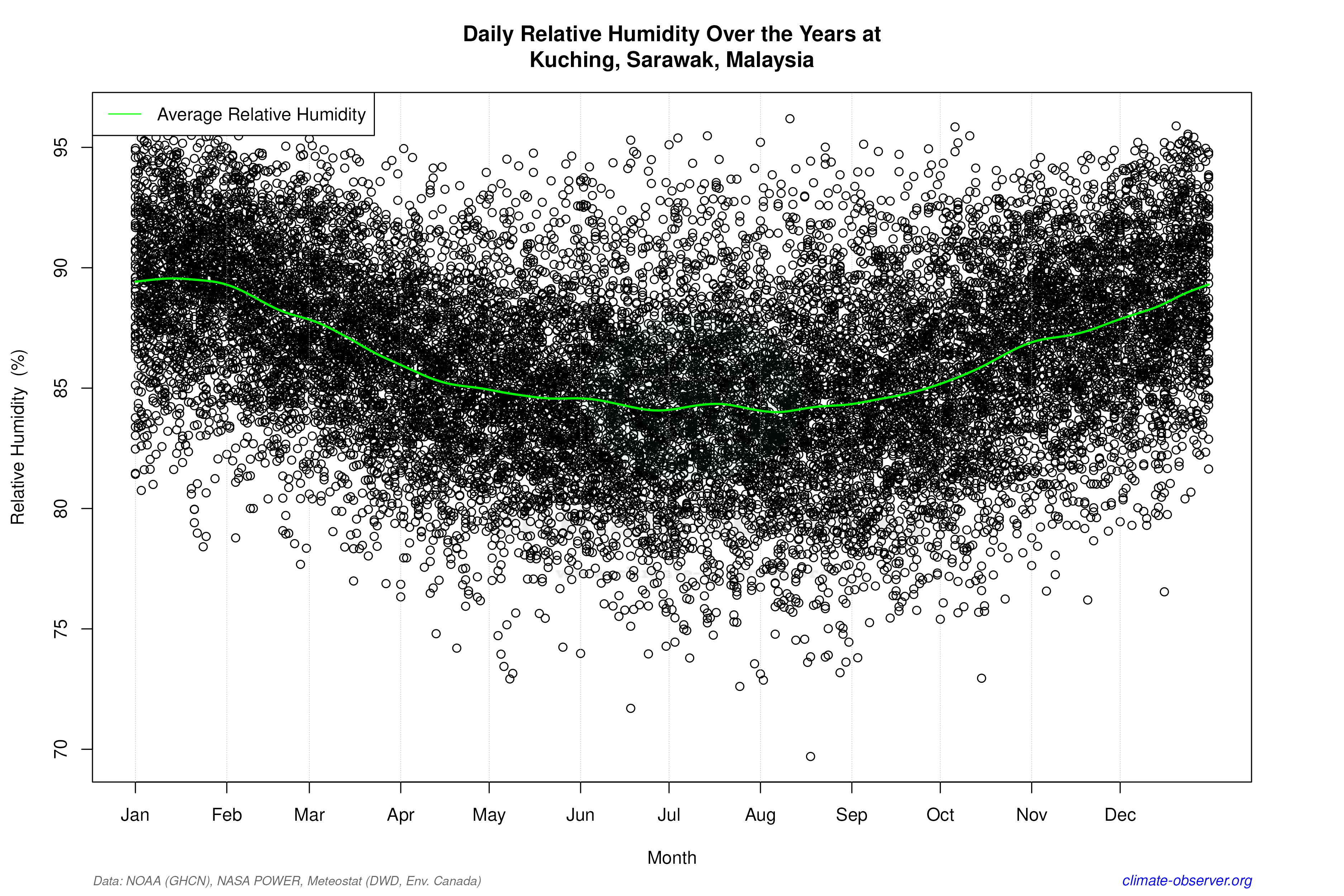

Average Max Temperature Throughout Year | 1 of 5


