Climate for Station: Vardo, Troms og Finnmark, Norway
Loading live weather...
Climate Analysis & Overview
Vardø's climate is marked by a subtle warming trend over the long term, with a notable increase in low temperatures. The area's precipitation has become more evenly distributed, reflecting a shift in weather patterns. These changes align with Norway's broader climate goals of adaptation and resilience.
Arctic Maritime Influence
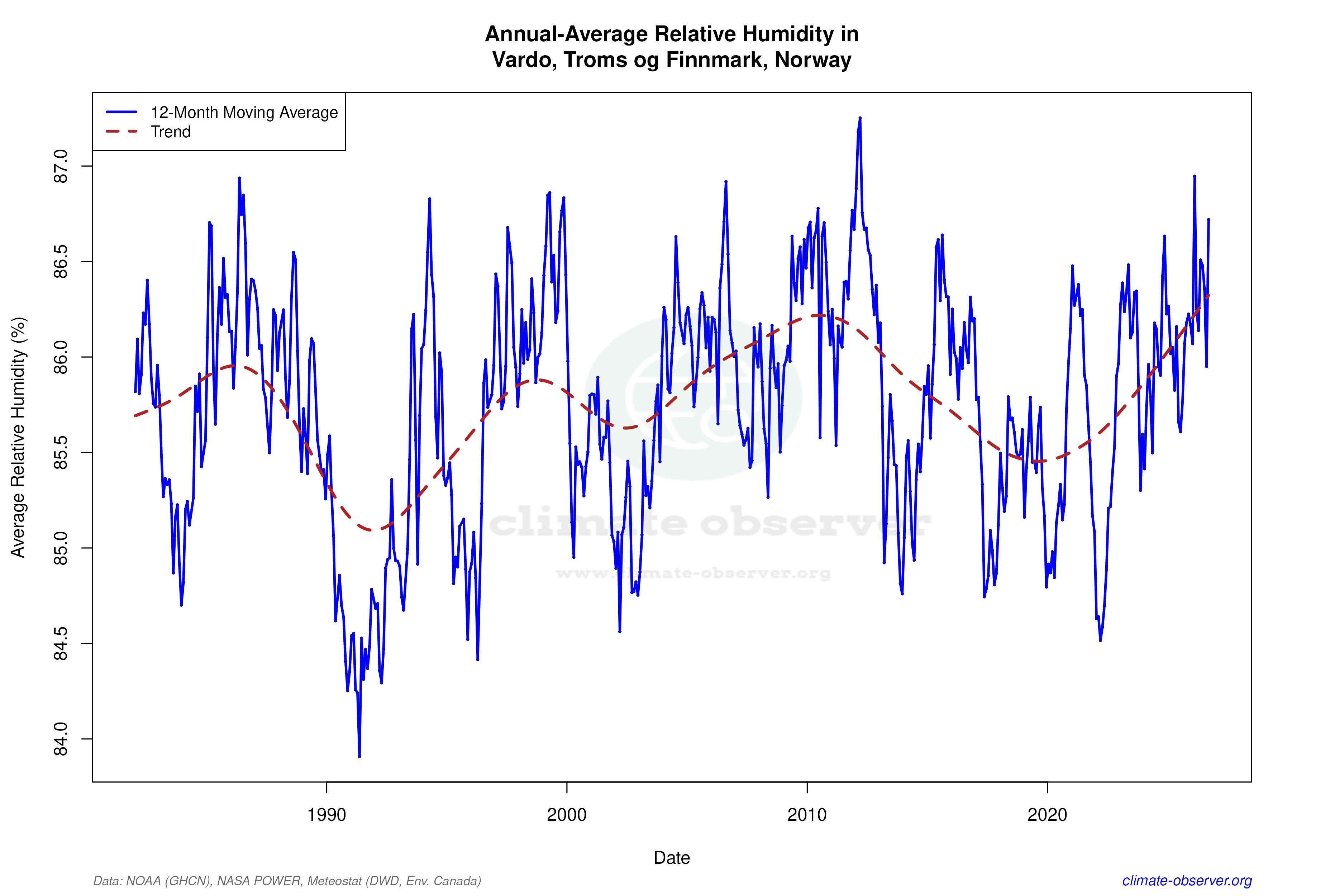
Vardø, located at 70.367°N, 31.1°E, is situated within the Arctic climate zone, classified under the Köppen system as ET (Tundra Climate). Its coastal position on the Barents Sea exposes it to maritime influences, which moderate temperature extremes. The all-time temperature trends reveal a warming pattern, with high temperatures rising by 0.28°C (0.50°F) and low temperatures by 0.31°C (0.56°F). This warming corresponds with increased atmospheric moisture from the sea, impacting local weather dynamics.
Temperature Trends: A Mixed Picture
Over the past decade, Vardø's temperature trends have shown a divergence. While high temperatures have experienced a slight cooling of 0.03°C (0.05°F), low temperatures have risen significantly by 0.58°C (1.04°F). This pattern suggests a narrowing of the diurnal temperature range, possibly due to increased cloud cover or changes in sea ice extent, both of which are critical factors in Arctic climatology.
Precipitation Patterns: A Shift Toward Evenness
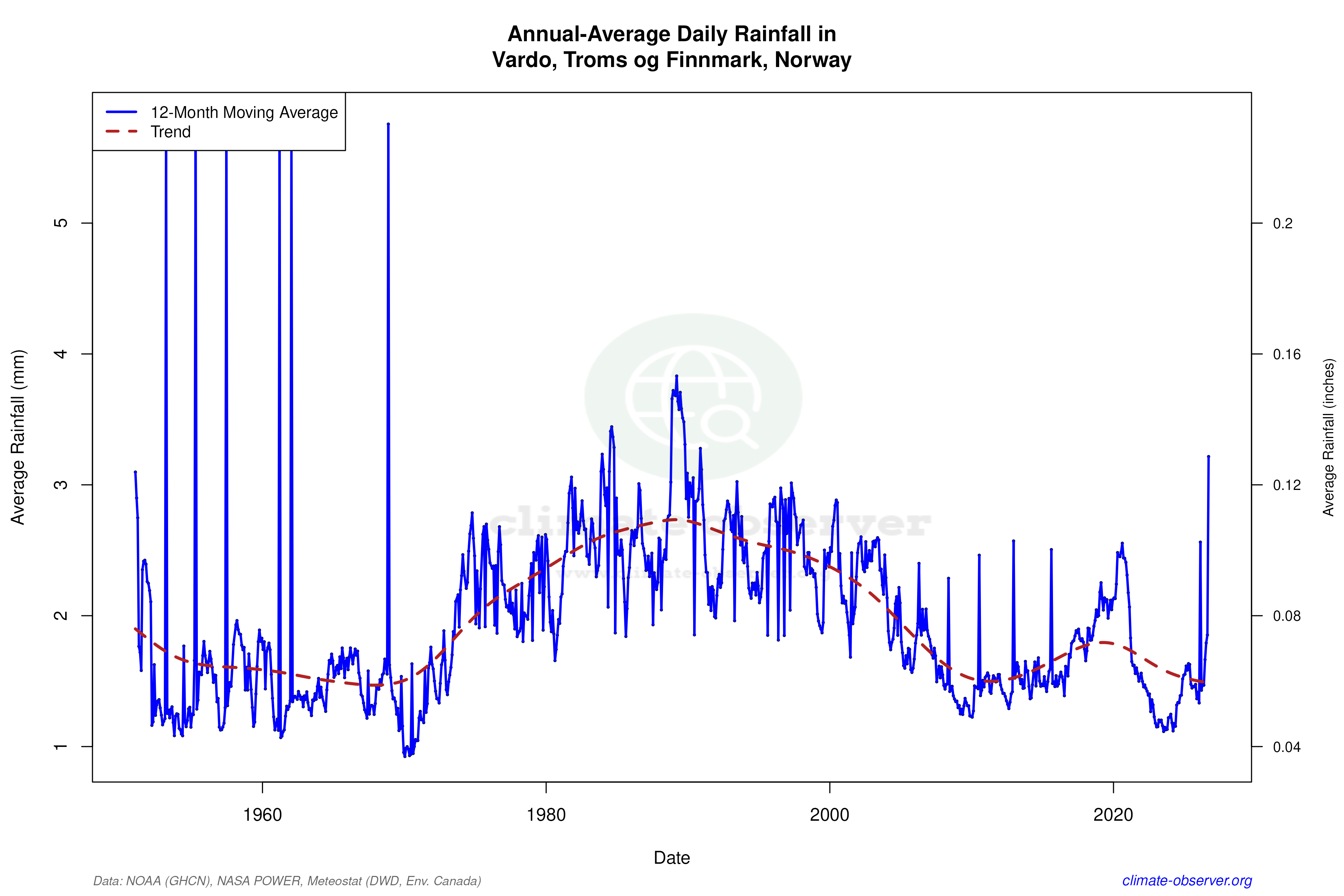
The Precipitation Concentration Index (PCI) in Vardø has decreased from a baseline of 10.3 to a current value of 8.6, indicating a more even distribution of precipitation throughout the year. This shift suggests a reduction in extreme precipitation events, which could be attributed to broader climatic changes affecting storm patterns and intensity. Such a trend is beneficial for local ecosystems and aligns with Norway's climate adaptation strategies.
Temperature Extremes: Historical Context
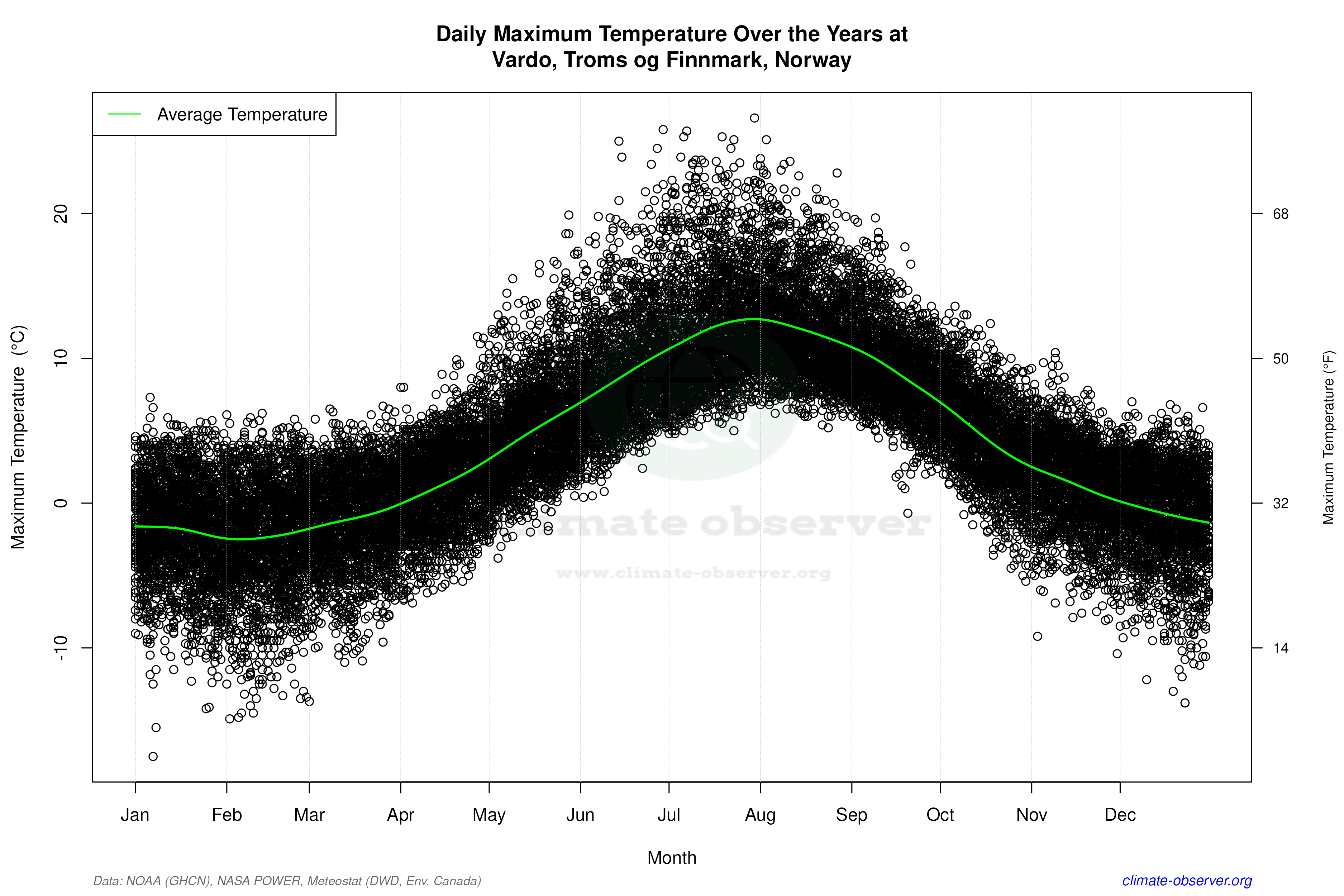
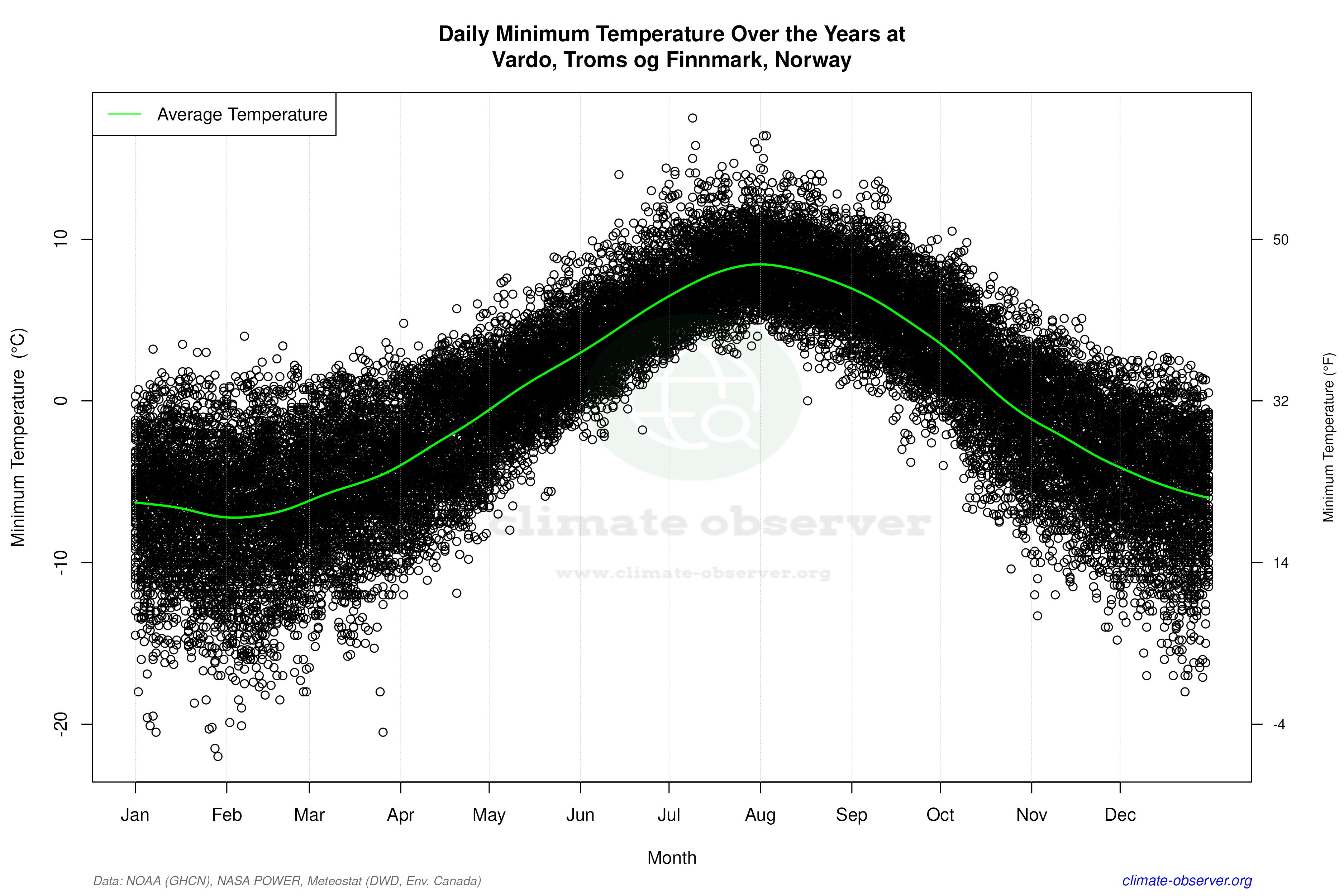
Vardø's historical temperature records highlight its climatic extremes, with a maximum recorded temperature of 26.6°C (79.9°F) and a minimum of -22.0°C (-7.6°F). These extremes underscore the variability inherent in Arctic climates, where rapid shifts can occur due to atmospheric and oceanic interactions. Understanding these extremes is crucial for preparing for potential future anomalies.
Aligning with Norway's Climate Goals
Norway's commitment to addressing climate change through regional adaptation measures is reflected in the observed trends in Vardø. The gradual warming and more evenly distributed precipitation support efforts to enhance resilience against climate variability. As Norway continues to pursue its climate objectives, monitoring stations like Vardø provide essential data to inform policy and action.
Station Statistics
10-Year Trend
High: +0.48 °C/decade
Low: +1.36 °C/decade
Rain: -0.62 mm/decade
25-Year Trend
High: +0.21 °C/decade
Low: +0.34 °C/decade
Rain: -0.18 mm/decade
50-Year Trend
High: +0.46 °C/decade
Low: +0.48 °C/decade
Rain: -0.26 mm/decade
All-Time Trend
High: +0.26 °C/decade
Low: +0.30 °C/decade
Rain: +0.01 mm/decade
Percentage Above-Average Days
Last 12 Months: 52.1%
This Year: 58.9%
Precipitation Concentration Index (PCI) ℹ️
Last 12 Months: 29.7
Historical Average: 10.7
Percentile Rank of Last 12 Months ℹ️
High: 94th percentile
Low: 99th percentile
Rain: 48th percentile
Change in Variance ℹ️
High: +2.6%
Low: -6.7%
Intraday: +8.1%
Data Coverage
91.8%
First Year of Data
1965
Station Location
Historical Weather Records
| Max High | Avg High | Min High | Max Avg | Avg Avg | Min Avg | Max Low | Avg Low | Min Low | Max Precipitation | Avg Precipitation | Max Snow | Avg Snow | |
|---|---|---|---|---|---|---|---|---|---|---|---|---|---|
| Record | 26.6 °C | — | -17.5 °C | 21.4 °C | — | -19.2 °C | 17.5 °C | — | -22.0 °C | 205.9 mm | — | — | — |
| January | 7.3 °C | -1.9 °C | -17.5 °C | 5.2 °C | -3.9 °C | -19.2 °C | 3.5 °C | -6.7 °C | -22.0 °C | 38.0 mm | 2.2 mm | — | — |
| February | 6.2 °C | -2.3 °C | -14.9 °C | 4.4 °C | -4.1 °C | -17.8 °C | 4.0 °C | -7.0 °C | -20.1 °C | 30.0 mm | 1.9 mm | — | — |
| March | 6.7 °C | -1.0 °C | -13.7 °C | 4.6 °C | -2.6 °C | -14.1 °C | 3.6 °C | -5.2 °C | -20.5 °C | 26.0 mm | 1.6 mm | — | — |
| April | 11.5 °C | 1.4 °C | -6.9 °C | 8.1 °C | -0.1 °C | -9.3 °C | 6.0 °C | -2.3 °C | -12.0 °C | 35.0 mm | 1.5 mm | — | — |
| May | 19.9 °C | 5.0 °C | -3.8 °C | 13.0 °C | 3.3 °C | -4.8 °C | 9.0 °C | 1.2 °C | -8.0 °C | 23.0 mm | 1.3 mm | — | — |
| June | 25.8 °C | 8.8 °C | 0.4 °C | 18.7 °C | 6.7 °C | -0.2 °C | 14.4 °C | 4.7 °C | -2.4 °C | 53.0 mm | 1.7 mm | — | — |
| July | 26.6 °C | 12.0 °C | 4.8 °C | 21.4 °C | 9.7 °C | 4.2 °C | 17.5 °C | 7.7 °C | 2.6 °C | 55.0 mm | 2.0 mm | — | — |
| August | 25.1 °C | 11.9 °C | 5.2 °C | 20.1 °C | 9.8 °C | 3.8 °C | 16.4 °C | 7.9 °C | 0.0 °C | 54.0 mm | 2.1 mm | — | — |
| September | 19.7 °C | 9.1 °C | -0.7 °C | 16.0 °C | 7.5 °C | 0.4 °C | 13.6 °C | 5.4 °C | -3.8 °C | 61.0 mm | 2.2 mm | — | — |
| October | 13.6 °C | 4.6 °C | -5.4 °C | 10.7 °C | 3.1 °C | -5.7 °C | 10.5 °C | 1.2 °C | -10.4 °C | 205.9 mm | 2.8 mm | — | — |
| November | 10.4 °C | 1.3 °C | -10.4 °C | 7.7 °C | -0.4 °C | -11.1 °C | 5.7 °C | -2.6 °C | -14.8 °C | 50.0 mm | 2.3 mm | — | — |
| December | 7.0 °C | -0.6 °C | -13.8 °C | 5.8 °C | -2.6 °C | -15.2 °C | 2.8 °C | -5.2 °C | -18.0 °C | 29.0 mm | 2.1 mm | — | — |
Data Visualisations
Remove WatermarksCurrent Year Climate Trends vs Historical
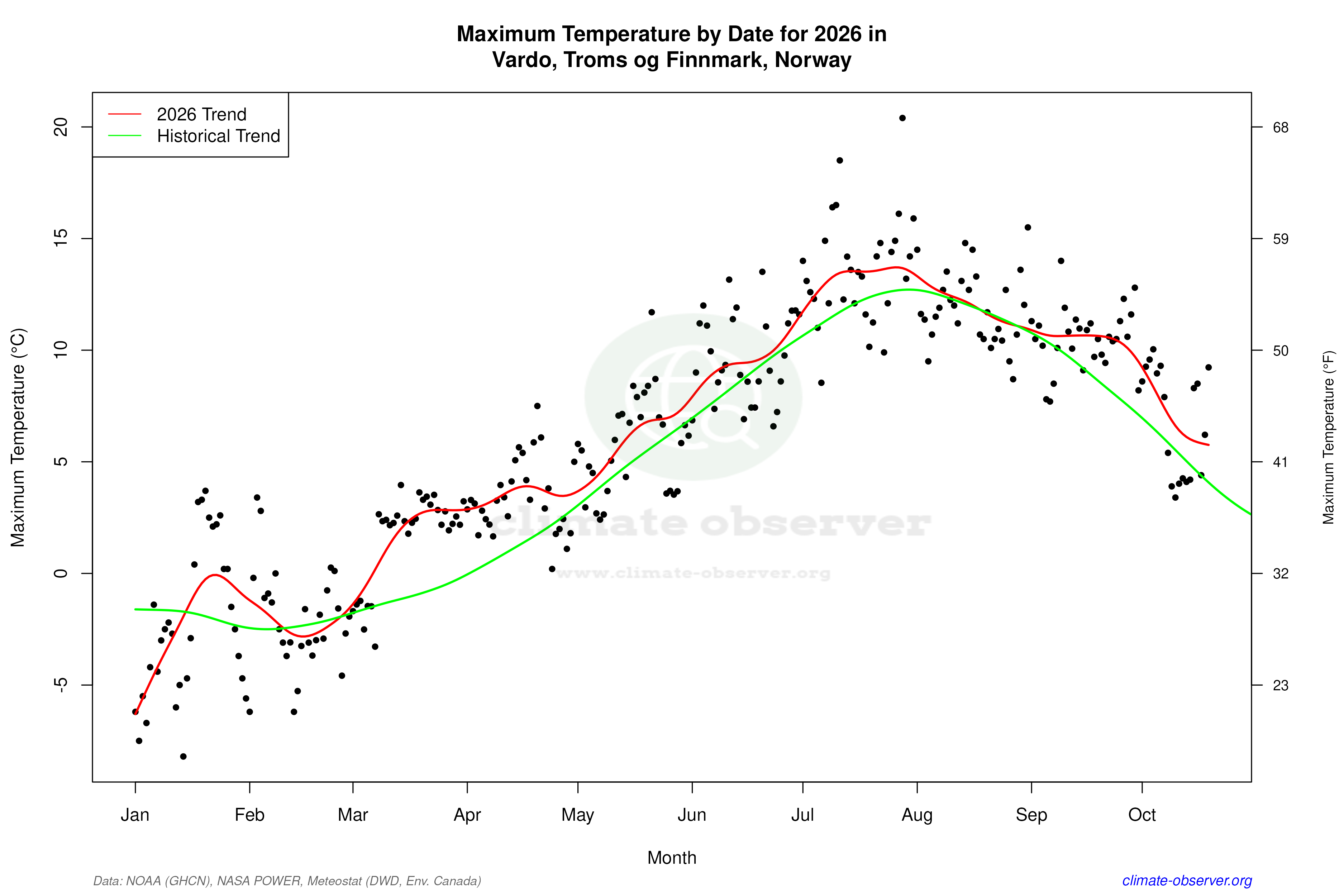
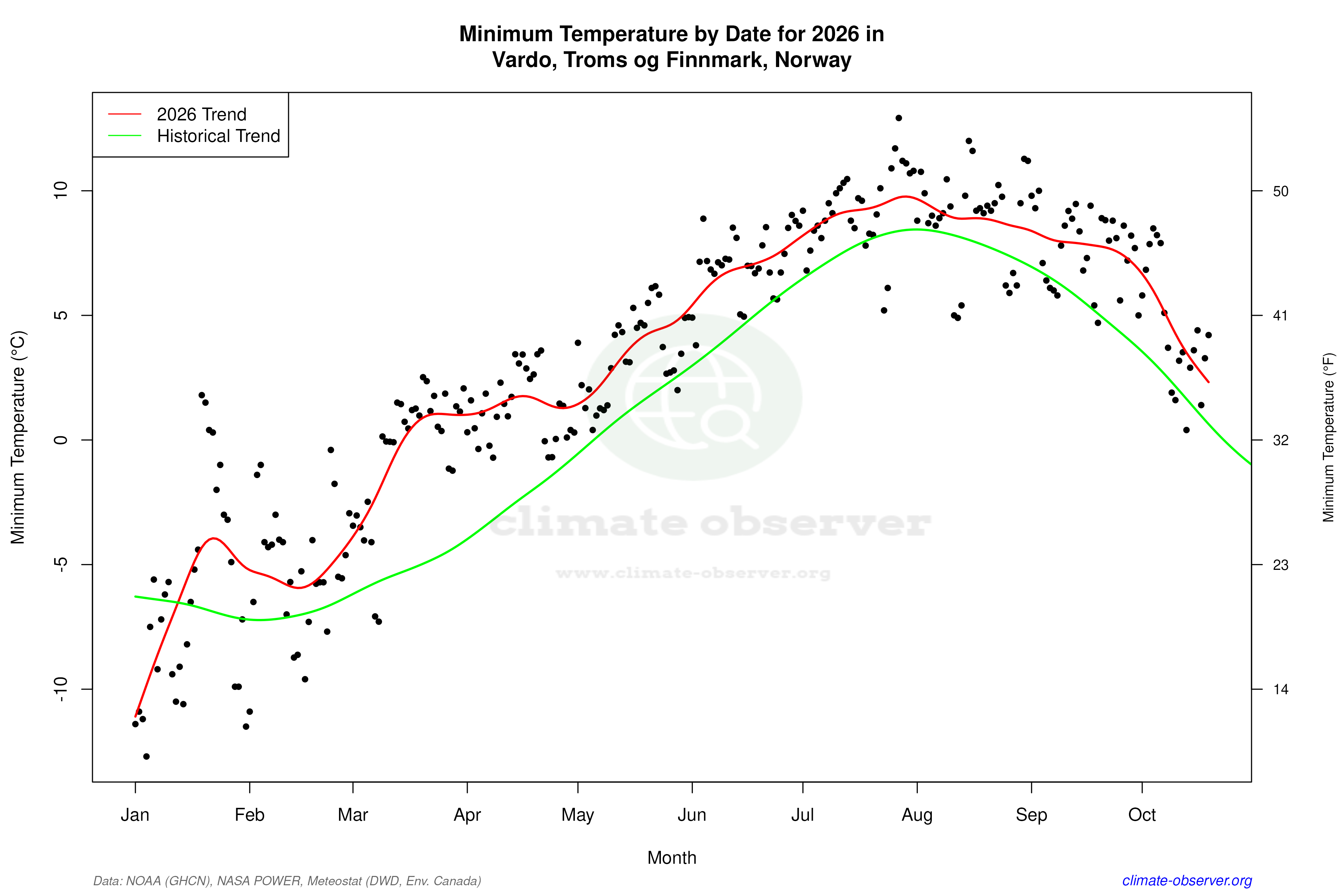
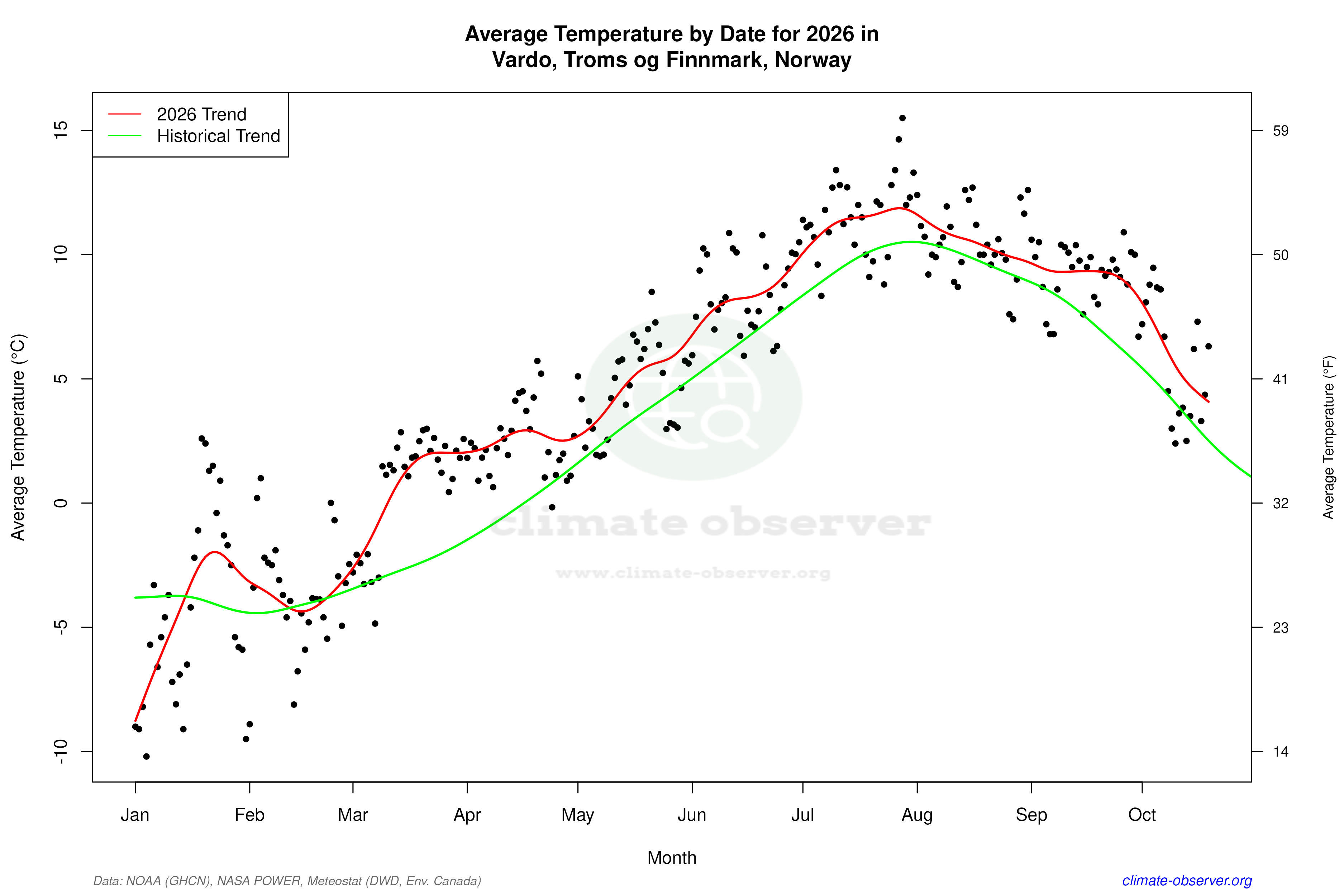
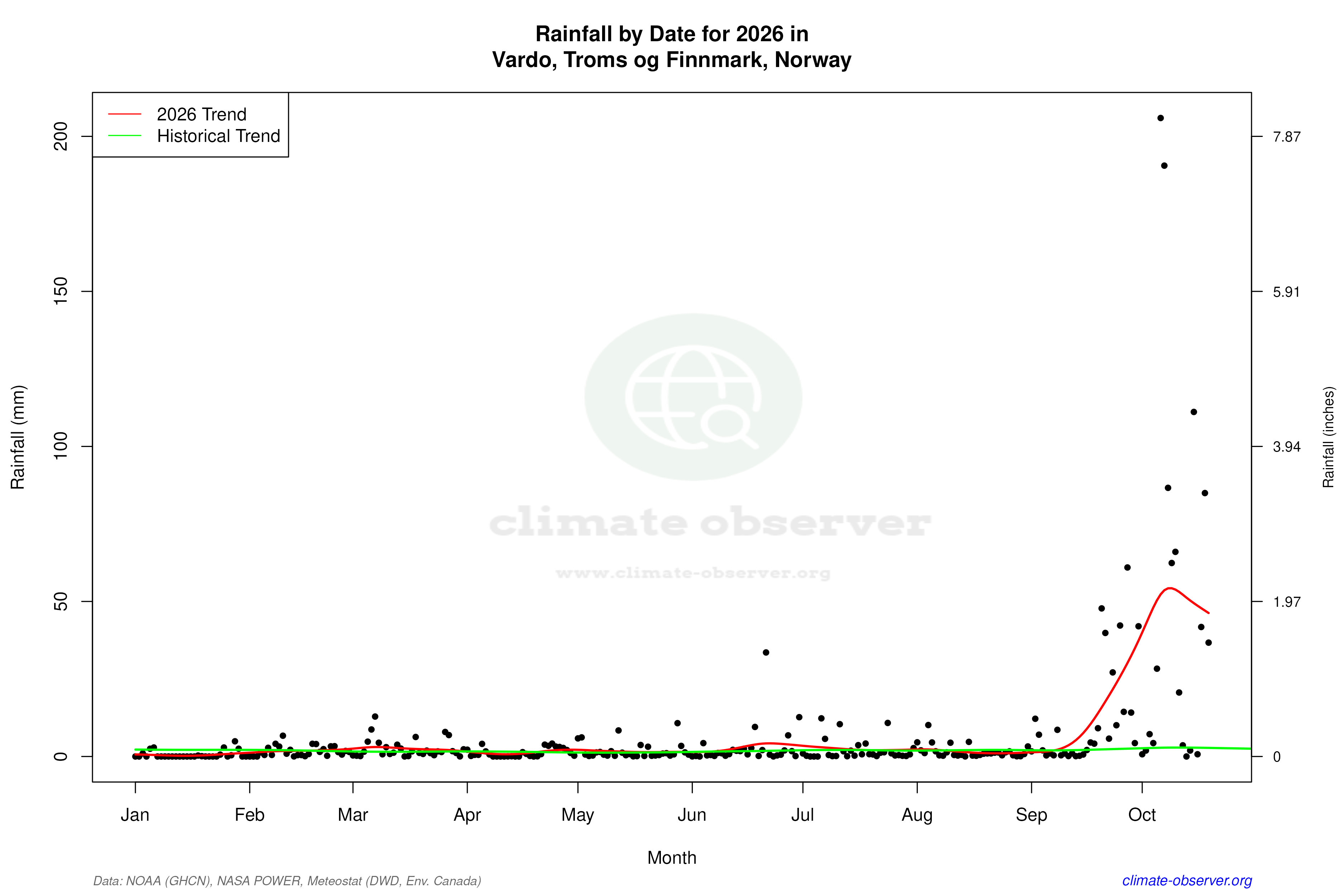
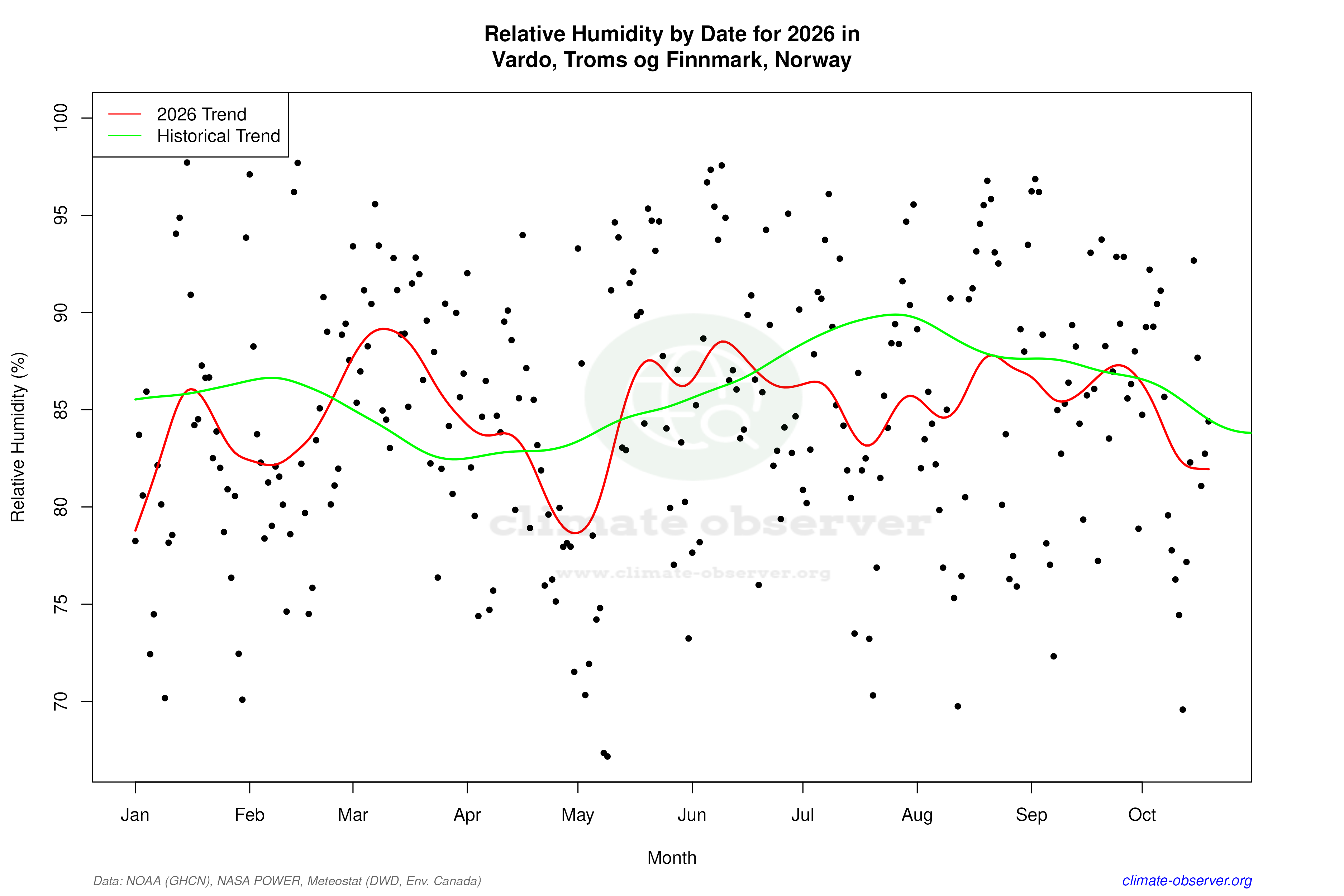

Max Temperature this Year | 1 of 6
Climate 12-Month Moving Averages
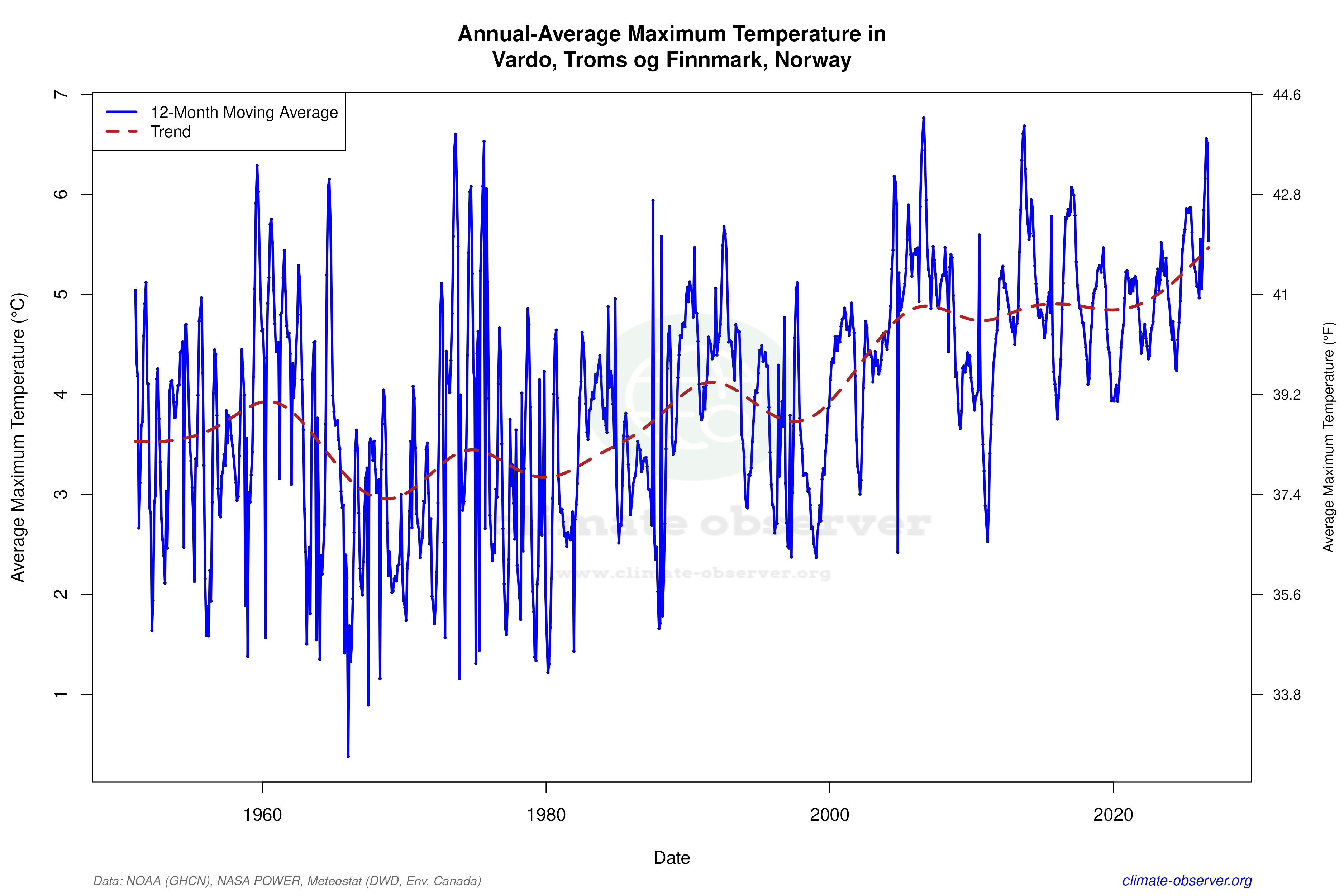
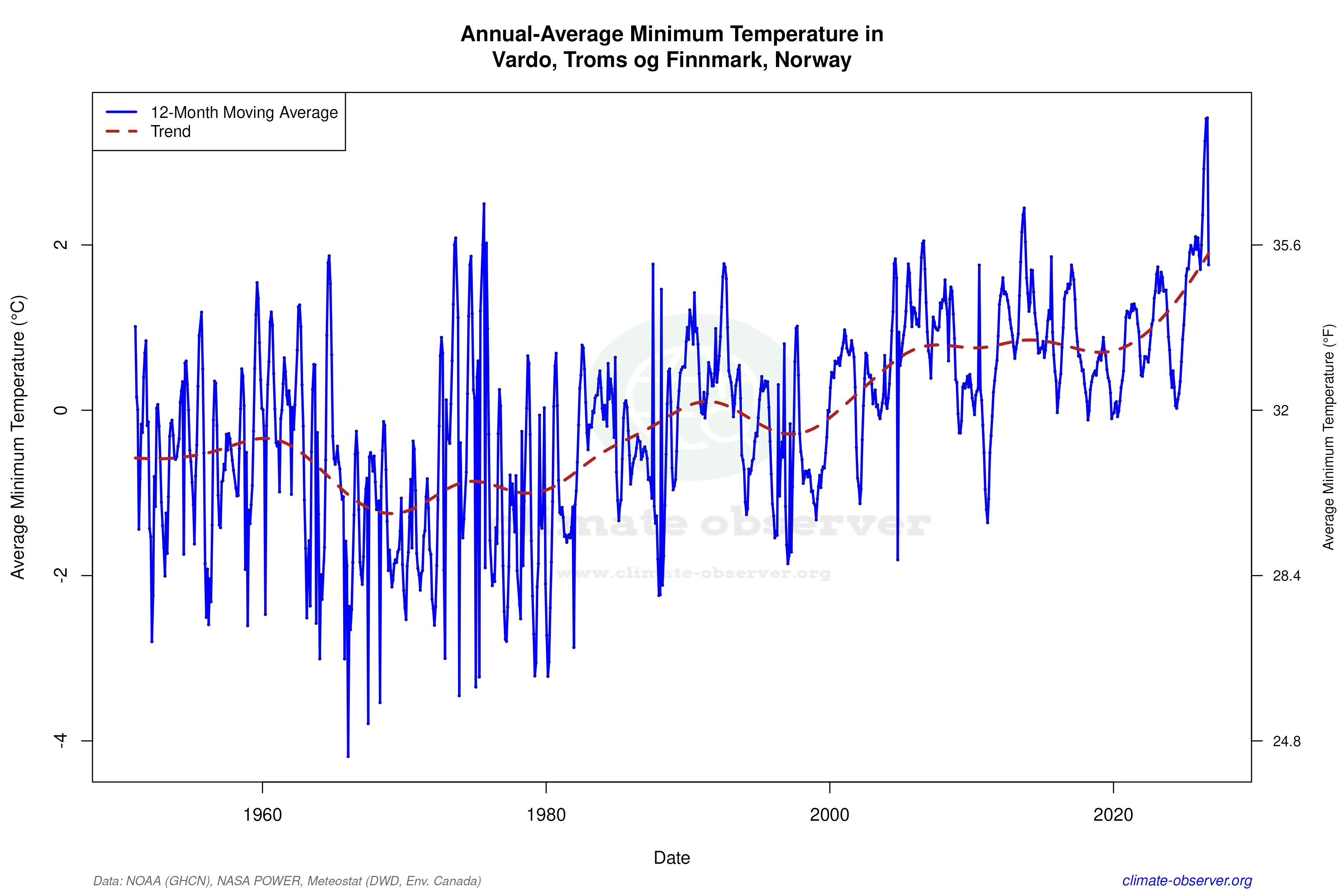
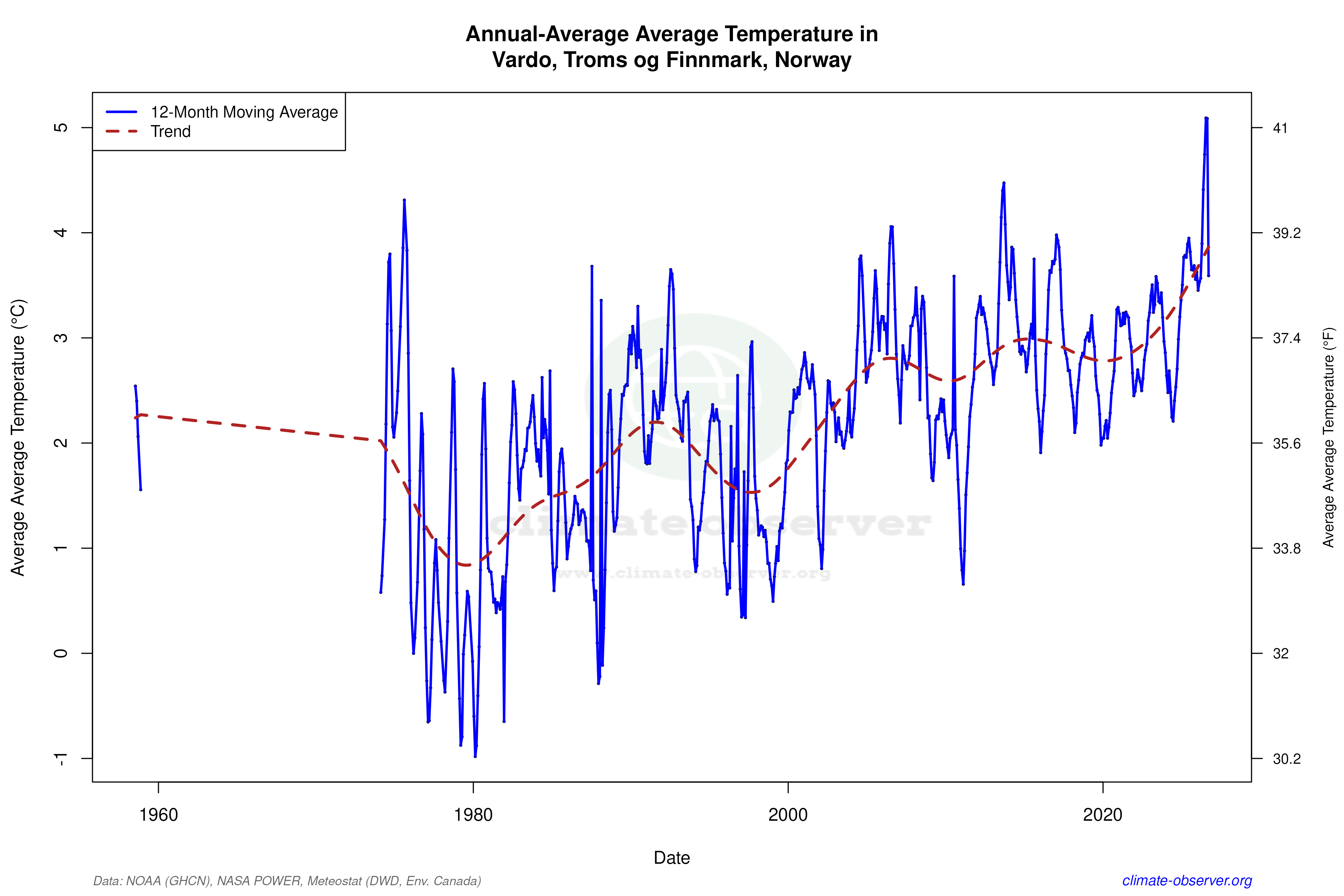

Max Temperature 12-Month MA | 1 of 6
Daily Data Points and Averages Throughout the Year
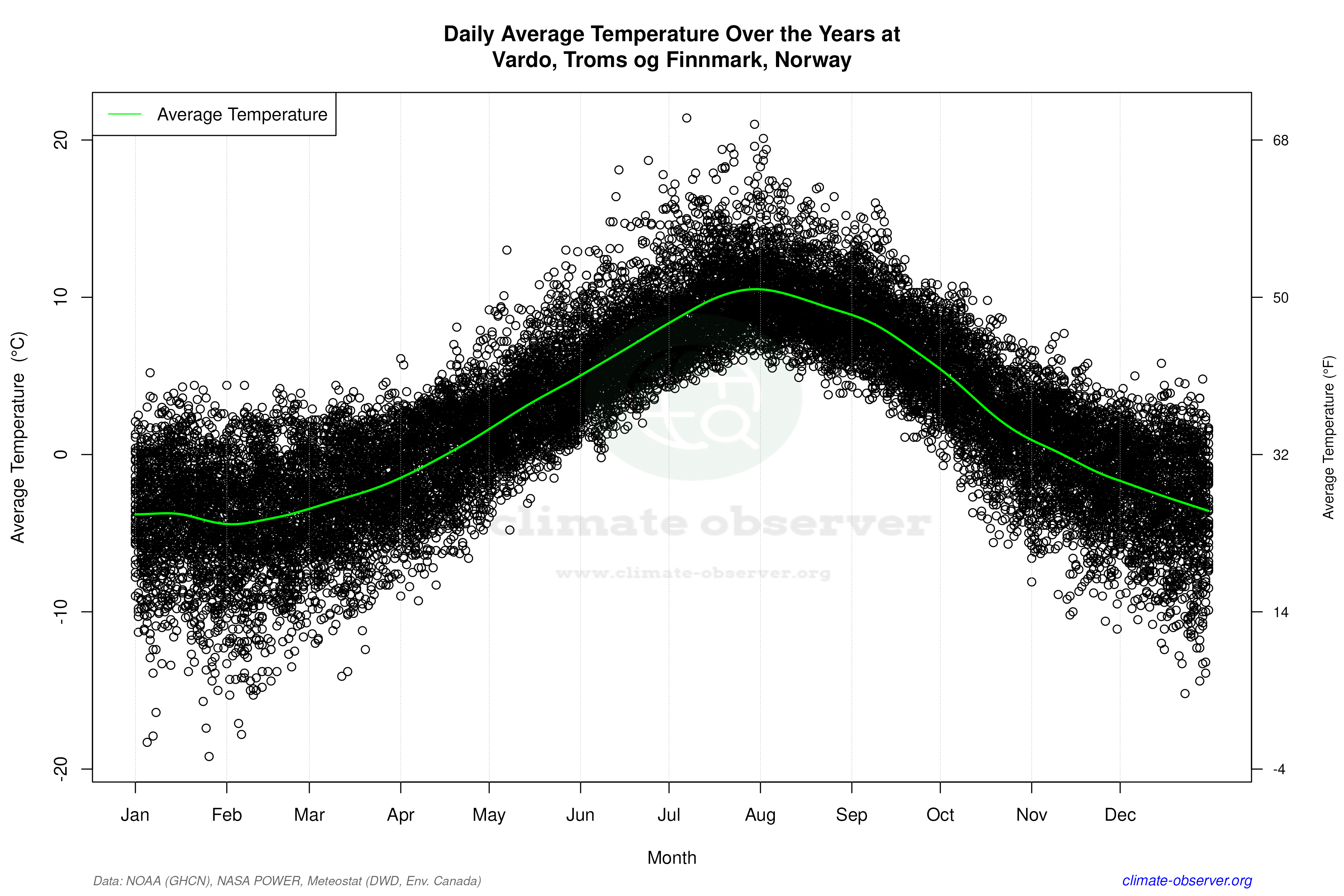
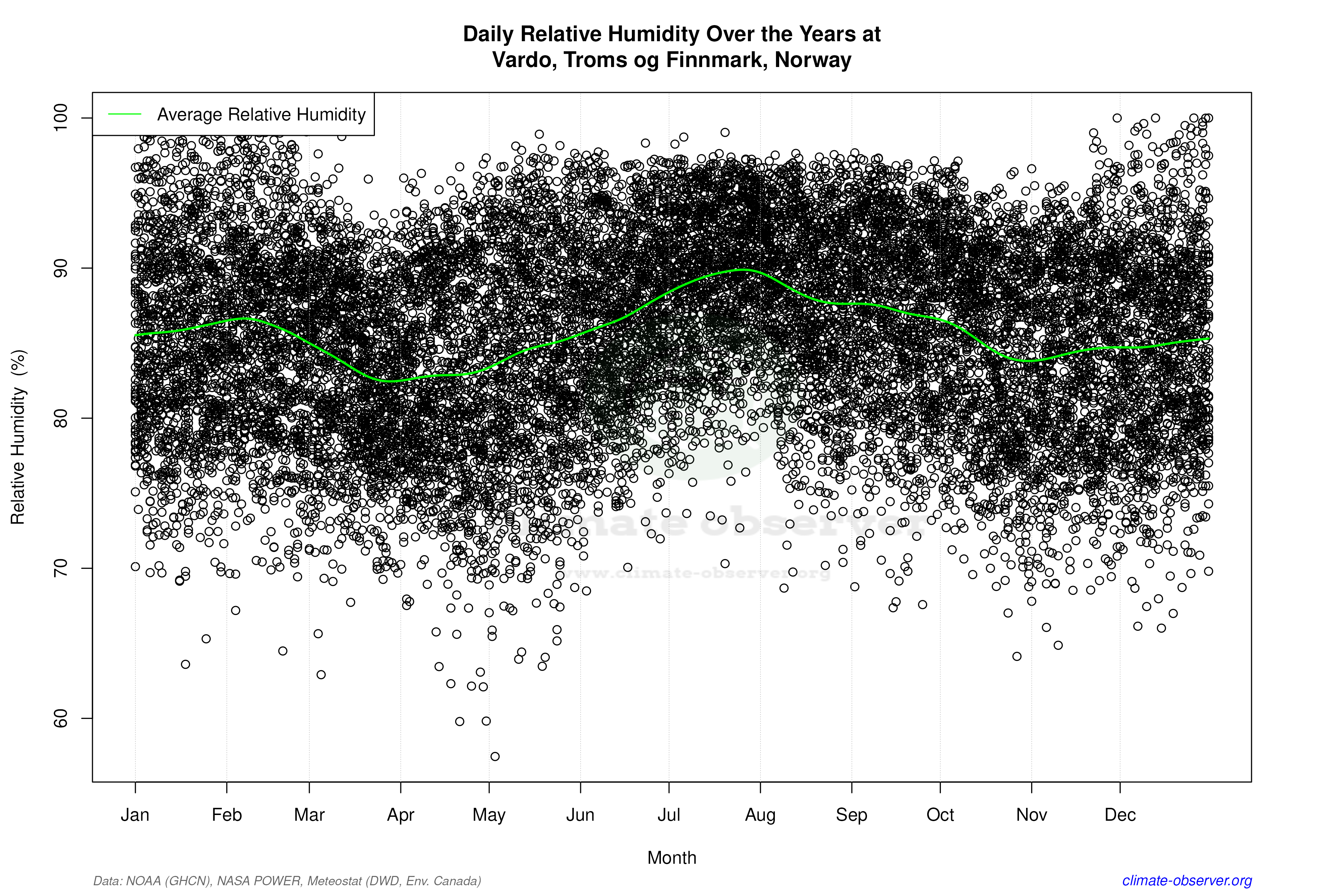

Average Max Temperature Throughout Year | 1 of 5


