Climate for Station: Utsira Fyr, Rogaland, Norway
Loading live weather...
Climate Analysis & Overview
Utsira Fyr in Norway is experiencing a warming trend with both highs and lows increasing over the past decade. The precipitation pattern has become more evenly distributed, reflecting a shift in local climatic behaviour. These changes align with regional climate goals aimed at understanding and adapting to climate dynamics.
Maritime Climate Dynamics
Utsira Fyr, located at 59.3078°N, 4.8781°E, is situated on the small island of Utsira in Rogaland, Norway. This location is characterised by a Cfb Köppen climate classification, indicating a temperate oceanic climate with mild summers and no dry season. The surrounding North Sea plays a significant role in moderating temperatures and influencing weather patterns. The all-time temperature trends reveal a warming of 0.14°C (0.25°F) for highs and 0.13°C (0.23°F) for lows, suggesting a gradual increase in average temperatures over the long term.
Decadal Thermal Shifts
In the past decade, Utsira Fyr has experienced a more pronounced warming trend. High temperatures have risen by 0.39°C (0.70°F), while low temperatures have increased by 0.38°C (0.68°F). This sharper increase in recent years may be indicative of broader climatic shifts, possibly exacerbated by regional climate change drivers. These trends are particularly relevant as Norway continues to pursue ambitious climate goals, including reducing greenhouse gas emissions and enhancing climate resilience.
Precipitation Patterns Evolving
The Precipitation Concentration Index (PCI) at Utsira Fyr has decreased from a baseline of 11.3 to a current value of 9.8. This reduction indicates that precipitation is now more evenly distributed throughout the year, as opposed to being concentrated in fewer, more intense events. A PCI under 10 suggests a very even distribution, which can influence local water management strategies and agricultural planning. This shift in precipitation patterns could be a response to changing atmospheric conditions influenced by both local and global climate factors.
Temperature Extremes and Records
Utsira Fyr's temperature records highlight the range of climatic conditions experienced in this maritime environment. The highest recorded temperature is 26.5°C (79.7°F), while the lowest is -13.1°C (8.4°F). These extremes illustrate the variability inherent in oceanic climates, where the sea often buffers temperature fluctuations, yet occasional extremes can still occur due to specific weather events.
Regional Climate Context
Norway's commitment to understanding and mitigating climate change is underscored by the data from Utsira Fyr. As part of the country's broader climate strategy, monitoring stations like Utsira Fyr provide critical insights into the ongoing changes in temperature and precipitation patterns. Recent weather events, such as unseasonably warm winters or intense rainfall episodes, further highlight the importance of such data in informing policy and adaptation measures.
Station Statistics
10-Year Trend
High: +0.35 °C/decade
Low: +0.56 °C/decade
Rain: -0.59 mm/decade
25-Year Trend
High: +0.17 °C/decade
Low: +0.39 °C/decade
Rain: -0.12 mm/decade
50-Year Trend
High: +0.38 °C/decade
Low: +0.41 °C/decade
Rain: +0.00 mm/decade
All-Time Trend
High: +0.14 °C/decade
Low: +0.14 °C/decade
Rain: +0.28 mm/decade
Percentage Above-Average Days
Last 12 Months: 52.6%
This Year: 41.4%
Precipitation Concentration Index (PCI) ℹ️
Last 12 Months: 9.0
Historical Average: 10.4
Percentile Rank of Last 12 Months ℹ️
High: 90th percentile
Low: 98th percentile
Rain: 69th percentile
Change in Variance ℹ️
High: -7.5%
Low: -7.7%
Intraday: -6.9%
Data Coverage
70.3%
First Year of Data
1902
Station Location
Historical Weather Records
| Max High | Avg High | Min High | Max Avg | Avg Avg | Min Avg | Max Low | Avg Low | Min Low | Max Precipitation | Avg Precipitation | Max Snow | Avg Snow | |
|---|---|---|---|---|---|---|---|---|---|---|---|---|---|
| Record | 26.5 °C | — | -10.3 °C | 23.7 °C | — | -10.7 °C | 21.1 °C | — | -13.1 °C | 81.3 mm | — | — | — |
| January | 11.7 °C | 4.3 °C | -10.3 °C | 8.8 °C | 3.2 °C | -10.7 °C | 7.5 °C | 1.0 °C | -13.1 °C | 52.6 mm | 3.6 mm | — | — |
| February | 10.0 °C | 3.7 °C | -8.0 °C | 8.0 °C | 2.6 °C | -9.2 °C | 7.5 °C | 0.5 °C | -12.0 °C | 57.2 mm | 3.0 mm | — | — |
| March | 14.8 °C | 4.9 °C | -4.2 °C | 9.9 °C | 3.4 °C | -6.3 °C | 7.2 °C | 1.3 °C | -8.9 °C | 38.1 mm | 2.6 mm | — | — |
| April | 17.5 °C | 7.4 °C | 1.4 °C | 13.4 °C | 5.5 °C | 0.2 °C | 11.9 °C | 3.3 °C | -6.2 °C | 38.8 mm | 2.1 mm | — | — |
| May | 23.8 °C | 11.1 °C | 4.5 °C | 19.9 °C | 8.9 °C | -2.4 °C | 17.0 °C | 6.6 °C | -1.4 °C | 34.0 mm | 1.9 mm | — | — |
| June | 25.5 °C | 13.9 °C | 7.9 °C | 20.7 °C | 11.8 °C | 6.2 °C | 19.2 °C | 9.6 °C | 0.8 °C | 51.1 mm | 2.1 mm | — | — |
| July | 26.4 °C | 15.9 °C | 10.0 °C | 22.9 °C | 14.0 °C | 9.0 °C | 19.4 °C | 11.9 °C | 3.0 °C | 56.8 mm | 2.4 mm | — | — |
| August | 26.5 °C | 16.4 °C | 10.8 °C | 23.7 °C | 14.6 °C | 9.8 °C | 21.1 °C | 12.5 °C | 4.0 °C | 67.9 mm | 3.4 mm | — | — |
| September | 24.0 °C | 14.3 °C | 7.7 °C | 21.1 °C | 12.6 °C | 5.9 °C | 17.9 °C | 10.7 °C | 0.8 °C | 81.3 mm | 4.0 mm | — | — |
| October | 18.1 °C | 11.0 °C | 3.2 °C | 15.7 °C | 9.6 °C | 1.9 °C | 14.9 °C | 7.7 °C | -0.8 °C | 58.2 mm | 4.3 mm | — | — |
| November | 14.3 °C | 7.8 °C | -4.0 °C | 12.6 °C | 6.5 °C | -4.9 °C | 12.1 °C | 4.5 °C | -6.2 °C | 46.5 mm | 4.3 mm | — | — |
| December | 10.8 °C | 5.8 °C | -7.8 °C | 10.3 °C | 4.5 °C | -5.3 °C | 9.3 °C | 2.4 °C | -12.6 °C | 55.1 mm | 3.9 mm | — | — |
Data Visualisations
Remove WatermarksCurrent Year Climate Trends vs Historical
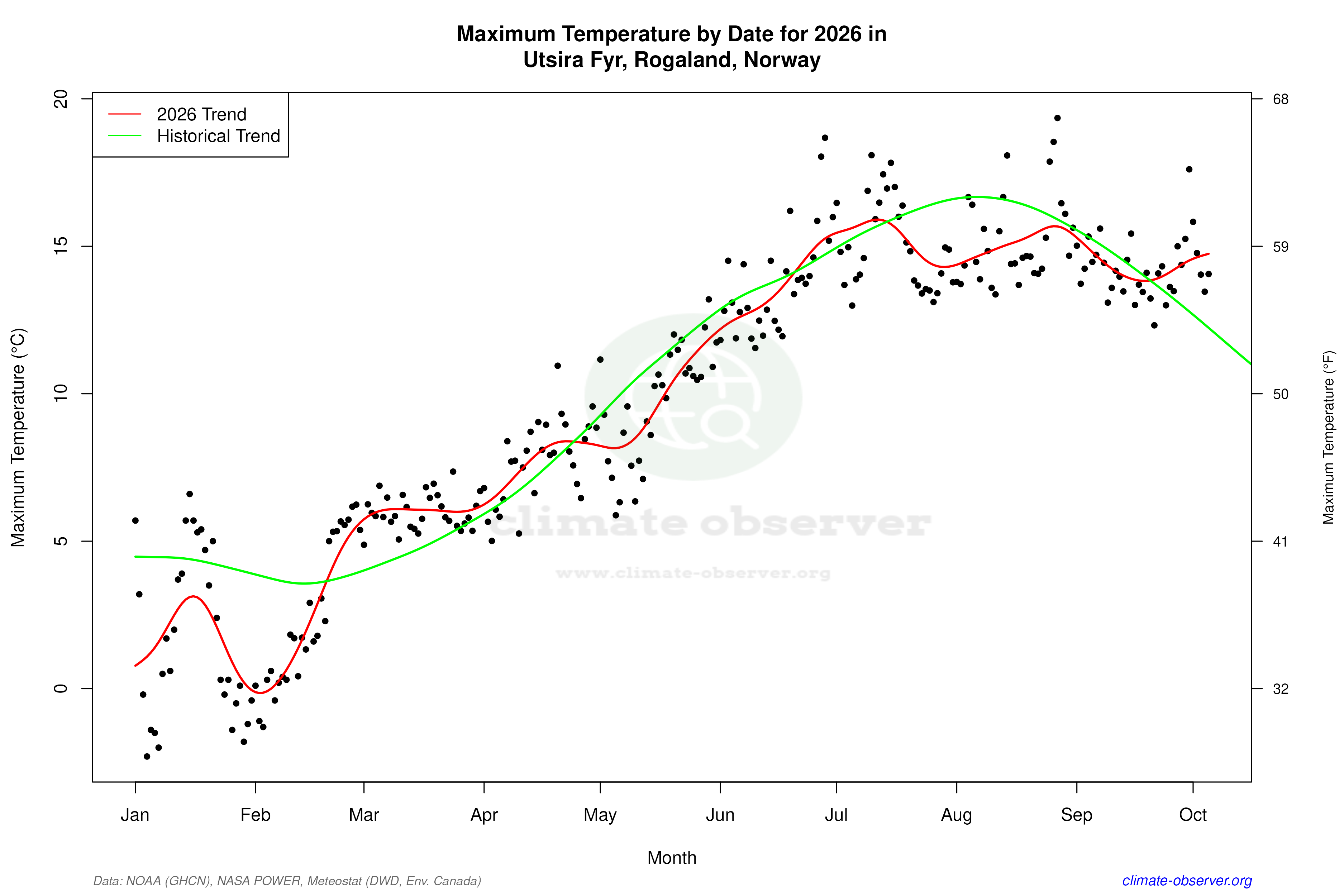
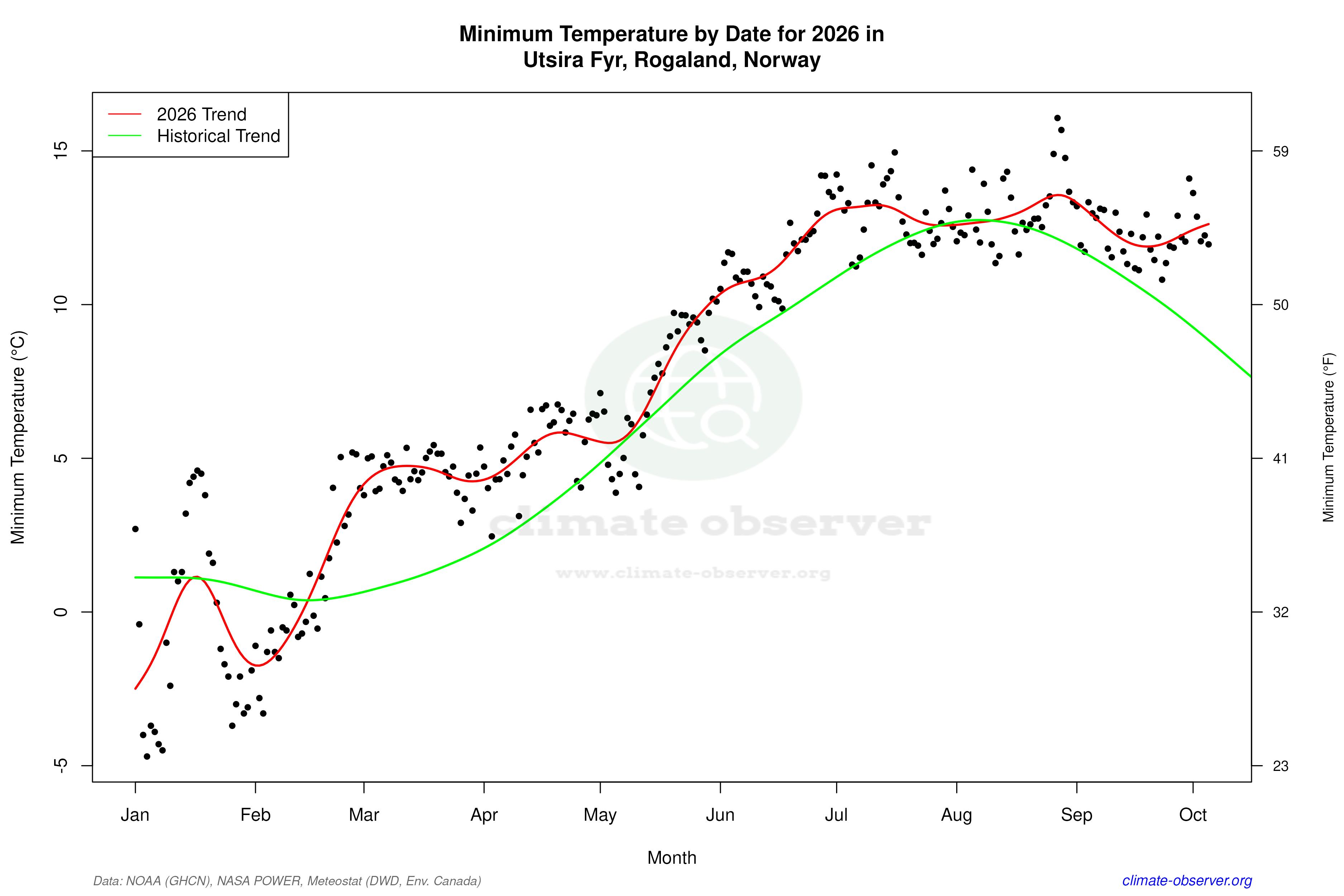
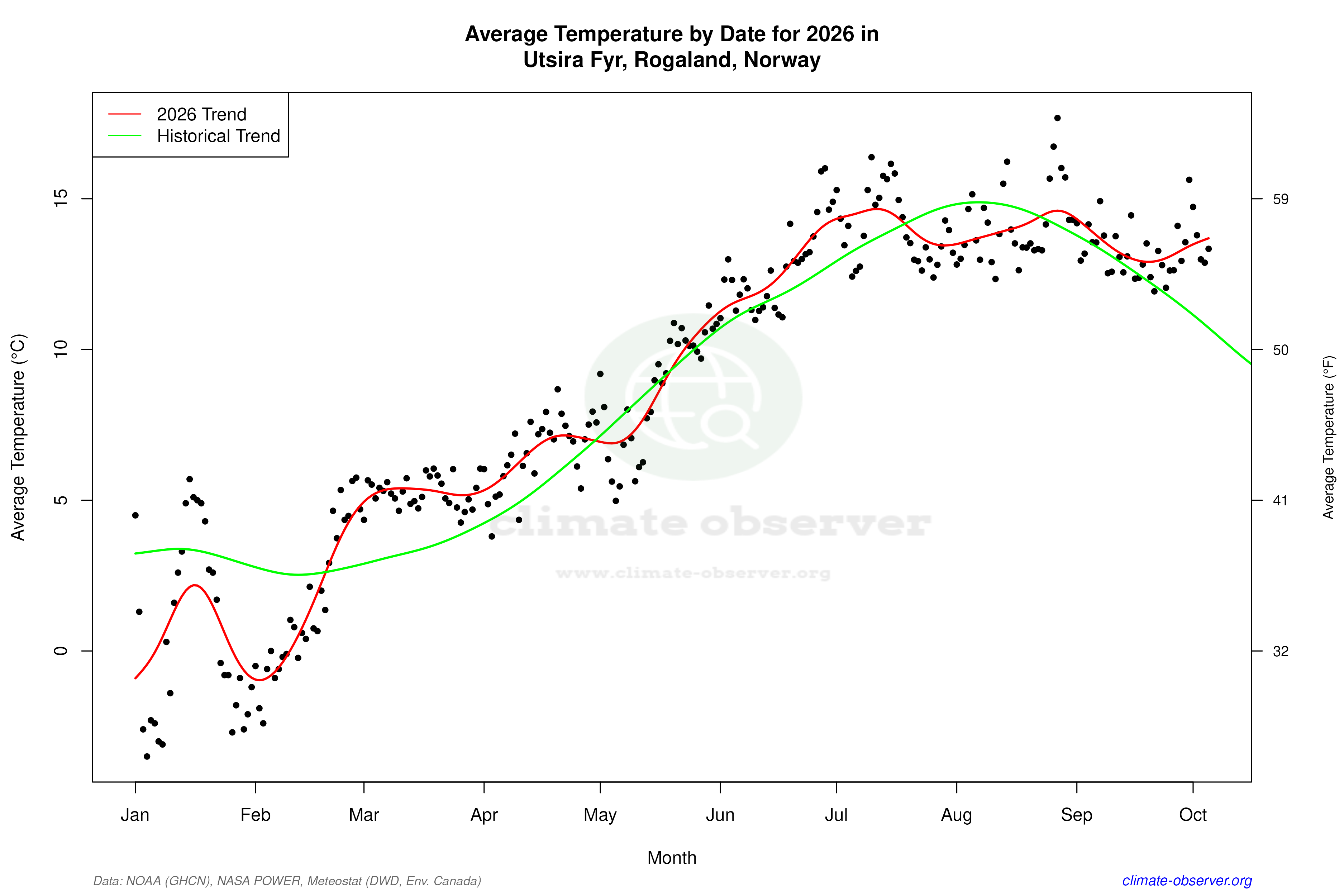
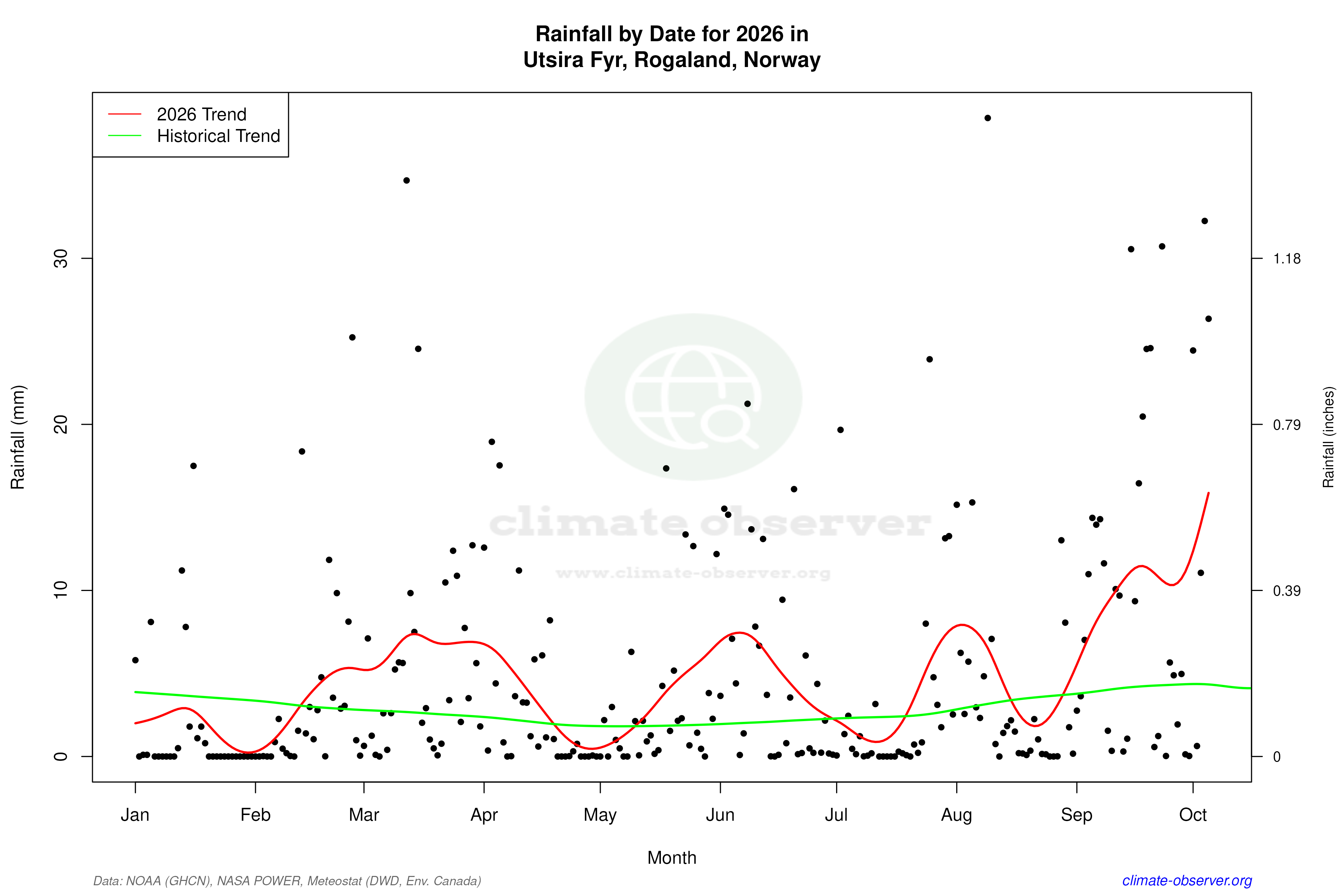
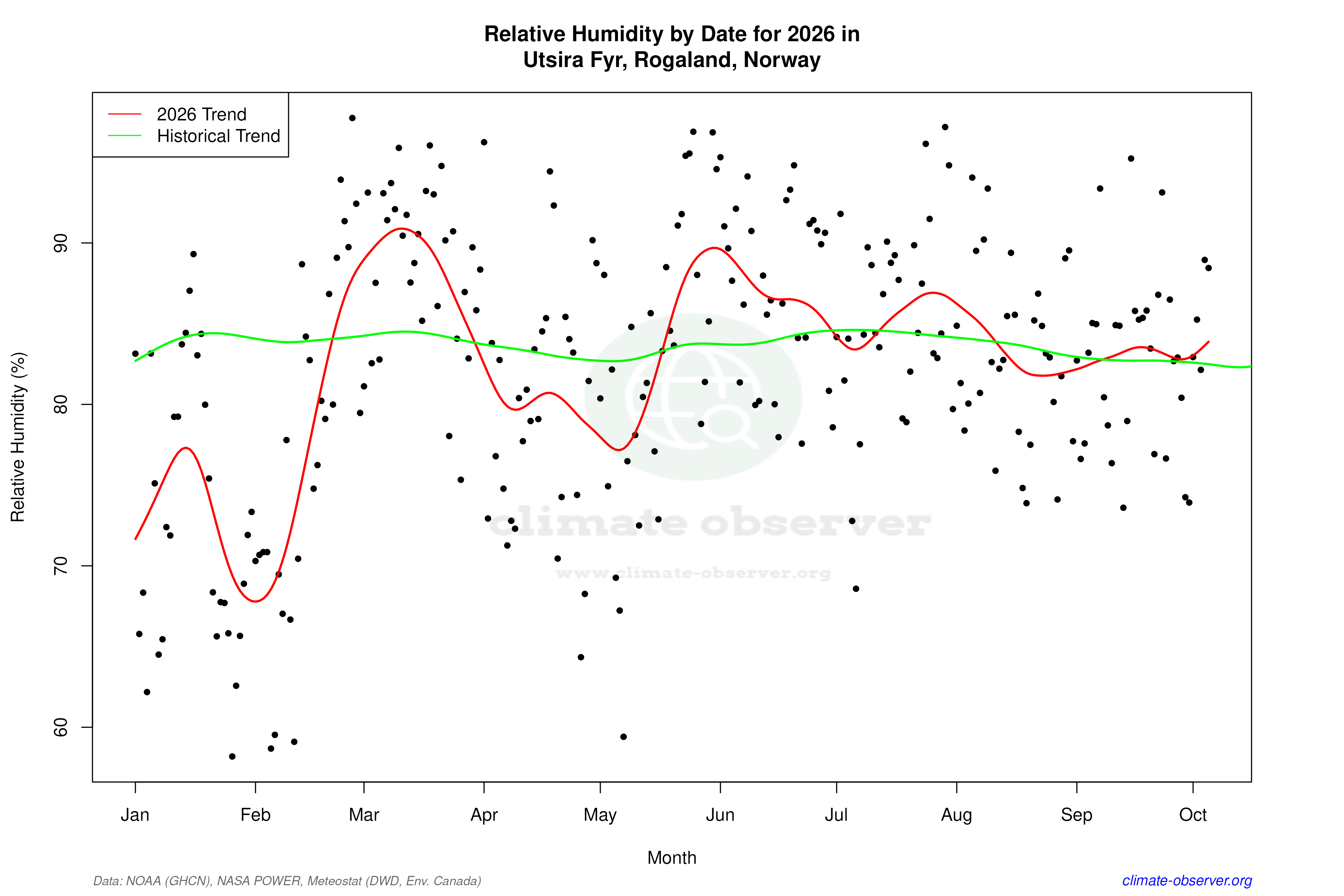

Max Temperature this Year | 1 of 6
Climate 12-Month Moving Averages
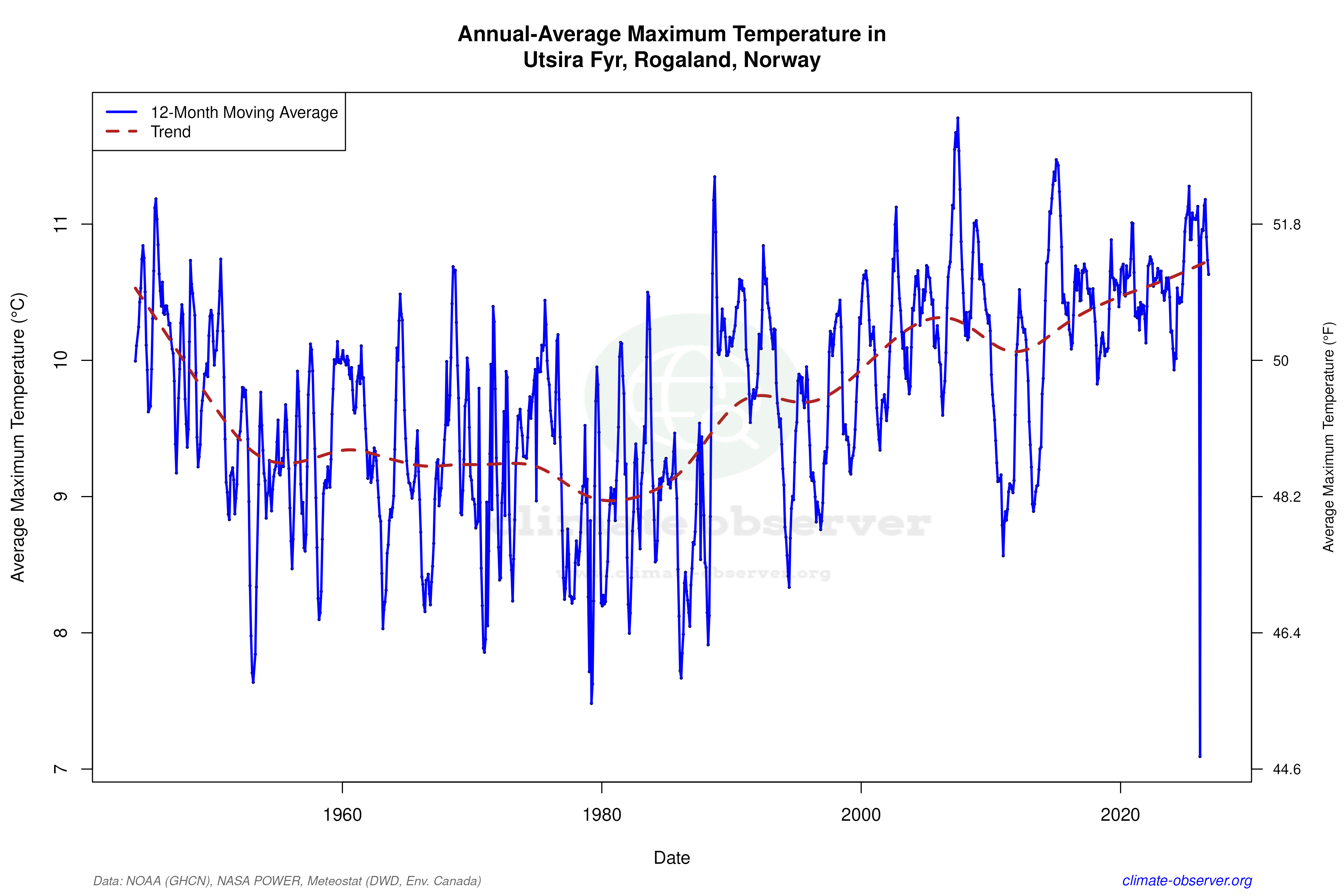
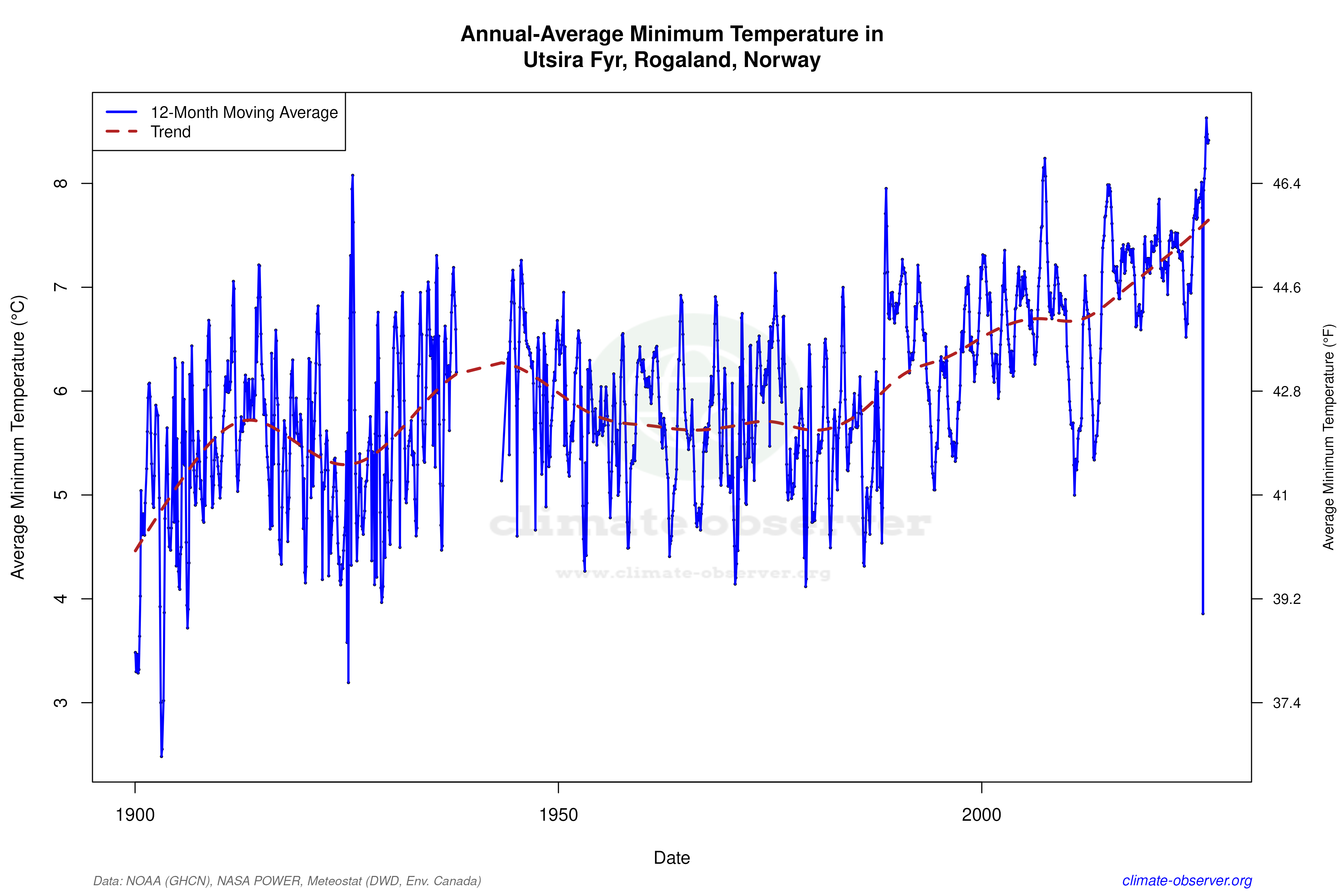
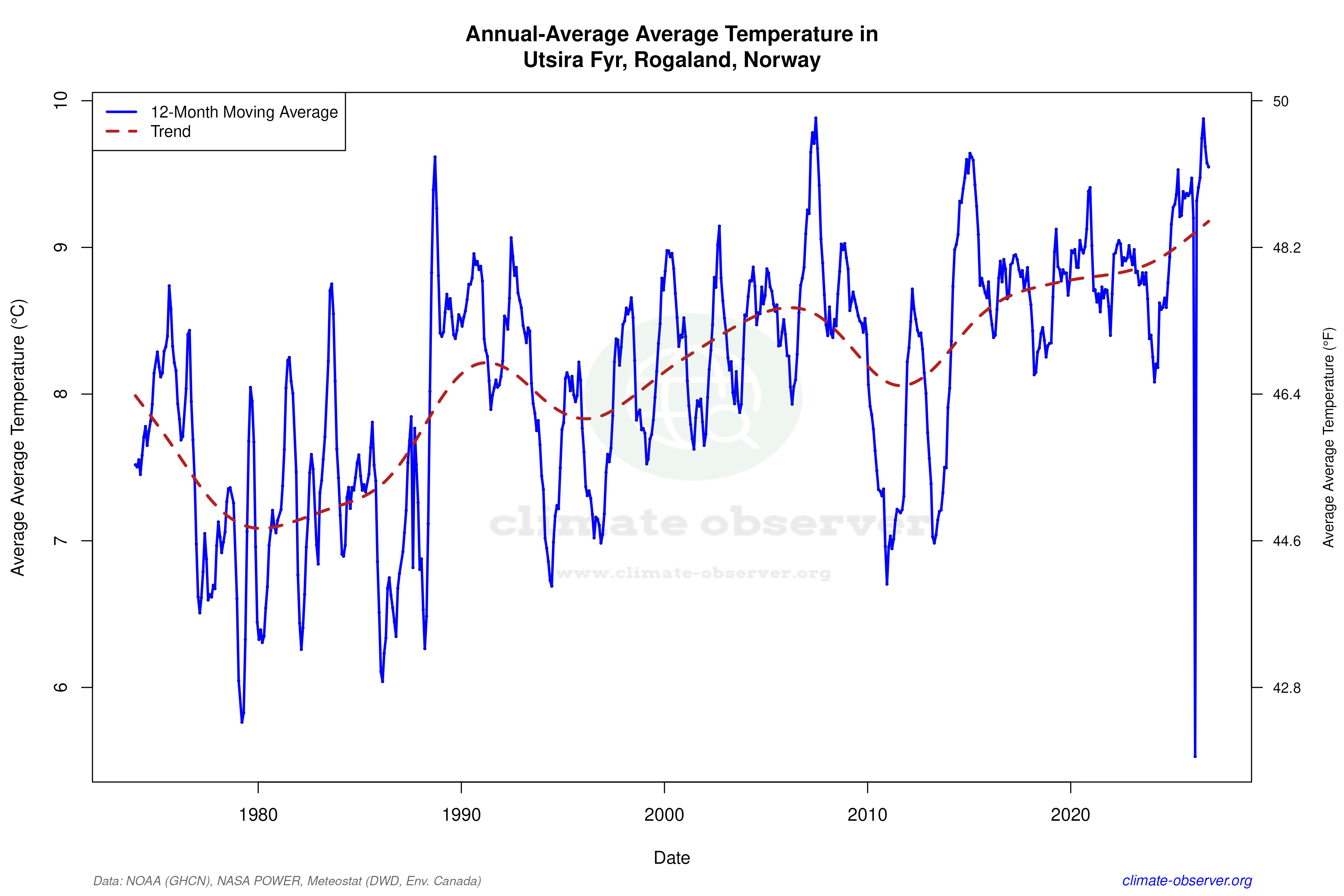
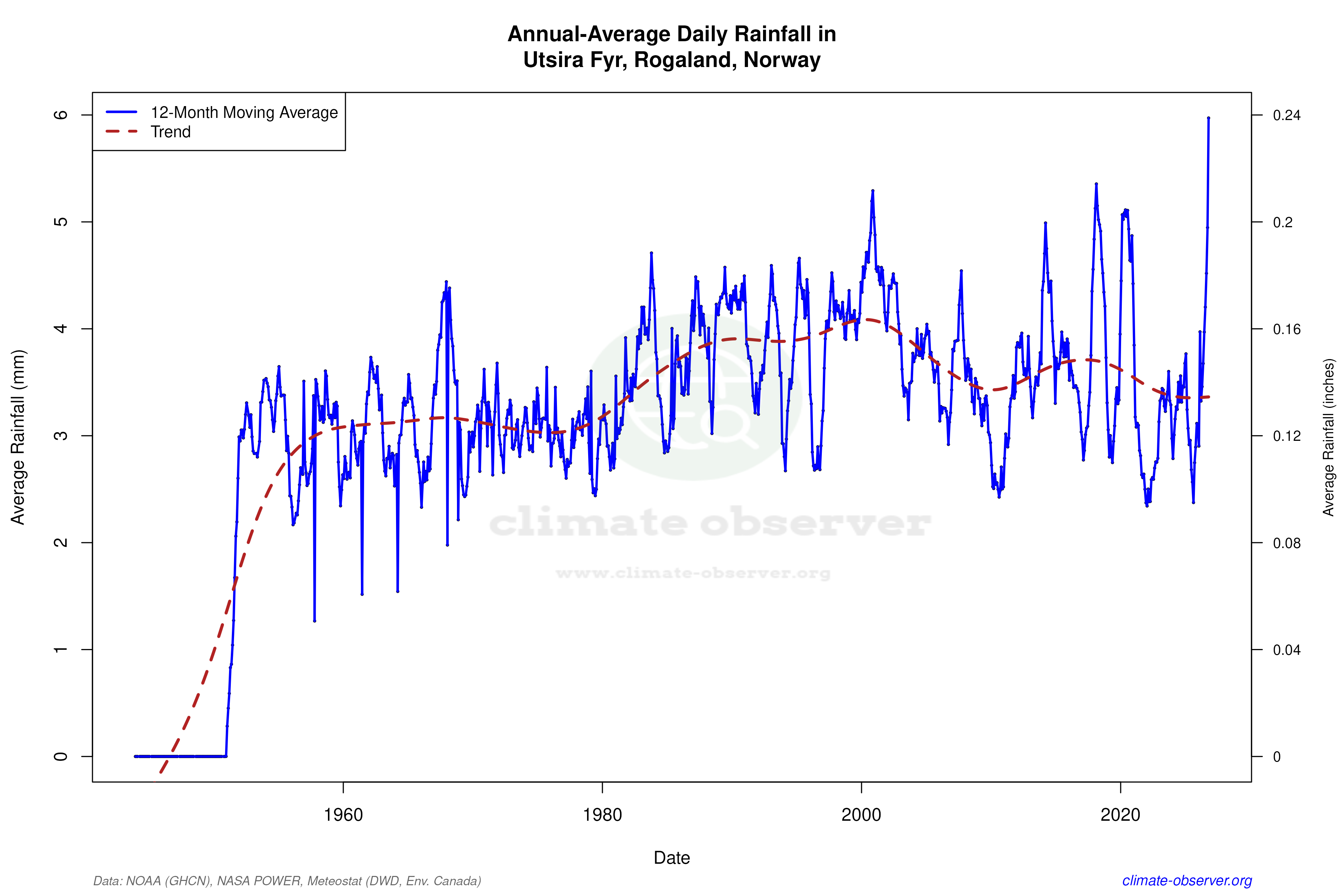
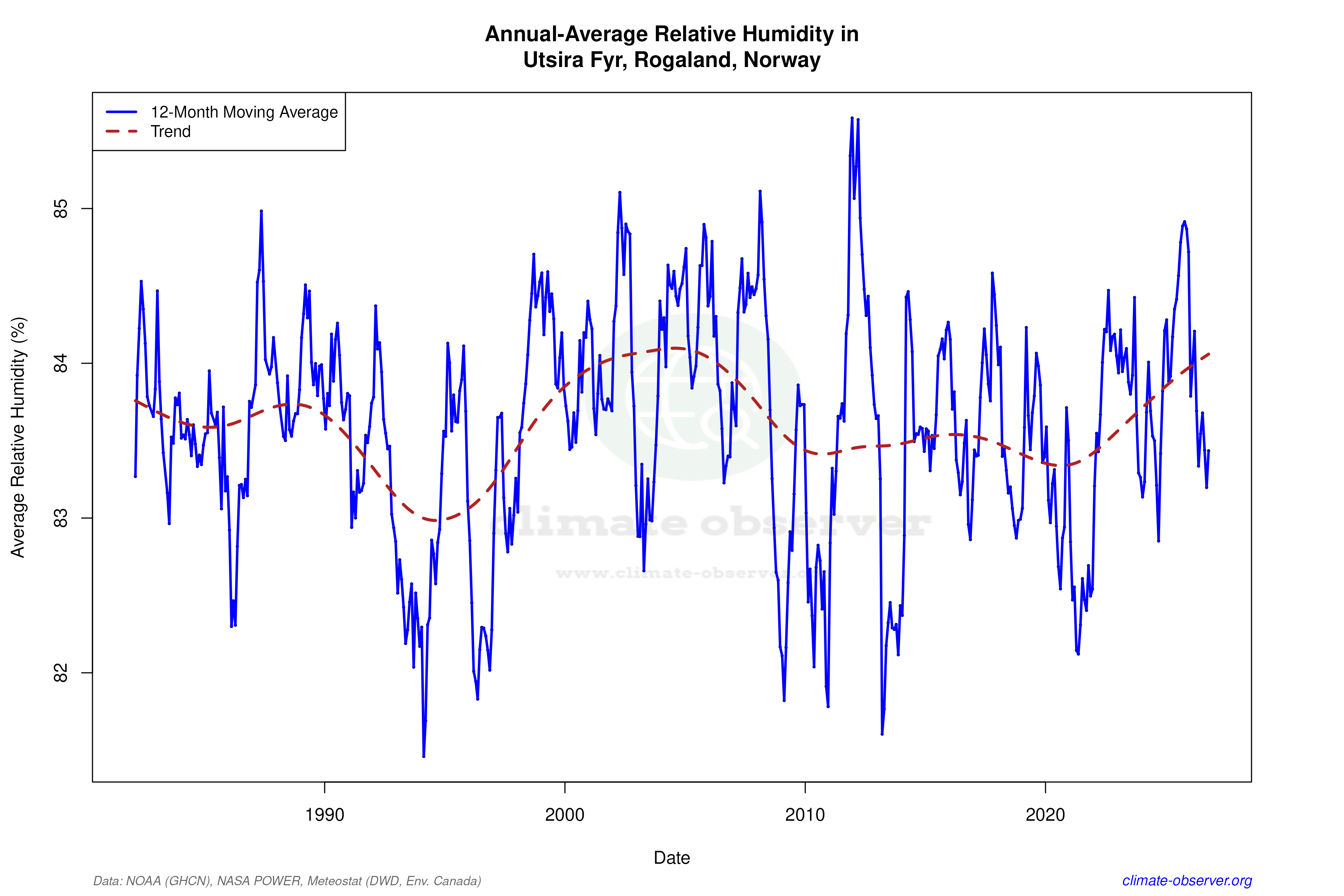

Max Temperature 12-Month MA | 1 of 6
Daily Data Points and Averages Throughout the Year
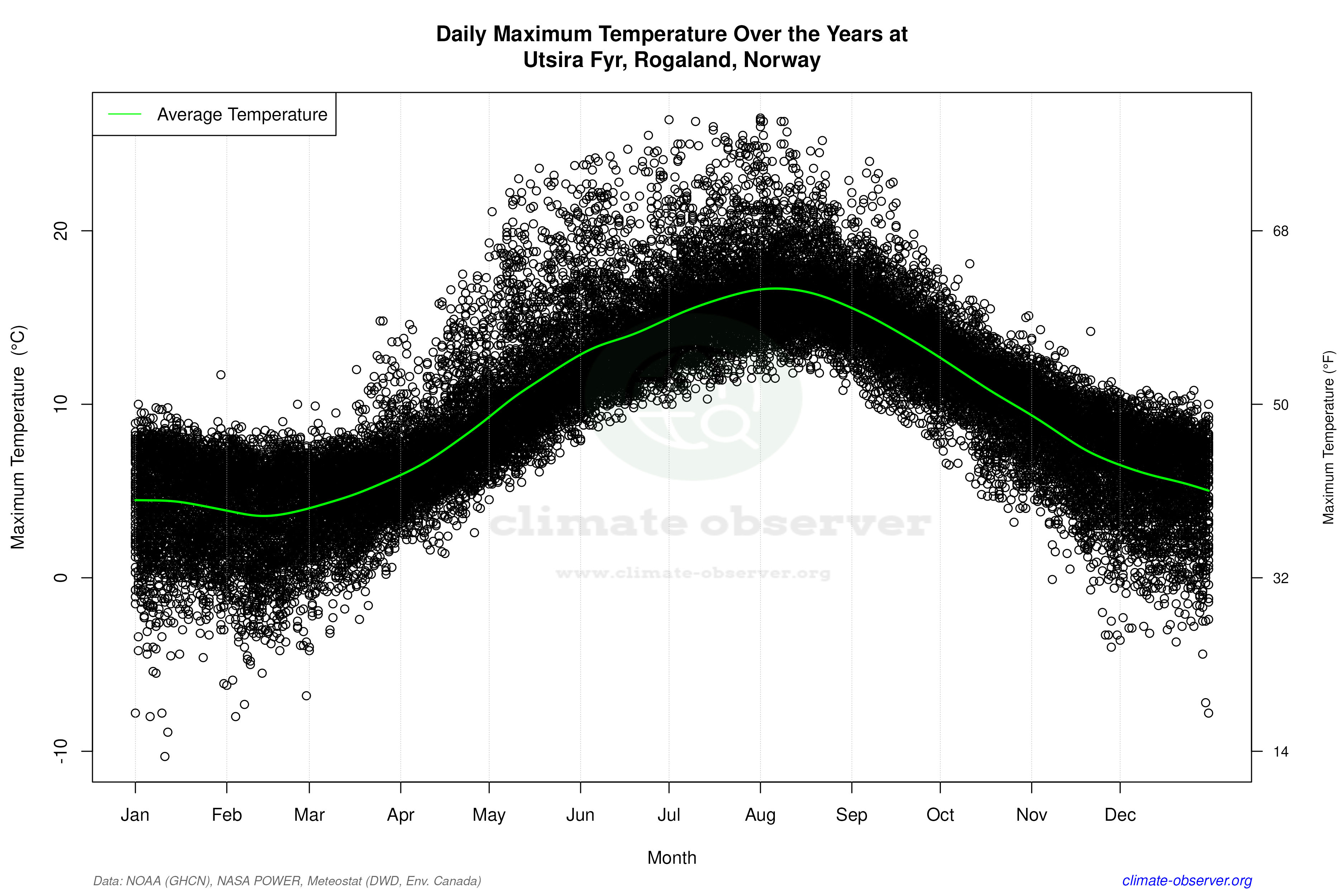
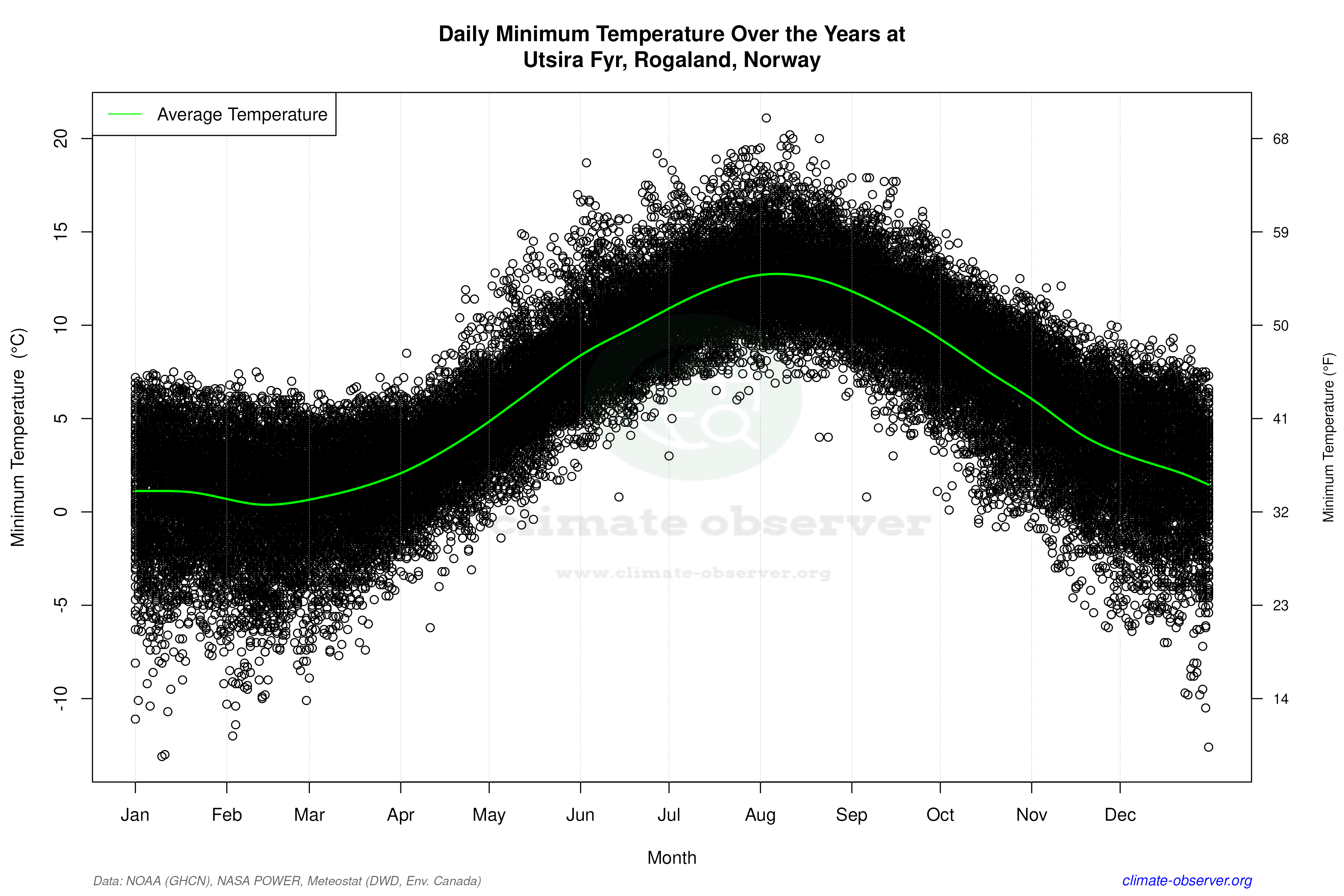
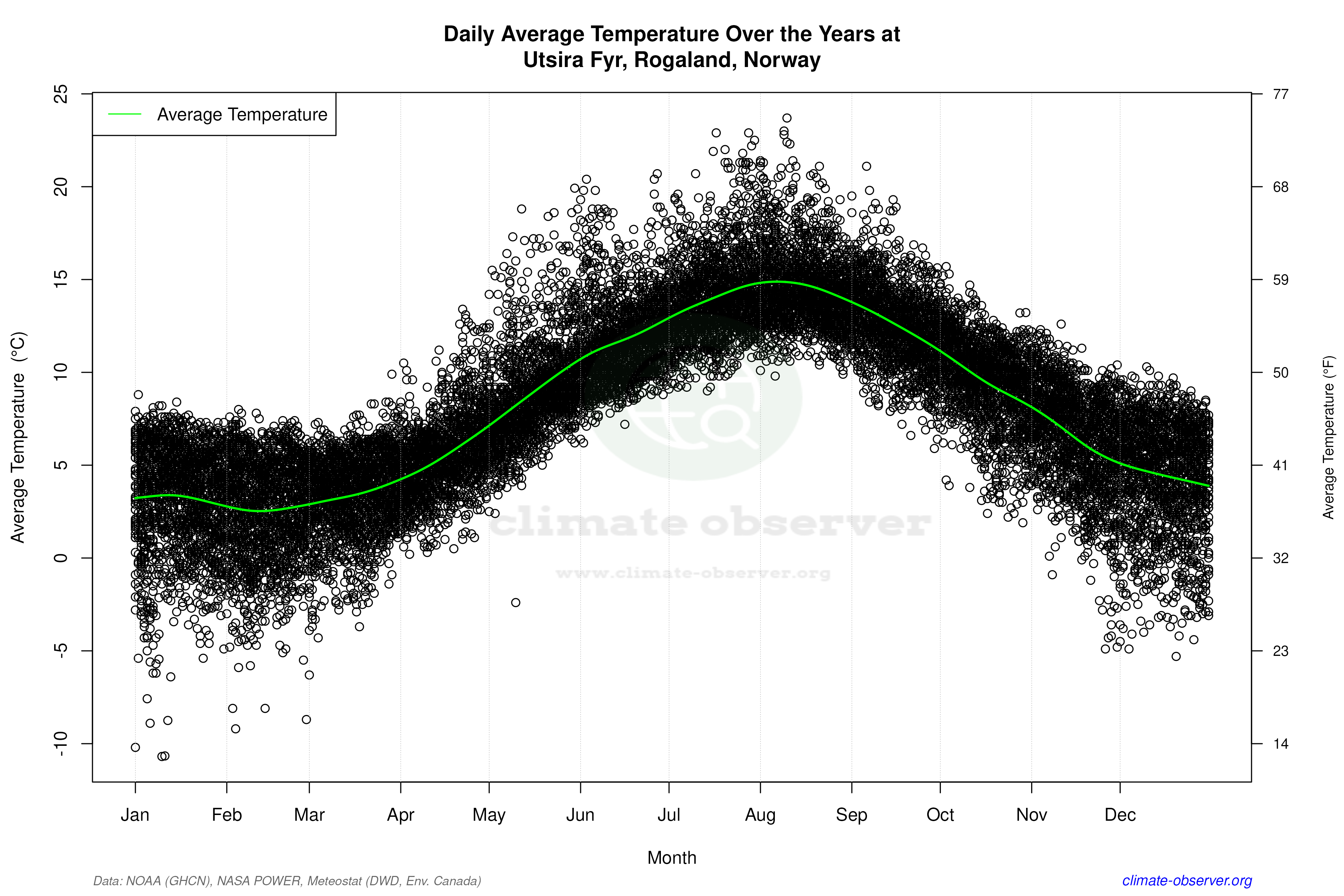
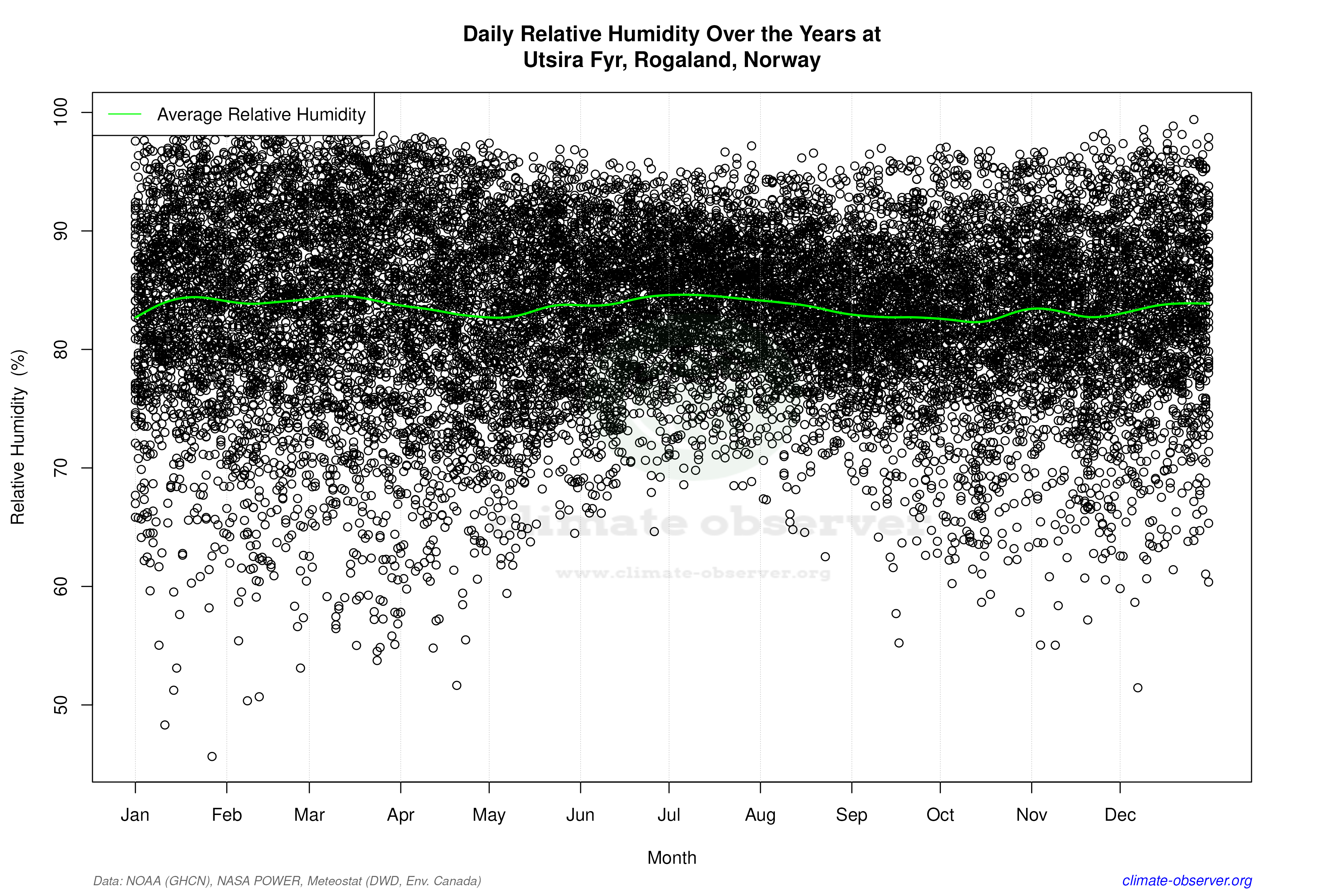

Average Max Temperature Throughout Year | 1 of 5


