Climate for Station: Tafjord, Møre og Romsdal, Norway
Loading live weather...
Climate Analysis & Overview
Tafjord is experiencing a warming trend with both high and low temperatures rising over time. The region's precipitation is becoming more evenly distributed, indicating a shift in weather patterns. These changes align with broader climate goals in Norway, aiming for more sustainable environmental conditions.
Warming Trends in Tafjord
Tafjord, located in the Møre og Romsdal county of Norway, is classified under the Köppen climate system as a Cfb climate, indicating a temperate oceanic climate with mild summers and no dry season. Over the past decade, the area has seen a warming trend with high temperatures increasing by 0.23°C (0.41°F) and low temperatures by 0.12°C (0.22°F). This trend is even more pronounced when considering the all-time data, where high temperatures have risen by 0.30°C (0.54°F) and low temperatures by 0.07°C (0.13°F). This warming is consistent with the broader regional trends in Norway, which are influenced by the North Atlantic Current and local topography, including the surrounding mountains and fjords.
Temperature Extremes
Tafjord has recorded a maximum temperature of 33.8°C (92.8°F), showcasing the potential for extreme heat even in typically temperate regions. Conversely, the minimum temperature has dropped to -16.6°C (2.1°F), reflecting the region's capacity for significant cold spells. These extremes highlight the variability in Tafjord's climate, driven by its unique geographical location and the moderating effects of nearby water bodies.
Precipitation Patterns and Distribution
The Precipitation Concentration Index (PCI) in Tafjord has shown a marginal decrease from a baseline of 12.4 to a current value of 11.8. This indicates that precipitation is becoming more evenly distributed throughout the year, rather than being concentrated in fewer, more intense events. Such a shift can have implications for local agriculture and water management, as more consistent rainfall patterns may reduce the risk of both drought and flooding.
Implications for Norway's Climate Goals
Norway has been proactive in addressing climate change, with goals to reduce greenhouse gas emissions and enhance sustainability. The warming trends and changing precipitation patterns observed in Tafjord are in line with these national objectives, as they reflect broader shifts towards a more stable and predictable climate. Recent weather events in the region, such as milder winters and wetter summers, further underscore the importance of continued monitoring and adaptation strategies.
Geographical Influence on Climate
Tafjord's climate is heavily influenced by its geographical features, including its proximity to the coast and the surrounding mountains. These elements contribute to the region's moderate temperatures and significant precipitation. The fjords act as natural conduits for warm air currents, which can lead to milder winters, while the mountains can trap cold air, resulting in cooler summer temperatures. This complex interplay of geographical factors is a key driver of Tafjord's unique climate characteristics.
Station Statistics
10-Year Trend
High: +0.25 °C/decade
Low: +0.17 °C/decade
Rain: -0.59 mm/decade
25-Year Trend
High: +0.04 °C/decade
Low: +0.10 °C/decade
Rain: -0.03 mm/decade
50-Year Trend
High: +0.40 °C/decade
Low: +0.23 °C/decade
Rain: -0.00 mm/decade
All-Time Trend
High: +0.30 °C/decade
Low: +0.05 °C/decade
Rain: +0.05 mm/decade
Percentage Above-Average Days
Last 12 Months: 59.5%
This Year: 50.6%
Precipitation Concentration Index (PCI) ℹ️
Last 12 Months: 12.7
Historical Average: 12.5
Percentile Rank of Last 12 Months ℹ️
High: 95th percentile
Low: 94th percentile
Rain: 61st percentile
Change in Variance ℹ️
High: +2.1%
Low: -4.2%
Intraday: +18.8%
Data Coverage
69.0%
First Year of Data
2026
Station Location
Historical Weather Records
| Max High | Avg High | Min High | Max Avg | Avg Avg | Min Avg | Max Low | Avg Low | Min Low | Max Precipitation | Avg Precipitation | Max Snow | Avg Snow | |
|---|---|---|---|---|---|---|---|---|---|---|---|---|---|
| Record | 33.8 °C | — | -12.5 °C | — | — | — | 23.4 °C | — | -16.6 °C | 103.6 mm | — | — | — |
| January | 18.7 °C | 4.0 °C | -12.2 °C | — | — | — | 9.2 °C | -1.6 °C | -16.6 °C | 55.5 mm | 3.3 mm | — | — |
| February | 17.1 °C | 3.9 °C | -10.5 °C | — | — | — | 11.2 °C | -1.7 °C | -15.4 °C | 53.6 mm | 3.0 mm | — | — |
| March | 18.1 °C | 6.3 °C | -7.5 °C | — | — | — | 12.2 °C | 0.1 °C | -14.1 °C | 54.6 mm | 2.6 mm | — | — |
| April | 21.2 °C | 10.0 °C | -0.7 °C | — | — | — | 14.8 °C | 2.6 °C | -7.0 °C | 55.6 mm | 1.8 mm | — | — |
| May | 28.7 °C | 15.0 °C | 3.0 °C | — | — | — | 17.9 °C | 6.2 °C | -2.0 °C | 35.2 mm | 1.2 mm | — | — |
| June | 31.8 °C | 17.9 °C | 7.3 °C | — | — | — | 20.8 °C | 9.2 °C | 0.6 °C | 33.0 mm | 1.6 mm | — | — |
| July | 33.8 °C | 19.4 °C | 9.5 °C | — | — | — | 23.4 °C | 11.5 °C | 3.5 °C | 42.2 mm | 2.0 mm | — | — |
| August | 30.6 °C | 18.6 °C | 9.2 °C | — | — | — | 21.5 °C | 11.2 °C | 2.1 °C | 53.3 mm | 2.1 mm | — | — |
| September | 26.5 °C | 15.0 °C | 3.9 °C | — | — | — | 20.6 °C | 8.2 °C | -1.6 °C | 103.6 mm | 3.1 mm | — | — |
| October | 25.5 °C | 11.1 °C | -0.6 °C | — | — | — | 18.7 °C | 5.0 °C | -7.7 °C | 78.7 mm | 3.4 mm | — | — |
| November | 21.8 °C | 7.2 °C | -6.0 °C | — | — | — | 15.2 °C | 1.9 °C | -10.8 °C | 66.2 mm | 3.4 mm | — | — |
| December | 18.7 °C | 4.8 °C | -12.5 °C | — | — | — | 13.0 °C | -0.5 °C | -15.0 °C | 72.0 mm | 3.7 mm | — | — |
Data Visualisations
Remove WatermarksCurrent Year Climate Trends vs Historical
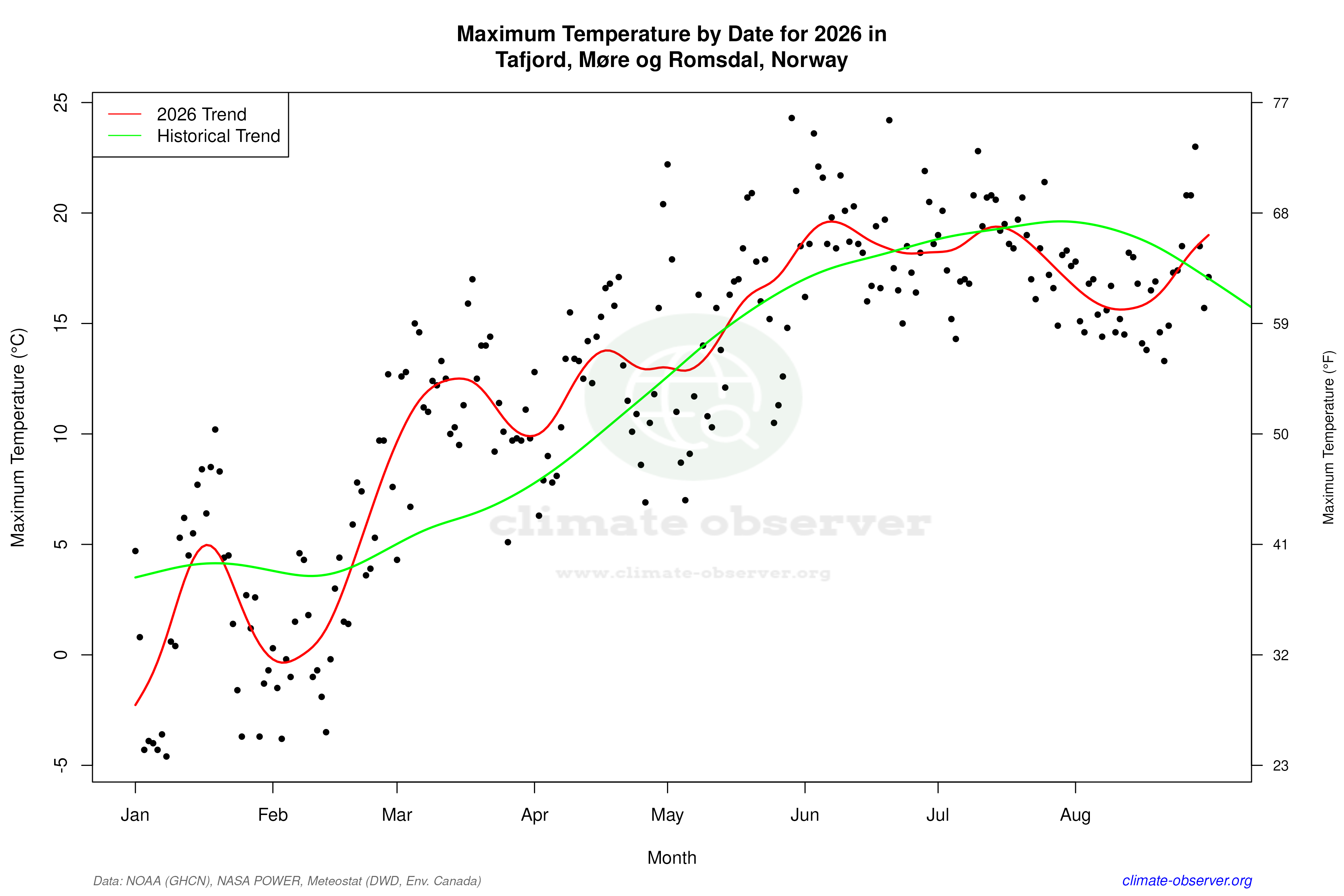
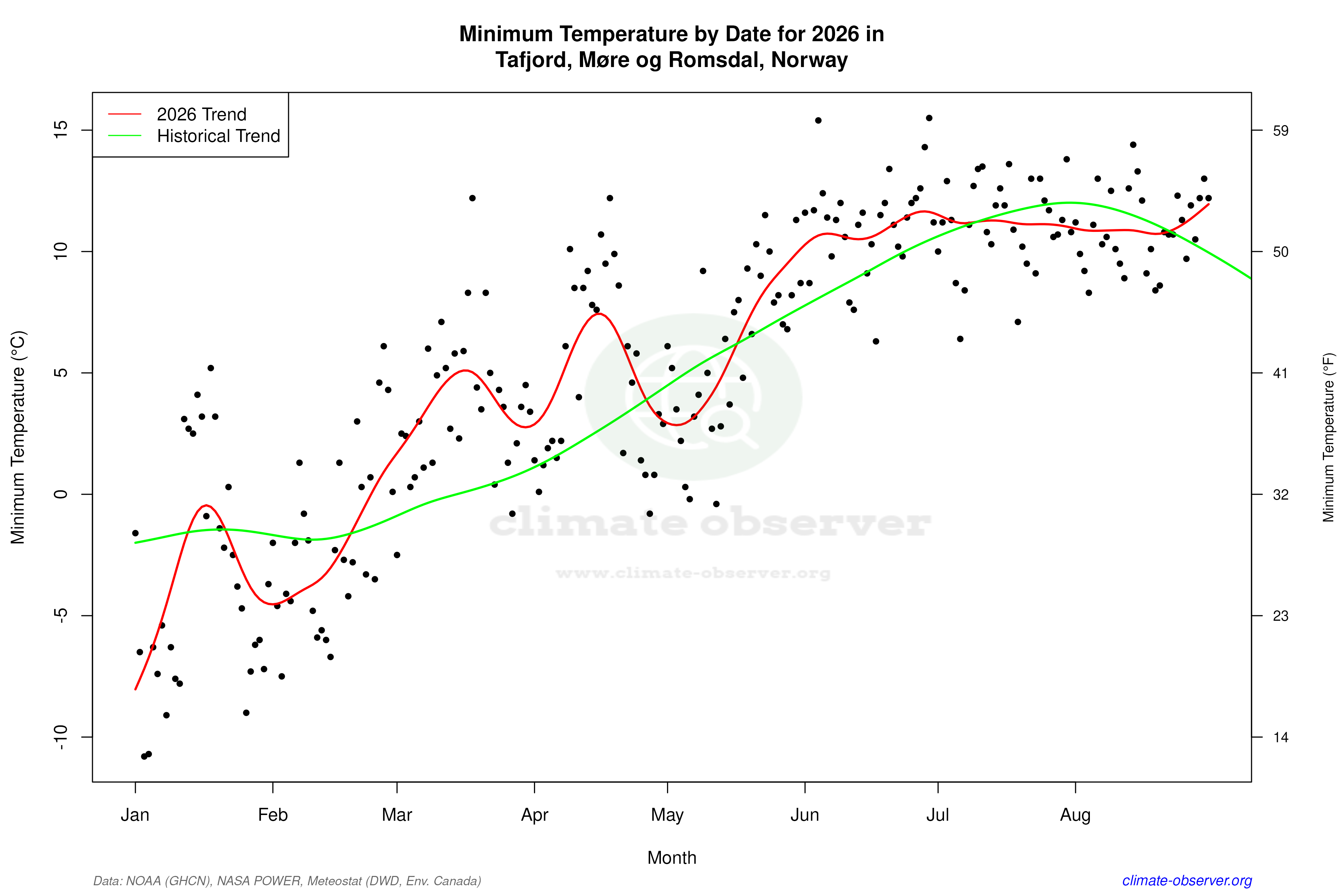

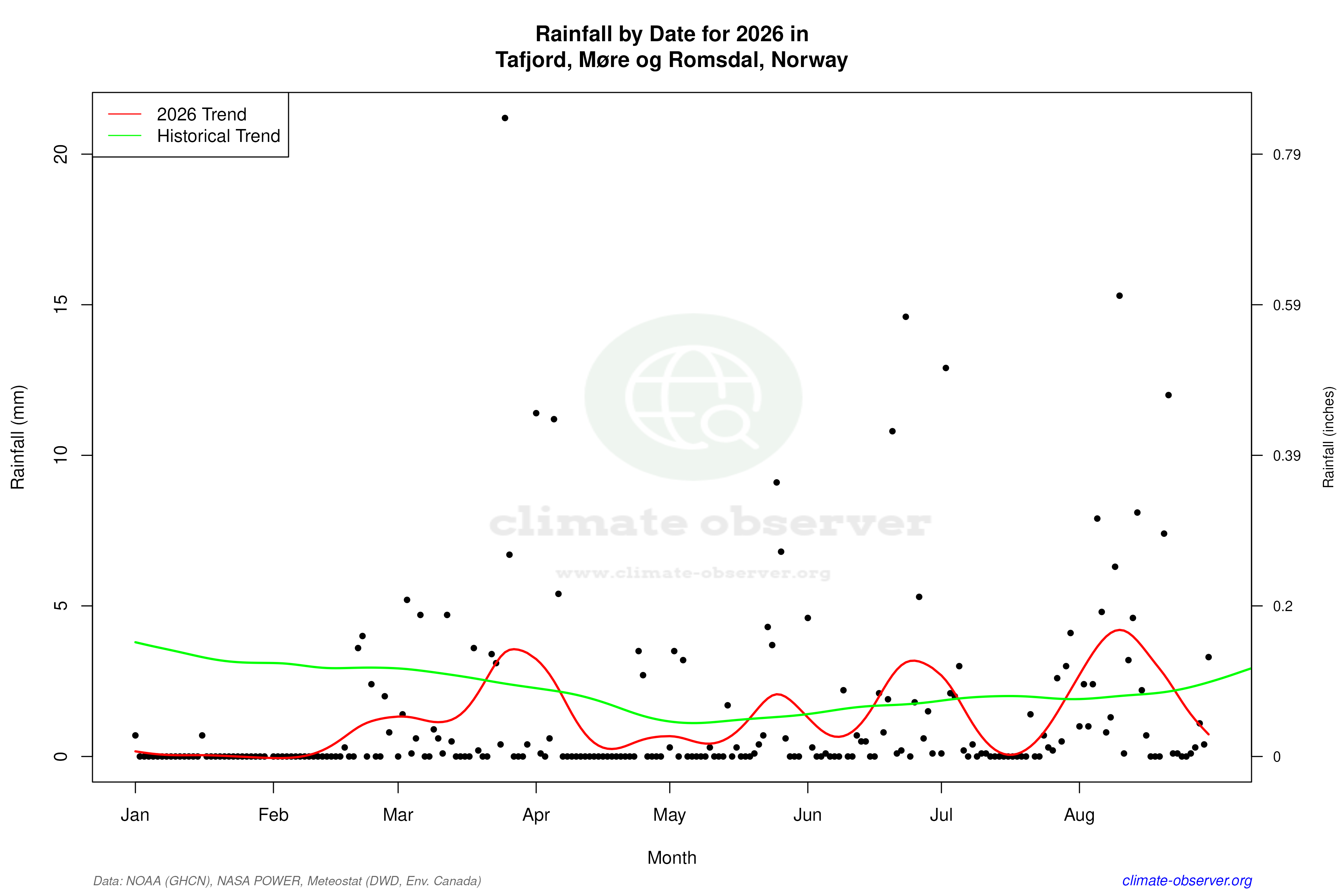


Max Temperature this Year | 1 of 6
Climate 12-Month Moving Averages
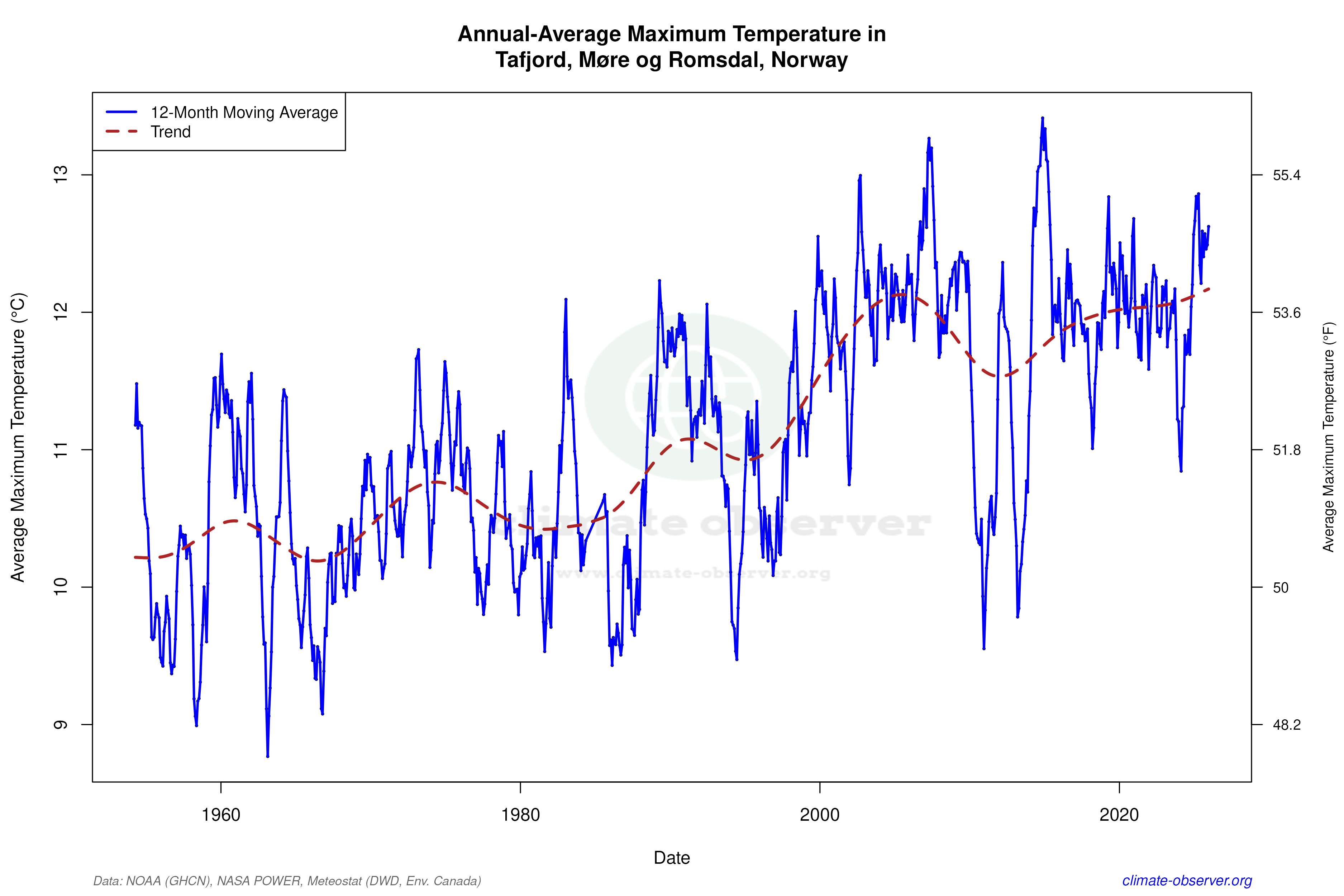
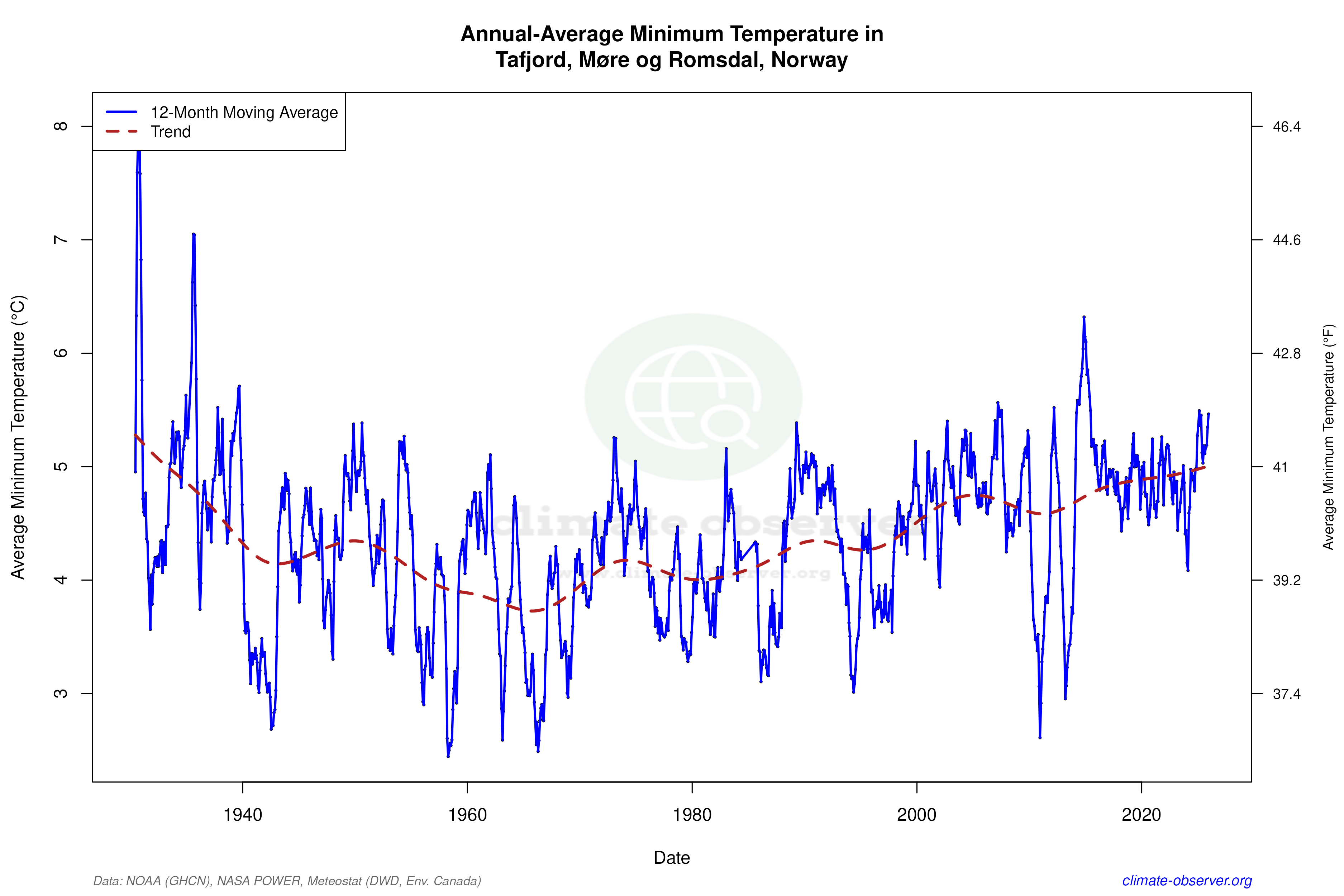

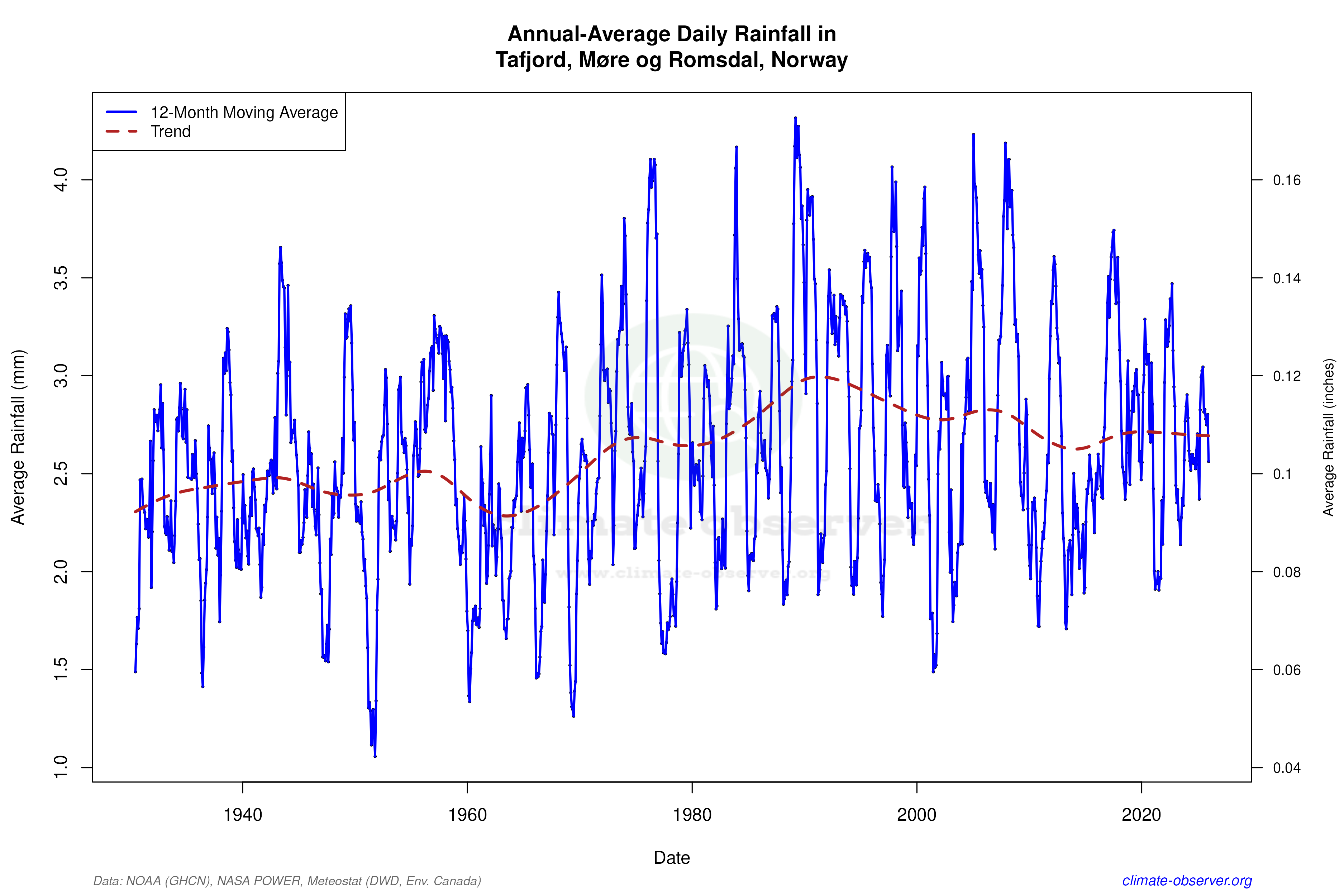


Max Temperature 12-Month MA | 1 of 6
Daily Data Points and Averages Throughout the Year
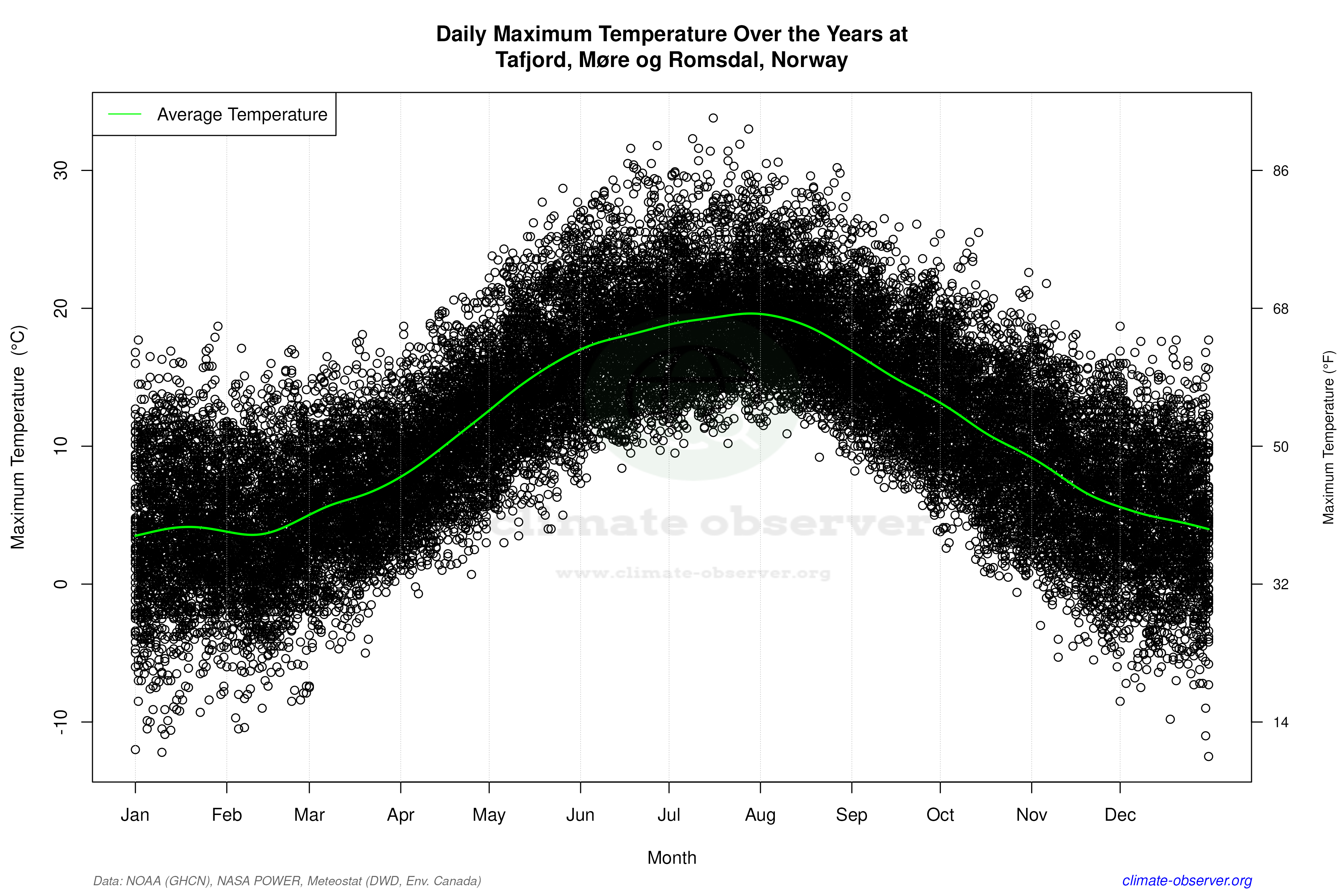
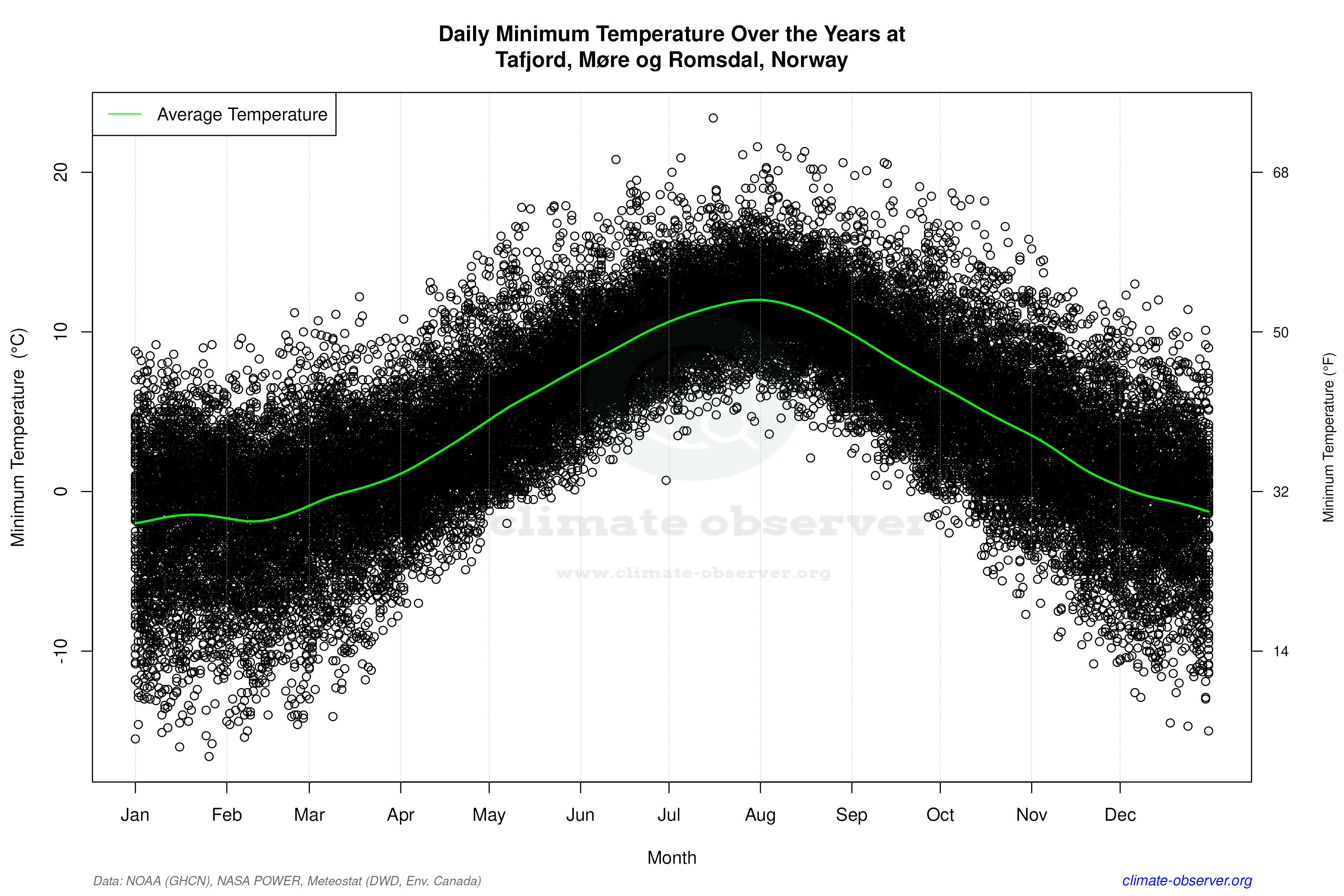


Average Max Temperature Throughout Year | 1 of 5


