Climate for Station: Caransebes, Caraș-Severin, Romania
Loading live weather...
Climate Analysis & Overview
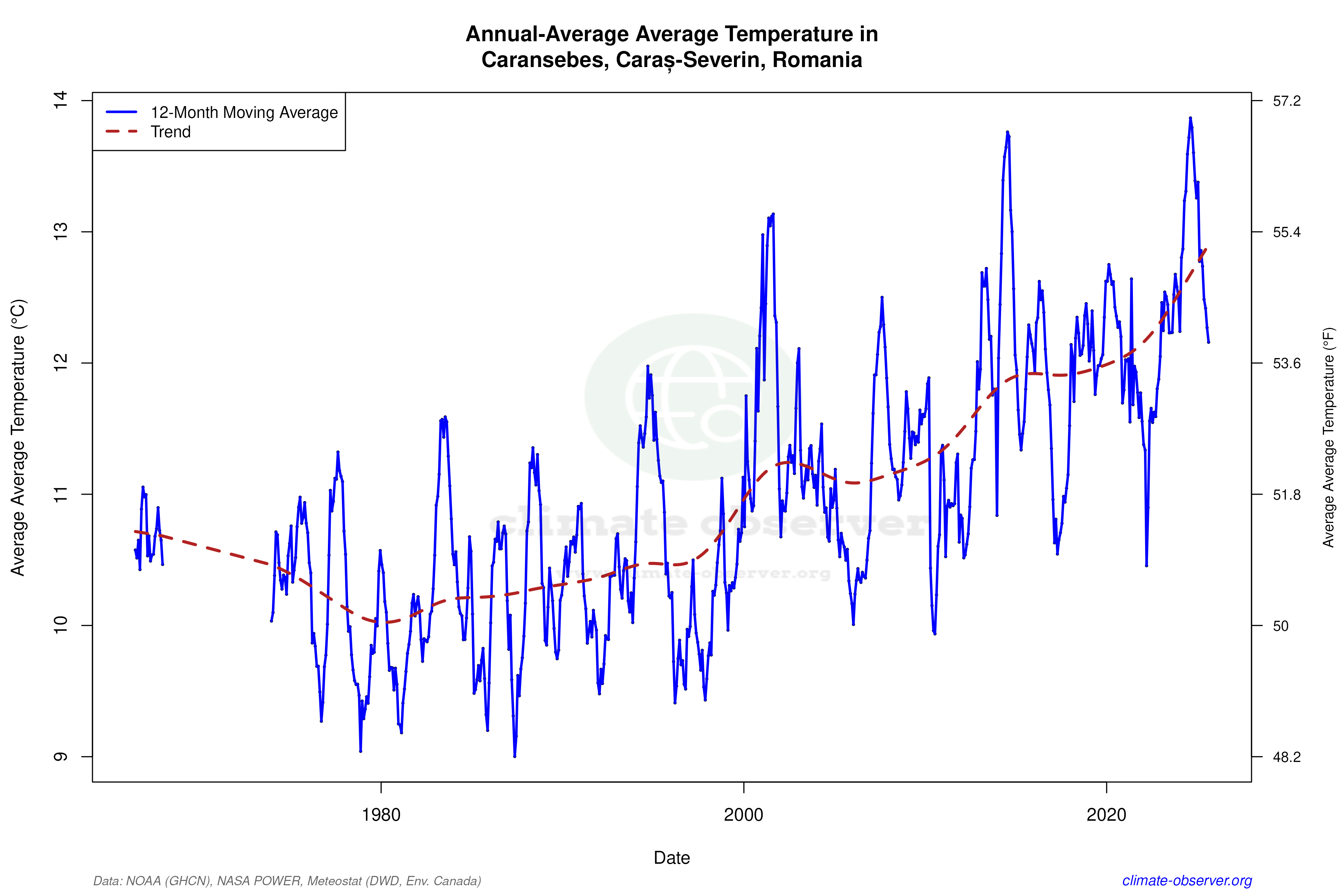
Caransebeș experiences a warming trend with significant temperature increases in the last decade, particularly in high temperatures. The region is also seeing more concentrated precipitation events, suggesting shifts in local weather patterns that could impact agriculture and water management.
Climate Classification and Geographic Influence
Caransebeș, located at 45.42°N, 22.25°E, falls under the Köppen climate classification of Cfb, indicating a temperate oceanic climate. This region, nestled in the foothills of the Southern Carpathians, benefits from the moderating effects of nearby mountains, which influence both temperature and precipitation patterns. The geographical setting contributes to a relatively stable climate, though recent data suggests notable shifts.
Rising Temperatures: A Decadal Perspective
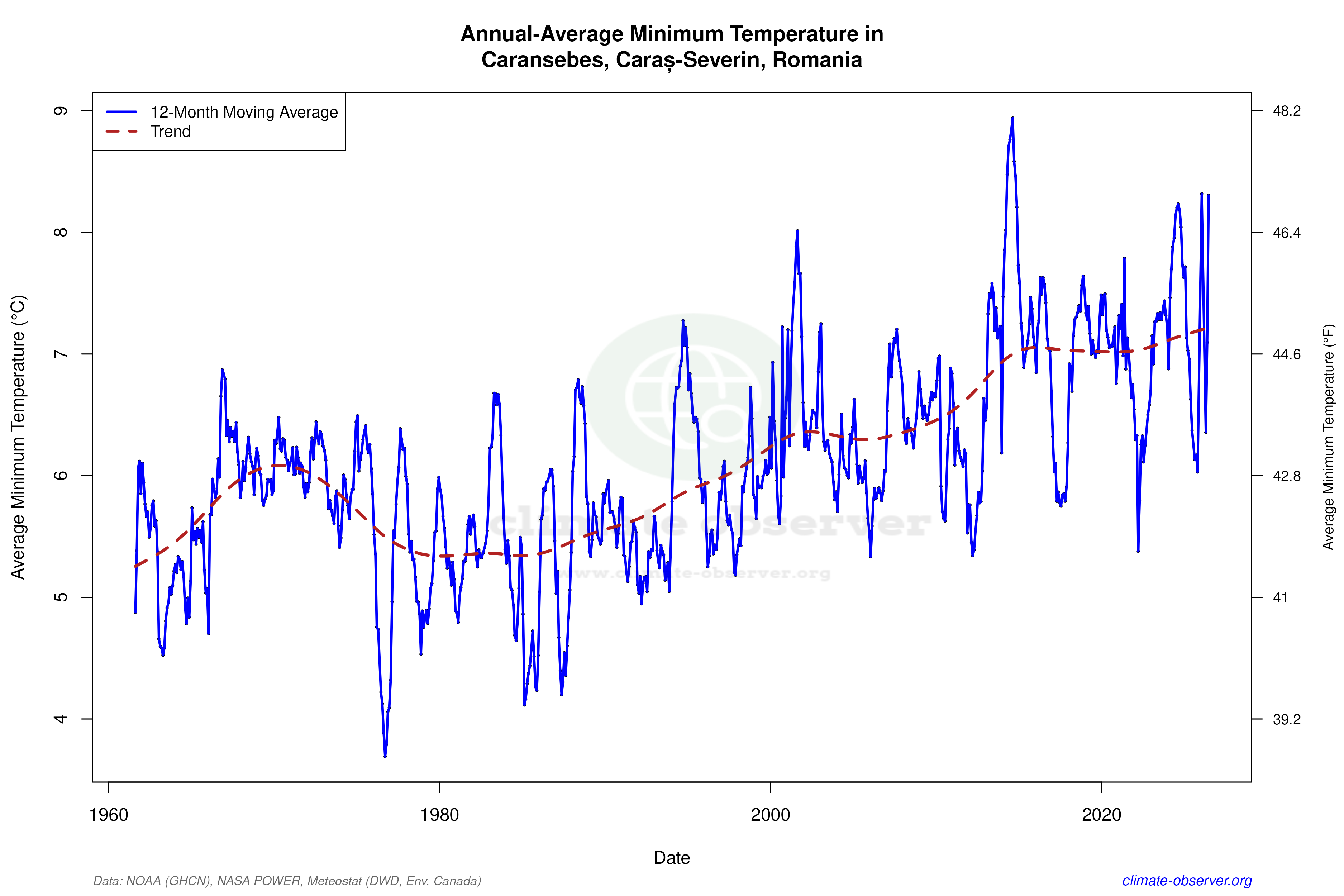
In the last decade, Caransebeș has experienced a significant warming trend. The average high temperatures have increased by 1.09°C (1.96°F), while the lows have risen by 0.31°C (0.56°F). These changes are more pronounced than the all-time trends, where highs have risen by 0.46°C (0.83°F) and lows by 0.27°C (0.49°F). This suggests a recent acceleration in temperature increases, which may be linked to broader regional and global climate patterns.
Precipitation Patterns: Increasing Concentration
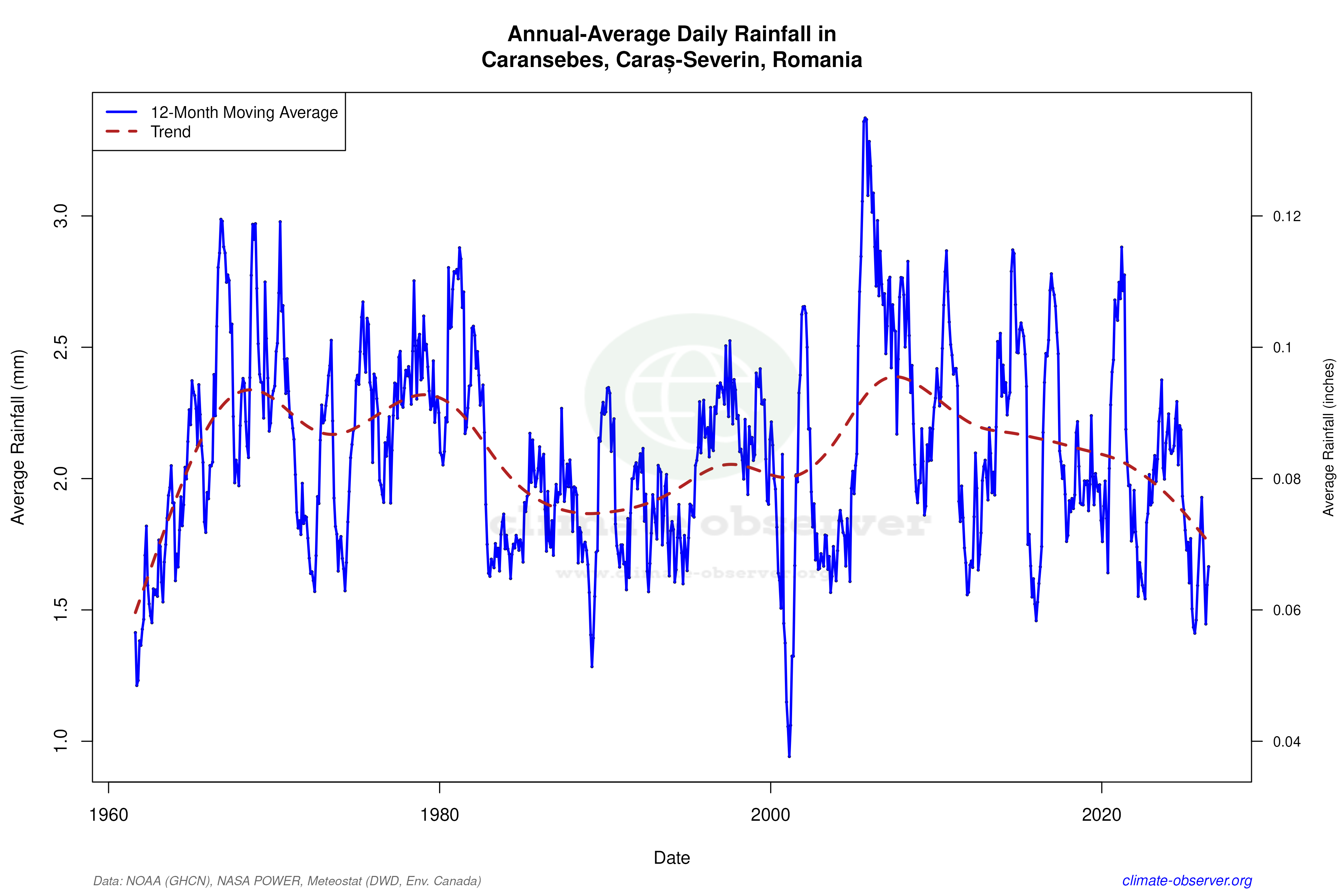
The Precipitation Concentration Index (PCI) for Caransebeș has risen from a baseline of 11.61 to a current value of 13.78. This indicates a more concentrated pattern of rainfall, where precipitation is increasingly occurring in fewer, more intense events. While the PCI is not yet at a level considered highly concentrated, the increase suggests a shift that could affect water resources and agricultural practices in the area.
Temperature Extremes and Records
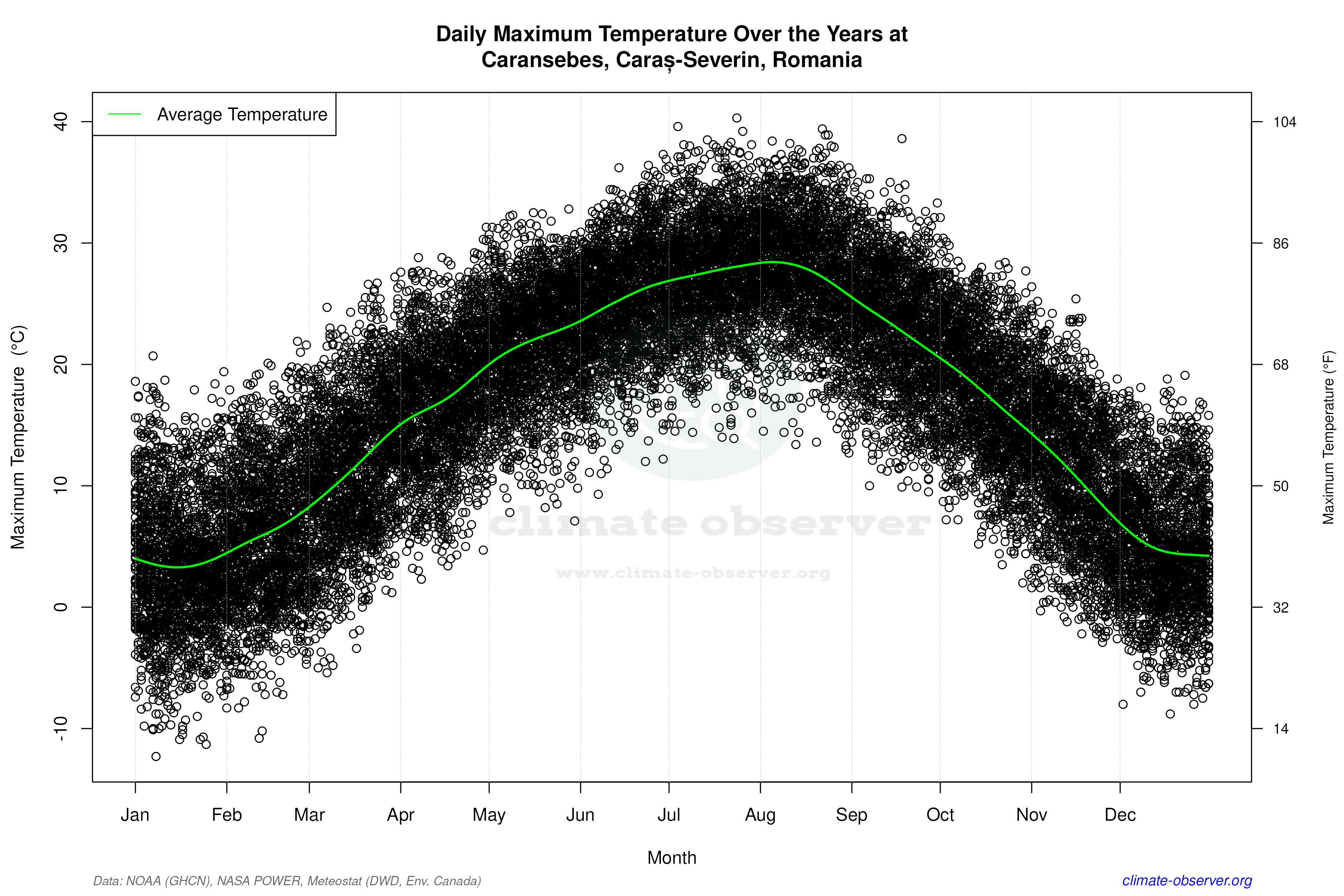
Caransebeș has recorded an absolute maximum temperature of 40.3°C (104.5°F) and a minimum of -26.8°C (-16.2°F). These extremes highlight the variability within the region's climate, underscoring the importance of understanding both average trends and potential outliers. Such records are critical for planning, particularly in sectors sensitive to temperature fluctuations, such as agriculture and energy.
Implications for Regional Climate Goals
Romania has set ambitious climate goals, aiming to reduce greenhouse gas emissions and enhance resilience against climate change impacts. The trends observed in Caransebeș, with rising temperatures and increasingly concentrated precipitation, align with broader challenges faced across the country. These changes necessitate adaptive strategies to mitigate potential adverse effects on local ecosystems and economies.
Station Statistics
10-Year Trend
High: +1.79 °C/decade
Low: +0.54 °C/decade
Rain: -0.50 mm/decade
25-Year Trend
High: +0.98 °C/decade
Low: +0.40 °C/decade
Rain: -0.14 mm/decade
50-Year Trend
High: +0.70 °C/decade
Low: +0.45 °C/decade
Rain: -0.00 mm/decade
All-Time Trend
High: +0.46 °C/decade
Low: +0.27 °C/decade
Rain: -0.00 mm/decade
Percentage Above-Average Days
Last 12 Months: 54.2%
This Year: 68.0%
Precipitation Concentration Index (PCI) ℹ️
Last 12 Months: 12.1
Historical Average: 11.8
Percentile Rank of Last 12 Months ℹ️
High: 98th percentile
Low: 80th percentile
Rain: 5th percentile
Change in Variance ℹ️
High: -3.5%
Low: -9.6%
Intraday: +16.3%
Data Coverage
96.0%
First Year of Data
1962
Station Location
Historical Weather Records
| Max High | Avg High | Min High | Max Avg | Avg Avg | Min Avg | Max Low | Avg Low | Min Low | Max Precipitation | Avg Precipitation | Max Snow | Avg Snow | |
|---|---|---|---|---|---|---|---|---|---|---|---|---|---|
| Record | 40.3 °C | — | -12.3 °C | 31.9 °C | — | -15.8 °C | 26.9 °C | — | -26.8 °C | 92.4 mm | — | — | — |
| January | 20.7 °C | 3.6 °C | -12.3 °C | 12.3 °C | -0.1 °C | -15.8 °C | 10.6 °C | -3.5 °C | -26.8 °C | 38.8 mm | 1.6 mm | — | — |
| February | 21.9 °C | 6.2 °C | -10.8 °C | 15.4 °C | 1.9 °C | -14.8 °C | 13.0 °C | -1.8 °C | -21.7 °C | 34.8 mm | 1.5 mm | — | — |
| March | 27.2 °C | 11.5 °C | -5.4 °C | 18.5 °C | 6.2 °C | -13.6 °C | 15.1 °C | 1.5 °C | -21.0 °C | 36.6 mm | 1.4 mm | — | — |
| April | 31.3 °C | 17.2 °C | 2.3 °C | 23.8 °C | 11.1 °C | -1.4 °C | 17.8 °C | 5.8 °C | -8.1 °C | 67.6 mm | 2.1 mm | — | — |
| May | 32.8 °C | 22.0 °C | 7.1 °C | 25.6 °C | 15.7 °C | 4.0 °C | 21.7 °C | 10.0 °C | -1.5 °C | 67.8 mm | 2.8 mm | — | — |
| June | 37.3 °C | 25.4 °C | 9.3 °C | 29.4 °C | 19.1 °C | 9.2 °C | 23.7 °C | 13.0 °C | 2.5 °C | 91.7 mm | 3.3 mm | — | — |
| July | 40.3 °C | 27.5 °C | 13.9 °C | 31.5 °C | 21.0 °C | 11.7 °C | 24.2 °C | 14.4 °C | 5.0 °C | 92.4 mm | 2.9 mm | — | — |
| August | 39.4 °C | 27.7 °C | 12.7 °C | 31.9 °C | 20.8 °C | 10.2 °C | 26.9 °C | 14.4 °C | 5.0 °C | 75.0 mm | 2.3 mm | — | — |
| September | 38.6 °C | 23.1 °C | 9.5 °C | 28.2 °C | 16.6 °C | 6.9 °C | 23.0 °C | 11.1 °C | -1.7 °C | 52.2 mm | 2.2 mm | — | — |
| October | 32.1 °C | 17.6 °C | 2.0 °C | 24.8 °C | 11.7 °C | -1.3 °C | 20.0 °C | 6.8 °C | -7.0 °C | 54.8 mm | 1.6 mm | — | — |
| November | 26.4 °C | 10.9 °C | -2.9 °C | 19.1 °C | 6.1 °C | -6.5 °C | 16.9 °C | 2.8 °C | -14.6 °C | 30.5 mm | 1.7 mm | — | — |
| December | 19.1 °C | 4.9 °C | -8.8 °C | 13.5 °C | 1.5 °C | -14.0 °C | 10.5 °C | -1.5 °C | -18.6 °C | 35.9 mm | 1.7 mm | — | — |
Data Visualisations
Remove WatermarksCurrent Year Climate Trends vs Historical
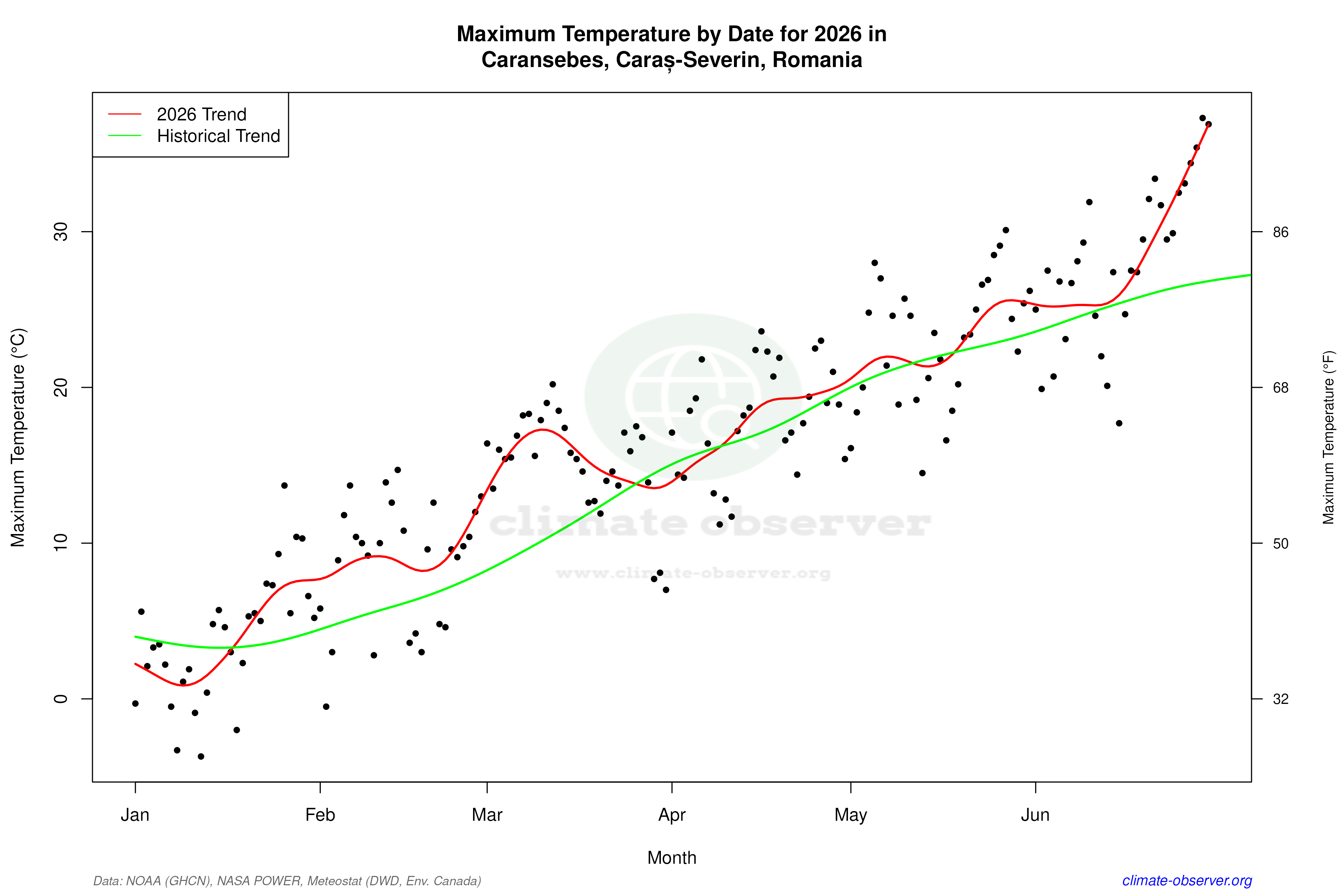
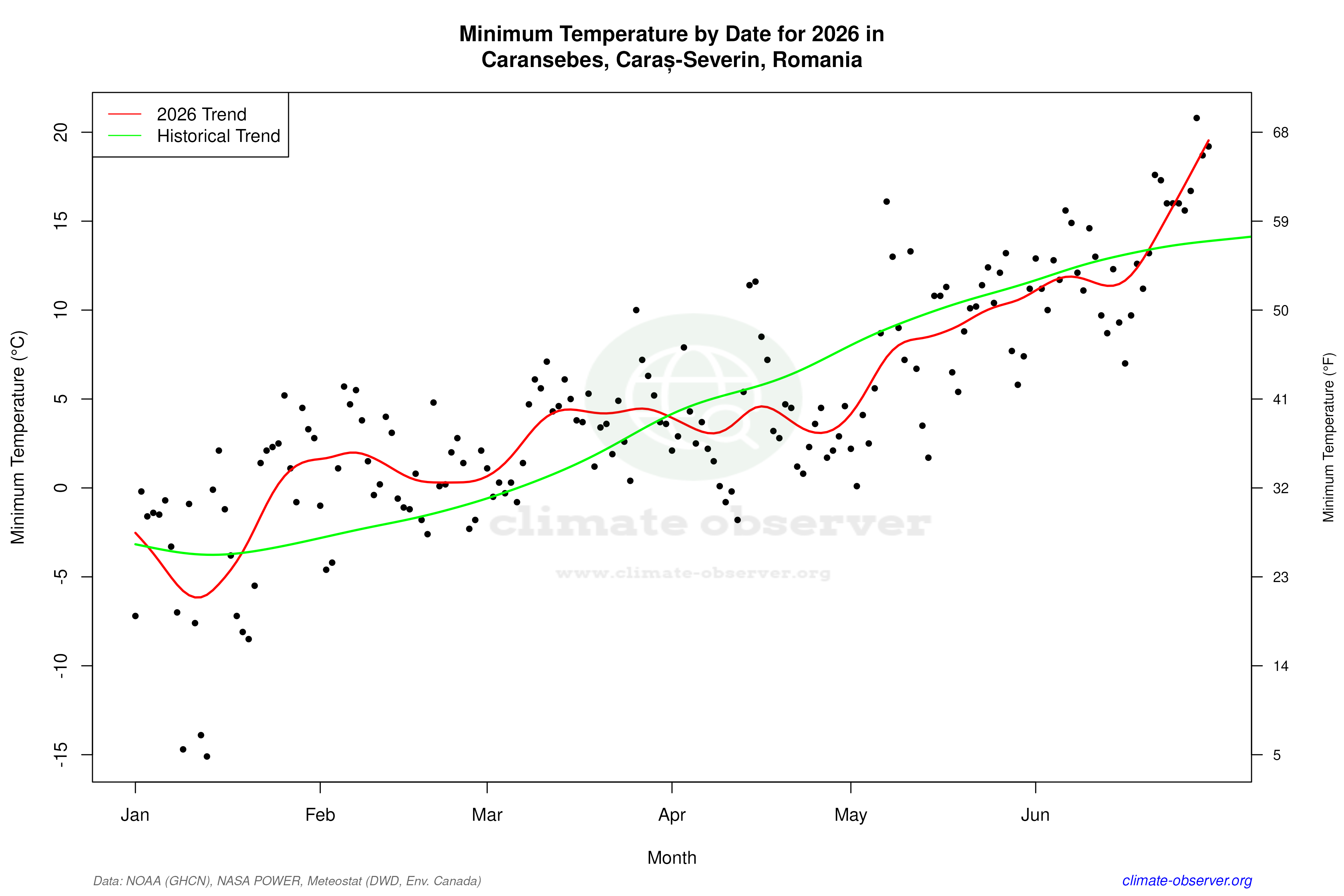

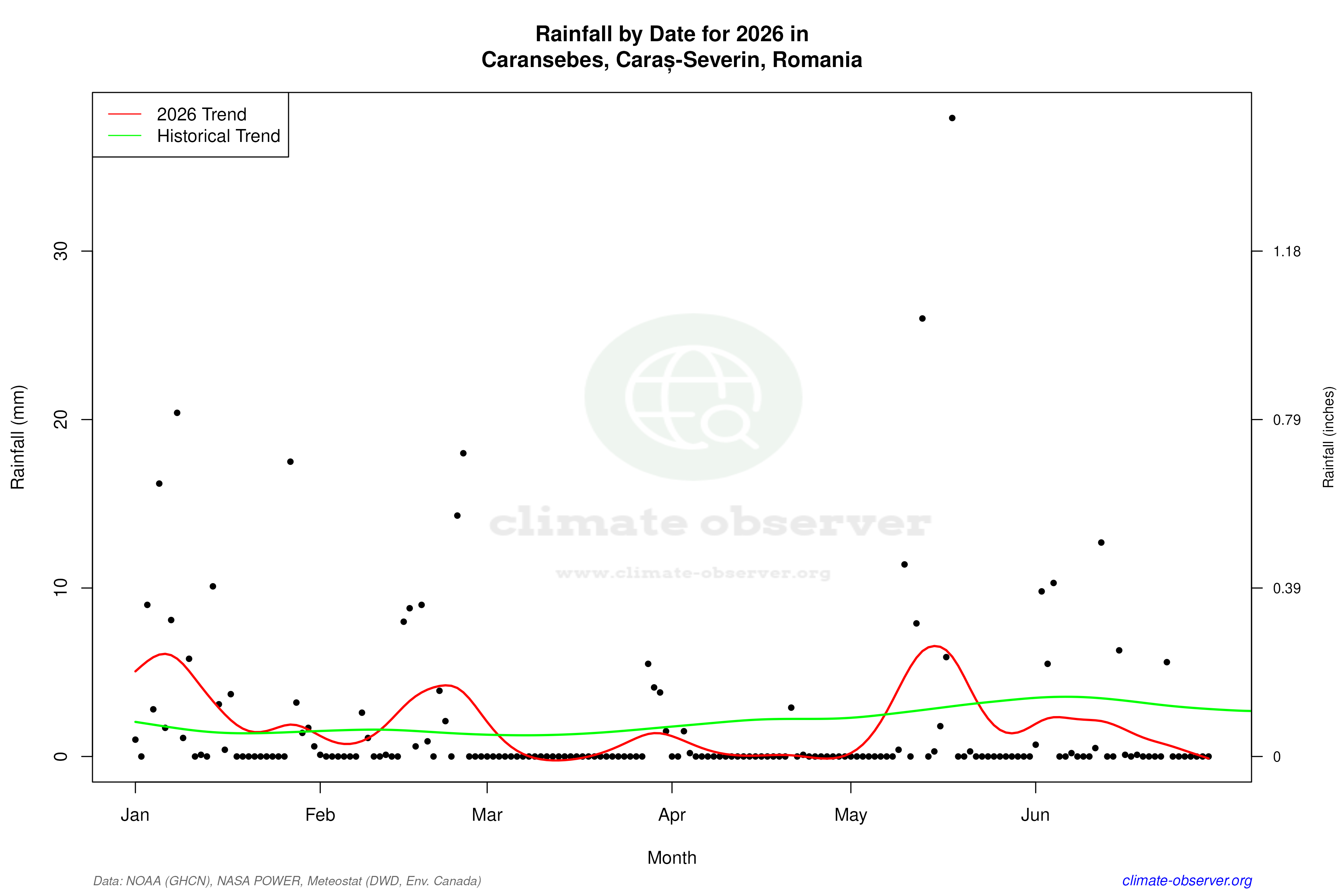


Max Temperature this Year | 1 of 6
Climate 12-Month Moving Averages
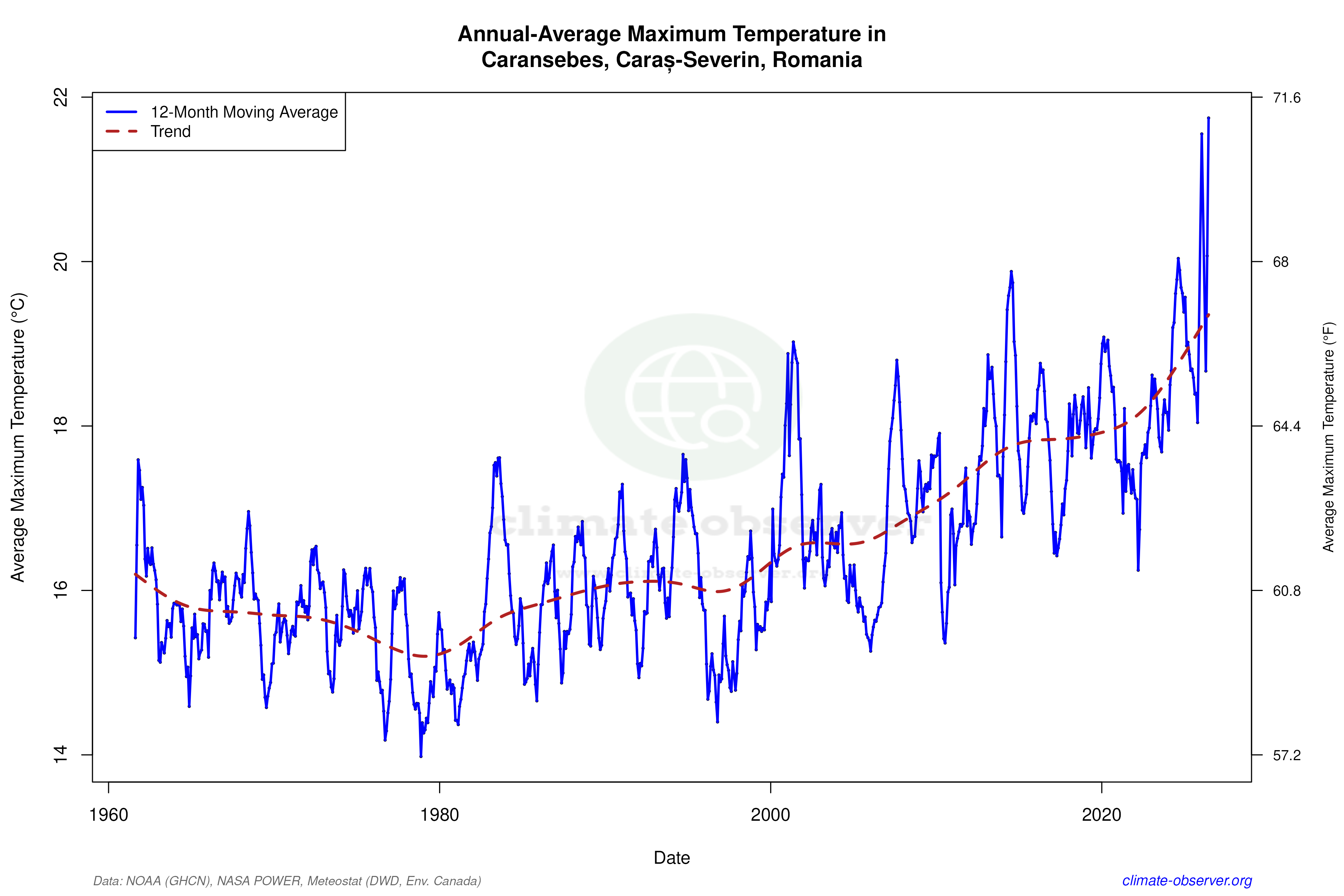


Max Temperature 12-Month MA | 1 of 6
Daily Data Points and Averages Throughout the Year
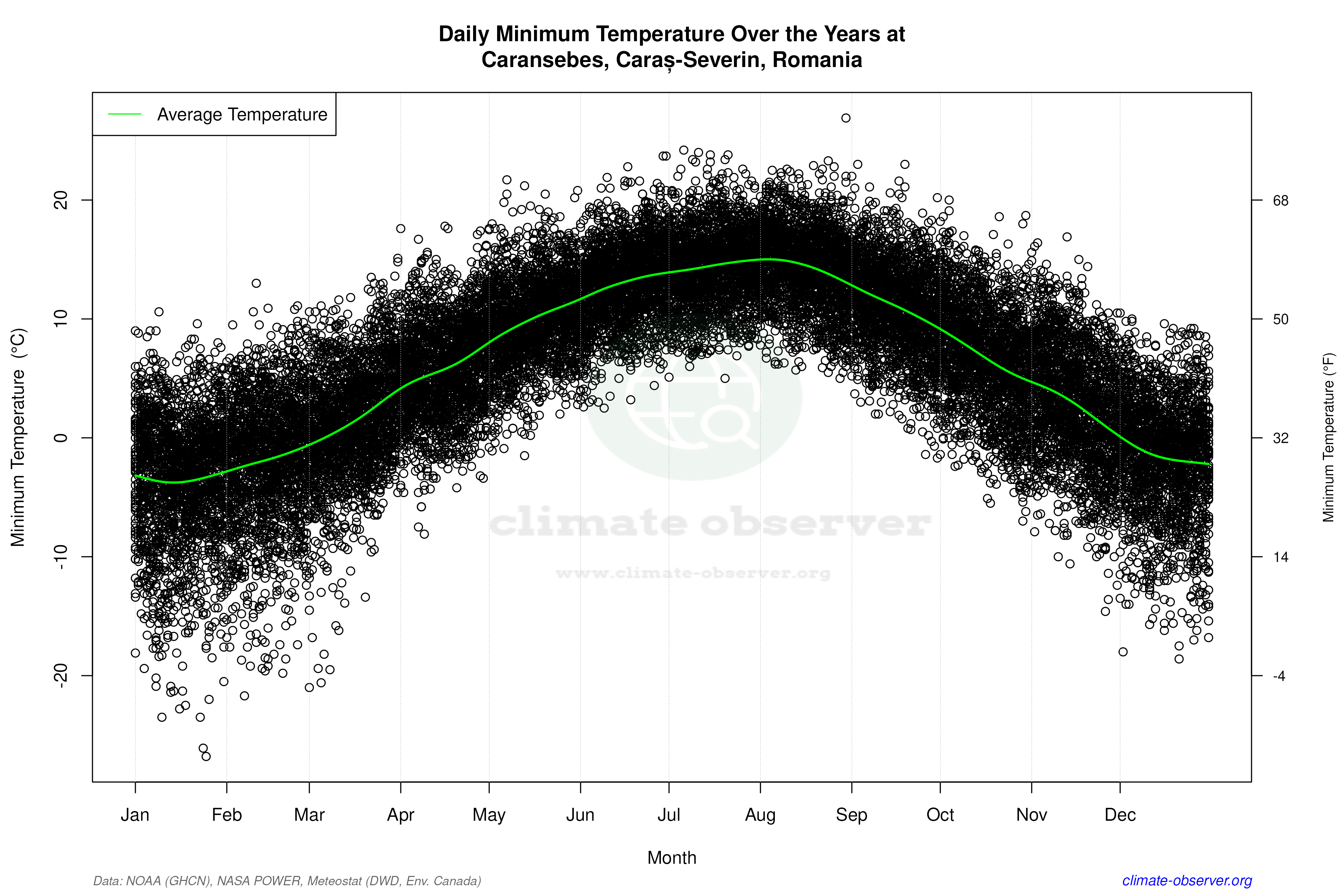
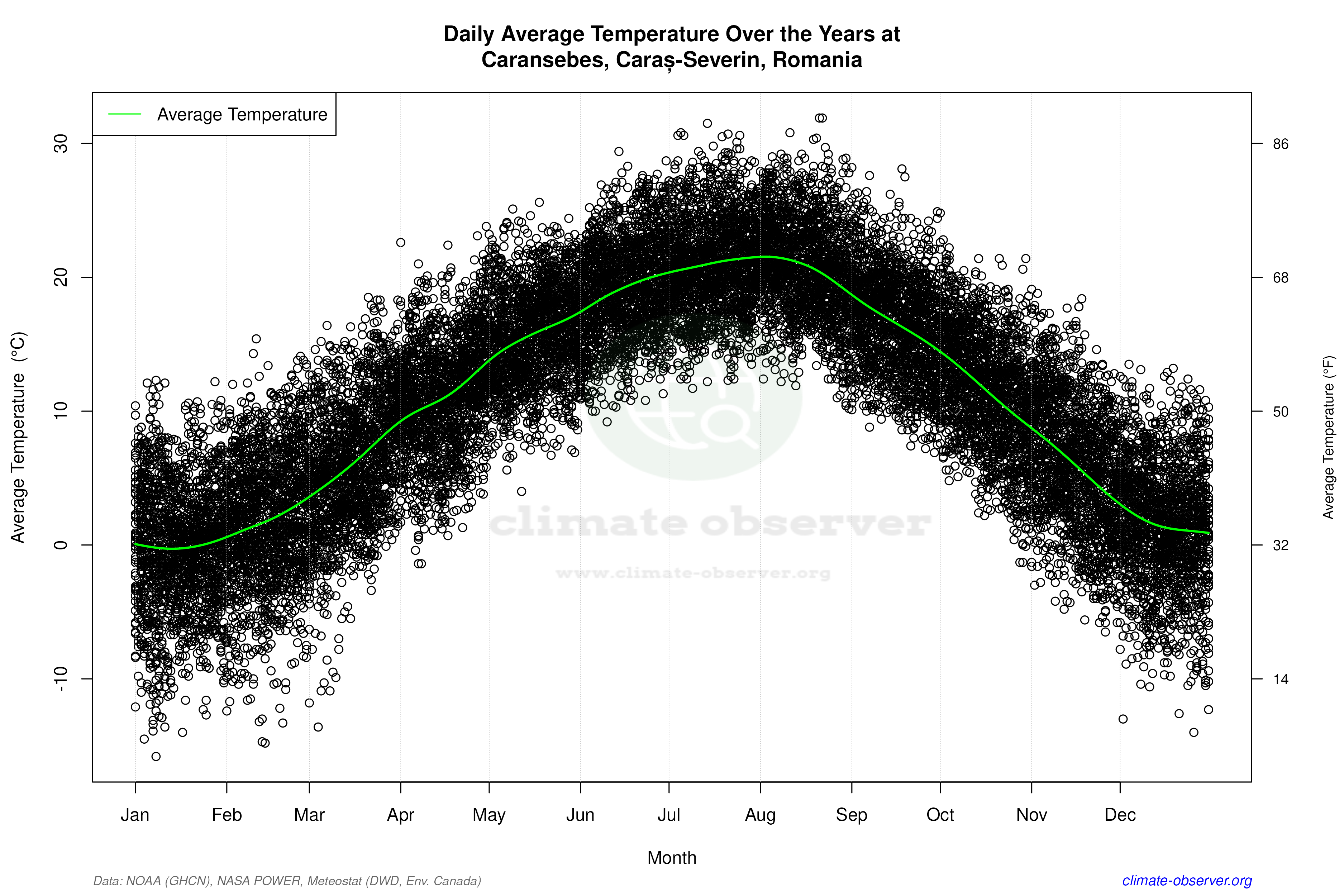


Average Max Temperature Throughout Year | 1 of 5


