Climate for Station: Iasi, Iași, Romania
Loading live weather...
Climate Analysis & Overview
Iași is experiencing a warming trend, with a notable increase in high temperatures over the past decade. The precipitation pattern is slightly more concentrated, indicating potential shifts in local weather dynamics. These changes align with Romania's broader climate goals, which aim to address climate variability and its impacts.
Warming Patterns in Iași
Iași, located at 47.1667°N, 27.6331°E, falls under the humid continental climate classification (Dfb) according to the Köppen system. This region is characterised by cold winters and warm summers, influenced by its position in the northeastern part of Romania, away from moderating maritime influences. Over the past decade, Iași has experienced a warming trend with high temperatures rising by 0.95°C (1.71°F) and lows by 0.33°C (0.59°F). This recent trend surpasses the all-time warming of highs by 0.48°C (0.86°F) and lows by 0.28°C (0.50°F), indicating an acceleration in temperature changes.
Temperature Extremes and Records
Iași has recorded temperature extremes that highlight its climatic variability. The highest temperature on record is 41.3°C (106.3°F), while the lowest is -30.6°C (-23.1°F). These records underscore the broad range of thermal conditions that the region can experience, from sweltering summer heat to frigid winter cold. Such extremes are crucial for understanding the potential impact of climate change on local weather patterns and infrastructure.
Precipitation Dynamics and PCI
The Precipitation Concentration Index (PCI) for Iași has seen a marginal increase from a baseline of 12.69 to a current value of 12.88. The PCI measures the distribution of precipitation over time, with higher values indicating more concentrated rainfall events. This slight increase suggests a trend towards more intense rainfall events, although it remains below the threshold of 20, which would indicate highly concentrated precipitation. This shift may have implications for water management and agricultural practices in the region.
Regional Climate Goals and Context
Romania is actively pursuing climate goals that aim to mitigate the impacts of climate change and enhance resilience. The warming trends observed in Iași are consistent with national efforts to monitor and adapt to climate variability. Recent weather events, such as heatwaves and heavy rainfall, provide a backdrop for understanding the urgency of these goals. The observed climatic changes in Iași offer insights into the broader regional patterns and the need for adaptive strategies.
Geographical Influences on Climate
The geographical setting of Iași, with its proximity to the Carpathian Mountains and the Prut River, plays a significant role in shaping its climate. The mountains can act as a barrier to air masses, influencing temperature and precipitation patterns. The river, meanwhile, contributes to local humidity levels and can affect microclimates within the region. Understanding these geographical influences is essential for interpreting the climatic data and predicting future trends.
Station Statistics
10-Year Trend
High: +2.56 °C/decade
Low: +1.66 °C/decade
Rain: +0.03 mm/decade
25-Year Trend
High: +1.51 °C/decade
Low: +0.81 °C/decade
Rain: -0.02 mm/decade
50-Year Trend
High: +0.66 °C/decade
Low: +0.34 °C/decade
Rain: -0.06 mm/decade
All-Time Trend
High: +0.49 °C/decade
Low: +0.30 °C/decade
Rain: -0.04 mm/decade
Percentage Above-Average Days
Last 12 Months: 51.2%
This Year: 54.7%
Precipitation Concentration Index (PCI) ℹ️
Last 12 Months: 10.6
Historical Average: 13.0
Percentile Rank of Last 12 Months ℹ️
High: 86th percentile
Low: 79th percentile
Rain: 56th percentile
Change in Variance ℹ️
High: -6.5%
Low: -10.7%
Intraday: +28.0%
Data Coverage
88.5%
First Year of Data
1952
Station Location
Historical Weather Records
| Max High | Avg High | Min High | Max Avg | Avg Avg | Min Avg | Max Low | Avg Low | Min Low | Max Precipitation | Avg Precipitation | Max Snow | Avg Snow | |
|---|---|---|---|---|---|---|---|---|---|---|---|---|---|
| Record | 41.3 °C | — | -19.3 °C | 31.6 °C | — | -22.3 °C | 24.8 °C | — | -30.6 °C | 136.7 mm | — | — | — |
| January | 19.4 °C | 0.9 °C | -18.9 °C | 12.4 °C | -2.2 °C | -21.8 °C | 7.8 °C | -5.7 °C | -30.6 °C | 34.1 mm | 1.0 mm | — | — |
| February | 22.5 °C | 3.2 °C | -16.1 °C | 13.7 °C | -0.8 °C | -20.6 °C | 9.8 °C | -4.2 °C | -26.7 °C | 26.5 mm | 1.0 mm | — | — |
| March | 27.9 °C | 9.2 °C | -8.6 °C | 18.4 °C | 4.3 °C | -12.7 °C | 14.2 °C | -0.4 °C | -19.2 °C | 28.5 mm | 1.0 mm | — | — |
| April | 31.8 °C | 16.8 °C | -0.2 °C | 23.6 °C | 10.5 °C | 0.1 °C | 15.2 °C | 5.2 °C | -9.4 °C | 46.0 mm | 1.7 mm | — | — |
| May | 36.0 °C | 22.6 °C | 9.0 °C | 27.1 °C | 16.2 °C | 4.3 °C | 19.3 °C | 10.3 °C | -0.6 °C | 59.9 mm | 2.0 mm | — | — |
| June | 37.9 °C | 26.2 °C | 9.5 °C | 30.7 °C | 20.0 °C | 10.1 °C | 24.8 °C | 14.2 °C | 3.9 °C | 78.6 mm | 2.8 mm | — | — |
| July | 40.1 °C | 28.1 °C | 13.7 °C | 31.6 °C | 21.9 °C | 12.7 °C | 24.8 °C | 15.8 °C | 7.6 °C | 125.3 mm | 2.4 mm | — | — |
| August | 41.3 °C | 27.9 °C | 13.7 °C | 31.5 °C | 21.3 °C | 9.8 °C | 24.1 °C | 15.1 °C | 4.9 °C | 136.7 mm | 1.7 mm | — | — |
| September | 37.4 °C | 23.0 °C | 8.2 °C | 28.6 °C | 16.5 °C | 2.1 °C | 20.6 °C | 10.9 °C | -3.4 °C | 62.4 mm | 1.6 mm | — | — |
| October | 33.9 °C | 16.3 °C | 0.6 °C | 25.2 °C | 10.5 °C | -2.7 °C | 18.8 °C | 5.7 °C | -7.2 °C | 82.6 mm | 1.1 mm | — | — |
| November | 25.6 °C | 8.6 °C | -10.0 °C | 19.4 °C | 4.3 °C | -16.4 °C | 15.8 °C | 1.3 °C | -21.1 °C | 34.2 mm | 1.3 mm | — | — |
| December | 19.5 °C | 2.8 °C | -19.3 °C | 13.6 °C | -0.4 °C | -22.3 °C | 10.3 °C | -3.2 °C | -27.2 °C | 42.7 mm | 1.1 mm | — | — |
Data Visualisations
Remove WatermarksCurrent Year Climate Trends vs Historical
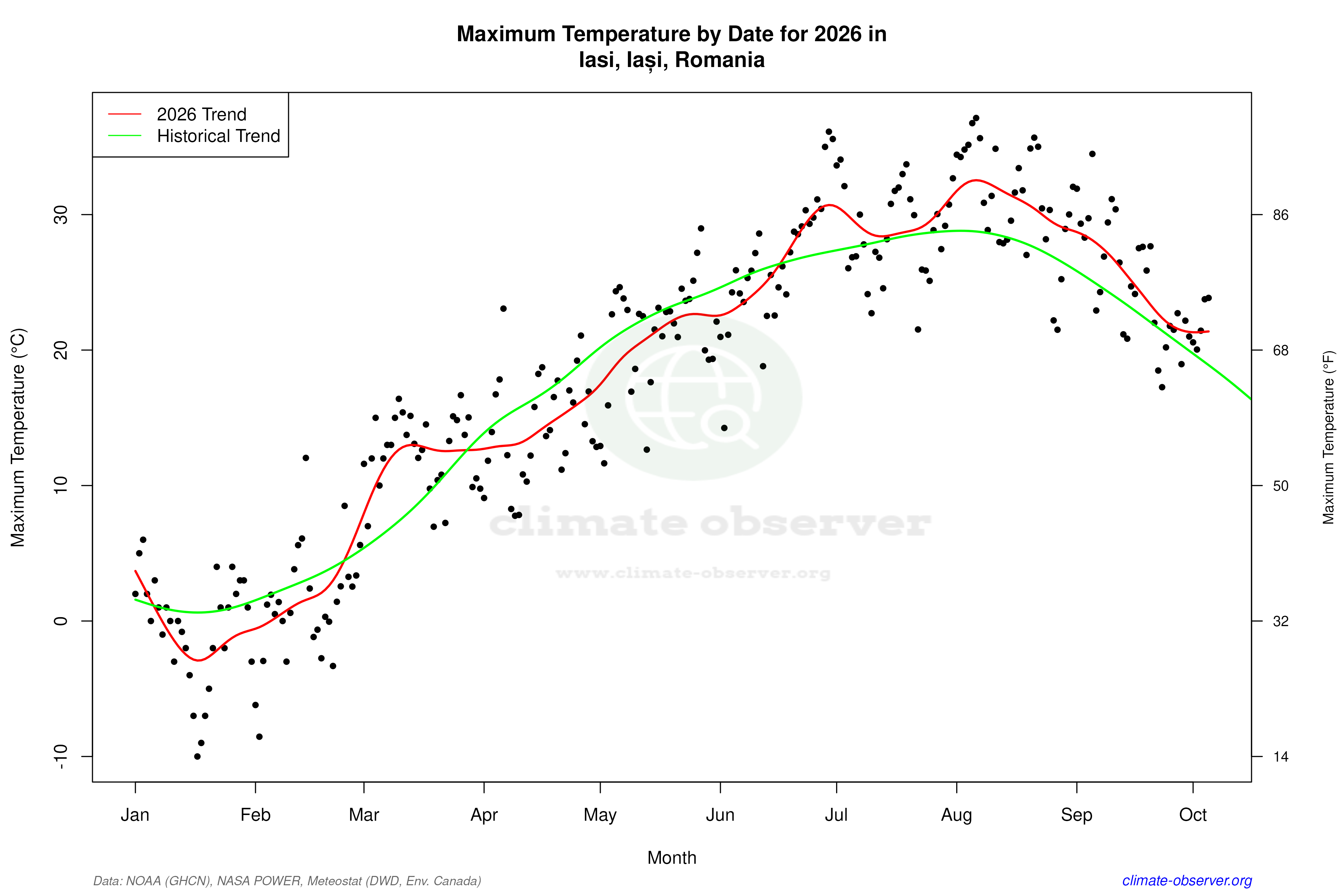
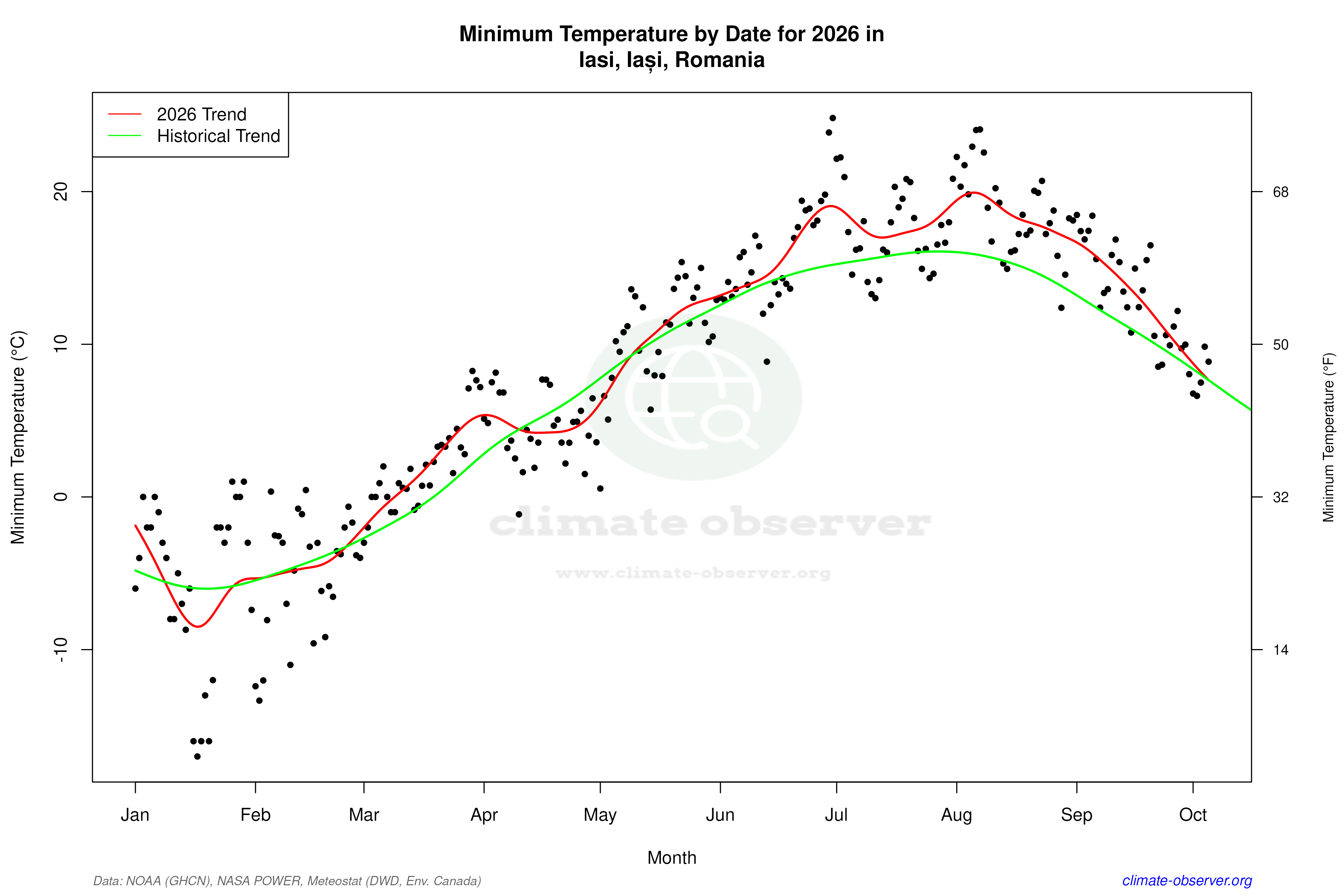
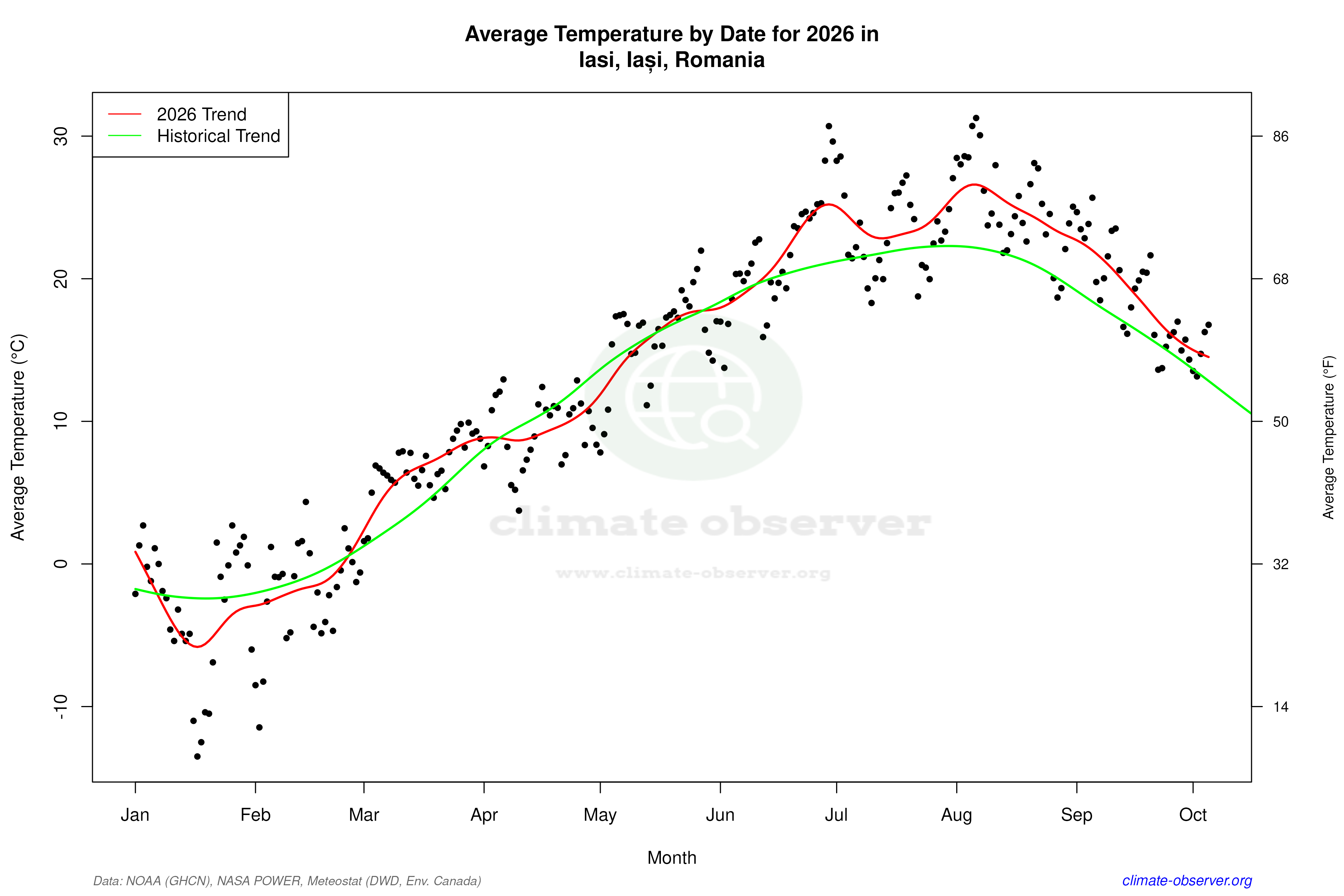
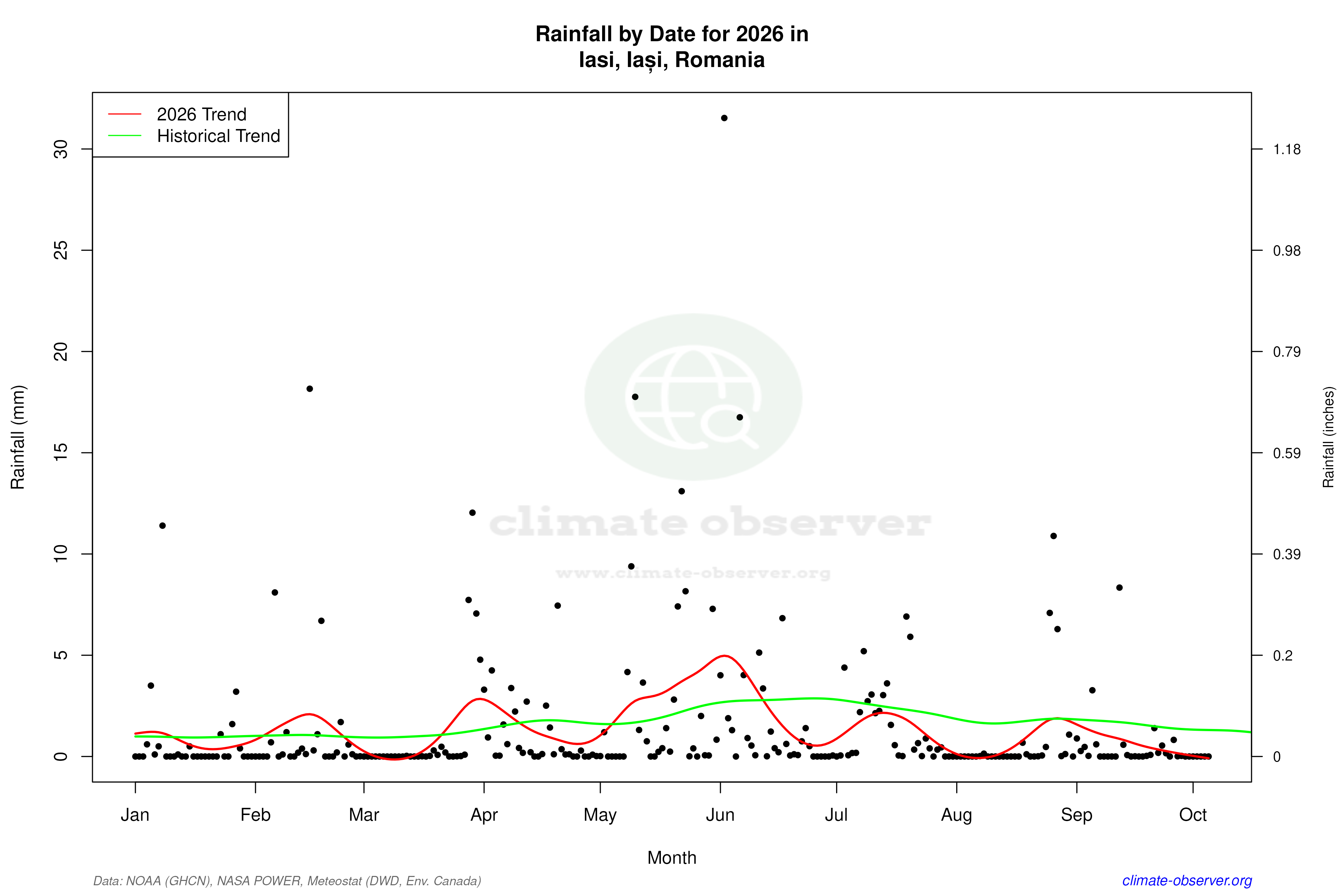
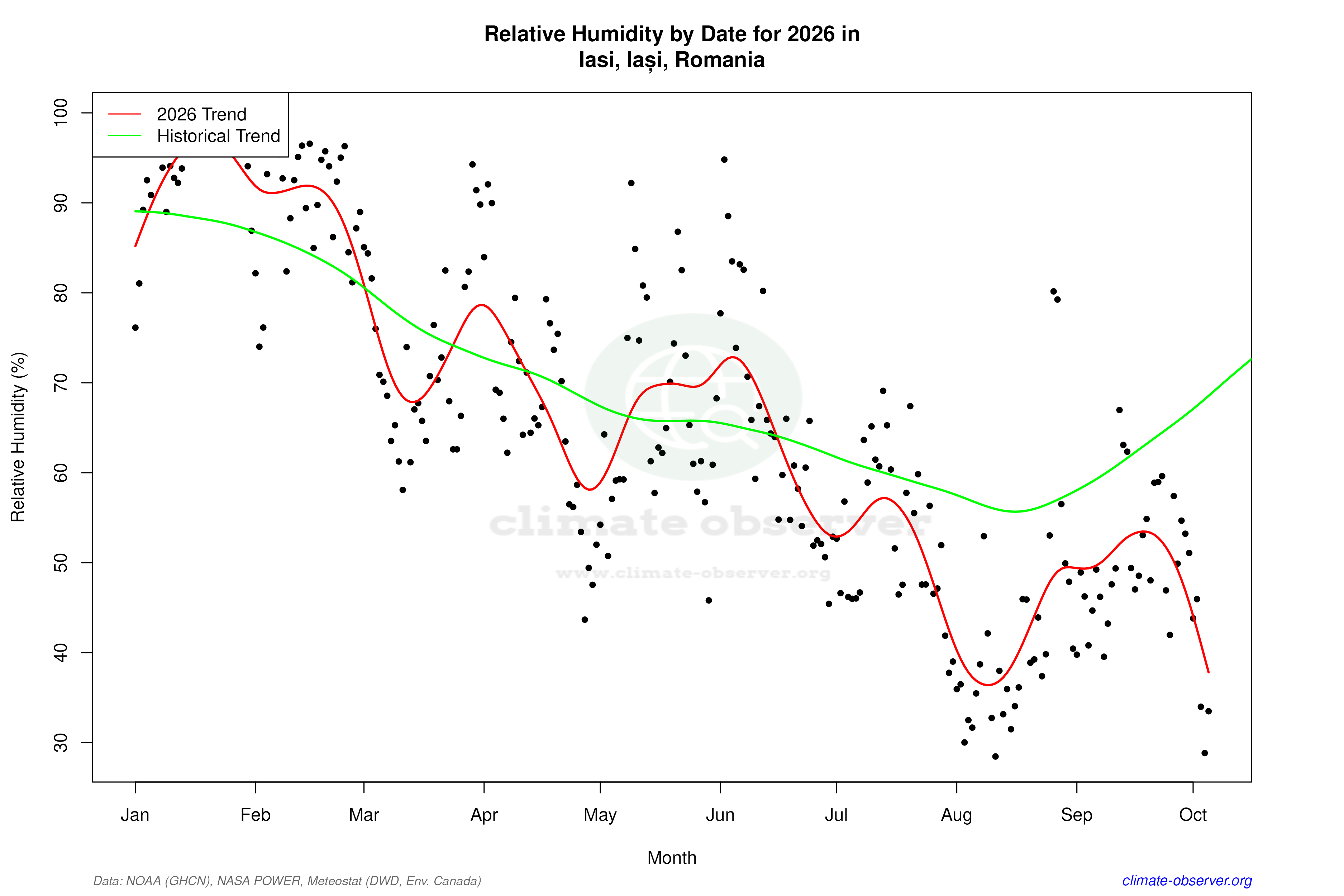

Max Temperature this Year | 1 of 6
Climate 12-Month Moving Averages
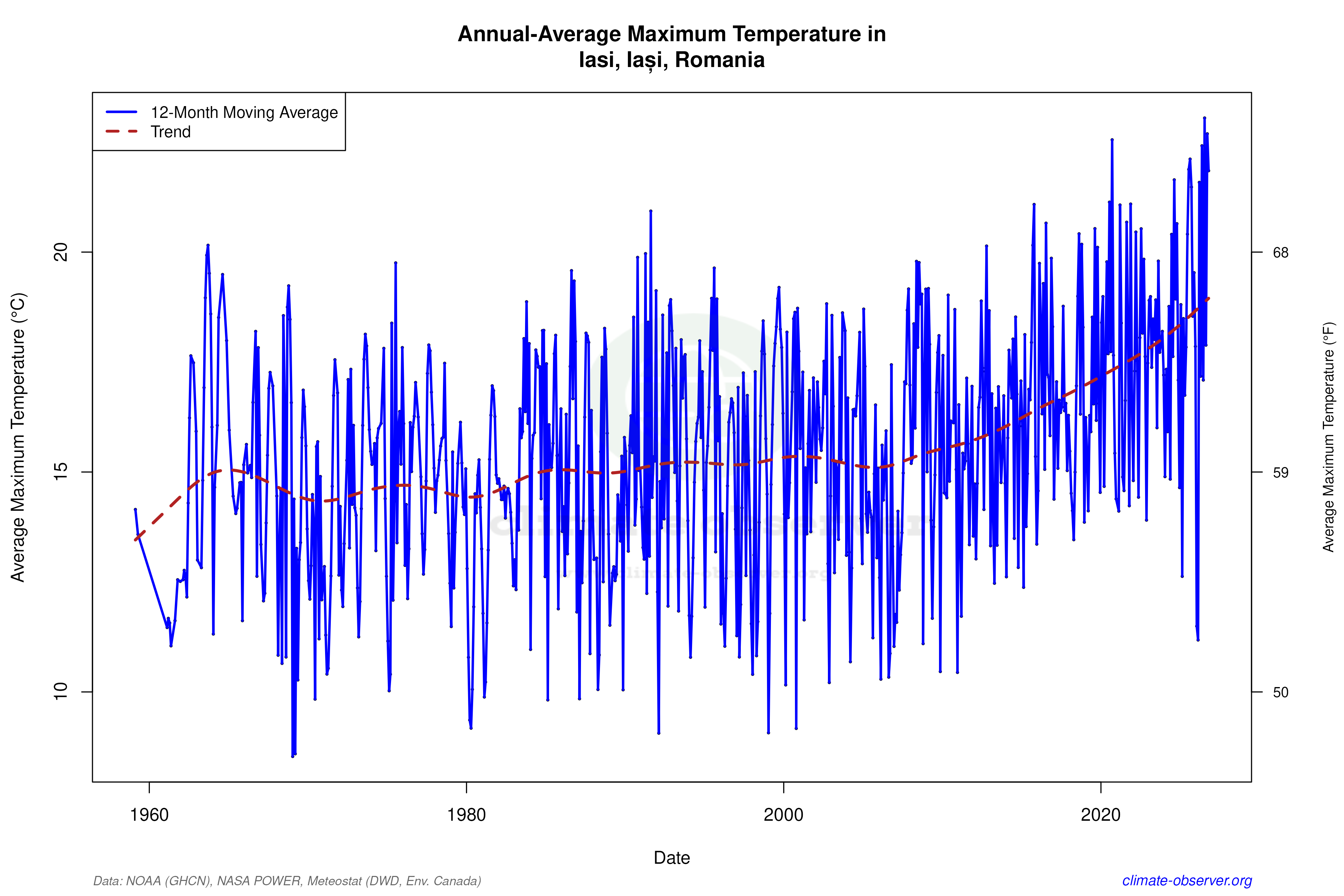
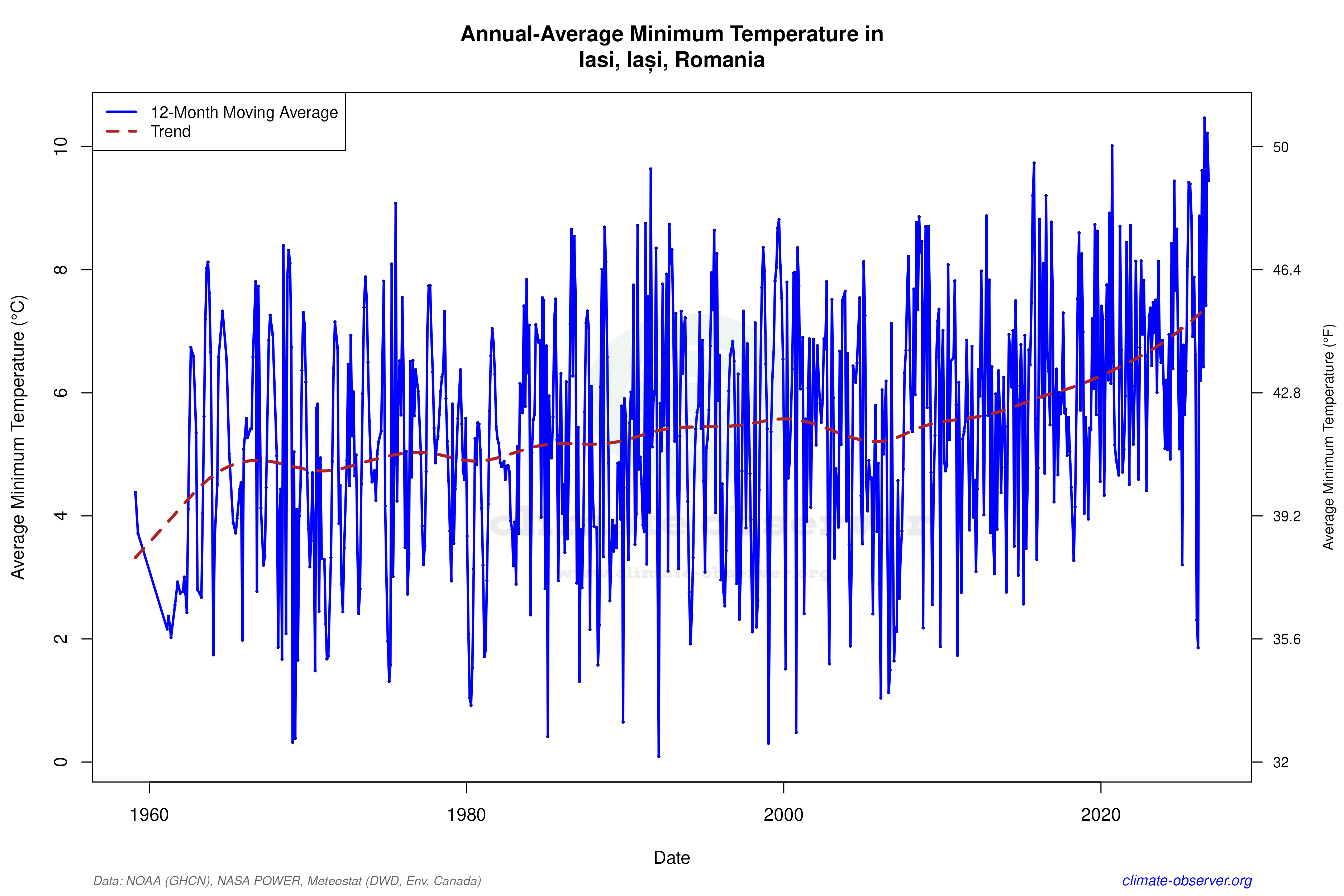
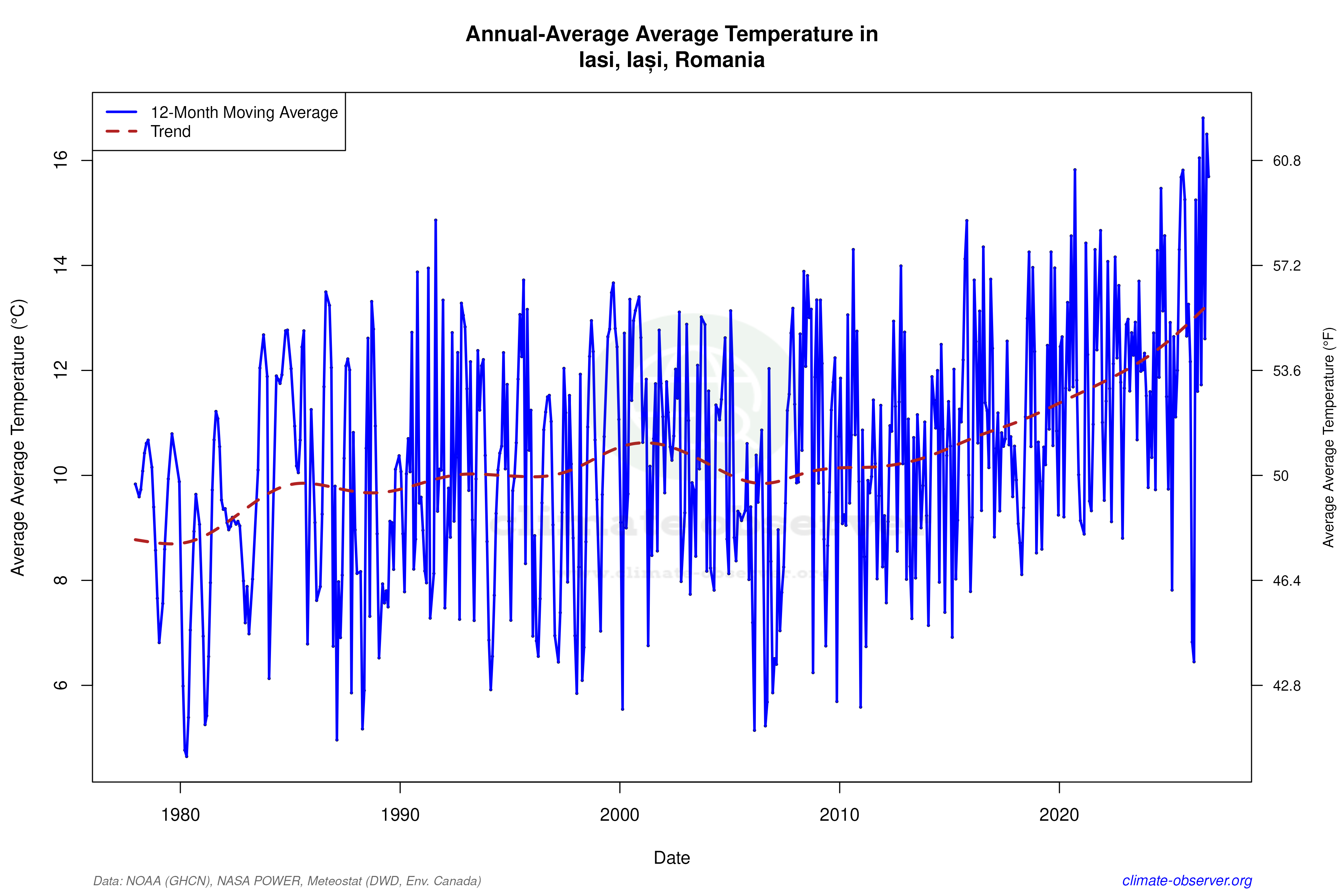
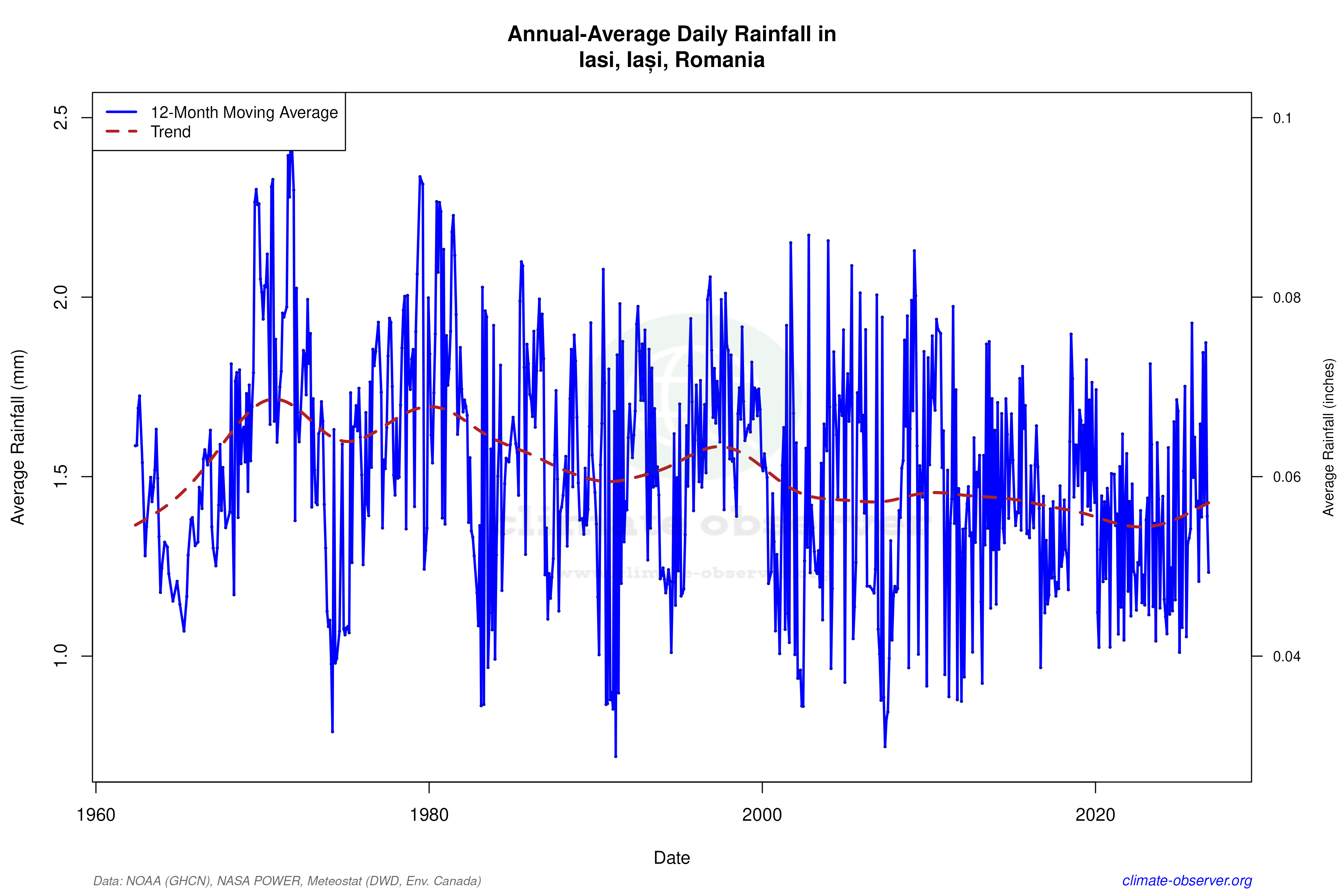
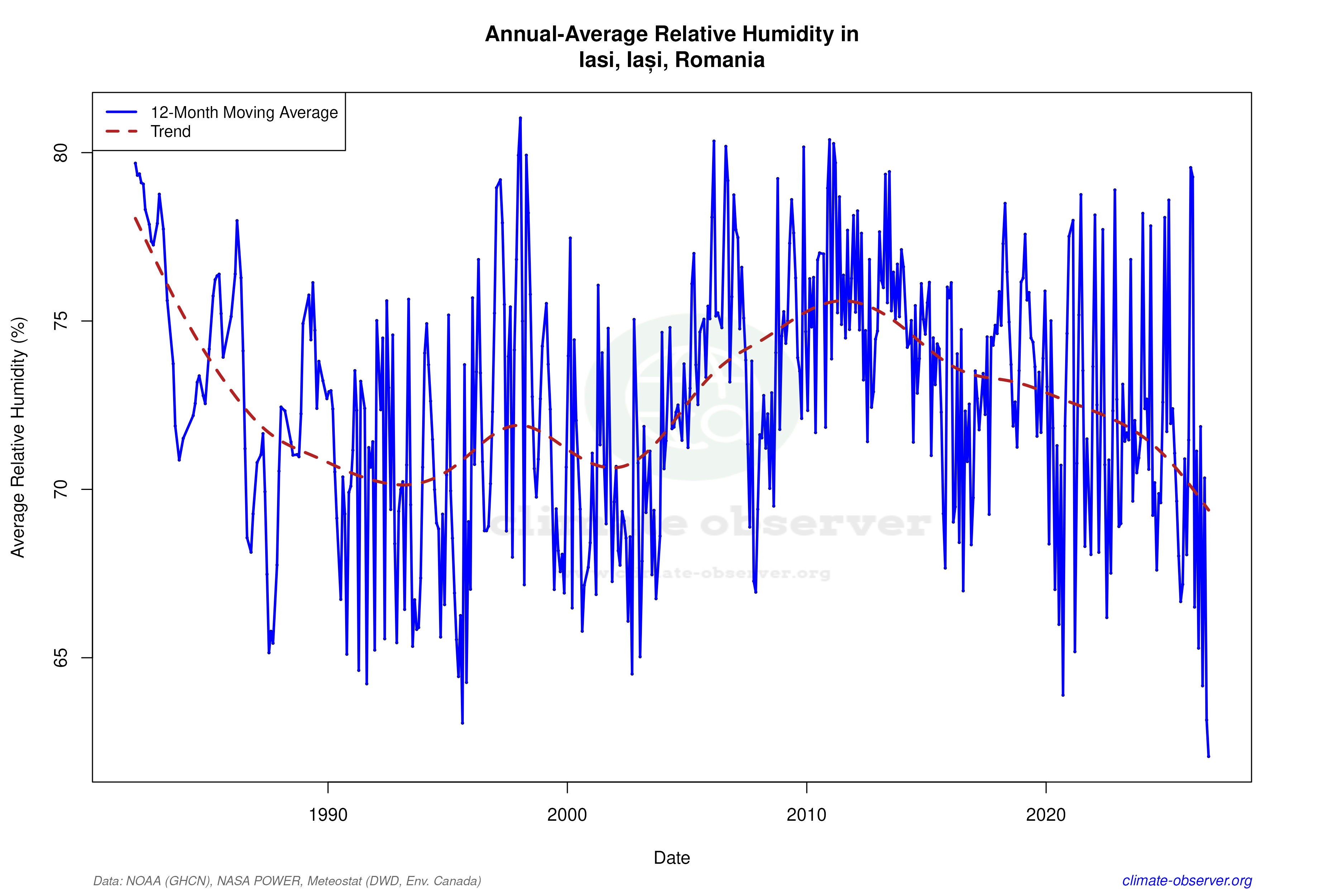

Max Temperature 12-Month MA | 1 of 6
Daily Data Points and Averages Throughout the Year
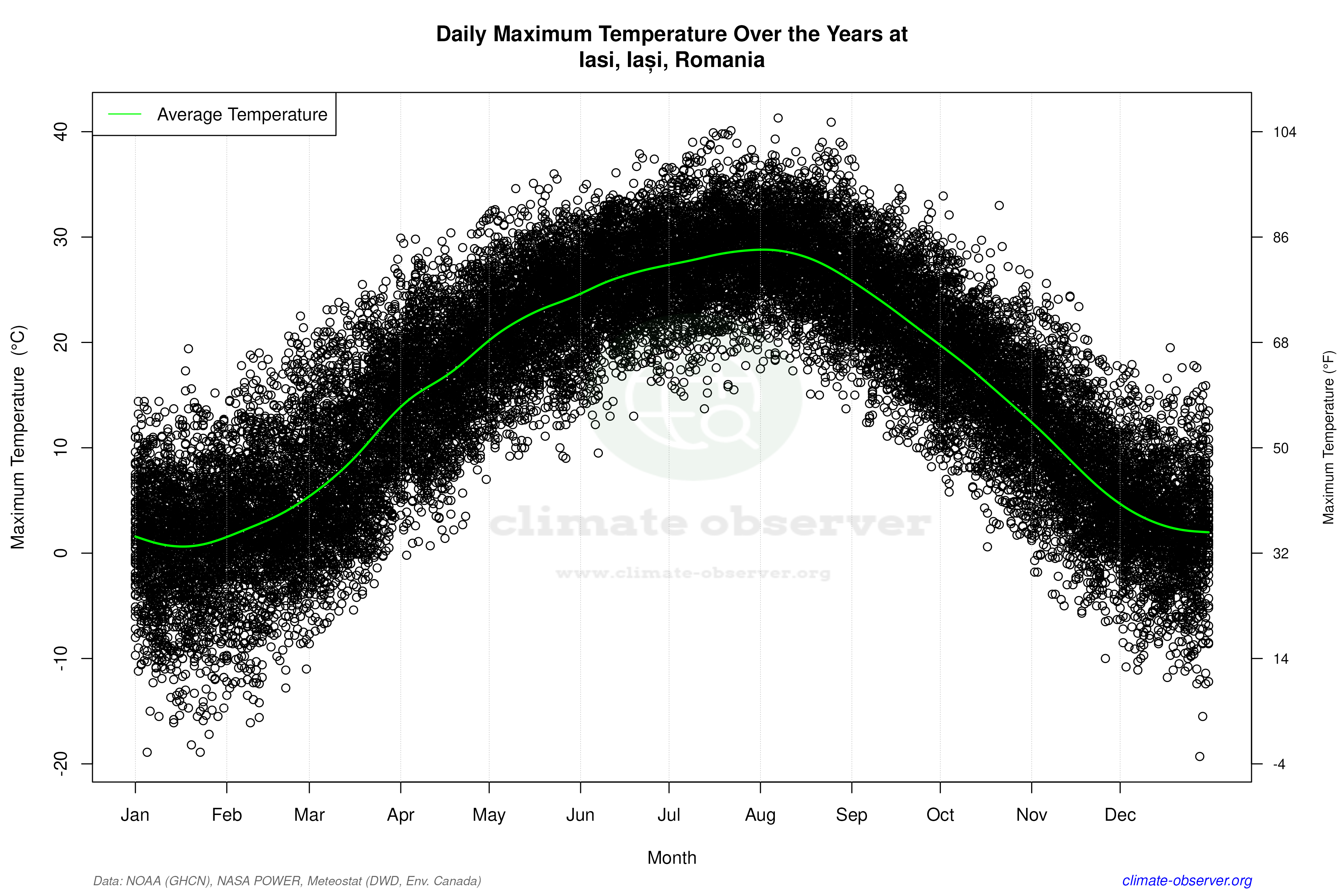
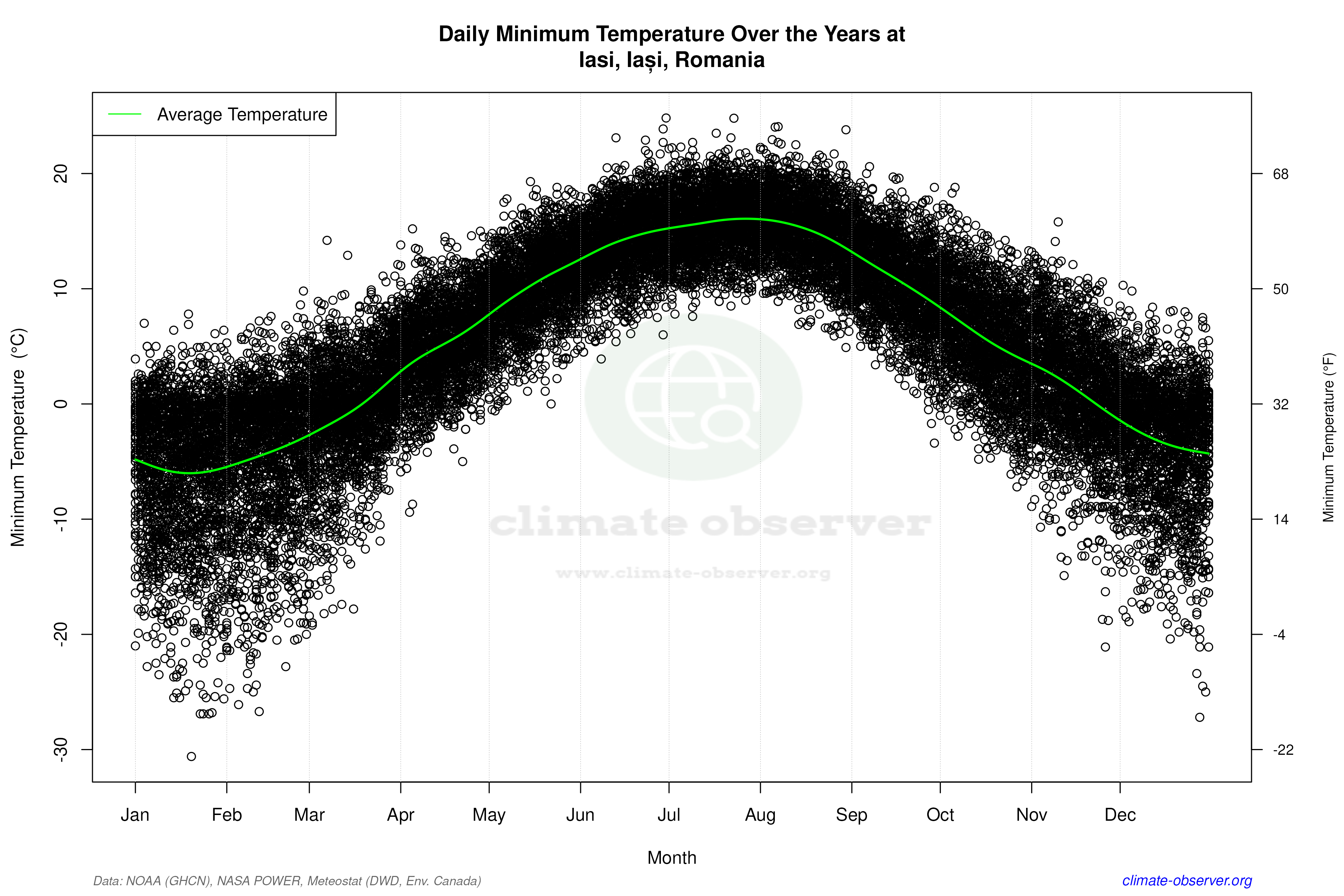
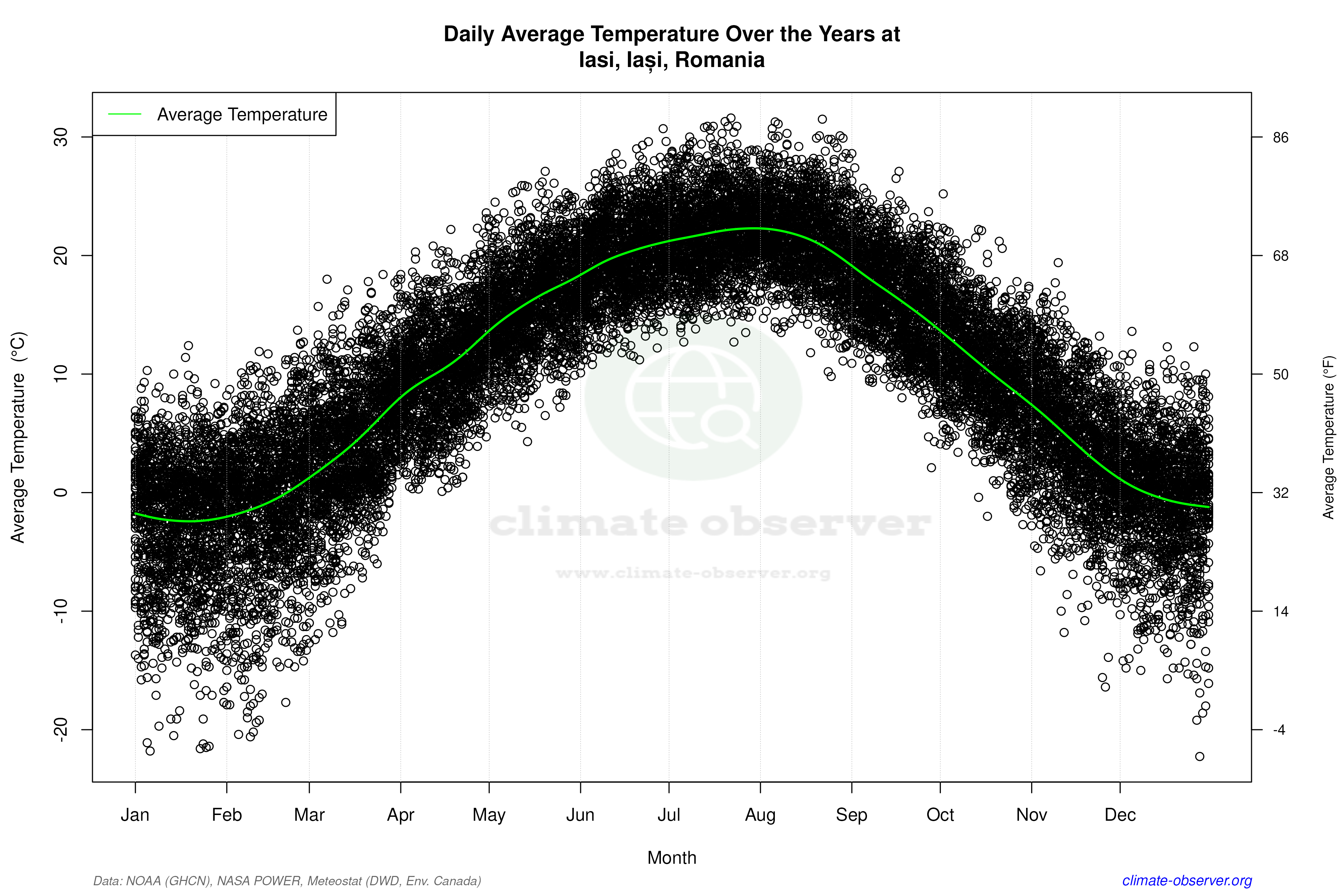
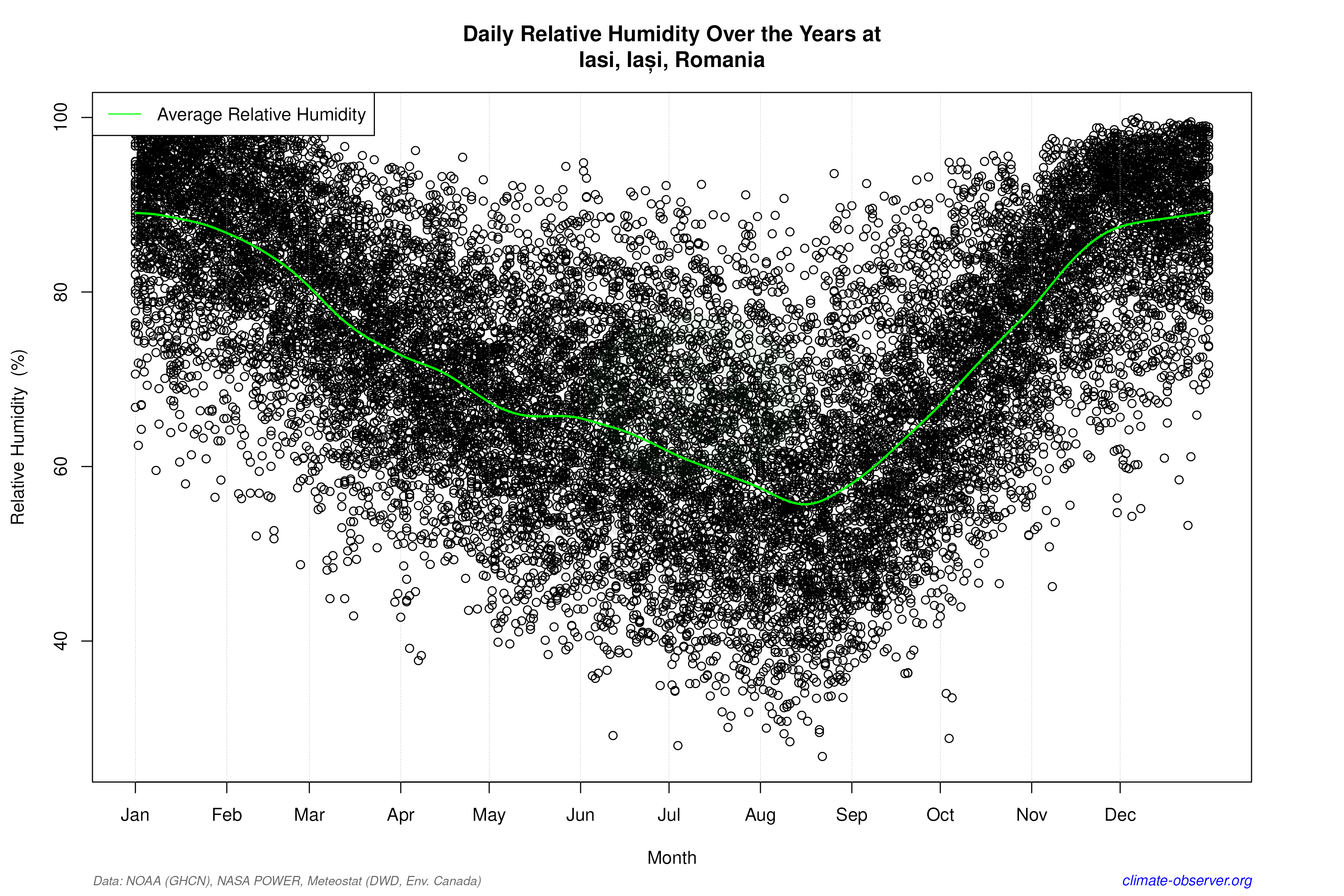

Average Max Temperature Throughout Year | 1 of 5


