Climate for Station: Ostrov Vize, Krasnoyarsk Krai, Russia
Loading live weather...
Climate Analysis & Overview
Ostrov Vize is experiencing contrasting thermal trends, with a notable 0.51°C (0.92°F) rise in all-time high temperatures juxtaposed against a -1.72°C (-3.10°F) decline over the past decade. Meanwhile, precipitation patterns have become more evenly distributed, suggesting a shift in weather dynamics on this remote Arctic island.
Arctic Temperature Dynamics
Ostrov Vize, located in the high Arctic region of Russia, falls under the Tundra climate classification (ET) according to the Köppen system. This classification is characterised by long, harsh winters and short, cool summers. The station's data reveals a complex thermal narrative. Over the long term, there has been a 0.51°C (0.92°F) warming in high temperatures, suggesting a gradual rise in peak warmth. However, the last decade has shown a contrasting trend with a -1.72°C (-3.10°F) decline in high temperatures, indicating a recent cooling phase. This divergence highlights the variability inherent in Arctic climates, possibly influenced by local geographical factors such as sea ice extent and ocean currents.
Subtle Shifts in Low Temperatures
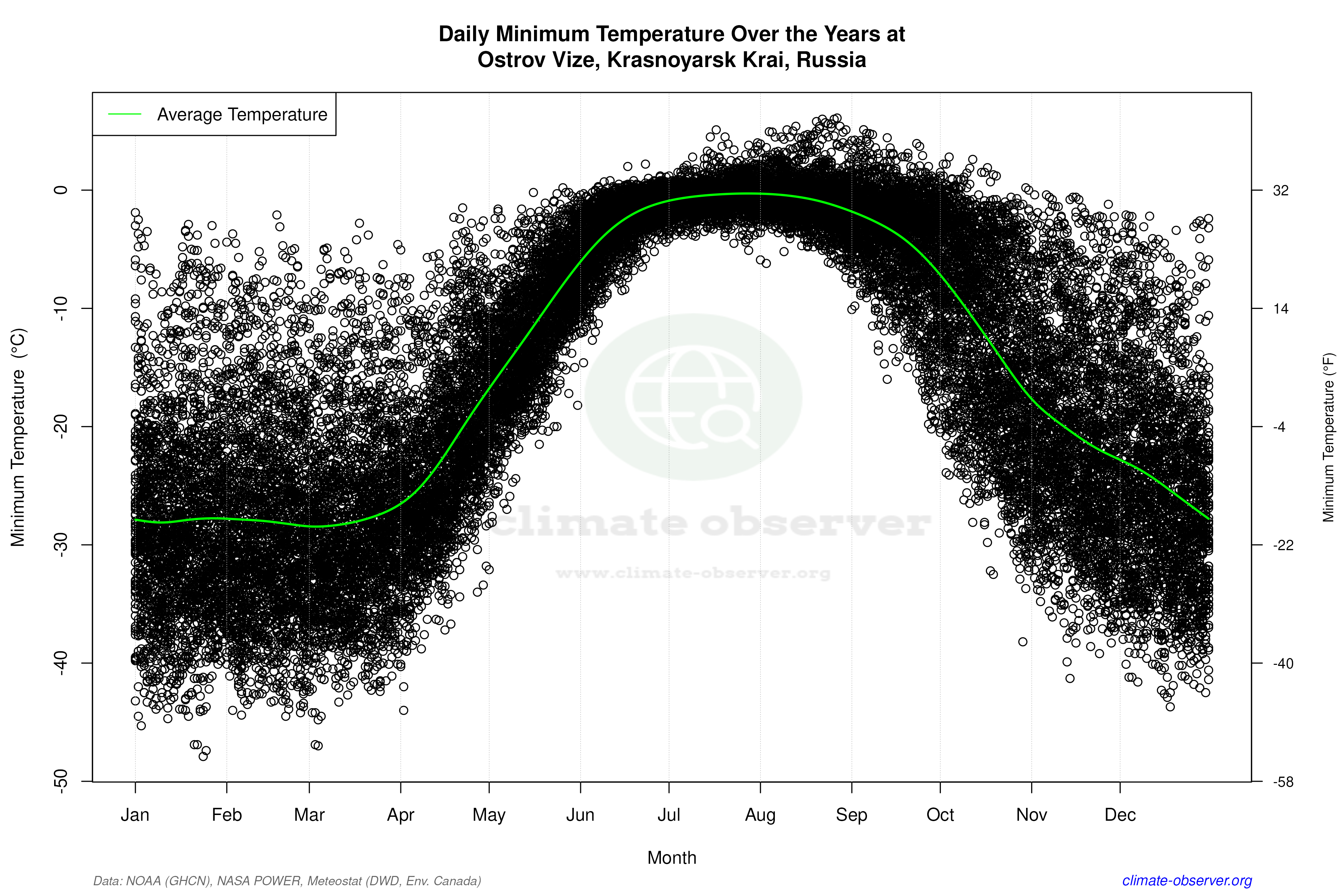
The low temperatures at Ostrov Vize have exhibited a consistent warming trend over both long-term and recent periods. The all-time data shows an increase of 0.74°C (1.33°F), while the past decade records a marginal rise of 0.03°C (0.05°F). This subtle warming of low temperatures could be indicative of less severe cold spells, potentially impacting local ecosystems and ice formation patterns.
Precipitation Patterns: More Even Distribution
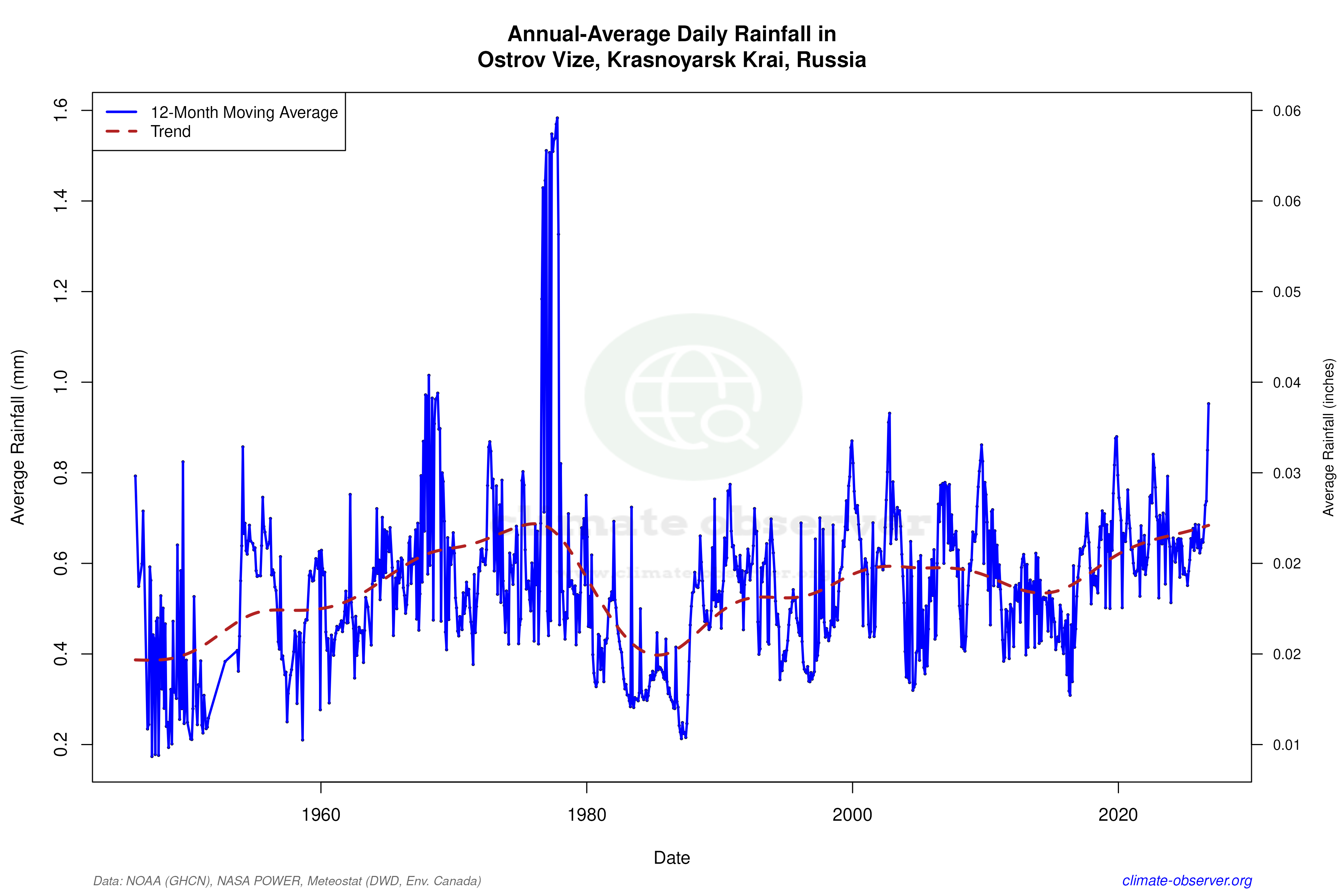
The Precipitation Concentration Index (PCI) for Ostrov Vize has decreased from a baseline of 11.3 to a current value of 9.5. This shift suggests that precipitation is now more evenly distributed throughout the year, rather than being concentrated in fewer, more intense events. Such a change could lead to more stable environmental conditions, reducing the risk of flooding and erosion typically associated with concentrated precipitation events. This even distribution is a notable feature in the context of global climate change discussions, where precipitation patterns are often becoming more erratic.
Extremes and Records
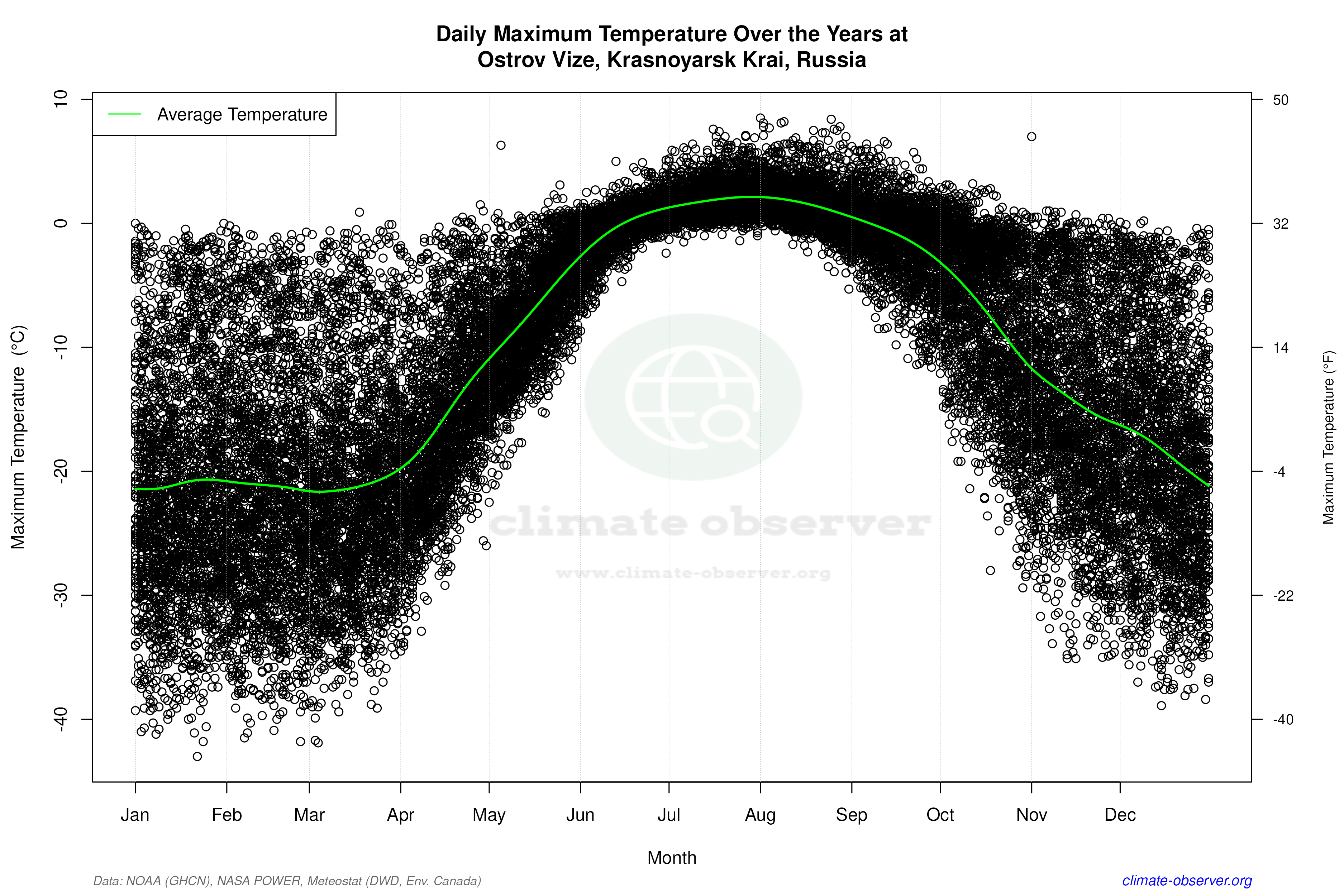
The station has recorded an absolute maximum temperature of 8.5°C (47.3°F) and a minimum of -47.9°C (-54.2°F). These extremes underscore the harsh and variable climate of the Arctic region. The warming trend in low temperatures might suggest a shift in the frequency or intensity of these extreme cold events, which could have implications for local wildlife and human activities.
Regional Context and Climate Goals
Ostrov Vize's climate data provides valuable insights into the broader climatic shifts occurring within the Siberian Federal District. Russia's climate goals, which include reducing carbon emissions and adapting to climate change impacts, are particularly relevant in this context. The observed trends at Ostrov Vize, especially the more evenly distributed precipitation, may offer a glimpse into the potential for resilience-building strategies in Arctic regions.
Station Statistics
10-Year Trend
High: -1.00 °C/decade
Low: +0.48 °C/decade
Rain: +0.05 mm/decade
25-Year Trend
High: +1.31 °C/decade
Low: +2.06 °C/decade
Rain: +0.03 mm/decade
50-Year Trend
High: +1.17 °C/decade
Low: +1.57 °C/decade
Rain: +0.02 mm/decade
All-Time Trend
High: +0.47 °C/decade
Low: +0.68 °C/decade
Rain: +0.01 mm/decade
Percentage Above-Average Days
Last 12 Months: 66.6%
This Year: 34.9%
Precipitation Concentration Index (PCI) ℹ️
Last 12 Months: 10.4
Historical Average: 11.2
Percentile Rank of Last 12 Months ℹ️
High: 93rd percentile
Low: 96th percentile
Rain: 84th percentile
Change in Variance ℹ️
High: -29.8%
Low: -30.6%
Intraday: -33.6%
Data Coverage
99.0%
First Year of Data
1972
Station Location
Historical Weather Records
| Max High | Avg High | Min High | Max Avg | Avg Avg | Min Avg | Max Low | Avg Low | Min Low | Max Precipitation | Avg Precipitation | Max Snow | Avg Snow | |
|---|---|---|---|---|---|---|---|---|---|---|---|---|---|
| Record | 8.5 °C | — | -43.0 °C | 6.8 °C | — | -44.3 °C | 6.1 °C | — | -47.9 °C | 70.1 mm | — | — | — |
| January | 0.0 °C | -21.0 °C | -43.0 °C | -0.9 °C | -24.5 °C | -44.3 °C | -1.9 °C | -27.9 °C | -47.9 °C | 15.8 mm | 0.4 mm | — | — |
| February | -0.2 °C | -21.2 °C | -41.8 °C | -1.2 °C | -24.6 °C | -42.8 °C | -2.1 °C | -28.1 °C | -44.5 °C | 11.7 mm | 0.4 mm | — | — |
| March | 0.9 °C | -21.1 °C | -41.9 °C | -0.7 °C | -24.6 °C | -44.2 °C | -2.8 °C | -27.9 °C | -47.0 °C | 30.6 mm | 0.4 mm | — | — |
| April | 1.5 °C | -15.7 °C | -34.5 °C | -0.3 °C | -19.0 °C | -38.9 °C | -1.5 °C | -22.4 °C | -44.0 °C | 7.1 mm | 0.3 mm | — | — |
| May | 6.3 °C | -7.0 °C | -22.5 °C | 1.1 °C | -9.2 °C | -26.6 °C | 0.2 °C | -11.6 °C | -32.1 °C | 13.5 mm | 0.4 mm | — | — |
| June | 5.1 °C | -0.2 °C | -8.7 °C | 3.6 °C | -1.5 °C | -9.7 °C | 2.2 °C | -2.8 °C | -14.6 °C | 20.4 mm | 0.4 mm | — | — |
| July | 7.6 °C | 1.8 °C | -1.5 °C | 4.9 °C | 0.6 °C | -2.8 °C | 5.1 °C | -0.5 °C | -5.1 °C | 70.1 mm | 0.7 mm | — | — |
| August | 8.5 °C | 1.5 °C | -5.3 °C | 6.8 °C | 0.3 °C | -5.6 °C | 6.1 °C | -0.8 °C | -7.4 °C | 59.9 mm | 0.9 mm | — | — |
| September | 6.6 °C | -0.9 °C | -11.6 °C | 6.1 °C | -2.3 °C | -15.9 °C | 5.1 °C | -3.8 °C | -20.2 °C | 32.0 mm | 0.8 mm | — | — |
| October | 3.2 °C | -7.1 °C | -29.4 °C | 2.9 °C | -9.6 °C | -34.2 °C | 2.8 °C | -12.2 °C | -38.2 °C | 11.2 mm | 0.7 mm | — | — |
| November | 7.0 °C | -14.3 °C | -35.1 °C | 0.6 °C | -17.6 °C | -37.8 °C | -0.4 °C | -20.6 °C | -41.3 °C | 16.1 mm | 0.5 mm | — | — |
| December | 0.2 °C | -18.4 °C | -38.9 °C | -0.8 °C | -21.8 °C | -40.5 °C | -2.1 °C | -25.0 °C | -43.7 °C | 19.9 mm | 0.5 mm | — | — |
Data Visualisations
Remove WatermarksCurrent Year Climate Trends vs Historical
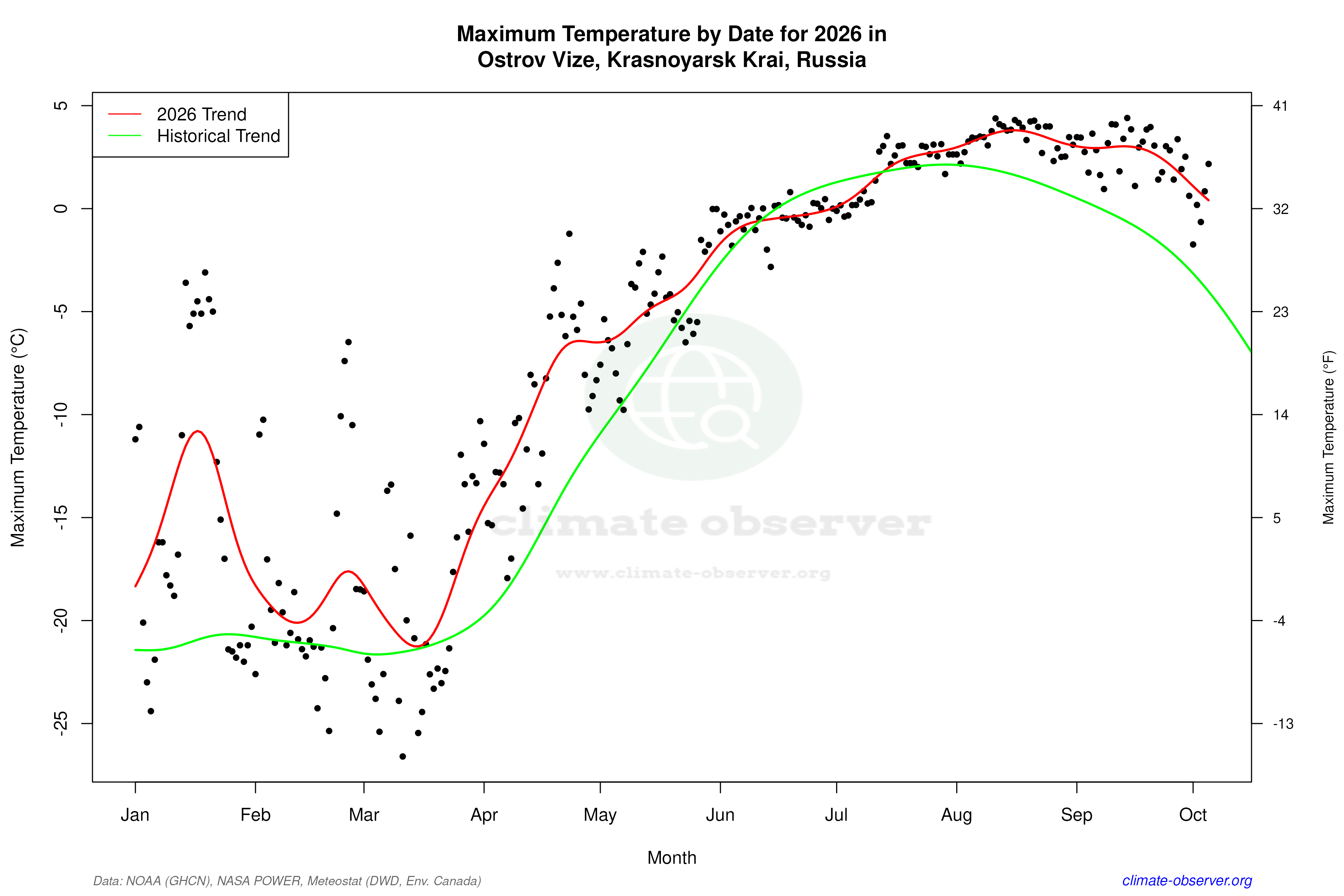
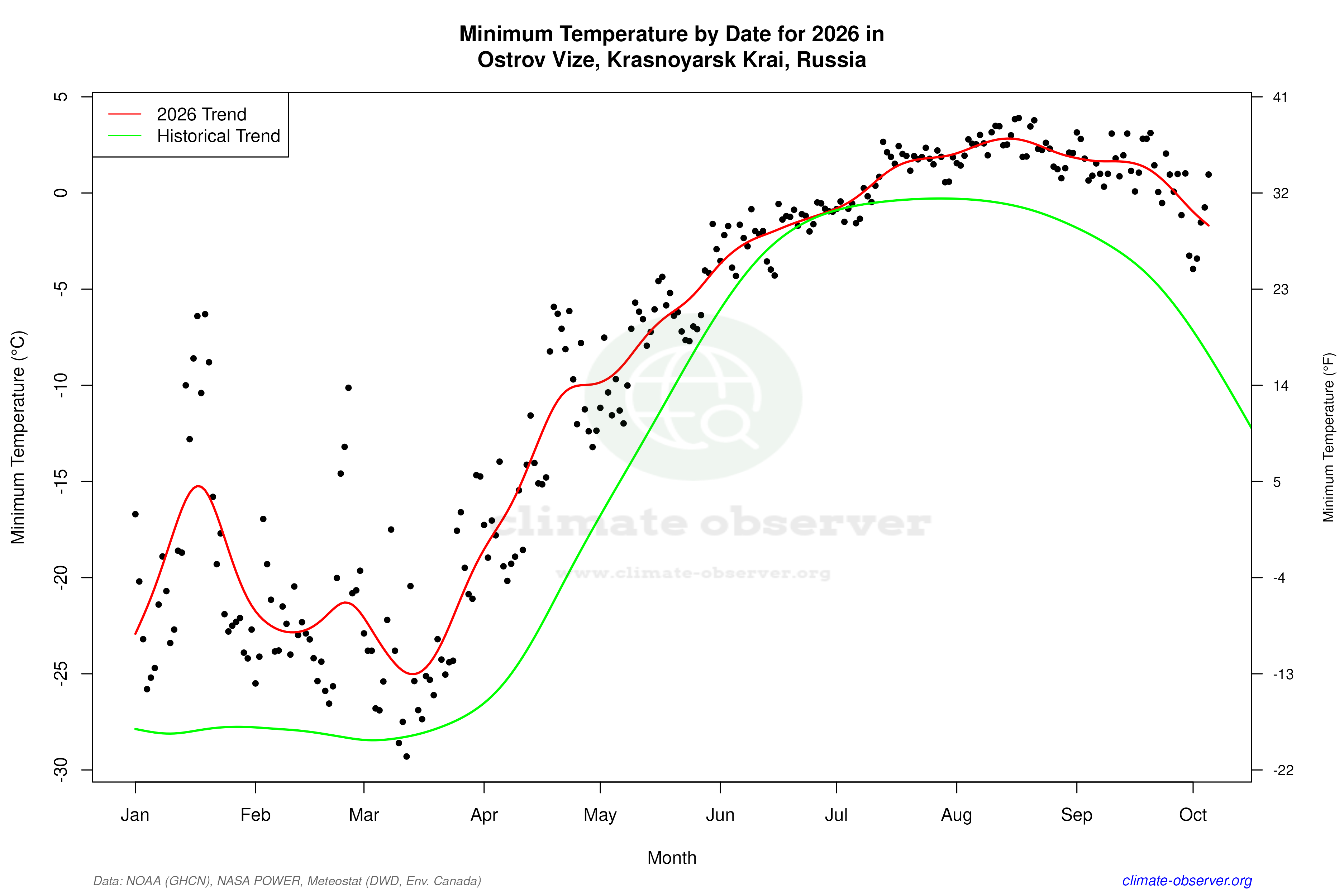
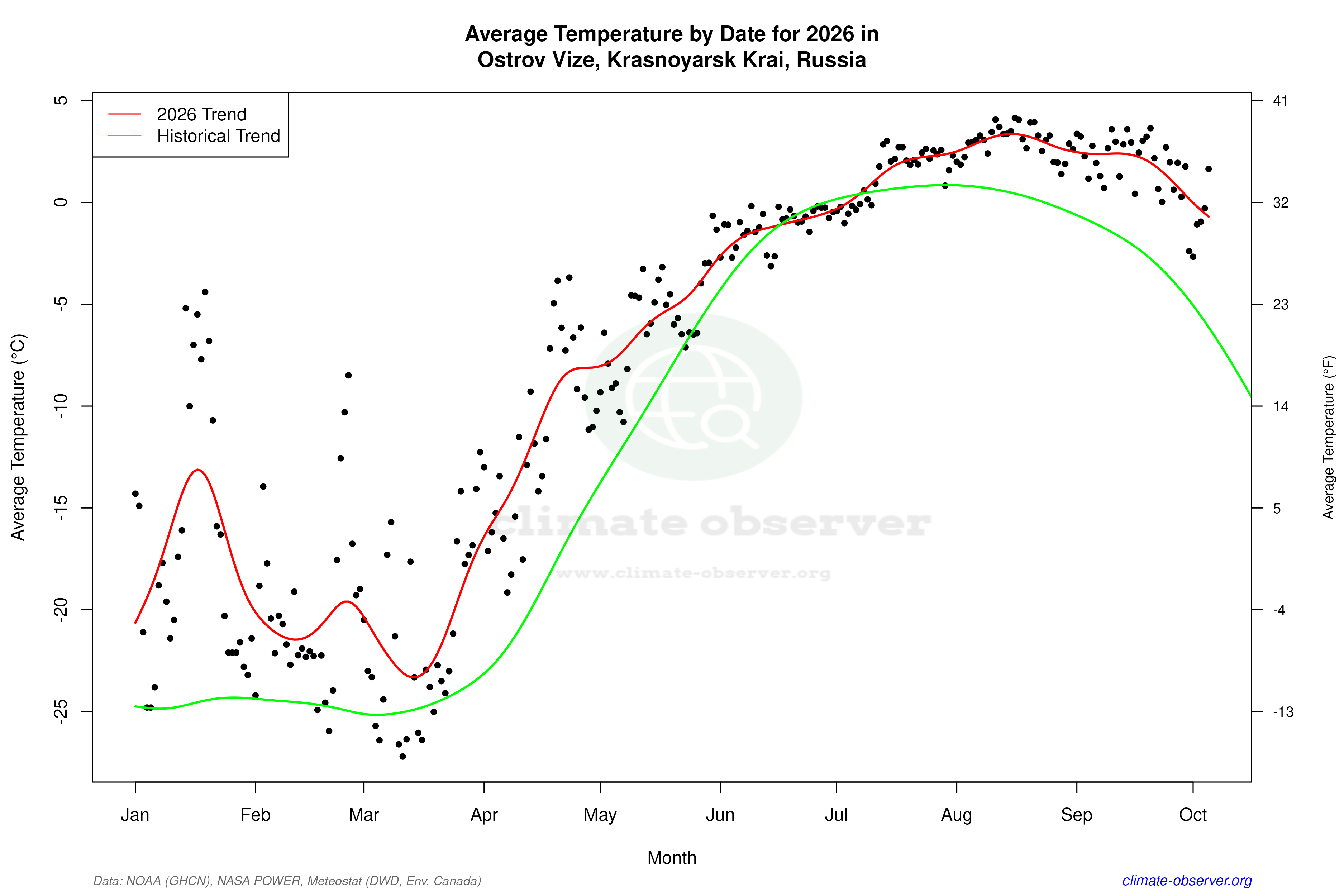
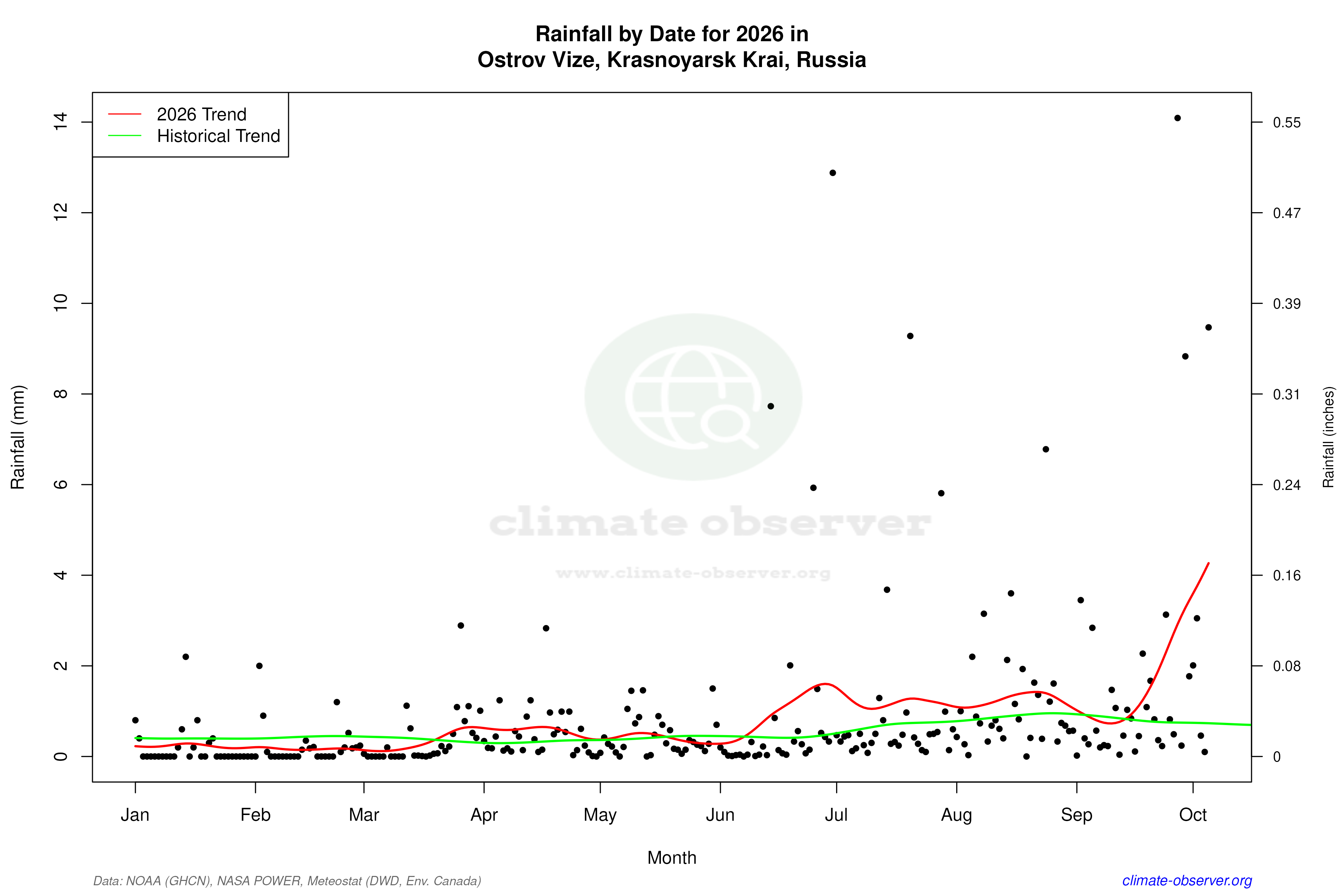
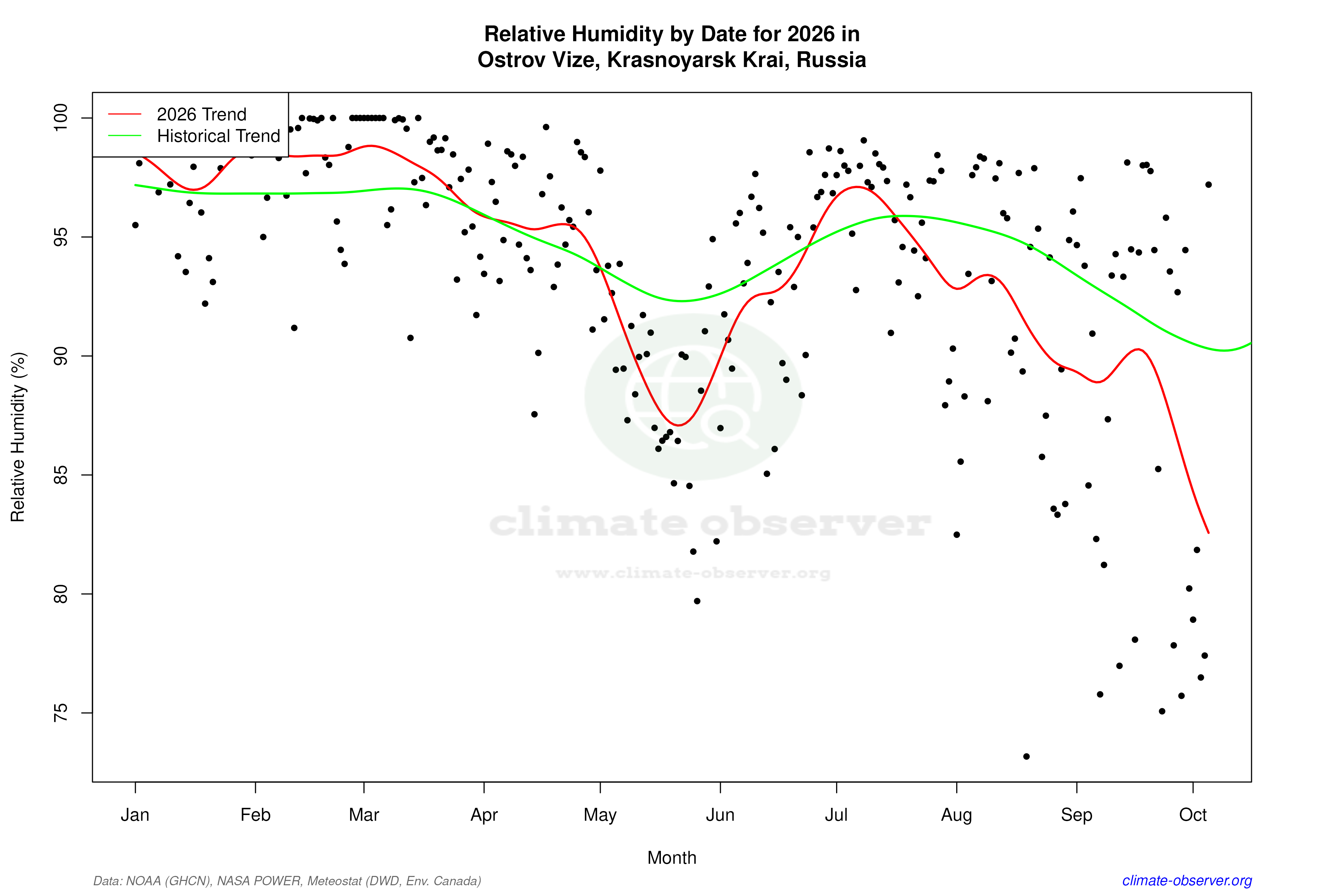

Max Temperature this Year | 1 of 6
Climate 12-Month Moving Averages
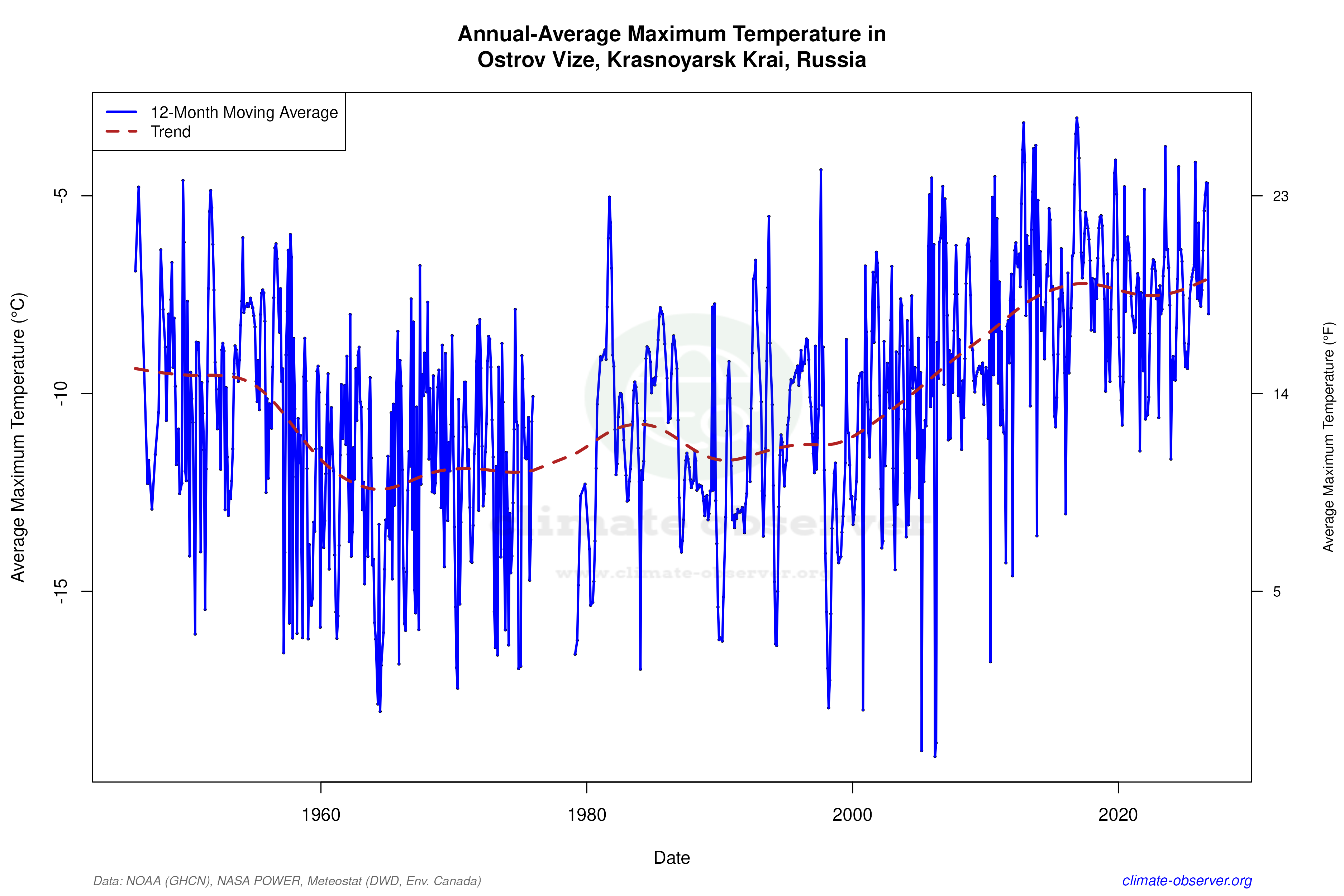
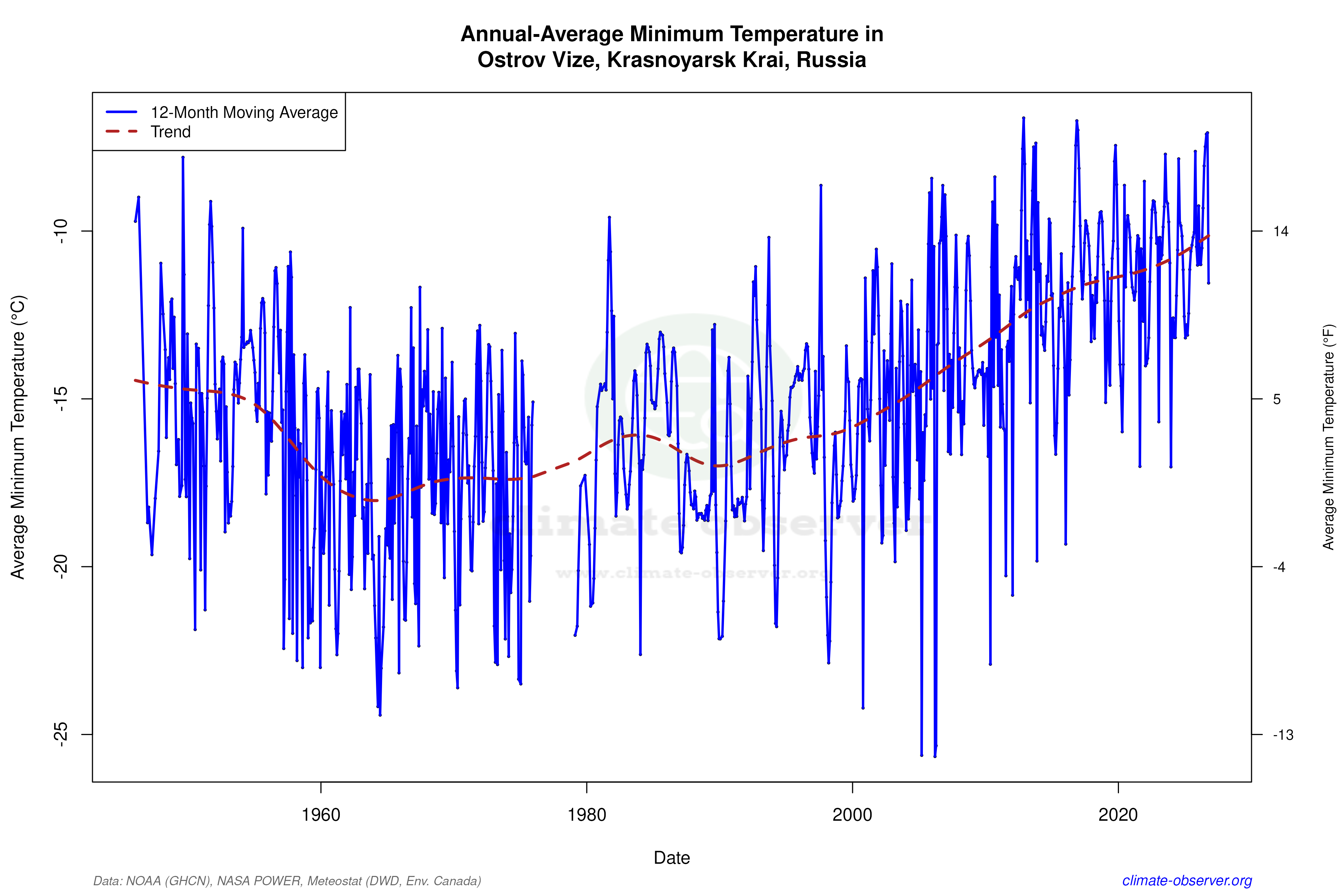
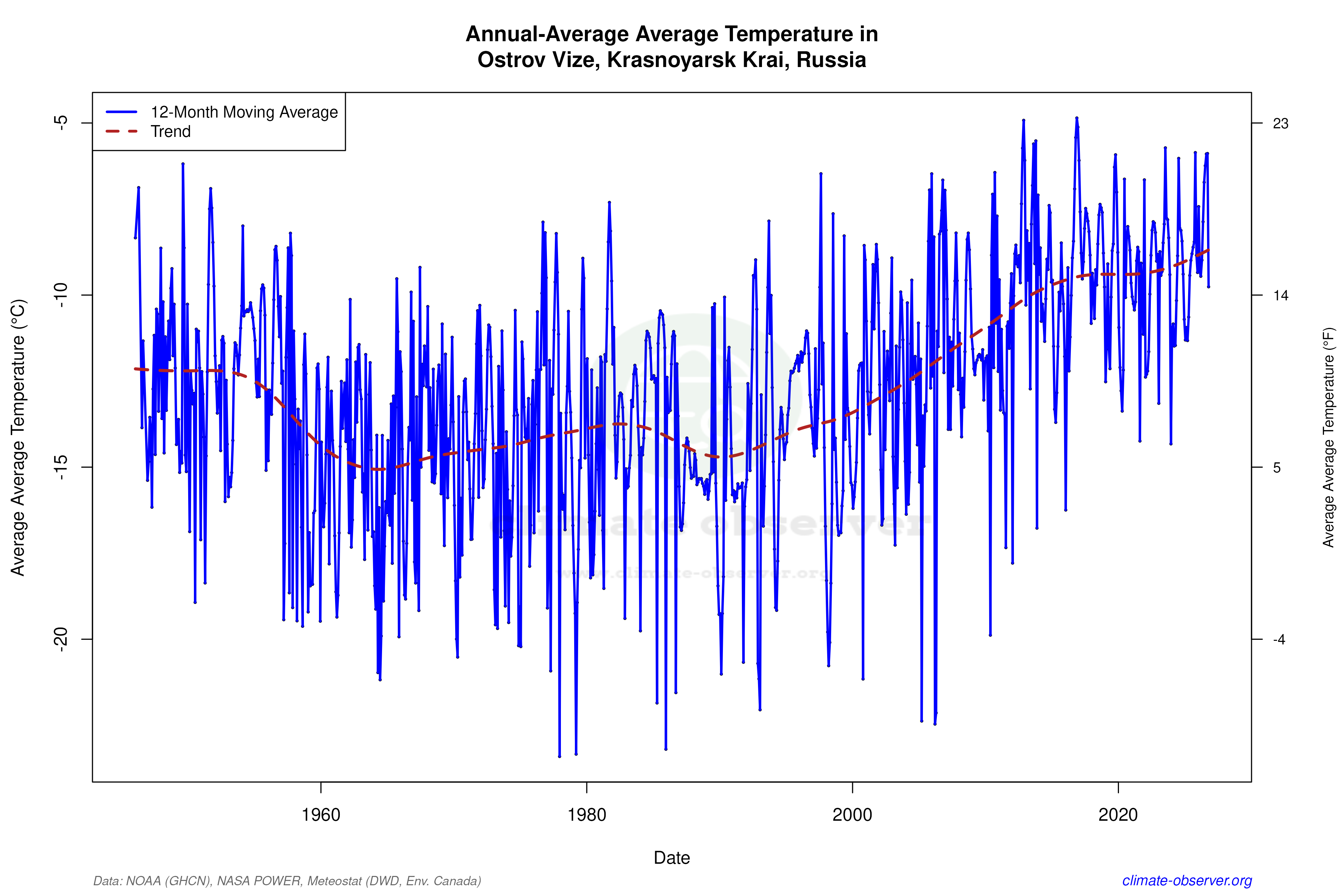

Max Temperature 12-Month MA | 1 of 6
Daily Data Points and Averages Throughout the Year
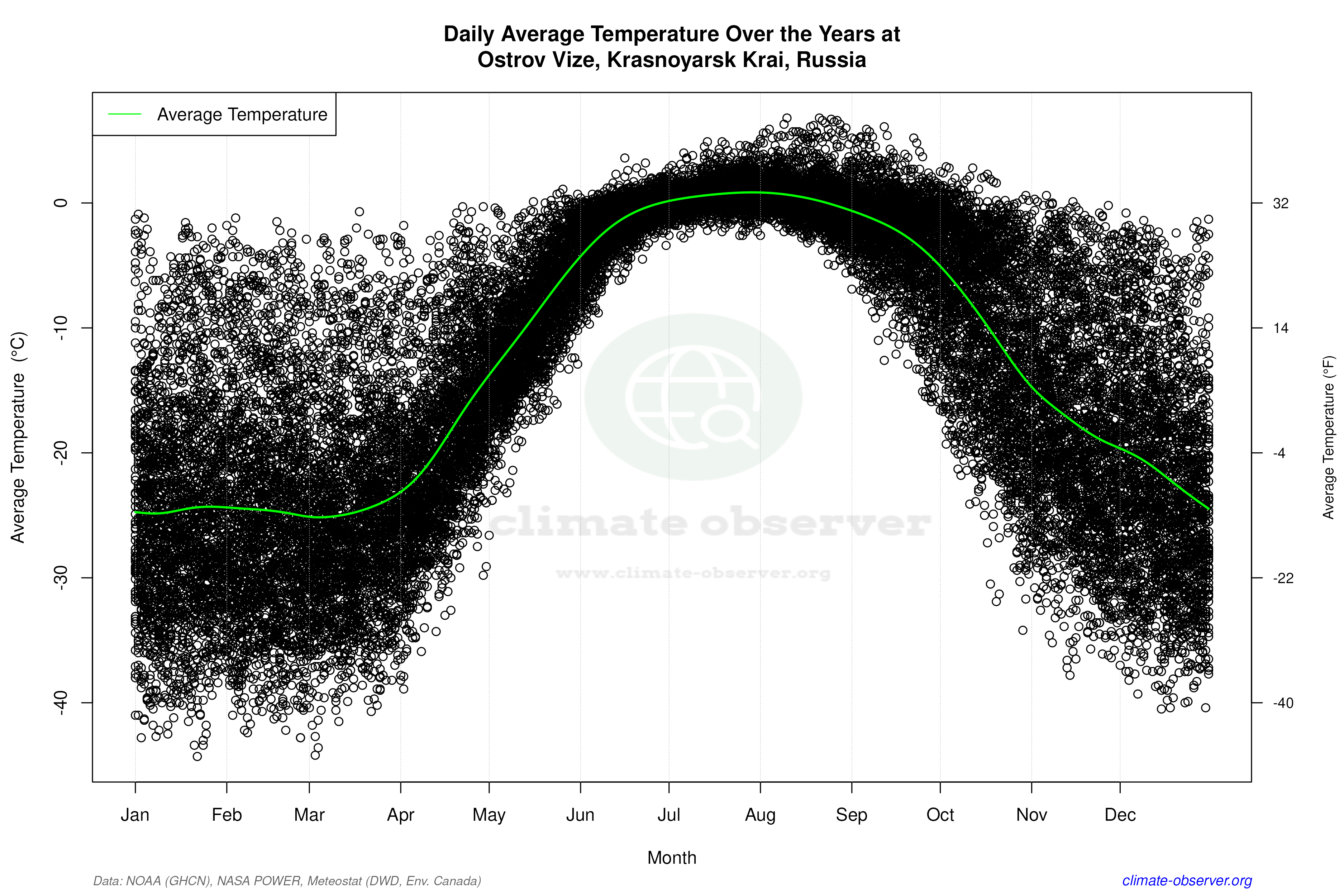
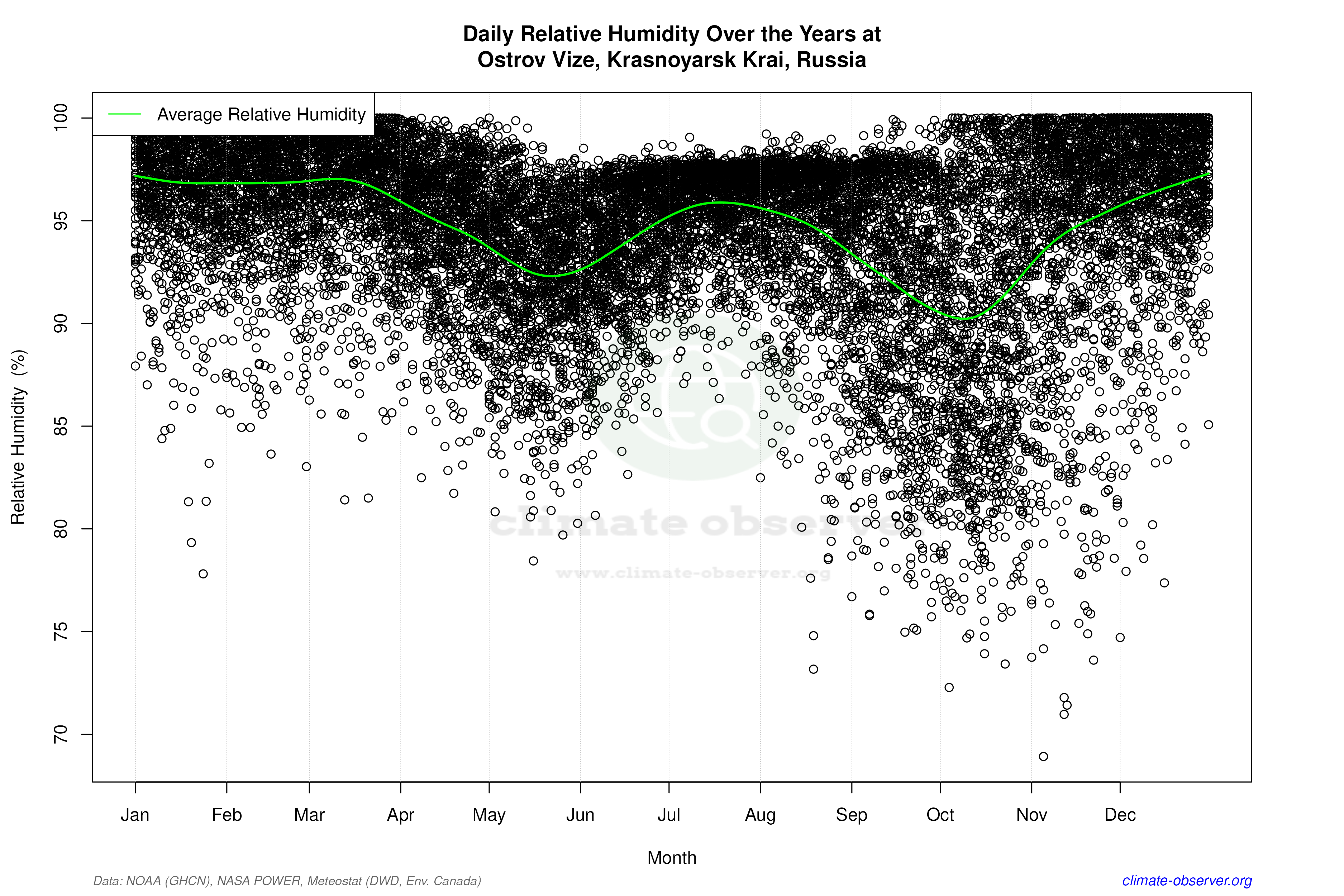

Average Max Temperature Throughout Year | 1 of 5