Climate for Station: Ostrov Golomjannyj, Krasnoyarsk Krai, Russia
Loading live weather...
Climate Analysis & Overview
Ostrov Golomjannyj, situated in the remote Arctic reaches of Russia, exhibits a complex climate profile marked by contrasting temperature trends and a shift towards more evenly distributed precipitation. While long-term data indicates a slight warming, recent years reveal a cooling trend, highlighting the dynamic nature of this region's climate.
Arctic Climate Dynamics
Ostrov Golomjannyj is located in the high Arctic region of Russia, specifically in the Таймырский Долгано-Ненецкий район. The island's climate is classified under the Köppen system as ET, or tundra climate, characterised by long, harsh winters and short, cool summers. The surrounding Arctic Ocean and the island's latitude significantly influence its weather patterns, contributing to its extreme cold temperatures.
Temperature Trends: A Tale of Two Timelines
The all-time temperature trends at Ostrov Golomjannyj show a warming pattern, with highs increasing by 0.35°C (0.63°F) and lows by 0.51°C (0.92°F). However, the past decade tells a different story, with highs decreasing by 1.73°C (3.11°F) and lows by 0.66°C (1.19°F). This recent cooling trend contrasts with the long-term warming, suggesting a complex interplay of climatic factors, possibly influenced by recent Arctic weather patterns or shifts in oceanic currents.
Precipitation Patterns: Towards Even Distribution
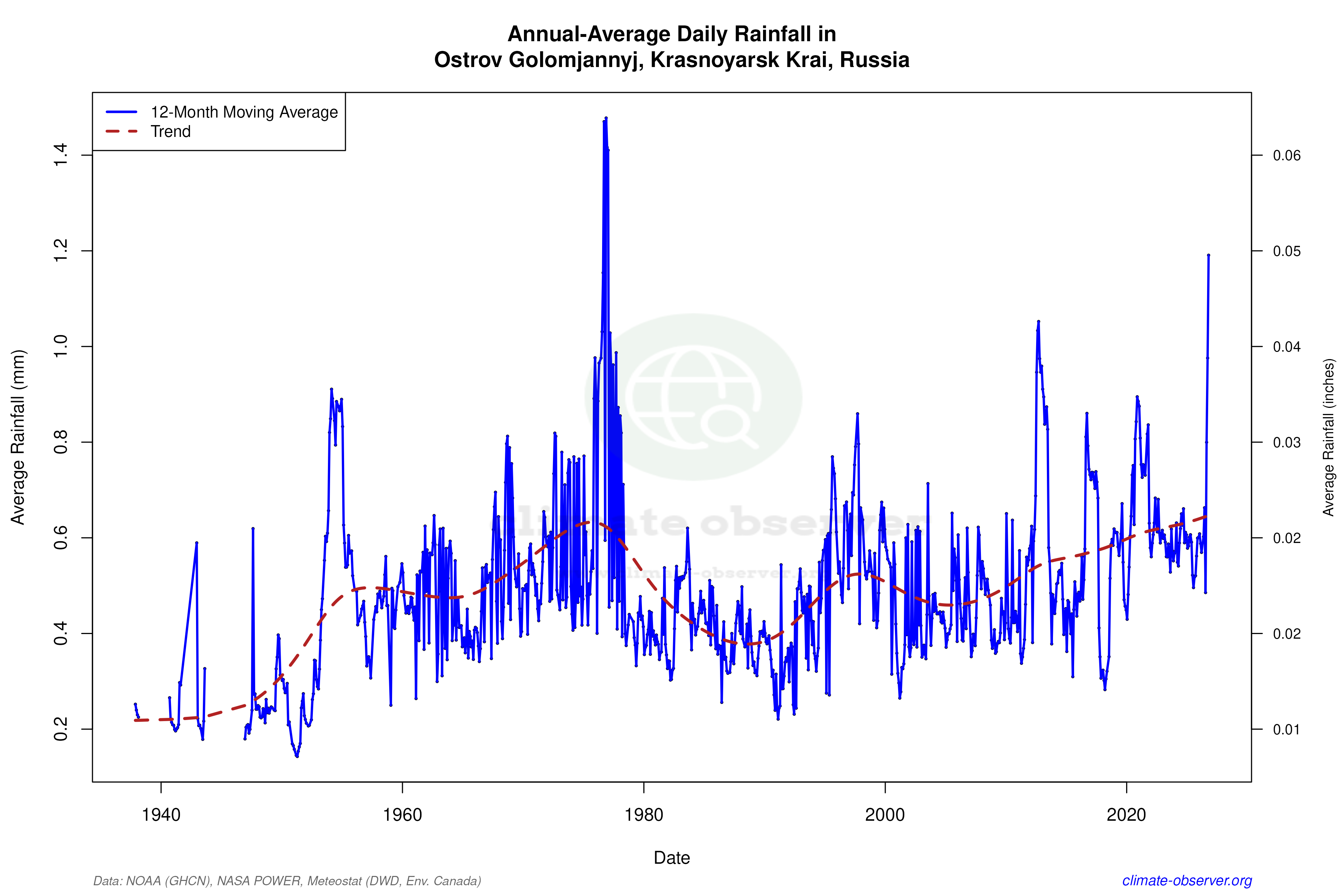
The Precipitation Concentration Index (PCI) indicates a shift towards more evenly distributed precipitation. The baseline PCI of 11.91 has decreased to 10.39, which suggests that rainfall and snow are now spread more evenly throughout the year rather than being concentrated in fewer, intense events. This change, though not large, could have implications for local ecosystems and hydrology, potentially affecting snow melt and water availability.
Record Extremes: The Edge of Habitability
Ostrov Golomjannyj's climate is marked by extreme temperatures, with recorded highs reaching 10.6°C (51.1°F) and lows plummeting to -50.7°C (-59.3°F). These extremes underscore the challenging conditions faced by both human and ecological systems in the region. The ability to withstand such temperature variations is critical for any adaptive strategies or future developments in this remote area.
Implications for Regional Climate Goals
Russia's regional climate goals, which include mitigating the effects of climate change and adapting to its impacts, must consider the unique and evolving climate dynamics of Ostrov Golomjannyj. The recent cooling trend, alongside more evenly distributed precipitation, presents both challenges and opportunities for policy makers and scientists working to understand and manage the Arctic environment.
Station Statistics
10-Year Trend
High: -0.18 °C/decade
Low: +1.12 °C/decade
Rain: +0.07 mm/decade
25-Year Trend
High: +1.28 °C/decade
Low: +1.93 °C/decade
Rain: +0.09 mm/decade
50-Year Trend
High: +1.05 °C/decade
Low: +1.37 °C/decade
Rain: +0.03 mm/decade
All-Time Trend
High: +0.43 °C/decade
Low: +0.58 °C/decade
Rain: +0.02 mm/decade
Percentage Above-Average Days
Last 12 Months: 59.7%
This Year: 25.2%
Precipitation Concentration Index (PCI) ℹ️
Last 12 Months: 11.9
Historical Average: 12.9
Percentile Rank of Last 12 Months ℹ️
High: 87th percentile
Low: 94th percentile
Rain: 86th percentile
Change in Variance ℹ️
High: -23.4%
Low: -24.7%
Intraday: -23.8%
Data Coverage
96.0%
First Year of Data
1996
Station Location
Historical Weather Records
| Max High | Avg High | Min High | Max Avg | Avg Avg | Min Avg | Max Low | Avg Low | Min Low | Max Precipitation | Avg Precipitation | Max Snow | Avg Snow | |
|---|---|---|---|---|---|---|---|---|---|---|---|---|---|
| Record | 10.6 °C | — | -45.1 °C | 12.5 °C | — | -47.9 °C | 5.2 °C | — | -50.7 °C | 55.9 mm | — | — | — |
| January | 0.1 °C | -23.4 °C | -45.1 °C | -2.1 °C | -26.8 °C | -47.9 °C | -4.0 °C | -30.2 °C | -49.1 °C | 9.0 mm | 0.3 mm | — | — |
| February | -1.1 °C | -23.6 °C | -42.2 °C | -2.2 °C | -27.1 °C | -45.4 °C | -3.3 °C | -30.5 °C | -48.2 °C | 10.4 mm | 0.3 mm | — | — |
| March | 0.4 °C | -23.3 °C | -44.4 °C | -3.5 °C | -26.7 °C | -47.9 °C | -4.7 °C | -30.1 °C | -50.7 °C | 9.5 mm | 0.3 mm | — | — |
| April | 1.0 °C | -16.6 °C | -34.8 °C | -0.2 °C | -19.9 °C | -37.5 °C | -1.4 °C | -23.2 °C | -41.8 °C | 26.9 mm | 0.3 mm | — | — |
| May | 3.2 °C | -7.3 °C | -22.0 °C | 0.8 °C | -9.6 °C | -25.6 °C | 0.3 °C | -12.1 °C | -29.6 °C | 12.8 mm | 0.3 mm | — | — |
| June | 7.7 °C | 0.1 °C | -7.8 °C | 5.4 °C | -1.3 °C | -11.0 °C | 2.5 °C | -2.7 °C | -14.7 °C | 31.1 mm | 0.5 mm | — | — |
| July | 10.1 °C | 1.9 °C | -2.0 °C | 6.2 °C | 0.7 °C | -3.6 °C | 4.8 °C | -0.4 °C | -5.0 °C | 30.9 mm | 0.8 mm | — | — |
| August | 8.6 °C | 1.4 °C | -5.7 °C | 6.4 °C | 0.2 °C | -6.2 °C | 5.2 °C | -0.9 °C | -8.1 °C | 35.0 mm | 0.9 mm | — | — |
| September | 7.2 °C | -1.4 °C | -14.1 °C | 6.6 °C | -2.9 °C | -18.5 °C | 5.1 °C | -4.5 °C | -21.6 °C | 55.1 mm | 0.8 mm | — | — |
| October | 10.6 °C | -8.3 °C | -30.3 °C | 12.5 °C | -10.7 °C | -33.3 °C | 2.0 °C | -13.2 °C | -35.7 °C | 10.4 mm | 0.5 mm | — | — |
| November | 0.8 °C | -16.4 °C | -38.3 °C | -0.5 °C | -19.5 °C | -40.5 °C | -1.3 °C | -22.5 °C | -42.8 °C | 55.9 mm | 0.4 mm | — | — |
| December | 0.2 °C | -20.6 °C | -40.3 °C | -1.9 °C | -23.9 °C | -42.5 °C | -3.7 °C | -27.1 °C | -48.0 °C | 24.2 mm | 0.4 mm | — | — |
Data Visualisations
Remove WatermarksCurrent Year Climate Trends vs Historical
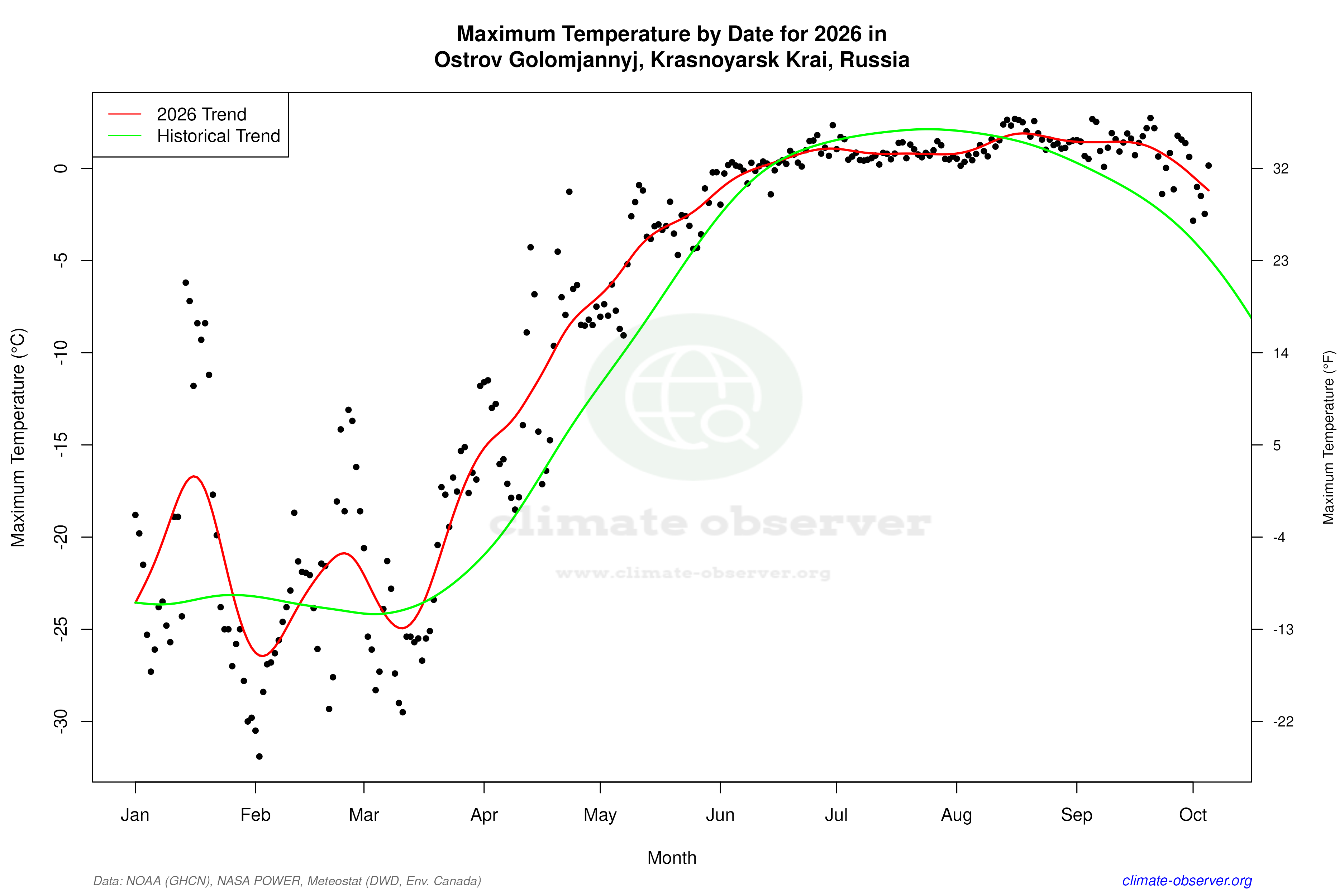
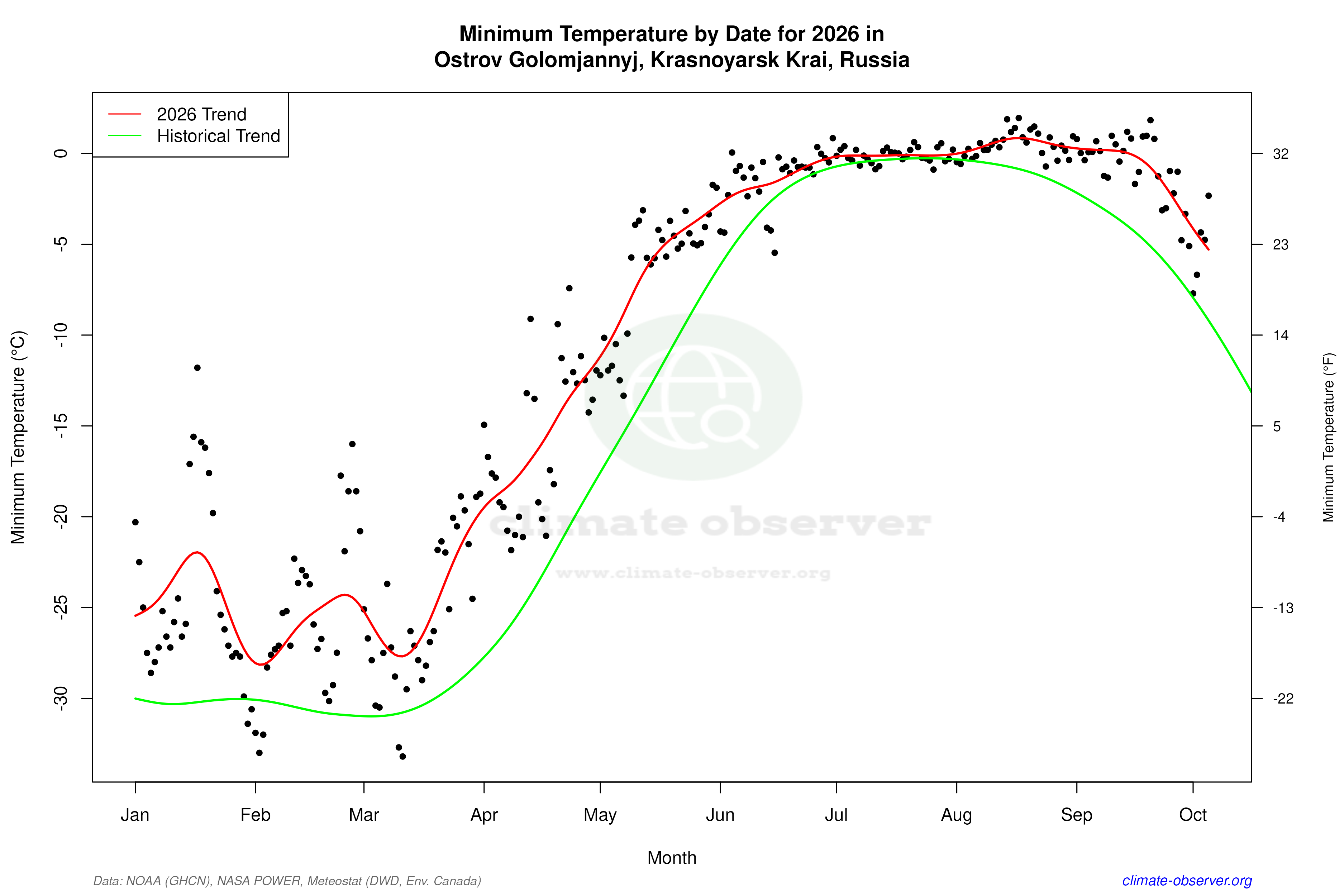
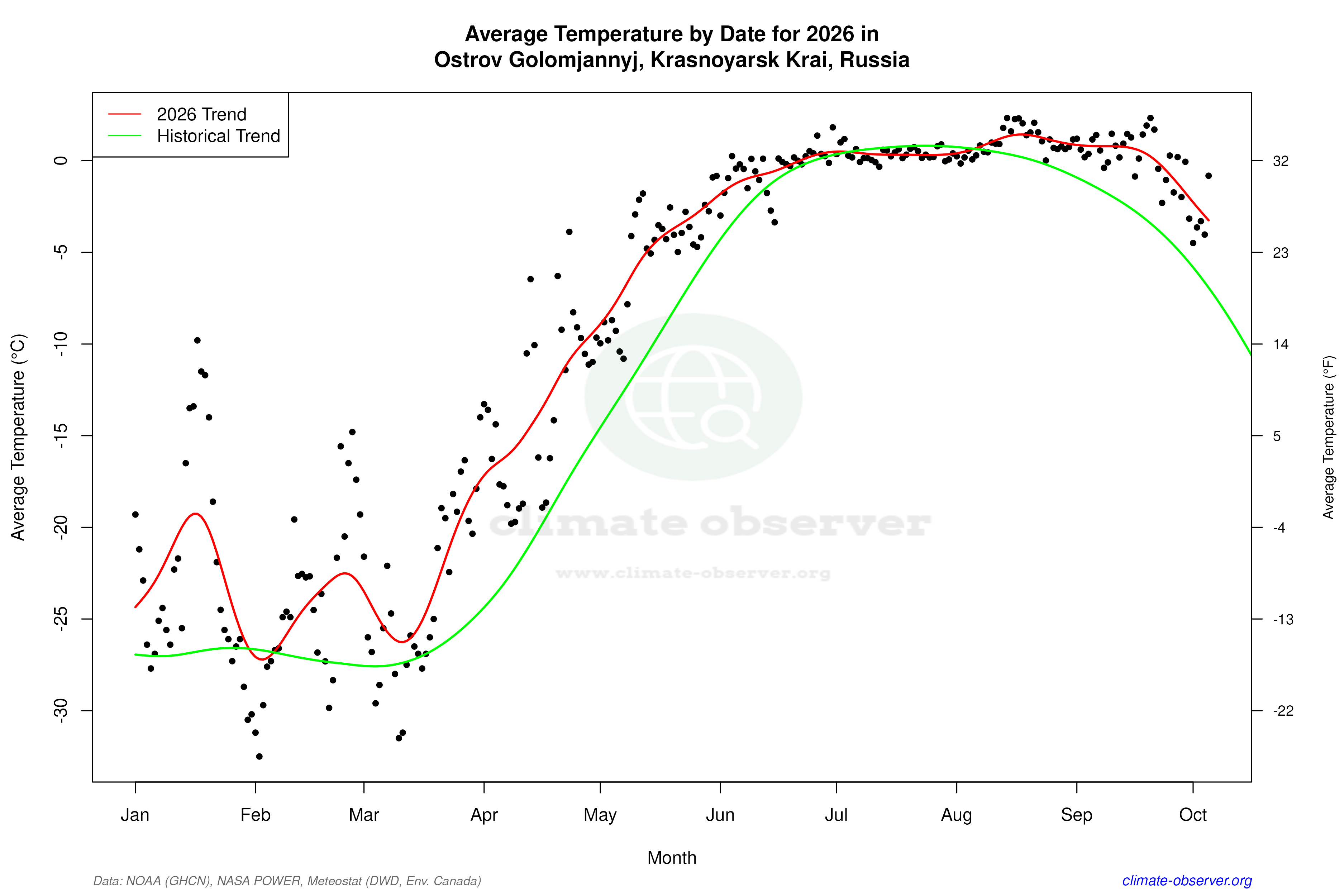
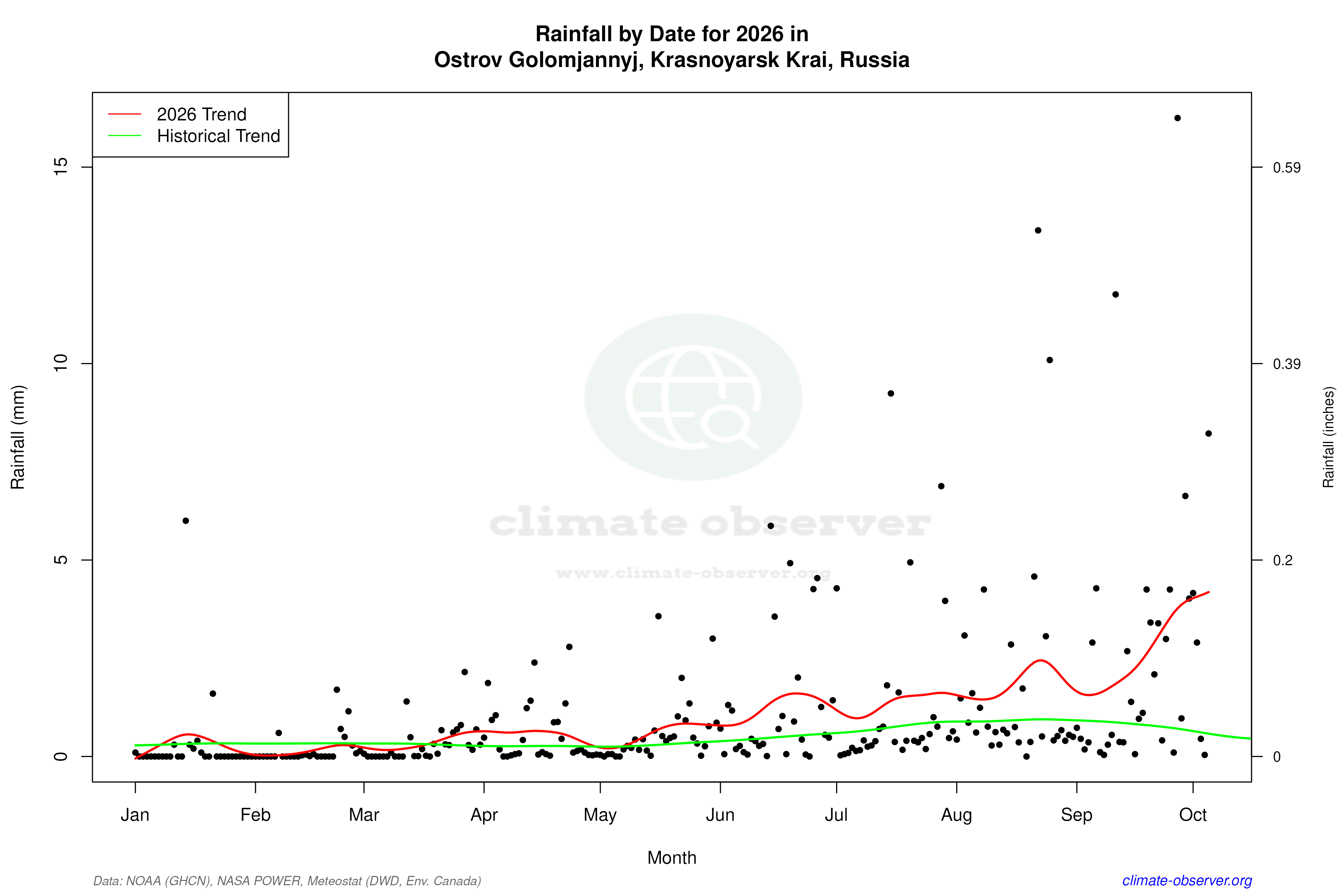
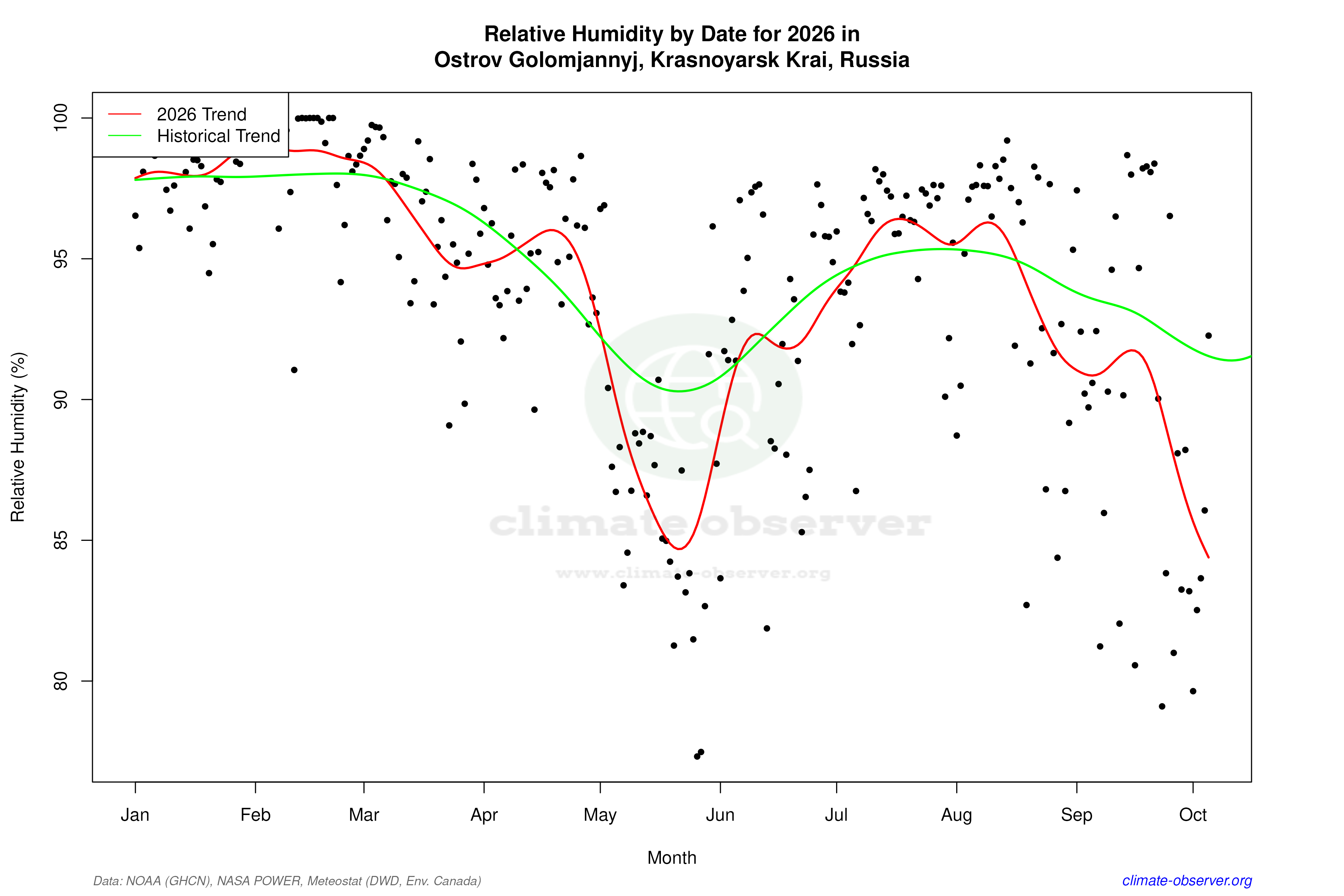

Max Temperature this Year | 1 of 6
Climate 12-Month Moving Averages
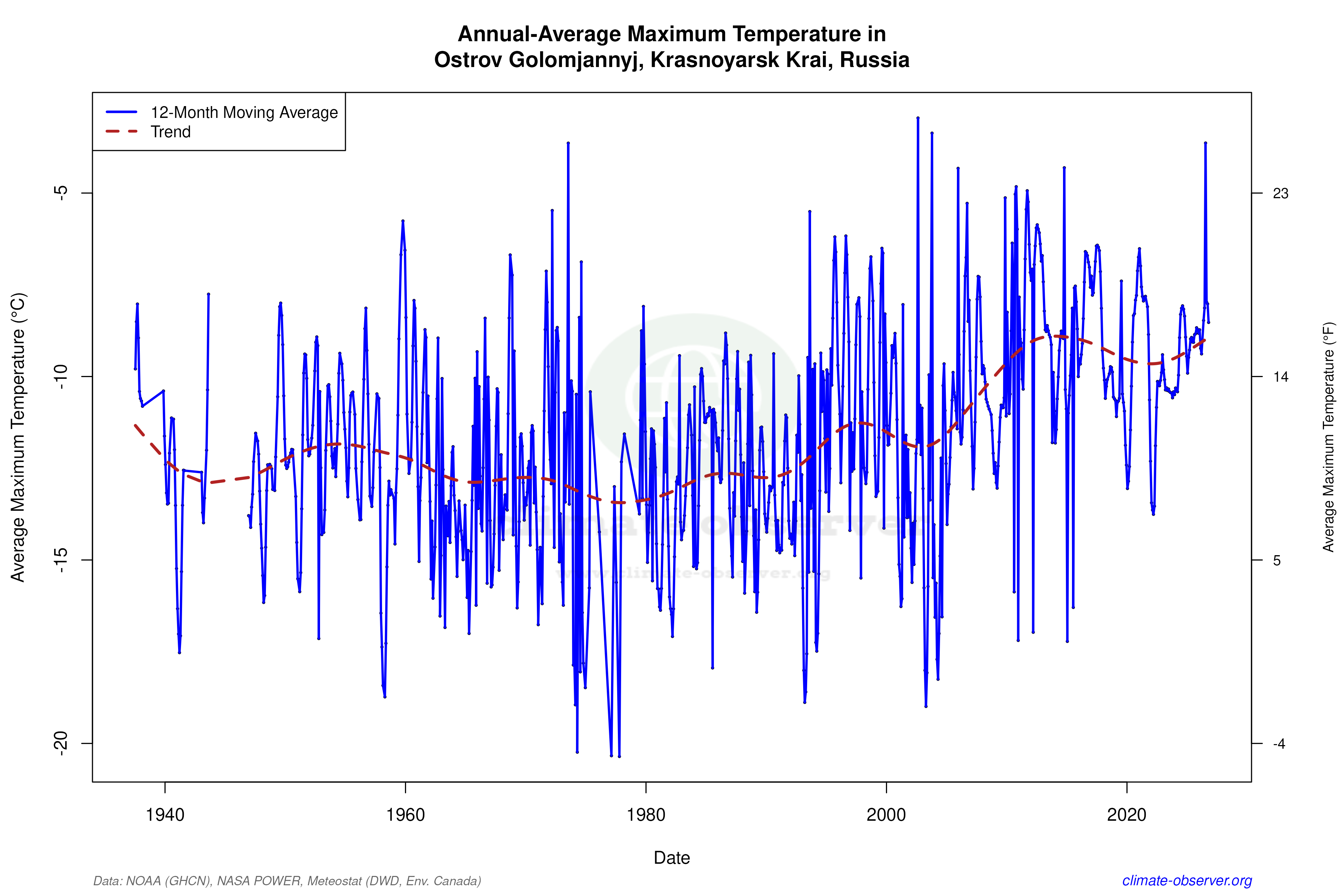
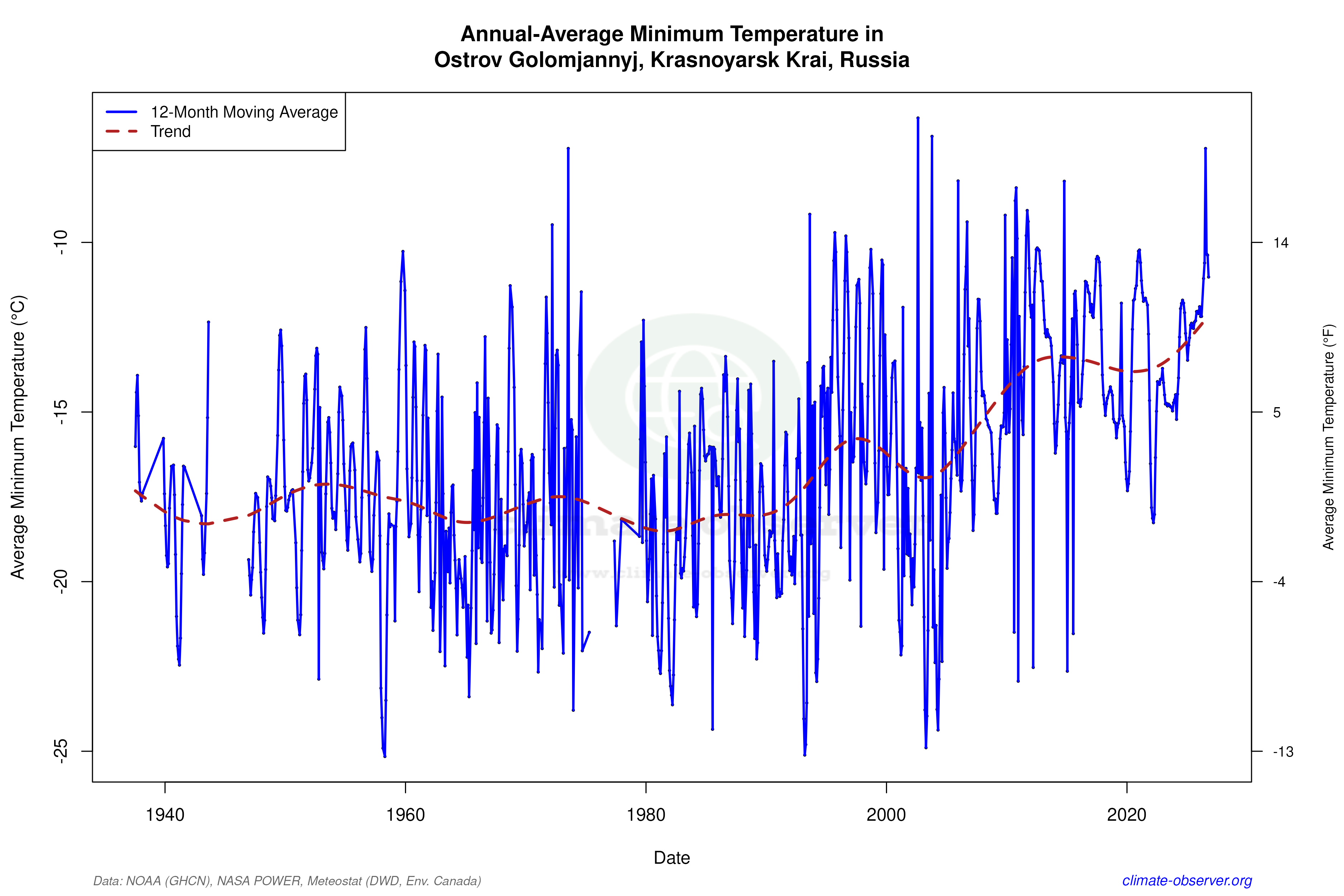
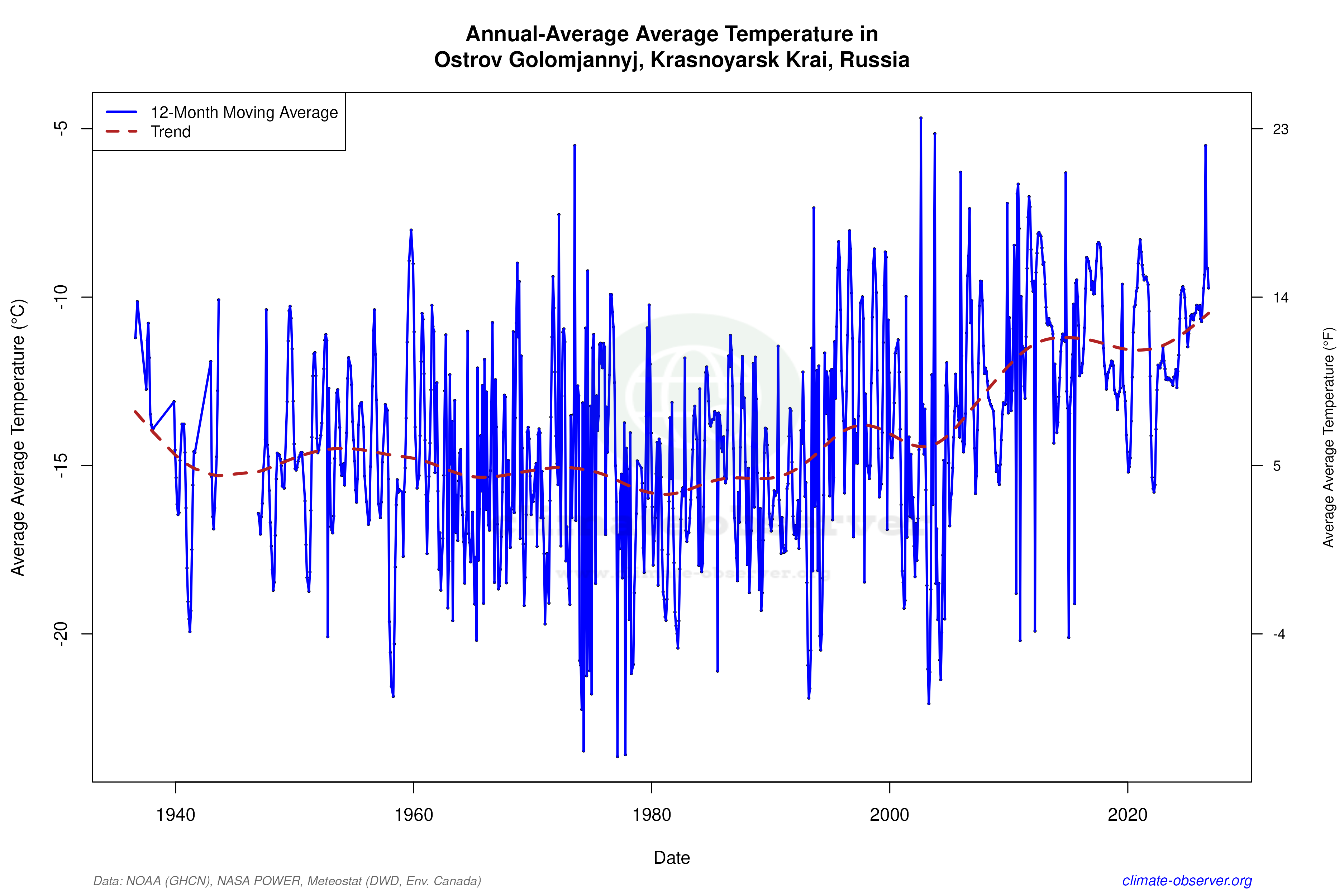
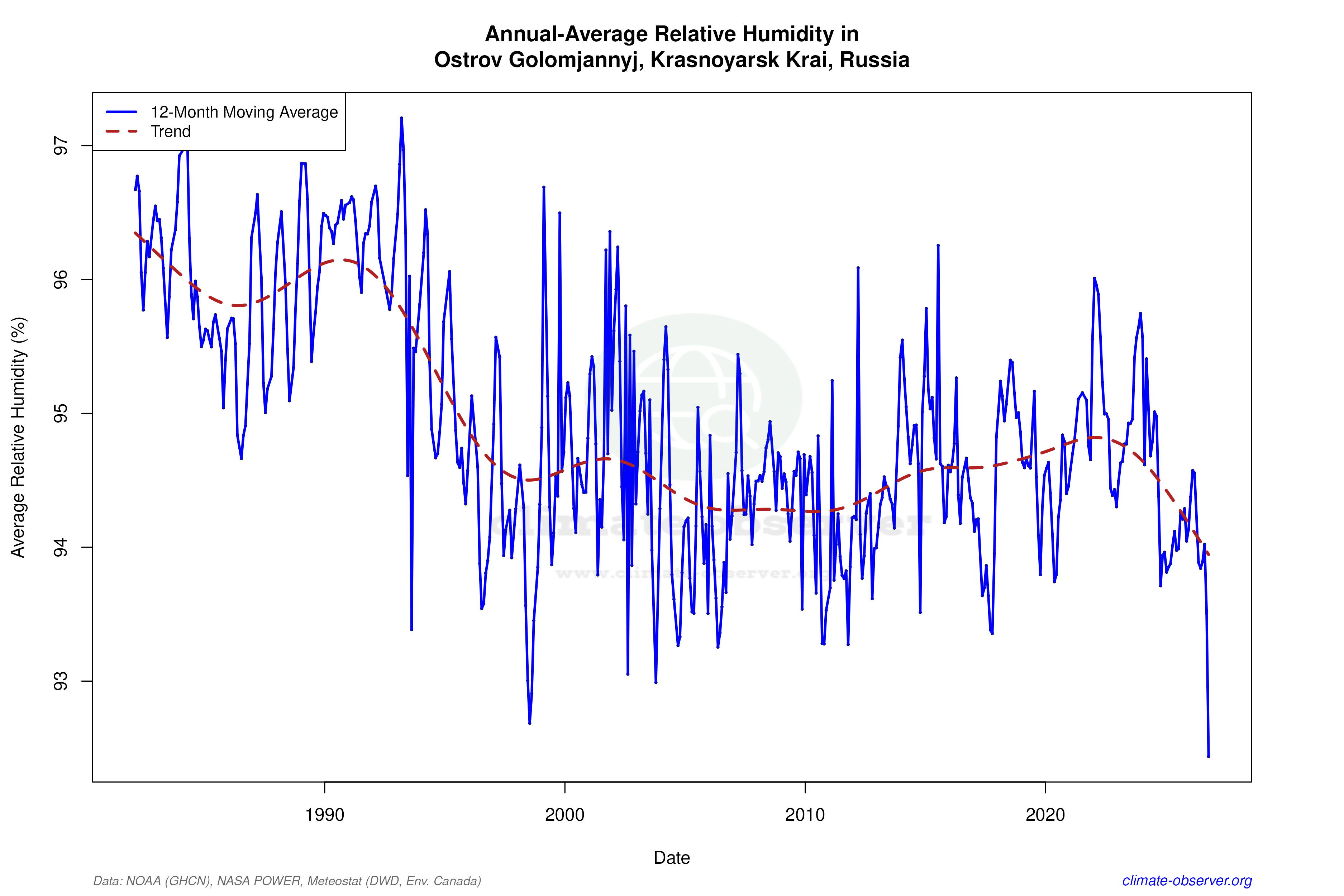

Max Temperature 12-Month MA | 1 of 6
Daily Data Points and Averages Throughout the Year
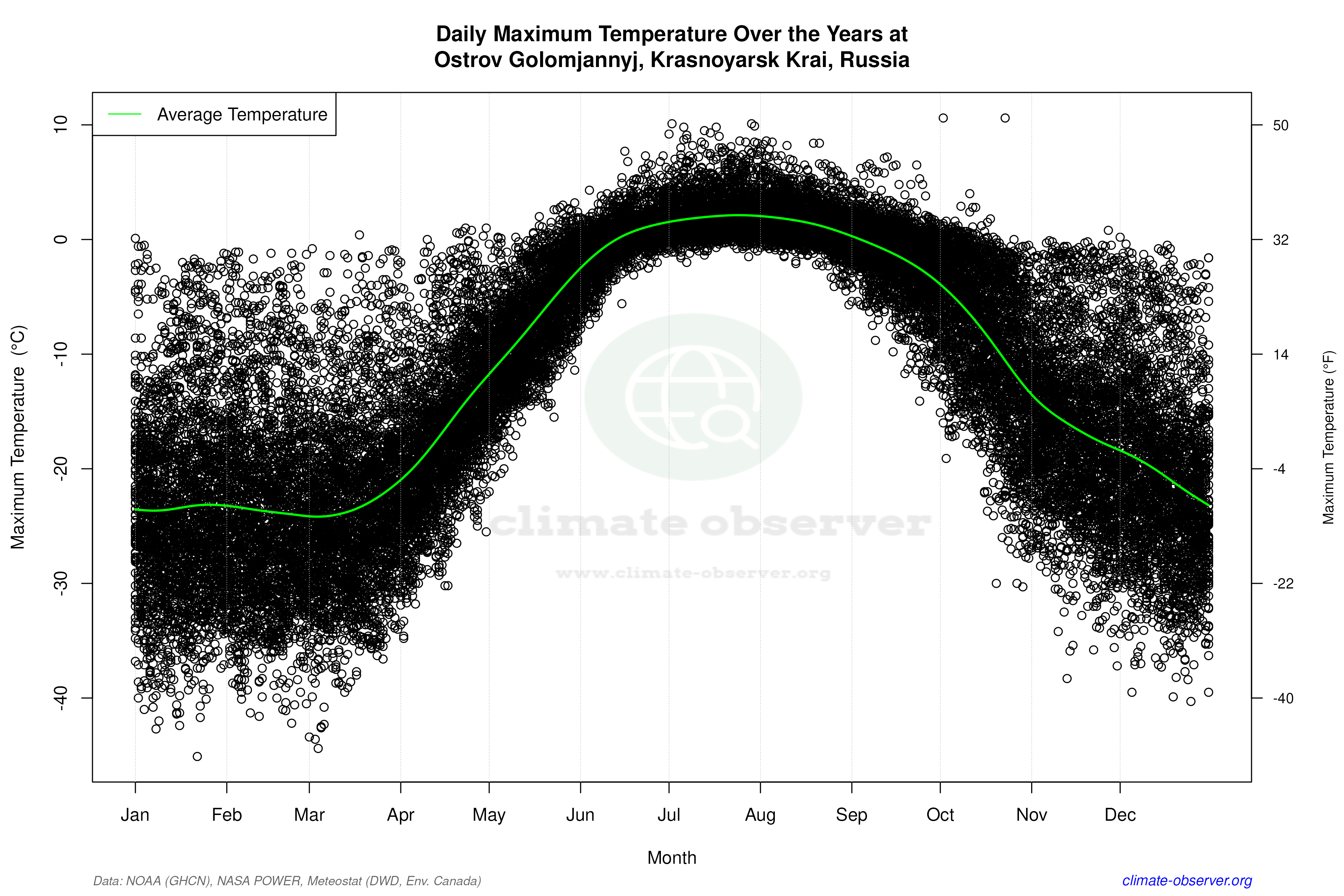
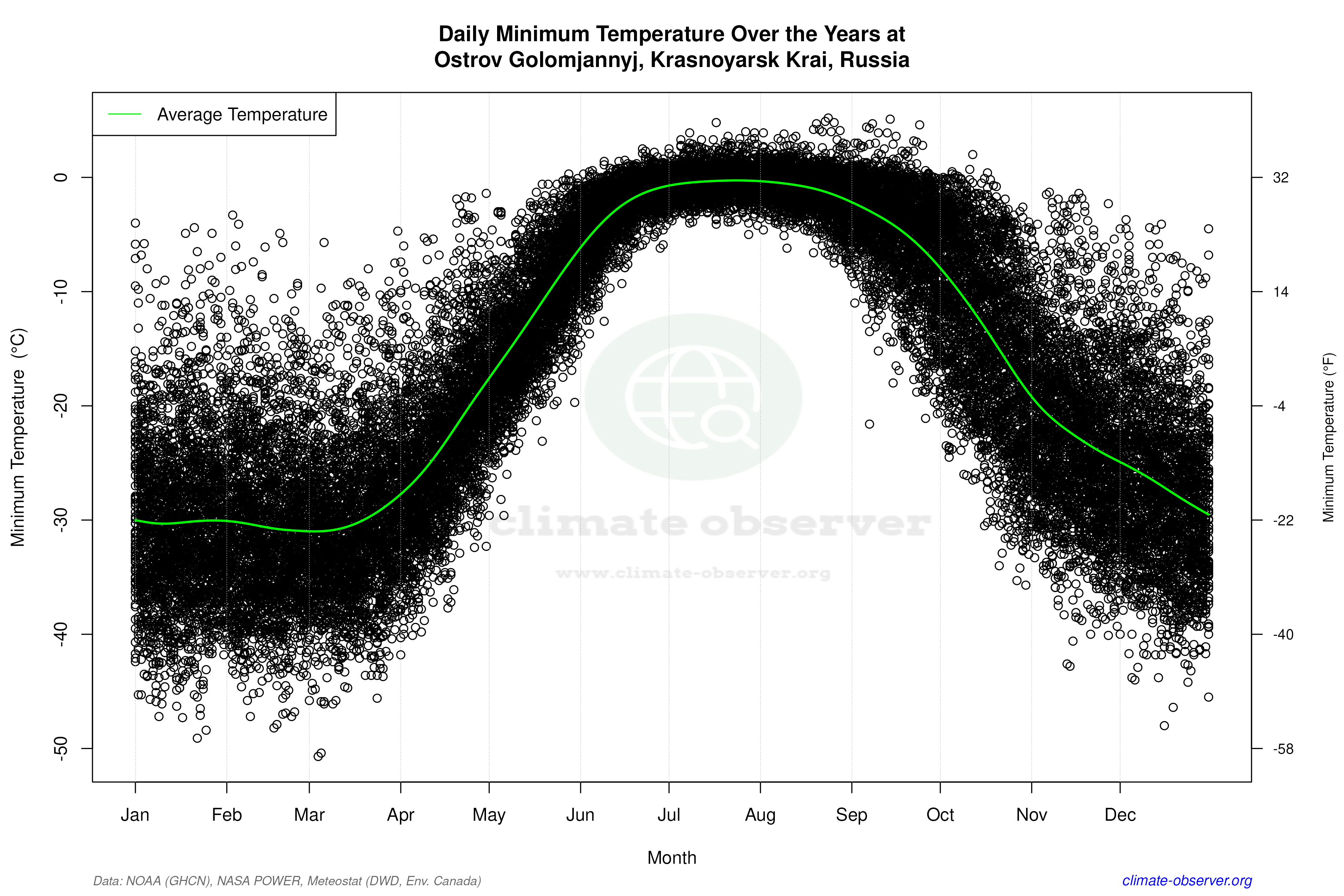
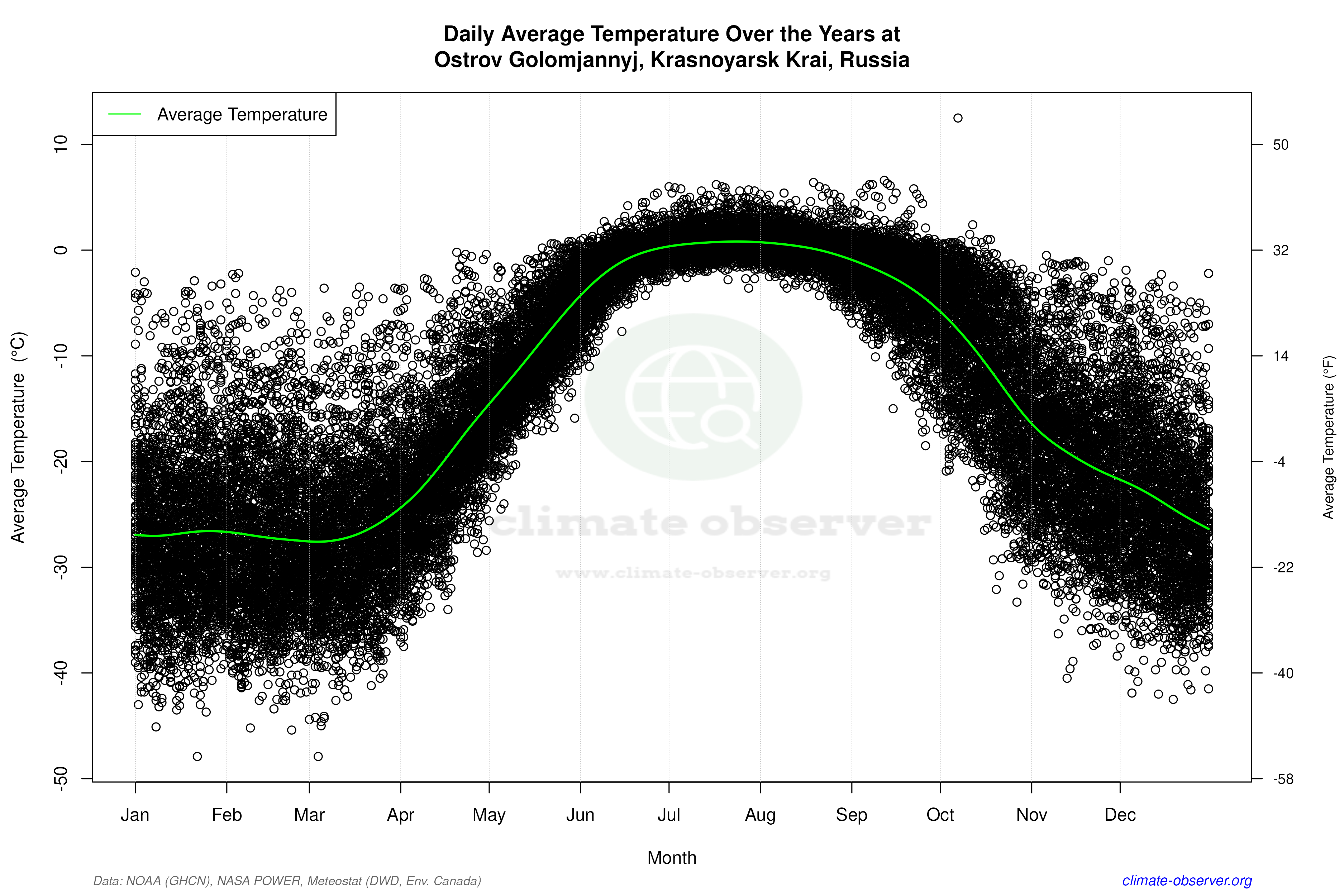
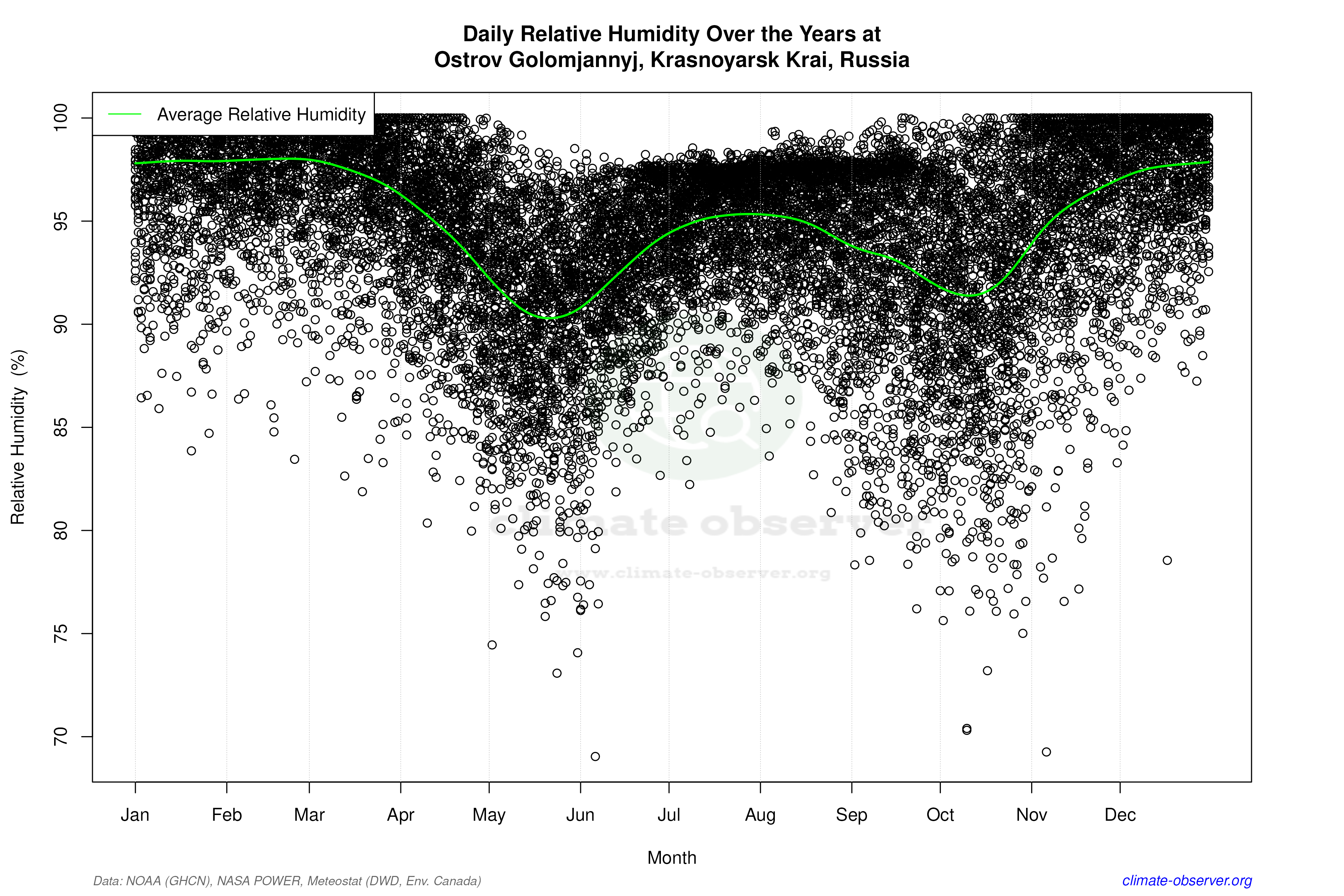

Average Max Temperature Throughout Year | 1 of 5