Climate for Station: Verhneimbatsk, Krasnoyarsk Krai, Russia
Loading live weather...
Climate Analysis & Overview
Verhneimbatsk's climate is characterised by a complex interplay of warming and cooling trends, with a notable increase in low temperatures over the past decade. The region's precipitation patterns have become slightly more even, suggesting subtle shifts in climate dynamics.
Siberian Climate Dynamics
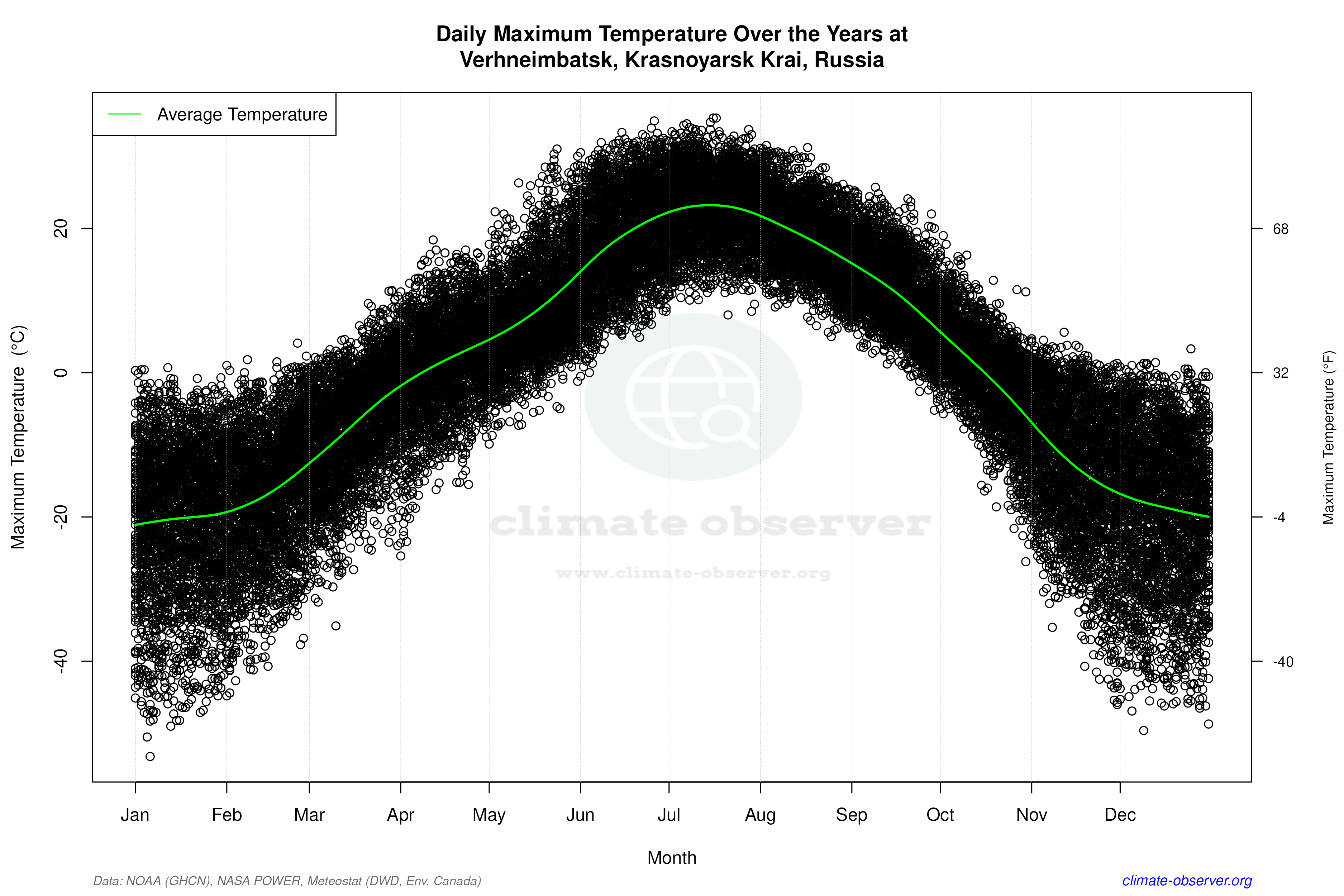
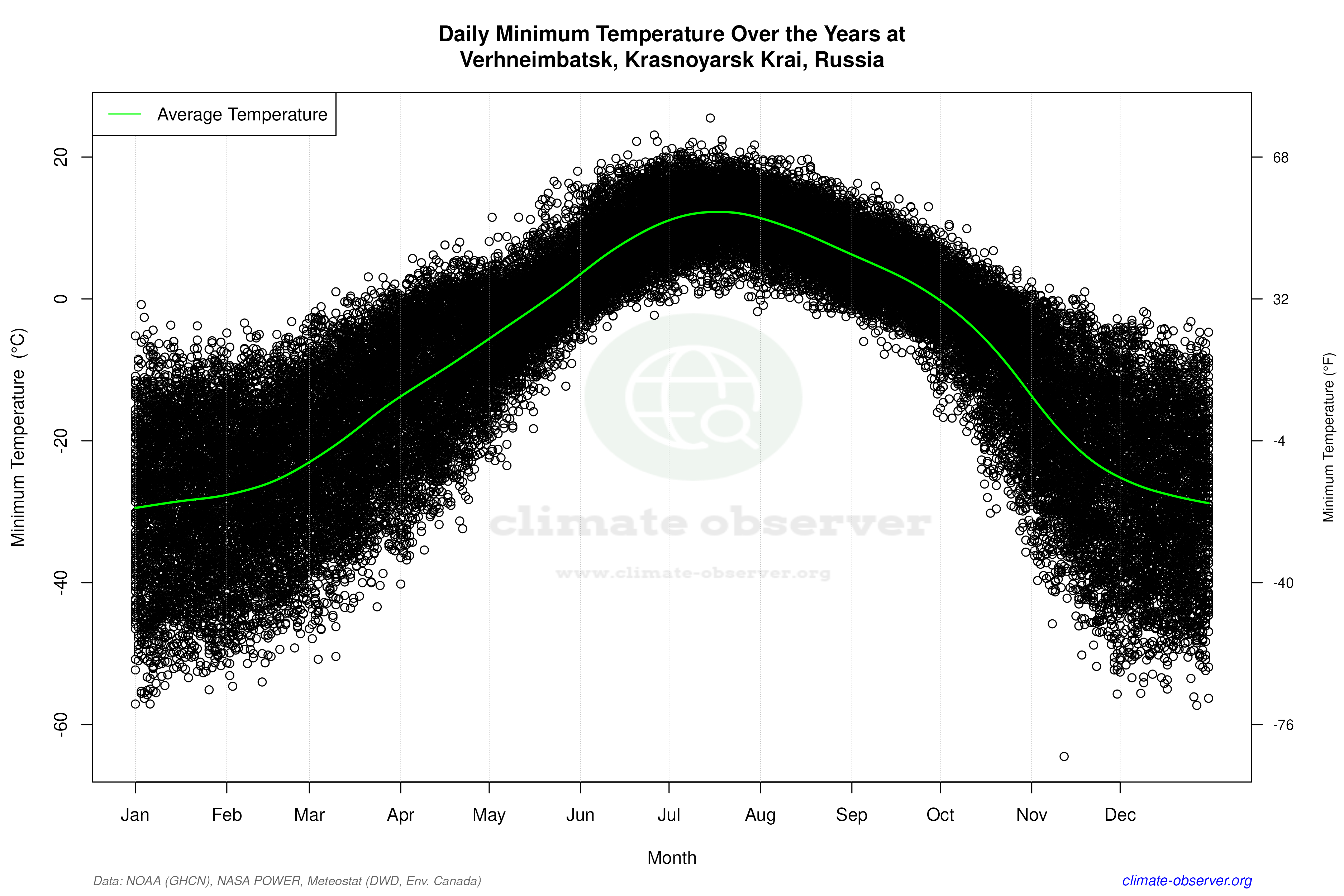
Verhneimbatsk, located in the Siberian Federal District of Russia, experiences a subarctic climate, classified as Dfc under the Köppen system. This classification indicates long, very cold winters and short, mild summers. The area's geography, with its vast expanses of taiga and proximity to the Yenisei River, influences its climatic patterns significantly. Over the past decade, the region has experienced a mixed thermal trend. High temperatures have shown a slight cooling of -0.51°C (-0.92°F), while low temperatures have increased by 0.58°C (1.04°F). This divergence suggests a narrowing of the temperature range, potentially impacting local ecosystems and human activities.
Long-term Temperature Trends
When considering all-time data, Verhneimbatsk's climate exhibits a warming trend. High temperatures have risen by 0.17°C (0.31°F), and low temperatures have increased by 0.28°C (0.50°F). This long-term warming is consistent with broader regional trends observed across Siberia, where climate change effects are pronounced. The record high of 35.3°C (95.5°F) and a record low of -64.5°C (-84.1°F) illustrate the extreme temperature variability inherent to this subarctic region.
Precipitation Patterns and Changes
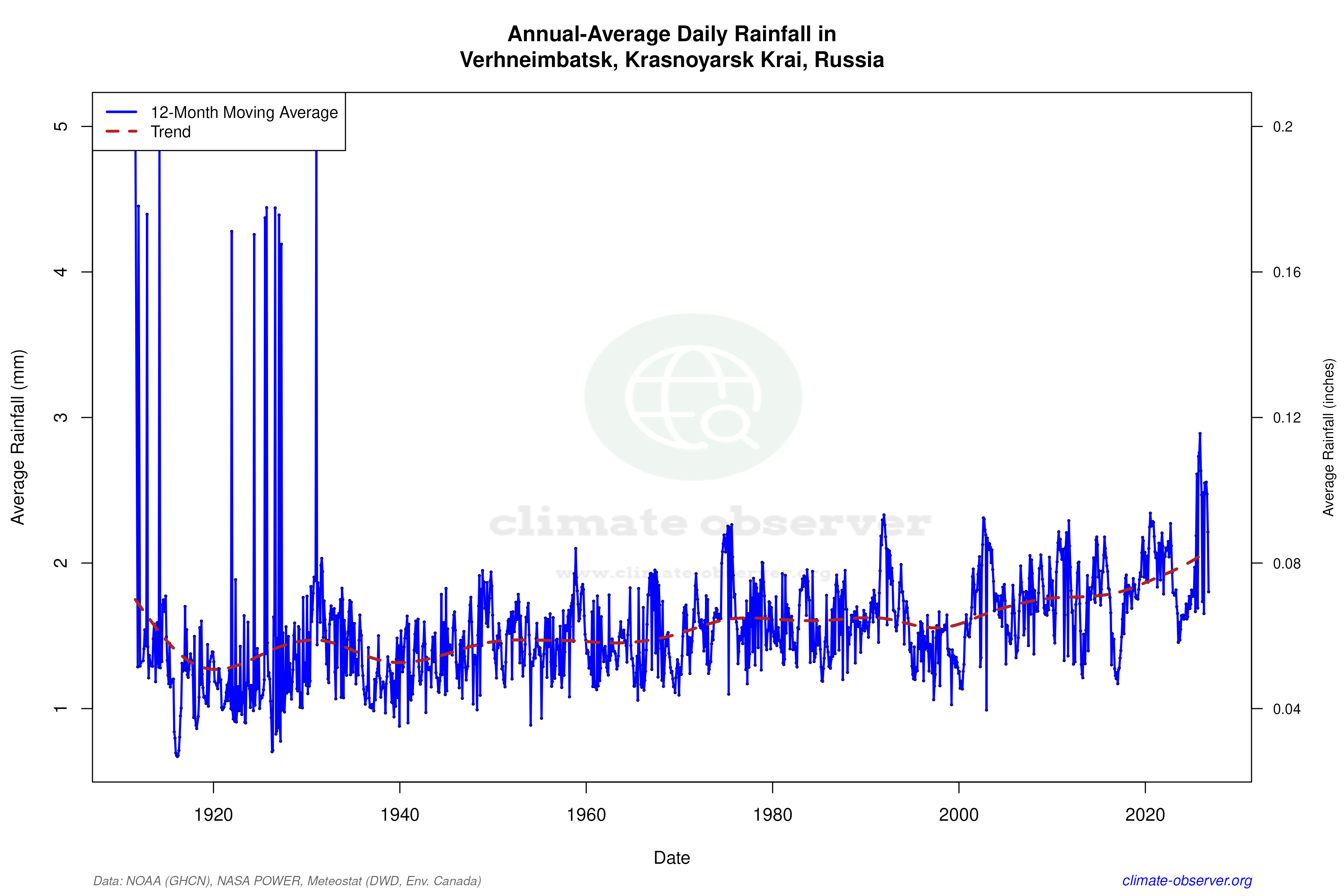
The Precipitation Concentration Index (PCI) provides insight into how rainfall is distributed throughout the year. Verhneimbatsk's PCI has decreased from a baseline of 11.0 to a current value of 10.5, indicating a slight shift toward more evenly distributed precipitation events. This marginal change suggests that while precipitation remains somewhat concentrated, there is a trend towards less extreme rainfall events, which could affect water resource management and agricultural practices.
Implications of Regional Climate Goals
Russia's commitment to addressing climate change includes reducing greenhouse gas emissions and adapting to changing climate conditions. The observed warming trends in Verhneimbatsk align with these national goals, highlighting the need for adaptive strategies in Siberia. The increase in low temperatures, in particular, may influence energy demands and infrastructure resilience during the harsh winter months.
Recent Weather Events and Observations
Recent weather patterns in Verhneimbatsk have reflected these climatic shifts, with warmer winters becoming more common. This trend could have significant implications for permafrost stability, a critical concern in Siberia. As the climate continues to evolve, monitoring these changes will be vital for understanding the broader impacts on the region's environment and economy.
Station Statistics
10-Year Trend
High: +1.00 °C/decade
Low: +2.10 °C/decade
Rain: +0.48 mm/decade
25-Year Trend
High: +0.66 °C/decade
Low: +1.04 °C/decade
Rain: +0.10 mm/decade
50-Year Trend
High: +0.13 °C/decade
Low: +0.39 °C/decade
Rain: +0.08 mm/decade
All-Time Trend
High: +0.08 °C/decade
Low: +0.24 °C/decade
Rain: +0.05 mm/decade
Percentage Above-Average Days
Last 12 Months: 44.1%
This Year: 55.8%
Precipitation Concentration Index (PCI) ℹ️
Last 12 Months: 10.2
Historical Average: 10.6
Percentile Rank of Last 12 Months ℹ️
High: 65th percentile
Low: 78th percentile
Rain: 98th percentile
Change in Variance ℹ️
High: -3.3%
Low: -9.1%
Intraday: -8.7%
Data Coverage
95.7%
First Year of Data
1917
Station Location
Historical Weather Records
| Max High | Avg High | Min High | Max Avg | Avg Avg | Min Avg | Max Low | Avg Low | Min Low | Max Precipitation | Avg Precipitation | Max Snow | Avg Snow | |
|---|---|---|---|---|---|---|---|---|---|---|---|---|---|
| Record | 35.3 °C | — | -53.2 °C | 29.0 °C | — | -55.5 °C | 25.5 °C | — | -64.5 °C | 128.0 mm | — | — | — |
| January | 0.7 °C | -20.2 °C | -53.2 °C | 0.1 °C | -24.3 °C | -55.5 °C | -0.8 °C | -28.5 °C | -57.1 °C | 12.6 mm | 1.0 mm | — | — |
| February | 4.1 °C | -16.6 °C | -44.8 °C | -0.2 °C | -21.4 °C | -48.8 °C | -3.2 °C | -25.8 °C | -54.6 °C | 13.7 mm | 0.8 mm | — | — |
| March | 11.4 °C | -7.1 °C | -35.1 °C | 6.3 °C | -13.0 °C | -42.8 °C | 3.1 °C | -18.5 °C | -50.8 °C | 13.1 mm | 0.8 mm | — | — |
| April | 18.4 °C | 1.4 °C | -25.4 °C | 11.7 °C | -4.4 °C | -31.1 °C | 8.0 °C | -10.0 °C | -40.2 °C | 16.9 mm | 1.0 mm | — | — |
| May | 31.0 °C | 8.5 °C | -9.9 °C | 23.2 °C | 3.2 °C | -15.9 °C | 18.0 °C | -1.3 °C | -23.5 °C | 24.1 mm | 1.5 mm | — | — |
| June | 34.9 °C | 18.8 °C | -0.5 °C | 28.5 °C | 13.0 °C | -3.0 °C | 23.1 °C | 7.7 °C | -5.8 °C | 36.8 mm | 1.9 mm | — | — |
| July | 35.3 °C | 22.9 °C | 8.0 °C | 29.0 °C | 17.4 °C | 5.6 °C | 25.5 °C | 12.0 °C | -1.8 °C | 90.3 mm | 2.0 mm | — | — |
| August | 31.5 °C | 18.7 °C | 5.0 °C | 25.3 °C | 13.6 °C | 1.1 °C | 19.7 °C | 9.0 °C | -2.5 °C | 128.0 mm | 2.6 mm | — | — |
| September | 25.7 °C | 11.0 °C | -5.2 °C | 20.3 °C | 6.8 °C | -9.6 °C | 16.3 °C | 3.4 °C | -16.0 °C | 27.7 mm | 2.1 mm | — | — |
| October | 19.0 °C | -0.0 °C | -26.2 °C | 13.2 °C | -3.1 °C | -28.8 °C | 10.5 °C | -5.8 °C | -35.7 °C | 30.6 mm | 2.0 mm | — | — |
| November | 5.6 °C | -12.6 °C | -46.0 °C | 3.0 °C | -16.4 °C | -52.0 °C | 2.4 °C | -20.4 °C | -64.5 °C | 16.6 mm | 1.5 mm | — | — |
| December | 3.3 °C | -18.5 °C | -49.6 °C | 0.0 °C | -23.0 °C | -54.8 °C | -1.8 °C | -27.2 °C | -57.3 °C | 12.9 mm | 1.2 mm | — | — |
Data Visualisations
Remove WatermarksCurrent Year Climate Trends vs Historical
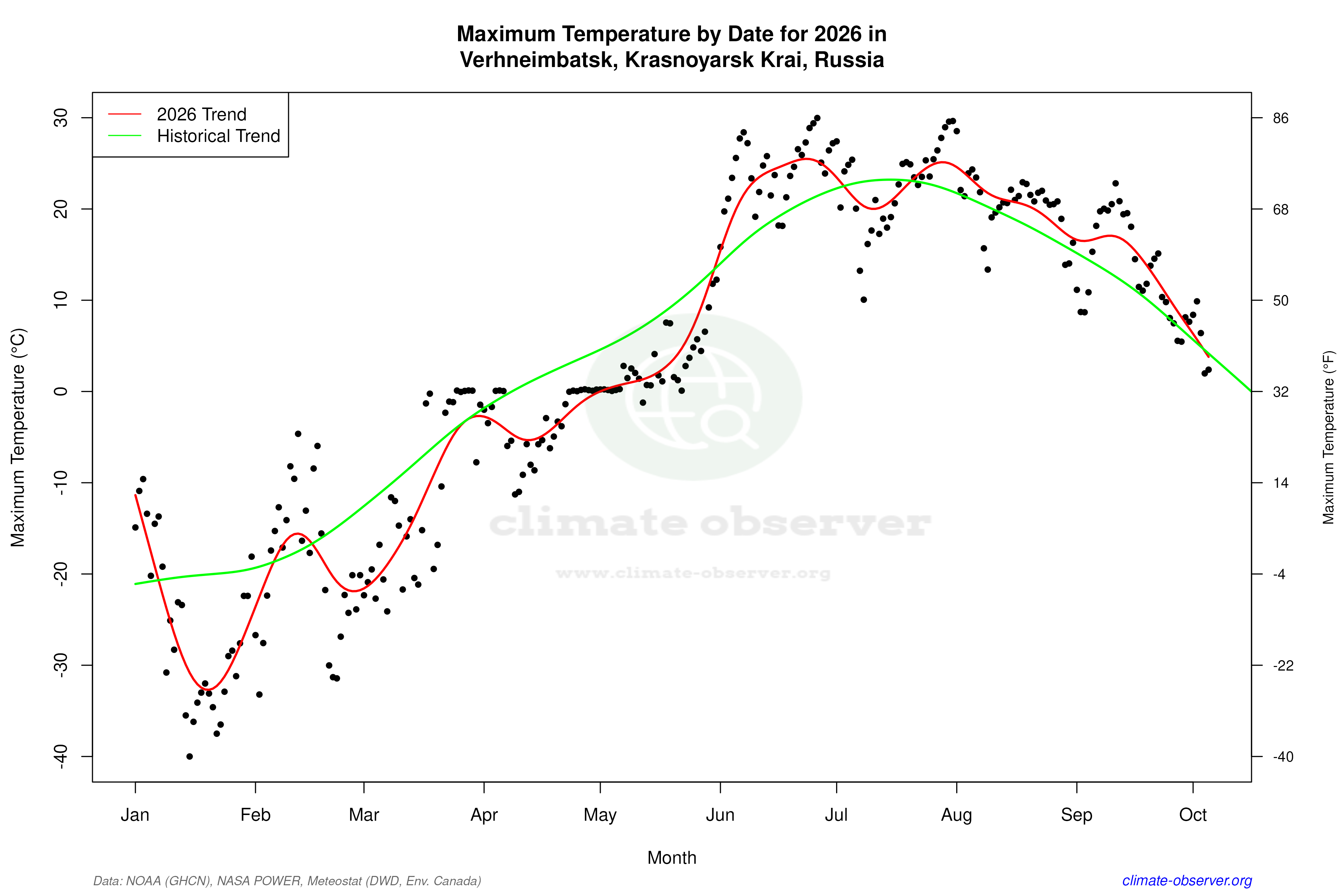
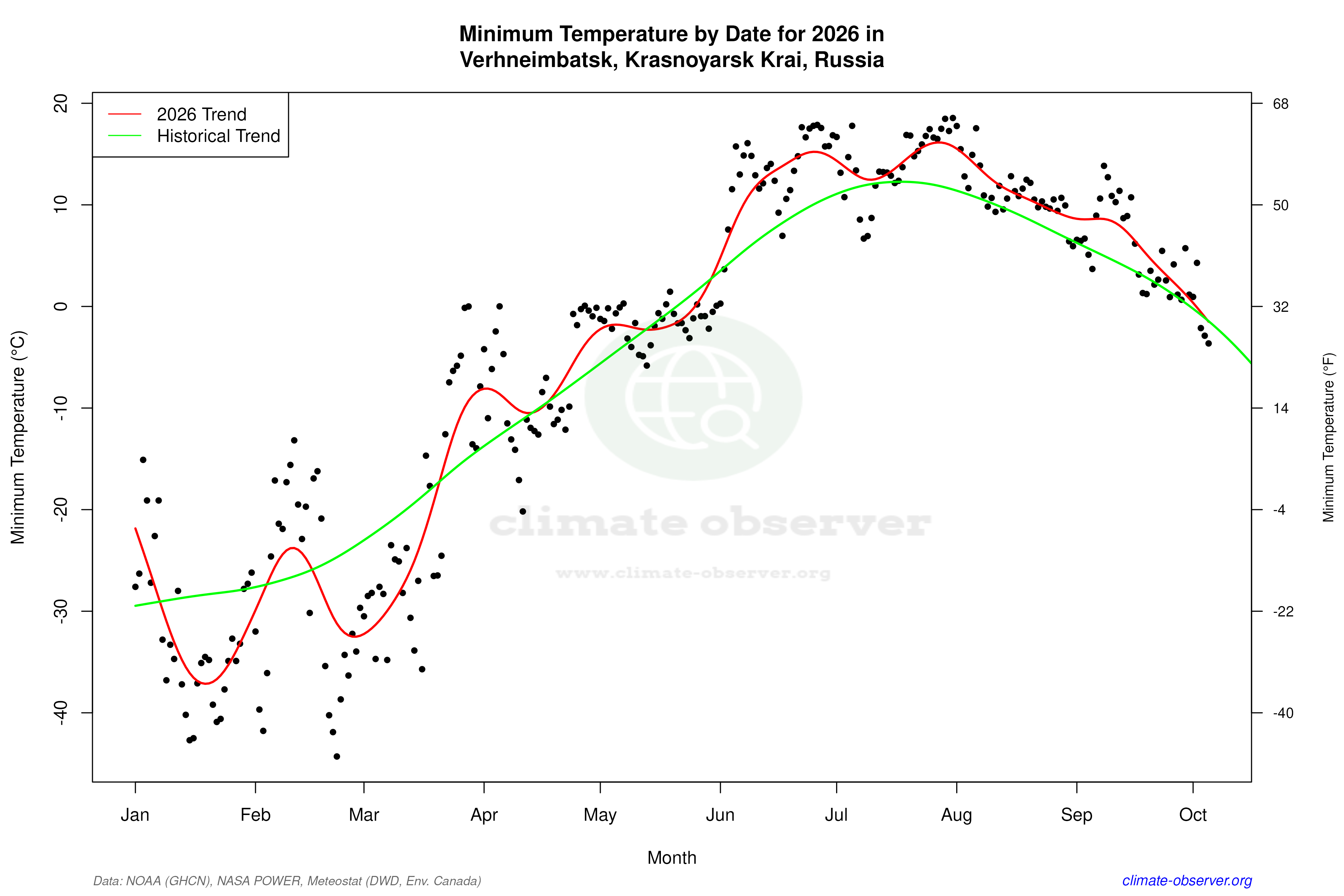
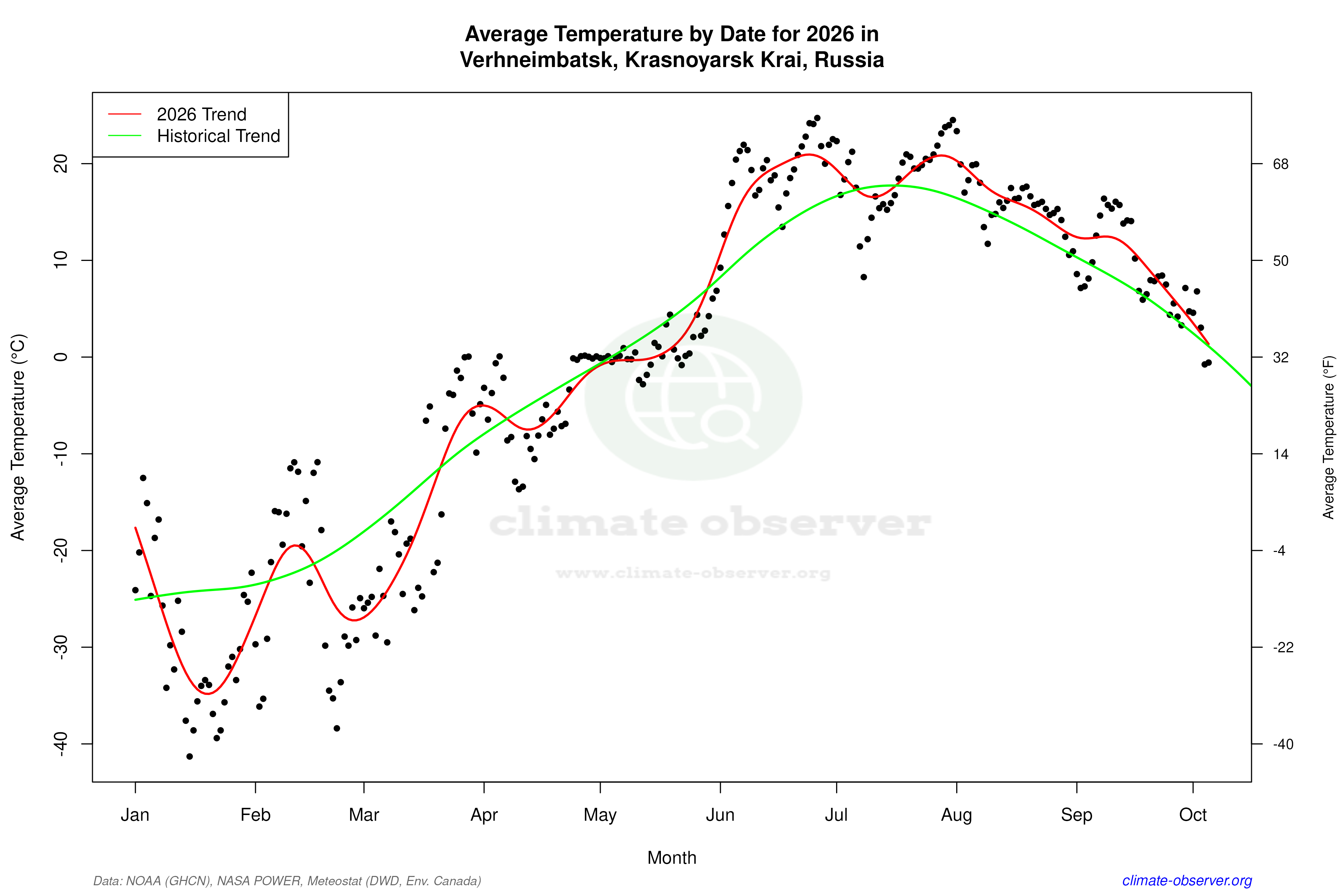
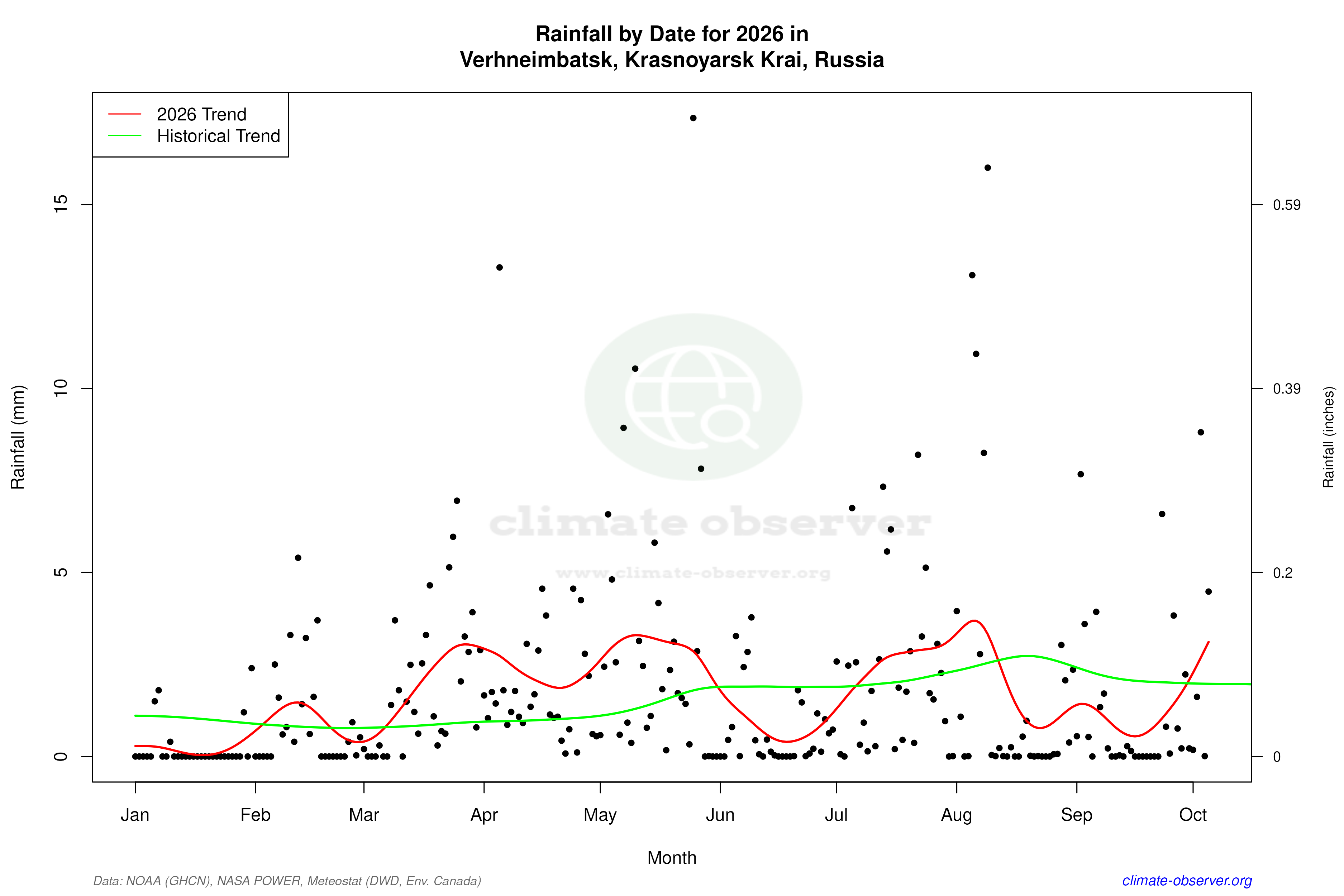
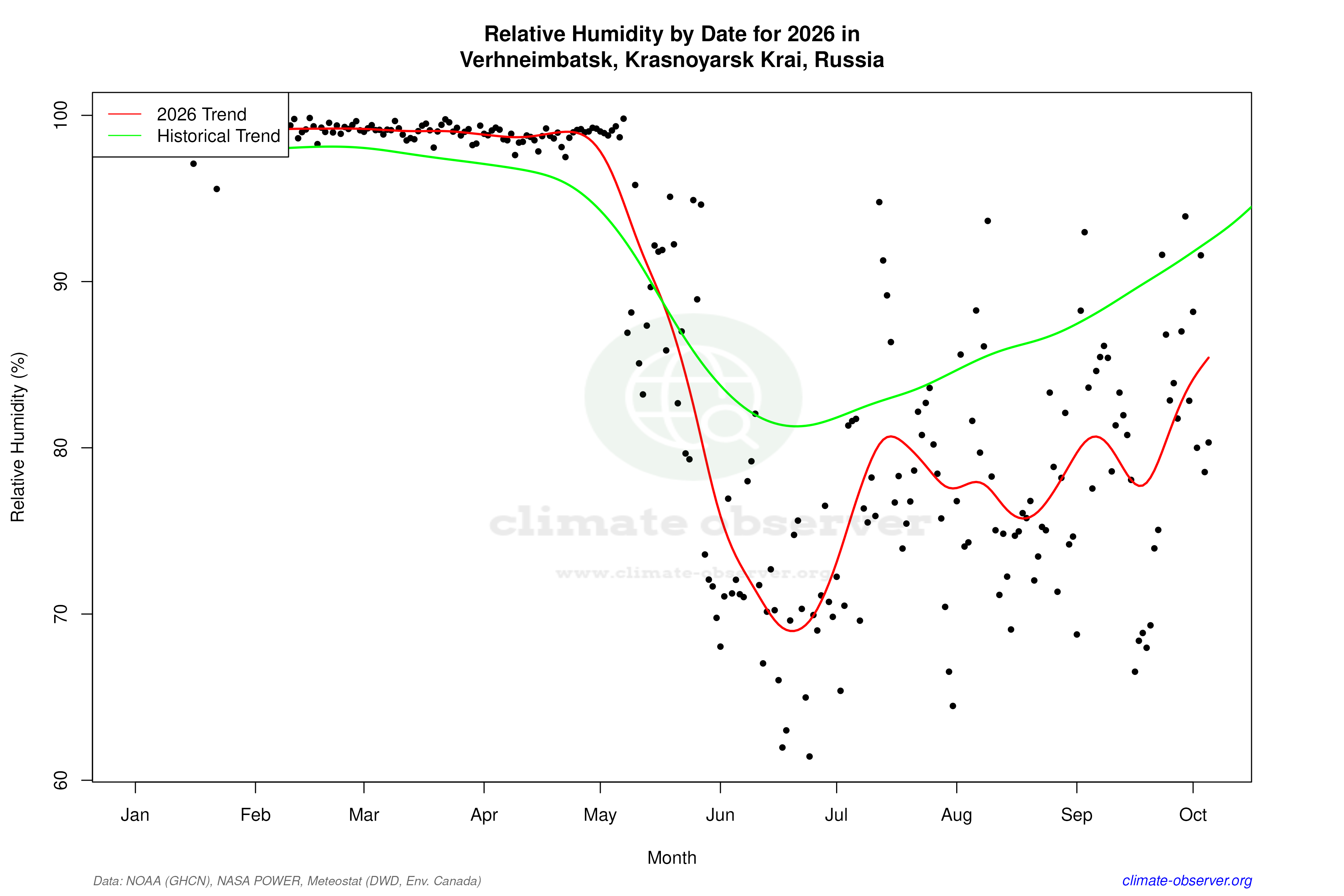

Max Temperature this Year | 1 of 6
Climate 12-Month Moving Averages
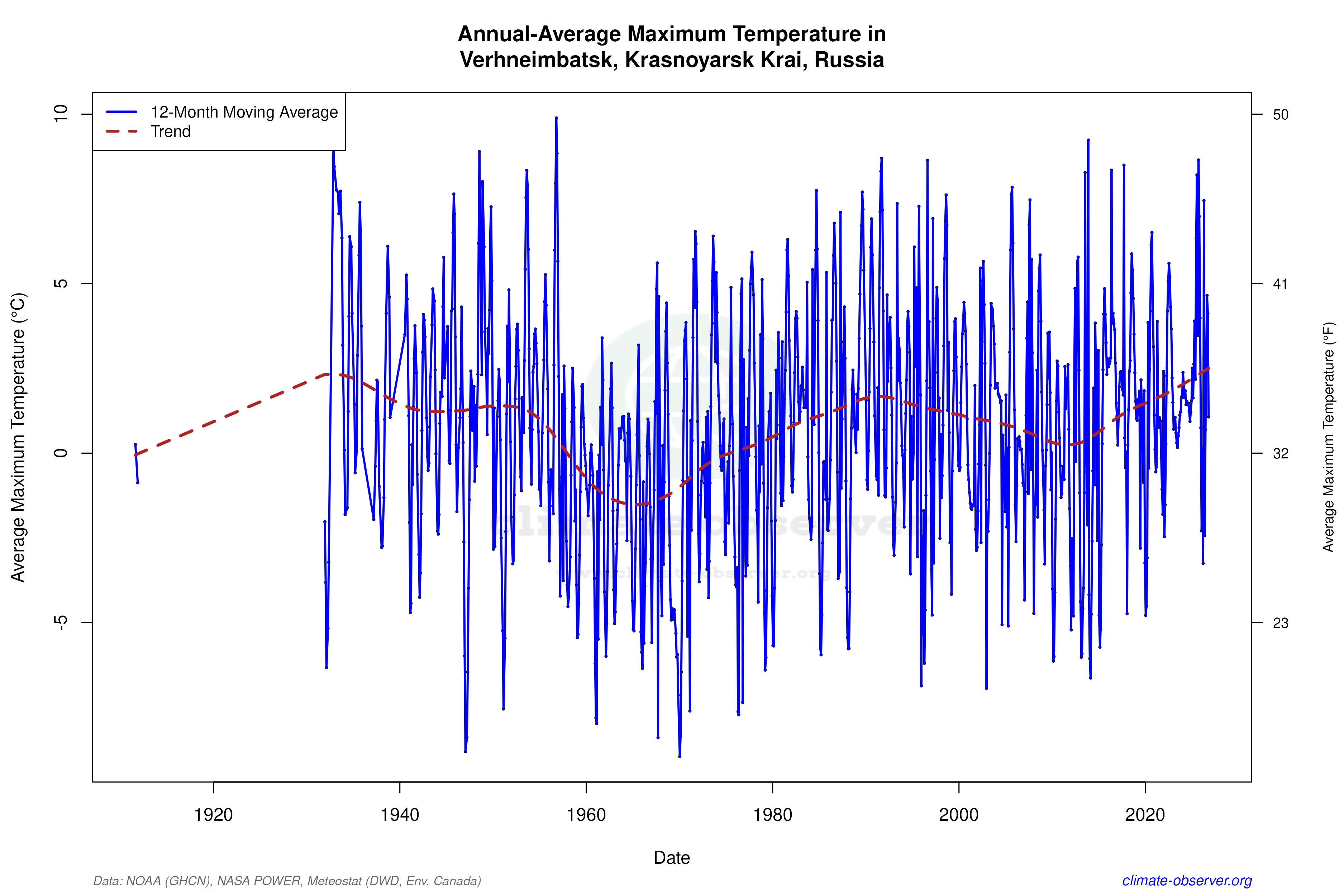
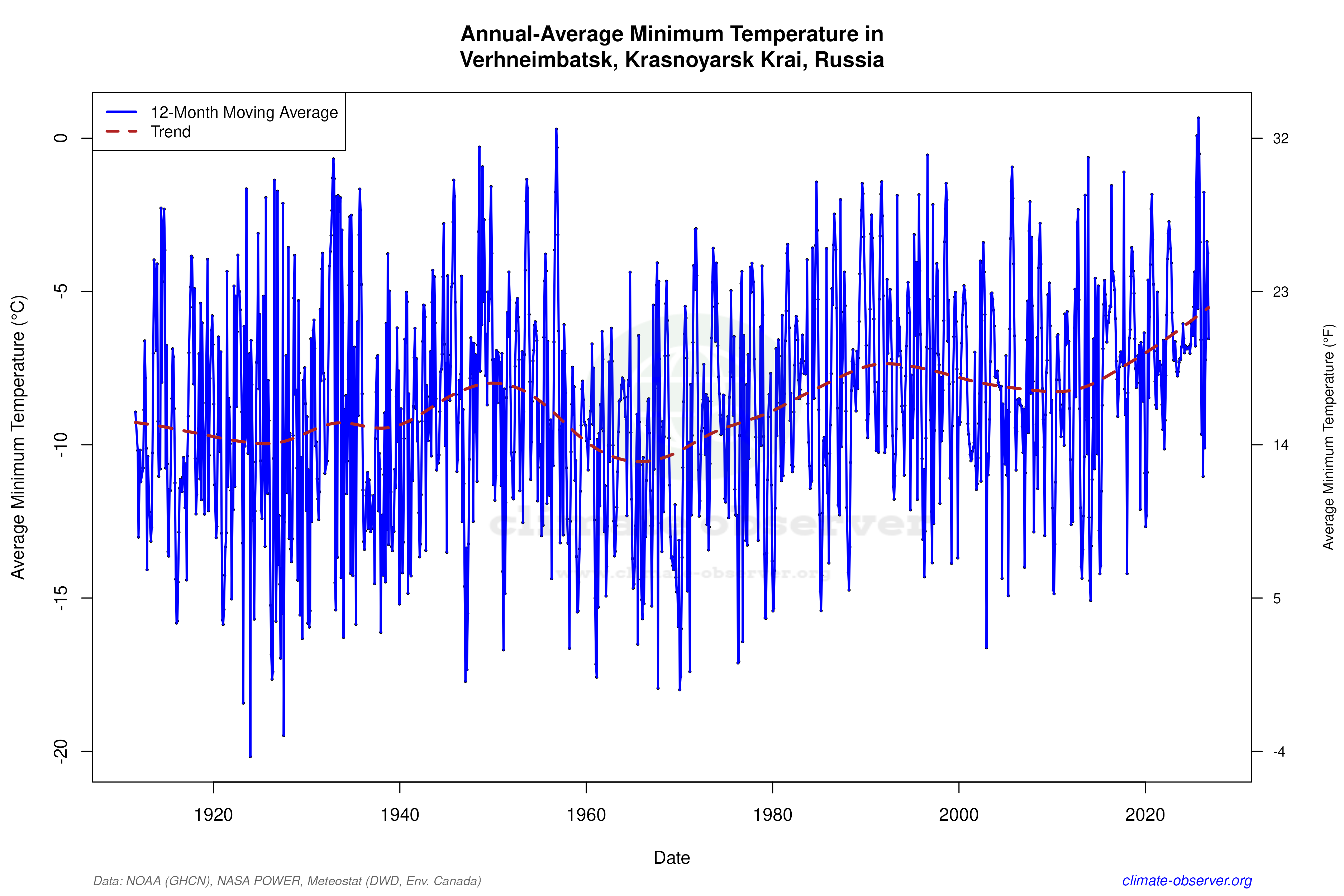
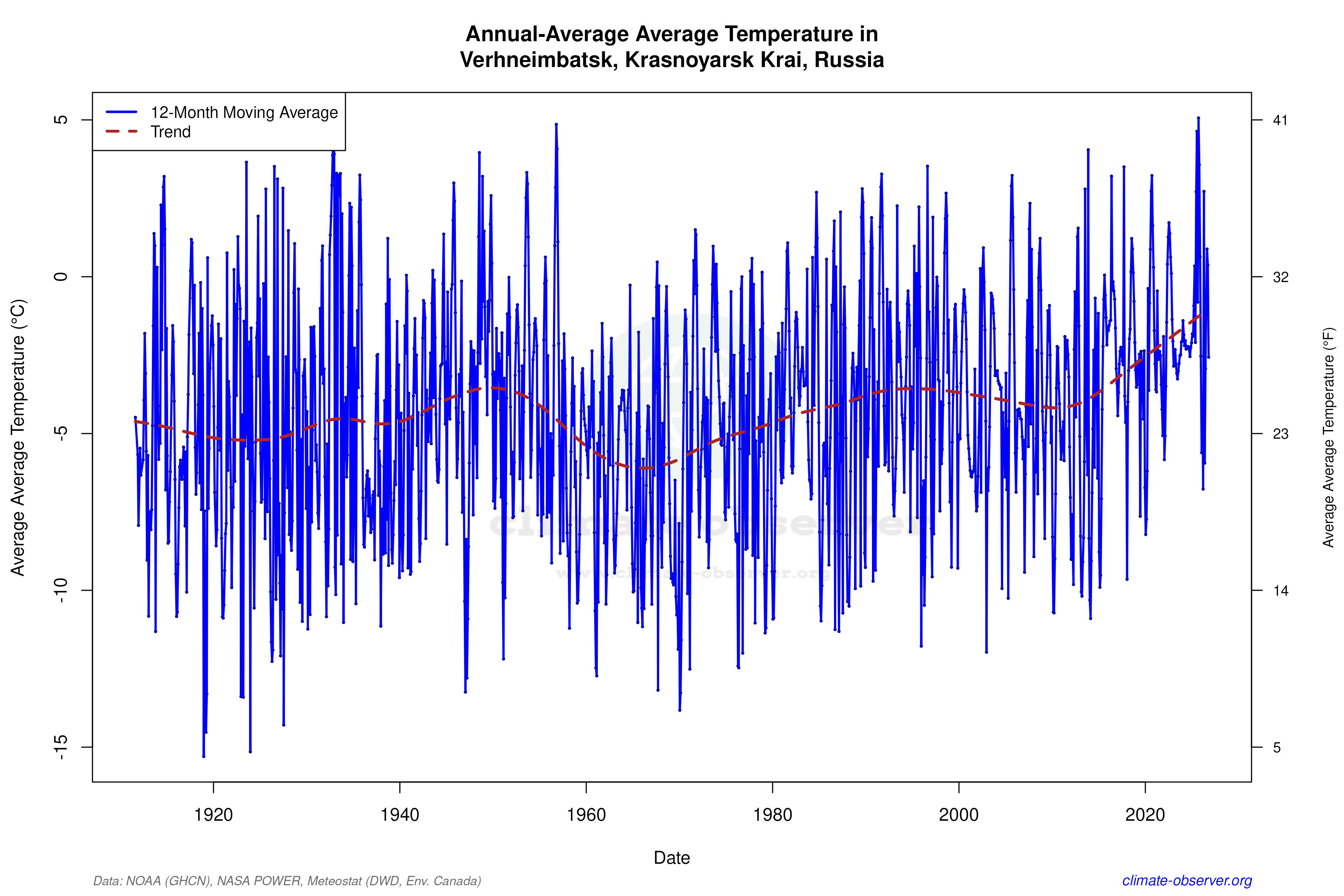
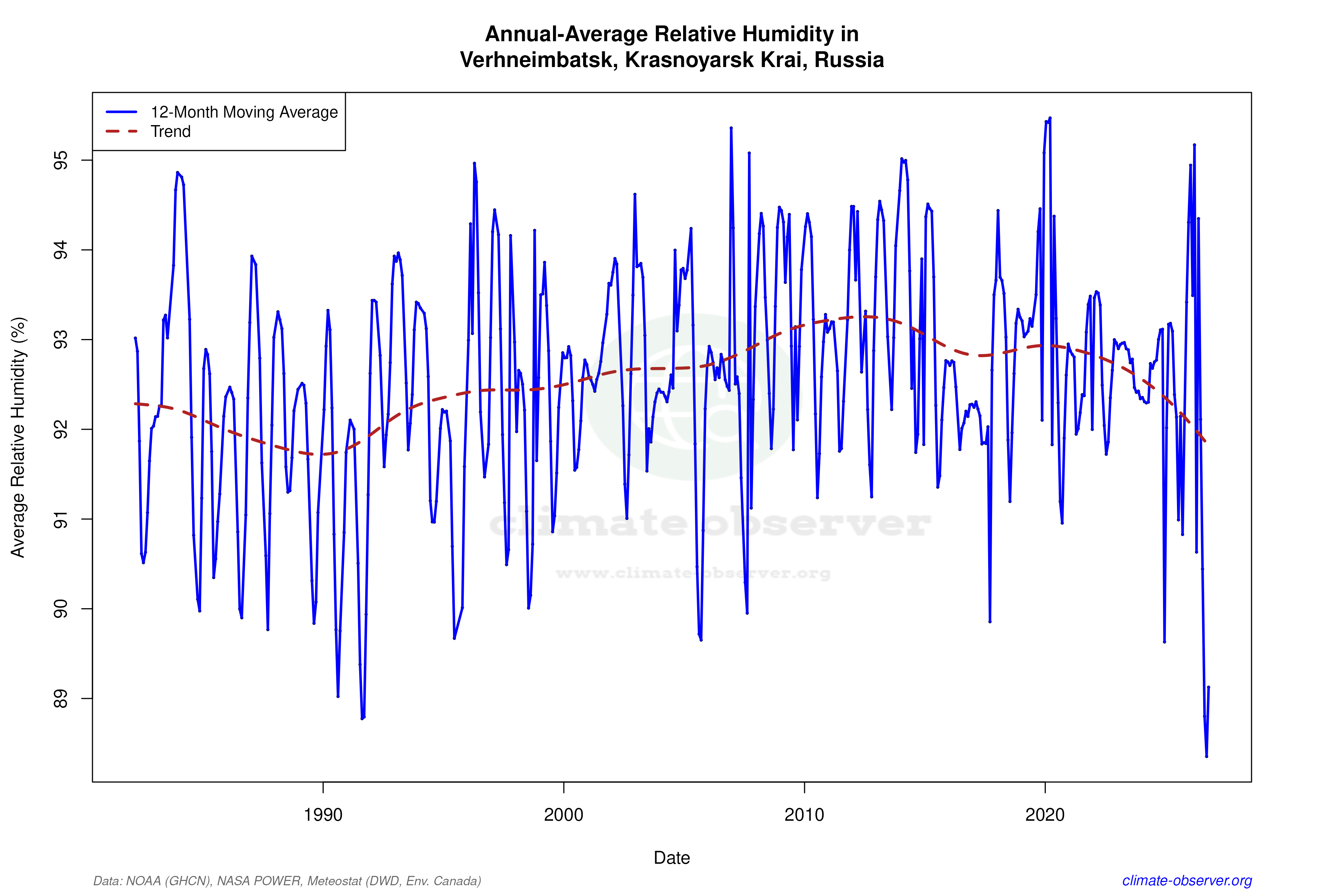

Max Temperature 12-Month MA | 1 of 6
Daily Data Points and Averages Throughout the Year
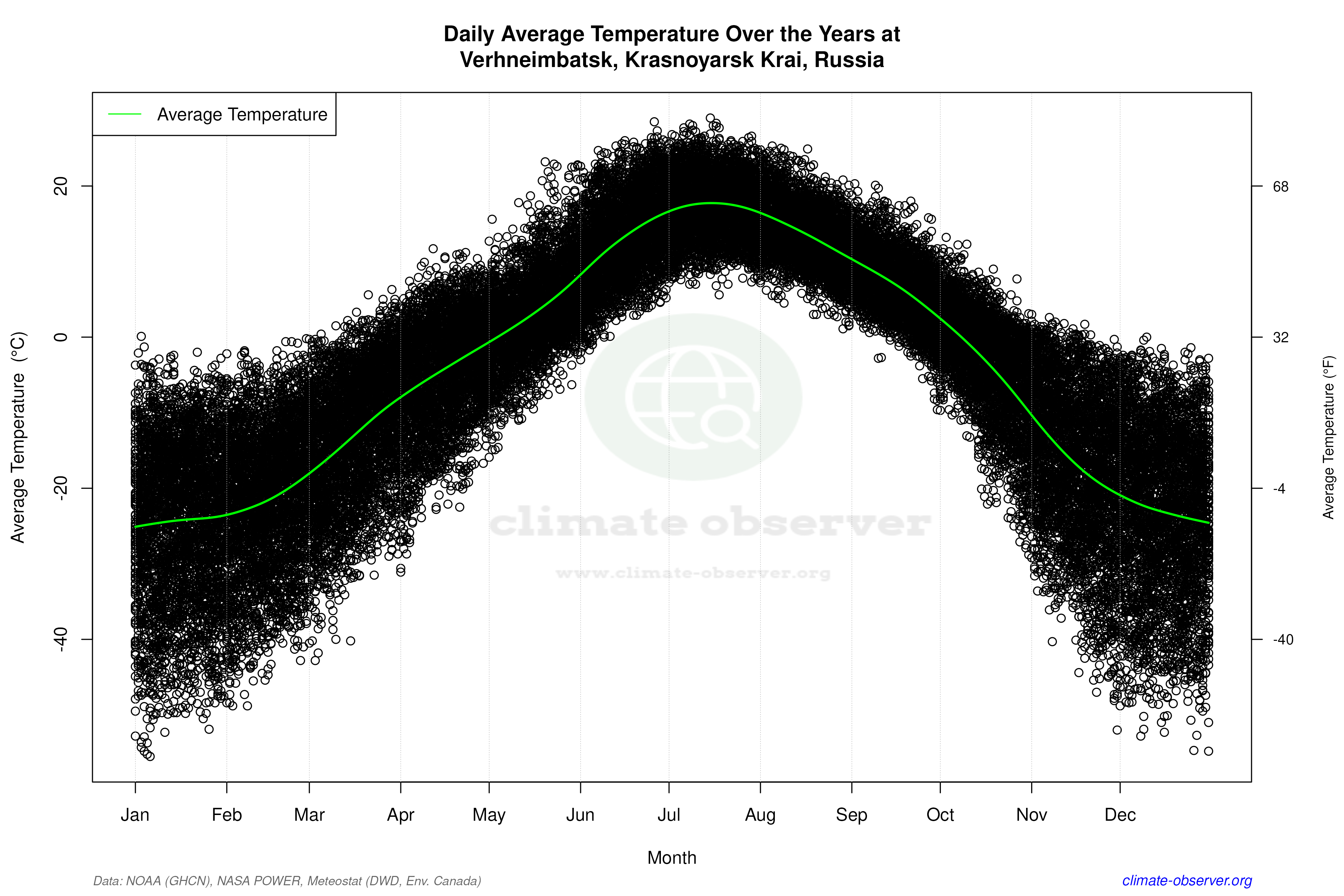
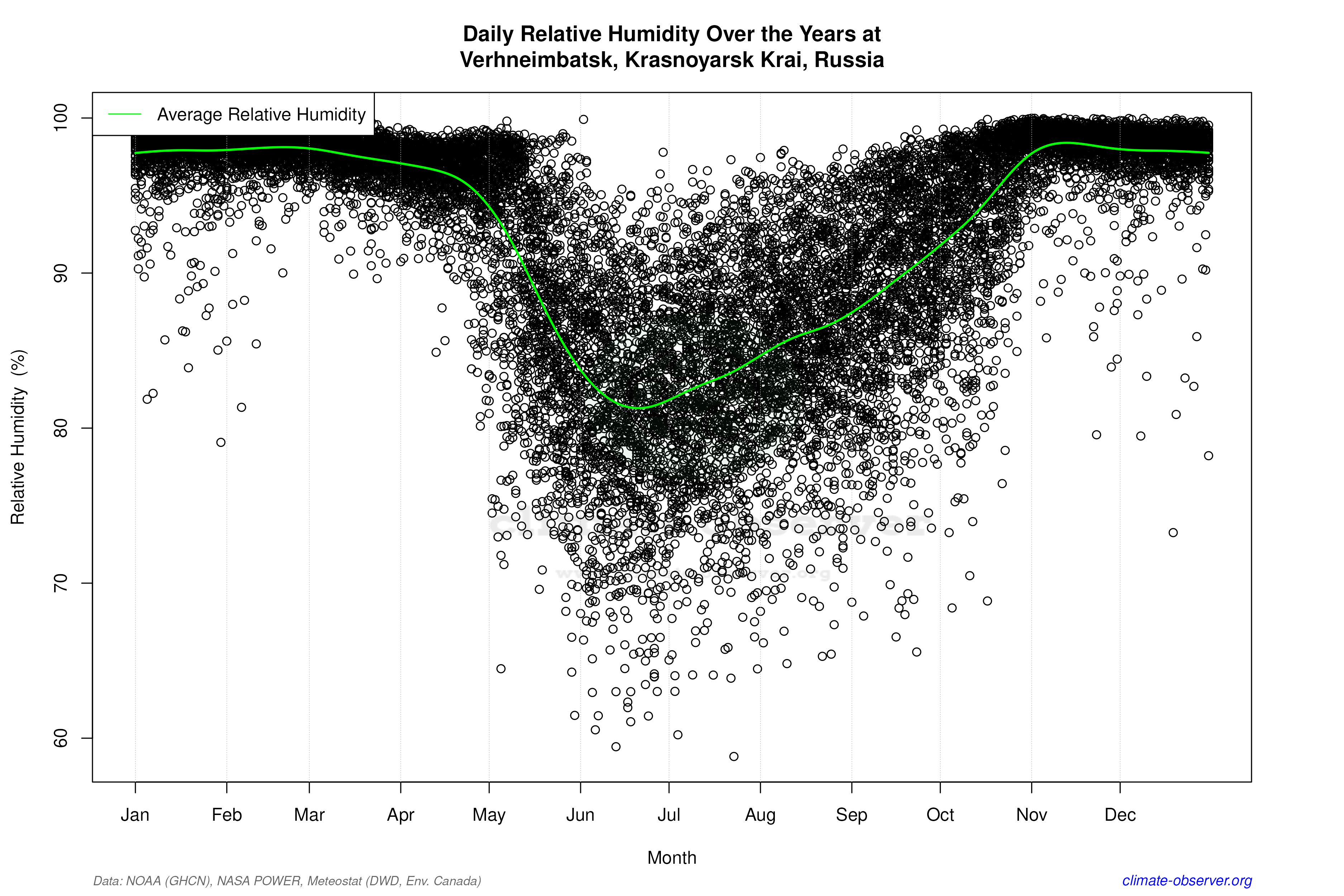

Average Max Temperature Throughout Year | 1 of 5


