Climate for Station: Irkutsk, Irkutsk Oblast, Russia
Loading live weather...
Climate Analysis & Overview
Irkutsk is experiencing a complex climate narrative, with a notable warming trend in all-time low temperatures and a cooling trend in recent high temperatures. The precipitation pattern has become more evenly distributed, reflecting a shift in local meteorological dynamics.
Siberian Climate Dynamics
Irkutsk, located at 52.2667°N, 104.35°E, is characterised by a subarctic climate (Köppen classification Dfc), marked by long, cold winters and short, warm summers. The city's proximity to Lake Baikal, the world's deepest freshwater lake, plays a crucial role in moderating local temperatures and influencing precipitation patterns. Over the past decade, the region has experienced a cooling trend in high temperatures, decreasing by 0.47°C (0.85°F), while low temperatures have fallen by 0.23°C (0.41°F). This contrasts with the all-time trend where high temperatures have risen by 0.20°C (0.36°F), and low temperatures have increased significantly by 0.39°C (0.70°F), suggesting a complex interplay of climatic factors.
Temperature Extremes and Trends
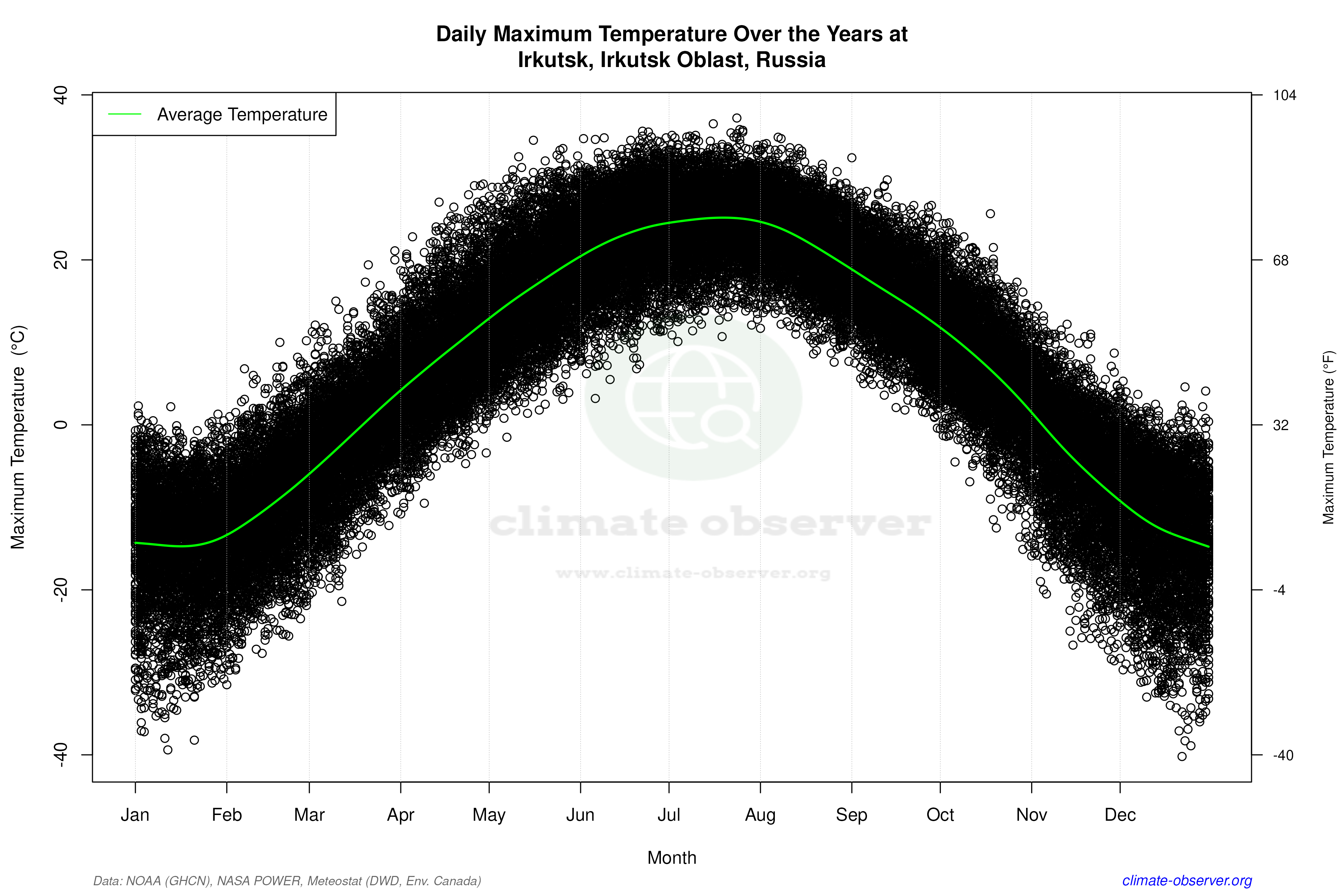
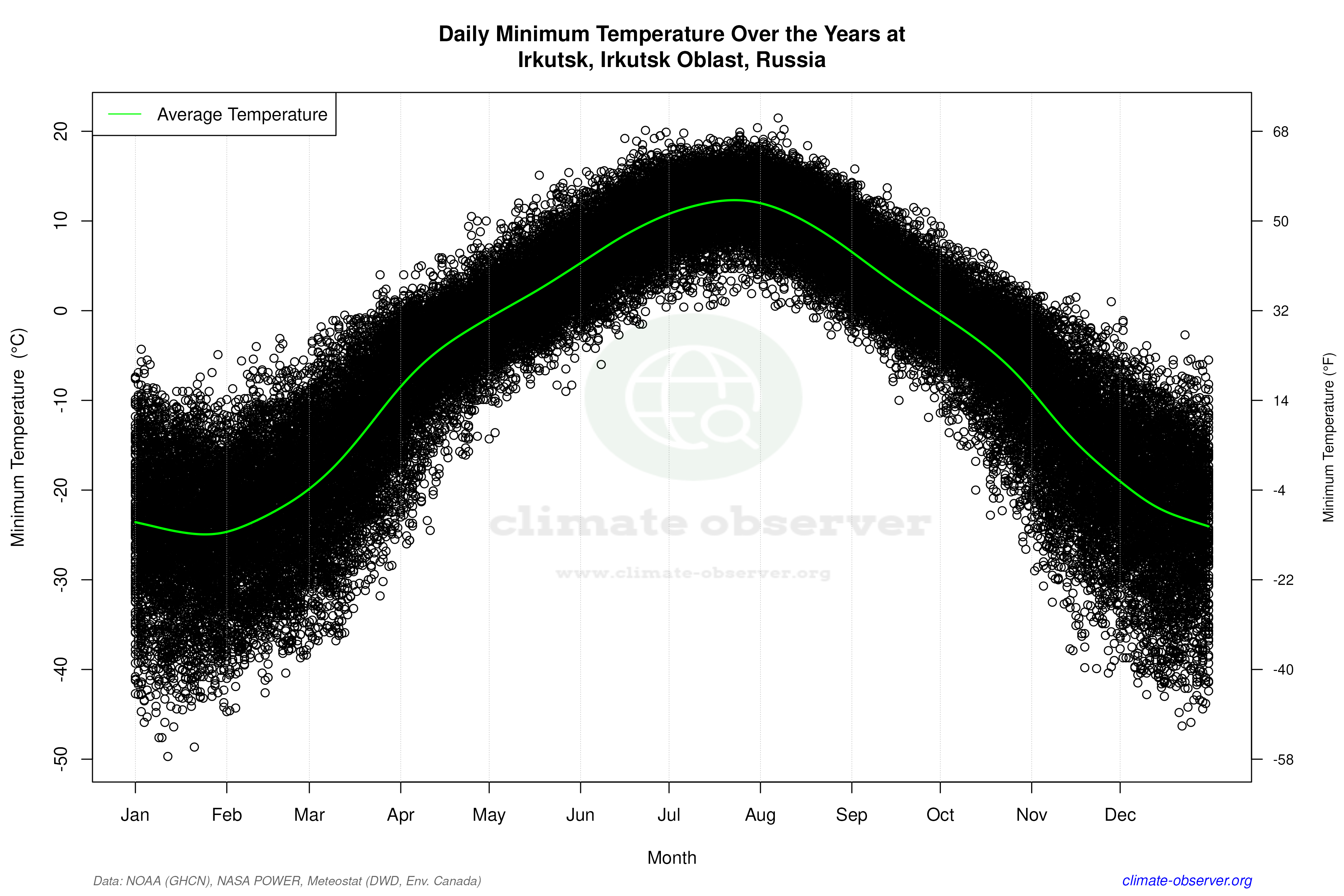
Irkutsk's climate is defined by its temperature extremes, with historical records showing a maximum of 37.2°C (98.96°F) and a minimum of -49.7°C (-57.46°F). The all-time warming trend in low temperatures indicates a gradual reduction in the severity of winter cold spells, which could have implications for local ecosystems and human activities. The recent cooling trend in high temperatures, however, suggests a short-term fluctuation that may be linked to regional weather patterns or broader climatic phenomena.
Precipitation Patterns and Distribution
The Precipitation Concentration Index (PCI) for Irkutsk has shifted from a baseline of 15.91 to a current value of 13.70. This decrease indicates a more even distribution of precipitation throughout the year, reducing the likelihood of extreme rainfall events concentrated in short periods. Such a change can benefit agriculture and water management, aligning with Russia's regional climate adaptation goals by potentially mitigating the impacts of droughts and floods.
Implications for Regional Climate Goals
Russia's climate strategy includes adapting to changing weather patterns and reducing vulnerability to climate extremes. The observed trends in Irkutsk align with these goals, as the warming of low temperatures may reduce energy demands for heating, while the more even precipitation distribution could enhance water resource management. These changes are crucial for sustaining economic activities and ensuring environmental resilience in Siberia.
Localised Weather Anomalies
Recent weather events in Irkutsk, such as unseasonal snowfalls and heatwaves, underscore the variability and unpredictability of the region's climate. These anomalies highlight the importance of continuous monitoring and adaptation strategies to address the challenges posed by climate change. As Irkutsk navigates these climatic shifts, understanding and responding to these trends will be vital for the city's future resilience.
Station Statistics
10-Year Trend
High: -0.01 °C/decade
Low: -0.36 °C/decade
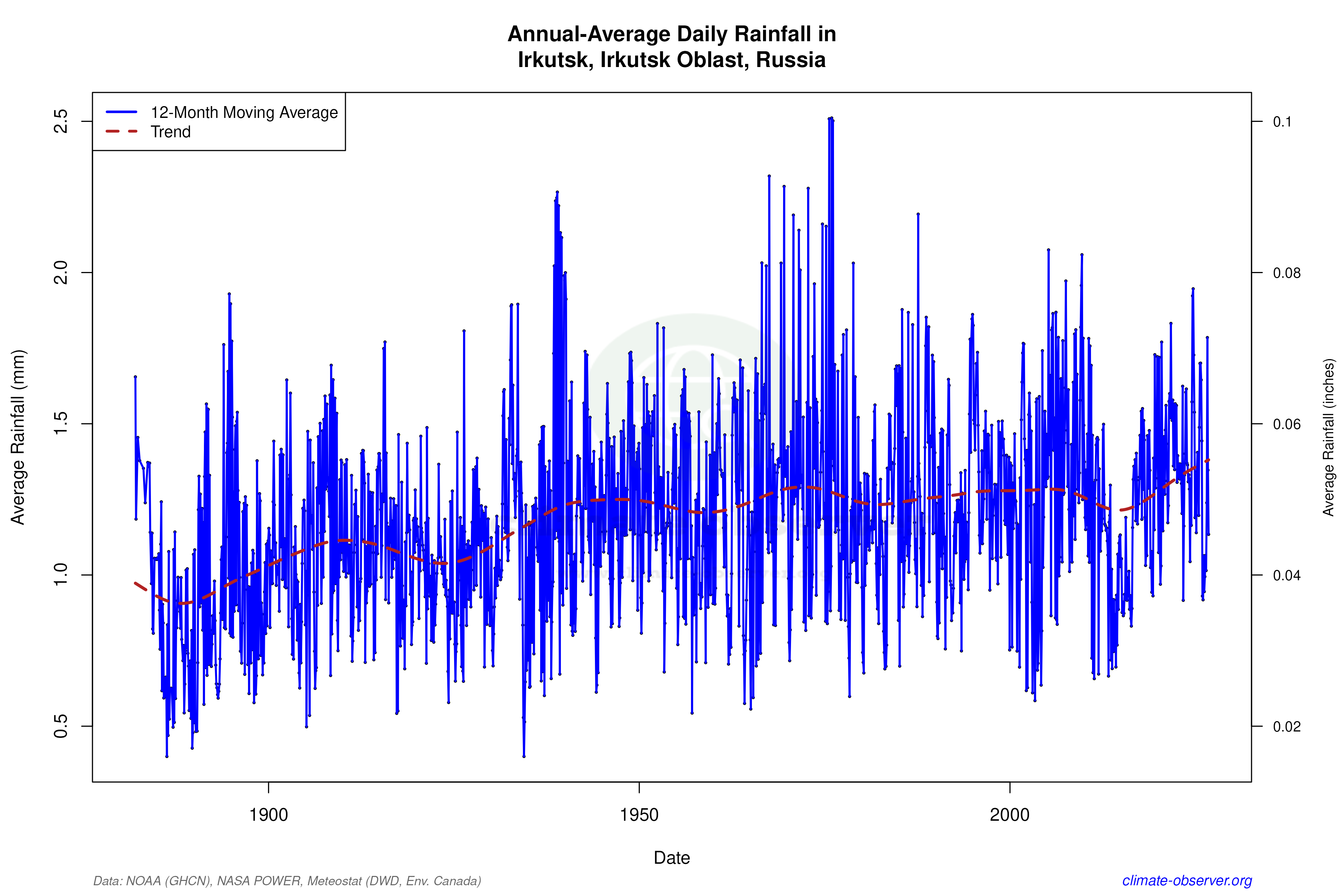
Rain: +0.05 mm/decade
25-Year Trend
High: -0.10 °C/decade
Low: -0.35 °C/decade
Rain: +0.03 mm/decade
50-Year Trend
High: +0.29 °C/decade
Low: +0.29 °C/decade
Rain: +0.02 mm/decade
All-Time Trend
High: +0.19 °C/decade
Low: +0.38 °C/decade
Rain: +0.02 mm/decade
Percentage Above-Average Days
Last 12 Months: 49.3%
This Year: 56.8%
Precipitation Concentration Index (PCI) ℹ️
Last 12 Months: 13.0
Historical Average: 16.0
Percentile Rank of Last 12 Months ℹ️
High: 58th percentile
Low: 66th percentile
Rain: 56th percentile
Change in Variance ℹ️
High: -4.5%
Low: -4.2%
Intraday: -12.8%
Data Coverage
97.9%
First Year of Data
1886
Station Location
Historical Weather Records
| Max High | Avg High | Min High | Max Avg | Avg Avg | Min Avg | Max Low | Avg Low | Min Low | Max Precipitation | Avg Precipitation | Max Snow | Avg Snow | |
|---|---|---|---|---|---|---|---|---|---|---|---|---|---|
| Record | 37.2 °C | — | -40.2 °C | 27.5 °C | — | -43.9 °C | 21.5 °C | — | -49.7 °C | 82.5 mm | — | — | — |
| January | 2.3 °C | -14.5 °C | -39.4 °C | -2.4 °C | -19.6 °C | -43.9 °C | -4.3 °C | -24.5 °C | -49.7 °C | 25.3 mm | 0.4 mm | — | — |
| February | 10.2 °C | -10.0 °C | -31.5 °C | 0.8 °C | -16.9 °C | -36.3 °C | -3.1 °C | -22.7 °C | -44.7 °C | 7.3 mm | 0.3 mm | — | — |
| March | 21.1 °C | -1.0 °C | -21.4 °C | 9.8 °C | -8.3 °C | -29.1 °C | 4.0 °C | -14.8 °C | -37.3 °C | 13.1 mm | 0.3 mm | — | — |
| April | 29.2 °C | 8.5 °C | -10.8 °C | 19.3 °C | 1.7 °C | -19.8 °C | 10.5 °C | -4.2 °C | -26.0 °C | 24.8 mm | 0.6 mm | — | — |
| May | 34.5 °C | 16.7 °C | -1.5 °C | 23.2 °C | 9.2 °C | -4.1 °C | 15.4 °C | 2.0 °C | -14.3 °C | 43.4 mm | 1.1 mm | — | — |
| June | 35.6 °C | 22.9 °C | 3.2 °C | 25.0 °C | 15.5 °C | 0.3 °C | 20.1 °C | 8.2 °C | -6.0 °C | 72.3 mm | 2.2 mm | — | — |
| July | 37.2 °C | 24.9 °C | 10.1 °C | 27.5 °C | 18.1 °C | 5.0 °C | 20.4 °C | 11.9 °C | 0.4 °C | 71.2 mm | 3.2 mm | — | — |
| August | 34.9 °C | 22.2 °C | 7.6 °C | 27.3 °C | 15.5 °C | 4.3 °C | 21.5 °C | 9.8 °C | -2.7 °C | 82.5 mm | 2.7 mm | — | — |
| September | 32.4 °C | 15.5 °C | -0.4 °C | 22.8 °C | 8.6 °C | -3.7 °C | 15.8 °C | 3.1 °C | -11.9 °C | 60.1 mm | 1.6 mm | — | — |
| October | 25.6 °C | 7.2 °C | -15.1 °C | 15.8 °C | 0.9 °C | -21.9 °C | 9.4 °C | -4.0 °C | -26.6 °C | 58.2 mm | 0.7 mm | — | — |
| November | 14.4 °C | -4.0 °C | -28.6 °C | 6.4 °C | -9.5 °C | -34.0 °C | 1.6 °C | -14.3 °C | -40.4 °C | 14.3 mm | 0.6 mm | — | — |
| December | 5.3 °C | -12.5 °C | -40.2 °C | 0.6 °C | -17.3 °C | -42.2 °C | -1.1 °C | -22.0 °C | -46.3 °C | 30.5 mm | 0.5 mm | — | — |
Data Visualisations
Remove WatermarksCurrent Year Climate Trends vs Historical
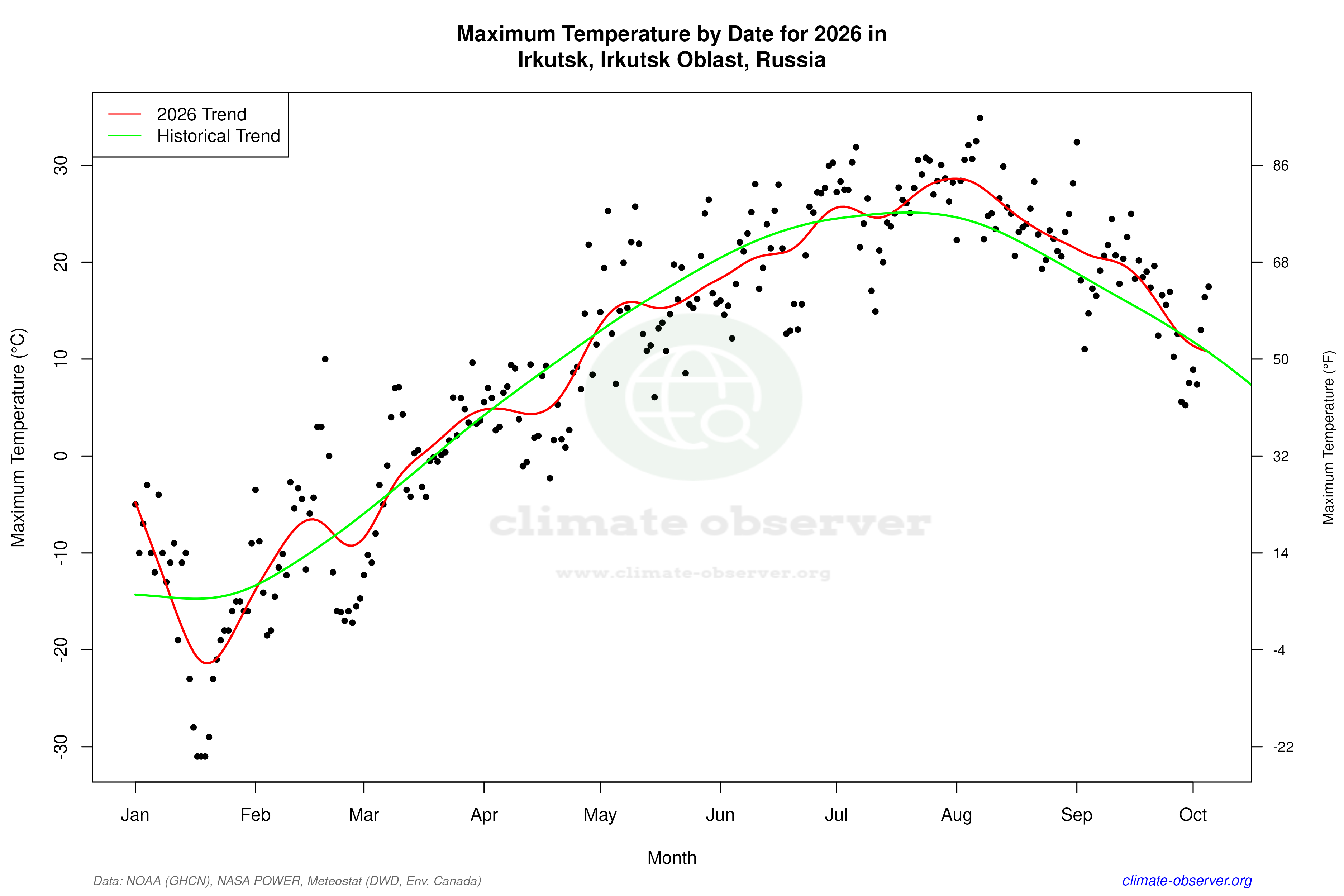
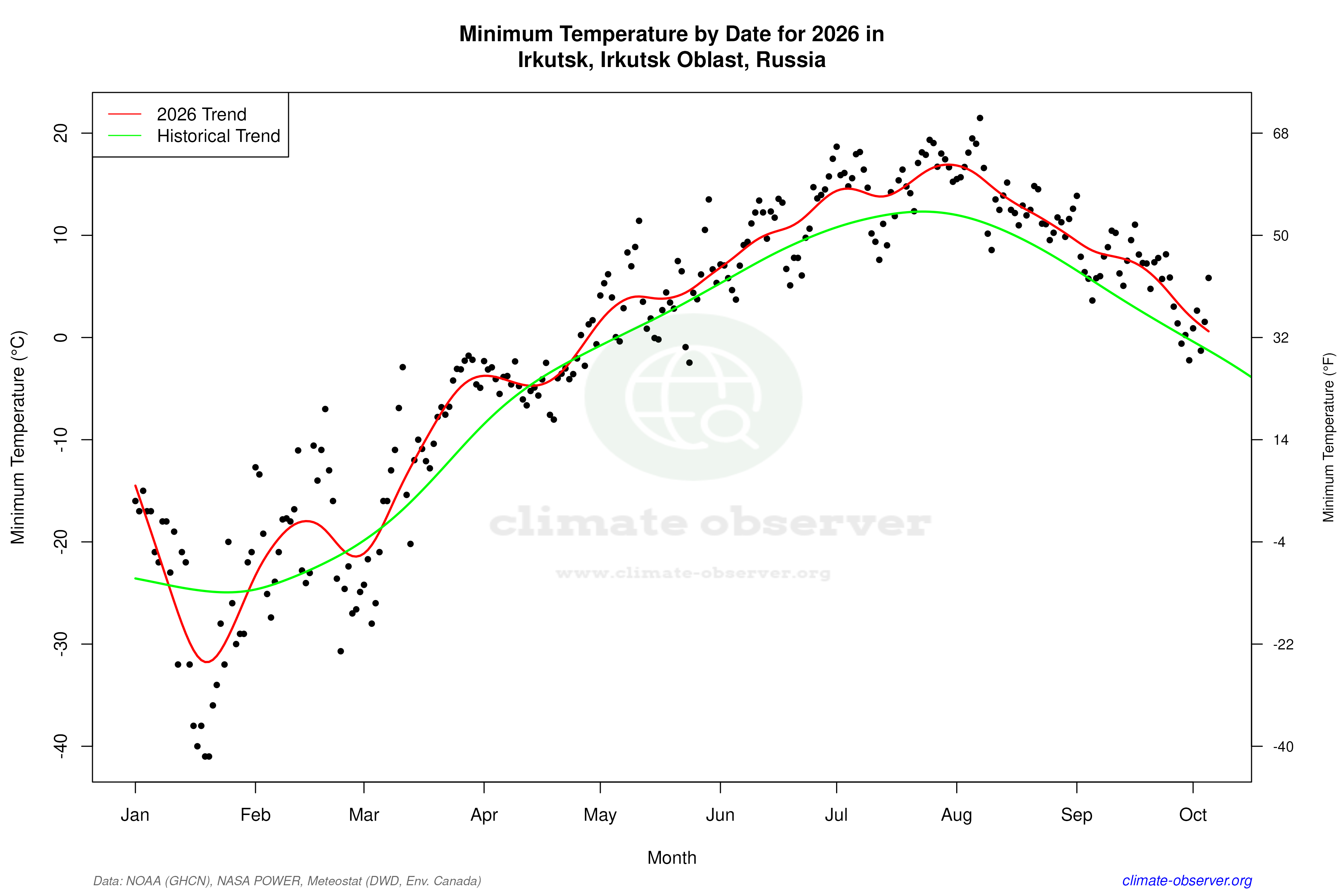
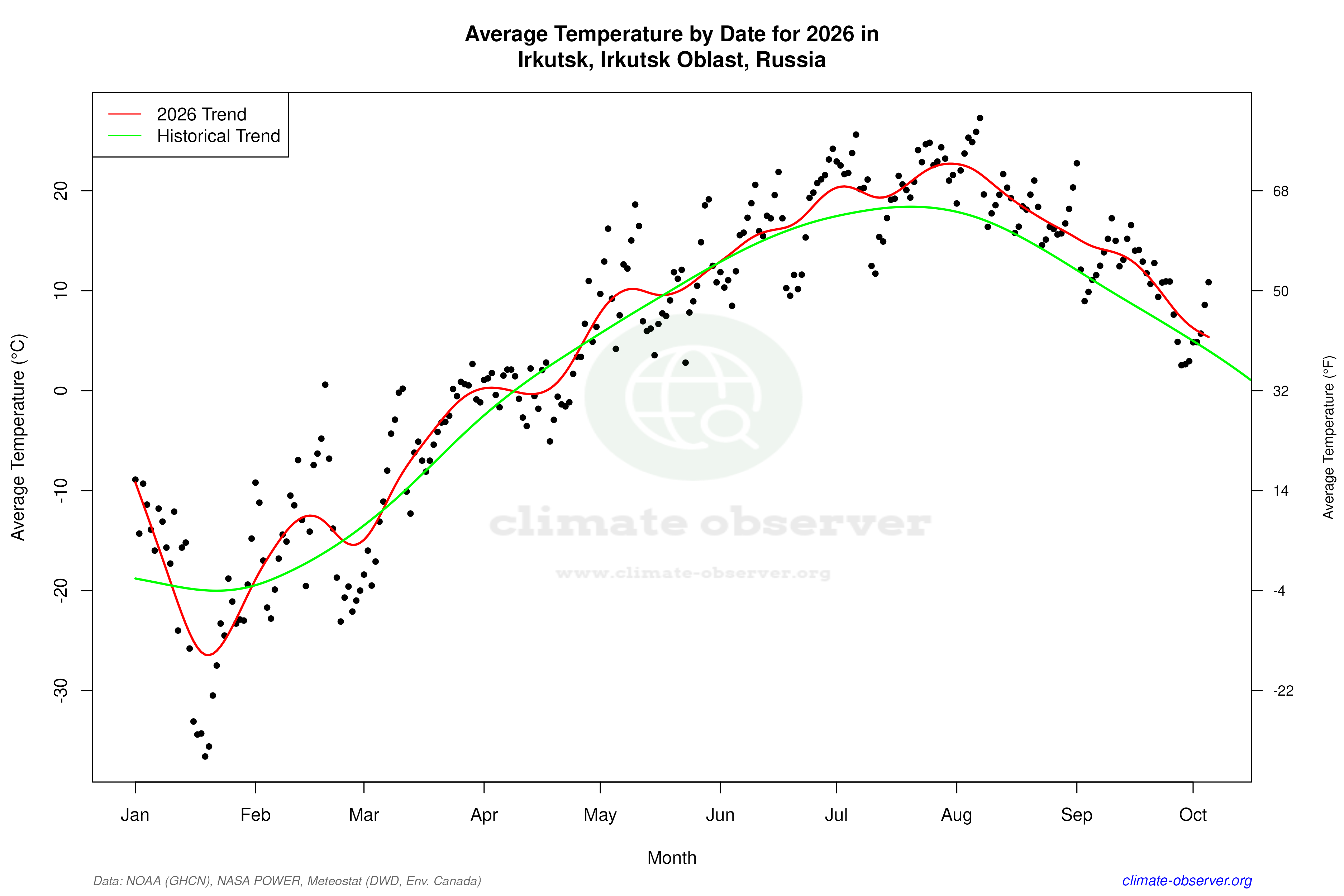
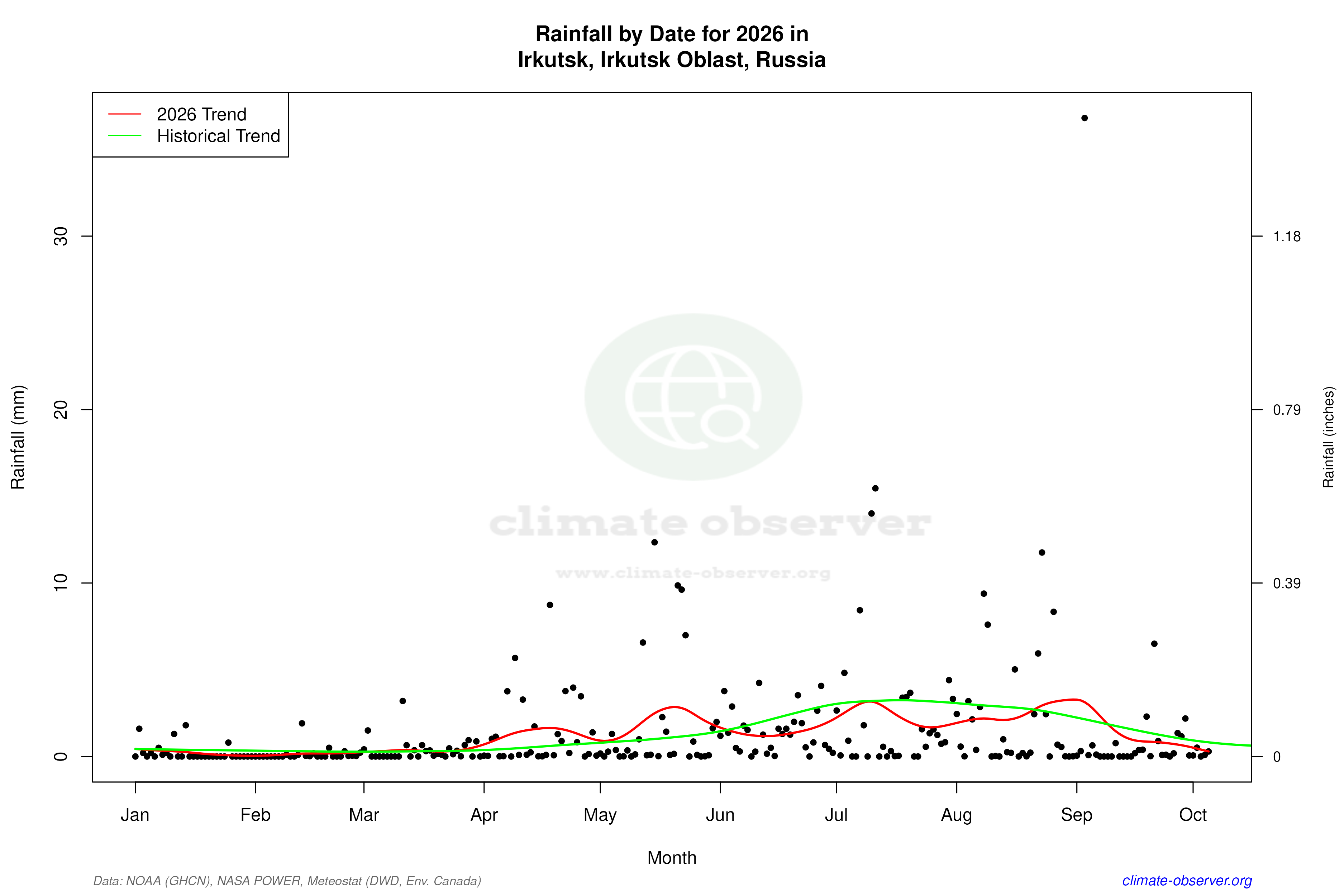
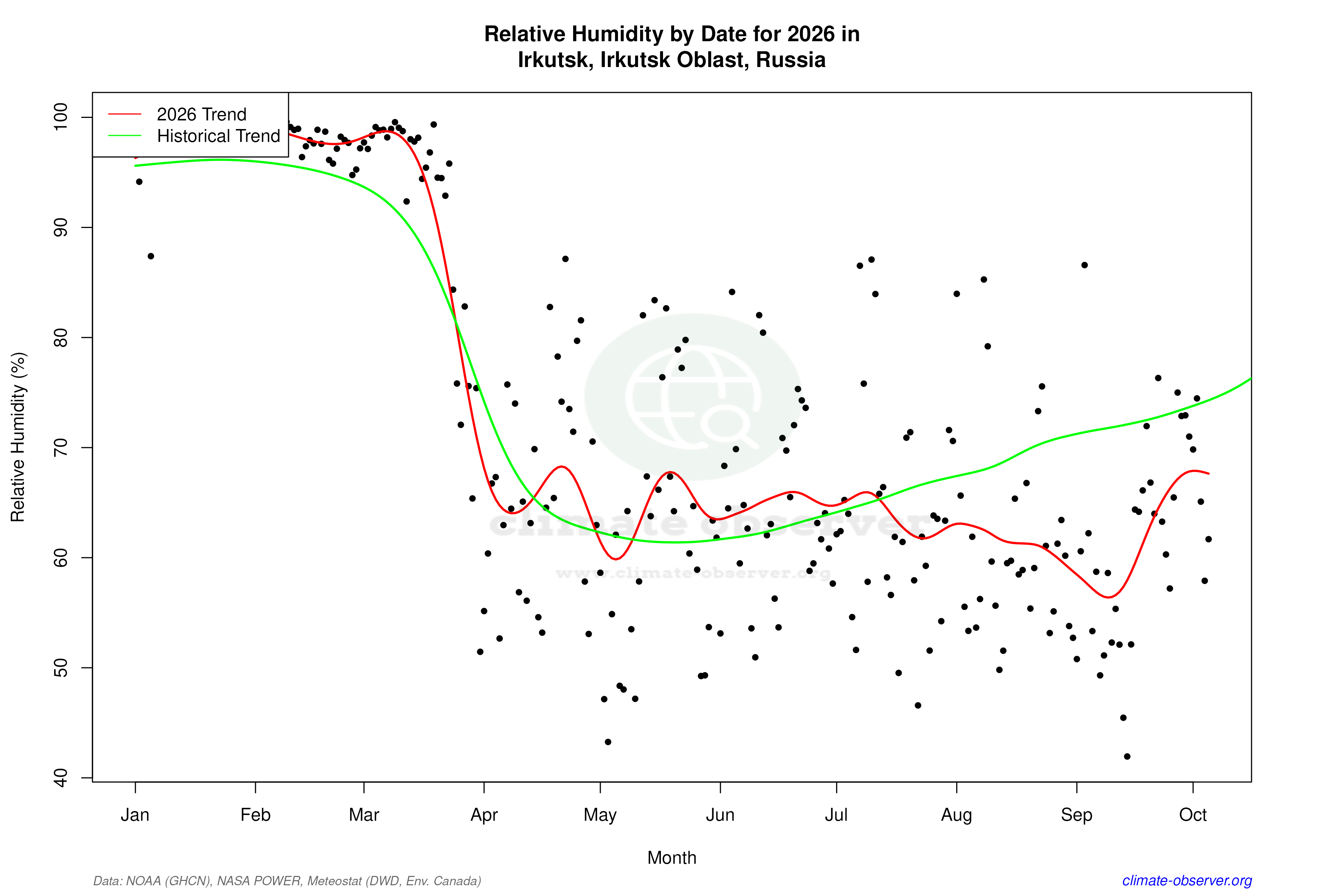

Max Temperature this Year | 1 of 6
Climate 12-Month Moving Averages
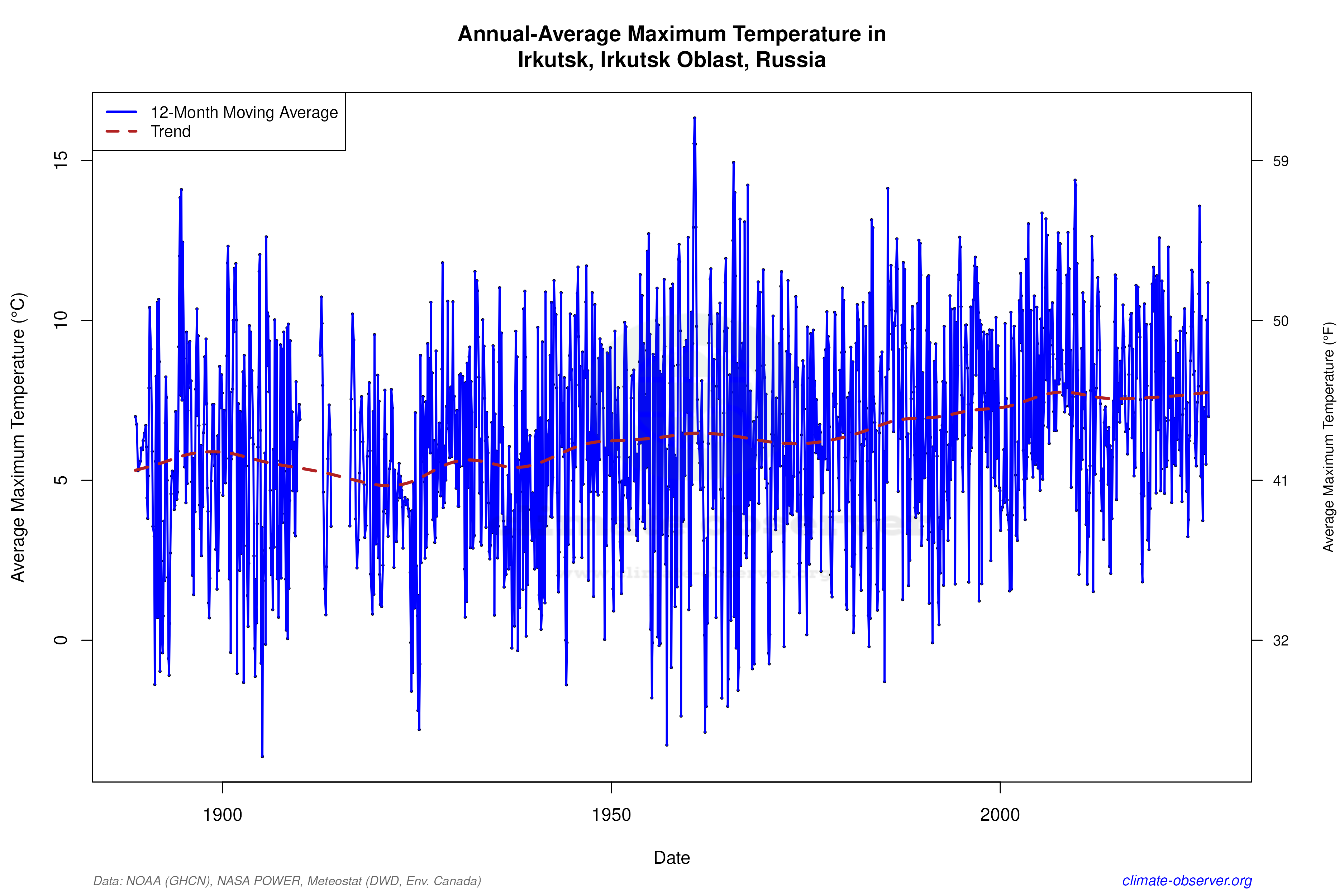
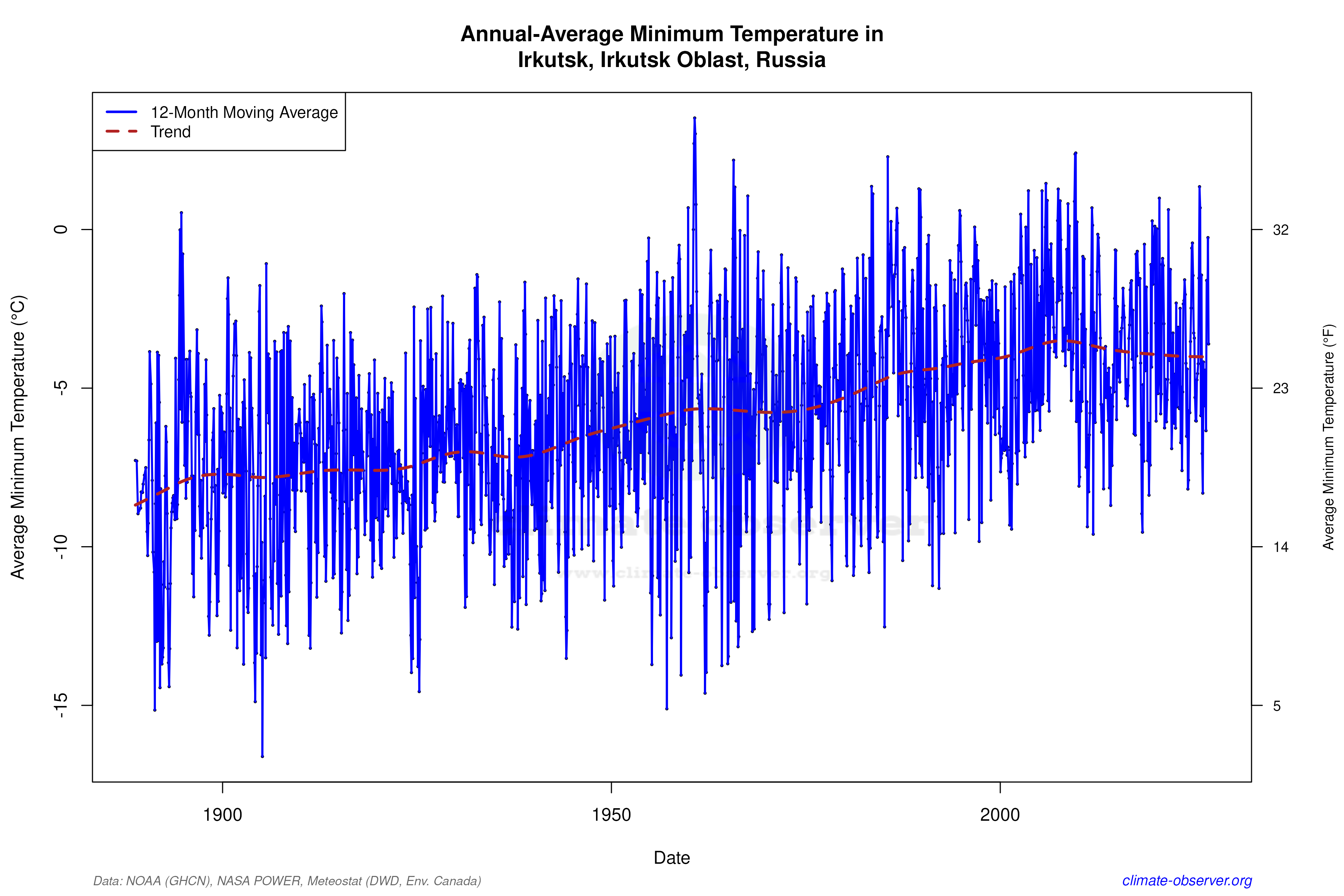
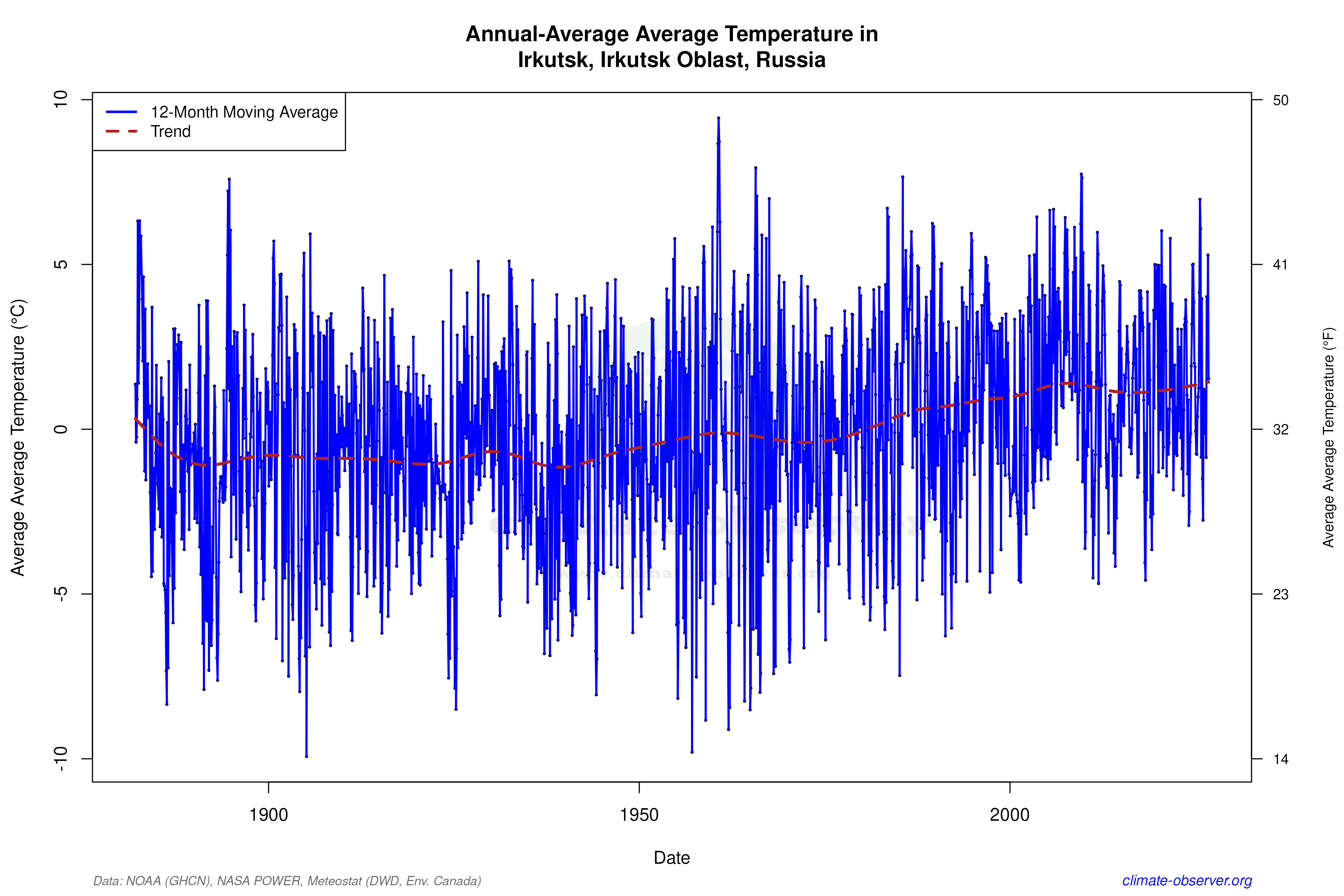

Max Temperature 12-Month MA | 1 of 6
Daily Data Points and Averages Throughout the Year
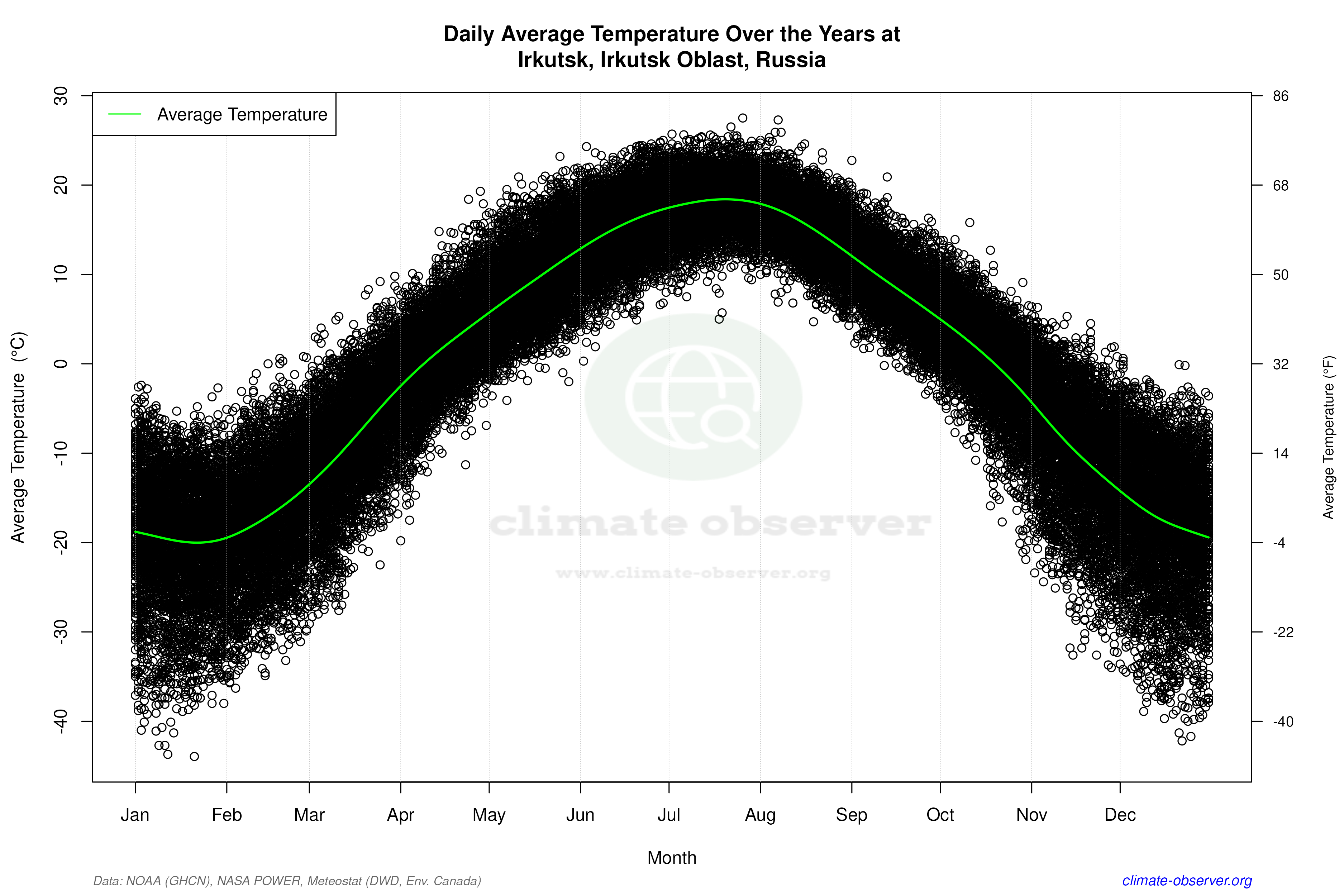
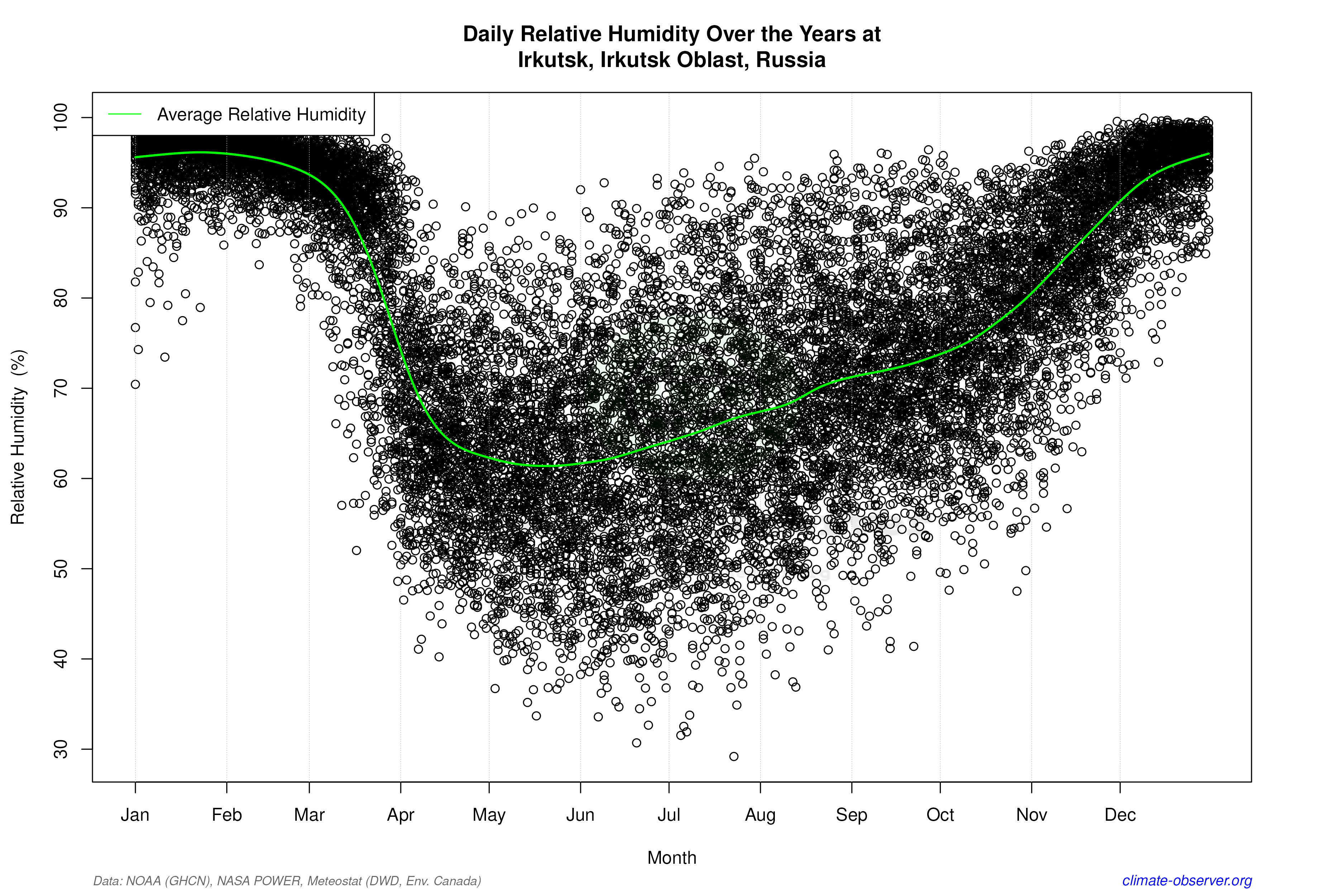

Average Max Temperature Throughout Year | 1 of 5


