Climate for Station: Yenbo, Al Madinah Region, Saudi Arabia
Loading live weather...
Climate Analysis & Overview
Yenbo is experiencing a warming trend, with both high and low temperatures rising over the past decade and all-time records. The Precipitation Concentration Index indicates increasingly concentrated rainfall events, reflecting broader regional climate shifts.
Desert Climate Dynamics
Yenbo, located at 24.144°N, 38.063°E, falls under the BWh classification of the Köppen climate system, indicative of a hot desert climate. This coastal city, nestled along the Red Sea, experiences minimal annual rainfall and significant temperature fluctuations. The proximity to the sea moderates extreme temperatures but also contributes to humidity levels that can exacerbate heat stress.
Temperature Trends and Records
Over the past decade, Yenbo has seen a rise in temperatures, with high temperatures increasing by 0.22°C (0.40°F) and low temperatures by 0.31°C (0.56°F). These 10-year trends are part of a broader all-time warming pattern, with high temperatures rising by 0.64°C (1.15°F) and low temperatures by 0.35°C (0.63°F). The highest recorded temperature stands at 49.6°C (121.3°F), while the lowest is 4.7°C (40.5°F). This warming trend aligns with Saudi Arabia's regional climate goals, which focus on mitigating heat impacts through sustainable development and renewable energy initiatives.
Precipitation Patterns and PCI
Yenbo's Precipitation Concentration Index (PCI) has increased from a baseline of 54.7 to a current value of 59.3. The PCI measures how rainfall is distributed over time; a higher value indicates that precipitation is concentrated in fewer, more intense events. This significant increase suggests that Yenbo is experiencing more sporadic but intense rainfall, a pattern that can lead to challenges such as flash flooding and water management issues.
Regional Thermal Oscillations
The warming trends in Yenbo are reflective of broader thermal oscillations observed across the Arabian Peninsula. This region is particularly sensitive to climate change due to its arid environment and reliance on desalination for water. The increase in both high and low temperatures over the past decade and all-time records points to a need for adaptive strategies in urban planning and infrastructure.
Implications for Future Climate Strategies
The data from Yenbo underscores the importance of integrating climate resilience into Saudi Arabia's Vision 2030, which aims to diversify the economy and reduce oil dependency. As temperatures continue to rise and rainfall becomes more concentrated, strategies such as enhancing green spaces, improving building designs for better thermal performance, and investing in water conservation technologies will be crucial.
Station Statistics
10-Year Trend
High: -0.06 °C/decade
Low: +0.58 °C/decade
Rain: +0.14 mm/decade
25-Year Trend
High: +0.14 °C/decade
Low: +0.56 °C/decade
Rain: +0.07 mm/decade
50-Year Trend
High: +0.58 °C/decade
Low: +0.33 °C/decade
Rain: +0.03 mm/decade
All-Time Trend
High: +0.58 °C/decade
Low: +0.33 °C/decade
Rain: +0.03 mm/decade
Percentage Above-Average Days
Last 12 Months: 50.4%
This Year: 32.0%
Precipitation Concentration Index (PCI) ℹ️
Last 12 Months: 29.5
Historical Average: 55.4
Percentile Rank of Last 12 Months ℹ️
High: 66th percentile
Low: 82nd percentile
Rain: 89th percentile
Change in Variance ℹ️
High: +5.6%
Low: +17.3%
Intraday: +4.0%
Data Coverage
91.0%
First Year of Data
1973
Station Location
Historical Weather Records
| Max High | Avg High | Min High | Max Avg | Avg Avg | Min Avg | Max Low | Avg Low | Min Low | Max Precipitation | Avg Precipitation | Max Snow | Avg Snow | |
|---|---|---|---|---|---|---|---|---|---|---|---|---|---|
| Record | 49.6 °C | — | 15.0 °C | 42.1 °C | — | 12.4 °C | 35.4 °C | — | 4.7 °C | 36.1 mm | — | — | — |
| January | 35.0 °C | 27.5 °C | 20.0 °C | 27.0 °C | 20.9 °C | 14.2 °C | 24.4 °C | 14.7 °C | 4.7 °C | 26.1 mm | 0.1 mm | — | — |
| February | 37.3 °C | 28.5 °C | 15.0 °C | 29.4 °C | 21.7 °C | 12.4 °C | 24.0 °C | 15.3 °C | 6.5 °C | 28.4 mm | 0.0 mm | — | — |
| March | 40.0 °C | 31.1 °C | 20.8 °C | 31.4 °C | 24.2 °C | 15.9 °C | 27.4 °C | 17.6 °C | 8.4 °C | 35.3 mm | 0.1 mm | — | — |
| April | 44.0 °C | 34.4 °C | 25.8 °C | 34.8 °C | 27.6 °C | 19.1 °C | 30.0 °C | 21.0 °C | 10.0 °C | 4.4 mm | 0.0 mm | — | — |
| May | 49.0 °C | 37.7 °C | 30.4 °C | 39.3 °C | 30.8 °C | 24.4 °C | 32.2 °C | 24.1 °C | 15.0 °C | 6.8 mm | 0.0 mm | — | — |
| June | 49.6 °C | 40.0 °C | 31.0 °C | 40.8 °C | 32.6 °C | 25.7 °C | 33.0 °C | 25.8 °C | 18.0 °C | 0.1 mm | 0.0 mm | — | — |
| July | 49.5 °C | 39.9 °C | 32.5 °C | 42.1 °C | 33.1 °C | 26.8 °C | 35.4 °C | 26.9 °C | 15.4 °C | 0.3 mm | 0.0 mm | — | — |
| August | 49.5 °C | 40.0 °C | 33.0 °C | 41.5 °C | 33.5 °C | 27.1 °C | 35.0 °C | 27.7 °C | 19.0 °C | 4.4 mm | 0.0 mm | — | — |
| September | 49.0 °C | 39.6 °C | 32.0 °C | 40.3 °C | 32.5 °C | 25.4 °C | 32.8 °C | 26.5 °C | 15.0 °C | 8.4 mm | 0.0 mm | — | — |
| October | 47.4 °C | 36.7 °C | 28.0 °C | 36.3 °C | 29.9 °C | 22.9 °C | 31.0 °C | 24.0 °C | 14.0 °C | 10.7 mm | 0.0 mm | — | — |
| November | 42.0 °C | 32.7 °C | 24.4 °C | 32.1 °C | 26.0 °C | 17.9 °C | 28.4 °C | 19.9 °C | 11.5 °C | 31.2 mm | 0.2 mm | — | — |
| December | 42.0 °C | 29.3 °C | 22.0 °C | 28.8 °C | 22.5 °C | 16.5 °C | 26.0 °C | 16.4 °C | 7.8 °C | 36.1 mm | 0.2 mm | — | — |
Data Visualisations
Remove WatermarksCurrent Year Climate Trends vs Historical
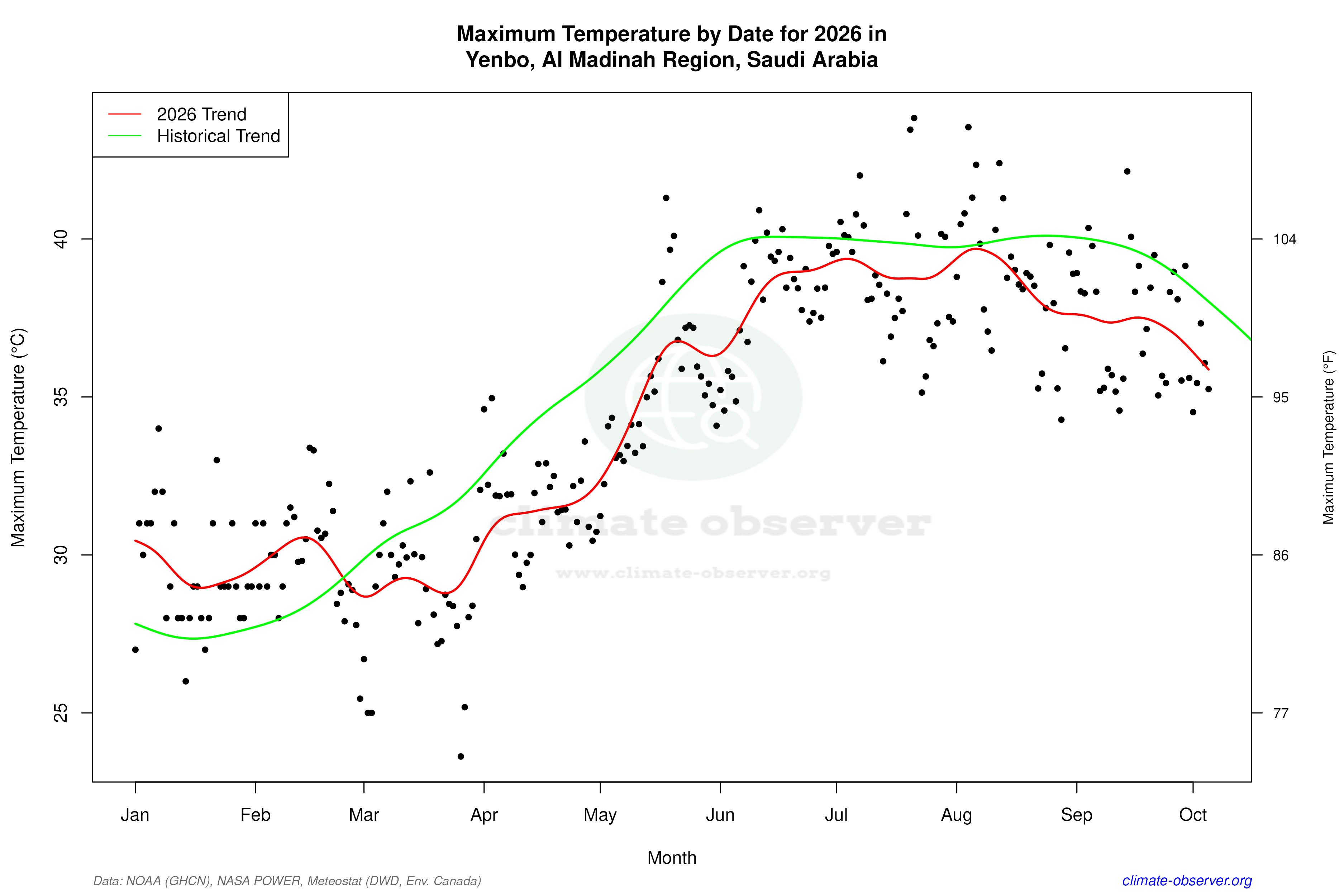
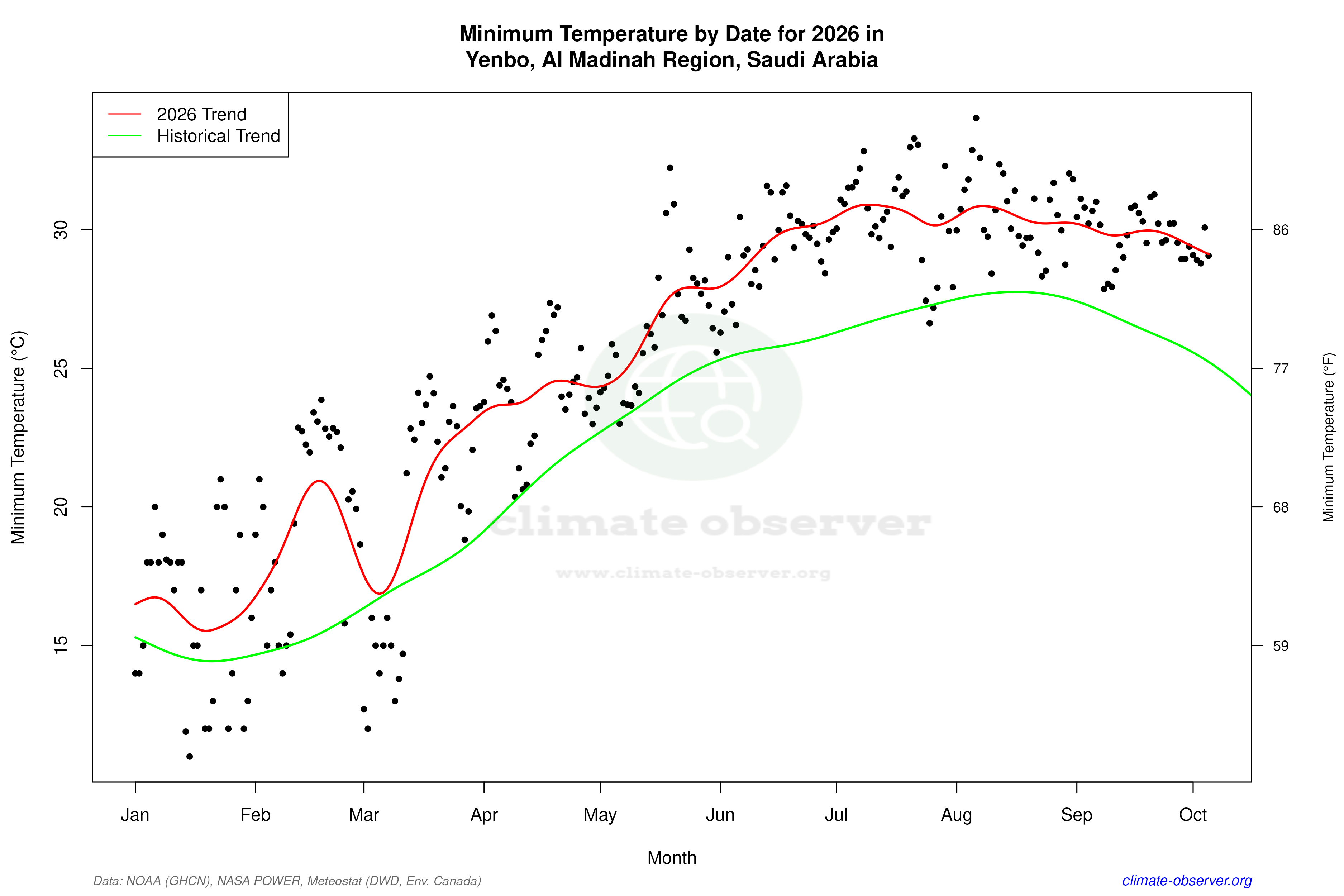
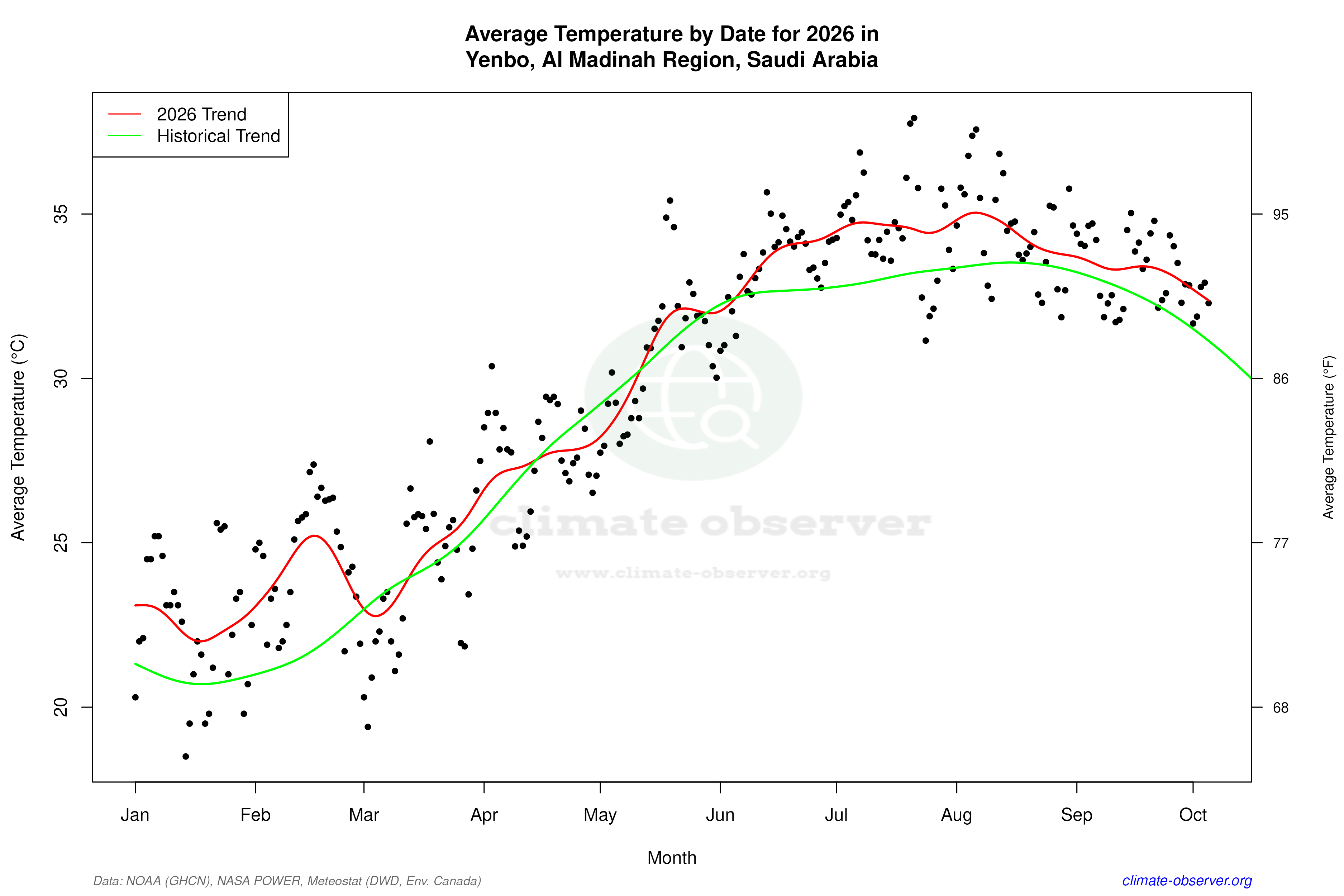
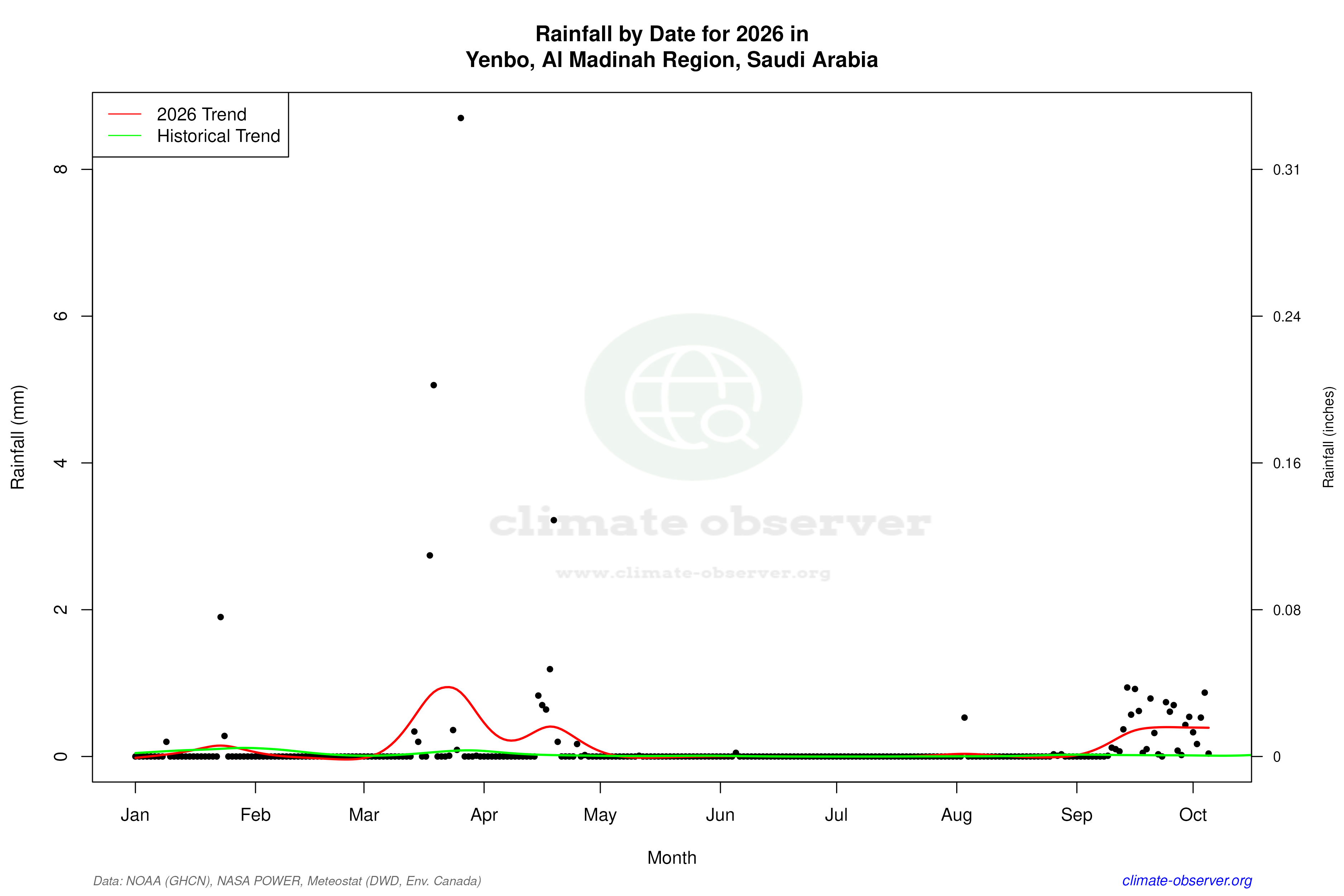
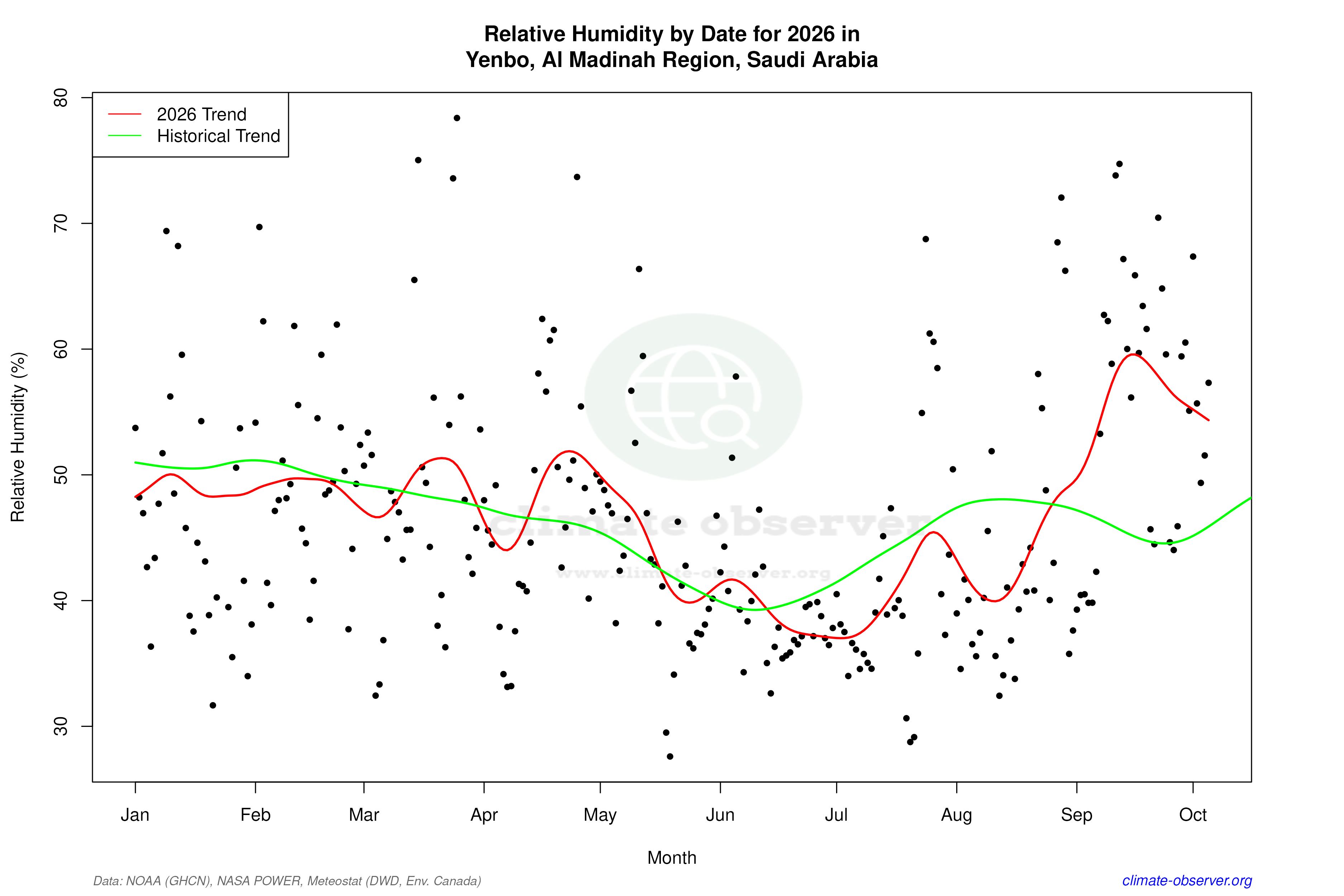

Max Temperature this Year | 1 of 6
Climate 12-Month Moving Averages
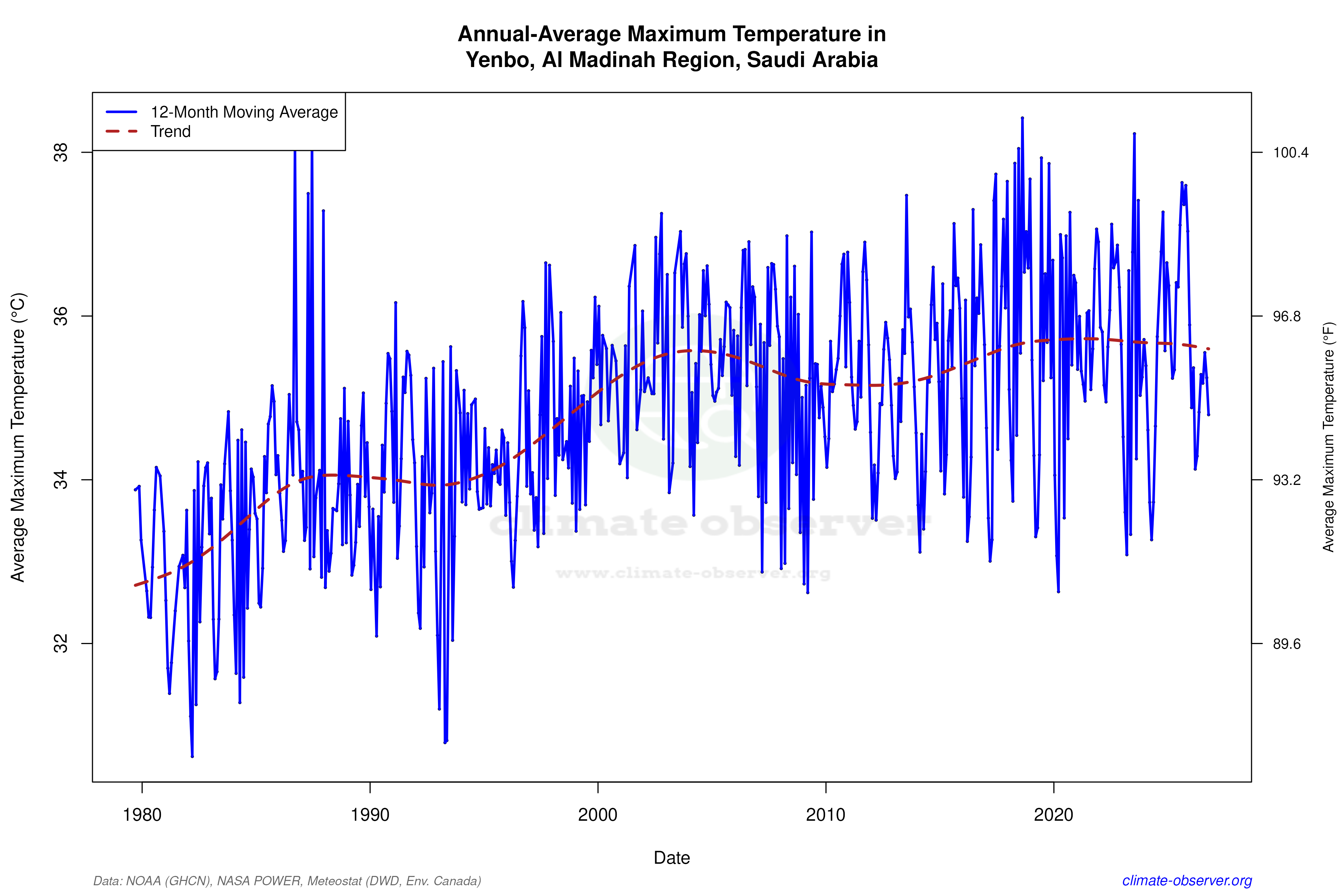
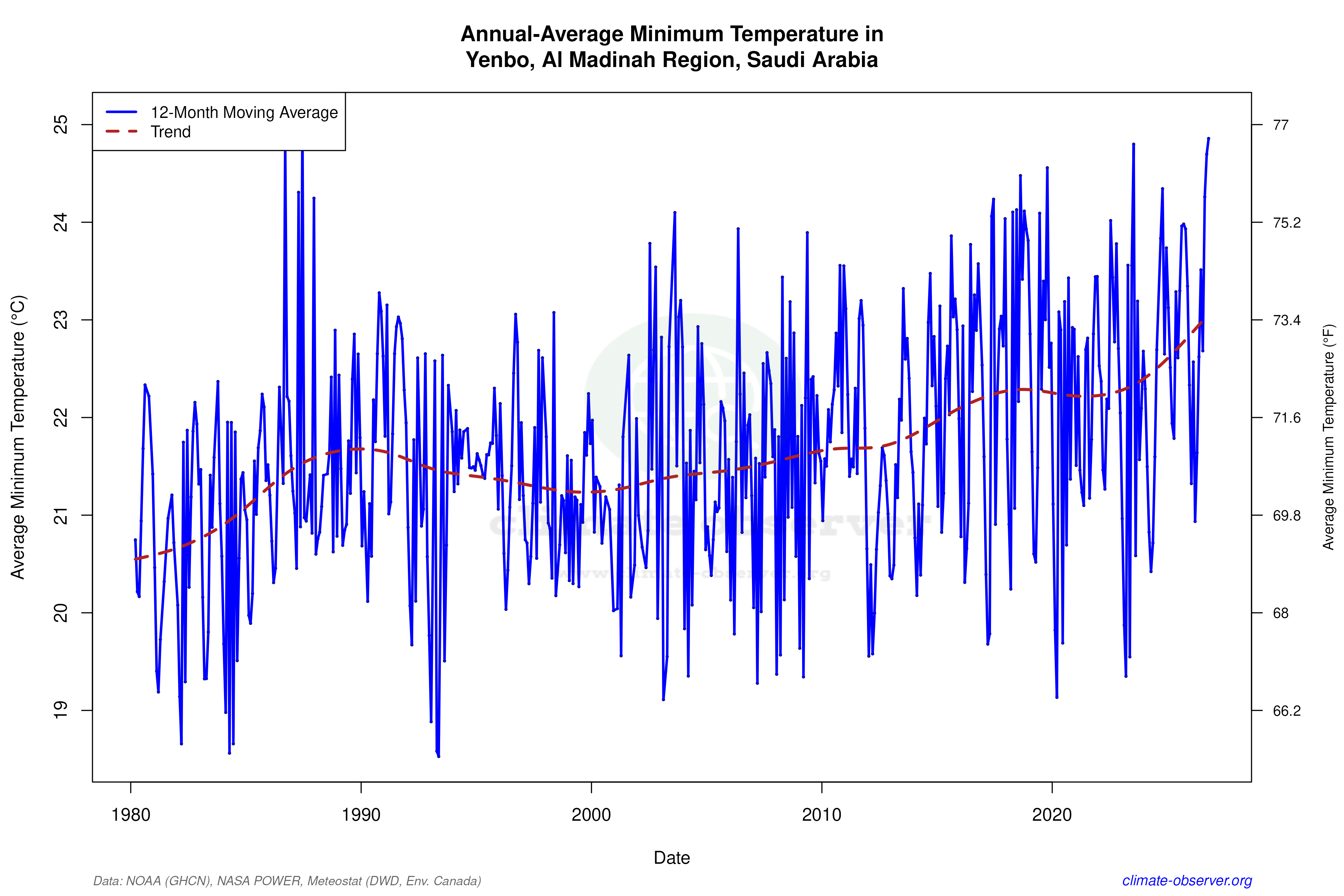
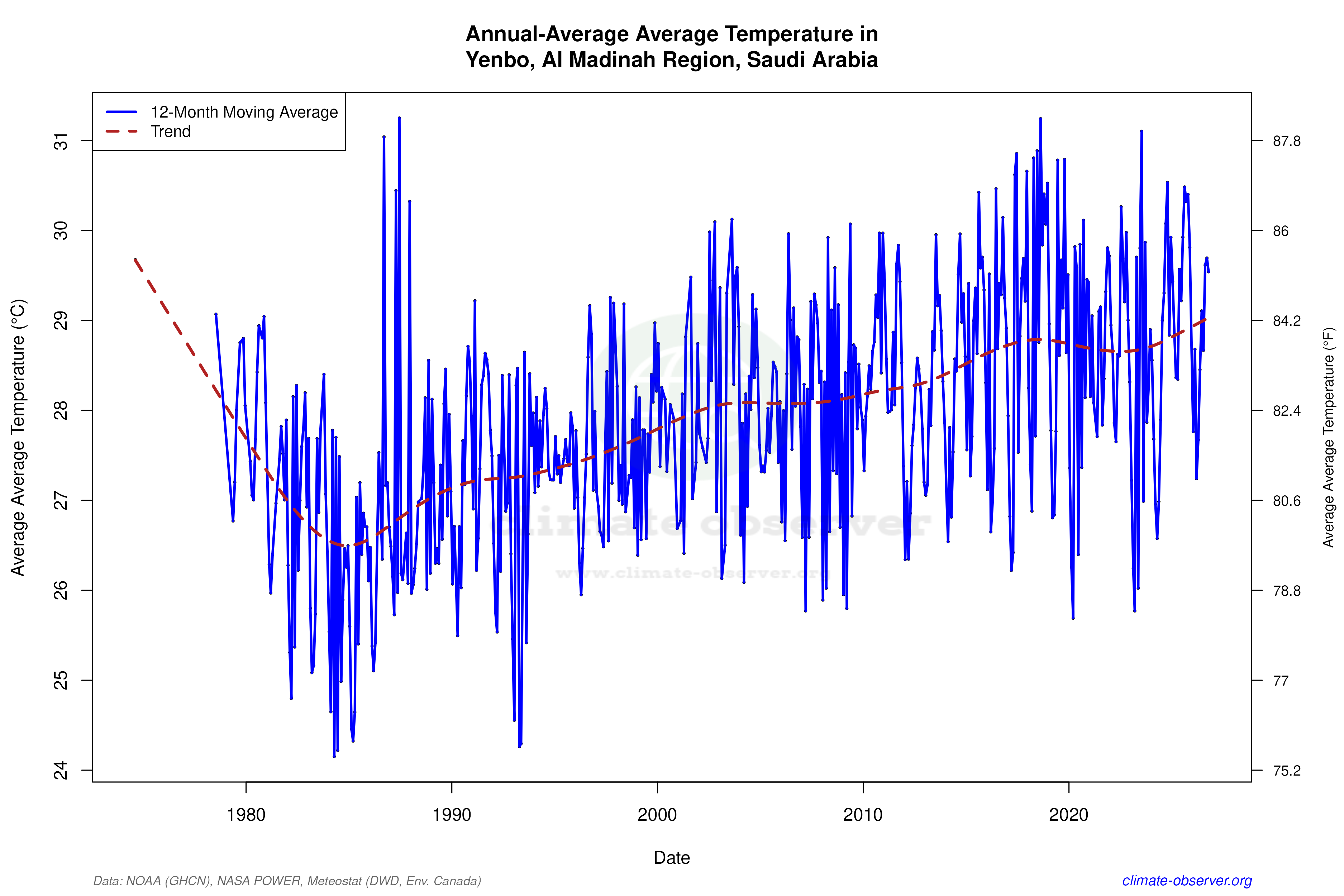
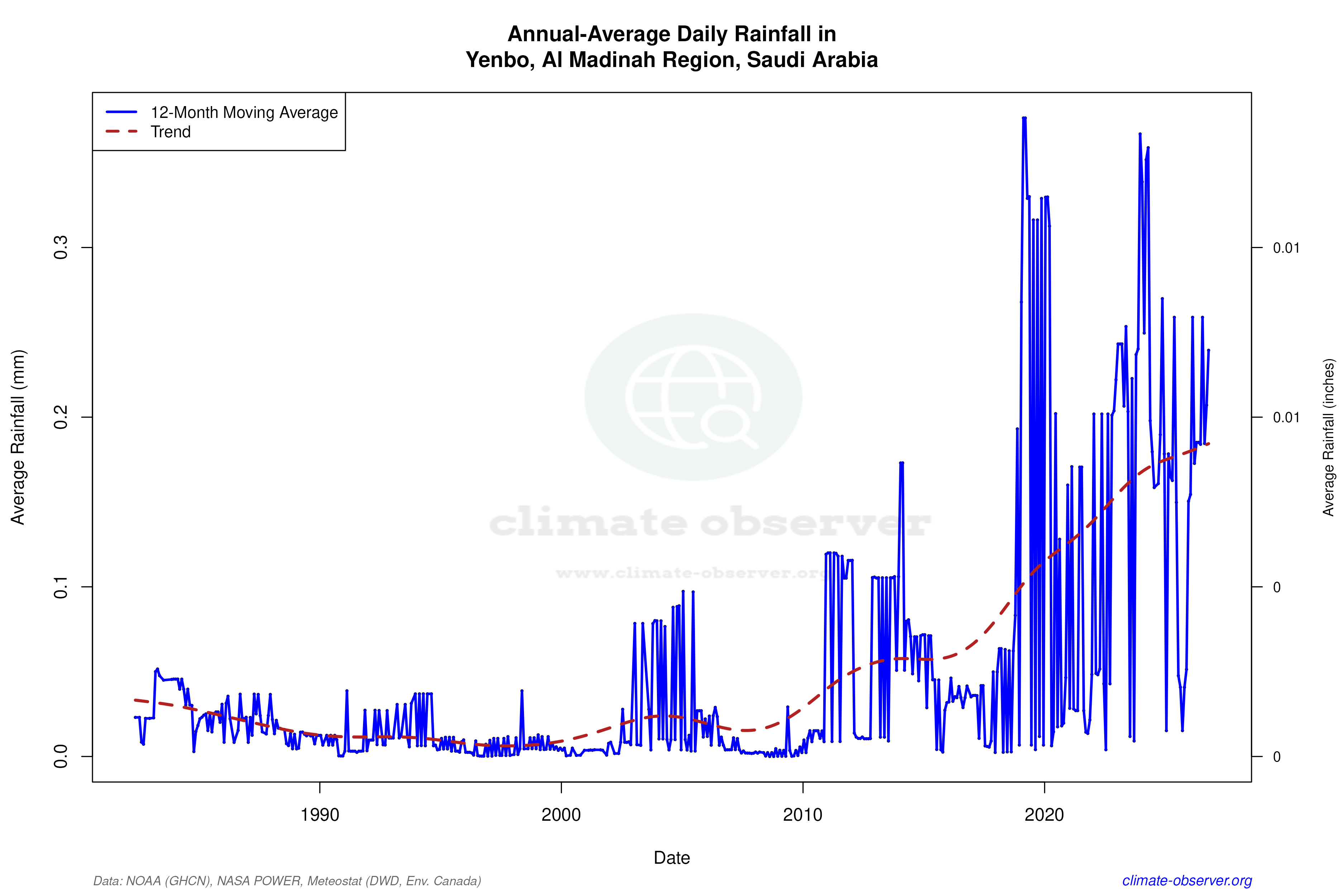
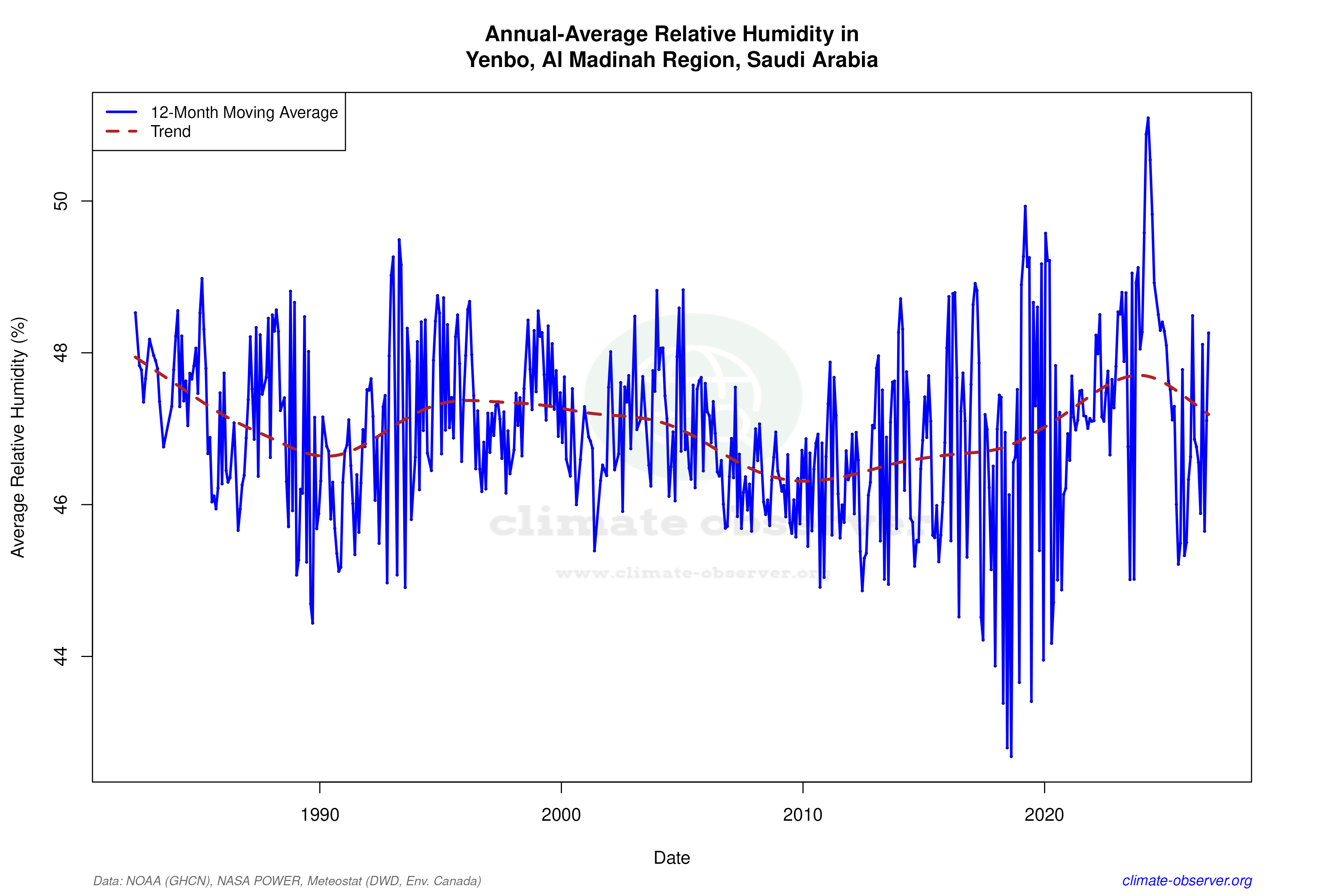

Max Temperature 12-Month MA | 1 of 6
Daily Data Points and Averages Throughout the Year
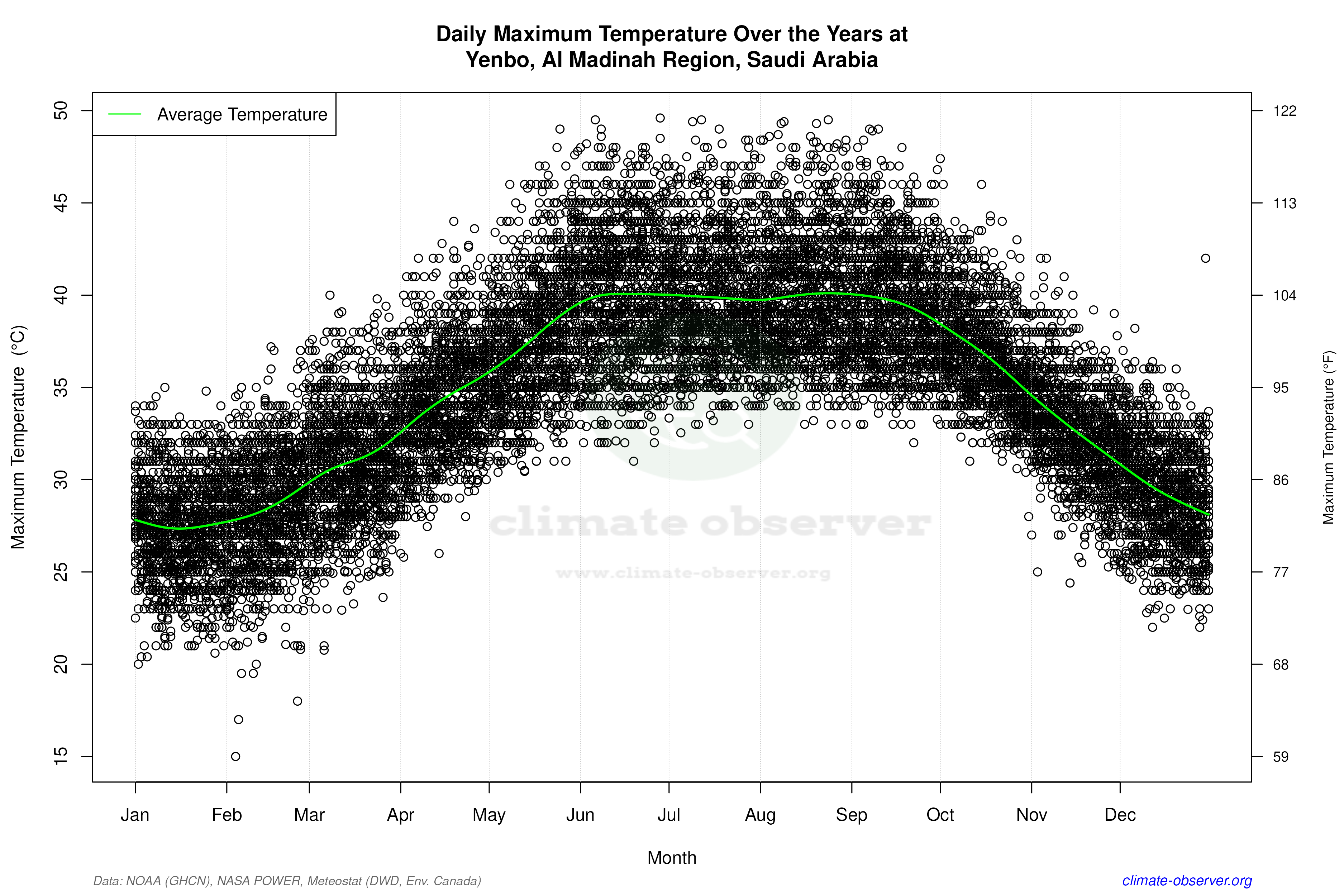
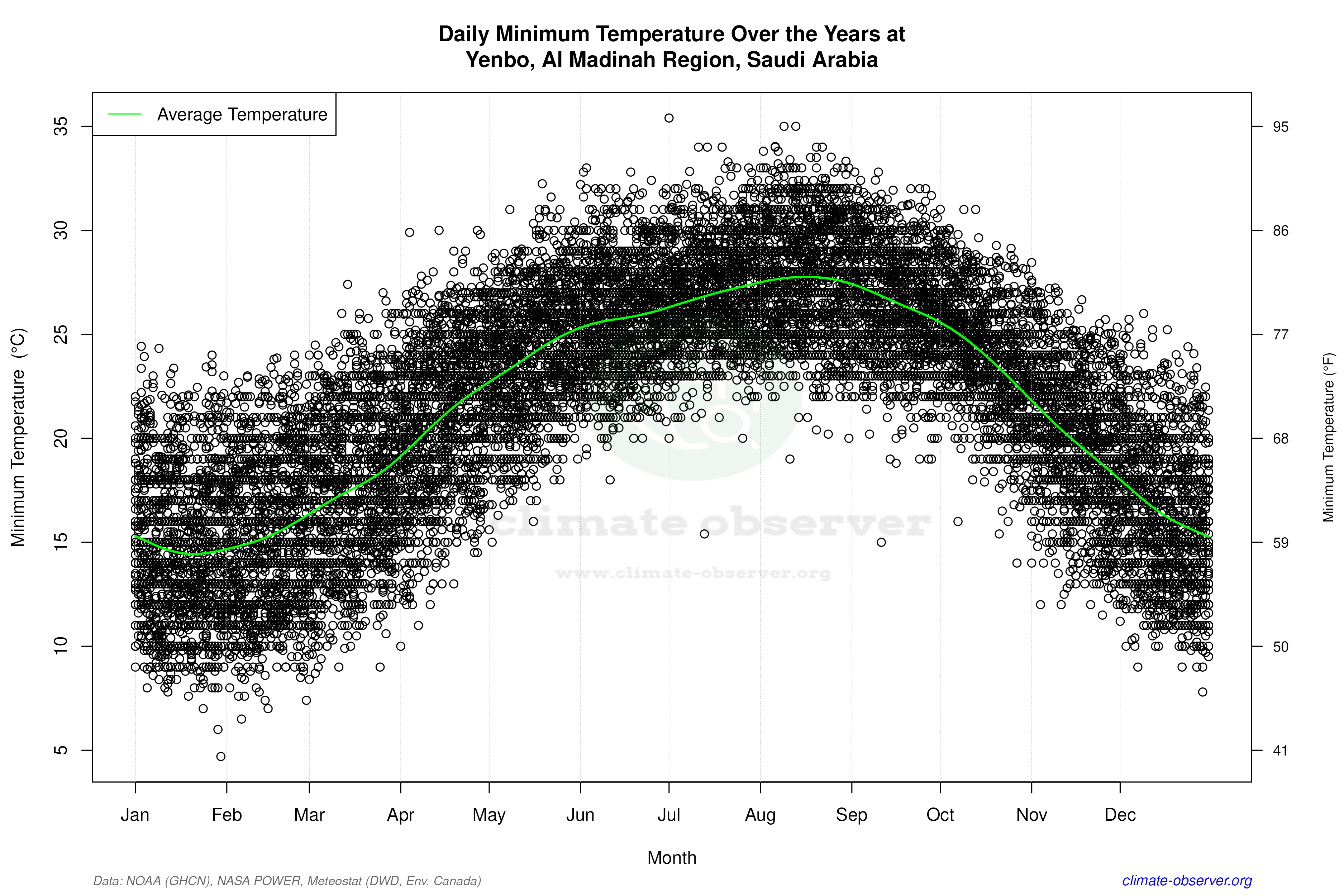
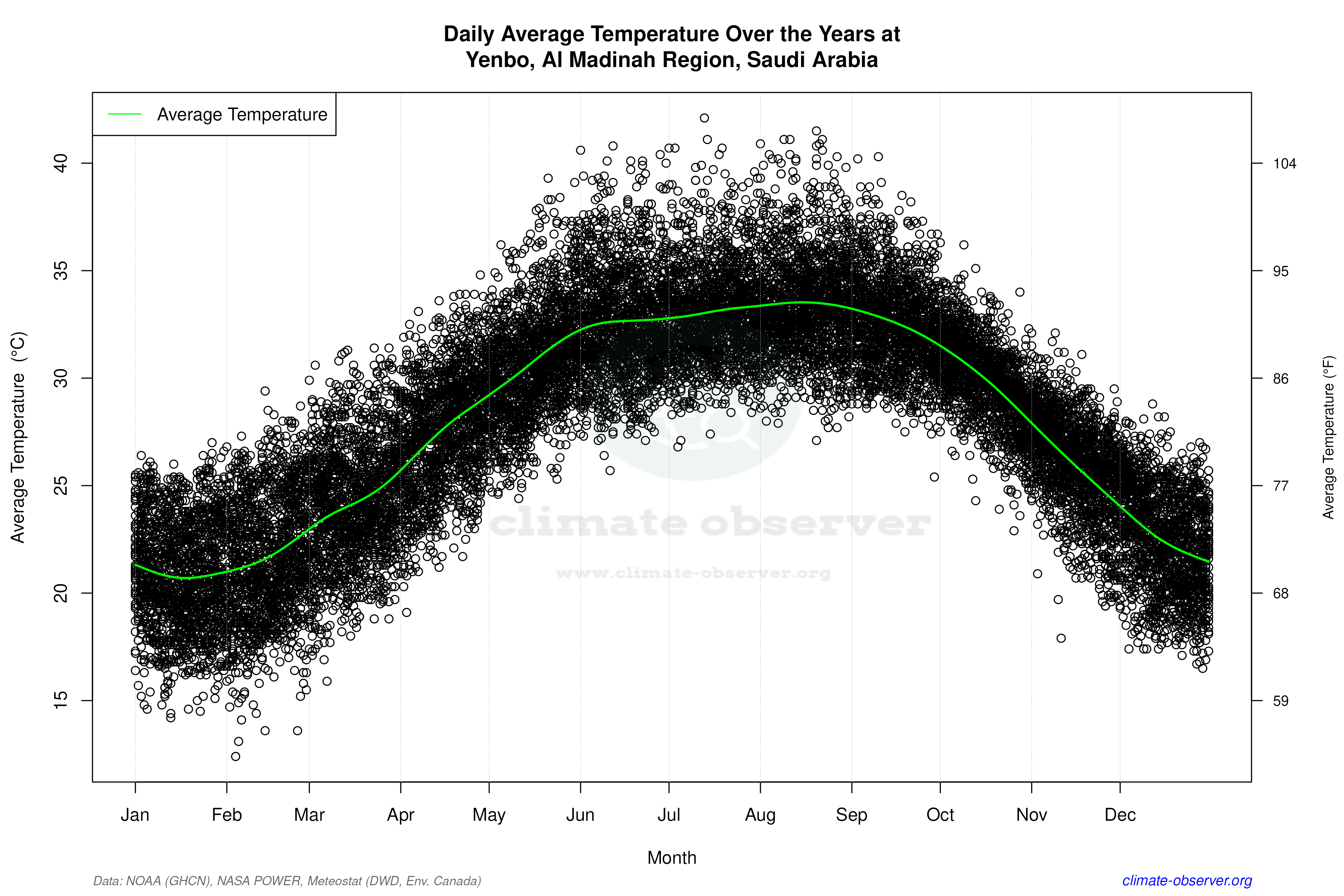
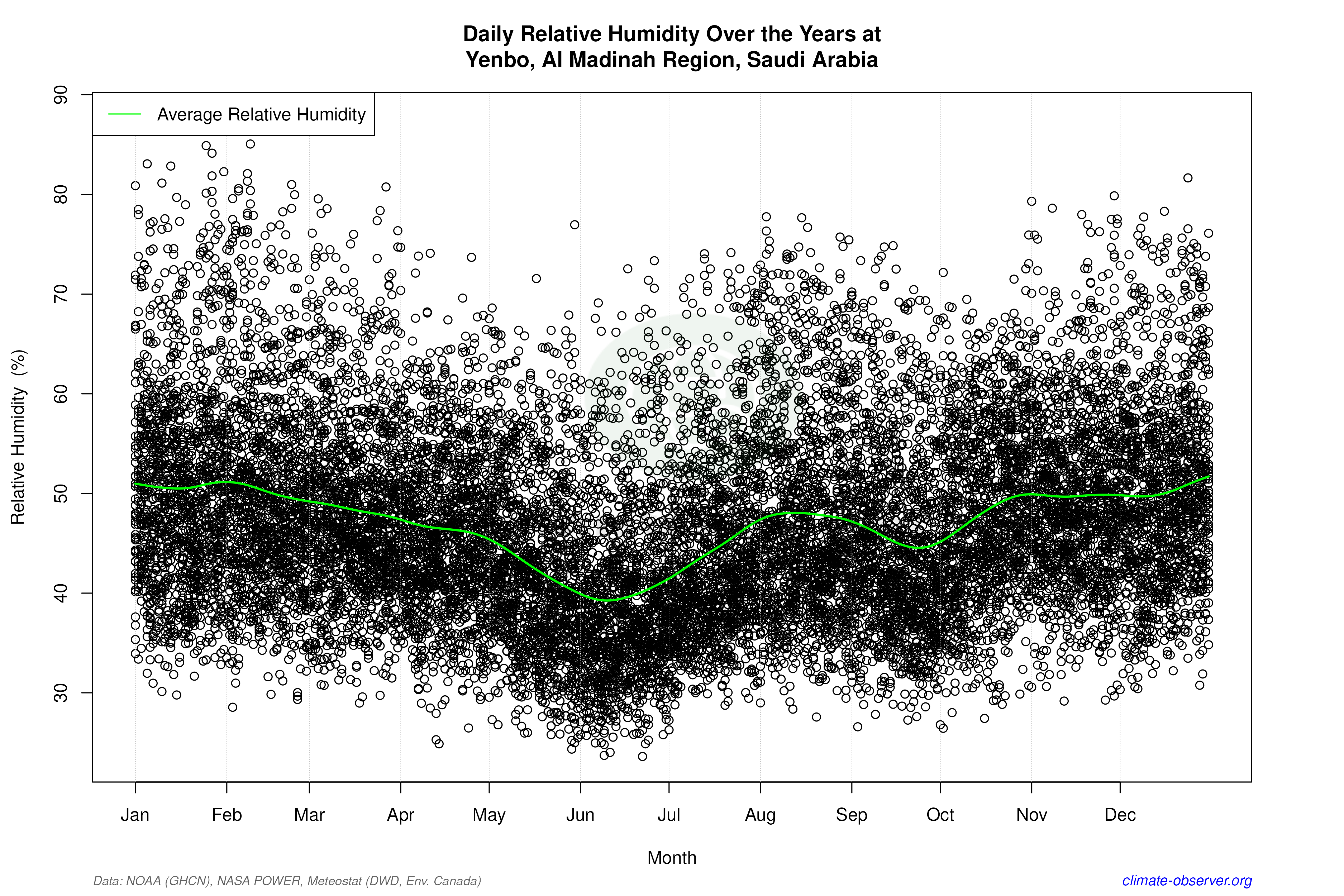

Average Max Temperature Throughout Year | 1 of 5

