Climate for Station: Kedougou, Senegal
Loading live weather...
Climate Analysis & Overview
Kedougou's climate is experiencing a warming trend, with significant changes in temperature highs and lows over the past decade. Precipitation patterns are becoming more evenly distributed, indicating a shift in local weather dynamics.
Kedougou's Climatic Warming
Kedougou, situated in southeastern Senegal, falls under the Köppen climate classification of Aw, indicating a tropical savanna climate with distinct wet and dry seasons. Over the past decade, Kedougou has experienced a notable warming trend. High temperatures have increased by 1.01°C (1.82°F), while low temperatures have risen by 0.88°C (1.58°F). This warming is more pronounced than the all-time trends, which show a rise of 0.39°C (0.70°F) for highs and 0.31°C (0.56°F) for lows. These changes suggest an acceleration in temperature increases, potentially impacting local agriculture and water resources.
Temperature Extremes and Records
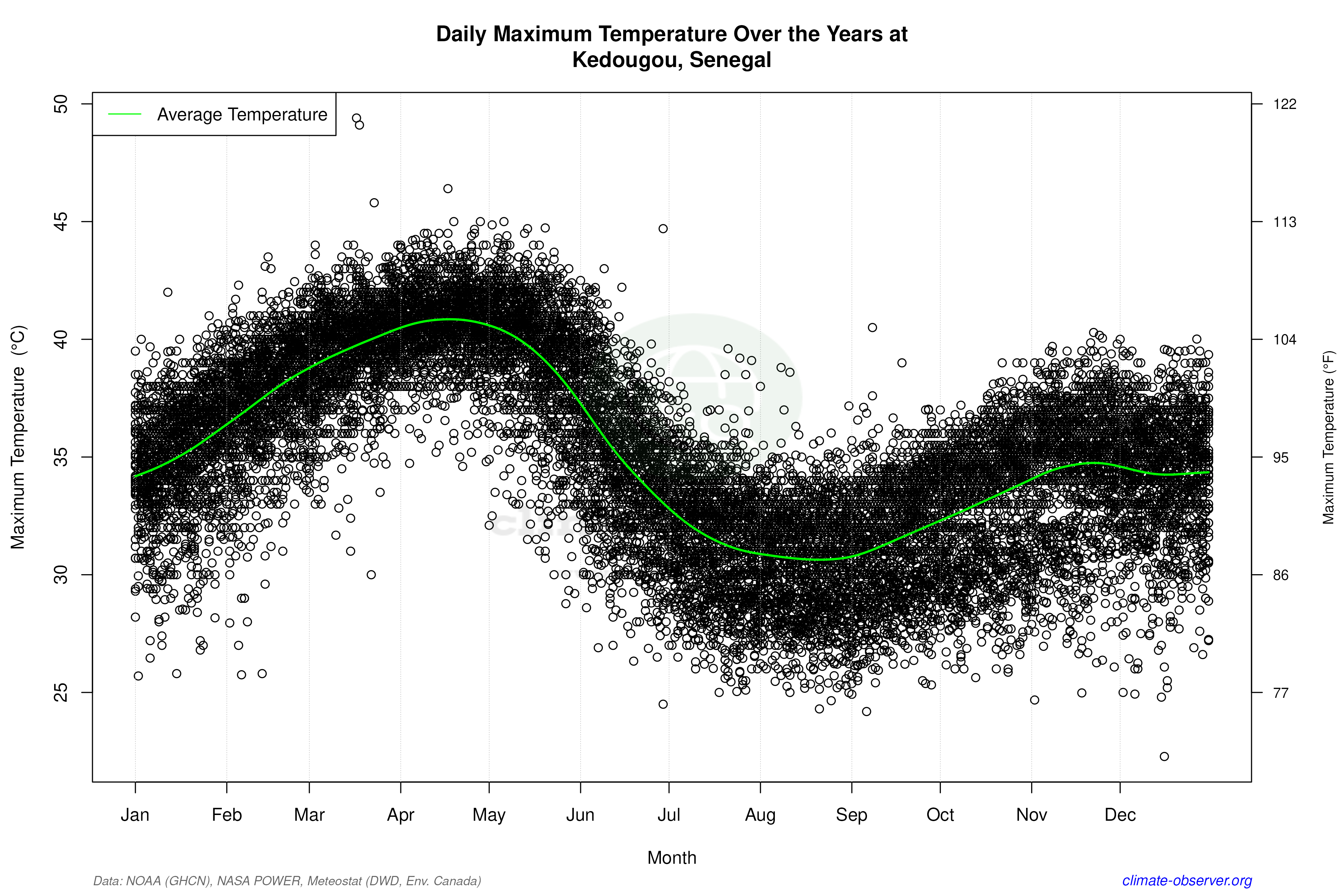
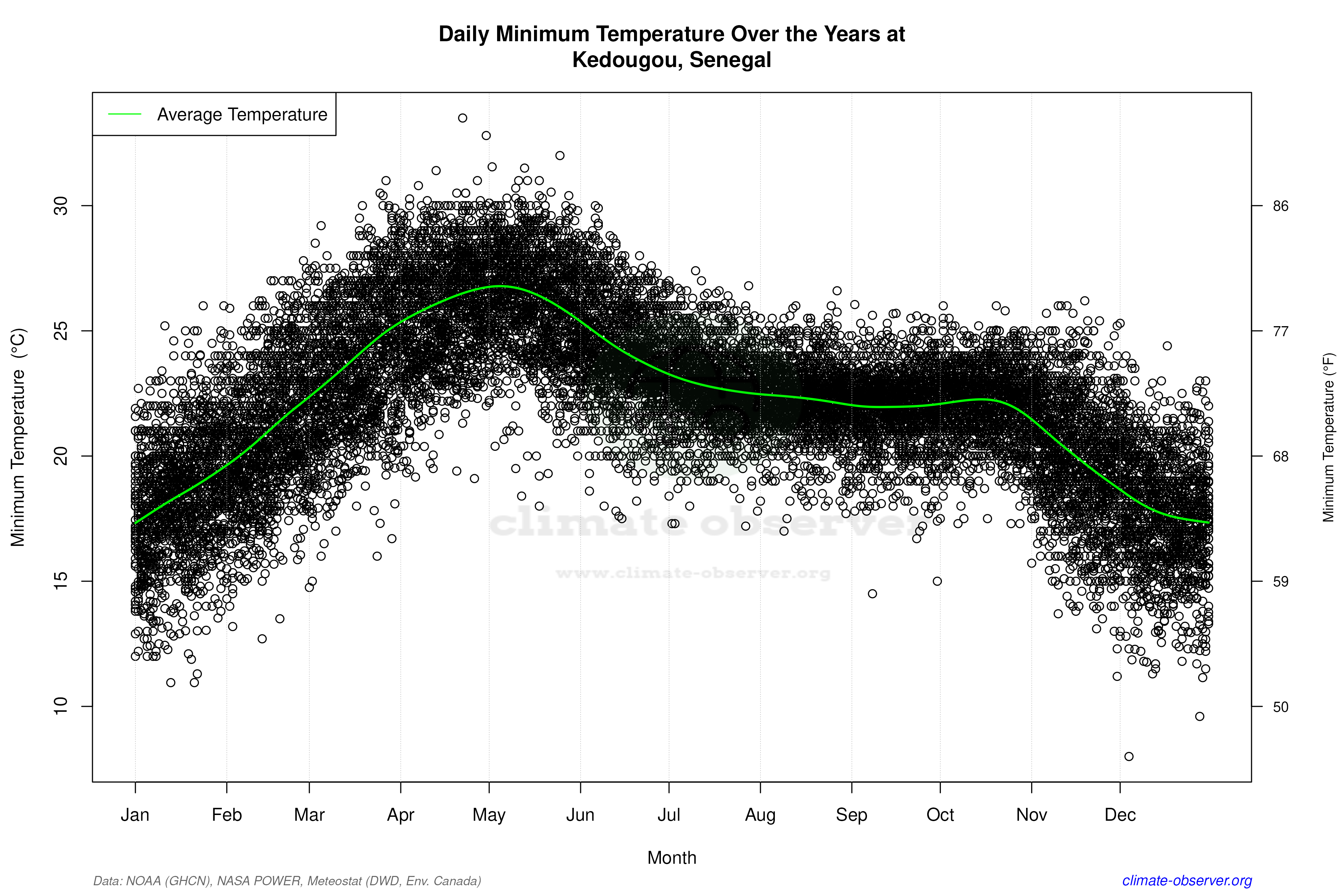
Kedougou's temperature records highlight the extremes of its climate. The highest recorded temperature is 49.4°C (120.9°F), while the lowest is 8.0°C (46.4°F). These extremes are indicative of the region's capacity to experience significant thermal variability, which can challenge both natural ecosystems and human activities. The increasing temperatures may exacerbate these extremes, leading to more frequent and intense heatwaves.
Precipitation Patterns Shifting
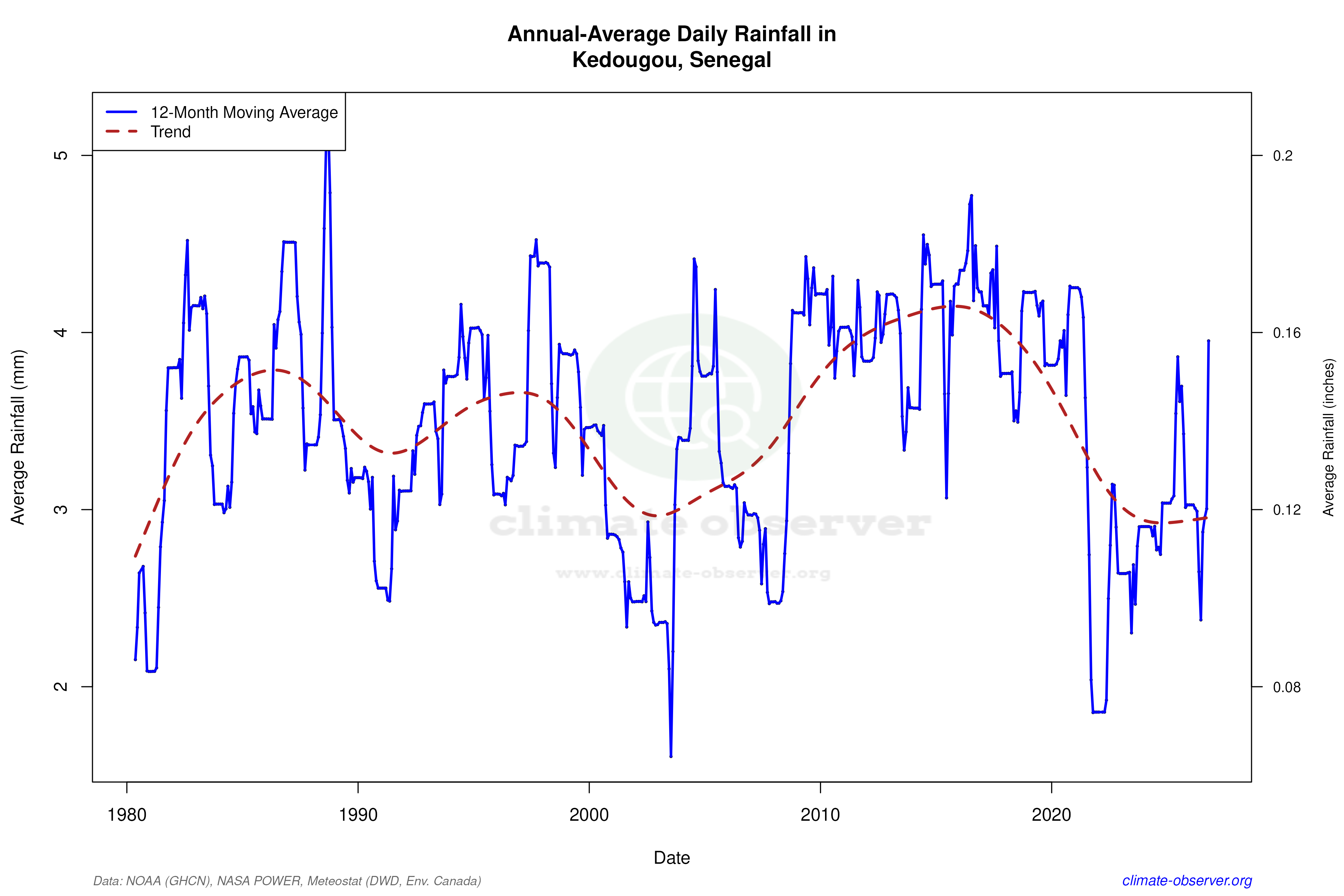
The Precipitation Concentration Index (PCI) for Kedougou has decreased from a baseline of 21.59 to a current value of 16.93. This indicates a significant shift towards more evenly distributed rainfall throughout the year. A PCI above 20 suggests highly concentrated rainfall events, while a value below 10 indicates very even distribution. The current PCI suggests a move away from intense, sporadic downpours towards a more consistent rainfall pattern, which could benefit agricultural practices by reducing the risk of flooding and soil erosion.
Regional Context and Implications
Kedougou's climate trends are set against the backdrop of Senegal's broader climate goals, which include reducing vulnerability to climate change and enhancing adaptive capacity. The warming trends and changes in precipitation distribution could have significant implications for regional water management and agricultural productivity. Recent weather events, such as increased frequency of heatwaves, underscore the importance of these trends. The local geography, including its proximity to the Gambia River, plays a crucial role in modulating these climatic effects, providing both challenges and opportunities for adaptation and resilience-building.
Understanding the Local Climate Dynamics
The interplay between Kedougou's warming trends and precipitation changes highlights the dynamic nature of its climate system. As temperatures continue to rise, the potential for increased evaporation and altered precipitation patterns could lead to shifts in local ecosystems and biodiversity. Understanding these dynamics is critical for developing effective climate adaptation strategies and ensuring sustainable development in the region.
Station Statistics
10-Year Trend
High: +0.61 °C/decade
Low: +0.77 °C/decade
Rain: -1.52 mm/decade
25-Year Trend
High: +0.45 °C/decade
Low: +0.74 °C/decade
Rain: +0.04 mm/decade
50-Year Trend
High: +0.38 °C/decade
Low: +0.31 °C/decade
Rain: +0.01 mm/decade
All-Time Trend
High: +0.38 °C/decade
Low: +0.31 °C/decade
Rain: +0.01 mm/decade
Percentage Above-Average Days
Last 12 Months: 57.8%
This Year: 74.8%
Precipitation Concentration Index (PCI) ℹ️
Last 12 Months: 19.6
Historical Average: 21.6
Percentile Rank of Last 12 Months ℹ️
High: 78th percentile
Low: 91st percentile
Rain: 20th percentile
Change in Variance ℹ️
High: +0.7%
Low: -4.9%
Intraday: -11.1%
Data Coverage
94.0%
First Year of Data
1973
Station Location
Historical Weather Records
| Max High | Avg High | Min High | Max Avg | Avg Avg | Min Avg | Max Low | Avg Low | Min Low | Max Precipitation | Avg Precipitation | Max Snow | Avg Snow | |
|---|---|---|---|---|---|---|---|---|---|---|---|---|---|
| Record | 49.4 °C | — | 22.3 °C | 40.5 °C | — | 16.2 °C | 33.5 °C | — | 8.0 °C | 340.1 mm | — | — | — |
| January | 42.0 °C | 35.1 °C | 25.7 °C | 34.9 °C | 27.3 °C | 16.2 °C | 26.0 °C | 18.4 °C | 10.9 °C | 19.8 mm | 0.0 mm | — | — |
| February | 43.5 °C | 37.6 °C | 25.8 °C | 37.4 °C | 29.9 °C | 22.8 °C | 27.8 °C | 21.0 °C | 12.7 °C | 2.0 mm | 0.0 mm | — | — |
| March | 49.4 °C | 39.6 °C | 30.0 °C | 40.5 °C | 32.3 °C | 25.2 °C | 31.0 °C | 23.9 °C | 14.8 °C | 16.2 mm | 0.0 mm | — | — |
| April | 46.4 °C | 40.8 °C | 34.6 °C | 38.5 °C | 33.9 °C | 27.0 °C | 33.5 °C | 26.1 °C | 19.1 °C | 21.1 mm | 0.2 mm | — | — |
| May | 45.0 °C | 39.4 °C | 28.8 °C | 39.8 °C | 33.1 °C | 24.2 °C | 32.0 °C | 26.4 °C | 18.0 °C | 99.1 mm | 2.0 mm | — | — |
| June | 44.7 °C | 34.9 °C | 24.5 °C | 36.8 °C | 29.8 °C | 22.7 °C | 30.0 °C | 24.2 °C | 17.5 °C | 99.1 mm | 5.7 mm | — | — |
| July | 39.6 °C | 31.6 °C | 25.0 °C | 32.9 °C | 27.4 °C | 22.2 °C | 27.4 °C | 22.8 °C | 17.2 °C | 119.9 mm | 8.9 mm | — | — |
| August | 38.8 °C | 30.7 °C | 24.3 °C | 32.1 °C | 26.8 °C | 20.4 °C | 26.6 °C | 22.3 °C | 17.0 °C | 226.1 mm | 11.1 mm | — | — |
| September | 40.5 °C | 31.5 °C | 24.2 °C | 32.5 °C | 27.0 °C | 21.2 °C | 26.1 °C | 22.0 °C | 14.5 °C | 340.1 mm | 9.7 mm | — | — |
| October | 39.0 °C | 33.1 °C | 25.6 °C | 33.4 °C | 28.2 °C | 22.2 °C | 26.0 °C | 22.2 °C | 17.3 °C | 130.0 mm | 4.0 mm | — | — |
| November | 40.3 °C | 34.6 °C | 24.7 °C | 36.3 °C | 28.2 °C | 18.8 °C | 26.2 °C | 20.0 °C | 11.2 °C | 29.8 mm | 0.3 mm | — | — |
| December | 40.0 °C | 34.3 °C | 22.3 °C | 34.3 °C | 26.7 °C | 19.7 °C | 25.3 °C | 17.8 °C | 8.0 °C | 7.9 mm | 0.0 mm | — | — |
Data Visualisations
Remove WatermarksCurrent Year Climate Trends vs Historical
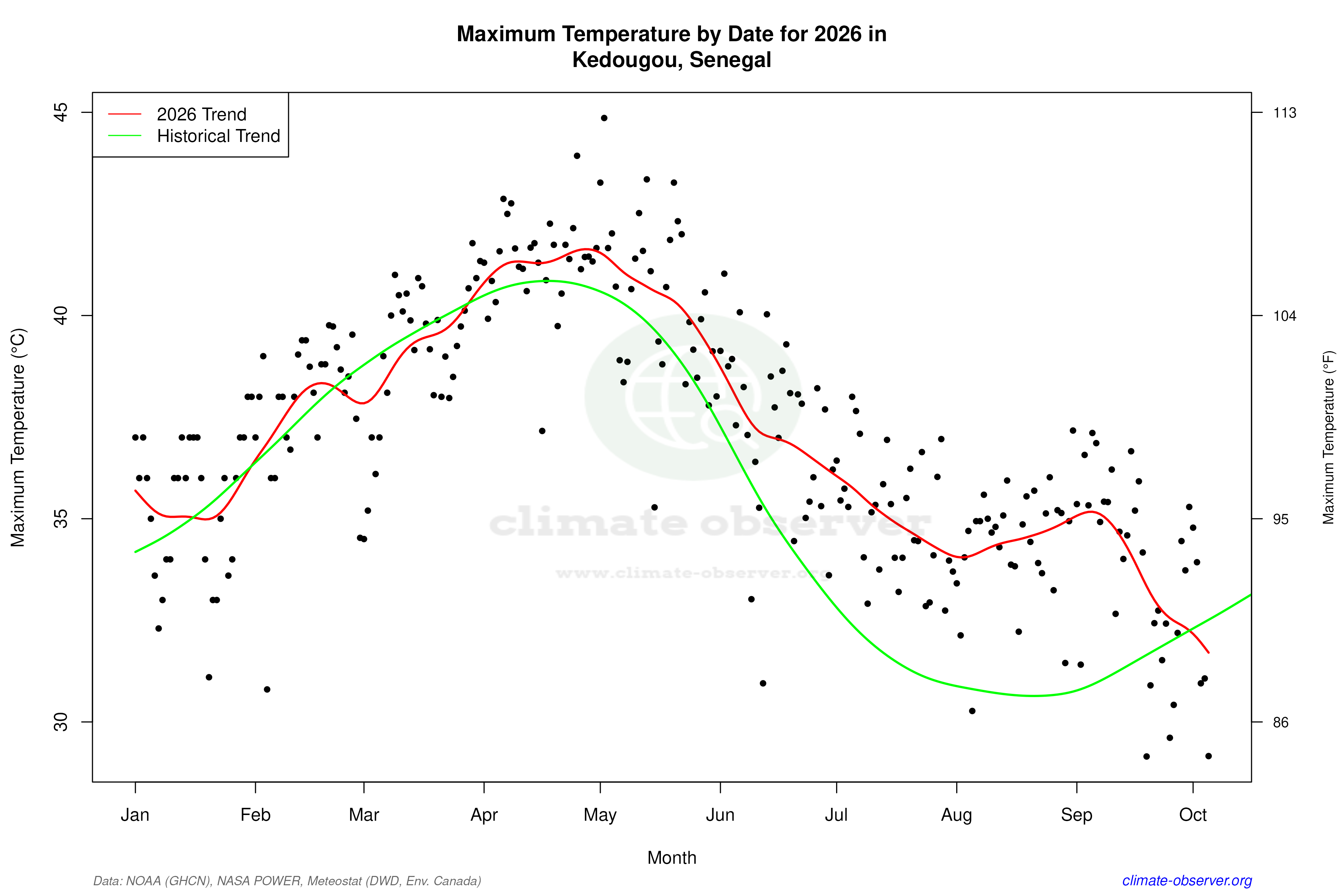
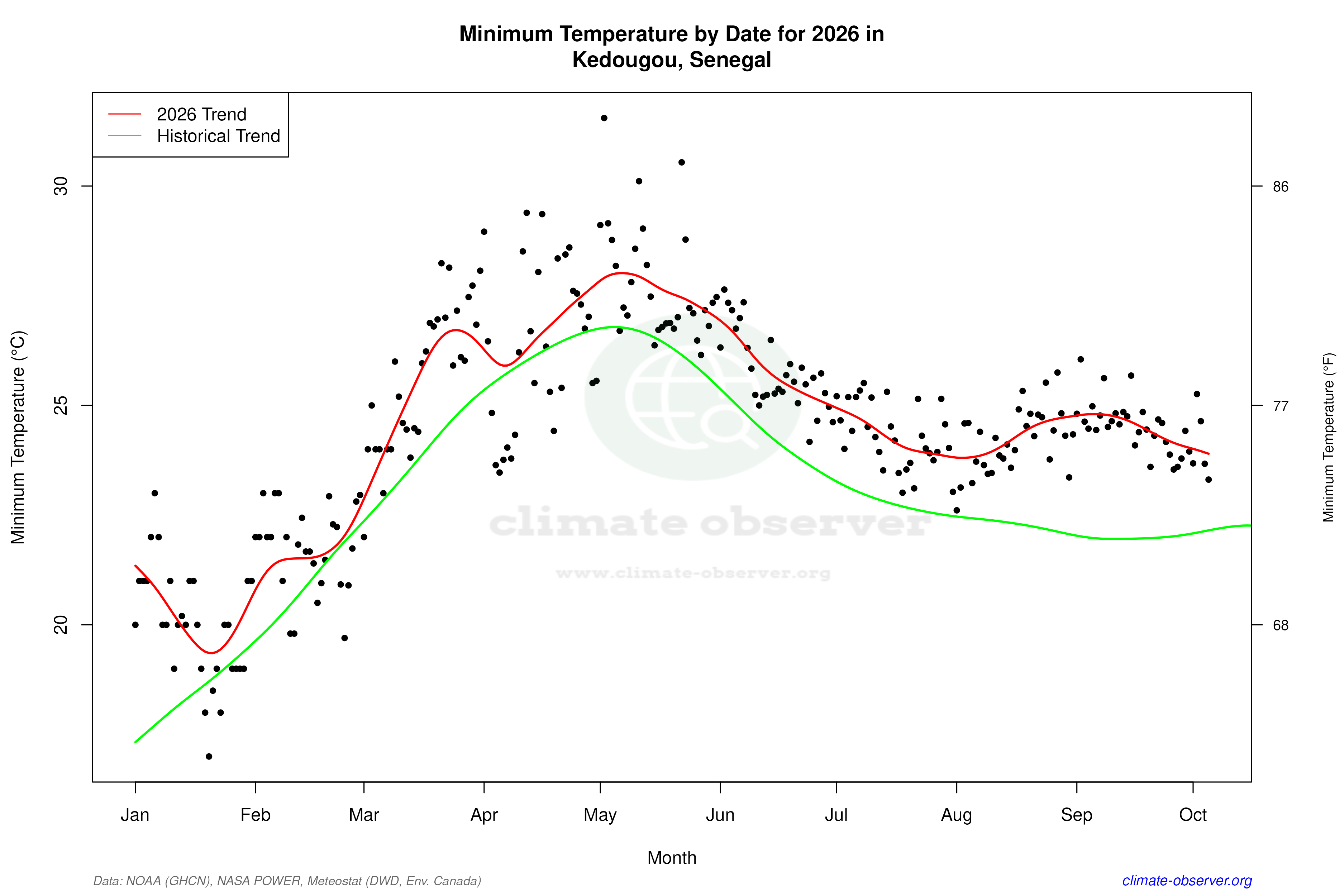
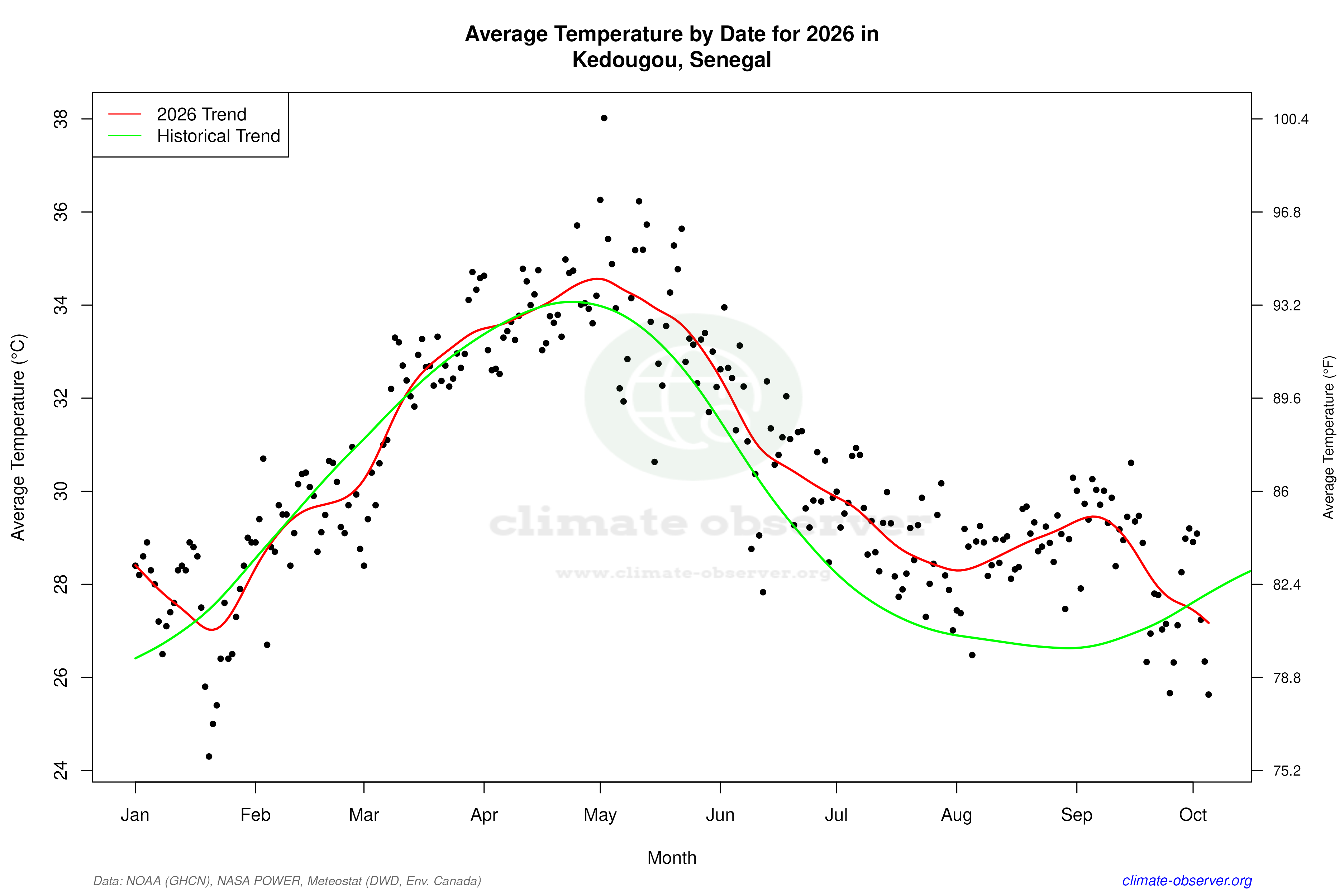
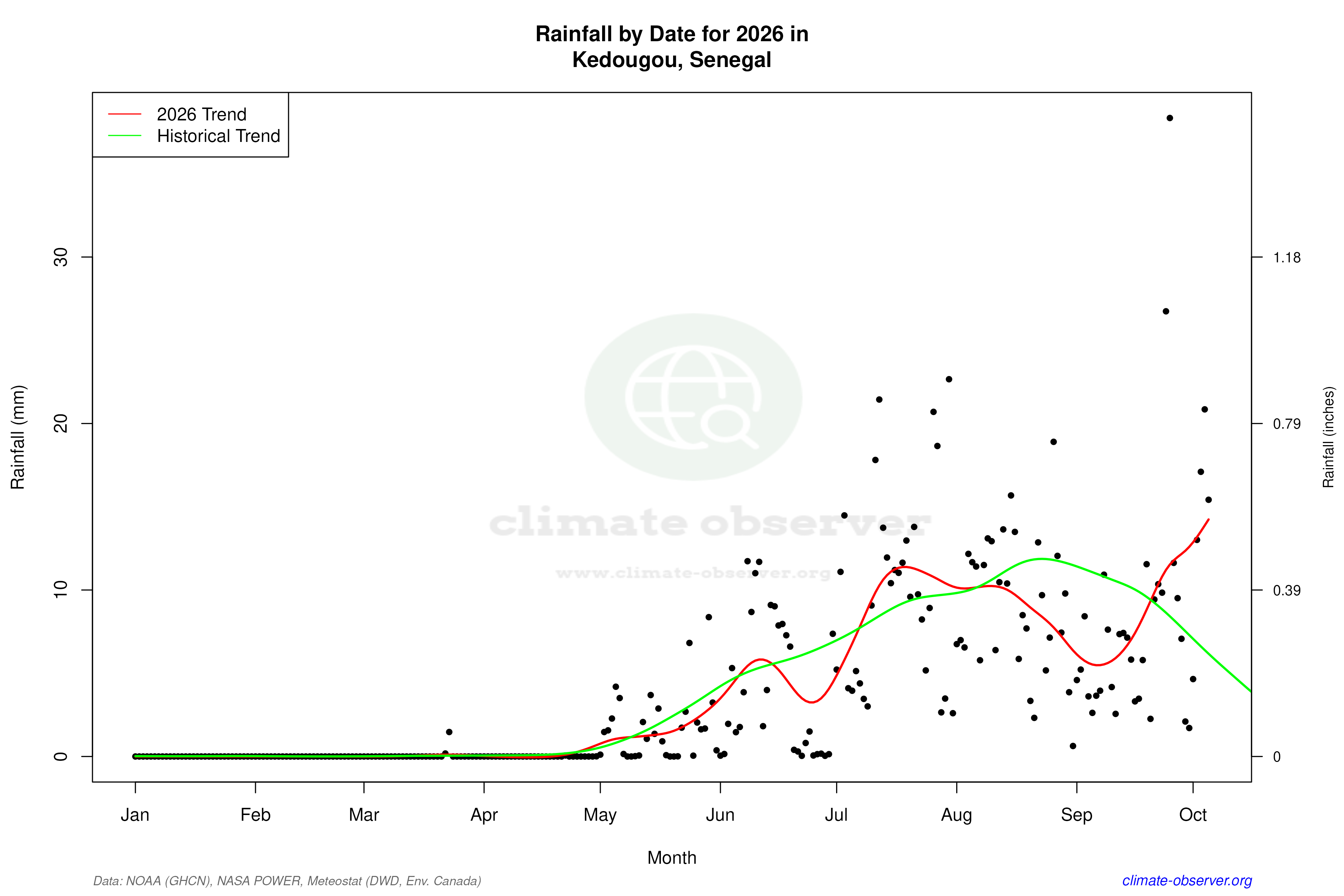
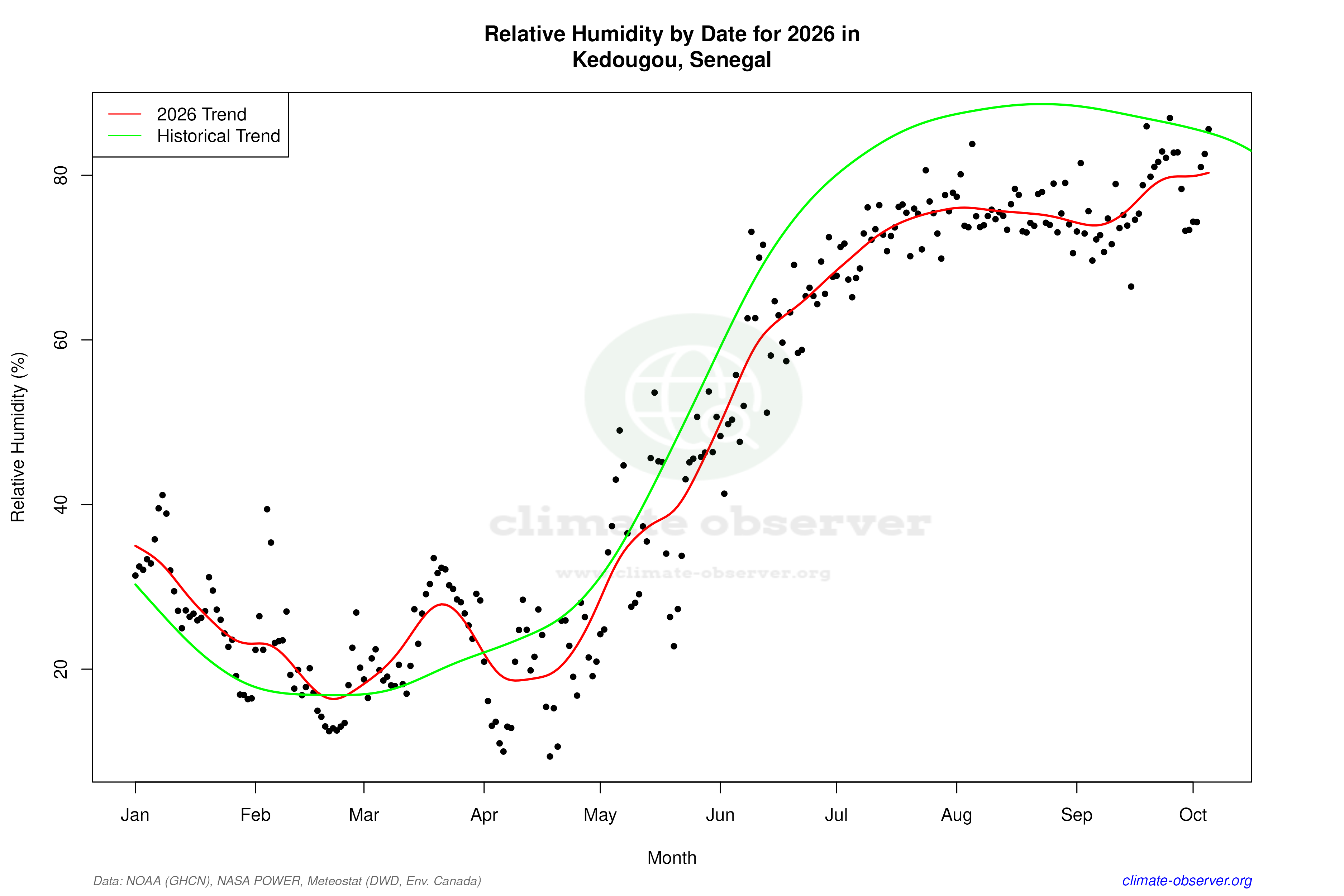

Max Temperature this Year | 1 of 6
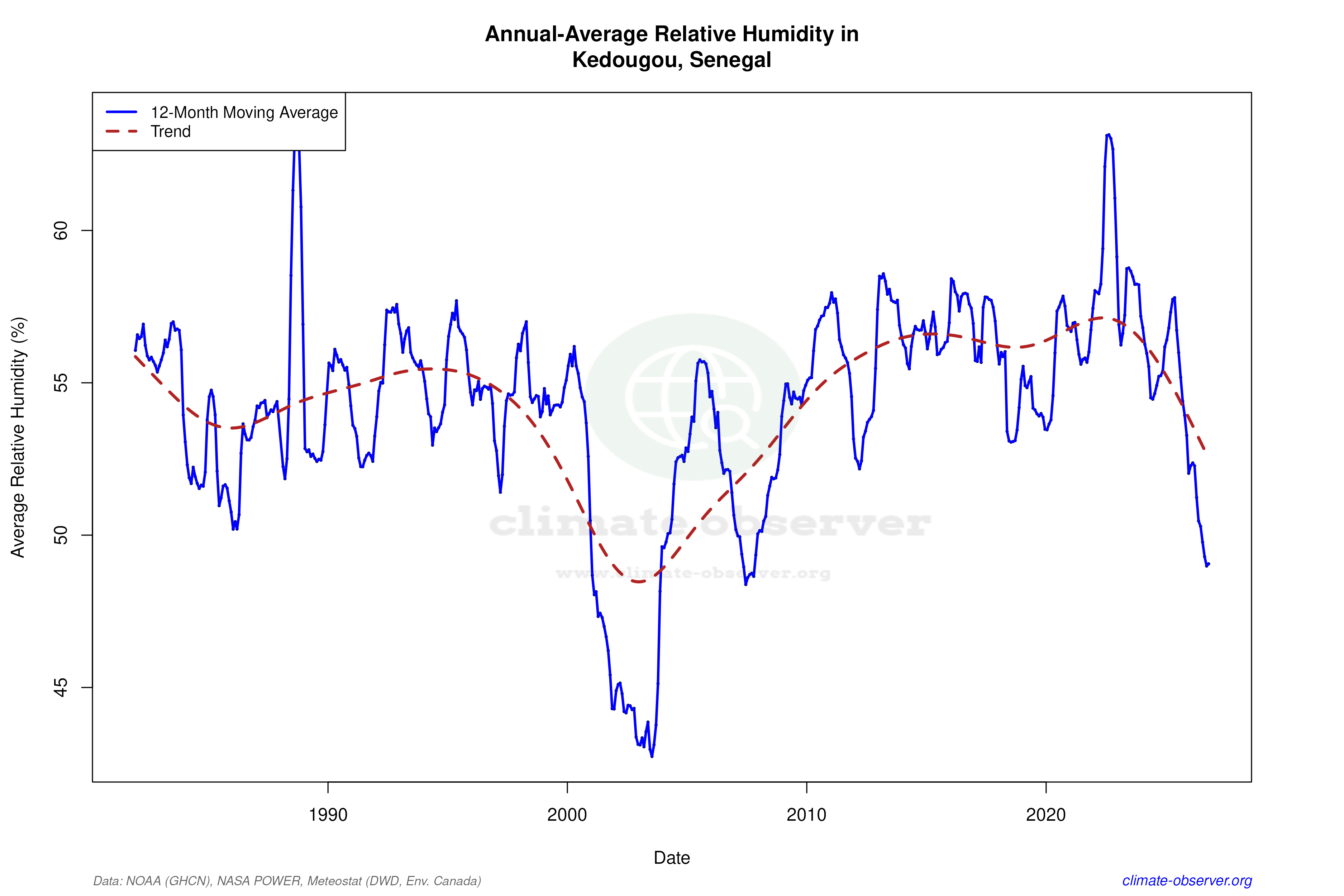
Climate 12-Month Moving Averages
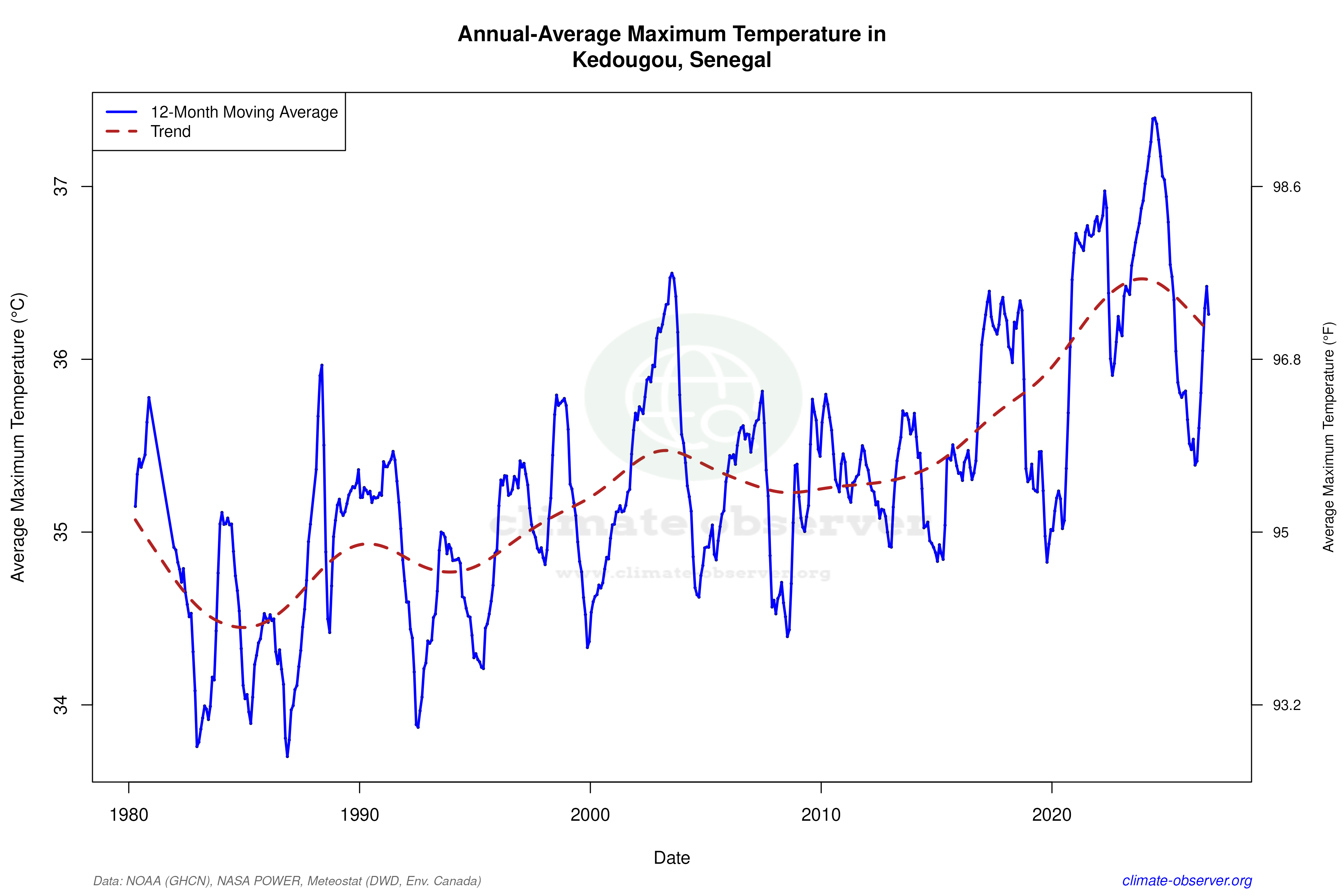
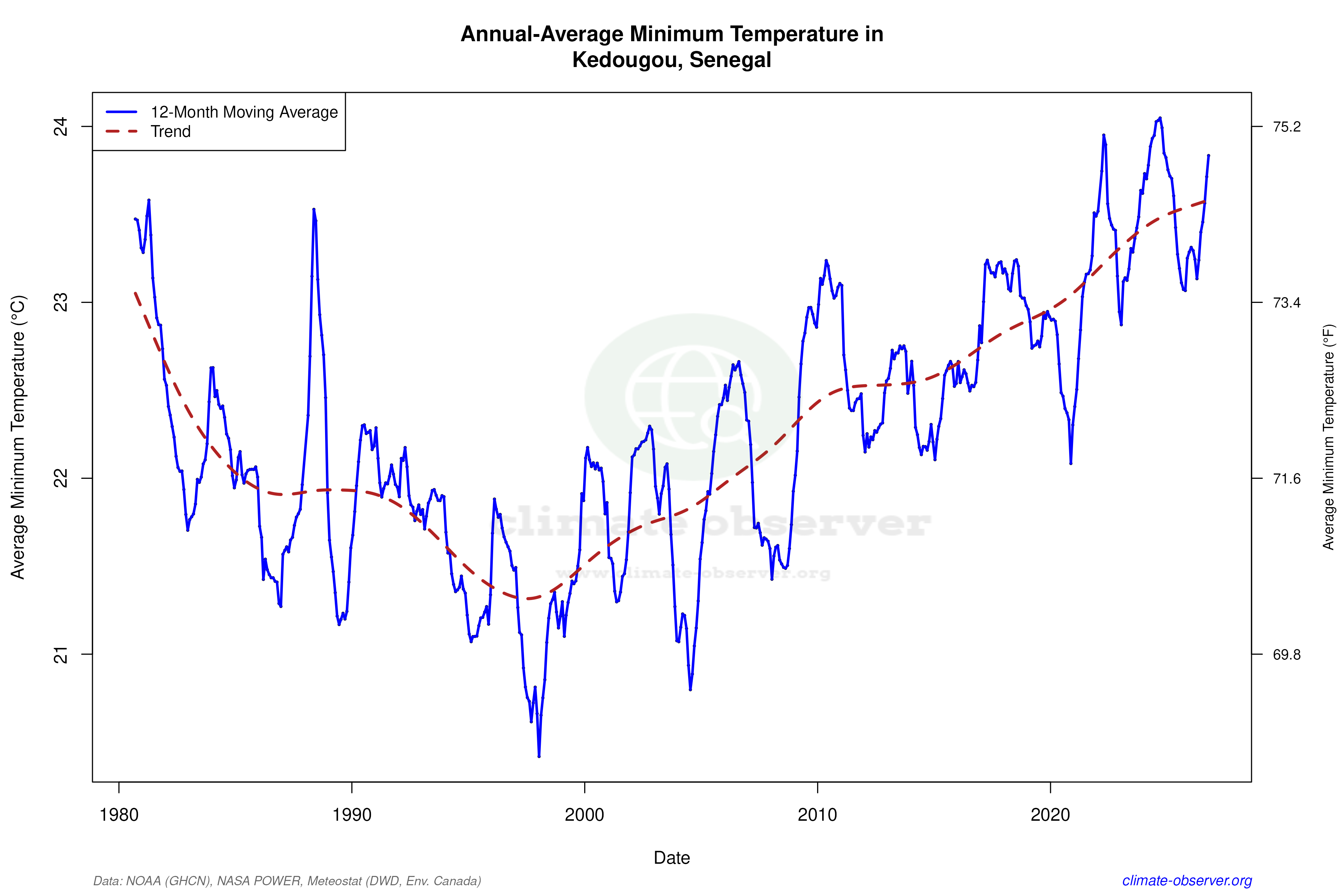
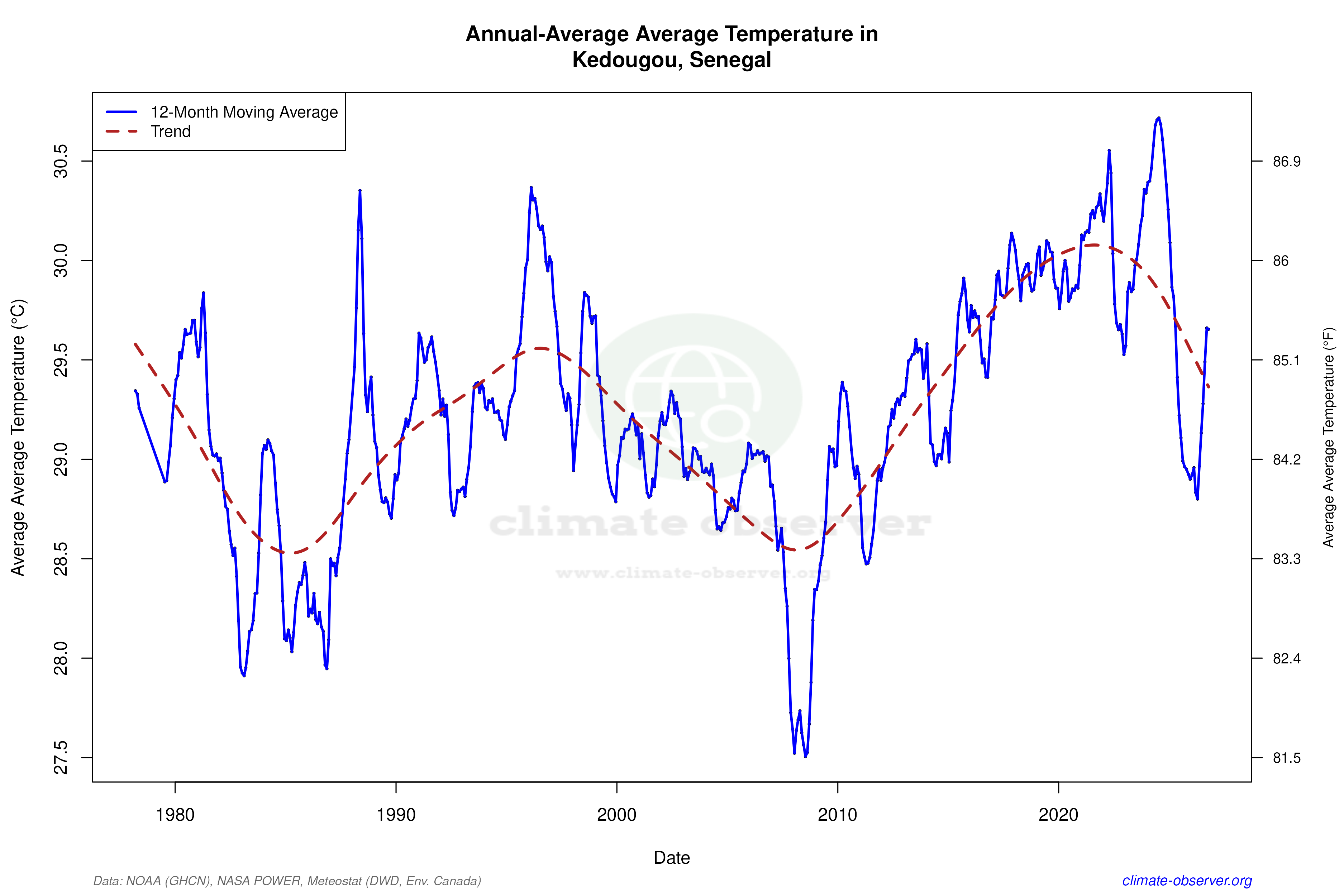

Max Temperature 12-Month MA | 1 of 6
Daily Data Points and Averages Throughout the Year
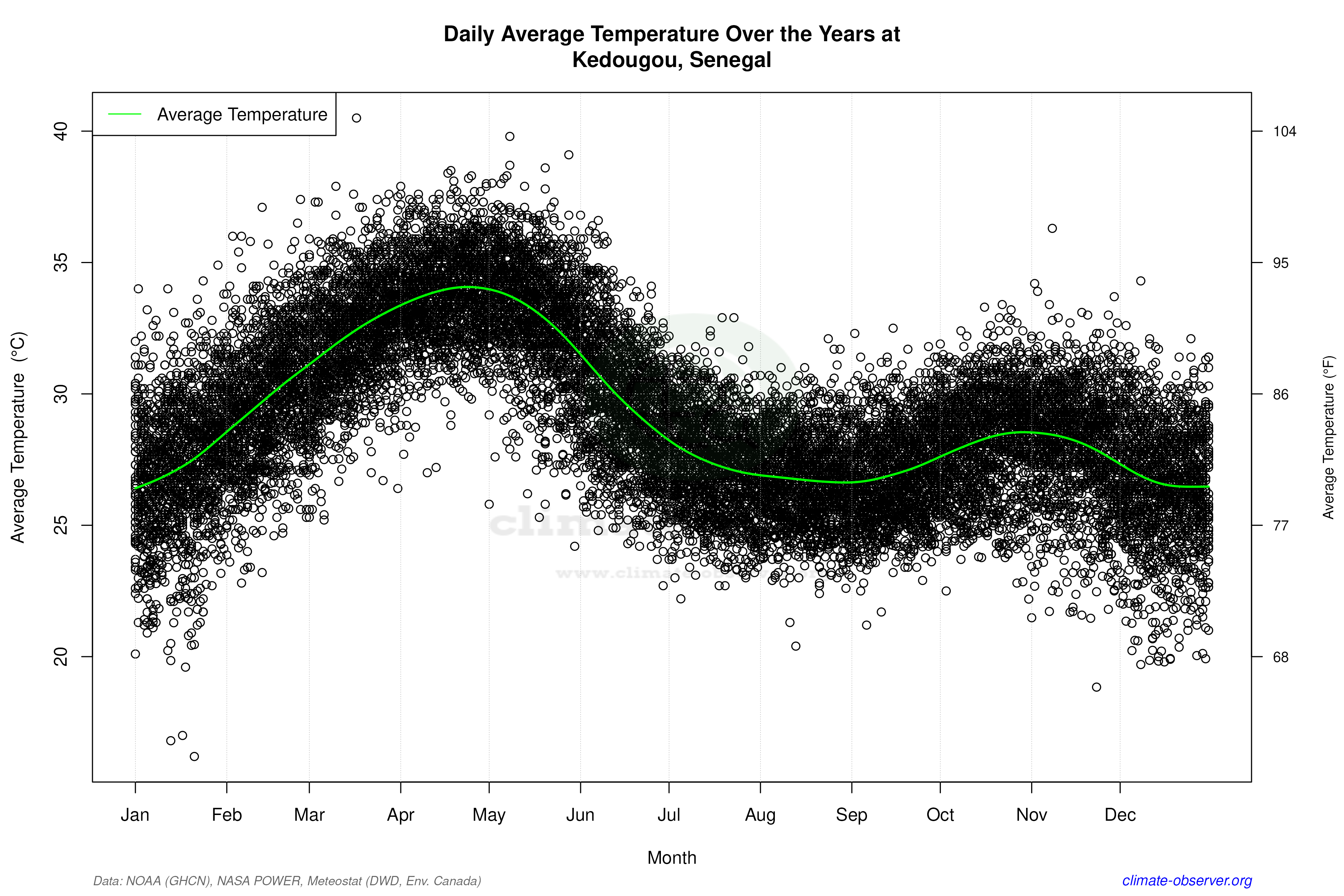
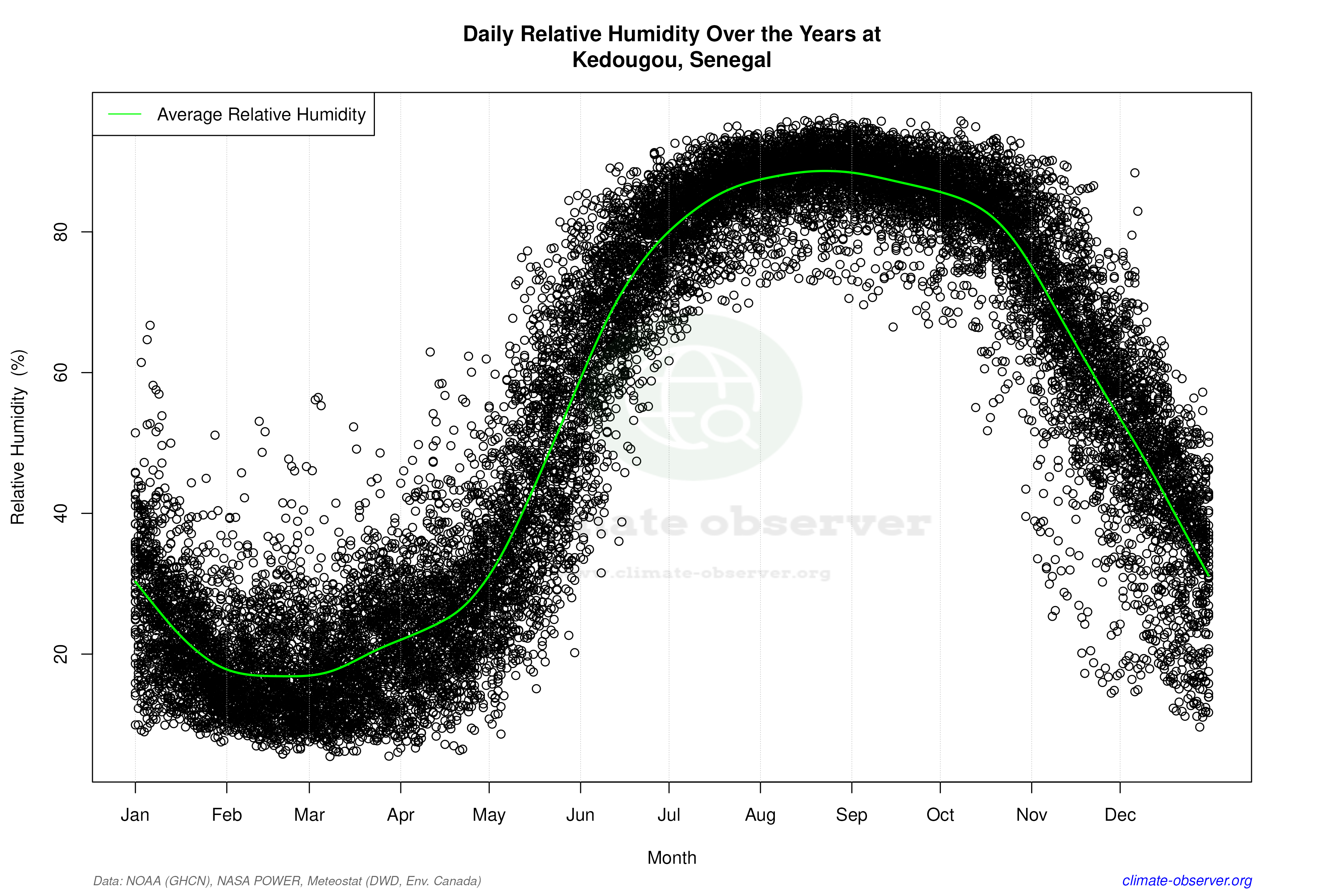

Average Max Temperature Throughout Year | 1 of 5


