Climate for Station: Gabes, Tunisia
Loading live weather...
Climate Analysis & Overview
Gabes, Tunisia is experiencing a warming trend, with significant increases in both high and low temperatures over the past decade. The precipitation pattern has become more evenly distributed, contrasting with historical concentration. These changes align with regional climate goals to adapt to evolving weather patterns.
Desert Climate Dynamics
Gabes, located in the heart of Tunisia, is classified under the Köppen climate system as a hot desert climate (BWh). This classification is characterised by extremely hot summers and mild winters, with minimal precipitation. The geographical position near the Mediterranean Sea influences its climate, providing a slight moderation in temperature extremes compared to inland areas. Over the last decade, Gabes has seen a notable warming trend, with high temperatures rising by 2.27°C (4.09°F) and low temperatures by 1.09°C (1.96°F). This is a significant increase compared to the all-time trend, where highs have risen by 0.25°C (0.45°F) and lows by 0.22°C (0.40°F). These trends suggest a rapid warming phase, particularly in recent years, which could impact local agriculture and water resources.
Temperature Extremes and Records
Gabes has experienced extreme temperatures, with a record high of 49.1°C (120.4°F) and a record low of -7.9°C (17.8°F). These records highlight the wide thermal range characteristic of desert climates. The region's warming trend may lead to more frequent occurrences of such extremes, posing challenges for infrastructure and public health. The all-time warming trend, though less pronounced than the recent decade, still indicates a gradual rise in temperatures that aligns with global climate patterns.
Shifting Precipitation Patterns
The Precipitation Concentration Index (PCI) provides insight into how rainfall is distributed throughout the year. Gabes has seen a decrease in PCI from a baseline of 19.93 to a current value of 14.05. This change indicates that precipitation is now more evenly distributed across the year, reducing the likelihood of intense, short-duration rainfall events. Such a shift can be beneficial for agriculture, as it allows for better water absorption and reduces the risk of flooding. However, the overall aridity of the region means that any changes in precipitation patterns must be carefully monitored to ensure water security.
Regional Climate Adaptation
Tunisia has been proactive in addressing climate change, with national goals focusing on sustainable water management and agricultural adaptation. The trends observed in Gabes are a microcosm of broader regional shifts, underscoring the importance of climate resilience strategies. The warming and changes in precipitation distribution are critical factors in planning for future climatic conditions. As Gabes continues to warm, local and regional authorities will need to adapt infrastructure and resource management to mitigate potential impacts on the community and environment.
Station Statistics
10-Year Trend
High: +2.11 °C/decade
Low: +1.52 °C/decade
Rain: -0.08 mm/decade
25-Year Trend
High: +1.18 °C/decade
Low: -0.22 °C/decade
Rain: -0.02 mm/decade
50-Year Trend
High: +0.79 °C/decade
Low: -0.05 °C/decade
Rain: -0.01 mm/decade
All-Time Trend
High: +0.25 °C/decade
Low: +0.20 °C/decade
Rain: -0.02 mm/decade
Percentage Above-Average Days
Last 12 Months: 61.1%
This Year: 80.2%
Precipitation Concentration Index (PCI) ℹ️
Last 12 Months: 12.3
Historical Average: 19.5
Percentile Rank of Last 12 Months ℹ️
High: 93rd percentile
Low: 82nd percentile
Rain: 59th percentile
Change in Variance ℹ️
High: +40.0%
Low: +11.0%
Intraday: -7.7%
Data Coverage
53.5%
First Year of Data
1921
Station Location
Historical Weather Records
| Max High | Avg High | Min High | Max Avg | Avg Avg | Min Avg | Max Low | Avg Low | Min Low | Max Precipitation | Avg Precipitation | Max Snow | Avg Snow | |
|---|---|---|---|---|---|---|---|---|---|---|---|---|---|
| Record | 49.1 °C | — | 8.0 °C | 39.1 °C | — | 4.0 °C | 33.0 °C | — | -7.9 °C | 103.5 mm | — | — | — |
| January | 31.0 °C | 16.8 °C | 8.0 °C | 23.0 °C | 12.0 °C | 4.0 °C | 16.1 °C | 6.6 °C | -7.9 °C | 56.0 mm | 0.7 mm | — | — |
| February | 34.0 °C | 18.4 °C | 8.0 °C | 25.7 °C | 13.4 °C | 5.8 °C | 19.7 °C | 7.6 °C | -5.9 °C | 69.0 mm | 0.6 mm | — | — |
| March | 41.0 °C | 20.6 °C | 10.9 °C | 28.0 °C | 15.7 °C | 7.0 °C | 22.0 °C | 10.1 °C | -4.2 °C | 42.0 mm | 0.6 mm | — | — |
| April | 40.2 °C | 23.1 °C | 13.0 °C | 29.4 °C | 18.3 °C | 10.5 °C | 22.0 °C | 13.1 °C | 1.4 °C | 41.3 mm | 0.4 mm | — | — |
| May | 43.1 °C | 26.2 °C | 17.0 °C | 33.6 °C | 21.8 °C | 14.6 °C | 30.0 °C | 16.7 °C | 6.4 °C | 41.0 mm | 0.2 mm | — | — |
| June | 46.0 °C | 29.6 °C | 20.9 °C | 37.4 °C | 25.3 °C | 19.6 °C | 28.6 °C | 20.5 °C | 8.8 °C | 9.0 mm | 0.0 mm | — | — |
| July | 49.1 °C | 32.6 °C | 21.9 °C | 39.1 °C | 28.1 °C | 22.1 °C | 33.0 °C | 22.8 °C | 11.7 °C | 5.0 mm | 0.0 mm | — | — |
| August | 45.6 °C | 33.1 °C | 26.5 °C | 38.0 °C | 28.8 °C | 24.2 °C | 32.4 °C | 23.4 °C | 13.9 °C | 8.0 mm | 0.1 mm | — | — |
| September | 42.5 °C | 31.0 °C | 21.5 °C | 35.4 °C | 26.6 °C | 20.1 °C | 29.0 °C | 21.8 °C | 11.2 °C | 71.8 mm | 0.5 mm | — | — |
| October | 42.0 °C | 27.4 °C | 15.0 °C | 35.6 °C | 22.8 °C | 12.0 °C | 29.0 °C | 17.5 °C | 5.7 °C | 103.5 mm | 0.9 mm | — | — |
| November | 35.0 °C | 22.3 °C | 10.2 °C | 30.2 °C | 17.3 °C | 9.1 °C | 22.8 °C | 12.0 °C | -2.1 °C | 96.0 mm | 0.7 mm | — | — |
| December | 30.8 °C | 18.0 °C | 9.2 °C | 24.7 °C | 13.0 °C | 5.4 °C | 17.8 °C | 8.0 °C | -5.2 °C | 42.1 mm | 0.6 mm | — | — |
Data Visualisations
Remove WatermarksCurrent Year Climate Trends vs Historical
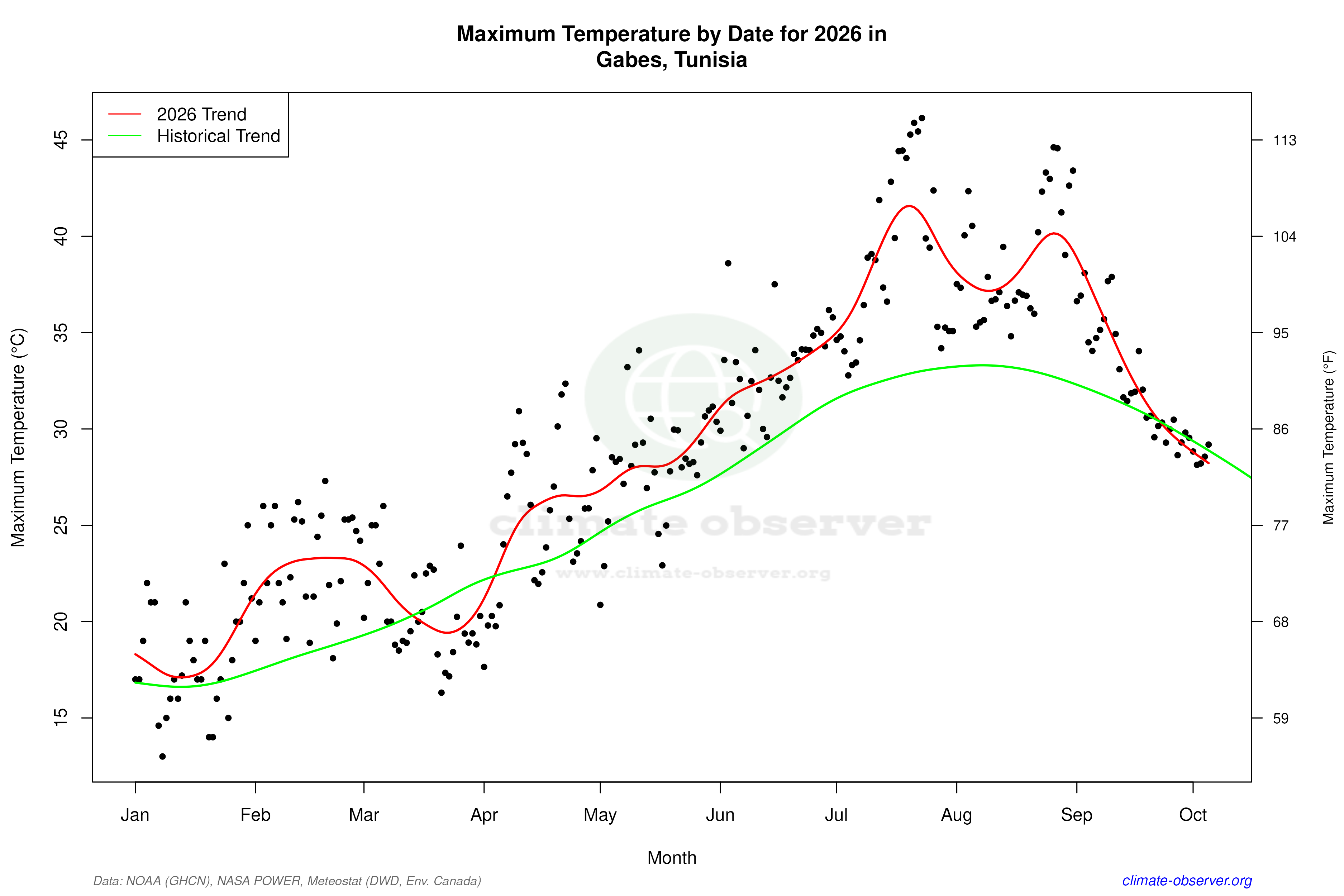
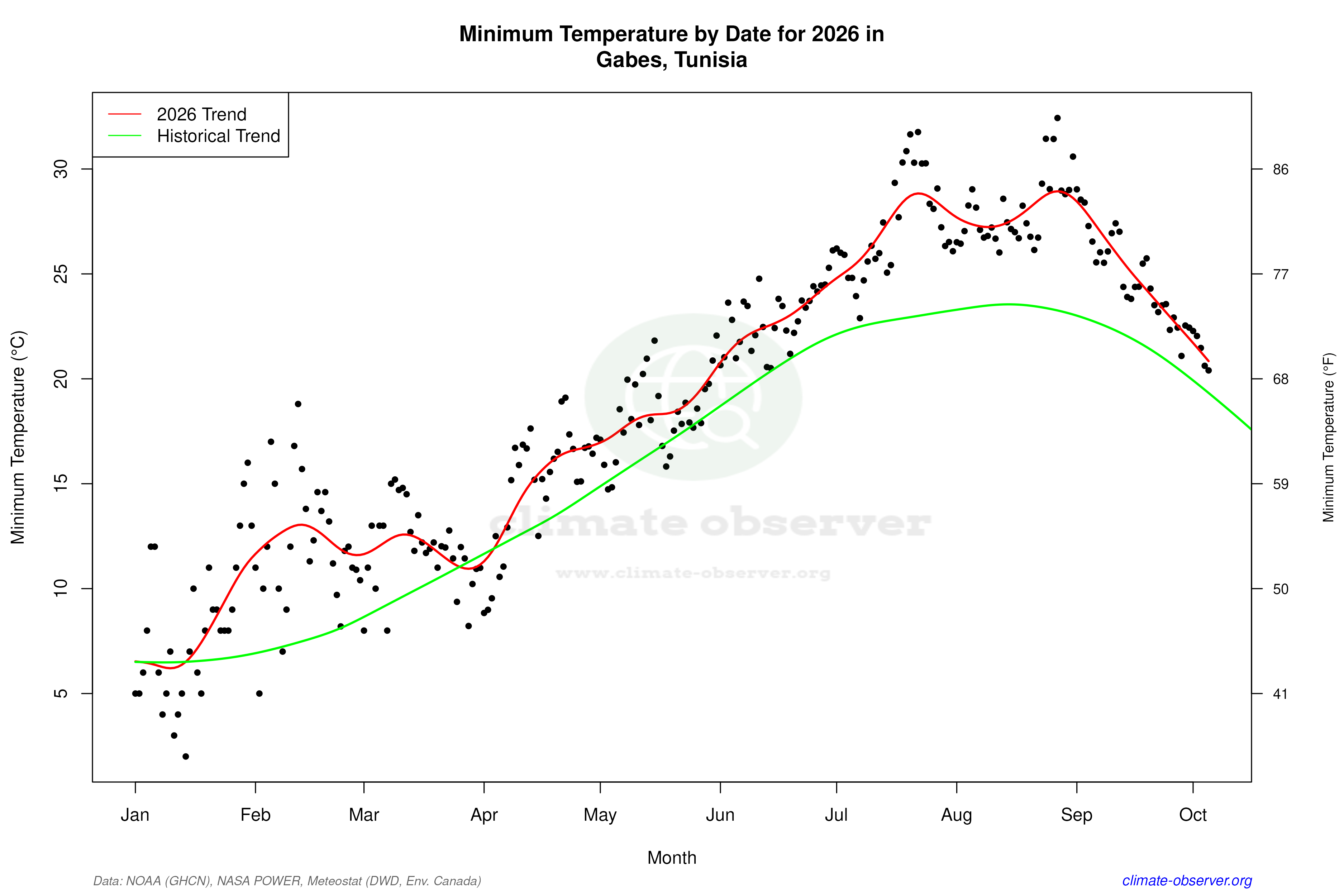
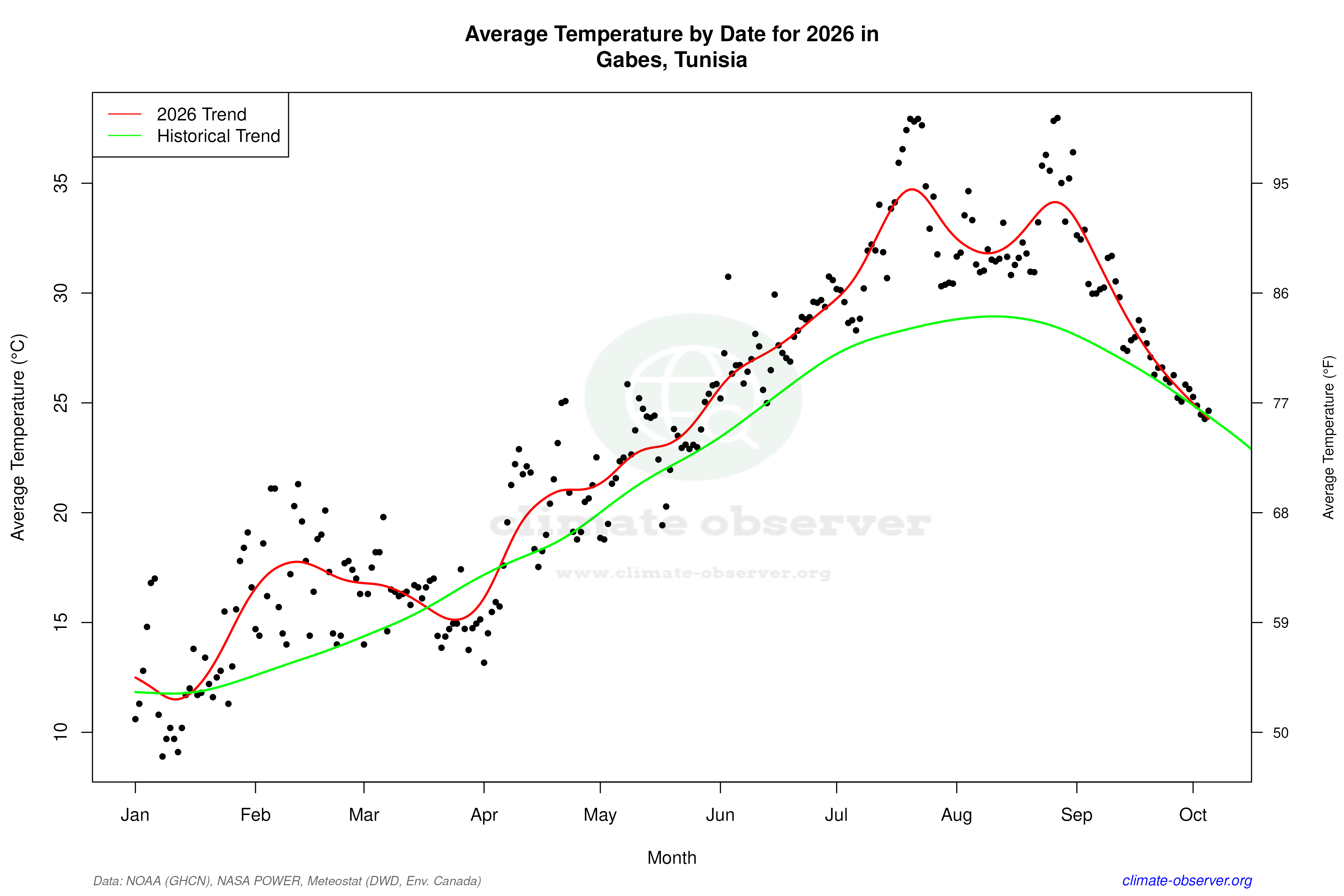
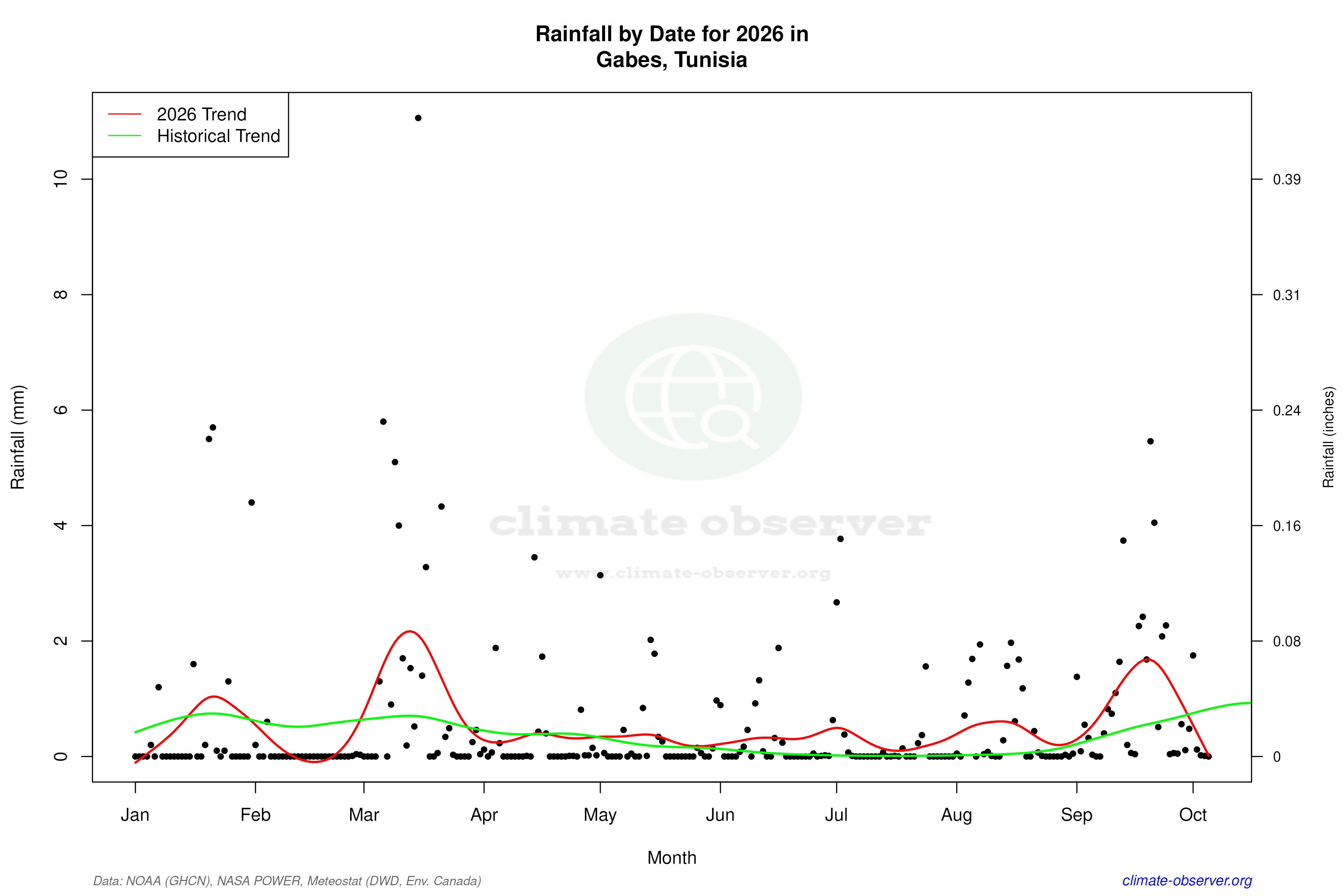
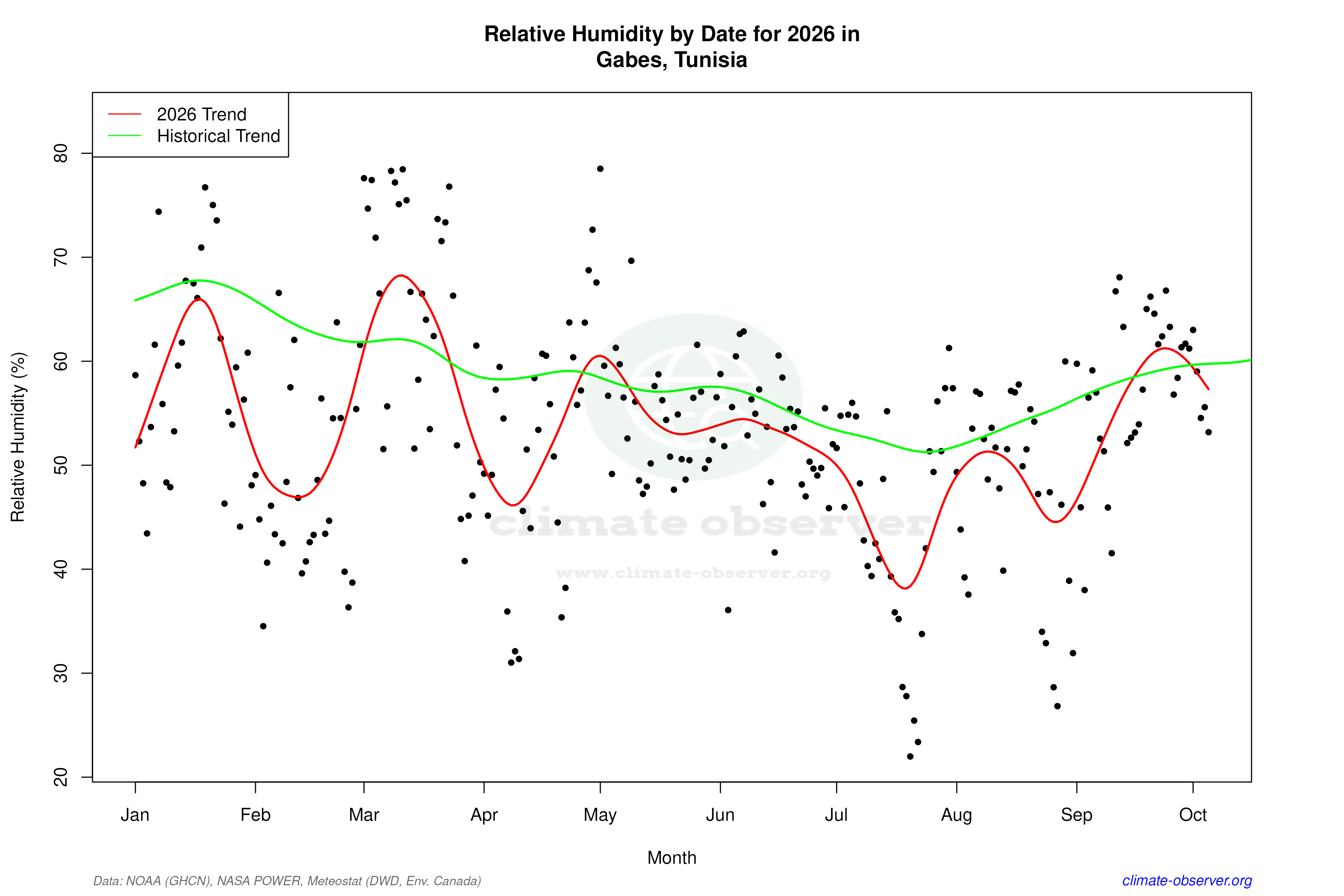

Max Temperature this Year | 1 of 6
Climate 12-Month Moving Averages
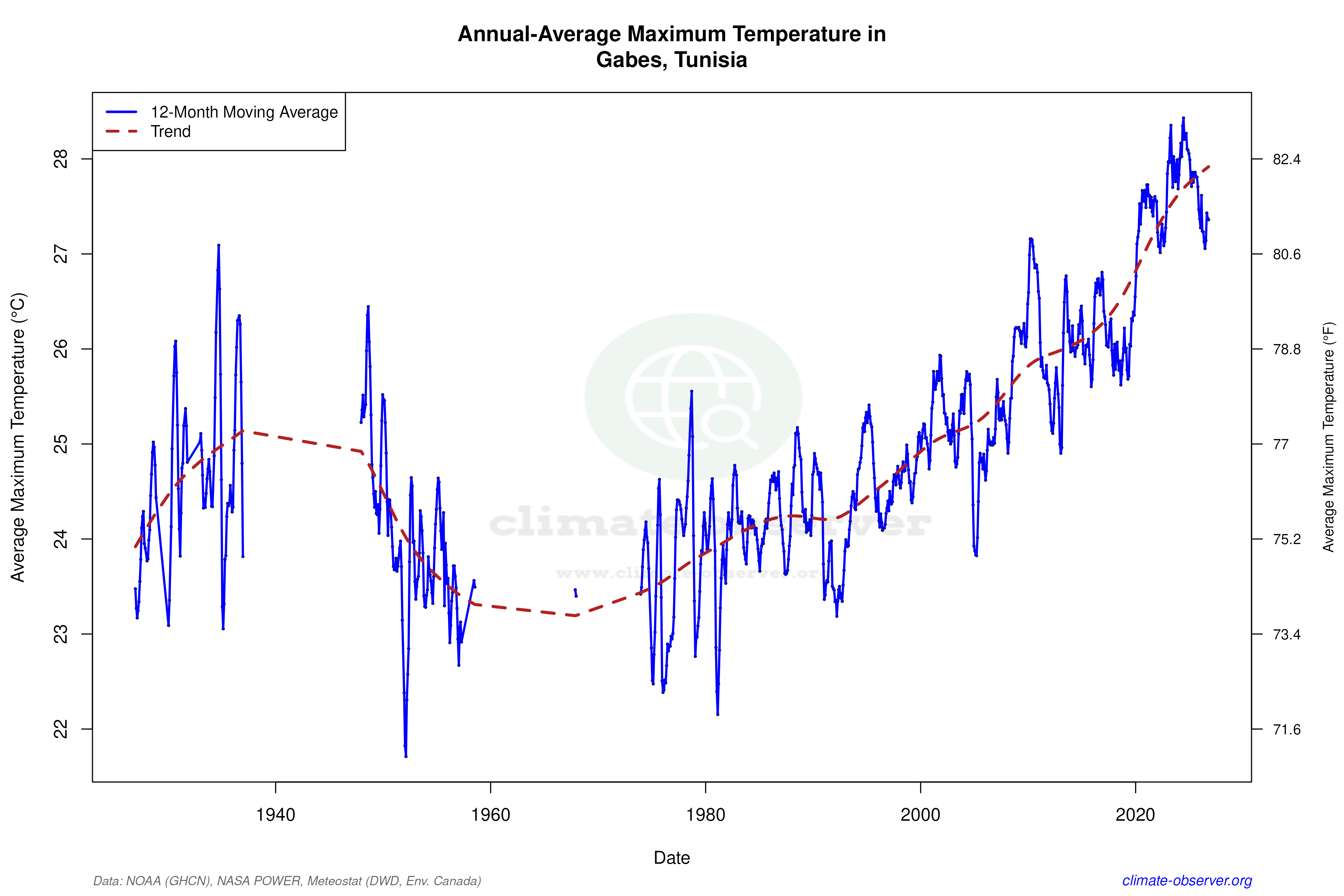
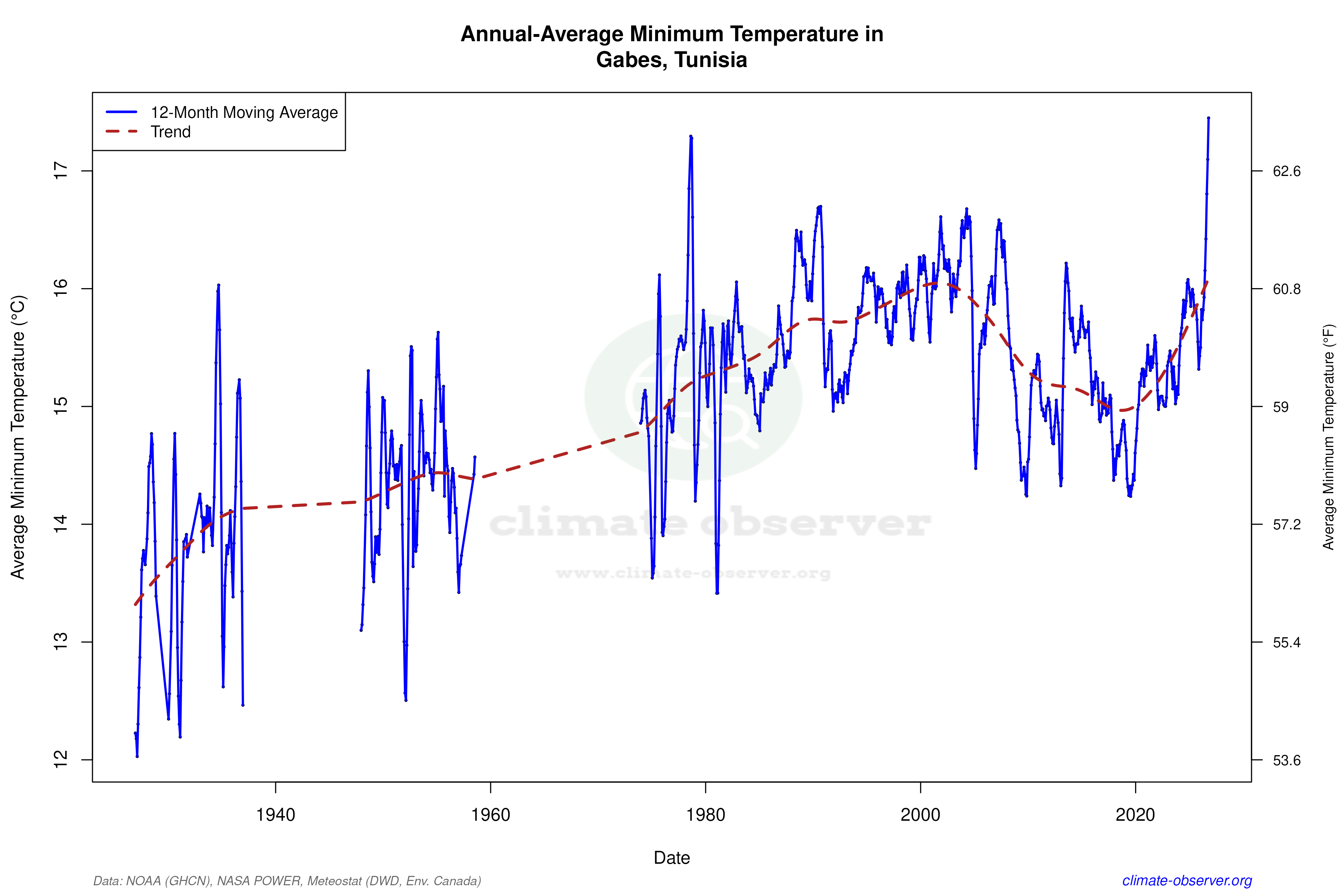
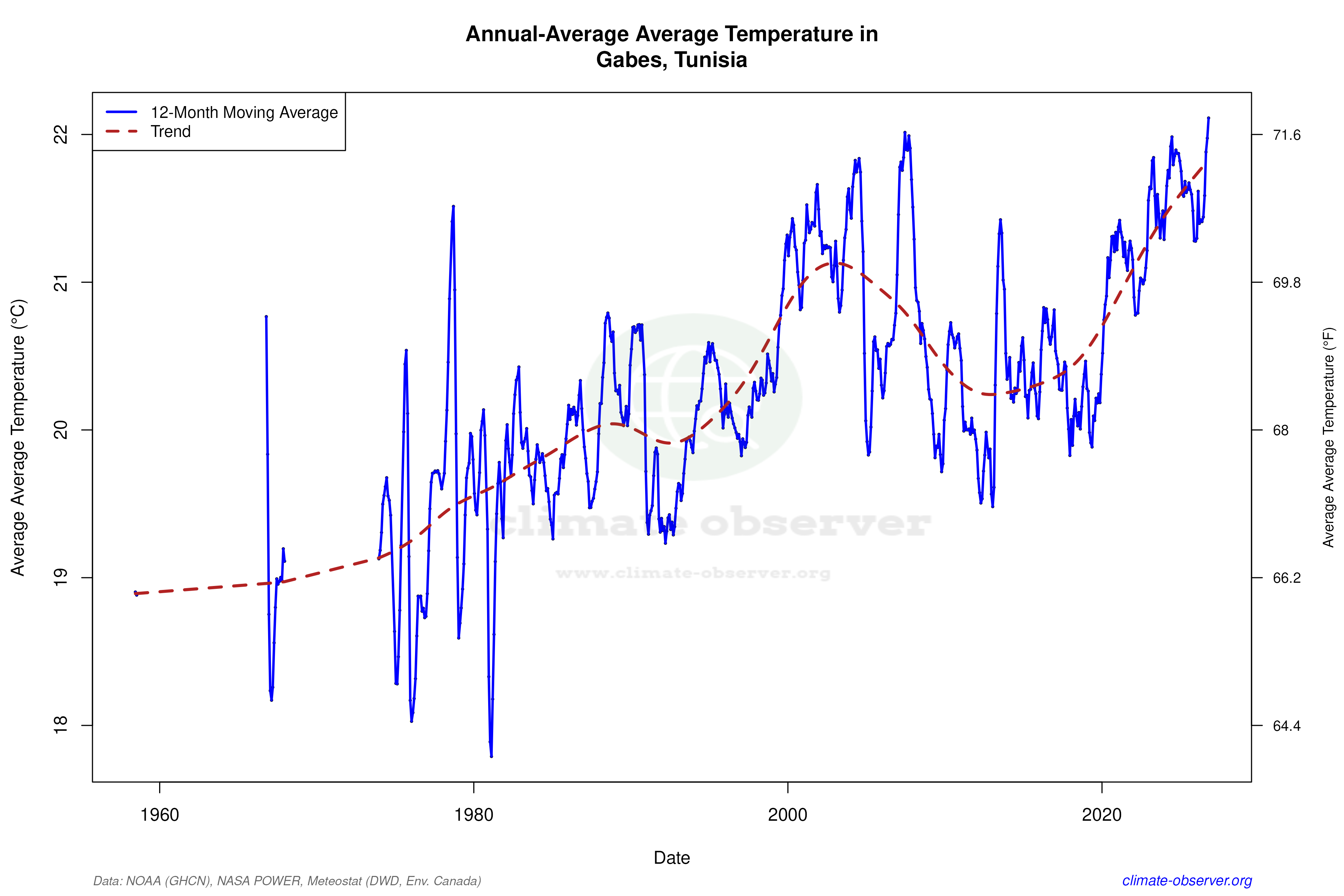
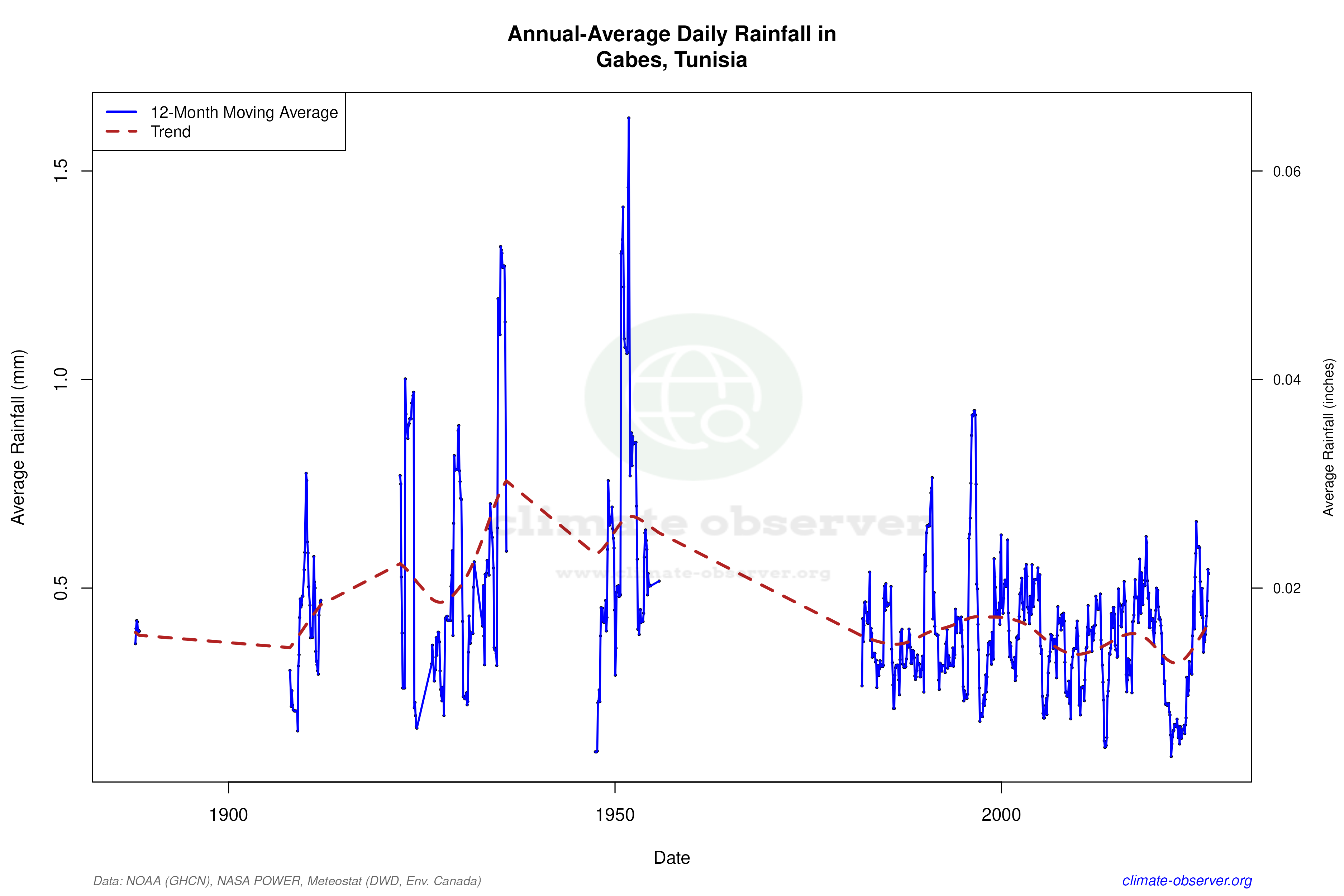
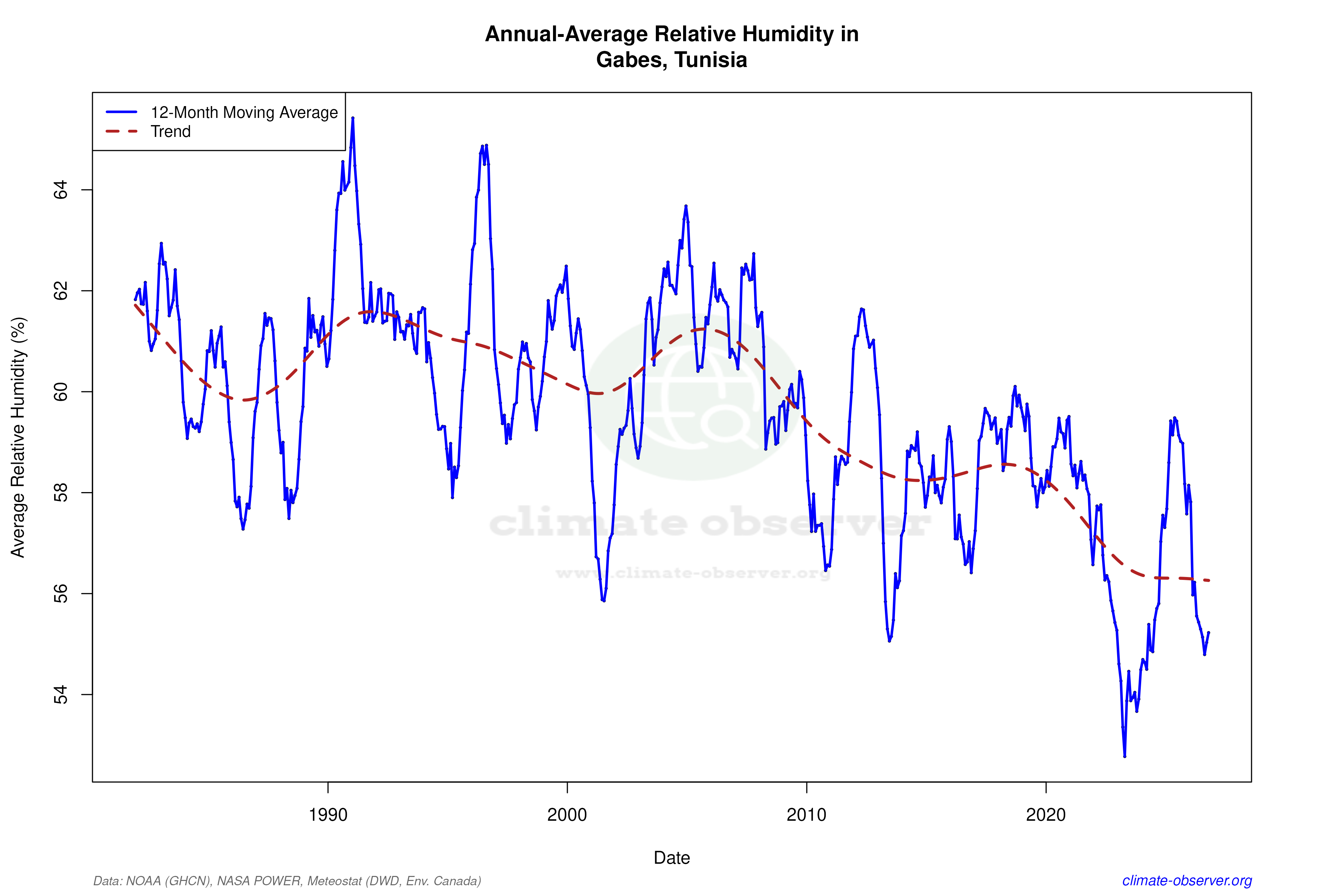

Max Temperature 12-Month MA | 1 of 6
Daily Data Points and Averages Throughout the Year
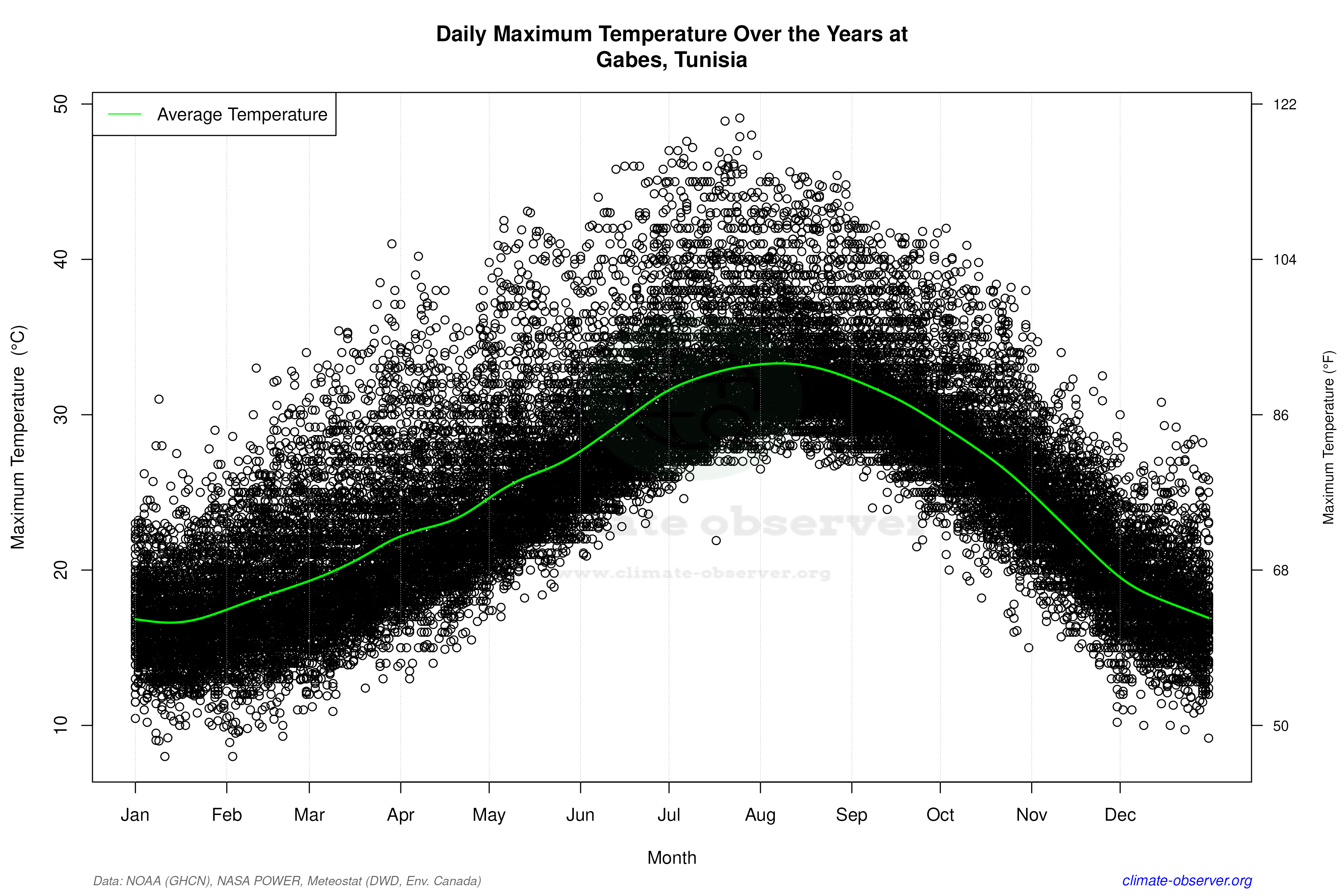
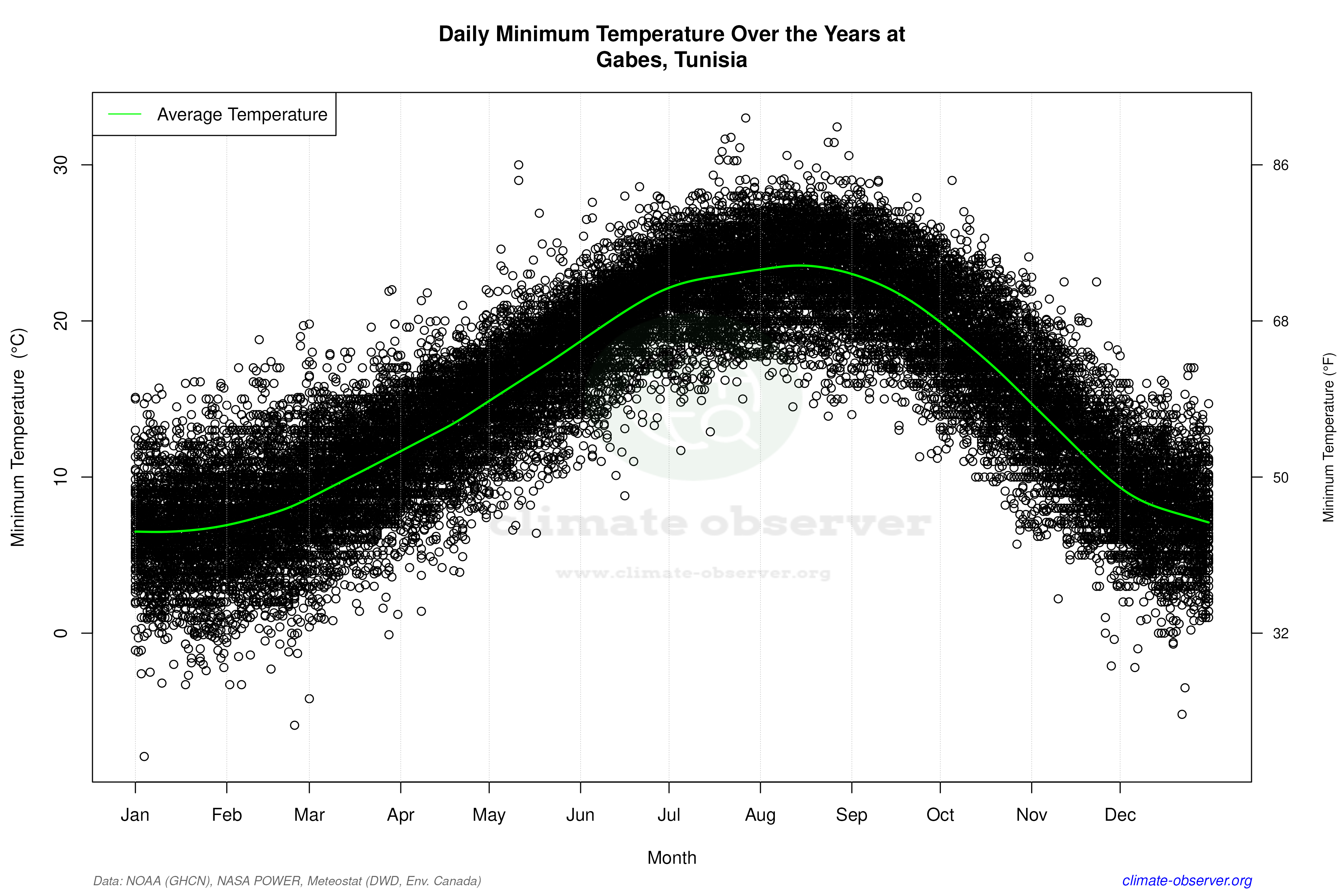
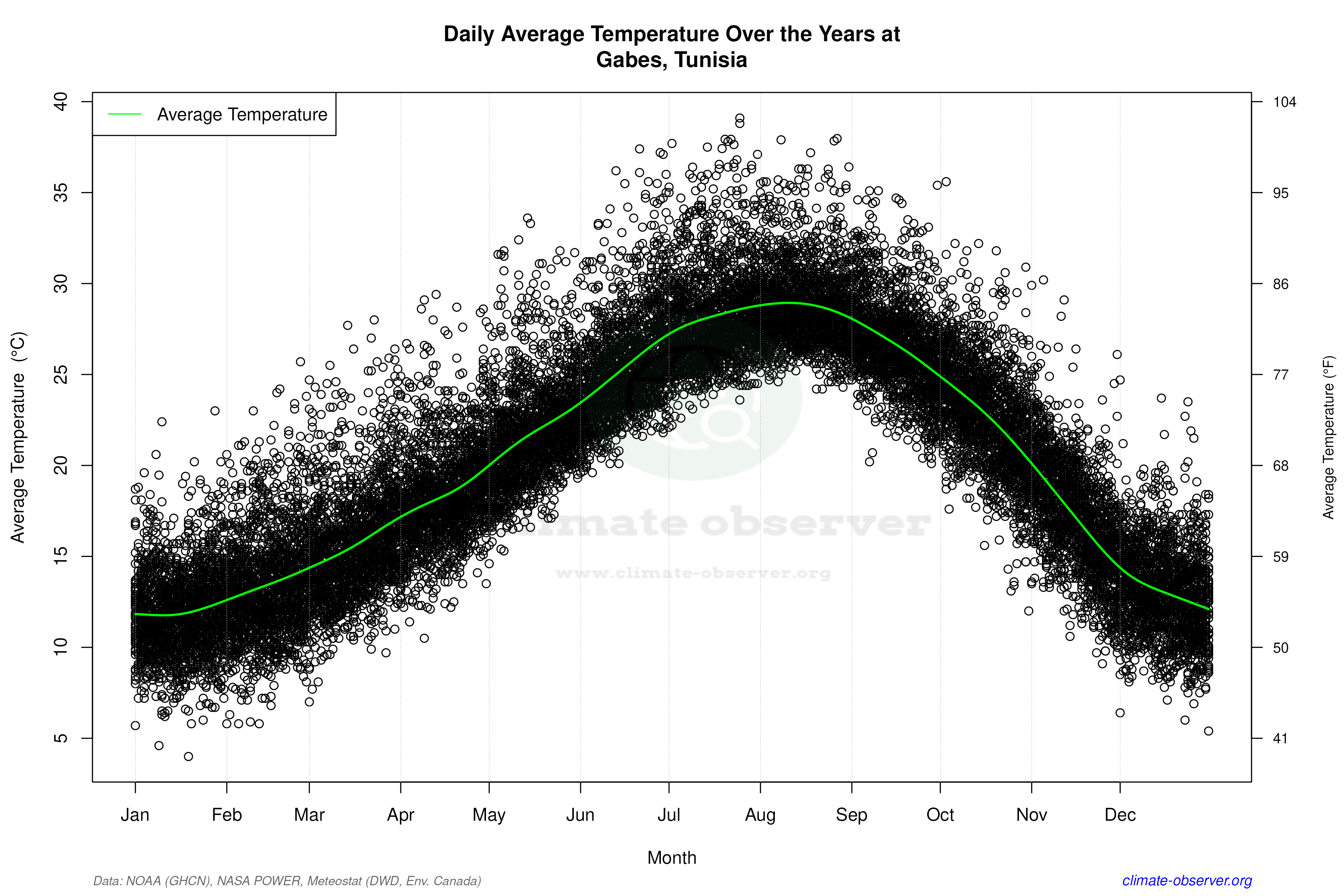
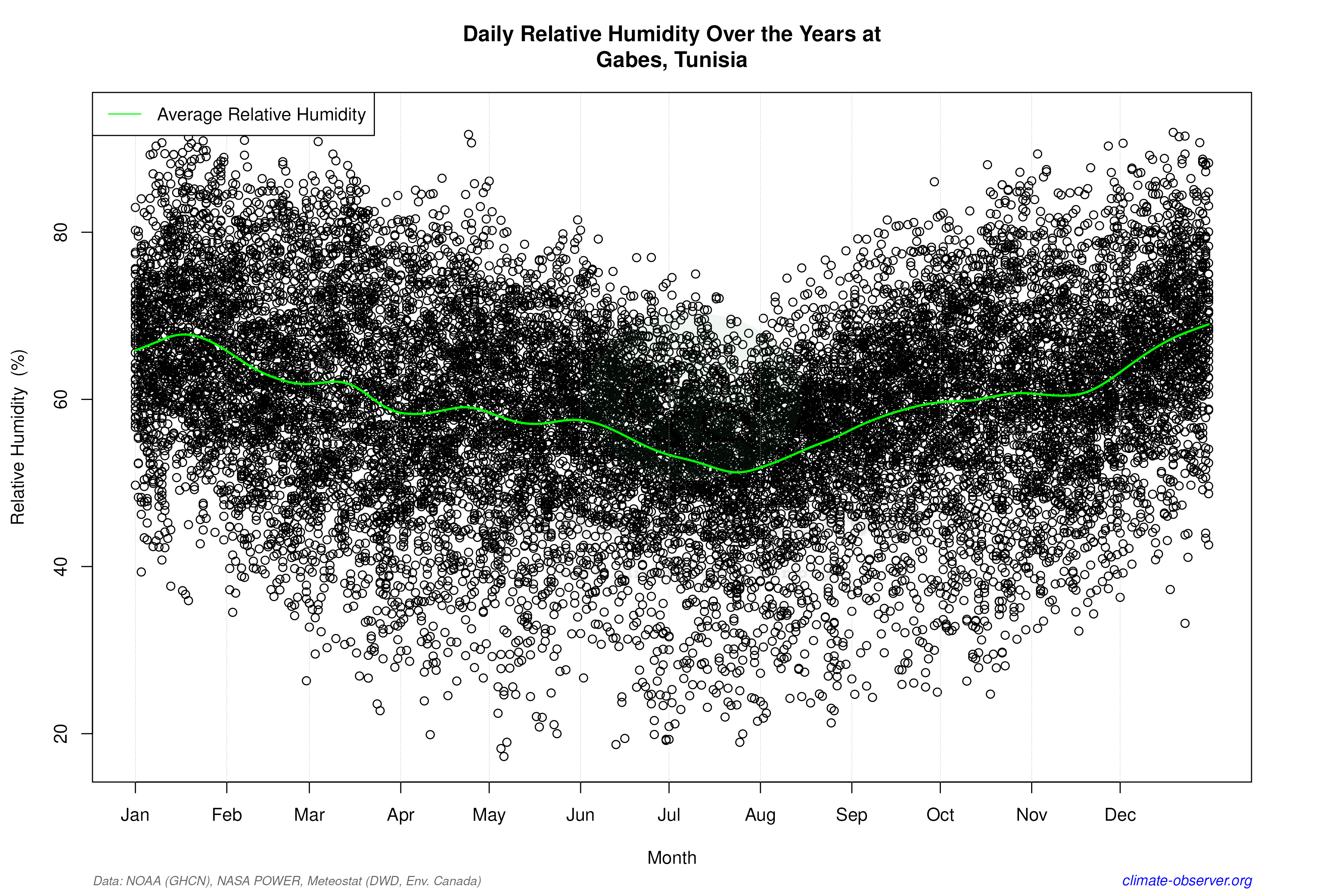

Average Max Temperature Throughout Year | 1 of 5


