Climate for Station: Dar Es Salaam Airpo, Dar es Salaam, Tanzania
Loading live weather...
Climate Analysis & Overview
The climate profile of Dar Es Salaam Airport reveals a warming trend in high temperatures and a cooling trend in low temperatures over the past decade. However, when considering the all-time data, both highs and lows show a warming trend. Precipitation patterns have become slightly more even, as indicated by a small decrease in the Precipitation Concentration Index.
Coastal Climate Dynamics
Dar Es Salaam Airport, located at -6.867, 39.2, falls under the tropical savanna climate, classified as 'Aw' in the Köppen system. Its proximity to the Indian Ocean significantly influences its climate, contributing to its humid conditions and moderate temperature fluctuations. The coastal geography ensures that the area experiences a maritime influence, which typically moderates extreme temperature variations.
Temperature Trends: A Mixed Picture
Over the past decade, the high temperatures at Dar Es Salaam Airport have shown a warming trend, increasing by 0.16°C (0.29°F). In contrast, the low temperatures have experienced a cooling trend, decreasing by 0.48°C (0.86°F). This divergence highlights a complex local climate dynamic where daytime temperatures rise while nighttime temperatures fall. However, when examining the all-time trends, both high and low temperatures show a warming pattern. Highs have increased by 0.13°C (0.24°F), and lows by a more substantial 0.42°C (0.76°F).
Precipitation Patterns: A Slight Shift
The Precipitation Concentration Index (PCI) for Dar Es Salaam Airport has decreased from a baseline of 16.17 to a current value of 15.73. This slight decrease indicates a more even distribution of rainfall events over time, suggesting that precipitation is becoming less concentrated in fewer, intense events. This shift could be beneficial for agriculture and water management, as it implies more consistent water availability.
Temperature Extremes: Records in Context
The record high temperature at the station is 39.2°C (102.6°F), while the record low is 10.8°C (51.4°F). These extremes provide a perspective on the range of temperatures that can occur in this tropical location. The high temperatures are indicative of the intense heat that can be experienced, particularly during the dry season, while the lows reflect the cooler conditions that can occur at night.
Regional Climate Goals and Implications
Tanzania has been actively working towards climate resilience and adaptation strategies, focusing on sustainable water management and agricultural practices. The slight evening out of precipitation patterns at Dar Es Salaam Airport aligns with these goals, potentially offering more stable conditions for local communities. Recent weather events, such as heavy rainfall and flooding, underscore the importance of understanding and adapting to these climatic shifts.
Station Statistics
10-Year Trend
High: -0.12 °C/decade
Low: +0.07 °C/decade
Rain: +0.05 mm/decade
25-Year Trend
High: +0.45 °C/decade
Low: +0.05 °C/decade
Rain: +0.55 mm/decade
50-Year Trend
High: +0.26 °C/decade
Low: +0.35 °C/decade
Rain: +0.10 mm/decade
All-Time Trend
High: +0.07 °C/decade
Low: +0.36 °C/decade
Rain: +0.07 mm/decade
Percentage Above-Average Days
Last 12 Months: 39.2%
This Year: 17.1%
Precipitation Concentration Index (PCI) ℹ️
Last 12 Months: 19.1
Historical Average: 16.2
Percentile Rank of Last 12 Months ℹ️
High: 77th percentile
Low: 83rd percentile
Rain: 72nd percentile
Change in Variance ℹ️
High: -8.2%
Low: -32.2%
Intraday: -39.4%
Data Coverage
94.6%
First Year of Data
1959
Station Location
Historical Weather Records
| Max High | Avg High | Min High | Max Avg | Avg Avg | Min Avg | Max Low | Avg Low | Min Low | Max Precipitation | Avg Precipitation | Max Snow | Avg Snow | |
|---|---|---|---|---|---|---|---|---|---|---|---|---|---|
| Record | 39.2 °C | — | 23.1 °C | 32.4 °C | — | 18.4 °C | 29.0 °C | — | 10.8 °C | 172.2 mm | — | — | — |
| January | 35.8 °C | 31.5 °C | 25.9 °C | 31.2 °C | 27.8 °C | 22.6 °C | 28.5 °C | 24.5 °C | 14.7 °C | 87.9 mm | 2.6 mm | — | — |
| February | 38.0 °C | 32.1 °C | 26.6 °C | 32.4 °C | 28.0 °C | 23.1 °C | 28.0 °C | 24.4 °C | 15.6 °C | 88.0 mm | 2.4 mm | — | — |
| March | 39.2 °C | 31.8 °C | 25.0 °C | 31.7 °C | 27.5 °C | 23.4 °C | 29.0 °C | 24.2 °C | 16.1 °C | 101.1 mm | 5.0 mm | — | — |
| April | 35.7 °C | 30.4 °C | 23.8 °C | 30.5 °C | 26.3 °C | 22.6 °C | 27.7 °C | 23.7 °C | 18.0 °C | 172.2 mm | 8.5 mm | — | — |
| May | 35.6 °C | 29.7 °C | 23.3 °C | 29.5 °C | 25.6 °C | 21.4 °C | 26.9 °C | 22.5 °C | 15.3 °C | 130.0 mm | 5.1 mm | — | — |
| June | 34.0 °C | 29.2 °C | 24.1 °C | 28.8 °C | 24.4 °C | 19.6 °C | 25.8 °C | 20.6 °C | 12.0 °C | 58.0 mm | 1.1 mm | — | — |
| July | 35.0 °C | 28.8 °C | 23.1 °C | 28.7 °C | 23.7 °C | 18.4 °C | 24.4 °C | 19.8 °C | 12.0 °C | 55.0 mm | 0.8 mm | — | — |
| August | 34.4 °C | 29.2 °C | 24.0 °C | 29.0 °C | 24.0 °C | 19.3 °C | 24.2 °C | 19.7 °C | 10.8 °C | 45.0 mm | 0.7 mm | — | — |
| September | 34.0 °C | 30.0 °C | 25.5 °C | 29.0 °C | 24.7 °C | 19.7 °C | 25.2 °C | 20.0 °C | 12.0 °C | 54.0 mm | 0.8 mm | — | — |
| October | 38.0 °C | 30.8 °C | 25.2 °C | 29.6 °C | 25.7 °C | 21.0 °C | 26.2 °C | 21.3 °C | 11.3 °C | 99.8 mm | 2.3 mm | — | — |
| November | 35.1 °C | 31.2 °C | 26.2 °C | 31.6 °C | 26.7 °C | 20.7 °C | 27.0 °C | 22.9 °C | 13.8 °C | 149.1 mm | 4.2 mm | — | — |
| December | 38.6 °C | 31.5 °C | 25.7 °C | 31.3 °C | 27.6 °C | 23.2 °C | 28.0 °C | 24.2 °C | 16.2 °C | 109.0 mm | 3.9 mm | — | — |
Data Visualisations
Remove WatermarksCurrent Year Climate Trends vs Historical
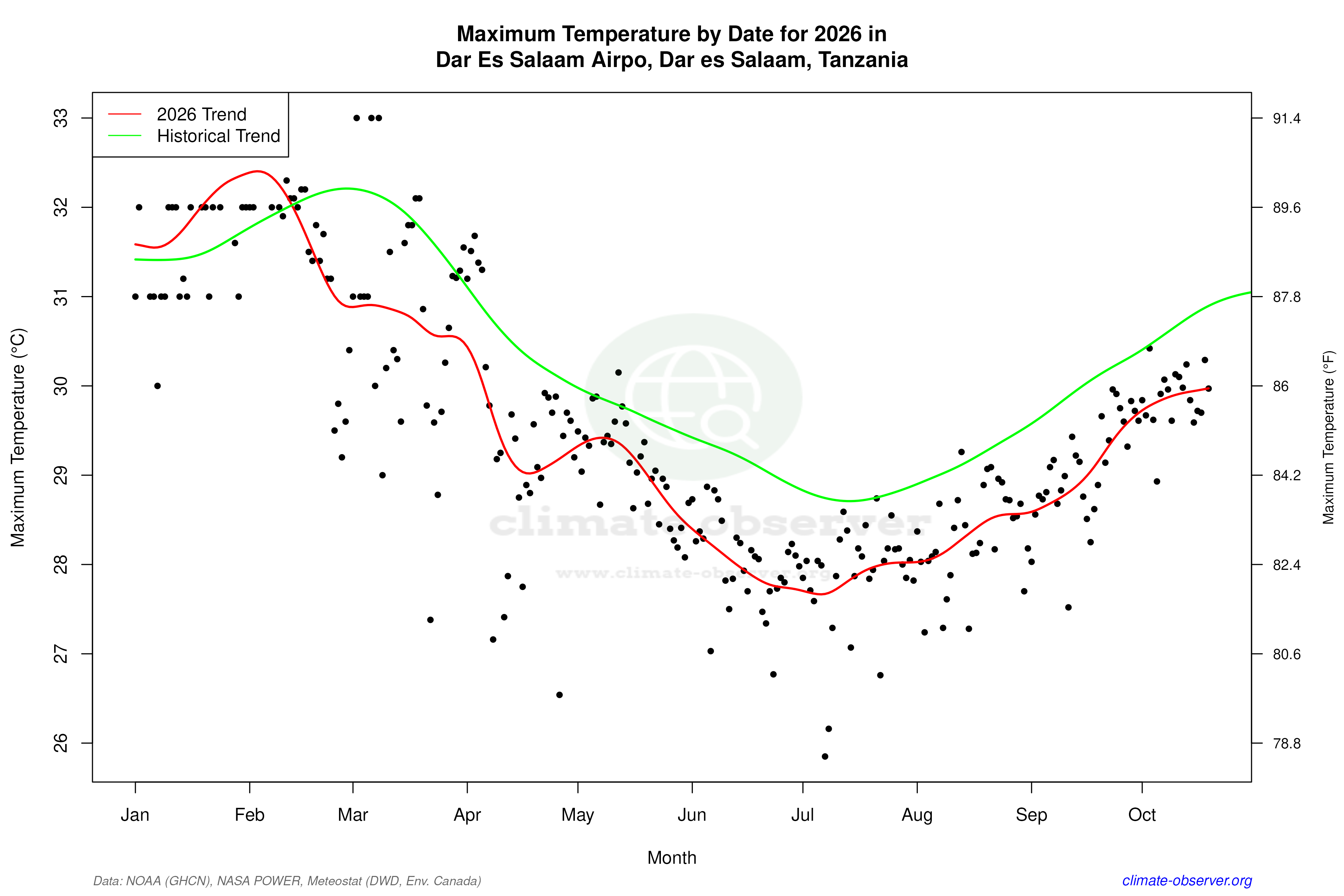
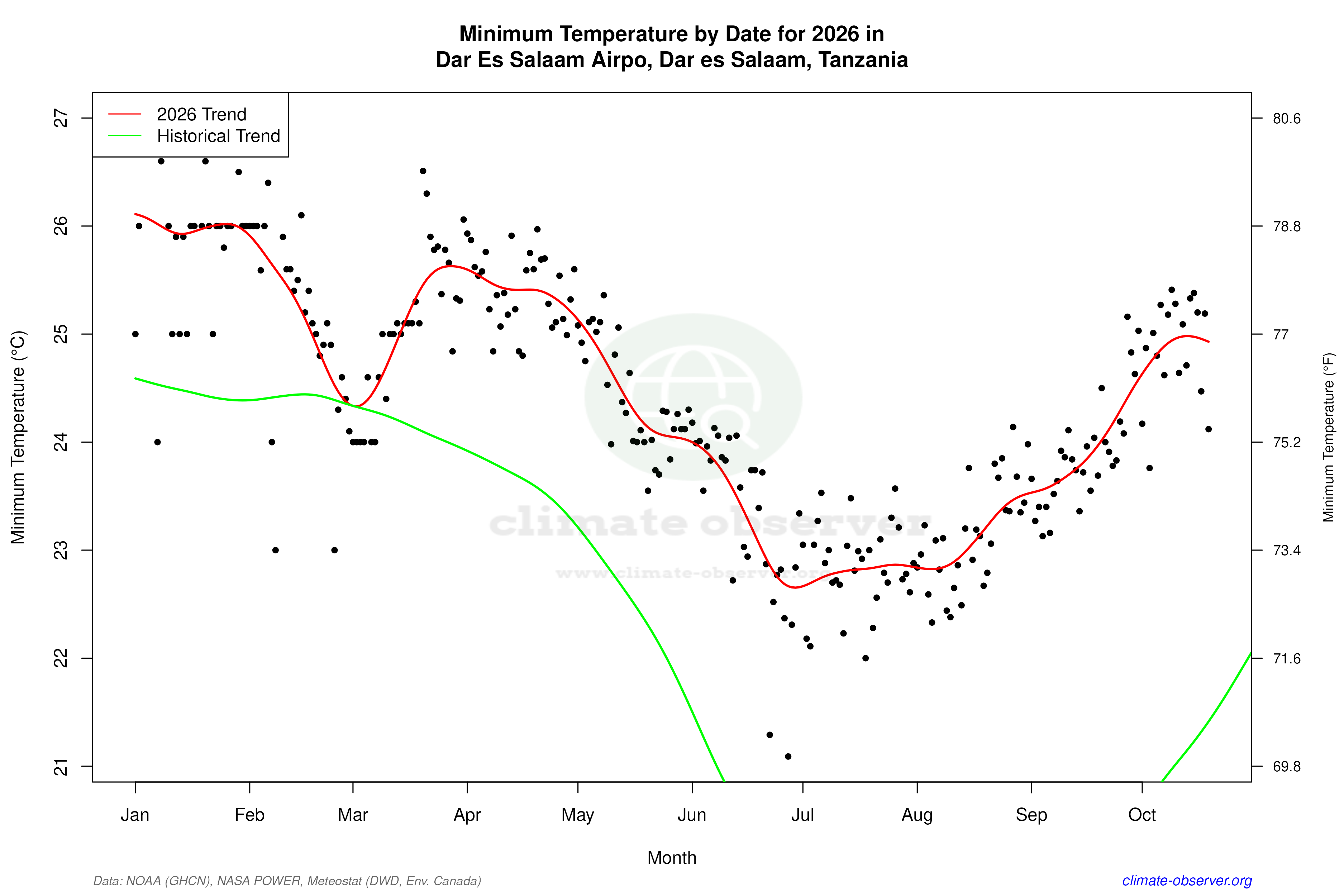
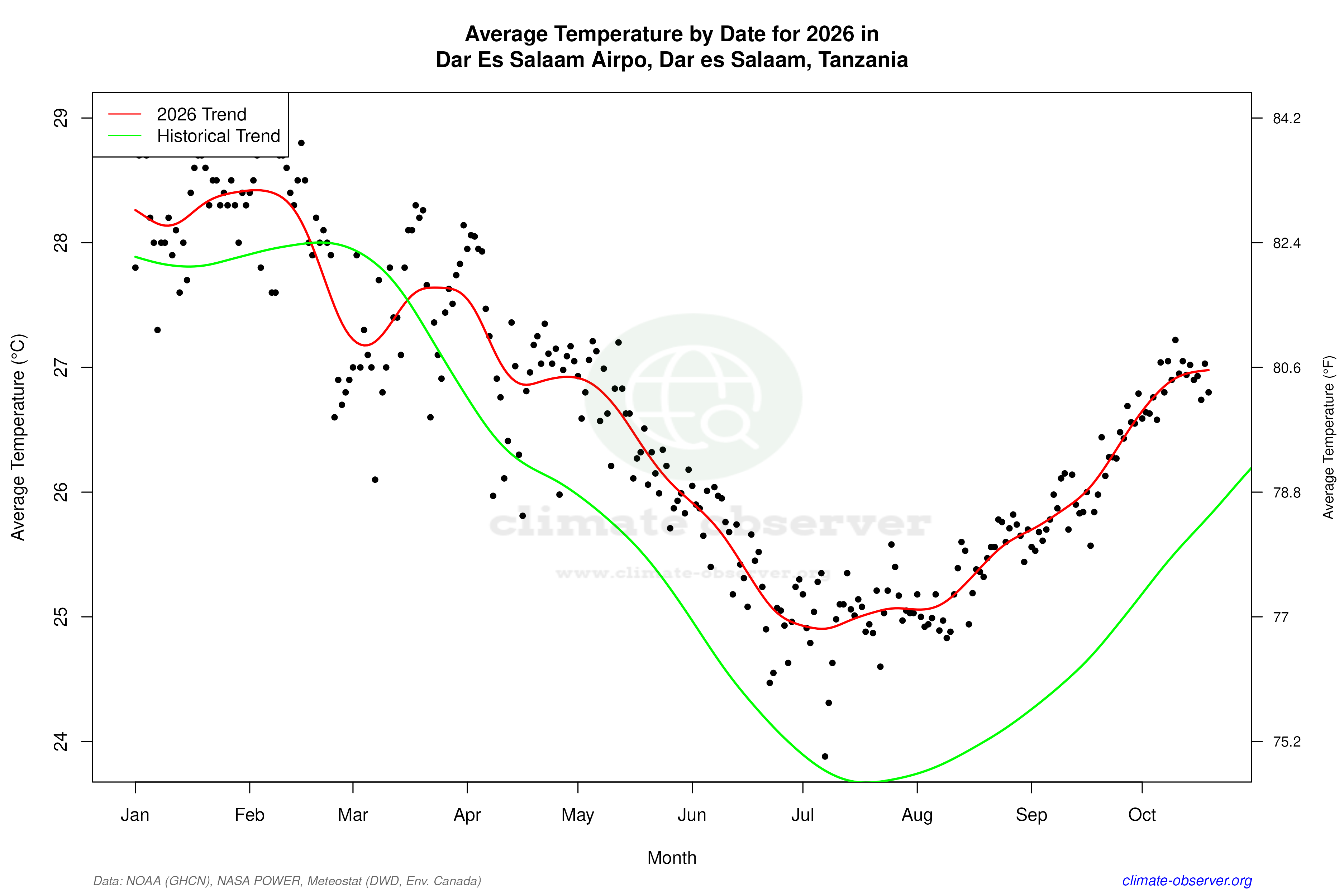
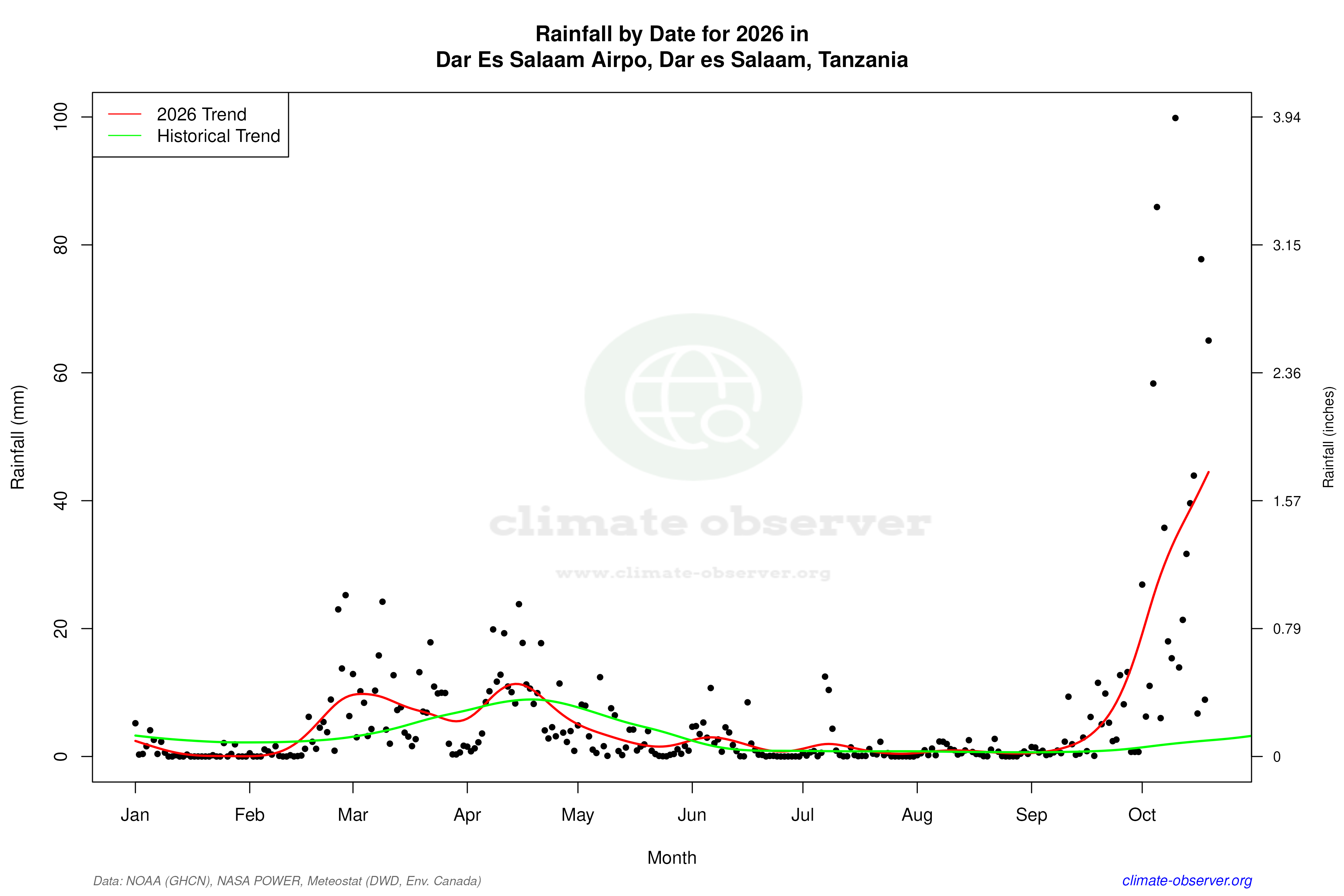
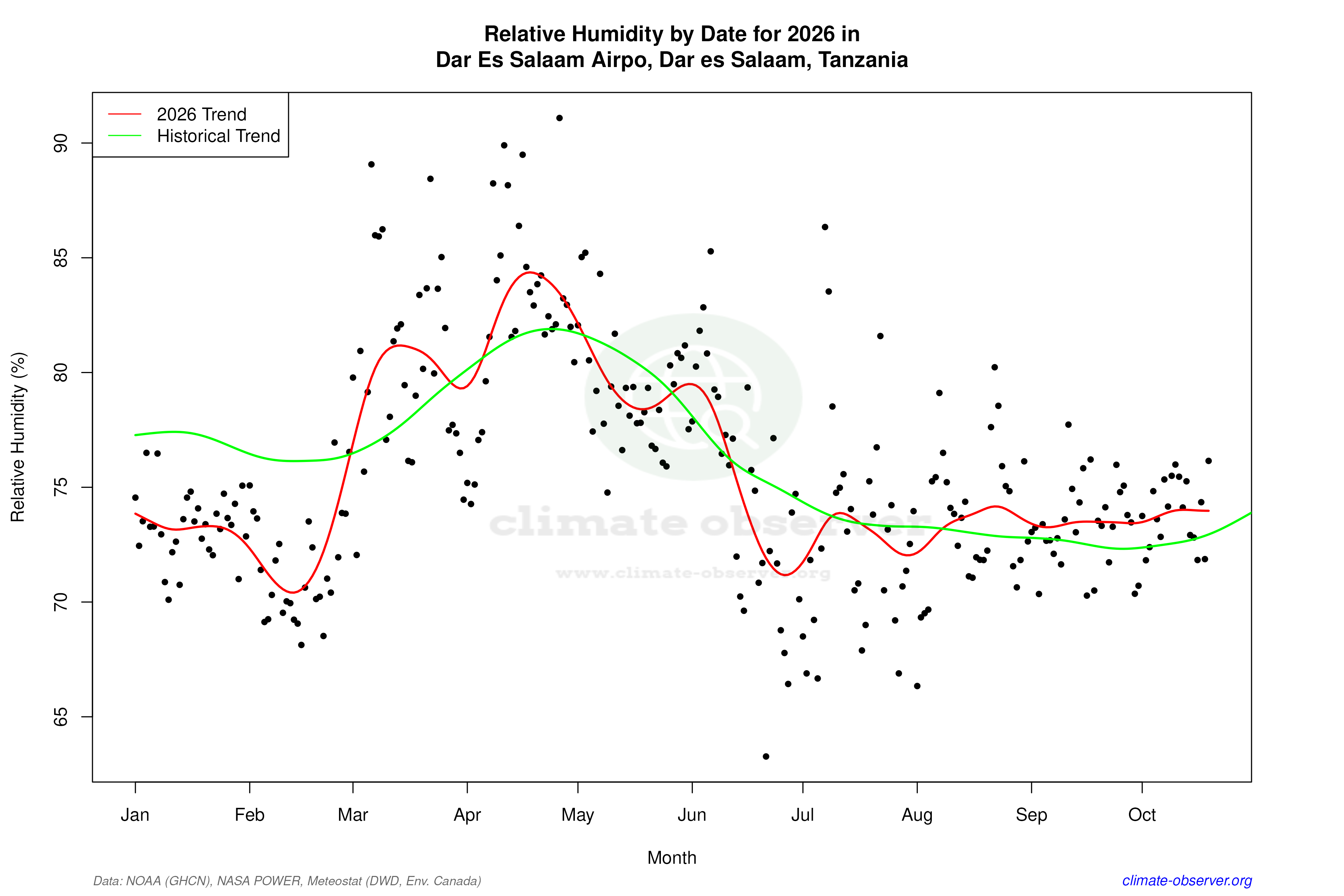

Max Temperature this Year | 1 of 6
Climate 12-Month Moving Averages
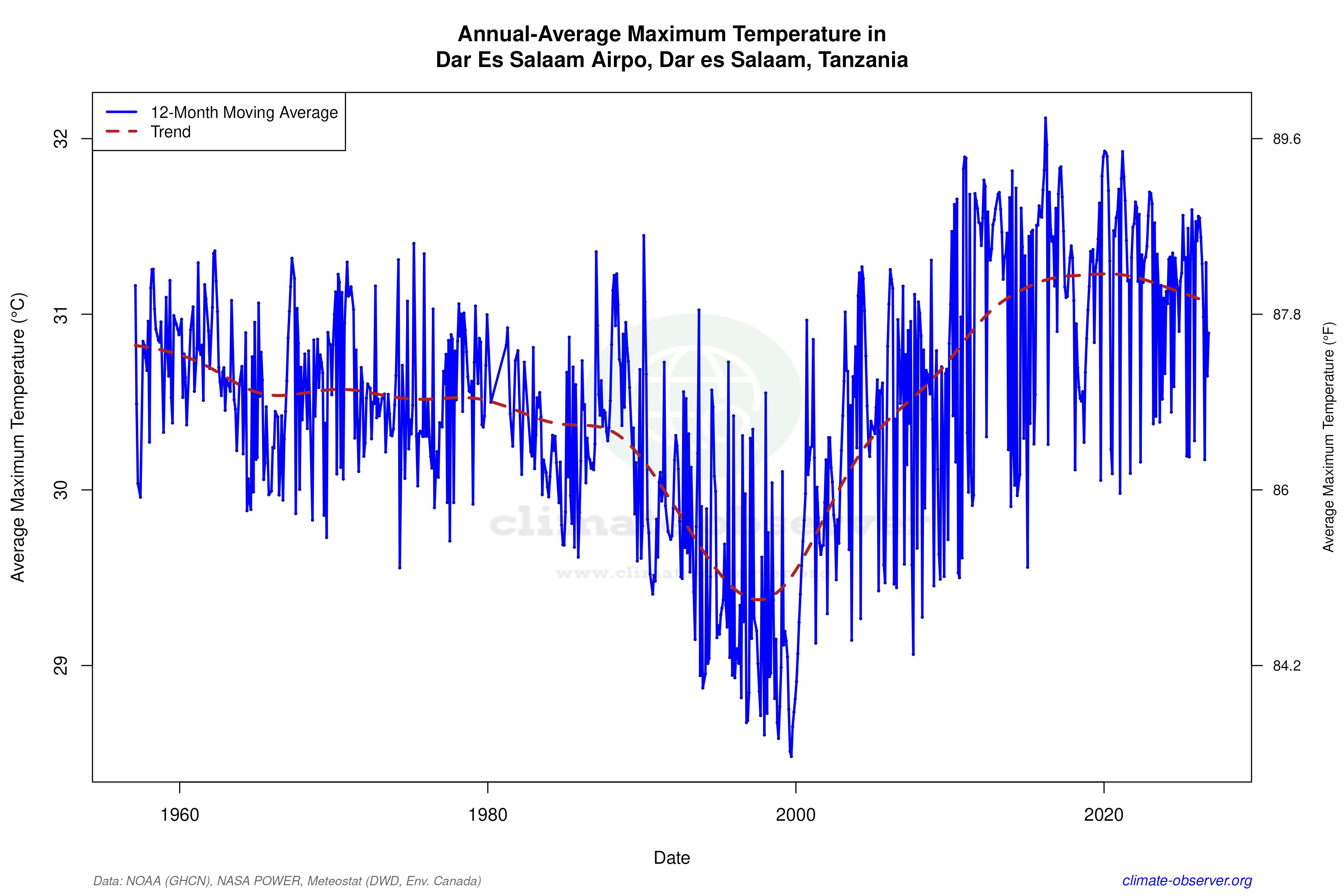
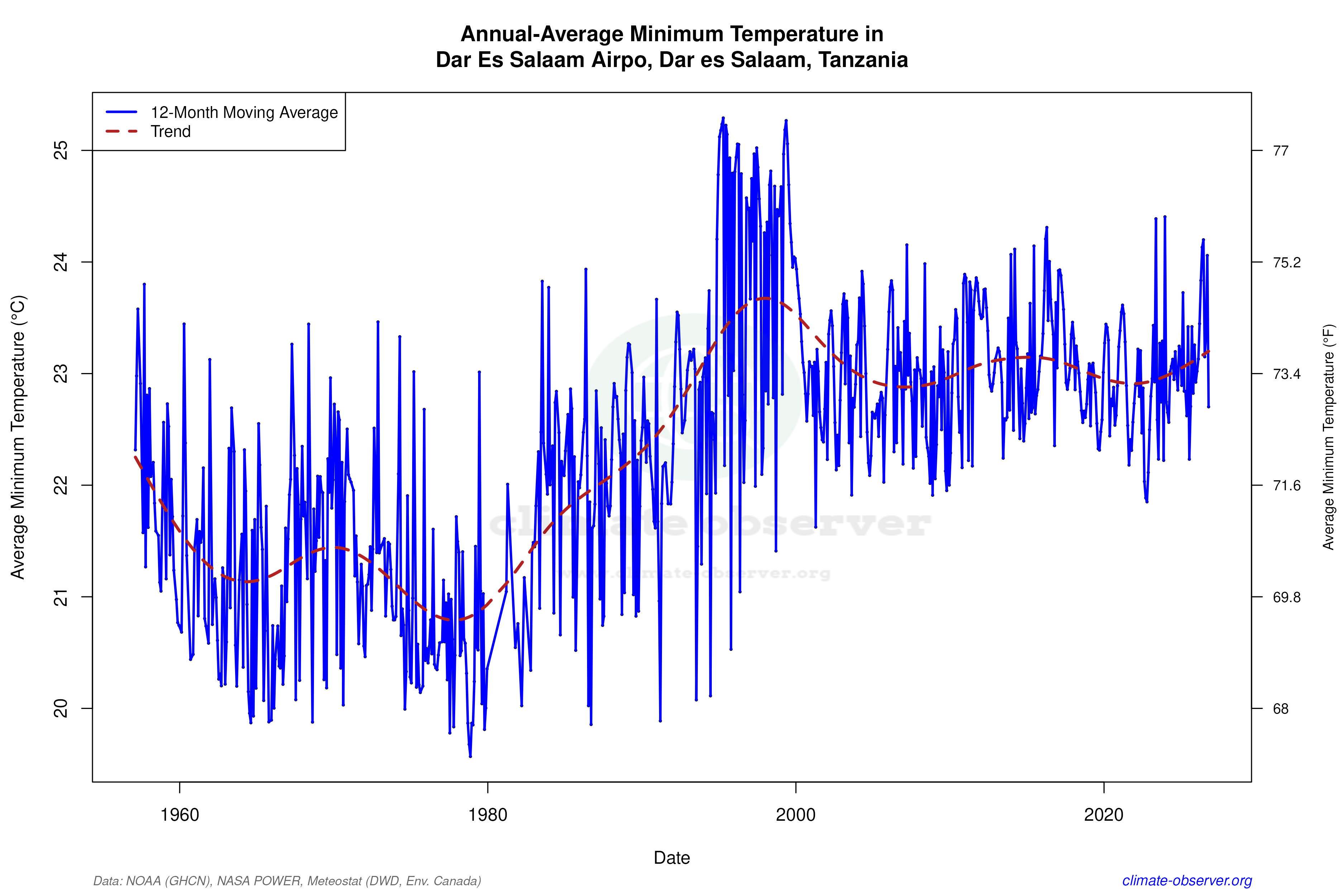
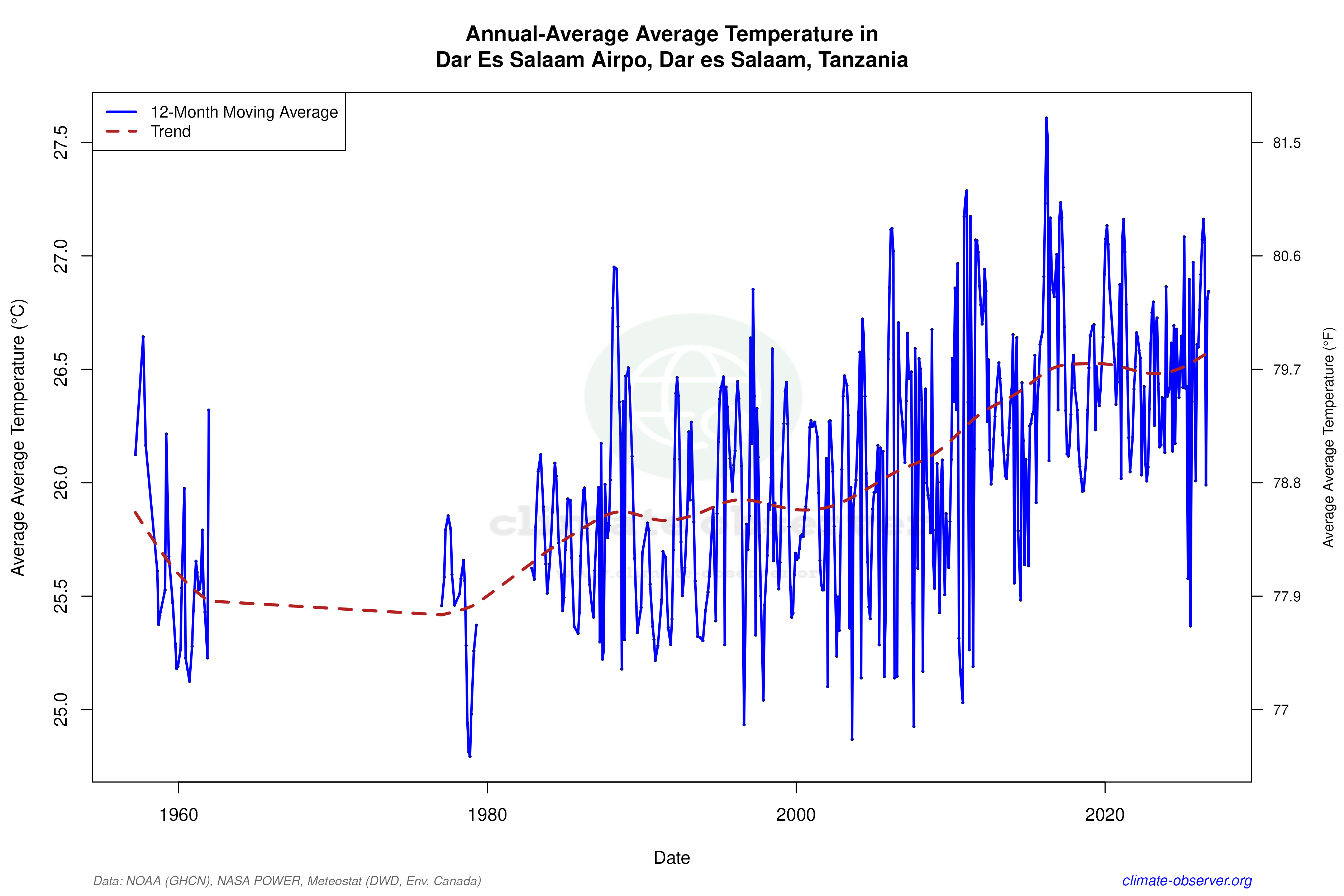
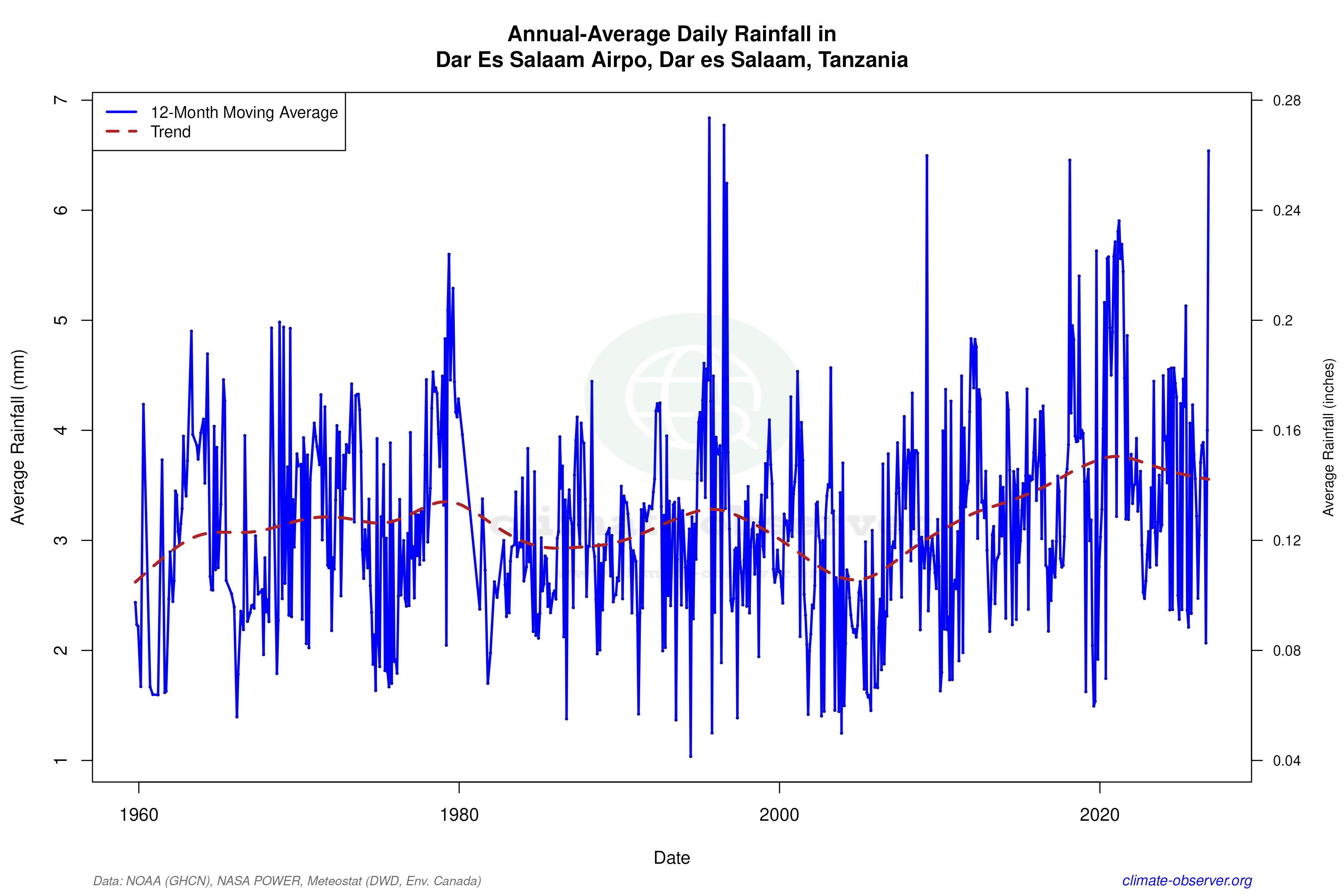
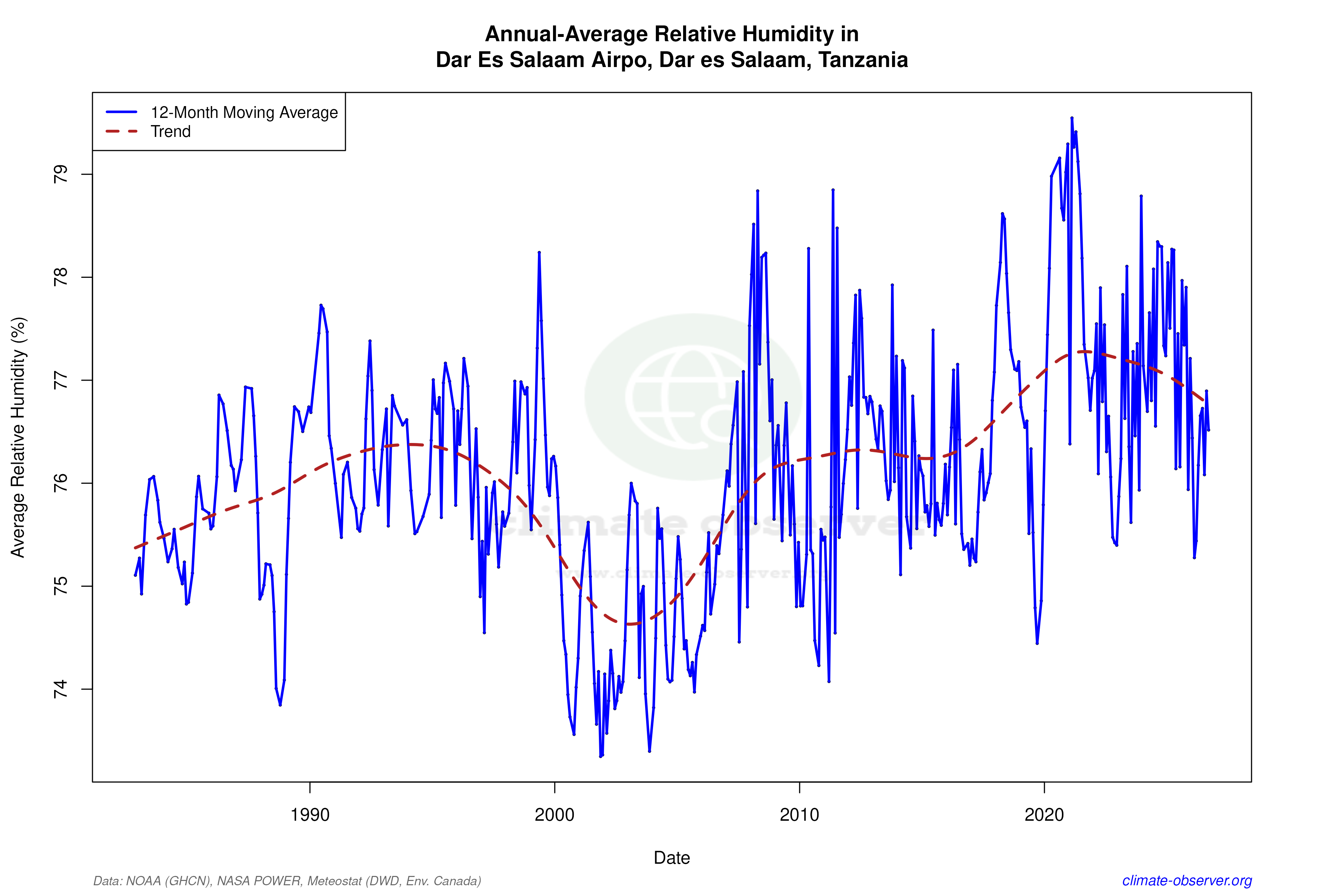

Max Temperature 12-Month MA | 1 of 6
Daily Data Points and Averages Throughout the Year
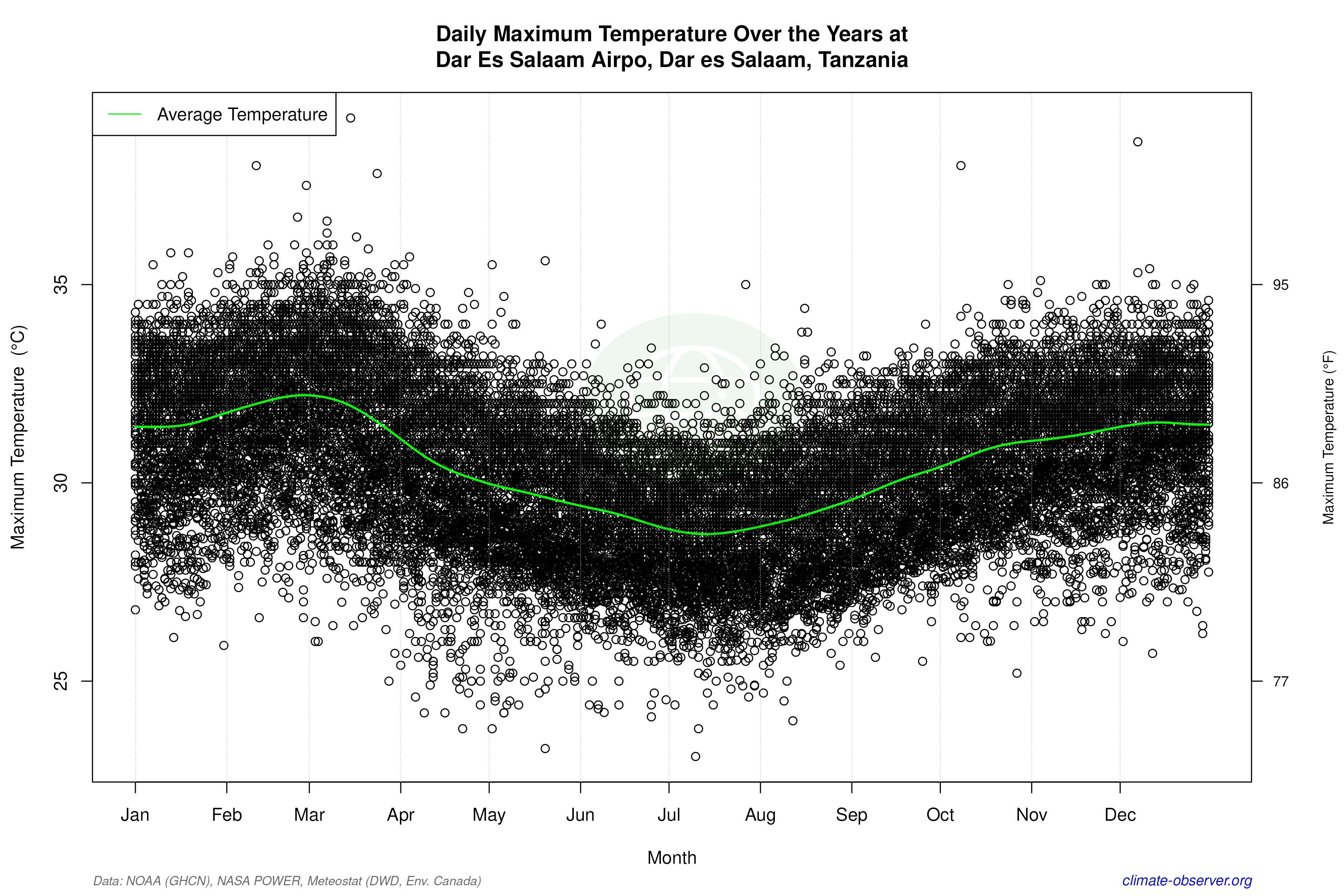
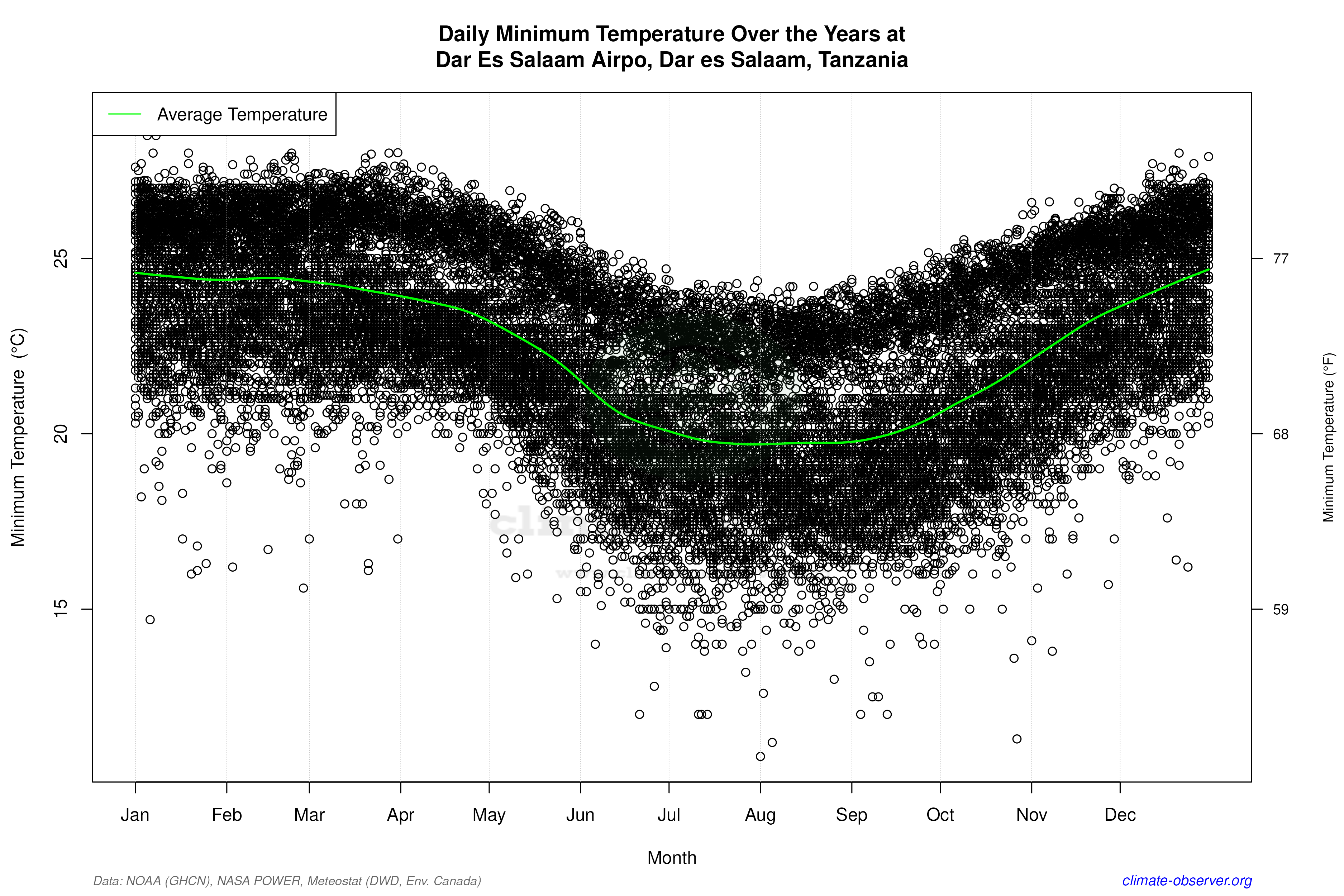
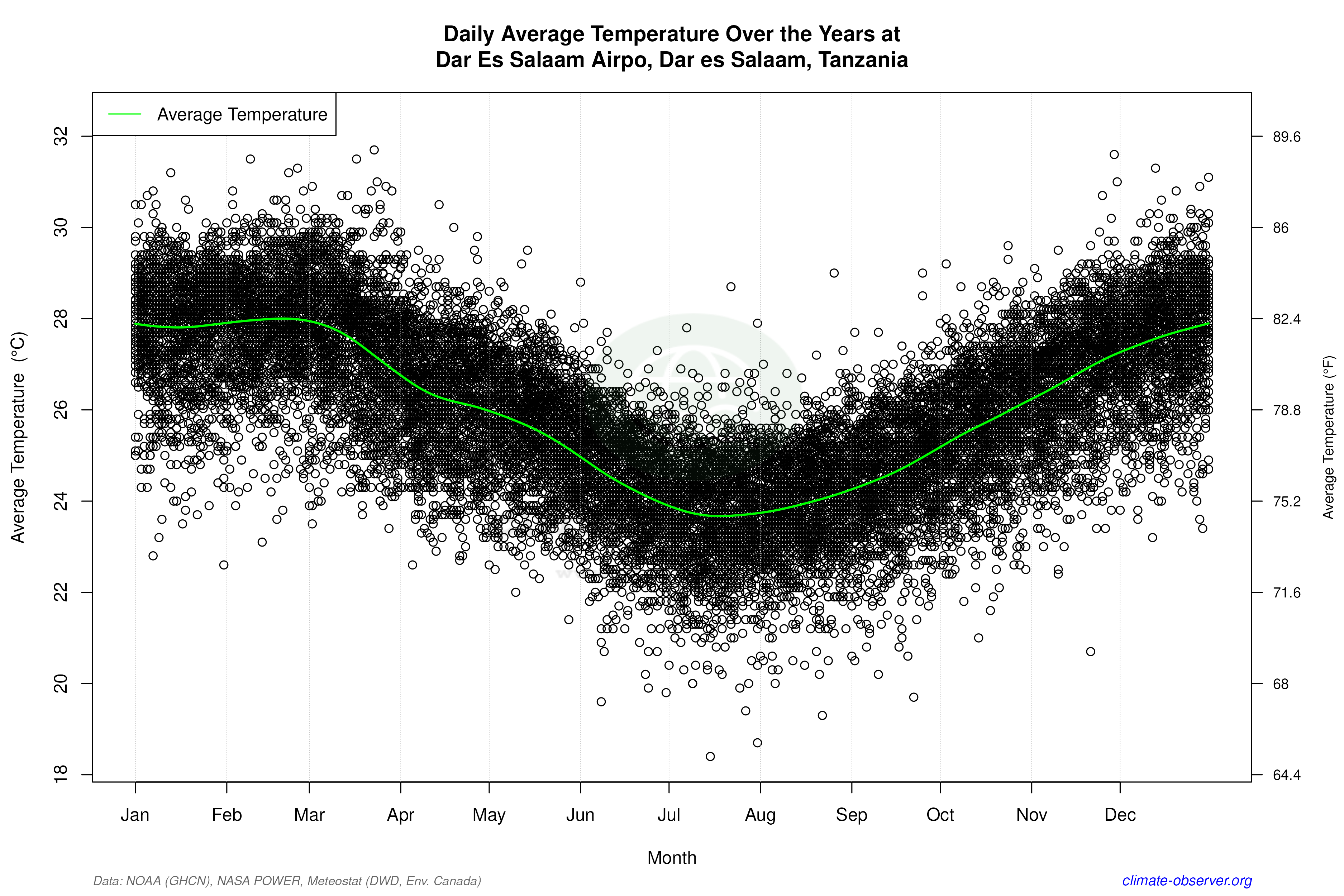
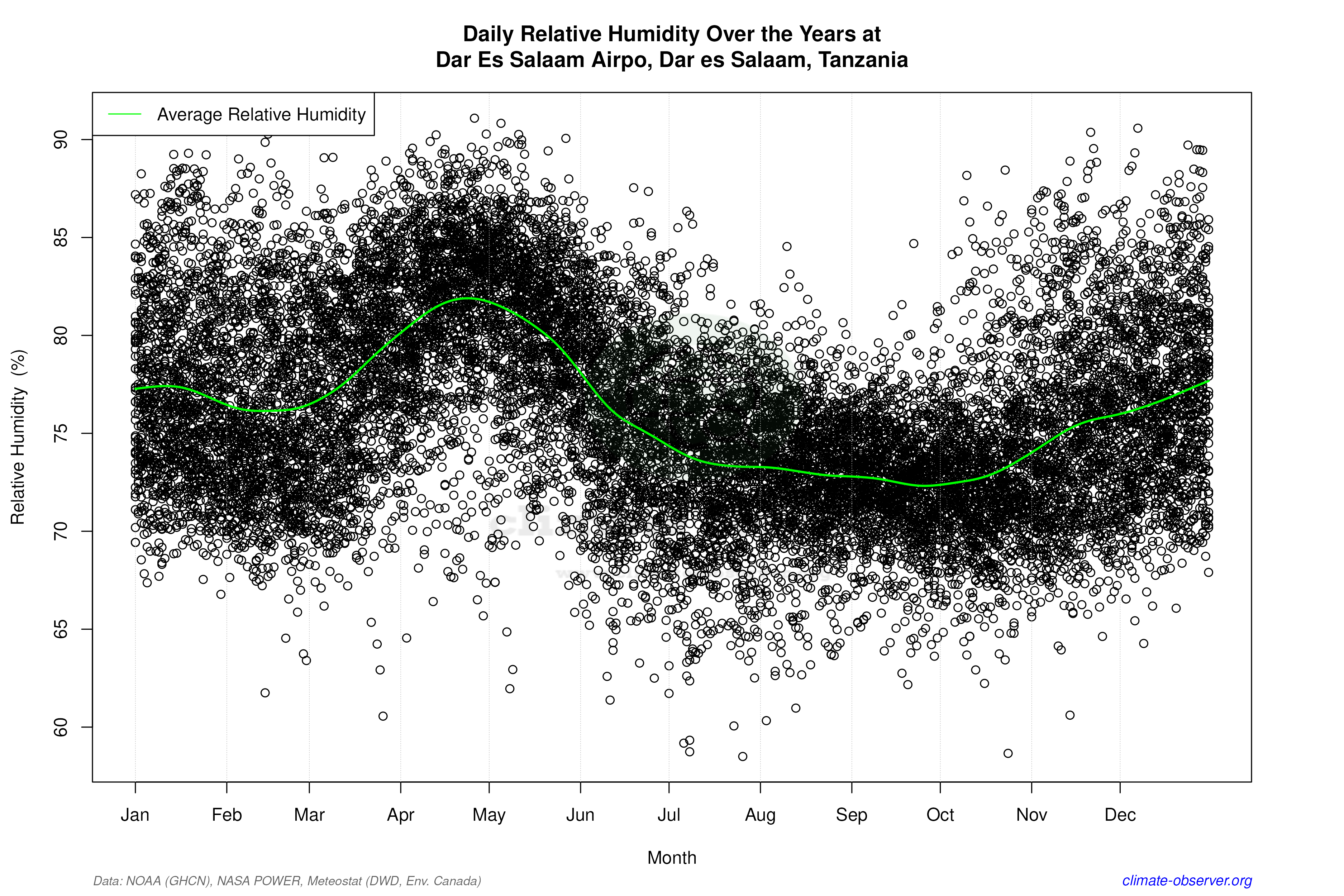

Average Max Temperature Throughout Year | 1 of 5

