Climate for Station: Stornoway Airport, Western Isles, United Kingdom
Loading live weather...
Climate Analysis & Overview
Stornoway Airport's climate is experiencing a gradual warming trend, with recent decades showing a more pronounced increase in temperatures. Precipitation is becoming more evenly distributed, reflecting a shift in local weather patterns.
Maritime Climate Dynamics
Stornoway Airport, located at 58.33°N, -6.32°W in the Outer Hebrides of Scotland, experiences a maritime climate, classified under the Köppen system as Cfb—temperate oceanic climate. This classification is characterized by mild summers and cool, wet winters. The surrounding Atlantic Ocean significantly moderates temperature variations, ensuring a relatively stable climate year-round.
Temperature Trends: A Warming Reality
Over the past decade, Stornoway Airport has witnessed a warming trend with high temperatures increasing by 0.52°C (0.94°F) and low temperatures by 0.49°C (0.88°F). This recent warming is more pronounced compared to the all-time trends, which show a smaller increase of 0.08°C (0.14°F) for highs and 0.12°C (0.22°F) for lows. The long-term warming trend aligns with broader regional climate goals in the UK, aiming to mitigate the impacts of climate change through reduced carbon emissions and increased resilience.
Precipitation Patterns: Shifts Towards Even Distribution
The Precipitation Concentration Index (PCI) at Stornoway Airport has decreased from a baseline of 11.0 to a current value of 9.5. This indicates a more even distribution of rainfall throughout the year, reducing the likelihood of intense precipitation events. Such changes may reflect broader shifts in atmospheric circulation patterns affecting the North Atlantic, contributing to more consistent rainfall.
Temperature Extremes: Records in Context
Stornoway Airport's recorded temperature extremes provide insight into its climatic variability. The highest recorded temperature is 25.7°C (78.3°F), while the lowest is -14.4°C (6.1°F). These records underscore the potential for significant temperature fluctuations, albeit moderated by the maritime influence. Such extremes are noteworthy within the context of a generally mild climate.
Climate Implications and Regional Context
The observed trends at Stornoway Airport are consistent with broader climate changes observed across the United Kingdom, where warming temperatures and altered precipitation patterns are becoming more common. These shifts necessitate adaptive strategies to ensure infrastructure resilience and community preparedness, aligning with national efforts to address climate change impacts.
Station Statistics
10-Year Trend
High: +0.67 °C/decade
Low: +0.81 °C/decade
Rain: +0.87 mm/decade
25-Year Trend
High: +0.20 °C/decade
Low: +0.18 °C/decade
Rain: +0.21 mm/decade
50-Year Trend
High: +0.30 °C/decade
Low: +0.31 °C/decade
Rain: +0.08 mm/decade
All-Time Trend
High: +0.06 °C/decade
Low: +0.10 °C/decade
Rain: +0.07 mm/decade
Percentage Above-Average Days
Last 12 Months: 48.8%
This Year: 35.3%
Precipitation Concentration Index (PCI) ℹ️
Last 12 Months: 31.9
Historical Average: 10.8
Percentile Rank of Last 12 Months ℹ️
High: 88th percentile
Low: 93rd percentile
Rain: 100th percentile
Change in Variance ℹ️
High: -14.4%
Low: -1.8%
Intraday: +22.1%
Data Coverage
75.7%
First Year of Data
1904
Station Location
Historical Weather Records
| Max High | Avg High | Min High | Max Avg | Avg Avg | Min Avg | Max Low | Avg Low | Min Low | Max Precipitation | Avg Precipitation | Max Snow | Avg Snow | |
|---|---|---|---|---|---|---|---|---|---|---|---|---|---|
| Record | 25.7 °C | — | -3.9 °C | 20.2 °C | — | -4.4 °C | 18.3 °C | — | -14.4 °C | 384.5 mm | — | — | — |
| January | 14.4 °C | 6.9 °C | -3.9 °C | 11.2 °C | 5.1 °C | -4.4 °C | 10.0 °C | 1.9 °C | -12.2 °C | 65.0 mm | 4.2 mm | — | — |
| February | 13.9 °C | 7.0 °C | -2.2 °C | 11.4 °C | 5.0 °C | -2.4 °C | 10.5 °C | 1.8 °C | -11.1 °C | 40.0 mm | 3.4 mm | — | — |
| March | 17.2 °C | 8.0 °C | -2.2 °C | 11.6 °C | 5.7 °C | -1.0 °C | 9.4 °C | 2.3 °C | -10.6 °C | 28.0 mm | 3.0 mm | — | — |
| April | 20.8 °C | 9.9 °C | 0.0 °C | 13.7 °C | 7.1 °C | -0.1 °C | 10.5 °C | 3.6 °C | -8.9 °C | 44.0 mm | 2.4 mm | — | — |
| May | 23.9 °C | 12.3 °C | 4.4 °C | 16.6 °C | 9.4 °C | 1.1 °C | 12.7 °C | 5.9 °C | -4.4 °C | 38.8 mm | 2.0 mm | — | — |
| June | 25.6 °C | 14.5 °C | 7.8 °C | 20.2 °C | 11.6 °C | 5.4 °C | 15.7 °C | 8.4 °C | -0.6 °C | 46.0 mm | 2.1 mm | — | — |
| July | 25.7 °C | 15.9 °C | 9.4 °C | 19.6 °C | 13.2 °C | 8.4 °C | 16.7 °C | 10.1 °C | 0.0 °C | 40.0 mm | 2.4 mm | — | — |
| August | 24.5 °C | 15.9 °C | 9.4 °C | 20.1 °C | 13.3 °C | 9.0 °C | 18.3 °C | 10.1 °C | 0.0 °C | 70.0 mm | 2.8 mm | — | — |
| September | 25.0 °C | 14.3 °C | 7.2 °C | 18.6 °C | 11.7 °C | 4.7 °C | 15.2 °C | 8.5 °C | -0.4 °C | 281.3 mm | 4.1 mm | — | — |
| October | 21.1 °C | 11.6 °C | 1.7 °C | 15.6 °C | 9.5 °C | 0.7 °C | 14.4 °C | 6.1 °C | -4.4 °C | 384.5 mm | 5.0 mm | — | — |
| November | 16.3 °C | 9.0 °C | -1.1 °C | 13.5 °C | 7.1 °C | -1.3 °C | 13.2 °C | 3.7 °C | -14.4 °C | 38.4 mm | 4.2 mm | — | — |
| December | 14.4 °C | 7.5 °C | -3.3 °C | 12.1 °C | 5.7 °C | -4.3 °C | 11.3 °C | 2.5 °C | -11.2 °C | 44.0 mm | 4.3 mm | — | — |
Data Visualisations
Remove WatermarksCurrent Year Climate Trends vs Historical
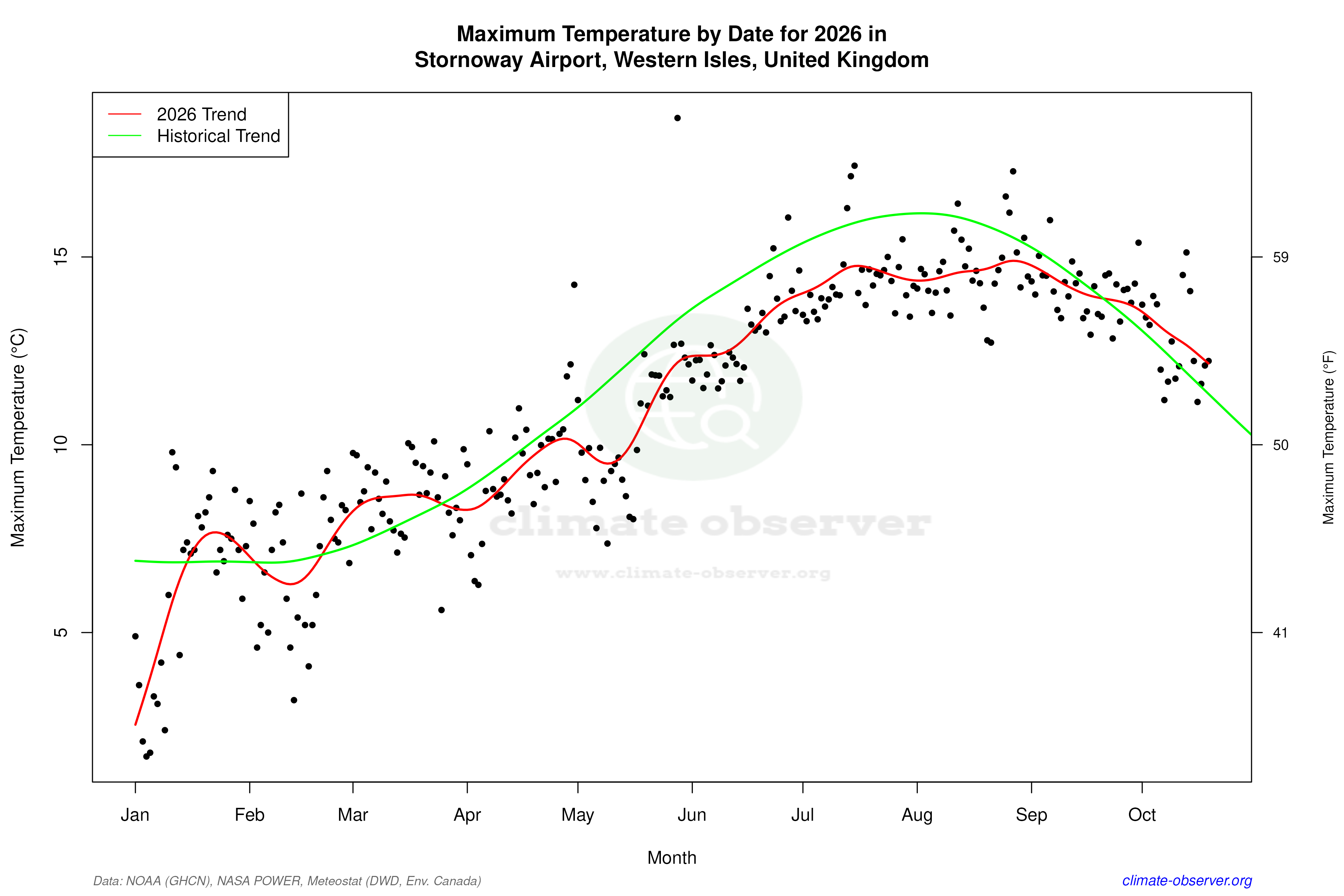
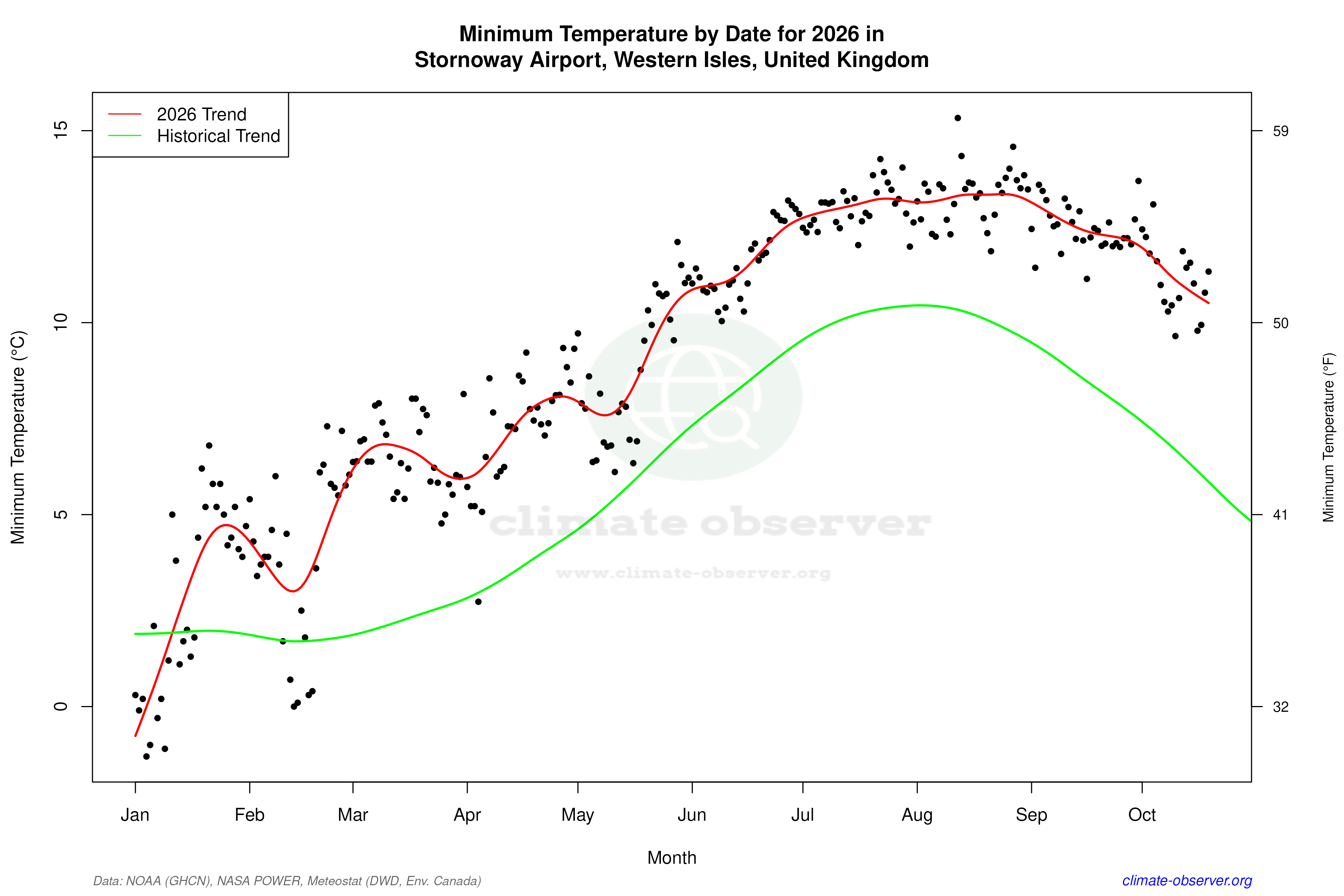
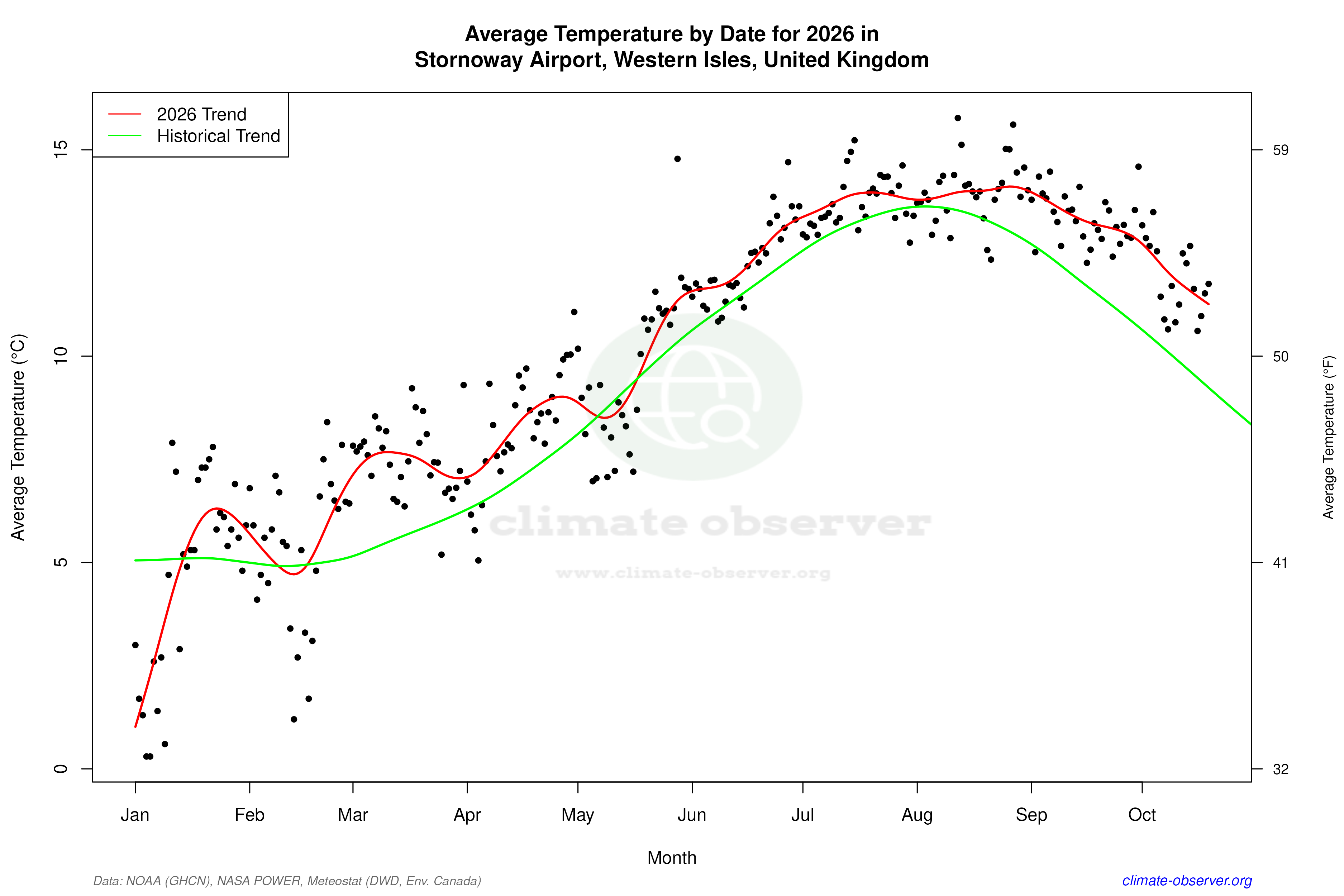
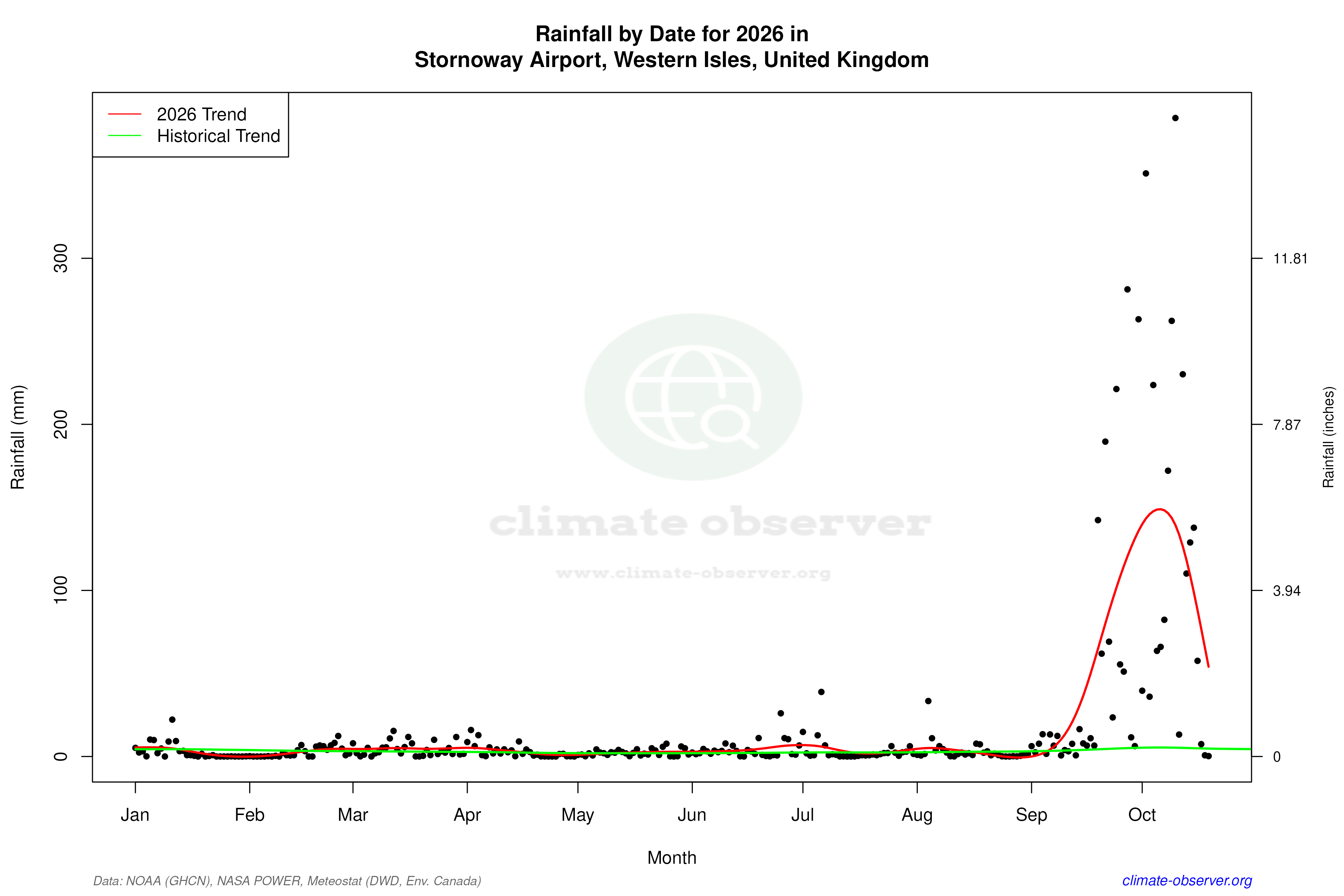
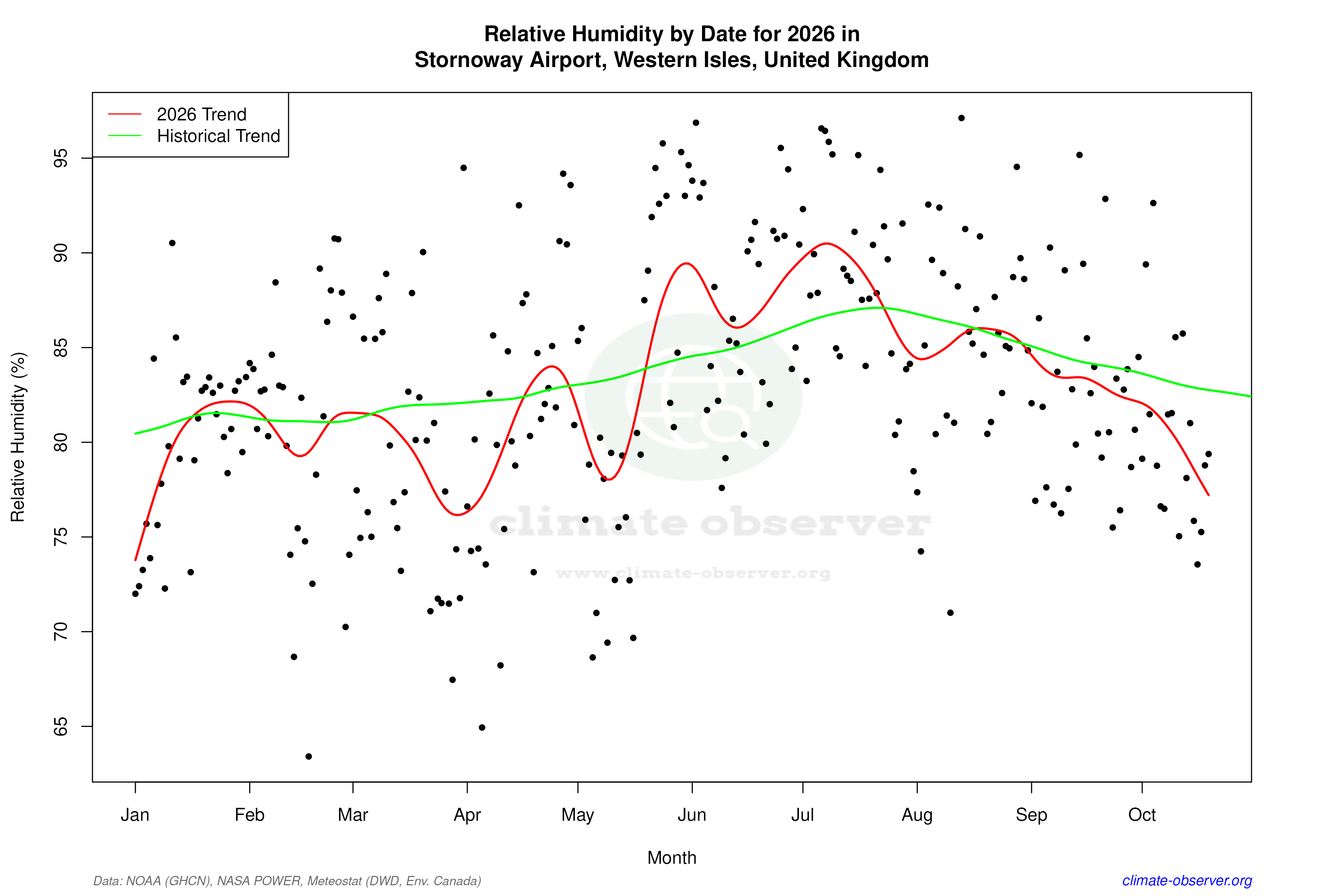

Max Temperature this Year | 1 of 6
Climate 12-Month Moving Averages
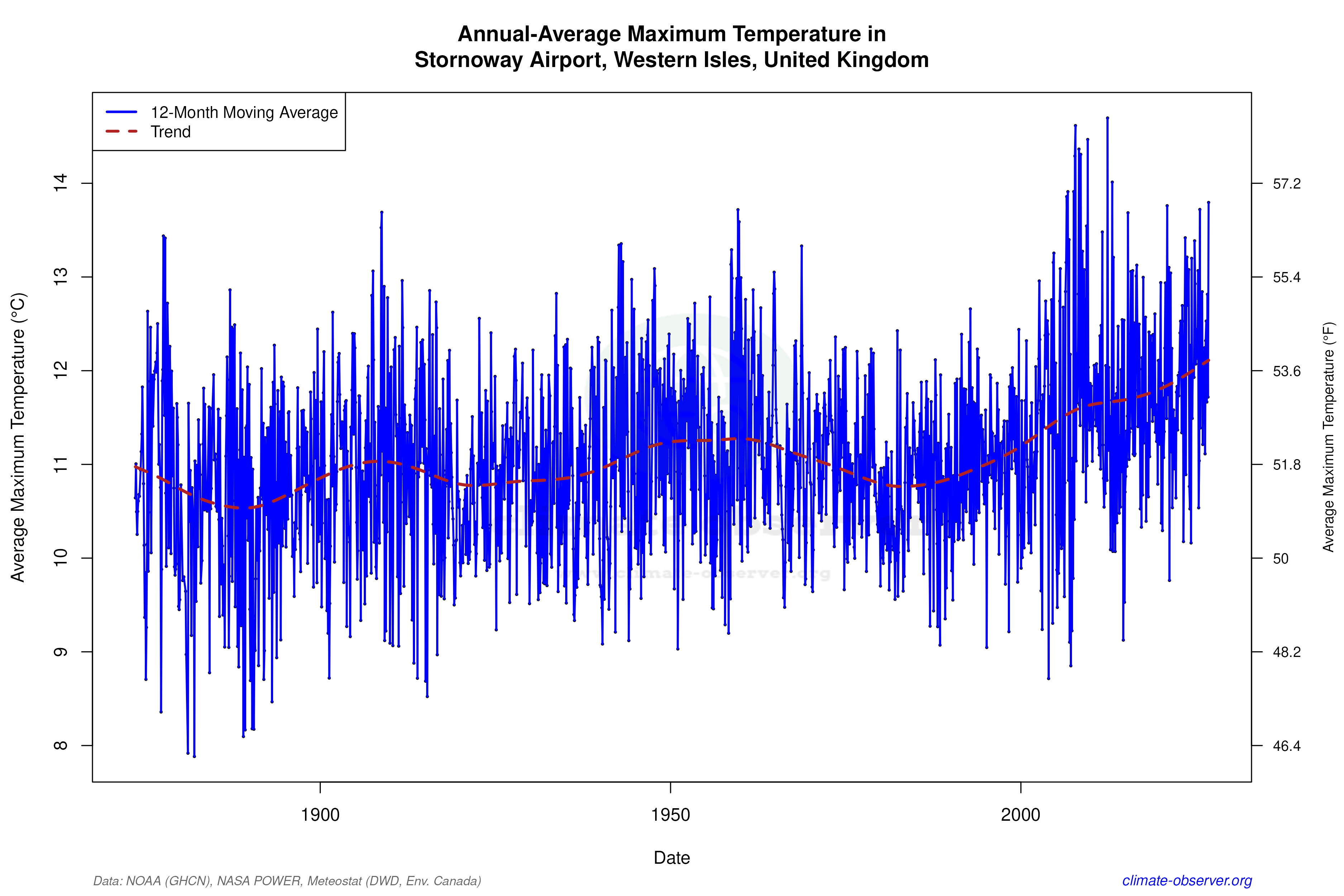
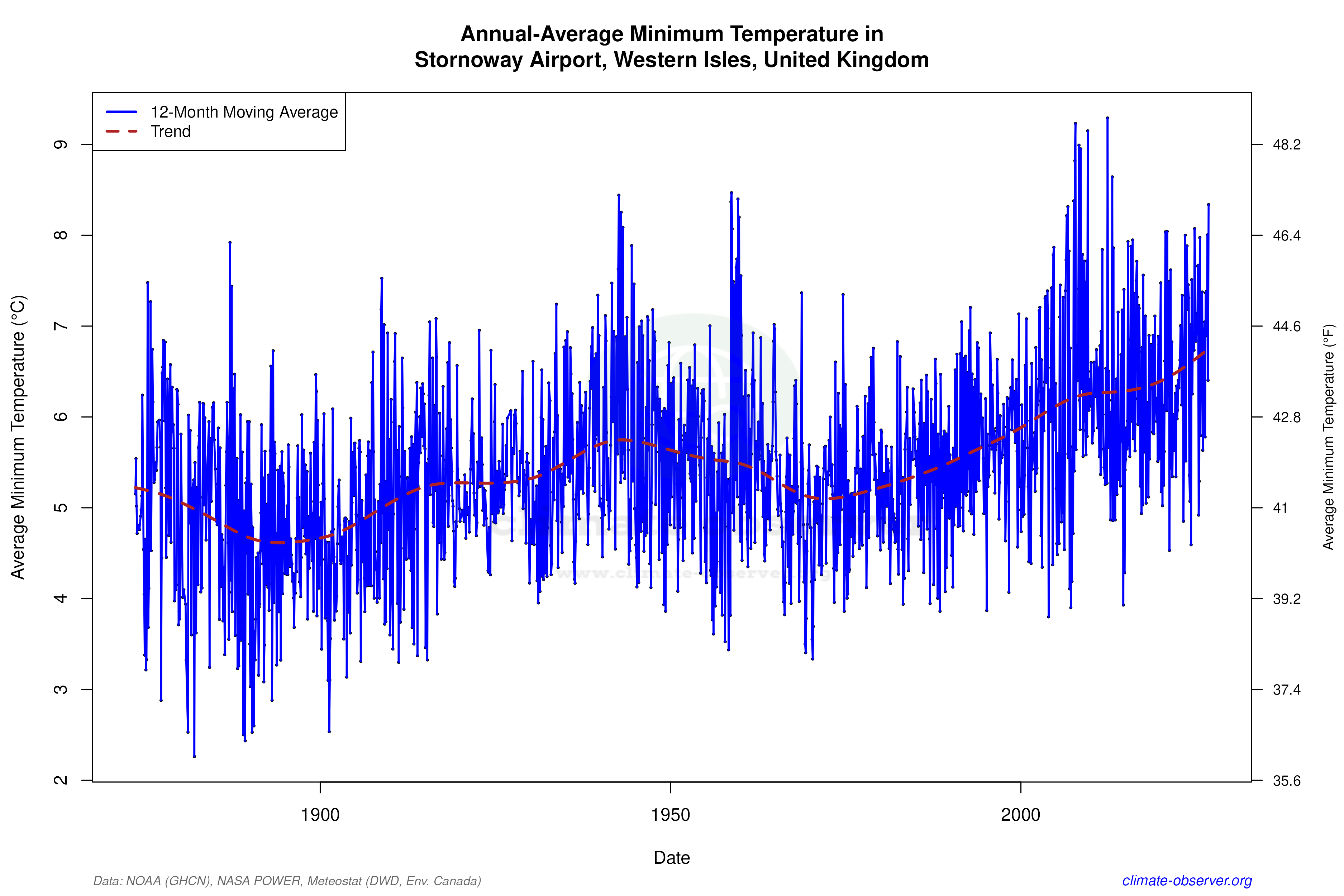
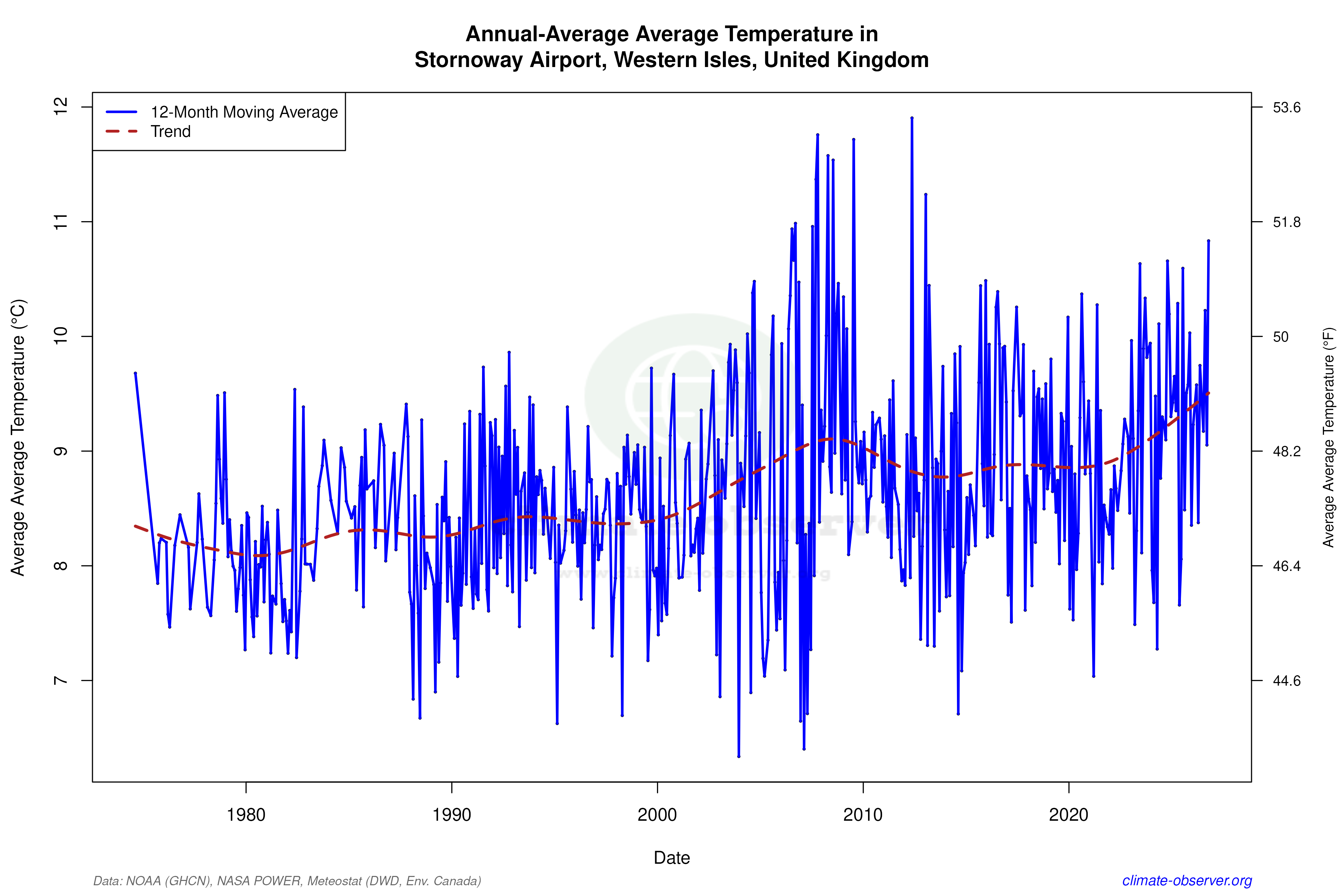
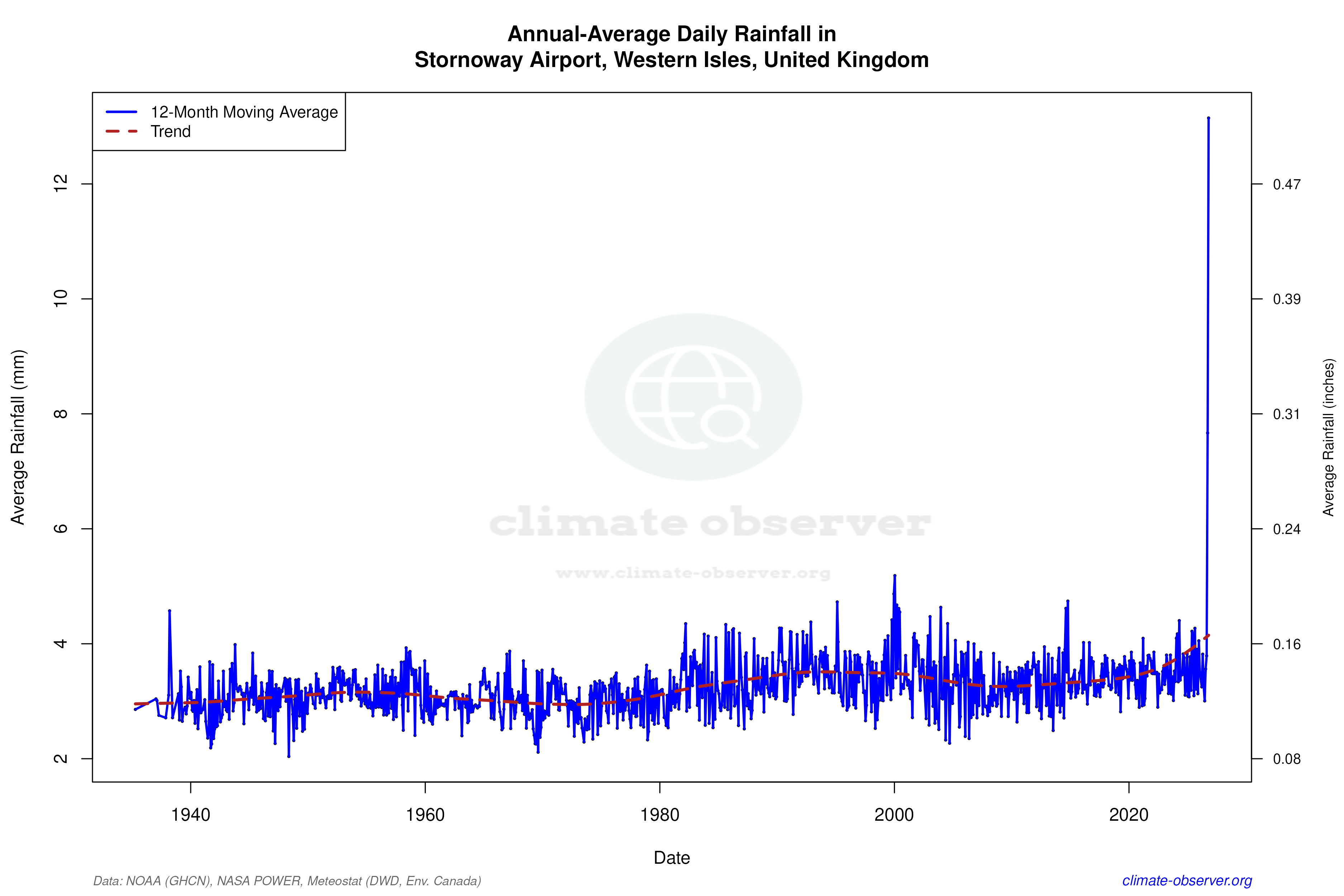
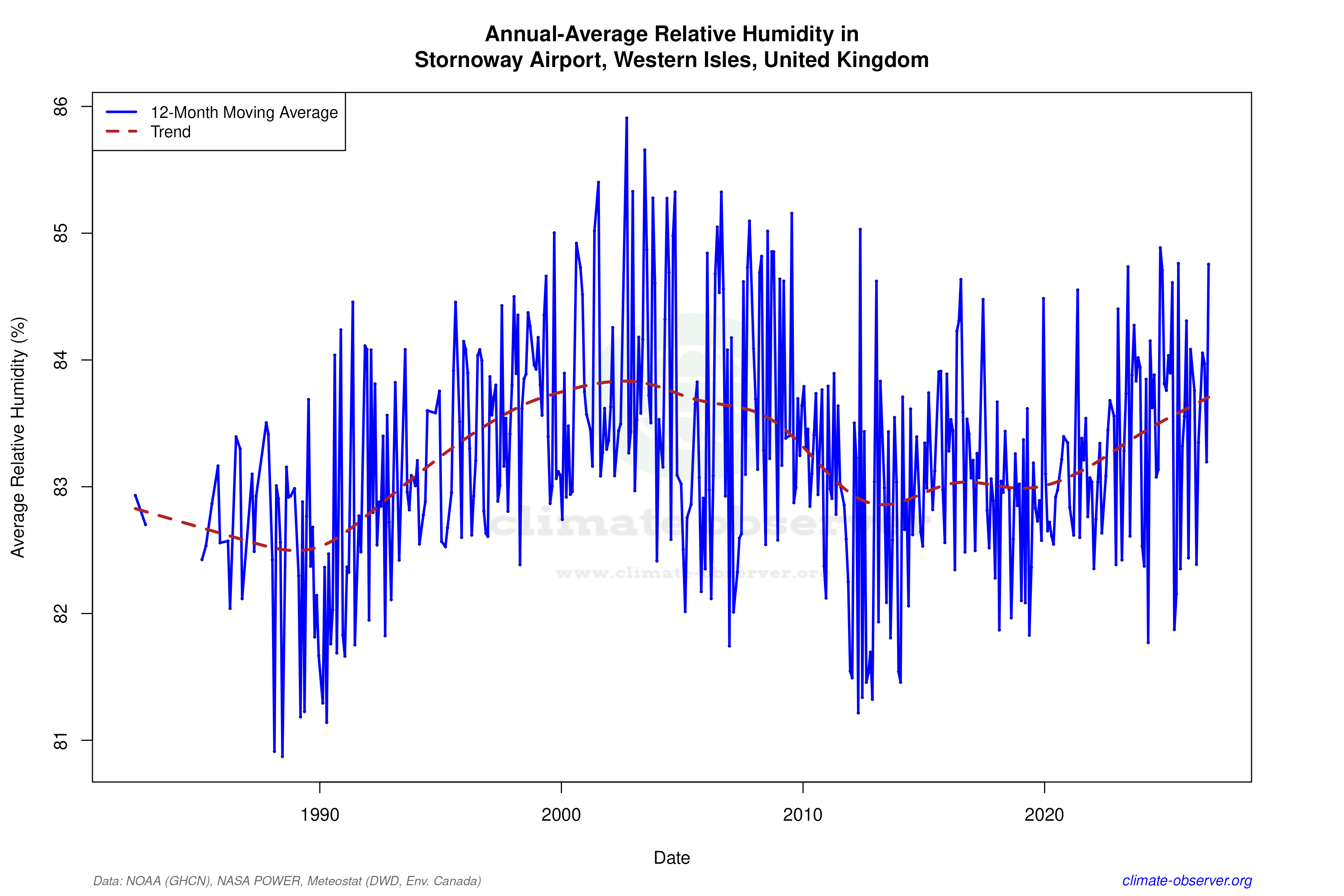

Max Temperature 12-Month MA | 1 of 6
Daily Data Points and Averages Throughout the Year
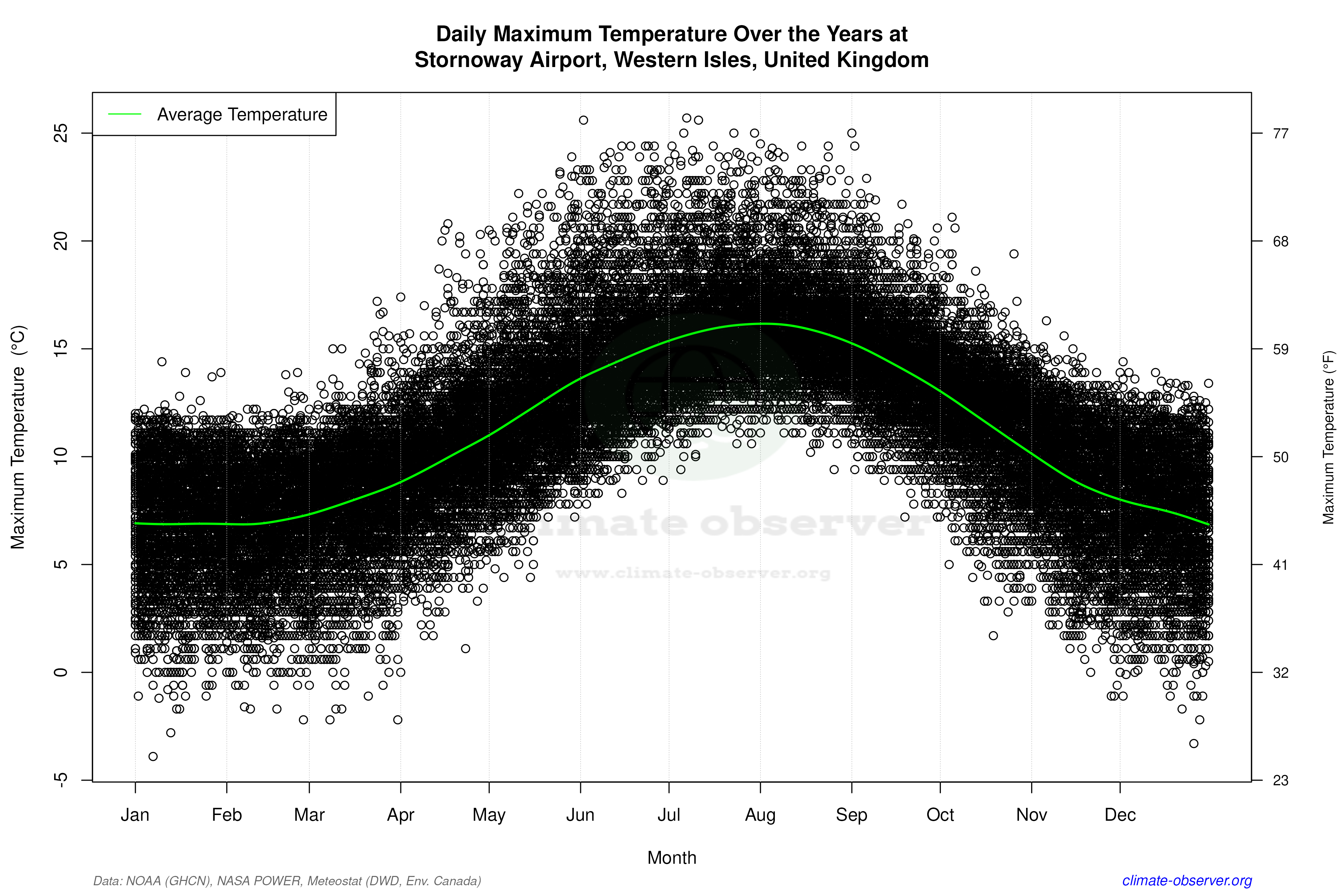
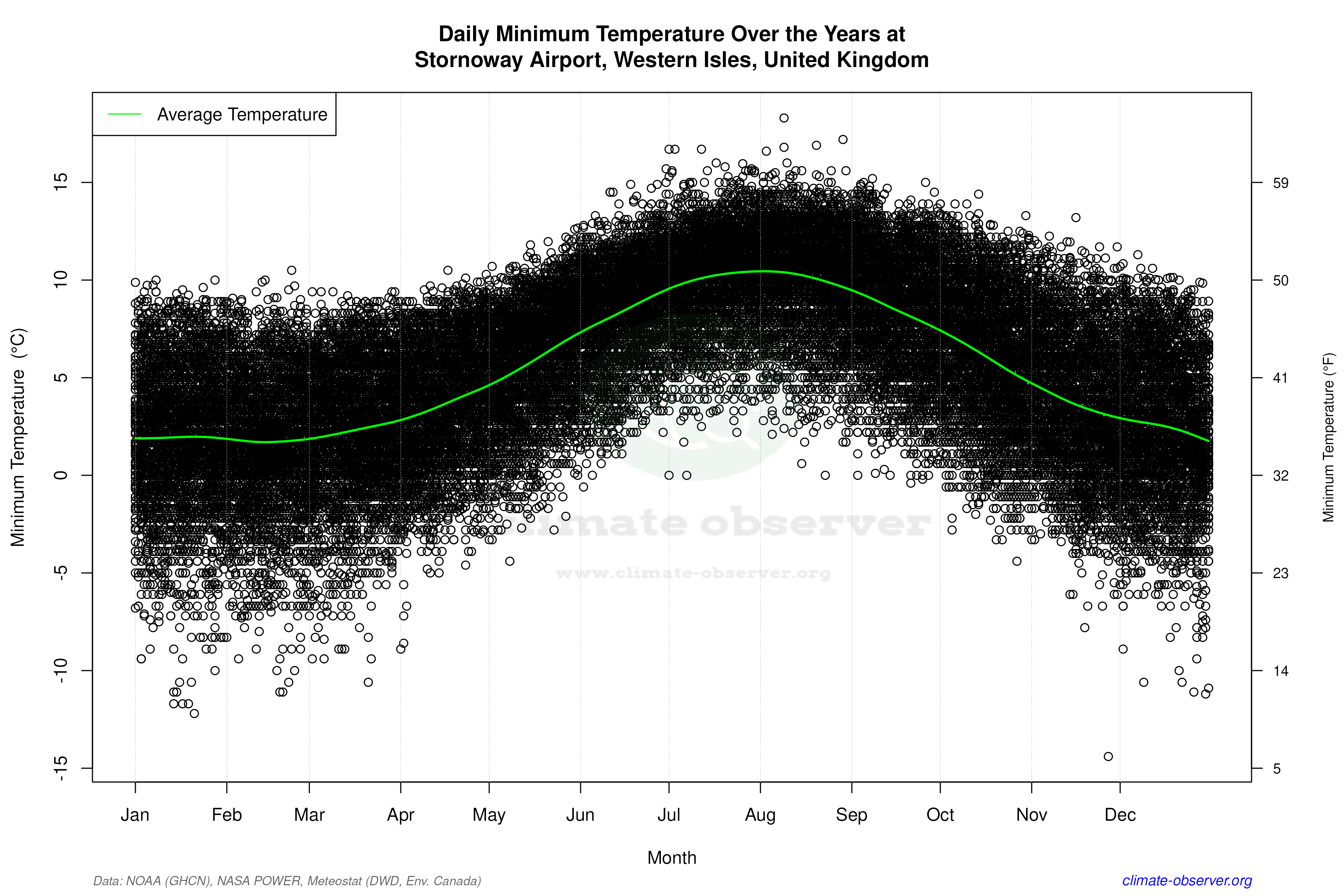
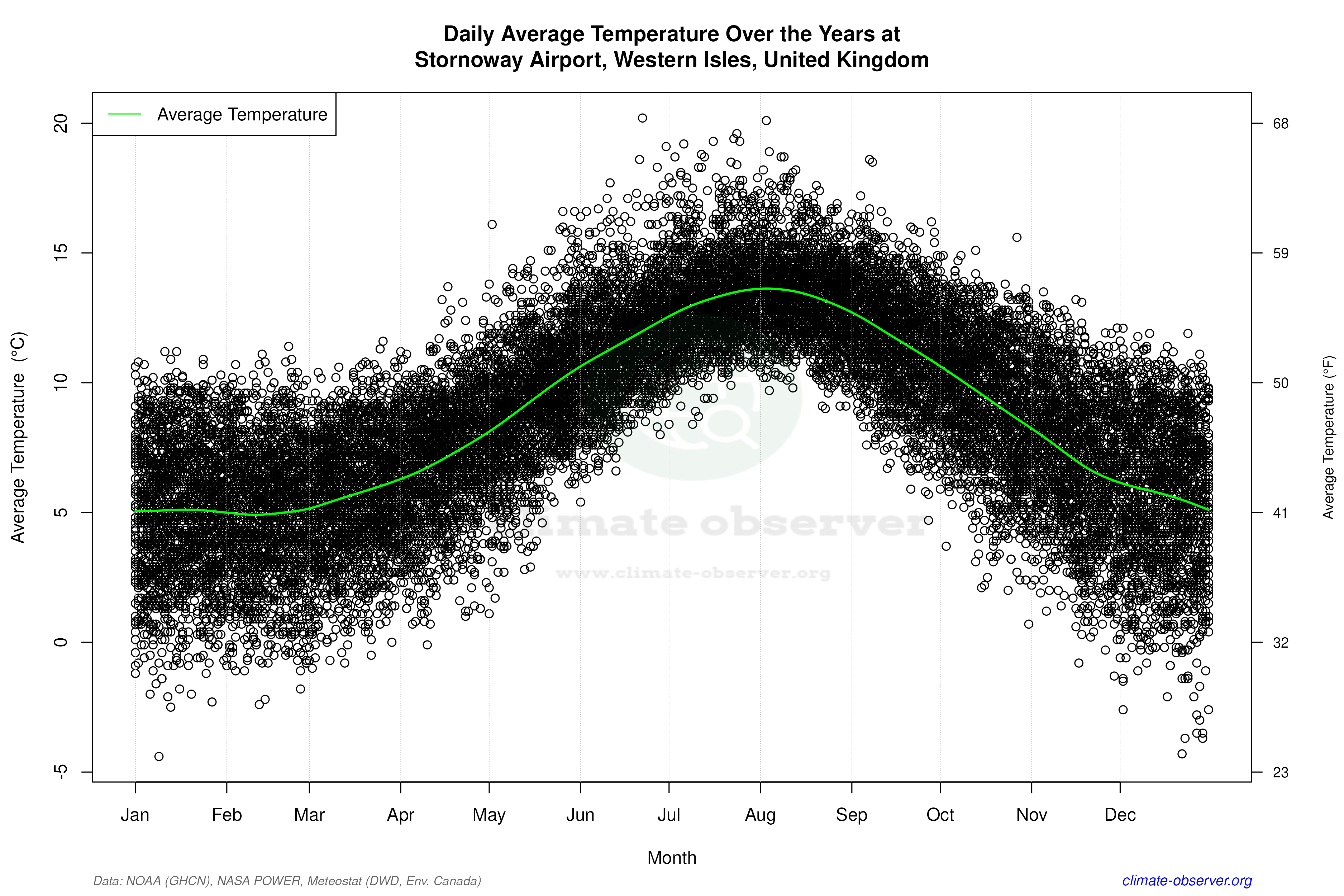
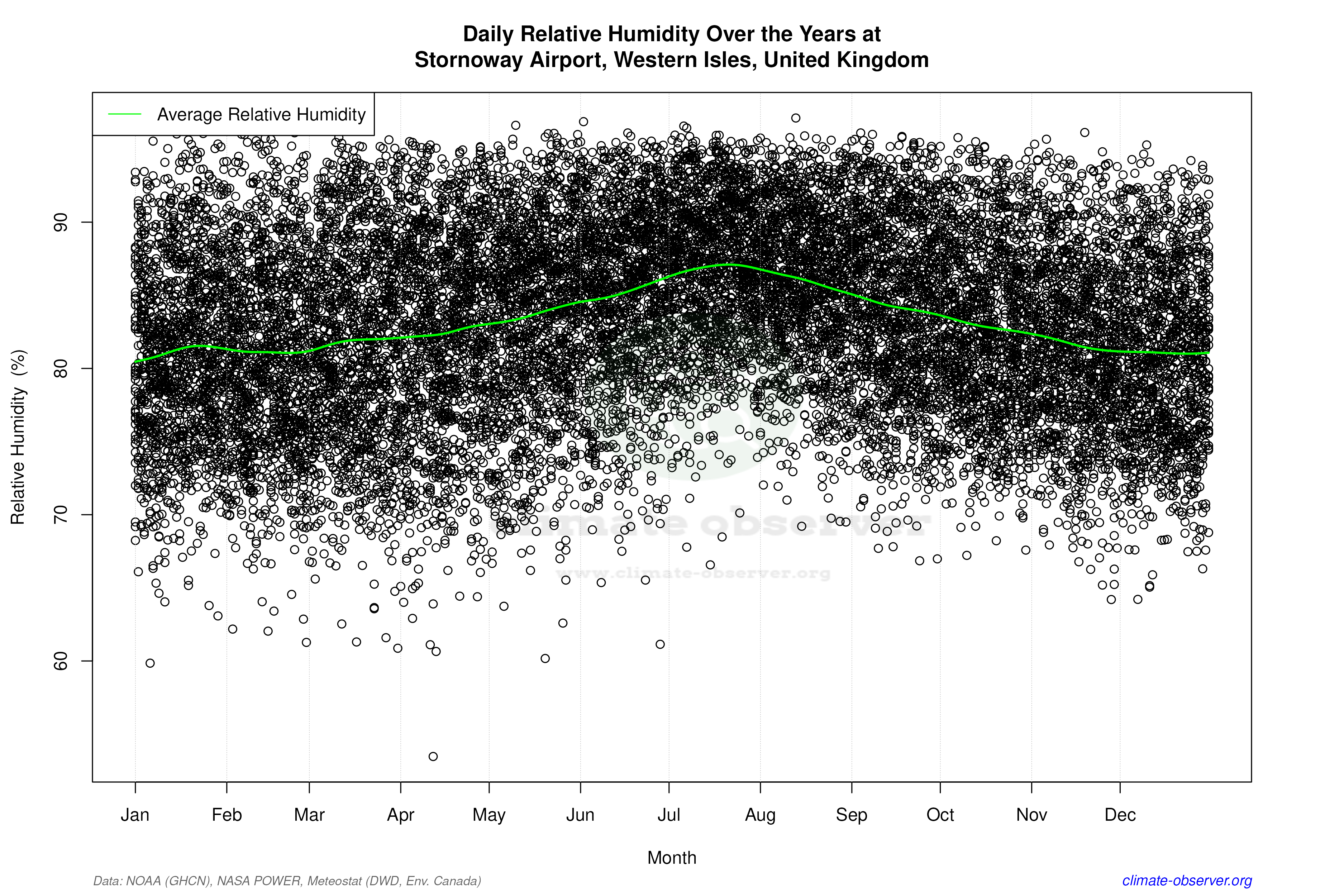

Average Max Temperature Throughout Year | 1 of 5


