Climate for Station: Ft Bidwell, California, United States
Loading live weather...
Climate Analysis & Overview
Ft Bidwell, nestled in Modoc County, California, exhibits a complex climate profile characterized by contrasting trends in temperature extremes and a significant shift in precipitation patterns. While the all-time data suggests a slight warming trend in high temperatures, the recent decade has experienced a notable cooling in low temperatures, alongside a marked increase in precipitation concentration.
Climate Classification and Geographic Influence
Ft Bidwell is situated in a region classified under the Köppen climate system as a cold semi-arid climate (BSk). This classification is heavily influenced by its geographical setting, surrounded by the Warner Mountains and the expansive Modoc Plateau. These features contribute to the area's temperature variability and precipitation patterns. The mountains can create rain shadow effects, leading to drier conditions, while the plateau's elevation moderates temperature extremes.
Temperature Trends: A Tale of Two Extremes
The all-time temperature trends for Ft Bidwell reveal a slight warming in high temperatures, with an increase of 0.02°C (0.04°F). However, this is contrasted by a more pronounced cooling trend in low temperatures over the past decade, with a decrease of 0.70°C (1.26°F). This recent cooling in lows is significant, suggesting potential impacts on frost frequency and growing seasons. The all-time low temperature trend, however, shows a marginal warming of 0.04°C (0.07°F), indicating a complex interplay of factors influencing the region's climate.
Precipitation Patterns: Increasing Concentration
The Precipitation Concentration Index (PCI) for Ft Bidwell has shifted from a baseline of 17.3 to a current value of 22.5. This significant increase indicates that precipitation is now more concentrated in fewer, more intense events, rather than being evenly distributed throughout the year. Such a pattern can lead to challenges in water management and agricultural planning, as the region may experience periods of drought punctuated by heavy rainfall.
Record Extremes: The Bounds of Temperature
Ft Bidwell has recorded extreme temperatures with a maximum of 41.1°C (106.0°F) and a minimum of -32.2°C (-26.0°F). These records highlight the region's potential for both intense heat and severe cold, underscoring the need for adaptive strategies in infrastructure and community preparedness.
Regional Climate Goals and Implications
In the context of the United States' regional climate goals, which aim to enhance resilience and reduce greenhouse gas emissions, Ft Bidwell's climate trends present both challenges and opportunities. The cooling trend in low temperatures could impact energy demand for heating, while the increased precipitation concentration necessitates improved water management strategies. As climate policies evolve, understanding these localised trends will be crucial for effective adaptation and mitigation efforts.
Station Statistics
10-Year Trend
High: +1.05 °C/decade
Low: +0.82 °C/decade
Rain: +0.22 mm/decade
25-Year Trend
High: +0.59 °C/decade
Low: +0.66 °C/decade
Rain: +0.09 mm/decade
50-Year Trend
High: +0.08 °C/decade
Low: +0.61 °C/decade
Rain: -0.02 mm/decade
All-Time Trend
High: +0.02 °C/decade
Low: +0.05 °C/decade
Rain: -0.00 mm/decade
Percentage Above-Average Days
Last 12 Months: 47.6%
This Year: 71.0%
Precipitation Concentration Index (PCI) ℹ️
Last 12 Months: 16.3
Historical Average: 15.6
Percentile Rank of Last 12 Months ℹ️
High: 95th percentile
Low: 99th percentile
Rain: 81st percentile
Change in Variance ℹ️
High: +0.5%
Low: +3.3%
Intraday: -28.3%
Data Coverage
71.6%
First Year of Data
2026
Station Location
Historical Weather Records
| Max High | Avg High | Min High | Max Avg | Avg Avg | Min Avg | Max Low | Avg Low | Min Low | Max Precipitation | Avg Precipitation | Max Snow | Avg Snow | |
|---|---|---|---|---|---|---|---|---|---|---|---|---|---|
| Record | 41.1 °C | — | -20.6 °C | — | — | — | 21.1 °C | — | -32.2 °C | 213.4 mm | — | 559.0 mm | — |
| January | 23.9 °C | 4.2 °C | -15.6 °C | — | — | — | 10.0 °C | -6.4 °C | -32.2 °C | 213.4 mm | 2.1 mm | 432.0 mm | 13.1 mm |
| February | 29.4 °C | 6.8 °C | -15.0 °C | — | — | — | 8.3 °C | -4.6 °C | -28.3 °C | 87.1 mm | 2.0 mm | 559.0 mm | 10.7 mm |
| March | 30.6 °C | 10.9 °C | -3.3 °C | — | — | — | 13.3 °C | -2.1 °C | -21.1 °C | 63.5 mm | 1.5 mm | 356.0 mm | 7.1 mm |
| April | 29.4 °C | 15.1 °C | -3.3 °C | — | — | — | 13.9 °C | 0.3 °C | -12.8 °C | 50.8 mm | 1.2 mm | 178.0 mm | 3.4 mm |
| May | 36.1 °C | 19.9 °C | 2.2 °C | — | — | — | 19.4 °C | 3.9 °C | -7.2 °C | 44.7 mm | 1.0 mm | 305.0 mm | 1.1 mm |
| June | 40.6 °C | 24.8 °C | 5.0 °C | — | — | — | 20.6 °C | 7.3 °C | -3.9 °C | 50.8 mm | 0.8 mm | 13.0 mm | 0.0 mm |
| July | 41.1 °C | 30.3 °C | 13.3 °C | — | — | — | 21.1 °C | 10.6 °C | -2.8 °C | 31.8 mm | 0.2 mm | 0.0 mm | 0.0 mm |
| August | 40.6 °C | 29.7 °C | 12.8 °C | — | — | — | 21.1 °C | 9.7 °C | -2.8 °C | 33.0 mm | 0.3 mm | 0.0 mm | 0.0 mm |
| September | 38.9 °C | 25.1 °C | 5.6 °C | — | — | — | 20.0 °C | 5.9 °C | -8.3 °C | 40.6 mm | 0.5 mm | 51.0 mm | 0.1 mm |
| October | 35.0 °C | 18.2 °C | -1.1 °C | — | — | — | 18.3 °C | 1.5 °C | -15.6 °C | 45.7 mm | 0.9 mm | 203.0 mm | 0.8 mm |
| November | 25.6 °C | 9.8 °C | -8.9 °C | — | — | — | 12.8 °C | -2.7 °C | -20.0 °C | 52.8 mm | 1.7 mm | 279.0 mm | 5.3 mm |
| December | 26.1 °C | 4.9 °C | -20.6 °C | — | — | — | 12.2 °C | -5.6 °C | -32.2 °C | 80.5 mm | 2.2 mm | 356.0 mm | 10.8 mm |
Data Visualisations
Remove WatermarksCurrent Year Climate Trends vs Historical
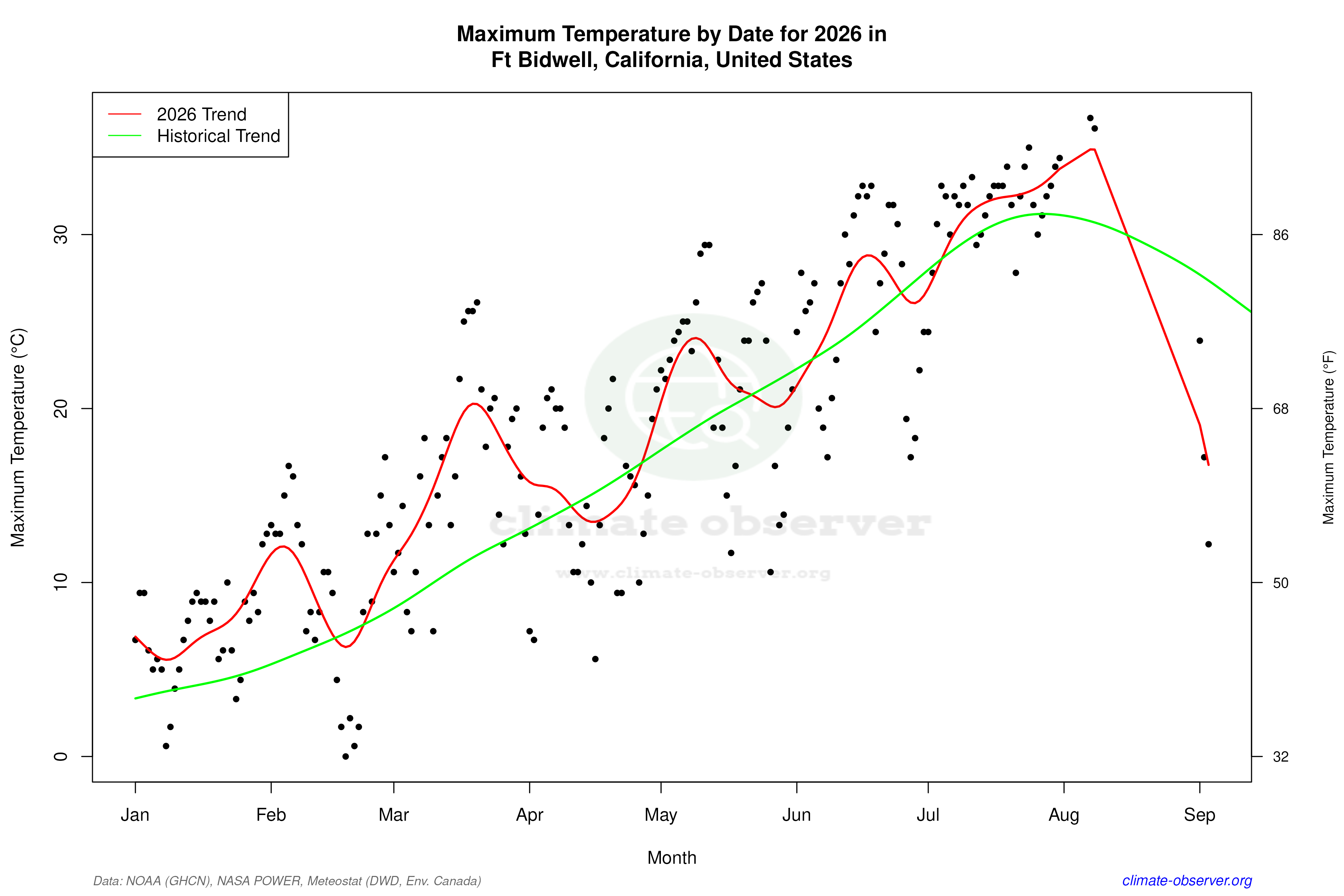
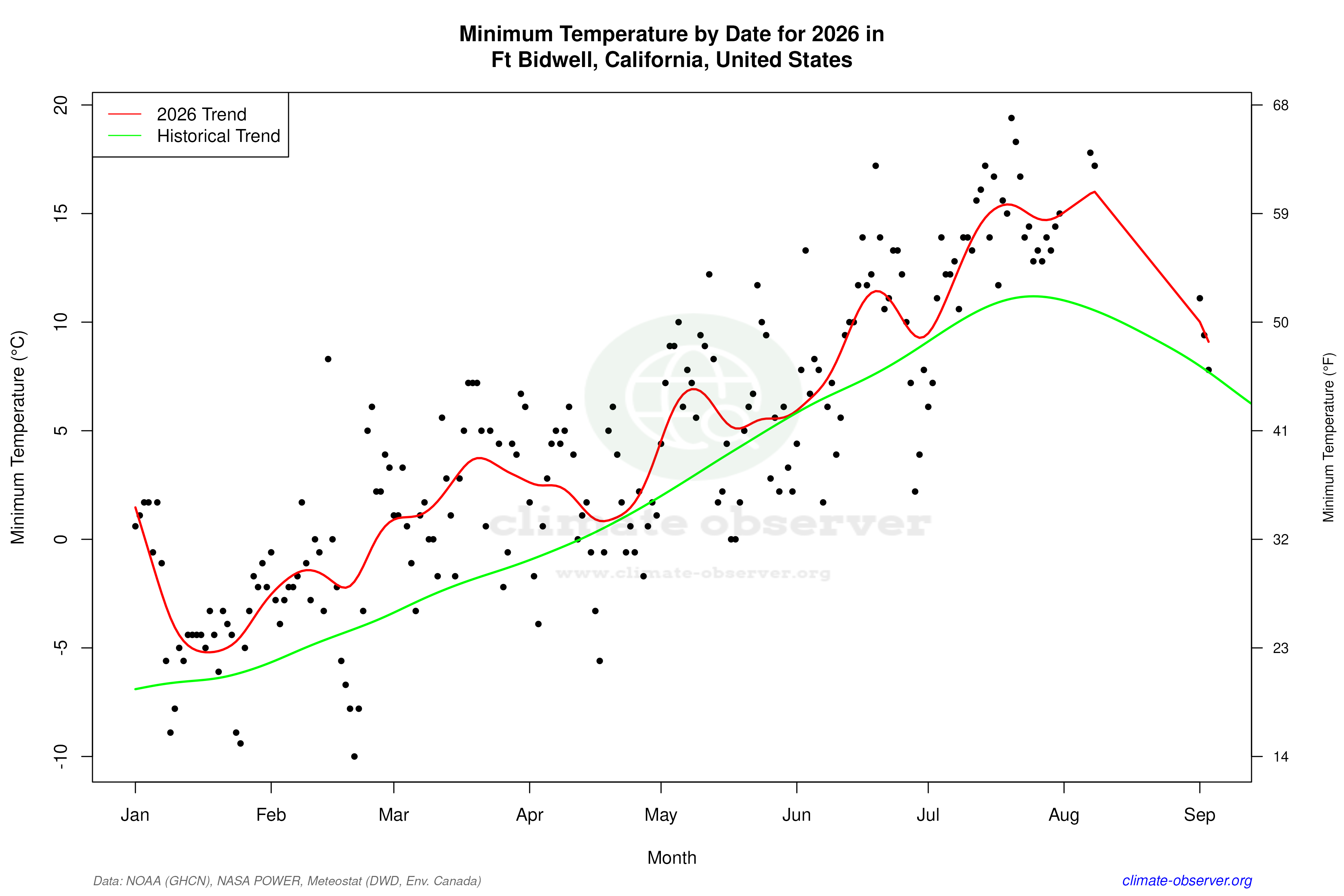

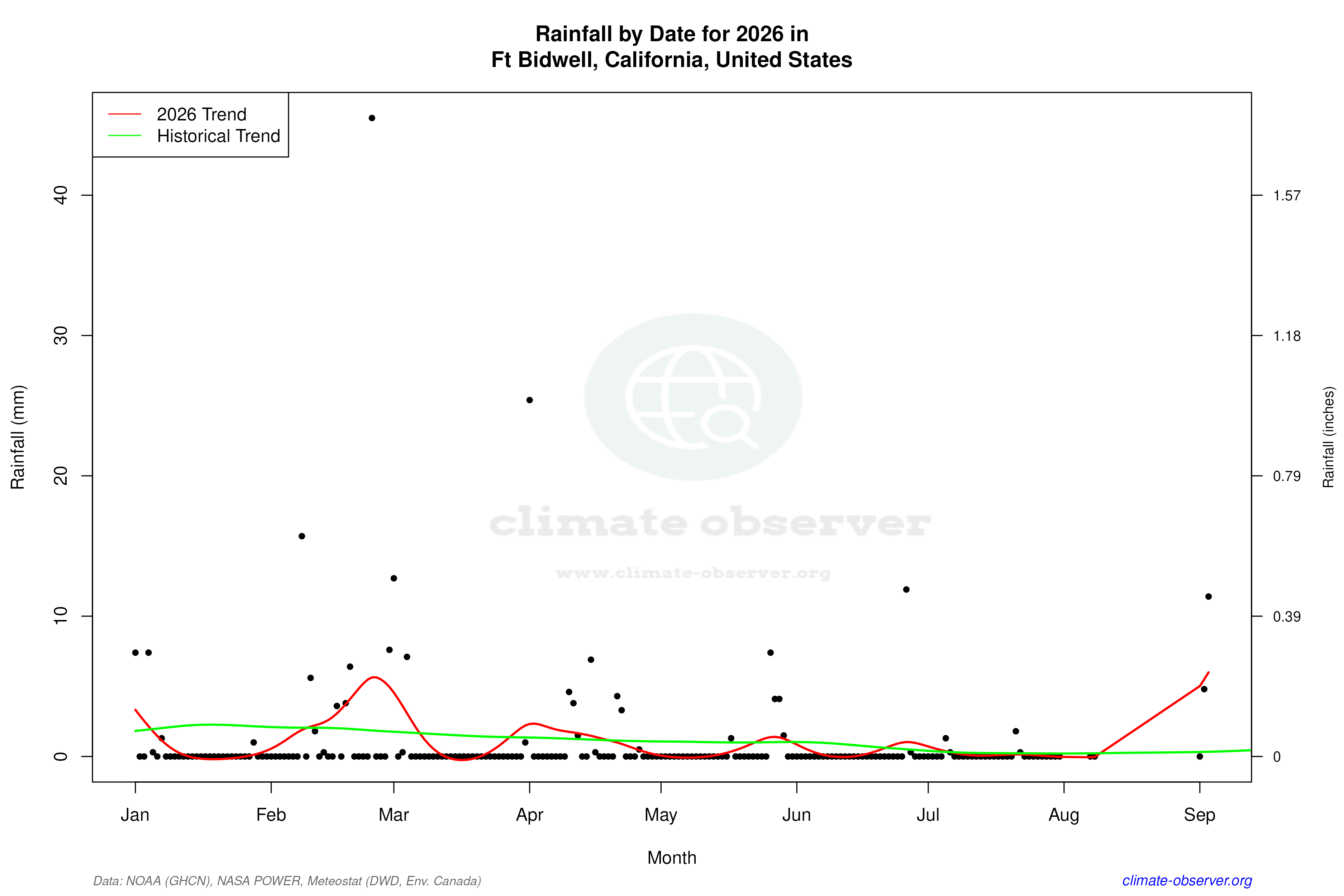


Max Temperature this Year | 1 of 6
Climate 12-Month Moving Averages
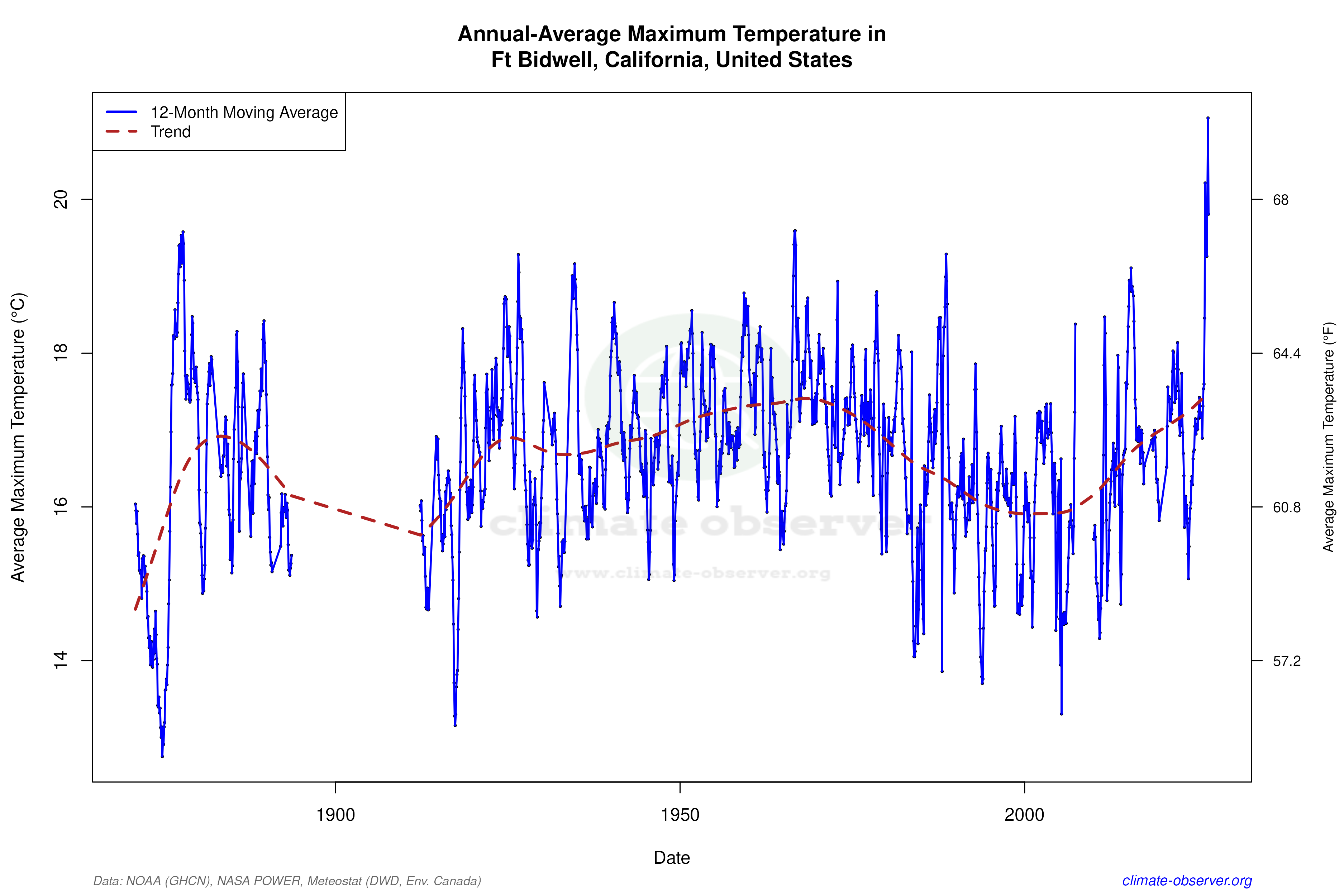
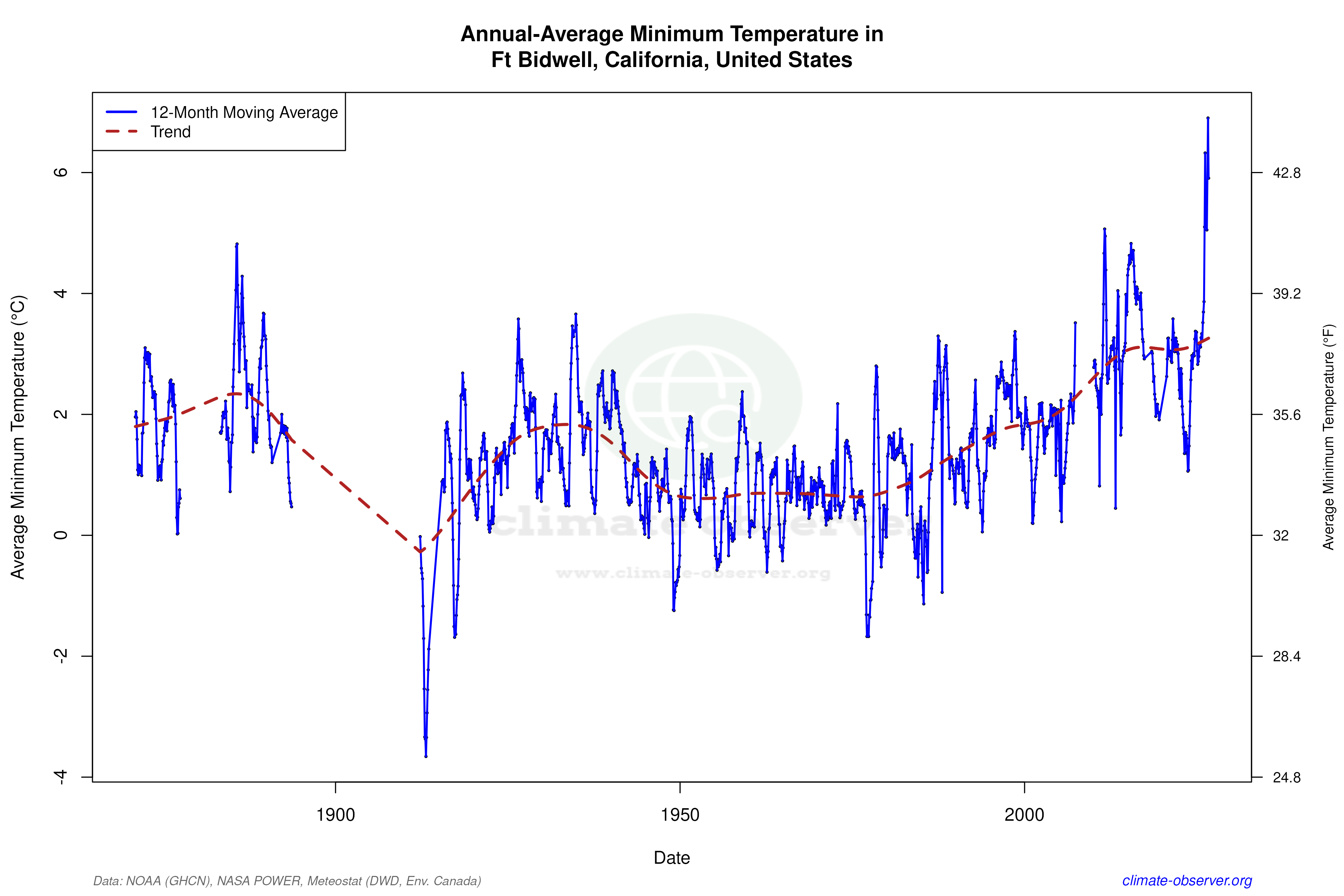

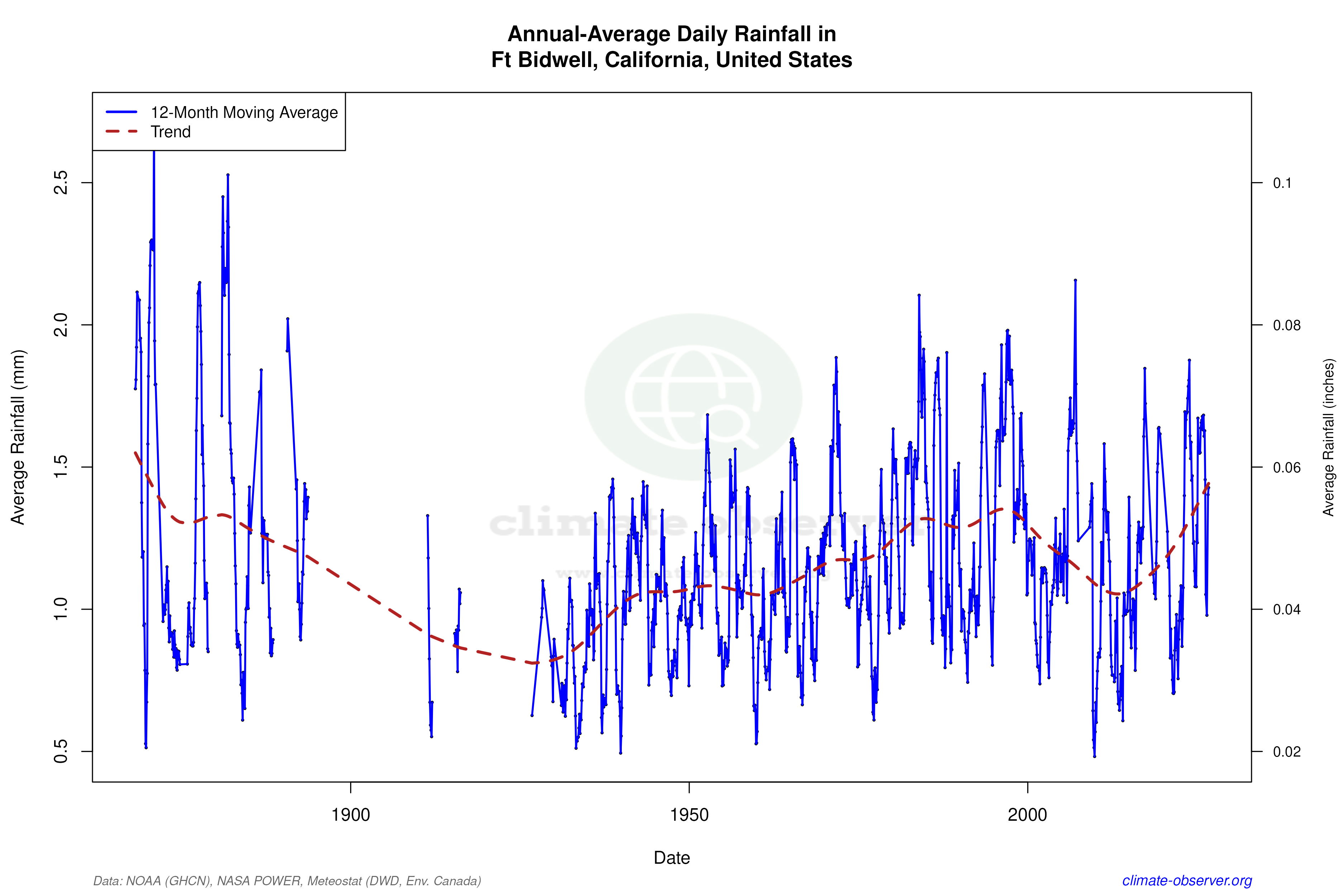


Max Temperature 12-Month MA | 1 of 6
Daily Data Points and Averages Throughout the Year
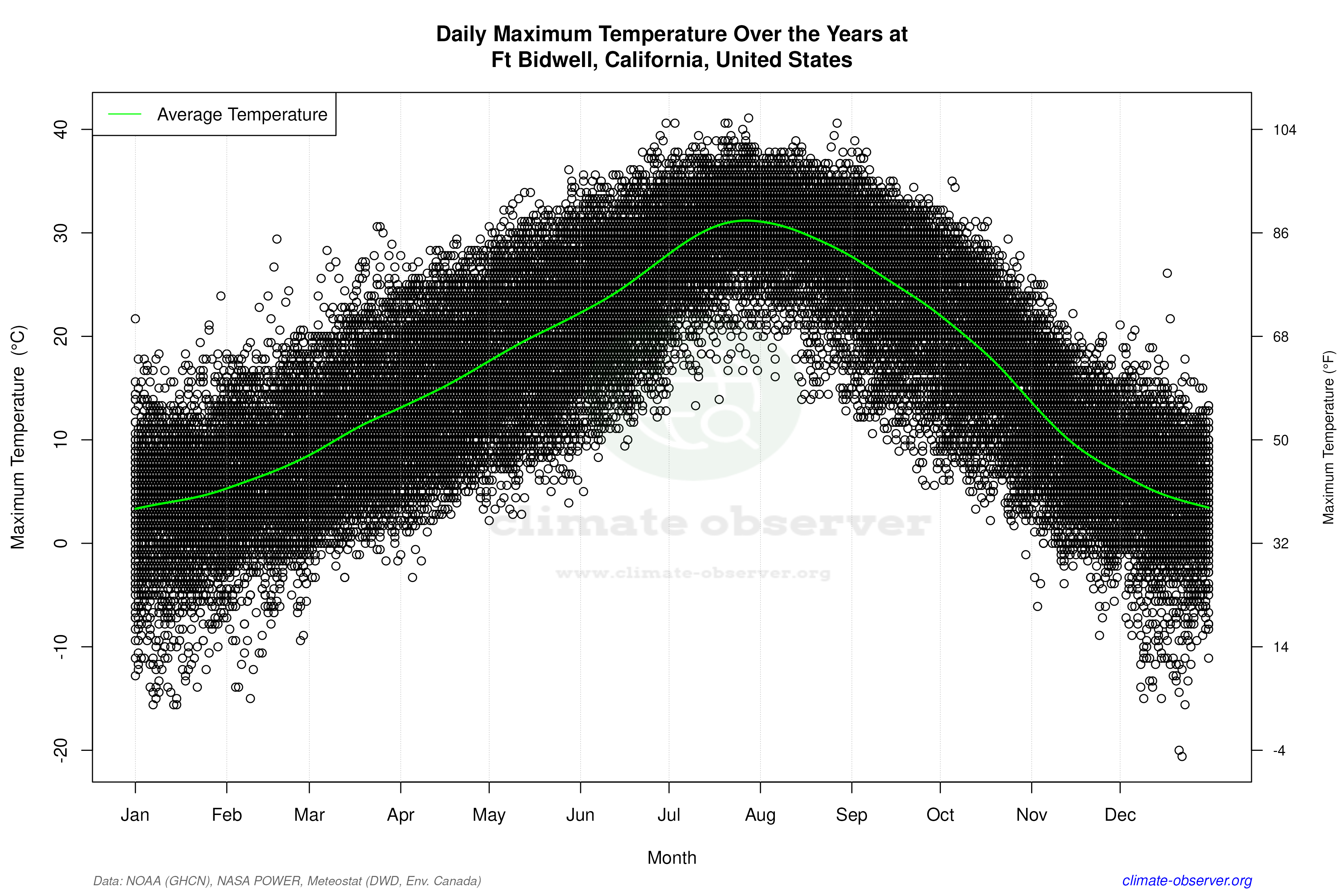
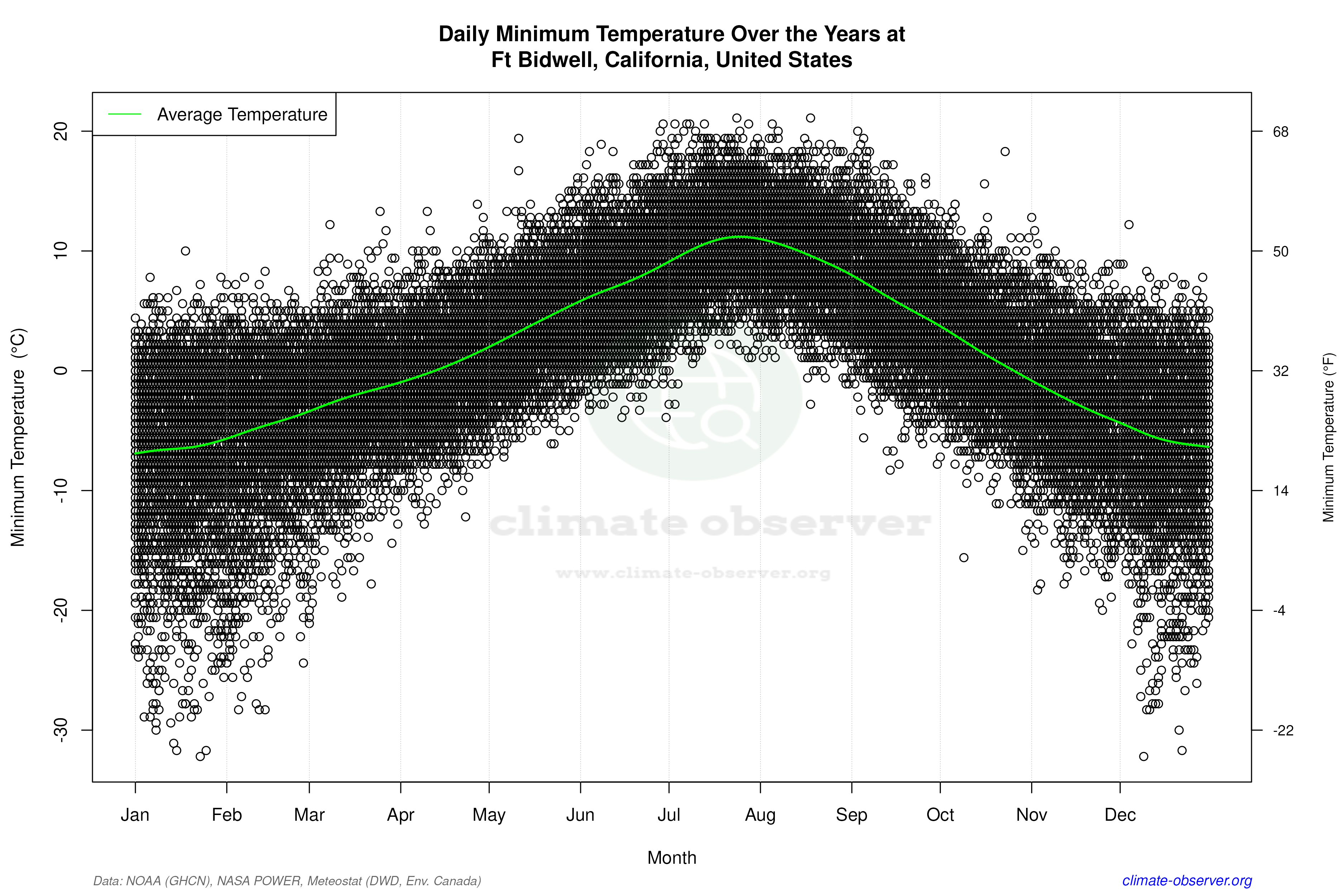


Average Max Temperature Throughout Year | 1 of 5


