Climate for Station: Chama, New Mexico, United States
Loading live weather...
Climate Analysis & Overview
Chama, New Mexico, exhibits a complex climate narrative characterized by a warming trend in recent years, contrasted by the more stable all-time temperature records. The increasing concentration of precipitation events suggests a shift towards more intense weather patterns, reflecting broader regional climate dynamics.
Mountain Climate Dynamics
Chama, situated in the northern reaches of New Mexico, is classified under the Köppen climate classification as Dfb, indicating a humid continental climate with warm summers and cold, snowy winters. Nestled at an elevation of approximately 2,400 meters (7,874 feet), the town's climate is heavily influenced by its mountainous geography. This altitude contributes to cooler temperatures and significant snowfall in winter, while the surrounding terrain channels weather patterns that can lead to rapid changes in conditions.
Temperature Trends: A Decade of Change
Over the past decade, Chama has experienced a noticeable warming trend. The average high temperatures have increased by 0.33°C (0.59°F), while the lows have risen even more significantly by 0.72°C (1.29°F). This recent warming contrasts with the more stable all-time temperature trends, where highs have shown a modest rise of 0.04°C (0.07°F), and lows have experienced a slight fall of 0.00°C (0.00°F). These figures suggest that while the long-term climate has been relatively stable, recent years have seen more pronounced warming, aligning with broader trends observed across the southwestern United States.
Precipitation Patterns: Concentration and Intensity
The Precipitation Concentration Index (PCI) for Chama has increased from a baseline of 14.1 to a current value of 19.1, indicating that precipitation events have become more concentrated. This means that rainfall is occurring in fewer, more intense events rather than being evenly distributed throughout the year. Such a shift can lead to challenges such as increased risk of flooding and soil erosion, impacting both natural ecosystems and human activities in the region.
Record Extremes: Temperature Benchmarks
Chama's temperature records highlight the extremes that this mountain town can experience. The highest recorded temperature stands at 39.4°C (102.9°F), while the lowest plummets to -34.4°C (-29.9°F). These extremes underscore the significant thermal variability characteristic of high-altitude continental climates, where temperature swings can be substantial.
Regional Climate Context
The climate trends observed in Chama are reflective of broader patterns across the southwestern United States, where warming temperatures and altered precipitation patterns are becoming more prevalent. These changes are in line with national climate goals focusing on adaptation and resilience, particularly in regions susceptible to extreme weather events. As Chama navigates these shifts, understanding and adapting to these evolving climatic conditions will be crucial for the community's sustainability and resilience.
Station Statistics
10-Year Trend
High: +0.43 °C/decade
Low: +0.88 °C/decade
Rain: -0.75 mm/decade
25-Year Trend
High: -0.33 °C/decade
Low: +0.32 °C/decade
Rain: -0.08 mm/decade
50-Year Trend
High: +0.37 °C/decade
Low: +0.39 °C/decade
Rain: -0.06 mm/decade
All-Time Trend
High: +0.02 °C/decade
Low: -0.01 °C/decade
Rain: +0.00 mm/decade
Percentage Above-Average Days
Last 12 Months: 50.4%
This Year: 78.0%
Precipitation Concentration Index (PCI) ℹ️
Last 12 Months: 12.2
Historical Average: 12.3
Percentile Rank of Last 12 Months ℹ️
High: 88th percentile
Low: 96th percentile
Rain: 0th percentile
Change in Variance ℹ️
High: -1.7%
Low: -8.0%
Intraday: -3.6%
Data Coverage
73.2%
First Year of Data
2026
Station Location
Historical Weather Records
| Max High | Avg High | Min High | Max Avg | Avg Avg | Min Avg | Max Low | Avg Low | Min Low | Max Precipitation | Avg Precipitation | Max Snow | Avg Snow | |
|---|---|---|---|---|---|---|---|---|---|---|---|---|---|
| Record | 39.4 °C | — | -17.2 °C | — | — | — | 20.0 °C | — | -34.4 °C | 67.6 mm | — | 813.0 mm | — |
| January | 26.7 °C | 3.0 °C | -17.2 °C | — | — | — | 3.9 °C | -14.3 °C | -34.4 °C | 56.9 mm | 1.6 mm | 813.0 mm | 20.3 mm |
| February | 18.3 °C | 4.8 °C | -12.8 °C | — | — | — | 3.9 °C | -12.2 °C | -34.4 °C | 43.7 mm | 1.7 mm | 610.0 mm | 21.3 mm |
| March | 25.6 °C | 8.2 °C | -7.8 °C | — | — | — | 13.9 °C | -8.6 °C | -28.3 °C | 67.6 mm | 1.5 mm | 432.0 mm | 14.4 mm |
| April | 26.1 °C | 13.5 °C | -3.9 °C | — | — | — | 12.2 °C | -4.3 °C | -22.2 °C | 44.5 mm | 1.2 mm | 318.0 mm | 6.4 mm |
| May | 31.7 °C | 18.7 °C | 0.6 °C | — | — | — | 12.8 °C | -0.3 °C | -13.9 °C | 46.7 mm | 1.1 mm | 305.0 mm | 1.9 mm |
| June | 36.7 °C | 25.0 °C | 8.9 °C | — | — | — | 20.0 °C | 3.7 °C | -7.8 °C | 35.6 mm | 0.8 mm | 127.0 mm | 0.0 mm |
| July | 37.2 °C | 27.1 °C | 12.8 °C | — | — | — | 18.3 °C | 7.9 °C | -2.2 °C | 50.8 mm | 1.8 mm | 0.0 mm | 0.0 mm |
| August | 39.4 °C | 25.7 °C | 12.2 °C | — | — | — | 17.2 °C | 7.6 °C | -1.7 °C | 58.4 mm | 2.2 mm | 152.0 mm | 0.0 mm |
| September | 34.4 °C | 22.5 °C | 5.6 °C | — | — | — | 13.9 °C | 3.5 °C | -10.6 °C | 65.5 mm | 1.8 mm | 254.0 mm | 0.3 mm |
| October | 28.9 °C | 16.6 °C | -3.9 °C | — | — | — | 13.3 °C | -1.9 °C | -18.9 °C | 58.4 mm | 1.4 mm | 394.0 mm | 2.4 mm |
| November | 26.1 °C | 9.4 °C | -8.9 °C | — | — | — | 11.1 °C | -7.9 °C | -30.6 °C | 61.0 mm | 1.2 mm | 610.0 mm | 9.3 mm |
| December | 20.0 °C | 4.0 °C | -12.2 °C | — | — | — | 6.7 °C | -12.6 °C | -34.4 °C | 41.4 mm | 1.5 mm | 457.0 mm | 17.2 mm |
Data Visualisations
Remove WatermarksCurrent Year Climate Trends vs Historical
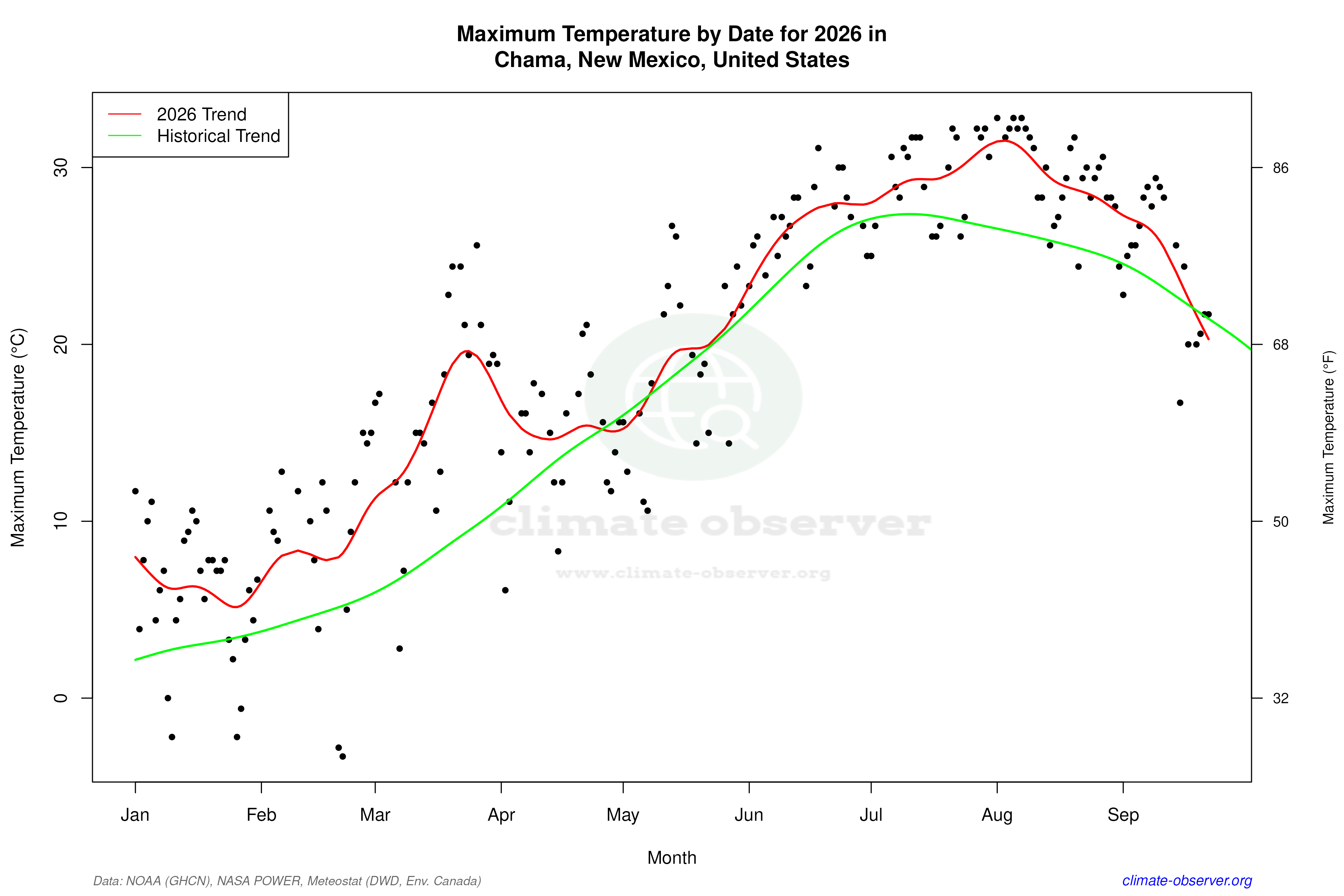
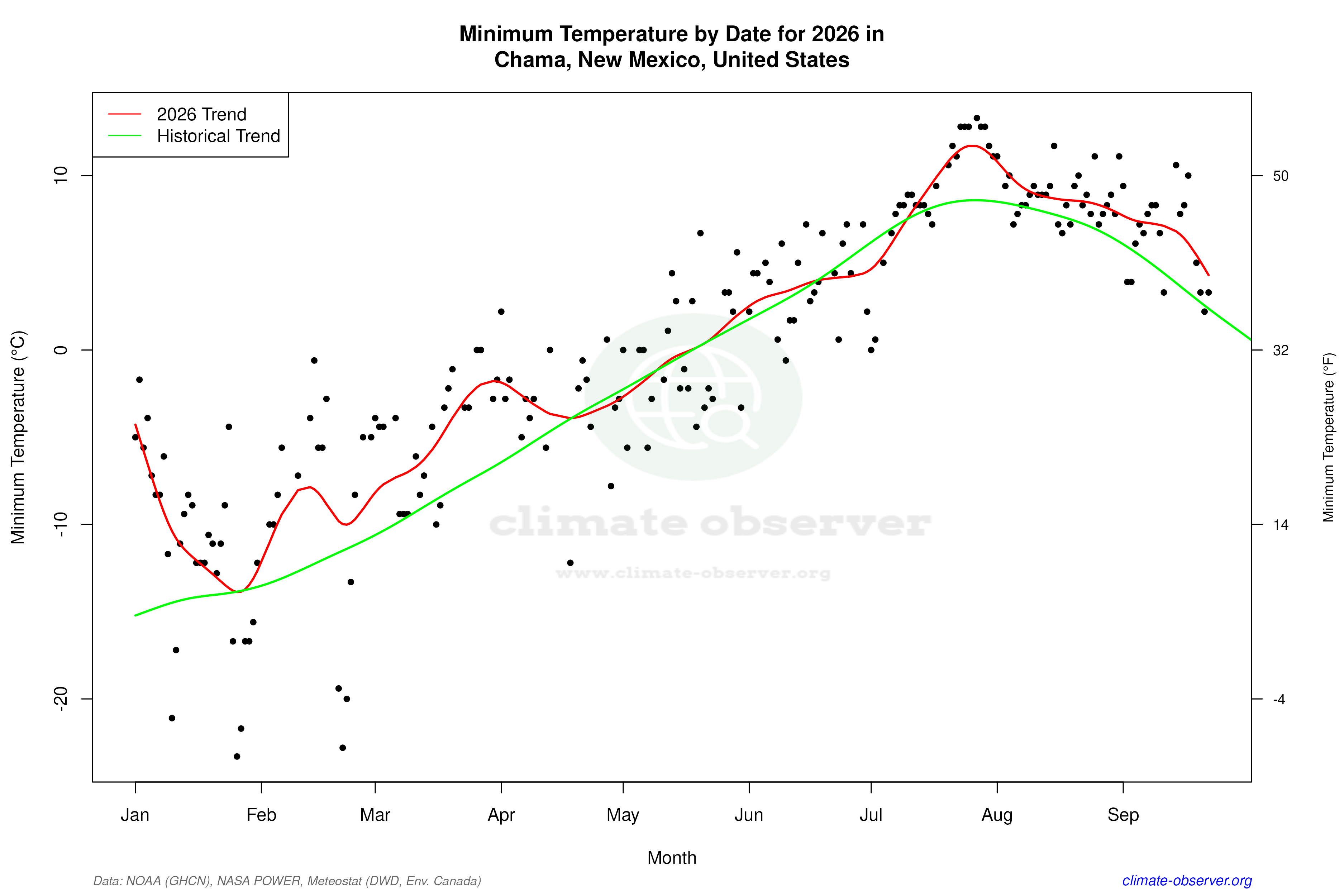

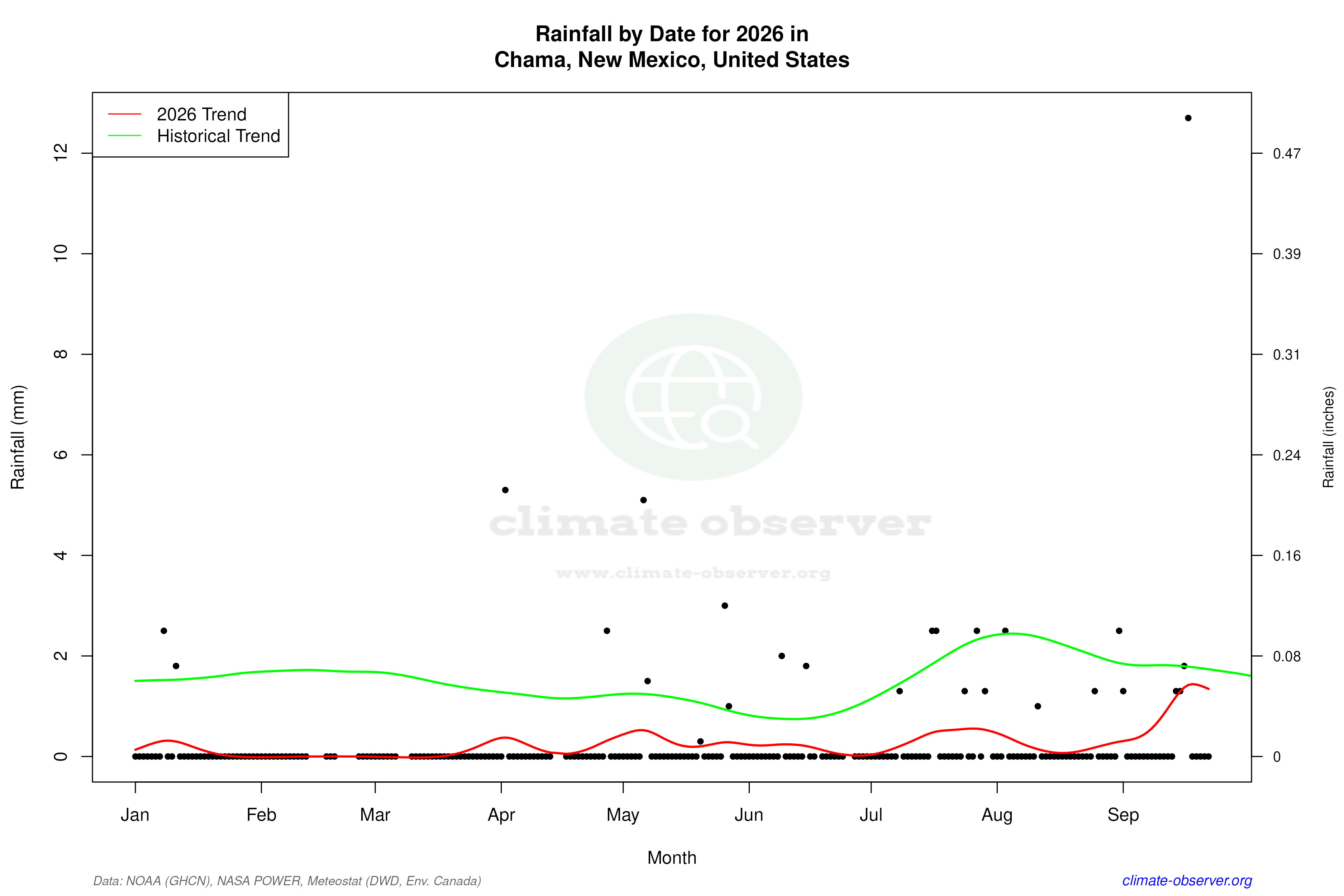


Max Temperature this Year | 1 of 6
Climate 12-Month Moving Averages
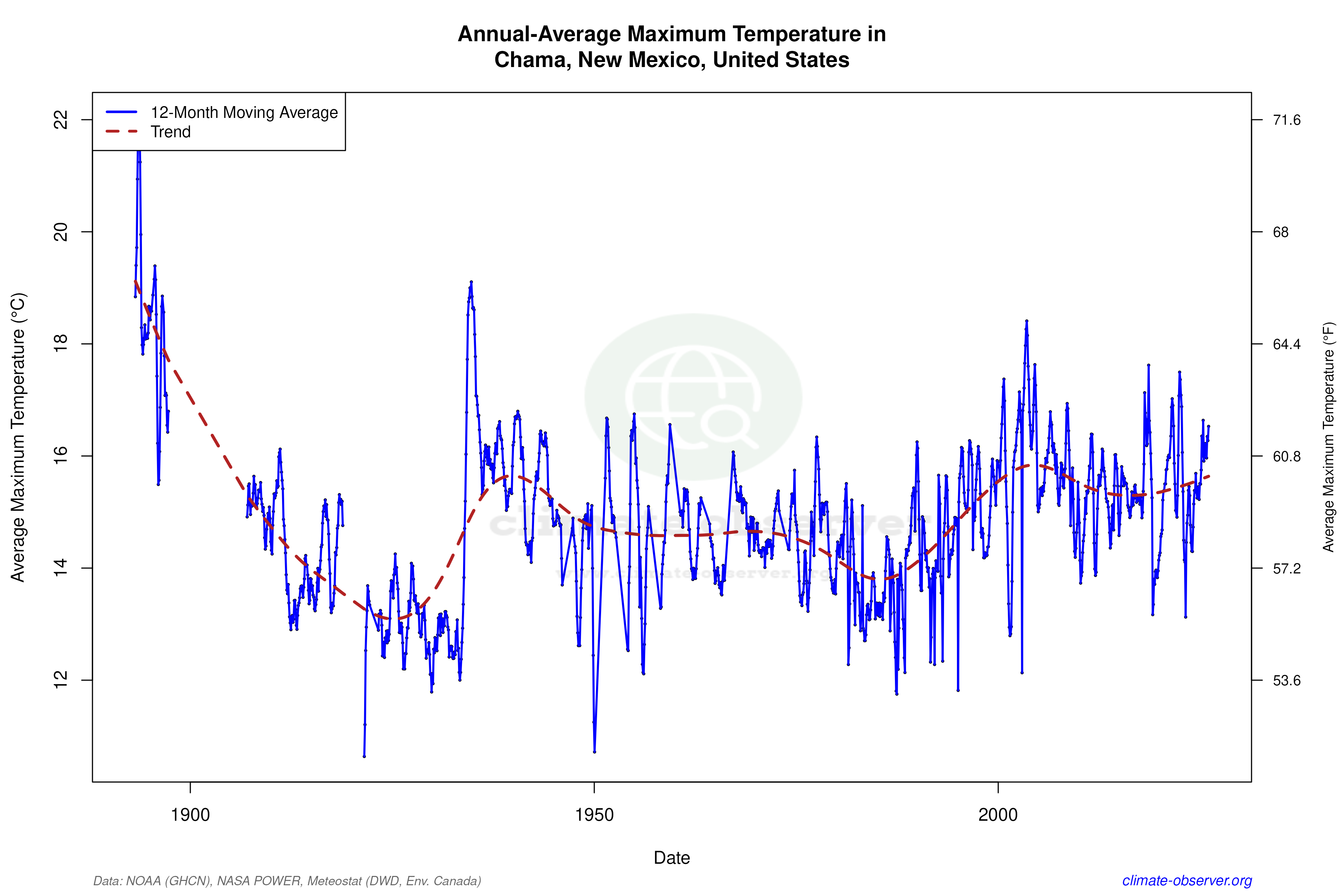
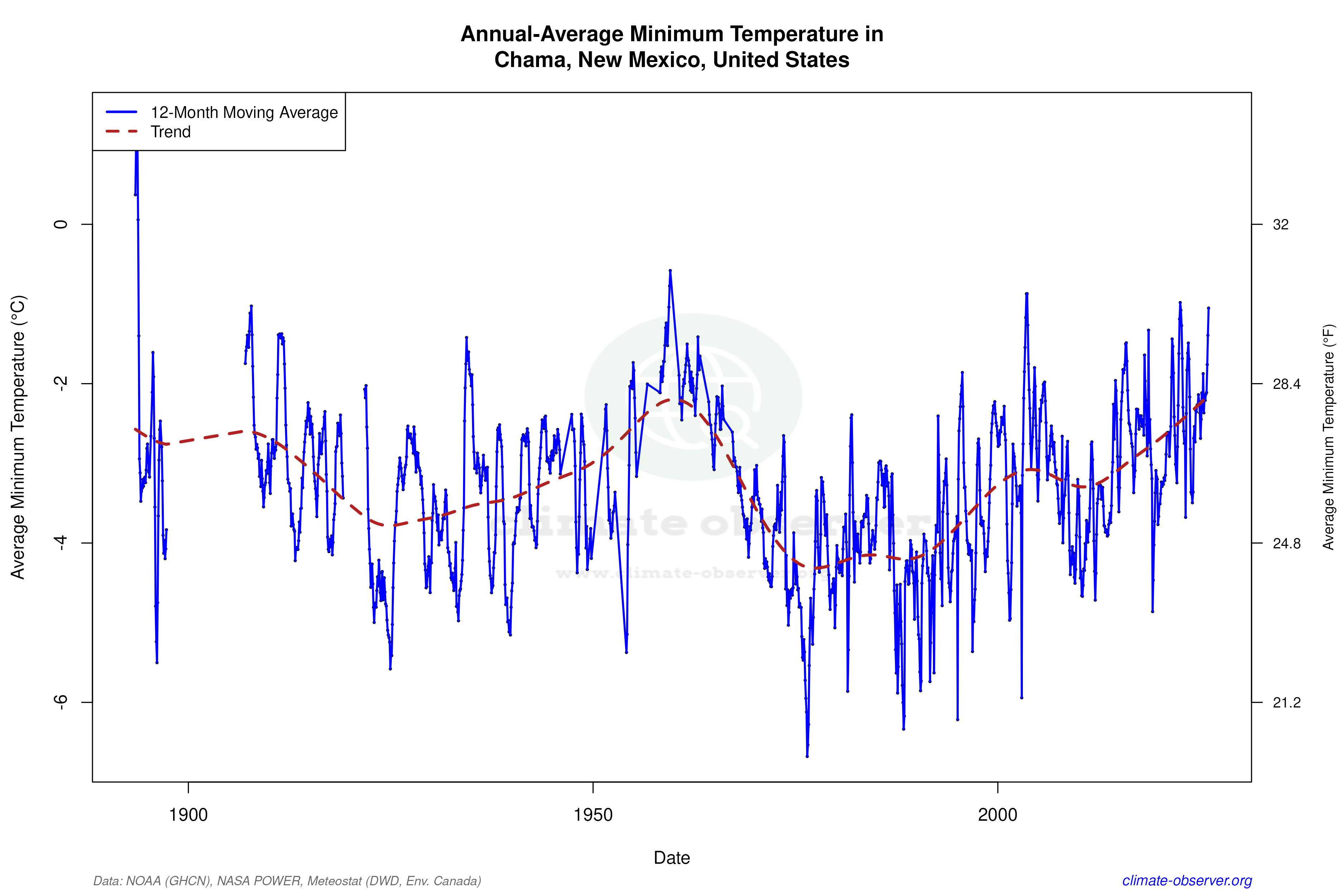

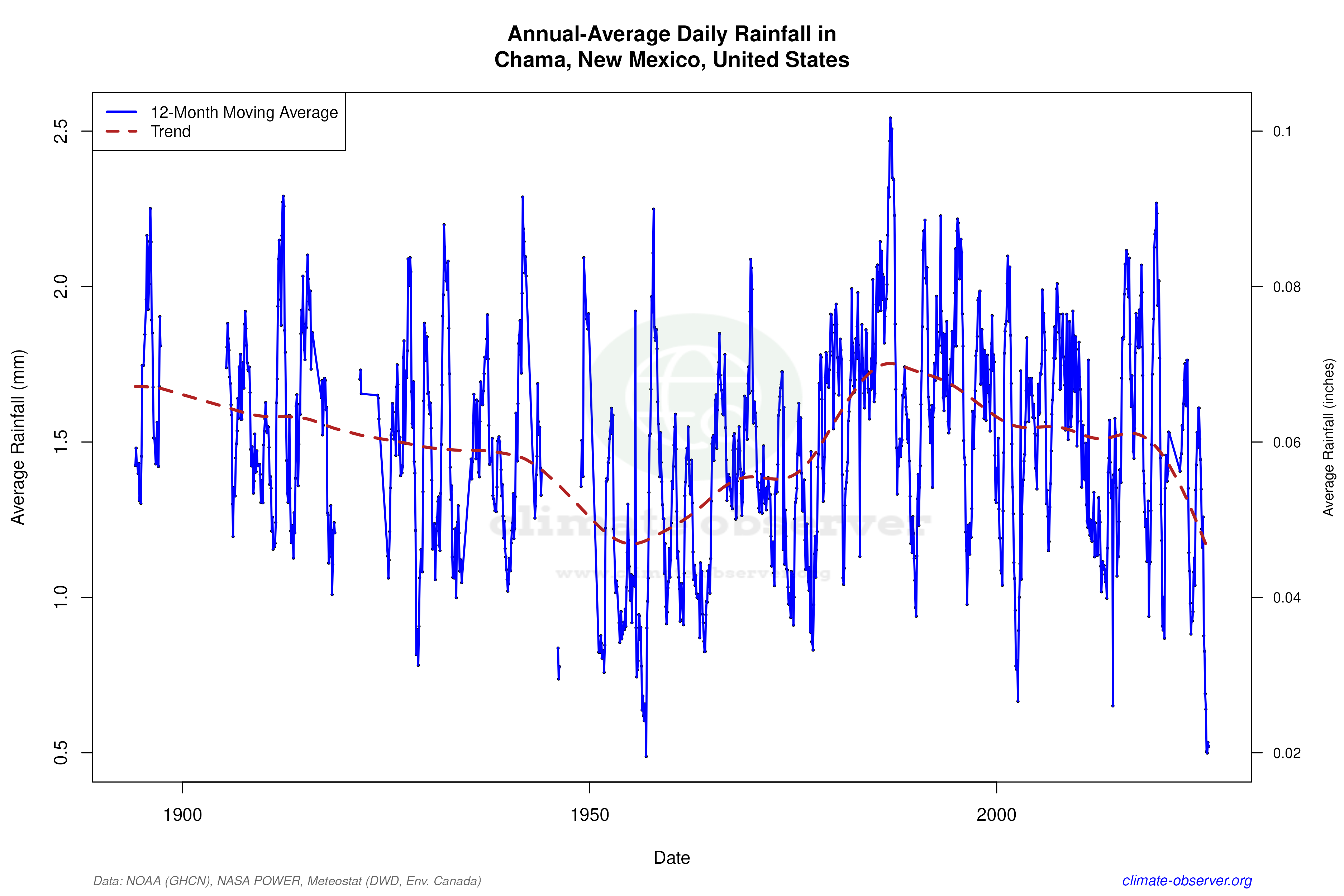


Max Temperature 12-Month MA | 1 of 6
Daily Data Points and Averages Throughout the Year
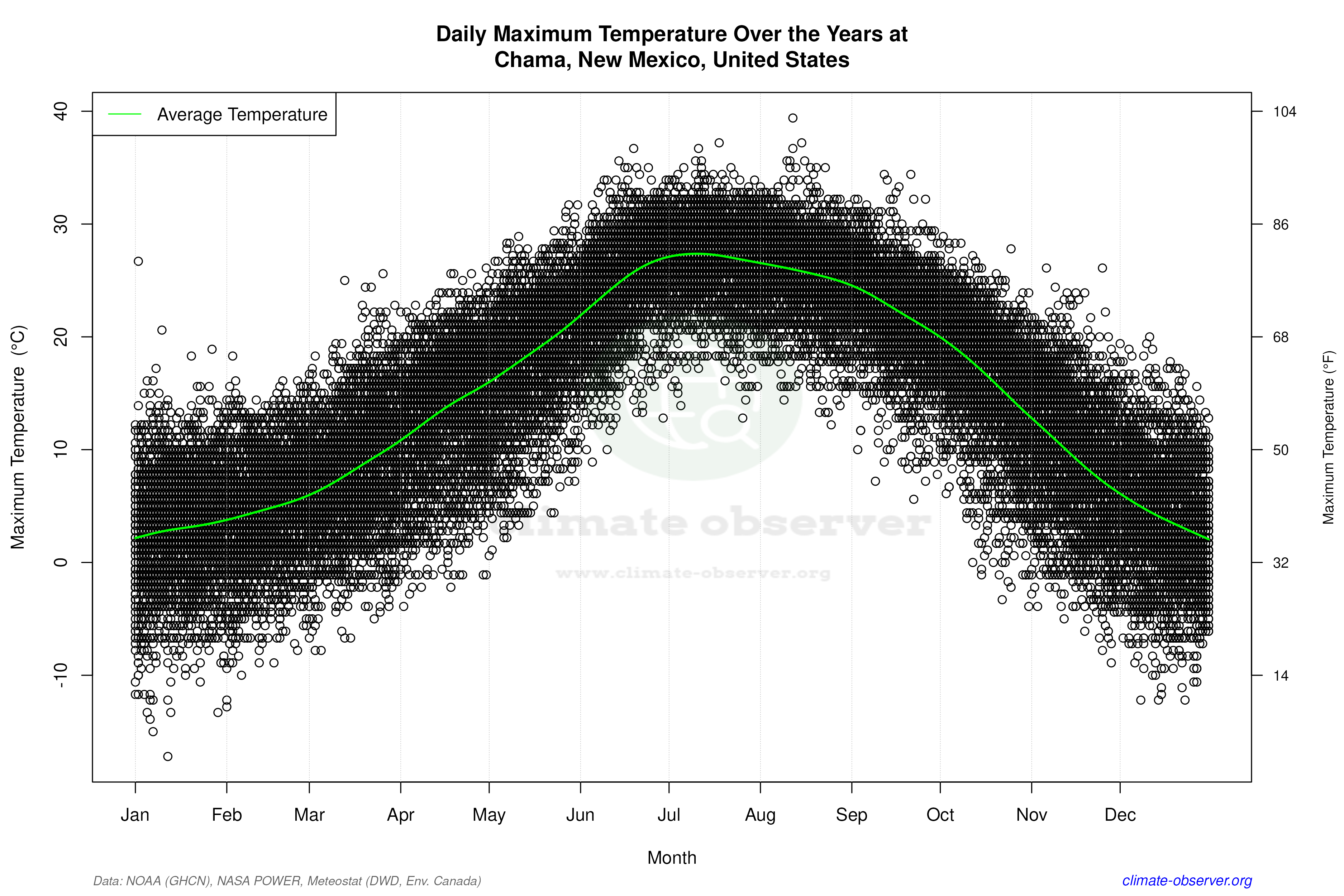
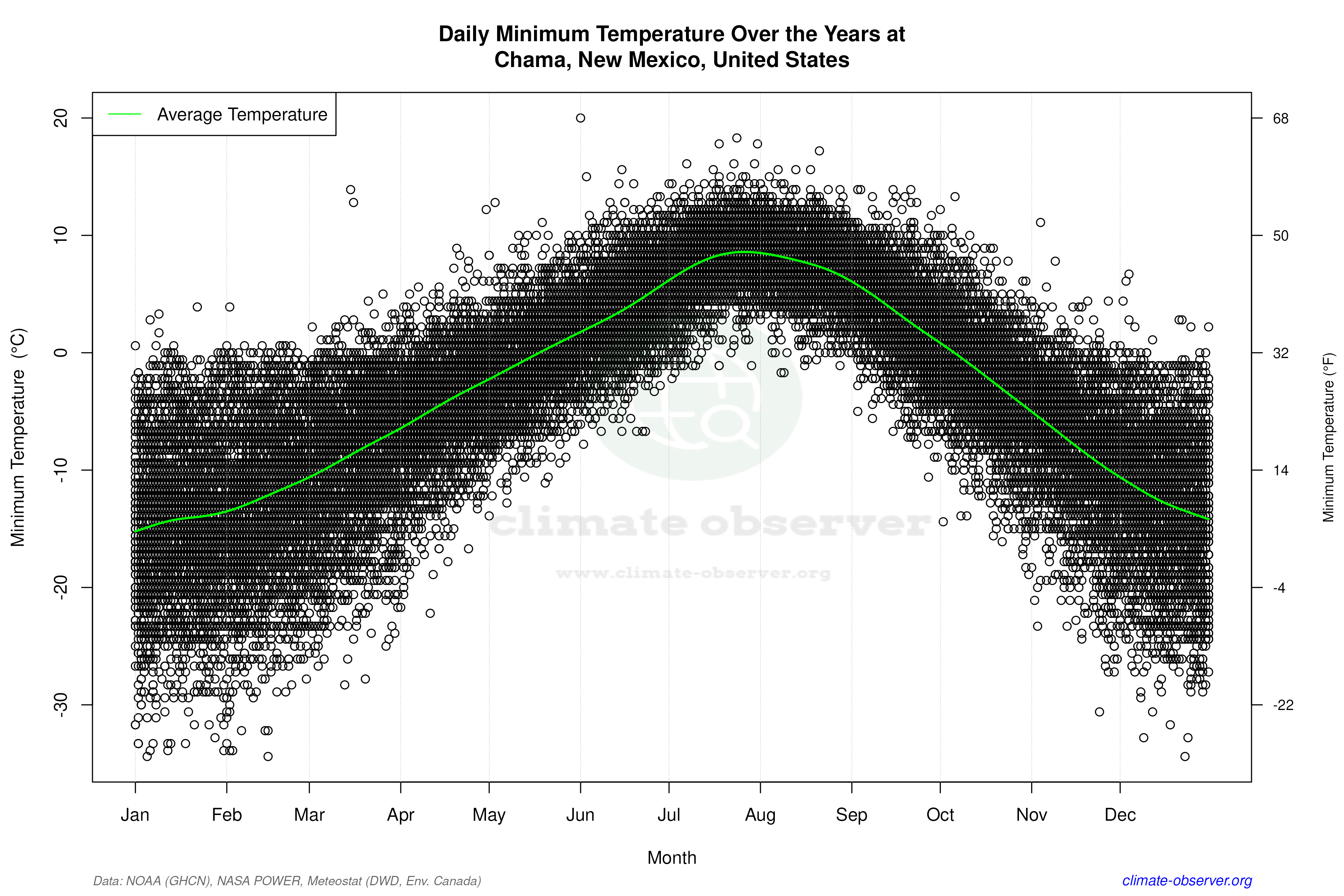


Average Max Temperature Throughout Year | 1 of 5


