Climate for Station: Ft Duchesne, Utah, United States
Loading live weather...
Climate Analysis & Overview
Fort Duchesne is experiencing a warming trend, with notable increases in both high and low temperatures over the past decade. The region's precipitation has become more evenly distributed, suggesting a shift in local weather patterns. These changes align with broader climate objectives aimed at understanding and mitigating climate impacts.
Warming Trends in Fort Duchesne
Fort Duchesne, located in Uintah County, Utah, lies within a semi-arid climate zone, classified under the Köppen climate classification as BSk. This region, characterised by its dry conditions and significant temperature variations, has seen a warming trend over the past decade. High temperatures have risen by 1.03°C (1.85°F), while low temperatures have increased by 1.25°C (2.25°F). These changes are more pronounced than the all-time trends, which show a rise of 0.13°C (0.23°F) for highs and 0.24°C (0.43°F) for lows. Such warming trends are crucial for understanding local climate dynamics and their implications on regional ecosystems.
Temperature Extremes and Records
In Fort Duchesne, temperature extremes are significant, with historical records showing a maximum of 44.4°C (111.9°F) and a minimum of -43.9°C (-47.0°F). These extremes highlight the region's susceptibility to both intense heat and severe cold, a characteristic of its semi-arid climate. Understanding these records is vital for assessing the potential impacts of climate change on local agriculture and water resources.
Shifts in Precipitation Patterns
The Precipitation Concentration Index (PCI) is a measure of how precipitation is distributed over time. A decrease in PCI from a baseline of 12.34 to a current value of 10.92 indicates that precipitation events in Fort Duchesne are becoming more evenly distributed throughout the year. This slight change suggests a shift away from concentrated rainfall events, which can reduce the risk of flooding and improve water management strategies in the region.
Geographical Influences on Climate
Fort Duchesne's climate is influenced by its geographical setting, including its elevation and proximity to the Uinta Mountains. These features contribute to the area's temperature variability and precipitation patterns. The mountains can act as barriers to moisture-laden air masses, affecting local weather conditions and contributing to the semi-arid climate classification.
Regional Climate Goals and Implications
The observed warming trends and changes in precipitation distribution in Fort Duchesne align with broader regional climate goals aimed at understanding and mitigating the impacts of climate change. As the United States continues to focus on reducing greenhouse gas emissions and promoting sustainable practices, localised data such as this provides valuable insights into the effectiveness of these efforts and the need for adaptive strategies in semi-arid regions like Fort Duchesne.
Station Statistics
10-Year Trend
High: +2.11 °C/decade
Low: +3.22 °C/decade
Rain: +0.37 mm/decade
25-Year Trend
High: +0.24 °C/decade
Low: +0.82 °C/decade
Rain: -0.04 mm/decade
50-Year Trend
High: +0.14 °C/decade
Low: +0.23 °C/decade
Rain: +0.01 mm/decade
All-Time Trend
High: +0.11 °C/decade
Low: +0.21 °C/decade
Rain: +0.00 mm/decade
Percentage Above-Average Days
Last 12 Months: 48.2%
This Year: 28.1%
Precipitation Concentration Index (PCI) ℹ️
Last 12 Months: 47.8
Historical Average: 15.3
Percentile Rank of Last 12 Months ℹ️
High: 72nd percentile
Low: 96th percentile
Rain: 99th percentile
Change in Variance ℹ️
High: -0.7%
Low: -5.5%
Intraday: -13.3%
Data Coverage
81.5%
First Year of Data
1892
Station Location
Historical Weather Records
| Max High | Avg High | Min High | Max Avg | Avg Avg | Min Avg | Max Low | Avg Low | Min Low | Max Precipitation | Avg Precipitation | Max Snow | Avg Snow | |
|---|---|---|---|---|---|---|---|---|---|---|---|---|---|
| Record | 44.4 °C | — | -24.4 °C | 31.2 °C | — | -26.4 °C | 27.2 °C | — | -43.9 °C | 458.9 mm | — | 381.0 mm | — |
| January | 15.6 °C | -2.1 °C | -24.4 °C | 3.9 °C | -7.4 °C | -25.8 °C | 2.8 °C | -16.4 °C | -40.0 °C | 25.4 mm | 0.4 mm | 254.0 mm | 3.7 mm |
| February | 19.4 °C | 2.5 °C | -23.9 °C | 6.9 °C | -4.4 °C | -26.2 °C | 3.9 °C | -12.7 °C | -43.9 °C | 15.2 mm | 0.4 mm | 203.0 mm | 3.4 mm |
| March | 28.9 °C | 10.7 °C | -12.8 °C | 16.5 °C | 1.3 °C | -13.2 °C | 9.2 °C | -5.6 °C | -26.1 °C | 38.1 mm | 0.5 mm | 191.0 mm | 1.8 mm |
| April | 30.6 °C | 17.3 °C | -1.1 °C | 19.5 °C | 5.9 °C | -9.5 °C | 15.6 °C | -0.8 °C | -20.0 °C | 24.9 mm | 0.6 mm | 165.0 mm | 0.5 mm |
| May | 37.2 °C | 22.8 °C | -1.1 °C | 24.7 °C | 11.5 °C | -2.4 °C | 17.2 °C | 3.9 °C | -17.8 °C | 46.7 mm | 0.7 mm | 61.0 mm | 0.0 mm |
| June | 40.6 °C | 28.9 °C | 10.0 °C | 30.8 °C | 18.0 °C | 3.0 °C | 22.2 °C | 8.0 °C | -8.9 °C | 28.4 mm | 0.4 mm | 0.0 mm | 0.0 mm |
| July | 41.7 °C | 32.8 °C | 18.9 °C | 31.2 °C | 21.9 °C | 9.1 °C | 27.2 °C | 11.8 °C | -3.3 °C | 24.1 mm | 0.4 mm | 0.0 mm | 0.0 mm |
| August | 44.4 °C | 31.4 °C | 16.1 °C | 29.3 °C | 20.3 °C | 9.9 °C | 26.1 °C | 10.6 °C | -3.3 °C | 30.5 mm | 0.5 mm | 0.0 mm | 0.0 mm |
| September | 37.8 °C | 26.2 °C | 4.4 °C | 28.6 °C | 14.8 °C | -0.2 °C | 20.0 °C | 5.6 °C | -12.2 °C | 265.4 mm | 0.9 mm | 203.0 mm | 0.1 mm |
| October | 32.2 °C | 18.3 °C | -5.0 °C | 20.0 °C | 7.1 °C | -11.8 °C | 21.1 °C | -0.5 °C | -18.9 °C | 458.9 mm | 1.1 mm | 185.0 mm | 0.2 mm |
| November | 24.4 °C | 8.6 °C | -11.1 °C | 12.4 °C | -0.4 °C | -15.9 °C | 10.6 °C | -7.0 °C | -28.3 °C | 38.1 mm | 0.4 mm | 305.0 mm | 1.0 mm |
| December | 22.2 °C | 0.3 °C | -22.8 °C | 7.7 °C | -6.3 °C | -26.4 °C | 2.8 °C | -13.2 °C | -39.4 °C | 29.2 mm | 0.5 mm | 381.0 mm | 3.5 mm |
Data Visualisations
Remove WatermarksCurrent Year Climate Trends vs Historical
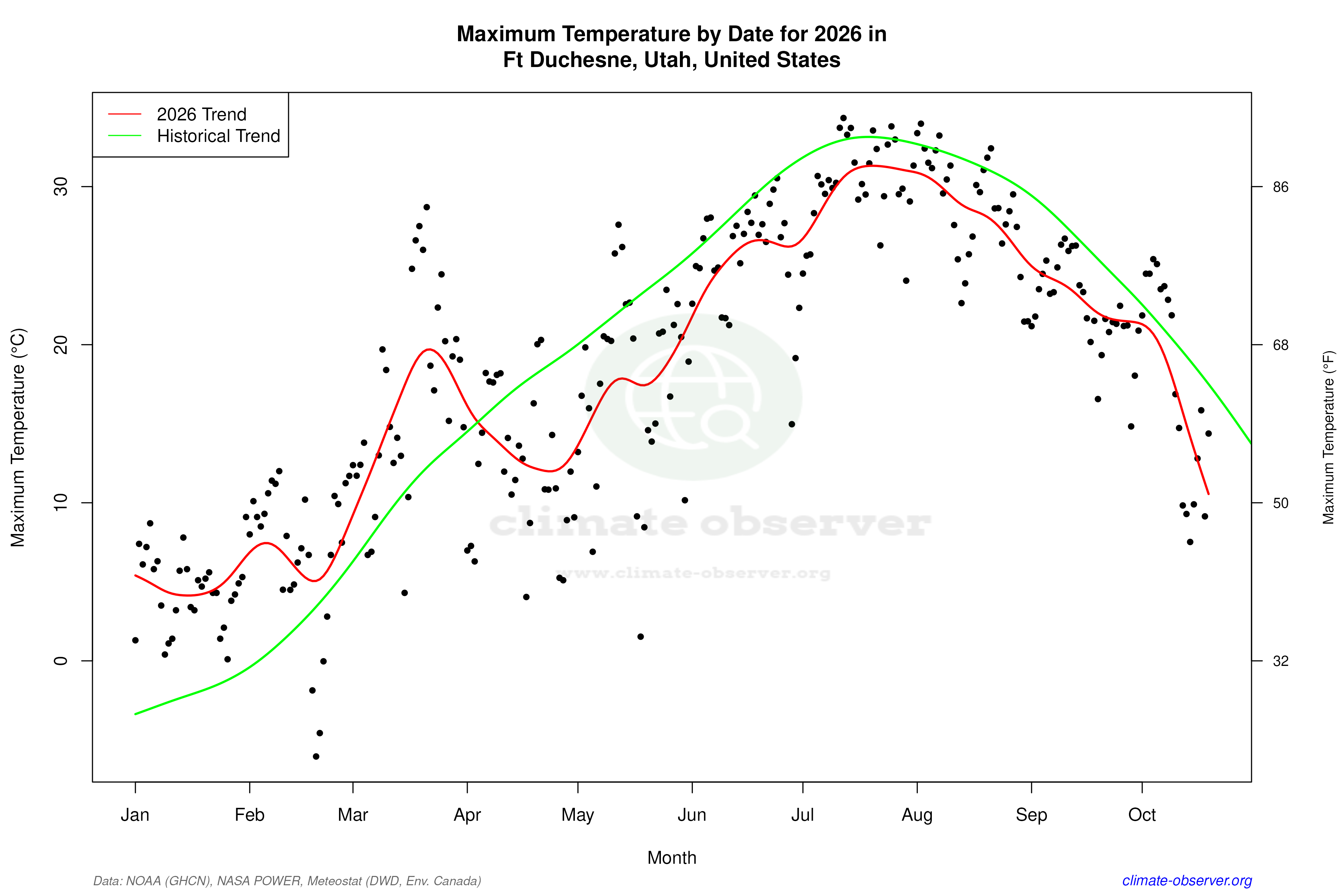
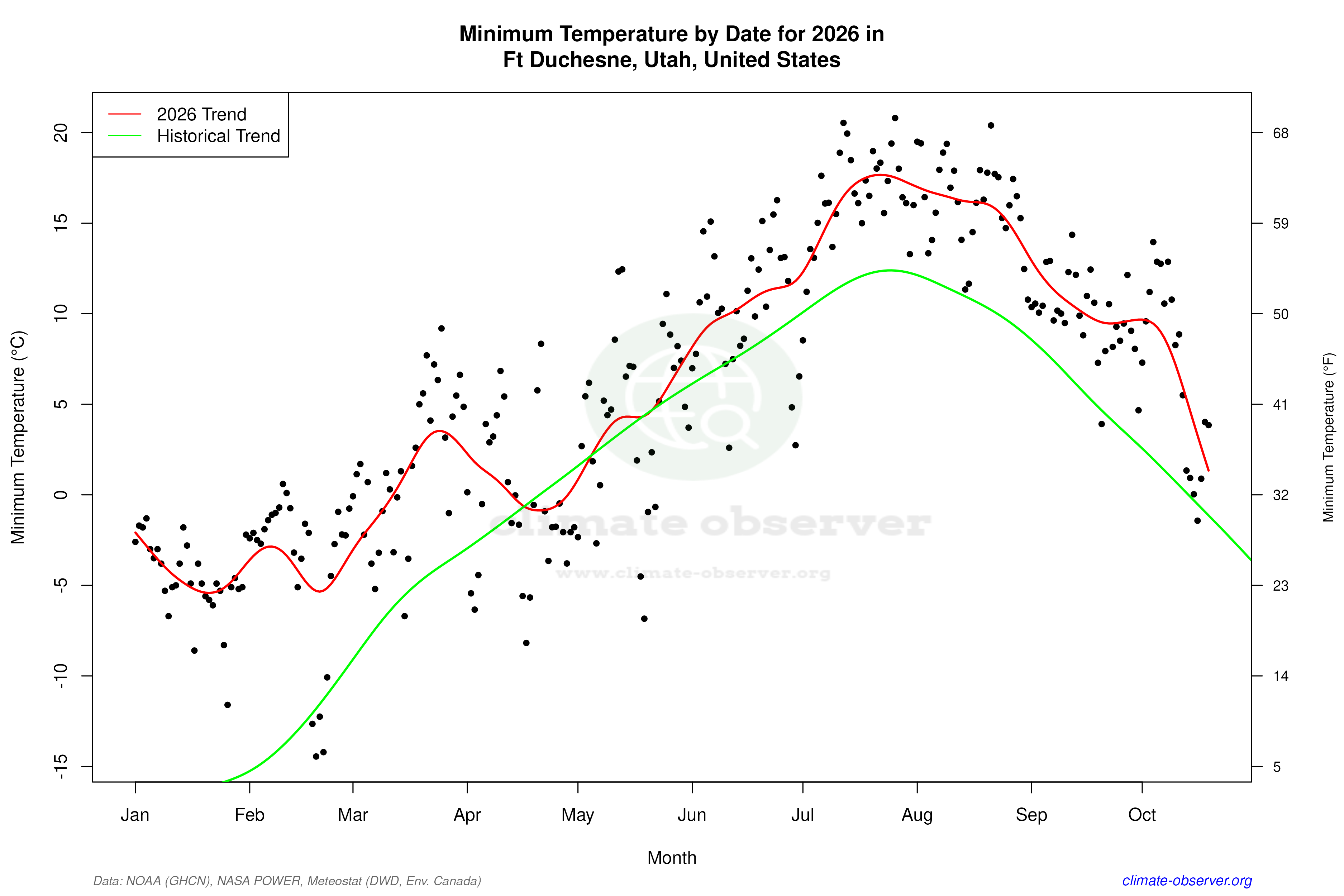
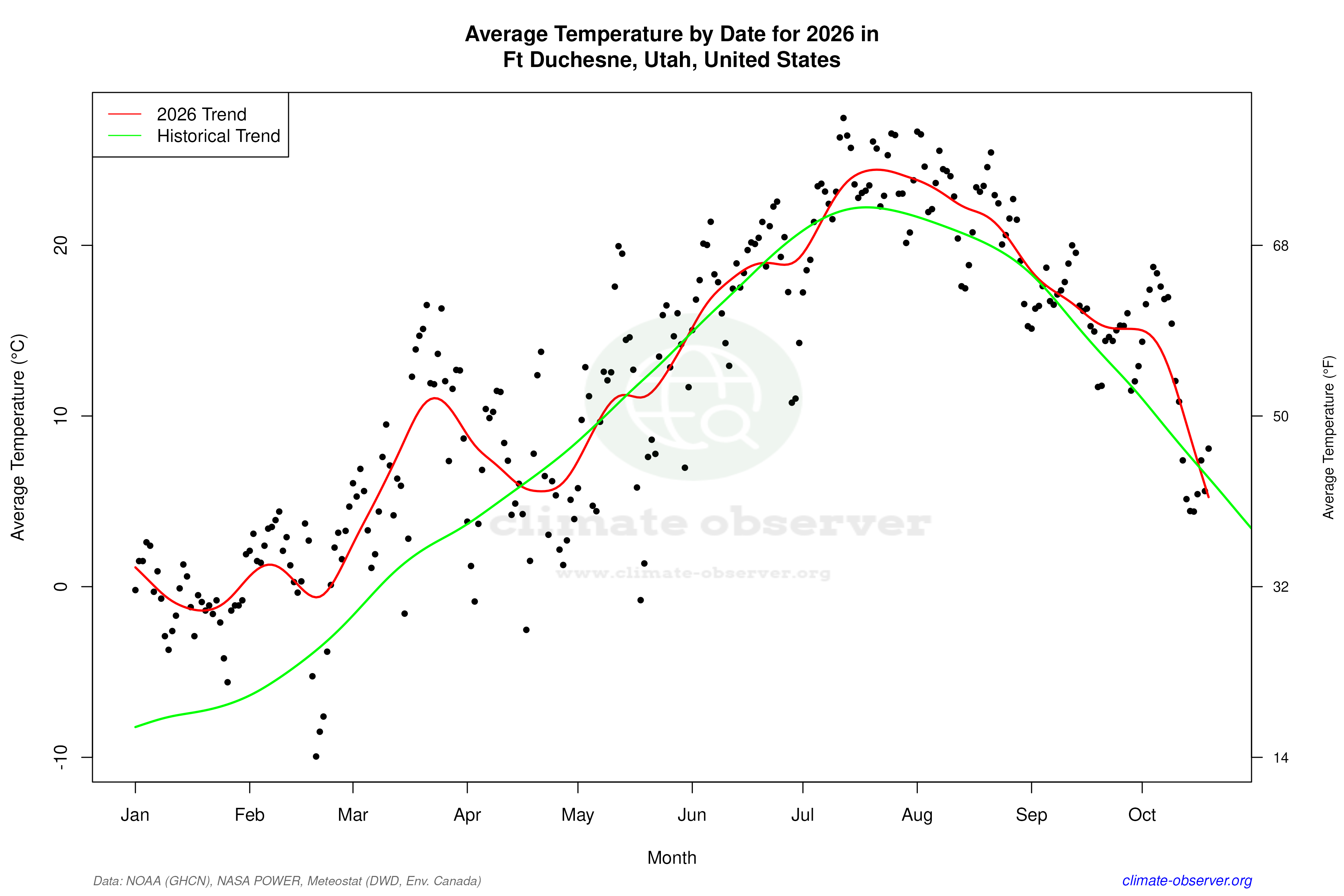
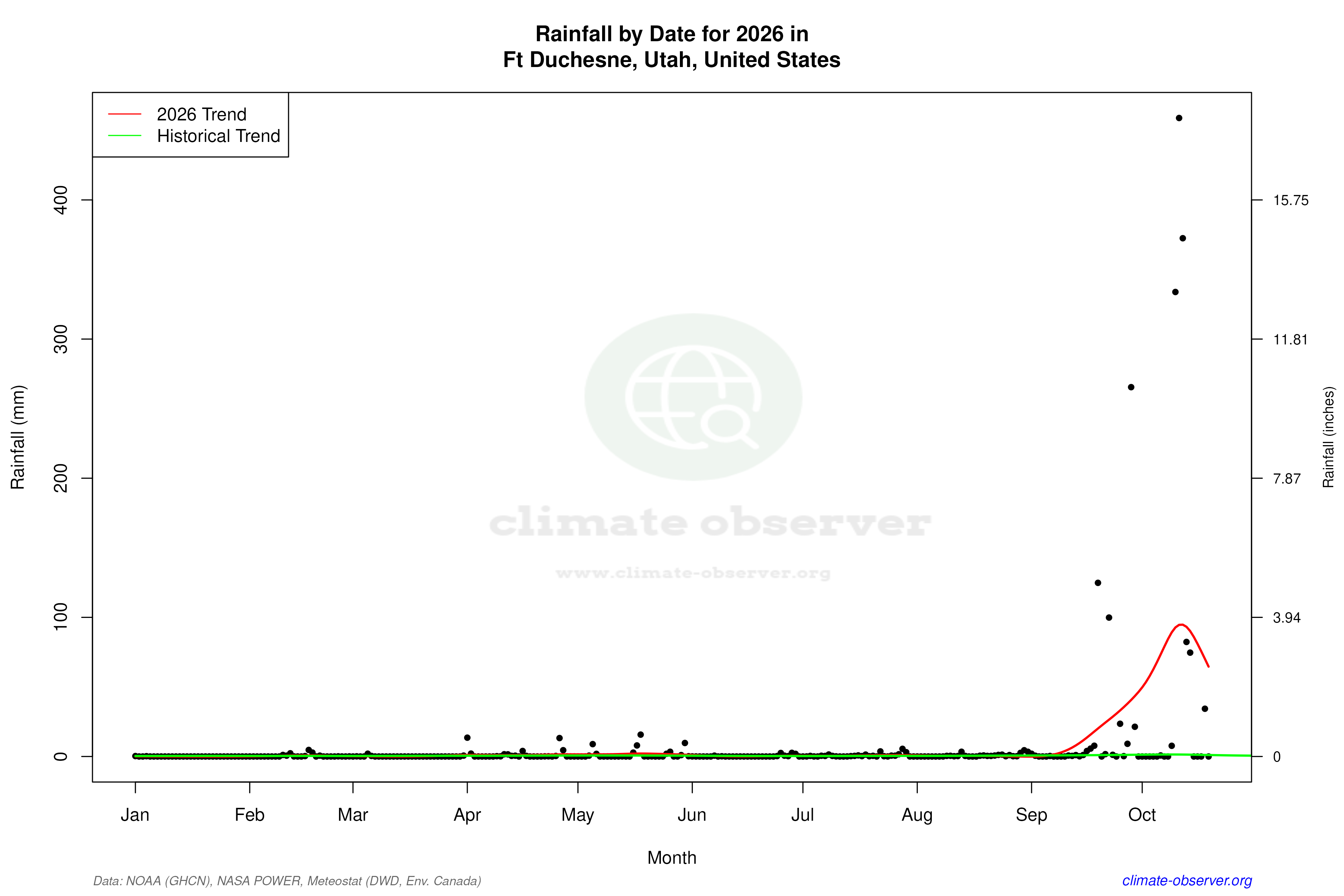
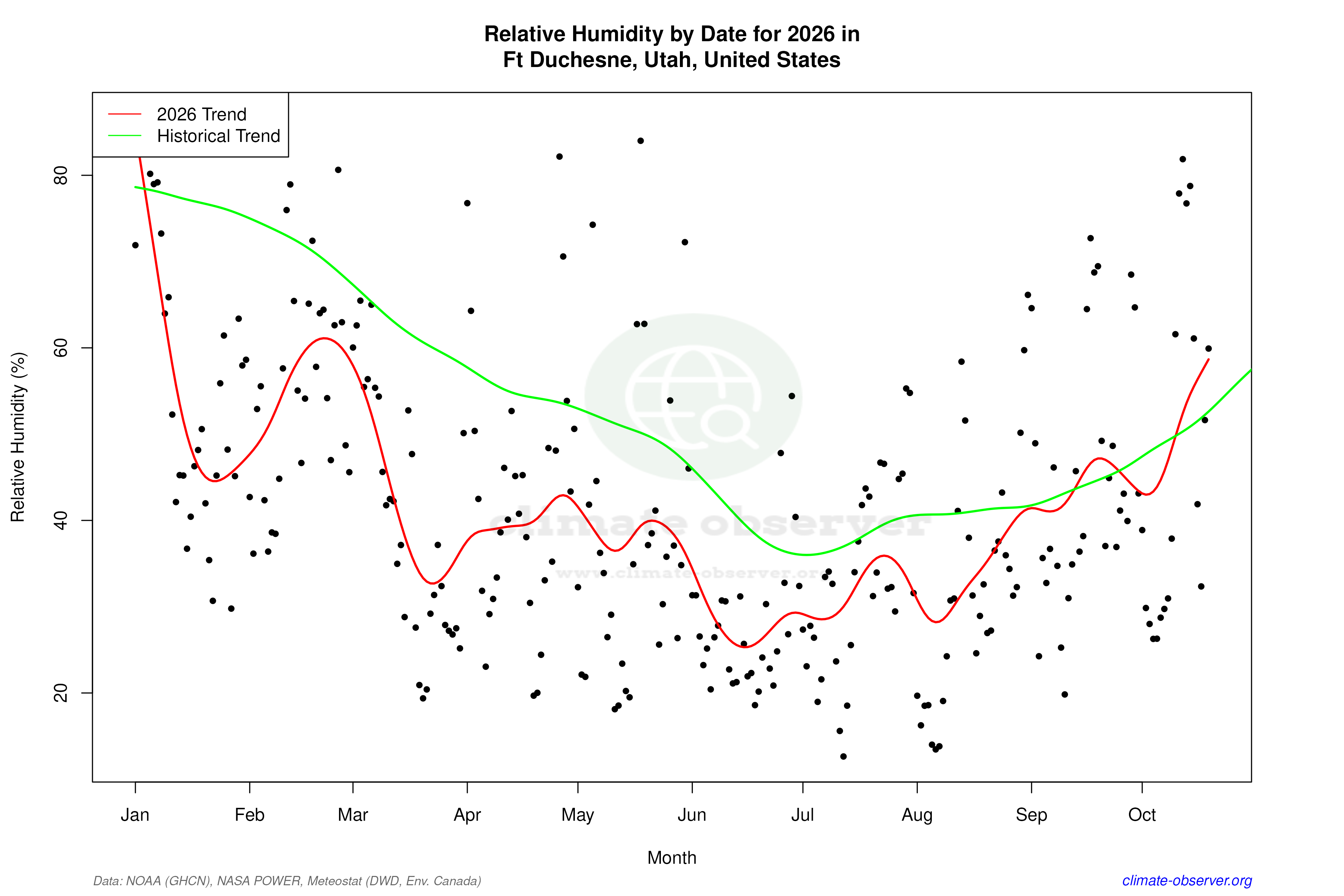

Max Temperature this Year | 1 of 6
Climate 12-Month Moving Averages
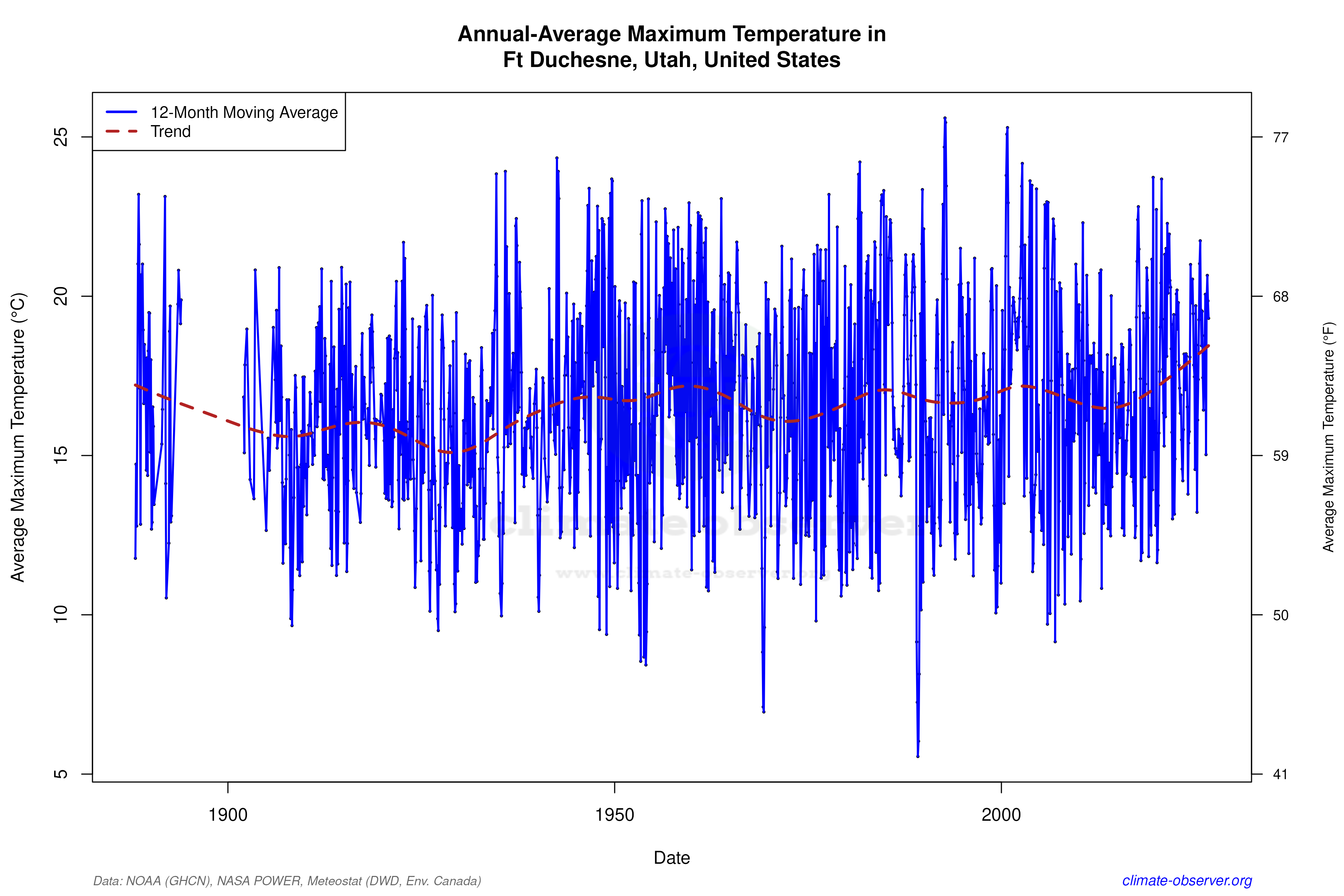
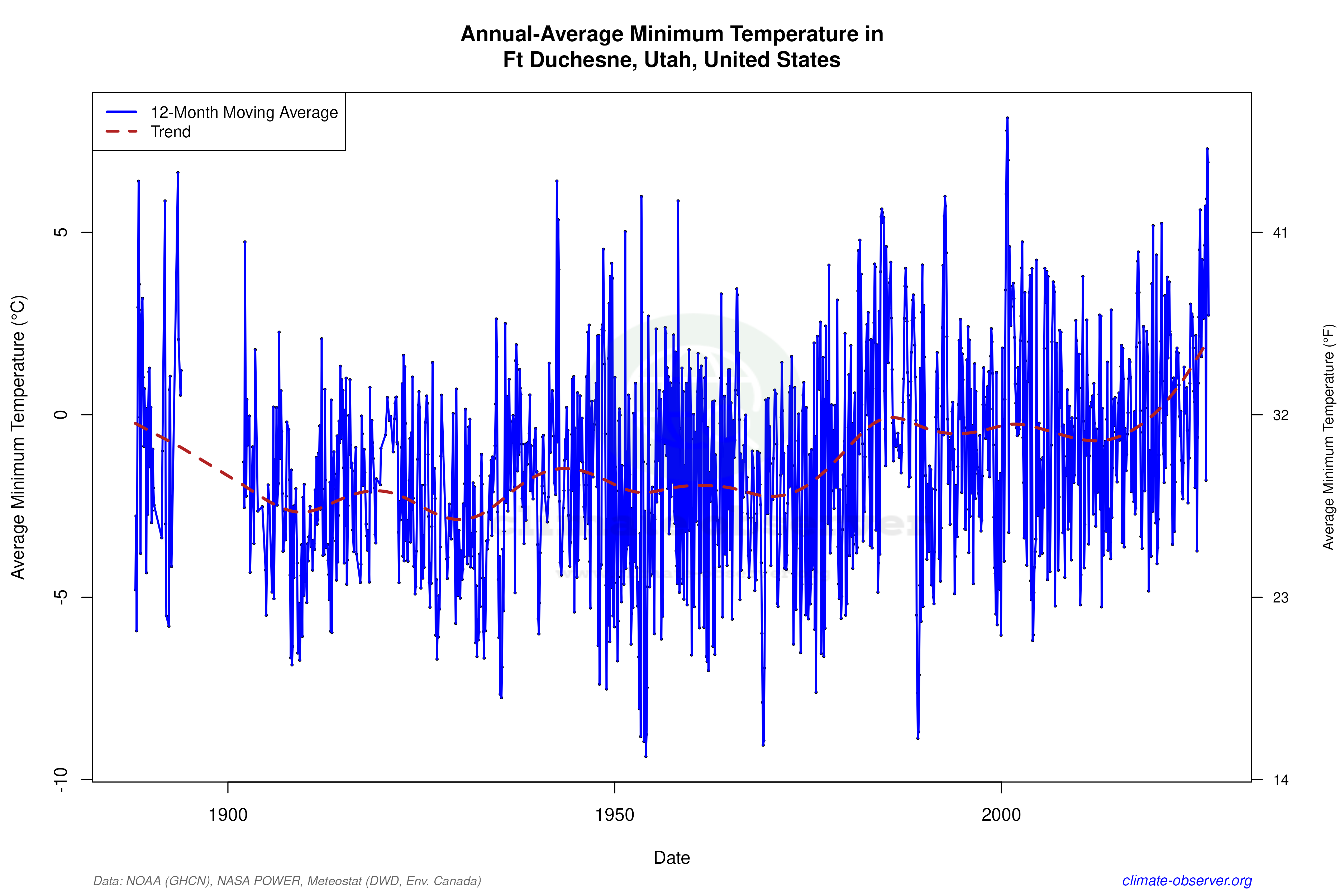
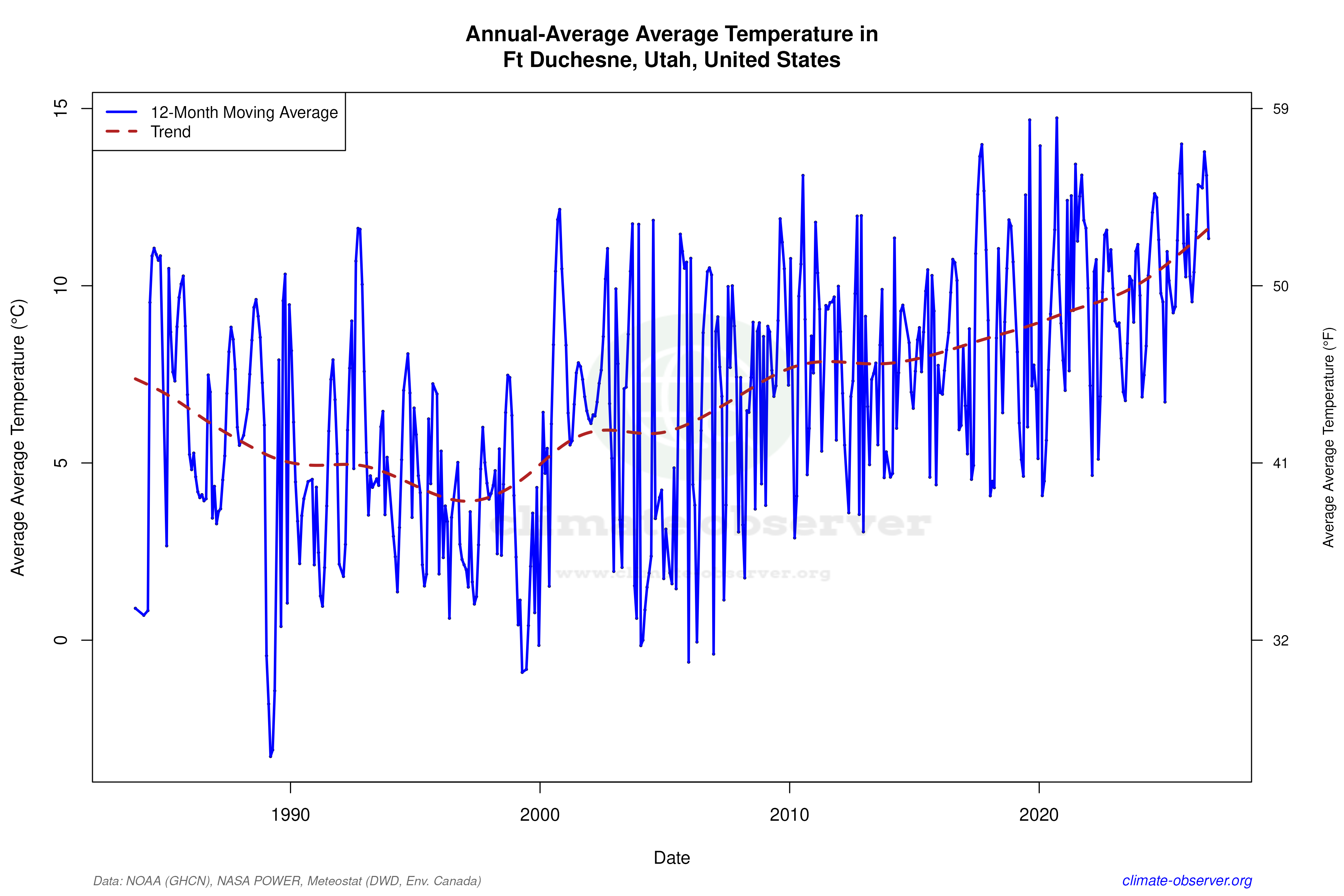
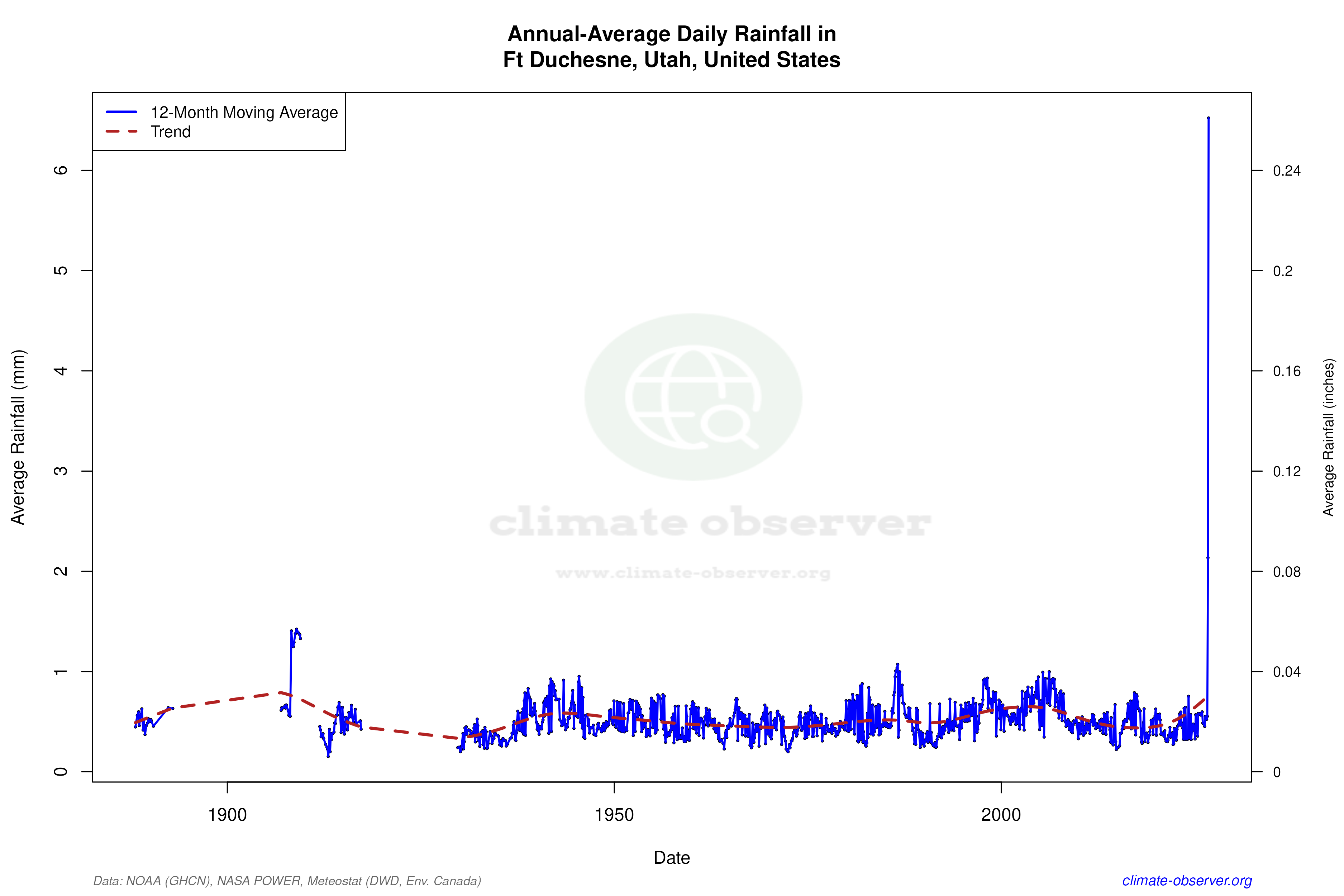
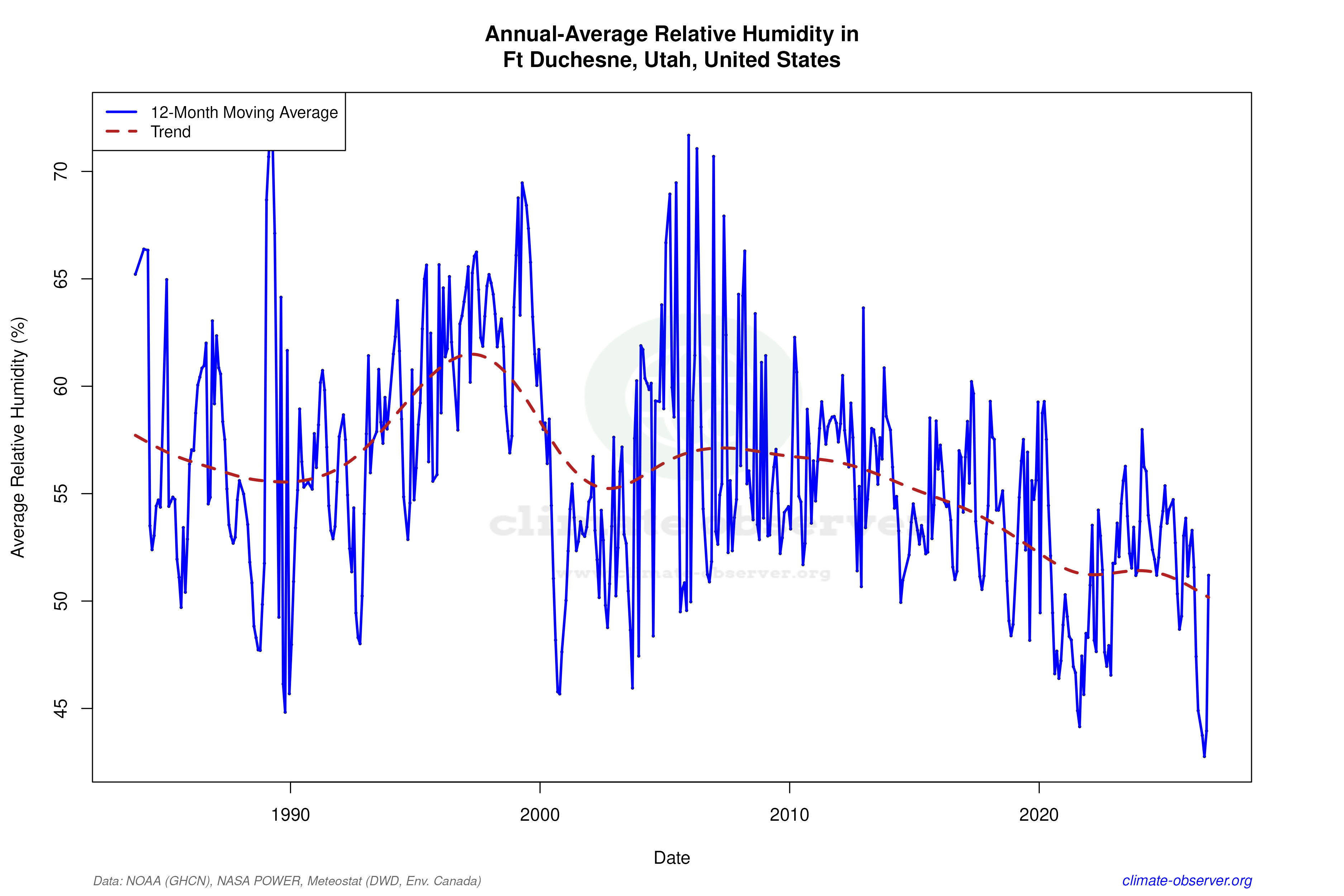

Max Temperature 12-Month MA | 1 of 6
Daily Data Points and Averages Throughout the Year
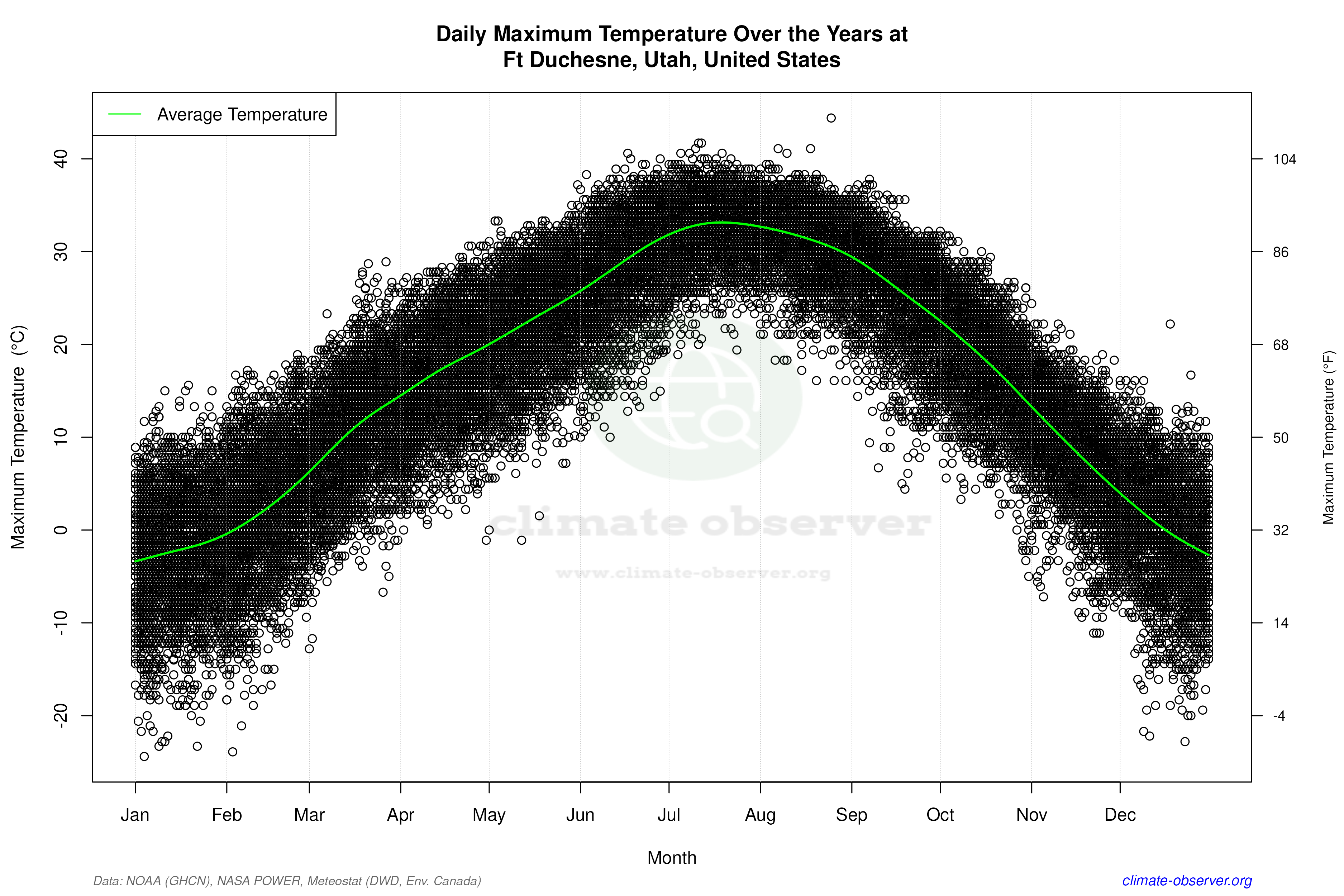
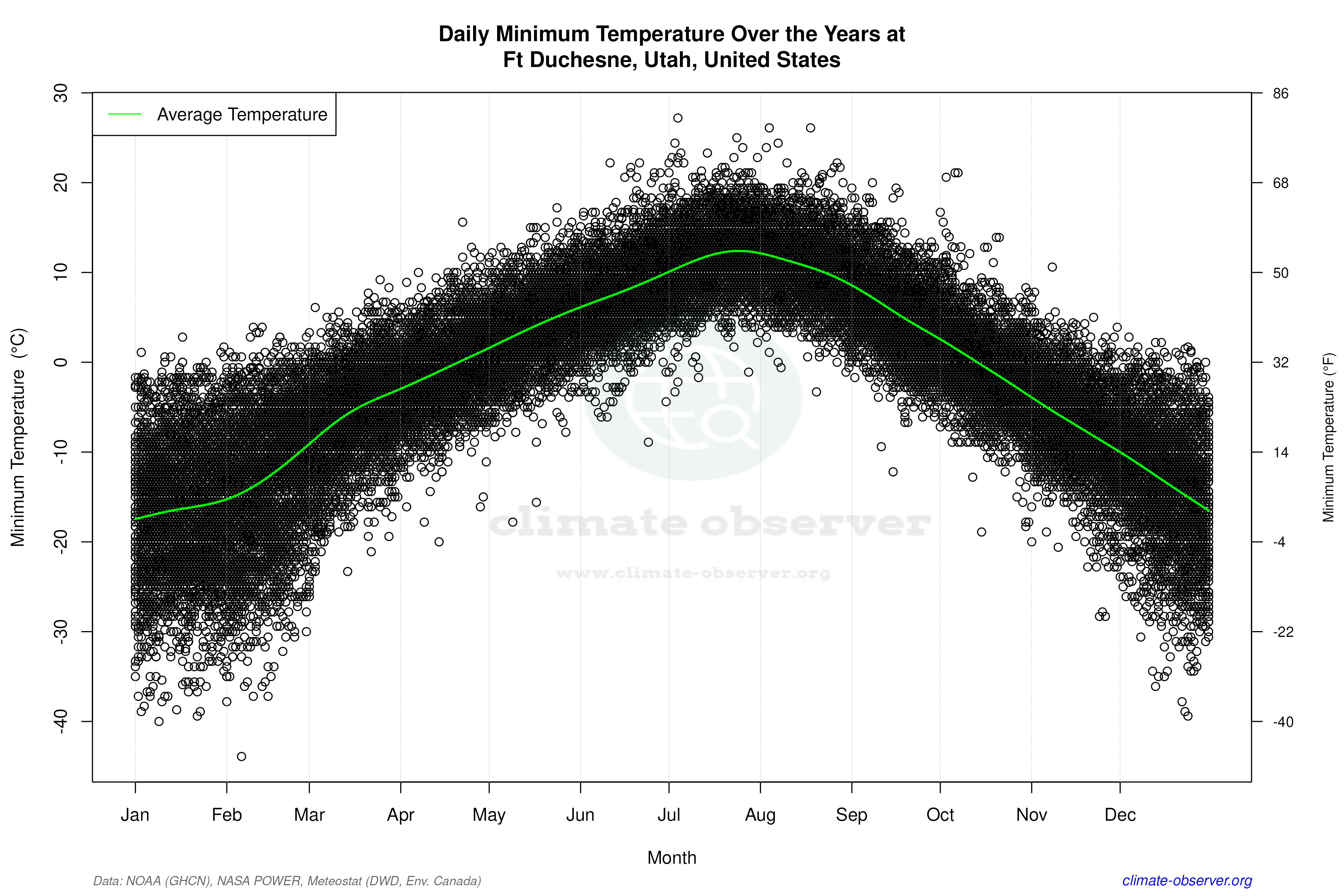
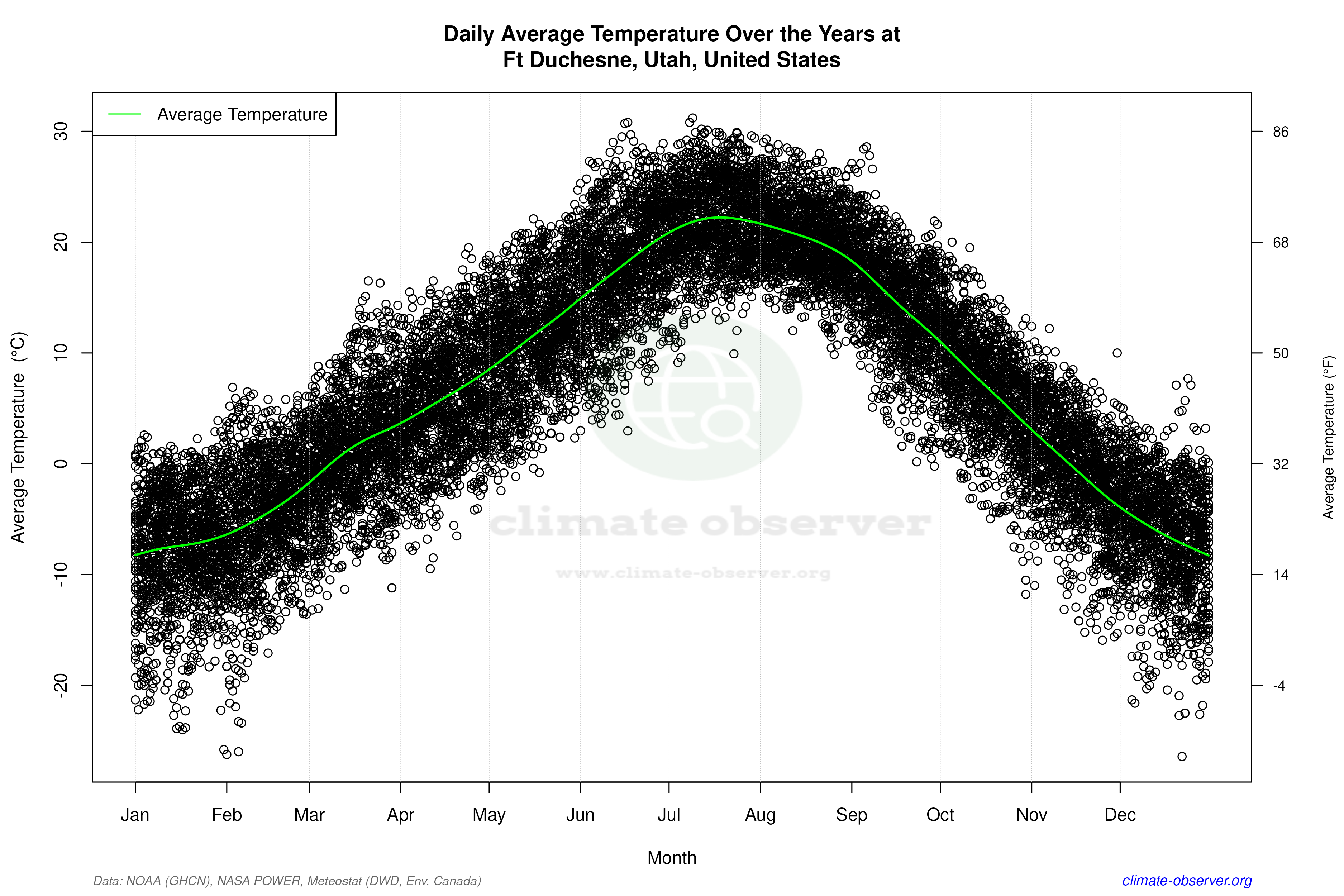
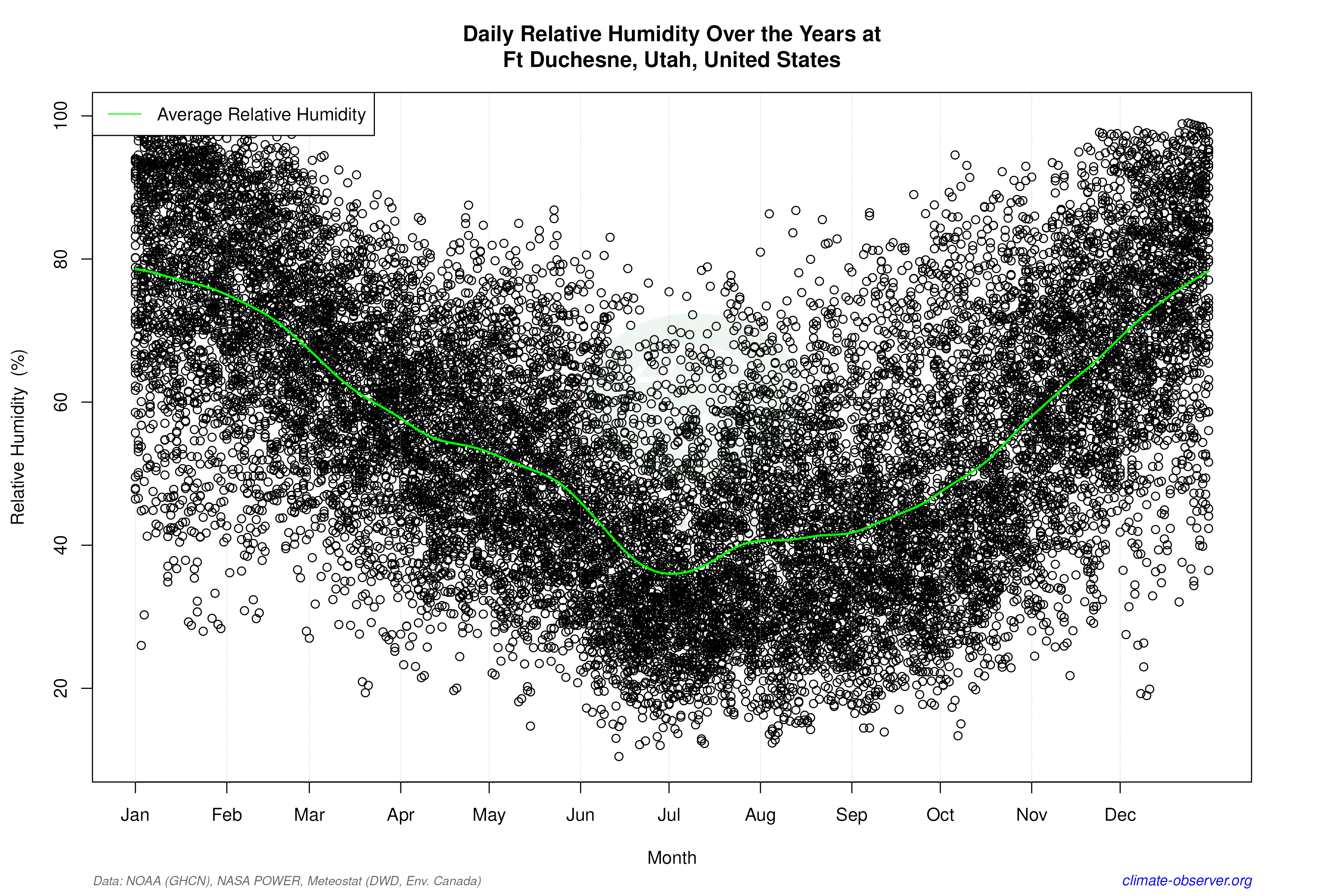

Average Max Temperature Throughout Year | 1 of 5


