Climate for Station: Chelan, Washington, United States
Loading live weather...
Climate Analysis & Overview
Chelan, Washington, is experiencing a warming trend, with significant increases in both high and low temperatures over the past decade. The precipitation pattern is becoming more concentrated, suggesting potential impacts on local agriculture and water management.
Warming Trends in Chelan
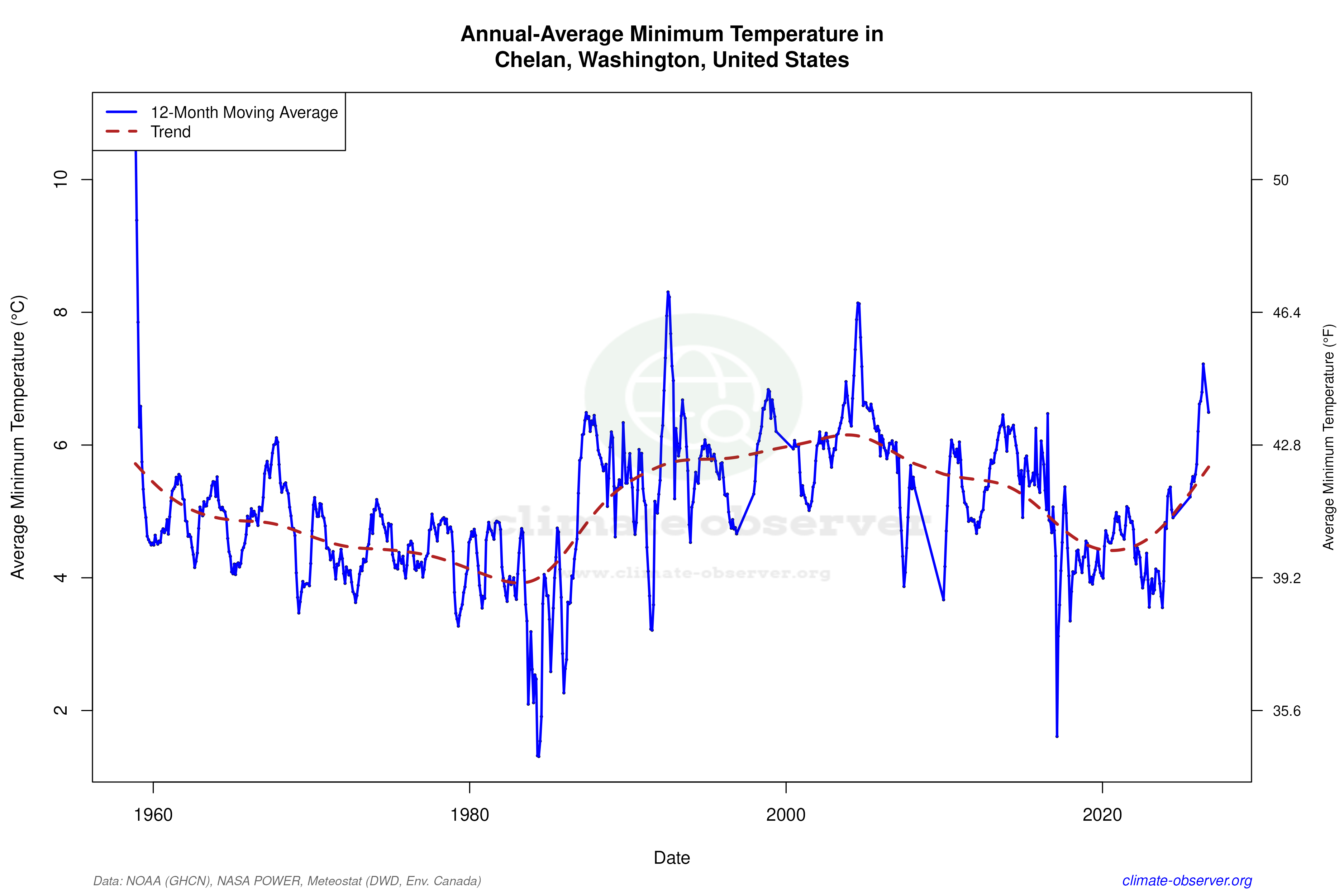
Chelan, situated in the heart of Washington state, is characterised by a warm-summer Mediterranean climate (Köppen classification Csb). Over the past decade, the region has seen a notable warming trend. High temperatures have increased by 0.95°C (1.71°F), while low temperatures have risen by 0.85°C (1.53°F). These changes are more pronounced than the all-time trends, which show a more modest rise of 0.15°C (0.27°F) for highs and 0.09°C (0.16°F) for lows. This suggests a recent acceleration in warming, which could be linked to broader regional climate patterns and global climate change.
Extreme Temperature Records
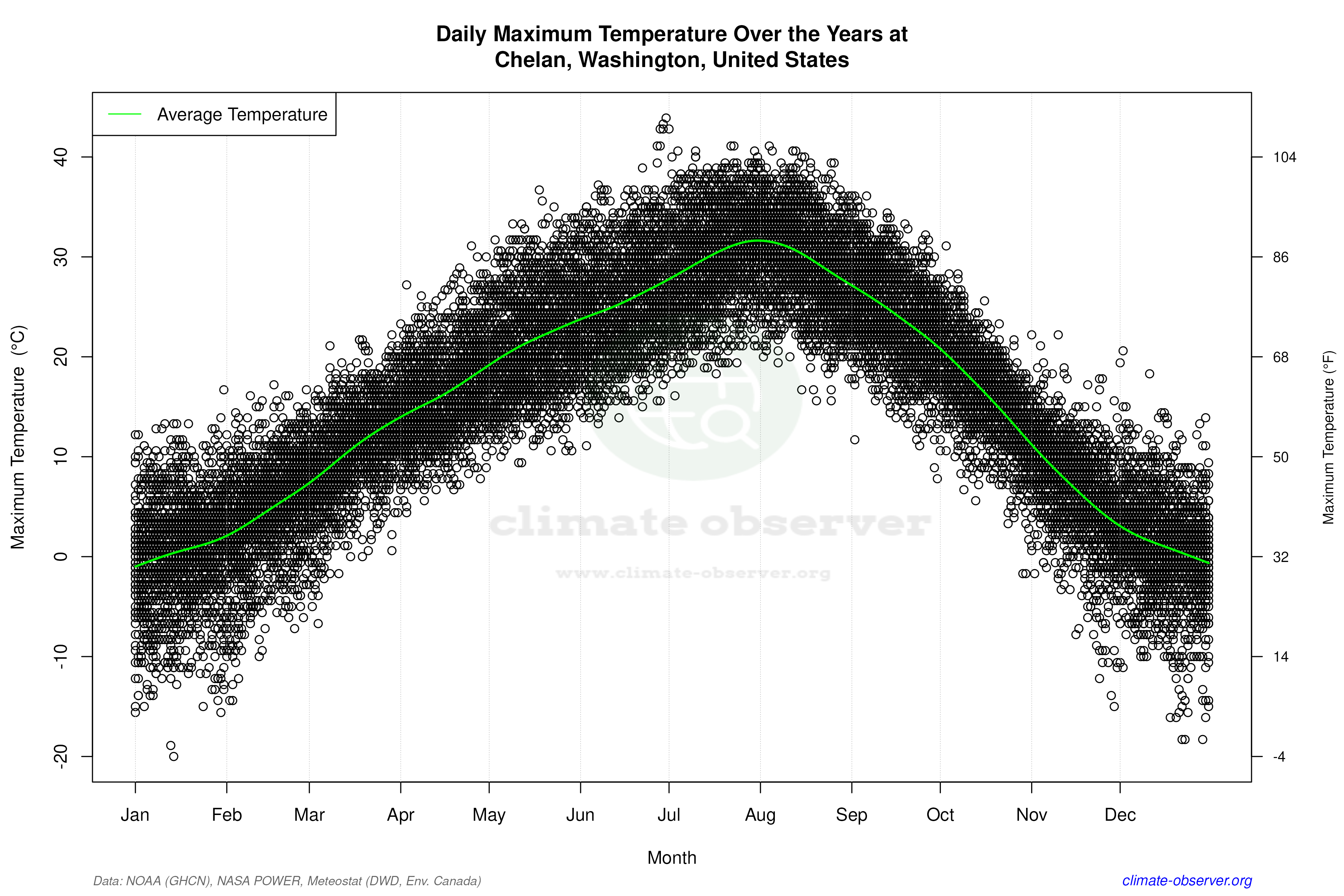
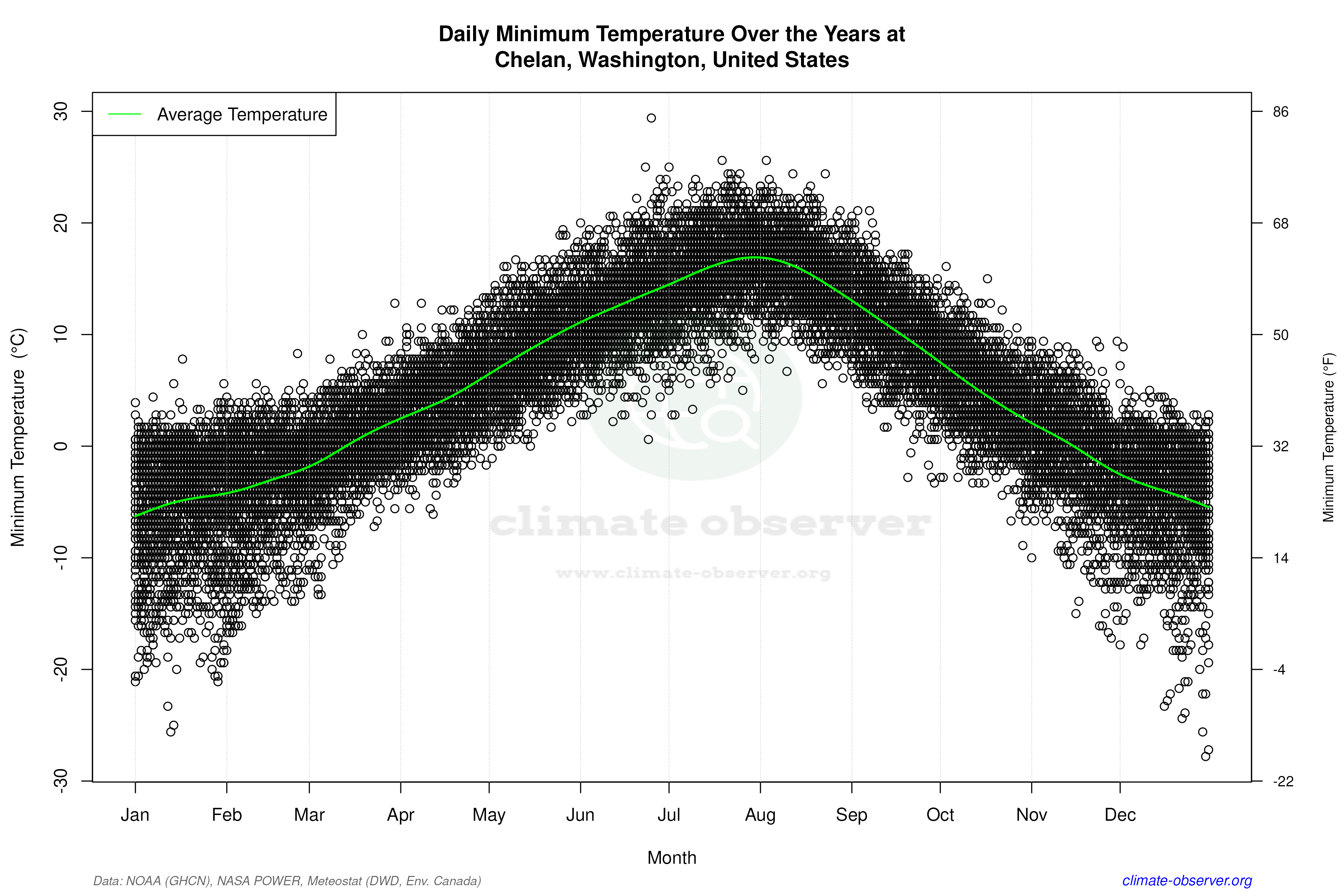
Chelan's geographical location, nestled between the Cascade Range and the Columbia River, contributes to its temperature extremes. The area has recorded a maximum temperature of 43.9°C (111.0°F), showcasing the potential for intense summer heat. Conversely, the minimum temperature has plummeted to -27.8°C (-18.0°F), reflecting the cold snaps that can occur in winter. These extremes highlight the region's susceptibility to temperature fluctuations, which can challenge local infrastructure and ecosystems.
Precipitation Patterns: A Shift Towards Concentration
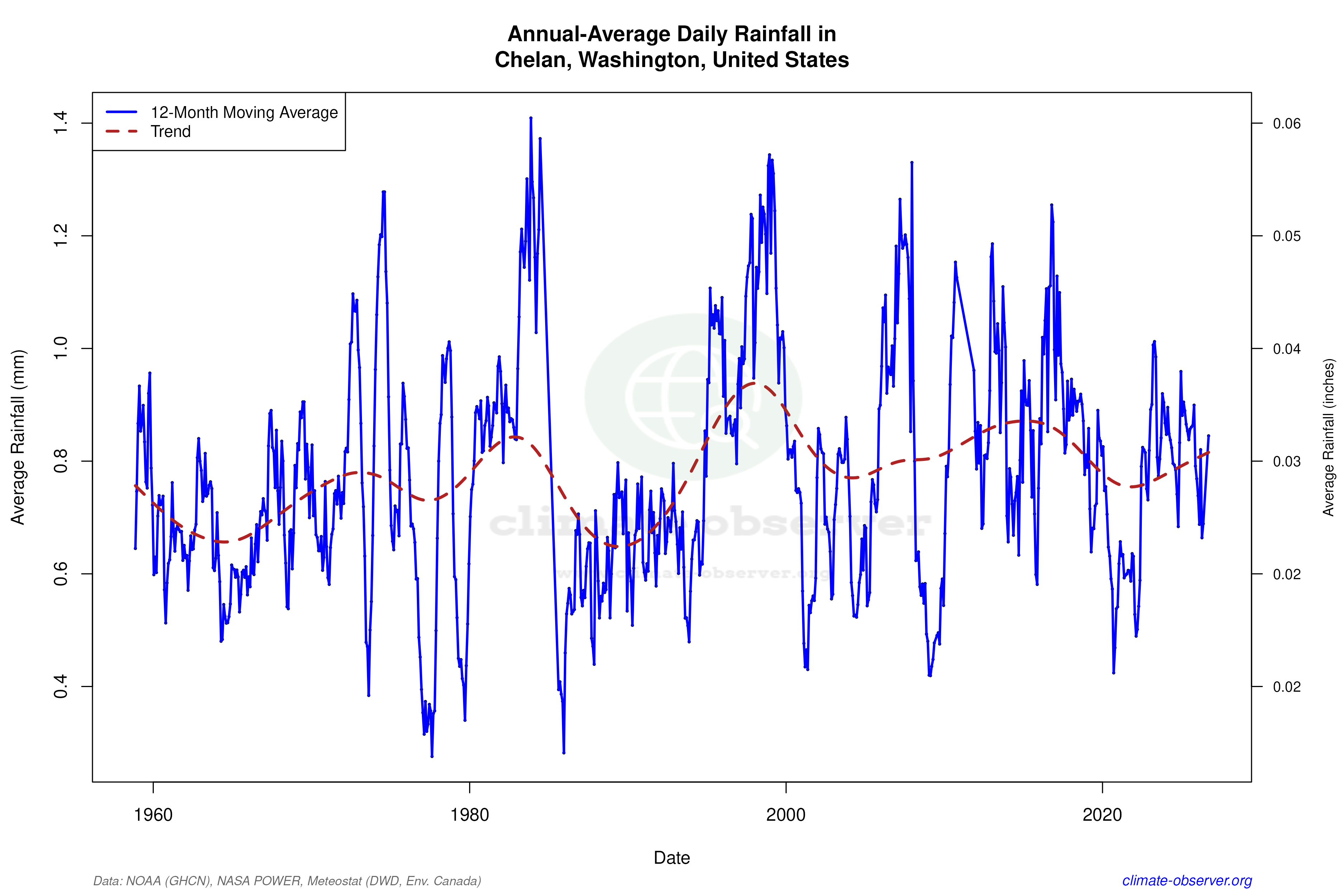
The Precipitation Concentration Index (PCI) for Chelan has increased from a baseline of 16.5 to a current value of 18.2. This indicates a shift towards more concentrated precipitation events, meaning rainfall is occurring in fewer but more intense events. While the PCI is not yet at the threshold of high concentration (over 20), this change could affect water resource management and agricultural practices, as more intense rainfall can lead to runoff and erosion.
Implications for Local Climate Goals
The observed trends in Chelan's climate are significant in the context of the United States' regional climate goals, which aim to mitigate the impacts of climate change. The warming trends and changes in precipitation patterns could have implications for local agriculture, particularly in a region known for its fruit orchards and vineyards. Adapting to these changes will be crucial for maintaining the economic viability and environmental sustainability of the area.
The Broader Climate Context
Chelan's climate profile reflects broader climatic shifts occurring across the Pacific Northwest. The region has experienced recent weather events, such as heatwaves and droughts, which underscore the importance of understanding and adapting to climate variability. As Chelan continues to warm, the community and policymakers must consider strategies to address these challenges, ensuring resilience in the face of ongoing climate change.
Station Statistics
10-Year Trend
High: +1.36 °C/decade
Low: +1.47 °C/decade
Rain: -0.12 mm/decade
25-Year Trend
High: +0.45 °C/decade
Low: -0.78 °C/decade
Rain: +0.01 mm/decade
50-Year Trend
High: +0.30 °C/decade
Low: +0.12 °C/decade
Rain: +0.02 mm/decade
All-Time Trend
High: +0.16 °C/decade
Low: +0.10 °C/decade
Rain: +0.02 mm/decade
Percentage Above-Average Days
Last 12 Months: 53.7%
This Year: 67.4%
Precipitation Concentration Index (PCI) ℹ️
Last 12 Months: 16.7
Historical Average: 15.7
Percentile Rank of Last 12 Months ℹ️
High: 98th percentile
Low: 91st percentile
Rain: 52nd percentile
Change in Variance ℹ️
High: +18.3%
Low: +11.5%
Intraday: +30.5%
Data Coverage
74.4%
First Year of Data
2004
Station Location
Historical Weather Records
| Max High | Avg High | Min High | Max Avg | Avg Avg | Min Avg | Max Low | Avg Low | Min Low | Max Precipitation | Avg Precipitation | Max Snow | Avg Snow | |
|---|---|---|---|---|---|---|---|---|---|---|---|---|---|
| Record | 43.9 °C | — | -20.0 °C | — | — | — | 29.4 °C | — | -27.8 °C | 47.8 mm | — | 406.0 mm | — |
| January | 16.7 °C | 0.5 °C | -20.0 °C | — | — | — | 7.8 °C | -5.0 °C | -25.6 °C | 35.6 mm | 1.2 mm | 381.0 mm | 8.7 mm |
| February | 17.2 °C | 4.6 °C | -14.4 °C | — | — | — | 8.3 °C | -3.1 °C | -18.3 °C | 27.2 mm | 1.0 mm | 229.0 mm | 4.4 mm |
| March | 22.2 °C | 10.8 °C | -6.7 °C | — | — | — | 12.8 °C | 0.3 °C | -13.3 °C | 36.1 mm | 0.8 mm | 152.0 mm | 1.6 mm |
| April | 31.1 °C | 16.3 °C | 4.4 °C | — | — | — | 13.3 °C | 4.2 °C | -6.1 °C | 27.9 mm | 0.6 mm | 25.0 mm | 0.0 mm |
| May | 36.7 °C | 21.6 °C | 9.4 °C | — | — | — | 19.4 °C | 8.8 °C | -1.1 °C | 45.7 mm | 0.7 mm | 0.0 mm | 0.0 mm |
| June | 43.9 °C | 25.5 °C | 11.1 °C | — | — | — | 29.4 °C | 12.8 °C | 0.6 °C | 47.8 mm | 0.6 mm | 0.0 mm | 0.0 mm |
| July | 42.8 °C | 30.1 °C | 16.1 °C | — | — | — | 25.6 °C | 16.0 °C | 2.8 °C | 43.2 mm | 0.3 mm | 0.0 mm | 0.0 mm |
| August | 41.1 °C | 29.9 °C | 15.6 °C | — | — | — | 25.6 °C | 15.5 °C | 5.6 °C | 37.8 mm | 0.3 mm | 0.0 mm | 0.0 mm |
| September | 36.1 °C | 24.3 °C | 7.8 °C | — | — | — | 21.1 °C | 10.4 °C | -3.3 °C | 29.7 mm | 0.4 mm | 0.0 mm | 0.0 mm |
| October | 31.1 °C | 16.3 °C | -1.7 °C | — | — | — | 16.1 °C | 4.7 °C | -8.9 °C | 36.6 mm | 0.7 mm | 13.0 mm | 0.0 mm |
| November | 22.2 °C | 7.0 °C | -15.0 °C | — | — | — | 9.4 °C | -0.1 °C | -17.2 °C | 33.0 mm | 1.3 mm | 330.0 mm | 2.7 mm |
| December | 20.6 °C | 1.1 °C | -18.3 °C | — | — | — | 8.9 °C | -4.0 °C | -27.8 °C | 38.1 mm | 1.6 mm | 406.0 mm | 10.2 mm |
Data Visualisations
Remove WatermarksCurrent Year Climate Trends vs Historical
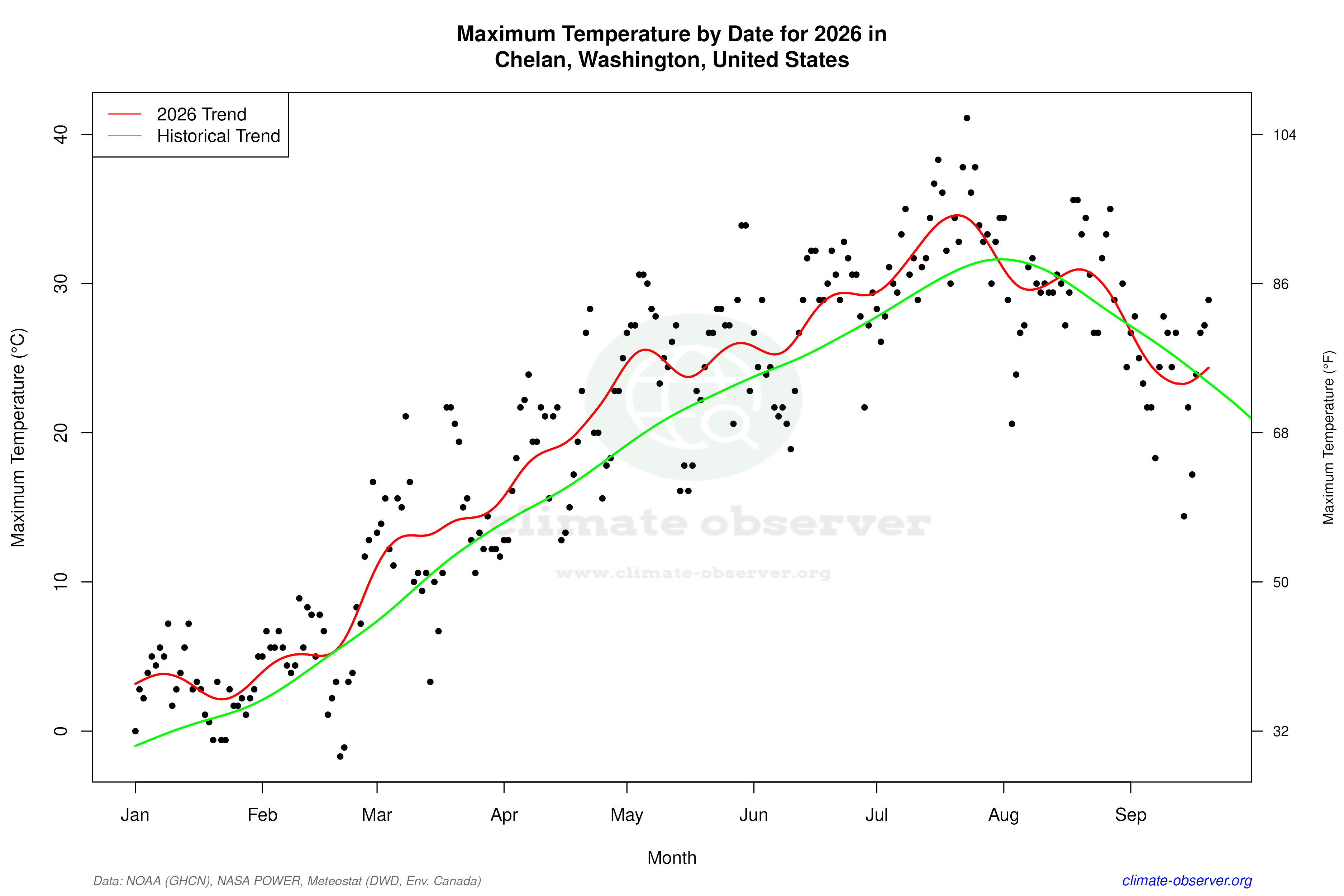
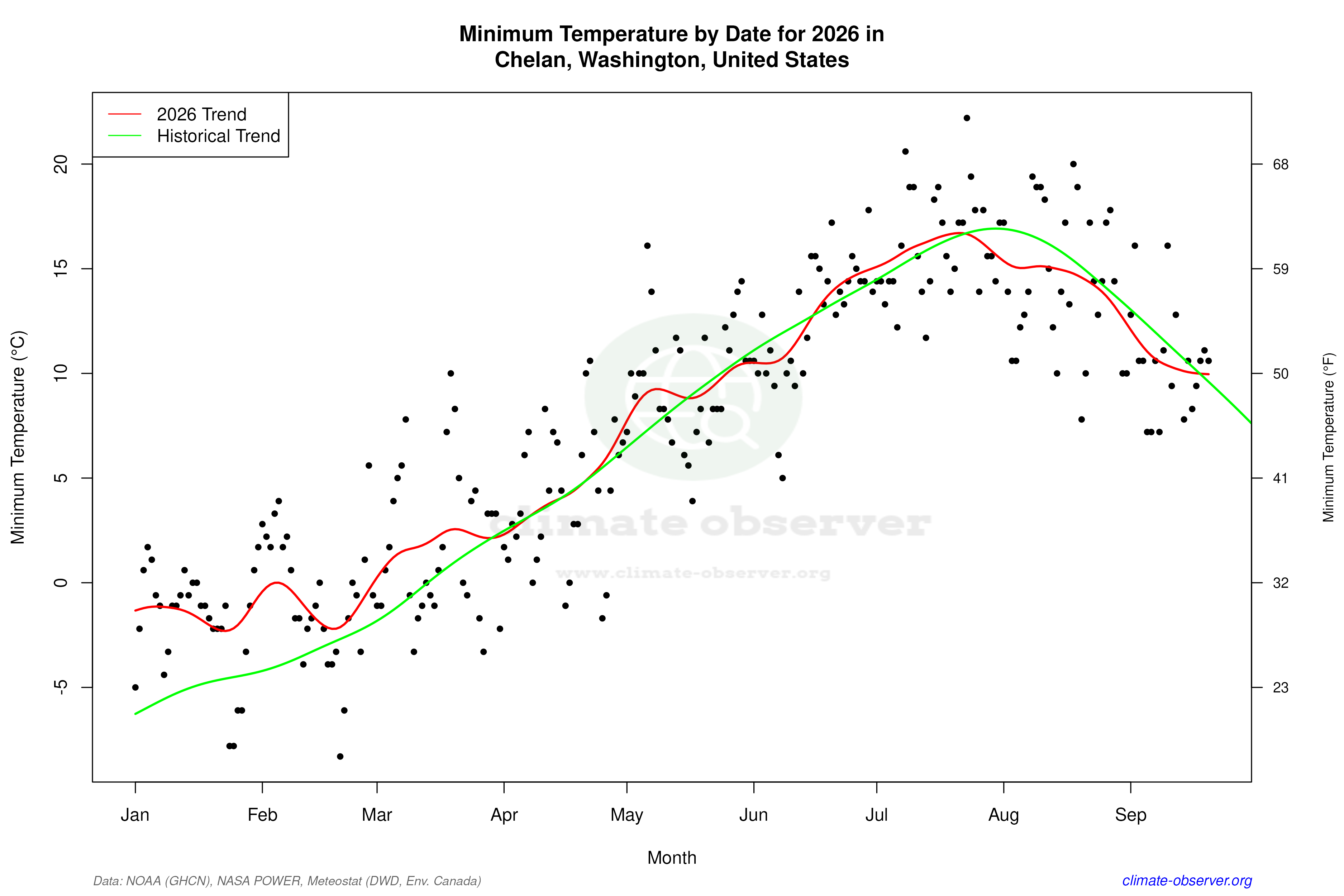

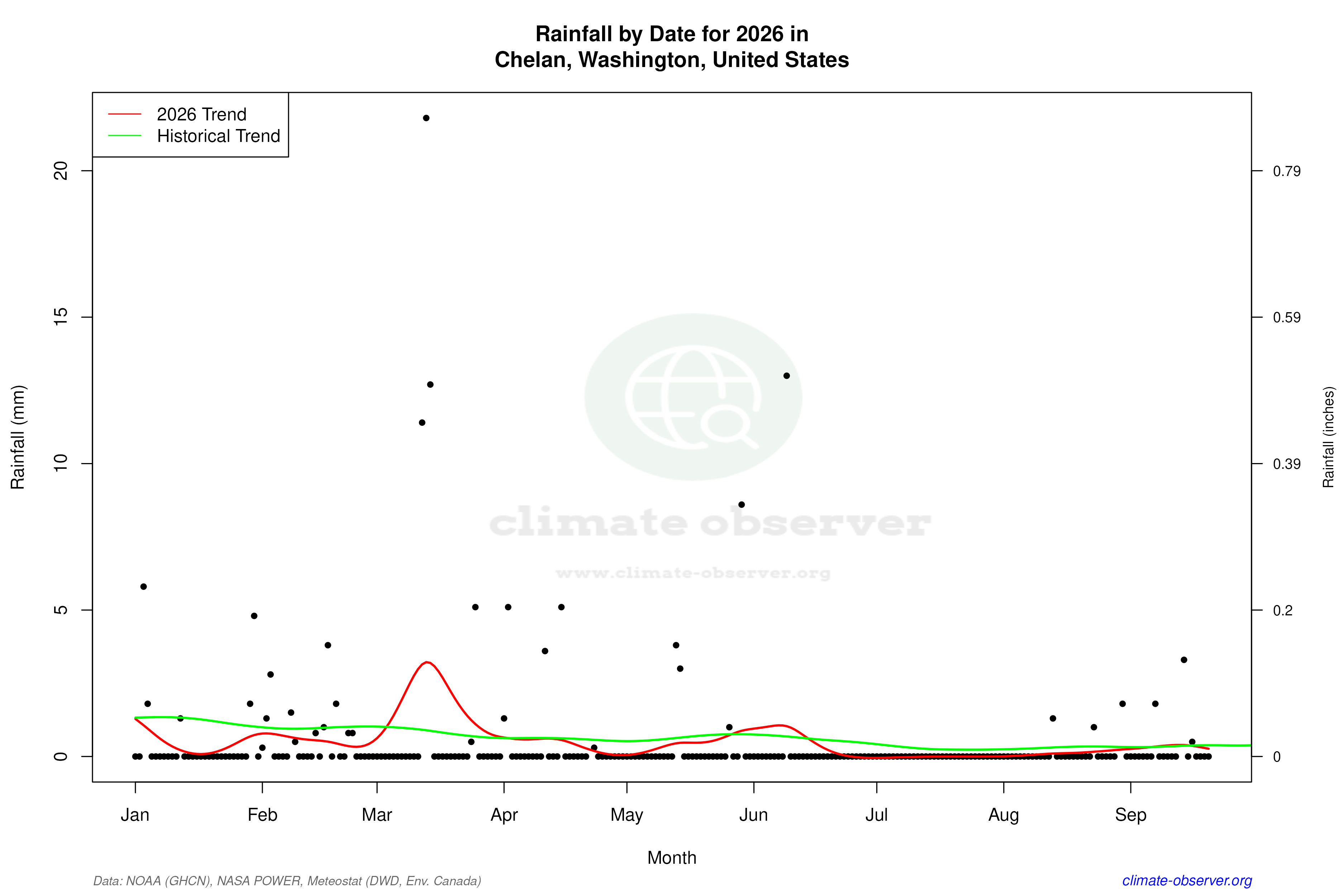


Max Temperature this Year | 1 of 6
Climate 12-Month Moving Averages
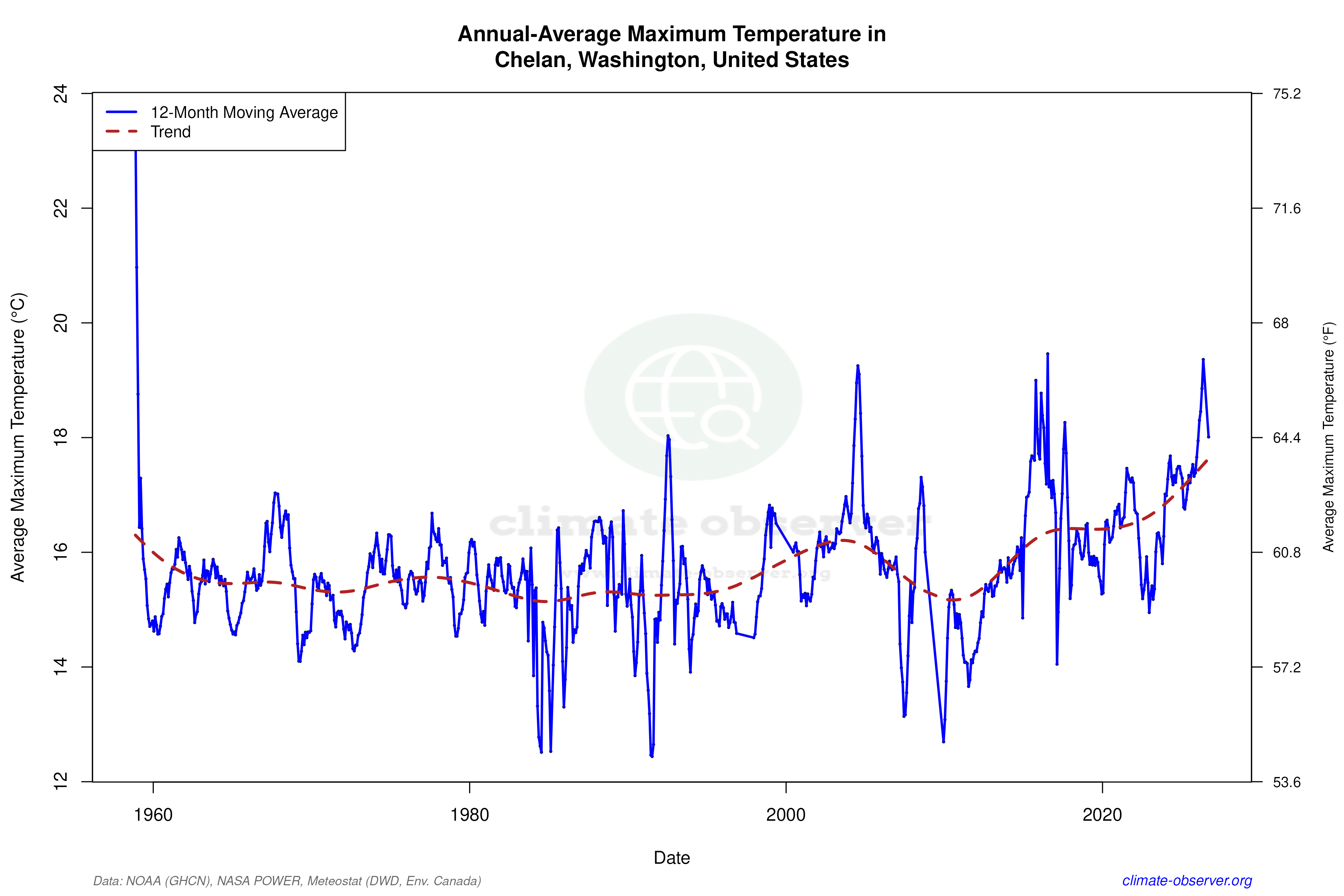



Max Temperature 12-Month MA | 1 of 6
Daily Data Points and Averages Throughout the Year


Average Max Temperature Throughout Year | 1 of 5


