Climate for Station: Northam, Western Australia, Australia
Loading live weather...
Climate Analysis & Overview
Northam, Western Australia, is experiencing a warming trend, with significant increases in both high and low temperatures over the past decade. Precipitation patterns have become more concentrated, suggesting a shift towards fewer, more intense rainfall events. This aligns with broader regional climate challenges and goals.
Thermal Dynamics in Northam
Situated in the Wheatbelt region of Western Australia, Northam experiences a Mediterranean climate (Köppen classification Csa), characterised by hot, dry summers and mild, wet winters. Over the past decade, Northam has seen a notable warming trend, with average high temperatures increasing by 1.25°C (2.25°F) and low temperatures by 1.26°C (2.27°F). These changes are more pronounced than the all-time warming trends, which are a modest 0.10°C (0.18°F) for highs and 0.00°C (0.01°F) for lows. This suggests a recent acceleration in temperature increases, potentially linked to broader climatic shifts in the region.
Precipitation Patterns and Concentration
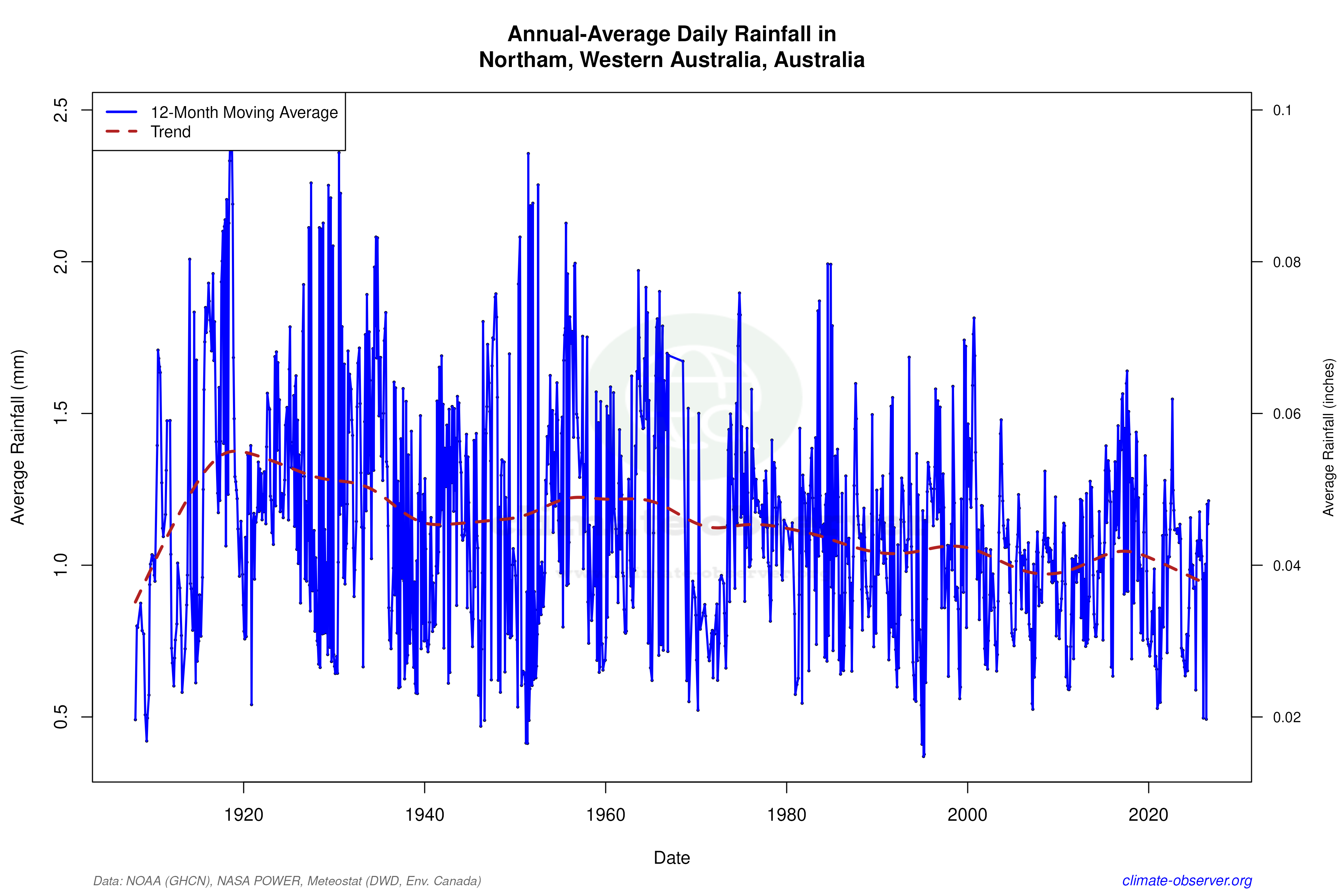
The Precipitation Concentration Index (PCI) for Northam has risen from a baseline of 15.5 to a current value of 17.4, indicating a more concentrated rainfall pattern. This means that precipitation is occurring in fewer, but more intense, events. Such a shift can lead to challenges in water management and agriculture, as the region may experience longer dry spells punctuated by heavy rainfall. While the PCI has not reached the threshold of high concentration (above 20), the increase is significant enough to warrant attention from local planners and policymakers.
Extreme Temperature Records
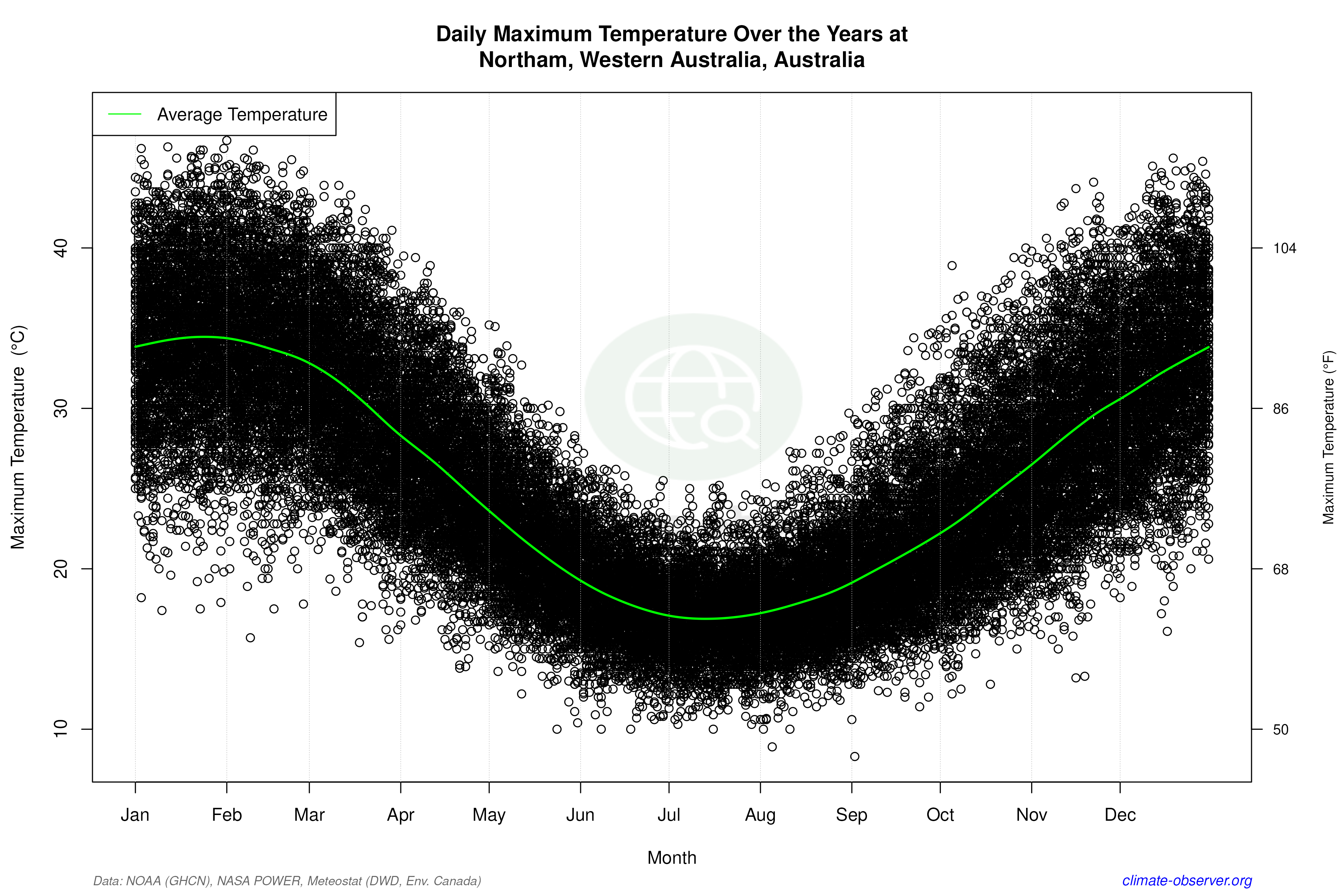
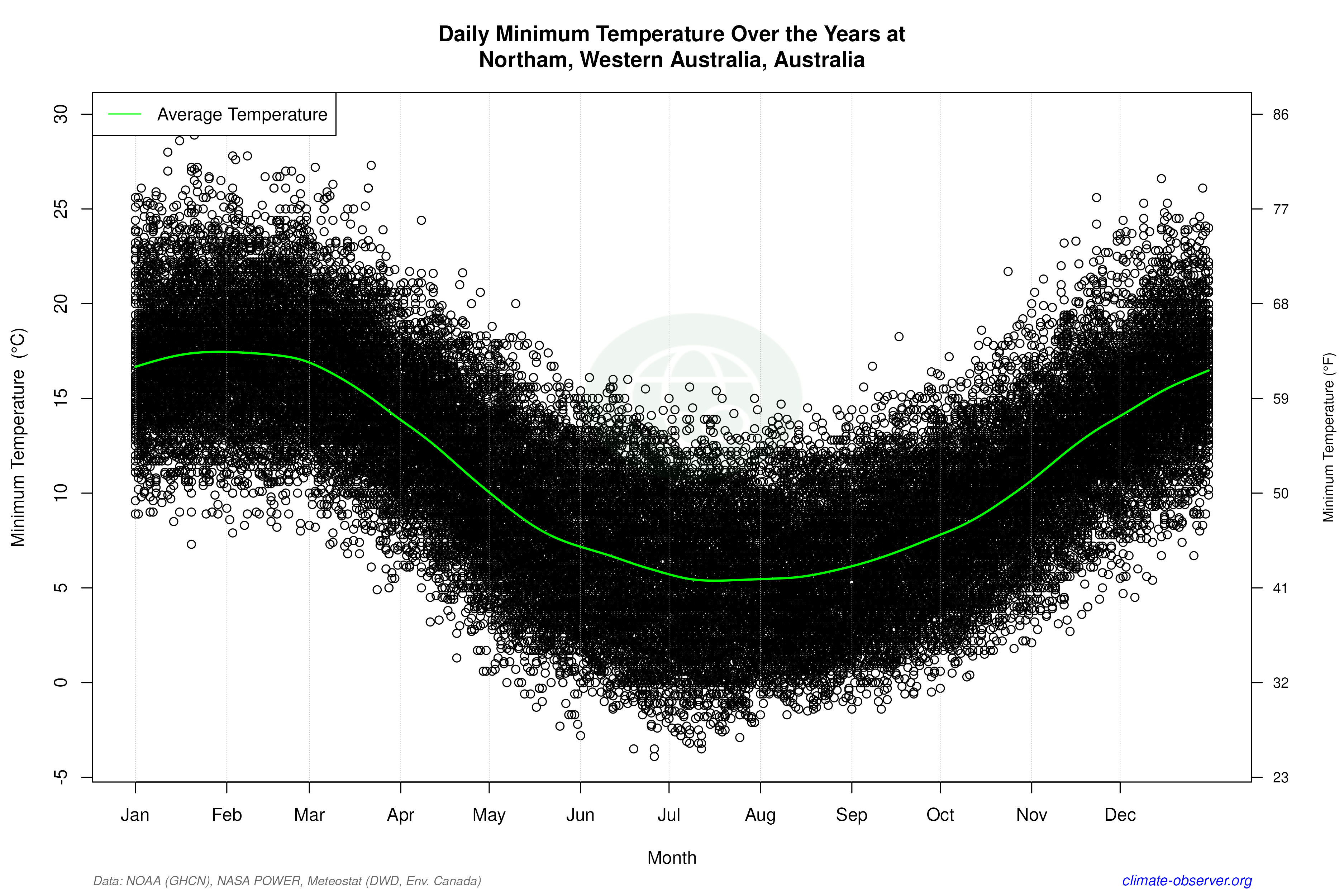
Northam's temperature extremes are also noteworthy, with a record high of 48.1°C (118.6°F) and a record low of -3.9°C (25.0°F). These extremes highlight the variability in local climate conditions, which can be influenced by factors such as elevation, proximity to the coast, and prevailing wind patterns. The high temperatures align with the broader trend of warming, while the low temperatures underscore the potential for significant temperature swings.
Regional Climate Context
The changes observed in Northam are reflective of broader climate trends across Australia, where regional climate goals focus on reducing greenhouse gas emissions and adapting to changing weather patterns. Recent weather events, such as heatwaves and droughts, underscore the urgency of these goals. The warming trends and changes in precipitation concentration in Northam are part of this larger narrative, highlighting the need for adaptive strategies to mitigate the impacts of climate change on local communities and ecosystems.
Station Statistics
10-Year Trend
High: +0.76 °C/decade
Low: +0.89 °C/decade
Rain: -0.32 mm/decade
25-Year Trend
High: +0.14 °C/decade
Low: +0.40 °C/decade
Rain: +0.03 mm/decade
50-Year Trend
High: +0.09 °C/decade
Low: -0.13 °C/decade
Rain: -0.03 mm/decade
All-Time Trend
High: +0.08 °C/decade
Low: -0.01 °C/decade
Rain: -0.03 mm/decade
Percentage Above-Average Days
Last 12 Months: 46.3%
This Year: 57.6%
Precipitation Concentration Index (PCI) ℹ️
Last 12 Months: 14.8
Historical Average: 16.6
Percentile Rank of Last 12 Months ℹ️
High: 66th percentile
Low: 48th percentile
Rain: 34th percentile
Change in Variance ℹ️
High: -0.4%
Low: -2.1%
Intraday: -2.4%
Data Coverage
67.7%
First Year of Data
1935
Station Location
Historical Weather Records
| Max High | Avg High | Min High | Max Avg | Avg Avg | Min Avg | Max Low | Avg Low | Min Low | Max Precipitation | Avg Precipitation | Max Snow | Avg Snow | |
|---|---|---|---|---|---|---|---|---|---|---|---|---|---|
| Record | 48.1 °C | — | 8.3 °C | 35.6 °C | — | 2.3 °C | 29.8 °C | — | -3.9 °C | 126.2 mm | — | — | — |
| January | 46.3 °C | 34.3 °C | 17.4 °C | 35.6 °C | 26.1 °C | 14.7 °C | 28.9 °C | 17.2 °C | 7.3 °C | 97.3 mm | 0.3 mm | — | — |
| February | 48.1 °C | 33.8 °C | 15.7 °C | 35.2 °C | 25.7 °C | 14.4 °C | 29.8 °C | 17.3 °C | 7.9 °C | 115.6 mm | 0.4 mm | — | — |
| March | 43.9 °C | 30.8 °C | 15.4 °C | 33.3 °C | 23.0 °C | 12.8 °C | 27.3 °C | 15.5 °C | 4.9 °C | 126.2 mm | 0.5 mm | — | — |
| April | 39.5 °C | 26.1 °C | 13.8 °C | 27.9 °C | 18.8 °C | 10.5 °C | 24.4 °C | 12.1 °C | 0.6 °C | 74.7 mm | 0.8 mm | — | — |
| May | 35.2 °C | 21.4 °C | 10.0 °C | 23.0 °C | 14.6 °C | 8.0 °C | 20.0 °C | 8.4 °C | -2.3 °C | 65.3 mm | 1.7 mm | — | — |
| June | 27.2 °C | 18.0 °C | 10.0 °C | 17.2 °C | 11.5 °C | 2.3 °C | 16.1 °C | 6.5 °C | -3.9 °C | 67.1 mm | 2.5 mm | — | — |
| July | 25.2 °C | 17.0 °C | 10.0 °C | 17.9 °C | 10.4 °C | 4.6 °C | 15.6 °C | 5.4 °C | -3.5 °C | 50.8 mm | 2.6 mm | — | — |
| August | 29.7 °C | 18.0 °C | 8.9 °C | 17.2 °C | 11.0 °C | 4.8 °C | 14.7 °C | 5.7 °C | -1.7 °C | 36.3 mm | 2.0 mm | — | — |
| September | 34.7 °C | 20.6 °C | 8.3 °C | 23.6 °C | 13.0 °C | 7.0 °C | 18.3 °C | 6.9 °C | -1.4 °C | 33.6 mm | 1.2 mm | — | — |
| October | 40.0 °C | 24.2 °C | 12.2 °C | 26.3 °C | 16.4 °C | 6.9 °C | 21.7 °C | 9.0 °C | -0.3 °C | 58.0 mm | 0.8 mm | — | — |
| November | 44.1 °C | 28.6 °C | 13.2 °C | 31.7 °C | 20.5 °C | 9.8 °C | 25.6 °C | 12.5 °C | 2.1 °C | 32.0 mm | 0.4 mm | — | — |
| December | 45.6 °C | 32.2 °C | 16.1 °C | 35.1 °C | 24.0 °C | 14.8 °C | 26.6 °C | 15.3 °C | 4.5 °C | 49.5 mm | 0.2 mm | — | — |
Data Visualisations
Remove WatermarksCurrent Year Climate Trends vs Historical
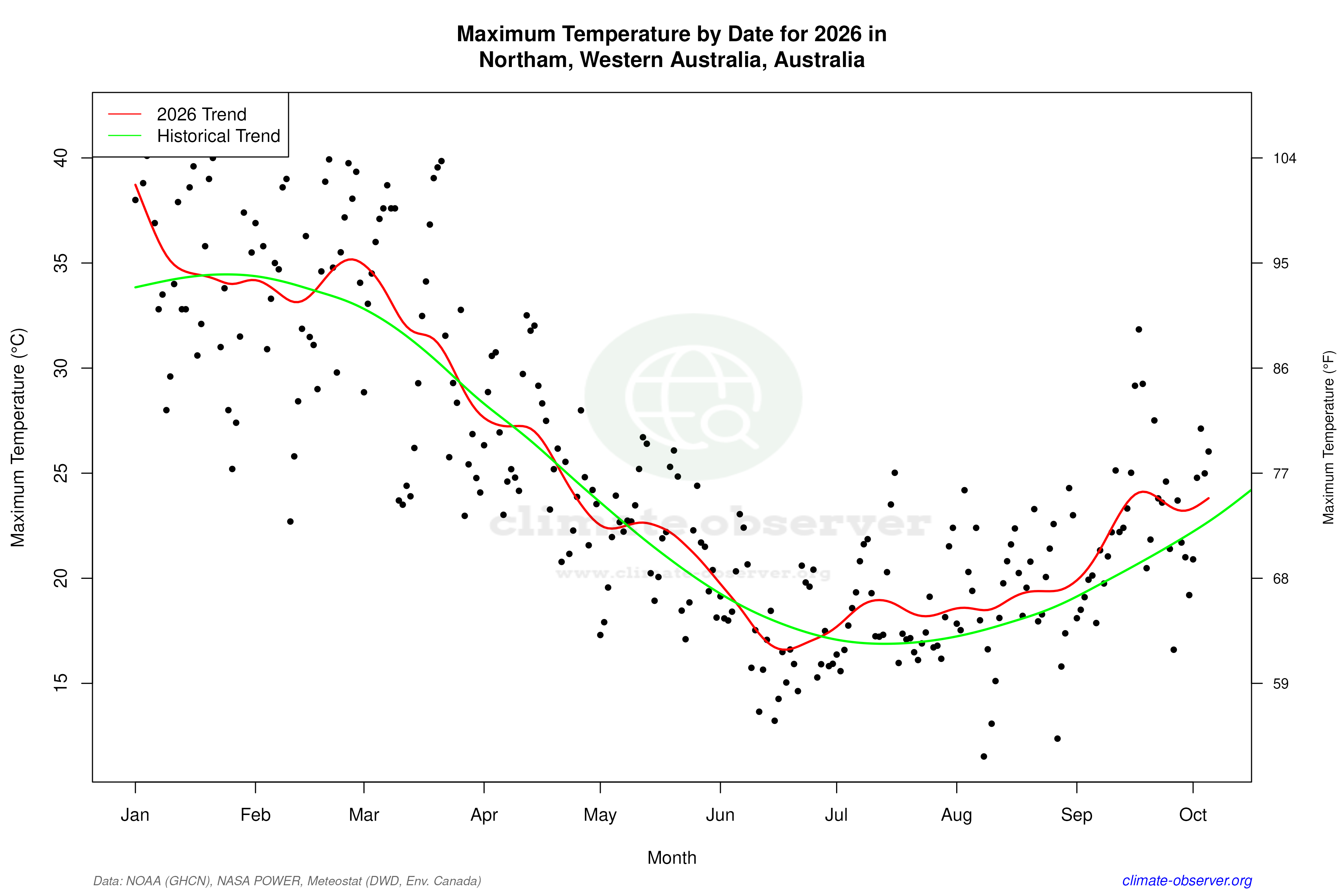
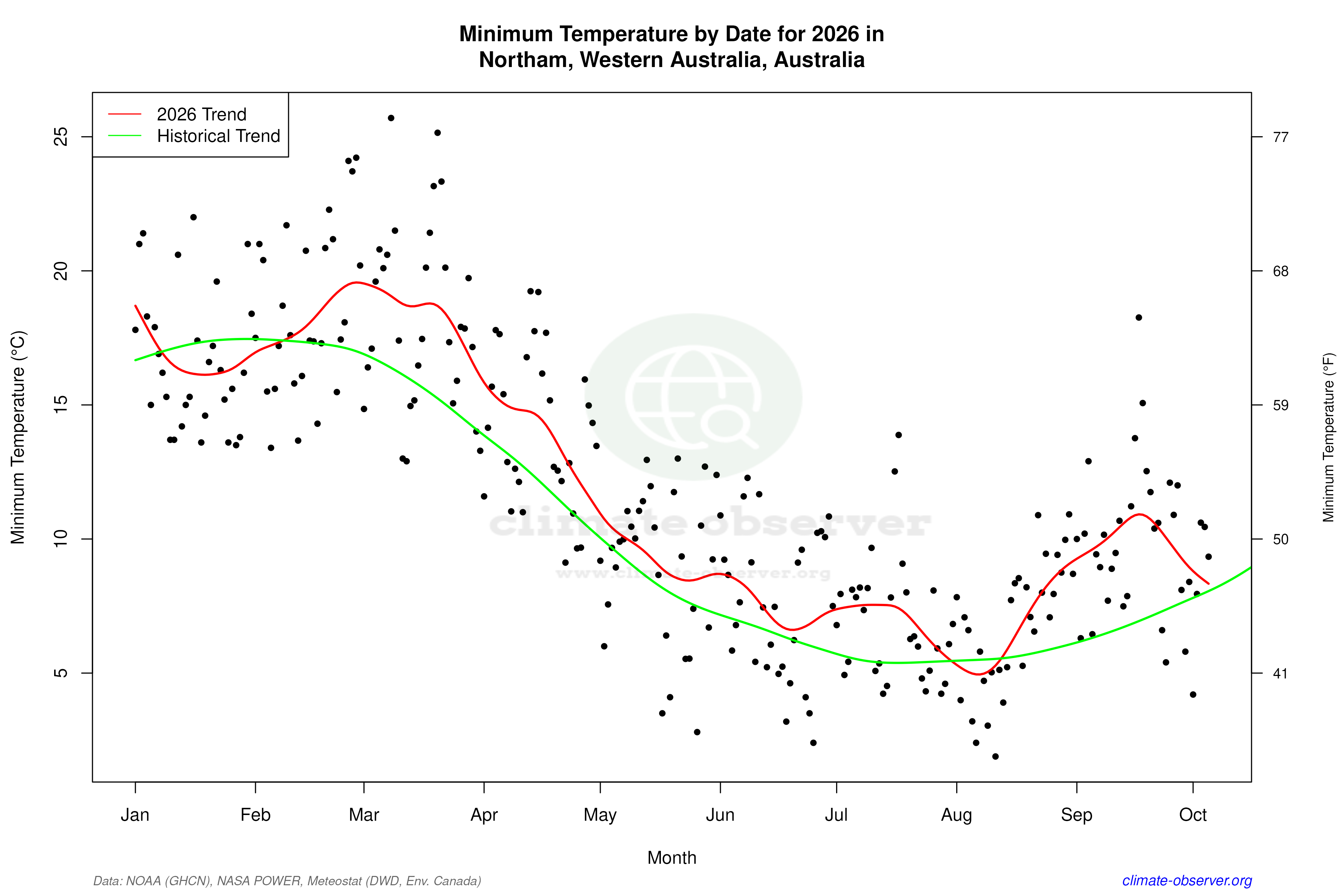
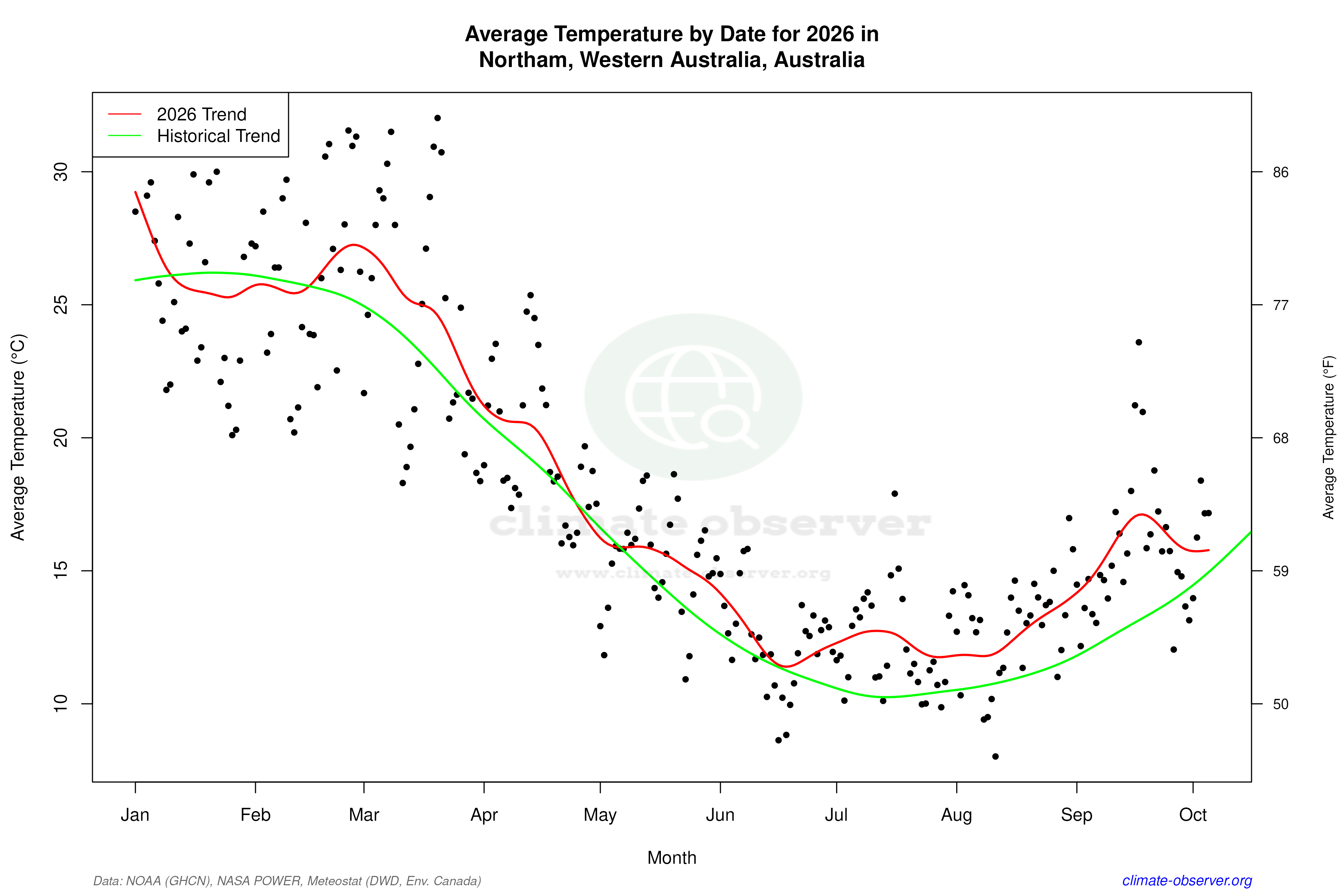
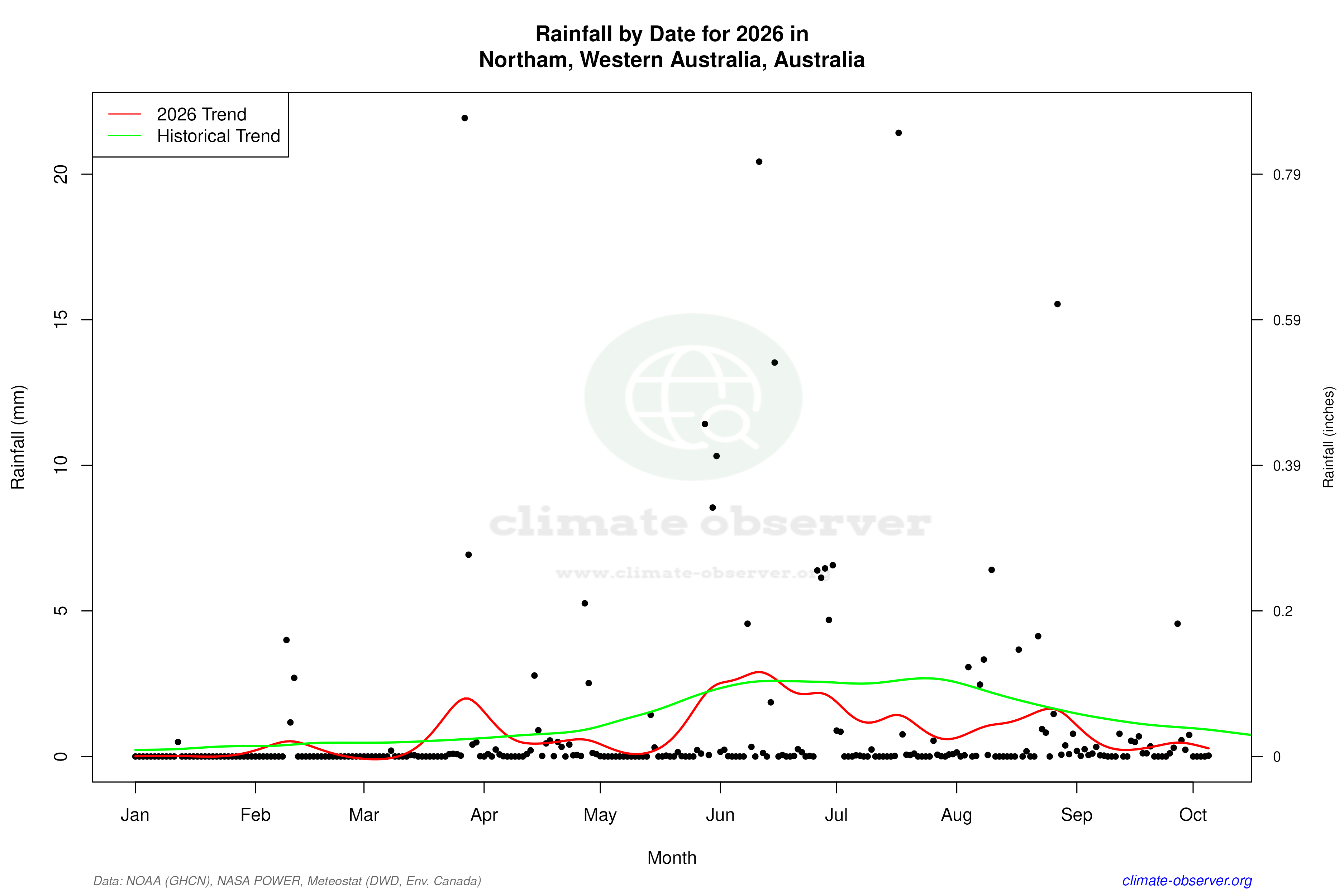
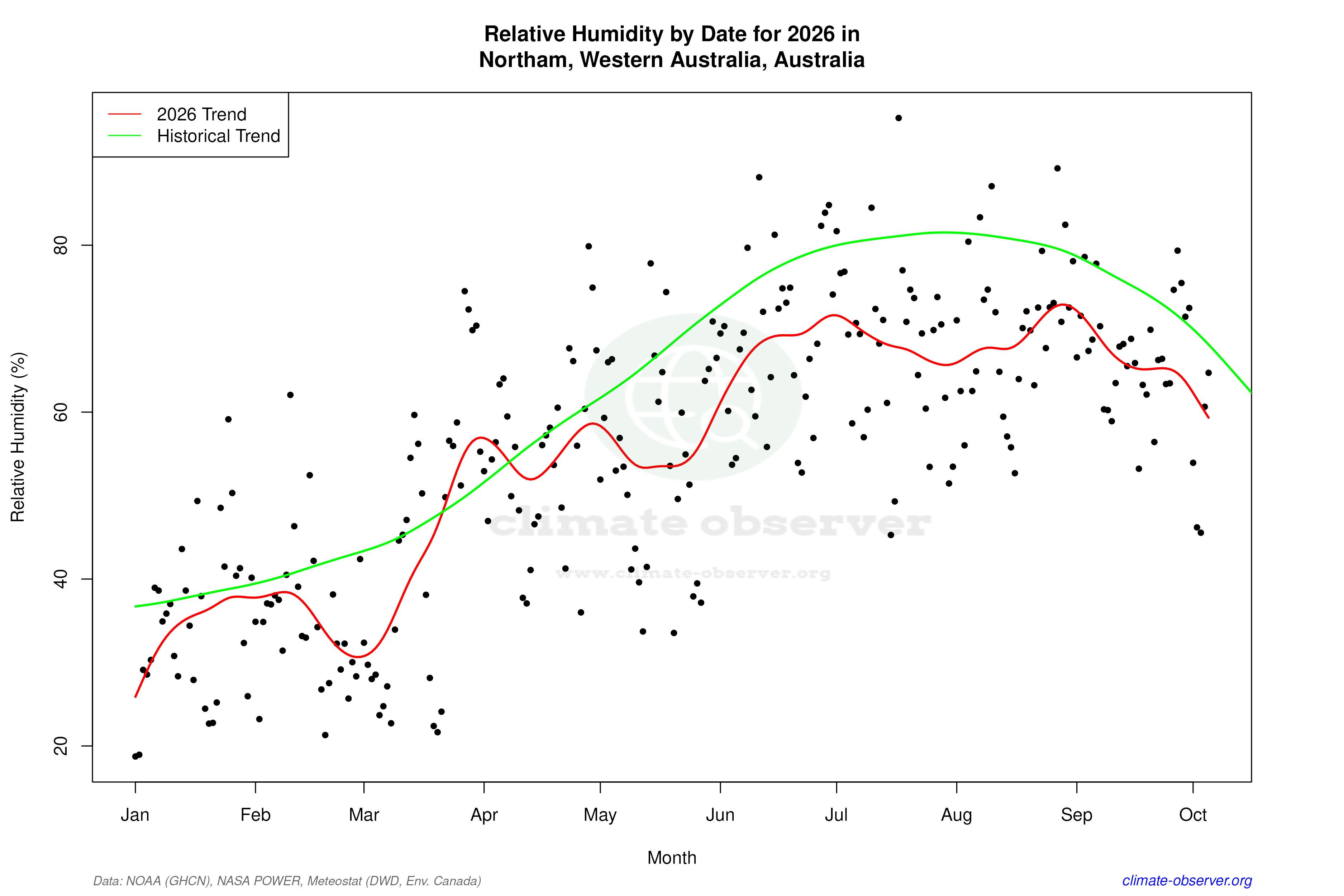

Max Temperature this Year | 1 of 6
Climate 12-Month Moving Averages
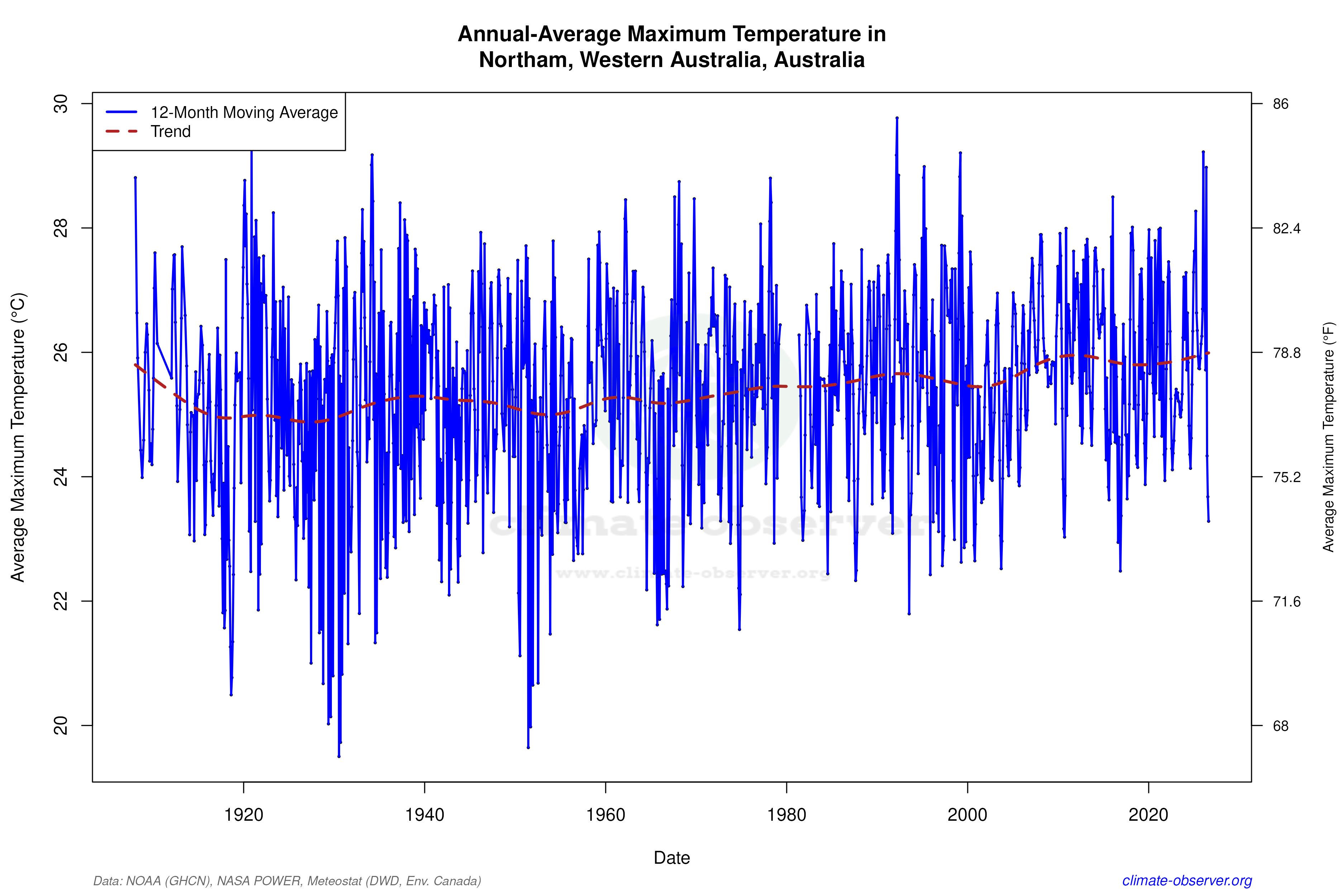
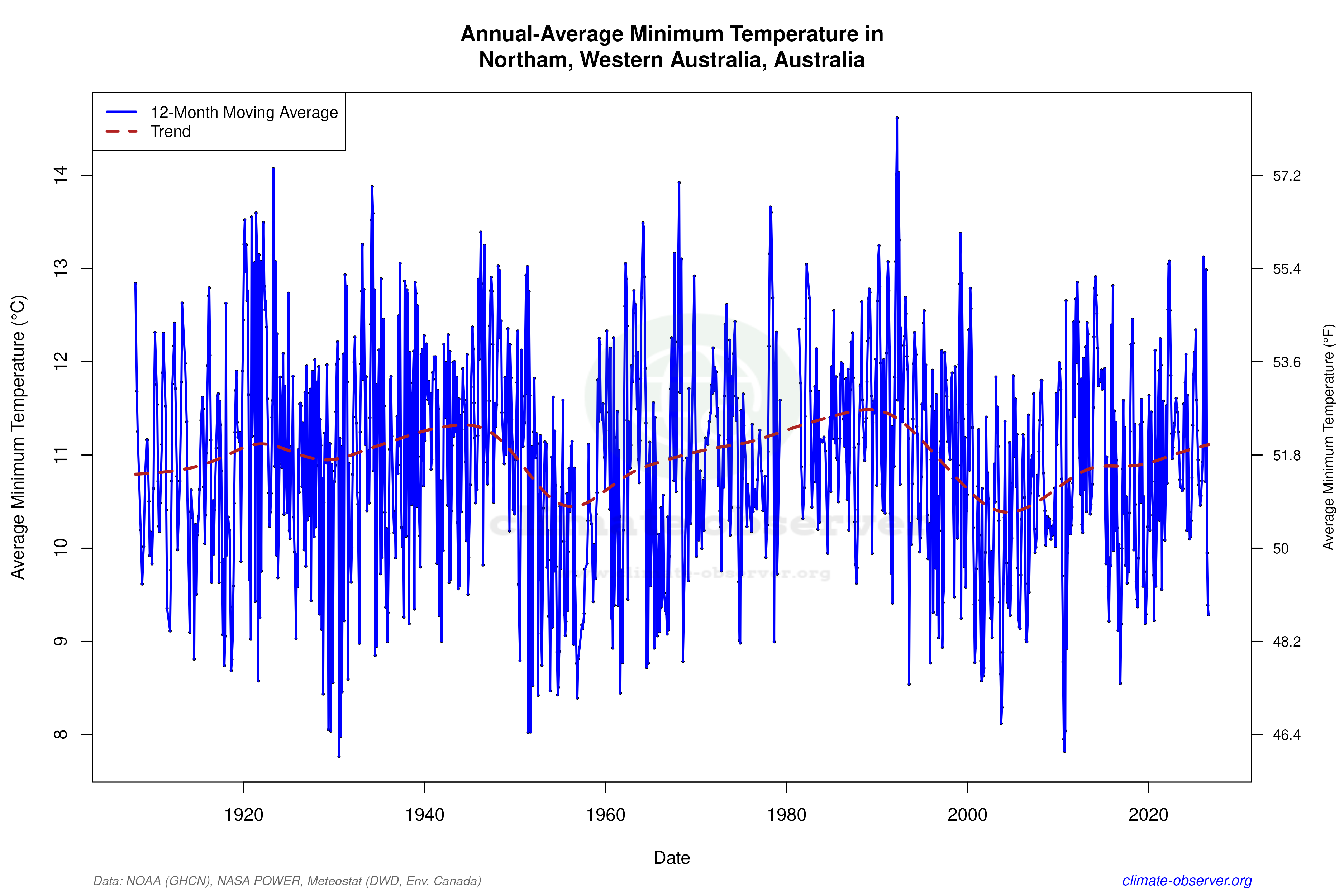
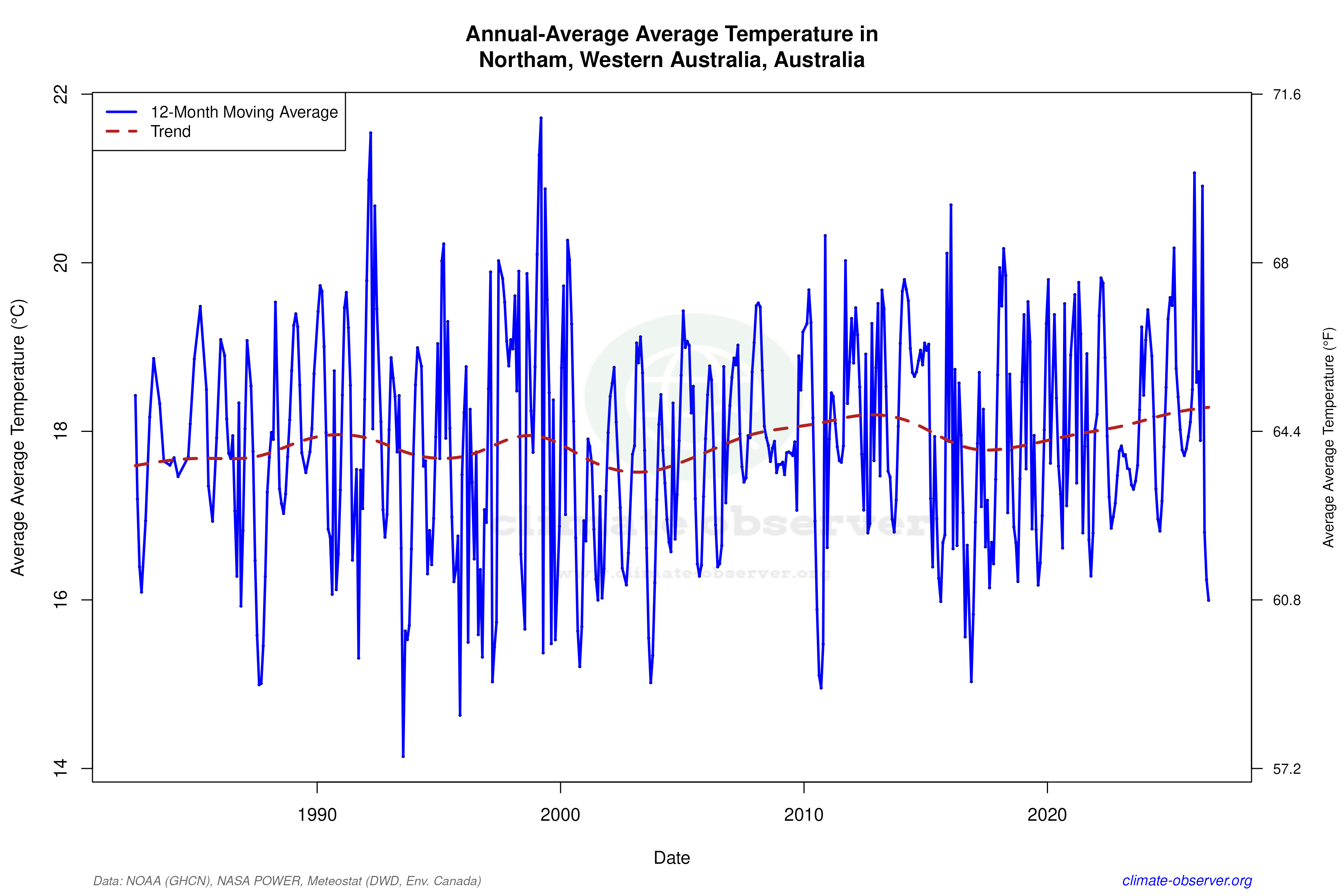
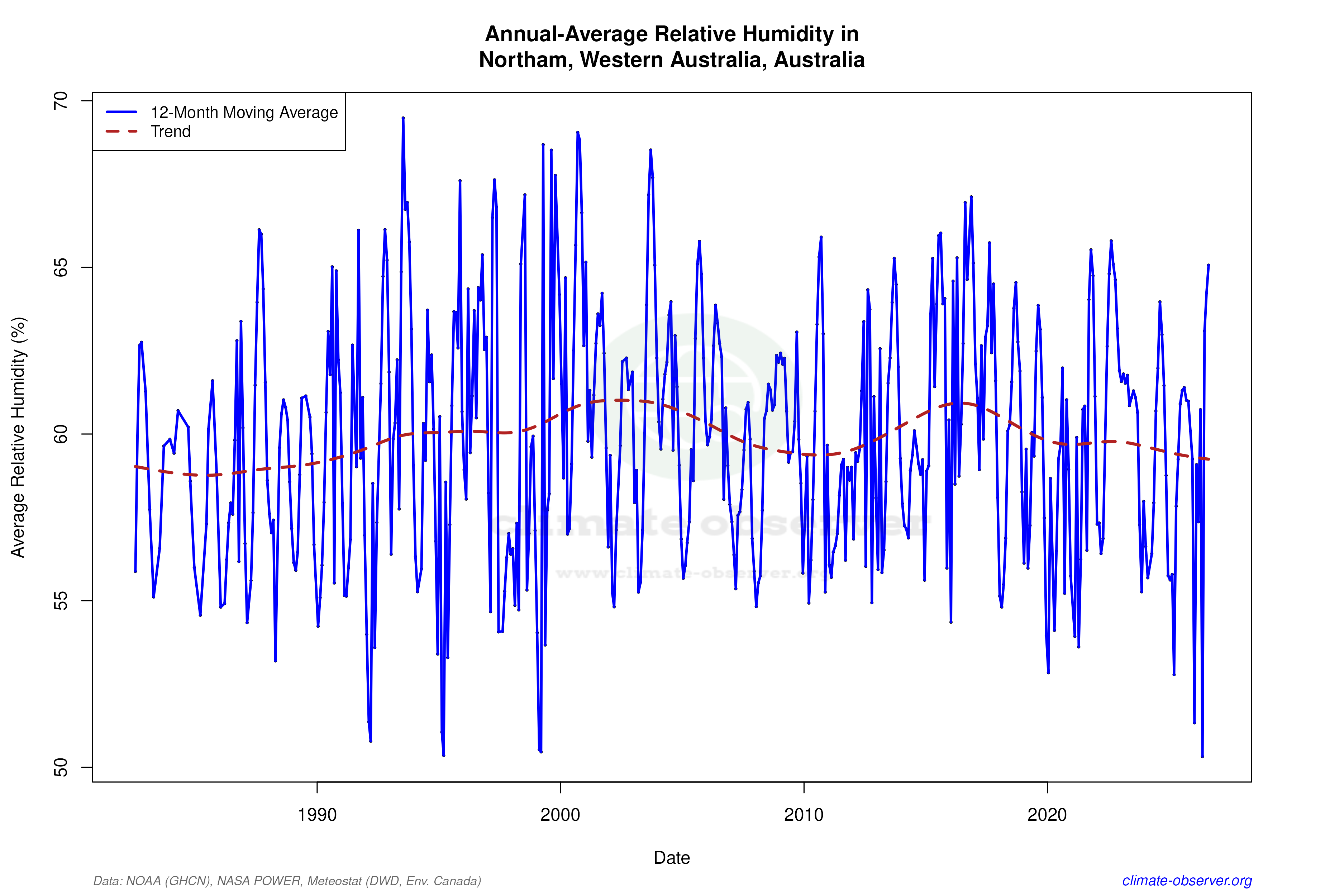

Max Temperature 12-Month MA | 1 of 6
Daily Data Points and Averages Throughout the Year
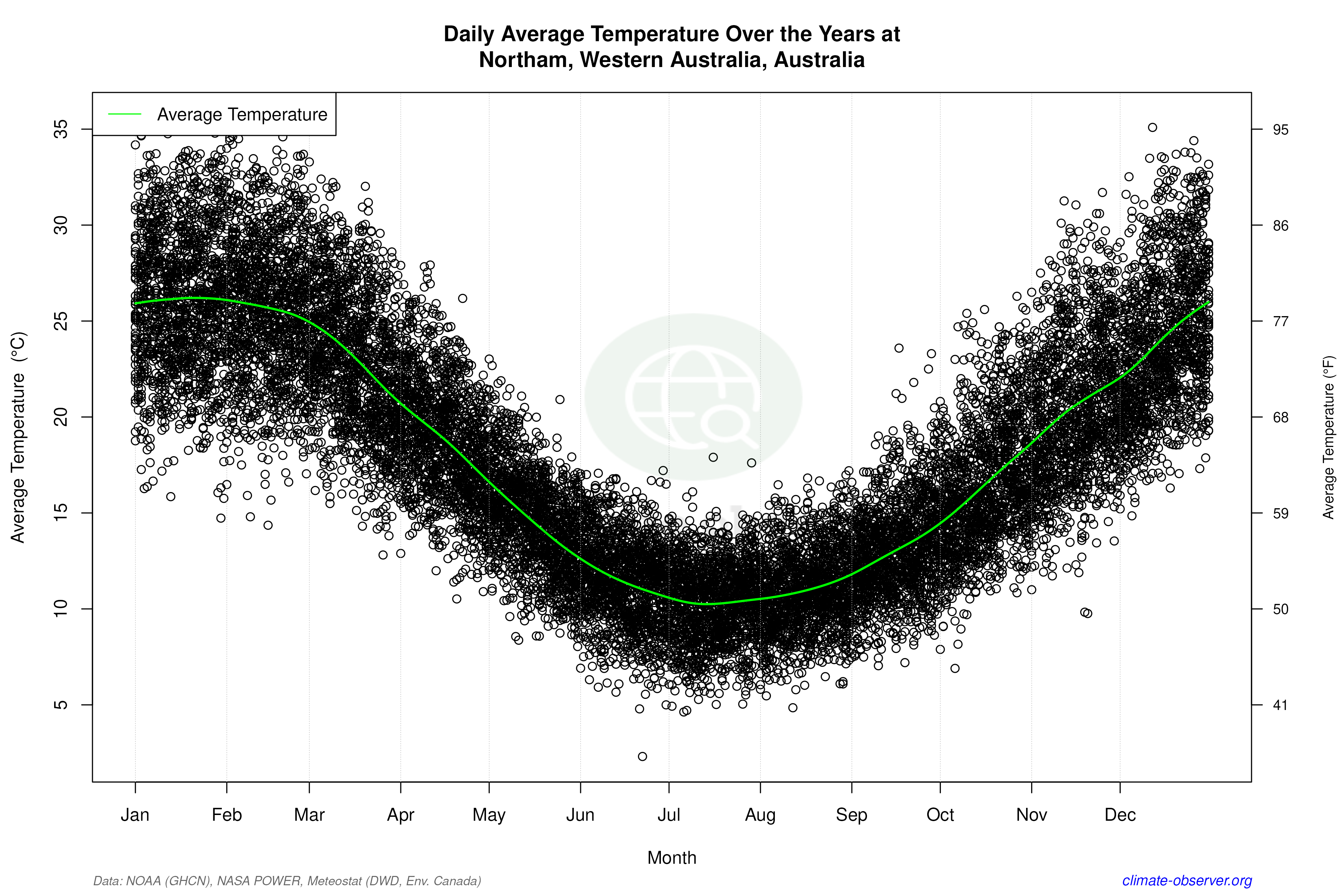
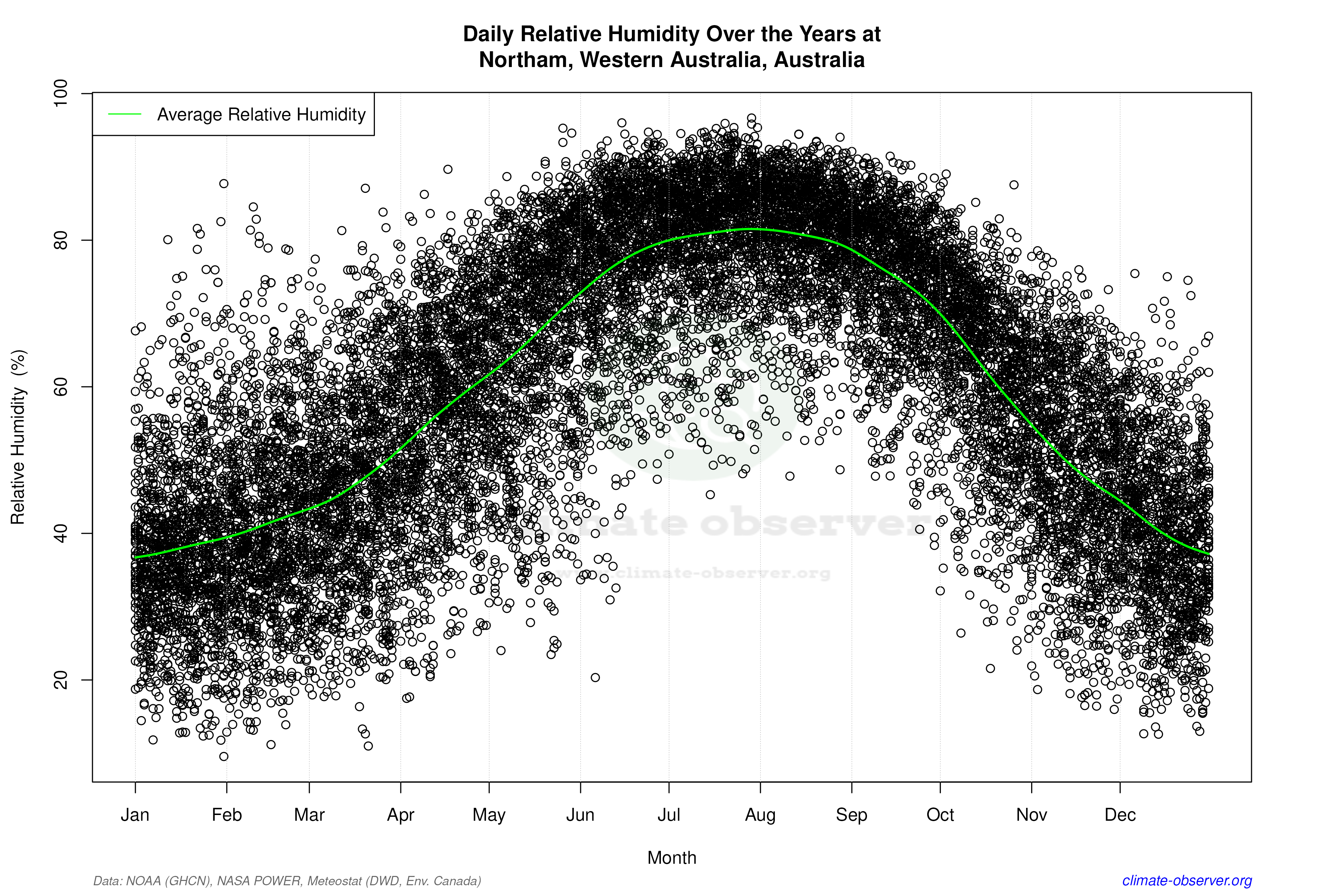

Average Max Temperature Throughout Year | 1 of 5


