Climate for Station: Bahrain Int. Airpo, Al Muharraq, Bahrain
Loading live weather...
Climate Analysis & Overview
Bahrain International Airport is experiencing a warming trend, with both high and low temperatures rising over the past decade and all-time records. The Precipitation Concentration Index indicates a shift towards more evenly distributed rainfall. These changes align with Bahrain's regional climate goals of adapting to rising temperatures and managing water resources effectively.
Regional Thermal Dynamics
Bahrain International Airport, situated at 26.267°N, 50.65°E, experiences a desert climate, classified under the Köppen system as BWh. This classification is characterised by extremely hot summers and mild winters, with minimal rainfall. The geographical positioning near the Arabian Gulf influences the climate, contributing to high humidity levels and occasional sea breezes that provide slight relief from the intense heat.
Over the past decade, the airport has recorded a warming trend, with high temperatures increasing by 0.58°C (1.04°F) and low temperatures by 0.49°C (0.88°F). These figures are slightly lower than the all-time trends, which show a rise of 0.63°C (1.13°F) for highs and 0.52°C (0.94°F) for lows. This consistent warming aligns with global patterns of rising temperatures, yet it is crucial to note the more pronounced increase in highs compared to lows, indicating hotter days are becoming more frequent.
Record Extremes and Their Implications
The all-time recorded temperatures at Bahrain International Airport highlight the extremes of the desert climate. The highest temperature ever recorded is 47.5°C (117.5°F), while the lowest is 2.7°C (36.9°F). These records underscore the significant thermal variability experienced in the region, which can impact infrastructure, health, and energy consumption.
Precipitation Patterns: A Shift Towards Evenness
The Precipitation Concentration Index (PCI) is a measure of how rainfall is distributed over time. A decrease from a baseline of 42.9 to a current value of 34.7 suggests that precipitation events are becoming more evenly distributed throughout the year. This shift is significant, as a PCI value over 20 indicates highly concentrated rainfall, which can lead to flooding and water management challenges. The more even distribution may aid in better water resource management, aligning with Bahrain's regional climate goals.
Navigating Future Climate Challenges
Bahrain is actively pursuing climate adaptation strategies to mitigate the impacts of rising temperatures and shifting precipitation patterns. The warming trends observed at Bahrain International Airport are consistent with these broader regional goals. As the nation continues to develop its infrastructure and policies, understanding these climate dynamics will be crucial for sustainable growth and resilience against climate change impacts.
Station Statistics
10-Year Trend
High: -0.09 °F/decade
Low: +0.13 °F/decade
Rain: +0.003 in/decade
25-Year Trend
High: +0.09 °F/decade
Low: +1.22 °F/decade
Rain: +0.001 in/decade
50-Year Trend
High: +1.30 °F/decade
Low: +1.21 °F/decade
Rain: -0.000 in/decade
All-Time Trend
High: +1.00 °F/decade
Low: +0.85 °F/decade
Rain: -0.000 in/decade
Percentage Above-Average Days
Last 12 Months: 43.3%
This Year: 20.5%
Precipitation Concentration Index (PCI) ℹ️
Last 12 Months: 43.1
Historical Average: 42.9
Percentile Rank of Last 12 Months ℹ️
High: 34th percentile
Low: 55th percentile
Rain: 89th percentile
Change in Variance ℹ️
High: +1.7%
Low: +5.9%
Intraday: -21.3%
Data Coverage
57.1%
First Year of Data
1947
Station Location
Historical Weather Records
| Max High | Avg High | Min High | Max Avg | Avg Avg | Min Avg | Max Low | Avg Low | Min Low | Max Precipitation | Avg Precipitation | Max Snow | Avg Snow | |
|---|---|---|---|---|---|---|---|---|---|---|---|---|---|
| Record | 117.50 °F | — | 54.32 °F | 105.08 °F | — | 50.36 °F | 98.06 °F | — | 36.86 °F | 3.50 in | — | — | — |
| January | 85.46 °F | 68.76 °F | 54.32 °F | 75.02 °F | 63.49 °F | 50.36 °F | 71.65 °F | 59.22 °F | 45.86 °F | 1.97 in | 0.02 in | — | — |
| February | 92.84 °F | 70.74 °F | 55.40 °F | 77.36 °F | 65.06 °F | 51.62 °F | 71.06 °F | 60.58 °F | 36.86 °F | 2.40 in | 0.02 in | — | — |
| March | 104.00 °F | 76.66 °F | 59.59 °F | 88.34 °F | 70.20 °F | 57.02 °F | 77.00 °F | 65.05 °F | 51.80 °F | 1.57 in | 0.02 in | — | — |
| April | 106.34 °F | 85.74 °F | 67.77 °F | 93.56 °F | 78.40 °F | 65.12 °F | 86.00 °F | 72.42 °F | 56.12 °F | 3.39 in | 0.01 in | — | — |
| May | 115.34 °F | 95.04 °F | 76.08 °F | 98.24 °F | 87.46 °F | 74.66 °F | 91.40 °F | 80.85 °F | 62.06 °F | 0.31 in | 0.00 in | — | — |
| June | 117.14 °F | 99.72 °F | 83.07 °F | 103.28 °F | 92.45 °F | 82.72 °F | 96.80 °F | 85.91 °F | 69.62 °F | 0.12 in | 0.00 in | — | — |
| July | 117.50 °F | 102.05 °F | 88.63 °F | 105.08 °F | 94.86 °F | 86.14 °F | 98.06 °F | 88.79 °F | 78.26 °F | 0.44 in | 0.00 in | — | — |
| August | 114.08 °F | 102.07 °F | 88.02 °F | 103.82 °F | 94.92 °F | 86.02 °F | 98.06 °F | 89.11 °F | 71.24 °F | 0.24 in | 0.00 in | — | — |
| September | 113.90 °F | 98.78 °F | 85.17 °F | 99.68 °F | 91.71 °F | 84.38 °F | 95.54 °F | 85.80 °F | 66.02 °F | 0.15 in | 0.00 in | — | — |
| October | 109.04 °F | 92.24 °F | 77.36 °F | 94.28 °F | 85.73 °F | 73.04 °F | 91.92 °F | 80.27 °F | 67.10 °F | 0.94 in | 0.01 in | — | — |
| November | 98.96 °F | 82.18 °F | 62.60 °F | 88.52 °F | 76.63 °F | 59.72 °F | 84.00 °F | 72.11 °F | 53.06 °F | 1.26 in | 0.02 in | — | — |
| December | 87.08 °F | 72.82 °F | 56.30 °F | 78.44 °F | 67.62 °F | 51.44 °F | 76.14 °F | 63.37 °F | 46.76 °F | 3.50 in | 0.02 in | — | — |
Data Visualisations
Remove WatermarksCurrent Year Climate Trends vs Historical
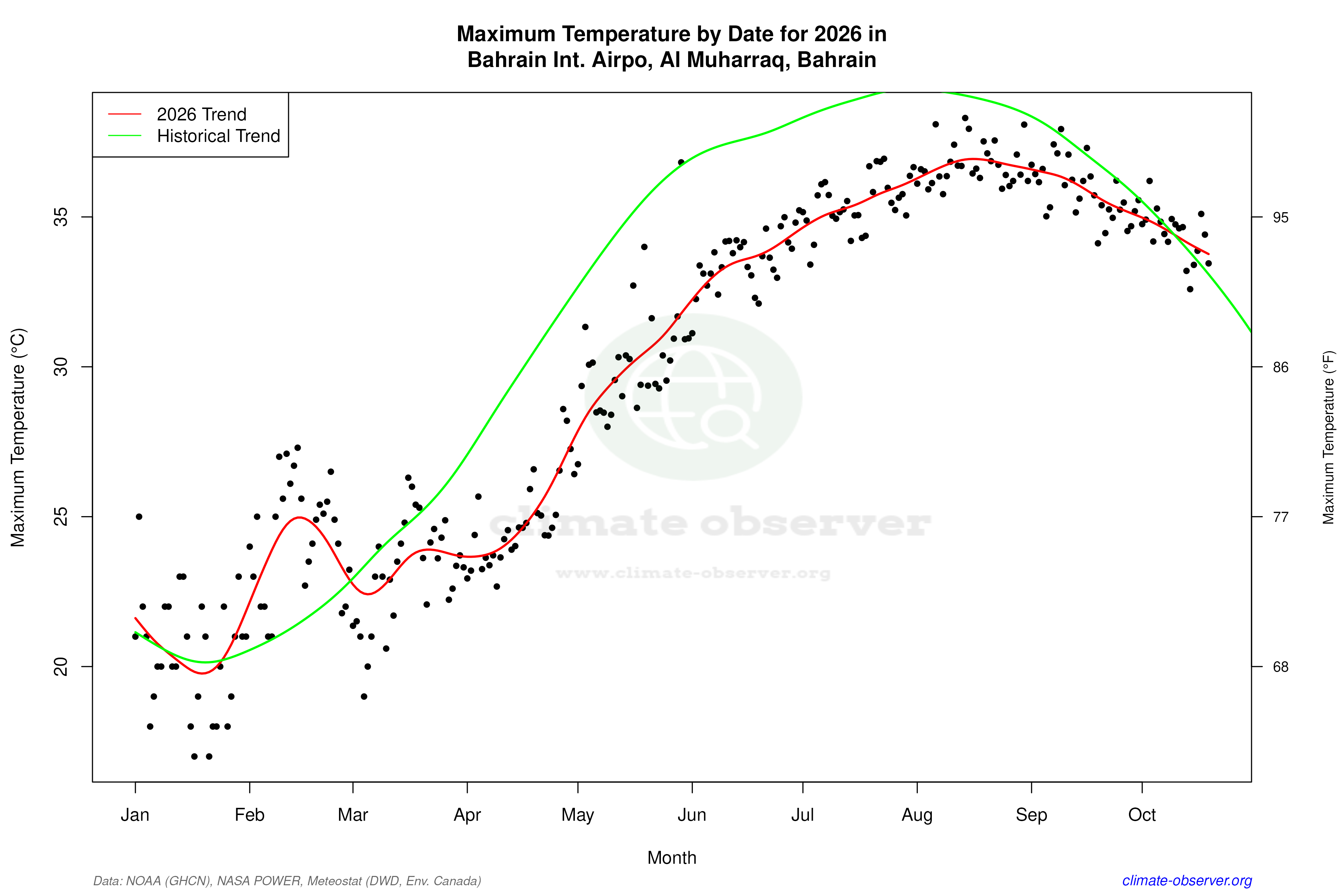
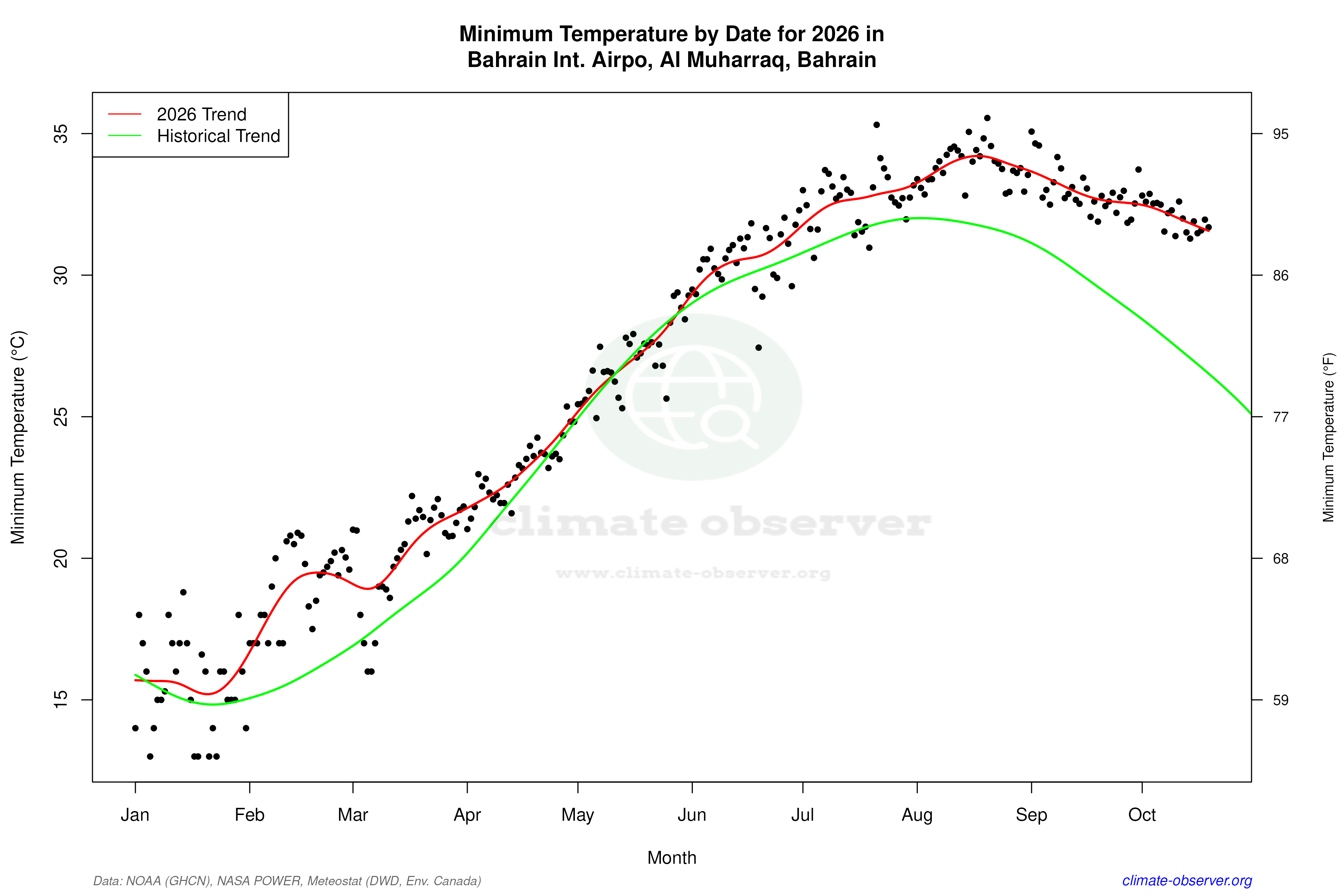
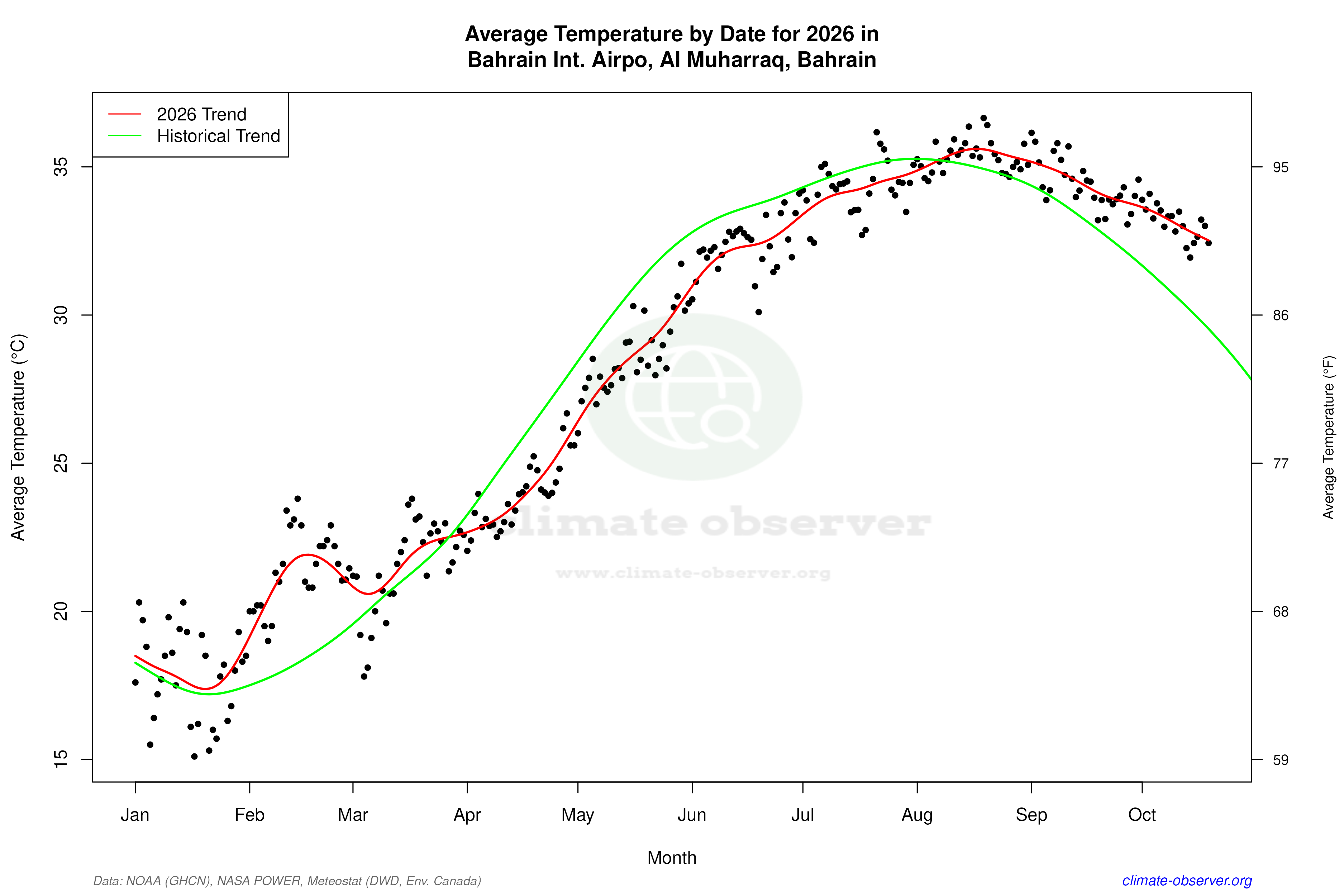
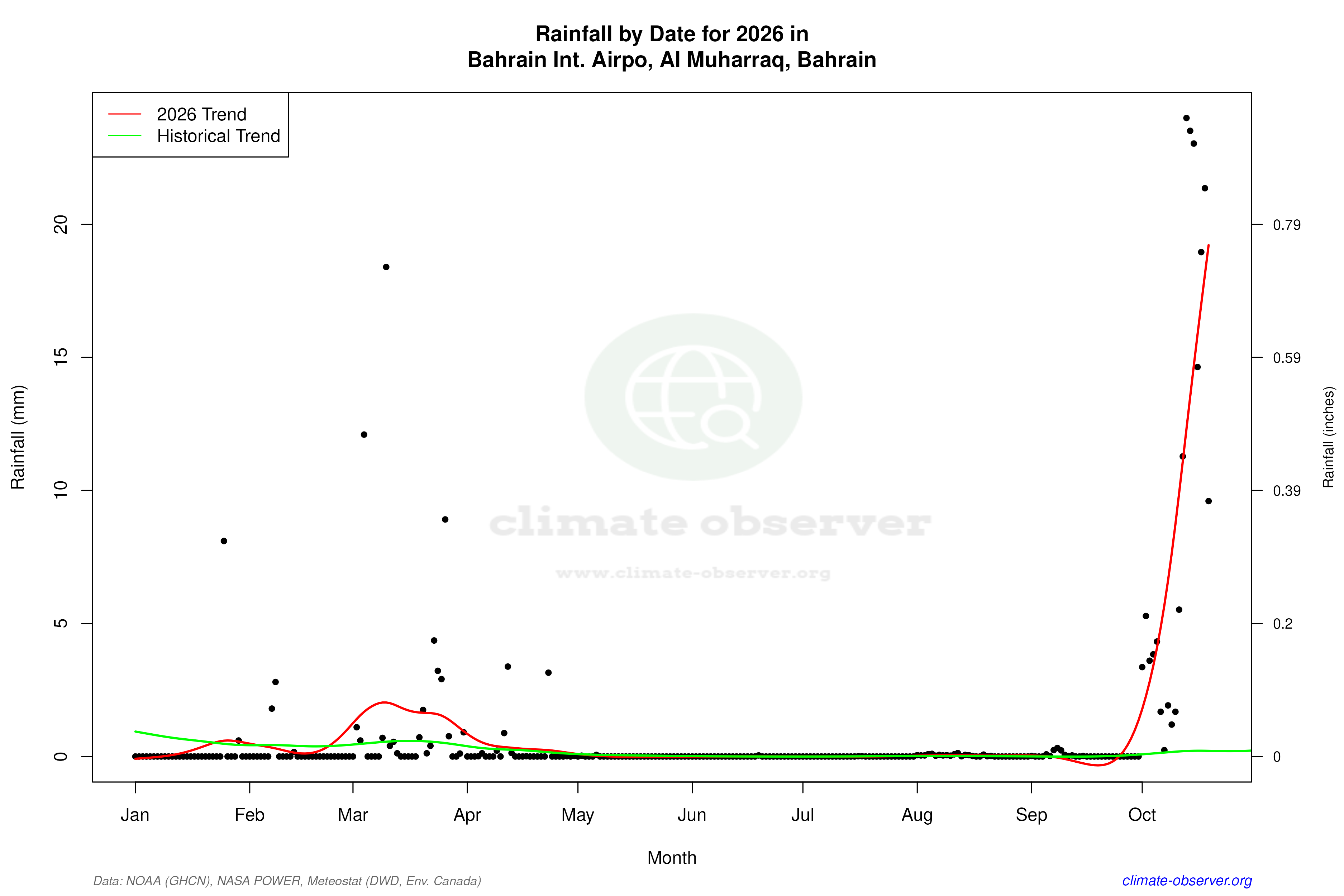
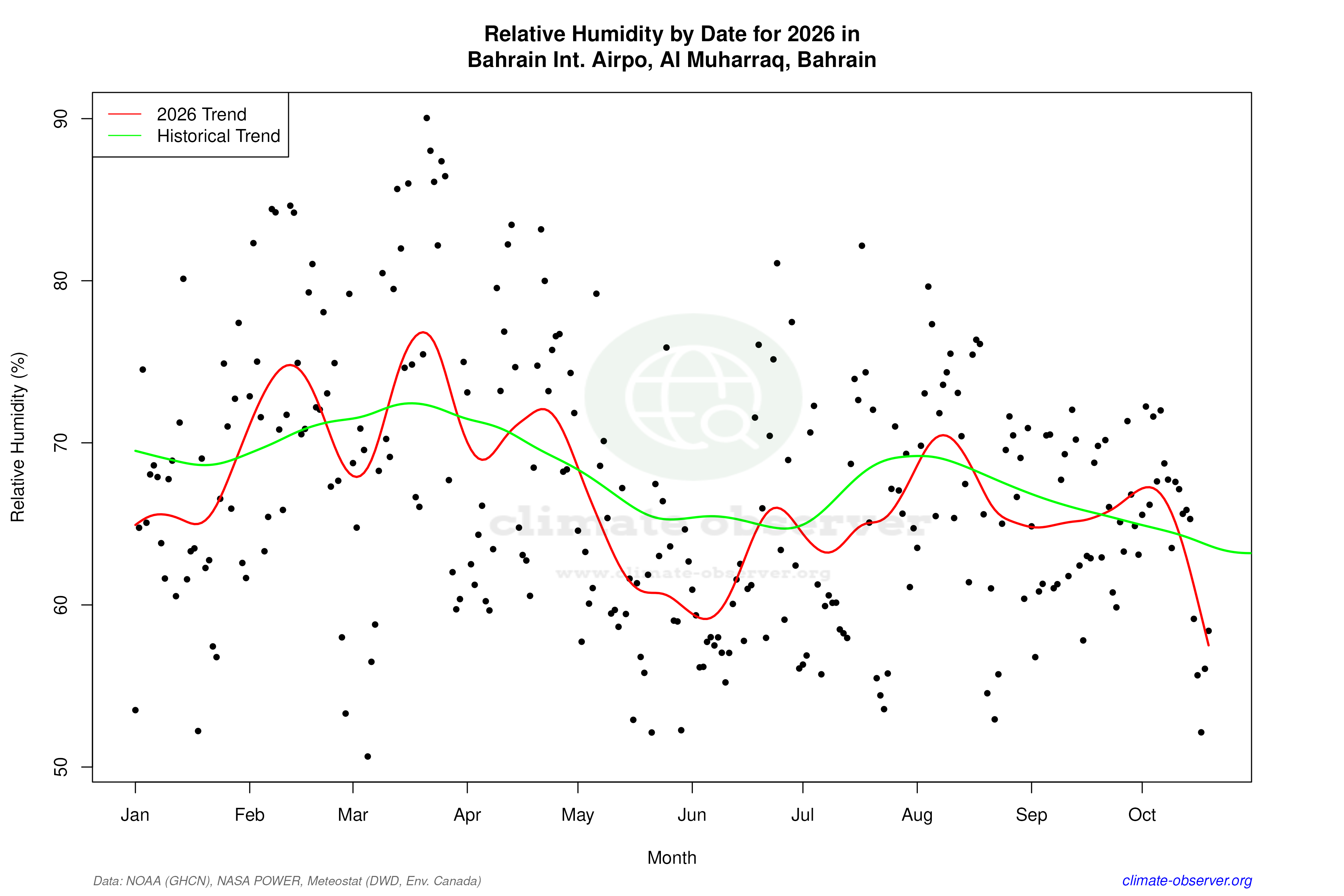

Max Temperature this Year | 1 of 6
Climate 12-Month Moving Averages
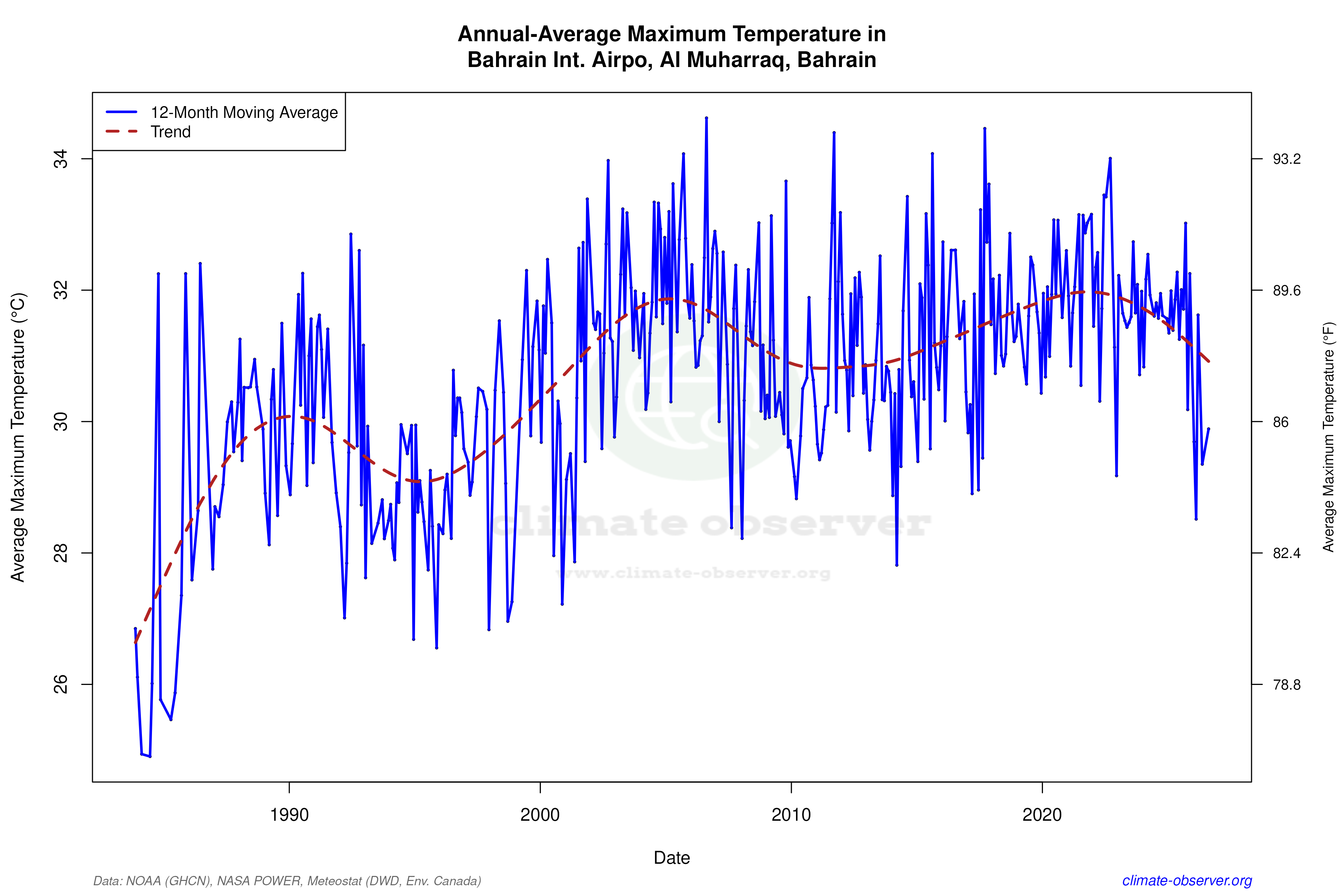
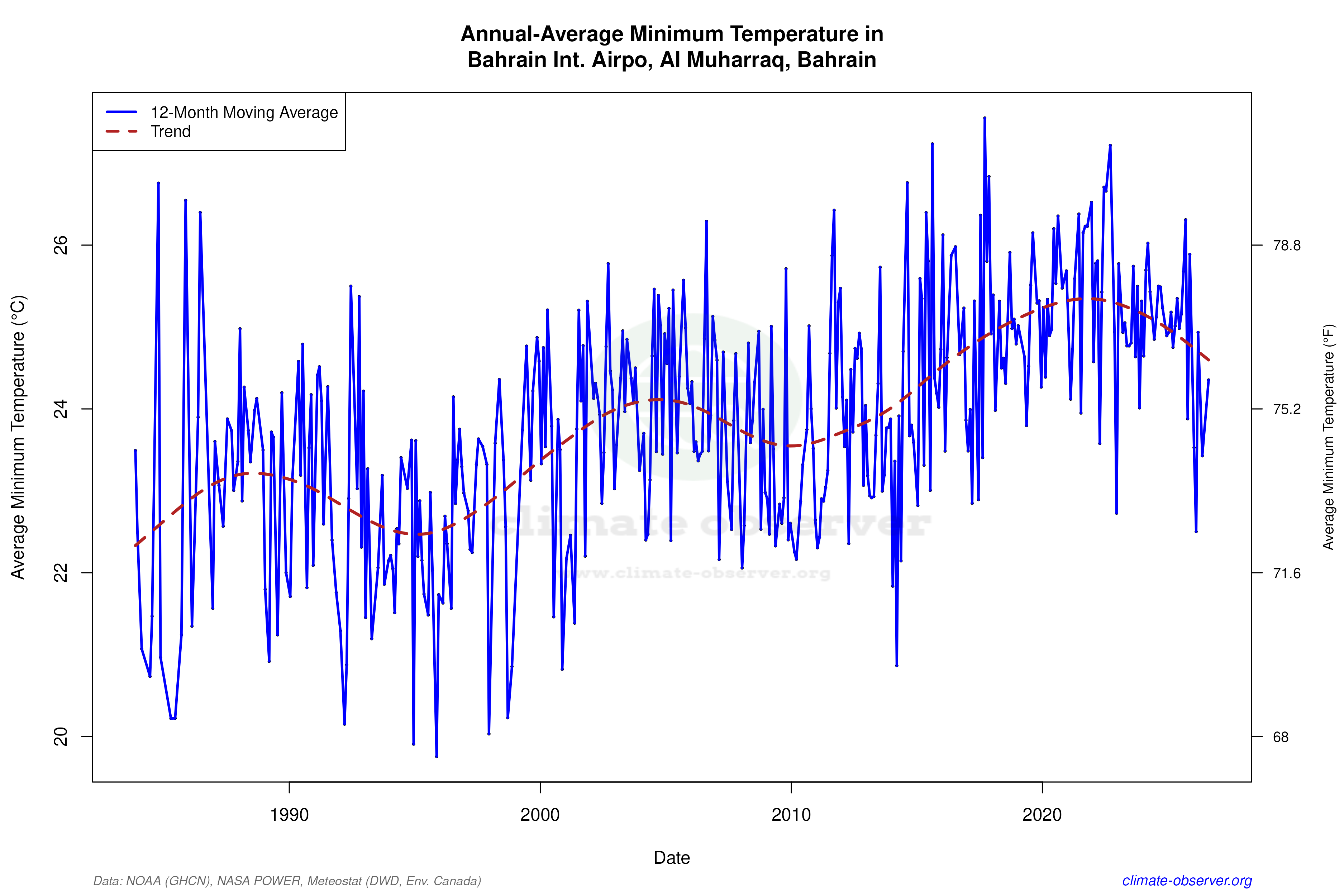
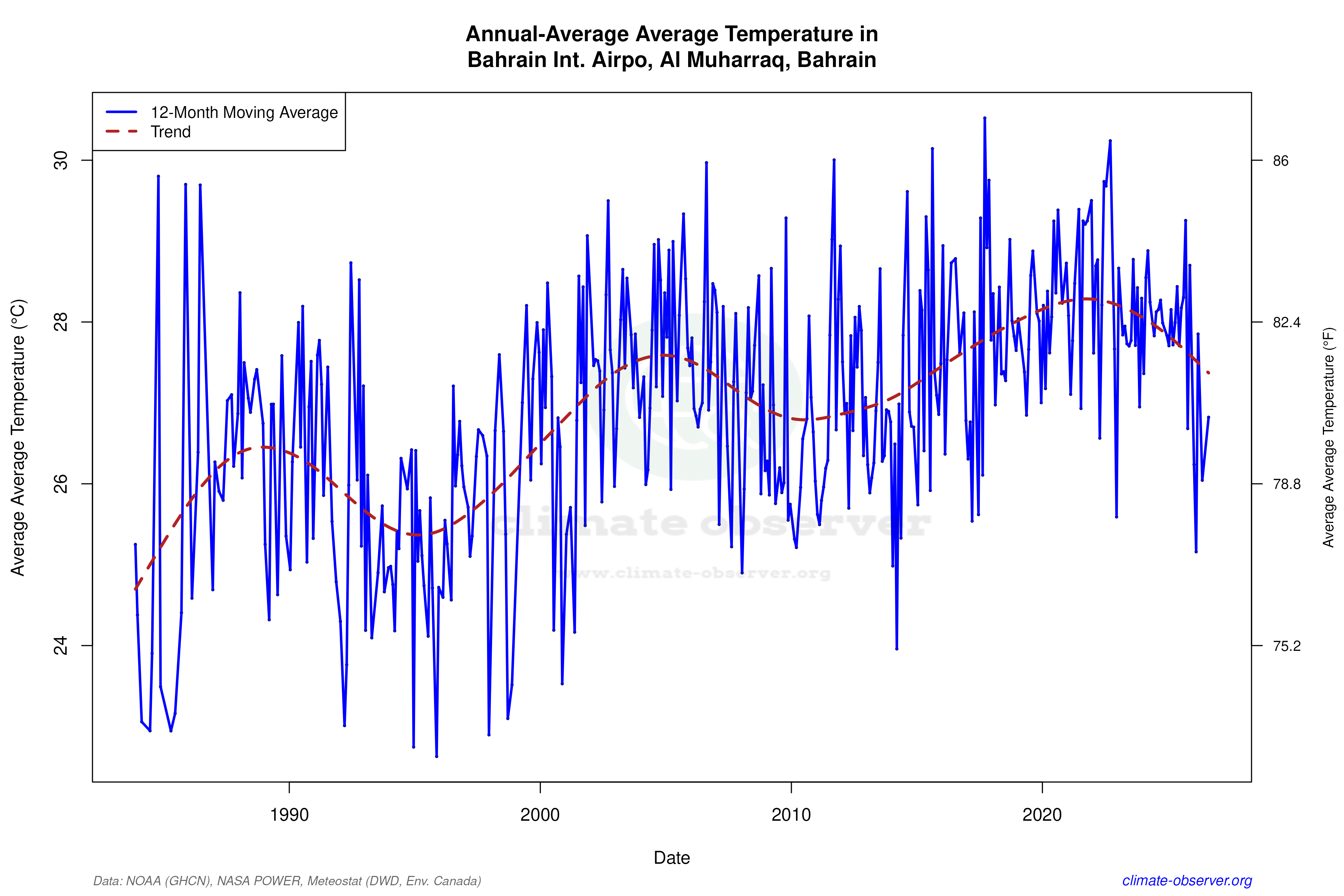
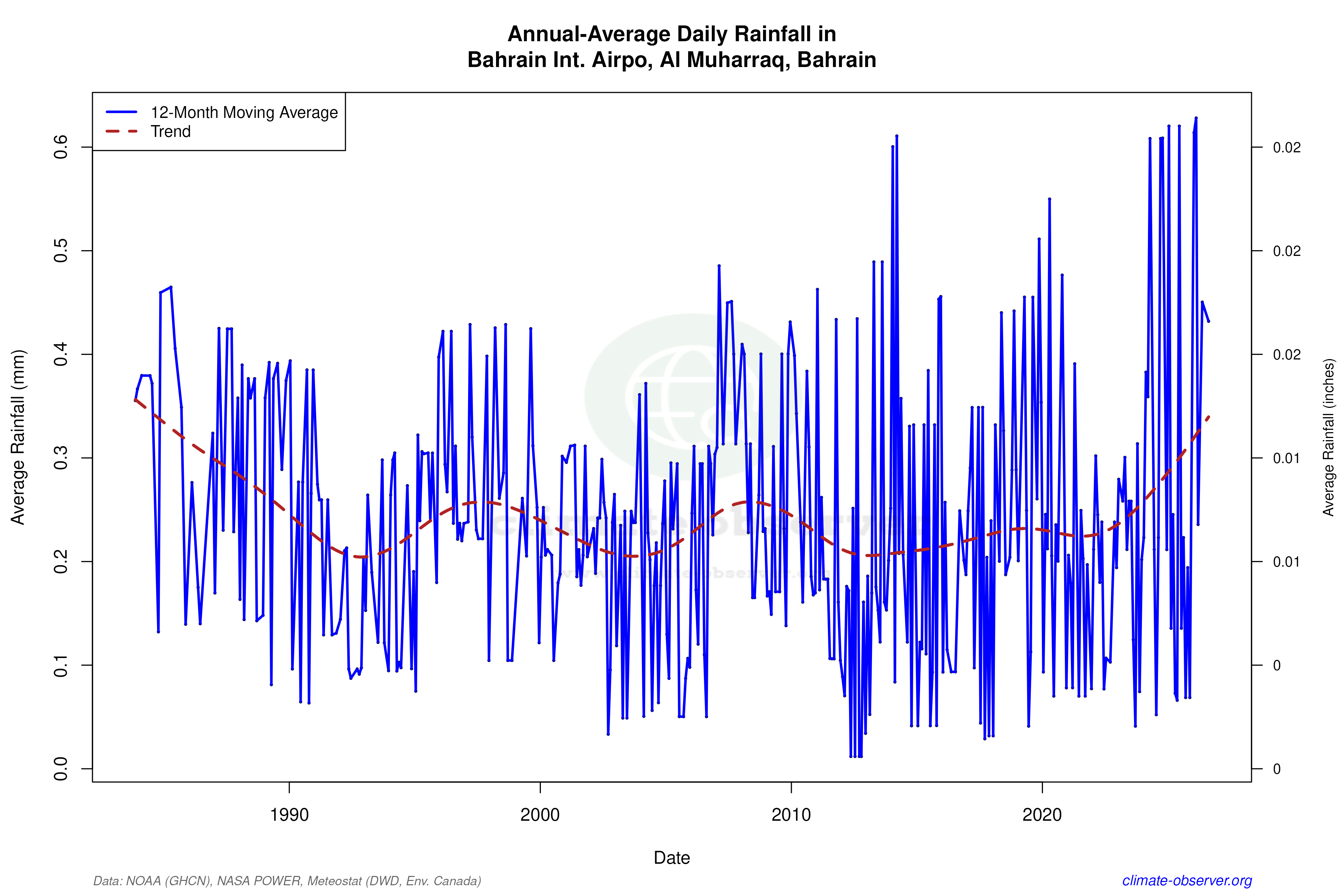
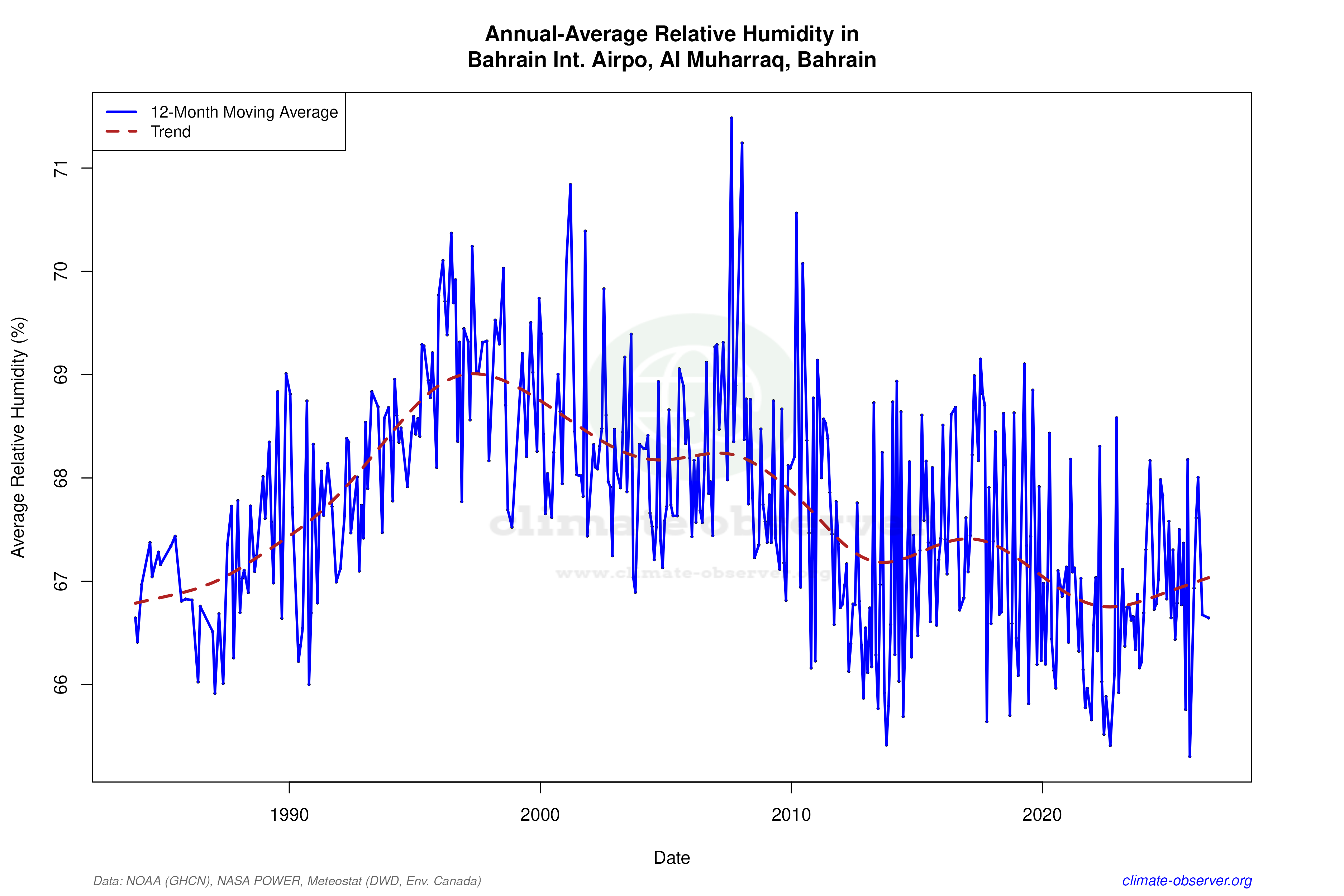

Max Temperature 12-Month MA | 1 of 6
Daily Data Points and Averages Throughout the Year
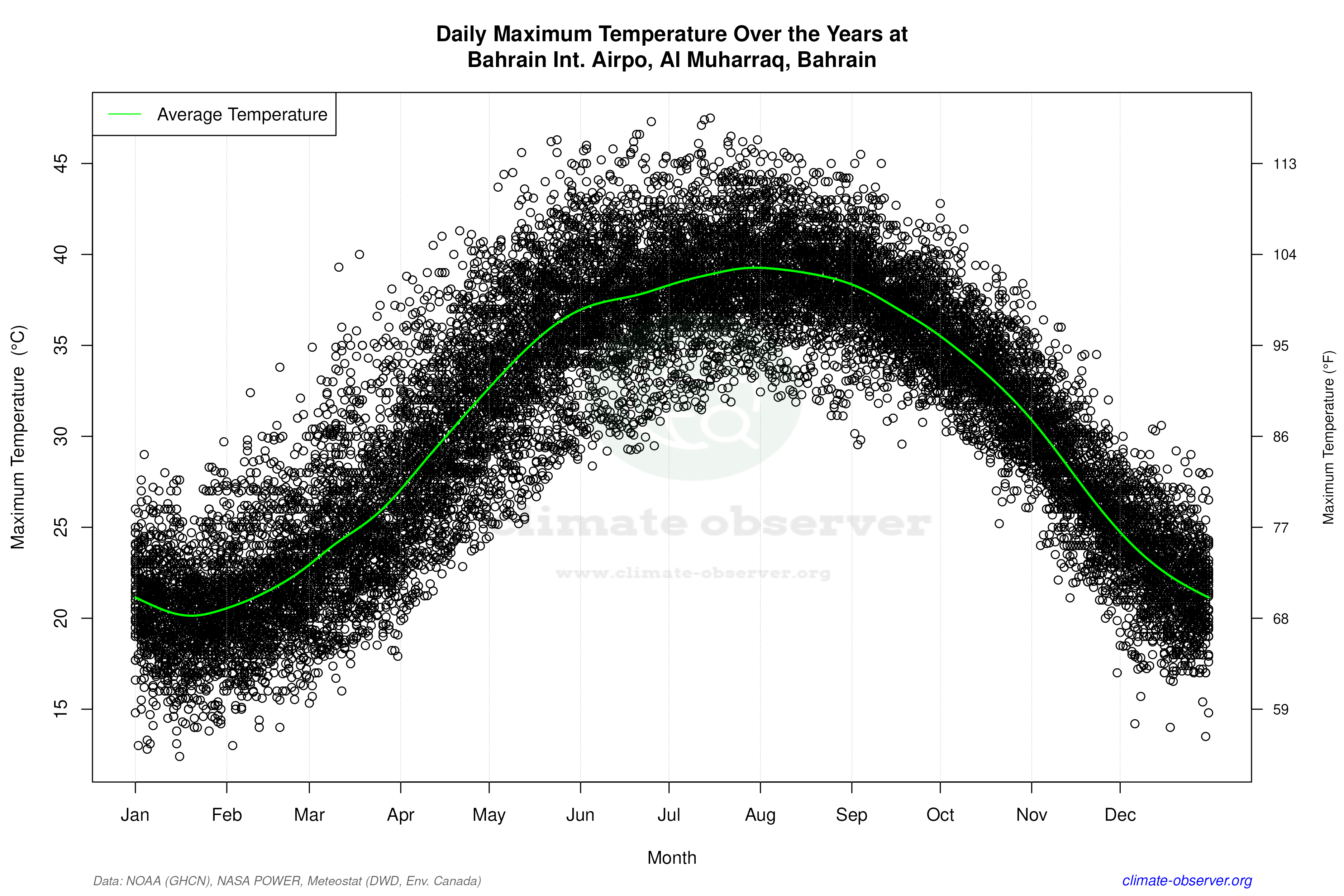
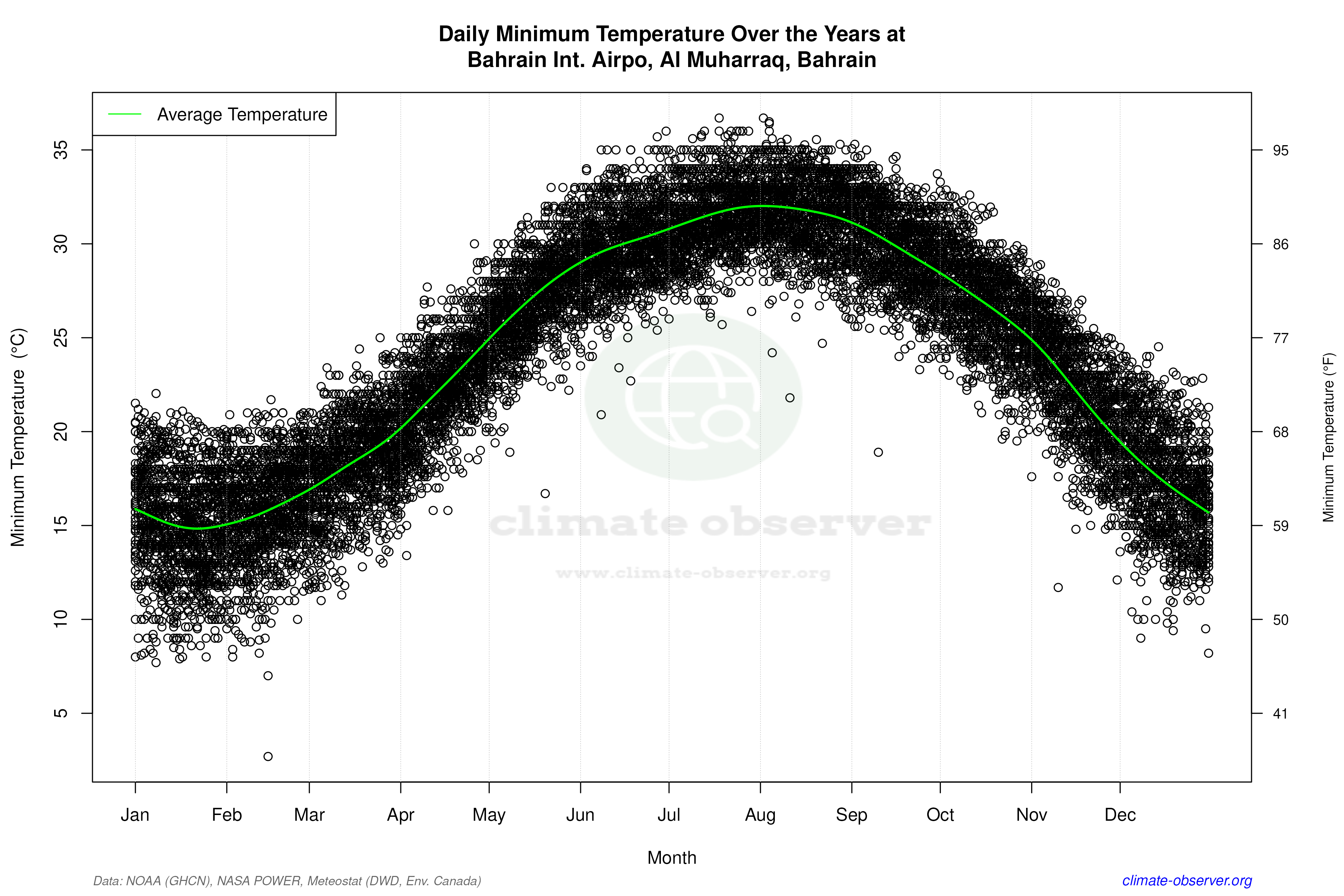
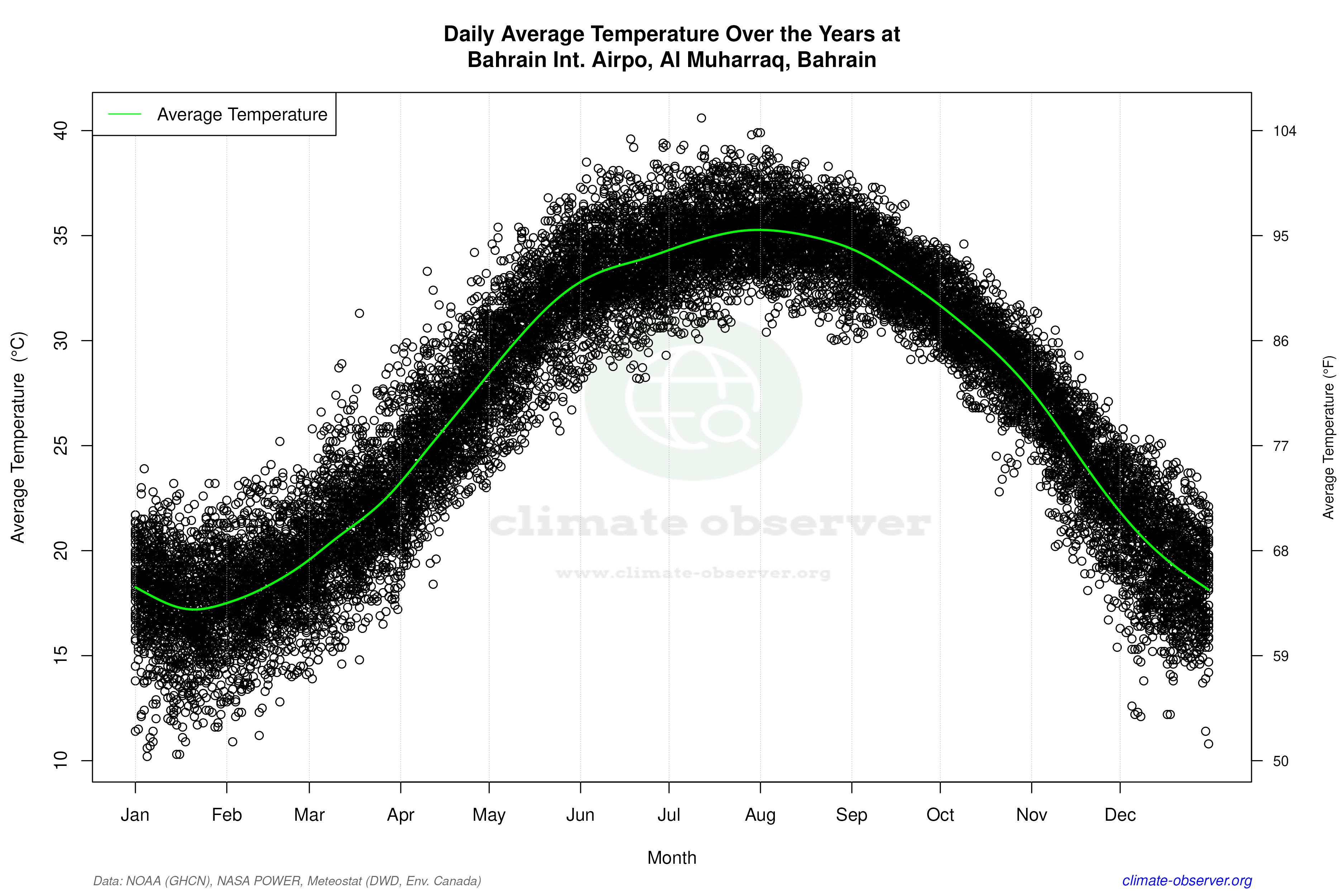
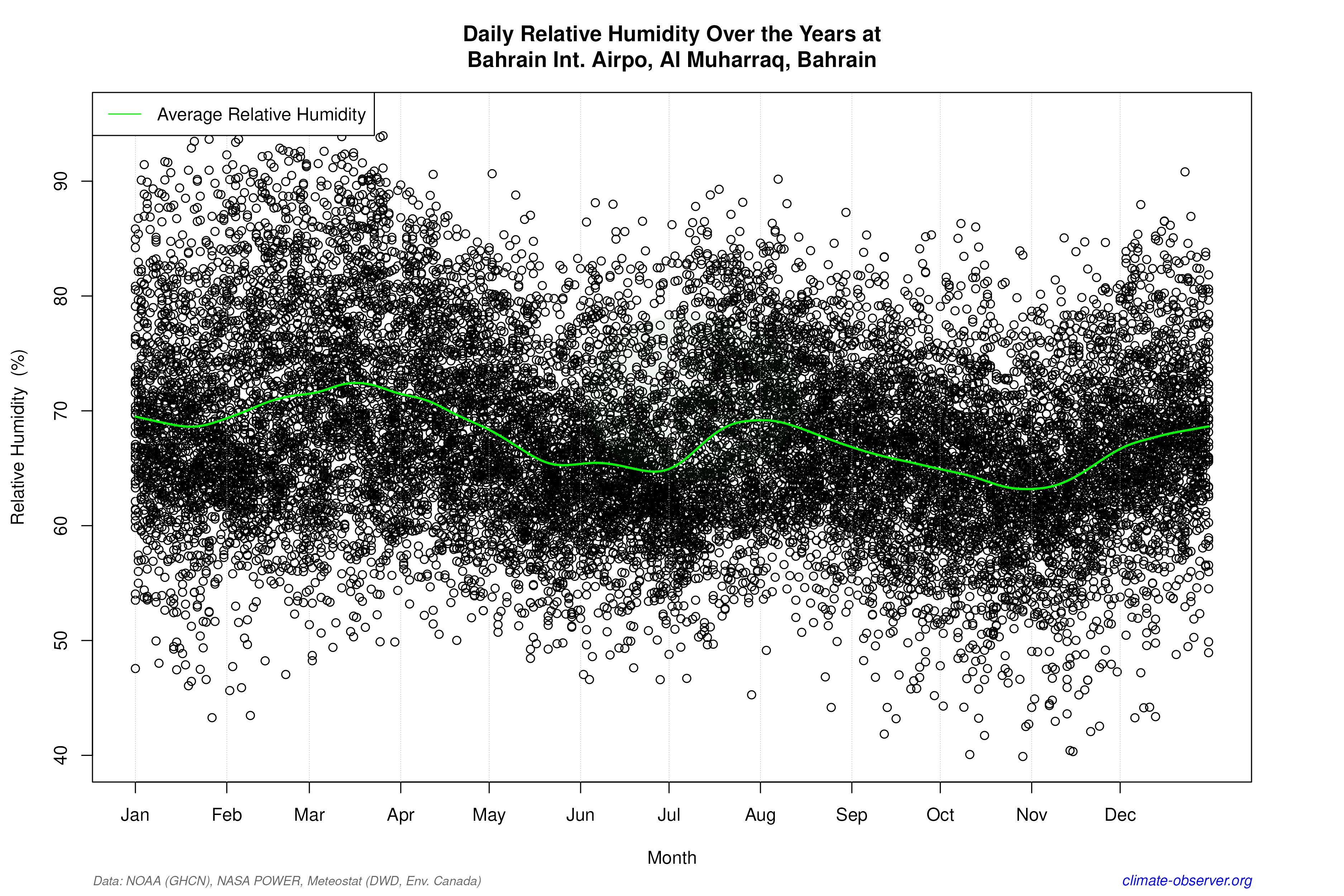

Average Max Temperature Throughout Year | 1 of 5


